I Travelled To Israel To Finally Meet The Man Of My Dreams. 12 Hours Later, The War Began.

I left Israel on Wednesday, 12 October, and everyone I know is relieved I am safe.

My friends and loved ones can sleep tonight, knowing I am back in Canada. They have done me proud: They have fretted and worried and fussed. They have checked in. They have asked me how I am doing and feeling and if there is anything they can do to help. They have offered sincere condolences, sympathised with the situation, and promised me that everything will be OK. I am very grateful to have people who love me so much.

I am safely ensconced in our bubble of collective ignorant bliss — but I do not feel safe.

This is Avichai Refael Sofer:
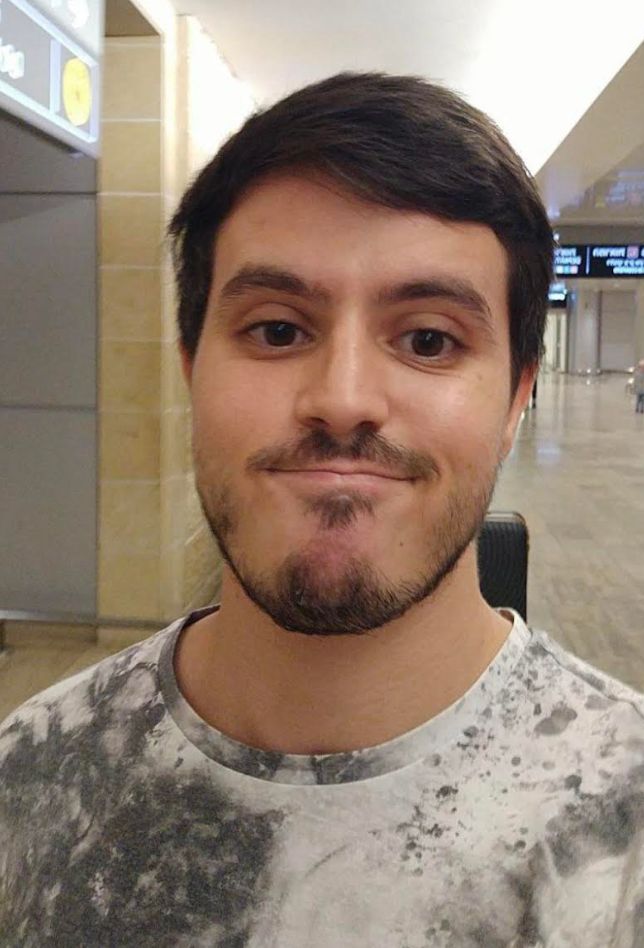
Avichai Refael Sofer, the author’s boyfriend. “Avichai took this selfie immediately after we parted ways at the airport,” the author writes.

Courtesy of Robbie Romu

Avichai Refael Sofer, the author’s boyfriend. “Avichai took this selfie immediately after we parted ways at the airport,” the author writes.

He is a 29-year-old Jewish Israeli citizen living outside of Tel Aviv. He works a job, goes to school, hangs out with his friends, and has hopes and dreams for the future. He is one face out of millions of faces. He is no more and no less important than those millions of other faces — both Israeli and Palestinian — who have never felt (and may not ever feel) safe.

We met online in late 2020, in the earliest days of the COVID-19 pandemic. He “woofed” at me on a gay dating site called Scruff from 10,700 miles away, reaching out across the distance because I had a “kind face.”

We began a very lighthearted yet intimate correspondence that stretched on for several years. He was bright and funny and playful, handsome as fuck, smart as a whip, and wise beyond his years. We would talk about his dream to see Canada, how he longed to experience the Northern Lights, and how much he wanted to visit Montreal, Toronto, Vancouver… and Halifax… and Quebec City… and Calgary… Once he fully comprehended the vastness of Canada as compared to Israel (which is similar in size to the state of New Jersey), we decided he would have to visit more than once if he was going to see everything his heart desired

It was easy. He lived there — I lived here. It was a dream.

Over time, our correspondence turned into a relationship, and then it was not so easy. It was real — and real is harder.

We texted all the time and FaceTimed for hours, and though we lived thousands of miles apart and had never met in person, we fell madly and hopelessly in love.

I bought my ticket to Israel on 6 September. We planned “nine days in heaven” from 6 – 15 October. We would be together in just one month’s time.

Avichai organised the most beautiful vacation for us in the land he calls home: visiting Tel Aviv and Jerusalem, camping under the stars in the heart of the Negev, and spending time in Haifa and Zefat in the North. In what would turn out to be a cruel and ominous bit of foreshadowing, I told him that none of the details mattered — that I’d be happy to spend all nine days alone with him, locked in his room, just being together.

I landed at Ben Gurion International Airport on Friday, 6 October at 8pm. Avichai was waiting for me with a sign that said “bumblebee” and the brightest smile I had ever seen. We hugged, cried, and looked into each other’s eyes, and it was easy again.

We drove back to his place, chatting excitedly about the nine-day adventure that awaited us, and I felt on top of the world.

Avichai had prepared me a sumptuous Shabbat dinner, which we ate with abandon. There was nothing to fear. We were together.

We awoke very late on Saturday, 7 October, to 38 missed calls and hundreds of unread text messages from his family and friends. Something had happened, but with my extremely limited understanding of Hebrew, I had no idea what. As Avichai began to return the missed calls, I opened my phone and read the headline: “Netanyahu says, ‘We Are at War.’”

It did not feel real until I felt Avichai’s hand on my shoulder and heard him say, “We need to talk about some things.”

He started by assuring me that everything would be all right — that we were not in any immediate danger — and then he told me to put on some pants. He explained that most of the fighting was in or near Gaza, which is 70 km to the south of where he lived. With tears welling in his eyes, he laid out the atrocities that had taken place while we slept: the rockets launched, the destruction, the terror, the hundreds of Israeli people killed or taken hostage.

He made it clear that there would be many more rockets. He calmly told me that when we heard the air raid siren, we would have 90 seconds to make our way to the bomb shelter in the basement of his building. There, we would wait out the barrage, and once a minute had passed from the end of the siren, we could return to his apartment. We would shelter in his building for the rest of the day, assessing the situation as it developed. We would not be going outside. He asked me if I understood, and I told him I did.

I did not understand a single thing that was happening. How was this even possible? Nothing in my privileged life had prepared me for this. Air raid sirens? Rockets? What about our vacation? What about our nine days in heaven?

Admittedly, I have a very narrow understanding of Middle Eastern politics. I, like many people, receive my “news” via Western media, a sanitised version of “the truth” (whatever that is at any given time) that typically follows the narrative of whichever government is currently in power. We receive just enough information to know something is terribly wrong in the region, but most of us do not grasp exactly what or why and after we put down our phones or turn off our TVs, we continue living our lives without much thought of what these people are facing.

The first siren sounded in the early evening. Avichai, very calmly, reached for my hand and said, “Grab your phone and your glasses. We’re going downstairs now.”

He led me to the basement — the “bomb shelter” — and put his arms around me.

“Everything is going to be OK,” he promised.

The author (left) and Avichai inside the bomb shelter in Avichai's apartment building.

Courtesy of Robbie Romu

The author (left) and Avichai inside the bomb shelter in Avichai’s apartment building.

When the dull thuds began, I thought, “This isn’t so bad.” When the rending, unearthly scream of metal meeting mortar began, the walls shook, the windows rattled, dust fell from the ceiling, and my bones moved inside my body. I told myself, “This isn’t so bad.”

I was lying — it was bad.

It was just about as bad as anything I have ever experienced.

I lied to myself, and I lied to Avichai because it was all I could do. I needed him to believe I was OK so he would be OK. I understand now — far removed from the daily onslaught of sirens and rockets — that he lied to me, too. It was all he could do. He needed me to believe he was OK so I would be OK.

As the sirens came and went, his brothers were called into service. As the trips down and up the stairs came and went, his best friend was called into service. Sometimes, there were no sirens at all, just an overbearing silence from the sky that was suddenly ruptured by explosions. The walls shook, the windows rattled, the bones moved inside my body, and we lied to each other.

This was the way of things. The pretence. I saw it in the faces of the people in the building who would join us in the shelter: The woman with the 1-year-old who never cried once, the elderly lady from the first floor with knees not meant for climbing long flights of stairs, the girl with the wet hair and a towel wrapped around her midriff; the boy from the next building over with the pottery mud drying on his hands.

These were our “instant friends,” they smiled and made me feel welcome. They promised me that “Israel is a beautiful country.” They said, “You’ll see when you come back.” And when I returned their smile and said, “I’ll see when I come back,” I did not lie.

I left Israel on Wednesday, 12 October at 12:40am on a flight to Dubai after four days and four nights of war, and I do not regret my trip. I got to be with the man I loved. We held each other tight, we played Dungeons and Dragons and listened to music, we ate good food, we talked about important things and not-so-important things, we laughed and cried and felt alive. And though we were not safe, I felt safe with him.

The hardest part of my “vacation” was letting go of his hand, averting my gaze from his beautiful brown eyes, and walking away to find my gate and wait for my flight. I asked him to come with me to Canada, away from the chaos, but he refused. He said he cannot leave his family.

I equally respect and loathe his decision. There is a decidedly real probability that I will never see him again. I cannot look after him if we are not together, which is terrifying.

It is possible to be both pro-Israel and pro-Palestine if you are pro-human being. Israel is not those in power who would see Gaza razed to the ground, just as Palestine is not the group that is raining rockets down on Israel. We must separate the regime from the people, just as we must separate the terrorists from the people.

I don’t want to speak for the people of Israel or Palestine and won’t pretend I could ever understand what they have been through or are going through now, but I know the average Israeli and the average Palestinian do not want war — they want to listen to music, eat good food, talk about important and unimportant things, laugh, cry, feel alive and above all else feel safe.

They want to live.

I am back in Canada, re-ensconced in my bubble, and I recognise how fortunate and privileged I am to return home to a place where I do not have to worry about my safety or the safety of my family and friends. But I can say I do not feel safe.

I will not be safe until the man that I love is safe. I will not be safe until the woman with the 1-year-old who never cried once, the elderly lady with knees not meant for long flights of stairs, the girl with the towel wrapped around her midriff, and the boy with the pottery mud drying on his hands are safe. I will not be safe until the innocent people in Palestine are safe.

The author (right) with his boyfriend Avichai in Israel in October 2023. "This photo is from the only night we went outside to eat," he writes.

Courtesy of Robbie Romu

The author (right) with his boyfriend Avichai in Israel in October 2023. “This photo is from the only night we went outside to eat,” he writes.

Ultimately, I do not care if someone is Israeli or Palestinian. I only care that they are human beings.

I FaceTimed with Avichai this morning before I finished writing this essay. He had traveled to the North to be with his parents. There have been many sirens. His sister came by with her children. His brother-in-law came by with his nephew and niece.

The sky above him was alive with the heavy hum of military aircraft.

He sent me a short video of his family outside, singing and dancing in the late afternoon sun.

More innocent people will surely die.

Avichai told me he is good, and I allowed the lie.

He said seeing me outside on a rare sunny day in mid-October in Vancouver makes him happy.

I told him I am good, and he allowed the lie, too.

Robbie Romu is a freelance writer living and working in Vancouver, Canada. He can be reached at robbie.blogs@gmail.com.

Share Button

Yes, Really – Period Sex Is Good For You (And Here’s How To Do It)

The number one film on Netflix at the moment, Fair Play, is an erotic thriller where the two characters have to conceal their relationship due to work policy.

As the film progresses, tensions rise as one is promoted and their relationship takes a dark turn.

However, this tension isn’t actually what’s got people talking, it’s actually a scene featuring period sex. Once considered highly taboo, this scene has been praised by Men’s Health, GQ, and viewers on X.

While period sex is unexpected in the film, it can actually be incredibly beneficial and enjoyable for both parties as long as you’re both comfortable and consenting.

Additionally, according to a period sex survey carried out by the period experts at Bodyform, half of adults say that they’d ‘never’ have period sex but 39% of people that get periods say that during their period is when they’d be most inclined to have sex.

So, what are the benefits of period sex?

So, aside from being something that 39% of us just want to be doing on our periods, what are the actual health benefits of having sex during your period?

According to Healthline, the biggest downside to having period sex is just the mess. Blood can get on you, your partner and your bedsheets, especially if you have a heavy flow. But, when isn’t sex just a little messy? Isn’t that part of the fun? Just me?

However, when it comes to the benefits of period sex, it seems that they can make having a period… almost enjoyable which is huge news for the 80% of us that will experience period pain at least once in our lifetimes.

This is because when you have an orgasm, the muscles of your uterus contract and release, bringing relief from period cramps. Of course, sex also triggers the release of endorphins, which are “feel good hormones”.

Finally, if you’re a migraine sufferer that tends to experience attacks during your period, a 2013 study found that many of those who do have sex during their periods say it partially or entirely relieves their attacks.

Are there any risks to having sex during your period?

Regardless of where you are in your cycle, you should practice safe sex but during your period, you should take extra caution. According to Sherry A.Ross, MD and women’s health expert, “It’s possible to not only get pregnant during your period but also to contract an STI.”

How to have period sex

Basically, it’s up to you! According to the period experts at Clue, some people choose to have sex in the shower to reduce mess while others simply put a towel down and others just enjoy getting a little bit messy!

Your period and sex life are both individual to you so whatever you think you’d feel most comfortable doing is what matters. If you’ve never done it before, you may want to work your way up to doing it without the shield of a shower or towel but there’s no shame in diving right in and either way, your uterus will thank you!

Let’s hope that representation like on Fair Play helps to stop period sex stigma all together.

Share Button

How To Travel To Paris And NOT Get Bed Bugs

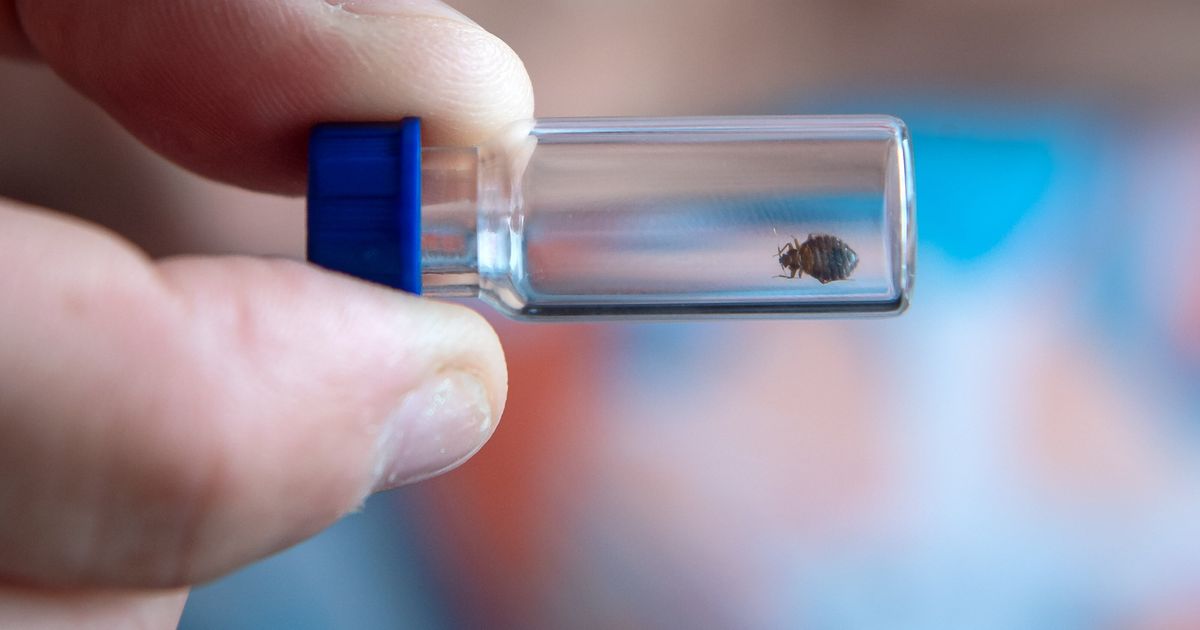
Recently, I haven’t been able to open a single app without being confronted with the menacing form of a bed bug. After taking hold of Paris’ mattresses, it seems the critters have started to establish their London stronghold, too (oh, good).

We know from personal experience how ridiculously disruptive the little bugs can be. So, we thought we’d reach out to the pros to find out how to protect ourselves while travelling.

HuffPost UK spoke to ecologist, conservation scientist, and entomologist Professor Adam Hart about the bed-based terrors. Here’s what he had to say:

1) Inspect, inspect, inspect

Whether you’re staying at a friend’s house or a hotel, it’s a good idea to get up close and personal with your mattress, Professor Hart told HuffPost UK. In fact, it was his first piece of advice.

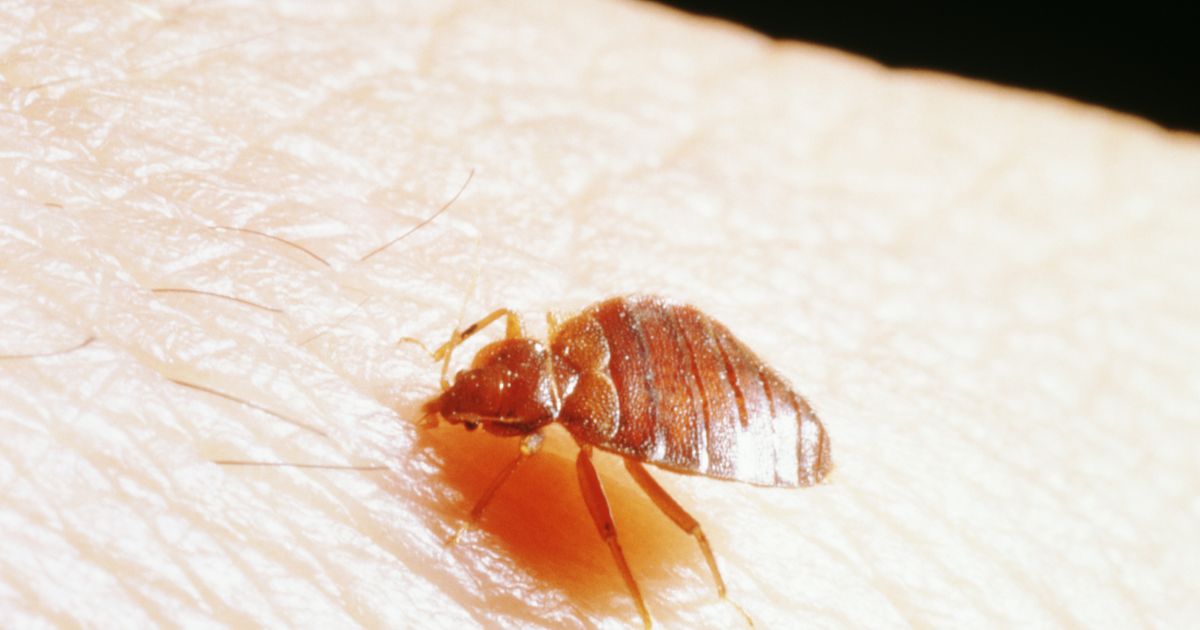
“When travelling, the best thing to do is to inspect your bed carefully,” Hart says. He advises we “look online to find out what eggs, larvae and adults look like, and to see how bed bug droppings and blood marks look. That way you will be able to see if you might have a problem.“

2) Think outside the box

One of the many terrifying things about bedbugs is how good they are at hiding. Professor Hart advises we look a little further than our mattress and sheets when trying to find the beasties.

“Check other areas, like around and behind the headboard,” he says. Bed bugs may also hide in places like sofa and chair seams and old drawer joints.

3) Cover your clothes

Speaking of bed bugs’ many homes, you’ve likely already heard about their ability to cling to our clothes. So, it makes sense that Professor Hart advises us to keep our outfits securely covered while travelling.

“If you are worried then keep your clothes packed inside your closed bag. Some people even pack their clothes in Ziplock-style bags to keep any bed bugs out,” he says.

4) Wash everything the second you get home

If you’re worried about bringing bugs home, Hart says you should steam-clean or machine-clean your clothes (and bags, if possible) the second you get home.

“When you return home wash clothes at a high temperature and tumble dry; dry-cleaning and steam cleaning also kill bed bugs in fabrics that be washed or dried at high temperatures,” he says.

Heat is important here, so don’t lower the temps too much.

Ah, the joys of travel…

Share Button

Turn Out Most Animals Are Pretty Frickin’ Gay, Research Finds

We’ve recently written about how many members of Gen Z are LGBT+ (spoiler alert; it’s a lot). And a recent study recently showed that same-sex attraction is far from limited to humans; lots (like, up to 80% in some cases) of animals are sexually fluid, too.

The project examined all the existing research on same-sex activity among animals. It was led by scientists at Estación Experimental de Zonas Áridas in Spain ― they created a database of all the studies’ conclusions.

So, what did they find?

They discovered that same-sex sexual activity has been recorded in 1,500 animal species, from birds to bees (literally).

Mammals were much more likely to be recorded as engaging with gay sex than other species (about 4%), with non-human primates particularly likely to display homosexual behaviour ― “it has been observed in at least 51 species from lemurs to apes,” they say.

That’s likely an underrepresentation of actual homosexual activities, the researchers add.

“This figure is probably underestimating the actual prevalence of same-sex sexual behaviour in mammals, since this behaviour has attracted the attention of behavioural ecologists and evolutionary biologists only recently,” they say ― and there’s already a research bias towards mammals over other animals, which could explain some of the discrepancies.

In fact, longer-term studies find that homosexual activity occurred in 80% of the mammal population ― the more you observe the animals, it seems, the more sexually fluid they prove themselves to be.

Those who performed same-gender sex acts commonly displayed activities like courtship, mounting, genital contact, copulation and pair bonding ― mounting and genital contact were the most common acts (87% of the same-sex sexual acts in their dataset).

OK, but ― why?

Because it doesn’t help to further the population, same-sex activity among animals is considered an “evolutionary conundrum” and a “Darwinian paradox,” the researchers say.

Of course, lots of the animals who engaged with same-sex sexual activity also had sex with a different gender. And our conception of “homosexual” and heterosexual” is just that ― our human conception.

“Same-sex sexual behaviour as it is used here does not denote sexual orientation (ie an overall pattern of sexual attraction/arousal over time), sexual orientation identity (the sexual orientation that individuals perceive themselves to have), categories of sexual beings (homosexuals, heterosexuals, etc), nor sexual preference,” the researchers say.

They warned that their findings shouldn’t be used to analyse homosexuality in humans ― they’re different.

With that said, a lot of the studies that the researchers looked at suggested homosexual activity in animals could have an adaptive role “in maintaining social relationships and mitigating conflict.”

Part of the reason they think this is because homosexual behaviour has evolved in so many species in similar environments, suggesting it has benefits for those in their circumstances.

They also found that “The prevalence of same-sex sexual behaviour was also associated with adulticide [grown adults of a species killing other adults of the same species], but only for males.”

But the researchers don’t think this disproves the theory that same-sex activity is used to calm conflict ― in fact, they think it confirms it.

That’s because if animals usually engage in homosexual activity during times of violence, it’s more likely that violent results will be associated with the act.

“Because the association was more intense in males than in females, we presume that adulticide was a stronger force triggering the evolution of same-sex sexual behaviour in males. If this hypothesis is confirmed, it seems that same-sex sexual behaviour mitigates rather than negates adulticide, as there are still many species that commit this type of aggressive behaviour,” they say.

The authors of the study added that the field is under-researched, and more study is needed. In the meantime, though ― that’s pretty interesting, right?

Share Button

I’ve Survived A Bed Bug Infestation. Here’s What You Actually Need To Know

Few things in life make me want to rip my skin off — bed bugs, however, could incite me to peel myself like a tangerine.

Lately, my skin has been itching. With so many stories about bed bugs in Paris, the idea of an overrun London has rendered me tacky-tongued and breaking out into cold sweats. Not to mention googling with ferocity how to ward off the invasion of tiny bloodsuckers.

I’ve become obsessed. Smelling phatom smells and peeling back corners of carpets just to “make sure” that it’s all good. That we’re safe. Why? Because I’ve lived through this before.

Living alone is supposed to be fun — empowering, even. Here I was, 24 and doing it all by myself. Except I wasn’t as alone as I thought I was.

Dormant inside the cavity walls, thousands of bed bugs lay in wait. The cold winter and the vacant flat had meant they’d retreated into hibernation, only to ambush when the heating — and the smell of breakfast, lunch and tea (i.e. me) sat her sorry self down on the carpet.

I didn’t notice anything for the first week. My furniture was organised, clothes put away and for a brief moment in time, I was at peace. Reaching this milestone was a huge accomplishment. As a working-class girl from North Wales, I never thought I’d be in a position to afford living alone.

My run of good fortune had finally ended, though. And, a week later I was struck with glandular fever. Lying in bed, unable to move my skin began to itch as small welts appeared up and down my legs and arms.

Black dots appeared around plug sockets and in the corners of my room. Mould, I thought. Then, to my horror, a small reddish thing scuttled across the carpet.

My heart dropped and my stomach hit the floor. I googled “bed bugs” and I sank further into my bed. My flat was infested and I was bedbound.

The realisation that night by night I would be the subject of torture by many tiny mouths made me sob uncontrollably as I watched black dots, their faecal matter, leave traces along my furniture, my bedding and my walls.

My legs slowly became red raw from scratching, but mentally the load was more painful.

Shame crept into my thoughts and set there like a millstone around my neck. What would people think of me if I told them? Would my landlord blame me? How could I ever escape from this fresh hell?

A week passed, slowly. I was feeling somewhat better, though still incredibly unwell. I was able to shower and get dressed, which meant tending to the scabs across my scarred body. I ordered packages upon packages of bed bug spray, traps and natural remedies like tea tree and lavender oils.

On the phone, I begged and pleaded with my landlord to find me alternative accommodation while the infestation was seen to. But, as a young woman, they intimidated me. Threatening me with eviction and fines until I could prove I hadn’t brought them in with my own furniture.

After making threats of my own to bring on legal proceedings, they soon moved me to a budget hotel where I could finally sleep in peace. In the meantime, exterminators lay more boobie traps throughout the flat.

When my stay came to an end, I was advised to take on the role of “bait” in order to weasel the critters out of the walls and into the traps. Reluctantly, I returned.

With nobody able to visit me, I became more and more isolated. My mental health deteriorated as I began to feel too nauseous to eat and too anxious to go to bed. I was signed off from work on extended sick leave long after my glandular fever passed. My money drained and I sank further and further into my overdraft. With only statutory sick pay to support me, I became more and more depressed at the situation I had found myself in.

I didn’t sleep for weeks. To the legs of my bed, I taped double-sided sticky tape — only for them to crawl up the walls and drop from the ceiling onto my duvet. I taped up plug sockets and watched them pile onto one another, as they got more and more stuck. Beneath the cills, the sellotape caught almost transparent juveniles. It was becoming a peepshow of horror. And I was still getting bitten.

It didn’t matter how many times I cried on the phone, literally begging my estate agents to release me from my contract. The answer was always no. Until I sent them photos of infected sores on my legs and threatened legal action against them.

After four months, I was free. What followed, though, was just as difficult as the infestation itself. My furniture, bedding and my most beloved belongings, my books, were incinerated. What I was able to salvage, filled me with dread. What if they were still there? What if I brought them with me?

For months afterwards, I would crawl the carpet picking apart every fibre in search of signs they’d hitched a ride. Every speck of dust was obsessively inspected and cleaned. Over time, my scars began to fade and I was able to find some semblance of normal.

A month passed in my new flat, and not one new bite. The relief washed over me and my health improved. I slept better. I was able to leave a sock on the floor. My bed no longer had double-sided sticky tape wrapped around its legs. I was free.

Even now, when I visit anywhere, the legacy of that trauma surfaces. I check the walls and peek behind wallpaper in hotels. So far, so good. Until recently.

The threat of bedbugs coming back into my life has meant old habits have resurfaced. I think about them constantly and check every inch of my house for signs of vampiric life. If they make their way to my home, I’ll be left with no option but to burn the place to the ground.

Share Button

20 Of The Funniest Tweets About Cats And Dogs This Week (Sept. 30-Oct. 6)

Woof — it’s been a long week.

If you feel like you’ve been working like a dog, let us offer you the internet equivalent of a big pile of catnip: hilarious tweets about pets.

Each week at HuffPost, we scour Twitter X (yes, Elon Musk is apparently fur real) to find the funniest posts about our furballs being complete goofballs. They’re sure to make you howl.

(And if you want more, no need to beg ― you can check out last week’s batch right here.)

Share Button

Urgent Warning To Any UK Travellers Headed To Portugal

Jet2 has issued a warning to UK citizens travelling to Portugal, letting them know they may face disruption when they get there.

The airline told travellers industrial strike action is taking place in Faro Airport, based in southern Portugal’s Algarve region, starting October 6th.

Jet2 has urged customers to allow enough time to pass through security, and have also confirmed that all flights are currently due to depart on time.

“Please allow enough time to pass through security as all Jet2.com flights are due to take off on time. Check in desks will be open 2.5 hours before your flight,” they said.

They also reassured customers that had booked transfers with them to and from the airport would remain unaffected.

The warning comes after Jet2 just last week issued another alert regarding industrial strike action in Spain. Security workers at Alicante Airport will be participating in strikes from September until January next year, which means anyone headed to Spain in the following months could face congestion in security.

The strike in Spain is scheduled to take place for one hour in the morning and one hour in the evening on the following dates:

October: 6, 7, 8, 9, 10, 11, 12, 13, 14, 15, 17, 20, 21, 22, 24, 27, 28, 29 and 31

November: 1, 2, 3, 4, 5, 7, 10, 11, 12, 14, 17, 18, 19, 21, 24, 25, 26 and 28

December: 1, 2, 3, 4, 5, 6, 7, 8, 9, 10, 12, 15, 16, 17, 19, 22, 23, 24, 25, 26, 27, 28, 29, 30 and 31

January 2024: 1, 2, 3, 4, 5, 6, 7, 8, 9, 10, 11, 12, 13 and 14

The Spanish government also added: “If you are on holiday in Gran Canaria, Lanzarote and Fuerteventura and needing to travel or use road transport, we encourage you to contact your tour operator or transport company as soon as possible for more information to understand how this strike may impact your travel arrangements.

“Significant travel disruption is expected.”

Share Button

The 1 Thing To Fight Bed Bugs Is Probably Already In Your Pantry

Oh 2023, the year that just keeps givinhg! As if we didn’t have dramatic climate change events and the cost of living crisis to battle with, we now have the fear of, uh, bed bugs. Love this for all of us.

In case you missed it, there’s been a huge breakout of bed bugs in Paris and while TFL has urged people to stay optimistic, there are still fears that bed bugs could enter the UK and cause chaos here, too.

While it may seem alarmist to worry about bed bugs making their way over to us, we have our own bed bugs problem here already. Back in August it was reported that there has been a 65% year-on-year increase in bedbug infestations in the UK

Additionally, they are incredibly difficult to get rid of and over the past couple of weeks, X has been filled with stories about how much having bed bugs can impact your life and mental health.

Home remedies for bed bugs

Of course, if you have a bed bug infestation, it’s best to call in the experts but if you can’t afford to or if there’s a waiting time to get them into your home, some home remedies could be exactly what you need to keep these pests at bay.

According to the experts at Nectar Sleep, these are some of the best solutions for a bed bugs infestation:

If bed bugs seem to making themselves at home on your bedding, clothes, blankets etc, giving them a wash on the highest setting that they can withstand in order to kill the critters. Nectar Sleep add, “Heat treatment is an effective method for getting rid of these pesky creatures because they get dehydrated due to the intense heat.”

Baking soda

Apparently, if you sprinkle a light later of baking soda on the areas where you think bed bugs are nestling, you can effectively “dry them out” by soaking up their moisture which kills them. It’s advised that the baking soda is left for a week before being vacuumed up. Keep doing this until there are no bugs or eggs left.

Speaking of vacuuming, you’re about to do more than you’ve ever done before. Nectar Sleep recommend that you vacuum your bedding, furniture, and any cracks in your bed frame, walls, and wallpaper. You might feel a bit weird doing it but it’s an effective solution.

The experts add that using a brush to loosen up bugs and eggs that you see on our mattress and upholstered furniture is useful in the vacuuming process, too.

Once you’re done, ensure that you seal the contents of your vacuum into a bag before binning it and clean your vacuum every single time, too.

Tea tree oil

Finally, if you only have a mild infestation on your hands, diluting 20 drops of tea tree oil in a spray bottle of water and spraying onto all affected surfaces can help to eliminate the bugs though washing these fabrics is still the most important step!

How to avoid bed bugs

The pest experts at Rentokil suggest that for anybody trying to avoid letting these restless critters in their house, the following steps are taken:

  • Wash and dry clothes at the highest possible temperatures
  • Eliminate clutter so that they have less places to hide
  • Don’t take clothes, suitcases or furniture to your loved one’s homes to avoid spreading or getting bed bugs
  • Tidy all areas of your bedroom, especially the floor around and under your bed and bedside cabinets
  • Vacuum often

Brb, I’m off to vacuum every single inch of my house,.

Share Button

If You Go Through This Many Rounds Of Job Interviews, It’s A Red Flag

For Tejal Wagadia, some of the job interviews she had after getting laid off a few years ago are her “villain origin story.”

Back when she was unemployed, Wagadia applied for a staffing agency’s technical recruiter role. It was a “super frustrating” process, she said. The recruiter initially promised that it would be just two rounds of interviews to meet teammates, a hiring manager and the business co-owner. But then the interviews kept coming until it became a total of five rounds at an office, lasting at least two hours each.

“They’re like, ‘The other owner also wants to meet with you.’ OK. ‘You know what? One more hiring manager wants to meet with you.’ OK,” Wagadia recalled.

By the third interview, she realised her time was being wasted. “None of the questions that they asked me were about my skill set or my qualifications. Especially at the owner level, they asked me questions about my employer that had just laid me off,” Wagadia said. Still, she participated in two more rounds due to the “sunk cost fallacy” of investing so much time already and because she was “desperate at that time to find a job,” she said. But she still didn’t get the role.

And Wagadia’s not alone in enduring excessive interviews like these. There are countless stories of job candidates being strung along through an indefinite number of interviews.

So, exactly how many interview rounds is too many? Hiring experts shared their tipping point.

Employers that do more than 5 rounds usually don’t know what they want — and that’s a big red flag.

Eddiana Rosen, a human resources specialist with recruiting experience who coaches job seekers, said that if a company doesn’t know who it wants to hire after five rounds of interviews, it has “a broken system.”

Rosen went through this herself in one memorably indecisive hiring process, where she had eight in-person interviews and one final Zoom interview for a promising startup job in New Jersey.

“I was driving and paying for parking every single time,” she said. She got the job, but she knew her time had been wasted.

“The majority of people who are interviewing have another job, and I think that asking people to come in more than a certain amount of time to interview is just ridiculous,” Rosen said.

Companies that drag out their hiring do not know what they want, experts say.

“They’re afraid of making the bad hire,” Rosen said. “But at the end of the day, the more that they take time, the more they risk losing good candidates, because essentially, the more qualified the candidate, the less they’re willing to put up with these bad hiring practices.”

Rosen said she saw employers hire faster in 2021, when job seekers had more leverage. But in this tight labor market, she has seen the number of interview rounds balloon to around five or more. “Five [rounds] would be like the absolute maximum if I’m really interested in that company, but four is more of where it should be,” Rosen said.

Wagadia, who now works as a technical recruiter, also firmly believes that an organisation’s hiring process should take no more than five rounds of interviews, from the first screener call to the offer or rejection.

She said that after five, “you’re telling them, ‘Hey, a) we don’t have a process, we are not organised enough to have a process,’ or b) ‘You’re not important enough, or good enough for this role. So we’re going try and figure out whether you are good enough.’”

Ebony Joyce, a career coach and diversity consultant, finds that for midlevel non-management roles, “typically any more than four [rounds] is too many.” But for more senior roles with potential employers, that number can increase.

In general, she said candidates should ask themselves: “Did I learn something about them? Did they learn something about me? … You should be going to each interview learning more about what the company’s problems are, and how you can solve that problem.”

If you’re not learning anything new, that may be your sign that the rounds have gone too far, Joyce said.

Employers should be upfront about their expectations.

Although a job candidate can sometimes get the job after many interview rounds, a company’s wishy-washy behavior is not a good sign that you are the preferred candidate.

“If you are a top candidate for an employer, they will make you a priority,” Wagadia said.

Now when she talks to job candidates, Wagadia models what she wishes she had seen in her job interviews. She shares that she may not be able to give an exact date for when the hiring process will end, but she can explain what an average hiring timeline looks like, “such as six to eight weeks,” and what the interview rounds will entail.

Rosen, who previously had a sponsorship with Teal, said that more employers should use the career development platform because its job listings let candidates know upfront about the number of interviews, who they will be interviewing with, the questions that they can anticipate, and how long each interview will take.

For example, a current listing for a senior backend engineer at Teal explicitly states that there will be four interviews and that the first one will be a 30-minute Zoom call with the chief technical officer, where the goal is “high level qualifications & mutual fit.”

In this way, there are no surprises and candidates can decide for themselves if this is a job they want to apply for. “That way you can opt out,” said David Fano, Teal’s CEO. ”[You] know exactly what [you’re] getting into.”

Fano said interviews are typically no more than three rounds for Teal candidates. The first is a “smell test”; it assesses if they are who they say they are. Then the second interview’s goal is to answer “Are they technically capable?” The third is about work culture: “Are they a culture add?” Candidates meet team members and can decide if they want to join.

“At the end of that, we feel like we have enough information to make the decision,” Fano said, adding that hiring “doesn’t benefit from groupthink where more voices and more opinions is necessarily better.”

Here’s how to gently push back when your time is not being respected with job interviews.

If an employer doesn’t set a time boundary and keeps scheduling more interviews, set it for yourself in the beginning of the hiring process.

Joyce said she successfully coached a client to ask what the interview process would look like in the first round and to state, “I have a five-interview max.”

You can also make the call to bow out of consideration when the number of rounds is becoming egregious.

Rosen suggested you do this by saying something like: “It’s been quite a bit of a lengthy process so far, and I’ve had to say no to other commitments. … I would really appreciate if you can let me know how much longer I’ll have to be in the process, because if I have to go much longer, I’ll have to get myself out of the race, just to respect each other’s time.” With this approach, your tone is more politely curious than demanding.

And if you’re not interested in continuing the relationship, Rosen suggested that you simply state: “Hey, I am so appreciative of the time so far. Unfortunately, I’ll have to take myself out of the race, considering this process has been so lengthy for me.”

Ultimately, employers disrespecting a candidate’s time can be a bad omen for how they may one day disrespect your work-life boundaries as an employee.

“At the end of the day, your time is just as valuable as theirs,” Rosen said. “Being respectful of your own time is very commendable.”

Share Button

UK Gardeners Urged To Do These Jobs In October Before Cold Weather Hits

October is an interesting month for gardeners. The bounties of autumn are starting to fade away into the barer beauty of winter; bats, birds, and bugs are starting to struggle to find food.

It’s a good time to prepare your garden for a period of low, or no, growth, fallen leaves, and hard, cold soil. So, we thought we’d share the jobs you should get going on ASAP this month (before cold weather hits):

1) Plant some veg

Lucy Rhead, gardening enthusiast at Gtech, shared that it’s a great time to plant onions and shallots, which require little space; spinach (regular harvesting will keep your spinach cropping into spring); lettuce, which you can pretty much grow throughout the whole year, and asparagus, as planting your crowns in warm autumn soil can give them a head start blossoming over winter.

2) Get growing with some flowers, too

It’s a good idea to get some spring bulbs, like crocuses, fritillaries, and daffodils, in the ground now before the soil becomes too hard to dig.

3) Move delicate plants to a greenhouse or conservatory

The Royal Horticultural Society (RHS) advises moving tender, young, or cold-sensitive plants to a sheltered area in anticipation of harsher climes. This is called overwintering; prime candidates include perennials, palms, tree ferns, and more.

4) Get trimming

Though you should leave some plants like ivy untrimmed, others (like roses) require a good pruning. Herbaceous perennials can benefit from a little haircut around this time of year; check to see which of your plants is due a trim.

5) Divide your perennials

It’s one of your last chances to divide perennials to keep them healthy and ready to flourish again next year. The RHS recommends lifting the plants out gently with a garden fork, making sure you don’t damage the roots.

Once removed from the soil, shake the dirt off to reveal the roots and replant your perennials either in the same spot or a different one in your garden or in a pot. Water them well. You should also divide rhubarb crowns at this time of year.

6) Get cracking on some leaf compost


Whether you intend to rake a pile of leaves into a quiet part of your garden or plan to bag and compost ’em, it’s the perfect time to start thinking about how you can use the fallen leaves for gardening good. Just make sure not to include any infected leaves in mulches or composts.

7) Collect seeds for next year

Grab the last of the seeds from your plants, bag them, and label them in preparation for planting in spring. Some seeds, like those from astrantia, achillea, and red valerian, can be sown straight away.

8) Remove your plant pot saucers now and replace them with raisers

It’s important to keep your flowers hydrated in the dry, hot summer ― but now that the weather’s set to take a rainier turn, you’re at risk of waterlogging your plants if you don’t air them out.

The work of a gardener is never done, is it?

Share Button