One of the biggest expenses when moving into your own home is a bed and mattress. Matresses are deeply personal purchases — finding one that fits your sleep style, your physical needs and those of your partner is a precise process — but unfortunately, it’s advised that we replace them every six to eight years.
Which frankly seems too often, given how much a good mattress costs.
However, according to Mattress expert Steve Adams, CEO of Mattress Online, there can be signs even earlier than this that your mattress needs to be replaced.
Advertisement
Four signs your mattress needs to be replaced
You’re waking up feeling stiff and achy
If you start your day with stiffness or aches that fade as the day goes on, Adams warns that your mattress might be to blame.
He explains: “Over time, our body and sleep needs may change meaning the mattress that was once suitable, may not be any more, this can lead to increased pressure points and discomfort.
“Poor sleep caused by a mattress which is unsupportive and does not meet our sleep needs can even lead to longer-term health issues if left unchecked.”
Advertisement
The mattress is sagging or uneven
It’s time to give your mattress a good look and ask if you can see any excessive sagging, lumps or indentations where you sleep.
According to Adams, these are signs that internal materials have broken down. He says: “Some materials will have natural settlement, such as fibres – but an extreme amount of sagging can lead to discomfort, high areas of pressure and speed up the degradation of other areas of the mattress, all which will make it harder to get a restful night’s sleep.”
Allergies are getting worse at night
Ugh, there is nothing worse.
If you have noticed that you are sneezing more often, your eyes are more itchy and sensitive or you are simply more congested when you sleep, it could be your mattress that’s to blame.
Advertisement
This is because over time, mattresses accumulate dust mites, mould, and other allergens that might be triggering your symptoms.
Adams advises: “If washing your bedding and using allergy covers doesn’t help, it may be time to replace your mattress altogether.”
Your mattress is making noise
Not only is this incredibly awkward if you’re doing the deed while others are home but a noisy mattress, particularly one that creaks or squeaks from springs is a clear sign of wear and tear.
Advertisement
Adams says: ” This noise suggests that the springs inside are deteriorating, compromising support and comfort. Swapping to a newer mattress with advanced materials could be the solution to both better sleep and a quieter night.”
In one of his more recent videos, the father-of-three can be seen shushing and bouncing a baby to sleep, before trialling some more, ahem, avant-garde sleep techniques.
“Go to sleep now or I’m going to set fire to this,” says the comedian, while standing next to the cot holding Ewan the sheep.
“I don’t actually want you to go to sleep,” he says in the next breath, trialling a bit of reverse psychology. “I think you should stay up all night.”
Next on the dad’s list of techniques is peer pressure. Perched casually by the side of the cot, stroking his face, he says: “So apparently all the cool babies have been getting early nights recently… Yeah, that’s just what I’ve heard.”
Advertisement
Lewis also trials whale sounds, bargaining and the threat of cancelling Christmas. At one point he’s standing near the cot with a 4-pint bottle of milk.
But it’s the last tip that seems to do the trick: boring his child with chat about Bitcoin.
The 37-year-old from Manchester told HuffPost UK: “My baby isn’t sleeping at the moment so I’ve been desperately searching Instagram and TikTok for advice.
Advertisement
“Once you try everything and it still doesn’t work you start resorting to crazy threats and ultimatums that a baby is obviously not going to understand.
“I thought it’d be funny to do a ‘how to’ video that isn’t particularly helpful but reflects our desperate behaviour as parents.”
Advertisement
Parents dubbed the video “hilarious” and many seemed to think the Bitcoin tip – while a joke – was actually pretty genius.
There were also plenty of suggestions from others about the lengths they’d go to to get their little ones to sleep.
“I used to read books in a really boring voice, then I would fall asleep and they’d stay awake,” said user rachlbc.
“Just put a recording on of the finance review work Teams call,” added hannahlou1983.
Another commenter, nicoledanica, said the video was “spot on”. She added: “I’m a nurse and I used to give detailed lectures to my son about anatomy and physiology when he was a baby and would wake up in the middle of the night.”
“Enough with the guilt-tripping against parents who sleep train their toddler-age children,” she said. “Most times it’s needed for the entire family.
“Let’s not normalise parent and child functioning every day on sleep deprivation – because that is what’s harmful to a child’s developing brain and a parent’s mental health.”
She continued: “If you don’t do it, that’s up to you. But let’s stop putting information out there … that’s misleading parents and guilt-tripping them, because that’s just unkind.”
Advertisement
What is sleep training?
The premise of sleep training is fairly simple: parents are aiming to teach their little ones to fall asleep without their help. So that means no rocking, swaying, feeding to sleep, etc.
But putting it into practice is less than simple. Often it involves a bit of trial and error and possibly some crying while your child figures out how to get themselves to sleep.
When are you meant to start sleep training?
The Sleep Foundation suggests babies aren’t ready for sleep training until they’re about six months old. This is because prior to that “they haven’t developed the circadian rhythms that will help them sleep through the night”.
Advertisement
“Just as there’s no exact right age to begin sleep training, you also don’t have to sleep train,” the foundation says.
“Babies will eventually learn to sleep on their own. However, sleep training is effective and offers significant benefits to both babies and parents, with no evidence of negative long-term effects.”
There are a few different methods parents try, from the Ferber method to the fading method and the more controversial cry-it-out method.
Advertisement
Here, we’ll quickly break down what they entail:
Ferber method
This involves putting your baby in their cot while they’re “drowsy but awake” and then leaving the room. If they cry, wait for three minutes (roughly) before going back in to check on them and comfort them.
The idea is that you console them but you don’t pick them up.
Then you leave the room again, this time for five minutes. And repeat. Each time you increase the amount of time you leave the room for until they’ve fallen asleep.
And if your little one wakes up in the night, the idea is you repeat the process to help settle them again.
Advertisement
Laura Ohlman on Unsplash
With sleep training, parents are aiming to teach their little ones to fall asleep without their help.
Cry-it-out method
This strategy involves leaving your baby to fall asleep on their own without comforting them and then leaving them until a set time in the morning.
“Parents are instructed not to intervene and to ignore crying and tantrums unless there’s a concern that the child is ill or hurt,” according to Huckleberry.
Advertisement
Fading method
This is another more gradual approach where parents camp out in the child’s room until they fall asleep. The premise is that you pop your child into their cot when they’re drowsy and then stand nearby or sit on a chair in their room, offering minimal levels of comfort, until they fall asleep.
“Each night, the parent gradually moves further away from their child while still remaining in their sight,” explains the Sleep Foundation.
Pick up/put down method
This one requires a little more patience. According to The Mother Baby Centre, parents put their baby down drowsy and if they start to then cry, you let it happen for a bit before picking them up and soothing them.
Advertisement
Then you put them back down again while still awake and repeat the process until they go to sleep.
Her approach is that you do your bedtime ritual as usual, say ‘goodnight’ to your child after popping them in their cot and then leave the room.
When your child cries, take no action for two minutes. Then, go back into the bedroom and comfort them but without picking them up (this might involve lying them back down and putting your hand on their tummy while shh-ing them).
Go back out of the bedroom and then stay out for four minutes. Then repeat the exercise until your child goes to sleep.
Advertisement
Is sleep training good or bad?
It’s hard to definitively answer this.
“Looking at how babies slept for most of human history (together with caretakers) we realise that sleep training today is more about suiting parental lifestyles than what’s biologically and evolutionary normal for babies,” explained science communicator Violeta Gordeljevic, on the Science for Parents Instagram account.
She advised proceeding with caution if you do try it: “When in doubt about physical and emotional safety, choose caution. This may mean choosing gentler methods.”
In a video that might put parents’ minds at ease, Professor Emily Oster recently set out to share what the research on sleep training says in an informative video.
Advertisement
The CEO of ParentData, who has two children of her own, said sleep training can be a “very polarising” topic but suggested the data is “pretty good” in this area (although Gordeljevic disagrees) and came up with a summary for parents who are deliberating whether to give it a go.
“First, on average, sleep training improves the quality of infant sleep,” said Prof Oster. “It is not a panacea, it doesn’t work perfectly for every kid, but on average it improves sleep.”
Her second point is that sleep training, on average, “improves mood and happiness for parents” probably because “parents are sleeping better”.
Advertisement
And her last point is that when looking at either the short-term or the long-term impact, “we do not see any differences in attachment measures, in emotional regulation, in any of the metrics you might worry about with sleep training”.
“It just does not look like sleep training makes kids worse off,” she concluded.
There’s something about dreams that feels more true and real than a daytime fantasy, isn’t there?
Maybe it’s got to do with the fact that you have no control over what you think ― and, because you’re asleep, no other stimuli to focus on when they’re happening.
All of which is to say: while I feel I shouldn’t be much affected by my dreams, I’ve been known to glare at my partner after they sinned in my slumbering mind or get emotional after seeing someone in my sleep.
Advertisement
In an effort to find out why I’m so bothered by my brain’s own handiwork, I thought I’d reach out to the experts to ask what it means when you dream about someone.
HuffPost UK spoke to therapist Melissa Giuttari, who’s trained in Jungian dream analysis, psychologist Dr Leah Kaylor, and licenced sexologist Sofie Roos about the topic.
So… what does it mean?
Dr Kaylor told HuffPost UK that dreams often happen during the rapid eye movement (REM) stage of sleep, which she says is when “the brain processes emotions helping you work through the experiences of the day.”
Advertisement
So, she argues, “Dreaming about someone may reflect that your brain is processing your emotions and interactions with them.” It may also have to do with the feeling you associate with that person, or what they stand for, she adds.
Guittari seems to agree, saying: “From a Jungian dream analysis perspective, we typically look at the people that show up in our dreams as symbols of different parts of ourselves (versus a literal representation of the dream character).”
She says that when someone in her practice keeps seeing someone in their dreams, she asks them to describe that person in three adjectives.
Advertisement
“This begins our investigation into the unconscious meanings of the dream persona,” she explains.
For Roos, though, the nighttime appearances might be due to suppressed feelings.
“Seeing someone in your dreams often means that you think about them without really paying attention to how often you do it, or that you try to push the thoughts of them away even though they’re still there and that therefore needs to be processed in your dreams,” she suggested.
The sexologist says it can be “a common indicator that you’re actually really into them, even though you many times don’t want to admit it for your awake self.”
Does dreaming about someone mean anything about my relationship with them?
According to all three experts, the resounding answer is an absolute “maybe.”
Dr Kaylor commented: “Dreams have the potential to act like a mirror, reflecting your subconscious thoughts about the person or your relationship, even if you’re not fully aware of them.”
Advertisement
But she continued, “It may also be less about the person and more about your emotional connection—your brain uses dreams to work through feelings or situations involving them.”
Guittari, meanwhile, sees nighttime cameos as a way to “uncover latent desires, wish fulfilment, or repressed fears, anxieties or conflicts of the dreamer’s psyche” ― a “way of the unconscious trying to bring messages and awareness to the conscious self.”
Roos, on the other hand, says “there’s often no better matchmaker than your [unsoncious] self when letting everything come to you without prejudice or filters.”
Advertisement
If you’re “often seeing the very same person in your dreams, especially in romantic or sexual contexts,” there may be more to the connection, the sexologist suggests.
Still, Dr Kaylor says you should see dreams, including those about people you know as more of an ”‘emotional detox’ that leaves you mentally refreshed and ready to face new challenges” than as revelatory truth-tellers.
So if you’re worried about how you saw someone in your sleep, don’t be ― though they “serve an important purpose,” dreams have more to do with processing your emotions and “helping you make sense of your daily experiences” than they do setting you up with your soulmate, she says.
As a former cleaner, I notice the little details (like polished taps and doorknobs, or truly streak-free windows) that show an expert level of cleaning.
You don’t have to be a cleaner to meet those standards; I’ve even had clients whose homes were pro-looking spick and span before I turned up.
Advertisement
Even in those houses, however, an important part of the bedroom was almost always ignored.
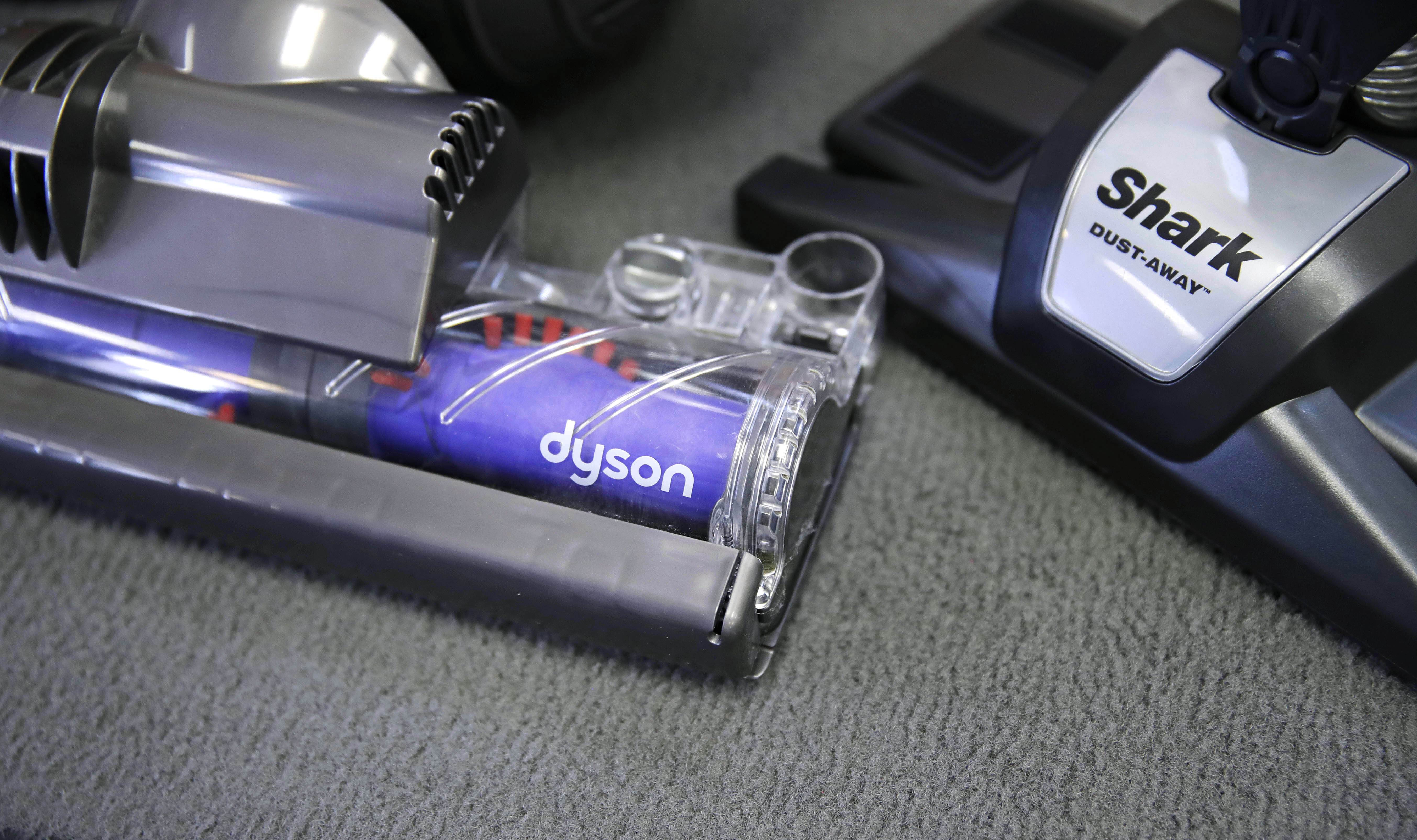
Freddie Garnham, Lighting Design Engineer at Dyson, shared that “unseen dust mites, allergens and dust contribute to an unhygienic environment” in our sleeping space in one neglected area in particular.
Which is?
People, you are meant to vacuum your mattress.
It makes sense when you think about it ― you may already vacuum your sofa, but for some reason, mattresses always seem to evade deep cleans.
That’s not a great idea, Garnham says.
“Regularly vacuuming your mattress will ensure a cleaner and more hygienic sleeping environment and a sleep undisturbed by allergies,” he said.
“While the frequency will depend on the mattress itself, it is recommended to be cleaned every six months with bedding changed once a week to keep dust and allergens at bay.”
Advertisement
He’s not alone. Speaking to Ideal Homes, Jane Wilson, manager of Fantastic Cleaners, said: “Regular vacuuming of your mattress can help remove allergens, dust mites, and dirt, contributing to a cleaner and more hygienic sleeping environment.”
She added,“It’s generally safe and beneficial for most types of mattresses. This includes mattresses with materials such as foam, latex, innerspring, hybrid, and memory foam.”
How should I vacuum my mattress?
The good news is that you don’t need a specially designed tool for the task: a plain old Henry or other vacuum will do.
Mattress Online says you should get the nozzle on the bed part and begin “using small circular motions over the entire mattress to make sure you lift all of the dust, dirt, hair and dead skin.
“If you have one, you can also use an upholstery attachment to make vacuuming a little easier, but it’s not essential.”
Advertisement
Once you’ve tried it, we can almost guarantee you’ll never go back.
If you struggle to get, or stay, asleep, you might wonder what’s “normal” and what’s genuinely worth worrying about.
The NHS says “A few sleepless nights are usually nothing to worry about, but it can become an issue if a lack of sleep starts to affect your daily life.”
Advertisement
But where exactly is that line meant to be drawn?
Well, according to healthcare provider Mayo Clinic, noticing one dangerous tendency during the day (rather than at night) can be a giveaway.
Which is?
If you’re finding yourself nodding off during important moments of your day, it’s possible you have a sleep disorder, Mayo Clinic says.
“Being very sleepy during the daytime” is a common sign, they write.
“You may fall asleep at times that aren’t typical, such as while driving or while working at your desk.”
The NHS adds that you may also have longer-term sleep issues if you:
find it difficult to fall asleep
lie awake for long periods at night
wake up several times during the night
wake up early and be unable to get back to sleep
feel down or have a lower mood
have difficulty concentrating
be more irritable than usual.
“Longer-term sleep problems can affect our relationships and social life, and leave us feeling tired all the time, eating more and not able to do daily tasks,” they add.
What are some common sleep disorders?
Insomnia, sleep apnoea (where you stop breathing for short periods of time throughout the night), restless leg syndrome, night terrors, sleepwalking, and even snoring can all disrupt a good night’s sleep.
“But talk with your doctor or other healthcare professional if you regularly have trouble getting enough sleep, if you don’t feel rested when you wake up or if you feel overly sleepy during the day.”
It’s happened again; this morning, I missed my pre-work gym session because I hadn’t gotten enough sleep.
Despite my strict 9:30 pm bedtime, I regularly fail to get my full eight hours in ― like many of us, I find going to bed and falling asleep two completely different challenges, with the latter behind much harder.
Advertisement
If you also struggle to snooze, though, there may be hope: the University of Minnesota says the “Military Sleep Method” can help you nod off far faster.
One fan of the method said it cut their falling asleep time down to two measly minutes.
“You lie on your back, being still, and intentionally relax each muscle group, one at a time, while focusing on slow, calming breaths,” they say.
That includes your eyelids, tongue, jaw, and more ― make sure your sleep “scan” is thorough.
You should move from the top of your head to the bottom of your toes, imagining yourself sinking into the bed the entire time.
Advertisement
After that, the Sleep Foundation says you should clear your mind for ten seconds, imagining something soothing like rolling hills or lying in a treehouse in a forest.
If you can’t clear your mind, don’t fight your thoughts, they add; just let them float into and out of your head.
UMN says that what you do before sleep matters too ― overstimulating yourself or getting too distracted won’t help, they suggest.
Military service isn’t exactly conducive to a good night’s sleep, they say, so the “military sleep method was used by World War II soldiers to fall asleep within two minutes.”
It was later “popularized in the [1981] book Relax and Win: Championship Performance,”they add (for some reason, a copy of that book is going for over £200 on Amazon).
US Love Is Blind fans will know that Stephen Richardson’s fallout with fiancee Monica Davis involved scandal, sex, and… a sleep test.
Among other shady behaviour, the most recent episode of American Love Is Blind saw Monica finding sexts to another woman on Stephen’s phone that were sent while he was engaged to her.
Advertisement
He said of the event, “I did make a completely stupid mistake while being drunk at a sleep test with somebody who texted me.”
We don’t know if he was actually doing a sleep test at the time, and his actions were obviously slimy regardless.
But if you’re anything like us, you might be wondering what a sleep test even is ― and it turns out it can be a pretty useful tool (that said, the secret to a truly seamless sleep is a clear conscience).
What’s a sleep test?
According to healthcare provider Cleveland Clinic’s site, a sleep test, or sleep study, is officially known as a polysomnogram.
Advertisement
It’s a “diagnostic test that tracks and records how multiple body systems work while you’re asleep,” they say. It’s used to diagnose sleep disorders.
It tracks things like your heart brain, and respiratory system as you sleep. It can be used to spot things like insomnia, sleepwalking, and sleep paralysis.
Sleep studies are “similar” to an oximetry test, which “involves wearing an oxygen monitor on a finger during sleep and can often be done at home.”
The NHS says these can be helpful if you have signs of sleep apnoea.
When you’re awake, symptoms of sleep apnoea may show up if you:
feel very tired
find it hard to concentrate
have mood swings
have a headache when you wake up.
At night, your partner may notice your:
breathing stopping and starting
making gasping, snorting or choking noises
waking up a lot
loud snoring.
What if I want one of these tests?
If you’re worried about your sleep habits, your doctor may refer you to specialist clinics which can facilitate sleep investigations.
Advertisement
Studies range from heart monitoring options (a respiratory polygraph) to inpatient observation and movement monitors (actigraphy).
Inpatient observations are the “polysomnograms” we mentioned earlier.
For what it’s worth, sleep studies usually ask participants not to drink ahead of the exam, or to only have as much as you usually do.
If you’ve had a rough night’s sleep recently, you may think to yourself ‘well, I’ll simply catch up on those missed hours of rest at the weekend’.
Unfortunately new research has revealed that actually this is a complete myth and that one night of restlessness can affect your attention, memory and cognition for – wait for it – a whole week.
Advertisement
The long-term study focused on one person’s brain and behaviour for five months using scans
As part of a unusual, long-term study, scientists tracked one person’s brain and behaviour for 19 whole weeks. The participant, first author of the study, Ana María Triana of Aalto University, Finland wore devices throughout the timeframe to track her activities and physiological markers and had routine scans to see how well her memory and cognition were working.
The results?
From the data gathered and published it would appear that our brains’ responses have two clear patterns – a response that could last around a week or a longer term wave of up to 15 days of gradual effects.
Things like focus after a bad night’s sleep fell under the shorter term response, while factors such as memory and attention were impacted for longer.
“We find traces of past behaviour and physiology in brain connectivity that extend up as far as 15 days,” the authors of the study, published in the journal Plos Biology, reported.
Advertisement
“Every day, we wake up as a slightly different person, as our mental states are influenced by many external factors,” they added.
“The quality of sleep, the level of physical activity, and the nature of our social interactions all affect the state of our brains at different timescales.
“Our findings suggest that behavioural, physiological and lifestyle factors correlate with brain connectivity across different timescales, in both the short term – less than seven days – and longer term, up to two weeks.”
The good news however is that physical activity was also found to positively affect brain region interaction and even slight changes in both mood and heart rate left lasting impressions for up to 15 whole days.
Here’s what happened to me last night: I went to bed at 10pm, for a 6:30am wake-up and finally got to sleep at midnight.
Then, I woke up again at 1am and panicked until 3am about the next morning.
If you’re interested, I didn’t end up making that early work-out. But if I’d considered leaving my bed rather than simply stressing about the next day, some experts think I might have stood a chance.
It “will lead your brain and body to associate your bed with wakefulness instead of with sleep”, Dr Buenaver said.
That can have a longer-term effect on your ability to nod off once your head hits the pillow, so he says you should get up after around 20 minutes of sleeplessness.
“Sit in a comfortable chair in another room,” he advised. “Read a book, with just enough lights on so that you can see the print comfortably.”
Advertisement
Don’t do any work or pay any bills in that time, and if you start stressing about those or other issues, try distracting yourself with music or audiobooks.
You should only go back to bed when you’re feeling drowsy.
“It can be difficult leaving a warm, comfortable bed after waking up in the middle of the night,” the sleep expert said.
“But think of this step as an investment in better sleep — if not tonight then tomorrow night and in the future.”
Any other advice?
I’m definitely guilty of scrolling mindlessly through TikTok after my 3am jolts awake, but sleep expert Dr Jeff Rogers told Bustle that’s the worst thing I can possibly do.
“The blue light from your phone mimics daylight and suppresses the production of melatonin, the hormone which regulates your sleep-wake cycle,” he shared with the publication.
Advertisement
And while you might want to try switching rooms after 20 minutes, Wendy Troxel, a senior behavioural scientist at Rand Corps, told CNN that clock-watching is generally a bad idea.
“Clock watching becomes habitual, and that habitual response of frustration and anxiety also causes a stress response in the body,” she said.
“You look at the clock… and immediately might grit your teeth. You think of all the demands… how awful it is going to be when you’re sleep-deprived,” she added.
If that sounds like you, Dr Buenaver says it’s fine to guess when your 20 minutes have passed.