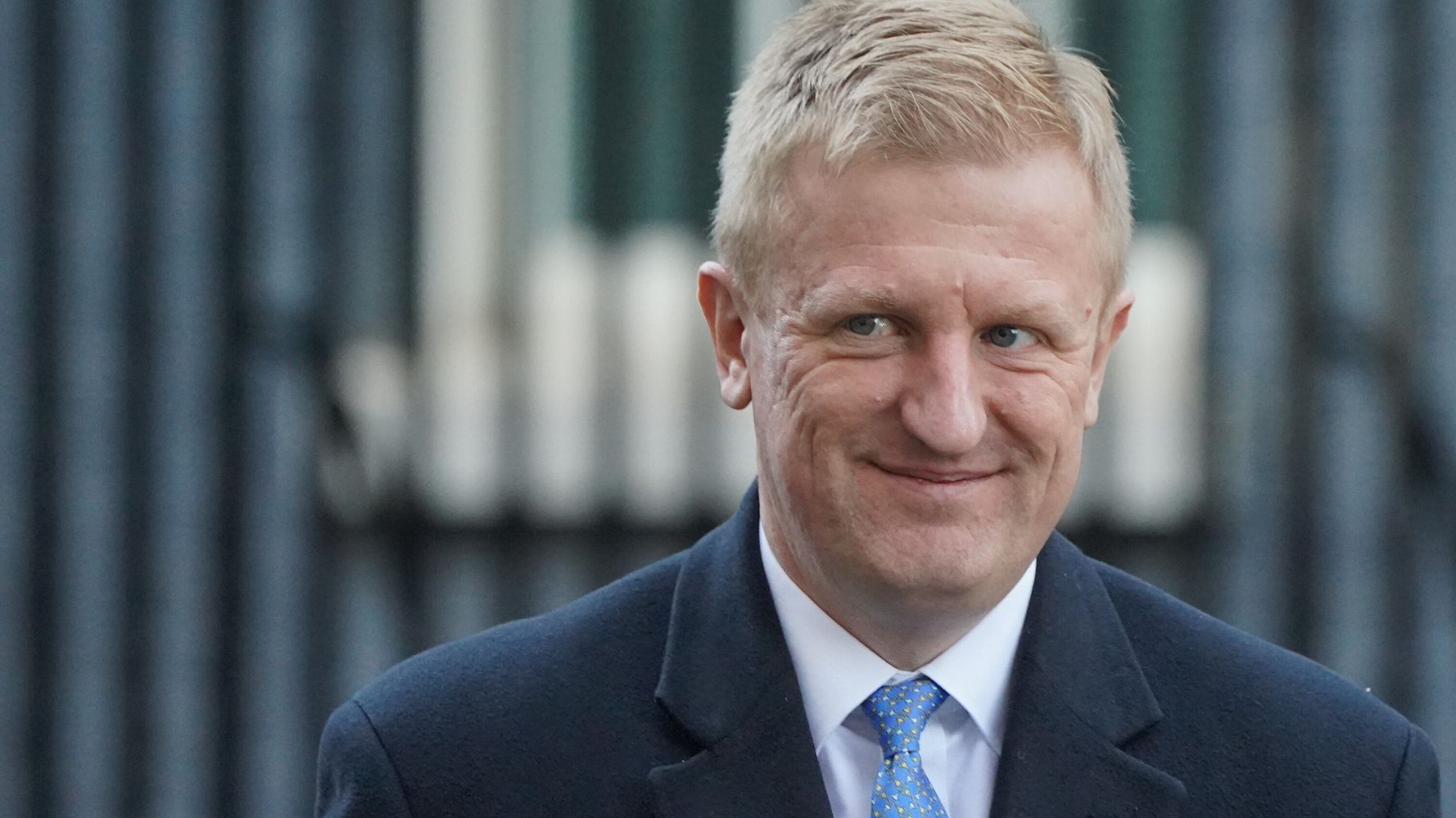
Tory Party Chair Oliver Dowden Likens ‘Woke Ideology’ To Maoism In Bizarre Speech

Oliver Dowden has likened “social justice warriors” to communist dictator Mao Zedong in an extraordinary attack on so-called cancel culture in the UK and US.

The Tory party chairman and former culture secretary said a “painful woke psychodrama” was sweeping the west and putting individual freedoms at risk.

He made his comments in a speech to the pro-Trump Heritage Foundation think tank in Washington.

Dowden said it was up to conservatives to “mount a vigorous defence of the values of a free society” which he claimed were under threat from “woke ideology”.

And he took aim at left-wing activists whom he accused of being “engaged in a form of Maoism determined to expunge large parts of our past in its entirety”, citing the defacing of a statue of Winston Churchill during protests in 2020.

The Tory party chairman said the “world watches” the relationship between America and its allies as they attempt to prevent Russian president Vladimir Putin from attacking Ukraine.

But Dowden said that just as “rogue states are seeking to challenge the international order…a pernicious ideology is sweeping our societies”.

“In Britain, its adherents sometimes describe themselves as social justice warriors,” he said.

“They claim to be woke, awakened to the so-called truths of our societies.

“But wherever they are found, they pursue a common policy inimicable to freedom.

“In their analysis, free speech is not a fundamental right necessary for the discovery of truth. To them, it is a dangerous weapon.”

He went on: “For all their fury at so called imperialism, these activists have absolutely nothing to say about that Vladimir Putin’s modern day empire building.

“Indeed, one of the perversities of this worldview is that the imperialist West is always at fault.”

Dowden claimed “woke” ideology is now “everywhere”.

“It’s in our universities, but also in our schools. In government bodies, but also in corporations. In social science faculties, but also in the hard sciences,” Dowden said.

“But I tell you, it is a dangerous form of decadence. Just when our attention should be focused on external foes, we seem to have entered this period of extreme introspection and self-criticism.

“And it really does threaten to sap our societies of their own self-confidence.

“Just when we should be showcasing the vitality of our values and the strength of democratic societies, we seem to be willing to abandon those values, for the sake of appeasing a new groupthink.

“The US and the UK may be different societies but we are joined by the same fundamental values.

“Neither of us can afford the luxury of indulging in this painful woke psychodrama.”

Alongside the attack on cancel culture and the culture wars, Dowden also hinted at an end to the big public spending and government interference that characterised the coronavirus response.

“We have reached a high watermark of the size of the state,” he said in a Q&A after his speech.

“We can’t repeat the mistakes we have seen in the past whereby in previous national crises, the state has expanded in scope and then has remained permanently much larger.

“We now need to embark on the course of making sure we rein in the size of the state, which in turn allows us to cut taxes.”

Share Button

The Dumbest Mistakes Diners Make On Valentine’s Day, According To Chefs

The candles are glowing softly, and you’re holding hands with your sweetheart across the table. As the waiter strides over to take your order, you may feel like everything’s coming up roses for your relationship.

But beware.

While dinner for two at a romantic restaurant may seem like the best possible way to celebrate Valentine’s Day, professional chefs say there are dangers awaiting the unsuspecting diner ― ones that could upend what’s supposed to be the most amorous night of the year.

Here’s what to avoid if you want the night to turn out right.

Mistake #1: Eating dinner before … well, you know

As with so many aspects of romantic relationships, timing your Valentine’s Day dinner is everything.

“I’ve had my share of unromantic Valentine’s Days, and I realized a few years ago that this is directly attributable to me loving food,” Christine Pittman, founder of CookTheStory and The Cookful, told HuffPost. “After having a multi-course dinner, wine and an indulgent chocolate dessert, the night never ended with the kind of romance in the bedroom that I was hoping for. We’d get home and find ourselves too full of rich food, a tad tipsy and very much aware that we have to be up for work in the morning.”

Now, older and wiser, Pittman has learned to rearrange the evening’s agenda for maximum fun.

“Now we enjoy the ‘romance’ part of the evening before going out to dinner,” Pittman said. “The best part is that unbuttoning your pants at the end of the night is just to make yourself more comfortable. You can go in for a cuddle and a goodnight kiss with no pressure or guilt, knowing that you’ve already had a fully romantic Valentine’s Day.”

“Everything you hear about beans is true. Luckily, we both had a sense of humor and a pack of matches.”

– Chef Rossi

Mistake #2: Guzzling pink drinks

On a celebratory occasion, many diners think that the fancier or more colorful the drink, the better. But chef Renee Scharoff of Blonde on the Run Catering has observed folks lapping up overly sweet pink sparkling wine that’s billed as “Champagne” on the holiday. That, she said, is a recipe for a sugar headache or a hangover.

“One time, my team and I catered a Valentine’s Day dinner at which we were asked to serve only pink or red cocktails, replete with dry ice and heart-shaped garnishes,” Scharoff recalled. “I could tell most of the attendees just wanted a bourbon or a beer.”

Keep it simple and order what you’d usually like to drink for your romantic meal, not something that will make you feel awful later.

Mistake #3: Getting the prix fixe meal and eating every bite

Many restaurants offer a prix fixe dinner on Valentine’s Day. Since it’s one of the busiest dining-out nights of the year, it makes sense for chefs, because it allows them to order inventory accurately and produce dishes they know their kitchen can handle. But it’s not necessarily the best ordering option for a night devoted to love.

“People are just too tempted to eat everything that’s put in front of them during that multiple-course seating,” chef John Sugimura of Pinku Japanese Street Food said. “It’s a good idea to step away from the overconsumption of food and booze, at least this one night.”

Smart restaurants are picking up those cues to keep things light. “One year, I capped off our Valentine’s service with a decorate-your-own Valentine’s cookie activity, instead of serving a rich dessert,” Sugimura said. “It got people together, talking and having fun, and they could take the cookie home for later if they were too full.”

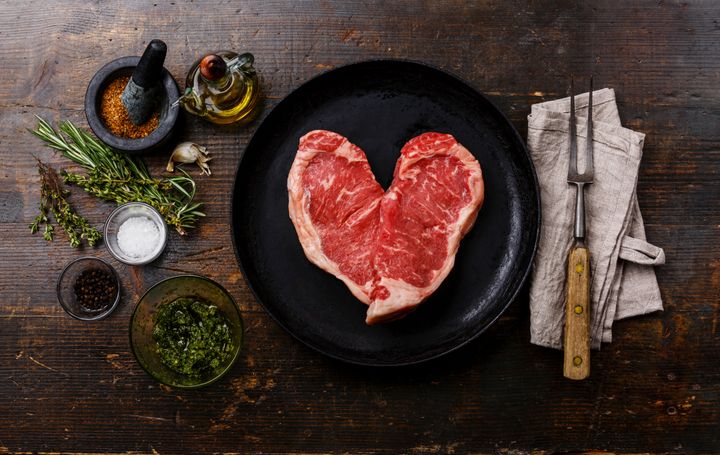
Uh, are you sure your date wants the steak for two?

The Picture Pantry via Getty Images

Uh, are you sure your date wants the steak for two?

Keep in mind that Valentine’s Day is not a holiday like Thanksgiving, when eating is the focus, or even Super Bowl Sunday, when the noshing never stops. Chef Michelle Bernstein, co-owner of Miami’s Café La Trova, said she’s noticed many V-Day diners who seem intent on getting their bellies full, without realizing that won’t necessarily keep their hearts light or their libidos purring.

“I’ve seen Valentine’s Day menus offering chateaubriand for two, three-pound lobsters dipped in butter, or, my personal favorite, a three-ounce piece of foie gras with something sweet underneath,” Bernstein recalled. “It’s all delicious and great food for sharing, but does anyone really feel ‘romantic’ after a meal like that? Why aren’t we eating a light salad, a lovely piece of fresh fish and a panna cotta instead?”

Mistake #4: Ordering for your date without asking first

It seems like something straight out of “Mad Men” ― the man (whose menu is the only one that includes prices) calls the waiter over and orders for himself and his date, without any prior consultation. And yes, it still happens, according to Chef Rossi, owner and executive chef of New-York based caterer The Raging Skillet.

“The sight of all that rare meat bleeding onto the sizzle plate, and her boyfriend sucking on the bones, induced a reaction far different from romance.”

– Chef Rossi

“I observed one couple get into hot water on Valentine’s Day, when ‘meat boy’ ordered a T-bone for two, rare,” Rossi recalled. “His lady love would have preferred a filet mignon cooked medium well, but he didn’t ask. The sight of all that rare meat bleeding onto the sizzle plate, and her boyfriend sucking on the bones, induced a reaction far different from romance and more like revulsion.”

For Rossi, a good Valentine’s Day meal begins with clear culinary communication. “My best advice is simply not to prepare anything for the object of your affection without a thorough list of dos and don’ts from them. And when you’re eating out, don’t order for them.”

Mistake #5: Ordering the sloppiest thing on the menu

You’ll want to end the meal looking as nice as you did when it started, so consider your order accordingly, chefs said. “Avoid spaghetti with red sauce, unless you’re into the splatter art of Jackson Pollock and OK with looking like a piece of his art by the end of the meal,” advised executive chef and managing partner Robin Selden, of Marcia Selden Catering.

And not all salads are created equally, so order with care, Selden said. “One Valentine’s Day, my husband took me to an elegant French restaurant with a special tasting menu. It started with a beautiful butter lettuce, frisée and endive salad, served with a creamy lemon vinaigrette and caviar. But the lettuce was so floppy and hard to navigate that by the end of the first course I was wearing the caviar that flew off the lettuce leaves.”

Mistake #6: Choosing ingredients that ruin romance

Curtis Stone, chef and owner of Maude and Gwen Butcher Shop and Restaurant in Los Angeles, said he’s a fan of all the traditional ingredients that make up a romantic dinner, including oysters, lobster, caviar and Champagne. But he suggested considering the effect that foods you love might have on your dining partner.

“Stay away from polarizing ingredients that literally leave a taste in your mouth, like garlic,” Stone advised. Stone and his wife, Lindsay, will be dining together this holiday at Maude in Beverly Hills, California, which he called his “dream little restaurant” — without garlic.

Timon Balloo is the chef and restaurateur at Ft. Lauderdale, Florida, restaurant The Katherine. He suggested that this is a good night to keep things mild — at least as far as your dinner is concerned.

“Stay away from the super-spicy foods,” Balloo said. “They might turn your evening into a bad case of heartburn or even a potential bathroom nightmare — and yeah, I said it, bathroom nightmare.”

Rossi brought up the bean issue, because somebody had to. “I committed my own major league Valentine’s Day boo-boo when I served a gorgeous black bean soup with sour cream garnish to my lady love,” she said. “Sure, it tasted fabulous. But honey, trust me, everything you hear about beans is true. Luckily, we both had a sense of humor and a pack of matches.”

Selden had two more no-no’s as a parting bit of advice: “Stay away from Brussels sprouts and cauliflower,” she said. “Trust me.”

Share Button

Sustainable bioeconomy: Development of environmentally friendly bio-shampoos and plant protection agent technologies

The natural resources of the planet are running short, yet at the same time they are the basis for our prosperity and development. A dilemma which the EU intends to overcome with the aid of its revised bioeconomy strategy. Rather than relying on fossil-based materials, the economy is to be based on renewable materials. These include plants, wood, microorganisms and algae. At some point in time everything is to be found in closed loops, yet the implementation of a circular bioeconomy requires a shift in the manufacture of chemicals. These also have to be produced from bio-materials rather than crude oil. Based on these requirements the American chemists Paul Anastas and John C. Warner formulated their twelve principles of green chemistry in 1998. One of their principles has very much been neglected to date, however: the reduction of the environmental toxicity of newly developed substances.

It is precisely here that the interdisciplinary project “GreenToxiConomy,” which is part of the scientific alliance Bioeconomy Science Center (BioSC), comes into play. The objective was to examine bio-based substances and innovative technologies with a view to their toxic impact on the environment at an early stage in product development and to incorporate the resulting findings into product design. Project partners from Aachen, Jülich and Düsseldorf provided two of their bio-based product candidates for the analyses: microgel containers for crop protection agents and biosurfactants.

The wash-active biosurfactants for use in shampoos and detergents at BioSC are based on the synthesis abilities of the Pseudomonas putida bacterium and the Ustilago maydis fungus, respectively, rather than on crude oil. The microgel technology allows for the controlled delivery of crop protection agents because the containers ensure that the active ingredients still adhere to the plants in the event of rain.

Dr. Sarah Johann, the lead author for the study and the head of a working group in the department of evolutionary ecology and environmental toxicology at the Institute for Ecology, Evolution and Diversity at Goethe University Frankfurt, explains: “For the analysis of novel substances and technologies we have selected a broad range of concentration to be able to adequately estimate potential hazards for humans and the environment. We wanted to examine whether the bio-based surfactants were more environmentally friendly than conventional chemical surfactants. In addition, we investigated whether the microgel containers per se induce any toxicity.”

To ensure the ecotoxicological evaluation was as precise as possible, the project team combined two elements in the determination of the toxicity: computer-aided prognoses (in silico) and experiments in the laboratory (in vitro and in vivo). The computer models work with the toxicity data of known chemicals, whose structure they compared with the structure of the new bio-based substances to forecast the toxicity. The experiments were conducted on aquatic and terrestrial organisms that represent specific organism groups, among them earthworms, springtails, water fleas and zebrafish embryos at a very early stage.

The result: both biosurfactants and microgels are highly promising candidates for use in a future bioeconomy whose products must be sustainably manufactured while not causing any environmental damage or harm to humans both during and after their utilisation. “We can only make statements within certain limits, however, as the transfer of laboratory results to the reality in the open field or in other applications is complicated,” says Johann. More research is necessary for a holistic assessment of the risk potential, which is why follow-up projects are planned.

Prof. Henner Hollert, head of the evolutionary ecology and environmental toxicology department at Goethe University Frankfurt, underlines the significance of the close interdisciplinary collaboration on “GreenToxiConomy.” In the project biotechnologists and engineers jointly designed a new product, and this was evaluated during the development stages by eco-toxicologists from Goethe University together with a team at RWTH Aachen headed by Prof. Dr. Martina Roß-Nickoll. “This continuous process is the major strength of the project.” Although it is only a first step towards a bioeconomy that is safe in eco-toxicological terms, for Hollert it is already clear that eco-toxicology and green toxicology will play a key role in the plans being drawn up by the EU. “Whenever it is a question of future bio-based product development and product design, we have to clarify the consequences for humans and the environment at an early stage. In this respect our approach can provide valuable results.”

Story Source:

Materials provided by Goethe University Frankfurt. Note: Content may be edited for style and length.

Share Button

Secondary cratering on Earth: The Wyoming impact crater field

Several dozen small impact craters, 10-70-m in size, have been discovered in southeastern Wyoming. A team of U.S. and German geoscientists found these ancient craters in exposed sedimentary layers from the Permian period (280 million years ago). After discovering the first craters, the team initially suspected that they are a crater-strewn field, formed by the breakup of an asteroid that entered the atmosphere. However, with the discovery of more and more craters over a wide area, this interpretation was ruled out.

Many of the craters are clustered in groups and are aligned along rays. Furthermore, several craters are elliptical, allowing the reconstruction of the incoming paths of the impactors. The reconstructed trajectories have a radial pattern.

“The trajectories indicate a single source and show that the craters were formed by ejected blocks from a large primary crater,” said project leader Thomas Kenkmann, professor of geology at the University of Freiburg, Germany. “Secondary craters around larger craters are well known from other planets and moons but have never been found on Earth,”

The team calculated the ballistic trajectories and used mathematical simulations to model the formation of the craters. All of the craters found so far are located 150-200 km from the presumed primary crater and were formed by blocks that were 4-8-m in size that struck the Earth at speeds of 700-1000 m/s. The team estimate that the source crater is about 50-65 km in diameter and should be deeply buried under younger sediments in the northern Denver basin near the Wyoming-Nebraska border.


Story Source:

Materials provided by Geological Society of America. Note: Content may be edited for style and length.


Journal Reference:

  1. Thomas Kenkmann, Louis Müller, Allan Fraser, Doug Cook, Kent Sundell, Auriol S.P. Rae. Secondary cratering on Earth: The Wyoming impact crater field. GSA Bulletin, 2022; DOI: 10.1130/B36196.1

Cite This Page:

Geological Society of America. “Secondary cratering on Earth: The Wyoming impact crater field.” ScienceDaily. ScienceDaily, 14 February 2022. <www.sciencedaily.com/releases/2022/02/220214144030.htm>.

Geological Society of America. (2022, February 14). Secondary cratering on Earth: The Wyoming impact crater field. ScienceDaily. Retrieved February 14, 2022 from www.sciencedaily.com/releases/2022/02/220214144030.htm

Geological Society of America. “Secondary cratering on Earth: The Wyoming impact crater field.” ScienceDaily. www.sciencedaily.com/releases/2022/02/220214144030.htm (accessed February 14, 2022).

Share Button

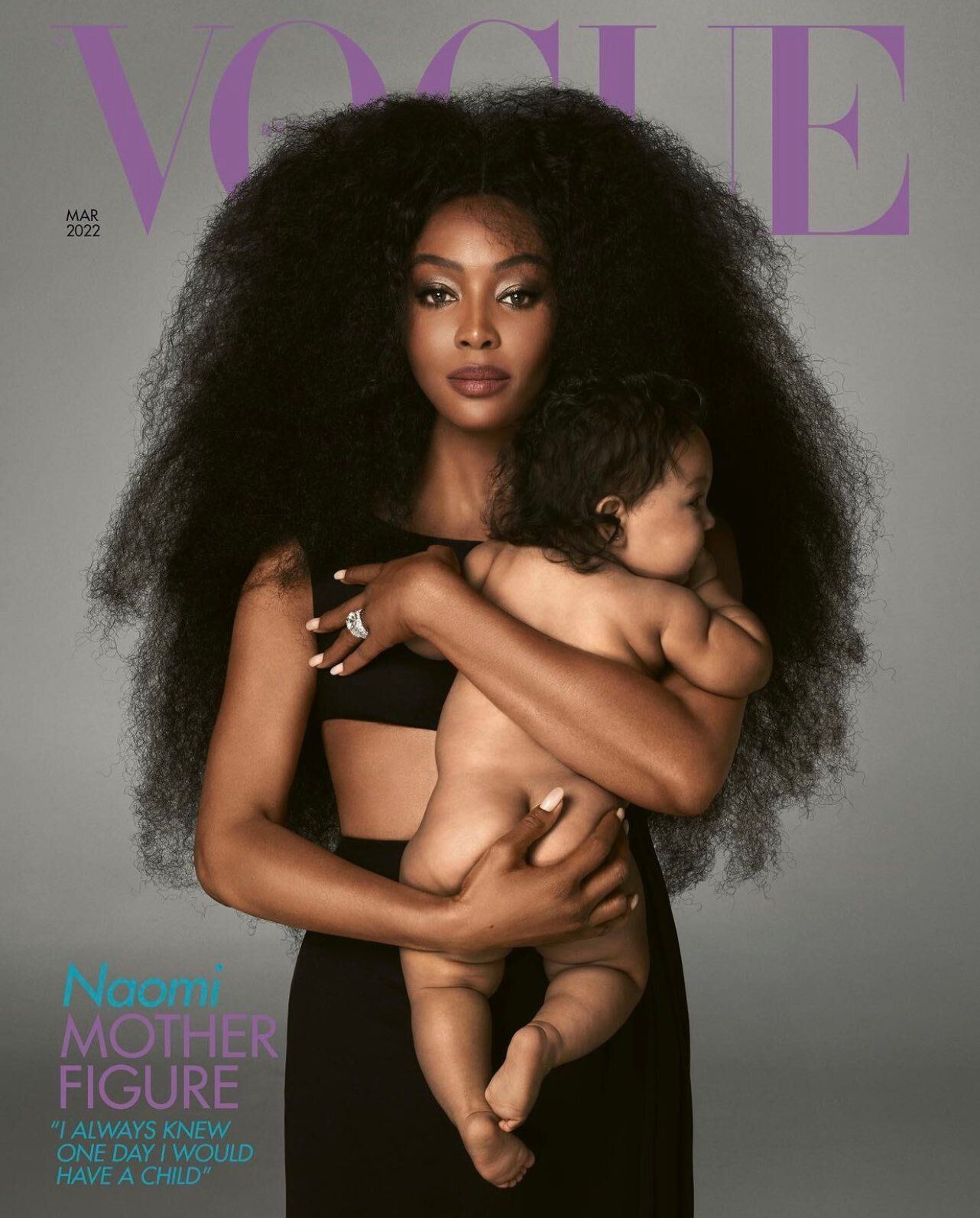
Naomi Campbell Introduces Her Baby Daughter To The World In British Vogue Cover Shoot

Naomi Campbell has introduced her daughter to the world in a cover photo-shoot for British Vogue.

The supermodel announced in May 2021 that she had become a mother, in an Instagram post that showed her cradling her newborn baby’s feet.

Since then, she has remained tight-lipped about the new addition to her family, but has now chosen to open up about motherhood in an accompanying interview with the fashion magazine.

While Naomi has decided to keep certain details about the child private – including her name – the 51-year-old did confirm to Vogue: “She wasn’t adopted – she’s my child.”

She also told the magazine that she had kept the fact she was having a child quiet from those closest to her, explaining: “I can count on one hand the number of people who knew that I was having her. But she is the biggest blessing I could ever imagine. It’s the best thing I’ve ever done.”

“I always knew that one day I would be a mother, but it’s the biggest joy I could ever imagine,” Naomi continued. “I’m lucky to have her and I know that.”

On how being a parent has changed her, Naomi revealed: “I’m like a kid again. I’m reliving nursery rhymes, playing and discovering how many great new toys there are out there in the world! And dolls! Things I couldn’t even dream of.”

At the end of the interview, Naomi was asked whether she would consider having more children in the future, with Vogue noting she said with a laugh: “Why not? Why not?”

Naomi previously told her Instagram followers: “A beautiful little blessing has chosen me to be her mother.

“So honoured to have this gentle soul in my life there are no words to describe the lifelong bond that I now share with you my angel. There is no greater love.”

Read Naomi’s interview in the March 2022 issue of British Vogue, on newsstands on Tuesday 22 February.

Share Button

A microbial compound in the gut leads to anxious behaviors in mice

A Caltech-led team of researchers has discovered that a small-molecule metabolite, produced by bacteria that reside in the mouse gut, can travel to the brain and alter the function of brain cells, leading to increased anxiety in mice. The work helps uncover a molecular explanation for recent observations that gut microbiome changes are associated with complex emotional behaviors.

The research was conducted primarily in the laboratory of Sarkis Mazmanian, Luis B. and Nelly Soux Professor of Microbiology and affiliated faculty member with the Tianqiao and Chrissy Chen Institute for Neuroscience at Caltech. A paper describing the study appears on February 14 in the journal Nature.

Decades of research have shown that the communities of bacteria that inhabit the intestines of animals (the microbiome) influence the immune system and metabolism; studies in the last few years have linked the microbiome to brain function and mood. People with certain neurological conditions have distinctly different gut bacteria communities. Further, studies in mice have shown that manipulating these communities can alter neurodevelopmental and neurodegenerative states, either ameliorating or exacerbating symptoms.

“It’s been really difficult to show causation between something that’s happening in the gut and the brain, rather than just associations between the disease states and the presence or absence of certain microbes,” says Brittany Needham, first author of the new study and a postdoctoral scholar in the Mazmanian lab. “We were interested in trying to understand the molecular messages that are going between the gut and the brain, and how these signals may lead to changes in behavior.”

This study focused on a bacterial metabolite (a by-product of microbes) called 4-ethylphenyl sulfate, or 4EPS. Initially produced by microbes in the intestines, 4EPS is then absorbed into the bloodstream and circulates throughout the body in both humans and mice. In 2013, the Mazmanian lab showed that this particular molecule was present in higher levels in mice with altered neurological development, specifically, a mouse model of autism and schizophrenia. Though other aspects of the altered microbiome differed from the healthy microbiome, 4EPS levels were by far the most different. Additionally, in a screen of human blood samples from 231 individuals, 4EPS levels were about seven times higher in children on the autism spectrum than in neurotypical children.

In this work, the team focused on the effects of 4EPS on mouse models of anxiety. While anxiety disorders in humans are complex, animal models provide a way to study the precise changes in the brain and body that lead to anxious behaviors. “Anxiety” in mice is measured by their willingness to explore or hide in a new space as well as the time spent in a risky environment. Bold mice will explore a new space, sniffing around, but anxious mice will hide, as if facing a predator, instead of exploring.

The study compared two groups of laboratory mice: one group was colonized with a pair of bacteria that were genetically engineered to produce 4EPS; the control group of mice were colonized with bacteria that were identical except lacked the ability to produce 4EPS. Then, the mice were introduced to a new arena, and researchers measured each mouse’s behavior.

The mice with 4EPS spent much less time exploring the area and more time hiding as compared to their non-4EPS counterparts, indicating higher levels of anxiety. Brain scans of the 4EPS mice also showed that some of the brain regions associated with fear and anxiety were more activated in addition to overall changes in brain activity and functional connectivity.

Looking closer at brain cells within these altered regions, the team found that particular cells called oligodendrocytes were altered. These cells are important in part because they produce a protein called myelin, which acts as a protective coating around neurons and nerve fibers called axons, like insulation around an electrical wire. The team found that in the presence of 4EPS, oligodendrocytes are less mature and consequently produce less myelin, leading to thinner insulation around axons.

However, when the 4EPS mice were treated with a drug known to increase myelin production in oligodendrocytes, the drug was able to overpower the negative effects of 4EPS — the mice regained normal myelin production, and the anxious behaviors were reduced.

In a related study appearing simultaneously in the journal Nature Medicine, Needham showed that treating mice with an oral drug to soak up and remove 4EPS from their systems led to reductions in anxious behaviors. This result enabled a small clinical study that also gave humans the drug in an open-label trial (no placebo or control group). Sequestering 4EPS in the human gut led to reduced levels of 4EPS in the blood and urine, and many of the 26 study participants displayed overall decreased levels of anxiety.

“It’s an exciting proof-of-concept finding that a specific microbial metabolite alters the activity of brain cells and complex behaviors in mice, but how this is happening remains unknown,” says Mazmanian. “The basic framework for brain function includes integration of sensory and molecular cues from the periphery and even the environment. What we show here is similar in principle but with the discovery that the neuroactive molecule is of microbial origin. I believe this work has implications for human anxiety or other mood conditions.”

The next steps for the work are to examine the mechanisms through which 4EPS affects oligodendrocytes — which proteins it may be interacting with, whether 4EPS is affecting changes directly in the brain, or if it is affecting another part of the body and those effects are making their way up to the brain. Also, it will be critical to show that the human data have an effect in a well-powered and controlled clinical trial, which is now underway.

In addition to Needham and Mazmanian, Caltech co-authors are former research technician Mark Adame; research technician Joseph Boktor; former postdoctoral scholar Wei-Li Wu (now of National Cheng Kung University in Taiwan); postdoctoral scholar Claire Rabut; EM scientist Mark Ladinsky; lecturer in chemistry Son-Jong Hwang; graduate student Jessica Griffiths; Pamela Bjorkman, David Baltimore Professor of Biology and Bioengineering, Merkin Institute Professor, and executive officer for biology and biological engineering; and Mikhail Shapiro, professor of chemical engineering and Howard Hughes Medical Institute Investigator.

Additional co-authors are Masanori Funabashi of Stanford University and Daiichi Sankyo RD Novare Co.; Zhuo Wang, Yumei Guo, and Daniel Holschneider of USC; Jillian Haney and Daniel Geschwind of UCLA; Qiyun Zhu of UC San Diego and Arizona State University; Rob Knight of UC San Diego; and Michael Fischbach of Stanford University.

Funding was provided by the Center for Environmental Microbial Interactions, the National Science Foundation, the Human Frontier Science Program, the National Institutes of Health, the Ministry of Science and Technology in Taiwan, the Heritage Medical Research Institute, and Lynda and Blaine Fetter. Sarkis Mazmanian is co-founder of Axial Therapeutics, which conducted the clinical trial.

Share Button

Review reveals ‘vast’ ethnic inequalities in NHS services

There is “overwhelming” evidence of poor health outcomes for some ethnic minority groups, warn experts.

Share Button

Good sex can be safer sex, say WHO researchers

Safe-sex education should include how to make it enjoyable for maximum benefit, say researchers.

Share Button

Heart disease: Women at higher risk of misdiagnosis

Vicki teaches her son, five, to use FaceTime in case his grandmother has a heart attack.

Share Button

Trigger Point Episode 4: The 7 Burning Questions We Have Now

If you were in any doubt about John’s guilt after what was found in his locker at the end of last week’s Trigger Point, the latest episode seemed to cement his involvement with The Crusaders.

Sunday’s instalment of the explosive ITV drama saw Lana discover John didn’t turn up for work on the day of the Five Oaks attack, before she then saw him seemingly eying up the far-right group’s next target. In a tragic turn of events for Lana, her brother Billy was then killed as he was used as an unwitting suicide bomber, as apparent revenge for a showdown she’d had with John at the police station.

With The Crusaders still at large and suspicions about one particular police officer growing ever bigger, here’s the questions we’ve been left asking this week…

What’s the hold up on the checks into HMX319?

Yep, we’re still waiting on the report from Porton Down on the chemical composition used by the bombers.

The current working theory is that some of the explosives made their way onto the dark web, with traces also suggesting they are about 10 years old.

But we’re yet to get any sort of confirmation on that as Porton Down appear to be taking their sweet time on getting back to Youngblood. That is, of course, if he has even requested the information in the first place. After all, we’ve had our suspicions about him for a few weeks now…

There's something up with Youngblood if you ask us
There’s something up with Youngblood if you ask us

MATT FROST, JONATHAN FORD AND ROSS FERGUSON

Who was watching Lana at the crime scene?

When Lana attended the scene of the burnt-out car one of the terrorists had blown up, there was a camera shot that suggested Lana was being covertly watched. Who was it?

Why would the bombers chose to advertise so clearly that they had military training?

Hamilton made a valid point about the way the bombs were wired so professionally. While Lana said it would have been just second nature to someone with military training and that the bombers wouldn’t expect EXPOs to check the wiring as the circuit would be damaged in any blasts, that is a big bet for them to take, especially if a device isn’t detonated.

Is John really under surveillance?

After Lana followed John out of their workplace, where she saw him appearing to eye up his next target, she was intercepted by Youngblood, who told her off for following someone who was already under police surveillance. He then refused to offer more details, saying he “couldn’t talk about an on-going investigation”.

Given our suspicions about Youngblood, we can’t help but think that this might be a lie and he hasn’t actually done anything with the information Lana gave him, because he is in on it.

Why isn’t Lana doing more to stop John?

Kris Hitchen as John Hudson

MATT FROST AND ROSS FERGUSON

She’s managed to unearth all this evidence against John, and while it might be inadmissible because of the way it was obtained, she’s only told one person (who is also of questionable character). Surely you would be telling anyone with any authority if there was a credible risk to life with further attacks?

Admittedly, she told Hamilton that John was the one they should be watching, but she really needs to give her the receipts so she can take what Lana is saying credibly.

How will John be caught?

With Billy now dead, will Lana share her suspicions about him with more people? And will he be caught before another attack?

Is Lana in danger?

The terrorists have already killed her brother – could she face a similar fate because of what she knows?

Trigger Point continues on Sunday at 9pm on ITV.

Share Button