These 6 Behaviours Are Major Red Flags On A Dinner Date

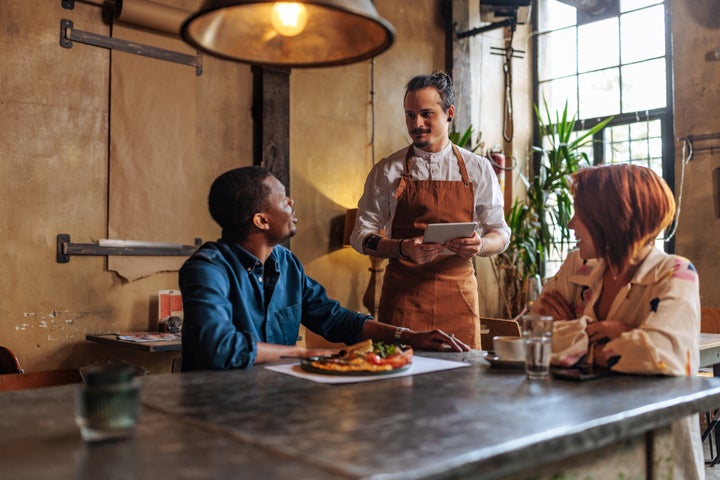
The way people behave in restaurants – where they have buying power but not ultimate control – can offer significant clues about their personalities. Since a restaurant is a little microcosm of life, you can find out a lot about a person when observing how they interact with staff, experience their food and cope with any occasional hiccups in service.

If you recognise any concerning behaviours when dining out, you might want to think twice about a second date. After all, as Chris Van Dyne, founder of Cosmic Pie Pizza in Santa Fe, New Mexico said, “Restaurants are stress tests. You’ve got time limits, money on the line and the potential for little annoyances everywhere. So if someone’s rude in a restaurant, they’ll be rude in traffic, in arguments and in bed.”

While a restaurant staff endures your bad date for just a couple of hours, you might end up with that person long-term if you don’t pay attention now. Chef Jonathon Scinto warned: “Each of these behaviours is like a preview trailer for a full-length toxic personality you don’t want to co-star with.”

1. They play games with seating

One well-known power play occurs when it’s time to be seated, said Rick Camac, executive director of industry relations at the Institute of Culinary Education’s New York City campus. He’s owned, operated, managed and consulted at 20 restaurants and bars since 2000, so he’s well-versed on the kind of ego tripping that begins before the first course is served.

“One of the worst examples happens when someone with a party of two requests a bigger table, like a four-top, in a clearly very busy restaurant,” Camac said. When it’s obvious that every other couple in the place has been seated at a two-top, it takes a real jerk to insist on special treatment. Demands like that show just how clueless – and power-driven – your date actually is.

Chef Douglas Keane, owner of the Sonoma Michelin-starred restaurant Cyrus and author of the memoir “Culinary Leverage: A Journey Through the Heat,” offered his own observations on power plays when it comes to seating.

“There are certain people who heard somewhere that they should never accept the first table they’re offered,” he observed. “They believe it’s obviously the intention of the restaurant to give the absolute worst table to them, and refusing the table is a sign of being smarter than the staff. It’s usually a sign of insecurity, and it’s funny to watch. We just roll our eyes and give them another table.”

2. They order for you without consultation

No, we haven’t gone back in time to the 1950s, but yes, this behaviour is still happening, food service professionals said.

“I saw a man cut off his date mid-order, telling the server, ‘She’ll just get a salad with no dressing. Trust me,’” Scinto said. “You could feel her energy change. He made it about control, not care. And that just gets worse over time.”

Taking the initiative isn't always as helpful as you think it might be.

Dimensions via Getty Images

Taking the initiative isn’t always as helpful as you think it might be.

Incredibly, this is something that front-of-house staff still see quite a lot. Belize Hans Polloso, who now works in tech, managed a high-end restaurant in Miami for four years, and she said that this was the most telling red flag she experienced.

“I once witnessed a man interrupt his girlfriend repeatedly when she tried to order, insisting she’d ‘enjoy the salmon more,’ despite her stating she didn’t eat fish. It signals a controlling personality who prioritises their preferences over their partner’s autonomy.”

3. They treat staff unprofessionally

When it comes to a classic red-flag-waver, you’ll notice that certain words just aren’t in their vocabulary.

“They never say ‘thank you,’” Scinto said. “They don’t thank the hostess, the person running food, nobody. It’s subtle, but it screams arrogance. If someone can’t give basic human respect to the team bringing their meal to life, they’ll probably struggle with gratitude in relationships, too.

“If they’re rude to staff, it shows how they view people in general,” he added. “I’ve watched a couple sit down and within five minutes, one of them is barking questions like they’re on an episode of ‘Kitchen Nightmares.’ They ask things like, ‘Is the chicken free range?’ orDo you know if the chef knows how to make it actually gluten-free?’ But it’s not what they ask so much as how – with a tone of entitlement. When someone talks down to my staff, especially in a place that’s built on warmth and intention, that should be an automatic no-go for their dining partner, too.”

“I think the No. 1 way to get under my skin as a chef is to treat the front of the house staff poorly,” said chef Robert Irvine, owner of Fresh Kitchen by Robert Irvine. “In my restaurants, the staff is unified in trying their best to give the customer a great experience. If that’s falling short for reasons real or imagined, there is no world in which it’s OK to start taking it out on the servers.”

When asked why this behaviour continues to happen, Irvine said, “There’s some combination of spending money and buying into the old myth that ‘the customer is always right’ that can make people think they’re entitled to not just a good meal, but to making the employees jump through various hoops.”

Being overly brusque is one red flag, but being overly familiar is another. Many servers have horror stories of the person who ignored a date completely to flirt with them all night. And if your date starts getting handsy, you really don’t want to hang around to see what happens next. Chef Rossi, owner of New York-based The Raging Skillet and author of the memoir “The Punk Rock Queen of the Jews,” offered up a simple phrase to live by: “Never, ever, touch the staff.”

4. They freak out if there’s a problem

Chef John Sugimura pointed out the “toxic bitch” tendencies of the rare customer who is never satisfied.

“They’ll criticise and ridicule every aspect of their dining experience. In my head, I’m thinking, ‘Bitch, please!’ I have a lot more customers deserving of my positive energy, so this behaviour is exhausting.”

If you’re wondering which customers this type of behaviour most frequently applies to, Keane spelled it out: “Let’s be perfectly clear — 99.9% of the time it’s a guy being douchey, and it’s all ego- and entitlement-based — definitely not someone you want to date. For that .1% of red flags that remain, it’s a woman who usually pre-gamed a little too much and is just being loud or a little obnoxious. Usually, she’s nothing too hard for our staff to deal with.”

5. And now, for a toast… or not

“Intoxication is the most easily observable red flag, and it’s the one that probably comes up the most,” Irvine said. In addition to lapping up too much of the sauce, true jerks can establish themselves in tussles over the wine menu. A common play for the arrogant, Irvine said, is expressing “annoyance that the wine list isn’t sophisticated enough for their tastes. Their arrogance demands that they demonstrate the full depth of their knowledge, so they’ll begin lecturing a server about the proper way to do their job.”

As sommeliers can tell you, the wine list can cause all sorts of ego-related acting out. Camac noted a few things that are likely to have the staff secretly choose your date for the un-coveted title of “guy we can’t wait to see the last of.” Wine-related red flags he noted include “when the date doesn’t know how to pronounce the name of certain wines, but is still trying to come off as an ‘expert,’ when they don’t know how to properly taste good wine or when they send back perfectly good wine.”

6. They tip badly (or make you pay the whole bill)

Many people in the food service industry have seen firsthand how skinflints can ruin a good server’s night.

“My father was a horrifyingly bad tipper,” Rossi said. “I spent a lot of my young adulthood apologising to waiters. When I got older, I’d reach into my pocket and add $20 to the $5 he’d left, which dad thought was adequate for our family dinner for five.”

These days, Rossi has clear advice for anyone dining in a restaurant: “Unless your waiter is a serial killer, tip them properly. Actually, it might be more important to tip if they are a serial killer, because you don’t want to piss them off.”

“We overheard one guy who left no tip at all, telling his girlfriend, ‘They already get paid,’” Van Dyne said. “She looked horrified, so we slipped her a free dessert.” Another behaviour is one that Van Dyne described as “the classic credit card ghost”: “Someone pulls out their wallet, pretends to reach, then freezes. They leave their dining partner to cover everything.”

Your server is paying attention, and so should you.

Many relationship hurdles need to be cleared when you’re dating someone – meeting up with friends, attending work events or finally meeting the parents. But along the way, you’ll also want to pay attention during coffee dates, casual brunches or fancy nights out, and make sure that your date is treating restaurant staff the way you expect to be treated.

“If you want to know who someone really is, take them to a restaurant and watch, not just what they eat — but how they act,” Scinto said. “Because if they can’t show respect to the people feeding them, they’ll never be able to feed a relationship with the same care.”

Share Button

The Dumbest Mistakes Diners Make On Valentine’s Day, According To Chefs

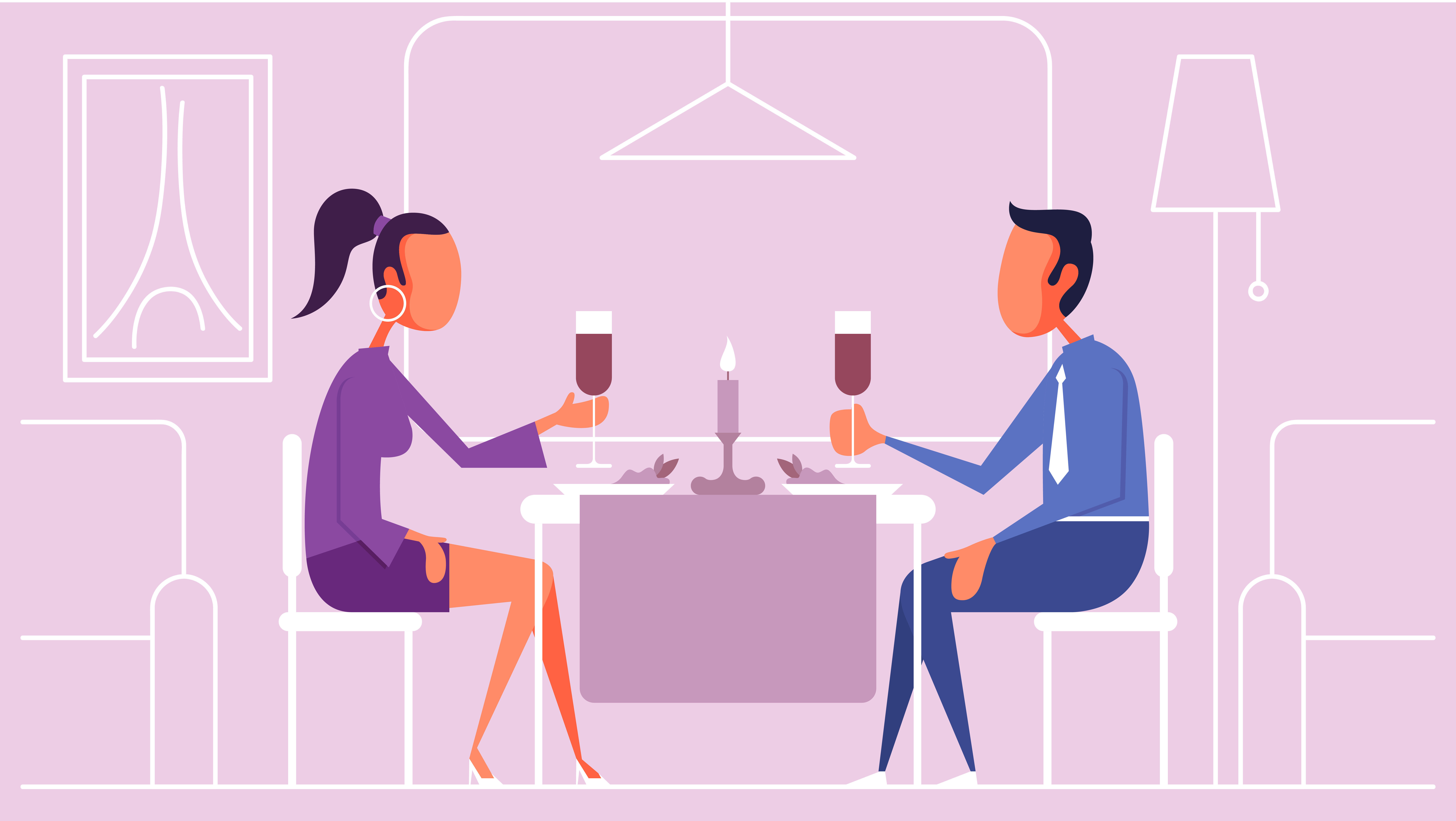
The candles are glowing softly, and you’re holding hands with your sweetheart across the table. As the waiter strides over to take your order, you may feel like everything’s coming up roses for your relationship.

But beware.

While dinner for two at a romantic restaurant may seem like the best possible way to celebrate Valentine’s Day, professional chefs say there are dangers awaiting the unsuspecting diner ― ones that could upend what’s supposed to be the most amorous night of the year.

Here’s what to avoid if you want the night to turn out right.

Mistake #1: Eating dinner before … well, you know

As with so many aspects of romantic relationships, timing your Valentine’s Day dinner is everything.

“I’ve had my share of unromantic Valentine’s Days, and I realized a few years ago that this is directly attributable to me loving food,” Christine Pittman, founder of CookTheStory and The Cookful, told HuffPost. “After having a multi-course dinner, wine and an indulgent chocolate dessert, the night never ended with the kind of romance in the bedroom that I was hoping for. We’d get home and find ourselves too full of rich food, a tad tipsy and very much aware that we have to be up for work in the morning.”

Now, older and wiser, Pittman has learned to rearrange the evening’s agenda for maximum fun.

“Now we enjoy the ‘romance’ part of the evening before going out to dinner,” Pittman said. “The best part is that unbuttoning your pants at the end of the night is just to make yourself more comfortable. You can go in for a cuddle and a goodnight kiss with no pressure or guilt, knowing that you’ve already had a fully romantic Valentine’s Day.”

“Everything you hear about beans is true. Luckily, we both had a sense of humor and a pack of matches.”

– Chef Rossi

Mistake #2: Guzzling pink drinks

On a celebratory occasion, many diners think that the fancier or more colorful the drink, the better. But chef Renee Scharoff of Blonde on the Run Catering has observed folks lapping up overly sweet pink sparkling wine that’s billed as “Champagne” on the holiday. That, she said, is a recipe for a sugar headache or a hangover.

“One time, my team and I catered a Valentine’s Day dinner at which we were asked to serve only pink or red cocktails, replete with dry ice and heart-shaped garnishes,” Scharoff recalled. “I could tell most of the attendees just wanted a bourbon or a beer.”

Keep it simple and order what you’d usually like to drink for your romantic meal, not something that will make you feel awful later.

Mistake #3: Getting the prix fixe meal and eating every bite

Many restaurants offer a prix fixe dinner on Valentine’s Day. Since it’s one of the busiest dining-out nights of the year, it makes sense for chefs, because it allows them to order inventory accurately and produce dishes they know their kitchen can handle. But it’s not necessarily the best ordering option for a night devoted to love.

“People are just too tempted to eat everything that’s put in front of them during that multiple-course seating,” chef John Sugimura of Pinku Japanese Street Food said. “It’s a good idea to step away from the overconsumption of food and booze, at least this one night.”

Smart restaurants are picking up those cues to keep things light. “One year, I capped off our Valentine’s service with a decorate-your-own Valentine’s cookie activity, instead of serving a rich dessert,” Sugimura said. “It got people together, talking and having fun, and they could take the cookie home for later if they were too full.”

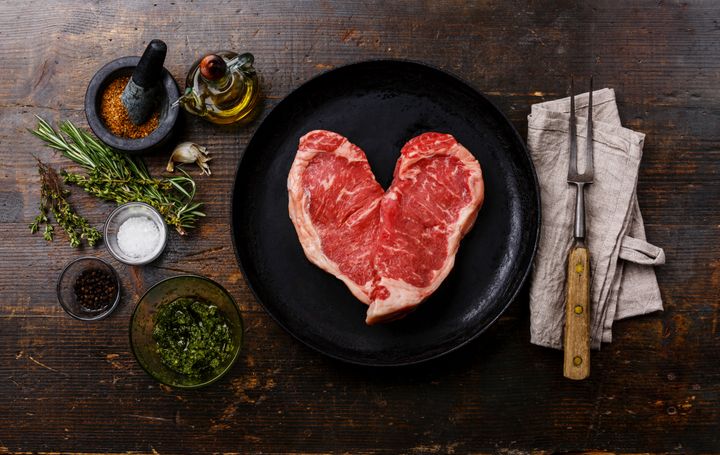
Uh, are you sure your date wants the steak for two?

The Picture Pantry via Getty Images

Uh, are you sure your date wants the steak for two?

Keep in mind that Valentine’s Day is not a holiday like Thanksgiving, when eating is the focus, or even Super Bowl Sunday, when the noshing never stops. Chef Michelle Bernstein, co-owner of Miami’s Café La Trova, said she’s noticed many V-Day diners who seem intent on getting their bellies full, without realizing that won’t necessarily keep their hearts light or their libidos purring.

“I’ve seen Valentine’s Day menus offering chateaubriand for two, three-pound lobsters dipped in butter, or, my personal favorite, a three-ounce piece of foie gras with something sweet underneath,” Bernstein recalled. “It’s all delicious and great food for sharing, but does anyone really feel ‘romantic’ after a meal like that? Why aren’t we eating a light salad, a lovely piece of fresh fish and a panna cotta instead?”

Mistake #4: Ordering for your date without asking first

It seems like something straight out of “Mad Men” ― the man (whose menu is the only one that includes prices) calls the waiter over and orders for himself and his date, without any prior consultation. And yes, it still happens, according to Chef Rossi, owner and executive chef of New-York based caterer The Raging Skillet.

“The sight of all that rare meat bleeding onto the sizzle plate, and her boyfriend sucking on the bones, induced a reaction far different from romance.”

– Chef Rossi

“I observed one couple get into hot water on Valentine’s Day, when ‘meat boy’ ordered a T-bone for two, rare,” Rossi recalled. “His lady love would have preferred a filet mignon cooked medium well, but he didn’t ask. The sight of all that rare meat bleeding onto the sizzle plate, and her boyfriend sucking on the bones, induced a reaction far different from romance and more like revulsion.”

For Rossi, a good Valentine’s Day meal begins with clear culinary communication. “My best advice is simply not to prepare anything for the object of your affection without a thorough list of dos and don’ts from them. And when you’re eating out, don’t order for them.”

Mistake #5: Ordering the sloppiest thing on the menu

You’ll want to end the meal looking as nice as you did when it started, so consider your order accordingly, chefs said. “Avoid spaghetti with red sauce, unless you’re into the splatter art of Jackson Pollock and OK with looking like a piece of his art by the end of the meal,” advised executive chef and managing partner Robin Selden, of Marcia Selden Catering.

And not all salads are created equally, so order with care, Selden said. “One Valentine’s Day, my husband took me to an elegant French restaurant with a special tasting menu. It started with a beautiful butter lettuce, frisée and endive salad, served with a creamy lemon vinaigrette and caviar. But the lettuce was so floppy and hard to navigate that by the end of the first course I was wearing the caviar that flew off the lettuce leaves.”

Mistake #6: Choosing ingredients that ruin romance

Curtis Stone, chef and owner of Maude and Gwen Butcher Shop and Restaurant in Los Angeles, said he’s a fan of all the traditional ingredients that make up a romantic dinner, including oysters, lobster, caviar and Champagne. But he suggested considering the effect that foods you love might have on your dining partner.

“Stay away from polarizing ingredients that literally leave a taste in your mouth, like garlic,” Stone advised. Stone and his wife, Lindsay, will be dining together this holiday at Maude in Beverly Hills, California, which he called his “dream little restaurant” — without garlic.

Timon Balloo is the chef and restaurateur at Ft. Lauderdale, Florida, restaurant The Katherine. He suggested that this is a good night to keep things mild — at least as far as your dinner is concerned.

“Stay away from the super-spicy foods,” Balloo said. “They might turn your evening into a bad case of heartburn or even a potential bathroom nightmare — and yeah, I said it, bathroom nightmare.”

Rossi brought up the bean issue, because somebody had to. “I committed my own major league Valentine’s Day boo-boo when I served a gorgeous black bean soup with sour cream garnish to my lady love,” she said. “Sure, it tasted fabulous. But honey, trust me, everything you hear about beans is true. Luckily, we both had a sense of humor and a pack of matches.”

Selden had two more no-no’s as a parting bit of advice: “Stay away from Brussels sprouts and cauliflower,” she said. “Trust me.”

Share Button

No, Curry Isn’t Cancelled. But Indian Food Is So Much More

Judging by the papers this week you’d think “the woke left” were trying to ban curry altogether.

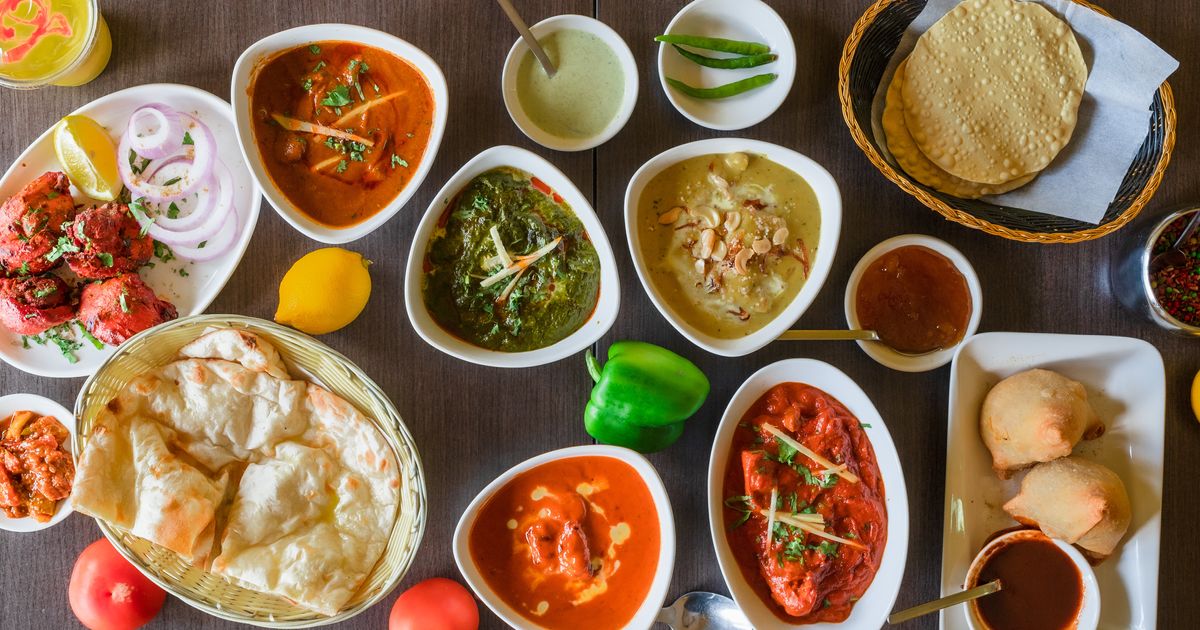
That’s after two food bloggers questioned why many South Asian dishes are often categorised under the umbrella term “curry”.

Chaheti Bansal, a chef by hobby based in California, posted an Instagram video pointing out the colonial origins of the word.

The 29-year-old asked why foreigners label any South Asian food as curry, even though there is huge variety among food items.

“There’s a saying that the food in India changes every 100km and yet we’re still using this umbrella term popularised by white people who couldn’t be bothered to learn the actual names of our dishes,” said the blogger.

“But we can still unlearn.”

After Bansal’s video was shared on BuzzFeed Tasty’s Instagram channel, and viewed more than 3.6 million times, many criticised her sentiments, saying it stoked a “woke” colonialism row.

So how did the word curry come to be? According to historians, British officials misheard the Tamil word Kari (referring to side dishes), which then – due to power imbalances – became the norm among locals. Homogenising such varied dishes as sabzi, chawals and sambars simply as ‘curry’ is “rooted in white, Christian supremacy”, one historian told NBC news.

The message was echoed by another food influencer, Nisha Vedi Pawar, who said the diversity of South Asian items shouldn’t be lumped together.

Pawar, 36, from New Jersey spoke to HuffPost to explain the issue she and Bannsal are trying to raise awareness for, has been blown out of proportion.

Nisha Vedi Pawar aims to preserve Indian culture through her cooking

Nisha Vedi Pawar aims to preserve Indian culture through her cooking

“Every time we try and defend anything people say we’re being ‘too woke’ or ‘too sensitive’, she says.

“Curry is often assumed to be heavy, cream laden dishes. Contrary to popular belief, Indians do not eat curry every day, neither will you find curry powder stocked in Indian homes or grocery stores. Curry is a concept that Europeans imposed on India’s food culture. By labelling all Indian food curry we are giving a very broad, watered down version of our beautiful cuisine.“

Instead, Bansal and Pawar suggest learning the different names of all your favourite Indian dishes.

“It starts with all of us making the effort to learn and label the dishes as what they are. Methi murgh, raasedar paneer, dahi wale aloo. Let’s start using the actual names of our dishes,” says Pawar, who adds that when calls like this to decolonise food get taken out of their context, it only contributes to culture wars.

“Sensationalised headlines make it very difficult for creators of colour to share their thoughts with the world without getting judged or railroaded. When the media takes a few blurbs from someone’s opinion and spins it to their liking, it create more harm than good,” she tells HuffPost UK.

“My goal is to create my page and educate people that Indian food is more than curries. I want to see more people taking the time to learn the origins of our dishes.”

And the waiters will be suitably impressed if you order a shorshe murgi instead of a chicken curry.

Share Button

How To Support Your Local Pub Or Restaurant If You’re In Tier 3

HuffPost is part of Verizon Media. We and our partners will store and/or access information on your device through the use of cookies and similar technologies, to display personalised ads and content, for ad and content measurement, audience insights and product development.

Your personal data that may be used

  • Information about your device and internet connection, including your IP address
  • Browsing and search activity while using Verizon Media websites and apps
  • Precise location

Find out more about how we use your information in our Privacy Policy and Cookie Policy.

To enable Verizon Media and our partners to process your personal data select ‘I agree‘, or select ‘Manage settings‘ for more information and to manage your choices. You can change your choices at any time by visiting Your Privacy Controls.

Share Button

How To Stay As Safe As Possible In Pubs And Restaurants

HuffPost is part of Verizon Media. We and our partners will store and/or access information on your device through the use of cookies and similar technologies, to display personalised ads and content, for ad and content measurement, audience insights and product development.

Your personal data that may be used

  • Information about your device and internet connection, including your IP address
  • Browsing and search activity while using Verizon Media websites and apps
  • Precise location

Find out more about how we use your information in our Privacy Policy and Cookie Policy.

To enable Verizon Media and our partners to process your personal data select ‘I agree‘, or select ‘Manage settings‘ for more information and to manage your choices. You can change your choices at any time by visiting Your Privacy Controls.

Share Button

What Restaurant Owners Really Made Of ‘Eat Out To Help Out’ In August

HuffPost is part of Verizon Media. We and our partners will store and/or access information on your device through the use of cookies and similar technologies, to display personalised ads and content, for ad and content measurement, audience insights and product development.

Your personal data that may be used

  • Information about your device and internet connection, including your IP address
  • Browsing and search activity while using Verizon Media websites and apps
  • Precise location

Find out more about how we use your information in our Privacy Policy and Cookie Policy.

To enable Verizon Media and our partners to process your personal data select ‘I agree‘, or select ‘Manage settings‘ for more information and to manage your choices. You can change your choices at any time by visiting Your Privacy Controls.

Share Button

Shower Curtains And Scary Mannequins: Is This The Future Of Dining Out?

HuffPost is part of Verizon Media. Click ‘I agree‘ to allow Verizon Media and our partners to use cookies and similar technologies to access your device and use your data (including location) to understand your interests, and provide and measure personalised ads. We will also provide you with personalised ads on partner products. Learn more about how we use your data in our Privacy Centre. Once you confirm your privacy choices here, you can make changes at any time by visiting your Privacy dashboard.

Click ‘Learn more‘ to learn and customise how Verizon Media and our partners collect and use data.

Share Button