Novel assessment of platelet-rich plasma treatment shows efficacy in patients with osteoarthritis

A pilot study conducted by researchers at Baylor College of Medicine combined wearable technology and patient-reported outcomes to assess the efficacy of platelet-rich plasma (PRP) treatment in osteoarthritis (OA).

The results, published in the journal Regenerative Medicine, showed that a single injection of leukocyte-rich/PRP in the knee joint significantly improved functional mobility, pain and quality of life after six weeks. The study supports using this combined approach to further evaluate this and other emerging biological therapies for musculoskeletal disorders in larger clinical trials.

“OA is a leading cause of disabilities, affecting nearly 52 million Americans,” said first and corresponding author Dr. Prathap Jayaram, director of regenerative sports medicine and assistant professor in the Department of Physical Medicine and Rehabilitation and Orthopedic Surgery at Baylor. “It has been estimated that more than 80% of individuals older than 55 years have some X-ray-based evidence of the disease.”

OA develops when the smooth cushion between bones, the cartilage, breaks down. Progressively, joints become painful, swollen and hard to move, Jayaram explained. Currently, there are no validated therapies that delay disease progression. The current standard of care is limited to the alleviation of symptoms with corticosteroids.

“However, although steroids seem to be helpful in the short term for pain, emerging evidence has associated steroid long-term use in OA with loss of cartilage,” Jayaram said. “As OA is a whole joint disease, there is a need for developing novel therapeutic strategies that ultimately prevent and/or delay disease progression while improving functional outcomes. PRP is emerging as one of the promising candidates to treat OA that are currently being used in clinical practice.”

Combining wearable technology and patient assessment to evaluate the treatment

One challenge of previous studies assessing PRP therapies in OA is that treatment evaluation is based on patient-reported outcomes that subjectively assess pain or aspects of joint function, such as the time up-and-go (TUG), how quick a person gets up from a chair.

In this study, Jayaram and colleagues incorporated wearable technology to objectively assess functional outcomes such as TUG, in addition to patient-reported outcomes to comprehensively evaluate the efficacy of PRP in knee OA (KOA).

The prospective pilot study included 12 patients diagnosed with KOA. Each patient received one ultrasound-guided injection of PRP and function and pain were evaluate six weeks later.

PRP is prepared from the patient’s own blood by removing the red blood cells and enriching the concentration of platelets. PRP also contains white blood cells, or leukocytes. PRPs are formulated either leucocyte-rich (LR) or leukocyte-poor. A preclinical study by Jayaram and his colleagues had previously shown that LR-PRP had potential disease-modifying effects that correlated with functional outcomes.

“In the current study, we found that a single injection of LR-PRP into the knee does significantly improve functional mobility, pain and quality of life at six weeks,” Jayaram said. “To our knowledge, our study is the first to report the efficacy of LR-PRP on objective functional outcomes using wearable sensor technology and validated patient-reported outcomes. Our findings provide the basis to conduct larger randomized clinical trials of PRP.”

Story Source:

Materials provided by Baylor College of Medicine. Original written by Homa Shalchi. Note: Content may be edited for style and length.


Share Button

Improving strength, stretchiness and adhesion in hydrogels for wound healing

Hydrogels are everywhere. They are water-loving polymers which can absorb and retain water and can be found in such everyday consumer products such as soft contact lenses, disposable diapers, certain foods, and even in agricultural applications. They are also extremely useful in several medical applications due to their high degree of biocompatibility and their ability to eventually degrade and be reabsorbed into the body.

These qualities allow hydrogels to simulate living tissue for tissue replacement or regeneration. One of the most useful of these applications is for healing wounds. Hydrogels are ideal for this purpose, with their ability to hydrate and form a moist and supportive environment. This facilitates processes beneficial for wound healing, such as blood vessel formation, the breakdown of dead tissue, activation of immune cells, the prevention of live cell and tissue death and even the alleviation of pain.

Natural hydrogels, particularly gelatin methacryloyl (GelMA) hydrogels, are favored for wound healing due to their biosafety and exceptional biocompatibility. But their usage is hampered by their inherently poor mechanical properties such as limited stretchiness, relative brittleness and inflexibility, and their inability to adhere to onto tissue surfaces. In order to improve upon these characteristics, variations on preparation methods and components have been attempted.

When a GelMA hydrogel is prepared, a solution of gelatin is made by mixing and dissolving gelatin in water. This results in a dispersion of gelatin polymer chains in the water. A chemical called a photo-initiator is then added to the solution, which makes the polymer chains sticky and allows them to stick to one another. Exposure to UV light activates the photo-initiators and the polymer chains cross-link to each other to form a network. Water molecules enter this network, stretching the chains and becoming locked within them; this illustrates the hydrogels’ absorptive powers and is the point where gelation, or solidification, occurs.

The properties of this gel can be modified by adding chemicals that bind to the polymer chains before UV exposure, or the UV parameters themselves can be varied to tune the gel’s properties. Some of these modifications have been experimented with in previous attempts to improve GelMA’s physical properties.

One approach was to introduce additional chemicals into the GelMA solution before crosslinking; the resultant chemically conjugated hydrogel showed a slight improvement in tissue adhesion. Other attempts have been made at strengthening GelMA by reinforcing flexible thin chemically conjugated GelMA films with additional chemicals. But challenges remain with improving the three mechanical properties of toughness, stretchiness, and adhesive strength simultaneously in GelMA hydrogels.

A collaborative team from the Terasaki Institute for Biomedical Innovation (TIBI) has developed methods for improving all three of these properties in GelMA hydrogels in a simple procedure with tunable fabrication parameters.

The researchers first turned to an example found in nature in their approach to improving adhesion in the hydrogels. Marine mussels secrete strong threads that are used as attachments and pulling ropes on rocks and other irregular surfaces. To form these threads, the mussels produce adhesion proteins in an acidic environment; upon exposure to the slightly alkaline ocean water, the proteins undergo a chemical change which spurs thread formation.

In a corresponding fashion, the TIBI team added large quantities of dopamine, a chemical analog to mussel adhesion protein, to GelMA to increase its strength, stretchiness, and adhesive properties. They also subjected the mixture to alkaline conditions to further increase the GelMA’s adhesive strength.

The results showed that the addition of large quantities of dopamine to the GelMA solution could increase the stretchiness of the resultant hydrogel by almost six-fold and its strength by more than three-fold. Other experiments showed that when the dopamine is subjected to alkaline conditions before the crosslinking step, the adhesive strength could be increased up to four times and its resistance to shear forces by almost seven-fold.

“The experiments we have conducted provide valuable insight into procedures for activating toughness and adhesion in GelMA-based hydrogels,” said Hossein Montazarian, Ph.D., first author of the project.

The researchers will continue to experiment with other chemicals to optimize their effects on GelMA’s mechanical properties. This can lead to improvements in additional applications such as skin-attachable wearable devices or healing and regenerative internal implants.

“The knowledge gained here on the fundamental mechanical properties of hydrogels can have far-reaching effects on biomedical applications,” said Ali Khademhosseini, Ph.D., TIBI’s Director and CEO. “It is one of many examples of impactful research from our biomaterials platform.”

This work was supported by funding from the National Institutes of Health (1R01EB023052-01A1, 1R01HL140618-01).

Share Button

Improved water splitting method: A green energy innovation

Having used fossil fuels for over a century for nearly everything, humanity has triggered a climate crisis. Now, the directive is to achieve net zero emissions or carbon neutrality by 2050.

A hydrogen economy is one way in which a carbon neutral world can thrive. At present, the simplest way to produce hydrogen fuel is electrochemical water splitting: running electricity through water in the presence of catalysts (reaction-enhancing substances) to yield hydrogen and oxygen. This reaction, however, is very slow, requires specialized conditions and noble-metal catalysts, and is overall expensive. Thus, achieving a high hydrogen yield in an energy-efficient manner at low cost is challenging. To date, hydrogen production from water splitting has not been successfully commercialized.

Now, a team of researchers from Pusan National University, Korea, led by Professor Kandasamy Prabakar, have developed a method to design a novel electrocatalyst that can solve some of these problems. Their work was made available online on April 6, 2021, and will be published in print in the September 2021 issue of Volume 292 of Applied Catalysis B: Environmental.

Describing the study, Prof. Prabakar says, “Today, 90% of hydrogen is produced from steam reforming processes that emit greenhouse gases into the atmosphere. In our laboratory, we have developed a non-noble metal based stable electrocatalyst on a polymer support which can effectively produce hydrogen and oxygen from water at a low-cost from transition metal phosphates.”

Prof. Prabakar’s team fabricated this electrolyzer by depositing cobalt and manganese ions, in varying proportions, on a Polyaniline (PANI) nanowire array using a simple hydrothermal process. By tuning the Co/Mn ratio, they have achieved an overall high surface area for the reactions to occur, and combined with the high electron conducting capacity of the PANI nanowire, faster charge and mass transfer was facilitated on this catalyst surface. The bimetallic phosphate also confers bifunctional electrocatalytic activity for the simultaneous production of oxygen and hydrogen.

In experiments to test the performance of this catalyst, they found that its morphology substantially decreases the reaction overpotential, thereby improving the voltage efficiency of the system. As a testament to durability, even after 40 hours of continuous hydrogen production at 100 mA/cm2, its performance remains consistent. And water splitting was possible at a low input voltage of merely 1.54V.

In addition to these advantages, is the low cost of transition metals. Indeed, the system can be scaled and adapted for application to a myriad of settings. Speaking of possible future applications, Prof. Prabakar explains, “Water-splitting devices that use this technology can be installed onsite where hydrogen fuel is required, and can function using a low energy input or a completely renewable source of energy. For instance, we can produce hydrogen at home for cooking and heating using a solar panel. This way, we can achieve carbon neutrality well before 2050.”

Story Source:

Materials provided by Pusan National University. Original written by Na-hyun Lee. Note: Content may be edited for style and length.

Share Button

New Zealand woman dies after receiving Pfizer vaccine

Officials say she also had other medical issues which could have contributed to her death.

Share Button

Covid: Australia records 1,000th death from the pandemic

The country has fared better than many nations but is seeing more infections than ever before.

Share Button

Yup, End-Of-Summer Tantrum Season Is Here, And It’s No Fun

For so many kids, summer really is bliss. There’s the initial joy of school being over that soon gives way to sunshine-filled days, later bedtimes, and generally loosened-up routines.

But as summer slips away, things tend to go south. Kids who just a month or two ago couldn’t believe how lucky they were to spend an afternoon at the beach turn into tired, entitled monsters, freaking out when you ask them to do anything, or yelling about seemingly little stuff.

And depending on when school starts where you live, you’re likely deep into end-of-summer-slash-start-of-school tantrum season, when kids seem to collectively lose their minds.

So why does it happen? And what can you do about it? Here’s what parents need to know about navigating this short (but intense!) stretch of time.

Spending time out of routines eventually catches up with kids.

Yes, kids love how unstructured and fun summer is. But being out of their routines for several months eventually catches up to them, especially if they’ve spent week after week soaking up lots of sun, staying up late and not necessarily eating all that well.

“We know that kids thrive when there is structure in their routines, and not having that is chaotic,” said Dr. Candice Jones, an American Academy of Pediatrics spokesperson and author of High Five Discipline: Positive Parenting for Happy, Healthy, Well-Behaved Kids.

Jones, who is a mum herself, certainly doesn’t think that kids and families have to stick to a strict schedule during the summer. But it can help to just remind yourself that your kid isn’t melting down because they’re trying to push your buttons; they’re melting down because the happy chaos of summer may finally be catching up to them.

Day-to-day, make sure you’re doing what you can to prevent tantrums by “managing their environment” and making sure your kids are getting enough food and that they’re relatively well-rested, Jones said. Sometimes on long, hot, end-of-summer days simply making sure a kiddo gets a nap and a few good snacks can do wonders for their overall behaviour.

Reminding kids of parts of school that they really like can help ease end-of-summer tantrums. 

Reminding kids of parts of school that they really like can help ease end-of-summer tantrums. 

Remember: transitions are tough, especially this year.

As you navigate the summer/fall back-to-school tantrum season, it’s also helpful to remind yourself that transitions are difficult, especially when many kids are heading back to the classroom full time for the first time in 18 months.

“It’s hard for children and parents to go through,” Jones said.

If your child’s school hasn’t started yet, it can be helpful to reinstate some routines beforehand and practice what it’s like to all get out the door in the morning, she urged. Ideally, about two weeks or so before they head back, you’d start to institute a more regular bedtime and wake time, for example. Block off time for them to read, or for you to read together, so they get a bit of practice learning again if they’ve taken a bit of a break.

Then just try to be gentle and patient with yourself and with them, Jones urged.

Try this ‘active ignoring’ technique.

Tantrums may be developmentally appropriate for younger kids, but that doesn’t necessarily help you stay calm in the moment. So Jones is a big fan of taking a few moments to step away from a toddler who is melting down, provided it’s safe to do so.

“One of the strategies that works is the removal of your attention. Don’t argue with the child. Don’t beg and plead. Just kind of calm yourself down, and remove your attention, and once your child starts to settle … then you can acknowledge their feelings by saying something like, ‘What’s going on? What’s wrong?’” she said. (Some kids really benefit from someone holding them close while they’re in the middle of a tantrum, Jones added, and you can absolutely still give them that kind of close physical support while not giving into their demands.)

The Child Mind Institute calls this strategy “active ignoring,” and notes that it’s very important to give positive attention as soon as the behaviour you’re looking for starts.

Give older kids plenty of opportunities to talk about their feelings.

There’s ample evidence that children of all ages had a tough time emotionally over the past 18-plus months, so now more than ever it’s important for parents to give their children time and space to open up about what they’re experiencing as the summer winds down.

Also, don’t be surprised if older school-age children suddenly seem to be having meltdowns or regressing, which has been happening throughout the pandemic.

With kids who aren’t necessarily big sharers, it can help to back into the conversation a bit by asking how they think their friends are coping with this current moment of transition, for example, or by telling them a bit about how you’re feeling right now. (Here are some other creative ways real parents have found to get a sense of their children’s pandemic-related feelings, which may work for the end-of-summer/back-to-school stretch.)

Don’t forget to get them excited about school as well, Jones said. Let them help you with back-to-school shopping, she suggested. Remind them of friends they’ll see or activities they love that they’ll get to do again.

“Check in, see how they’re doing, and talk to them,” Jones said. “Let them know you’re there for them.”

Share Button

Keeping Getting A UTI? Here Are Some Common Reasons Why

Urinary tract infections – or UTIs – can be painful, annoying and recurring, if you don’t take action to reduce the chances of getting one. While more common in women, as they have shorter urethras, meaning bacteria can pass through more easily, the issue also affects men.

Symptoms of a UTI include needing to pee suddenly or more often than usual, pain or a burning sensation when peeing, smelly or cloudy pee, blood in your pee, pain in your lower tummy, feeling tired and unwell, and in older people, changes in behaviour such as severe confusion or agitation.

If you notice any pain and continuous discomfort then definitely chat to your doctor about it. While it may just be symptoms of a UTI, which can be treated with antibiotics, doing a urine test can rule out any other conditions. There are also things to be mindful of if you want to stop getting regular UTIs.

Stella Ivaz, a urologist at London Bridge Urology, tells HuffPost UK: “We give patients lifestyle advice, and that usually includes good fluid intake, making sure you empty your bladder regularly so flushing the system. Wipe the correct way. And sex is a trigger so try voiding after intercourse so if a few bacteria did have the chance to make their way up, you try and empty that as soon as possible.”

Sound advice – and read on for more details on how best to avoid UTIs.

Not urinating properly

It sounds simple, but just make sure you finish peeing and completely empty your bladder before you get off the toilet.

You might not be aware but you may be leaving the bathroom with urine still left inside. To make sure you get it all out, you can try a method called double voiding.

This includes weeing, then standing for a few seconds, before trying again. You’ll see residual urine now coming out.

This is a good way of avoiding a UTI as static urine can build up over time and cause the infection.

Taking care after sex

During sex, all sorts of fluids are exchanged and different orifices are used, so naturally it’s going to include the swapping of bacteria.

The reason that sex increases the likelihood of UTIs is because the physical act of love-making causes a woman’s urethra to come into contact with bacteria from the genitals and anus – hers and a partner’s. After contact is made, it’s easy for bacteria to travel up into the urinary system and cause an infection.

This is one of the reasons that women experience more UTIs than men. In fact, close to 80% of premenopausal women who get a UTI had sex within the previous 24 hours. To avoid the chances of a UTI, make sure to pee after sex to flush out any potential bacteria.

Not wiping properly

This is another one which sounds simple but alas, it isn’t always done properly.

If you’re wiping from down up – as in, from the anus towards the vagina, then you’re likely inviting rectal bacteria into it. Not wiping properly can cause cystitis or (more common) urethritis.

Cystitis is usually caused by E. coli, a type of bacteria commonly found in the gastrointestinal tract. However, sometimes other bacteria are responsible. Sexual intercourse may also lead to cystitis, but you don’t have to be sexually active to develop it.

Urethritis can occur when gastrointestinal bacteria spreads from the anus to the urethra. Because the female urethra is close to the vagina, sexually transmitted infections, such as herpes, gonorrhoea, chlamydia and mycoplasma, can also cause urethritis.

Diabetes

Diabetes and urological health issues are closely connected. Diabetics are prone to UTIs because diabetes can impact blood flow, nerves and sensory function in the body, indirectly worsening urologic conditions.

Over time, people with diabetes may lose some sensory function. This can make it hard to know that you have to go to the bathroom. As a result, people may wait too long to go to the bathroom, or if the urine stays in the bladder too long, it may raise your chance for getting a bladder or kidney infection.

And finally, Covid

Don’t sound the panic alarm just yet, as Covid-19 itself doesn’t put you at risk of having a UTI. But treatments for the virus have caused UTIs in some cases. People who received steroids or had been catheterised during their treatment for Covid may be at greater risk of infection.

Share Button

Vigil Episode 1: The 8 Burning Questions We Need Answers To

If you didn’t already know that new BBC drama Vigil was made by the same people as Line Of Duty, you probably could have worked it out eight minutes into the first episode on Sunday night. 

In the same way Jed Mercurio’s hit cop show has become famed for, a major Vigil character was unexpectedly killed off early on – and it was a face that Line Of Duty fans will have found very familiar, too. 

Despite being a much-publicised casting, Martin Compston – better known as DS Steve Arnott – was killed off within the first 10 minutes, as his character Chief Petty Officer Craig Burke was found dead under suspicious circumstances aboard the HMS Vigil.

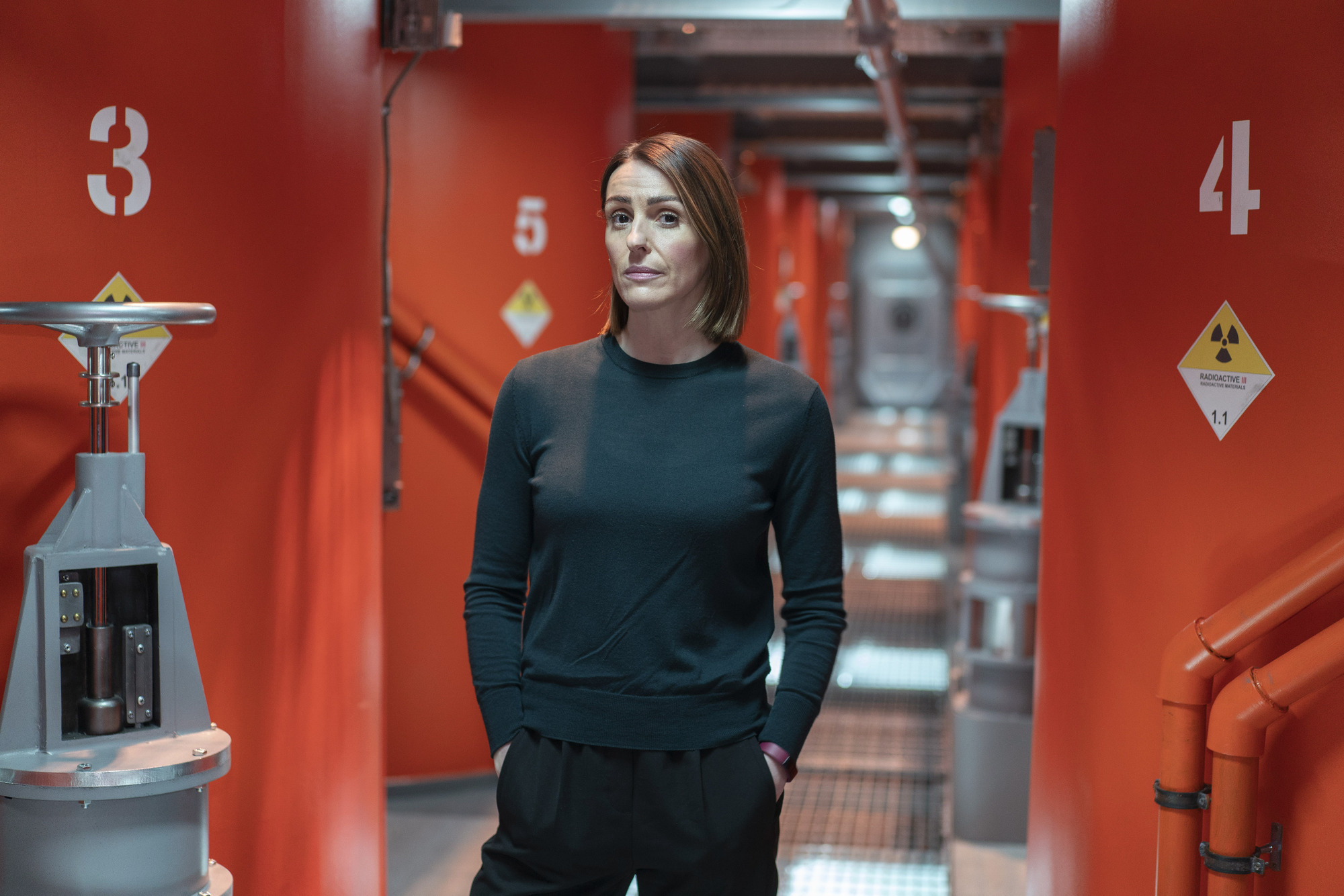
Enter Suranne Jones’ DCI Amy Silva, who was sent to investigate his death while staying aboard the submarine. 

Mark Mainz/BBC/World Productions

Suranne Jones takes the lead in Vigil

It quickly became apparent that there’s a lot to unpack following Burke’s death – not least his connections to a peace group campaigning against trident missiles – leaving us with many questions to be answered as the investigation began…

Why was Burke’s body not taken off the submarine?

Silva was told it was “too late” for Burke’s body to be taken off the boat as the hatch closed, despite it previously being agreed that it would be taken to be examined. 

This now means a full post mortem cannot be carried out, and the fact there has been a clear operation to keep his body on board suggests that more than one person could be involved in his death. 

Was Jade really Burke’s girlfriend?

BBC/World Productions

Following her arrest for attempting to break into Burke’s room in the accommodation block, she claimed that she’d obtained his keys as she was his girlfriend.

However, it felt rather convenient when she said no-one else knew about their relationship as they “wouldn’t have been happy”. She also didn’t seem particularly emotionally distraught that her supposed “boyfriend” had just died. 

Could it be that she’d just met Burke through her campaigning as part of the Dunloch Peace Corp, and had been drilling for the information he clearly had?

What happened to Silva’s family?

Mark Mainz/BBC/World Productions

After experiencing claustrophobia in her bunk, a flashback appeared to suggest Silva’s partner Ian and their daughter were in a car accident that saw them plunged into water. Did they lose their lives? And does this suggest Silva isn’t perhaps the best person to be on board a literal submarine right now?

Why did Silva give up medical school? 

She didn’t answer when Dr Doherty asked. Is this to do with the past trauma in her family?

Why did Hadlow go to see Burke before he died?

BBC/World Productions

Hadlow was one of the last people to see Burke alive and was also the person who found him dead in his bunk. However, questions were raised about exactly why Hadlow had gone to disturb Burke in the first place. 

Were they in on some sort of conspiracy together? Or perhaps he was going to confront him about what Burke been up to in the bomb shop?

Which submarine pulled the Mairi Finnea down? And why?

It was claimed that the Mairi Finnea trawler was pulled down by an enemy submarine, something Vigil captain Paterson Joseph is keen to keep secret, as it would expose the fact they have “always been at war”.

Was Burke killed for risking exposing the truth? After all, we now know that he was about to expose corruption within the British Navy. Speaking of which…

What exactly was Burke’s plan?

Mark Mainz/BBC/World Productions

The USB that DS Longacre found in Burke’s room had a pre-recorded video message from Burke on it, which he made in case of his death, hinting he anticipated the possibility of being killed for exposing the corruption and fear within the Vigil crew. 

In it, he speaks of “20 different ways to kill Vigil crew single handed” – was he actually going to kill someone before he met his own end?

If the Vigil’s mission is to “stay hidden”, how come Silva was allowed on board?

BBC/World Productions

The boat must have taken a serious security risk to come up to the surface to allow Silva aboard, so does that suggest Captain Joseph was lying about the crew’s mission to “stay hidden”?

Who killed Burke?

At this point in time, there looks to be a number of possible suspects in Burke’s murder – not least Hadlow, Glover, Prentice and even Captain Joesph. 

But with this being a six-part series, something tells us we’re not about to get a definitive answer any time soon…

Vigil continues on Monday at 9pm on BBC One.

Share Button

Covid in Scotland: Record number of cases as NHS faces ‘perfect storm’

A total of 7,113 new cases have been recorded in the last 24 hours, topping the previous high from Friday.

Share Button

NHS blood test tube shortage: Doctors ‘facing difficult choices’

Doctors call for more guidance after the NHS in England and Wales stops all non-urgent blood tests.

Share Button