Organic crystals’ ice-forming superpowers

At the heart of clouds are ice crystals. And at the heart of ice crystals, often, are aerosol particles — dust in the atmosphere onto which ice can form more easily than in the open air.

It’s a bit mysterious how this happens, though, because ice crystals are orderly structures of molecules, while aerosols are often disorganized chunks. New research by Valeria Molinero, distinguished professor of chemistry, and Atanu K. Metya, now at the Indian Institute of Technology Patna, shows how crystals of organic molecules, a common component of aerosols, can get the job done.

The story is more than that, though — it’s a throwback to Cold War-era cloud seeding research and an investigation into a peculiar memory effect that sees ice form more readily on these crystals the second time around.

The research, funded by the Air Force Office of Scientific Research, is published in the Journal of the American Chemical Society.

Throwback to cloud seeding

Molinero’s research is focused on how ice forms, particularly the process of nucleation, which is the beginning of ice crystal formation. Under the right conditions, water molecules can nucleate ice on their own. But often some other material, called a nucleant, can help the process along.

After several studies on the ways that proteins can help form ice, Molinero and Metya turned their attention to organic ice nucleants (as used here, “organic” means organic compounds containing carbon) because they are similar to the ice-producing proteins and are found in airborne aerosols.

But a review of the scientific literature found that the papers discussing ice nucleation by organic compounds came from the 1950s and 1960s, with very little follow-up work after that until very recently.

“That made me really curious,” Molinero says, “because there is a lot of interest now on organic aerosols and whether and how they promote the formation of ice in clouds, but all this new literature seemed dissociated from these early fundamental studies of organic ice nucleants.”

Additional research revealed that the early work on organic ice nucleants was related to the study of cloud seeding, a post-war line of research into how particles (primarily silver iodide) could be introduced into the atmosphere to encourage cloud formation and precipitation. Scientists explored the properties of organic compounds as ice nucleants to see if they might be cost-effective alternatives to silver iodide.

But cloud seeding research collapsed in the 1970s after political pressures and fears of weather modification led to a ban on the practice in warfare. Funding and interest in organic ice nucleants dried up until recently, when climate research spurred a renewed interest in the chemistry of ice formation in the atmosphere.

“There has been a growing interest in ice nucleation by organic aerosols in the last few years, but no connection to these old studies on organic crystals,” Molinero says. “So, I thought it was time to “rescue” them into the modern literature.”

Going all classic

Phloroglucinol is one of the organic nucleants studied in the mid-20th century. It showed promise for controlling fog, but less for cloud seeding. Molinero and Metya revisited phloroglucinol as it proved potent at ice nucleation in the lab.

One question to answer is whether phloroglucinol nucleates ice through classical or non-classical processes. When ice nucleates on its own, without any surfaces or other molecules, the only hurdle to overcome is forming a stable crystallite of ice (only about 500 molecules in size under some conditions) that other molecules can build on to grow an ice crystal. That’s classical nucleation.

Non-classical nucleation, involving a nucleant surface, occurs when a layer of water molecules assembles on the surface on which other water molecules can organize into a crystal lattice. The hurdle to overcome in non-classical nucleation is the formation of the monolayer.

Which applies to phloroglucinol? In the 1960s, researcher L.F. Evans concluded that it was non-classical. “I am still amazed he was able to deduce the existence of a monolayer and infer the mechanism was non-classical from experiments of freezing as a function of temperature alone!” Molinero says. But Molinero and Metya, using molecular simulations of how ice forms, found that it’s more complicated.

“We find that the step that really decides whether water transforms to ice or not is not the formation of the monolayer but the growth of an ice crystallite on top,” Molinero says. “That makes ice formation by organics classical although no less fascinating.”

Holding on to memories of ice

The researchers also used their simulation methods to investigate an interesting memory effect previously observed with organic and other nucleants. When ice is formed, melted and formed again using these nucleants, the second round of crystallization is more effective than the first. It’s assumed that the ice melts completely between crystallizations, and researchers have posed several potential explanations.

Molinero and Metya found that the memory effect isn’t due to the ice changing the nucleant surface, nor to the monolayer of water persisting on the nucleant surface after melting. Instead, their simulations supported an explanation where crevices in the nucleant can hold on to small amounts of ice that melt at higher temperatures than the rest of the ice in the experiment. If these crevices are adjacent to one of the nucleant crystal surfaces that’s good at forming ice, then it’s off to the races when the second round of freezing begins.

Something in the air

Other mysteries still remain — the mid-century studies of organic crystals found that at high pressures, around 1500 times atmospheric pressure, that the crystals are as efficient at organizing water molecules into ice as an ice crystal itself. Why? That’s the focus of Molinero’s next experiments.

More immediately, though, phloroglucinol is a naturally-occurring compound in the atmosphere, so anything that researchers can learn about it and other organic nucleants can help explain the ability of aerosols to nucleate ice and regulate the formation of clouds and precipitation.

“It would be important to investigate whether small crystallites of these crystalline ice nucleants are responsible for the baffling ice nucleation ability of otherwise amorphous organic aerosols,” Molinero says.

Share Button

AstraZeneca: UK and EU clot reviews confirm safety of vaccine

Regulators give reassurance and advice on rare blood clot symptoms, such as headache lasting days.

Share Button

Hugh Grant Does Some Serious Oversharing Recalls Debilitating Stomach Bug On Set Of Early Film

Hugh Grant has shared a graphic memory of being struck down with some pretty alarming stomach issues while filming one of his earliest films.

Back in the late 1980s, Hugh appeared in The Bengali Night, opposite John Hurt Supriya Pathak, which required him to spend three months filming in Calcutta.

In a recent interview on the podcast WTF With Marc Maron, the Bafta-winning star revealed he became ill “on day three” of filming, with a debilitating (and “explosive”) case of food poisoning that never really got any better as the weeks went on.

He recalled: “On that film, I was there for three months and I didn’t leave the lavatory except to shoot my scenes – and then I had to go back to continue with my explosive diarrhoea.”

Arnaud BORREL via Gamma-Rapho via Getty Images

Hugh Grant on the set of The Bengali Night in 1988

During the same interview, Hugh also discussed a day he found himself stuck in traffic in Calcutta, only to discover his car was “next to a dead body on a stretcher”.

The British star was similarly candid last year, when he revealed he’d contracted Covid-19 in the early days of the pandemic.

“It started as just a very strange syndrome where I kept breaking into a terrible sweat. It was like a poncho of sweat, embarrassing really,” Hugh said.

“Then my eyeballs felt about three sizes too big and this feeling as though an enormous man was sitting on my chest – Harvey Weinstein or someone. I thought, ‘I don’t know what this is’.”

Vera Anderson/WireImage

Hugh at a press event for The Undoing in March 2020

Hugh continued: “Then I was walking down the street one day and I thought, ‘I can’t smell a damn thing’. And you start to panic – by then, people were just starting to talk about this as a symptom.

“I started sniffing flowers, nothing. And you get more and more desperate. I started sniffing in garbage cans. You know, you want to sniff strangers’ armpits because you just can’t smell anything.

“I eventually went home and I sprayed my wife’s Chanel No. 5 directly into my face. Couldn’t smell a thing, but I did go blind.”

Listen to Hugh Grant’s full interview on WTF With Marc Maron here.

Share Button

These Arty Postcards Reveal People’s Lockdown Secrets

If you haven’t worn a bra in months or you enjoy really long baths to escape from your family, you’re in good company.

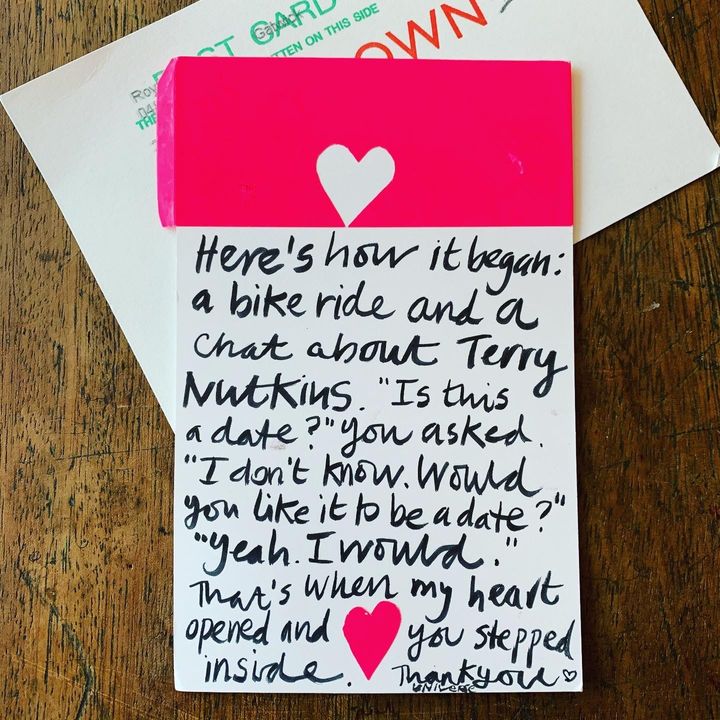
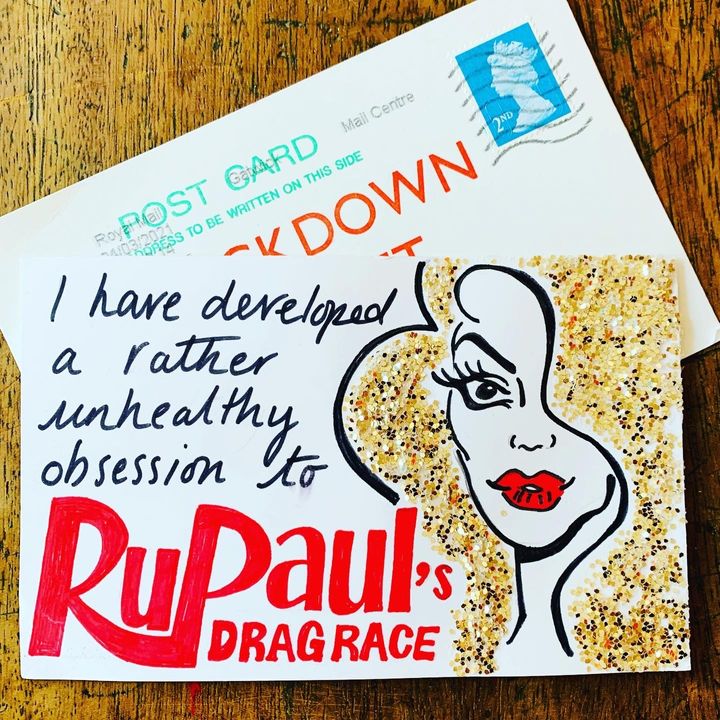
People have been anonymously sharing their lockdown secrets on postcards as part of an arts project launched by Eleanor Tattersfield, the founder of Marby and Elm print workshop and stationery store in London’s Exmouth Market.

The concept is simple: order a free postcard online and Tattersfield will send you a stamped and addressed postcard “for you to unburden yourself of your lockdown secret”.

She’s sent out 500 postcards to date, and has received 275 replies, ranging from the oh-so-relatable to the fantastically eyebrow-raising.

“I hide bars of chocolate in an old Oxo tin,” one postcard reads. “I am having passionate secret sex with another man’s wife and I love it,” another adds.

Tattersfield shares the postcards on Instagram and says the most prominent themes are food, sex, masturbation, loneliness, breaking the rules, love and the love of lockdown.

“I cannot express the joy and excitement I feel opening my shop in the morning and seeing the pile of previously undisclosed secrets on the doormat,” she says. “To think I get to be the first to read these little pieces of someone’s soul is an immeasurable privilege.

“Their wit, sincerity, creativity and diversity are completely compelling.”

Tattersfield came up with the idea after listening to The Apology Line podcast, which tells the story of an answer machine confession line from the 1980s, where people left weird and bizarre messages.

Her shop has been closed in lockdown and the project enabled her to connect with customers, new and old. The collection presents “a portrait of our extraordinary times”, and she hopes to turn the postcards into a book.

“Many people have said they felt a sense of relief writing out their secret and sending it off, out in the ether,” she says.

“Ultimately, this project shows that age old adage that we’re not alone in our secrets/fears/dilemmas/loneliness and seeing and hearing others are going through the same binds us, and helps us through this period of uncertainty.”

Check out some of the postcards below or follow Marby and Elm on Instagram to see more of the project.

Share Button

No Evidence AstraZeneca Vaccine Causes Blood Clots, Says UK Regulator

There is no proven link between the AstraZeneca vaccine and rare blood clotting, the Medicines and Healthcare products Regulatory Agency (MHRA) has said.

Following a “rigorous scientific review” of all the available data, the regulator said the available evidence does not suggest that blood clots in veins are caused by the jab and it has urged people to take it when invited to do so.

It follows a detailed review of cases as well as data from hospital admissions and GP records. Experts from the government’s independent advisory group, the Commission on Human Medicines, also reviewed the data.

It comes after more than a dozen countries, including France, Germany, Italy and Spain suspended its use.

Dr June Raine, MHRA chief executive, said: “Our thorough and careful review, alongside the critical assessment of leading, independent scientists, shows that there is no evidence that that blood clots in veins is occurring more than would be expected in the absence of vaccination, for either vaccine.”

The regulator said it has received five reports of a rare blood clot after five men aged between 19 and 59 received the Oxford/AstraZeneca vaccine.

The clot – cerebral venous sinus thrombosis (CVST) – prevents blood from draining out of the brain.

One of these cases was fatal, experts from the regulator told a press briefing.

“We have received a very small number of reports of an extremely rare form of blood clot in the cerebral veins (sinus vein thrombosis, or CSVT) occurring together with lowered platelets soon after vaccination,” said Dr Raine. “This type of blood clot can occur naturally in people who have not been vaccinated, as well as in those suffering from Covid-19.”

A further, detailed review into the five cases is ongoing. This has been reported in less than 1 in a million people vaccinated so far in the UK, and can also occur naturally – a causal association with the vaccine has not been established.

Phil Bryan, MHRA vaccine safety lead, said: “We take every single report of a suspected side effect seriously.

“We have received five reports of what is a very unique, specific form of blood clot … and this is similar to some of the cases that have been reported in Europe in the past week or so.

“What we don’t know is whether these cases have been caused by the vaccine.

“We are working closely with our experts and haematologists to try to gather more information to determine this.”

He added that these clots do happen very rarely naturally.

Bryan added: “Where we are now is that no proven causal association with what is still an extremely rare medical event has been proven for the AZ vaccine.

“But we do know that these are highly effective vaccines. We still have a huge burden of Covid disease in the population.

“So, right now, the balance of benefits and known risks of the vaccine are favourable.”

Professor Sir Munir Pirmohamed, chair of the Commission on Human Medicines, said: “Having reviewed all the data that was available to us, as well as reports, what we concluded was that there was no increased risk of peripheral venous thromboembolism based on all the data that’s available to us at the moment.

“We will still recommend that the vaccine is taken when you’re offered the vaccine.”

The World Health Organisation has also stated that the benefits of the vaccine “far outweigh the risks”. 

Dr Hans Kluge, WHO regional director for Europe, said it was “routine to signal adverse events” but reiterated that people should “have confidence” in the protection given by vaccines.

Share Button

First images of the cosmic web reveal a myriad of unsuspected dwarf galaxies

Although the filaments of gas in which galaxies are born have long been predicted by cosmological models, we have so far had no real images of such objects. Now for the first time, several filaments of the ‘cosmic web’ have been directly observed using the MUSE (1) instrument installed on ESO’s Very Large Telescope in Chile. These observations of the early Universe, 1 to 2 billion years after the Big Bang, point to the existence of a multitude of hitherto unsuspected dwarf galaxies. Carried out by an international collaboration led by the Centre de Recherche Astrophysique de Lyon (CNRS/Université Lyon 1/ENS de Lyon), also involving the Lagrange laboratory (CNRS/Université Côte d’Azur/Observatoire de la Côte d’Azur) (2), the study is published on 18 March 2021 in the journal Astronomy & Astrophysics.

The filamentary structure of hydrogen gas in which galaxies form, known as the cosmic web, is one of the major predictions of the model of the Big Bang and of galaxy formation. Until now, all that was known about the web was limited to a few specific regions, particularly in the direction of quasars, whose powerful radiation acts like car headlights, revealing gas clouds along the line of sight. However, these regions are poorly representative of the whole network of filaments where most galaxies, including our own, were born. Direct observation of the faint light emitted by the gas making up the filaments was a holy grail which has now been attained by an international team headed by Roland Bacon, CNRS researcher at the Centre de Recherche Astrophysique de Lyon (CNRS/Université Lyon 1/ENS de Lyon).

The team took the bold step of pointing ESO’s Very Large Telescope, equipped with the MUSE instrument coupled to the telescope’s adaptive optics system, at a single region of the sky for over 140 hours. Together, the two instruments form one of the most powerful systems in the world. The region selected forms part of the Hubble Ultra-Deep Field, which was until now the deepest image of the cosmos ever obtained. However, Hubble has now been surpassed, since 40% of the galaxies discovered by MUSE have no counterpart in the Hubble images.

After meticulous planning, it took eight months to carry out this exceptional observing campaign. This was followed by a year of data processing and analysis, which for the first time revealed light from the hydrogen filaments, as well as images of several filaments as they were one to two billion years after the Big Bang, a key period for understanding how galaxies formed from the gas in the cosmic web. However, the biggest surprise for the team was when simulations showed that the light from the gas came from a hitherto invisible population of billions of dwarf galaxies spawning a host of stars (3). Although these galaxies are too faint to be detected individually with current instruments, their existence will have major consequences for galaxy formation models, with implications that scientists are only just beginning to explore.

Notes:

(1) MUSE, which stands for Multi Unit Spectroscopic Explorer, is a 3D spectrograph designed to explore the distant Universe. The construction of the instrument was led by the Centre de Recherche Astrophysique de Lyon (CNRS/Université Claude Bernard-Lyon 1/ENS de Lyon).

(2) Other French laboratories involved: Laboratoire d’Astrophysique de Marseille (CNRS/Aix-Marseille Université/CNES), Institut de Recherche en Astrophysique et Planétologie (CNRS/Université Toulouse III — Paul Sabatier/CNES).

(3) Until now, theory predicted that the light came from the diffuse cosmic ultraviolet background radiation (very weak background radiation produced by all the galaxies and stars) which, by heating the gas in the filaments, causes them to glow.

Story Source:

Materials provided by CNRS. Note: Content may be edited for style and length.

Share Button

Advanced mouse embryos grown outside the uterus

To observe how a tiny ball of identical cells on its way to becoming a mammalian embryo first attaches to an awaiting uterine wall and then develops into nervous system, heart, stomach and limbs: This has been a highly-sought grail in the field of embryonic development for nearly 100 years. Prof. Jacob Hanna of the Weizmann Institute of Science and his group have now accomplished this feat. The method they created for growing mouse embryos outside the womb during the initial stages after embryo implantation will give researchers an unprecedented tool for understanding the development program encoded in the genes, and it may provide detailed insight into birth and developmental defects as well as those involved in embryo implantation. The results of this research were published in Nature.

Hanna, who is in the Institute’s Molecular Genetics Department, explains that much of what is known about mammalian embryonic development today comes either from observing the process in non-mammals like frogs or fish that lay transparent eggs, or by obtaining static images from dissected mouse embryos and adding them together. The idea of growing early embryos outside the uterus has been around since before the 1930s, he adds, but experiments based on these proposals had limited success and the embryos tended to be abnormal.

Hanna’s team decided to renew that effort in order to advance the research in his lab, which focuses on the way the development program is enacted in embryonic stem cells. Over seven years, through trial and error, fine-tuning and double-checking, his team came up with a two-step process in which they were able to grow normally developing mouse embryos outside the uterus for six days — around a third of their 20-day gestation — by which time the embryos already had a well-defined body plan and visible organs. “To us, that is the most mysterious and the most interesting part of embryonic development, and we can now observe it and experiment with it in amazing detail,” say Hanna.

The research was led by Alejandro Aguilera-Castrejon, Dr. Bernardo Oldak, the late Dr. Rada Massarwa and Dr. Noa Novershtern in Hanna’s lab and Dr. Itay Maza, a former student of Hanna’s now in the Rambam Health Care Campus of the Technion — Israel Institute of Technology.

For the first step, which lasted around two days, the researchers started with several-day old mouse embryos — right after they would have implanted in the uterus. At this stage the embryos were balls consisting of 250 identical stem cells. These were placed on a special growth medium in a laboratory dish and the team got the balls to attach to this medium as they would to the uterine wall. With this step, they succeeded in duplicating the first stage of embryonic development, in which the embryo doubles and triples in size, as it differentiates into three layers: inner, middle and outer.

Beyond two days, as the embryos entered the next developmental stage — the formation of organs from each of the layers — they needed additional conditions. For this second step, the scientists placed the embryos in a nutrient solution in tiny beakers, setting the beakers on rollers that kept the solutions in motion and continually mixed. That mixing seems to have helped keep the embryos, which were growing without maternal blood flow to the placenta, bathed in the nutrients. In addition to carefully regulating the nutrients in the beakers, the team learned in further experiments to closely control the gases, oxygen and carbon dioxide — not just the amounts, but the gas pressure as well.

To check whether the developmental processes they were observing throughout the two steps were normal, the team conducted careful comparisons with embryos removed from pregnant mice in the relevant time period, showing that both the separation into layers and the organ formation were all but identical in the two groups. In subsequent experiments, they inserted into the embryos genes that labeled the growing organs in fluorescent colors. The success of this attempt suggested that further experiments with this system involving various genetic and other manipulations should produce reliable results. “We think you can inject genes or other elements into the cells, alter the conditions or infect the embryo with a virus, and the system we demonstrated will give you results consistent with development inside a mouse uterus,” says Hanna.

“If you give an embryo the right conditions, its genetic code will function like a pre-set line of dominos, arranged to fall one after the other,” he adds. “Our aim was to recreate those conditions, and now we can watch, in real time, as each domino hits the next one in line.” Among other things, explains Hanna, the method will lower the cost and speed up the process of research in the field of developmental biology, as well as reducing the need for lab animals.

In fact, the next step in Hanna’s lab will be to see if they can skip the step of removing embryos from pregnant mice. He and his team intend to try to create artificial embryos made from stem cells for use in this research. Among other things, they hope to put their new method to work to answer such questions as why so many pregnancies fail to implant, why the window for implantation is so short, how stem cells gradually lose their “stemness” as differentiation progresses and what conditions in gestation may later lead to developmental disorders.

Video: https://www.youtube.com/watch?v=tNb2npuiF3Q

Share Button

Covid vaccine: India shortfall behind UK’s supply delay

It is understood a shipment of five million Oxford-AstraZeneca doses has been held up by four weeks.

Share Button

Covid: From boom to bust – why lockdown hasn’t led to more babies

Research shows that the US and parts of Europe are facing slumps in birth rates.

Share Button

Covid: NHS warns of ‘significant reduction’ in vaccines

Local health organisations in England have been told to expect a reduced vaccine supply in April.

Share Button