12 Things Millennials Do That Stress Out Gen Zers

Every generation has its quirks. Millennials and Gen Zers may only be a small number of years apart, but culturally, they often feel worlds away.

From the way they communicate to the way they approach work, life and even pop fandoms, their styles can clash ― sometimes in ways that really irritate each other.

We asked Gen Zers to share the millennial behaviours that frustrate and stress them out. Of course, many of these habits vary across individuals within the same generation, but certain tendencies and patterns still emerge. Here’s what they had to say:

1. Ominous Punctuation

“For me, a main millennial ‘ick’ is the dot-dot-dot or period of doom. Getting a ‘Sure…’ or ‘Thanks.’ makes it feel like I’m in trouble.” ― Ethan Hillis, TikTok creator

2. Over-Emphasis On Appearances

“They have a need to make everything aesthetic. Gen Z is very guilty of this as well, however, I think that millennials grew up with the rise of social media. Rather than listening to their favourite artist at a music festival or sharing a drink with friends at brunch, I think they’re more prone to focus on getting a good Instagram or Snapchat story. This just fuels what it means to live vicariously through social media, rather than in the moment.” ― Madeline Kerestman, TikTok creator

3. Passive-Aggressive Lingo

“The passive-aggressive work lingo. ‘Per my last email,’ ‘gentle nudge,’ ‘circling back’ … all of it stresses me out instantly.” ― Hillis

4. Getting Competitive Around Generations

“Making conversations about economic problems millennial vs. Gen Z instead of realising we’re all struggling, and different times had their own unique problems.” ― Ayana Williams, digital marketer

“Why is this a competition? Why are we battling between generations? I feel like millennials are constantly comparing their generation and saying things like, ‘Oh you guys have it so easy. Back in my day …’ I think millennials went through a really difficult period, so they might have a lot of resentment toward our generation. But in reality, I feel like Gen Zers are going through a lot of different challenges that the previous generation didn’t go through too.” ― Lavinia Gabriele, high growth startup manager and member of The Z Suite

5. Lack Of Boundaries

“I’ve noticed that a lot of millennials don’t have a lot of boundaries at work ― whether it’s that your work hours are not well defined and you’re supposed to be on at all times, or it’s asking personal questions. Millennials are a lot more open with their thoughts, and I think it’s a little bit stressful when they ask really personal questions about your life when maybe I don’t want you to know about it.” ― Gabriele

"Millennials are a lot more open with their thoughts, and I think it’s a little bit stressful when they ask really personal questions about your life when maybe I don’t want you to know about it," said Lavinia Gabriele, a gen Z high-growth startup manager.

We Are via Getty Images

“Millennials are a lot more open with their thoughts, and I think it’s a little bit stressful when they ask really personal questions about your life when maybe I don’t want you to know about it,” said Lavinia Gabriele, a gen Z high-growth startup manager.

6. Inability To Relax Until Things Are Fully Completed

“I feel that sometimes there is a very strong hustle culture where millennials feel they are always ‘in the trenches’ and life is about surviving rather than experiencing. Of course, Gen Zers are ambitious as well. But when there’s a big challenge or new project at work, I do observe that the millennials on my team are like, ‘Oh, my god. How do we survive through this?’ ― while the Gen Zs are a bit more relaxed and moving through it. It doesn’t mean we don’t care. We’re still going to power through. And I have friends and cousins who are millennials that tend to get really stressed out about planning certain things. Until the plan has reached a certain stage of being completed, they’re super stressed out.” ― Angel Aileen, member of The Z Suite who works in a tech forward beauty company

7. Withholding Validation And Information

“I think because Gen Zs grew up in a world of social media, we’re conditioned to get dopamine rewards constantly. So at a workplace, how that shows up is if we do work, we really want to feel recognised. Everyone has their different ways of feeling recognised or rewarded. But if they don’t get that, they feel very down. They want to feel seen, so getting a sense of reward or recognition makes a huge difference in the workplace. And millennials don’t necessarily realise that. But I really notice millennials who recognise and appreciate their Gen Z employees have better team dynamics. It’s similar with sharing information because Gen Zers like to see the whole picture of their job. If millennials share the big picture of what we’re all working on, then it’ll feel more like we’re all working toward the same goal and contributing to the puzzle. Gen Zers are happier when they feel a bigger sense of purpose in their work.” ― Aileen

8. Overwhelming Communication

“Slack novels. A whole LinkedIn-style essay in a quick chat app? I can’t.” ― Hillis

“With their communication style over text, they send like a lot of emojis, like a million emojis. And they’ll screenshot a meme and text it to you, instead of sending it to you directly in the app. And then the meme isn’t that funny…” ― Gabriele

9. Assuming Gen Zers Don’t Get References

“Not recognising some of us are Gen Zennials and very much remember late 90s/early 2000s references and going outside to play.” ― Williams

10. The Millennial Pause

“The millennial pause at the start of videos. They can just cut that part out.” ― Williams

11. Work-Life Balance Overload

“They lean a little too far into the ‘work-life balance’ mindset. As a med student myself, I am all about maintaining a ‘work hard, play hard’ mentality. I value hard work and believe that while it’s incredibly important to maintain a healthy balance, it should never be used as a way to do the bare minimum. I think the millennial generation introduced this mentality and took it to another level, which has normalised using ‘boundaries’ as an excuse to cut corners.” ― Kerestman

12. Taylor Swift Obsession

“This is 100% a personal preference, and I know I might get some backlash for this! For some reason, I feel like I associate the millennial generation with the ‘Swiftie’ fanbase. Taylor Swift is iconic and such a talented artist. However, I think her fans take it to an unnecessarily intense level, and I just don’t understand the hype.” ― Kerestman

Answers have been edited and condensed for clarity.

Share Button

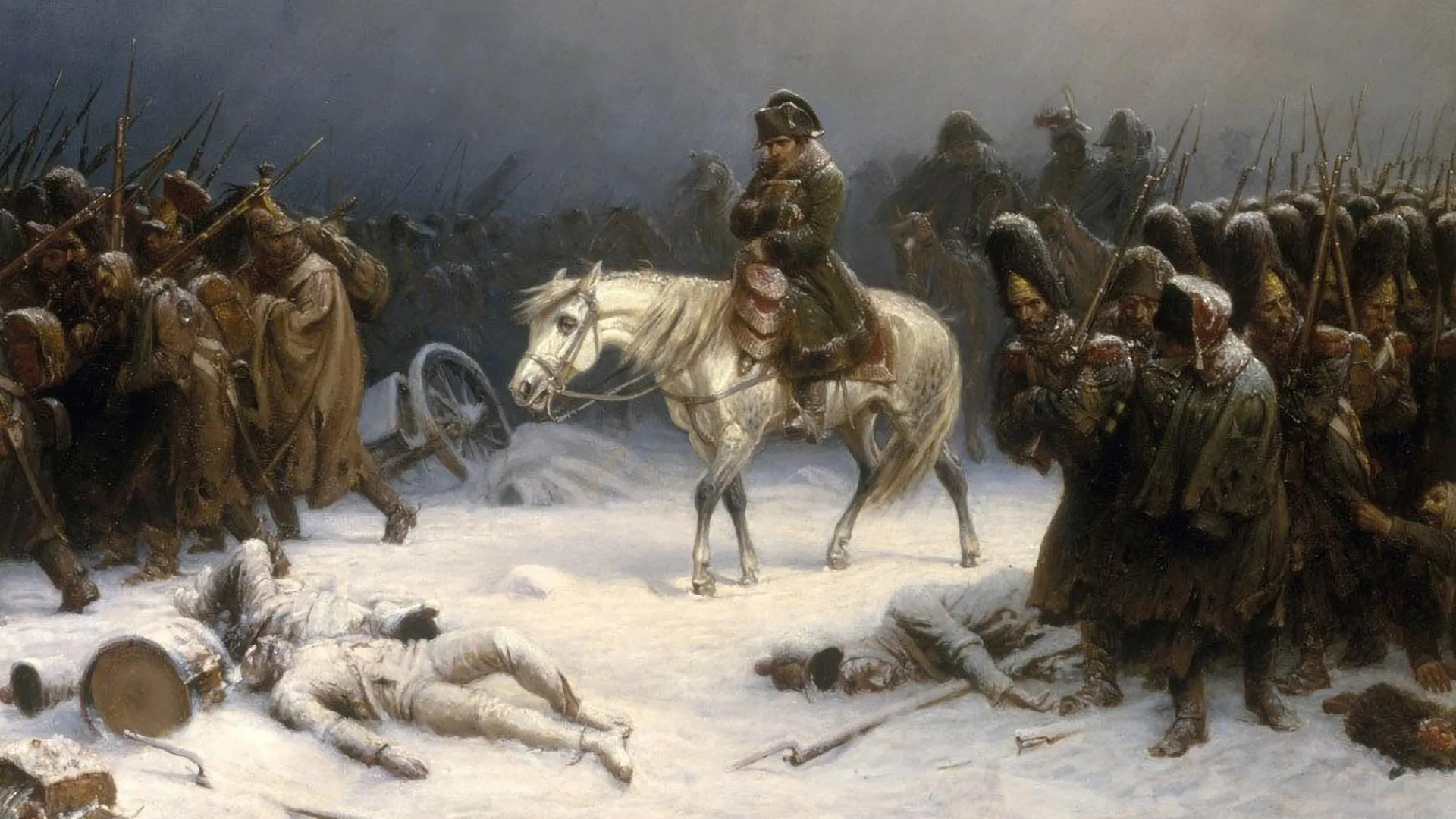
Ancient DNA reveals the deadly diseases behind Napoleon’s defeat

Scientists from the Institut Pasteur have conducted a genetic analysis of the remains of soldiers who retreated from Russia in 1812. Their work uncovered traces of two disease-causing pathogens — those behind paratyphoid fever and relapsing fever — which match the symptoms described in eyewitness records from that time. The findings were first shared as a preprint on bioRxiv on July 16, 2025, and later published in the journal Current Biology on October 24.

Investigating the Mystery of the 1812 Retreat

Napoleon’s invasion of Russia in 1812, known as the “Patriotic War of 1812,” ended in one of history’s most disastrous retreats. To better understand what role disease may have played in this collapse, researchers from the Institut Pasteur’s Microbial Paleogenomics Unit partnered with the Laboratory of Biocultural Anthropology at Aix Marseille University. The team analyzed the DNA of 13 French soldiers exhumed in 2002 from a burial site in Vilnius, Lithuania, uncovered during archaeological excavations led by the Aix-Marseille University group. Using next-generation sequencing technology on ancient DNA, they searched for genetic traces of infectious organisms.

The researchers detected two distinct disease agents: Salmonella enterica subsp. enterica (serovar Paratyphi C), which causes paratyphoid fever, and Borrelia recurrentis, the bacterium responsible for relapsing fever. The latter is transmitted by lice and produces alternating periods of fever and recovery. Although different, both infections can cause severe fever, exhaustion, and digestive distress. Their combined impact could have intensified the soldiers’ suffering at a time when cold, hunger, and poor sanitation were already taking a heavy toll.

Genetic Evidence From Napoleonic Soldiers

Out of the 13 soldiers examined, DNA from S. enterica Paratyphi C was found in four individuals, and B. recurrentis was detected in two. This marks the first direct genetic confirmation that these pathogens were present in Napoleon’s army. Their exact contribution to the enormous death toll remains uncertain, but the findings complement earlier research that identified Rickettsia prowazekii (the cause of typhus) and Bartonella quintana (responsible for trench fever), both long suspected of spreading through the ranks during the retreat.

Because only a small number of samples could be analyzed compared to the thousands of remains in Vilnius, researchers cannot yet determine how widespread these infections were. The tested soldiers represent a tiny fraction — 13 out of more than 3,000 bodies at the site and roughly 500,000 to 600,000 troops who took part in the campaign, of whom about 300,000 died during the retreat.

Understanding the Past to Protect the Future

“Accessing the genomic data of the pathogens that circulated in historical populations helps us to understand how infectious diseases evolved, spread and disappeared over time, and to identify the social or environmental contexts that played a part in these developments. This information provides us with valuable insights to better understand and tackle infectious diseases today,” explains Nicolás Rascovan, Head of the Microbial Paleogenomics Unit at the Institut Pasteur and last author of the study.

To achieve these results, the team worked in collaboration with scientists from the University of Tartu in Estonia to develop an innovative authentication workflow involving several steps, including a phylogeny-driven interpretive approach for the highly degraded genome fragments recovered. This method enables scientists to accurately identify pathogens even if their DNA only yields low coverage, in some cases even indicating a specific lineage.

“In most ancient human remains, pathogen DNA is extremely fragmented and only present in very low quantities, which makes it very difficult to obtain whole genomes. So we need methods capable of unambiguously identifying infectious agents from these weak signals, and sometimes even pinpointing lineages, to explore the pathogenic diversity of the past,” he adds.

Linking History and Disease

The team’s results closely match the historical descriptions of the fevers that swept through Napoleon’s forces. This connection strengthens the theory that infectious diseases contributed to the disastrous outcome of the 1812 campaign, along with other factors such as exhaustion, starvation, and the brutal Russian winter.

Napoleon’s 1812 campaign ultimately ended in defeat, forcing a massive withdrawal that devastated his army. The Russian forces reclaimed Moscow, marking a turning point that dealt a fatal blow to Napoleon’s military ambitions.

Share Button

‘My Mum Expects Me To Care For Her In Old Age. How Do I Tell Her I Can’t?’

Over-50s own 78% of the UK’s property wealth, and the Financial Times reports that one in five “Boomers” are millionaires (largely due to soaring property prices).

But, like all modern wealth, this is a story of deep inequality. The Centre For Ageing Better says that roughly 18% of older people live in relative poverty; one in six over-55s have zero retirement savings, and 9-12% of rough sleepers are believed to be over 55.

Which means that renting long past retirement age, never mind costly nursing home care, is out of the question for many.

That might lead some, like the mother of Redditor u/Swimsmoke, to assume their children will help with their housing, care, and costs in their old age.

But, like the 6.6 million UK adults who say they wouldn’t know where to start with the commitment, the site user said they’re not sure they’re able to do it.

We asked Dr Barbara Sparacino, an adult and geriatric psychiatrist also known as The Ageing Parent Coach, how to handle the situation.

The original poster (OP) feels guilty

Writing to the forum r/AmItheAsshole (AITA), the OP said that her 63-year-old mother retired from her career 15 years ago but has been making money through a soap business since.

“She lives in a small studio and has a car but not much else to her name,” the woman added, stating that her mother is quite frivolous with her spending and likes to travel a lot.

Ahead of a hip surgery, her mum has started to think about what her future will look like and expects her 30-year-old daughter to “help”.

OP has a few reservations. Firstly, their relationship is a little fraught, and the poster says their mother delivered “bare minimum” care in their teens.

Then, guilt, money, and time come into it.

“I also feel some amount of responsibility for the woman who birthed me, a woman who had a hard and traumatising life as well – but I don’t have the resources to help in any real capacity,” they wrote.

“I don’t have money to throw at the problem, I don’t want to use all my time off for the year taking care of her, and I wouldn’t get paid if I take leave, which I won’t even qualify to take until another six months from now.”

She ended, “AITA for putting myself first here?”

Honesty is the kindest policy

Speaking to HuffPost UK, Dr Sparacino said that, “Often, these expectations are unspoken. A parent might have spent years believing you’d ‘step in one day,’ even if that was never discussed.

“When you finally say you can’t, guilt and fear can flood in, but honesty is an act of love, too.”

There is no point offering something you cannot emotionally or financially afford, she added. So, try to stay clear-sighted and precise about what you’re really able to offer – even if that doesn’t feel like much.

“Maybe you can help plan for future care, find resources, or support them emotionally, but you can’t take on full-time or financial responsibility. That’s not neglect; that’s setting a boundary rooted in realism and care,” the psychiatrist said.

She recommends saying something like, “Mum, I love you and want you to be well supported as you get older. But I can’t be your full-time caregiver. I’d like to help you make a plan so you’ll have what you need.”

Dr Sparacino added that your parent might respond with fear, anger, or sadness.

“Try to respond with calm empathy: ‘I know this is hard to hear, but I want us to plan ahead so neither of us faces this alone,’” she stated.

“You’re not rejecting your parent; you’re protecting both of you from burnout, resentment, and crisis later on. Love without boundaries leads to depletion, not devotion.

“If you’re struggling with this kind of conversation, you don’t have to figure it out alone, reach out to a professional experienced in ageing and family dynamics for guidance and support.”

Help and support:

  • Mind, open Monday to Friday, 9am-6pm on 0300 123 3393.
  • Samaritans offers a listening service which is open 24 hours a day, on 116 123 (UK and ROI – this number is FREE to call and will not appear on your phone bill).
  • CALM (the Campaign Against Living Miserably) offer a helpline open 5pm-midnight, 365 days a year, on 0800 58 58 58, and a webchat service.
  • The Mix is a free support service for people under 25. Call 0808 808 4994 or email help@themix.org.uk
  • Rethink Mental Illness offers practical help through its advice line which can be reached on 0808 801 0525 (Monday to Friday 10am-4pm). More info can be found on rethink.org.
Share Button

Willpower doesn’t exist. Why so much of your health isn’t your fault

Dr Xand and Dr Chris van Tulleken share four small but powerful tips they’ve learnt over the course of 30 episodes.

Share Button

Scientists launch $14.2 million project to map the body’s “hidden sixth sense”

How does your brain know when to take a breath, stabilize your blood pressure, or fight off an infection? The answer lies in interoception, a lesser-known process through which the nervous system constantly monitors the body’s internal signals to keep essential functions running.

Now, a collaborative team from Scripps Research and the Allen Institute has received the National Institutes of Health (NIH) Director’s Transformative Research Award to develop the first comprehensive atlas of this internal sensory system.

A Major Investment in Brain-Body Research

Leading the project is Nobel Prize-winning neuroscientist Ardem Patapoutian, joined by Li Ye, the N. Paul Whittier Chair in Chemistry and Chemical Biology at Scripps Research, and Bosiljka Tasic, Director of Molecular Genetics at the Allen Institute. Xin Jin, Associate Professor at Scripps Research, will serve as co-investigator, directing the genomic and cell-type identification work.

The NIH has awarded the team $14.2 million over five years to carry out this ambitious project.

“My team is honored that the NIH is supporting the kind of collaborative science needed to study such a complex system,” says Patapoutian, the Presidential Endowed Chair in Neurobiology at Scripps Research.

Patapoutian, who shared the 2021 Nobel Prize in Physiology or Medicine for his discovery of cellular sensors that detect touch, will now apply his expertise to understanding interoception.

“We hope our results will help other scientists ask new questions about how internal organs and the nervous system stay in sync,” adds Ye. Like Patapoutian, he’s also a Howard Hughes Medical Institute Investigator.

Established in 2009, the Transformative Research Award funds groundbreaking interdisciplinary projects that push beyond traditional scientific boundaries. It is part of the NIH Common Fund’s High-Risk, High-Reward Research Program, designed to support innovative ideas that could reshape our understanding of human health but might otherwise struggle to receive funding through conventional mechanisms.

What Makes Interoception Unique

Unlike the classic senses — such as smell, sight, and hearing — which rely on specialized sensory organs that detect stimuli from the outside world, interoception involves a vast network of neurons that sense what’s happening inside the body. These neural circuits track critical processes including circulation, digestion, and immune activity.

Because interoceptive signals originate deep within the body and are often processed unconsciously, scientists often describe this system as our “hidden sixth sense.”

Despite its fundamental role, interoception has received little scientific attention. The signals it produces are complex, overlapping, and difficult to measure. The sensory neurons that carry them are distributed throughout organs such as the heart, lungs, stomach, and kidneys, making them hard to isolate and map precisely.

Mapping the Brain-Body Connection

With the NIH’s support, the Scripps and Allen Institute researchers plan to map how sensory neurons connect with a wide variety of internal organs, including the heart and gastrointestinal tract. Their goal is to create a detailed anatomical and molecular atlas that reveals how these neural pathways are organized.

To achieve this, one part of the project will label sensory neurons and use whole-body imaging to trace their routes from the spinal cord to different organs, producing a high-resolution 3D map. The second part will use genetic profiling to distinguish between different cell types, such as neurons that send signals from the gut, bladder, or fat tissue.

Together, these datasets will form the first standardized reference for understanding the body’s internal sensory wiring.

Why Interoception Matters for Health

By decoding how interoception works, scientists hope to uncover key principles of brain-body communication that could lead to new treatments for disease. Disruptions in these internal sensory pathways have been linked to a range of conditions, including autoimmune disorders, chronic pain, neurodegenerative diseases, and high blood pressure.

“Interoception is fundamental to nearly every aspect of health, but it remains a largely unexplored frontier of neuroscience,” says Jin, who’s a Howard Hughes Medical Institute Freeman Hrabowski Scholar. “By creating the first atlas of this system, we aim to lay the foundation for better understanding how the brain keeps the body in balance, how that balance can be disrupted in disease and how we might restore it.”

Share Button

Earth is splitting open beneath the Pacific Northwest

For the first time, scientists have directly witnessed a subduction zone — the place where one tectonic plate plunges beneath another — in the midst of breaking apart. The finding, published in Science Advances, provides an unprecedented view of how Earth’s surface changes over time and adds new insight into the potential for future earthquakes in the Pacific Northwest.

Subduction zones are some of the most powerful and dynamic features on Earth. They move continents across the globe, trigger massive earthquakes and volcanic eruptions, and recycle the planet’s crust deep into the mantle.

However, these zones are not permanent. If they never ended, continents would continuously collide and merge, erasing oceans and much of the planet’s geological history. For decades, scientists have wondered how these colossal systems eventually come to an end.

“Getting a subduction zone started is like trying to push a train uphill — it takes a huge effort,” said Brandon Shuck, a geologist at Louisiana State University and lead author of the study. “But once it’s moving, it’s like the train is racing downhill, impossible to stop. Ending it requires something dramatic — basically, a train wreck.”

Capturing a Subduction Zone in the Act

Off the coast of Vancouver Island, in the Cascadia region, scientists have now seen that “train wreck” unfolding. Here, the Juan de Fuca and Explorer plates are slowly sliding beneath the North American plate, and new data show the system is literally tearing itself apart.

Researchers used seismic reflection imaging — essentially an ultrasound of Earth’s interior — combined with detailed earthquake records to observe the process. The data were gathered during the 2021 Cascadia Seismic Imaging Experiment (CASIE21), funded by the National Science Foundation. During the expedition, sound waves were sent from a research vessel into the seafloor and the returning echoes were captured by a 15-kilometer-long line of underwater sensors. The resulting images revealed deep fractures where the oceanic plate is snapping apart.

“This is the first time we have a clear picture of a subduction zone caught in the act of dying,” said Shuck. “Rather than shutting down all at once, the plate is ripping apart piece by piece, creating smaller microplates and new boundaries. So instead of a big train wreck, it’s like watching a train slowly derail, one car at a time.”

A Plate Coming Apart Piece by Piece

The team found enormous tears running through the oceanic plate, including a major offset where one section has dropped about five kilometers. “There’s a very large fault that’s actively breaking the plate,” Shuck explained. “It’s not 100% torn off yet, but it’s close.”

Earthquake data supported what the images showed. Along the 75-kilometer tear, some parts remain seismically active, while others have fallen silent. “Once a piece has completely broken off, it no longer produces earthquakes because the rocks aren’t stuck together anymore,” Shuck explained. The absence of quakes in certain areas suggests that sections of the plate have already detached, and the gap is gradually widening over time.

The study revealed that subduction zones don’t fail in one catastrophic break but die in stages, through a process known as “episodic” or “piecewise” termination. Instead of the entire plate snapping at once, it tears apart in smaller sections. Transform boundaries — the faults where plates slide past each other — act like natural scissors, slicing across the plate and isolating fragments that form new microplates while subduction continues nearby.

As the larger plate loses pieces, it also loses momentum. Like cutting cars off a runaway train, each break reduces the downward pull until the entire subduction process grinds to a halt. Although each episode takes millions of years, these gradual stages together mark the death of a subduction zone.

Clues to Earth’s Ancient Tectonic Mysteries

This slow breakup helps explain puzzling features from Earth’s past, such as abandoned fragments of old tectonic plates and bursts of volcanic activity in unexpected places. One striking example lies off Baja California, where scientists have long known of fossil microplates — the remnants of the once-vast Farallon plate. For years, researchers suspected these fragments were evidence of dying subduction zones, but the exact mechanism was unclear. The Cascadia region now offers a direct look at how that process happens: through step-by-step tearing, not sudden collapse.

The breakup of a plate doesn’t just stop motion — it reshapes the planet. As each fragment detaches, it can open “slab windows” where hot mantle material rises toward the surface, creating bursts of volcanic activity. Over time, new microplates form, old ones drift, and the boundaries shift again. “It’s a progressive breakdown, one episode at a time,” said Shuck. “And it matches really well with what we see in the geologic record, where volcanic rocks get younger or older in a sequence that reflects this step-by-step tearing.”

Earthquake Hazards and Future Research

Looking forward, scientists are investigating whether a major earthquake could rupture across one of these newly formed tears or if the fractures might alter how seismic energy moves through the region. While this discovery improves models of how complex fault systems behave, it does not significantly change the short-term risk for the Pacific Northwest.

Cascadia remains capable of generating very large earthquakes and tsunamis. Understanding how these newly identified breaks influence future ruptures will help refine hazard assessments and deepen our understanding of how Earth’s most powerful geological engines ultimately come to rest.

Share Button

Parents urged to vaccinate children over half-term as flu cases rise

Flu season has come early and cases are rising among children, NHS England says.

Share Button

What Is ‘Chatfishing’, The Disappointing Dating Trend Plaguing Apps?

You might have heard of “catfishing”, which happens when people create fake or misleading profiles online in order to draw others in.

The term comes from a 2010 documentary, Catfish, which compared the practice to the catfish one of the cast members suggested were included in tanks of cod to keep them agile in transit.

“I thank God for the catfish because we would be droll, boring and dull if we didn’t have somebody nipping at our fin,” Vince Pierce, who helped to inspire the name of the movie, said in the flick.

But according to author and relationship and self-help expert Tam Kaur, another species has taken its place: we are now in an age of “chatfishing”.

What is “chatfishing”?

“‘Chatfishing’ is when someone uses an AI tool, like ChatGPT or Gemini, to write their messages on dating apps,” Kaur shared.

Though it doesn’t exactly sound romantic, the self-help expert said she understands why reliance on large language models (LLMs) like these is growing.

The machines, after all, won’t make an embarrassing grammar or spelling mistake, and they can make the “awkward” process of starting a conversation a little smoother.

“Using AI becomes a way to show up as a ‘perfect’ version of yourself, without the fear of rejection,” the expert continued.

But that doesn’t take away from the core issue: if the chat goes well, the goal is to enter a scenario in which you have no choice but to be yourself, in real life.

“Ultimately, many people use the tools to enhance their confidence with online dating, but they don’t realise it’s doing a disservice to themselves as they deceive their matches,” Kaur said.

“It is a very real form of deception because you’re presenting as a person who isn’t you. That doesn’t show respect to the person on the other end who’s trying to get to know you.

“Relationships, whether they’re casual or committed, are built on trust, and when you start something off with even small dishonesty, you’re disrespecting whoever you’re entering this relationship with.”

How can I spot a “chatfisher”?

It can be hard to spot, especially when you don’t know the person’s usual texting style, the author admitted.

But sometimes, “chatfishers” leave clues behind.

“If the message is from someone based in the UK, but uses American spelling, this can be a key sign. Most AI tools default to Americanised spellings, opting for ‘z’ instead of ‘s’ or ‘olor’ instead of ‘olour’,” she explained.

“A message that uses strange punctuation, which you wouldn’t see in regular text conversations, could also be a sign – for example, random hyphens or odd spacing before the start of sentences.

Most of all, Kaur ended, “it’s about trusting your own intuition. If something feels off or too curated, it probably is.”

Share Button

From Sunsets To Sex: 7 Ways To Make The Most Of Long, Dark Nights

Now that the sun’s officially begun setting before 6pm in the UK, I have to say I’ve noticed a marked decrease in my motivation.

Sure, I’ll go on my morning walks – but it’s not the longer runs I enjoyed in brighter months, or even the strength training I know can boost my mood.

I’ve even fallen victim to “pumpkin spice fatigue” at work.

Science says I’m not alone, however. We exercise for an average of eight minutes less in the colder months, appear to do less housework, and generally sit and sleep more.

This might be down to decreased vitamin D levels, seasonal changes like SAD (a disorder which affects one in three people in the UK), or even gut changes.

Whatever the cause, though, I mostly care about how to handle the gloomy weather without feeling like I’m losing out – which is where the members of r/AskUK come in.

Recently, u/bobbydazzler1000 asked: “How do you get through these dark miserable nights in winter?”

We thought we’d share some of the best responses:

1) “Ex-Brit/current Scandinavian here, where we have ~3 hours of daylight during the winter. Lean into it.”

“Seriously, accept it, and celebrate it.

“Winter is now your excuse to be as cosy and extra as you can possibly be. You’re going to take whatever you enjoy in the summer and winter-ise it. You’re going to take what you can’t do (very well) in the summer and learn to love it.

“Hot drinks. Cosy blankets. Knit jumpers. Knee-high socks. Clompy boots. Dramatic winter coats. Saunas. Jumping into frozen lakes. OK, not that last one. Hot water bottles. Socks in bed. Heavy duvet!

“Exercise outside with more layers and high-vis clothes. Running is a whole new experience if you’re wrapped up warm and breathing cold air.”

Credit: u/bluntbang

2) “Do you like sunsets and sunrises?”

“They can be the most beautiful parts of the day and it’s actually lovely to get them at civilised hours (in terms of being awake and out of the house).”

“This! I go outside and watch the sunset every day, it’s great. Gives you that feeling of a beautiful view on a summer’s day,” u/Minimum_Leopard_2698 agreed.

3) “Vitamin D, and get yourself outside at lunchtime if you are working, if you can.”

4) “Wake to light if you can. I use a light on a timer to fade in and wake me gradually before my alarm goes off.”

“Try to get outside and see the sky in the morning.

“Embrace the cosiness of the season, celebrate the small, lovely things – autumn leaves, chestnuts, mulled wine, a nice fire and a thick blanket.”

Credit: u/DocMillion

“Get a book on it and enjoy.”

6) “I live in the North of Scotland, so I feel you! For me, it’s vitamin D supplements, getting outside as much as I can and making a concerted effort to go out and do things with friends and family.”

“I struggle with my mental health, so for me it’s all about being conscious that I’m susceptible to SAD and recognising the signs (which usually involve not getting dressed properly when working from home and not wanting to socialise, just stay in and get cosy).”

7) “Sex, more sex, and even more sex.”

“This is exactly why more babies are born in summer months.”

Share Button

Trump Reportedly Wants Name Of New Ballroom To Honour His Favourite Person In The World

Donald Trump has reportedly picked a name for the new ballroom that will replace the East Wing of the White House, and it’s a true measure of his humility.

Katherine Faulders, ABC’s managing editor in Washington, posted on social media Friday that “Trump will likely name the new $300 million ballroom after himself,” and cited senior administration officials as her source.

“Already, officials are referring to it as “The President Donald J. Trump Ballroom” and that name will likely stick,” she added.

When reached for comment, White House Spokesman Davis Ingle told HuffPost: “Any announcement made on the name of the ballroom will come directly from President Trump himself, and not through anonymous and unnamed sources.”

Some people thought another person near and dear to Trump would be a better name on the ballroom.

Others speculated on what might happen to the ballroom after Trump leaves office.

Share Button