Streaked slopes on Mars probably not signs of water flow, study finds

A new study by planetary scientists at Brown University and the University of Bern in Switzerland casts doubt on one of the most tantalizing clues that water might be flowing on present-day Mars.

For years, scientists have spied strange streaks running down Martian cliffsides and crater walls. Some have interpreted those streaks as liquid flows, suggesting the possibility of currently habitable environments on the Red Planet. But this new study, which used machine learning to create and analyze a massive dataset of slope streak features, points to a different explanation: dry process related to wind and dust activity.

“A big focus of Mars research is understanding modern-day processes on Mars — including the possibility of liquid water on the surface,” said Adomas Valantinas, a postdoctoral researcher at Brown who coauthored the research with Valentin Bickel, a researcher at Bern. “Our study reviewed these features but found no evidence of water. Our model favors dry formation processes.”

The research was published in Nature Communications on Monday, May 19.

Scientists first saw the odd streaks in images returned from NASA’s Viking mission in the 1970s. The sinewy features are generally darker in hue than the surrounding terrain and extend for hundreds of meters down sloped terrain. Some last for years or decades, while others come and go more quickly. The shorter-lived features — dubbed recurring slope lineae (RSL) — seem to show up in the same locations during the warmest periods of the Martian year.

The origin of the streaks has been a hot topic among planetary scientists. Modern Mars is remarkably dry, and temperatures rarely peak above freezing. Still, it’s possible that small amounts of water — perhaps sourced from buried ice, subsurface aquifers or abnormally humid air — could mix with enough salt to create a flow even on the frozen Martian surface. If true, RSLs and slope streaks could mark rare, habitable niches on a desert world.

Other researchers haven’t been convinced. They contend the streaks are triggered by dry processes like rock falls or wind gusts, and only appear liquid-like in orbital images.

Hoping for new insights, Bickel and Valantinas turned to a machine learning algorithm to catalog as many slope streaks as they could. After training their algorithm on confirmed slope streak sightings, they used it to scan more than 86,000 high-resolution satellite images. The result was a first-of-its-kind global Martian map of slope streaks containing more than 500,000 streak features.

“Once we had this global map, we could compare it to databases and catalogs of other things like temperature, wind speed, hydration, rock slide activity and other factors.” Bickel said. “Then we could look for correlations over hundreds of thousands of cases to better understand the conditions under which these features form.”

This geostatistical analysis showed that slope streaks and RSLs are not generally associated with factors that suggest a liquid or frost origin, such as a specific slope orientation, high surface temperature fluctuations or high humidity. Instead, the study found that both features are more likely to form in places with above average wind speed and dust deposition — factors that point to a dry origin.

The researchers conclude that the streaks most likely form when layers of fine dust suddenly slide off steep slopes. The specific triggers may vary. Slope streaks appear more common near recent impact craters, where shockwaves might shake loose surface dust. RSLs, meanwhile, are more often found in places where dust devils or rockfalls are frequent.

Taken together, the results cast new doubt on slope streaks and RSLs as habitable environments.

That has significant implications for future Mars exploration. While habitable environments might sound like good exploration targets, NASA would rather keep its distance. Any Earthly microbes that may have hitched a ride on a spacecraft could contaminate habitable Martian environments, complicating the search for Mars-based life. This study suggests that the contamination risk at slope streak sites isn’t much of a concern.

“That’s the advantage of this big data approach,” Valantinas said. “It helps us to rule out some hypotheses from orbit before we send spacecraft to explore.”


Share Button

Boris Johnson Criticised The UK-EU Deal And People Reacted Exactly As You’d Expect

The prime minister has said the agreement – which ensure closer ties with the bloc – will be “good for our jobs, good for our bills and good for our borders”.

But Johnson used typically flowery language to condemn the agreement, which rips up the deal his own government negotiated with the bloc.

In a post on X, Johnson said Starmer was “the orange ball-chewing manacled gimp of Brussels”.

He added: “Starmer promised at the election that he would not go back on Brexit. He has broken that promise as he broke his promise on tax.

“This deal should not be signed, should not be ratified and should never come into force and if it is, the next Conservative government should kick it out forthwith.”

Unfortunately for Johnson, the internet has not forgotten the role he played in the disastrous implementation of the 2016 Brexit referendum result.

Share Button

I Tried My Best To Wreck These Hiking Shoes In Iceland. They Still Look Brand New.

We hope you love the products we recommend! All of them were independently selected by our editors. Just so you know, HuffPost UK may collect a share of sales or other compensation from the links on this page if you decide to shop from them. Oh, and FYI — prices are accurate and items in stock as of time of publication.

When I was asked to review hiking shoes from Merrell – a Gorpcore outdoor brand loved by the likes of Meghan Markle, Central Cee, Bradley Cooper, and Julia Fox – I knew I had to really put them through their paces.

Living in Scotland, I fortunately have plenty of trails to put hiking shoes to the test on, but with Merrell claiming the Moab Speed 2 GORE-TEX® is the ‘latest innovation in hiking’, a hike up a Munro wasn’t going to cut the mustard.

Enter the rugged, snowy and wet landscape of Iceland.

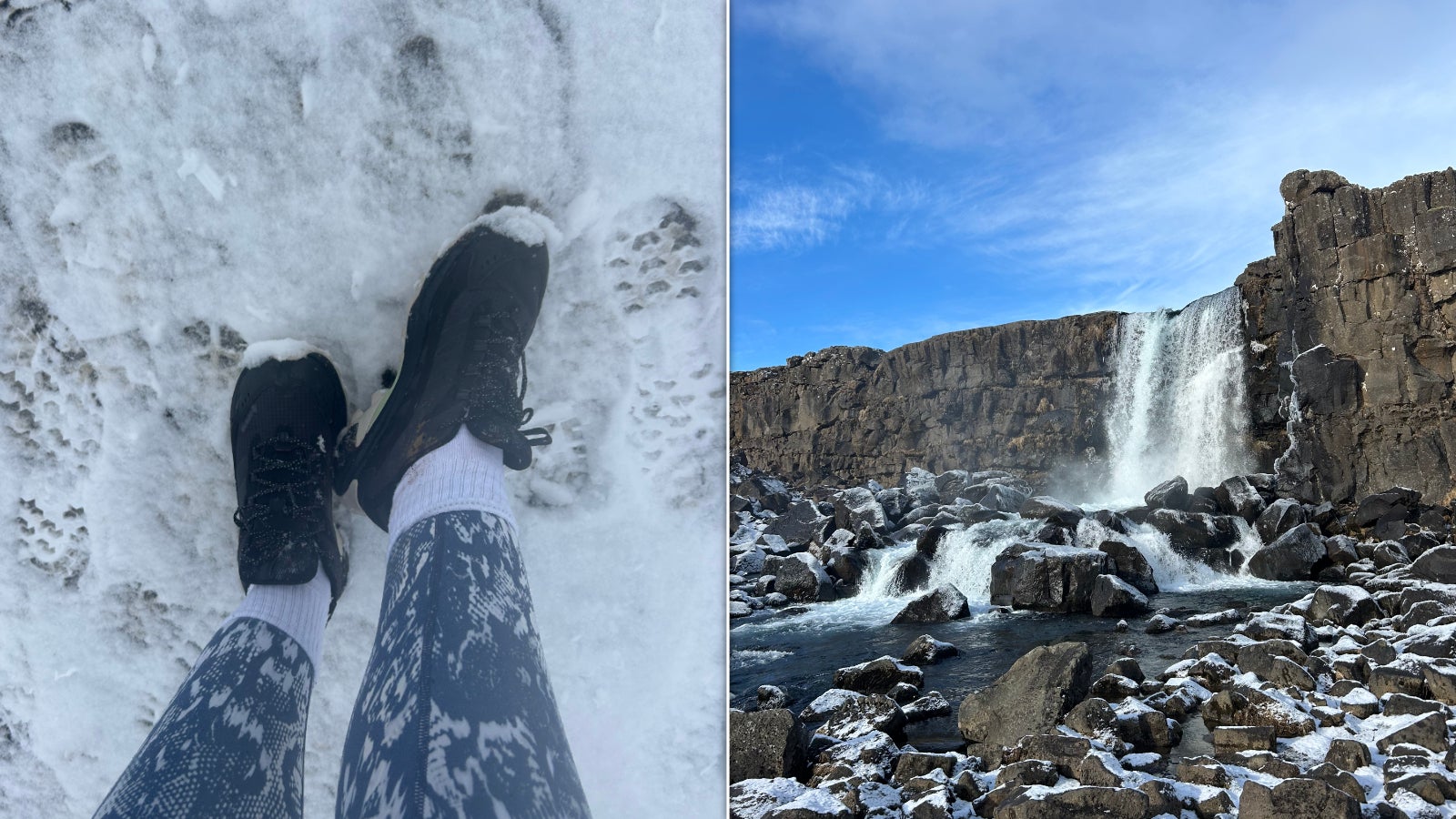
During my CityHubs excursion to Reykjavik (more on that to come), I’d be hiking up mountains, trekking through valleys to hunt the Northern Lights and stomping through ice fields. Game on, Merrell.

I boldly didn’t even break my pair of Moab Speed 2 GORE-TEX® in before starting a weekend of outdoor activities and was incredibly surprised that the shoes (which come in a both men’s and women’s version) didn’t rub or pinch at all. This makes sense, considering their FloatPro™ Foam midsole are designed for lightweight comfort that lasts – a feature that Merrell are famous for.

After doing over 40k steps everyday for three days, I was VERY grateful for their 30% increase in foam underfoot.

The hiking shoes also boast a padded collar and a special ‘bellows’ tongue that helps to keep debris out on your adventures (no annoying wee stones in your shoes here).

According to Merrell, in some very techy terms: “Lightweight FlexPlate™ technology provides torsional rigidity, lateral stability, and forefoot flexibility.”

In layman’s terms – my feet felt super secured, my ankles stable and no matter the terrain I marched through or over, at no point did I feel like a stumble was on the cards. I’ve had major reconstructive knee surgery in the past year, so I needed to feel safe. Even walking over ice I had zero worries – these shoes had serious grip.

And thank god for GORE-TEX®. We got stuck in a pretty impressive snow storm and while I was completely soaked through (yes, I maybe didn’t prepare quite well enough), my feet were bone dry. A few of our hikes saw some muddy trails and my Merrells withstood it no problem, nothing a rinse didn’t solve.

Outside of their tech specs, the Moab Speed 2 GORE-TEX® also come in a whopping 12 different colour ways and while I opted for black with white detailing, you can go for electric blue, orange hues or mustard.

There’s no arguing that Merrell’s Moab Speed 2 GORE-TEX® look pretty damn good too – you only have to look at some of the styling pictures on the site.

Okay fine, we'll take both.

Merrell UK

Okay fine, we’ll take both.

And on a personal note, one of my favourite things about the Moab Speed 2 GORE-TEX® – outside of just how damn indestructible they were – is their eco-credentials:

  • 100% recycled laces and webbing
  • 100% recycled breathable mesh lining
  • 100% recycled mesh footbed cover
  • 50% recycled removable EVA foam footbed

Shoes that are good for the environment I’m hiking through? Count me in.

Moab Speed 2 GORE-TEX®

Share Button

What we know about Biden’s prostate cancer diagnosis

Prostate cancer is one of the most common cancers affecting men in the US.

Share Button

GP patients to help NHS find more infected blood victims

The NHS is trying to find many hundreds of people exposed to the virus via contaminated blood in the 1970s, 80s and 90s.

Share Button

Nigel Farage Roasted By Emily Thornberry Over EU Deal ‘Surrender’ Claim

Emily Thornberry has thrown shade at Nigel Farage after he accused the government of “surrendering” to the European Union.

The Reform UK leader has already condemned a deal Keir Starmer is negotiating with Brussels to “reset” Britain’s relations with Brussels, even though it is yet to be finalised.

The prime minister will unveil the details of the agreement following a UK-EU summit at Lancaster House in London on Monday.

It is expected to include a youth mobility deal allowing 18 to 30-year-olds to travel more easily between Britain and the bloc.

British holidaymakers will also be able to use e-gates at European airports instead of having to queue for hours to have their passports stamped.

An agreement over veterinary and food rules will make trade between the UK and EU more easy.

The UK is also set to agree to give French fishermen greater access to British waters in return for a security and defence deal with Brussels.

Farage said: “The whole ‘reset’ is an abject surrender from Starmer and politically something he will come to regret.”

But appearing on LBC today, Labour MP Thornberry hit back at the arch-Brexiteer.

She said: “I don’t think the public thinks that’s relevant. I think they think it’s political elite talking to themselves and it’s not really about real life.

“They do want, if their neighbours run a small business, to be able to export sausages to France and for it not to be held up.

“They do want to be able to travel to Europe and not have their passport stamped and be able to go through e-gates and be able to travel more easily, and they want more money in the economy.”

Asked specifically about Farage’s “surrender” claim, Thornberry said: “Big word for him, isn’t it?”

She added: “Their’s 13 of these youth mobility schemes already with the UK and the sky hasn’t fallen in, and I think youngsters in Britain would like to be able to travel in Europe and so it has to be reciprocal.”

Share Button

Think ‘Overdiagnosis’ Is A Problem? Try Getting An Autism Assessment

Neurologist Suzanne O’Sullivan recently told The Times that “overdiagnosis” is a scourge these days, including among those with suspected autism.

But do the stats bear these claims out?

The National Autistic Society says that roughly 750,000 autistic adults in the UK remain undiagnosed; the Children’s Commissioner’s 2024 report on waiting times for assessment and support for autism found wide “inequalities between the most and least advantaged children” seeking assessment.

With the latest NHS figures on diagnosis waiting times having just been released (sharing that just under 90% of those with suspected autism have had open assesment referrals incomplete for at last 13 weeks), we spoke to The National Autistic Society about why difficulties getting assessed might be more of a risk than so-called “overdiagnosis.”

“An autism diagnosis can be life-changing”

Mel Merritt, Head of Policy and Campaigns at the National Autistic Society, tells us: “The number of people waiting for an autism assessment in England has rocketed to more than 224,000 people – that’s nearly the population of Luton or Portsmouth.”

It is also a 23% increase from last year’s figures, and a 76% rise over the past two years.

“The waiting list has more than tripled since the publication of the National Autism Strategy in July 2021, despite its promise to reduce diagnosis waiting times and improve support,” Merritt continues.

This is also despite the NHS itself saying people should not have to wait for more than three months to be assessed.

“An autism diagnosis can be life-changing and in some cases lifesaving, but getting an autism assessment shouldn’t be this hard… the average wait is now over 14 months,” the spokesperson shares.

“The assessment can be the first step to really understanding people’s needs and, too often, people can’t get support without a diagnosis, although this shouldn’t be the case.

“Additionally, people shouldn’t have to pay to get the support they need for themselves or their children.”

The Children’s Commissioner’s 2024 report found that “the most disadvantaged children with neurodevelopmental conditions are most likely to
have their life course permanently altered by long wait times.

As a Guardian writer puts it, “No one is simply ‘slapping’ an autism diagnosis on anybody, at least not in the NHS.”

Endless wait lists are “traumatic”

Though there is an increased demand for assessments (especially among “previously overlooked demographics such as women and girls”), the National Autistic Society tells us there is not a corresponding supply.

And even once you pass the “traumatic” wait time, “The diagnosis process is not a simple, quick process and can involve hours of recounting traumatic experiences and focusing on perceived deficits.”

Merrit ends, “Autistic people and their families face a constant fight for support in all aspects of their lives, and this often starts with long, traumatic waits for a diagnosis.

“The Government must provide urgent funding for diagnosis services to end this worsening crisis, and make sure autistic people and their families get the support they need when they need it.”

Share Button

Elton John Brands Labour Ministers ‘Absolute Losers’ Over AI Copyright Row

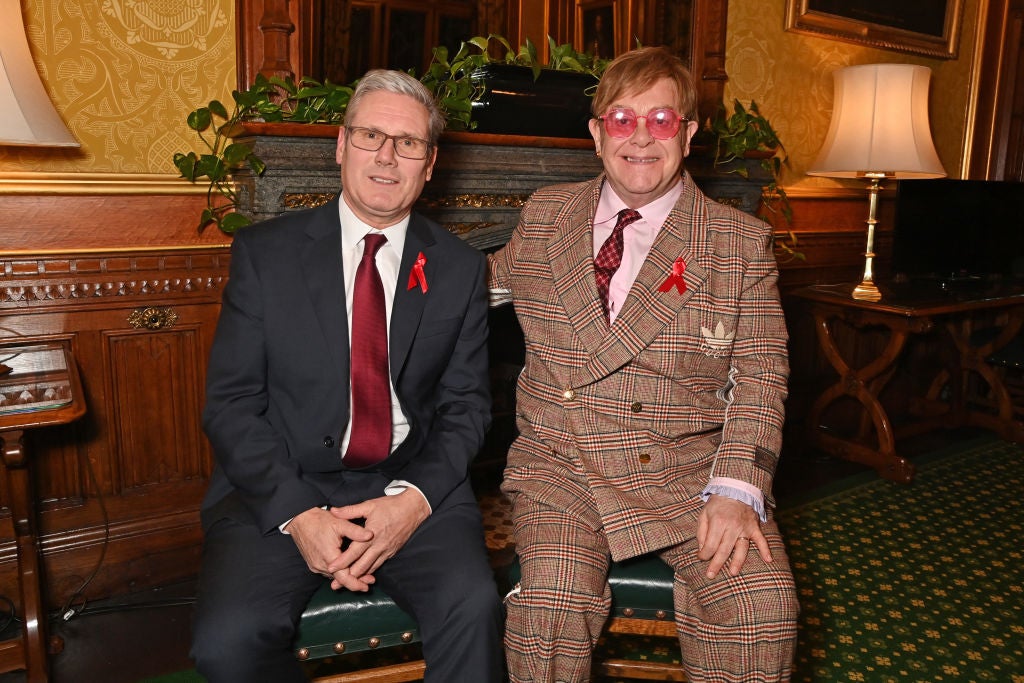
Elton John on the BBC this morning.

Sir Elton John has branded Labour ministers “absolute losers” amid the row over artificial intelligence (AI) laws.

The world-famous pop star said science secretary Peter Kyle was “a bit of a moron” for considering allowing tech companies to use artists’ work to create content without paying for it.

The row centres around the government’s Data (Use and Access) Bill, which is currently going through parliament.

Ministers last week rejected proposals from the House of Lords to force AI companies to disclose what material they were using to develop their programmes.

Speaking to the BBC’s Laura Kuenssberg, Sir Elton said the government’s current plans would allow AI firms to “commit theft, thievery on the highest scale”.

“Some people aren’t like me, they don’t earn as much as I do,” he said.

“When they’re creative, and it comes from the human soul and not from a machine – because a machine is not capable of writing anything with any soul in it – if you’re going to get rid of that and you’re going to rob young people of their legacy and their income, it’s a criminal offence, I think.

“I think the government are just being absolute losers. I’m very angry about it, as you can tell.”

Sir Elton said Keir Starmer needed to “wise up” about the threat to the creative industries and that Kyle – who has been accused of being too close to tech giants – was “a bit of a moron”.

Responding to Sir Elton’s comments, Cabinet Office minister Nick Thomas-Symonds said: “The government is trying to find a way forward that is dealing with the concerns that are being raised quite passionately by the cultural sector, but also making sure that we maintain that world-leading position in AI.

“Pursuing those two objectives is the balance we need to strike.”

The minister also said he “profoundly disagreed” with Elton John’s claim that Peter Kyle is “a moron”.

A government spokesperson said: “We want our creative industries and AI companies to flourish, which is why we’re consulting on a package of measures that we hope will work for both sectors.

“We’re clear that changes will be considered unless we are completely satisfied they work for creators.”

Share Button

Nature Cure by Richard Mabey (Omnibus)

Britain’s pioneering nature writer on the link between mental health and the natural world

Share Button

Inside the therapy room: BBC watches as three lives change

The BBC has been given access to talking therapy sessions. What it reveals is striking – how managing the mind can transform lives.

Share Button