Almost half of patients given a heart pump, after the NHS had raised concerns about it, died soon after.


Almost half of patients given a heart pump, after the NHS had raised concerns about it, died soon after.
The health secretary launches strongest criticism yet of the union ahead of Friday’s strike by resident doctors.
Adele is set to join the star-studded cast of Tom Ford’s new film in what will mark her acting debut.
The chart-topping star has long expressed her interest in pursuing an acting career, and teased last year that she would be taking a step back from the music scene after completing her string of live shows in support of her album 30.
Advertisement
On Wednesday, Deadline reported that Adele would be appearing in the cast of Tom Ford’s next film, which would be an adaptation of Anne Rice’s 1982 novel Cry To Heaven.
But the Someone Like You singer is far from the only famous face linked with the movie.
Deadline’s article named Adele’s co-stars in the projects as Nicholas Hoult, Aaron Taylor-Johnson, Paul Bettany, Daryl McCormack and Colin Firth, who previously appeared in Tom Ford’s adaptation of A Single Man.
Advertisement
Also linked with the project are Ciarán Hinds, George MacKay, Thandiwe Newton, Euphoria’s Hunter Schafer and Owen Cooper, the British teen actor who recently won an Emmy for his stand-out performance in Netflix’s Adolescence.
Owen has since appeared in the BBC comedy Film Club, and will next make his big-screen debut in Emerald Fennell’s adaptation of Wuthering Heights in early 2026.

via Associated Press
Advertisement
Tom Ford’s team has since confirmed to HuffPost UK that Deadline’s story is accurate.
Adele said a decade ago that she’d be interested in trying out acting after her performance in her Hello music video, directed by filmmaker Xavier Dolan, and was previously linked with a role in a potential remake of the musical Oliver.
When The Hollywood Reporter asked in 2023 if she’d “ever considered acting”, she responded: “No. There is one movie I want to do, but the guy whose movie it would be, he’s not mentally ready to write the script for it.”
“I’m not giving you no clues, though,” she insisted. “But I bug him every now and then about it, but he’s just not there yet. But that’s the only role I ever want. Because I think I’d nail it. I think I’d do really, really, really good at it.”
Advertisement
Last year, the Daily Mail also quoted a “source” who claimed that Adele had been taking acting lessons with the hopes of taking her career in a different direction.



Stargazers could get more than they bargained for while looking up at the night’s sky tonight.
Thanks to a huge solar storm, the Met Office’s Space Weather forecast suggests the northern lights (aurora borealis) will be visible tonight.
The lights were on full display last night too, with people in America sharing stunning images of a range of colours lighting up the sky.
Advertisement
The Met Office said parts of northern UK (and similar geomagnetic latitudes) will get the best view. There’s also a chance of sightings for those further south across England and Wales.
That said, cloud cover might make it tricky to see the phenomenon in some parts. You can check your forecast here.
The BBC reported it’s looking like the strongest aurora will happen before midnight, so at least you won’t have too long to wait.
Advertisement
Coronal mass ejections (CMEs) – eruptions of plasma and magnetic field structures from the sun’s atmosphere – are currently reaching earth.
When this happens, it can result in a geomagnetic storm, which can cause disruptions to satellite navigation and even power grids.
But a pleasant effect of such a storm is that it can also cause auroras to show up vividly in the sky.
Advertisement
Per Nasa, auroras are natural light shows caused by magnetic storms that have been triggered by solar activity. Due to the coronal mass ejections, “energetic charged particles from these events are carried from the Sun by the solar wind”.
“When these particles seep through Earth’s magnetosphere, they cause substorms. Then fast moving particles slam into our thin, high atmosphere, colliding with Earth’s oxygen and nitrogen particles.
“As these air particles shed the energy they picked up from the collision, each atom starts to glow in a different colour.”
Advertisement


A parent has sparked debate over their choice to address their son’s sexuality with him directly – after finding out he had been romantically involved with another man.
The 62-year-old said their wife died a decade ago and, in her absence, he’s tried “to be a more nurturing presence for my kids”.
Advertisement
When attending church, he found out through a friend that his son, who’s in his twenties, had become romantically involved with another man.
“At first I was just surprised, but after I digested the news I was concerned that he clearly didn’t feel able to share this important part of his life with me,” said the parent in a Reddit post.
“We live in a more conservative part of the US and I am an active churchgoer, and we had never really discussed sexuality as a family. As such, I was concerned that he thought I would disown him or something: when in reality, I just love him and want him to find the happiness I had with his mother, whatever form that takes.”
Advertisement
Rather than wait for his son to approach him about it, he decided to address it directly with him, “so he knew I loved and supported him and he didn’t have to worry about telling me”.
“I invited him over for a beer, told him what I knew, and expressed as best I could that it wasn’t something he needed to hide from me,” said the parent, who noted that after his son’s initial shock, he hugged him and told him he appreciated it.
Advertisement
“I felt like the conversation went well and I was closer to him,” he added.
The story doesn’t end there however, as when his daughter found out what had happened, she told him he’d made “a big mistake” and warned that he’d “robbed” his son of the opportunity to come out in his own time.
“I really didn’t get the impression my son felt that way about our conversation, and she didn’t hear from him that he feels that way, but she says it’s obvious he’d be upset,” said the parent.
“So now I’m wondering if I’ve been an asshole telling him I knew? And if so, what I should do next?”
Society’s default setting is often to assume someone is heterosexual, which means anyone who isn’t might feel they have to “come out” and share their sexuality with others. This can bring with it a range of emotions, including fear and anxiety, but also relief and excitement.
Advertisement
Whether someone comes out or not is their own personal choice – and they shouldn’t feel the need to do this before they’re ready.
That said, some have praised the father for how he handled this scenario.
One Redditor said: “Personally, as a lesbian who has really religious parents who I was terrified to come out to, I think what you did was lovely.”
Gay men also commented to say he “did good”. One person replied: “Gay here. NTA [not the asshole]. Robbing someone of coming out? That’s like robbing me of being drunk driver hit with a car. You didn’t rob anything. You did a great thing.”
Advertisement
Another respondent said: “Being forced out by someone else is unsettling (trust me, I know) and often dangerous. But this isn’t that. This is just a father saying to a son ‘I love you, gay, straight or purple dinosaur’ and sister needs to stay the hell in her lane.”
Bhavna Raithatha, BACP accredited psychotherapist and author, said there is “no manual for how to approach such a situation”.
“We don’t know the son’s reaction or response, however from experience, both personally and professionally, there can be immense relief in such a situation as for many, it is hardest for them to come out to their parents due to a variety of reasons including culture, religion, societal norms for them,” she said.
Advertisement
“For this father, he did what he felt was supportive. His intervention will have provided a safe place for his son – albeit sooner than the son might have felt ready, and that is something that can be discussed in due course.”
She noted that for parents in this position, another approach could be to wait until your child approaches you, while creating a safe space. So, if sexuality comes up in the media, on a show, or in conversation, her advice is to be open to discussing it, show that you are supportive, and use affirmative language.
The therapist acknowledged that there may also “be a myriad of emotions that come up as well as concerns, [as] the world still has an issue with LGBTQ+ people”.
Advertisement
“There are a huge number of variables to consider for a parent – their own feelings around sexuality, their religion, culture, family dynamics and their OWN sexuality which may be hidden, etc.”
She advised seeking out resources to educate yourself, such as through support groups like fflag.org.uk.
As for what the father should do now, BACP member Dr Paul C. Mollitt said the important thing is to continue being there for his son. “For now, it helps to centre his feelings, not your own – however difficult that might be. What matters most is that he feels safe, loved, and accepted as he is,” he said.
Advertisement
“In time, when he does talk to you, there may be space to explore what made it hard for him to open up.
“But for now, relating to him with warmth and genuine interest in his life, language that signals openness, and affection that doesn’t change will provide the conditions for him to share more about his personal life when he is ready.”


A new study from the University of California San Diego suggests that glucagon-like peptide-1 (GLP-1) receptor agonists, a class of medications originally developed for type 2 diabetes, may have benefits that extend far beyond blood sugar and weight management. These drugs, which include semaglutide (sold as Ozempic and Wegovy) and tirzepatide (known as Mounjaro), are already well known for helping people lose weight and manage metabolic conditions. Now, researchers have discovered that they might also be linked to better survival outcomes in colon cancer patients.
The study analyzed medical records from more than 6,800 people diagnosed with colon cancer across University of California Health facilities. Patients who were taking GLP-1 medications were less than half as likely to die within five years compared to those not using the drugs (15.5% versus 37.1%). This striking difference points to a potentially powerful new use for drugs that are already transforming diabetes and obesity treatment.
The research was led by Raphael Cuomo, Ph.D., an associate professor in the Department of Anesthesiology at UC San Diego School of Medicine and a member of the UC San Diego Moores Cancer Center. His team used the University of California Health Data Warehouse to review outcomes across the state’s academic medical centers.
After accounting for important factors such as age, body mass index (BMI), cancer severity, and other health conditions, the team found that people taking GLP-1 drugs still had a significantly lower risk of death. This consistency suggests the protective benefit of GLP-1 therapy may be independent of other medical or lifestyle variables.
Why GLP-1 Drugs Might Protect Against Cancer
The benefit appeared strongest in patients with obesity (BMI over 35). This finding hints that GLP-1 drugs may help offset some of the inflammation and metabolic stress that can make cancer harder to treat.
Scientists are exploring several possible explanations for this effect. GLP-1 receptor agonists are known to lower inflammation throughout the body, enhance insulin sensitivity, and promote weight loss — all factors that can influence cancer growth and progression. Experimental studies in laboratories also indicate that GLP-1 drugs may directly inhibit the growth of tumor cells, encourage cancer cell death, and alter the surrounding environment within tumors to make them less supportive of disease spread.
However, researchers caution that it is still unclear whether the lower death rate seen in this study reflects a direct anti-cancer action or an indirect result of improved overall metabolic health.
Next Steps: Clinical Trials Needed
Dr. Cuomo emphasized that the findings are observational, meaning they do not yet prove that GLP-1 drugs directly improve cancer outcomes. These results highlight an urgent need for clinical trials to test whether GLP-1 medications can actually enhance cancer survival, particularly among patients with obesity-related cancers.
The study was published in Cancer Investigation on November 11, 2025.

In a finding that could change how scientists understand the spread of life’s ingredients across space, astronomers have detected large organic molecules frozen in ice around a forming star called ST6 in a galaxy beyond the Milky Way.
Using the James Webb Space Telescope’s (JWST) Mid-Infrared Instrument (MIRI), the research team identified five carbon-based compounds in the Large Magellanic Cloud, our closest neighboring galaxy. The study, led by University of Maryland and NASA scientist Marta Sewilo, was published in the Astrophysical Journal Letters on October 20, 2025.
Detecting Life’s Chemical Ingredients in Alien Ice
Sewilo’s group found five complex organic molecules (COMs) within the ice surrounding the young protostar. These included methanol and ethanol (both types of alcohol), methyl formate and acetaldehyde (industrial chemicals on Earth), and acetic acid (the main ingredient in vinegar). One of the compounds, acetic acid, had never before been definitively observed in space ice, while the others — ethanol, methyl formate, and acetaldehyde — were detected in ices outside the Milky Way for the first time.
The team also spotted signs of glycolaldehyde, a sugar-related molecule linked to RNA formation, though further analysis is required to confirm it.
JWST’s Sharp Vision Opens a New Window on Cosmic Chemistry
“It’s all thanks to JWST’s exceptional sensitivity combined with high angular resolution that we’re able to detect these faint spectral features associated with ices around such a distant protostar,” Sewilo said. “The spectral resolution of JWST is sufficiently high to allow for reliable identifications.”
Before the Webb telescope, methanol was the only complex organic molecule ever confirmed in ice around protostars — even within our own galaxy. According to Sewilo, the extraordinary precision of the new data allowed her team to extract an unprecedented amount of information from a single spectrum.
A Harsh Galaxy as a Laboratory for Life’s Origins
The discovery is especially striking because of where the molecules were found. The Large Magellanic Cloud, located about 160,000 light-years from Earth, is an ideal environment for studying how stars form in conditions resembling those of the early universe. This small galaxy has only about one-third to one-half the heavy elements (those with atomic numbers greater than helium) of our solar system and endures far more intense ultraviolet radiation.
“The low metallicity environment, meaning the reduced abundance of elements heavier than hydrogen and helium, is interesting because it’s similar to galaxies at earlier cosmological epochs,” Sewilo explained. “What we learn in the Large Magellanic Cloud, we can apply to understanding these more distant galaxies from when the universe was much younger. The harsh conditions tell us more about how complex organic chemistry can occur in these primitive environments where much fewer heavy elements like carbon, nitrogen and oxygen are available for chemical reactions.”
How Complex Molecules Form on Cosmic Dust
Study co-author Will Rocha of Leiden University in the Netherlands noted that COMs can form in both the gas phase and in icy layers coating interstellar dust grains. Once formed, these ices can later release their molecules back into the gas. Methanol and methyl formate had already been observed in the gas phase within the Large Magellanic Cloud, but this is the first evidence that such molecules are also forming in the solid ice itself.
“Our detection of COMs in ices supports these results,” Rocha said. “The detection of icy COMs in the Large Magellanic Cloud provides evidence that these reactions can produce them effectively in a much harsher environment than in the solar neighborhood.”
Life’s Ingredients May Have Formed Early in the Universe
The presence of these complex molecules in a low-metallicity environment similar to those found in the early universe suggests that the building blocks of life may have begun forming much earlier — and in a wider range of conditions — than scientists once thought.
While this discovery does not prove that life exists elsewhere, it indicates that organic compounds can endure through the process of planetary formation and potentially be incorporated into young planets, creating conditions where life might one day emerge.
Expanding the Search for Cosmic Chemistry
Sewilo and her collaborators plan to extend their work by examining more protostars in both the Large and Small Magellanic Clouds to explore how widespread these molecules may be.
“We currently only have one source in the Large Magellanic Cloud and only four sources with detection of these complex organic molecules in ices in the Milky Way. We need larger samples from both to confirm our initial results that indicate differences in COM abundances between these two galaxies,” Sewilo said. “But with this discovery, we’ve made significant advancements in understanding how complex chemistry emerges in the universe and opening new possibilities for research into how life came to be.”
The compromise deal would allow the NHS to overspend this year.
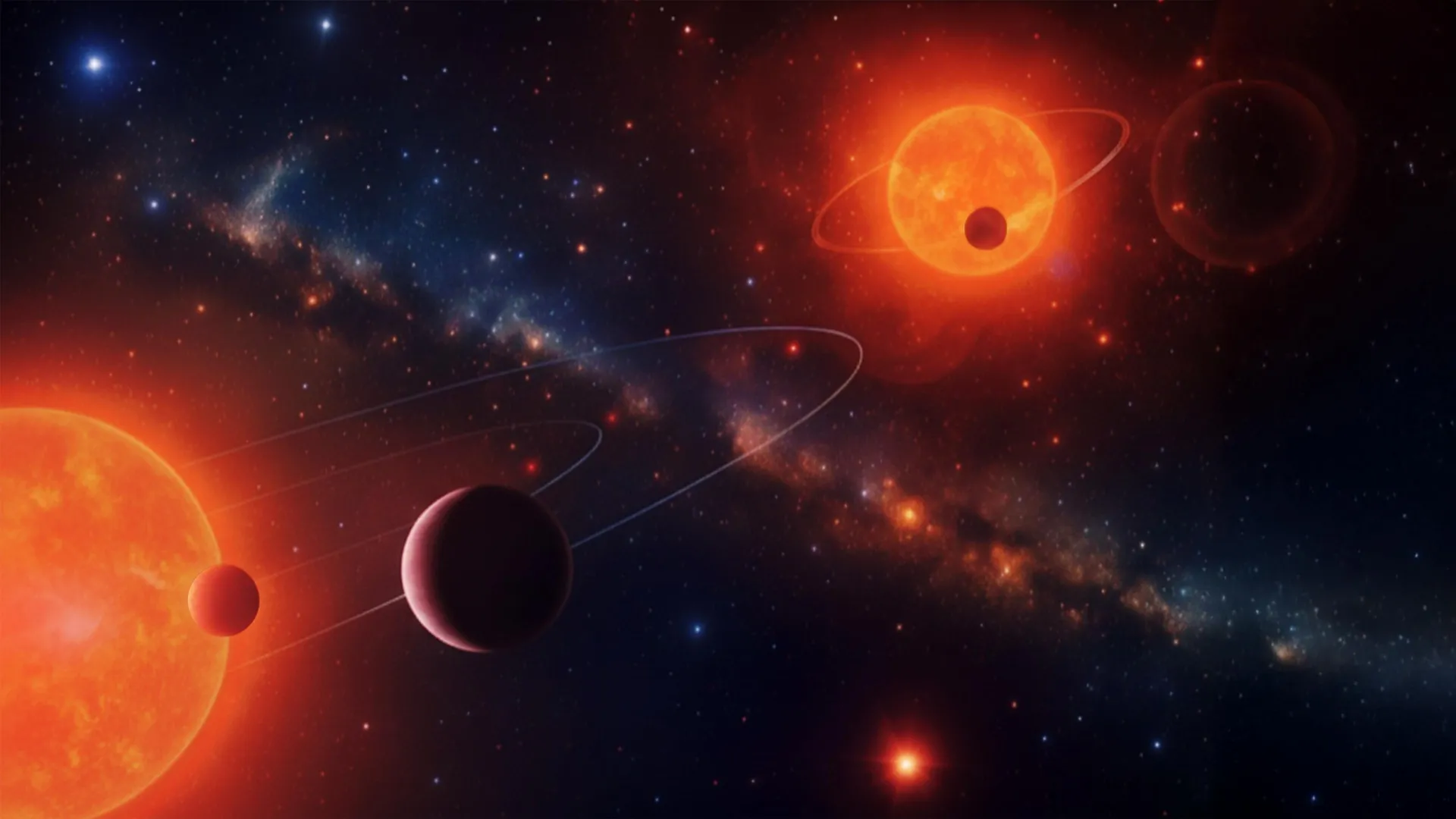
An international group of scientists has confirmed the discovery of three Earth-sized planets within the binary stellar system known as TOI-2267, located roughly 190 light-years from Earth. The finding, published in Astronomy & Astrophysics, offers new insight into how planets can form and remain stable in double-star systems, which were once thought too chaotic for complex planetary development.
“Our analysis shows a unique planetary arrangement: two planets are transiting one star, and the third is transiting its companion star,” explains Sebastián Zúñiga-Fernández, a researcher at the University of Liège (ULiège) and first author of the paper. “This makes TOI-2267 the first binary system known to host transiting planets around both of its stars.”
A Compact and Unusual Double-Star System
TOI-2267 consists of two stars locked in a close orbital dance, forming what astronomers call a compact binary system. Such systems create gravitational forces that typically disrupt planet formation. Despite this, researchers have detected three Earth-sized planets in tight orbits, a surprising outcome that challenges long-held theories about where rocky worlds can exist.
“Our discovery breaks several records, as it is the most compact and coldest pair of stars with planets known, and it is also the first in which planets have been recorded transiting around both components,” says Francisco J. Pozuelos, a co-leader of the study and researcher at the Instituto de Astrofísica de Andalucía (IAA-CSIC).
Combining Space and Ground Observations
NASA’s TESS space telescope first provided the data leading to this discovery. Two of the planets were initially identified by astronomers at ULiège and IAA-CSIC using their custom software tool, SHERLOCK. This early detection prompted ground-based observations to confirm the findings.
The confirmation process required a major effort involving several observatories. Among the most important were the SPECULOOS and TRAPPIST telescopes operated by ULiège (PI: Michaël Gillon). Designed to detect small exoplanets around cool, dim stars, these robotic instruments were vital for verifying the planets and studying their characteristics in detail.
A Natural Testbed for Planet Formation
“Discovering three Earth-sized planets in such a compact binary system is a unique opportunity,” says Zúñiga-Fernández. “It allows us to test the limits of planet formation models in complex environments and to better understand the diversity of possible planetary architectures in our galaxy.”
Pozuelos adds, “This system is a true natural laboratory for understanding how rocky planets can emerge and survive under extreme dynamical conditions, where we previously thought their stability would be compromised.”
Looking Ahead to Future Exploration
The discovery opens up new questions about how planets form and persist in binary systems. Upcoming observations with the James Webb Space Telescope (JWST) and next-generation ground-based observatories could reveal more details, such as the planets’ masses, densities, and even their atmospheric compositions.
Beyond its scientific importance, the finding underscores the value of combining data from space-based observatories like TESS with precise ground-based instruments such as SPECULOOS and TRAPPIST. Together, they continue to expand our understanding of how planetary systems form and evolve across the galaxy.
Tammy McDaid is raising funds to help her make memories with her son Tate.
