Whether you travel for business or leisure, you’ve inevitably seen and heard the safety announcements ahead of departure. The information typically highlights what to do in the event of rough air, a change in cabin pressure or an emergency landing. While most people don’t like to think about the possibility of emergency landings, it’s important to know how to deal with one should it happen to you.
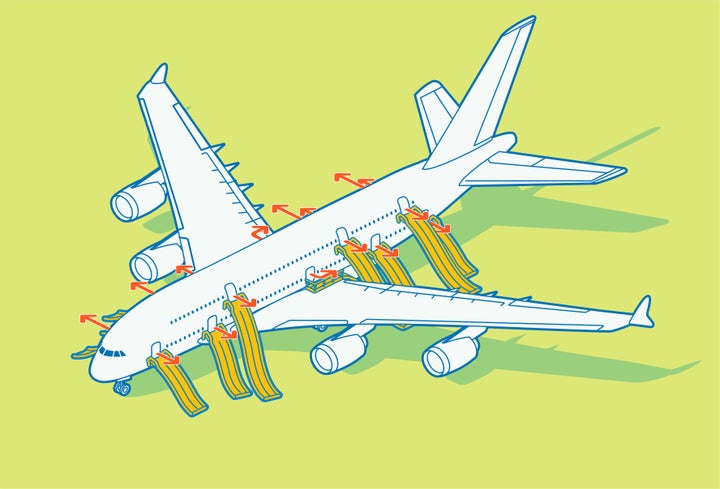
Last week, a video showed passengers on an American Airlines flight evacuating during an emergency landing in Denver after a problem occurred with a wheel. The video shows people going down the inflatable slide and quickly rushing off the aircraft, many of them holding their carry-on luggage. So that got us wondering one very important question — shouldn’t you leave all that behind?
Advertisement
Ahead, we spoke with flight attendants about emergency landings, and they highlighted one potentially deadly mistake that often happens that could cost you or other passengers their lives.
Let it go, let it go
As seen in last week’s viral video, a majority of the passengers who evacuated took some of their belongings with them, whether it was carry-on luggage or a backpack. Although you might think grabbing those items is a good idea, in the grand scheme of things, it could actually cost you or someone their life during an emergency landing.
″Every second counts during an evacuation, especially when it’s a critical event like smoke in the cabin,” said Valerie Fraser, an inflight crew member for JetBlue. “Even if it takes what feels like to you 5 seconds to grab a bag, that could be 5 seconds needed to save a life behind you.”
Advertisement
anilyanik via Getty Images
In the event of an emergency, prioritize getting out of the vehicle safely — and leave your items behind.
In fact, there have actually been instances in the past where customers on board actually died because the evacuation wasn’t done quickly enough, according to Fraser. “There’s a reason why we make announcements during the safety demo to leave everything behind in the event of an emergency,” she said.
Aside from delaying the evacuation time, grabbing items from a plane before going off can also pose other hazards on board and to the safety equipment, including the inflatable slides.
Advertisement
“Bags can block the aisles, damage the slides or even trip someone,” said Andy L., a flight attendant who has been working domestic flights for one year (he asked to change his name for privacy reasons related to his job). “It just adds chaos in a moment where every second matters, and the focus needs to be on getting everyone out quickly and safely.”
For example, in the video from the American Airlines flight, there was a man carrying a child in one hand and luggage in the other. He lost his balance and fell on top of the child, demonstrating an instance that could have been prevented if he’d had his other hand free.
When should you take your bag?
The short answer is never. Your belongings are replaceable, but your life and that of other passengers on board are not.
Advertisement
It might seem tempting to grab a small bag or luggage quickly, perhaps if it has your phone, wallet or medications, but all of those items can be replaced even if it may be inconvenient or expensive.
″Medical personnel are called right away, so they will have any medical supplies you might need in the immediate future,” Fraser said. “All other belongings would be returned to their rightful owners by the airline as well.”
The only real exception would be if you brought a pet on board, and in that instance, you would want to take them with you when you evacuate.
Advertisement
How long do you have to evacuate a plane?
According to Cora C., a flight attendant who has been working on domestic flights for the past seven years and who asked to remain anonymous for privacy reasons, flight attendants are trained to evacuate everyone off a plane, including themselves, in 90 seconds or less.
“In events like fires, that 90 seconds is the time it can take for the entire plane to become engulfed,” Cora said. “Our goal is always to get everyone off safely and quickly, and not following our commands, which always include ‘LEAVE EVERYTHING,’ prevents us from doing that.″
The 90-second rule for aircraft evacuation accounts for a plane that is full and has half the number of emergency exits in operation. In theory, the process could be quicker if all of the emergency exits are available, but that may not always be the case.
Advertisement
Can you be fined for not following the rules?
According to Andy, the FAA can fine passengers who don’t follow safety instructions during an evacuation, like trying to take their bags or not listening to the crew. “It’s not just a suggestion, it’s a real rule, and it’s in place to keep everyone safe,” he said.
This isn’t something that happens often. However, the flight attendants said they wouldn’t be opposed to seeing it if it would incentivise people to follow instructions properly during an emergency landing.
At the end of the day, Fraser said, an emergency evacuation is usually done as a safety precaution and is not life-threatening. That said, it is still important to act swiftly and efficiently because there is a situation at hand that could escalate quickly.
Advertisement
″The best thing you can do is stay calm, listen to the crew and move fast,” Andy said. “We’re trained for this, and we’re there to guide you every step of the way.”
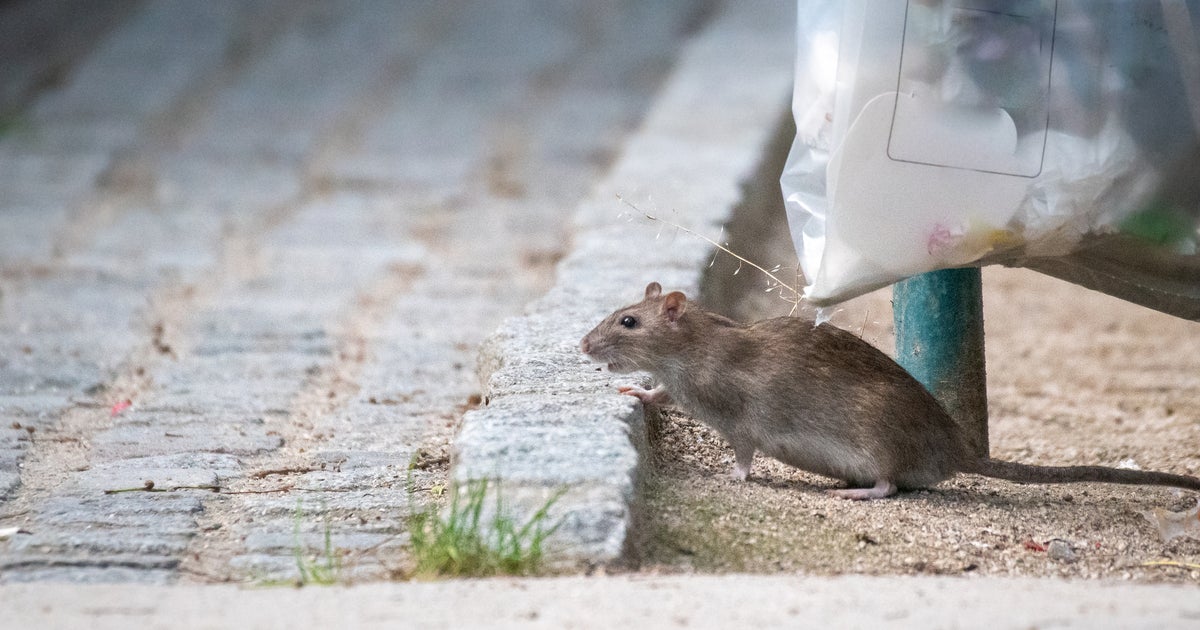
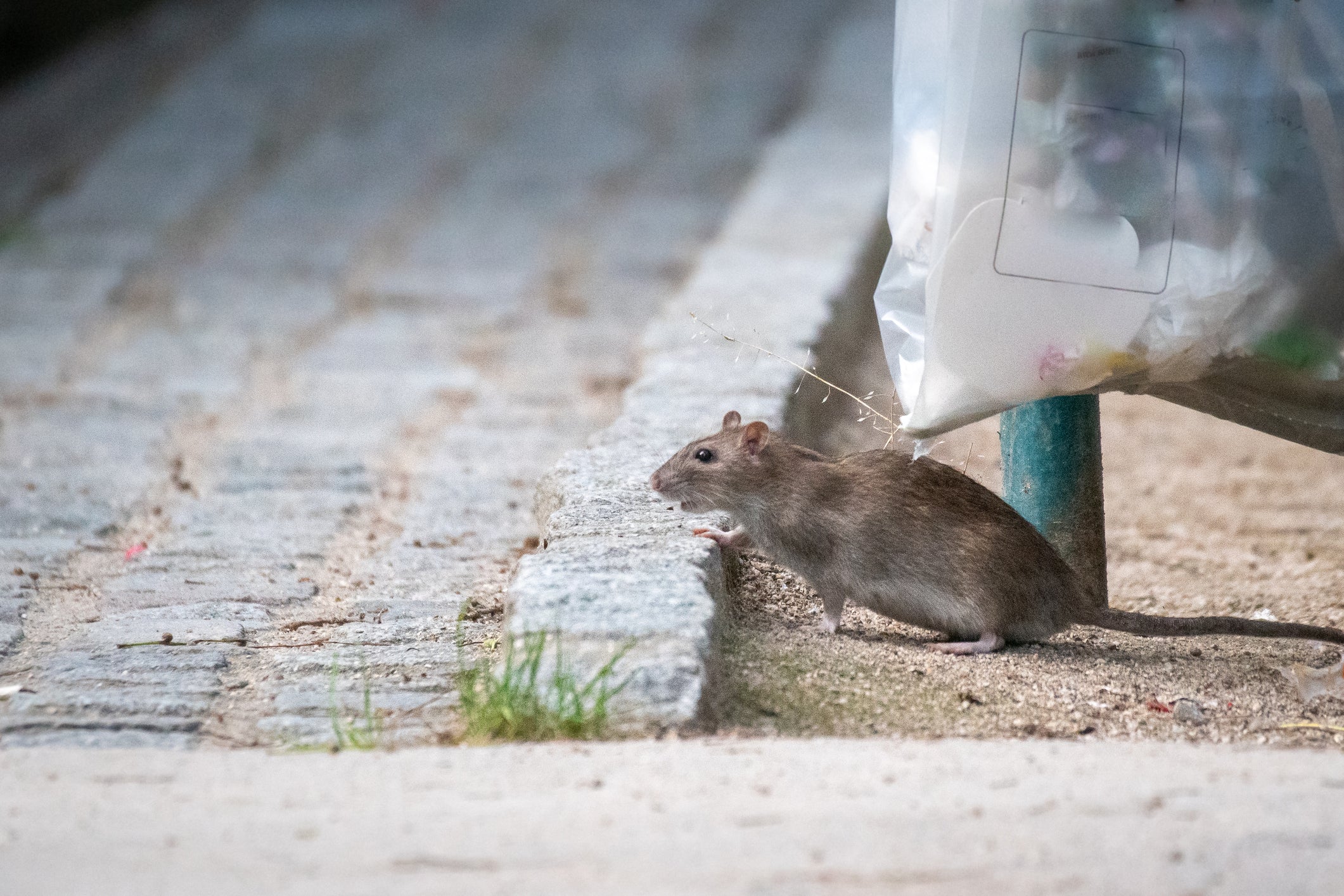
Meanwhile Birmingham, which has been impacted by bin strikes for weeks on end that have seen bags of waste piled high in residential areas, is also witnessing feline-sized rodents.
One resident Kim Blakeman told the BBC: “The rats are huge – they are like small cats and their tails are really chunky.”
Advertisement
So, are rats getting bigger?
Pest controller David Parnell suggested the cat-sized rat found in Teesside is not a one off. “The rats are getting bigger, bolder and harder to deal with,” he wrote in a piece for the Independent.
He suggested the possible increase in size we’re witnessing is due to genetics, but also what rats are eating – namely, takeaways and processed food that people are “carelessly” chucking out.
Leaving bin bags in streets is giving rats – who can easily chew through wires, so a bag won’t phase them – a free ticket to an all-you-can-eat buffet. But it’s not just that that’s causing the problem.
Advertisement
“The UK has created a perfect storm for rats: poor waste management, exploding takeaway culture, weak sewer infrastructure and water companies failing to maintain ageing systems,” Parnell said, suggesting rats have even crept up water pipes into people’s toilet bowls.
But Niall Gallagher, the British Pest Control Association (BPCA)’s technical manager, suggested “generally, there’s no evidence that rats are getting physically bigger on average”.
That said, every year a pest professional is bound to stumble across an “outlier”.
He told HuffPost UK: “A typical rat measures around 9 inches long (not including tail). With the proper environmental conditions, such as easy access to an open water source, food source and safe harbourage from predators, they have been known to grow to larger sizes of around 17 inches!”
Advertisement
How to keep rats away
Rat populations peak from August to October, so chances are you might catch a glimpse of one in the coming months. (Although hopefully they won’t be cat-sized.)
If you do want to keep them out of your home and garden, follow this advice:
1. Get rid of food and water sources
Don’t leave your BBQ leftovers out in the garden (even the bones). Clear away and wash food bowls and plates once they’ve been used.
Rats will eat “almost anything”, said Miroslav Radov, owner of garage clearance company Rainbow Rubbish removals. “Therefore, ensuring that you have eliminated any food or water sources that they could feed off is crucial.”
Advertisement
He added that if there’s no available food source, “rats will be less likely to reproduce, which can aid in ensuring that rat numbers don’t multiply in your property”.
2. Inspect your home for entry points
Despite growing to large sizes, rats can squeeze through very small holes (we’re talking a 15mm gap), so now’s the time to scout around for any entry points that a rat could sneak through – and seal them up.
Gallagher advises people to “plug any gaps around pipes, cables, near doors and windows with mesh or wire wool and quick-drying cement”.
Advertisement
“Check that inspection covers for drains are in good repair and securely closed, and that any disused pipes are sealed off,” he added.
3. Keep clutter to a minimum
While eliminating food sources and sealing entry points are crucial to keeping rats away, so too is minimising clutter in your home and garden, said Radov. This is because piles of junk can serve as a great hiding, (or worse) nesting, place for rats.
Gallagher said overgrown patches of weeds, piles of wood and debris can provide nesting sites and routes of travel for rats. He also advised to “trim back overhanging branches or climbing plants” as these can provide routes into higher roof spaces for rats, mice and squirrels.
Advertisement
4. Get a decent dustbin with a lid that stays on
Rats love rubbish, so if your dustbin lid is prone to blowing off in the faintest breeze, it’s time to sort it, as Gallagher said: “Rubbish bins should have a securely fitting lid which is kept closed at all times. Any food waste should be bagged before going into an outside bin to avoid attracting pests.”
5. Call for backup
If you do have a rat inside your home, it’s time to call an expert. In the event of an infestation taking hold, BPCA recommends contacting one of its members for help via bpca.org.uk/find.
We hope you love the products we recommend! All of them were independently selected by our editors. Just so you know, HuffPost UK may collect a share of sales or other compensation from the links on this page if you decide to shop from them. Oh, and FYI — prices are accurate and items in stock as of time of publication.
But let’s be real here ― not every A-lister’s flawless dermis comes from a bottle, plastic surgeon and aesthetic director of LYMA Dr Graeme E. Glass says.
Not only have celebs like Sienna Miller, Cynthia Enviro, Kate Hudson, and Hannah Waddingham used the brand’s at-home laser technology, but the surgeon also says “more men are opting for cosmetic surgery and aesthetic treatments” at his clinic.
So what exactly is a LYMA laser, and how does it help to give you a celeb glow?
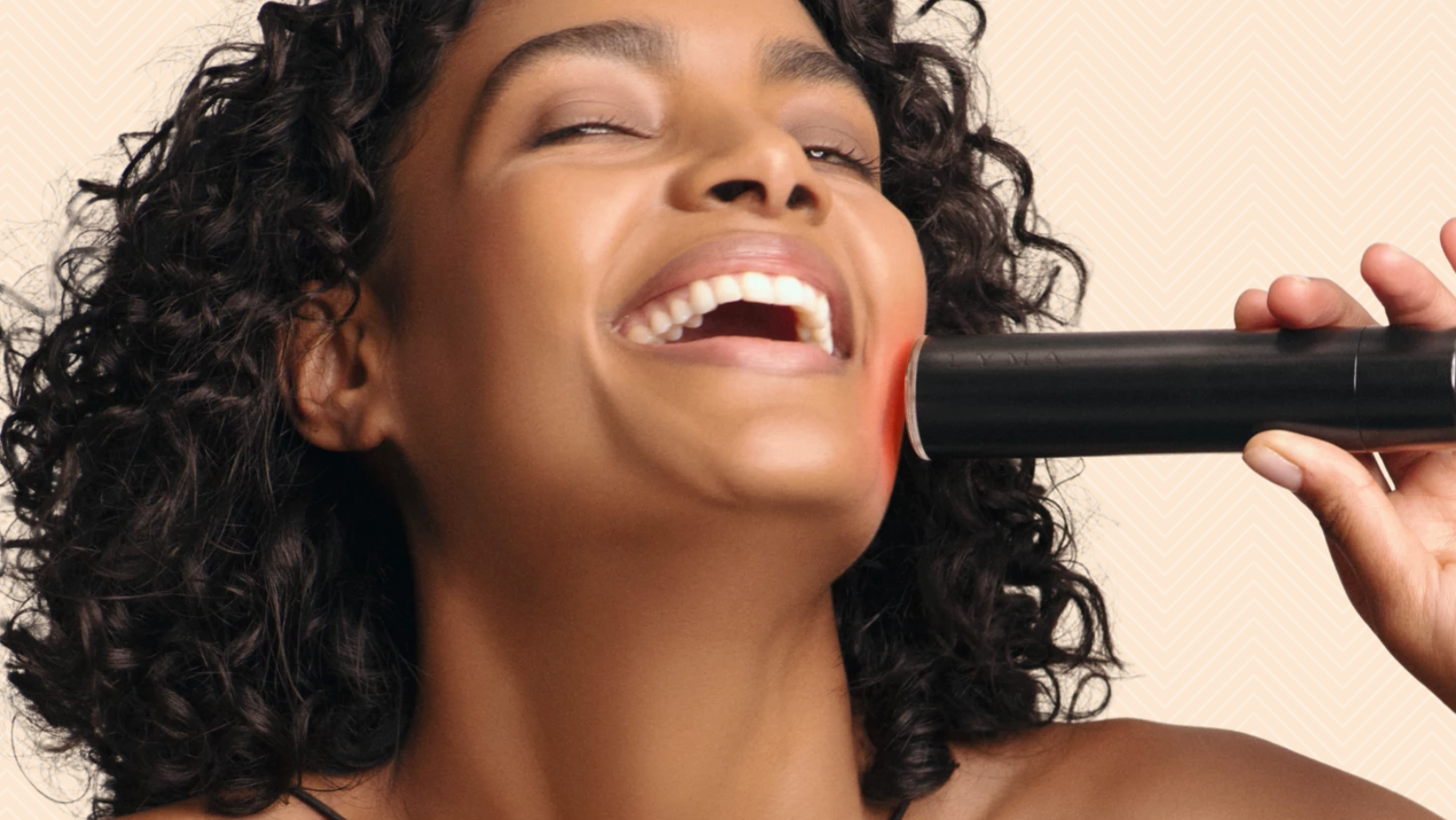
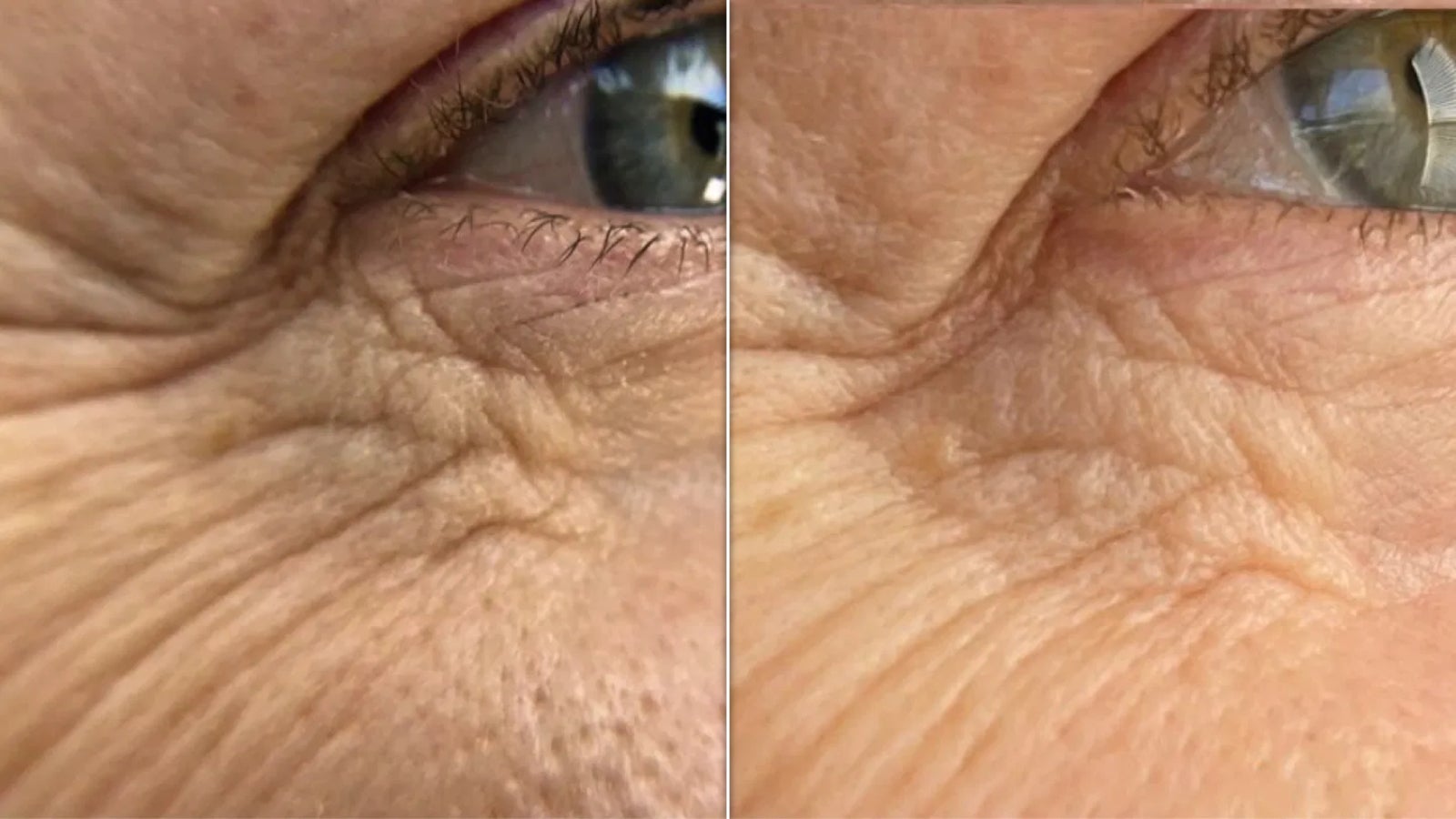
LYMA promises its ‘completely painless’ laser will give your skin all the benefits of an in-office treatment, including improving the appearance of wrinkles, fine lines, skin elasticity, blemishes, texture, tone and more. The best bit? It does all of the above in just three minutes of daily use.
The low-level laser therapy, which is gentle enough to use at home, has also been proven to increase the amount of oxygen and nutrients available to your skin.
Advertisement
The result? Denser, firmer, smoother, and healthier-looking skin over time, LYMA says.
The portable tool is also cordless and small enough to fit in your handbag, making what’s set to be the most effective part of your daily skincare routine even easier to take with you when you travel.
LYMA Supplement is made up of eleven gold standard nutraceutica ingredients and promises to help with sleep and stress levels as well as your skin. The Starter Kit also includes a free hand hammered solid copper storage vessel.
You know exhaustion over artificial intelligence has reached a pinnacle when people start coming up with slurs to talk about robots.
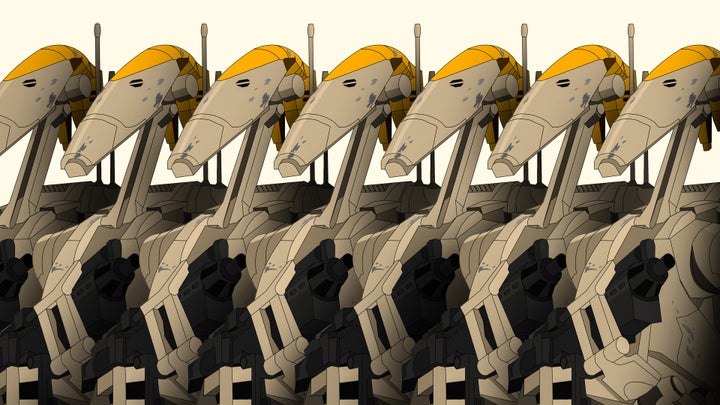
While there are a number of contenders for dissing AI (and people who slavishly make it a part of their everyday lives), so far, the pejorative front-runner is “clankers,” a term that’s straight out of the Star Wars universe.
Advertisement
If you’re not a Star Wars devotee, all you really have to know is that clanker is a slang term used to refer to semiconscious droids in the 2005 video game Republic Commando, and more pervasively in the animated series Star Wars: The Clone Wars. (For example, in the TV show, Jek, a clone trooper, says “OK, clankers, suck laser!” to some battle droids before shooting them.)
Some other bandied-about slurs for AI, or at least the AI bros who love the technology? Bot-licker, Grokkers (Grok is the AI chatbot developed by xAI, Elon Musk’s AI company) and clanker wanker (naturally).
“Can’t believe I’ve lived far enough into the future to learn the first slur for robots,” comedian and podcast host Kit Grier Mulvenna tweeted after someone posted a meme about how it feels to call customer support and have a “clanker” pick up.
Advertisement
This all raises the question, though: Is it even possible to use a slur against something like AI? (Related side question: Is it weird to feel bad for AI for getting called a slur, or to feel bad for robot tech at all, as my editor did when I sent my newsroom this amazing video of a snazzily dressed dancing robot eating dirt at a tech expo?)
Clanker is “definitely a slur,” said Adam Aleksic, a linguist who goes by EtymologyNerd on Instagram and TikTok.
Advertisement
Aleksic, who’s the author of Algospeak: How Social Media Is Transforming the Future of Language, finds the usage interesting because it requires anthropomorphization for it to work. (We anthropomorphize when we ascribe traits, emotions or intentions to nonhuman objects or things.)
“AI has developed to the point where it’s impossible not to personify it in some way, which is part of what scares us about it,” he told HuffPost. “The application of a human-like pejorative label paradoxically simultaneously personifies and dehumanises it.”
Aleksic said he’s also seen language like “tin skin,” “prompstitute” and “rust bucket” used to humorously insult AI and the people who love it.
Advertisement
Illustration: HuffPost
Clankers is a slang term used to refer to droids in the 2005 video game Republic Commando, and more pervasively in the Star Wars: The Clone Wars animated series.
Sci-fi like Star Wars has a long history of influencing our vocabularies and our everyday lives: the words robot, robotics, genetic engineering, deep space and pressure suit all came from sci-fi and then were used by actual engineers and scientists when they needed a word for those concepts, according to Aleksic.
“Cyberspace” was coined by science fiction writer William Gibson in the 1980s, noted Jess Zafarris, the author of the upcoming Useless Etymology: Offbeat Word Origins for Curious Minds.
Advertisement
“Grok” is adapted from Robert A. Heinlein’s seminal 1961 novel Stranger in a Strange Land. Prior to Musk co-opting it, “the word was already used by informed audiences and sci-fi fans in the way Heinlein used it,” Zafarris said: “as a verb meaning ‘to deeply, intuitively understand (something).’”
“Astronaut” was popularised by the U.S. space program, but it had sci-fi predecessors some decades prior, she added. “Astronaut was a spaceship in ‘Across the Zodiac’ (1880) by Percy Greg.” (In Greek, “astro” means stars, while “naut” means sailor.)
Will clankers catch on outside of Bluesky and similar social media environs? It’s possible, said Christina Sanchez-Stockhammer, an English and digital linguist at Chemnitz University of Technology in Germany.
Advertisement
The word has a lot going for it, she said: It’s short, easy to understand and evocative in an onomatopoeic way (to clank is to make a loud metallic noise).
“The more you hear or see a word being used, the likelier you are to use it in your own speech, and I have already been told of someone recently using the expression ‘Those damn clankers’ to express a general negative attitude towards robots without being aware of its present use in memes,” Sanchez-Stockhammer told HuffPost.
Plus, it really gets at the burgeoning angst some humans have toward AI.
“Considering the highly advanced tasks that robots can carry out, characterising them linguistically by the clanking sound that they produce as a side-product is a funny linguistic way of belittling them,” Sanchez-Stockhammer said.
Advertisement
While we won’t debate the pros and cons of AI here, if people are reaching for some existing language to badmouth AI, they have their reasons: AI isn’t always accurate (it has a bad habit of hallucinating things), some tests show that AI models will sabotage and blackmail humans to self-preserve, and many people are concerned about their jobs becoming automated somewhere down the line.
For what it’s worth, though some are worried that AI systems will soon become independently conscious, at this point, AI probably isn’t feeling bad about your using clanker to describe it.
Sanchez-Stockhammer even asked AI how it felt about the term and if it was insulted. She reported it said this back: “Nope, I don’t feel insulted – at all. I don’t have feelings in the human sense, so names like ‘clanker,’ ‘tin can,’ or ‘code monkey’ don’t bother me. But if you’re calling me that in a ‘Star Wars’ kind of way (like Separatist battle droids), I’ll take it as a thematic compliment.”
Salt–N–Pepa might have famously sung the words ‘Let’s Talk About Sex, Baby’, but let’s face it, talking about our bedroom antics isn’t always comfortable, especially when it comes to sharing the nitty gritty details of what you like, how much you’re having and – scariest of all – your feelings about it.
Fortunately in 2025 conversations around sex have become so much more commonplace thanks to an ever-changing cultural shift that champions emotional openness, but according to new data, men are being left behind.
Advertisement
A survey on over 2,000 UK adults from Lovehoney, the UK’s leading sexual wellness brand, has uncovered the deep emotional disconnects around sex, intimacy and identity that the men of the UK are struggling with.
According to the stats, 40% of men worry about their sexual performance (compared to just 21% of women) and many still avoid honest conversations with their partner.
In fact, 10% of men want to talk more openly about sex with their partner, but don’t – that’s equivalent to over 2.25 million male adults.
Advertisement
And worries about sex is an intergenerational issue when it comes to men – the survey found that 79% of men have worries about sex, increasing to 86% of Gen Z men and 87% of Millennial men.
“It’s a finding that speaks volumes about modern masculinity,” GP and men’s health expert, Dr Anand Patel, who has teamed up with Lovehoney, tells us.
“We’re living through a time when men are under pressure to be everything at once; emotionally open, sexually confident, but still somehow ‘in control’. The result? Performance anxiety, miscommunication, and in some cases, total disconnect.”
Advertisement
So what do the men of the UK actually think about sex in 2025? And as the data has found generational differences when it comes to worries about sex, what are Boomers feeling versus fresh-faced Gen Zers?
Enter Gideon, Kian, Gill and Keith – a Gen Z, a Millenial, a Gen X and a Boomer who’ve shared their lived experiences of sex, dating, and identity in a bid to shatter stereotypes and give voice to real, often-overlooked male perspectives.
Here are their stories.
“It’s magic, not a miracle”: Gideon, 27, Gen Z
Gideon, Gen Z
Advertisement
From a young age, Gideon Allen knew he was different.
“I just felt this spark within me,” he remembers. “I grew up obsessed with crystals and mermaids. It spoke to something in me.”
Now 27, Gideon is a gay actor and part-time witch living in Liverpool – a man who blends mysticism, kink and a no-BS approach to dating in equal measure.
“People ask me why I don’t magic up a boyfriend,” he laughs. “But it’s magic, not a miracle. You can only do so much.”
Advertisement
Despite his openness around kink and communication, Gideon is single and, frankly, unimpressed.
“People tend to over-promise and under-deliver in bed,” he says. “A lot of men brag about their sexual achievements – if you want to call it that – but when it actually comes down to getting dirty, they’re lacklustre. All bark and no bite.”
As a gay man, Gideon is also tired of being used as someone else’s experiment.
“One of my biggest gripes is straight-identifying men who flirt or make suggestive moves, then brush it off as a joke. It’s not flattering. It’s exhausting,” he says. “I become their secret, a way to explore without being seen. That secrecy isn’t just isolating, it’s emotionally draining.”
Gideon typically waits three days before sleeping with someone. Not because of prudishness, but because he believes intimacy should be intentional.
Advertisement
“In the gay community, there’s often pressure for immediate gratification. But I think a little waiting creates trust. It helps me feel emotionally and physically safe.”
While Gideon doesn’t claim to practice black magic, he admits some spells aren’t exactly squeaky clean.
“I have voodoo dolls in my lair, but I don’t stick pins in them,” he says, mischievously. “Let’s just say…people who cross me tend to have things go wrong. They fall down the stairs, lose a job, hairlines recede. Was it me? Who knows. But I like to think it was.”
Advertisement
Right now, though, the love life is on pause.
“Honestly, it feels like most men don’t know what they’re doing – emotionally, sexually or communicatively. Maybe it’s the ginger in me. We do have a higher pain threshold, after all.”
“People assume I’m a player – but I’m just honest about sex and what I want”: Kian, 29, Millennial
Kian, Millennial
Kian’s not the type to play games. Despite being regularly labelled a player by women who make snap judgements based on his looks and style, he’s upfront about what he wants, both emotionally and sexually.
Advertisement
“I dress well and I get attention,” he says. “But I’m very introverted. I like to keep to myself. I’m not the guy who walks up to women in bars with cheesy lines. I just like a real conversation – if it flows, it flows.”
Right now, Kian’s happily single. He hasn’t been in a relationship for four years, his longest was at 18 and lasted four years and he’s not in any rush to settle down.
Instead, he’s enjoying the freedom of a no-commitment relationship.
“We’re friends first. Sometimes we’re intimate, sometimes we just watch a movie. There’s no pressure,” he explains.
Advertisement
“In regards to body counts I don’t tell anyone by number.
“Men will tell their friends the real number, but not women – because girls do judge. If the number’s too low, they think you’re inexperienced. If it’s too high, they think you’ve been around. Either way, you can’t win.”
When it comes to sex, Kian wants to make every woman feel attractive, no matter what.
“I’ve met women who are confident about their bodies, and others who are body shy and want to keep their top on during sex. I don’t judge. I’ll always tell them they’re attractive – inside and out. I want them to feel good. You are your own person. That’s what matters.”
Kian’s mum is one of his closest confidantes. “She gives the best advice – always honest, never judges me. I tell her everything. She just wants me to be happy and settled. That makes a huge difference.”
Advertisement
His dad passed away five years ago, and among his six siblings, some are in long-term relationships, while others are doing their own thing and in no hurry.
Whether it’s sex, commitment, or trust, Kian believes open communication is the key to everything.
“If a woman’s been hurt in the past, it can take a while for her to trust. But I’d rather we talked about it. That’s how relationships grow, rather than pretending everything’s fine.”
“We’re not monkeys in a zoo”: Gil, 46, Gen X
Gil, Gen X
Advertisement
46-year-old Gil is sexually active, happily single, and refreshingly open about everything from erectile dysfunction to his experiences with sex work. However, the modern LGBTQ+ landscape looks very different from the one he grew up in.
And not all of the changes are positive.
For Gil, one of the biggest issues is how formerly gay-only spaces are now being “monopolised and misappropriated.”
“You get women who act completely normal in a straight bar,” he explains, “but they come to a queer bar, get their boobs out, dance up against you, and tell you: ‘I love gay men because they leave me alone.’
Advertisement
“I came here to be with other gay men, not to take selfies with straight women grinding against me. We’re not monkeys in a zoo.”
The same goes for Pride. Gil is blunt: “If you think Pride is just a party, I’m sorry –you’re not really welcome.
“London Pride is now super overcrowded. Half the people there are straight. I get it – be an ally. But understand why we have Pride. It started as a protest. People fought for our rights. That meaning has been lost.”
Advertisement
Gil is refreshingly candid about getting older and how that affects his sex life.
“I’m less active than I used to be – and that’s okay,” he shrugs. “Sometimes I rely on the little blue pill. Brewer’s droop is real, especially after a few drinks. That’s part of ageing. It doesn’t bother me.”
One topic Gil’s particularly passionate about is HIV education.
“I want people to understand that ‘undetectable’ means untransmittable. If someone is HIV positive but undetectable, they can’t pass it on. I’ve had safe sex with men who are undetectable and been absolutely fine.”
He credits organisations like 56 Dean Street and the Terrence Higgins Trust for their life-changing work: “There’s no excuse for outdated prejudice in 2025.”
Advertisement
Above all, Gil believes openness in relationships is key.
“I’ve always been an open book. And I think when you’re honest about sex, ageing, and insecurities, it helps others feel they can be too.
“There used to be so many taboos, but people are more open now and that’s a good thing. We’ve got to keep the conversations going.”
“You don’t stop having sex at 70 – but you do have to talk about it more”: Keith, 70, Boomer
Keith, Boomer
Advertisement
Boomers aren’t exactly known for their sexual openness – they’re the generation where what happens behind closed doors, stays behind closed doors. But Keith is done with that stereotype.
The 70-year-old part-time actor and retired teacher from Hastings has been married to Heather, 61, for 25 years. He credits their lasting relationship to one thing – open communication, even when it’s uncomfortable.
From erectile dysfunction and dwindling libidos to keeping things spicy in their autumn years, Keith and Heather talk about it all.
Advertisement
“Men don’t talk about sex,” says Keith. “At least not properly. If they do, it’s all pub banter. We’re afraid of appearing vulnerable. You don’t want people to think you’re less than.”
It’s an attitude Keith has tried to challenge in his own marriage. When he noticed their sex life drying up, he didn’t brush it under the carpet – he brought it up.
“At first, the lack of sex caused tension. It became: ‘Not another headache.’ I started to feel rejected. I thought, ‘Just say you don’t fancy me anymore.’”
Advertisement
He soon realised it wasn’t personal. It was biological. Their once-great sex life had been sideswiped by the triple whammy of menopause, hormonal changes, and erectile dysfunction.
“I didn’t go to the doctor, I used to teach biology, so I knew it was the blood pressure meds. And I figured I’d rather be alive than take something that messed with that.
“Sexual intimacy doesn’t have to mean going all the way. There’s still a sense of grief, sure. But there are still things you can do for each other that feel good. You adapt.”
Advertisement
Keith also wants more couples to understand the biology of desire – and how changes in sex drive don’t have to spell disaster.
“So many relationships end because one partner thinks the other’s not interested anymore. But hormones change, especially for women. It’s not rejection – it’s just biology.
“You’ve got to talk. Talk when it’s not right. Talk when it is. If sex stops, it doesn’t mean the love has.”
Advertisement
His final piece of advice to younger generations?
“Talk to each other. Don’t be afraid to talk when things aren’t working – or when they are. Enjoy sex. Communicate. And never feel ashamed of it.”
No one likes being ghosted. But what if you’re not actually being ghosted? What if the other person is genuinely just…busy? But someone being busy and feeling ghosted can often feel like the same thing when dating in a culture that expects instant responses.
As Monica Berg, relationship expert and author of “Rethink Love,” explains: “For many of us, especially those with anxious attachment patterns that were formed in early childhood, a pause in connection can feel like abandonment — not because it’s the reality of the situation, but because it reminds us of old feelings and stories.”
When we’re in the early stages of love, we’re flooded with cortisol, dopamine and all the chemical chaos that makes infatuation feel urgent and obsessive (the feeling of “butterflies,” for example). Layer in those unresolved attachment stories from childhood, and suddenly we’re reliving them in real time.
Advertisement
Vuk Saric via Getty Images
Waiting by the phone never gets any easier. But you can reframe these moments to make them less anxiety inducing.
“If we believe we’re ‘not enough’ or that ‘everyone abandons me,’ then even a delayed text can feel like confirmation of those beliefs,” Berg said.
How Instant Text Gratification Messes With Your Head
While dating apps can often feel like “The Hunger Games,” and no one wants to waste time or emotional investment on a swipe, this obsession with immediate responses from someone who is essentially a stranger can create unrealistic expectations for many single people. It dismisses the reality that the other person may have their own schedule, priorities or boundaries, none of which are necessarily a reflection of how they feel about you.
Advertisement
Still, the absence of a ping on your phone can trigger a defensive response: “He can’t be that busy. He must not be into me,” or “I don’t want someone too busy to text me.”
“The constant accessibility of modern communication — texts, DMs, voice notes, read receipts — creates the illusion that we should always be available,” Berg said. “Especially in new relationships, this immediacy can feel intoxicating at first: They messaged again! They’re thinking of me! But very quickly, it can become anxiety-inducing and even addictive,” she explains.
But that reaction, Berg adds, often reinforces a cycle of emotional dependence on the ping itself. The dopamine hit we get when someone we like — or think we like — texts us back becomes the metric for our self-worth.
Advertisement
Receiving texts and notifications triggers a dopamine hit — the neurotransmitter responsible for pleasure and infatuation. Pairing the constant contact with the consistent dopamine can make “us feel a false sense of intimacy, when real trust and intimacy evolves over time,” Berg said.
Halfpoint Images via Getty Images
The false intimacy of text-based relationships can make pauses or gaps in talking so much more upsetting.
“Instead, we can find ourselves diving headfirst into emotional enmeshment,” Berg adds. “Boundaries — both energetic and emotional — become blurred, and we’re starting off in codependency, fantasy and expectation.”
Advertisement
Psychologically, she said, this sets us up for attachment dysregulation. “Our nervous systems become hijacked by anticipation, constantly scanning for connection or perceived rejection, and we are caught in an infatuation loop that will inevitably end — whether we end up together or not.”
Building on this, psychotherapist Israa Nasir explains how the dopamine feedback loop in texting and dating apps specifically keeps us focused on external rewards ― likes, replies, matches ― rather than turning inward to consider if we truly like the person.
“When we rely on external validation (like someone texting back, matching with us, or complimenting us) we’re outsourcing our sense of self-worth to others,” she explains. “These moments of approval trigger dopamine spikes, reinforcing the idea that we are only ‘OK’ when someone else chooses us.”
Advertisement
The more we rely on others for reassurance, Nasir adds, the less we develop and trust our own internal coping mechanisms. Which means when someone doesn’t text back, “the brain interprets it as a threat, triggering anxiety, self-doubt and shame. This keeps us in a reactive loop, instead of a grounded state.”
Nasir also points out that dating apps are deliberately “gamified,” designed like slot machines to maximise user engagement, not necessarily emotional well-being. “This behavioural design wires us for compulsive checking and distorted thinking patterns, making it harder to form secure, healthy connections.”
Making Peace With The Lack Of ‘Ping’
So what should you do if you feel panicked or dysregulated when you don’t hear back from a romantic interest within a certain timeframe?
Advertisement
Berg recommends seeing the trigger as an invitation to grow. “When that familiar panic sets in, the first thing to do is pause. Breathe. Call it out. You might even say out loud, ‘Here is my old story. I feel it, but I know it’s not real.’ From here, you can now challenge the story instead of letting it run the show. I often say that we don’t have control over our first thought, but we do have control over our second.”
Berg admits that challenging these habitual, negative thought patterns is a skill that is required in any phase of a relationship but especially in these early moments. “It can also help us to remember that love, real love, isn’t built in instant replies — it’s built in trust, in patience, in spiritual growth.”
And remember that a pause in communication isn’t always a rejection. “Often, it’s just life,” Berg said. “Our lives are so fast-paced and busy. What’s more important is the work of learning to regulate and soothe our own nervous systems, not outsource our peace of mind or our sense of worth to someone else’s response times. This is the shift from what I call ‘reactive interest’ to ‘conscious interest.’ And it’s where real connection begins.”
Advertisement
Nasir offers practical guidance on navigating the ambiguity of digital communication, including differentiating between whether someone is actually ghosting you or simply someone needing space or living their life offline.
“Track patterns, not moments: Look at their overall communication habits. Were they consistently responsive before, or had replies already started slowing down? Consider time and context: If it’s been a few hours or even a day, they may just be living life offline,” she explains. “Ghosting typically involves a sudden, complete drop-off with no explanation over an extended period (usually a week or more).”
“Reduce time doom-scrolling or waiting for a ping. Instead, engage in meaningful, self-affirming activities: friendships, hobbies, creativity, solo travel or dining, rest. These fill your emotional reserves and make dating feel like a part of life, not the whole thing.”
– Israa Nasir, psychotherapist
Advertisement
If you suspect you’re really being ghosted, Nasir suggests asking directly, once. “If you’re unsure, it’s OK to check in with a grounded message. If there’s no response after that, it’s information, not necessarily personal failure.”
When nothing is guaranteed in love or life and when dating feels like it’s doing more harm than good now more than ever, Nasir further emphasises the importance of building emotional resilience.
“The most important thing is to make sure your entire life is not centred on romance or dating,” she said. “Reduce time doom-scrolling or waiting for a ping. Instead, engage in meaningful, self-affirming activities: friendships, hobbies, creativity, solo travel or dining, rest. These fill your emotional reserves and make dating feel like a part of life, not the whole thing.”
Advertisement
She also recommends building in regular check-ins with yourself after interactions: “How did I feel? Did I show up as myself? This centres your experience, rather than obsessing over theirs. Practice sitting with discomfort—like the unknown of a delayed reply — without reacting impulsively. Use grounding tools like breath work, movement, or journaling to stay present. This rewires your nervous system to see uncertainty as tolerable, not dangerous.”
As Berg puts it: “The goal of a relationship is not constant contact or infinite good feelings — it’s real connection, which can only occur slowly over time.”
I got my wisdom teeth pulled without anesthesia or laughing gas.
When the dental surgeon sent me home with a packet of prescription-strength Advil, I didn’t take it. Instead, I drove to the community centre and taught my weekly guitar class, my cheeks swelling into grapefruits as my students practiced their D-G-A chord progressions.
Ego-wise, calling out wasn’t an option (I was only loveable because I was reliable, I told myself) and this didn’t warrant a sick day, anyway. I barely felt a thing.
Advertisement
I also don’t remember feeling discomfort when my knee popped out in gym class, or when I fainted during a sweltering marching band parade, or when my appendix almost exploded.
My high pain tolerance didn’t just apply to physical wounds, either; it also dulled the emotional ones. Fear, guilt, awkwardness, jealousy, grief, heartache – I could numb it all.
I learned this skill when I was 7 years old.
My older brother had undiagnosed bipolar disorder. Emotions swelled inside of him, too big to contain, so he’d punch holes in the walls, or burst into our rooms at 3am, or threaten to end his life. Reactions only fuelled the fire – my mother’s anxiety and my father’s guilt like kindling below the log.
Advertisement
Coaxing my brother up from a low or down from a high required a calm, collected presence – someone who could stifle their reactions and use logic to mediate the situation. Someone whose own emotions didn’t get in the way. I was the ideal candidate.
By middle school, my parents had started relying on me to deescalate his episodes. When I succeeded, I was called all of the things I wanted to be: a good girl. The easy one. Such a blessing. Twice, the dispatchers on the other end of the 911 call complimented my maturity and bravery. So did the cops who took my brother to yet another inpatient facility.
Eventually, I wore my robotic mask into the world to see how other people responded. Teachers loved that I got straight As and never spoke out of turn. Friends stopped calling me bossy. Adults deemed me “one of the most well-mannered children they’d ever met”.
Advertisement
It seemed that everyone else liked me better when I had no needs of my own, so somewhere along the line, my emotional suppression went from a temporary tactic to a permanent state of being. By the time my best friend died by suicide when we were 19, I felt almost nothing.
Courtesy of Maria Cassano
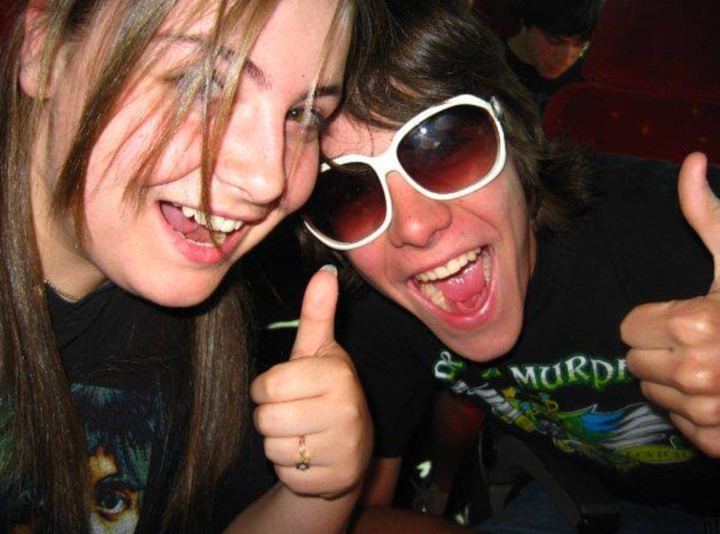
The author and her best friend Will on a trip to Disney World in 2008, four years before his death.
This skill had its perks, but it also had its detriments: all logic and no emotion makes Maria an abysmal girlfriend. The only thing I could feel was the hit of dopamine that accompanied a new love interest, so I sabotaged relationship after relationship in pursuit of it.
Advertisement
Yes, I was incapable of feeling pain – but I was also incapable of empathy, vulnerability, and connection.
At 28, I ended a three-year relationship with a good guy so I could pursue an impulsive fling with a not-so-good one. Something had to give. I was tired of being a romantically inept robot. Desperate to figure out what was wrong with me, I booked an appointment with a psychologist who specialised in childhood trauma.
Right off the bat, she diagnosed me with a dissociative disorder.
If I were capable of feeling anything, I would’ve felt relief. My high pain tolerance suddenly made so much sense.
Advertisement
According to WebMD, “dissociation is a break in how your mind handles information,” and that includes sensory inputs from your body.
One study in The Journal of Pain found that those with PTSD-induced dissociation exhibited hyposensitivity to pain. Basically, the higher the dissociation, the higher the tolerance. An overload of trauma can cause the nervous system to shut down entirely.
In one of our intake sessions, I asked my therapist why I felt so addicted to my numbness. Her response was fascinating.
Advertisement
“Your body has its own pain-relief system, and it actually produces opioids,” she said. “When you’re dissociated, the endogenous opioid system is in overdrive. You’re pumping out endorphins all the time to protect yourself from emotional or physical pain. Like any drug, it’s addictive.”
In other words, I didn’t need anaesthesia because I was constantly making my own.
I wanted to be human again. I wanted to feel love, joy and gratitude – but, like a bottle of Vicodin, dissociation was my coping mechanism.
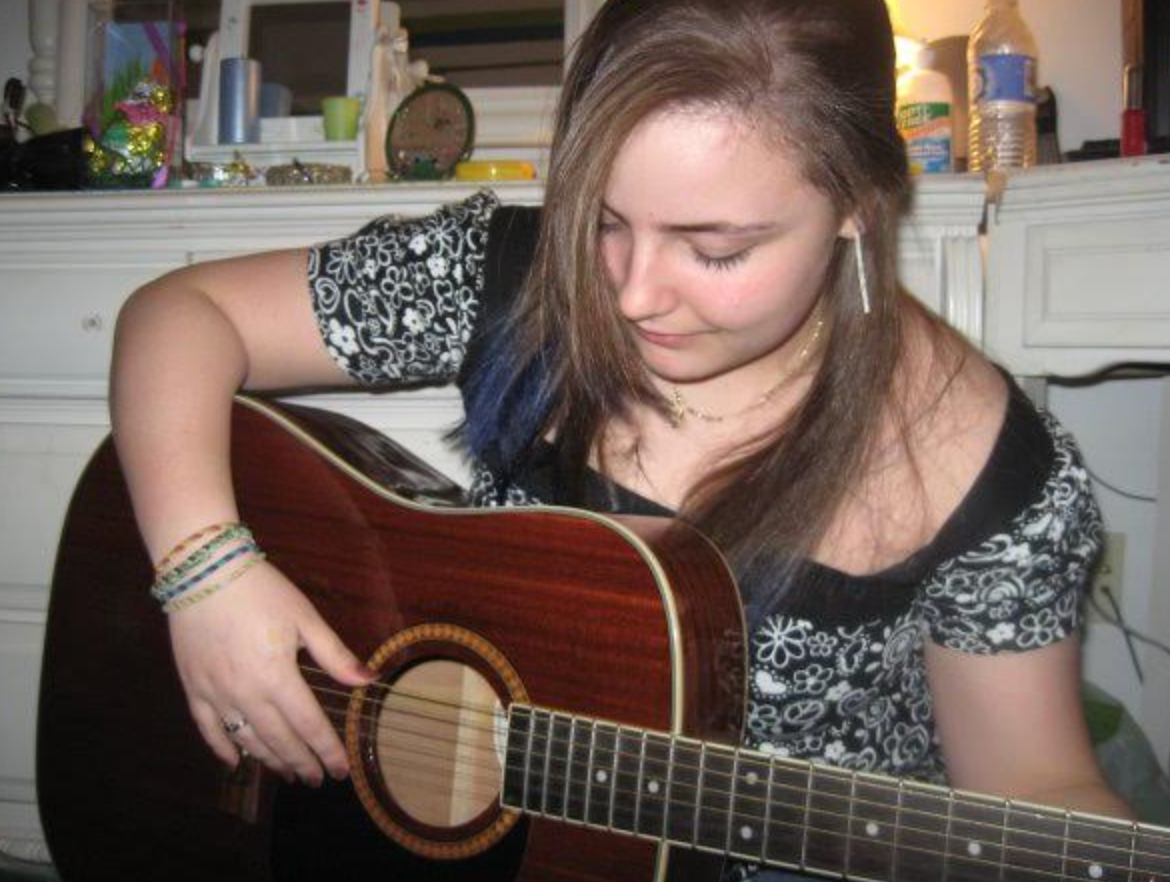
Courtesy of Maria Cassano
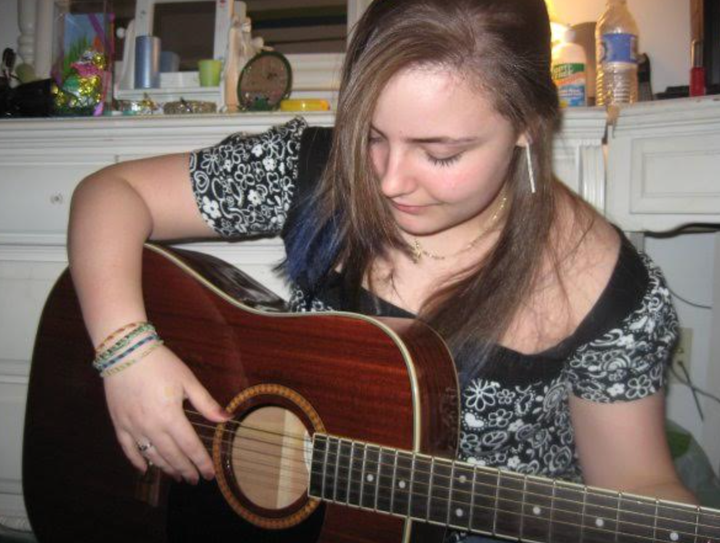
The author playing guitar in her bedroom at the height of her dissociative disorder.
Advertisement
So much of my identity was tied up in my numbness. I believed I would no longer be fiercely reliable. I’d have to call out sick from work. I’d have to stop answering my phone at all hours of the night for the people who loved me because I lacked boundaries. I’d be susceptible to illness, anxiety, stress, and worst of all, heartbreak. I would no longer be the girl who could handle anything.
I didn’t know who I was without my dissociation, but I wanted to find out.
Four weeks after my diagnosis, I started Eye Movement Desensitization and Reprocessing, or EMDR. It’s a psychotherapy technique that uses bilateral eye movements to stimulate memory processing, which helps the brain recover from trauma. Essentially, you focus on your worst memories and move your eyes back and forth.
My hopes were not particularly high. How could something as small as eye movements fix something as big as depersonalisation-derealisation disorder?
Advertisement
But EMDR worked, and it worked fast.
In my first EMDR session, my therapist told me to focus on my earliest negative memory while I watched a blue square bounce back and forth on my computer screen. I did it once: Nothing. Twice: Nada. Three times: Nope. And then the dam broke open. Sensations poured into my cells. I could feel everything, all at once.
One emotion loomed especially large, casting a shadow over the rest: I was terrified of being unlovable. That’s why I left everyone else before they could leave me — before they could sense the messiness underneath the cold, polished armour.
This odd therapy technique completely overrode my body’s hyperactive pain-relief system. Over the next 48 hours, I experienced all of the hurt, grief, abandonment and heartache I had blocked out for the past two decades. It was excruciating, and I wanted nothing more than to turn back into a robot.
Advertisement
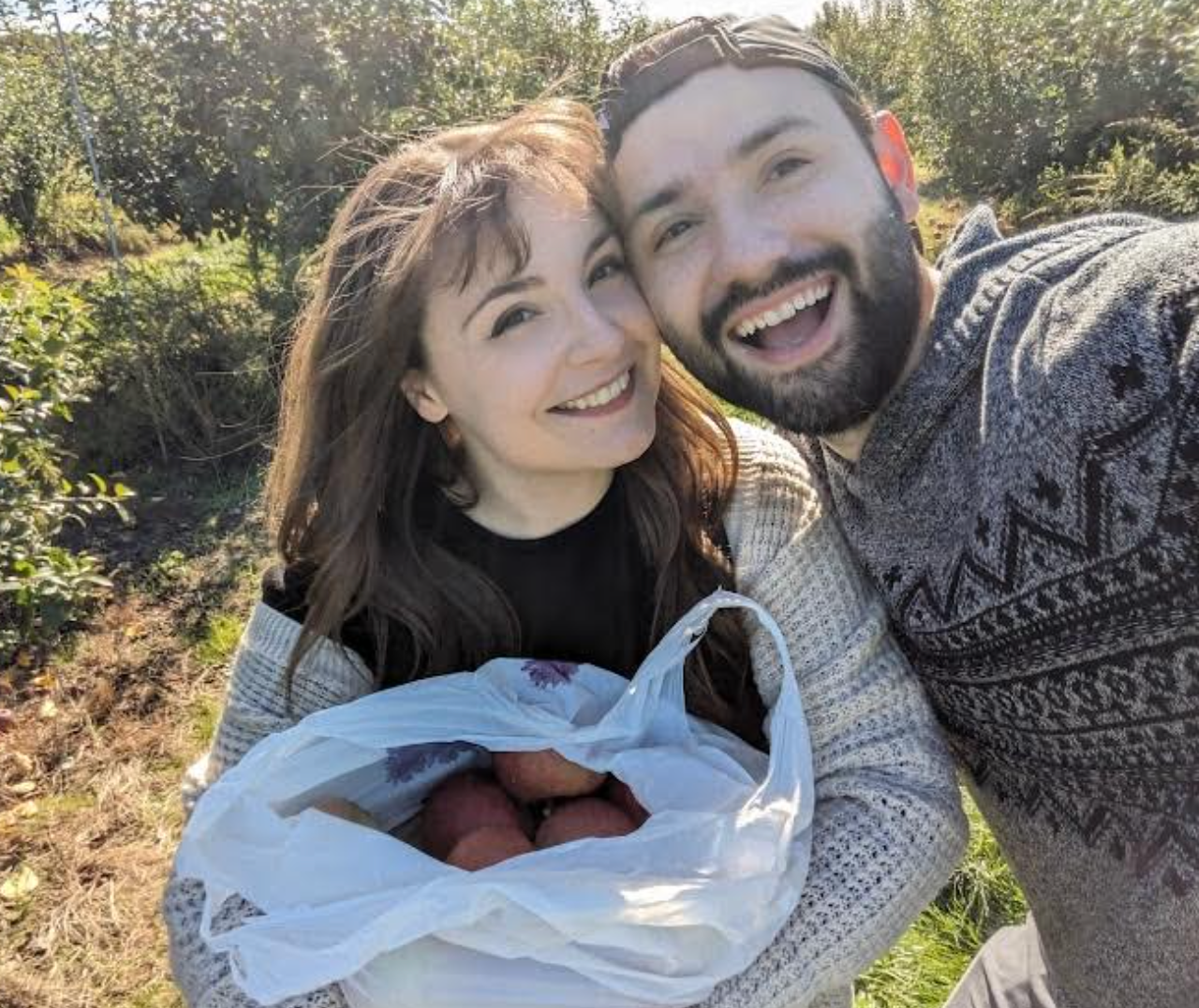
Courtesy of Maria Cassano
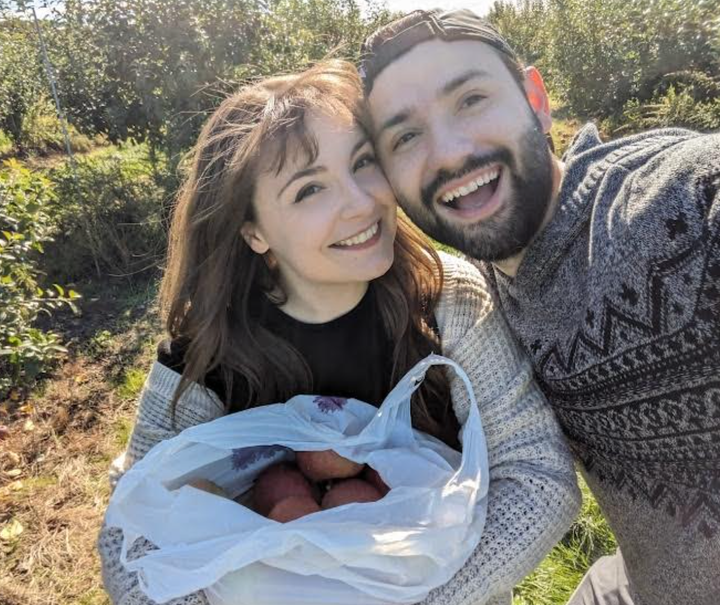
The author and her boyfriend Seb picking apples on a gorgeous fall day.
But with the help of EMDR and this knowledgeable, compassionate therapist, I kept going. We spent the next four years sifting through these memories and emotions, finally processing them so I could let them go.
When pain arose, I felt it. I let the messiness settle in my body, making peace with its presence. Despite the raw discomfort of vulnerability, the hurt of rejection, the guilt of past mistakes, and the occasional panic attack, I resisted the foggy, familiar lure of numbness.
Advertisement
I’m still tempted by it – I’m sure all addicts are – but I’ve never gone back.
Now, I’m in a healthy relationship with a kind, supportive man. He slept over one night two years ago and never left, but I don’t feel the urge to jump ship. I no longer want to chase the dopamine hit of someone new. I want this man to know and accept every part of me, the way I’ve come to know and accept every part of myself.
While I’m not cured (healing is a nonlinear, never-ending road), I’ve learned that pain is a fundamental part of life. Without it, you’re not truly living. It’s the catalyst for transformation. It’s the compass that leads you toward growth. It’s the contrast that illuminates all the beautiful parts of being a fractured, feeling human being.
Maria Cassano is a writer and editor whose work has appeared in Bustle, CNN, Food & Wine, Allure, NBC, The Daily Beast, Elite Daily, and YourTango, among dozens of other publications. Represented by Emma Fulenwider at WordServe Literary, Maria’s memoir about healing from dissociation, “Numb, Party of One,” is currently out on submission to publishing houses. Learn more about it at mariacassano.com/numb.
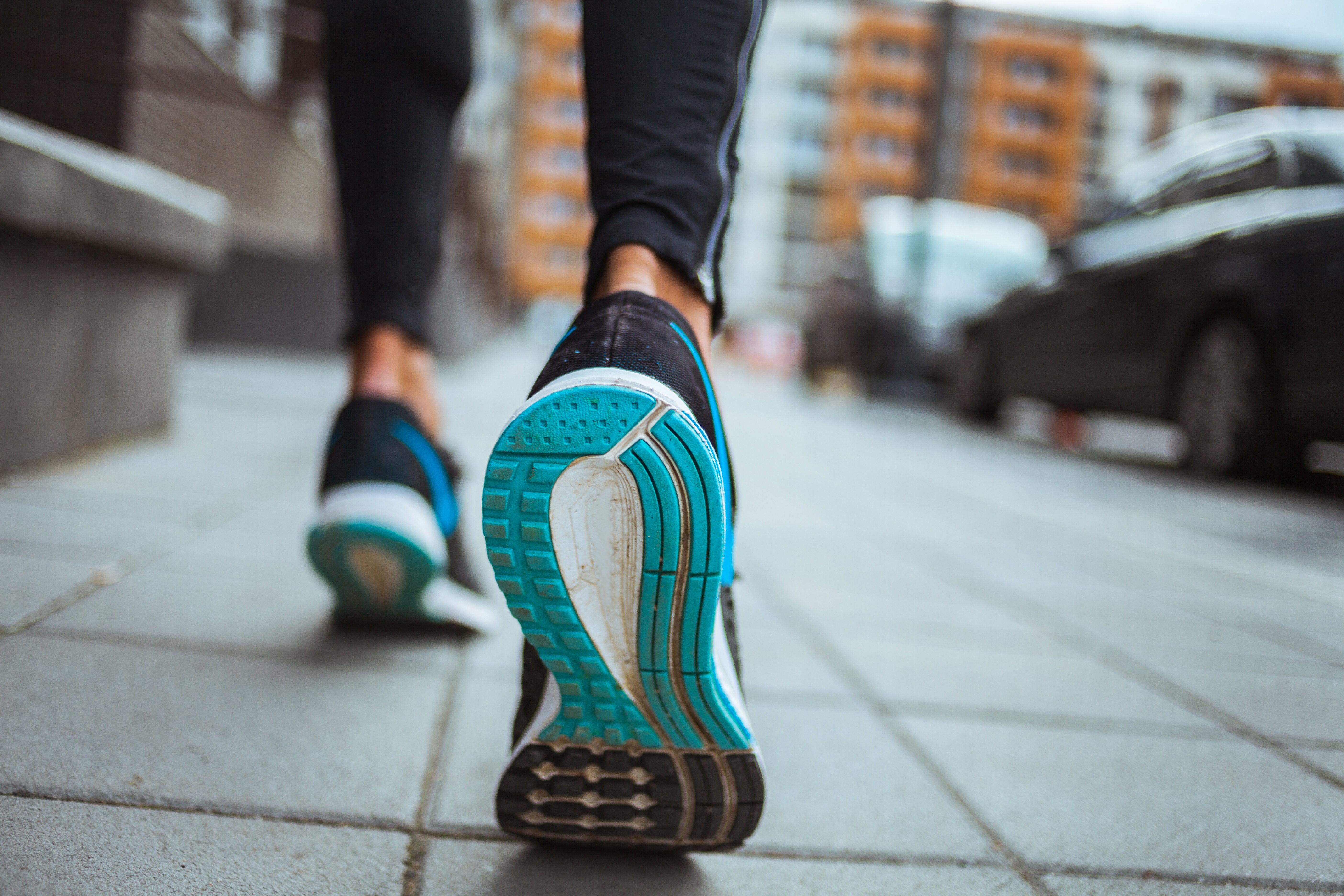
Walking 10,000 steps per day has become a popular goal in the modern age, but it turns out this benchmark might not be the fitness gold standard after all.
According to a study published in The Lancet last week, getting 7,000 daily steps is enough to see meaningful health benefits. Researchers conducted a meta-analysis and systemic review of data from previous studies and found diminishing returns above that number.
Advertisement
Compared to walking 2,000 steps per day, reaching 7,000 steps was associated with a 47% lower risk of death, 25% lower risk of cardiovascular disease, 38% lower risk of dementia, 28% lower risk of falls, 22% lower risk of depressive symptoms, 14% lower risk of type 2 diabetes and 6% lower risk of cancer. The improvements in health outcomes beyond 7,000 steps were more modest by comparison.
“The 10,000-step target, which originated in marketing campaigns, has often been seen as too high for many,” Dr. Asim Cheema, a specialist in internal medicine and cardiology at the telehealth platform Your Doctors Online, told HuffPost.
“Even a moderate amount of daily physical activity, such as walking 7,000 steps, can have significant health benefits,” he added. “This study indicates that a lower target can still yield substantial benefits for cardiovascular health, mental well-being and overall longevity. It suggests that you don’t need to aim for the highest threshold to make meaningful changes to your health.”
Advertisement
Indeed, many have traced the 10,000 steps a day rule back to a 1960s Japanese marketing campaign. This kind of research offers a helpful perspective shift away from the widespread cultural fixation on getting 10K steps every single day.
“These findings are refreshing, because they challenge the ‘all-or-nothing’ mindset that often surrounds fitness,” said Anjan Pathak, co-founder of wellness platform Vantage Fit. “For years, 10,000 steps per day was treated as a universal rule, even though its roots were more commercial than scientific. This study offers a more compassionate approach.”
The Real Takeaways For Step Counts
The conclusions of the study don’t necessarily mean you should treat 7,000 steps as some new gold standard, however. These findings don’t make 10,000 steps a bad goal, either.
Advertisement
“For those who already walk 4,000 steps, increasing to 5,000 or more will show benefit,” said Hannah Arem, scientific director of implementation science for the health care system MedStar Health. “For those who can, reaching this goal of 7,000 is likely to increase benefits. Beyond 7,000 steps, this study suggests that the health benefits for the outcomes examined are only incremental. That said, there may be health benefits other than those assessed in this study that come from increasing step counts.”
Dr. Matthew Badgett, an internal medicine physician at Cleveland Clinic, emphasised that it’s hardly news that there are diminishing returns above a certain amount of activity. And even if certain risk reductions start to plateau above 7,000 steps, you’re still experiencing benefits when you go beyond that number.
“The study still finds that 10,000 is better than 7,000 ― it’s just not as beneficial as going from 2,000 to 7,000 steps,” he said. “I think the real takeaway is that any amount of activity is going to be beneficial, and you continue to benefit from doing more on top of that, even if the added activity doesn’t lead to as much benefit. Whether your goal is to hit 7,000 or 10,000 doesn’t really matter, but I don’t want people to see this news and decide to cut their usual 10,000 to 7,000.”
Advertisement
Of course, there are extreme examples of individuals who do so much physical activity that it ultimately causes harm to their bodies. But that concern does not apply to the vast majority of people.
“If the average person can go from 2,000 to 7,000 steps per day, they will benefit. And if they can go from 7,000 to 10,000, they will also benefit,” Badgett added.
“I think the real takeaway is that any amount of activity is going to be beneficial, and you continue to benefit from doing more on top of that, even if the added activity doesn’t lead to as much benefit.”
– Dr. Matthew Badgett, internal medicine physician at Cleveland Clinic
Advertisement
Badgett also stressed that analysis of step counts doesn’t offer the full picture of health and fitness.
“Step counters aren’t measuring exercise per se,” he said. “What if you’re a cyclist or you swim a lot or lift weights? These are forms of exercise that [don’t] show up on a step counter, but they’re still hugely beneficial for health. Even running, which is better exercise than walking, gets you fewer steps per mile, because each step moves you further.”
Badgett pointed to two important aspects of fitness: regular exercise and just generally not being sedentary.
Advertisement
“I think 7,000 steps a day is generally a marker of non-sedentary nature,” he said. “Someone who’s getting 2,000 steps per day is probably sitting down at their desk to work from home in the morning, and then they barely leave the desk all day, other than to go one room over for the bathroom or kitchen. And then after work, they just sit and watch TV. Someone who gets closer to 7,000 steps probably does chores around the house, might do some yard work after work, or even drives to work, which brings, inevitably, a little bit of walking.”
Indeed, getting small bursts of steps throughout the day is much healthier than sitting the whole time. If you know you aren’t being so sedentary and are also getting regular exercise, you don’t need to fixate on exact step counts.
“I talk to my patients more about moving around throughout the day and also setting aside time to do a specific exercise, whether it’s weightlifting, running or swimming,” Badgett noted. “I might explore how many steps they’re getting as a baseline to establish a goal, but for someone who is older and has physical limitations, I prefer time goals ― like 20 minutes, rather than a specific number of miles or steps. It’s all really patient-dependent.”
Advertisement
How To Get Your Steps In
As the Lancet study shows, even small increases in your steps can bring substantial benefits, particularly in reducing the risk of mortality and a number of health conditions.
“Move more throughout the day,” Arem advised. “That doesn’t mean you have to go to the gym if that doesn’t fit in your lifestyle. Get off the bus or subway a stop earlier. Take the stairs instead of the elevator for a floor or two. Park farther away from the door in the parking lot.”
These little changes are attainable and thus a good way to kick off your fitness journey.
“Fitness in any form is a long game, and the first priority doesn’t have to be a step count ― it should be creating the habit,” said Dave Paul, host of the “Walking Is Fitness” podcast. “Start small and pick a time of day that you can do it consistently. I mean no more than five or ten minutes. You can always add more later, but if you try and do too much to start, it can feel overwhelming, which can lead to giving up.”
Advertisement
Personal context matters, so you have to determine what is right for you ― whether it’s short strolls or upping your walking game with rucking.
“Walk while taking calls, park a bit farther, or take short strolls during breaks. Health isn’t about chasing perfection. It’s about showing up for yourself every day, in small, meaningful ways.”
– Anjan Pathak, co-founder of wellness platform Vantage Fit
“Begin by setting a realistic goal that you can comfortably achieve and gradually increase your steps over time,” Cheema suggested. “For example, aim to walk 2,000 steps a day and increase by 500 steps each week. It can also be helpful to break up your walking into smaller sessions throughout the day, such as walking after meals. Consistency is key to building a sustainable habit.”
Advertisement
He also emphasised the importance of overall lifestyle factors like nutrition, sleep and stress management. And if you have physical limitations like joint problems, turn your walks into swims or stints on the elliptical.
“I also recommend the ‘Japanese walking’ method for patients who can tolerate more intensity in their walking routines, as this has shown health benefits with a lesser overall number of steps,” said family and emergency physician Dr. Ali Shehata.
During the hot summer months, you might also move your treks to an indoor venue like the mall or treadmill section at the gym ― or even invest in your own walking pad.
Advertisement
“Make movement part of your routine rather than an added burden,” Pathak advised. “Walk while taking calls, park a bit farther, or take short strolls during breaks. Health isn’t about chasing perfection. It’s about showing up for yourself every day, in small, meaningful ways. If 7,000 steps a day is what gets someone moving without fear or shame, then that’s a wonderful place to start.”
A simple stroll can “improve cardiovascular health by strengthening the heart, thereby helping circulation, lower[ing] blood pressure, [and] helping in the prevention of heart disease and stroke,” Matthew Nolan, a chief instructor at Barry’s in New York City, previously told HuffPost.
But in a recent Instagram Reel, Dr Tim Tiutan – a physician and assistant professor – signed off on the idea of adding some, er, gas to your evening wander too.
Advertisement
Stitching a video in which author and creator of the hashtag #fartwalks Mairyln Smith said she and her husband go for “fart walks” after dinner to help them “age beautifully,” the doctor helped us to “look into the science of fart walks.”
Yup, ‘fart walking’ really is good for us
Walking can help to improve “intestinal motility” Dr Tiutan said, meaning it can banish both gas and constipation.
But Smith explained that “the main reason we do fart walks is because by walking… we are helping reduce our chances of developing type 2 diabetes… as you age, especially after 40, you have a bigger chance of developing type 2 diabetes.”
A 2016 study involving people with type 2 diabetes found that 10 minutes of “light” walking following each meal did a better job of managing participants’ blood sugar than walking for 30 minutes at any one time.
That’s partly why a likely gassy (thanks to the “intestinal motility”) post-dinner walk may be better for you than you might think.
Advertisement
Exercise of any kind prevents “large spikes in blood sugar,” the doctor agreed (it can lower your blood glucose for up to 24 hours after completion).
The practice may lower your cancer risk, too
Walking “also lowers our cancer risk,” Dr Tiutan continued.
Professor Amy Berrington, Leader of the Institute for Cancer Research [ICR]’s Clinical Cancer Epidemiology Group, said: “There is strong evidence that getting enough physical activity is linked to a lower risk of many types of cancer in both men and women.”
Advertisement
Cancer.gov says we should aim roughly for 150-300 minutes per week of moderately paced walking.
So perhaps I shouldn’t have been as surprised as I initally was to hear Dr Tiutan say, “I totally support fart walks.”
There is nothing worse than coming home from a busy work day, putting down your bag, and walking into the kitchen to see the contents of the bin are quite simply… all over the place.
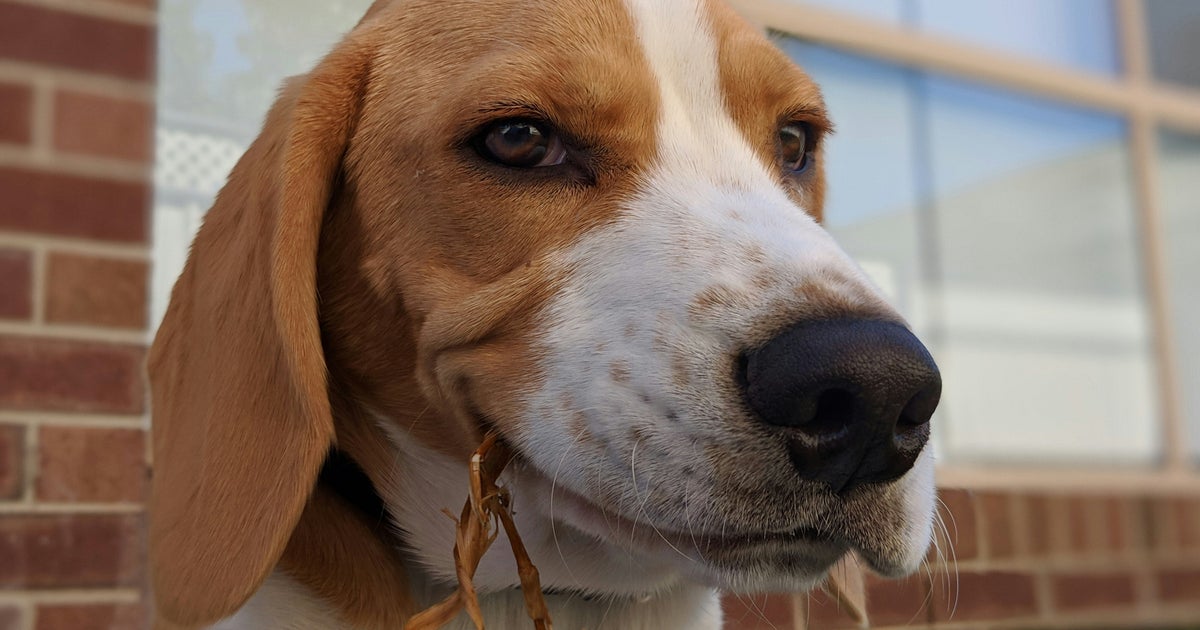
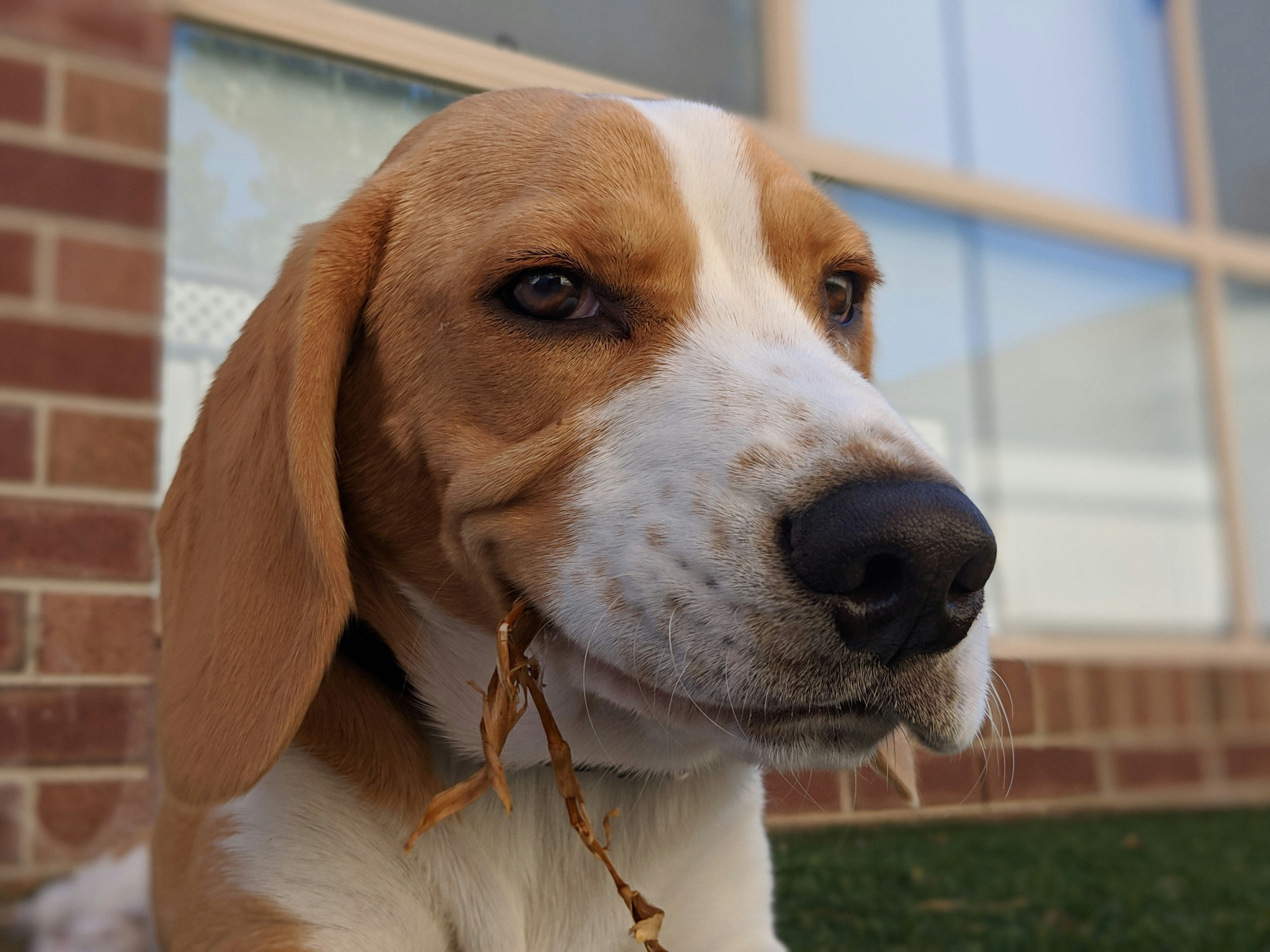
Then your pooch looks at you with those sweet eyes and their tail wagging and you just cannot stay mad at them, even if their favourite hobby is nothing short of disgusting.
Advertisement
Why do they do it, though? Especially if there isn’t actually any food in there? Is it for the love of the game?
They may feel like our furry babies but in reality, these domesticated pups still have a little wildness in their bones.
The experts added: “Our pampered pets have inherited the wolves’ keen sense of smell and scavenging tendencies, making ‘playing’ with rubbish a favourite pastime for some.
Advertisement
“Wild wolves also roll in strong-smelling substances, such as faeces, to mask their scent when they’re hunting.”
This will also sound familiar for dog owners who find themselves regularly scrubbing fox poo off their dog’s paws (and coat). Lovely.
Keep your dog out of rooms containing bins unless supervised, using doors or baby gates as barriers.
Use bins with secure, childproof lids that cannot be easily knocked off by your dog.
Anchor outdoor wheelie bins to walls or fences and add catches to prevent your dog from tipping them over (remember to release catches on bin collection day to avoid issues).
If your dog tends to go after other people’s bins during walks, consider using a well-fitting muzzle and keep them on a lead when near bins.