Getting off, the big O, la petite mort, cumming… There is a plethora of ways to describe the female orgasm and yet, many of us still aren’t quite making it to that final moment.
In fact, according to sexperts at Lovehoney, data shows that just 15% of women can orgasm during penetrative sex alone.
Advertisement
Additionally, 2023 research by Durex found that only 5% of women would say that they always orgasm during sex.
So, why is this?
It partially comes down to The Orgasm Gap
Of course, we know that the journey can be just as fun and enjoyable as the destination but, if we’re very honest with ourselves, not being able to orgasm can be pretty frustrating, to say the least.
The disparity between men and women having orgasms is defined as ‘the orgasm gap’.
Psychology professor Laurie Mintz wrote about this phenomenon for The Conversation and said the main reason for it “is that women are not getting the clitoral stimulation they need”.
Advertisement
“And cultural messages about the supremacy of intercourse feed into this. Indeed, countless films, TV shows, books and plays portray women orgasming from intercourse alone,” said Mintz.
“Popular men’s magazines also give advice on intercourse positions to bring women to orgasm. And while some of the positions do include clitoral stimulation, the message is still that intercourse is the central and most important sexual act.”
It can also be down to a health concern
If you can’t orgasm from penetrative sex or clitoral stimulation, you may have a condition called ‘Anorgasmia’.
Advertisement
Medical experts at Mayo Clinic explain: “Multiple factors may lead to anorgasmia. These include relationship or intimacy issues, cultural factors, physical or medical conditions, and medicines.
“Treatments can include education about sexual stimulation, sexual enhancement devices, individual or couple therapy, and medicines.”
If you are having sexual difficulties, speak to your GP or reach out to relationship experts at Relate.
Advertisement
Four steps you can take to reach orgasm
Annabelle Knight, sex and relationship expert at Lovehoney, says: “Achieving better orgasms for women involves a combination of understanding your body, communication, and addressing both physical and emotional factors.”
Get to know your own body better with masturbation
“Ensure that you don’t overlook self-exploration and masturbation,” Knight urges.
“Spending time exploring what feels good to you, and trying different techniques such as using fingers, sex toys, lube and varying positions can help you understand your body better.”
Knight reveals that while the data at Lovehoney shows that just 15% of women can orgasm during penetrative sex alone, that number jumps to 46% when using a sex toy.
Advertisement
Communicate with your partner
If you have a partner, open up to them about the problems that you’re having.
Knight advises: “Openly discussing what you both like, providing guidance during sex, and engaging in mutual exploration can help with intimacy and satisfaction from orgasm.”
That sounds pretty fun, actually.
Try to relax
Trying to coax your body into an orgasm when you’re mentally at a heightened stress level probably won’t get you very far.
Instead, Knight suggests that you try relaxing with deep breathing, meditation, or yoga, being present in the moment, and building anticipation through prolonged foreplay to heighten arousal and intensify your orgasm.
Advertisement
Check in on your emotional wellbeing
“Emotional and relationship factors are equally important when it comes to having a satisfying sex life,” adds the sexpert.
“Building emotional intimacy with a partner, addressing unresolved conflicts, and having a positive body image through self-love and acceptance will help transform how you feel in the bedroom.”
The Sun recently shared footage of former Love Islander Maura Higgins and ex-McFly member Danny Jones, which they claimed showed a “drunken kiss” between the pair at this year’s Brit Awards.
The clip outraged some fans, with one asking “How could he do this?”.
But some people don’t think the very blurry, pixelated clip gives a solid enough base for allegations of cheating.
We might never know what actually went on (none of the three have spoken about the alleged incident since).
But it does raise a question we thought we’d bring to relationship expert and sexologist Sofie Roos and matchmaker Susan Trombetti ― what actually counts as cheating?
These are set by the boundaries that exist between the couple, which change from relationship to relationship.
“Micro-cheating” can involve something as small as liking a model’s Instagram pictures, Roos says.
These “grey areas” are the ones you should be more vocal about ― “while most people agree that sleeping with someone else is considered cheating, it’s often the small things you think differently about, so those are most important to talk through.”
If you’re not sure whether something like a peck crosses an unspoken line, Trombetti says: “Anytime lying and secrets are involved, that’s a good indicator there is cheating.”
Advertisement
“The act of intimacy counts as cheating whether it’s physical or emotional with the exception of open relationships,” she adds.
“Intimacy can be emotional or physical and that’s why emotional affairs can be devastating. It doesn’t matter if you are physical or not.”
So… was the ‘kiss’ cheating?
The intent behind the action is what matters most, both experts agree.
“Cheating is cheating as established by the boundaries you both have stated… It’s called trust,” Trombetti told us.
Advertisement
If your partner knows they wouldn’t like you to do what they’re doing, that’s a sign their intent isn’t to benefit the relationship.
As the matchmaker said, though, we don’t know what the rules or intent between Danny Jones and wife Georgia were, or even what really happened between the I’m A Celeb contestants.
So unless we hear otherwise from the people involved, we can’t call it cheating, even if it’s something we wouldn’t be happy with.
What’s the best food to eat when you have a broken heart?
When my last relationship ended, I absolutely bombarded Google – and my longsuffering friends – with questions like this. My life had never felt so turbulent – in the space of an evening I not only had nowhere to live but also had no idea what the coming weeks, months, years – hey, the rest of my life – were going to look like.
If that sounds overdramatic, it’s meant to.
Believe me, I was astonished – and perhaps a little embarrassed – at how in-pieces I was. I knew that breakups happened to everyone. I knew that by most standards, mine was a decent one – reasonably mutual, no terrible behaviour on either side, definitely the right thing. And I knew – I promise I knew – that a relationship was only one part of a full and interesting and joyful life. Yet I genuinely felt like I cannot and will not cope with how awful this is.
Advertisement
Enter the very specific questions.
It’s interesting, looking back, how much I was hoping I could gamify my way out of heartbreak. That if I followed the right ‘ten easy steps to healing a broken heart’ then I would be miraculously cured – tomorrow.
This kind of thinking probably owes a lot to self-help books. How To Win Friends and Influence People. The Power of Positive Thinking. The 7 Habits of Highly Effective People. The Secret. These are titles that have wormed their way into pop culture and parody, that sell in their millions even as they’re criticised for being full of pseudoscience at best and charlatanism at worst.
What they all promise is certainty – that even at the most devastating rock-bottom of your life (or perhaps the humdrum bleurghness of your life!) – you can follow a neatly-packaged process and emerge triumphant.
Advertisement
Don’t get me wrong, lots of things did help me navigate my heartbreak. I will always be an advocate of the walk-and-talk during times of emotional strife, and pulling on my hiking boots for a wet weekend in Yorkshire with my closest friends did soothe the soul – even if I was sobbing every five minutes. Getting extremely drunk whilst playing Catan with my new housemates also made a positive difference – at least for that evening. The following morning – not so much.
Convincing myself that I just needed to meet someone new, like now and going on an app overdrive – including drinks with three separate people in a single day – was probably a mistake. Though I like telling the story a few years on.
Advertisement
But the point is that none of these things was a miracle cure – not collectively and certainly not individually. Some took me backwards even as they took me forwards. The path through heartbreak is not linear.
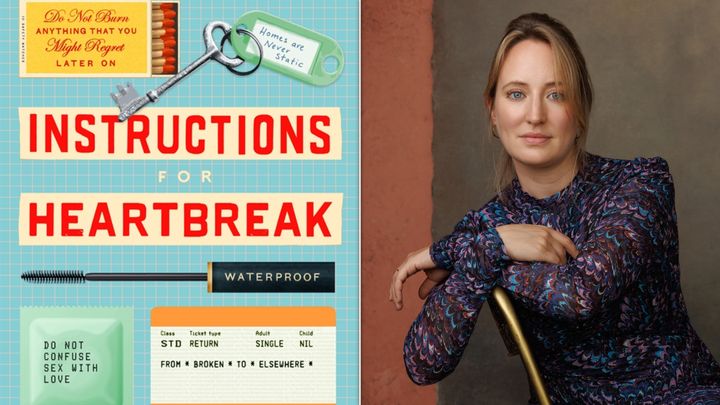
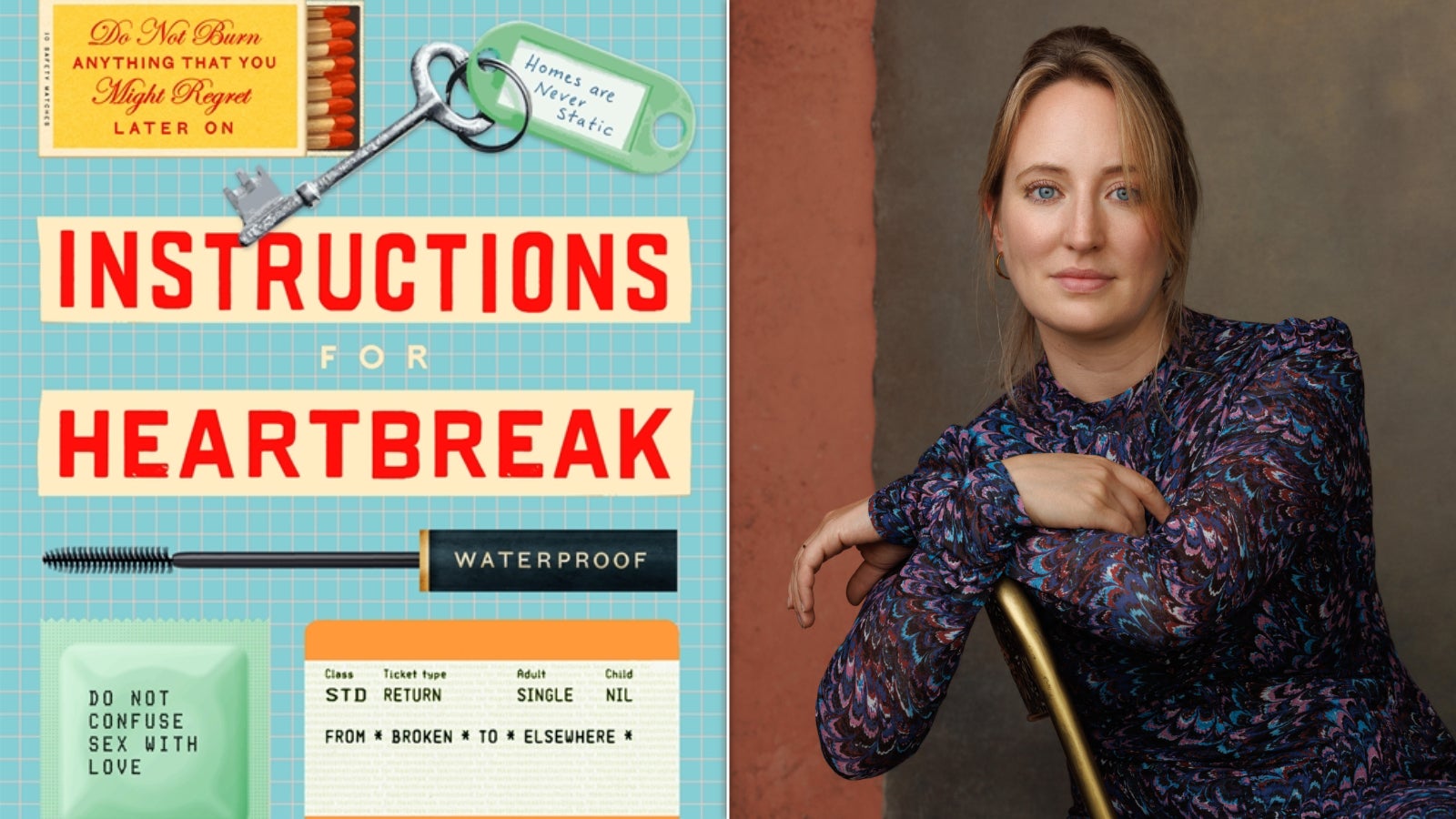
This contrast between the desire for concrete answers and the rather messier reality of recovering from a broken heart is what inspired my debut novel, Instructions for Heartbreak. Four friends, all heartbroken in different ways, come together and create a kind of manual, writing down the lessons they’ve learned. This advice is pooled at the end of each chapter. How will post-breakup sex feel? Should you cut off all your hair? Why exactly does getting outside help?
It also inspired my accompanying Substack, where I ask writers to recommend seven things to soothe a broken heart – books among them. It’s interesting, reading these, to notice how much commonality there is. So many people recommend being by water as an opportunity to think and reflect (pun intended). Tea has come up more than once as the ultimate drink to soothe the soul – and with an important element of ceremony. But there are plenty of contrasts too, and I’ve loved learning about people’s favourite comfort reads, building a whole new heartbreak playlist and adding new films to my must-watch list.
Advertisement
Because moving through heartbreak might be a meander rather than a sprint, but it turns out there are myriad things out there that will make a positive difference. There isn’t a one-size-fits-all heartbreak toolkit – but there are infinite different ways you can build your own.
Dating apps have been going for years now, but it seems some users still don’t quite understand what is okay – and what’s totally inappropriate – to divulge to the people they’ve swiped right on.
Case in point, one Mumsnet user recently took to the platform to share her own “horror stories” from her time on dating apps which she says have put her off “for life”.
Advertisement
While calling on others to share their torrid tales, the user (with the extremely relevant username: stayawayyyyyfromdatingapps) said: “I got an absolute shiner off of tinder say to me ‘I really want you to be my girlfriend, so you can see to my trouser cannon every day’.”
The post, which featured a whole host of other dating stories, inspired others to share their own anxiety-inducing anecdotes and all we can say is… good grief.
1. Got to an organised drinks first date, and the guy had those white stringy bits all around his crusty lips.
I kept licking my lips in the hope he’d do the same and kept thinking fuck me if he kisses me I’m going to have to see the hygienist.
– stayawayyyyyfromdatingapps
2. I had one ask how much it would cost to put a baby in me…
When told where to go, he said he was genuinely asking as believed redheaded women produced superior babies.
I had no idea where to go with that lol. What an absolute creep.
– YouDeserveBetterSoAskForIt
3. He used his son’s photo who was about 27…
Turns out he was about 47 and he couldn’t figure out why I wasn’t interested. Hm I’m 23 pal.
– Packingcube
4. On a first date (and last) date with a man who asked me my nationality. When I said German, he said ‘oh yes, big feet small boobs’.
I couldn’t get out of there fast enough.
5. [My] Profile clearly said ‘have children, don’t want more’. Matched with a guy, chatted a bit then met for coffee. One of the first things he said was ‘is the no more children thing negotiable?’
I said ‘no, it isn’t.’ He said ‘really, even having met me now I still couldn’t persuade you to have my child’. So I said ‘well I have only met you for 10 mins, but I definitely don’t want more children with anyone.’ His response, ‘let’s have a proper date, you will be begging to have my babies before the nights out.’
Declined the offer of a proper date!!
– Everintroverte
6. He said ‘boom’ at the end of sentences. ‘I’m going into town – boom!’
Also used ‘I’m on fire’ a lot. Pity he wasn’t.
– witwatwoo
7. As I walked into the pub the first thing he said was ‘you’re actually quite pretty. We just need to sort out your hair and clothes’.
I turned around and walked out.
He had very little hair, was wearing a T-shirt that needed ironing and his profile photo must have been at least 10 years out of date!
– Smokesandeats
8. Not me but my friend went for a date with a bloke who paid for dinner with a 50% off voucher and told her it was his treat but she could only have a main course as that’s what the voucher covered.
When they walked to the car park, he asked is [sic] she wanted to get into the back seat of his car and unleash his beast – he was 56!!!
Advertisement
– TwistedWonder
9. I also had one guy move the time back and hour, show up with all his mates then disappear off for half an hour leaving me with his friends and returned to ask me if I wanted to go back to his.
When I said no he said he didn’t fancy me anyway and wanted to get back with his ex.
You’ve gotten past the dreaded talking stage, made plans and now finally, it’s here! The first date with someone new! And it’s going well! They’re exciting, they’re amazing, they’re… actually really, really boring and oh my fucking god I need to get out of here.
Yup, we’ve all been there when a date isn’t actually all we hoped it’d crack up to be – but cutting a first date short when things aren’t clicking isn’t always easy. You’ll often consider your date’s feelings above our own and no one wants to come out with some lame excuse about your dog needing a bath.
Advertisement
In an era of all or nothing dating, research from Tinder revealed that singles know within 30 mins whether the spark is there or not – so how do we get out when there’s not even a flicker?
Do we just grin and bear it? Well, as Paul Brunson, Tinder’s global relationship insights expert points out: “While it can feel uncomfortable to cut a date short, prolonging it when you’re not feeling it, might actually be less considerate in the long run.”
So what’s the right way to get out? We asked dating experts for their advice and they’ve come up with a plan so perfect, you’ll never find yourself having to get a friend to phone with an ‘emergency’ again.
It’s all in the preparation
When we sent out our questions (see: call for help) to dating experts, the same idea came back time and time again – organise a first date that won’t go on too long, so that you don’t find yourself in an awkward position where you might need to cut it short.
Advertisement
“For first dates where you don’t know the person well, it can be helpful to mention a time constraint as a backup, such as, ‘Thursday sounds great! I do have a deadline on Friday, so don’t keep me out too late!’,” clinical psychologist Dr Sarah Bishop tells us.
Rather than organise a dinner followed by drinks for your first encounter with someone new, opt instead for something low-key.
“Simple dates like meeting for a coffee or drinks are great options,” Sylvia Linzalone, FindingTheOne.com’s relationship guru says.
“And if it’s really going terribly, you won’t have to sit around forever – just drink up and say your goodbyes.”
Time frames are also a fail-safe way to make sure you don’t end up sitting wishing you’d never said yes in the first place – our favourite came from Jamie Johnston, founder of the neurodiverse friendly dating app Mattr, who suggested: “I have an hour free before meeting a friend if you would like to catch up.”
Advertisement
Westend61 via Getty Images
“You have given a clear time frame and also a commitment after which means they won’t try and lengthen the time,” he points out.
And if you’re actually quite enjoying the date? Well, as Dr Melissa Cook at FunWithFeet and Sofia Gray says: “If you do enjoy their company you can always say that you can stay longer.”
OK but I failed to prepare – GET ME OUT
OK, OK, don’t panic. It sounds cliché as hell, but it’s true – honesty is in fact the best policy.
We know it’s scary, but you owe it to yourself – AND the other person.
As dating Expert at Pure, Drew Wyllie puts it: “Now, cutting a first date short requires nerves of steel and (if you don’t want to go out with a bang) a good amount of tact and empathy. The thing is, as humans we are often scared of letting people down – especially when it comes to dating and meeting new people.
“In the past within my dating life, I have stayed on the fence about not making my intentions clear and telling people that I’m not sure, and in the end this just makes the situation worse as you can lead the other person on and make them think romance is on the cards when in reality – it’s not.”
Advertisement
When it comes to saying ‘okay that’s enough now’, the main thing is HOW you deliver that honesty.
“If the conversation has dried up, you feel a lack of chemistry or the date simply isn’t going anywhere, it’s okay to acknowledge that. Think about how you’re feeling in the moment and don’t be afraid to share it with your date,” Dr. Lalitaa Suglani, a relationship expert for eharmony advises.
“Being polite doesn’t mean hiding your feelings. If you think it’s time to end a date, don’t make excuses or be overly apologetic. Instead, try a gentle yet straightforward approach. Say something like: ‘I’ve enjoyed getting to know you, but I don’t see this going any further romantically’. This sets a clear boundary without being hurtful, your date will appreciate the honesty and it avoids leaving things in limbo.”
And while we’re on the topic of being polite, letting the other person know that you appreciate their time is also a must according to Dr. Tara (yes, from Celebs Go Dating!).
She also shared the PERFECT framework for a post-date follow-up text for if you’re not in the market for a second date:
“Whether it’s in person or via text, we need to always use empathetic communication – you can do this in three different ways.
Advertisement
1. You can say thank you for your time, but I don’t feel a romantic connection.
2. You can say it has been lovely to meet you but I don’t think we have any chemistry.
3. if you want to remain friends because you like them as a person, but not romantically, then you can say I had so much fun today. I did not feel any chemistry, but if you would like it would be nice if we can remain friends.”
And finally, you don’t need to be polite if the person you’re on a date with is rude as hell – we’re allowed to put our feelings first.
“The situation is a bit different if the date is going poorly because the other person is being inconsiderate—like checking their phone constantly or not being present,” intimacy expert Magda Kay reminds us.
“In that case, I believe you owe it to yourself to speak up. It’s perfectly okay to be direct and say something like, ‘I don’t feel like you’re fully present, and I don’t think either of us is enjoying this. It’s probably best to end it now.’
“Being honest in situations where the other person isn’t showing respect is important, both for giving them feedback and for standing up for yourself. It’s about learning to speak up when you’re not being treated well.”
We’ve written before at HuffPost UK about “tolyamory,” where one or both partners silently permits the infidelity of another without ever explicitly addressing it.
We’ve covered the “orange peel” and “Dorito” dating tests, too. But what’s “pebbling” ― a penguin-inspired dating trend I keep seeing on my For You Page?
Advertisement
A viral TikTok from @jakeyboiarts describes it as giving “someone a bunch of something because you’re thinking about them, for example, a penguin that gives a pebble to another penguin they love.”
The video, which has earned over 640k views as of the time of writing, explained that “pebbling online is like someone who gets videos, memes, whatever, and you send them to someone.”
What’s that got to do with dating?
It doesn’t have to. Another TikTok video by autism-specialising therapist @myautistictherapist suggested that “the way [many autistic people] share love is through giving information” ― “pebbling” facts, as it were.
And that love can be for friends and family as well as partners. “A lot of the autistic people on this app are showing the world love by sharing what they know,” the therapist said; of course, the same goes for anyone else. It’s a little gift for those you love.
Advertisement
But seeing as the Gentoo penguin-based habit it’s based on is used for amorous avian couples, the trend has taken on a romantic hue on social media ― and the pros seem to approve.
Older forms of “pebbling,” like giving someone a gift, bringing them home a snack, or even telling them about a part of your day that made you think of them have existed for as long as love has, Psychology Today points out.
But relationship expert Gigi Engle told Metro.co.uk that the newer, online application is great for couples; “I think it’s the cutest thing ever because memes are a love language these days,” she said.
“Pebbling started with the advent of meme sending as a form of creating a connection with people… It can definitely strengthen a relationship because it’s similar to sending a message saying, ‘I saw this and thought of you,’” the romance expert added.
So… it’s always good?
As with anything else, you can have too much of a cute thing.
App user @jakeyboiarts’ TikTok references opening your phone to “hundreds” of notifications ― that might be overwhelming to some (it’s me, I’m ‘some’).
Advertisement
Engle also told Metro that, “Pebbling does have the potential to set an expectation of communication you’re going to have throughout your relationship, so that’s something to keep in mind.” Your partner may feel hurt if you’re unable to keep up the pebble pace for long.
And in the same article, dating expert Drew Wyllie of Pure dating app, advised that “What is deemed sweet and thoughtful for someone, may be irrelevant for someone else” and suggested pebblers “make a mental note of your partner’s likes and dislikes as well as their daily behaviours so you can make your presents more relevant.”
“Pebbling alone is not going to get you far,” Psychology Today adds, stating that the memes should be a jumping-off point for deeper connections and not your main romantic meeting point.
Still, though, if you are your beau have a sweet meme exchange going, then take it from the Gentoo gents and keep it rolling.
You’ve said your vows, celebrated with your loved ones and now all that’s left to do after your wedding is, uh, prepare for divorce?
According to a barrister at 4PB, Rhiannon Lloyd, this is exactly what you should be doing and, in fact, it’s the most romantic thing you could do for one another as a married couple.
Advertisement
Speaking exclusively with HuffPost UK, Lloyd said: “The reality of divorce, its brutality, cost and the damage it can inflict, if not handled correctly, on children and families is something any prospective spouses should seriously think about.
“The importance of planning for the eventuality of a split, and minimising it’s impact on you and any future children is underestimated.”
Lloyd wisely added: “What could be more romantic than trying to ensure that you have the best possible chance of remaining a positive presence in each other’s lives and the lives of your future children post any future divorce?”
Well, yes.
How to financially plan for a potential divorce
The barrister recommends that couple start a ‘divorce fund’ to financially see them through any divorce proceedings and ensure that neither party are left out of pocket.
Advertisement
Lloyd explained: “Whereas prenups plan for management of asset division, they don’t ordinarily address contribution to a fund to manage the cost of any eventual divorce process.
“This is now changing and many couples are opting to make joint (or sole) contributions into a divorce fund as well. A fund is set aside, earmarked for the costs ( or even settlement) of any future divorce often in line with the prenup’s provisions.”
As for how much you should put in a divorce fund? Well, Lloyd says that a ‘sensible’ starting point is £100k. Quite unfathomable to most of us, especially during a cost of living crisis.
However, while this sum may make you gulp, Lloyd warned: “It’s important to point out though that even in modest asset cases costs can spiral into the hundreds of thousands when people litigate unreasonably.”
Eye-watering.
As for the how, Lloyd said: “Any fund would have to be an Escrow or joint mandate account where neither party could withdraw without the consent of the other.
Advertisement
“It would also be sensible, either as part of a prenup, or by way of a separate written agreement, to set out the terms under which either party could utilise sums from the fund, how any excess was to be treated and the parties’ intentions in respect of the fund generally.”
As Ellie Anderson approached 30, she started thinking about all the time she and her friends had wasted poring over conversations and texts they’d received from men they’d dated: Was that stray “K” over text cause for alarm? How long should you wait to say you had a great time on a date and want to do it again soon without coming on too strong?
“These conversations generally happened when one of us started dating a new guy. A lot of the time, we’d try to guess at what a guy wanted and how to avoid ‘freaking him out,’” said Anderson, an assistant professor of philosophy at Pomona College in Claremont, California.
Advertisement
Of course, the early days of a relationship are often a period of uncertainty. Still, it seemed to Anderson that the uncertainty usually worked in men’s favor. Meanwhile, it forced women to spend a lot of time trying to guess at men’s feelings because the men themselves were unwilling or unable to fully express themselves.
That kind of unspoken work deserved a definition, Anderson thought. On her popular philosophy podcast, “Overthink” ― and now in a recently published academic paper ― Anderson coined the phrase “hermeneutic labour” to describe the emotional work that goes into trying to decipher men’s often muddy communication. (It’s highfalutin sounding but hermeneutics is basically just the interpretation of language, whether written or spoken. It’s a word that’s often used in philosophy and religious studies.)
“Basically, men benefit from both having emotional needs they may not even be aware of met for them, and also not having to bear the burden of interpreting women partners’ emotions,” Anderson told HuffPost.
What we call “women’s intuition,” Anderson said, is actually a hard-won achievement that takes years to produce and sustain.
Advertisement
“It’s a euphemism for hermeneutic labour,” she said. “We tend to deny the substantial amounts of work that women do to maintain relationships, as well as the fact that a lot of this work is cognitive in character.”
Hermeneutic labour can be divided into three stages of emotional work, according to Anderson:
Interpreting your own feelings, desires and intentions
Interpreting the other person’s feelings, desires and intentions through their nonverbal cues or minimal communication
And lastly, comparing and contrasting both sets of feelings and intentions for the purpose of conflict resolution
Sounds laborious? That’s because it is.
Hermeneutic labour is a form of “emotional labour.”
Anderson’s theory ties in nicely to a more well-known concept: emotional labor, the idea that the effort of managing nearly everything at home ― especially the seemingly invisible jobs no one in your family acknowledges (making dentist appointments, managing temper tantrums) ― often falls on women’s shoulders. As outlined by sociologist Arlie Hochschild, emotional labor also involves having to suppress any negative emotions you might have around such thankless work.
“Emotional labor is the nurse suppressing her frustration toward a difficult patient and presenting a warm attitude of care,” Anderson said. “Hermeneutic labor is this same nurse considering, on her drive home, whether or not that way of interacting with the patient was the right one.”
Hinterhaus Productions via Getty Images
Sometimes “it’s helpful and fun to discuss your dating life with others and as long as you are getting the benefit of further insight, or at least a few giggles with friends,” therapist Sarah Spencer Northey said.
Advertisement
Anderson also likens the concept to something explored by feminist and critical theorist Mari Ruti in her book “Penis Envy.”
“In the book, Ruti looks at how sometimes men’s opacity about their own emotions lead to unethical behavior toward romantic partners,” Anderson said.
It’s not that men don’t involve themselves with hermeneutic labour, Anderson said, it’s just that it’s nowhere near to the same degree as women partners do.
Anderson’s research focuses on hetero- and cisgender couples because they overwhelmingly make up the participants in the empirical studies on which her argument draws. But a handful of studies have also focused on the emotional labour that cisgender women partners of trans men undertake, which Anderson said is in some ways similar to straight couples, but also involves some unique dynamics, such as emotionally supporting a partner during transition.
Therapists who work with women say “hermeneutic labour” comes up in their sessions.
Akua K. Boateng, a psychotherapist in private practice in south Philadelphia, sees hermeneutic labour as a rite of passage for young women, especially in the text-centric online dating era. Generally speaking, women often let men take the lead in such communication.
Advertisement
“If he is texting, she is texting ― even if she might desire to talk by phone ― while talking with her friends about what the frequency or tone of his texts might mean about his true intentions,” Boateng said.
Women are conditioned to do this, Boateng thinks. For some, this kind of close reading starts in childhood with decoding the emotional lives of fathers and male figures.
“Many women have a history of failed attempts to track the emotional impact of life on the men in their social world,” she said. “Dating is a repeat of this past.”
Jennifer Chappell Marsh, a marriage and family therapist in San Diego, California, often hears women lament hermeneutic labour when they bring up emotionally distant partners.
“In therapy, it often shows that she’s putting in a lot of effort to understand his feelings and needs by paying close attention to small things like how he moves, the tone of his voice, or the words he chooses,” she said.
Advertisement
georgeclerk via Getty Images
“[Hermeneutic labour] can make the relationship stronger because it helps with communication, but it’s important to remember that this effort by women should be appreciated and not just expected,” Chappell Marsh said.
As a marriage therapist, Chappell Marsh sees firsthand how men benefit from the proactive women they know: The wives who can read their husbands’ body language or tone of voice like a book. The girlfriends who psychoanalyze the punctuation of their boyfriends’ texts over dinner with the girls.
“All this work can make the relationship stronger because it helps with communication, but it’s important to remember that this effort by women should be appreciated and not just expected,” Chappell Marsh said.
Another therapist, Sarah Spencer Northey in Washington, D.C., said she’s seen hermeneutic labour play out with her clients, but not to a problematic level.
“As a therapist, I’m usually shutting down a long, drawn-out analysis by immediately emphasizing a need for clarity,” she said. “I would not want someone to give their therapy time away to someone who is being cryptic over text.”
Advertisement
Northey notes that there are times where analyzing texts with friends can be a lighthearted way of bonding for women. (If you’re a guy receiving a text back, it’s fair to expect that the response might have been dictated by a committee of five women you’ve never met, plus your date.)
“It’s helpful and fun to discuss your dating life with others and as long as you are getting the benefit of further insight, or at least a few giggles with friends,” Northey said.
Naming a process helps us tame a process, Spencer Northey said, so she appreciates that the concept has been named in academic study.
How to improve communication when hermeneutic labour is a problem
If you’re in a relationship where one partner does the heavy lifting communication-wise, therapists have some advice.
Ask for clarity.
If you’re the mind reader in the relationship, don’t just assume you know what your partner is getting at. Be direct, and lean in for more clarity.
Advertisement
For instance, if you’re only receiving texts in the morning and that’s causing communication problems, Boateng said to say something like, “It seems like mornings are the best time for you to connect, right? Is there a way for you to briefly respond to my more timely texts at night?”
If you’re the uncommunicative one, make a point to up your participation.
Clear communication doesn’t come naturally for any of us ― it’s something that needs to be honed and worked on, and there’s always room for improvement, Chappell Marsh said.
“If you’re bad at it, you really have to strive to express your feelings and thoughts more openly and clearly, reducing the burden on your partner to decode your emotions,” she said.
If you need more time to respond to a text because you can’t find the language to communicate your feelings, there’s no shame in sending a text that says, “Hey, I received this but just give me a little time to respond,” Boateng said.
And if you’re dating and realise that you’re sabotaging good connections because of poor communication, she recommends taking time to practice emotional expressivity with your friends and family, to get in the habit of it.
Advertisement
Compassionate Eye Foundation/Steven Errico via Getty Images
If you don’t know what to say in the moment, there’s no shame in sending a text that says, “Hey, I received this but just give me a little time to respond,” Boateng said.
Acknowledge and appreciate any quality communication.
Hermeneutic labour tends to go unacknowledged, which is fair ― it’s a newly coined concept! With that in mind, make a point to recognise when your spouse or partner is doing a particularly good job of communicating or interpreting the emotional world of the relationship.
“Show appreciation for her efforts and acknowledge the strain it can put on her ― or him,” Chappell Marsh said. “This recognition can be validating and can lead to a more balanced relationship dynamic.”
If you’re dating a hardheaded non-communicator, remember, you don’t have to be.
Unless the deciphering game is part of a flirtation and “a fun dance in the context of otherwise connected communication,” Spencer Northey thinks hermeneutic labour needs to be nipped in the bud and quick.
“The easiest way is for the confused party to refuse to play,” she said. “You can call, text, video, voice message, or contact the person through any number of ways and ask for clarification. If someone faults you for asking for clarity, that is a red flag. I hope I don’t have to explain why!”
Professionals will tell you to be on the lookout for lots of green flags when it comes to romance. Patience? Check. Consistency? Double check.
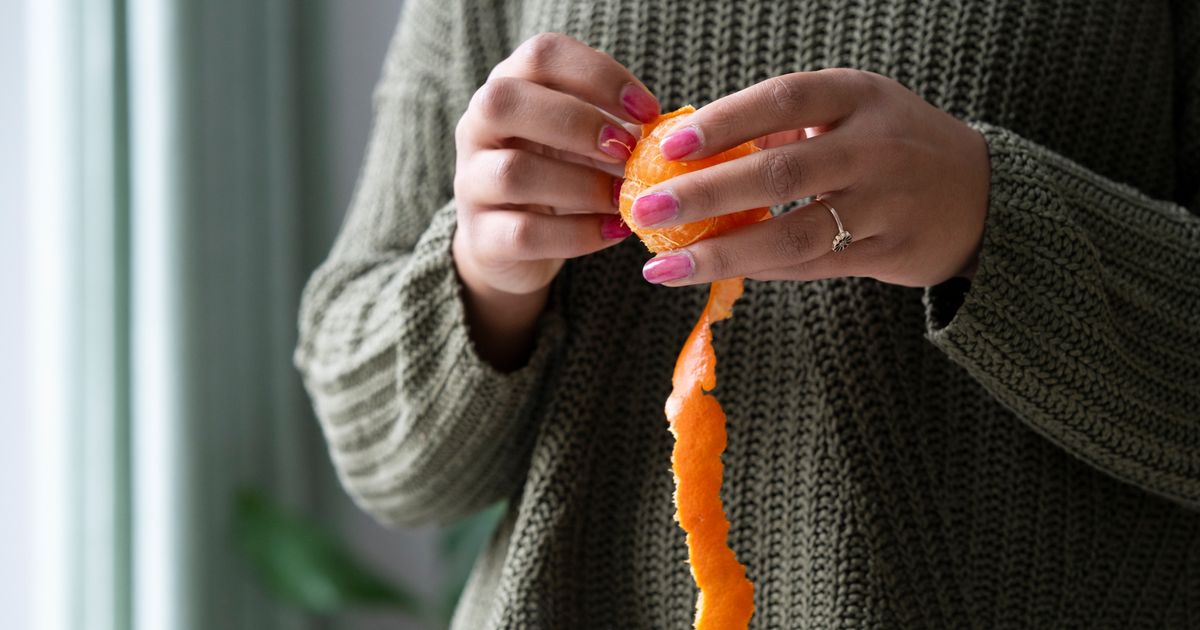
But now, TikTokers have added another sign of true love to look out for ― and it involves orange peel.
Advertisement
If you’re not familiar yet, the orange peel theory “is pretty much how it sounds,” TikToker @neanotmia explains.
“You may really like eating an orange, but some people find peeling the orange to be an unpleasant task,” they shared (*nods in long nails*.)
So, you might ask someone ― your partner, a friend, a family member ― to peel it for you. And how they react can indicate where your relationship stands, some TikTokers think.
How? It’s just an orange
Well, that’s sort of the point ― it’s all about how your loved ones respond to the tiny, everyday problems we all encounter.
Advertisement
“The possible reactions are, ‘no, you can peel the orange yourself,’ or ‘(scoff) fine, like, you’re welcome,’ or ‘I’d be happy to peel your orange for you, no problem,’” the TikToker continued.
“Or maybe they proactively peel the orange for you because they already know that’s a task you don’t like to do.”
She then points out that you, yourself, might be bewildered by such a request, wondering why the person asking for your help can’t handle such a seemingly small deal.
But, as she says, “it’s not literally about the peeling orange ― they’re asking you for a small favour to see your reaction, to see if later, they can ask you for bigger favours.”
It’s about how you make each other feel when you’re in need, @neanotmia says. “It may be baby steps to building that trust.”
Advertisement
Some app users called a woman who went viral for sharing that her boyfriend brought home egg whites after learning she hated separating them for her baking a prime example of the theory.
In short, it’s all about making your partner’s life a little easier, and anticipating your needs when you can ― be it egg whites or orange peels. Aww.
Listen, we all love to laugh. But according to new relationships research from the University of Queensland, being funny isn’t necessarily the key to bagging you a second date.
A team of researchers tested heterosexual couples to find out if humour really is as attractive as we think it is.
Advertisement
They tested two predictions. Firstly, that humour is an attractive trait and secondly that men are more attracted to how women receive their humour, and women are more attracted to men who make them laugh.
They found that irrespective of sex, participants who laughed more at their partner or people who received more laughs didn’t rate their partner as more or less attractive.
“It’s interesting that this result opposes the commonly held belief that women are more attracted to funny men and that men are more attracted to women who find them funny,” Wainright told PhysOrg.
He continues: “In the past, it was thought that being attracted to funny individuals was useful because your children were more likely to inherit beneficial characteristics, like intelligence.
Advertisement
“However, our results suggest that trying too hard to be funny on a date might be more counterproductive than helpful – you should just be yourself.”
Gigi Engle, a sex and relationships psychotherapist, says we put too much stock in believing that humour is the thing that people are on the lookout for when dating.
“I do think that a shared sense of humour, that shared value, can be really helpful. But what I think is more important for us to have is a sense of emotional connection and emotional safety,” she says.
“Some people might attribute a shared sense of humour to a shared sense of emotional connectedness.”
She suggests that while it’s true that a shared sense of humour can mean you’re on the same page, misunderstanding each other’s sense of humour can also cause rifts in relationships.
“There’s a big difference between thinking your partner is funny, and being safe in the knowledge that your partner understands you,” she adds.
Advertisement
In short: look for emotional connection and laugh away to your heart’s content – or don’t. Just be yourself.

















!["[Hermeneutic labour] can make the relationship stronger because it helps with communication, but it’s important to remember that this effort by women should be appreciated and not just expected," Chappell Marsh said.](https://www.wellnessmaster.com/wp-content/uploads/2024/04/all-that-time-youre-spending-deciphering-mens-texts-finally-has-a-name-5.jpg)