Young adults with the richest parents are typically around six times as wealthy themselves as those who come from the poorest families, according to analysis.
The Institute for Fiscal Studies (IFS) explored the impact that wealthier parents have on transferring economic advantages on to their children in the UK.
Advertisement
By the time they were in their 30s, people born in the 1970s and 1980s, with parents in the wealthiest fifth in their generation, had average net wealth of £107,000, the think-tank said.
This was around six times the £18,000 held by those with parents in the poorest fifth in terms of wealth. The figures exclude pensions wealth.
Advertisement
The IFS’s findings suggest that the link between young adults’ wealth and that of their parents is stronger than the influence that parents’ earnings has.
Even among those whose parents have the same levels of earnings and education, people with wealthier parents tend to earn more, the IFS said.
Advertisement
SDI Productions via Getty Images
People with wealthier parents also tend to save more as a portion of their earnings. The children of wealthier parents may receive more transfers and capital income on top of their earnings, and so are able to save some of this additional income.
Those with wealthier parents are also more likely to hold higher-risk, higher-return investments such as stocks and shares.
With many parents passing wealth down the generations, the children of the wealthiest fifth of parents are nearly three times as likely as those with average parental wealth to be in the wealthiest fifth within their own generation.
The research was funded by the Economic and Social Research Council.
Advertisement
This wealth divide also impact’s young people’s on the ability to get on the property ladder. Around two-thirds (65%) of those whose parents are in the top third of wealth distribution are homeowners by the age of 30. This compares with 56% and 41% for those whose parents were in the middle and bottom thirds, respectively.
David Sturrock, a senior research economist and author of the report said: “Policies that seek to improve educational progression and labour market outcomes for those with low education and low income parents could, if designed and implemented well, be important for wealth mobility but would not on their own equalise wealth outcomes between those with wealthier and poorer parents.
“A significant amount of the inequalities in wealth by parental background appear to be due to other channels through which parents transmit advantages to their children.”
You are reading Anywhere But Here, our summer-long series on travel at home and abroad, serving up the information and inspiration you need.
Staycations are all the rage right now for obvious reasons. But their prices? Not so great. In fact, new research by BBC Panorama and consumer group Which? found that trips around the UK can cost an average of £300 more per week in August compared to before the pandemic.
Advertisement
And if you were thinking of heading to Brighton – hold your horses, it looks to be the seaside resort with the highest prices, with average rental costs almost doubling.
For one night of self-catered accommodation for two people in Brighton, it would have been £109 in 2019, but is now £206 – a rise of 89% – according data by AirDNA, which monitors websites such as Airbnb and Vrbo.
Advertisement
Places in St Helier in Jersey increased by 76% from 2019, while Lyme Regis on the south coast jumped up 74%.
Which? also published the differences between trips in the UK and abroad, even with flights included. The group compared prices for late August getaways for two people in the UK and overses, looking at the cheapest, highly-rated hotel available in a central location, and transport costs.
Advertisement
Abstract Aerial Art via Getty Images
Oh, you want to go to Cornwall? It’s going to cost you.
South of France versus Brighton
According to Which’s research, a coastal break in the UK, such as Brighton, will set you back £1,131, a hotel in Nice, in the south of France costs £1,085, and that’s with flights included.
Lake Garda, Italy versus Lake District
A week in Lake Windermere in England’s Lake District costs £2,424, compared to £802 for flights and accommodation for a week in Lake Garda in northern Italy.
Advertisement
Corfu versus Cornwall
Get ready to have your mind blown. For a luxury three-bedroom villa with an ocean view in Carbis Bay, you’re looking at £12,000 for weekend dates in mid September (it sleeps up to six people, so that’s £2,000 a person).
Meanwhile in Corfu, Greece, prices have only increased by 13%. Search the exact same dates for flights and a five-star hotel and you can find one for as little as £273 (and you’d save further if you were to share the hotel room).
Turkey versus Cheshire
For the first available weekend in September, you’re looking at £1,895 for a week’s holiday rentals in Delamere Forest, Cheshire (that’s for four bedrooms, two beds are currently sold out).
By comparison, the cost of private accommodation in Marmaris, Turkey, has increased by just 7% since 2019. A quick search on Kayak for the same September dates throws up flight and hotel deals for as little as £230 (so, for a family of four, you’d be looking at £920). Even with the PCR costs included, a trip to Marmaris would be cheaper.
The only holiday Which? found for this August that worked out cheaper in the UK than abroad was a beach break in Tenby, Wales, compared to Estepona, on the Costa del Sol in Spain – but only by £10.
Advertisement
The accommodation in Tenby was still more expensive than Estepona, costing £880 for seven nights in Tenby compared to £837 for seven nights in a similarly rated hotel in Estepona. Only transport costs made the Tenby break marginally cheaper, with the journey estimated at £43, while return flights to Estepona cost an estimated £96.
And just in case you were wondering what prices were like for trips further afield – you can fly to Dubai and stay in a bouji hotel (The Hilton Garden Inn) and it will only set you back £346 at the moment. Brilliant!
Travel is the story of our summer. The rules (and traffic lights) are always changing, but one thing’s clear, we dream of being Anywhere But Here. This seasonal series offers you clear-headed travel advice, ideas-packed staycation guides, clever swaps and hacks, and a healthy dose of wanderlust.
Getting good feedback is necessary for anyone to grow their career. But too many of us end up receiving unhelpful advice that doesn’t mean anything useful.
Phoebe Gavin, a career coach who specialises in supporting early and mid-career professionals, said she often sees bad feedback fall into two categories: empty praise and vague criticism.
Advertisement
These types of feedback are unhelpful, she said, because what people really want is “to be able identify something specific that they can do that they should either keep doing because it’s working, or something they should adjust because it’s not working.”
Unfortunately, bad feedback is common, and it can even start to infect your own language at work. Here are types of feedback you should rethink.
Advertisement
1. “Great job.”
Popular but vague words of encouragement like this are not actually helpful, because they aren’t tied to a specific outcome related to the role or the organisation. The person hearing it doesn’t “know why they did a great job, what exactly they did a great job at. They don’t know how their great job has an impact. It’s just not very useful,” Gavin said.
Advertisement
It doesn’t encourage anyone to keep up the good work, either.
“The problem with this type of feedback ― although it feels great to receive it ― is that it is not reinforcing any behaviours. In order to turn meaningless feedback into something that will encourage employees to continue to perform, the feedback must be very specific,” said Angela Karachristos, a career coach who has worked in human resources.
“Instead of saying, ‘good job,’ the manager should say give a specific example of what the person did well so that those positive behaviours can be repeated,” she said.
Often, giving too much unhelpful praise is a people-pleasing mistake that first-time managers make as a way to make up for negative experiences they personally had on a team. “A lot of managers over-correct and really lay on the praise, and not give the kind of support through constructive criticism that actually helps people grow,” Gavin said.
Advertisement
2. “I don’t like that.”
Bad criticism stops with what someone did wrong, while good criticism gives them a clear path of what needs to happen differently and how they can do it better next time.
“If you just tell someone, ‘Hey, you missed that deadline, that caused problems,’ sure, that might be valid, but it doesn’t give space to improve with whatever context that person is working in,” Gavin said. “It doesn’t create a conversation where the problem can be solved.”
Gavin said subjective, vague feedback such as, “I don’t like that,” “That doesn’t work for me,” or “I’ve never heard that before” stems from someone reaching into “their own subjective experience and not bringing any other external factors in.”
A better method is to be specific about what’s going wrong, or to have the humility to note that the feedback is just an opinion. It’s the difference between “‘Those colours seem very jarring to me, that’s just how they look to my eye,’ versus ‘I don’t like that, I don’t like that design,’” Gavin said.
3. “You need to work on your attitude.”
In her book Radical Candor: Be a Kick-Ass Boss Without Losing Your Humanity, management expert Kim Scott writes that a lot of bad work criticism falls into the trap of highlighting personal traits rather than having external causes of a problem acknowledged.
“It’s easier to say, ‘You’re sloppy’ than to say ‘You’ve been working nights and weekends, and it’s starting to take a toll on your ability to catch mistakes in your logic.’ But it’s also far less helpful,” Scott writes, noting that better criticism makes it clear that a work problem is not “due to some unfixable personality flaw,” and can be used as a tool for improvement.
Karachristos said that a common example of this kind of personal criticism is “You need to work on your attitude.” “Any type of feedback that is focused on the person or that person’s personality, and not the work, can be very problematic,” she said.
At worst, when job performance feedback is tied to a person’s identity, it can be used to hold their career back. Women of colour, in particular, are given subjective labels like “difficult,” “angry” or “challenging” in performance reviews – words that signal they are not a “fit” in a workplace or don’t “fit” a manager’s homogenous idea of success.
Advertisement
Nadia De Ala, founder of Real You Leadership, a group coaching program for women of color, said her clients deal with feedback – often unsolicited – about their natural tone of voice and how they dress, rather than about actual points of improvement on their work.
One client asked a co-worker for help with compiling marketing research for a promotion and was told, “You’re not going to get promoted if your voice goes up at the end of sentences. You don’t sound confident.”
“This type of feedback was unhelpful because it was unsolicited advice and had nothing to do with market research,” De Ala said.
It speaks to how feedback is not just words: It can make or break an employee’s experience and even push them to leave. Gallup research found that when a boss’ feedback makes employees feel demotivated, disappointed or depressed, four out of five of those employees start to job-hunt.
Sometimes, the feedback can be right, but still be wrong because of how the message is delivered.
If you’re in a position to give feedback, recognise that not everyone likes to hear it the same way.
“You have to be sensitive to where you do it. You might feel like it’s great to publicly recognise the person, but some people hate that. It makes them feel embarrassed,” Karachristos said.
Karachristos said it’s also a mistake for peers and managers to publicly criticise a group when they really intend that message for one person.
“That person will never get the message, and then my whole team is going to get annoyed that I’m down on the whole group, or not necessarily respect me as a team leader or colleague because I’m not brave enough to address the problem,” Karachristos said.
A total of £2.1m was found to be owed to more than 34,000 workers following investigations by HM Revenue and Customs dating back to 2011. Named employers have been made to pay back what they owed, and were fined an additional £3.2m.
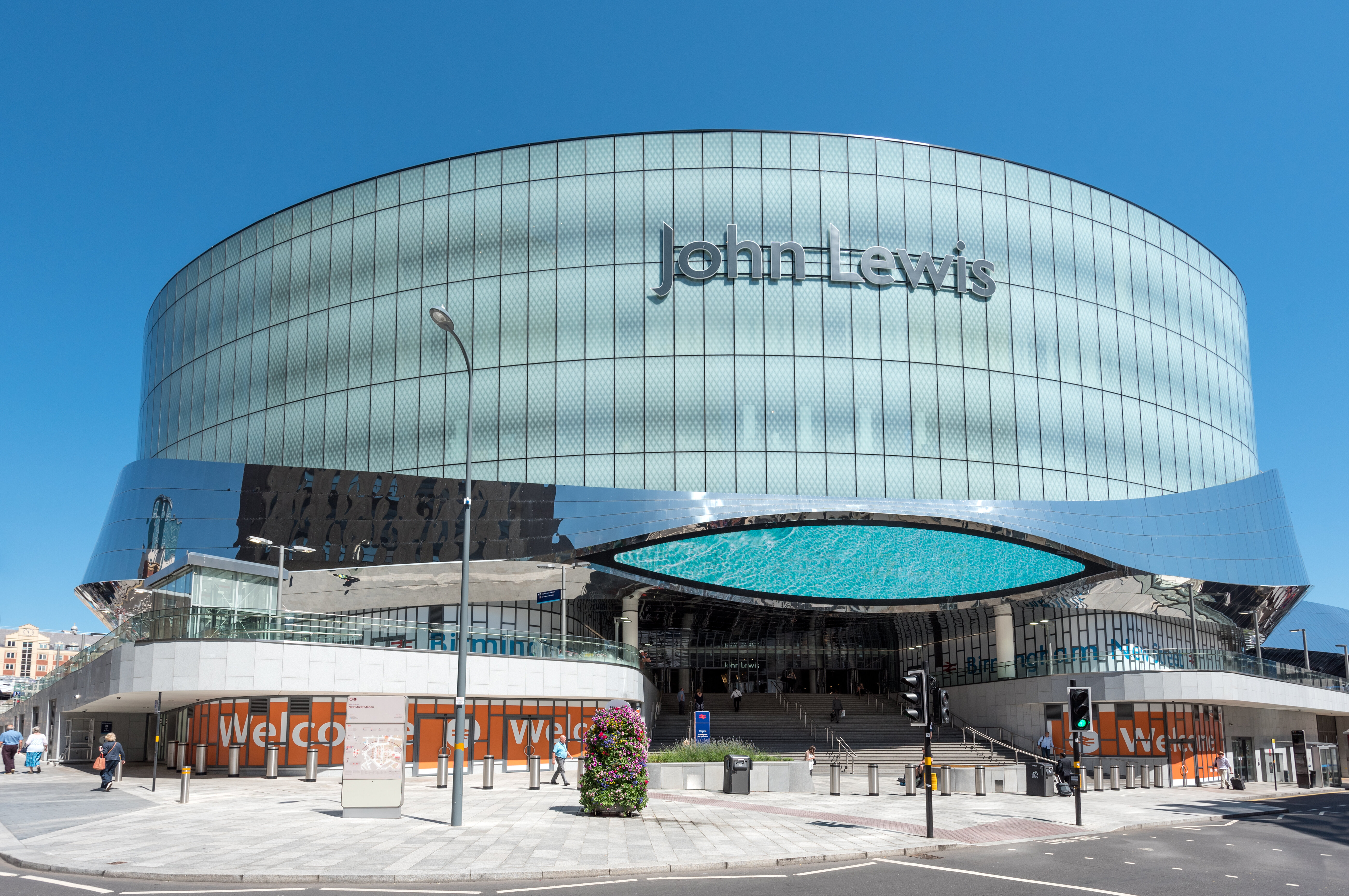
Businesses named by the government include retail giant John Lewis, which said it was “surprised and disappointed” to be on the list released by the Business Department.
A John Lewis Partnership spokesman said: “This was a technical breach that happened four years ago, has been fixed and which we ourselves made public at the time.
“The issue arose because the Partnership smooths pay so that Partners with variable pay get the same amount each month, helping them to budget.
“Our average minimum hourly pay has never been below the national minimum wage and is currently 15% above it.”
Other organisations named and shamed included Sheffield United, Oldham Athletic, Crewe, Charlton Athletic and Portsmouth football clubs, as well as The Body Shop, Worcestershire Cricket Club and Enterprise Rent A Car.
Almost half of employers named wrongly deducted pay from workers’ wages, including for uniforms and expenses, while 30% failed to pay workers for all the time they had worked, such as when they worked overtime, and 19% paid the incorrect apprenticeship rate.
Business minister Paul Scully said: “Our minimum wage laws are there to ensure a fair day’s work gets a fair day’s pay. It is unacceptable for any company to come up short. All employers, including those on this list, need to pay workers properly.
“This government will continue to protect workers’ rights vigilantly, and employers that short-change workers won’t get off lightly.”
Low Pay Commission chairman Bryan Sanderson said: “These are very difficult times for all workers, particularly those on low pay who are often undertaking critical tasks in a variety of key sectors including care.
“The minimum wage provides a crucial level of support and compliance is essential for the benefit of both the recipients and our society as a whole.”
A total of 2,300 employers have been named since the current scheme was introduced in 2014.
Shadow employment rights and protections secretary Andy McDonald said: “The government isn’t doing nearly enough to crack down on companies who pay under the national minimum wage.
“Just six employers have been prosecuted for paying employees less than the minimum wage in the last six years despite more than 6,500 breaches having been found.
“Laws protecting workers aren’t worth the paper they are written on if they are not enforced, but weak employment rights and a lack of enforcement action leaves too many working people vulnerable to this exploitation.”
The words of co-workers and clients can stay with you long after you leave a job and certain phrases can detonate a professional relationship, making people question whether they ever truly belonged at a company or if they can ever work with or trust a colleague again.
That’s why it’s so important to learn to identify and avoid such phrases, whether they’re obviously rude or seemingly innocuous. Here are psychologically damaging but commonly used phrases to watch out for in your work communications.
Advertisement
1. “No offence but …” or “No disrespect but …”
Mary Abbajay, president of the leadership development consultancy Careerstone Group, was once hired by a company to conduct team building. When she met the manager of the team she would work with, he told her, “With all due respect, I’ve forgotten more about team building than you’ll ever know.”
Advertisement
Abbajay ended up turning down the job as a result. “This was 15 years ago, and it stills sticks with me,” she said. “If he hadn’t said ‘with all due respect,’ I might’ve taken it differently. That’s just the icing on the cake that shows ‘I do not respect you, I think you’re wrong.’”
Along with the similar phrase “No offence …,” she said, these condescending words signal that the speaker does not respect the other person’s point of view.
Advertisement
2. “I don’t have time for this.”
Psychological safety is key to keeping teams together. Researchers describe it as the mental space in which employees are free to speak up, share bad news, and ask for help when they are in over their heads.
If your pattern in responding to colleagues’ requests is telling them that you are too busy or don’t have enough time, it sends a signal that the other person is not a priority and that they shouldn’t go to you when they need help.
“That person is going to be reluctant to come back to you again if there’s a problem or situation, and it may throw them off so much that they’re worried too much about taking your time and annoying you than getting what they need,” Abbajay said.
Advertisement
When managers say this, it can silence their team and make members less likely to own up to mistakes, she added.
3. “What X is trying to say is …”
If you’ve been in a meeting with a colleague who feels the need to reframe what you just said in their own words, then you understand the frustration of hearing this phrase. Abbajay said this is the one she dislikes the most, because it doesn’t move the conversation productively forward even if that’s the speaker’s intent.
When someone does this to you, you may jump to a conclusion like “I’m inarticulate, I’m stupid, people aren’t understanding me, people aren’t respecting it out of my mouth, so you feel like you have to say it out of your mouth,” she said. “It’s very diminishing. It lowers the other person’s status.”
Rather than rephrasing colleagues’ words, Abbajay said colleagues could simply request when they need more of an explanation in a conversation.
4. “You seem young for …” or “You’re so articulate for a …”
Lawrese Brown, the founder of C-Track Training, a workplace education company, cited the type of undermining comments that you can sometimes be the recipient of when you go against a colleague’s assumptions and expectations of how you should present yourself at work. These comments can range from microaggressions about your identity to questions about your leadership potential.
Brown said she has heard from clients who have been told they were being a “weak” leader or “seemed young.” One client was advised to change her hairstyle.
“Her manager told her people would take her more seriously if she straightened her hair,” she said. “These all fall under the umbrella of, ‘You’re being perceived as not appropriate; something about your self-presentation or the way you’re being perceived causes people to question your ability to do the job.’”
These kind of comments can get under employees’ skin and make them feel inadequate at work. “We start to feel the way we’re operating is not appropriate or effective, or we’re just conscious that it could be a knock against us,” Brown said.
Advertisement
5. “I didn’t mean it like that.”
Brown said it’s OK to note that words can be interpreted differently, but that you should be careful not to be dismissive when others disagree. “I didn’t mean it like that” is a common defensive comment that does not acknowledge how your words can be received, she said.
The goal is to recognise that your words carry weight, and can do harm. Remind yourself someone is on the receiving end of your comment, and first ask yourself, “Is it productive?” before you say it, she said.
6. “Nobody else has brought this up to me” or “You’re taking this personally.”
Brown said managers commonly make the mistake of using invalidating comments such as, “Nobody else has brought this up to me” when a team or employee raises a concern. According to Brown, that can send the message: “If this is only important to you, is this worth taking seriously?”
When colleagues invalidate your feelings like this, or you do it to others, it can stop much-needed conversations from happening.
″‘You’re too emotional about this, you’re taking this personally. Other people haven’t said this.’ What you’re missing by saying this is you’re undermining the other person,” Brown said. “These are phrases, that once said, very few people have the tools to have the difficult conversation to unpack that. People just don’t say anything.“
And ultimately, when co-workers stop talking to each other, communication breaks down, mistakes are more likely to happen, tensions run higher and everyone is more on edge.
Your colleagues will “tend to be more people-pleasing, because they no longer trust their own voice, or perception of an experience, or it inhibits their ability to trust their colleagues,” Brown said. “When we don’t trust, we put more rigid processes in place, and it’s because we don’t believe that our word will be acknowledged or that our needs in environments will be met.”
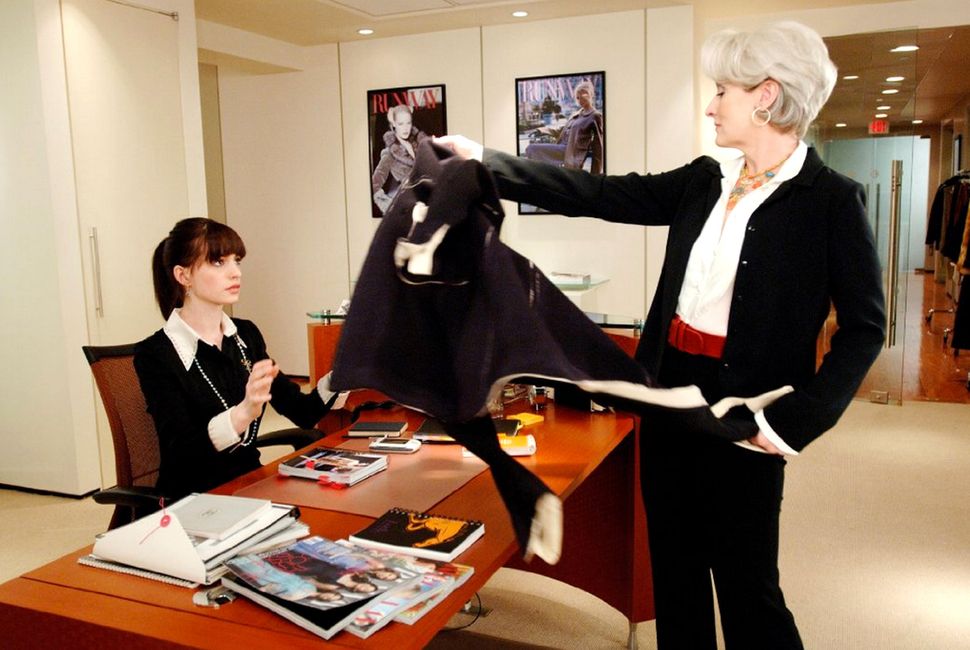
Celebrating its 15th anniversary, The Devil Wears Prada remains a cultural phenomenon that has shaped the way we view the fashion industry. Meryl Streep’s renowned portrayal of Miranda Priestly, the steely editor-in-chief of Runway magazine, is one the world won’t soon forget.
Priestly’s effortless delivery of her infamous catchphrase, “that’s all,” held a gravity that clearly depicted fashion as a high-stress, high-stakes industry with no tolerance for any hint of incompetence.
Advertisement
The Devil Wears Prada is not the only media depiction of the fashion industry as a glamorous, impenetrable space where dreams are both dashed and realised. In 101 Dalmatians, Cruella De Vil is a designer whose love of fashion drives her to criminal extremes to obtain the coat of the season.
Ryan Murphy’s Halston miniseries on Netflix recently provided insight into the designer, who was prone to grand gestures of affection and verbal abuse of colleagues, providing another trope of the misunderstood genius who’ll dispose of anyone not aligned with his vision.
Advertisement
But how accurate are these film portrayals in reality? Four fashion industry professionals shared their perspectives on what it’s really like to work in fashion.
Alamy Stock Photo
Miranda Priestly was the queen of microaggressions, like throwing her coat on her assistant’s desk.
“I don’t feel like those interpretations reflect what hard work is and how you’re rewarded,” said Heather David, who has worked as in-house public relations for Balenciaga and Alexander Wang. “When I was young, my boss seemed like Miranda Priestly, criticising my work. I realised she pushed me because she saw more in me. Her pushing helped mebecome a better worker and leader.”
Advertisement
David described the environment at Balenciaga as “structured” and “traditional,” and said there’s a disconnect between media portrayals and the reality of fashion.
“Films show interns on a trip to Paris or using the fashion closet. I don’t think that’s realistic at all,” David said.
The fashion closet scene in The Devil Wears Prada set in motion millions of dreams that an intern could simply take a Fendi poncho and turn it into a personal wardrobe transformation. But that’s not real life. “I think people come into fashion naive and they only see these stories,” David said.
Cymone Williamson, a former publicist who worked for the brands DE Marketing and All the Rage, shared a similar sentiment. “People aren’t getting makeovers,” she told HuffPost. “I never came across anyone who had no experience and was moulded into a fashion prodigy.”
Williamson said The Devil Wears Prada thickened her skin, though. “I was prepared to be treated poorly. My experience was a mild version of what you see in movies. I was surprised I wasn’t fired when someone was having a bad day or I made a mistake.”
The Halston miniseries features tantrums and tongue-lashings galore ― there is a scene in which Halston’s career is on the decline and he storms into his atelier screaming at a designer for submitting a sketch without his approval.
Williamson said temper tantrums are not unheard of in reality. She recalled an instance with an employer in a PR showroom: “I had a male boss who was upset about losing an account. My desk was the first desk [near him], and he walked in and pushed everything off my desk. Everyone felt the wrath.”
Laurie Sparham/Disney
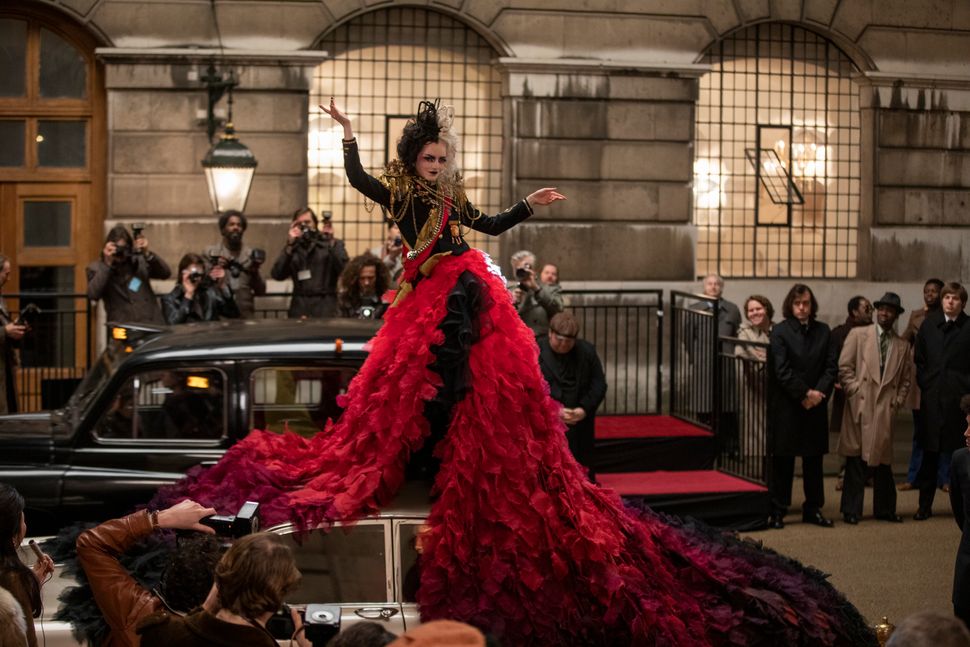
Emma Stone in Disney’s live-action “Cruella.”
The 2021 film Cruella touches on power dynamics between management and employees – Emma Stone’s titular character finds herself in a tense environment early on in her career, where she works with a designer who rules with an iron fist.
Recent headlines show that mistreatment of staff, by both designers and organisations, is still an issue in the fashion industry. Brands such as Refinery 29 and Manrepeller, for example, have been called out over the past few years.
Advertisement
513 designer Jerome Lamaar, also known asThe Style Monk, is familiar with industry antics. Starting with Baby Phat (run by Kimora Lee Simmons) at age 15, Lamaar said his trajectory has been similar to what he’s seen on film.
“Most of it is on point. I feel my life is very Funny Face he said. In that 1957 film, Jo Stockton, played by Audrey Hepburn, is a young librarian who’s plucked from obscurity and becomes a model at the pinnacle of fashion. While this is purely movie magic, Lamaar’s 20-year career is a one-in-a-million that’s not the norm.
He recalled an instance when “a PR person who was very well known didn’t recognise me and I was visiting a friend’s show. She kicked me out from backstage, and these are the old guards that the movies depict.” He added: “It’s because they are stressed out and it happens during Fashion Week.”
Julian J. Callis, who has worked at the Nicki Minaj Collection and Ralph Lauren, explained that while many films depict young women being groomed to become the future of fashion, they mostly focus on the character getting a glamorous life makeover, and ignore the actual hard work that goes into a career in fashion. “These films don’t show the gray area of starting from the bottom and working to the top,” he explained.
So, before you submit that application to become the next intern at your favourite fashion magazine, remember that it’s not all twirling around in fashion closets and trips to Paris.
Seven in 10 disabled women say they have been sexually harassed at work, increasing to almost eight in 10 among those aged 18 to 34.
These shocking statistics, which compare to 52% of women in general, are from a new report published by the the TUC that surveyed 2,003 disabled women about their careers. Of those, 1,162 respondents agreed to answer questions about their experiences of sexual harassment at work.
Advertisement
It’s been more than four years since the #MeToo movement took over our social media feeds, but this is the first major study into the sexual harassment of disabled women at work in Great Britain. As the report highlights, “the voices and experiences of disabled women have too infrequently been highlighted”.
Common experiences shared by those surveyed included unwanted sexual advances (38%), unwanted touching (36%), and unwanted sexual touching/sexual assault (18%).
Advertisement
One in 25 said they had experienced a serious sexual assault or rape at work.
Thomas Barwick via Getty Images
The research also suggests that many disabled women experience multiple forms of harassment in the workplace, with more than half of respondents (54%) saying they had experienced two or more types of sexually harassing behaviour, and 45% saying they had experienced three or more. “This points to workplace cultures where sexual harassment is a frequent and normalised occurrence rather than an isolated incident,” the authors said.
Advertisement
The report identified great hesitancy among disabled women in reporting harassment at work. Two thirds (67%) of those who had experienced it did not report the harassment to their boss the most recent time it happened, with 39% saying this was because they did not believe they would be taken seriously.
Some said they were worried it would have a negative impact on their career or work relationships. Other reasons included not thinking they would be believed or thinking they would be blamed if they reported the incident.
And unfortunately, of those who did report the most recent instance of sexual harassment, more than half (53%) said it was not dealt with satisfactorily.
Unsurprisingly, this is having a huge impact on the wellbeing of women.
Advertisement
Around one in three (34%) of those who disclosed harassment in the survey said their experiences had a negative impact on their mental health and more than one in five (21%) said it negatively affected their relationships with colleagues.
The experiences caused one in eight (12%) to leave their job or employer entirely. This is particularly troubling given disabled women already face significant barriers to getting into work and getting paid the same as non-disabled workers.
TUC research in October 2020 found that disabled women earned 36% less than non-disabled men. The analysis also found a huge unemployment gap; disabled women were 32.6% more likely to be unemployed when compared to non-disabled men.
“Four years on from the explosion of #MeToo on a global scale, employers still aren’t doing enough to make sure women are safe at work. It’s time for every employer to take responsibility for protecting their staff from sexual harassment,” said TUC General Secretary Frances O’Grady.
“Ministers must change the law to make employers protect workers from sexual harassment specifically, and from all forms of harassment by customers and clients. Anyone worried about sexual harassment at work should get in touch with their union.”
HuffPost may receive a share from purchases made via links on this page. Prices and availability subject to change.
The date is probably already marked in your calendars – but for a different reason. June 21 is not only midsummer and potentially the day we get full “unlockdown” in England, but it’s also Amazon Prime Day 2021.
Here’s your need-to-know guide about the day.
What is Amazon Prime Day 2021?
You probably already know this one, but it’s basically a day to save a lot of cash. Amazon has lots of deals across the whole site, from gadgets to homeware – and even booze.
If you were about to make a big purchase, you might want to hold out to see if you can save some money by buying it on Prime Day. Thank us later.
Okay, so when exactly is it this year?
It’s actually two days. Prime Day 2021 starts at 12:01am on Monday June 21 and ends at 11:59pm on Tuesday June 22. The deals will be on the official Amazon page.
Do I have to be an Amazon Prime member?
Well, yes, but there are ways around this, too. You can sign up and pay the yearly subscription fee of £79 (this also means you’ll get access to Amazon Prime TV and super quick delivery, btw). Or it’s £7.99 a month.
Or, you can sign up for a free 30-day trial and still access the sales. Just remember to cancel your membership before the 30 days are up and you won’t get charged a thing.
What else do I need to know?
In the lead-up to Prime Day, Amazon is running a campaign supporting small businesses. From Monday June 7 to Sunday June 20, Amazon will offer a £10 credit to use on Prime Day to members who spend £10 on items sold by UK small businesses, including products from Amazon Handmade and Amazon Launchpad.
To make it easier to support small businesses, Amazon has curated collections to connect shoppers with small businesses at amazon.co.uk/supportsmall. Or, Echo device owners in the UK can say “Alexa, shop small business” to discover products eligible for the spend £10, get £10 promotion.
Another bonus: Prime members will receive an additional £7 promotional credit, if they top up their Amazon account with £50 or more. (Guys, this is basically free money).
What Prime Day deals can we expect?
Well, Amazon says there are going to be more than two million deals. So there’s a lot to get excited about – but also a lot to sift through. Which is where we’re here to help. We’ll update you as soon as we know more, but at the moment, we’re told Prime Day 2021 will feature deals from top brands including LEGO, Bosch, Fitbit and Philips.
Previous years’ bestsellers in the UK included the Echo Dot, Fire TV Stick with Alexa Voice Remote, the Bosch Cordless Drill and Finish Dishwasher Tablets – apparently that’s the stuff people want!
What early Prime deals are on now?
Prime members can start shopping early exclusive offers and deals, including:
Amazon Devices: Save up to 50% off popular devices from June 7 – June 22, including Echo, Fire TV and Ring.
Amazon Music: Prime members who haven’t yet tried Amazon Music Unlimited can get four months free with unlimited access to more than 70 million songs ad-free and millions of podcast episodes.
Audible: Prime members get three months of Audible membership for just 99p this Prime Day. Membership includes an unbeatable selection of new releases, best sellers and Audible Original audiobooks and podcasts.
How do I get the best Prime deals?
Start making your wish-list now, so you can see whether they’re discounted during Amazon Prime Day. The main hub of deals will be on the Amazon Prime Day homepage. Remember: blue means deal – Prime Day deals are colour-coded, so look our for blue badges to save money. You can also get early deals with Alexa – no secret password necessary. Just ask!
There’s also Treasure Truck, where you can discover hand-selected product offers at amazing prices. You can opt-in at amazon.co.uk/treasuretruck or by opening the menu in the Amazon Shopping app and finding ‘Treasure Truck’ under ‘Programmes and Features’. You will receive text notifications whenever there’s something new to share.
Tensions over Prince Harry and Meghan Markle’s Oprah interview have been mounting in the Good Morning Britain studio – and weather presenter Alex Beresford has finally had enough of Piers Morgan’s hot takes.
Beresford and Morgan had a Twitter spat about the royals, but on Tuesday, it spilled over live on air, resulting in Morgan storming out of the studio.
Criticising Morgan’s “diabolical behaviour”, Beresford said: “I’m sorry but Piers spouts off on a regular basis and we all have to sit there and listen. Six-thirty to seven o’clock yesterday [on the show] was incredibly hard to watch. Incredibly hard to watch.”
Piers Morgan just walked off the Good Morning Britain set (!!!) after co-presenter Alex Beresford defended Harry and Meghan and condemned Piers’ treatment of them in yesterday’s programming pic.twitter.com/mH75J8ND4O
Many on Twitter have praised Beresford for standing up to a “bully”, but Morgan has criticised the way the weather presenter aired his views. “I was annoyed, went for a little cool-down, and came back to finish the discussion,” he tweeted.
So, is there a right way to stand up for what you believe in at work?
Witnessing toxic views or bullying in the workplace – whether it’s directed at yourself or others – undermines people’s wellbeing and self-confidence, says Tristram Hooley, professor of Career Education at the University of Derby. It damages an organisation, too, which is why it’s important to call it out.
“The problem is, standing up [for yourself] can often be a lonely experience and leave individuals exposed,” he tells HuffPost UK. “If you feel brave enough to ‘go it alone’ and challenge someone to their face then you should be proud of yourself. But it is often better to work with your colleagues and the systems within your organisation to address these problems.”
Prof. Hooley recommends talking to colleagues to ask their experiences and perceptions of the situation, as well as checking if they’d be prepared to back you up if you make a complaint.
“Speak to line managers and the organisation’s HR department so you don’t have to face the [person] down directly,” he advises. “If there is a trade union in your workplace, it can also be useful to involve them.”
Unfortunately, workplace bullying is common. Research from the employment lawyers at Citation found almost two in five (37%) employees have been bullied or harassed at work at some point. Speaking out practices you disagree with can be the first step in changing the culture of an organisation. This might be vital if you’re taking anti-racism seriously, for example. But it won’t be easy.
“Some managers view dissenting voices as evidence of disengagement and see those members of their team as troublemakers,” says Gillian McAteer, head of employment law at Citation.
“However, often quite the opposite is true and people speak up when they see things they disagree with because they care and want to make things better. Successful businesses value these voices and the role they play in improving practices and highlighting important details which management can easily overlook.”
Every employee has the right to be treated with respect and dignity at all times, adds McAteer. Often, bullying or a toxic work culture is fuelled by someone more senior in the team than the victim, or those negatively impacted indirectly. That doesn’t mean it should go unchecked.
“Don’t shy away from difficult conversations,” says McAteer. “If an employee doesn’t agree with practices in the workplace, it’s important they speak up. And it’s the responsibility of the employer to act on any complaints, offer support and take the appropriate actions.”
The pandemic has kept us apart from loved ones and friends, heightening our need for social interaction and touch. Since dogs provide us with much of what humans crave, like companionship, friendship and snuggles on demand, it’s no wonder the pandemic has heralded in a boom of new dog owners.
HuffPost UK
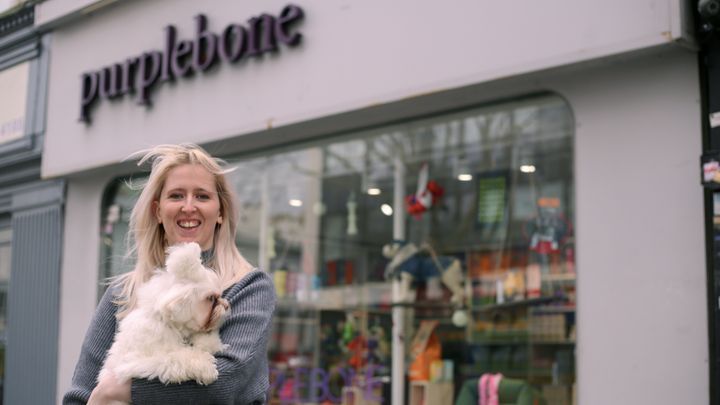
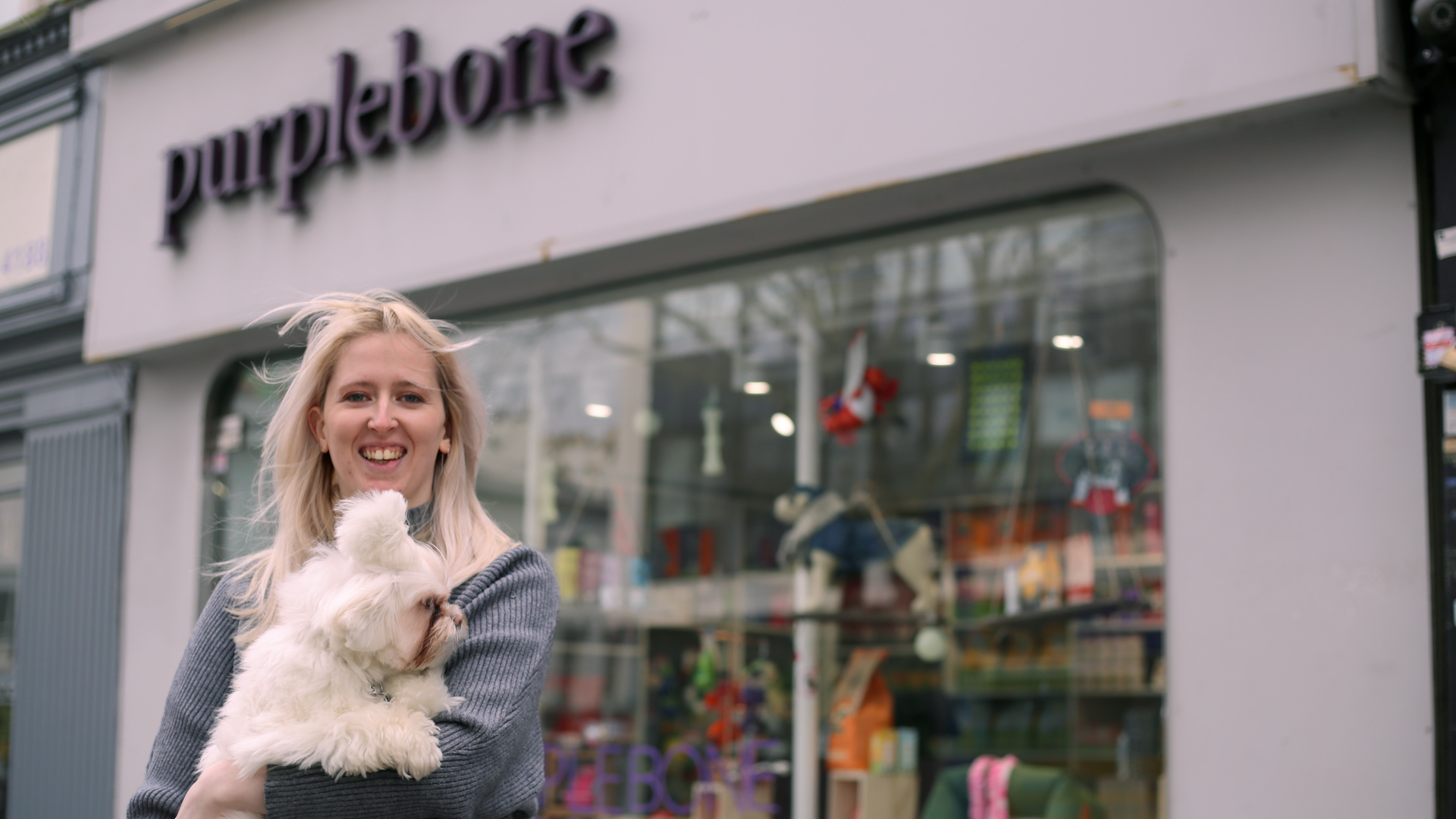
Olivia Irvine, customer care manager, Purplebone
No one knows this quite so well as Olivia Irvine, customer care manager at London’s leading dog grooming specialist, Purplebone, where she’s been working for the past six years and now manages everything across two sites, one in Notting Hill and the other on Hillgate Street in Kensington. Purplebone was founded by couple Julian Victoria and Jacob van Nieuwkoop as a retail and grooming parlour 11 years ago, after they were disappointed with the existing grooming options available for their four dogs.
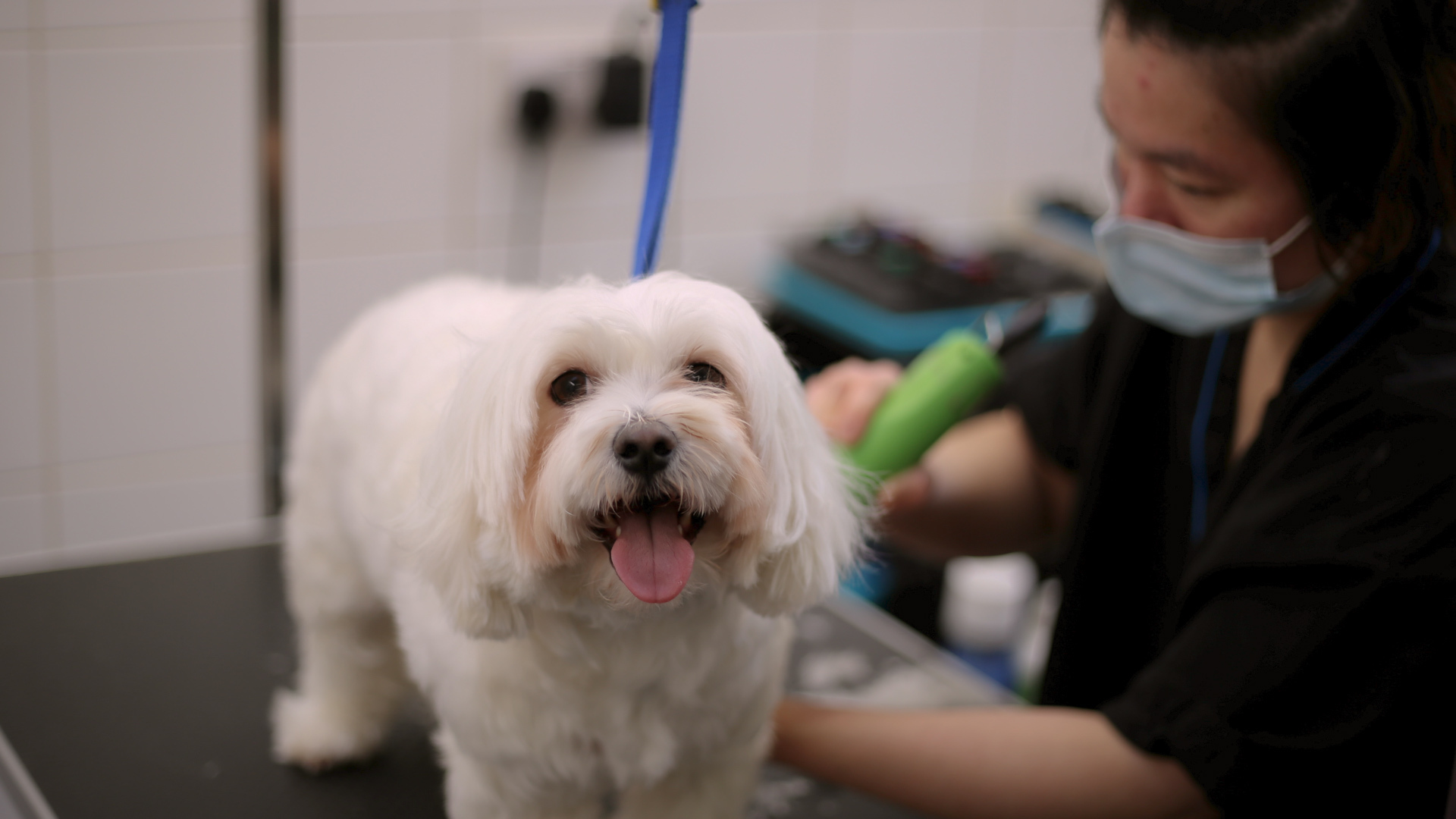
Watch to see Irvine and Purplebone’s groomers in action – as well as their adorable clientele
Life at Purplebone is as fun and full of excitement as you’d expect as bulldogs and bernedoodles (a popular Bernese mountain dog and poodle cross), cockapoos and cavapoos, lurchers and labs trot through the salon’s doors daily for a range of treatments, from a simple wash and tidy to an allover puppy groom to a blueberry facial – a favourite with bulldog clients.
It’s the go-to destination for the much-loved dogs belonging to a slew of celebs like the Beckhams, the Lampards, the Barlows, Alan Carr, Lily Allen, Middle Eastern royals, as well as the rest of us mere mortals. Irvine works alongside eight grooming staff – including two new hires since the pandemic started – to accommodate as many as 35 dogs a day across both locations.
If you think grooming is an indulgence for over-pampered pooches, think again: Purplebone helps to care for dogs’ health, with ultrasound teeth cleaning, nail grinding, and, most crucially, detangling knots and ridding skin of any debris that’s burrowed in, a common – and potentially problematic – issue known as matting.
“Matting is probably the most important aspect of dog grooming,” Irvine tells us. “Since lockdown, I’ve come to realise dog grooming is a necessity – it isn’t a luxury.”
Most owners don’t consider their dogs’ coats and hair type when purchasing pooches, but they should: breeds like cavapoos and cockapoos, susceptible to matting, can experience extreme discomfort as a result. When knotted hair gets too tightly wound, it can pull on the dog’s skin, leading to rashes, scratching of the area and debris getting pushed further into the skin and causing a whole host of other issues.
There’s no shortage of comedy stories when your clients are on four legs: some dogs come in for love, lavishing their masked groomers with kisses throughout their sessions. Others, especially larger breeds like Great Danes, come to party (“they start off timid but by the end they just want love and loads of cuddles. They go mad, they run around,” says Irvine), while some particularly gifted groomers are able to encourage their dogs to snooze right on the grooming table. Fun fact: groomers are talented dog whisperers, but not-so-skilled when it comes to handling doggie accessories.
“Groomers are absolutely terrible with putting on harnesses – they cannot figure it out for the life of them,” Irvine says.
HuffPost UK
Going cashless with Square Technology
When the pandemic forced Purplebone’s doors to close on March 19, 2020, in some ways, the business was ready for it: the grooming service had gone cashless using Square six months prior to the first lockdown. Clients save their card on file, it’s charged remotely and it minimises contact between clients and staff.
“Square had a huge influence on that: going cashless seemed unrealistic at the time but people are a lot more open to it now. It’s a lot easier,” explains Irvine.
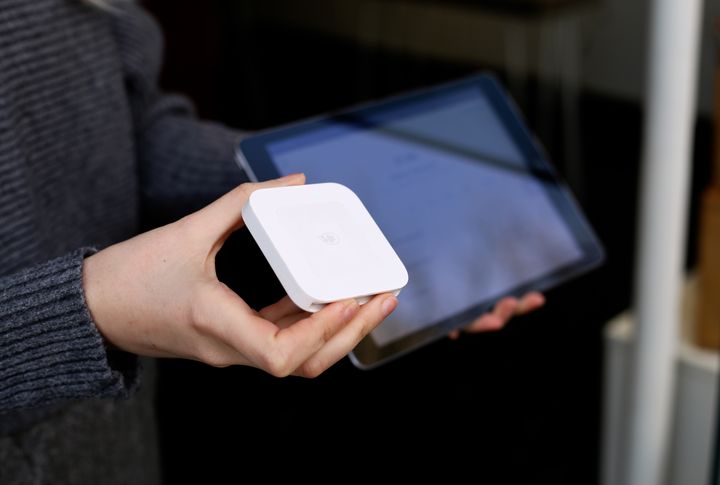
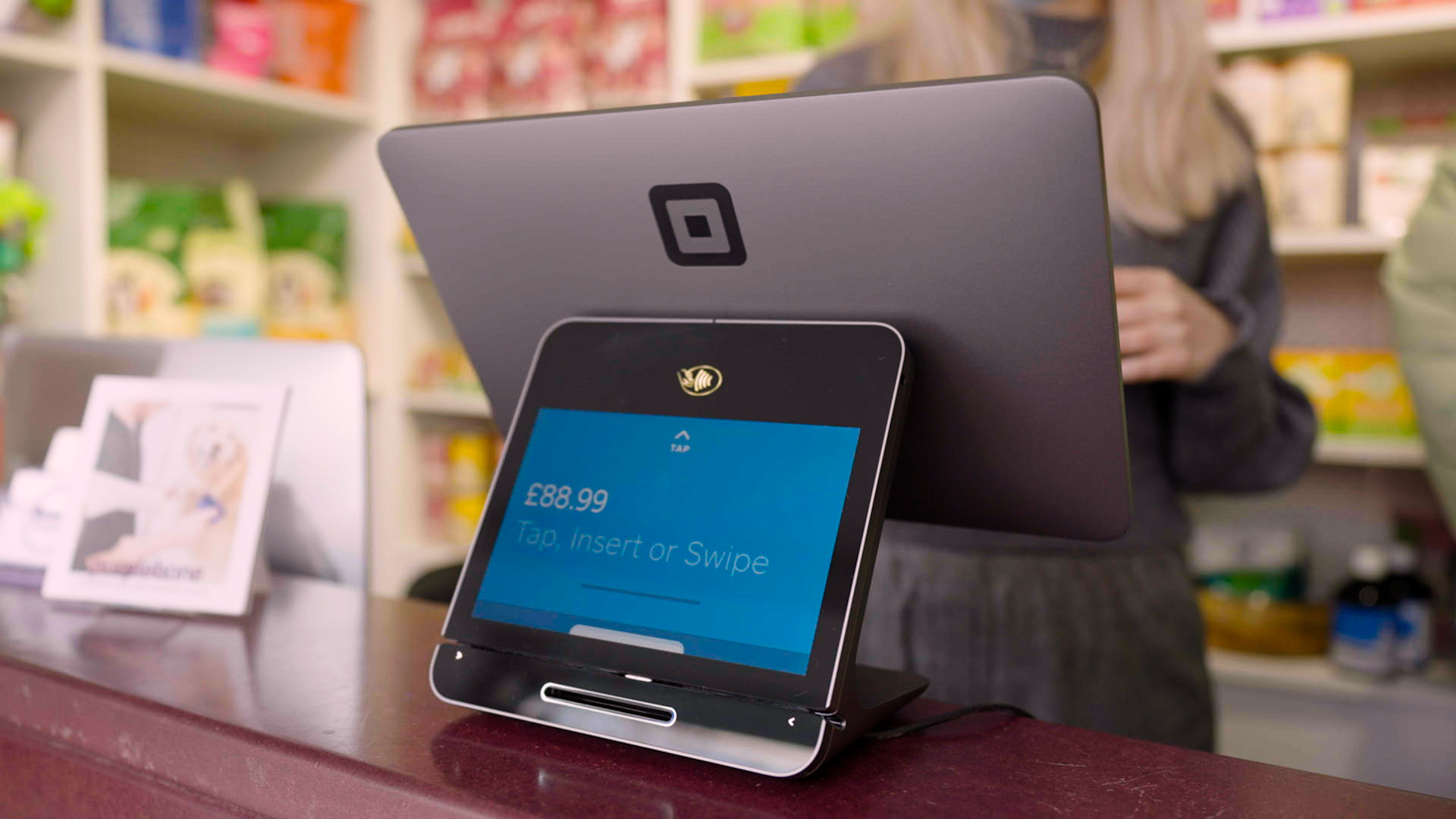
“When we came back, I realised how useful the contactless reader was. The fact that we could take everything out to them, and they could still pay – really big for us,” Irvine says. Square’s contactless reader allows her to multitask: one client can be collecting and making payments outside, while another is shopping for treats indoors.
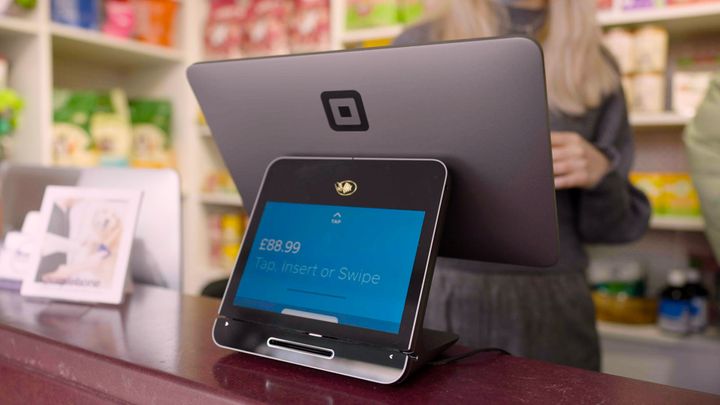
The Square Register is another bonus: not only is it sleek and lovely to look at, but it’s user and client-friendly, too.
“The client can see everything that I’m doing, and that’s a huge benefit with Square,” explains Irvine.
In lockdown 1.0, Purplebone’s role turned educational: the team sent out helpful emails to clients to guide them through brushing and grooming at home, and made some informational online videos. Irvine spent her days answering phone calls and helping clients remotely.
“I care about these dogs. It’s really important that clients had the support from us to teach them from afar,” she says.
When the salons reopened in May, the strictest safety measures were in place: PPE, splitting staff out between both locations and carefully marking out all areas for social distancing.
HuffPost UK
Square’s contactless reader
The biggest change, however, was for clients, who were no longer able to come into the salon to drop off their dogs, but had to wait outside, which required patience and trust on their part.
Purplebone’s role in the community also shifted: in the first lockdown, it wasn’t considered an “essential” business, for grooming or retail. Purplebone also sells a range of chewing treats, as well as three different shampoos and a conditioner, to both local and international customers.
From the second lockdown, Purplebone has been deemed “essential” – no surprise when the business had to launch a temporary service called the “Covid-19 groom,” to help dogs suffering from severe matting, who needed their hair completely shaved off for their own welfare.
The pandemic hasn’t just been responsible for a dog ownership boom. It’s changed how humans rely on pets: for many of us, our dogs have become our reason to get up each morning, or to leave the house for a walk every day. It’s not just dogs who are dependent on humans, anymore: we’re much more reliant on our pets for emotional support now.
“Personally, my role has changed,” explains Irvine. “I now find myself on the educational side, calming a lot of our clients. If the owner is nervous, the dog is nervous.” Irvine has also noticed a lot more separation anxiety in puppies who are used to being home with their owners 24/7, and who haven’t had a chance to experience much alone-time or socialisation with other dogs.
Purplebone has more new clients than ever before, and those clients return more frequently for treatments now that they realise what a difference it makes.
“A lot of our clients came back and said: ‘I didn’t realise how hard your job was’. People did think of us as a luxury, but now there’s a greater appreciation for our groomers,” Irvine notes.