A doctors’ group says it “borders on madness” that patients will have to obtain the note in person.


A doctors’ group says it “borders on madness” that patients will have to obtain the note in person.
Kimberley asks her guest, chartered psychologist Dr Ellie Buckley, why we get sensory overload.

Usually, The Great British Bake-Off is filmed between April and June.
So perhaps it’s no surprise that fans have been wondering whether the most recent batch of bakers would be subjected to multiple record-breaking heatwaves.
Advertisement
The show (partly) addressed the problem directly on its Instagram page on May 27, soon after we saw the hottest May day on record.
“Us filming chocolate week,” they wrote over a clip of the iconic GBBO tent. The video was overlaid with the sound of comedian Peter Kay’s famous bit: “I like it warm, but I don’t like it this warm!”
“It’s always chocolate week when we have a heatwave,” a commenter wrote.
The Mirror reported that the show’s filming is still “underway”, and that its cameras were rolling during the June heatwave, too.
Advertisement
That meant amateur bakers had to continue to work their culinary magic while schools had closed due to the heat, and travellers had been advised to avoid “non-essential” journeys.
Though some fans worried filming would have to stop, the publication confirmed the show went on.
A source from the show told The Mirror, “Every measure that could be taken has been, to make the bakers comfortable. The lighting gaffer from the crew who’s in first every morning, opens up the tent, takes down the sides and gets airflow moving before everyone arrives.
Advertisement
“Earlier in the run, when temperatures were the opposite and it was freezing, he was doing the same thing in reverse, arriving early to put the heaters on and warm the tent up before the bakers and crew got in.
“Production runners have also kept everyone going in the heat by handing out ice lollies to bakers and crew throughout the day.”
Advertisement
Another source reportedly told The Mirror that the tent’s location near a cooling river, and a “welcome” breeze in the final weekend of May, made filming possible.
In 2018, then-hosts Paul Hollywood and Dame Prue Leith shared how heatwaves affect bakers’ creations.
Prue told Rolling Stone conditions were “Worse for the bakers than for us, because we just come in briefly and go out. They’re in there all the time,” while Paul added: “Yeah, chocolate week suffered a little bit. Caramel sugarwork suffered a little bit”.
Advertisement
Ironically, he added, bread week – when warm conditions would have made loaves rise faster – was a little cooler that year.
New host Nigella Lawson has previously said she is “allergic to the sun”, so time will only tell how she handled the hotter temps.
HuffPost UK has reached out to Channel 4 for more details.

The British Medical Association is in dispute with Manx Care over “pay erosion since 2008”.
Andy Burnham has been tipped to bring back another senior figure from the New Labour era in his new-look government.
The former mayor of Manchester – who served as a minister under both Tony Blair and Gordon Brown – will officially take over as prime minister from Keir Starmer on July 20.
Advertisement
It has already emerged that his close friend James Purnell, who also served in cabinet during Labour’s last time in power, will be the new No.10 chief of staff.
David Miliband, another New Labour figure, could also be given a seat in the House of Lords in order to become foreign secretary.
Meanwhile, the i newspaper reported that Ed Balls could also be handed a peerage and given a role in Burnham’s government.
Advertisement
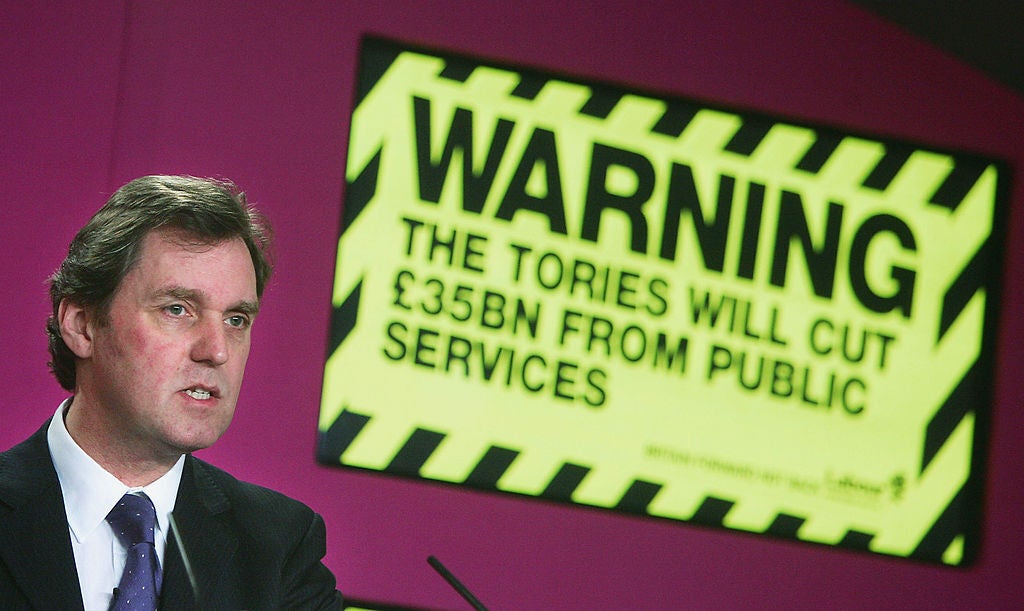
HuffPost UK has learned that another New Labour big beast who could make a dramatic comeback is Alan Milburn.
The former health secretary has held talks with Burnham about his review into record levels of unemployment among 18 to 24-year-olds.
In a speech last week, the PM-in-waiting said he wanted to introduce major education reforms which would place greater emphasis on technical qualifications rather than forcing pupils to study at university.
Advertisement
One minister said: “I can see Alan being brought into Andy’s government. He seems to like what Milburn has been saying about getting young people into work.”
Another source said: “Andy keeps referencing Milburn in his speeches, and Alan is clearly up for it.
“It would make sense to allow Alan to drive through his own reforms on youth unemployment as a minister.”
Asked whether Milburn could be handed a role once Burnham becomes prime minister, a source close to the new Makerfield MP insisted he had offered “no jobs and no deals”.
Advertisement
Milburn, who was the MP for Darlington from 1992 until 2010, was seen as an arch-Blairite during his time in government.
As well as being health secretary, he also serves as chief secretary to the Treasury and Chancellor of the Duchy of Lancaster under the former prime minister.
After leaving Westminster, he was chair of the Social Mobility Commission between 2012 and 2017.
Like David MIliband, he would need to be made a peer in order to re-enter government.
Listen to Commons People, the podcast that makes politics easy. Every week, Kevin Schofield and Kate Nicholson unpack the week’s biggest stories to keep you informed. Join us for straightforward analysis of what’s going on at Westminster.
Advertisement

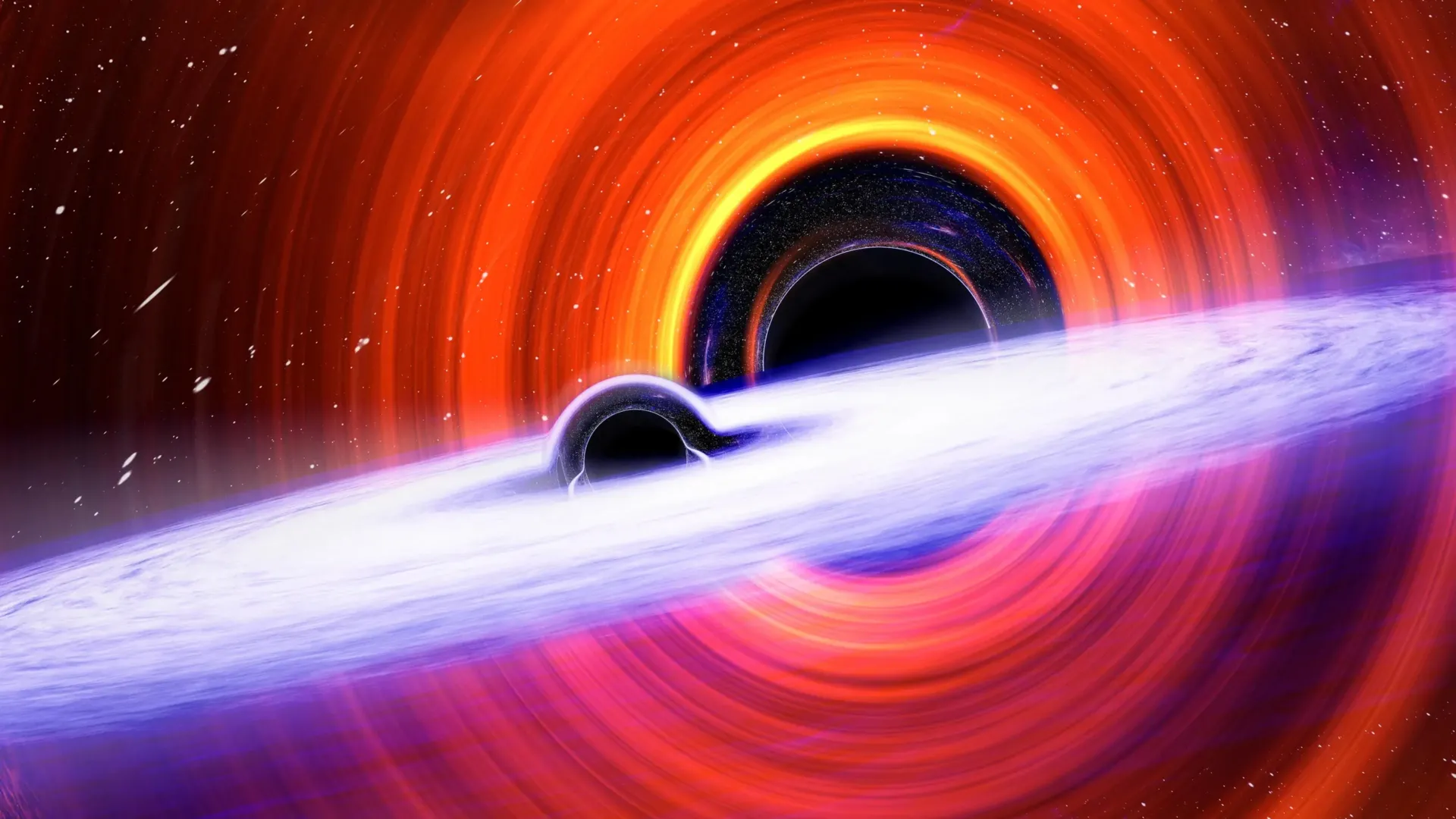
Primordial black holes have remained one of astronomy’s most intriguing ideas for decades. Now, researchers at the University of Miami believe a recent gravitational wave detection may bring scientists closer to confirming that these ancient objects are real, a breakthrough that could also help solve the enduring mystery of dark matter.
Primordial black holes are thought to have formed during the first fraction of a second after the Big Bang, long before the first stars or galaxies existed. Unlike the black holes created by collapsing stars, these hypothetical objects could range in size from something as small as an asteroid to much larger bodies.
Although no primordial black hole has ever been confirmed, scientists believe they could answer several major questions about the universe. One of the biggest is the nature of dark matter, the invisible substance that makes up about 85 percent of all matter and provides the gravitational pull that helps hold galaxies together.
“We believe our study will aid in confirming that they actually do exist,” said Nico Cappelluti, an associate professor in the University of Miami’s Department of Physics, referring to research he conducted with Ph.D. student Alberto Magaraggia.
An Unusual LIGO Signal
Their work builds on a possible discovery reported by the Laser Interferometer Gravitational-Wave Observatory (LIGO), which late last year detected an unusual gravitational wave signal. Gravitational waves are ripples in spacetime produced by some of the universe’s most violent events, including collisions between black holes.
Most known black holes form after massive stars explode as supernovas. Their masses typically range from several times the mass of the Sun to billions of solar masses.
“The most common black holes form as the result of a supernova, the death of a massive star. So, their masses can range from a few times the Sun’s mass to billions of solar masses,” Cappelluti explained.
But in November, LIGO issued an automated alert for a merger in which at least one object appeared to have less than one solar mass. Such a small black hole would be difficult to explain through conventional stellar evolution and instead could point to a primordial black hole.
Not everyone is convinced. Some astrophysicists have suggested the signal may simply be noise within LIGO’s extremely sensitive detectors rather than evidence of a remarkable new discovery.
Could This Explain Dark Matter?
Cappelluti and Magaraggia argue that the detected object is best explained as a primordial black hole that formed in the dense conditions of the early universe, long before stars existed.
To test that idea, the researchers estimated how many primordial black holes might exist throughout the cosmos and how frequently LIGO should detect them.
“We attempted to estimate how many primordial black holes may exist in the universe and how many of them LIGO should be able to detect,” Magaraggia said. “And our results are encouraging. We predict that subsolar black holes like the one LIGO may have observed should indeed be rare, consistent with how infrequently such events have been seen so far.”
Their findings, published in The Astrophysical Journal, suggest that the mysterious LIGO signal has no conventional astrophysical explanation and is most consistent with a primordial black hole.
The study “suggests that the most plausible explanation for the LIGO signal, which lacks any conventional astrophysical explanation, is the detection of a primordial black hole,” Cappelluti said. “And our research indicates that these primordial black holes could account for a significant portion, if not all, of dark matter.”
Even so, both researchers emphasize that one detection is not enough to settle the question.
For now, scientists must wait to see whether LIGO and its international partners record additional events that match the same pattern.
“LIGO picked up what is very strong evidence that these types of black holes exist. But we’ll need to detect another such signal or even several others to get the smoking-gun confirmation that they are real,” Cappelluti said. “But what is clear is that they cannot be excluded as being real.”
A Theory Decades in the Making
The concept of primordial black holes dates back to the Cold War era, when Soviet scientists Yakov Zeldovich and Igor Novikov first proposed their existence. In the early 1970s, Stephen Hawking expanded on the idea, arguing that these objects could be abundant throughout the universe, emit radiation, and possibly explain dark matter.
LIGO later provided the first opportunity to search for evidence supporting those theories. On Sept. 14, 2015, the observatory made history by detecting gravitational waves for the first time, confirming a major prediction of Albert Einstein’s general theory of relativity and opening an entirely new way to study the universe.
The Future of Gravitational Wave Astronomy
LIGO consists of two observatories located in Hanford, Washington, and Livingston, Louisiana. Together with the Virgo detector in Italy and the underground KAGRA observatory in Japan, they form the international LVK collaboration, which searches for black holes, regions of space where gravity is so strong that not even light can escape.
Planned upgrades will make LIGO even more sensitive, increasing its chances of finding additional candidate primordial black holes. However, the observatory’s two L shaped detectors, each with 2.5 mile long vacuum arms, were designed to detect the high frequency gravitational waves produced by relatively recent cosmic collisions, not the waves generated directly during the Big Bang itself.
Future observatories will extend that reach much farther back in time. The European Space Agency’s Laser Interferometer Space Antenna (LISA), scheduled for launch in 2035, is expected to detect gravitational waves from the universe’s earliest epochs after the Big Bang.
Another planned facility, Cosmic Explorer, is currently in the design phase in the United States. Researchers expect it to be about 10 times more sensitive than LIGO, allowing it to detect black hole and neutron star mergers stretching back to the era when the first stars formed.
In the face of criticism, Shoko Kawata, 35, says she loves her job and is proud to be taking time off to have a baby.
The World Health Organization’s director general says no further cases have been reported since 25 May.
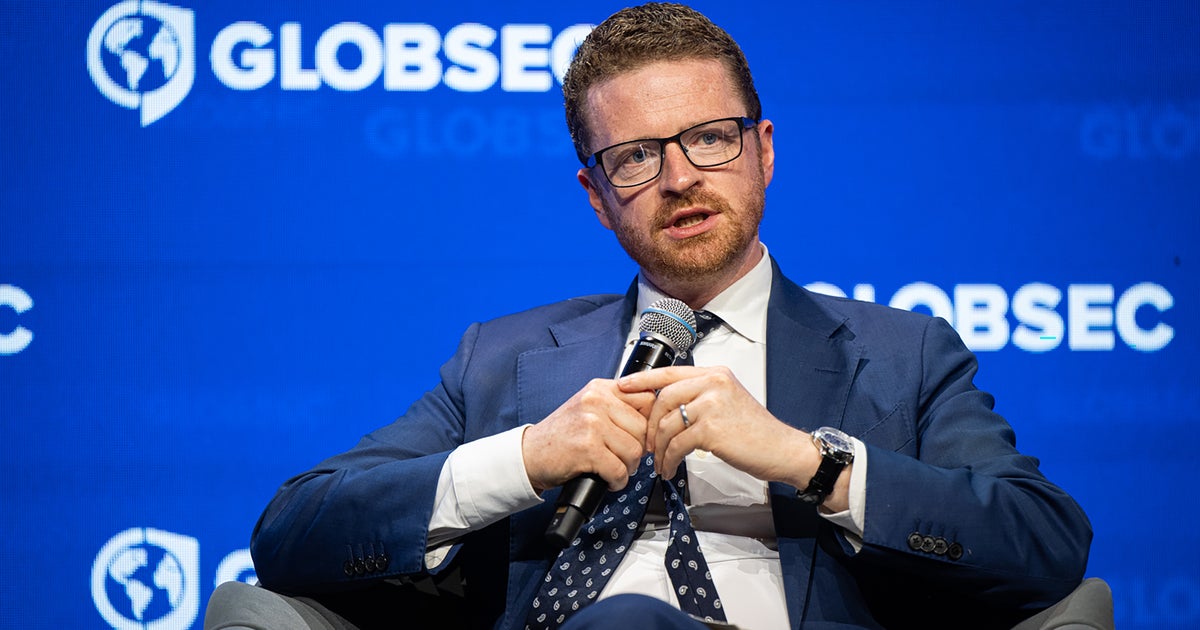
Keir Starmer’s former chief of staff has admitted Labour did not do enough preparation before they were elected into government.
Morgan McSweeney, who was forced to quit over his links to disgraced peer and ex-ambassador to the US Peter Mandelson earlier this year, told the BBC his party was not ready to deliver quickly for voters after their landslide win in 2024.
Advertisement
His remarks come after Starmer announced he was stepping down as Labour leader and prime minister last Monday.
McSweeney told the Political Thinking podcast: “We didn’t prepare enough for what kind of world we were going to. We are now in a very different era than when Labour was last in government.
“I think we didn’t have enough conversations at the top of the party about what that meant, how to prepare for it, what that meant for the state.
Advertisement
“You have to deliver quite quickly for people, for them to see the change quickly. And I think we didn’t come in with enough of a theory about how we would do that.”
McSweeney said Labour should have been “way more optimistic” about the state of the country when it got into office in 2024.
The former aide ran Labour’s general election campaign. He was seen as a key element of Starmer’s rise to the top of the party and into No.10.
Advertisement
He added: “I take my own responsibilities for [not being prepared], rather than blaming one person.”
McSweeney sat as Starmer’s head of political strategy but after three months became his chief of staff once Sue Gray was kicked out of the role.
He added that he was still “processing” Starmer’s fall from grace and said Labour’s 14 years in opposition “went quickly”.
McSweeney also claimed that there was an expectation within the party that Labour would need at least two elections to return to power after its defeat in 2019 – which is why they were unprepared in 2024.
Advertisement
Labour MP for Makerfield Andy Burnham is expected to be crowned the next prime minister by July 20.
He is currently the only Labour MP who has announced his intention to run in the contest to replace Starmer.
But there has been some contestation from his team that Starmer’s departure timetable did not give Burnham long enough to come up with a sound plan for government.
They were allegedly hoping he would stay in post as a caretaker PM until September.
Starmer pushed Labour’s executive body to block Burnham from running to be the party’s candidate in the Gorton and Denton by-election back in February.
Advertisement
After Labour was thrashed in the May elections, Josh Simons stood aside as Makerfield MP so Burnham – then Greater Manchester mayor – could run as a candidate.
Only MPs can contest a Labour leader.
But, Starmer clearly saw the writing on the wall after after Burnham’s comfortable victory in Makerfield and announced he was stepping down days later.
Despite Burnham’s rivalry with Starmer, McSweeney said he feels “optimistic” about the new era for the party.
Advertisement
Listen to Commons People, the podcast that makes politics easy. Every week, Kevin Schofield and Kate Nicholson unpack the week’s biggest stories to keep you informed. Join us for straightforward analysis of what’s going on at Westminster.
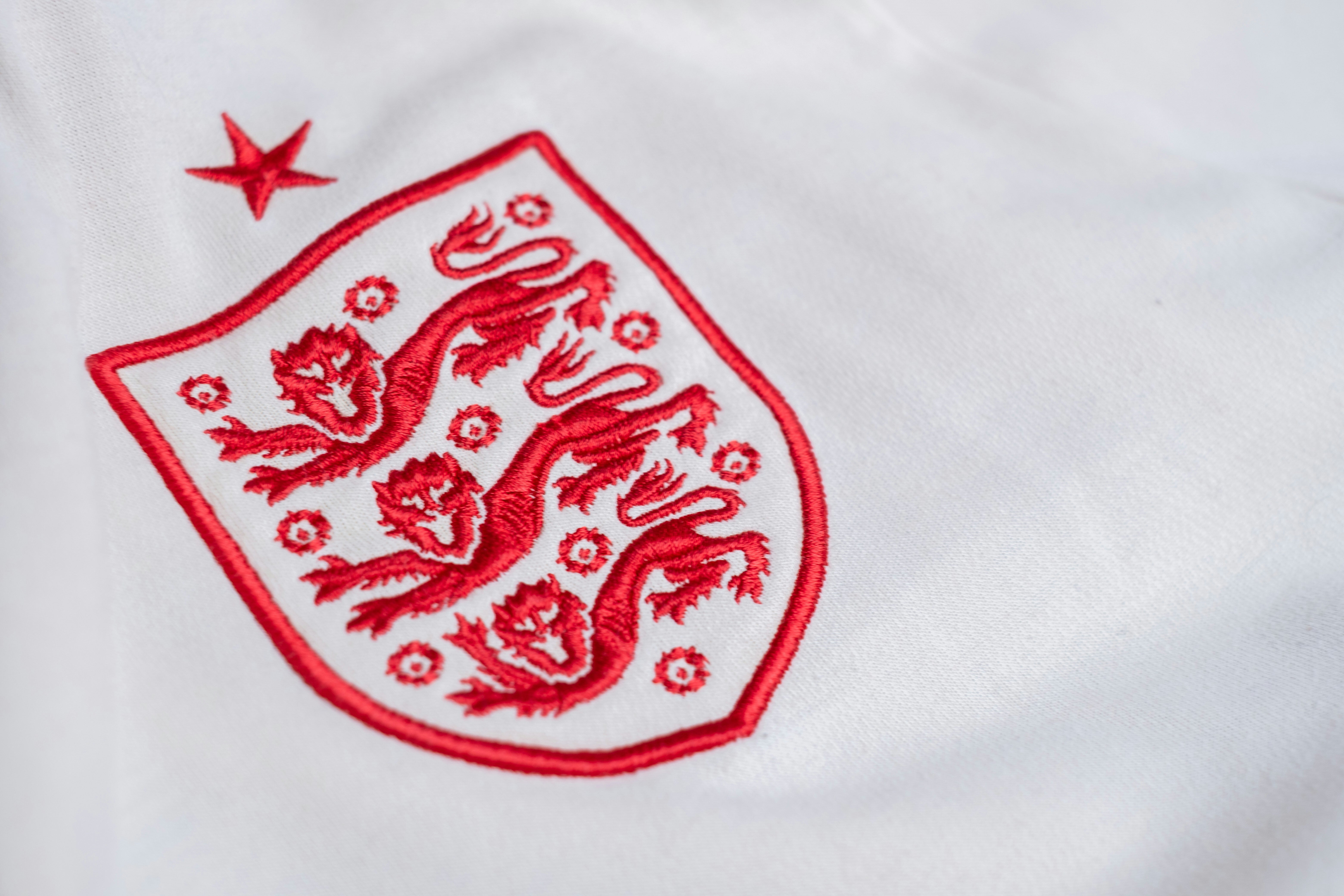
The three lions on the shirts of England’s football gear have become so strongly associated with the men’s national team that they’re nicknamed The Three Lions.
The women’s team, meanwhile, goes by The Lionesses.
The animals have been England’s official crest since 1863, when the Football Association was formed.
Advertisement
The lion is England’s national animal, and most of us know it’s also associated with royalty.
But why three – and why doesn’t the England team’s emblem match England’s non-football coat of arms exactly?
As we’ve said before, the crest was adopted by the Football Association when it was first founded.
But that’s because of a long, royal history of lions in England’s heraldry.
King Henry I had a lion on a red background on his coat of arms way back in the 12th century.
And when he married Adeliza of Louvain, whose father, Godfrey I, Count of Louvain, had a lion on his coat of arms, too, he added a second. That happened in 1121.
That meant King Henry I’s grandson, Henry II, was born with two lions on his coat of arms. But then he, too, married into a big-cat-coat-of-arms family: Eleanor of Aquitaine’s heraldic badge also contained a lion.
Advertisement
But, per the i Paper, it took Eleanor and Henry’s son, Richard the Lionheart, to combine the three lions into a single emblem.
That flag – three lions on a red background, or Gules, three lions passant guardant in pale or – was used by every Plantagenet king until the ascension of Edward III in 1327.
Advertisement
The Football Association would have had to ask for permission to use the Three Lions emblem due to its royal associations. But it doesn’t exactly match the royal version.
Firstly, the colours are different – England’s football badge is blue and white, while the historic version was red and gold.
And the England football badge has 10 Tudor roses on it. “The reason for the specific amount of roses is unknown,” the BBC said.
Advertisement
England’s football badge also used to have a crown on top. But in 1949, that was removed so as to distinguish it from the England cricket team’s emblem.
The star above the lions is a relatively new addition, representing England’s 1966 World Cup win.

