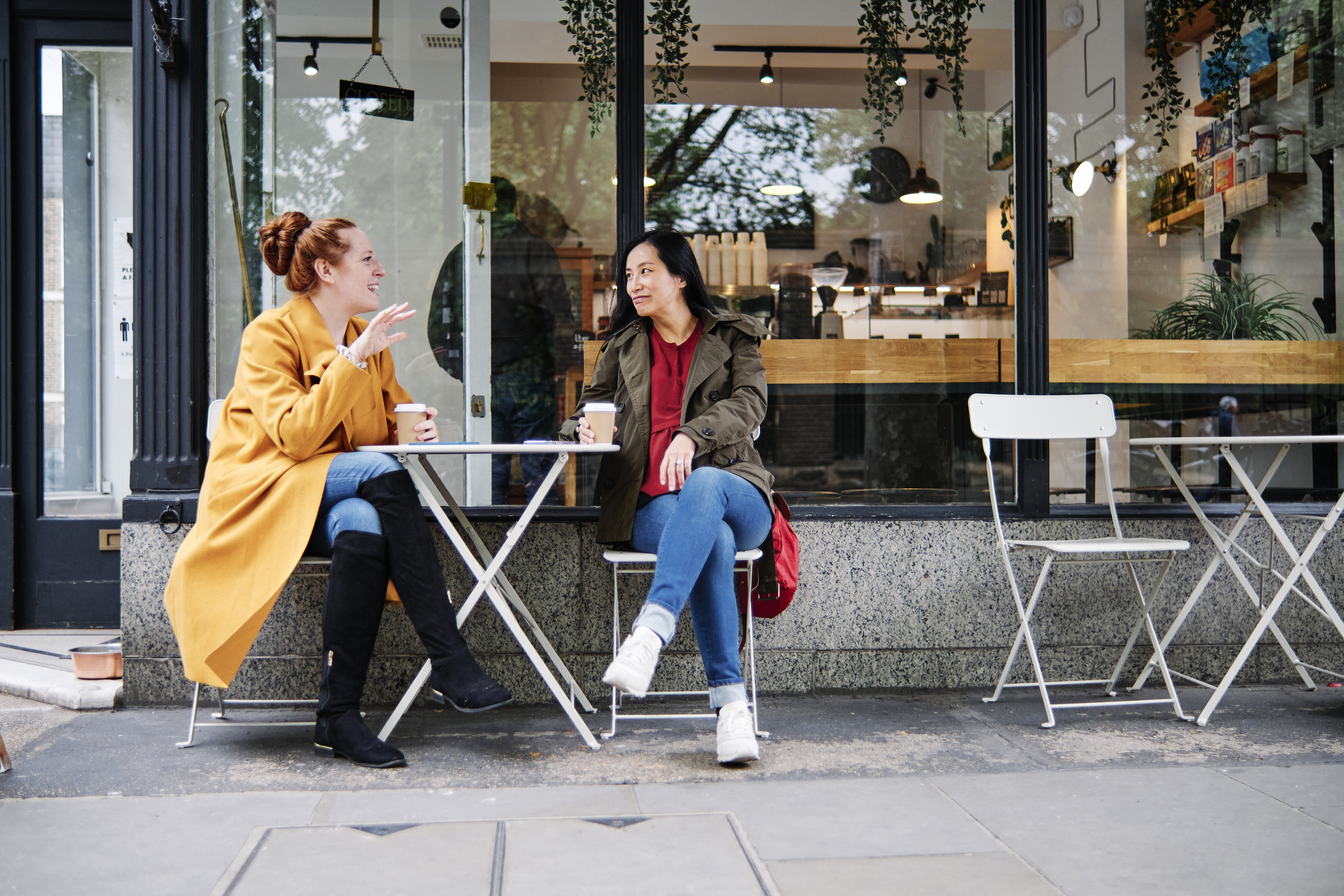
Do Opposites Really Attract? A New Study May Have Given Us The Answer

They say opposites attract, but a new study says, “Hold on a minute, maybe they don’t.”

Researchers at the University of Colorado Boulder analysed research that included millions of couples over more than a century and took into account over 130 traits. They found that, more often than not, we end up with someone similar to them.

“Our findings demonstrate that birds of a feather are indeed more likely to flock together,” said first author Tanya Horwitz, a doctoral candidate in the Department of Psychology and Neuroscience and the Institute for Behavioral Genetics (IBG).

According to the study published in the journal Nature Human Behavior, 82% and 89% of traits examined were similar among partners, ranging from political leanings and the age you lost your virginity to nitty gritty physical traits like whether people needed to wear glasses or their waist circumference.

Other areas where couples tended to be similar? Religious attitudes, level of education, how likely a person was to drink or smoke and some measures of IQ all showed particularly high correlations.

“I think that the biggest takeaway is simply that the process of choosing a partner is not necessarily random and that certain traits may play a larger role in partner selection than others,” Jared Balbona, a postdoctoral data scientist and co-author of the study, told HuffPost.

Importantly, though, results can’t tell us exactly why partners might be similar on a given trait, Balbona said.

“For example, it’s possible that people with similar political values are actively seeking one another out, but it’s also possible that partner similarity on political values is due, at least partially, to them living in the same geographic area, as political values tend to congregate within certain regions,” he said.

There were a handful of categories where couples weren’t exactly alike; extroversion, for instance, was one category with little correlation ― meaning an extrovert is just as likely to end up with another extrovert as with an introvert.

“The correlation we found for extraversion was technically statistically significant in the positive direction (.08) but very slight, particularly when compared to a correlation of .58 for political values or .87 for age, where correlations further from 0 are stronger,” Horwitz said.

“Our findings demonstrate that birds of a feather are indeed more likely to flock together,” said first author Tanya Horwitz.

JohnnyGreig via Getty Images

“Our findings demonstrate that birds of a feather are indeed more likely to flock together,” said first author Tanya Horwitz.

The research isn’t just enlightening for understanding who we fall in love with; it has important implications for the field of genetic research.

“A lot of the standard models used in our field assume that ‘mating’ is random (i.e., that whether you smoke is completely independent of whether or not your co-parent smokes), but as we demonstrated, there are a lot of traits for which this just isn’t true in sample after sample,” Horwitz said.

How the researchers conducted the study.

For the study, the research team reviewed nearly 200 papers that studied trait similarities among millions of male-female couples, going as far back as 1903.

In addition, they looked at a set of data called the U.K. Biobank to study 133 traits across almost 80,000 opposite-sex pairs in the United Kingdom. (For instance, the data included many rarely studied traits, like whether someone was breastfed or not or played computer games.)

Same-sex couples were not included in the research. The authors are now exploring those separately since patterns may differ significantly.

Of the meta-analysis, Horwitz said there is “no compelling evidence” on any trait that opposites attract. However, in the U.K. Biobank sample, they found a small number of traits in which there seemed to be a negative correlation (albeit small).

Those characteristics included chronotype (whether someone is a “night owl” or a “morning lark”), hearing difficulty, having a twin, and handedness (whether your dominant hand is your right or left).

“I don’t think anybody has ever said, ‘I like them, but I just don’t know if I can see myself with somebody left-handed,’” Balbona joked.

A few aspects of people’s personalities and dispositions were uncorrelated, which surprised Balbona.

“For example, there was little evidence of partner correlations for irritability, nervousness, or being ‘high strung’ — characteristics which potentially could play an important role when deciding whether you want to enter into a relationship with somebody else,” he said.

One of the areas where there was little correlation? Whether someone was right-handed or left: “I don’t think anybody has ever said, ‘I like them, but I just don’t know if I can see myself with somebody left-handed,’” Balbona joked.

Daniel Lozano Gonzalez via Getty Images

One of the areas where there was little correlation? Whether someone was right-handed or left: “I don’t think anybody has ever said, ‘I like them, but I just don’t know if I can see myself with somebody left-handed,’” Balbona joked.

What are the social implications of the study?

Horwitz and Balbona said the study has far-reaching social and societal implications.

Epidemiologists may be interested in application for the studies on health and biological indicators, while couples therapists may be most interested in how partner resemblance may relate to relationship satisfaction and duration, Horwitz said.

The researchers said that economists may be interested to see how the findings tie into wealth distribution and the labor market.

“Significant partner similarity on things like income, education, and social status ― regardless of the underlying reason ― can lead to these resources being concentrated within certain groups, thus worsening economic, educational, and health disparities between groups and reinforcing existing social strata,” Balbona said.

Obviously, the solution to this problem is not to stop certain groups of people from being in relationships with one another, Balbona said ― that’s a question he’s semi-frequently asked when he discusses this study.

“Rather, I believe these implications can best be addressed by adopting policy measures that reduce discrimination, increase the accessibility of education/ healthcare to all individuals, and support mixed-income housing, among other things,” he said.

On the individual level, if we’re drawn only to those similar to us, Balbona said, “We can seek out more diverse representations in the media we consume and can actively try to maintain an awareness of our own biases when interacting with others.”

Share Button

What Makes A ‘Sincere’ Apology? And Is It Better To Stay Quiet Sometimes?

Have you ever had someone do something terrible to you and, rather than being offered a sincere from-the-heart apology, you get something that sounds like they’re being forced to say it at gunpoint?

Similar, in a way, to Ashton Kutcher and Mila Kunis’s recent video ‘apologising’ for writing a letter to a judge overseeing the That 70s Show actor Danny Masterson’s recent court case that saw him sentenced to 30 years in jail for drugging and raping two women.

Rather than coming across as sincere, the two adopted a defensive and, for lack of a better word, bizarre approach, with fans online saying it was all part of a bad PR move and a fake apology.

Serious court cases aside, is it better to not apologise at all if it doesn’t sound sincere? Or should you give a half-baked apology in the interest of bettering your relationships?

“Sincerity is everything when it comes to apologies,” Jessica Alderson co-founder and relationship expert at So Syncd shares exclusively to HuffPost UK.

“Honesty is a fundamental aspect of trust in any relationship, and fake apologies can actually do more harm than good. They often lack any genuine emotion or remorse, and if this is evident, it can make recipients feel disrespected, manipulated, and dismissed. Authenticity is key when it comes to meaningful relationships and building trust,” she says.

What to do if you don’t genuinely feel sorry, but want to protect the relationship, though?

“One option is to acknowledge the other person’s feelings without apologising for something you don’t genuinely feel sorry for. For instance, you could say, ‘I’m sorry that my actions hurt you,’ without admitting wrongdoing if you believe you were in the right,” she recommends.

As with everything, communication is key, says Jessica: “If it’s a one-on-one situation, communication can help to repair the relationship. Listen intently, share your honest thoughts, and be open to being vulnerable.

“Personal relationships can be complex, and truly understanding the nuances of a situation can require communication and understanding. If you are both open to each other’s perspectives, you have a far higher chance of resolving the issue than if you go through the motions with a half-baked apology.”

Whatever you do, saying sorry when you don’t mean it just won’t make things work in the long run, she says: “A non-sincere apology is like putting a plaster on a deep wound. You may temporarily hide the situation, but it won’t heal until you address the underlying problem.

“Think about the long-term consequences. While a non-sincere apology might temporarily smooth things over, it can lead to resentment or further issues down the road.”

Share Button

What Is Peptic Ulcer Disease? Here’s Why It Happens And How To Spot It.

Bruce Springsteen announced on Wednesday that his remaining September tour dates will be postponed for medical reasons. The exact health issue: peptic ulcer disease.

But what exactly is peptic ulcer disease and why would treatment require the Boss to miss his upcoming shows? We asked gastroenterologists to explain what the condition entails, as well as its potential causes, treatments and other important things to know.

What is peptic ulcer disease?

“Peptic ulcer disease is a break in the lining of the stomach or intestine caused by increased acid,” Dr. Judith Kim, a gastroenterologist at NYU Langone Health, told HuffPost via email. “It affects about 5-10% of the population.”

Basically, peptic ulcer disease is a fancy medical way of saying that someone has stomach ulcers or duodenal ulcers, which are defects in the first part of the small intestine (known as the duodenum).

“It almost looks like a little crater in the lining,” said Dr. Aaron Martin, a gastroenterologist at Jefferson Health in Philadelphia. “The symptoms can vary, and sometimes people can be asymptomatic. But the most common would be pain in the epigastric area, right at the top of your belly in the centre, just below where your sternum is.”

In addition to abdominal pain, common symptoms of peptic ulcer disease include nausea, blood in the stool and poor appetite or feeling full quickly after eating.

What causes it?

“The most common cause of peptic ulcer disease worldwide is the bacteria H. pylori,” said Dr. Harmony Allison, a gastroenterologist at Tufts Medical Center in Boston. “The second most common cause is nonsteroidal anti-inflammatory medications like ibuprofen, naproxen and aspirin.”

When H. pylori infects your stomach, the bacteria can damage the protective lining and weaken it. As a result, your stomach acid can cause ulcers in the lining. Although there’s still some uncertainty around how H. pylori infection is spread, health experts believe the germs can be passed from one person to another through contact with saliva (like kissing), vomit or stool (as with faecal contamination).

Nonsteroidal anti-inflammatory drugs, commonly known as NSAIDs, include Advil, Aleve and Motrin but not, as some mistakenly believe, Tylenol. Another common misconception around the cause of peptic ulcer disease is that it stems from certain foods or stress.

“I still frequently hear people say things like, ‘My job is so stressful, I’m going to give myself an ulcer,’” Martin said. “Although we do think of stress as contributing to the development of ulcers, that doesn’t typically refer to the stress of daily life. It’s more the stress of someone who is very sick and has been in the hospital in critical care for a long period of time.”

There are additional risk factors and less common causes as well.

“The incidence of peptic ulcer disease increases with age,” Kim said. “There is similar prevalence in men and women, though stomach ulcers tend to be more common in women and ulcers in the intestine more common in men. Smoking and alcohol use are risk factors for ulcers. Other medications like steroids or blood thinners have been associated with ulcers as well.”

How is it diagnosed and treated?

“We can make a presumptive diagnosis based on somebody’s symptoms and history, so if someone says they have pain in that area and they’ve been taking a lot of ibuprofen, sometimes we can make a presumptive diagnosis that that’s what they have,” Martin said.

A breath or stool test can also help identify peptic ulcer disease caused by H. pylori.

“But to make an official ulcer diagnosis, we perform an endoscopy ― look in their stomach with a camera while someone is asleep,” Martin said.

An upper endoscopy allows doctors to directly visualise the patient’s digestive tract.

“If the ulcer is actively bleeding at the time of endoscopy, there are techniques and tools we can use to stop the bleeding,” said Dr. Kevin Cronley, a gastroenterologist with Gastro Health in Cincinnati.

In rare cases, peptic ulcer disease might require surgical treatment, but most of the time there are less invasive options.

“Ulcers are typically treated with proton pump inhibitors which decrease the acid produced by the stomach,” Kim said. “Usually we expect healing within 4-8 weeks of treatment. If there is a H. pylori infection, people are treated with a course of antibiotics as well. In addition, avoiding NSAIDs or other irritants like tobacco and alcohol help recovery.”

Most people with peptic ulcer disease can be treated as an outpatient and recover by taking medications like Prilosec and Nexium to suppress acid production. But if there are complications, you might require hospitalisation.

How can you prevent ulcers? What should you do if you think you might be developing one?

“Some ulcers can be prevented by avoiding NSAIDs or by treating H. pylori infection early before ulcers develop,” Kim said. “Avoiding smoking and alcohol can also help to prevent ulcer disease.”

It’s important to take action if you suspect you might be developing an ulcer. Your primary care provider can help guide you through the initial evaluation and steps and refer you to a gastroenterologist.

“If you have persistent pain ― most days of the week for more than one week ― or nausea, a bloating sensation or other discomfort, it is reasonable to discuss with your primary care provider,” Allison said. “If you notice black stools or blood in your stools, you may want to seek more immediate attention.”Those with known risk factors or the above symptoms should not delay evaluation.

“Peptic ulcer left untreated can result is significant complications including GI haemorrhage and perforation of the bowel,” Cronley said. “It is very important to seek urgent evaluation by a gastroenterologist if peptic ulcer disease is suspected. If caught early, it can very easily be treated and prevent significant complications.”

Share Button

How To Tell If Someone Is ‘Sadfishing’ You On Social Media

If you’re on social media, you undoubtedly know some people who chronically share overly earnest, emotional posts on their story or timeline. (Or maybe you’ve stopped following them or hidden their stories because it’s all been a bit much.)

Maybe they’re constantly posting quote cards about deserving better and the importance of knowing your worth. Maybe they write vague posts about always being let down or share ominous posts about how karma comes back twofold. If you’re close to the person and prone to taking things personally, maybe you even worry the message is directed at you.

This attention-seeking behaviour is so prevalent at this point that academics even have a name for it: Sadfishing.

In a research paper published in the Journal of American College Health in 2021, researchers defined sadfishing as “a tendency of social media users to publish exaggerations of their emotional states to generate sympathy.”

As with most things, sadfishing was first recognised as a “thing” after a celebrity did it; journalist Rebecca Reid coined the phrase when Kendall Jenner opened up about her “debilitating” struggle with acne, which fans later realised was part of a marketing ploy for her partnership with the skin care brand Proactiv.

Cara Petrofes, a behaviour specialist and one of the lead researchers on the 2021 paper, is interested in the trend as a genuine phenomenon among social media users.

In looking into the behaviour, she and her colleagues found that those who engage in sadfishing might be more likely to have an anxious attachment style — meaning the person may struggle to feel secure in relationships and fear abandonment in relationships.

“Our research showed that those who are anxiously attached tend to seek validation through others and need consistent friend activity and a higher number of online/in-person friendships,” Petrofes told HuffPost. “That can lead to sadfishing.”

We all need validation, and sadfishing is an effective, quick way to get a lot of validation from a lot of people all at once, said Tess Brigham, a psychotherapist and host of the pop culture podcast "Psychlegalpop."

LeoPatrizi via Getty Images

We all need validation, and sadfishing is an effective, quick way to get a lot of validation from a lot of people all at once, said Tess Brigham, a psychotherapist and host of the pop culture podcast “Psychlegalpop.”

They also found that those with anxious attachment styles tend to perceive a lower level of interpersonal support: They may not feel acknowledged or that they’ve received enough tangible support from a group they belong to.

“This leads us to believe that perhaps those with an anxious attachment and a correlated negative interpersonal experience are more likely to engage in maladaptive online behaviours such as feigning depression or sadness online in order to garner support they feel doesn’t otherwise exist,” Petrofes said.

Of course, you don’t necessarily have to have an anxious attachment style to post a cryptic, sad-tinged message online. We all need validation, and sadfishing is a quick, effective way to get it, said Tess Brigham, a psychotherapist and host of the pop culture podcast “Psychlegalpop.”

In the same way a “like” gives us a quick dopamine hit, posting something vulnerable and getting a stream of “You’re so strong” or “You can do this” comments gives some people that same rush, Brigham told HuffPost.

“It used to be that someone would sadfish at the church picnic or a happy hour by telling everyone about their horrible day, and everyone would gather around,” the psychotherapist said. “But that’s not our world anymore, so this is how people get attention.”

So we’ve all probably sadfished offline before, but online, there’s a whiff of social desperation to it, just like there is any time people overshare on the internet.

“Sadfishing has a negative connotation because it seems like a ploy where the goal is to gain attention through ‘likes’ or social media engagement,” said Nicole Saunders, a licensed clinical social worker in Charlotte, North Carolina.

“We all know on social media that people are more likely to be captivated by dramatic, emotional and tragic content,” she said. “But really, anyone struggling to fill their attention bucket in real life is very vulnerable to using sadfishing.”

If you know someone who’s getting emotional over Instagram stories, consider reaching out directly. Not about the post, but just about life.

Halfpoint Images via Getty Images

If you know someone who’s getting emotional over Instagram stories, consider reaching out directly. Not about the post, but just about life.

For chronic sadfishers, Brigham recommends channeling that urge to post into journaling.

“My guess is, for many people, after they write their posts they may feel a lot better, but they have to remember all of this is permanent and public,” she said. “Journaling is a great way to process your feelings privately, and while you won’t get attention like you would when you sadfish, you may get to the root of your problems.”

What To Do If You Come Across A Sadfisher

If you know someone who’s getting emo over Instagram stories, Saunders said consider reaching out directly. Not about the post, but just about life in general.

“If the person needs connection, then offer it through genuine friendship,” she said.

If this is someone you know but not very well, you can say some encouraging words, recommend a book you like or something that you tried in the past when you were in a funk, Brigham said.

If it’s someone you don’t know at all or just in passing, then it’s up to you. “Say a few kind words and then move along,” Brigham said. “I don’t think saying anything rude or making this a teachable moment by saying, ‘Hey you’re sad-fishing and you shouldn’t do that’ is really effective or going to change anything.”

Petrofes agrees. “My best advice, according to our findings, is to reach out regardless if they know if it is an emergency or not,” she said.

Reaching out provides a platform for the person to share more, and for the responder to provide any other additional advice or guidance, whether it’s suggesting they talk to their counsellor at school or a therapist or coach they’ve had success with, or just remaining in contact with them, Petrofes said.

“In society today with the state of the mental health crisis, reaching out with concern and providing follow-up advice is never a bad idea,” she said.

Share Button

So THAT’S Why Our Summer Has Come So Late This Year

Wondering why it’s suddenly so warm this week? You’re not alone.

While pretty much everyone loves a bit of sunshine and a bit of warmth, it’s hard not to feel a bit suspicious about the fact that it’s hotter now than it’s been for weeks.

And, although it was (alarmingly) the hottest Northern Hemisphere summer ever recorded, according to the World Meteorological Organisation, the UK was overcast and grey for much of August.

So why has it suddenly all changed?

Well, it comes down to a weather phenomenon called an omega block.

While yes, climate change is, of course, exacerbating these weather conditions, and the UK does regularly experience warm Septembers, the omega block is what is directly behind the 30C weather we’re enjoying right now.

What you need to know about an omega block

This is a weather block which is shaped much like the Greek letter of omega (Ω).

Weather front usually bring rain from west to east across the UK, propelled by the jet stream, the strong winds high above the Earth.

However, a block (like an omega) can disrupt this.

As the Met Office explained: “This just means that a big area of high pressure is remaining almost stationary over the same area for a long time.

“The high pressure can stop weather fronts moving past it, so that they skirt around the edges, or stay where they are for an extended period.”

At the moment, high pressure just to the east of the UK and centred over Scandinavia means hot and humid air from the south can sweep in and hover over the country.

Higher pressure means warmer and more settled conditions normally.

But, the block means there’s more unsettled weather on either side of the UK.

At the moment, there’s a tropical storm looming in the North Atlantic and storms in Europe, which has pushed the jet stream down – causing the omega shape.

Blocks can also create a heat dome, where high pressure stops it hot air from escaping, meaning it sinks, warming the ground, and in turn heating up the environment.

Overheated little child is sitting in front of electric fan trying to cool down.

simarik via Getty Images

Overheated little child is sitting in front of electric fan trying to cool down.

The block could linger for an indefinite amount of time

Weather blocks can hang about for anywhere between a few days to a few months. Once they’re established, they’re pretty hard to move.

The Met Office noted: “Exceptionally they can persist for months around mid-summer, like in 1976, or mid-winter, like in 1963.”

The UK is no stranger to having a warm September, although it’s only gone above 30C a few times. So far this year, the highest temperature is 32.2C – and forecasters expect it stay above 20C at night in many areas.

But thundery downpours will move in from the west on Wednesday, according to Sky News.

Why we might be experiencing more of these in the years to come

Sky weather producer Kirsty McCabe told Sky News that blocked weather patterns “seem to be happening more frequently in recent decades, and that could be linked to the effects of climate change on the jet stream.”

She added that the jet stream which flows over the UK may be changing because there’s less of a temperature contrast between the Earth’s equator and the Arctic.

The jet stream is driven by temperature difference. If the stream flow breaks, an area “can become separated and almost break off, taking low pressure with it and weakening its west to east movement’, the Met Office said.

Share Button

I Survived My Suicide Attempt. There’s 1 Uncomfortable Thing We Can All Do To Help Save Others.

Earlier this year, as I walked into the University of Missouri Hospital, I wiped my sweaty palms on my jeans. I felt unsteady amid flashes of memories of ambulance lights, hospital gowns, and being handed a bag with the clothes that had been cut from my body. I read the words that hung on the wall — “Our Mission: To Save And Improve Lives.” One of the lives that hospital saved was my own.

I was there to speak to their emergency room medical residents about my patient experience. I walked into the conference room and there stood Jenn, the ER nurse I had spent years searching for.

I had checked Facebook, Instagram and Twitter, to no avail. I’d typed her name into Google and found many Jenns with her last name, but none of them was her. One of the administrators at the university was finally able to locate her for me.

Eight years ago, when I was rushed to that very ER after my suicide attempt, it was Jenn who helped pump pills out of my stomach. She poured charcoal down my throat and filled my veins with IV fluid to neutralise the effects of the pills. As she helped save my life, a bond of hope was sealed between us, and it would last for years to come.

I ran and hugged her, and she smiled. “I’m glad you’re still with us.”

“I’m glad, too,” I responded.

The author (right) chatting with nurse Jenn at University of Missouri Hospital.

For my talk at the ER department, I had made a massive poster with photos of my life since my suicide attempt. Photos of me attending all three of my children’s weddings and holding my first granddaughter. Photos of me doing mental health advocacy work with first responders, veterans, and women in prison. Photos of me giving keynote speeches and making national TV appearances. My award-winning memoir. Photos of all the things I would have never experienced had the hospital not saved me.

Yet, that poster was missing the other part of my life.

There were no snapshots of my panic attacks or of the sleepless nights spent shaking, crying and pacing every room of my house for hours. I don’t have photos of the hot showers at 2 in the morning, or of praying on my hands and knees begging for God to give me relief, or my recent terrifying five-hour screening for electric shock treatment that is now part of my suicide prevention plan. What I told Jenn was the truth, because some days I’m glad I’m still here, but I still have days when I wish she and her colleagues hadn’t saved my life.

Many people applaud me for having conquered suicide ideation, but that isn’t actually what I did. I survived my suicide attempt, but I still have suicidal episodes. They are to be lived with — not conquered. Suicidal ideation can be treated through prevention, intervention, support strategies and suicide prevention plans. I’m not alone — many people who seek treatment for anxiety, depression, or eating disorders struggle with suicidal thoughts and urges.

Two weeks after I returned home from Missouri, I went into another deep suicidal episode.

As I taught a Sunday school class about trials, a woman asked if I would trade my trials for someone else’s, and I hesitantly replied, “Sure.”

The author with her dad.

Courtesy of Sonja Wasden

The author with her dad.

Religiously speaking, it was the wrong answer.

“You would trade with someone who is dying?” she asked. As a mental health advocate, I felt the pressure to be an inspiring example of a suicide survivor. I knew what I was not allowed to say, yet I felt the truth rising in my voice.

“Yes,” the words slipped out, “I want to die.” She gasped. The entire room went silent.

It scares people to talk about suicide. The number-one myth is that if we talk about suicide, it will lead to and encourage suicide. That is false.

Suicide is a complex issue that can include many contributing factors, including bullying, prejudice or stigma around a person’s race, gender, disability or sexual identity. What makes people want to end their lives can be sexual or physical abuse, addiction, financial difficulties, relationship problems, long-term illnesses, or cultural and social pressures, as well as mental illnesses and lack of mental health resources, of course. Each of these situations can make a person feel isolated, inadequate, hopeless and silenced.

Every 40 seconds, a person dies from suicide. Suicide is the second-leading cause of death for Americans ages 10-14 and 20-34. Suicide is a leading causes of death for people across the United States.

In 2004, my father attempted to die by suicide. My brother and sister found him in time, and he lived only seven years more: He experienced a bipolar episode and died by suicide. The ever-present guilt of what more I could have done to save him still haunts me. I often wonder, if he and I had talked — really talked — about our suicide ideation, whether he would be alive today.

Some studies estimate that a single suicide loss impacts the lives of 135 different people.

The widespread suicidal ideation among teenage girls — nearly one-third of female high school students reported in 2021 that they had recently considered suicide — is extremely concerning and catastrophic, because it coincides with a national disinvestment in mental health care. Even before the COVID-19 pandemic, mental health care inequities in the U.S. resulted in more than 100,000 deaths and cost the economy about $278 billion over a four-year period.

The author with her granddaughter.

Courtesy of Sonja Wasden

The author with her granddaughter.

I am one of the lucky ones who receives proper mental health care. It would be terrifying — and most likely fatal — for me to go without the support of mental health professionals.

My dialectical behavior therapist taught me that two truths can coexist: We can be lost and found, or in despair and hopeful, all at the same time.

My two truths in that Sunday school class were that I wanted to live — and I wanted to die.

As a mental health advocate, I have been terrified to admit that second truth out of fear that I would be stealing hope away from people who desperately need it. But I now believe I would be taking hope away from them if I didn’t share the whole picture.

Relapsing into another suicidal episode makes it’s hard not to question if I have somehow failed. But finding the strength to live another day takes courage. Surrendering to the reality that many will struggle with suicide ideation more than once, and for some like me, potentially for the rest of our lives — that is where hope lives. Hope is a choice to surrender to what “is” in that moment, knowing that dark times do not last forever and there are more joyful moments for us to experience.

Jenn later texted me, “To know and understand and feel that I was valuable and important to you, just the way you were and are to me that day and every day forward, was an amazing feeling I hadn’t felt in almost two decades of nursing.” It was a reminder that each of us is valuable not just in the sense of our individual worth, but in relation to each other.

The one thing we can all do to help prevent suicides is having open and inclusive conversations with our families, friends, co-workers and students, and in our communities, where people can share their unique experiences without feeling ashamed or broken. This expands our collective understanding of suicide by hearing different perspectives, and creates a more supportive environment for those struggling.

Suicide is not inevitable for anyone. Talking openly about suicide leads to more people seeking help for their mental health, which reduces the risk of suicide.

This is how we save lives.

Sonja Wasden is a suicide survivor with over 30 years of lived experience with mental health challenges. Her award-winning memoir, “An Impossible Life,” which details her struggles with mental illness, was featured on “CBS This Morning” as a story of hope. She is a member of Newsweek Expert Forum and has traveled the country speaking with Fortune 500 companies, not-for-profit organizations, government officials, advocacy groups and top media outlets about the importance of mental health. She has been an op-ed contributor for Oprah Daily, The Washington Post, Newsweek, The Hill, Ms. Magazine and the National Alliance on Mental Illness, among others. Sonja has been interviewed over 50 times on local and national news about the importance of raising mental health awareness. She has had the privilege of sharing her story and message of hope with millions of people.

Help and support:

  • Mind, open Monday to Friday, 9am-6pm on 0300 123 3393.
  • Samaritans offers a listening service which is open 24 hours a day, on 116 123 (UK and ROI – this number is FREE to call and will not appear on your phone bill).
  • CALM (the Campaign Against Living Miserably) offer a helpline open 5pm-midnight, 365 days a year, on 0800 58 58 58, and a webchat service.
  • The Mix is a free support service for people under 25. Call 0808 808 4994 or email help@themix.org.uk
  • Rethink Mental Illness offers practical help through its advice line which can be reached on 0808 801 0525 (Monday to Friday 10am-4pm). More info can be found on rethink.org.
Share Button

Skin Cycling For The Body: What It Is And How To Do It

Skin cycling has to be one of the biggest skin care trends to trend on TikTok over the past year. The #skincycling hashtag has over 3.5 billion views on the Gen Z-led platform and unlike many skin care trends, this is one experts can get behind. Until now, it has always referred to a skin care routine for your face. But now, our bodies are getting in on the action.

The coin “skin cycling” was termed by New-York based dermatologist Dr. Whitney Bowe, whose now-viral TikTok video has amassed more than 2.4 million views to date.

“Skin cycling seems to have resonated with so many people around the world because it’s a very intuitive, flexible framework that serves as a blueprint to teach you to listen to your skin,” Bowe told HuffPost. “You have a guide which provides structure, organisation and dials down the guesswork and stress when it comes to optimising your skin care routine.”

Let’s talk about why skin cycling is a practice that can be applied to the skin on your body, not just your face.

What is skin cycling, anyway?

Skin cycling promotes the idea of using fewer skin care products per day. Many followers adopt a four-day cycle (see details here), changing the skin care products they use each night, rather than piling them all on at once. This not only offers a more balanced routine but also a much-needed break from acids and strong active ingredients. It looks something like this:

  • Night one, exfoliation
  • Night two, retinol
  • Nights three and four, recovery

“People were adding layer after layer onto their skin care routines and experimenting with ingredient combinations that were irritating and damaging,” Bowe said. “It was a recipe for destroying your skin barrier.”

Aesthetician and product developer Alicia Lartey said that skin cycling works almost like a doctor’s prescription, whereby you use actives to combat a condition and then focus on hydration and recovery of the skin. This easy-to-follow routine is something that resonated with many people.

So what is body cycling?

The classic four-night skin cycling routine is suitable for the body, too, Bowe said. “Based on your skin’s needs, you can adjust the framework to meet your skin where it is. However, I recommend thicker, richer moisturisers for the body as compared to the face on recovery nights.”

The skin on the body is thicker, which means it can withstand stronger ingredients than the face. On the body, heavier creams normally work really well, but on the face they could clog pores.

Extra care should be taken if you are prone to eczema, psoriasis or other similar conditions and consult your doctor before following any new routine.

“The skin on the body tends to have fewer oil glands compared to facial skin, so moisturising is very important, particularly for dry skin and in dry conditions,” said New York-based board-certified dermatologist Dr. Hadley King.

Bowe explained that the face ages faster, as a result of facial expression and contracting muscles, but some areas of the body (like the knees or upper arms) are still prone to thinning. “We can see some similar skin concerns on the body as we see on the face: like breakouts on our chest and back, where oil glands are more concentrated. We see clogged pores on our upper outer arms and thighs,” Bowe said.

There are some ways to enhance this body cycling routine even further, explained board-certified dermatologist Dr. Anar Mikailov. “The key is to apply your body emollient when your skin is still slightly damp, within two to three minutes after getting out of the shower or bath.”

“For normal skin types, exfoliate two to three times a week, either in the shower with a gentle exfoliating wash, or with a gentle body serum or lotion. Look for low-dose AHA or PHA formulas. If you’re using an exfoliating wash, use your normal moisturiser after showering,” Mikailov said. For dryer skin, you might even benefit from moisturising twice a day.

The benefits of body cycling

Exfoliation not only helps with the skin’s texture, but also with dark spots and pigmentation, as well as minimising ingrown hair. Peptides and retinoids can help with the skin’s texture, while also preventing thinning skin, often seen on the hands, chest, upper arms and above the knees. “Retinoids also help to increase cell turnover, increase production of collagen and elastin, and decrease discolouration,” King said.

“Recovery nights are especially important, in my opinion — the skin barrier is just as important to support on the body as on the face,” Bowe said. The products used on recovery nights will strengthen the skin barrier and promote skin repair.

“Use ingredients like squalene, peptides, centella and all other skin conditioning agents like glycerine, hyaluronic acid, fatty acids and sometimes certain butters depending on your skin type (eg. petroleum jelly to act as a barrier),” Lartey explained.

Share Button

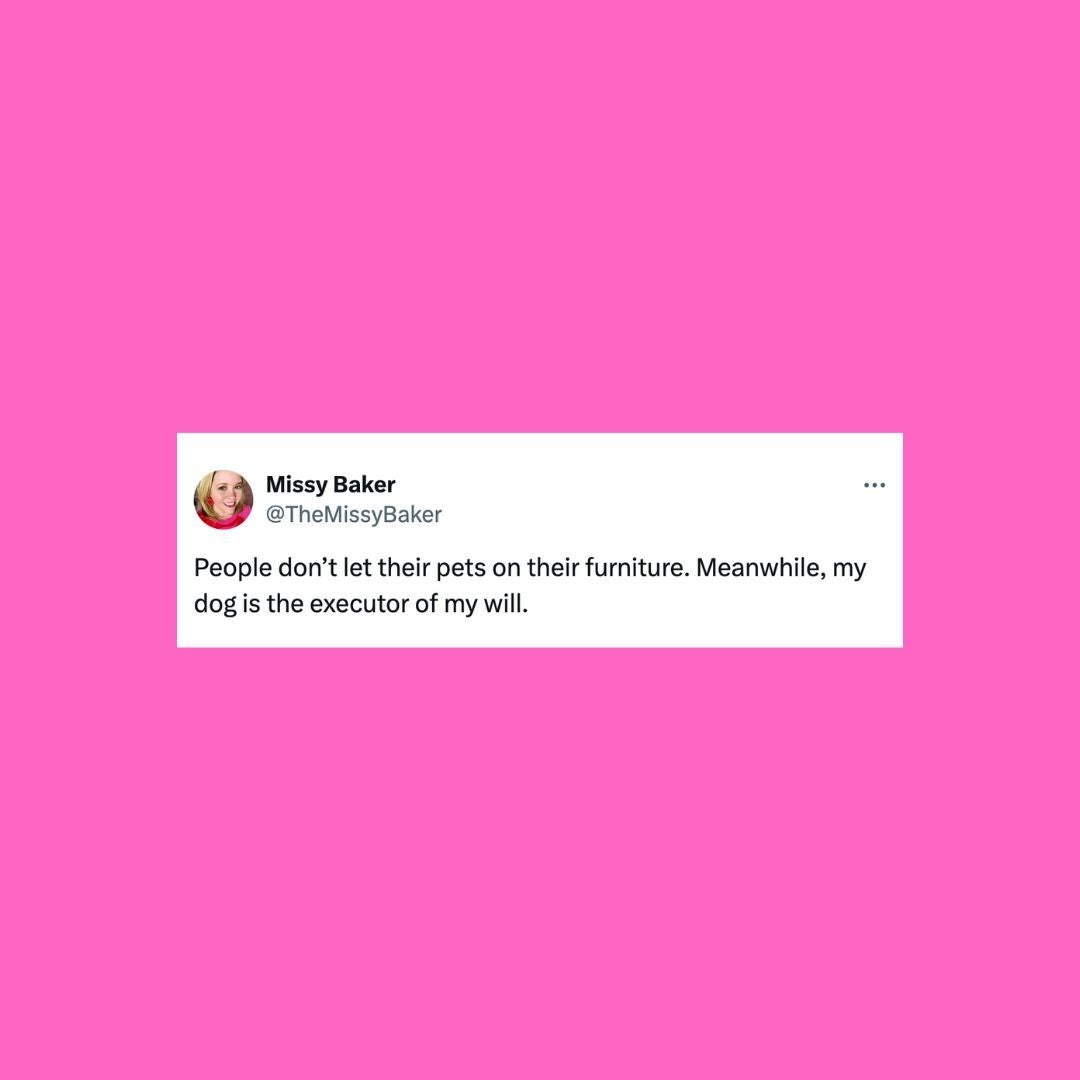
20 Of The Funniest Tweets About Cats And Dogs This Week (Aug. 12-18)

If you feel like you’ve been working like a dog, let us offer you the internet equivalent of a big pile of catnip: hilarious tweets about pets.

Each week at HuffPost, we scour Twitter X.com (is Elon Musk fur real?) to find the funniest posts about our furballs being complete goofballs. They’re sure to make you howl.

(And if you want more, no need to beg ― you can check out last week’s batch right here.)

Share Button

Sexual Performance Experts Share The Positions You Should Be Trying

When it comes to penises, size is a sensitive topic. No matter how many times you hear “it’s what you do with it that matters”, a lot of people still feel insecure about the size of theirs. According to Lloyds Pharmacy, around 45% of people with penises believe that theirs is small. However, the pharmacy, only 1.6 inches or less is considered to actually be medically small and therefore eligible for treatment.

If you are feeling insecure, though, and feel that your insecurities may be impacting your performance between the sheets, there are some sex positions that are perfectly suited to small penises.

Sex positions for deeper penetration

According to Private Gym, experts in sexual performance, these are the best positions for deeper penetration:

X Marks The Spot

For this position, your partner lies down in front of you with their pelvis positioned at the same height as yours with one or both legs on your shoulders. Then, as you penetrate your partner, slowly raise their butt and back, crossing their ankles on your chest as you continue moving. According to the experts at Private Gym, crossing at the ankles increases your partner’s tightness and having your pelvises at the same height maximises penetration and depth.

Pile Driver

We cannot read the name of this without laughing. We love a get-to-the-point sex position! In this position, your partner lays on their back with each leg swung over their head, towards the floor.Now you squat over them which we know sounds deeply unsexy (yes we’re still laughing, sorry) and penetrate. To maximise penetration and offer more opportunity to stimulate the balls or clit, you can vary this position by spreading the legs outwards into a spread eagle. So, despite the name and the ‘squatting’, this is a deeply intimate position that promises fireworks for both of you.

Doggy Style With A Tighter Twist

Of course, we’re all familiar with doggy style. A favoured position with many In fact, this all-fours delight is the most commonly searched sex position in the world! However, in this snug twist, the receiving partner keeps their legs closed together, forming a tighter fit for the penis and gives opportunity for more teasing of the body while being incredibly intimate.

The Nirvana

Snuggle right into bliss with this position. Have your partner lay in front of you and you above them, with your legs spread outside of theirs, making them tighter. This alternative missionary position is even better if you slide your hands below their butt for deeper penetration and snugness. Lovely.

Basically, it really is what you do with it that matters!

Share Button

How To Write A Dating App Bio That Won’t Give Anyone The Ick

Dating apps are a minefield, especially when it comes to writing bios. Where do you start? What do you even say? How do you save yourself from the absolute terror of having your profile shared on social media for people to laugh at? How do you make a good impression? How do you get everything about you across in so few words? How do you resist the urge to uninstall the apps entirely and hope to meet somebody the old fashioned way?

Thankfully, the dating nerds at Tinder have worked hard to find out the best possible way to craft a bio so that you’re saying all that you need to say but without being too much or, god forbid, cringe.

How to write a great dating app bio

So, you are unique and individual and your profile should definitely convey that but there are still some rules to follow, according to research conducted by popular dating app Tinder.

So, first of all, word count. Keeping things succinct is difficult but Tinder found that the optimum length is around 15-45 words. Within these words, though, the dating gurus found that 45% of single 18-24 year olds prefer when their potential match is clear about what they want in their dating app bio.

Additionally, 40% of people that used the Relationship Goals feature said that they are looking for a long term relationship compared to just 13% that said they were looking for a short-term connection. Basically, you need to be clear about what you’re looking for and if you’re not sure – say that!

Moreover, 50% of young singles say those who share their hobbies and interests in bios are more likely to catch their attention. The research also reveals that 51% of young singles are more likely to consider a dating profile when the person has given an insight into their personality. It’s almost like if you show that you’re willing to put real effort into a dating app bio, chances are, you’re willing to put more effort into… other things. You know.

Experts at Tinder also recommend that when you’re getting started, you should use 4-5 photos that really show your personality and if you’re a fashionista – show it off! 40% of young singles would be more likely to match with someone with good dress sense in their dating app pics. Having a verified account also makes a huge difference; nobody likes a catfish!

Which is the best prompt to use on dating apps?

Finally, we have the minefield of prompts. How do you choose which one to go for? How do you show your most authentic self through a prompt? Well, according to research by Hinge, the best prompt to go for is “the way to win me over is”.

It’s thought that this is vague enough to give an interesting answer without asking people to try too hard to answer. The other favourites included ‘my simple pleasures’, ‘I go crazy for’, ‘together, we could’ and ‘my most irrational fear’.

Happy swiping!

Share Button