It’s only natural to want to limit your exposure to these products, especially since the unfortunate reality is that most people have some level of microplastic in their system, according to Jamie Alan, associate professor in the department of pharmacology and toxicology at Michigan State University. Research is being conducted to understand the full effect of microplastics, but they’ve been found in the plaque in our arteries, in placentas, in our blood and more.
Advertisement
Studies have also looked at the effect that microplastics have on our cells and organoids, Alan told HuffPost. Research shows that when microplastics get into our cells it can lead to cell death, she said. Additionally, they can attack our DNA and cause unwanted DNA changes, Alan explained.
“You can get a [DNA] change that causes zero effects, but you can get a change that can cause effects,” Alan said. This sounds scary ― and it is scary ― but it doesn’t mean you should totally panic. Our body is trained to handle these kinds of changes, she noted. However, there can be adverse effects — most notably cancer and fertility issues.
All in all, this is obviously very concerning, especially given the sheer prevalence of microplastics. While you can’t totally avoid them — they’re in our air and in our water, too — you can make some choices that limit your interactions with microplastics. Here’s what experts say you can do:
Watch how much ocean-caught fish you’re eating
Microplastics often come from food, Alan said. “If you think about fish and things like that, there’s a lot of microplastics in our oceans, and the fish are eating these, and when we consume the fish, we’re consuming microplastics from them,” Alan said.
Advertisement
What’s more, microplastics are thought to be carriers of heavy metals and other elements. “And we worry about mercury and things like that in fish,” but elements such as chlorine have also been found in microplastics, Alan said.
As a result, reducing the amount of ocean-caught fish you eat can decrease the amount of microplastics you consume this way, along with other chemicals you likely don’t want in your system, she noted.
If this feels like a lose-lose situation, you aren’t wrong. We’re told to eat fish and follow a Mediterranean diet for the sake of our health, but the fish at the center of such a diet can be full of microplastics. Sigh.
So what can you do? Alan said you can be mindful of the food you’re eating and be aware of the items that are known to contain higher amounts of microplastics than others.
Advertisement
Though microplastics are prevalent in a lot of our foods, chicken breast, pork loin chop and tofu have less.
Alistair Berg via Getty Images
Microplastics are found in our waterways and in our air, making it impossible to totally escape them.
Consider your clothing materials
A major source of nanoplastics in our waterways and airways is our clothing, according to Kizzy Charles-Guzman, CEO of the Center for Environmental Health, who added that “about 70% of all our clothing is made from plastic materials.”
This includes nylon, polyester, acrylic and synthetic fibers — anything that is not a natural fiber like wool, cotton and linen, she said.
“When these textiles are manufactured, when you wash them in your laundry, when you wear them, when you dry them, they are releasing tiny plastic fibers into the water and into the air,” Charles-Guzman explained.
Advertisement
“So clothing, bedding, any other textiles that are not natural materials, they shed microplastics in fiber form,” she said. “And then they’re just carried off into the environment … either by air or water.”
These microplastics are too small to be filtered in wastewater treatment plants, so they end up in our waterways, she noted.
“The reason this is important is that that’s why you’re seeing [microplastics] in almost everything that we eat and drink,” such as fish and tap water, said Charles-Guzman.
“To limit our exposure … it’s consumer choice. So, selecting natural materials whenever we can — cotton, linen, wool — those are really the best products for reducing plastic microfiber pollution,” she said.
It’s worth noting that polyester blends ― when compared to fabrics like wool ― are often more affordable, making this an impossible choice for many people. (Although thrifting can be a good option, Charles-Guzman noted.)
Advertisement
Rethink your plastic food storage containers
“Food containers and takeout food is a big one,” Alan said. “It goes in these plastic containers a lot of the time, and those plastic containers can leach out nanoplastics into our food.”
Then, when you eat your meal, you’re putting those microplastics in your system, she said. Microwaving these plastic containers is particularly harmful because they release even more microplastics when heated up.
“If you can get a paper food container or something non-plastic, that’s great,” Alan said. “And that’s another way you can reduce your intake of these plastics.”
You can also opt for glass containers, which are readily available online and at most home retail stores.
Choose reusable water bottles when possible
It’s well-known that plastic water bottles are bad for the environment. Even more, they are a source of the microplastics, Alan said. To avoid the microplastics, simply switch to metal or glass reusable water bottles.
Advertisement
When it comes to the microplastics in our tap water, new research suggests that boiling your tap water can reduce the amount of microplastics you’re consuming, too.
Pay attention to microbeads in personal care items
Plastic microbeads, which are associated with personal care products including body scrubs and toothpaste, are another item you should try to avoid, according to Charles-Guzman. These tiny plastic beads used as scrubs or exfoliants are too small to be filtered out in wastewater treatment plans, “so they end up in our lakes and rivers and oceans and all of that,” Charles-Guzman said. From there, the microplastics get distributed in our seafood, drinking water and more.
While the Microbead-Free Waters Act of 2015 prohibits the use of plastic microbeads in rinse-off cosmetics, such as soaps, microbeads are not banned in all self-care products, she said.
“It’s important to note that [the act]does not include microbeads found in deodorants, lotions or other non-cleansing cosmetic products,” said Charles-Guzman. “We hope the scope of the statute expands to ban microbeads in more consumer products.”
Look at product labels to determine if what you’re purchasing contains microbeads and opt for products that don’t, she said.
Advertisement
Show your support for those who are working to combat microplastics
The truth is that this work should not all fall onto the consumer’s shoulders — and, in reality, there is only so much you can do to control microplastics.
“The main thing that needs to happen, and this is the boring answer … it’s a systemic change,” said Charles-Guzman. “What we need to do is governments and companies need to work together to stop the pollution and reformulate away from harmful chemicals.”
Though the actions above can limit your own microplastic use and send messages to corporations about the types of products folks want to buy, more change is necessary.
“We all can play a role, but also … there is a systemic change here that needs to be made, and we are the ones that need to be asking for that change to be made,” she added.
How? You can vote for representatives who want to protect public health, and you can use your dollars to show support for companies that give safer alternatives to shoppers, she said.
Advertisement
This can mean purchasing from brands that sell 100% cotton shirts as opposed to stores that sell polyester alternatives. Or it can mean bringing your reusable mug to your local cafe for your coffee order instead of using one of their plastic cups.
Additionally, know that there are corporations doing the work to create federal and local change when it comes to microplastic use, said Charles-Guzman. You can consider getting involved with organizations like the Center for Environmental Health (Charles-Guzman’s organization), the Plastic Soup Foundation or the Environmental Working Groupto push the cause along. These organizations also have resources that can help you determine if the products you’re using are safe.
Six months into a war Hamas started ― with more than 33,000 Palestinians dead, more succumbing to famine daily and Israel determined to continue its aggressive campaign against the organisation with robust American military support ― the militant group says it is confident it will wield significant influence in the future, come what may in Gaza.
Hamas believes its shock October 7 attack on Israel achieved its goal of reigniting global concern for decades-long Palestinian subjugation, and it views the Israelis and Americans as intent on deepening the fighting rather than taking genuine steps toward an Israeli-Palestinian settlement. Additionally, it does not see itself as responsible for civilian deaths during that assault, in which Hamas-led fighters killed about 1,200 Israelis, more than half of them civilians, and took up to 240 hostages in violation of international law.
Advertisement
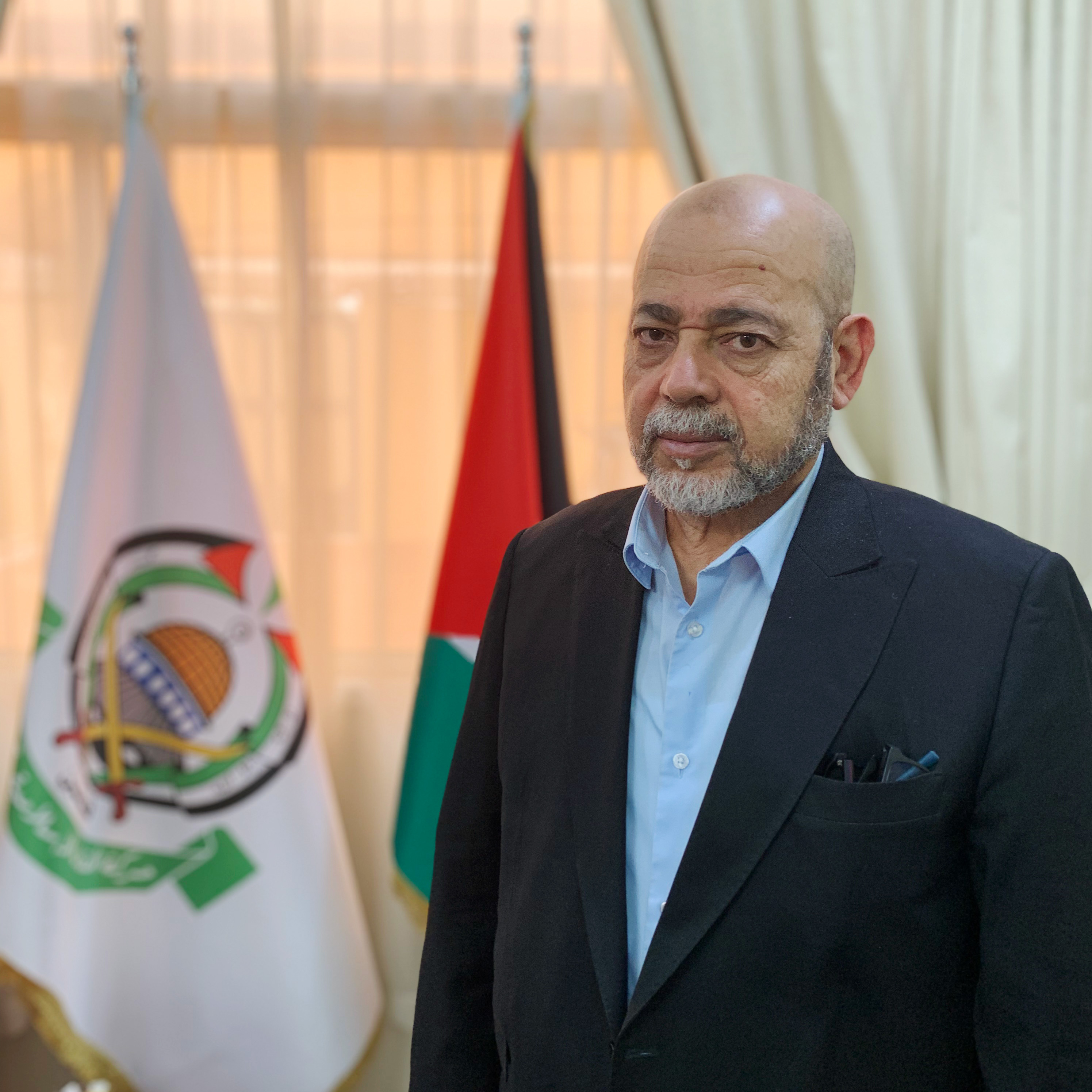
That’s how Mousa Abu Marzouk and Basem Naim, two senior Hamas leaders, presented their group’s current thinking in two lengthy, separate recent interviews with HuffPost, providing extremely rare hours-long, in-person access to a Western media outlet after complex negotiations and amid an extraordinarily delicate time in the war.
The group acknowledged it still holds dozens of captives ― including about 40 people Hamas counts in a humanitarian category as noncombatants, among them some civilians, and likely five Americans (the number of U.S. citizens a State Department spokesperson said remain unaccounted for since October 7). But the Hamas leaders expressed little faith in negotiations for a pause in combat involving the release of those hostages in exchange for Palestinians held by Israel, the stated goal of President Joe Biden, who in recent days has pushed Israel and intermediaries with Hamas to successfully reach an agreement.
Both Hamas leaders said their group remains committed to a 2017 political document that represented a tempering of its hard-line historic views ― a manifesto that claims Hamas has no quarrel with the Jewish people or Judaism broadly, instead opposing only aggressive actions fueled by Zionism. That suggests Hamas would accept a Palestinian state limited to territories Israel did not control before 1967, aligning it with the idea of a two-state solution.
Like the assertions of any player, particularly actual combatants, in this most sensitive of conflicts, their portrayal of the situation deserves to be taken with a large grain of salt.
Advertisement
Abu Marzouk’s own comments cast doubt on whether Hamas would tolerate a Palestinian state coexisting with Israel, particularly after Israeli-Palestinian bloodshed more extensive than any since the establishment of Israel in historic Palestine in 1948.
“The Israelis are creating generation after generation full of hatred, full of rage, full of a feeling of taking revenge, by killing Palestinians on a daily basis… I think that the Palestinians would not accept Israel in any case, but the Palestinians have no other option: The only option for the Palestinians is to live in this land to resist the occupation,” Abu Marzouk told HuffPost via a translator. Claiming most Israelis have dual citizenship ― an assertion that is not borne out by publicly available evidence and was rejected by an Israeli official who said the government does not have statistics on the matter ― he added: “They have a lot of options. And they can leave the land of Palestine at any time when they feel that it’s not beneficial anymore.”
Meanwhile, international opprobrium over and research on Hamas’ October 7 violence is still growing.
HuffPost this week obtained new information about one major forthcoming report. Belkis Wille, an associate director at Human Rights Watch who has spent months working on an in-depth investigation of the attack, told HuffPost her organisation has verified photo and video evidence of fighters with the al-Qassam Brigades, the military wing of Hamas, “targeting and killing civilians,” citing the attackers’ uniforms and bandannas. Some attackers who were in civilian clothing were also clearly coordinating with al-Qassam fighters, she added.
Still, Western and Arab governments, along with most outside experts, believe Hamas will remain relevant to the future of Israel-Palestine regardless of how the current war concludes. Abu Marzouk and Naim clearly agree.
Advertisement
In speaking with HuffPost about ideas being considered by the U.S., Israel and other players about what comes next for the region, the Hamas leaders expressed deep opposition to proposals that are currently under discussion and a determination to scuttle particular plans.
Abu Marzouk responded to reporteddiscussions about a new military force in Gaza comprising troops from various countries, including Arab states, by saying: “As a movement, we will fight against any force, whether it was from any nationality, in the Gaza Strip.”
Few people would have presumed Hamas to align with American and Israeli goals. However, Abu Marzouk’s reference to nationalities is striking, given the assumption in some circles that Hamas and other militants in Gaza would be loath to fight forces from countries like Egypt due to Palestinians’ links with other Arab nations. His remarks suggest that although Hamas is not outright challenging Arab governments, it does not see a red line in attacking their soldiers.
No Arab country “would participate with the Israeli occupation” or with American policy in Gaza, even if those states are unable to openly confront U.S. or Israeli policies, Abu Marzouk said. “No one has the right to subjugate the Palestinians for slavery or for oppression.”
He and Naim also challenged hopes around the March 14 appointment of economist Mohammed Mustafa as the new prime minister of the U.S.-backed Palestinian Authority, or PA, which controls parts of the occupied West Bank and from which Hamas wrested control of Gaza in 2007. Significantly, they framed their rejection not as a product of factionalism among Palestinians ― Hamas has long despised PA President Mahmoud Abbas, who tapped Mustafa ― but as a reaction to U.S.-driven interference in intra-Palestinian discussions.
Advertisement
“To continue imposing policies and governments and figures on Palestinians, this will never lead to sustainable security or stability or prosperity in the region, not only in Palestine,” argued Naim, who was previously a minister in Hamas’ administration in Gaza. “Hamas is an inherent part of the political fabric of the Palestinians and is a strong power, and no one can easily decide to overcome it or to avoid it. Any agreement with any other party will not lead to stability or a solution.”
This story draws on HuffPost’s interviews and conversations about Hamas over months with dozens of officials and analysts.
Securing access to Abu Marzouk, deputy head of Hamas in the Palestinian diaspora and a prominent politburo member, and Naim, chief of Hamas’ political and foreign relations department and a member of its Gaza bureau, was not easy.
It involved tapping a range of trusted sources to make contact, investing in costly travel and tactfully operating in a sensitive location, given Qatar’s interest in being the chief mediator between Hamas and the outside world and pressure from some in the U.S. over its links to the Palestinian group.
When HuffPost visited Abu Marzouk at a large, beige compound in a suburb of the Qatari capital of Doha ― a world away from the Persian Gulf state’s ritzy sea-front hotels ― a Qatari police officer stationed outside repeatedly challenged the idea that a meeting was scheduled. Inside, another Qatari security official subjected HuffPost to an extensive search, a step Abu Marzouk’s Hamas aides apologized for, seemed embarrassed about and made sure to say was due to Qatar’s requirements. (Notably, Israel has tried to assassinate senior Hamas figures, such as Khaled Meshal, a close associate of Abu Marzouk.)
Advertisement
We also did not take the prospect of hearing and sharing Hamas’ views lightly.
Still, HuffPost assessed that interviewing Abu Marzouk and Naim provided an uncommon opportunity to inform our audience and to question Hamas about global concerns and its actions on matters including harming civilians and the handling of humanitarian relief desperately needed in Gaza.
Senior Hamas figure Mousa Abu Marzouk, seen here in Doha, Qatar, on March 30, is the group’s deputy leader outside its base in Gaza.
Akbar Shahid Ahmed/HuffPost
HuffPost this week shared key Hamas statements included in this article with spokespeople at the US State Department, the National Security Council at the White House and Israel’s embassy in Washington.
Only a State Department spokesperson responded, reaffirming the US stance against dealing with Hamas, which it lists as a terrorist group, beyond limited indirect communications through third parties, such as Egypt and Qatar, as it makes plans for a territory where Hamas is deeply ingrained.
“We do not engage in public debates with terrorist organisations like Hamas,” the spokesperson wrote in an email. “The US remains committed to advancing the realization of an independent Palestinian state, standing side by side with Israel in peace and security.”
Advertisement
October 7 Bloodshed And The Hostage Crisis
In Israel, where thousands of anxious people await reunions with the hostages still in Gaza, and in Washington, where Biden administration officials daily promise to help those hostages and the US-Israel alliance is sacrosanct, October 7 is a constant touchstone, so devastating and unprecedented a wound that it feels almost as fresh six months later.
In discussing the assault with Hamas leaders, it is clear it’s not a matter they want to linger on, both because they do not want to dissect responsibility for atrocities committed that day, which are undeniable even for them, and because they see Gaza’s current conditions and their long-term goals as more important.
“History didn’t start on October 7. Before October 7, we were besieged,” Naim said. He said he was out of “the open-air prison” of Gaza “accidentally” because he had traveled to Turkey for meetings prior to the attack; his wife and children remain in Gaza, which Israel and then Egypt blockaded after Hamas took over in 2007, tightly limiting entry and exit.
Naim listed additional developments in the Israeli-Palestinian conflict that Hamas has cited as inspiring the assault: attacks by Israeli extremists on the Haram al-Sharif, or Temple Mount, sacred to Jews and Muslims alike; Israeli steps toward annexing the occupied West Bank; and the “Judaization” of Jerusalem.
“Therefore, we consider this an act of defense. We were squeezed; we were suppressed,” he continued.
Pressed on the brutality of the Hamas incursion, Naim said Hamas told its fighters to avoid noncombatants. He attempted to shift blame for civilian deaths away from the attackers and onto the attacked, saying the Palestinian group was surprised Israel’s defensive lines collapsed so quickly, enabling many people not associated with Hamas to cross from Gaza into Israel.
Advertisement
“There was chaos…. We cannot be responsible for the chaos that has taken place after one, two hours,” he said, pointing to reports that Israeli troops responding to the violence killed some civilians, which the Israel Defense Forces have confirmed and continue to investigate.
“There was no intention to harm or to attack any of the civilians,” Naim claimed. “This operation was designed and conducted and launched only to attack military bases and maybe to take some soldiers hostage to exchange with thousands of Palestinians, some of whom have now spent 44 years in jail, like Nael Al-Barghouti,” whom Israel arrested in 1978, released in 2011 and re-arrested in 2014.
Of the more than 760 casualties on October 7 who were civilians, at least 36 were children, according to Israeli government reports. Hamas’ claim that its fighters did not target civilians is contradicted by Human Rights Watch, Amnesty International and numerous newsreports. Amanda Klasing, the national director for government relations at Amnesty USA, told HuffPost her group has verified footage of “Palestinian fighters shooting at civilians on 7 October.”
“Hamas and other armed groups also took civilians as hostages and have repeatedly fired indiscriminate rockets into Israel, killing and injuring civilians. These attacks are war crimes,” Klasing added.
Did Hamas anticipate the sweeping response to its foray from Biden and Israeli Prime Minister Benjamin Netanyahu?
Advertisement
Abu Marzouk told HuffPost: “We thought that America [would] allow for a partial aggression against Gaza, especially given that most of the victims are civilians.”
“We didn’t expect this brutality of America,” he said, citing an article in The Washington Post published the day before that revealed Biden greenlighted additional bombs and fighter jets for Israel. In the 1990s, the U.S. detained Abu Marzouk for more than a year over terrorism allegations; it deported him and continues to list him as a “specially designated national” under U.S. sanctions.
In Hamas’ view, they have sought negotiations and an end to fighting since soon after the attack. On October 17, an unnamed senior Hamas official told NBC News that the group was willing to release all civilians ― Israelis and foreigners ― if Israel stopped bombing Gaza.
Through intermediaries, Israel and Hamas did a month later agree on a weeklong pause in combat that allowed more than 100 hostages to be released and increased humanitarian aid for Palestinians in Gaza. But that bargain fell apart on Dec. 1, and efforts to secure a similar deal in months since, which intensified in February and March and which Biden has described as a priority, have not borne fruit.
The Hamas leaders described having little optimism over negotiations, which are continuing and have evolved since HuffPost’s interviews and international outrage over Israel’s Monday killing of aid workers associated with the World Central Kitchen nonprofit.
Advertisement
“We cannot say that we have reached common ground… to talk about details,” Naim said on March 29, referring to matters like the timeline and the process of releases or steps toward a possible Israeli withdrawal from Gaza.
In recent days, Israeli officials told reporters that they were becoming flexible on one question: letting displaced Gazans return to the northern part of the territory. On Monday, however, an Israeli source downplayed hopes of a deal in speaking with the Haaretz newspaper. On Thursday, Hamas rejected a framework approved by Israel and the intermediaries, blaming Netanyahu; separately, Biden urged Netanyahu “to empower his negotiators to conclude a deal without delay to bring the hostages home.”
Both Hamas figures argued Netanyahu is personally unwilling to halt the war because it would mean his political collapse ― echoing an assessment that is now widely shared in global capitals. They described frustration with Biden’s continued support for his Israeli counterpart despite that position and deep distrust in the role of the U.S., which has historically attempted to be an intermediary in Israeli-Palestinian negotiations.
“The problem with the Americans is they want to support Israel regardless of the Israeli policies, and this is against the American policies through history,” Abu Marzouk said, describing Americans as “vital collaborators” for Netanyahu rather than “mediators.”
Citing U.S. talk of pausing the Israeli offensive to enable hostage releases and what he cast as Washington’s assessment that Israel had “failed” to achieve its aims, Naim argued: “America is in line strategically with Israel about the war and the goals. No differences. What we observe sometimes is a tactical difference; it is not a strategic difference.”
Advertisement
“During the negotiations, yes, we have seen sometimes that they are pressuring [Israel] to reach something. At the beginning [of the war], we have seen what we called identical positions. … There is a clear shift, but again it is a tactical shift, and I think this is because of the internal pressures [on Biden] in the year of the election; this is because of the fear that the war might be broadened in the region and the Americans want to go out of the region, not to go back to the region; and thirdly, that they see that this is not serving the security and stability of Israel itself in the long run,” he added. “All this together led them to exercise some pressure, but … they have all the cards to end this aggression.”
While CIA Director William Burns is involved in the Israel-Hamas bargaining, and is traveling to Cairo this weekend looking to advance those discussions, the primary players are various Hamas leaders ― notably commanders still in Gaza, led by October 7 planner Yahya Sinwar ― and Israel’s Mossad intelligence agency. On Saturday, Hamas said it would send a new delegation to the discussions but would not abandon its demands for a full cease-fire and Israeli troop withdrawal from Gaza.
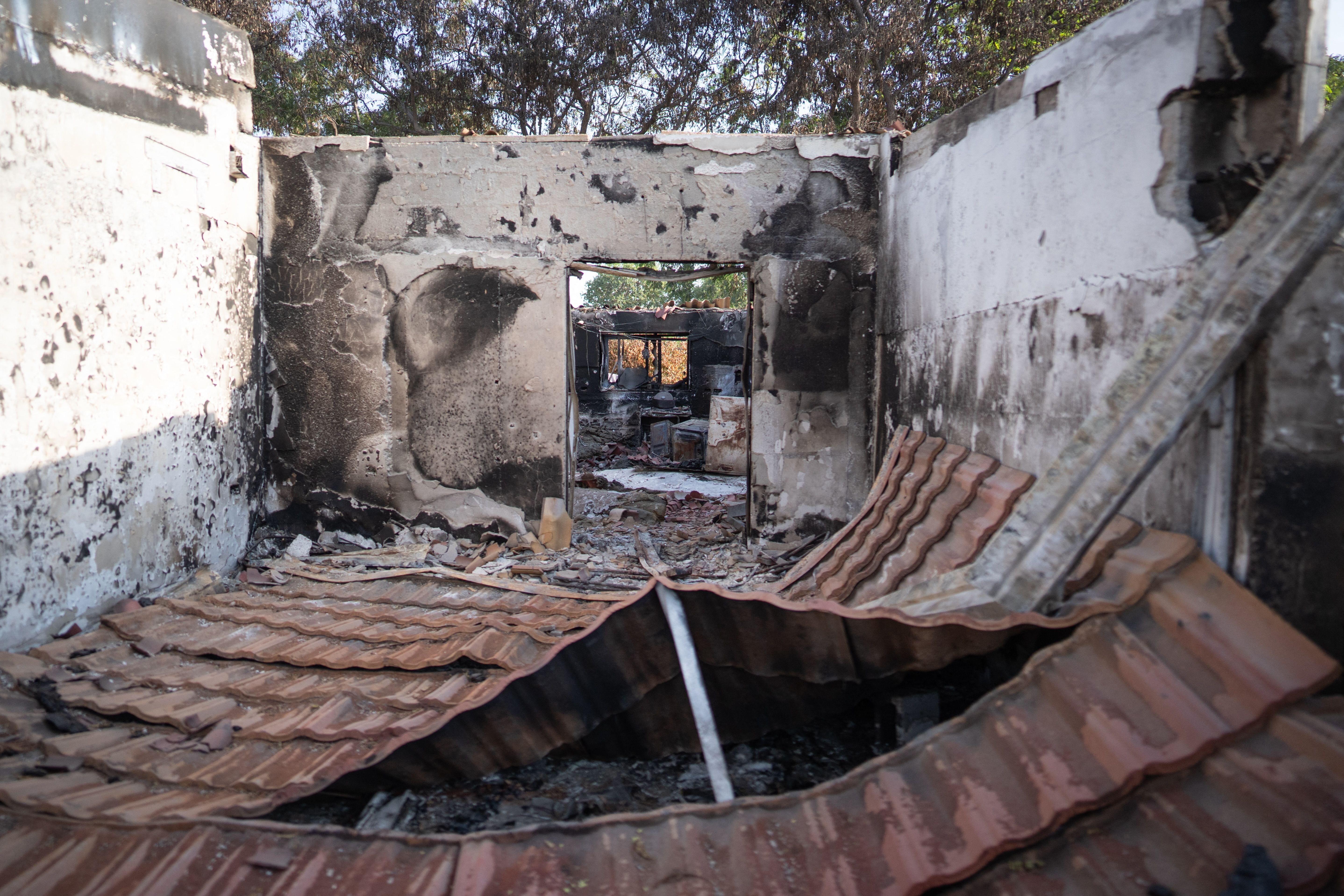
Burned-out houses in Kibbutz Kfar Aza, Israel, where Hamas-led militants massacred and kidnapped residents on Oct. 7, 2023.
DIMA VAZINOVICH/Middle East Images/AFP via Getty Images
Mossad officials had in previous rounds of talks indicated they were keen to reach a deal and viewed Netanyahu as the barrier to a possible agreement, a separate source familiar with the talks told HuffPost.
Naim said Hamas “partially” shares that assessment but added some potential insight into Hamas’ calculus in dealing with Israel’s deeply divided political scene and what may be driving Hamas to accept or reject possible deals.
Advertisement
“I don’t think that is the only cause,” he told HuffPost. He cited polls showing most Israelis support the campaign in Gaza. He also noted fractures within Israel’s society over a judicial power grab by Netanyahu and the question of whether ultra-Orthodox men should perform military service, which drew the Israeli military into polarizing debates.
“After all these discussions, the army started to lose some of its holiness,” Naim said. Then, “when October 7 came, all the security apparatus failed. They are not so eager to end the aggression because they themselves feel that, ‘We have failed and this is our duty.’”
An Israeli official disputed the Hamas version of the negotiations to HuffPost, saying: “Despite what’s being publicly written, Hamas is the one that brings conditions that cannot be met.”
HuffPost asked Naim, in relation to negotiations about halting the fighting, how Hamas sees the possibility of an Israeli attack on the Palestinian town of Rafah, where Netanyahu says he intends to invade, close to 1.5 million Palestinians have taken shelter and the Biden administration says it cannot support an Israeli advance without a meaningful plan to shield civilians.
“We believe that now it is part of the pressure on the negotiators, but at the same time we are preparing ourselves for the worst,” Naim responded.
Advertisement
Then he alluded to a theme that both Hamas figures frequently, and hopefully, referenced: forceful Israeli actions sparking worldwide furor.
Noting Rafah’s location on Gaza’s border with Egypt, which has a 45-year-old peace treaty with Israel but also a population wary of the Jewish state, Naim said Netanyahu’s “mistakes here could flare a bigger war.”
He added: “We have now international awareness about the whole conflict, especially Rafah. It’s totally different from the beginning.”
On Friday, White House spokesperson John Kirby told reporters that the Biden administration plans to continue conversations with Israel about a possible Rafah mission in the coming weeks.
Who Speaks For The Palestinians?
Netanyahu has regularly pledged to “destroy” Hamas, an outcome Biden has repeatedly endorsed.
U.S. intelligence and most independent analysts do not see that as achievable on the battlefield. Last week, the Israeli newspaper Haaretz quoted Israeli military officials as saying their government has overestimated how many Hamas fighters it has eliminated so far, since it is in some zones logging any Palestinian killed, including civilians, as Hamas combatants.
Advertisement
But some outside opponents of the armed Palestinian group describe another way to undercut Hamas: boosting misery and frustration among Gaza’s residents so they fully reject their former rulers, blaming them for a collapse in living standards in the strip that U.S. aid officials describe as “unprecedented in modern history.”
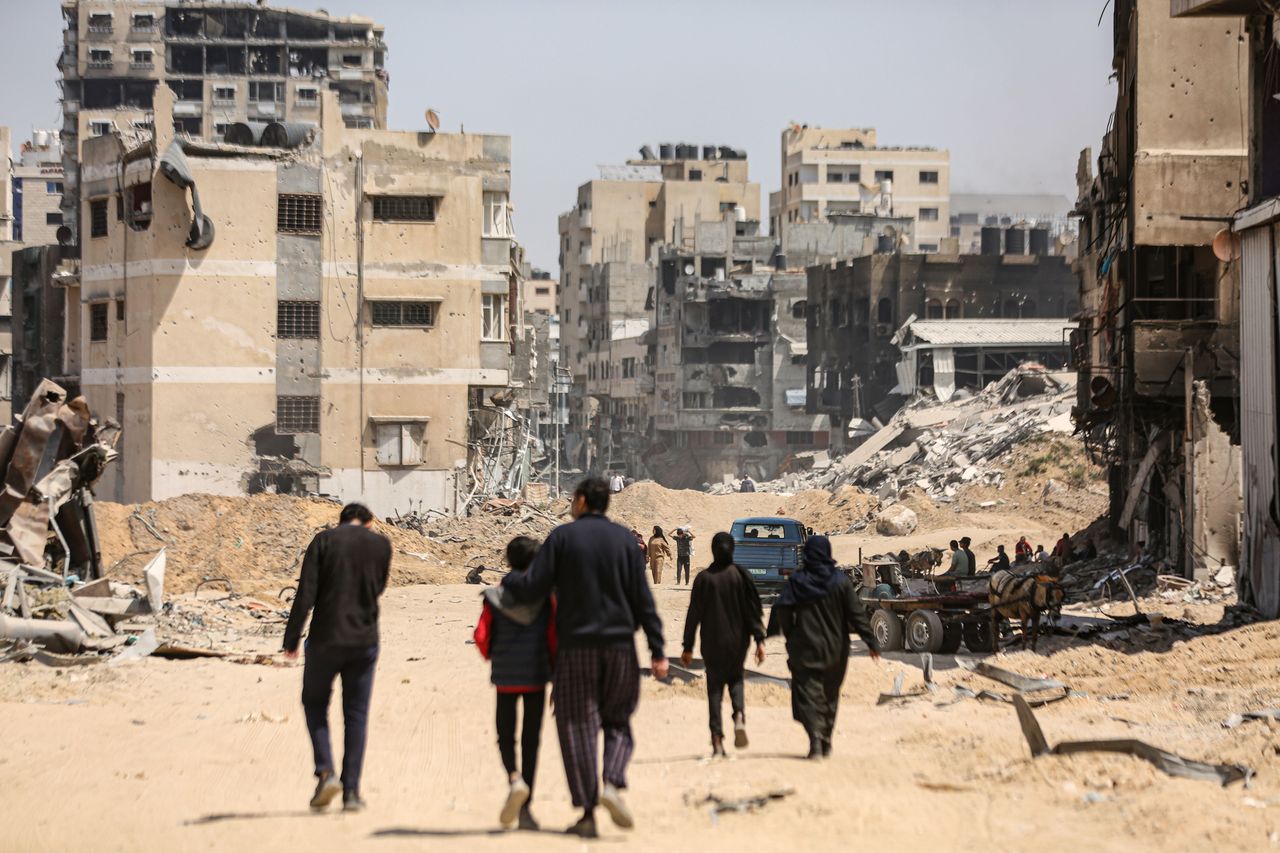
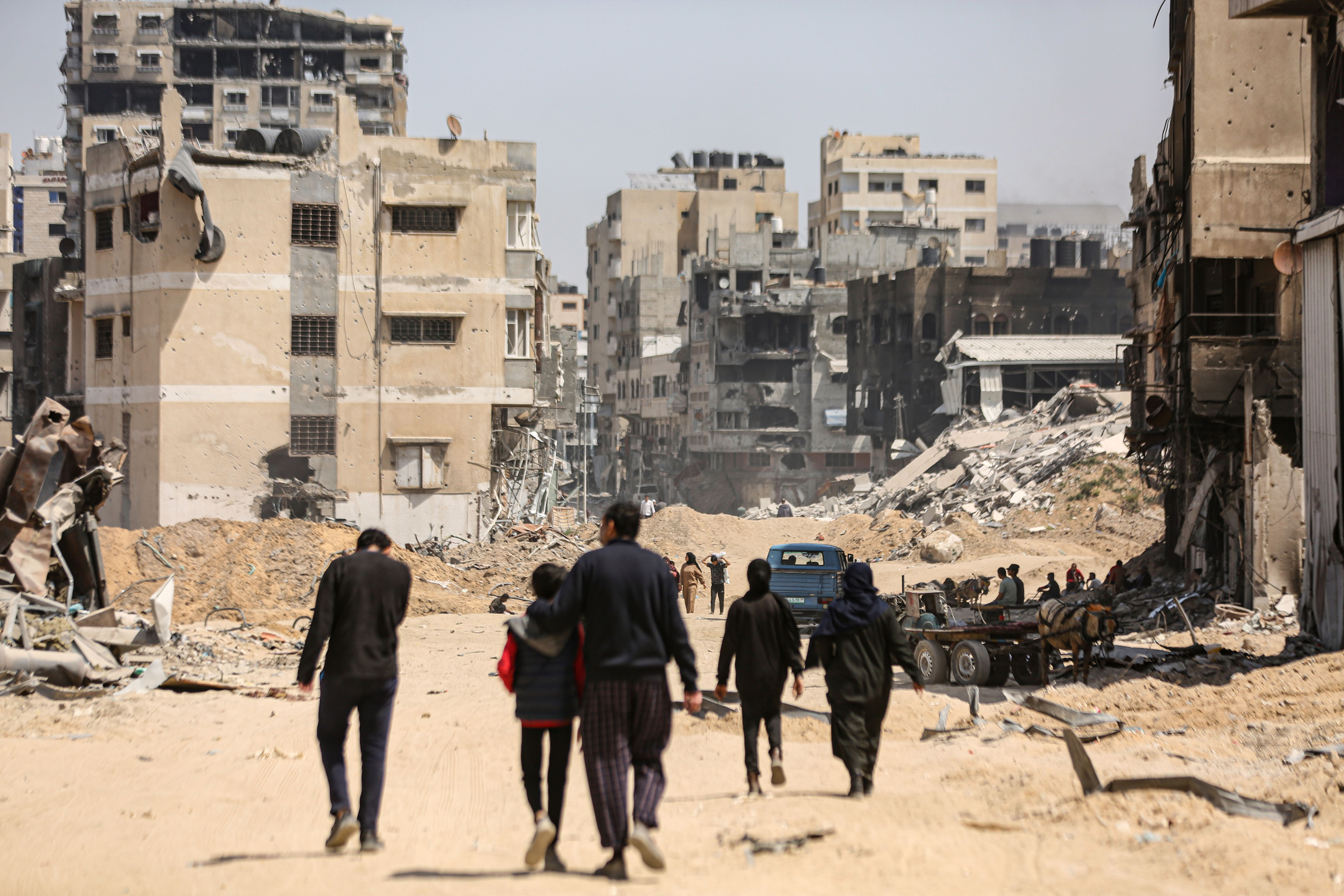
Palestinians walk among extensive destruction Tuesday after the Israeli army withdrew from the Al-Shifa Hospital and the surrounding areas west of Gaza City.
Dawoud Abo Alkas/Anadolu via Getty Images
HuffPost asked the two Hamas leaders about two recent polls of Palestinians that suggested their group is losing some sway.
Amid conversations in Washington and beyond about post-war planning, the question of who can actually speak for the community and build stability amid the envisioned reconstruction of Gaza and renewal of diplomatic negotiations is crucial. It’s even more consequential as various Palestinian groups ― from Abbas’ Fatah party, which runs the PA, to Hamas ― hold first-of-their-kind consultations among themselves.
On March 20, the respected Palestinian pollster Khalil Shikaki published his latest survey of Palestinians in both Gaza and the occupied West Bank, conducted March 5 to 10. He reported “a significant change” compared with his previous poll, in December, in terms of an 11% drop in support for Hamas. Separately, polling over a similar period by a West Bank-based think tank called the Institute for Social and Economic Progress said more than 78% of Gazans want to be governed by the PA or a Palestinian unity government, with only 3% preferring Hamas rule, and it noted Hamas leaders were “very unpopular” in the Gaza Strip.
Advertisement
Abu Marzouk and Naim were immediately familiar with the Shikaki statistics.
Abu Marzouk, who has been central to Hamas since its founding in the 1980s, argued his faction’s support has only increased over time and would understandably fall given Israel’s pummeling of Palestinians. “We know the amount of suffering which has hit the people in Gaza, but this is the occupation’s policy through history,” Abu Marzouk said.
Both he and Naim cast the question of how many Palestinians support Hamas as less significant than what they claimed the organisation represents: the fiercest force for Palestinian rights.
Saying “we are following this closely,” Naim told HuffPost: “I usually refuse to portray this conflict as if it is between Hamas and Israel. It is between Palestinians and Israel…. Today it is with Hamas, 20 years ago it was with Fatah, 30 years ago it was with the old [Popular Front for the Liberation of Palestine or PFLP].”
“There is a small decrease in the popularity of Hamas, but when you look to questions like, for example, supporting resistance in general…. When it comes to how much Palestinians are still supporting the operation of October 7, you will find a huge majority,” Naim said. “When you ask about a political affiliation, there are a lot of people who are supporting Hamas as a resistance movement, but they are not affiliated ideologically to Hamas; they are secular.”
Shikaki’s report said 71% of Palestinians currently support Hamas’ October 7 attack (a similar proportion as in his December poll) and 55% saw armed resistance as the way to break “the stalemate” with Israel, though he noted a drop in overall support for “armed struggle.”
Advertisement
In the Hamas leaders’ telling, their group is aiming not to rule but to work with other Palestinians for a new setup uniting the community.
Both Abu Marzouk and Naim pointed to a summit last month in Moscow that drew 14 Palestinian factions together to discuss establishing a nonpartisan, widely acceptable government ― an outcome Abu Marzouk claimed the U.S. and Abbas sought to stymie by trying “to end any Palestinian internal understanding” through the new PA appointment shortly after the summit.
“America does not want unity among the Palestinians…. Many times the U.S. has claimed that they don’t want the participation of terrorists in any body of the [Palestine Liberation Organisation, the internationally recognized official representative of the Palestinian people], and they are meaning the active factions in the Palestinian arena: Hamas, Palestinian Islamic Jihad and the PFLP,” Abu Marzouk said.
In extensive remarks, Naim promoted Hamas’ evident desire to no longer be perceived globally as overly extreme or too intolerant of other Palestinian forces.
“No one has to be afraid that if the Palestinians sit together, they will go far and extreme to choose, for example, a radical leadership or a radical political track ― I’m sure you will find a very balanced leadership,” he argued. Naim claimed his group is prioritizing Palestinian elections and a way “to launch, with the aid of the international community, a political track which can end with an independent Palestinian state on 1967 borders.”
Advertisement
He asserted these professed goals show Hamas is thinking “rationally,” despite its horror over Israeli actions in Gaza. “It reflects that generally the Palestinian leadership, starting with Hamas and ending with Fatah and in between, they know what’s feasible and what’s not feasible,” he said.
To give credence to its talk of a truly inclusive new Palestinian regime, Hamas will likely need to go beyond rhetoric to address suspicions about its willingness to share power and rule transparently. The group cracked down onprotesters,political opponents and alleged Israeli collaborators when it ruled Gaza, human rights groups say, and outside analysts haveurged it to be more open about its processes of selecting leaders and policies (though, unlike Abbas and the PA, it has had regular leadership changes). It also boycotted PA-organized municipal elections for Palestinians, saying it would only accept elections at all levels, including for Abbas’ post.
The Hamas figures maintained the refusal to achieve Israeli-Palestinian peace comes not from them but from Biden and Netanyahu.
“America is now claiming that they are supporting the two-state solution, but …they are doing their best to undermine the Palestinian side, especially in this open conflict with Hamas, by supporting the weak Palestinian side of the PA in front of the most powerful side, which is Israel supported by the U.S.,” Abu Marzouk said.
Rather than debate the sincerity of his group, he continued, “at least they should put Hamas under the test by allowing the Palestinians to create a state. The ones who are refusing a Palestinian state are the Israelis.”
Advertisement
There’s significant evidence for that final claim.
Netanyahu’s far-right government has long decried the prospect of Palestinian statehood, and earlier this year, more than 80% of Israel’s parliament voted to reject international recognition of a Palestinian state without a deal with Israel, a possibility the U.S. and European states are considering. On Thursday, the same day he held a tense call with Biden, Netanyahu told Republican members of the U.S. Congress that he perceives “an attempt to force, ram down our throats, a Palestinian state, which will be another terror haven.”
The Players On The Board
The Hamas figures’ reading of the politics of their adversaries seemed to temper their expectations of an Israeli-Palestinian settlement soon while making them wary of what might happen if that process is delayed much longer.
Pointing to the rightward shift in Israeli politics, Naim called the trend “so huge and so deep and radical that it is clearly converting this conflict from a political conflict about land and independence and United Nations resolutions into a religious conflict.”
“If we reach this point, this conflict will not be solvable,” he added, contrasting current players with “wiser leaders” of Israel’s past, whom he described as more pragmatic and concerned with at least, as he put it, “pretending” to comply with international norms.
Netanyahu’s coalition government is objectively the most conservative in Israel’s 76-year existence. Experts believe even administrations led by likely alternatives, such as retired Gen. Benny Gantz or Israeli opposition leader Yair Lapid ― both well-liked in Washington, where Gantz visited last month before calling for a fresh Israeli election and where Lapid will go next week ― are likely to be hawkish on Palestinian affairs.
Advertisement
When Lapid was in power in 2021, Naim noted, his administration approved what the European Union deemed an “exponentially high” number of Israeli settlements in occupied Palestinian territory.
Naim expressed interest in nuances of U.S. politics, asking HuffPost whether newly widespread pro-Palestinian sentiment seemed likely to last or to fade away. He viewed Biden’s reelection bid as partially shaping U.S. policy. “Maybe they are still trying in the year of the election to balance the internal pressure because of Muslims, Arabs and leftists, and on the other side, the Jewish lobbies,” Naim said.
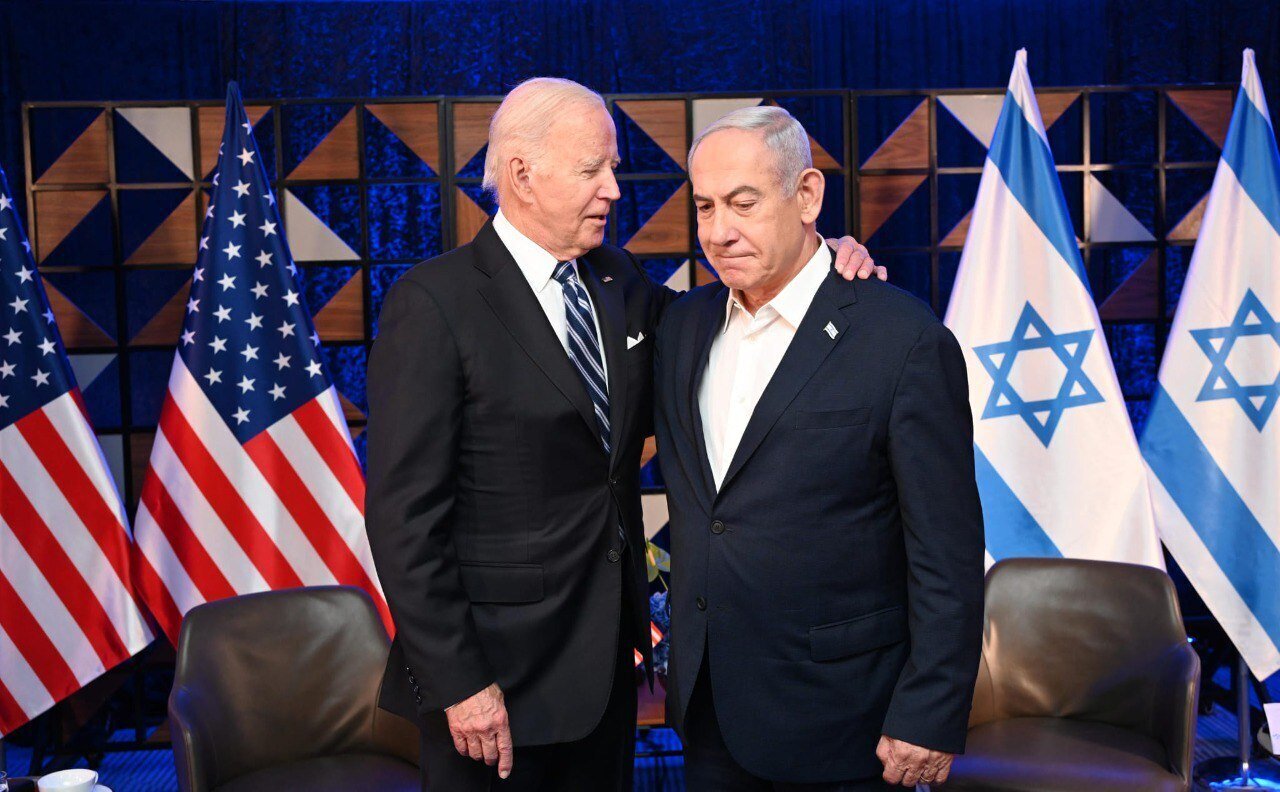
U.S. President Joe Biden, left, and Israeli Prime Minister Benjamin Netanyahu meet in Tel Aviv, Israel, on Oct. 18, 2023.
ISRAELI GOVERNMENT PRESS OFFICE (GPO) / HANDOUT via Getty Images
HuffPost additionally asked the Hamas figures about the role in the war and Israel-Palestine affairs played by the two behemoths in their neighborhood: Iran and Saudi Arabia.
Iran, a US antagonist, has been a Hamas ally for decades, seeking to build popularity in the Muslim-majority world through its links to the Palestinian cause. Saudi Arabia, a U.S. partner, was before October 7 rapidly moving toward establishing diplomatic relations with Israel after decades of shunning the state. But Palestinians said the process — still the chief Middle East focus of the Biden administration — ignored their concerns and risked marginalizing them for good by convincing Israel it could secure Arab allies without resolving its conflict with Palestinians.
Advertisement
Abu Marzouk was careful in discussing both players.
Though disrupting so-called Israel-Saudi “normalisation” is widely seen as one purpose for the war, and though Hamas has had strained ties with the Saudis, Abu Marzouk did not criticise the kingdom, which is trying to combat claims it was willing to sacrifice Palestinian interests. He noted that Saudi Arabia has re-emphasised its 2002 position that all Arab nations would make peace with Israel if it withdrew from Palestinian territories it captured in 1967, recognized a Palestinian state within them and offered a plan for Palestinian refugees displaced by its founding.
Then he offered a narrative that blames Israel for hurting both the Saudis and the Americans ― bolstering Hamas’ overall argument that it’s the Jewish state that is unreasonable and a liability, with an eye toward winning over a U.S. audience.
Washington and Riyadh seek to develop links between the entire Islamic world and Israel, and “to empower the American position in the region to confront China and Russia,” Abu Marzouk argued. “But it’s obvious that the Israeli doings are now eliminating all the American efforts in the region. The big question is to what extent Americans will keep supporting Israel even if it is undermining their strategies… they are destroying the image of the Americans with the whole region.”
In addressing the subject of Iran, the Hamas leader struck a similar note by suggesting Israel is endangering the U.S., telling HuffPost it is “very obvious … Israeli government practices are actually pushing a war between Iran and America.”
Western officials have expressed similar fears to HuffPost, with one U.S official recently saying American intelligence has for months given policymakers “warnings and alarm bells” about Israel pursuing a broader conflict, likely beginning in Lebanon, which, according to The Wall Street Journal, Netanyahu sought to launch a campaign in soon after October 7. An Israeli airstrike killed Iranian officials in Syria this week, and on Friday, CBS News reported that U.S. intelligence agencies believe an Iranian retaliation could come by early next week, potentially fueling a spiral of escalation that ultimately forces the U.S. to become militarily involved in defense of Israel.
Advertisement
Yet Abu Marzouk was circumspect about how Iran itself has stoked regional tensions, in part through its support for Hamas.
“Saying that the Palestinians are resisting the occupation because of Iranian support is false,” he said. “We were confronting the English occupation from 1919 to 1947…. Iranian support came late, after 1990. We are talking about 70 years of resisting occupation before Iranian support.”
Though Naim acknowledged that Hamas receives weapons from other countries, Abu Marzouk claimed the group “is using homemade weapons.”
“If the weapons or assistance came from Iran, the Palestinian resistance would not remain steadfast for six months” amid Israel’s near-total siege on Gaza, he said.
Well before October 7, however, Iran gave Hamas tens of millions of dollars for arms and for training and technical assistance, current and former intelligence officials told The Washington Post.
Advertisement
White House Deputy National Security Advisor Jon Finer has called Iran “broadly complicit” in the attack. Iran rejected that depiction, and Naim rebutted it to HuffPost, saying, “For us, October 7 is a pure Palestinian operation: planning, implementing and paying also the price of the repercussions of the response.”
‘Putting Them On Notice’
HuffPost discussed Hamas’ statements and its role in Israeli-Palestinian developments with two longtime analysts of the conflict.
Both described Abu Marzouk’s comment warning that Hamas would battle any possible multinational force for Gaza as especially noteworthy.
“Any nation that is even considering ― or being pressured by the US to consider ― participating is going to take that seriously… [The comments are] basically putting them on notice that they’re going into what’s still a contested area,” said Lara Friedman, the president of the Foundation for Middle East Peace think tank. “This is the kind of statement which underscores what a big ask that would be and the risk that the members would face.”
Khaled Elgindy, a senior fellow at the Middle East Institute think tank, called Abu Marzouk’s remark “a pretty bold statement intended to dissuade people moving in that line.”
Advertisement
Even if Hamas strategically decided not to attack soldiers sent by Arab states or other Muslim-majority countries, such as Turkey, the group could quietly facilitate attacks by other militants in Gaza, he noted.
Despite Israeli claims of fighting until Hamas is destroyed, “I don’t know anyone who considers the argument that Israel will eradicate Hamas as credible,” Friedman told HuffPost. “Even Israel’s own intelligence and national security forces have weighed in that that is unrealistic… [and] resistance is not merely card-carrying Hamas members.”
Asked whether to take Hamas seriously about its apparent openness to a two-state settlement, the analysts suggested the U.S., long the chief broker in Israeli-Palestinian negotiations, has never done so. America’s approach has been to pursue a peace settlement with parties it defines as “good Palestinians” while seeing little value in Palestinian unity or engaging all parts of the community, said Elgindy, a former adviser to the Palestinian leadership in Ramallah.
Given Hamas’ own interests and its limited capacity, a two-state solution ― requiring the organisation to tolerate Israel regardless of likely deep lingering disdain for it ― might be the only good outcome for the group.
“I don’t see any other way for Hamas to be politically relevant. They’re not going to be the ones who liberate Palestine ‘from the river to the sea,’” Elgindy said. “Like all political movements, they want to lead and govern, and their only hope of doing that is in the context of a state in the West Bank, Gaza and East Jerusalem.”
Advertisement
To Friedman, Hamas’ 2017 statement had represented an opportunity “if someone is looking for a partner and for an offramp that involves, genuinely, two states.”
“I’m not suggesting that Hamas is a good actor here. I’m suggesting we’ve never tested it,” added Friedman, a former State Department official.
But it’s hard to see how all parties involved would shift their positions in the way experts believe necessary for an effective renewed bid to secure an agreement on a mutually coexisting Israel and Palestine.
Israel would need to be convinced to reject the easy-to-sell view that Palestinian statehood after Oct. 7 represents what hard-liners there, like current Finance Minister Belazel Smotrich, describe as “a prize for the terrible massacre.”
Hamas would need to acknowledge how its actions make peace harder to secure ― and cultivate trust in its willingness to cease violence. Though the group is correct to see a rightward trend in Israeli politics, it must see it “helped contribute to that trend,” Elgindy said, and may have “all but guaranteed it.”
Advertisement
“Even though they didn’t invent the trend, the operation of October 7 definitely accelerated and strengthened that trend, so there needs to be a little bit more self-awareness,” he added.
Meanwhile, Abbas would have to allow Palestinian society to evolve a new political dialogue by softening his grip on power, a step he has resisted despite huge pushback. It’s apt to read Mustafa’s appointment as a gambit by Abbas, Elgindy said, a way to send the message: “I have full authority to appoint whomever I want, and it’s not up to Hamas.”
Though that may be true procedurally, “politically it’s a nonstarter,” the analyst said. “Eventually [Abbas] is going to need Hamas approval one way or another. If he’s expecting that Hamas will disappear and therefore he will have a free hand to do whatever he wants, that’s just silly.”
And finally, Washington would need to reconsider a range of policies ― some dating back decades and supported by politicians from both parties, others firmly tied to Biden.
The U.S. has worked for years to block the establishment of a Palestinian administration that includes all factions, Friedman said, using steps such as legislation barring American aid to the PA if it included individuals whom Washington saw as unsuitable to signal “we would put in place all sorts of obstacles to that happening.”
Advertisement
Elgindy honed in on the president’s six-month-old decision to adopt Israel’s war plans wholesale, which many Biden allies now see as a mistake.
“We’ve never had a U.S. administration openly and explicitly working toward the defeat of a particular Palestinian group,” he said. Elgindy noted that President Ronald Reagan did not share Israel’s 1980s goal of destroying the Palestine Liberation Organisation and that President George W. Bush pushed Israel to stop targeting PA leader Yasser Arafat.
“That’s a problem for the U.S. having any kind of role in a peace process or even as a stabilizing force in Gaza going forward,” he told HuffPost.
“I can’t think of any U.S. administration that has been this unconditional in its support for Israeli war aims and actions on the ground,” Elgindy said. “I’ve never seen anything like it.”
House Speaker Emerita Nancy Pelosi has split with President Joe Biden by joining progressives in their calls to halt both current and future US weapons transfers to Israel.
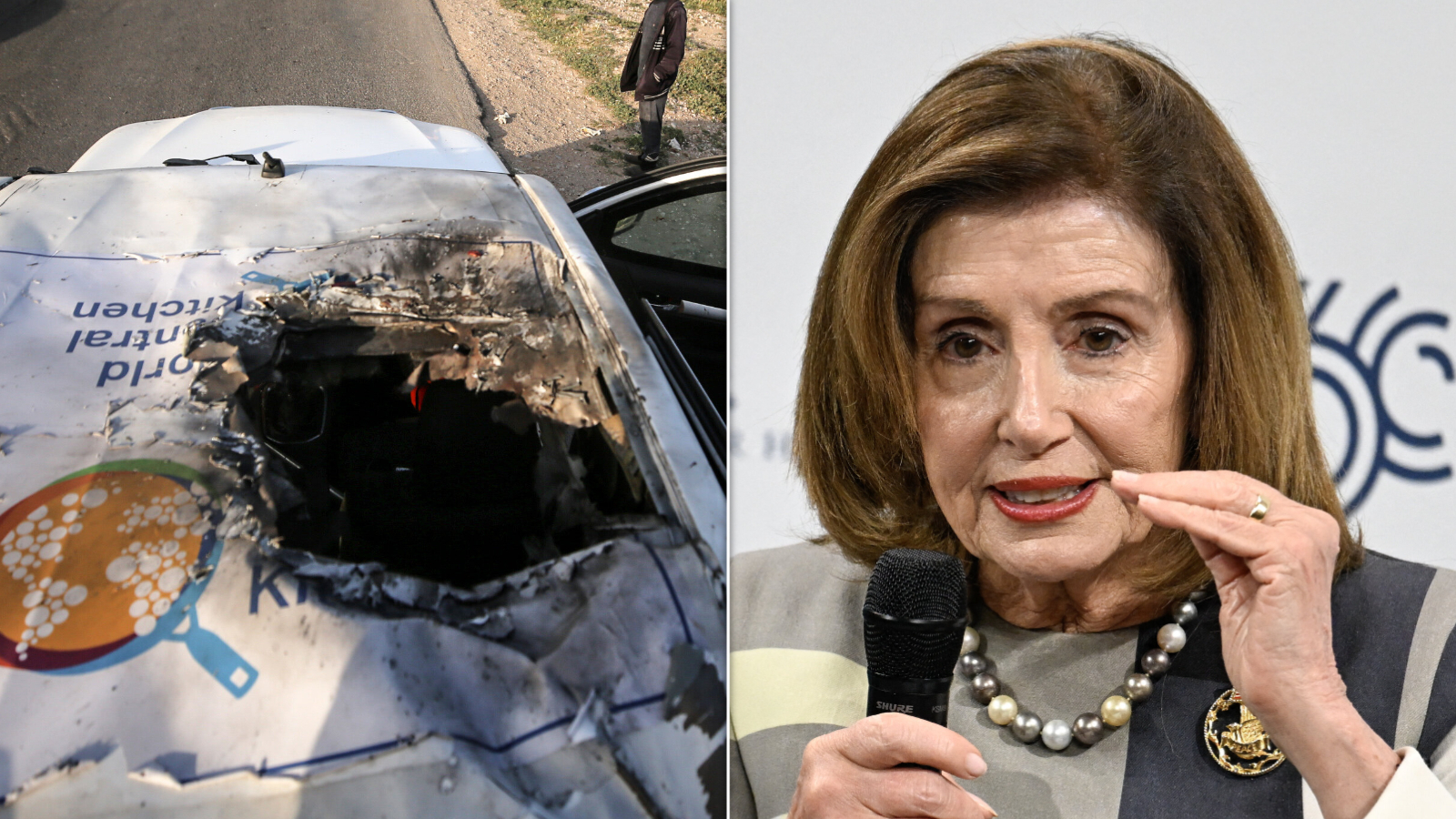
Forty members of Congress signed a letter to Biden, dated Friday, stating that the deadly attack on World Central Kitchen aid workers necessitates investigation into whether Israel is using US weaponry “in compliance with US and international law.”
Advertisement
Pelosi’s support, though, is particularly significant given her long working relationship with Biden.
Seven aid workers who had coordinated their movements with the Israeli military and traveled in clearly marked vehicles were struck Monday and killed, stirring further global outrage over Israel’s handling of the war.
One of the workers was an American citizen. All were working to feed Palestinians in the Gaza Strip as it faces famine.
On the day of the World Central Kitchen attack, the Biden administration reportedly approved an arms shipment that included hundreds of 2,000-pound bombs and other, smaller bombs. A sale of up to 50 F-15 fighter jets is also reportedly pending.
Advertisement
“We strongly urge you to reconsider your recent decision to authorize the transfer of a new arms package to Israel, and to withhold this and any future offensive arms transfers until a full investigation into the airstrike is completed,” read the letter to Biden and US Secretary of State Antony Blinken.
“If this strike is found to have violated US or international law, we urge you to continue withholding these transfers until those responsible are held accountable,” it continued. “We also urge you to withhold these transfers if Israel fails to sufficiently mitigate harm to innocent civilians in Gaza, including aid workers, and if it fails to facilitate – or arbitrarily denies or restricts – the transport and delivery of humanitarian aid into Gaza.”
Other signees included Representatives Jamaal Bowman, Cori Bush, Debbie Dingell, Barbara Lee, Alexandria Ocasio-Cortez, Ilhan Omar and Rashida Tlaib.
Biden has voiced strong support for Israel since Hamas-led militants killed more than 1,100 people in their Oct. 7 attack on the country — sparking large protest votes in some states’ Democratic primaries.
His tone, however, shifted this week during a discussion with Israeli Prime Minister Benjamin Netanyahu. Biden called for an “immediate cease-fire” and told Netanyahu that future US support will depend on what Israel does to protect civilians and aid workers in the Gaza Strip. The current situation was “unacceptable,” Biden said.
Advertisement
Hours after the discussion, Israel announced that it would be opening two humanitarian aid routes into Gaza.
Former President Donald Trump likened himself to late South African leader Nelson Mandela as he ranted on social media about his various court cases on Saturday.
The presumptive Republican presidential nominee took aim at Judge Juan Merchan, writing that it’d be a “GREAT HONOR” to go to jail for violating a gag order against him in his upcoming New York hush money trial.
Advertisement
“If this Partisan Hack wants to put me in the ‘clink’ for speaking the open and obvious TRUTH, I will gladly become a Modern Day Nelson Mandela – It will be my GREAT HONOR,” wrote Trump on his Truth Social platform.
He continued, “We have to Save our Country from these Political Operatives masquerading as Prosecutors and Judges, and I am willing to sacrifice my Freedom for that worthy cause.”
The former president has previously compared himself to Mandela, who spent 27 years in prison over his anti-apartheid activism.
Trump told a New Hampshire crowd in October that he wouldn’t “mind being Nelson Mandela” while declaring himself to be a victim of political persecution.
Page 3: Now, we have Merchan, who is not allowing me to talk, thereby violating the Law and the Constitution, all at once. It is so bad what he is trying to get away with – How was he even chosen for this case??? I heard he fought like hell to get it, and all of the rest of them…
— Donald J. Trump Posts From His Truth Social (@TrumpDailyPosts) April 6, 2024
Former U.S. attorney Barbara McQuade told MSNBC’s Jonathan Capehart that Trump’s posts on Saturday could lead to a stricter gag order but it’s the “kind of stuff” the judge is allowing him to say.
“If it is simply sort’ve political speech that isn’t targeting anybody in particular, I think the judge is gonna give him a lot of leeway to say this,” said McQuade, a law professor at the University of Michigan.
“What the gag order specifically tries to proclude is doing anything that might intimidate witnesses, threaten witnesses or call into question the motives of the parties here. I think this kind of thing is probably going to be allowed to pass.”
Now, there’s another heart health reason to be wary of alcohol, particularly for women.
In new research involving 432,265 people — roughly 243,000 men and 189,000 women between 18 and 65 — experts discovered that women who had on average more than one alcoholic drink daily were at higher risk of developing coronary heart disease. The research was conducted by Kaiser Permanente Northern California.
Advertisement
Coronary heart disease, also referred to as coronary artery disease, is a condition in which the “major blood vessels that supply the heart (coronary arteries) struggle to send enough blood, oxygen and nutrients to the heart muscle,” according to the Mayo Clinic.
Symptoms include shortness of breath and chest pain. But for many people, a heart attack is the first noticeable sign of coronary heart disease.
Women who drink 8 or more alcoholic beverages each week are at higher risk of heart disease.
For the Kaiser Permanente study, participants reported their alcohol use between 2014 and 2015. In the four years that followed, researchers analysed their coronary heart disease incidence and found that 3,108 participants were diagnosed with the condition.
Those who had one to two drinks each week were categorised as having low alcohol consumption; three to seven drinks for women and three to 14 for men were categorised as moderate consumption; and 15 or more drinks for men and eight or more for women were categorised as high consumption.
Advertisement
While definitions of binge drinking vary, in this study, it was defined as having more than three drinks a day for women and more than four for men. Researchers noted whether participants had taken part in binge drinking in the past three months. People who do not drink were not included in the study.
Researchers found that drinking eight or more alcoholic beverages each week was linked to a 33% to 51% higher chance of developing coronary heart disease in young to middle-aged women when compared with women who drank less, according to the Kaiser Permanente Division of Research. Those most at risk, though, were women who took part in binge drinking, which was linked to a 68% higher chance of developing coronary heart disease.
Alcohol’s negative impact on heart health has to do with a few factors. “Alcohol has been shown to raise blood pressure and lead to metabolic changes that are associated with inflammation and obesity, both of which increase the risk for heart disease,” senior study author Stacy Sterling told the Kaiser Permanente Division of Research.
While the worst impact was seen in women, men who engaged in binge drinking were 33% more at risk of developing coronary heart disease compared with those who were moderate drinkers.
“Women also process alcohol differently than men due to biologic and physiologic differences, and this may contribute to the increased heart disease risk we found,” said Sterling. “It’s concerning because there has been an increasing prevalence of alcohol use among young and middle-aged women, including in the number of women who binge drink.”
Advertisement
This research is set to be presented at the American College of Cardiology’s Annual Scientific Session in early April, and it has not yet been peer-reviewed.
The Good Brigade via Getty Images
People, especially women, who took part in binge drinking were at high risk of developing coronary heart disease.
If you want to drink less, here are some expert-backed tips.
With emerging research like this, it’s no wonder that concepts like “mindful drinking” and “damp lifestyles” — both of which decentre drinking — are popular.
If you are looking to curb your drinking habits, it’s a good idea to know some of the U.S. government’s guidelines for moderate alcohol consumption. If you choose to drink, the guidelines recommend no more than one drink per day for women and two for men. Once you know the guidelines, you can track your consumption habits to determine how much you drink. (The amount that people actually drink is often underestimated.)
If you like to have a different beverage after work or to break up the week, you can make mocktails or purchase nonalcoholic beers, wine and spirits. “The quality of nonalcoholic drinks and beers are much better than they were in the past,” Vanessa Kennedy, the director of psychology at Driftwood Recovery in Texas, previously told HuffPost. Having these kinds of drinks at the ready can help you reduce the amount of alcohol you consume.
Advertisement
Experts say that it’s also helpful to track why you’re drinking. Are you doing it because you’re stressed, or because you’re bored? Once you determine the reason that you’re turning to booze, you can think of different things to fill that void.
“If you are saying, ‘Well, I just need this drink because I just need to relax’ … that alcohol itself isn’t actually what helps you relax,” registered dietitian Sumner Brooks previously told HuffPost. A bubble bath or workout class may help you relax more than a glass of wine.
Most importantly, if you are worried about your drinking habits or think they’re problematic, it’s important to seek support from an expert. You can find a therapist who’s trained in substance abuse to help you move forward.
We don’t talk enough about the sensory experiences on flights. The popping ears, the flip of the stomach as take-off happens, the vast array of confined noises all happening at once… it’s a lot.
However, the one sensation that we really don’t talk enough about is just how much more gassy we are when we’re thousands of feet in the air. It’s fine, you don’t have to say it out loud, we’re saying it for you.
Advertisement
There’s something so cruel about experiencing excessive gas when you quite literally can’t escape the situation but it really is normal and if you experience this, you’re not alone.
In fact, according to Dr Karan Rajan, it’s pretty much unavoidable.
Why you need to fart more on planes
In a reel posted on Instagram, the doctor explained that because the cabin pressure decreases which leads to the air inside of your intestines increasing by up to 30%.
Then, since your colon has limited space and can only expand so much, a natural consequence is to release the fumes. While you can try to hold farts in, not only is that going to leave you feeling uncomfortable, it’s also almost impossible on a flight.
This is because the pressure of the gas travelling down will take over the integrity of your anal sphincter, and some stinky fumes will make their way out. Sorry.
Advertisement
If you’ve ever wondered why the food on planes is very carb-heavy, this is why. Low fibre foods are less likely to leave you quite so gassy.
However, Dr Rajan assures, the filters in flight air conditioners are actually charcoal and they can absorb a lot of the smell. If you do worry about farting too much or just have a sensitive stomach, he recommends avoiding high FODMAP foods such as onions, garlic, seeds, and some kinds of breads as well as eating slowly to aid digestion.
Plus, you can take comfort in knowing this can happen to everyone so you won’t be the only gassy passenger.
Ah, soggy ol’ Britain. An island where your outfit on any given day should account for all possible weathers because truly, who knows what the day holds? This is especially true during spring when we don’t seem to have any consistency for three solid months.
Following a few weeks of hopeful sunshine, a lot of the country now has, predictably, downpour. Which is set to last for at least the rest of the week with flood warnings even being issued for parts of England, according to the Met Office. Yay.
Advertisement
Another issue that comes with this weather is that our gardens can get flooded (also known as waterlogged), which is dreadful news for those of us that were excited to finally get back into gardening after a long winter.
However, there are some things we can do to help our lawns recover.
How to fix a waterlogged lawn
Rhiannon Moore, a garden expert at Toolstation, shared her tips for tackling a flooded garden:
Remove any built-up debris
Moore advises that once the water has receded, you should immediately remove any leftover debris such as sticks and leaves to clear the surface of the lawn. She added that you shouldn’t use a metal rake for this as it’ll damage the already weakened soil surface.
Aerate the soil
Using a garden fork or aeration tool, spike holes into the soil surface that are no more than six inches deep.
Fertilise the soil
Using a feed that’s rich in phosphorus, fertilise your lawn. This will help to promote root growth as well as replace the lost nutrients in the soil.
Advertisement
Moore added: “It’s also important to remember not to mow a lawn after a period of extensive rain and make sure to avoid watering until the ground has dried out.”
Early signs of waterlogging
If you’re not familiar with waterlogging or are new to the world of gardening, you may not be aware of the signs of a flooded lawn. Moore shared the most important signs to look for:
Bare patches – As the grassroots start to die, it will result in bare patches of lawn. These first strike in the worst affected area
Moss patches – Whilst a small amount of moss is beneficial to a lawn, large amounts of it can cause the grass to die as the moss steals the ground nutrients
Excess weeds – Rogue weeds are a common sight in lawns however, they can quickly take over a weakened lawn and starve the remaining grass of nutrients
Long-lasting solutions for a waterlogged lawn
Level out the ground – If the flooding is only happening in isolated areas, you can add some topsoil and new turf to level out the uneven lawn
Add garden walkways – Each time you walk over your lawn, you compact it beneath your feet. Adding a simple paved garden walkway will help to protect your lawn from damage
Consider a French Drain – If flooding is a regular issue, you may want to consider installing a French drain. This is a gravel-filled ditch with a perforated underground pipe to drain away the water. It’s best to check with your local planning authority before starting any digging
A new “atlas” of the human ovary provides insights that could lead to treatments restoring ovarian hormone production and the ability to have biologically related children, according to University of Michigan engineers.
This deeper understanding of the ovary means researchers could potentially create artificial ovaries in the lab using tissues that were stored and frozen before exposure to toxic medical treatments such as chemotherapy and radiation. Currently, surgeons can implant previously frozen ovarian tissue to temporarily restore hormone and egg production. However, this does not work for long because so few follicles — the structures that produce hormones and carry eggs — survive through reimplantation, the researchers say.
The new atlas reveals the factors that enable a follicle to mature, as most follicles wither away without releasing hormones or an egg. Using new tools that can identify what genes are being expressed at a single-cell level within a tissue, the team was able to home in on ovarian follicles that carry the immature precursors of eggs, known as oocytes.
“Now that we know which genes are expressed in the oocytes, we can test whether affecting these genes could result in creating a functional follicle. This can be used to create an artificial ovary that could eventually be transplanted back into the body,” said Ariella Shikanov, U-M associate professor of biomedical engineering and corresponding author of the new study in Science Advances.
The majority of the follicles, called primordial follicles, remain dormant and are located in the outer layer of the ovary, called the cortex. A small portion of these follicles activate periodically and migrate into the ovary, to a region known as the growing pool. Only a few of those growing follicles go on to produce mature eggs that get released into the fallopian tube.
With the ability to guide follicle development and tune ovarian environment, the team believes that engineered ovarian tissue could function for much longer than unmodified implanted tissue. This means that patients would have a longer fertility window as well as a longer period in which their bodies produce hormones that help regulate the menstrual cycle and support muscular, skeletal, sexual and cardiovascular health.
“We’re not talking about utilizing a surrogate mother, or artificial insemination,” said Jun Z. Li, associate chair of U-M’s Department of Computational Medicine and Bioinformatics and co-corresponding author of the study. “The magic we’re working toward is being able to trigger an immature cell into maturity, but without knowing which molecules drive that process, we’re blind.”
U-M’s team utilized a relatively new technology, called spatial transcriptomics, to track all of the gene activity — and where it occurs — in tissue samples. They do this by reading strands of RNA, which are like notes taken from the DNA strand, revealing which genes are being read. Working with an organ procurement organization, U-M researchers performed RNA sequencing of ovaries from five human donors.
“This was the first time where we could target ovarian follicles and oocytes and perform a transcription analysis, which enables us to see which genes are active,” Shikanov said.
“The majority of ovarian follicles, already present at birth, never enter the growing pool and eventually self-destruct. This new data allows us to start building our understanding of what makes a good egg — what determines which follicle is going to grow, ovulate, be fertilized and become a baby.”
U-M’s work is part of the Human Cell Atlas project, which seeks to create “maps of all the different cells, their molecular characteristics and where they are located, to understand how the human body works and what goes wrong in disease.”
Shikanov, Li and U-M collaborators such as Sue Hammoud, U-M associate professor of human genetics and urology, are mapping other parts of the female reproductive system, including the uterus, fallopian tubes and ovaries. Other contributors include Andrea Suzanne Kuliahsa Jones, formerly of U-M and now at Duke University, and D. Ford Hannum, a U-M graduate student research assistant in bioinformatics.
The research was partially funded by the Chan Zuckerberg Initiative. Additional financial support was provided by the National Institutes of Health.
The active ingredient in many drugs is what’s known as a small molecule: bigger than water, much smaller than an antibody and mainly made of carbon. It’s tough, however, to make these molecules if they require a quaternary carbon — a carbon atom bonded to four other carbon atoms. But now, Scripps Research scientists have uncovered a potential cost-effective way to produce these tricky motifs.
In the new findings, which were published in Science on April 5, 2024, Scripps Research chemists show that it’s possible to convert feedstock chemicals into quaternary carbons using a single, inexpensive iron catalyst. This method could benefit drug developers by making molecules cheaper and easier to produce at small and large scales.
“Quaternary carbons are ubiquitous across various areas of research — from drug discovery to material science,” says co-first author Nathan Dao, a PhD candidate at Scripps Research. “The synthesis of quaternary carbons, however, is a long-standing challenge in the field of organic chemistry, typically requiring numerous steps and relying on harsh conditions or less accessible starting materials.”
In addition to Dao, the study’s co-first authors included Xu-Cheng Gan and Benxiang Zhang.
Catalysts are substances used to speed up the rate of a chemical reaction. Sometimes, several different catalysts are necessary to promote a certain reaction and obtain the desired result: a veritable ‘reaction soup’. But catalysts can be very expensive, and they don’t always react as intended — and the more catalysts used, the more waste that’s produced. But the Scripps Research scientists determined that a single catalyst could perform multiple crucial rolls.
“A difficult chemical reaction often requires many interacting components,” according to co-senior author, Ryan Shenvi, PhD, a professor in the Department of Chemistry at Scripps Research. “A benefit of this work is it’s incredibly simple.”
The team identified simple conditions to convert carboxylic acids and olefins, two major classes of chemical feedstocks — or raw materials that fuel a machine or industrial process — into quaternary carbons by using an inexpensive iron-based catalyst. In addition, these chemical feedstocks aren’t only abundant, but they’re also low cost.
“Similar reactions have been gaining traction lately, so this discovery was inevitable,” Shenvi explains. “The pieces were already in the literature, but no one had put them together before.”
Overall, the study, which was done in collaboration with the lab of senior co-author Phil Baran, PhD, the Dr. Richard A. Lerner Endowed Chair in the Department of Chemistry at Scripps Research, highlights the ongoing role of chemistry in the development of modern technology and pharmaceuticals.
“This work is yet another striking demonstration of the power of the collaborative atmosphere at Scripps Research to unearth new transformations that can have a dramatic impact on simplifying the practice of organic synthesis,” Baran adds.
This work and the researchers involved were supported by funding from the National Institutes of Health (grants GM122606 and GM118176), the National Science Foundation (CHE1955922), Nanjing King-Pharm Co., Ltd), Pfizer and Biogen.