If you’re planning on going on a summer break abroad this year, Martin Lewis’s team have issued a warning for you.
The team has warned that not only should you check that your passport doesn’t need to be renewed but also that it’s valid for the country you’re visiting. This is because many countries have laws for how long you can have left on the passport in order to visit and how old the passport is. Since Brexit, this includes some EU countries, too.
The expert added, “If you fall foul of these, you could be refused entry – we’ve heard one story of a family’s four-year-old girl being refused entry to Turkey because she had less than two months left on her passport.”
The EU encompasses Austria, Belgium, Bulgaria, Croatia, Republic of Cyprus, Czech Republic, Denmark, Estonia, Finland, France, Germany, Greece, Hungary, Ireland, Italy, Latvia, Lithuania, Luxembourg, Malta, Netherlands, Poland, Portugal, Romania, Slovakia, Slovenia, Spain and Sweden.
If you renewed your 10-year passport early, ensure that you’re still in the valid period as extra months may have been added at the beginning of the passport’s validity, meaning that your passport may be technically over 10 years old and excluded from some travel destinations.
However, if you’re travelling to Ireland, it’s not quite as strict. Ireland is part of the common travel area with the UK and a passport isn’t required from British nationals travelling from the UK. However, as immigration officers check the identification of people arriving by flight and may ask for proof of nationality. Money Saving Expert recommends taking your passport anyway and ensuring it’s valid for the entire stay.
For information on the specific country you’re visiting, the government has an online tool which tells you the latest information on travelling and entry requirements
The only website to use to apply for a passport is the Gov.uk website. On there, you can get your first passport, renew an old one or get one for your child. You can also apply by paper at the Post Office.
Renewing a passport can take three weeks and Money Saving Expert urges that travellers apply early to avoid disappointment.
Many people use the month of January to try out lifestyle changes, like going alcohol-free for “Dry January” or abstaining from animal products for “Veganuary.” But one January movement you might be less familiar with is “Januhairy.”

A portmanteau of “January” and “hairy,” Januhairy is a movement that encourages people to put their razors down and let their body hair grow out for the month ― and then perhaps year-round if they enjoy the experience. While Movember and No Shave November aim to raise awareness around men’s health and cancer, Januhairy is about challenging societal beauty norms, especially for women and femme-presenting people.
Advertisement
“It’s a way for us to question body hair standards and why we follow these societal norms that make us feel like body hair isn’t beautiful or feminine or acceptable on a woman’s body — despite being acceptable on a man’s body — and it challenges the feeling that our body hair is innately gross when it’s just hair,” Esther Calixte-Bea, a body hair activist and visual artist, told HuffPost.
Indeed, Januhairy founder Laura Jackson launched the movement just before January 2019 to raise money for a body-image-focused organisation called Body Gossip, and to empower women to stop shaving, waxing and lasering ― or at least question why they might feel they have to.
“I think it’s an interesting way for women to try to grow out their hair in a collective way, as a form of resistance, as a form of self-experimentation, and as a playful and fun form of rebellion,” said Breanne Fahs, a professor of women and gender studies at Arizona State University and author of “Unshaved: Resistance and Revolution in Women’s Body Hair Politics.”
Advertisement
In many ways, Januhairy serves as a reminder that women removing their body hair is a relatively recent phenomenon.
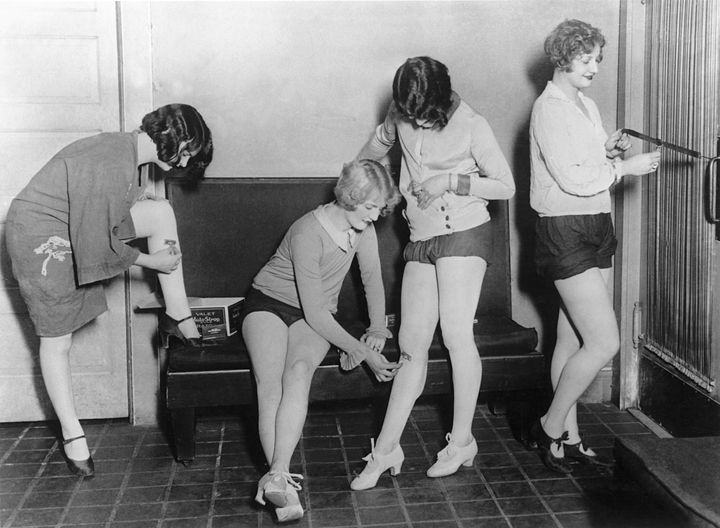
“It came about in the early 1920s as a result of several different factors: the advent of fashion photography, the end of WWI and men coming home with their (mandatory) razor kits, the 1918 pandemic moved bathing from communal settings to individual household bathrooms for middle-class households, and the Gillette razor company making a conscious decision to market razors to women and sell them on the ‘grossness’ of body hair in order to make money,” Fahs explained. “Prior to the 1920s, women mostly did not remove their body hair voluntarily. This occurred only in the context of colonial conquest, etc.”
As fashion trends evolved toward sleeveless tops that showed women’s underarms and skirts that revealed a little more leg, Gillette released its “Milady Decoletté” razor for women in 1915 and marketed it as a product that “solves an embarrassing personal problem.” Although there is evidence of ancient Romans, Greeks and Egyptians removing body hair, women around the early 20th century were not so focused on hairlessness.
Keystone-France via Getty Images
Women shaving their legs with mechanical razors in New York City in 1927.
“As a Black woman, I was interested to read an article that shared how it was mostly white women who propagated the idea of a woman being hairless as the ideal,” Calixte-Bea said. “I’ve also heard from women from African countries that they didn’t feel obligated to shave their legs until they arrived in America or Canada. My hairiness mostly comes from my Ivorian side, and I’ve learned that in my ancestors’ time, body hair was seen as something beautiful. So i think my body hair tells the story of my family and my ancestors.”
Advertisement
While marketers might have made women see body hair as “an embarrassing personal problem,” the practice of removing it generally has no basis in medical or hygiene concerns.
“In reality, hair is normal, and having hair or choosing not to shave your hair is actually embracing what is normal,” said Dr. Susan Massick, a board-certified dermatologist at The Ohio State University Wexner Medical Center. “Not shaving and leaving hair to grow in places like the armpits, bikini area and legs is not unhygienic. Believe it or not, pubic hair, for example, serves a protective purpose, particularly for women’s vaginal health. If people choose or prefer to shave, that is fine to do. Keep in mind that for some people, shaving can actually be irritating to the skin, causing bumpy, painful breakouts and rashes.”
In recent years, there have been some shifts toward body hair acceptance in Western culture, but for the most part, the changes haven’t been as significant as many would hope.
“We’re seeing some more body hair on-screen, and some companies have even figured out how to sell razors with body-hair-positive marketing,” Conger said. “But I don’t think that’s translated into full-blown norm shifting since the vast majority of cisgender women regularly shave our legs and pits.”
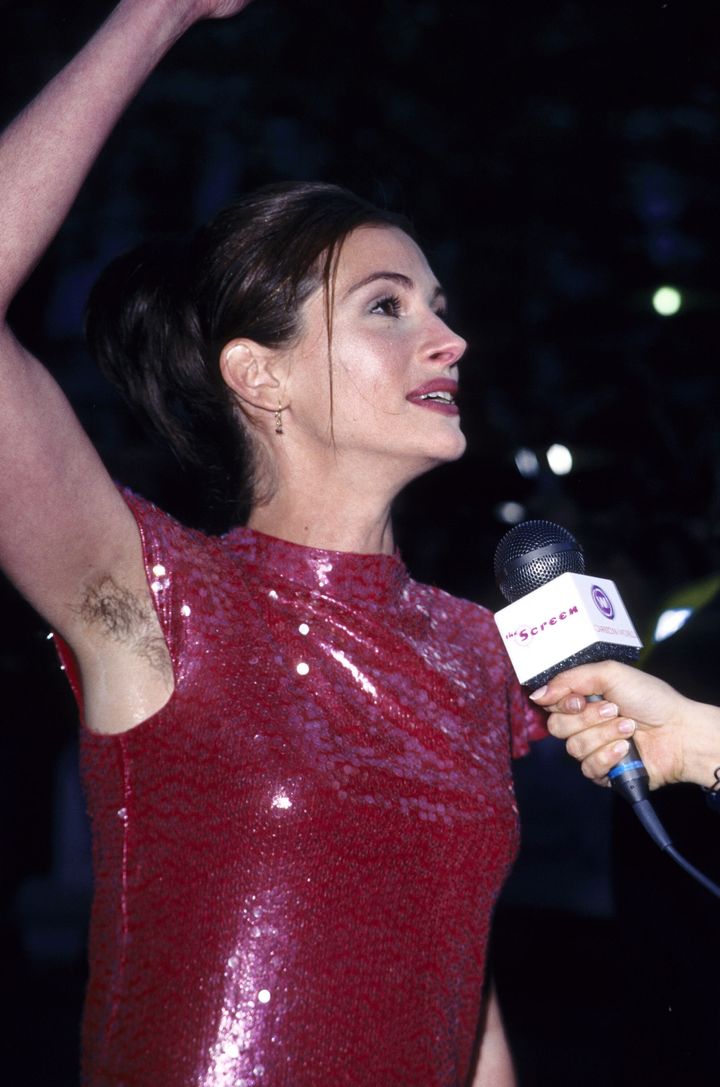
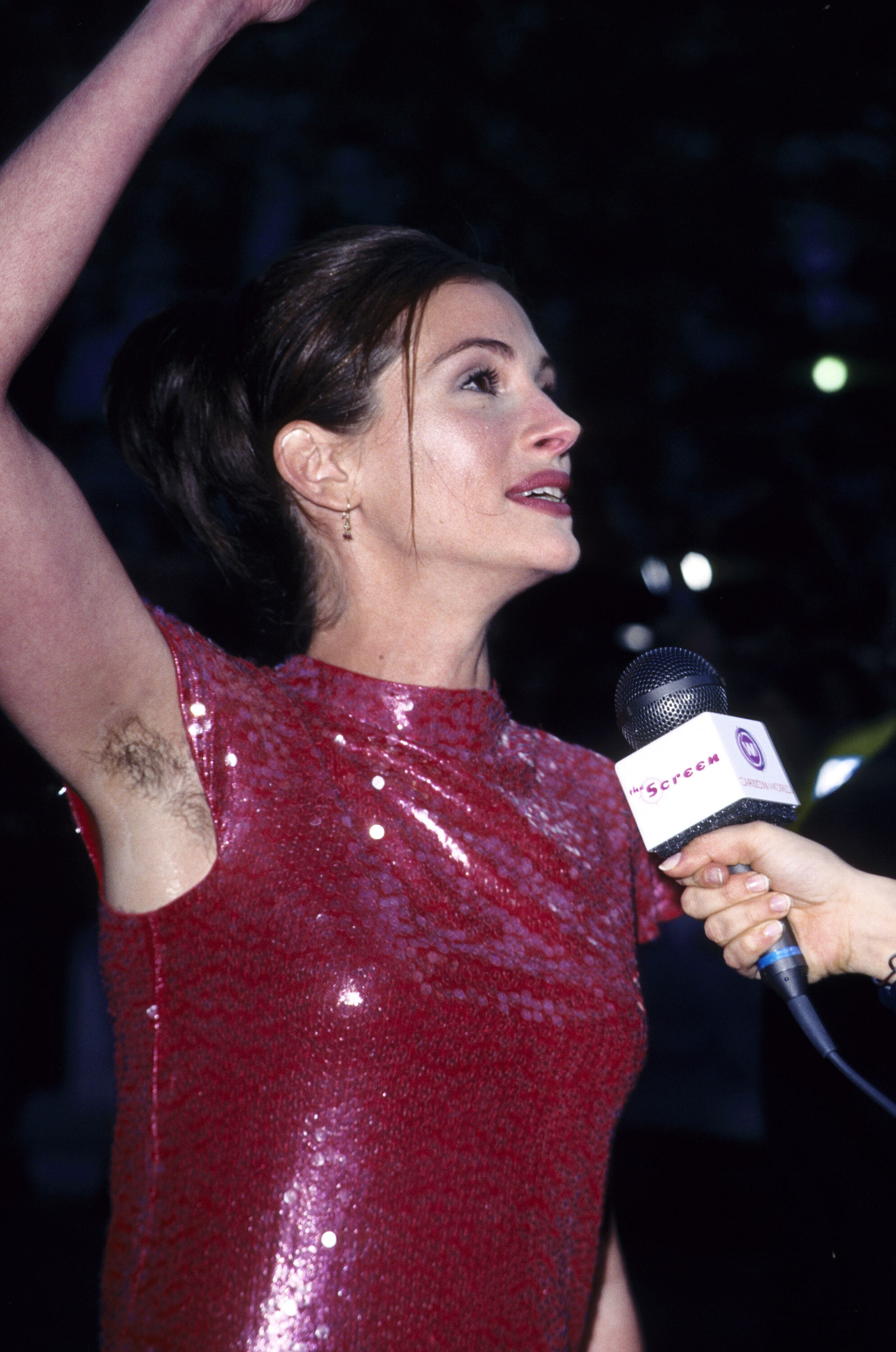
She pointed to the moment when Julia Roberts revealed her unshaved armpit hair at the 1999 premiere of “Notting Hill” and the subsequent media frenzy (though the actor later admitted that it was not intended as any sort of statement).
Advertisement
Fred Duval via Getty Images
Julia Roberts at the premiere of “Notting Hill” in London in April 1999.
“She forgot to shave once, and pop culture will never un-remember it,” Conger said. “Almost 25 years later, if say, Taylor Swift hit a red carpet with visible pit hair, the internet would probably cave in on itself. I think body hair removal is still so persistent partly because the hair-free pressure starts young, and it often comes from peers and parents alike. As long as we expect girls to start shaving, women won’t be ‘allowed’ to stop.”
Fahs agreed that notions of the norm shifting have been overstated, with some estimates saying that over 95-99% of women in the U.S., Australia and England still remove their body hair. She finds it encouraging, however, to see women use opportunities like Januhairy to try to grow out their body hair and see how it feels.
“It’s always better to see the power of a norm by breaking it, and it’s a great way to understand your body better!” Fahs said, sharing what she would say to someone considering taking part in Januhairy. “Go for it! It can teach you many things about who thinks they have a say in your body and how you present your body in the world. It can also teach you about your own biases about grooming and femininity related to body hair. Body hair is a powerful site of gender and power!”
Conger echoed this sentiment, applauding the movement’s impact in making folks reconsider this “this time-consuming, sometimes painful and expensive femininity maintenance.”
Advertisement
“Januhairy is an opportunity to opt out of a beauty norm, but more importantly, it’s a chance to check our own reactions to women’s body hair and understand how it’s different for people with polycystic ovarian syndrome, for instance, or Sikh women who keep kesh,” she added.
January is also a particularly good time of year for people to experiment with their body hair if they’re hesitant.
“If you live somewhere with a cold winter like I do in Canada, you get to grow out your body hair while covering it outside and not feeling like anyone is going to judge you,” Calixte-Bea said.
Conger believes that “Januhairy” is a catchier way to describe what many women and femme people already do during cold weather months.
“That’s the thing about body hair, right?” she said. “It’s only ‘taboo’ when other people can see it.”
Advertisement
Growing out your body hair for yourself in a cold season provides a type of safe space to push back against the norms and discourse that make us see ourselves in a negative light.
“Once you get home, you can see yourself as you are,” Calixte-Bea added. “It’s a very liberating experience to see your body as it naturally is and not once you’ve changed it. Working in retail, I’ve seen women of all ages talk about the things they hate about their bodies, but that’s not something I want for myself and other women.”
Of course, everyone is welcome to try growing out their body hair at any time of year. And if you don’t enjoy how it feels, you aren’t obligated to continue.
“I think it is important to normalise hair and having body hair in much the same way society should embrace all body types,” Massick said. “My philosophy is ‘you do you’ ― do what feels right.”
I feel like “I’ll sleep on the plane there” falls into the same category as “I’ll let it soak” ― they’re both little but destructive lies we tell ourselves when we’re too stressed or tired to think through the reality of a situation.
And like facing a clogged-up sink hours after you said you’d clean that grimy pot, taking an exhausted exit from a plane only to face a groggy 12 hours of activities in a new country can be completely overwhelming.
Advertisement
Luckily, it turns out there’s a trick that only the pros know to help ensure a great nap while you’re travelling ― recently, a former British Airways flight attendant, shared with The Express where to avoid sitting to get your best shot at sleep.
What’s that then?
“If you book the middle aisle front row on a long-haul flight, yes you might get some extra leg room, but you’re more than likely to be sat next to a baby,” she said.
“This is because this seat has a fold-down table for cots/bassinets for babies to sleep instead of on someone’s lap for the whole flight.”
So, if the infant you’re sat beside is particularly vocal or fussy, it might be hard to drown out their cries well enough to nod off.
Advertisement
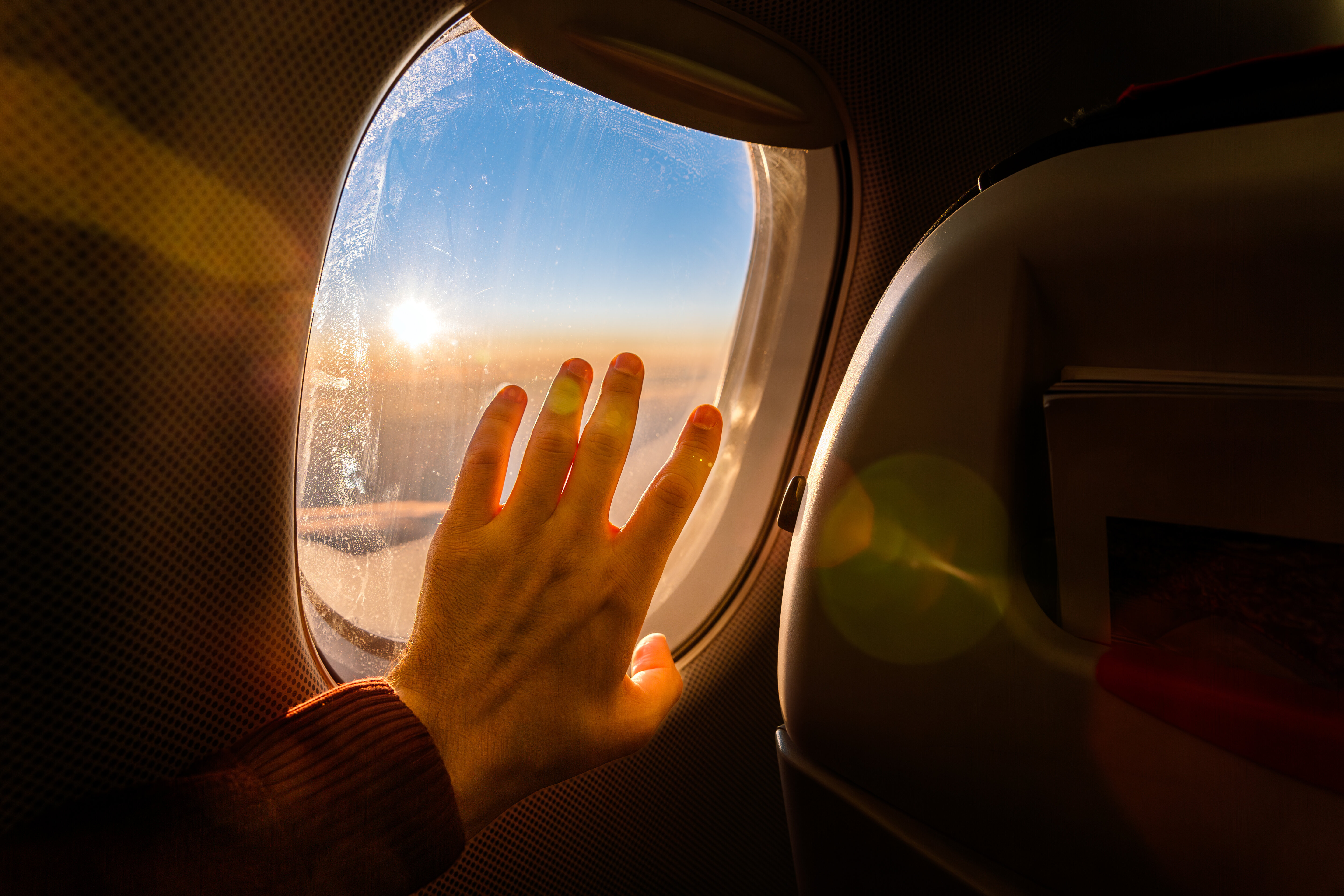
The former flight attendant also told The Express that while a window seat is often comfiest for mid-flight naps (you need something to rest your head on that isn’t an irritated stranger’s shoulder, after all), there’s one job we should all do there if we want to catch some pre-holiday Zzzs.
“If you’re at a window seat and planning to get some sleep (particularly when flying through the night into daylight) close your blind after take-off,” she told the publication.
That’s because those who don’t remember to shut their blinds will have flight attendants “climbing” all over them to close it for them. After all, they need to be down during takeoff and landing ― and, of course, it’s better for blocking daylight.
It’s also a good idea to stay in the back of the plane, she added.
Anything else?
Yep! We’ve written before about how everything from a good neck pillow to meditation can help you fall asleep on a plane.
And Phil Dengler, co-founder of The Vacationer, previously told HuffPost that how you dress is key.
“The most common mistake people make on long-haul flights is not dressing properly,” he said. “Since you will be sitting in the same seat for six or more hours, it is essential to be as comfortable as possible.”
Advertisement
The middle aisle of the front row isn’t the only seat you should avoid on a flight, either ― “Sitting near the restroom may sound convenient, but it’s never fun to be in that row when a line forms outside the restroom,” said Paul Jacobs, general manager and vice president at Kayak North America, told HuffPost.
So, dress comfy, cushion up, avoid the middle front aisle seat, pull those blinds down, and skip the pre-loo view if you can, the pros say. Noted.
I lay on my side, cradling my iPhone, looking up “bleeding after sex” and dabbing a piece of toilet paper between my legs. I thought about whether or not I should wake my new boyfriend up.
The Healthy Woman website stated, “It’s common for women of all ages to have bleeding after sex at one time or another. In fact, up to 9 percent of all women experience post coital bleeding (outside of first sex) at some point in their lives. Most of the time it’s nothing major and goes away on its own. But bleeding after sex can also be a sign of something more serious.” SIGN OF SOMETHING SERIOUS?
Advertisement
Great. I had already had acute myeloid leukaemiamultiple times, and now, when things were looking up, WebMD said this new symptom could mean I have pelvic organ prolapse (when pelvic organs, like the bladder or uterus, jut beyond the vaginal walls).
I found a site where someone asked, “Could my uterus fall out?” No, it couldn’t. At least I had that.
“The most important thing to pay attention to is the rate and volume of bleeding,” the article read. “Most bleeding after sex is fairly light. Heavy bleeding — where you’re soaking through a pad every hour or passing clots larger than the size of a quarter — warrants a visit to the emergency room.”
I didn’t have a quarter, but I did have a clock that showed it had been two hours. The doctor on call for my internist’s office, around 2 or 3 a.m., sounded annoyed.
Advertisement
“You should have called your gynaecologist,” he said. But he called ahead to the ER. I shook my boyfriend awake, and off we went into the spring night that had held so much promise. Intellectually I knew it wasn’t my fault, but I was more embarrassed than if I had been wearing white shorts and gotten my period in gym class.
On the TLC series, ”Sex Sent Me to the ER,” worse things happen, such as objects stuck where they shouldn’t be. My issue was more mundane, but I found out also very common: lack of information after my cancer treatment.
Nobody told me that chemotherapy, which I’d undergone after my diagnosis in 2003 and again after relapses in 2007 and 2008, could cause a sudden loss of oestrogen production in my ovaries, and that this could lead to symptoms of menopause such as a thinning vagina and vaginal dryness. (Actually, the first round put me into early menopause at 48.) Nobody told me that vaginal dryness can cause pain and bleeding during intercourse.
Yet data shows that the incidence of sexual dysfunction among female cancer survivors is somewhat common. Common sexual side effects are difficulty reaching climax, less energy for sexual activity, loss of desire, reduced size of the vagina, and pain during penetration.
For my part, it had been a 10-year dry spell. You shouldn’t need a reason for not having sex, but I had good ones: treatment in 2009 for relapsed leukaemia, life-threatening infections after a rare fourth stem cell transplant, a coma, a four-month hospitalisation and a year just to get back on my feet.
Advertisement
My 13-year marriage, long over, had consisted of 10 good years and three downhill all the way along a road full of land mines. Afterward, a four-year relationship with an English professor ended in fitting dramatic form when he rediscovered his childhood sweetheart while I was mourning the death of my father. Pulling his hands through his long grey hair, he declared, “We’re like Heathcliff and Cathy. I love her more than I love you!” I had to brush up on my “Wuthering Heights” to get it. Heathcliff and Catherine were soulmates.
My soulmate was nowhere to be found. He was not the guy who walked into a restaurant looking pale and pasty and nothing like the photo of the fit guy on his online profile, making me think of climbing out the bathroom window. He was not the guy I met at a Matzo Ball, where Jewish singles go on Christmas Eve to comport themselves like eighth graders at a school dance; we lasted for about six months until he complained that he was lower on the totem pole than my three children. I thought he might be the tennis player who strung my rackets and said he was falling in love with me, but he disappeared, in a feat I later learned had a name: hanging you out to dry.
“’Please tell me you’ve seen worse than this,’ I said to the nurse as I lay on the exam table.”
I decided to follow the advice of friends who were tired of hearing me talk about heartbreak and disappointment: Live your best single life. I stopped paying for dating websites but left a profile on a free one.
Stop trying to find something, and then if you’re lucky, you will find it, or it will find you. A nice guy wrote that he liked my profile (ugh, I hated writing those things). He thought we had a lot in common (running, kids, reading, similar politics) and would love to have a conversation. Is it corny to say that as we walked toward each other in front of the restaurant where we were to meet, we were being pulled together? Maybe it was just relief that he seemed normal and resembled his profile photo.
Advertisement
We sat at a high table in the bar. Our fingertips brushed together when we held up our phones to show each other photos; his, of places he had traveled, and mine, of kids and dogs. The next day, we went for a walk, and he passed a big test: meeting my chocolate Labrador retriever. She got a crush on him. I think it’s the soft voice. It works on me, too.
I had been using a vaginal eostrogen cream, Estrace (generic name estradiol), twice a week, to reduce symptoms of menopause such as vaginal dryness, burning, and itching. Though I was concerned about side effects, my doctor said the small amount was not absorbed outside the vagina, unlike hormone replacement therapy, which goes into the bloodstream. She said it was also OK to use Estrace once a week and Replens, a nonhormonal moisturiser, the rest of the time if I wanted to.
I remembered hearing that I would need to up the dosage if I wanted to have sex again. I made an appointment with my gynaecologist to see if I should do anything else to prepare for physical intimacy.
The physician’s assistant who saw me said, “Go to the toy store.” I was confused. My children were grown. Why did I need a toy store? I learned that she meant the sex toy store tucked behind a doorway next to a pizza place.
I got a set of six pink dilators. They started pinky-sized and increased by gradations up to a dauntingly large one. They didn’t come with instructions regarding how long to leave them in. The small one went in OK. I kept it in for a few minutes and then put in the next larger one, increasing in size until I had had enough. There’s not much you can do when you’re lying around with a fake pink penis in your vagina.
Advertisement
When it finally came time for real sex, I liked it. It hurt after a while, so we stopped, but I thought that was normal. Next I felt something sticky on my legs. It was blood. Blood on the sheets, blood on our legs. We got in the shower, changed the sheets, and got back into bed. It couldn’t have been less romantic.
The emergency room was even worse ― grungy and poorly lit. He sat with me, holding my hand and looking as upset as I was, until a nurse called me in and he went to sleep in the car.
“Please tell me you’ve seen worse than this,” I said to the nurse as I lay on the exam table feeling raw, emotionally and physically. She said she had. The doctor did an internal examination and said the blood had likely come from chafing. It was dawn when we finally got out of there. We went out to breakfast. Ordering my traditional blueberry pancake with an egg over hard brought a sense of normalcy to the misadventure.
The next week, I returned to the doctor’s office and this time saw the gynaecologist herself.
“Let’s start from scratch,” she said. I was to leave a dilator in for between 15 and 30 minutes, while doing diaphragmatic breathing. She sent me to pelvic floor therapy to learn relaxation exercises. I used the Estrace for two weeks straight. By the time we had sex again, it didn’t hurt, but I nervously checked the sheets for a long time afterward. I figured if we could get through a post-coital visit to the ER, we could get through most anything.
I may not have known much about sex after cancer, but it’s a topic that’s starting to be talked about more. I learned that after years of dismissing women’s sexual function as just one of those things that cancer takes away, many see women’s sexual health as a survivorship issue. Anexpert who I interviewed for a story on sex after cancer even called the dearth of information for female cancer survivors “a health equity issue.”
Advertisement
Many cancer centres are beginning to open sexual health programs. My own cancer centre was among them. “You missed us by about a year,” the director told me.
Luckily, I’m no worse for the wear and am still with the nice guy. I use Estrace (and sometimes Replens) twice a week and a lubricant when having sex. Doctors say that one of the best ways to treat vaginal dryness is to have more sex, because increased blood flow stimulates lubrication.
Now that memory of the ER visit is almost three years in the past, that seems like a fine idea to me.
For our first vacation together, Michael proposed we go camping.
As a 40-year-old lifelong New Yorker whose idea of “woodsy” was Central Park, this wasn’t my thing. Yet I wanted to be agreeable and expand my horizons. Browsing campsites online, Michael chose one that was all-male and clothing-optional.
Now I was terrified.
“Come on, what better way to get in touch with nature than being au naturel?” he asked.
“Until you get poison ivy or a tick in places you wouldn’t want to,” I quipped.
Still, days later I sat in the passenger seat as we drove through cornfields and nothingness in search of the campsite.
Advertisement
“I feel like we’re about to inspire a Stephen King story,” I said.
I was relieved when we found the entrance to the camp, marked by hand-painted letters on a rock, but wasn’t sure I wanted to proceed. Michael pointed out two men who were in their early 50s and dressed in calico button-downs.
“They look normal,” he said. I peered behind their backs to make sure they weren’t carrying hatchets before getting out of the car.
Checking in at the main office, we were greeted by a shirtless innkeeper ― a 6’4” bear with grey chest hair and double nipple rings. When he stepped out from behind the counter, I realised he was completely nude. I knew this place was clothing-optional, but I didn’t expect to see a guy’s … uh … s’mores … so soon.
“Here’s a map. I’ve circled a few trails. This one leads to the play area,” he said.
“Play area?” I asked.
“Gloryholes, slings. The usuals,” he replied, matter-of-factly.
“Ah, right. The usuals,” I blushed. I turned to Michael, hoping for a similar reaction but he was unfazed. A 45-year-old public health professor and “sexpert” who led workshops on sex education and well-being across college campuses, nothing ever made him turn red.
Advertisement
I admired Michael’s maturity, something he attributed to being the son of U.S. diplomats and growing up overseas. On our first date, a casual hamburger dinner we’d agreed upon after chatting for a month on OkCupid, I was smitten with his tales of living in Lebanon, Cyprus, the Philippines, Germany and Australia ― all before he was 10. Yet I worried I wasn’t sophisticated enough for him.
Unlike Michael, I grew up as a sheltered, closeted gay kid in a conservative Catholic family from Yonkers. My parents’ idea of an exotic vacation was the Jersey Shore. When I left home, at the age of 18, it was to move just 25 miles south to Manhattan. In my mid-20s, I still hadn’t fully come out and lacked the confidence and curiosity to go to sex parties or pick up men at bars, like my friends. In my older years, I felt like the world’s most boring gay guy. I was someone who enjoyed sex in a bed with the lights off, and my wild side was watching “The Golden Girls” and eating peanut M&Ms.
Michael assured me that my hang-ups didn’t matter. “I just want you to be comfortable,” he’d say. I tried my best. At times, I allowed myself to get out of the way and let his pragmatism and my whimsy intertwine in a way that felt both natural and nice. But despite our best efforts, being with someone who was so confident in himself, in and out of the bedroom, only made me feel insecure.
The innkeeper continued his rundown of the camp and pointed out the areas where guests needed to keep covered-up.
“Just near the road mostly. Some of the neighbours can be a bit stuffy,” he told us.
Glad you have standards, I thought, feeling like a total prude.
Courtesy of Mark Jason Williams
The author and Michael’s accommodations at the campsite.
Advertisement
Michael and I collected our belongings and walked to our cabin. I was surprised to find a charming little house that was remarkably clean, but grew uneasy when I couldn’t find the bathroom.
“There isn’t one in here, it’s shared,” Michael told me.
I freaked out. Apparently, I missed the concept of camping where beds and a roof were considered big-time luxuries. Sitting on our porch, I noticed we had a view of an outdoor shower, built on what looked like an altar. I wondered if we paid extra for that.
I hated this place but was determined to make the best of it. Michael and I did the usual camping things like boating and building a campfire, which I enjoyed. The other guests were all pretty friendly, if a bit cruise-y.
While Michael wasted little time shedding his clothes and his inhibitions, I remained a bit more reserved, eventually agreeing to go skinny-dipping. When a man yelled “yummy,” at me, I thought, Thanks? Wait, no, I’m taken.
But was I? Michael and I had been together for almost a year, but never used the word boyfriend. I assumed we were exclusive but we hadn’t actually discussed it. To be sure, I broached the subject later on a walk through the woods.
Advertisement
“I don’t like the term boyfriend. It makes me feel like I’m in the eighth grade,” Michael said.
“But I need a label,” I replied.
“Why?” he asked.
“So I know if I should be sleeping with other people or not,” I blurted out.
It was at this moment when we accidentally came upon the “play area.” It was a circle of some sex swings, a crucifix, and a port-a-potty with a hole on the side.
“Ewww, is that what I think it is?” I asked.
Michael confirmed, then took my hand. “Let’s keep walking,” he suggested.
“Do you want to try something?” I asked, sheepishly, and to my surprise. I wasn’t sure I actually wanted to give it a go, but I didn’t want to limit Michael’s experiences.
“This isn’t my thing,” he confessed. “This isn’t why I wanted to go away with you.”
I felt better but still couldn’t wait for camping to be over. Roughing it, clothing-optional or otherwise, wasn’t for me — especially having to leave the cabin to pee in the middle of the night. The next day, we drove a few hours and checked into a hotel. Our new room (with a private bathroom!) had a pink, heart-shaped Jacuzzi, mirrored walls, and a faux fireplace.
“You booked the honeymoon suite?” I asked. “Are you trying to tell me something?”
“I got the last room they had, I didn’t know it was like this,” he said. I was disappointed, yet relieved. Finally, something that made him uncomfortable.
“Well, we have to try the tub,” I said, attempting to put some romance back into our trip. Later, we poured some wine and got in. I became lightheaded, nearly passed out, and felt sick for the rest of the night. Michael applied a cold washcloth to my forehead and we watched “Judge Judy.”
Advertisement
As Michael comforted me, I suddenly felt worse. When he’d asked me to go away with him, I was thrilled. I saw this as a pivotal moment in our relationship ― if things went well, maybe we’d discuss moving in together. But if this was a test, I’d failed. And not because I’d fallen ill.
Courtesy of Mark Jason Williams
The author and Michael celebrate Christmas with their dog, Ruby, a year after their trip.
Thinking back to Michael’s earlier comment at the play area ― “This isn’t why I wanted to go away with you” ― I realised that I’d been so focused on sex, and on myself, that I overlooked Michael’s acts of tenderness and his emotional needs. Worse yet, I’d reduced our relationship to “are we sleeping with other people or not” when it was so much more than that.
I wished we could go back to the woods and have a redo. Or, at the very least, I wanted to lift my head from that fake down pillow and admit the truth: I only want to be with you … because I’m falling in love with you.
I tried to say the words, but I choked. It was the first time I’d ever felt this way about someone and the emotions unnerved me. This probably wasn’t the best time to think about other men, but my mind drifted to past relationships. There weren’t many, but I started to see a pattern. I’d date a guy for a month or two and we’d mostly have sex and watch TV. We were physical, but not intimate. Then they’d dump me.
Advertisement
I always blamed myself. I was too cold, too guarded, said the wrong things. Yet things were different with Michael. I was still self-conscious, but his calm, patient demeanour helped me relax. I opened up in ways I didn’t expect, telling him about everything from how I spent my childhood battling leukaemia to my love for professional wrestling.
Now, as Michael laid next to me when his leg gently brushing against mine, I felt more secure than ever. But did he love me? What if the answer was no? What if he was only tolerating being with me because it was after midnight and we’d had four glasses of wine?
I’d already messed up so much that I feared saying the wrong thing and pushing him away for good, which would make for a really awkward drive home. I grabbed my phone and looked up bus schedules back to Manhattan just in case.
It took me 20 minutes to realise my insecurities were raging out of control. If Michael and I were going to move forward, I had to let myself be vulnerable. I finally found the courage when he fell asleep. I whispered I love you and it was barely audible and totally cheating, but at least the words were no longer just in my head.
Thankfully, Michael and I continued dating. A year later, he suggested another camping trip. I agreed, as long we picked a place where the cabins had bathrooms and the “play area” was reserved for badminton and archery.
Advertisement
Walking in the woods, Michael reminded me of the moment I’d asked him if he was my boyfriend. While that term still didn’t feel right, it wouldn’t be long before we discovered the best word to call one another — husband.
Courtesy of Mark Jason Williams
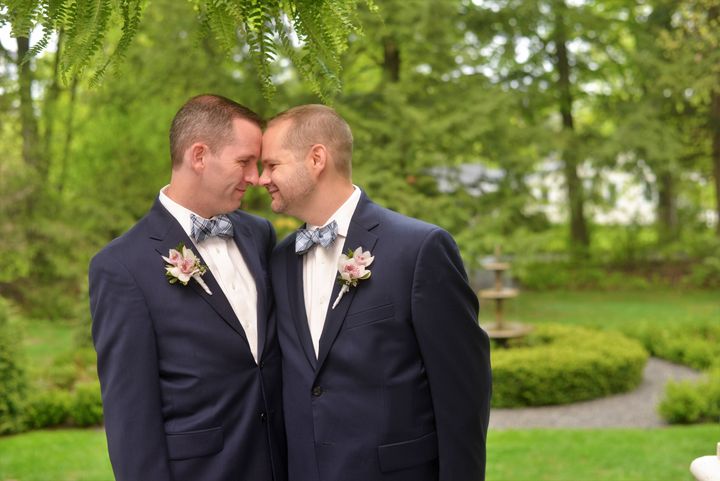
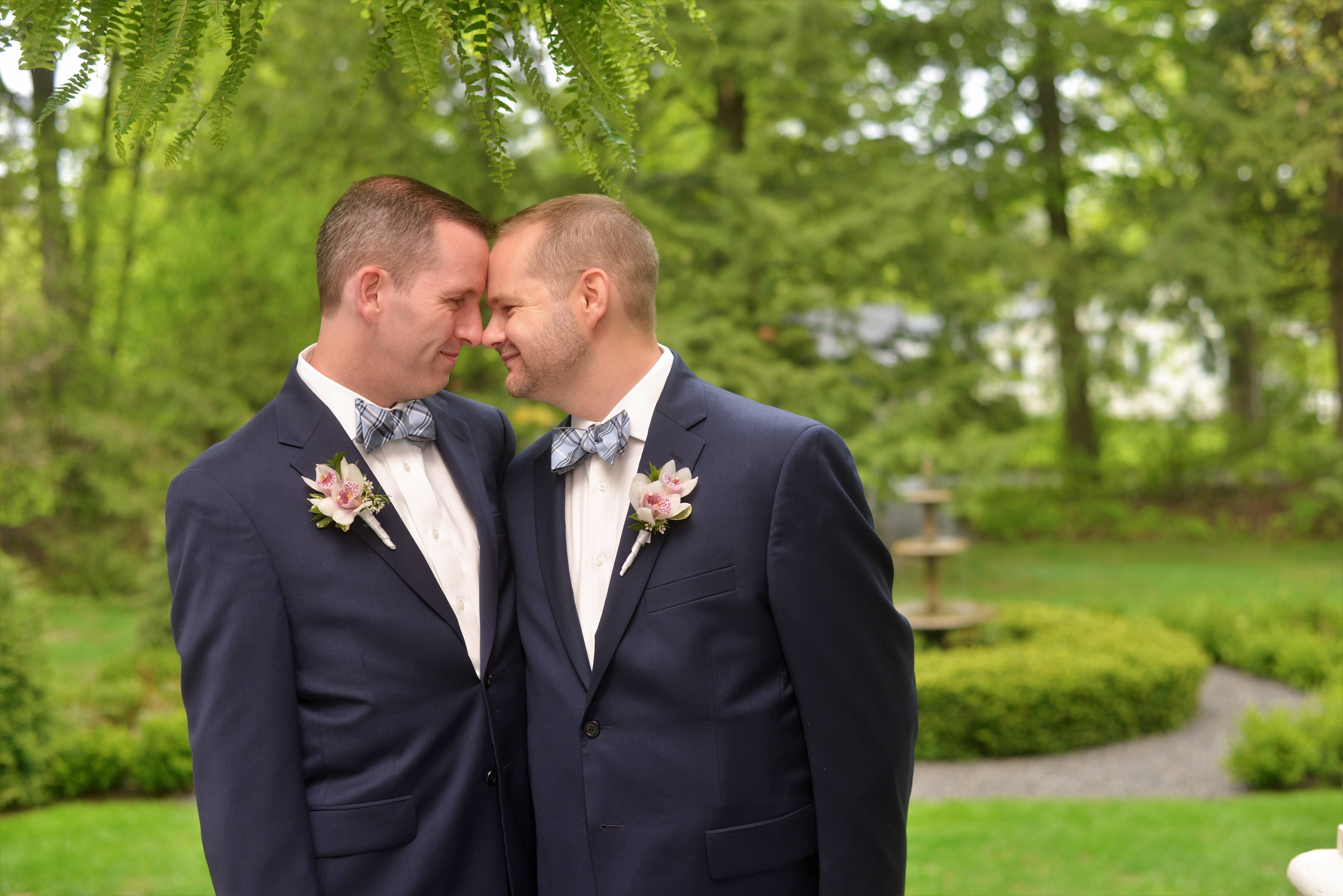
The author and Michael on their wedding day, two years after their vacation at the nudist camp.
Mark Jason Williams has written for The Washington Post, Out, and Salon. He is working on an essay collection, “You’d Be Cuter with a Deeper Voice,” hilarious and heartbreaking tales of growing up gay and Catholic, facing leukaemia, and how having a high-pitched voice wreaked havoc on his love life.
The temperatures are plummeting, we’re trying to keep nice and cozy and for some reason… we seem to be losing more hair than normal?
While we sometime notice changes to our hair growth and thickness at certain points in the year (hello summer shine amirite?), it can be alarming and distressing when unexplained.
Advertisement
So what the heck is going on with this winter hair loss? We spoke to Dr Sara Perkins, Advisor of Dermatology for Hims – the digital health platform connecting patients to licensed healthcare professionals in the UK – to get the lowdown on seasonal hair loss.
The good news? Although it’s incompletely understood, there is some data to support the notion of seasonal hair loss.
Changing levels of ultraviolet radiation or temperature may shift follicles from the growth phase into the resting, and subsequent shedding, phase.
One study found the highest number of follicles in the telogen (resting) phase in July, with another smaller peak in April. Hairs are typically shed at the end of the telogen phase, roughly 100 days after it begins, corresponding to the shedding in autumn that many people anecdotally notice.
Advertisement
According to Dr Perkins, seasonal hair shedding, and most cases of telogen effluvium, are self-limited and new hair re-grows.
However, if you’re noticing prolonged shedding, or start to see thinned hair density across the scalp, it’s important to seek an evaluation to consider other potential explanations, including genetic and hormonal factors, as in androgenetic alopecia.
Androgenetic alopecia can progress slowly and subtly at first, but may become more noticeable after a shedding event occurs.
Is there anything I can do?
If you want to be an active part of solving the problem, there are treatments available.
Topical minoxidil helps to shift follicles from the resting phase back into the growth phase, and also stimulates increased blood flow or circulation to the follicles themselves to support healthy growth.
Dihydrotestosteron (DHT) can damage hair follicles by shrinking them down, resulting in thinner, finer hairs. Finasteride blocks the conversion of testosterone to DHT, preventing further damage and stimulating healthy hair growth.
Advertisement
Because they work differently, combination products, like this topical finasteride and minoxidil formulation, allow people to benefit from both treatments at the same time.
Day-to-day hair care practices and exposures can also vary seasonally and impact the hair’s appearance. In summer, it’s all about protecting your hair from the sun’s harmful UV radiation.
Exposure can damage proteins like keratin and disulfide bonds, leading to increased fragility and frizz.
And sorry swimming lovers, but chlorine exposure from swimming can dissolve lipids within the hair shaft as well.
In the winter months, wearing hats and scarves may create friction, which can contribute to strand fragility and breakage. Finding the perfect balance between weather protection and a vibrant appearance is the key to conquering winter hair blues.
Advertisement
Understanding seasonal hair shedding provides valuable insights into the dynamic relationship between environmental factors and hair health. While some shedding is a natural and cyclical process, persistent or excessive shedding, or visible hair thinning, may require more attention and professional consultation.
With a new year, many people are making plans for their holidays in 2024 and it’s safe to say we’re excited to hop on a plane.
Still, the idea of spending hours in a metal tube with dozens ― if not hundreds ― of strangers understandably might not feel super-appealing. Being forced to share a small number of tiny bathrooms with them is even less so.
Advertisement
Thankfully, there are ways to minimise the spread of germs in the lavatory. Below, health and travel experts break down the most hygienic way to use the bathroom on a plane.
Disinfect surfaces.
“As an infection prevention specialist and someone who travels a lot, I have a routine when I fly,” said Michelle Barron, the senior medical director of infection prevention and control at UCHealth in Colorado. “When I sit down in my seat, I use a disinfecting wipe to wipe down the armrests, tray table and anything else that someone may have touched. Then I use hand sanitizer to clean my hands. The same routine works for a bathroom.”
Barron advised using disinfectant wipes on any lavatory door handles, lids and sinks before touching them.
Philip M. Tierno, a professor of microbiology and pathology at New York University’s Grossman School of Medicine, noted that although skin is a natural barrier to germs, he suggests traveling with a small tube of disinfecting spray for areas like the airplane bathroom.
Advertisement
“I would use Lysol spray on the seat before sitting on it,” Tierno said, then wait about a minute and wipe it off with a paper towel or face tissue. “The friction caused by the rubbing process as you wipe helps remove most debris there as well as many germs.”
Touch as little as possible.
Make sure you have a barrier between your bare hands and any surfaces you have to touch.
“The restroom likely holds a higher number of germs, and it is used by more people,” Barron said. “So it is important to limit contact with surfaces and use a disposable item like a paper towel to touch any door handles, toilet lids or handles, sinks, etc.”
Jagdish Khubchandani, a professor of public health at New Mexico State University, advised putting tissues on the toilet seat or paper seat covers if they’re available. Dispose of them when you’re finished.
“This helps maintain hygiene and saves others who follow a lot of hassle,” Khubchandani said. “Open the door with the tissue paper or wipes when exiting the lavatory. Put these tissue papers in trash.”
Consider not using the toilet paper to wipe.
“My biggest airplane bathroom hack is using the airplane tissues instead of the toilet paper,” said Brenda Orelus, a flight attendant and founder of Krew Konnect.
Advertisement
Earlier this year, Orelus posted this bathroom hack in an Instagram reel in which she explained that toilet paper is generally more exposed to liquids because it is usually located at a lower level.
“The tissue paper is typically located at eye level on commercial aircrafts,” Orelus told HuffPost. “Significantly increasing the likelihood that any liquid splashed on it is in fact just water.”
Close the lid before flushing.
We know that infectious microbes can spread through “toilet plumes” ― the dispersal of particles caused by flushing a toilet. These toilet aerosols can be vectors for diseases, including COVID-19.
There’s a simple way to help combat this.
“You can close the toilet’s lid before flushing to avoid spreading germs into the air during the flush cycle,” Barron said.
Jaromir Chalabala / EyeEm via Getty Images
Practicing good health hygiene on a plane will also keep your bathroom trips as clean as possible.
Advertisement
Wear shoes.
“On long duration flights, I have noticed people ― often, kids ― walk barefoot towards or into the bathroom,” Khubchandani said. “This is a very unhygienic tendency with potential for infection if someone has skin cuts and injuries on their foot. Also, you stay with the germs on your skin from the restroom for the entire flight unless you wash feet, which doesn’t happen much.”
He also suggested rolling your hems at the bottom if you’re wearing sweatpants or other long, loose garments to avoid droplets of urine, bits of tissue or other waste from getting on your clothes.
“Everything from the waist down is in an area where turbulence can lead to poor aim,” Orelus noted. “So no, it’s unlikely the liquid on the floor is water.”
Sanitise your hands.
Washing your hands thoroughly and frequently with soap and water is an important way to prevent the spread of germs. However, studies have suggested airplane lavatory water can be quite poor in quality.
“The reservoir of water in the bathroom tank can be grossly contaminated,” Tierno said. “As such, I would use 62% alcoholic gel to sanitize your hands rather than using the bathroom sink water.”
Advertisement
Avoid touching your face or mouth in the bathroom before cleaning your hands. The same goes for other steps of your travel journey.
“I’d also recommend keeping hand sanitiser nearby to use before and after eating or touching your face,” Tierno said.
Clean up after yourself.
“While going to the restroom, be considerate about others who may follow,” Khubchandani said. “We often don’t think about this or assume someone else will clean. This is disrespectful to other passengers and flight attendants if they have to clean up for us. So, flush as you go, dispose of trash in cans designated for waste, wipe the sink area and clean the toilet bowl if pieces of tissue or urine are spread around.”
He also advised using a different lavatory and notifying the flight attendant if you enter a bathroom and find previous passengers have left an overwhelming mess.
My oldest sister, Abby, calls for the second time this morning. “Oh, Jannie!” she says, reverting to my baby-sister nickname. “It’s so great to hear your voice, finally! Are you in Idaho now?”
“We sure are,” I answer, in the same tone that I answered the same question earlier. It’s been over a year since I relocated, not long after I helped Abby and her husband transition to assisted living. I can picture her perched on the loveseat in their tiny apartment, its walls vivid with her paintings, sun streaming in from windows that look out over California foothills. “How are you guys?” I ask.
Advertisement
“Oh, fine! We just got back from … where we eat.” She means the dining room, but she falters. Then, brightening: “Are you in Idaho now?”
Our conversations circle like this now, their loops gradually shortening, spiralling cheerfully along the surface.
According to Alzheimer’s Association, Abby is one of 6.5 million Americans living with the disease. When she was diagnosed, I was heartsick. One of the few consolations I clung to was that my other sister, Sal, and I could sustain each other through the long goodbye.
Growing up, I was the baby of the family. Abby, 12 years my senior, was for me the embodiment of glamour. Sal, seven years older than me, was my mentor and de facto nanny. I dogged both my big sisters’ steps as much as they’d let me, observing them with a mixture of envy and hero worship. I revelled in their attention when they would dress me up like a life-size doll, until I grew restless and they’d hiss at me to “hold still!” Other times, when they thought I was getting off too easily for whatever annoyance I’d caused, they’d take me out of Mom’s earshot and scold me themselves. It worked: my sisters were my role models, and I craved their approval more than I did that of my parents or, later, even my friends.
I thought Abby could do anything. Sidestepping our domineering father, she put herself through college, becoming an artist and teacher. I was five when she left home, and our house felt semi-becalmed in her absence.
After Abby left, Sal did nearly as much to raise me as did my mother, who so often deflated in the face of my father’s vehemence. It was Sal who taught me how to clean a bathroom, how to bake a cake, how to be a good friend, and how to drive her ’67 Camaro the summer I turned 16 and she was home for a visit. Later, as the three of us were figuring out how to raise our sons — coming from a family of all girls, we were somewhat mystified as we produced only boys — it was Sal’s house where we gathered for holidays and celebrations, for the memorials when our parents died.
Abby was in her mid-60s when her formidable mind showed signs of slipping. It took years, several fraught family meetings, and a long series of neurological assessments before Sal and I, along with the rest of Abby’s loved ones, had to face the reality of her condition. Like many people, we’d been schooled to believe that Alzheimer’s was something to be dreaded, a fate possibly worse than death.
As devastated as we both were about Abby, Sal was confronted with another life cataclysm when her 40-year marriage blew up. It turned out her steady, taciturn husband had been a serial philanderer for a dozen years. She emerged shaken and raw, as though whatever emotional insulation she’d had was wearing away, leaving her newly fragile.
Advertisement
Then one day I got a frantic call from the closest in Sal’s large circle of friends. “Something’s wrong,” the friend said. “Come see for yourself.”
I still lived in California at the time, 300 miles up the coast from where Sal lived. I drove down the next day. Sal greeted me at her front door, delighted to see me but startlingly thin. Her posture was hunched, her left arm contracted at an odd angle. A bruise, unsuccessfully disguised with makeup, spread across one side of her face.
“I had a little fall down the stairs,” she explained with a nervous laugh. “It’s not a big deal, nothing’s broken.” Her affect as well as her body seemed so frail that I kept my alarm to myself, but after our visit I conferred with her oldest son, who lived nearby. He too was concerned. He’d recently taken her out to her favourite steak place, where she’d had no idea that she’d rested her left arm in the middle of her entree until he pointed it out to her.
It took months for Sal to get appointments with a battery of neurologists, and even longer for the doctors to confer. Eventually, they agreed on a diagnosis. All the signs pointed to corticobasal degeneration, sometimes referred to as corticobasal syndrome.
I’d never heard of either. “Is that serious?” I asked Sal when she told me.
“It’s not good,” she answered. “But I’m going to make the best of it.” Her voice trembled with mixed fear and resolve, already weaker than it had been a few months earlier. “I’ll be OK,” she said. My heart cracked, understanding for the first time that she wouldn’t be.
Advertisement
“’Is that serious?’ I asked Sal when she told me. ‘It’s not good,’ she answered. ‘But I’m going to make the best of it.’ Her voice trembled with mixed fear and resolve, already weaker than it had been a few months earlier.”
I didn’t want to plague Sal with questions, so I pored over what little information I could find. What I learned is that the best to be said of corticobasal degeneration is that it is rare. It blights the brain’s cortex and basal ganglia, causing loss of balance and muscle control, impaired speech, the eerie “alien limb syndrome” — which explained how Sal’s arm wound up in her prime rib — and, as the literature blandly stated, “changes in thinking and personality.” It is progressive, incurable, and, unlike Alzheimer’s or Parkinson’s, no medication exists that slows it down. Ultimately, it is fatal. I wanted to creep into a cave, a refuge where I could process this new upheaval.
But Abby, once she’d learned that Sal was ailing, had many questions — rather, the same questions over and over, with which she besieged Sal over the phone. As the suddenly most capable sister, it fell to me to deflect her well-meaning assaults.
“What’s the name of what she’s got? Let me write it down,” Abby would ask every time we talked. Her refrigerator fluttered with Post-its, all of them with the name of Sal’s malady as I’d dictated it, inscribed in Abby’s graceful script.
Abby was as determined to fix Sal as she was unable. She obsessed over her scheme to move in with her now-disabled sister, leaving her husband — never able to countermand Abby’s will — at home. Sal was aghast but had neither the energy nor the temperament to head Abby off.
Advertisement
Again, intervention fell to me. It demanded new skills, including therapeutic lying, as I invented reasons why the upcoming week wouldn’t be a good time for Abby to go stay with Sal, week after week, month after month.
These days, so long as I don’t bring up Sal and her illness when we visit, Abby seems happy. Her body is strong, she can draw and paint, and thanks to her devoted husband, she doesn’t require the kind of memory care that is designed to both protect and restrict patients who are prone to wandering. She loves her new home, including the dining room where, as far as she’s concerned, the menu changes with every meal. It’s possible that Abby is more content now than she was when her brain was firing on all its cylinders.
Sal’s decline, by comparison, is cruel. I’ve helped her son move her to upgraded care three times as she has diminished. Her current facility is the best available in her area, providing round-the-clock care. She can summon help with the push of a button on a lanyard around her neck. But she has so little control over her limbs now that sometimes she can’t find the button, or she pushes the TV remote instead. She can no longer walk, stand or sit up unaided. She insists on feeding herself but it’s difficult to watch; choking is always a danger. Her speech has further weakened, her words slurred and halting to the point where they’re often indecipherable.
I travel to visit her, and within minutes of my arrival she makes plaintive requests, as poignant for their simplicity as they are unrealistic.
“Can you bring me my sewing machine? What if we hop in your car and go to lunch?” she asks, her blue eyes wide with hope. The disease’s assault on her brain leaves her unable to register the scope of her disability or relinquish her identity as someone who can operate a sewing machine or hop in a car. It’s a symptom that causes more distress — for her, for her caregivers, for her loved ones — than her physical limitations.
Advertisement
I manage to change the subject every time, and we laugh together over the stories she recounts from our childhood. But soon she tires, her eyes unfocused and half-shut, her words devolving into incoherent mumbling. Still, she continues talking on and on. Ashamed of my limited patience, I find an excuse to leave, assuring her I’ll return soon.
I don’t talk much about this. Chronic, long-lasting tragedy is unnerving; nobody knows what to say in response to my stories. Friends tell me I’m strong, that I’m handling it well. I am not, I want to say but don’t: I’m a lost little sister wandering the shores of calamity.
But I’m no longer the baby of the family, so I must do what I can. For Abby, I can meet her where she is, revisiting each topic or question however she reframes and repeats it, again and again. For Sal, I can hang on a little longer when I can’t understand a word she says, or when her descent is so dizzying it makes me want to escape rather than bear witness to it.
In my weaker moments, I fret over an unanswerable question: will my brain fail me too? I don’t often allow myself to go there. My sisters’ dementias have flipped our birth order, and it’s now my place to be the steady one, the big sister among us, for whatever time we have left together.
Jan M. Flynn’s essays appear on Medium.com and on her blog at JanMFlynn.net. Her short fiction has won international awards and appears in literary journals including Midnight Circus, The Binnacle, Noyo River Review, Far Side Review, Grim and Gilded, and Bullshit Lit as well as anthologies. She is also the host and producer of a weekly podcast, “Here’s A Thought,” for people who overthink. She lives in Boise, Idaho, and is represented by Helen Adams of Zimmermann Literary, New York.
There are 12 women in the room, myself included, all seated in a circle of plastic folding chairs. Some of us are holding foam cups full of the free instant coffee offered to us at the door. I am on my second cup already.
“Hi, my name is Angela and I’m a sex addict,” the woman sitting directly across from me says.
“Hi Angela,” the rest of the women respond in unison.
“This week, I … um … I’ve been struggling with watching porn again,” she continues.
Sweat drips down my forehead and rests on top of my eyebrows. I listen to each of the women, in a clockwise direction, take a turn speaking. Soon it will be my turn. I feel a knot forming in my stomach and I’m overcome with a wave of nausea. They all continue to confess their transgressions of lust, masturbation, and late night pornography-viewing escapades. The woman to my right, Rebecca, finishes speaking. It’s my turn.
Advertisement
“Hi, I’m Samantha …”
I pause for a second, wondering if I have to say the next line. The group leader is looking at me with her eyes wide. I think she’s staring into my soul.
“… And I’m a sex addict.”
I was 23 when I attended my first Sex Addicts Anonymous meeting and back then I believed with all of my heart that I had a sex addiction. For my entire life, my evangelical Christian community had told me that any sexual act, thought or desire outside of marriage between a man and a woman was a grave sin against God. The path to my salvation had hinged on my ability to remain sexually pure. When I confessed my “sexual sins” to my church mentor in 2014 after years of struggling to ignore my sexuality, she suggested I seek recovery for my addiction.
I was in SAA for just under a year but my time spent there and the events that led me to those meetings had a lasting impact. I now know that I was never a sex addict but instead was a product of a dangerously insidious purity culture that still thrives in many religious contexts today.
My parents weren’t raised religious, but when I was in the second grade my dad found Jesus in a hospital waiting room. My mom almost died of cancer that night, and when she survived, my parents vowed to follow God for the rest of their days. A week later, I was in a Sunday school class at the Methodist church down the road.
Advertisement
It was there that I learned about sin and salvation. I was told God created the world, was constantly angry at humans for messing up, and then sent his one and only son to die so that everyone else would be free. Our teachers warned us about sin every chance they got. I was riddled with guilt my whole childhood and prayed to God every night before bed for forgiveness.
In the sixth grade, I heard about “sexual sin” for the first time. Our youth group leader told us that God saved her from her lustful ways. She said she used to put her worth in men and in finding love. She explained she was empty, dirty and lost until God found her. “God saved me from my sexual sins,” she said. She cried as she told us her story.
I went home that night and prayed to God for hours. I was scared that something like that would happen to me, so I pleaded with God to save me from the same fate.
“In the sixth grade, I heard about ‘sexual sin’ for the first time. Our youth group leader told us that God saved her from her lustful ways. She said she used to put her worth in men and in finding love. She explained she was empty, dirty and lost until God found her.”
In high school, I dove even deeper into my Christian community and started attending a high school ministry group called Young Life. We talked a lot about sexual sin ― about things like sleeping with your boyfriend, masturbating or watching porn. I was curious about sex and about my body and was constantly thinking about what it would be like to make out with the guy who sat behind me in chemistry class. I was certain it would feel good but I was terrified of disappointing God. Sex was on my mind ― just like most other teens ― but underneath, my thoughts thrummed a steady hum of shame.
Advertisement
I started watching porn my sophomore year after someone in my algebra class told me about a new site called Pornhub. I was instantly hooked. Porn was a secret, always available outlet for all of the sexual desires I had to keep hidden. I could explore my body and my sexuality without anyone else finding out. I felt excitement every time I watched it, but that rush was immediately followed by the shame of knowing that I was committing sexual sin.
In college, I became a Young Life leader and continued investing time in my church community. I was still watching porn often, but I was trying to wean myself from it while simultaneously maintaining the appearance of purity that my community revered. After a while, though, the weight of knowing that God knew what I was doing felt too heavy to carry, so I decided to confess my sins to my friends and hopefully get help.
Everyone told me they were proud of me for being honest about such a dreadful sin. I was “brave” for my vulnerability. When I told my mentor, she congratulated me on taking such an enormous step of faith and recommended a few “sex/porn addict” support groups, one of which was SAA. I was hesitant at first, but I already had a friend who attended the group so I tagged along with her the following week.
Our women’s-only meeting was on Tuesday nights at a Baptist church down the road from my apartment, and sometimes I would see men walking into their meeting across the hall. I tried a co-ed meeting once but I felt so anxious and embarrassed that I threw up my Chick-fil-A sandwich the second I got home.
Everyone in my group was a devout Christian, all trying desperately to avoid our sins of lust. After the first few months, I was assigned a mentor. Her name was Ella and she had been a recovering sex addict for over five years. She was bright and bubbly but her shoulders hung low. She and I would meet 30 minutes before each weekly group meeting to go over what I had been working on.
Advertisement
There was one meeting with Ella where I was feeling particularly anxious. I had developed a crush on a co-worker and he had reciprocated my interest. I was nervous to tell Ella that we made out at a party the previous weekend. In SAA, we were encouraged to stay away from any sort of sexual activity, including kissing.
Just as I suspected, Ella was shocked at my confession. She didn’t think it was a good idea for me to be making out with random guys while I was dealing with my recovery. I stayed quiet and agreed with her but I felt uneasy on my drive home that night.
For the first time since I started attending SAA, I was angry. I was mad at Ella for telling me what to do with my situation ― and at all of the other people from my church who had done the same.
Tears poured down my face and anger welled up inside me as I drove home. But then, as quickly as I could, I attempted to quiet my mind and prayed to God for forgiveness.
In the following months, no matter how hard I tried, I couldn’t shake what I felt after that meeting with Ella. I was now hyperaware of the shame in my life and all around me. It was palpable. I would sit in church services, Bible studies and SAA meetings, trying to drown out my anger with prayers to God. But it was too late. I had let the anger in and I could no longer ignore it.
Advertisement
“I finally realized that my whole life had been made up of other people’s decisions ― decisions based on fear, misinformation and attempts to control. I now saw the truth: My sexuality, my body, the things I felt, the questions I had, and my desires weren’t evil.”
By my 24th birthday, I had left Sex Addicts Anonymous. I wasn’t planning on it at the time, but I ended up leaving my church community, too. The anger I allowed myself to feel after that meeting with Ella was the first time I truly let myself push back against what my community believed. It was the first time I trusted myself and there was no turning back after that.
I finally realised that my whole life had been made up of other people’s decisions ― decisions based on fear, misinformation and attempts to control. I now saw the truth: My sexuality, my body, the things I felt, the questions I had, and my desires weren’t evil. None of it meant something was wrong with me. I wasn’t addicted to sex and I didn’t need the help I had been convinced I needed.
Walking away was terrifying because I spent my whole life believing what my community had told me and I was still worried I might be making the wrong choice. Maybe God would smite me and condemn me to hell. Maybe my life without the church would be miserable. But choosing to turn away from shame, being able to listen to the intuition that had been inside me all along, felt well worth the risk.
It’s been almost seven years since SAA, and thanks to therapy and people in my life who encourage me to be myself on a daily basis, I’ve found peace with my experience. I lost a handful of close friends after stepping away from my faith community, but my family was supportive of my decision, despite their religious beliefs. Now years later after walking away, I can say with confidence that I never had a sex addiction.
Advertisement
It’s difficult to find one universal definition for “sex addiction” because the term is highly debated by medical experts and isn’t recognised by a large part of the psychology community as a diagnosable addiction.
The DSM (Diagnostic and Statistical Manual of Mental Disorders) no longer recognises sexual addiction as a mental health disorder, one of the reasons being because people don’t experience withdrawal symptoms or the physical need for sex like they would with drugs or alcohol.
It also has to do with the fact that oftentimes the person diagnosing a sex addiction carries their own moral judgments or biases related to sex. Instead of sex addiction, people now often use compulsive sexual disorder to describe a “persistent pattern of failure to control intense, repetitive sexual impulses or urges resulting in repetitive sexual behaviour.” The use of both terms is still controversial, especially as more research is being done around these topics.
What many medical experts do agree on is that a lot of people who claim to be “sex addicts” are not actually engaging in more sexual behaviour than normal, but instead come from highly religious backgrounds and feel more levels of moral guilt associated with their sexuality. New research from the Journal of Abnormal Psychology found that most of a study’s 3,500 participants weren’t taking part in higher amounts of sexual activity, but instead carried more religious guilt about their sexual actions. These feelings of guilt often lead to a greater struggle to stop unwanted behaviour.
For most of my life, I was told my sexual desires were a sin against God. I believe this led to personal shame and the belief that I couldn’t control my own natural sexual urges. But I now know my curiosity about my sexuality and my body was healthy. When I removed the strict moral lens of religious purity culture, everything became crystal clear.
Advertisement
The evangelical church’s view on sexual purity and sex addiction is harmful. For individuals like me who grew up in these environments, the concept of purity can foster shame, isolation, and compulsive thoughts and behaviours. That compulsiveness and the cycles of shame we can experience are then often wrongly mislabeled as sex addictions.
For our society as a whole, it’s obvious how these teachings have a far wider impact and can lead to a lack of comprehensive sex education, a lack of accountability, misogyny, homophobia, and sometimes even the sexual violence that we see in our culture on a daily basis.
I’m not sure that stories like mine will ever change the evangelical church. Though I hope its leaders might realise how harmful their teachings are and take action to do better, I know that these beliefs are the foundation of the church and, therefore, unlikely to change. However, I am hopeful that by speaking out, I might help others who are going through what I went through. We rarely talk about experiences like mine, especially publicly, but it’s much more common than you might think, and I want others to know you can live your life happily, confidently and without shame.
Samantha Boesch works as a writer and editor in Brooklyn, New York. She writes about health, wellness, and sexuality, and is studying to become a sex educator. You can connect with her on Instagram at @SamanthaBoesch or on Twitter at @SamanthaBoesch.
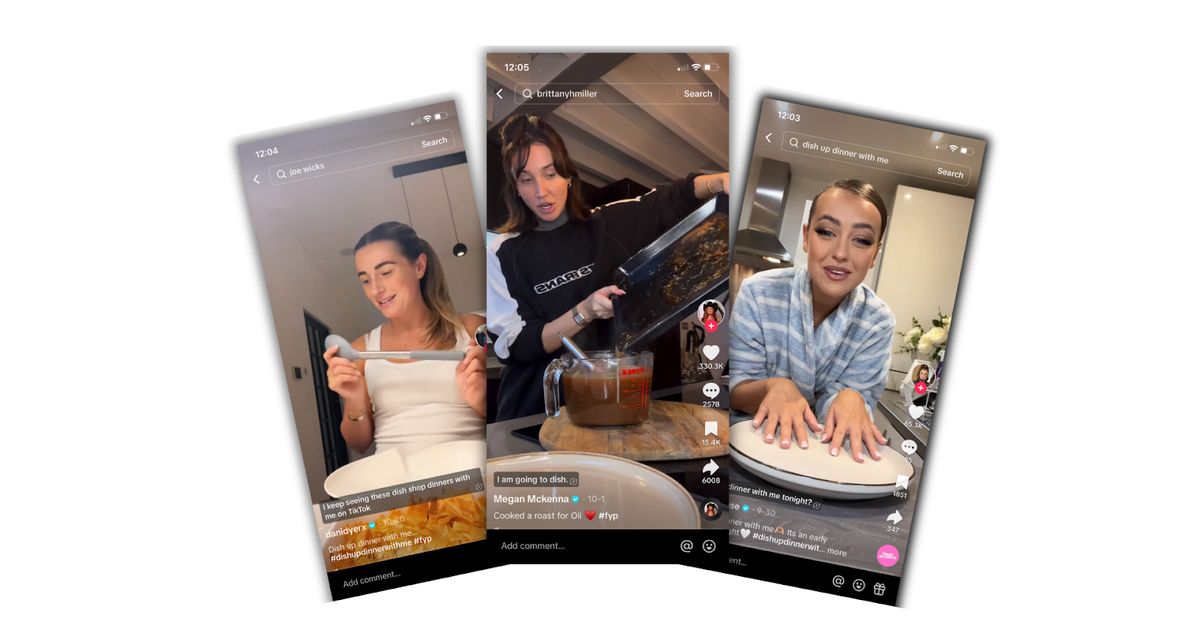
Right, I’m going to share a secret with you and I would prefer it if you didn’t judge me. If I can’t get going with cleaning or cooking at home, I watch other people doing it on TikTok and it gives me the motivation to get moving with my own duties.
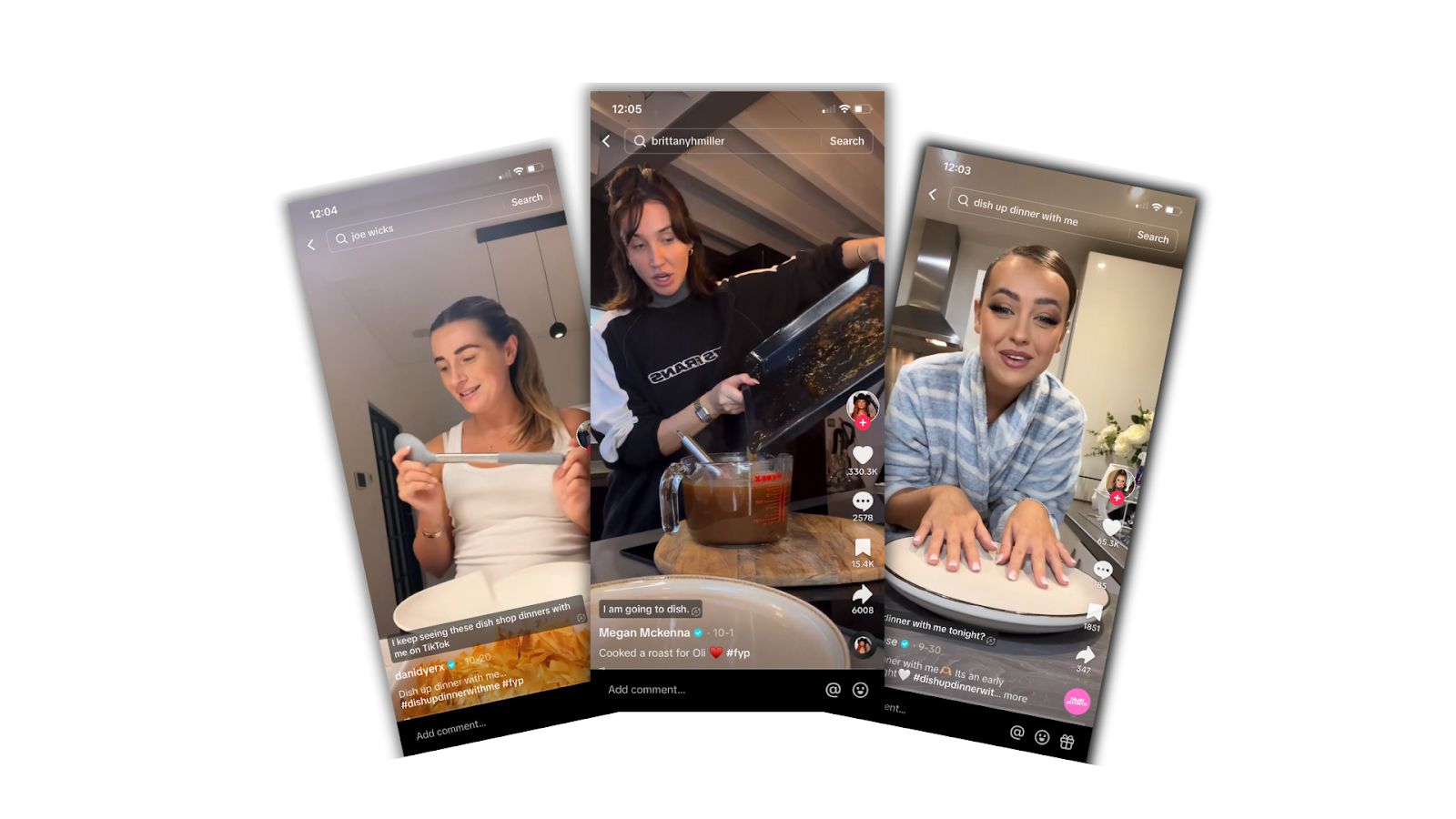
Take for example, last Sunday. I really wanted to make a roast dinner. Of course, this takes a long time, a lot of different dishes, and is a whole effort. So, to get myself in the mood, I watched some of my favourite “plate up” creators on TikTok put their meals together on the plate and somehow, between the steam of the hot food, the delicate placement on the plate and the gravy being poured over all of it just put me right in the mood.
Advertisement
It turns out, I’m really not alone. Lots of us can’t get enough of these videos and according to HelloFresh, 270 million of us find ourselves enchanted by these cosy videos.
Why are plate up videos on TikTok so popular?
To truly get to the bottom of the psychology behind “plate up” videos, HelloFresh asked Consultant Counselling Psychologist Dr Ritz for her thoughts on the phenomena.
“There is a huge fascination of watching people cook on social media. It could be from gaining inspiration, building confidence or relaxing through the value of cooking and food. We can understand these trends from various psychological perspectives such as social cognitive theory, belonging and coping,” she explains.
And these are the main theories she outlined behind the trend:
Social Cognitive Theory:
“Social Cognitive Theory suggests that individuals learn by observing others. Viewers may be learning new cooking techniques, recipes, or gaining confidence in cooking by watching others. The social aspect of the trend aligns with theory’s emphasis on social learning through modelling.”
Advertisement
Mirror Neuron System:
“The Mirror Neuron System suggests that individuals have neurons that fire both when performing an action and when observing someone else perform that same action. In the context of cooking videos, viewers might experience a form of neural resonance, feeling a connection to the actions they observe and potentially triggering positive emotions.”
Belonging to a Community:
“Participating in or observing trends can create a sense of community among individuals who share similar interests. It contributes to the development of virtual communities centred around cooking and food, where people can exchange ideas and tips.”
Coping Mechanism:
“Watching cooking or meal preparation videos can serve as a form of relaxation and distraction. The repetitive and methodical nature of the process can be soothing, providing some respite from stress or daily challenges.”