The 19 Biggest Home Organising Mistakes People Make

Home organisation has really had a moment in recent years. And even after the world was introduced to Marie Kondo, the extra time we’ve all spent at home during the Covid-19 pandemic has further underscored the value of tidying up.

“Many people suffer with disorganisation for a long time before making changes,” Lisa Zaslow, a professional organiser at Gotham Organizers, told HuffPost. “It’s worth it to fix all the ‘little’ problems that annoy you every day – the kitchen drawer where you can’t easily find a can opener, the closet rod that’s so stuffed with clothes you need a crow bar to remove a jacket, the flimsy hangers that your clothes keep falling off. Taking the time to conquer your organisation problems will improve your quality of life.”

But tackling a cluttered home and creating systems that work for you and your family can be very challenging. Inevitably, many folks commit organising faux pas along the way. To help those who aspire to keep a tidy space, we asked experts to share the biggest mistakes they see people make with home organising. Read on for 19 approaches to avoid (and their advice for getting it right).

Buying Containers Before Decluttering

“One of the most common mistakes that I’ve seen people make when organising their homes is buying organising tools (containers, gadgets, labels, etc.) before they sort and purge. Sorting your belongings into trash, donate, and keep categories is not just to help you get rid of unnecessary or unwanted items. It also serves the purpose of helping you to realise not only what you have, but also how much of it you actually have.” ― Carolyn Rogers, professional organising consultant at Neat Nerd Solutions

“People purchase items to ‘get organised’ without engaging in a few good de-cluttering sessions! It’s almost as if folks believe that it’s the product that will ‘get and keep’ you organised, and not a dramatic shift in habits, behaviours, or relationships to the stuff and space that will actually increase the likelihood that you will find success as an organised person when you don’t have a lot of stuff to keep track of.” ― Regina Lark, professional organiser at A Clear Path

Not Taking Measurements

“When it comes to organising, size matters. This is especially true if you’re seeking a specific aesthetic. Those super cute baskets don’t look the same if they are too large and hanging off of the shelf where you planned for them to reside. Or an under-sink storage item that doesn’t actually fit under the sink is not useful. How about the Christmas decoration containers that are too small or you didn’t buy enough to hold all of your decorations. Be sure to obtain measurements for both the space and the item(s) that you plan to occupy it.” ― Rogers

“Please don’t eyeball a shelf or a closet or a drawer and guesstimate what kind of bin or helpful divider or hanging pocket shoe rack might fit. Measure the hell out of any drawer or door or shelf before ordering online or in person. Width, depth, height are your friends and so is a tape measure.” ― Jeni Aron, professional organizer at Clutter Cowgirl

Being Overly Ambitious

“People often bite off more than they can chew and get totally overwhelmed. Instead of tackling ‘your whole closet,’ start with a section of shoes or the dresser. Keeping the projects small and manageable will keep things from feeling too overwhelming.” ― Tova Weinstock, professional organizer at Tidy Tova

“A common challenge when organising at home is being overly ambitious. Instead of creating mini-projects and taking small steps, people try to do too much at once. This can be de-motivating, debilitating, cause burnout, and prevent them from reaching their organising goals.” ― Linda Samuels, professional organiser at Oh, So Organized

“Don’t burn out by devoting an entire weekend on a project. I break my sessions up into three-hour blocks. It can be tiring and emotionally draining work depending on the project. Do smaller bursts of work so that you keep your motivation and energy going. Set a timer if you have to and take lots of breaks.” ― Aron

It's best to tackle smaller areas one at a time. 

It’s best to tackle smaller areas one at a time. 

Not Paring Down

“A typical challenge people encounter with home organisation is underestimating the power of the edit. Before deciding the best way to organise a space, it is essential to release those things you no longer need, want, or use, so you can create ‘homes’ for the keepers.” ― Samuels

“I’ve had clients hold on to ‘mementos’ ― broken, torn, and/or nonfunctional items ― and keep old cords even when they don’t know what device the cord connects too.” ― Nicole Arroyo, professional organiser at Neatly Nic

Getting Too Fixated On Instagram

“It’s not uncommon that people will try to force popular organising solutions into their life rather than use the ones that work best for them. While you may need to make slight adjustments to your lifestyle and daily routines in order to be and stay more organised, you want to select the solutions that work best for your life, not that look the best on Instagram.” ― Jeffrey Phillip, professional organiser and interior designer

“Most of the home organising photos that are shown on Instagram are staged. In real life, no one has rainbow clothes (or only one colour clothing), rainbow food in the refrigerator, or rainbow anything. If you look closely at the before and after pictures of pantries on Instagram, for example, you’ll find that few of the products are the same. When you look at refrigerator photos on Instagram, there are no leftovers, milk, or juice. You can either organise a space or stage a space for a picture.” ― Barbara Reich, professional organiser at Life Organized

“People tend to purchase organising supplies for their ‘cuteness’ versus whether they will actually use it or not! When my team is called in to help a client ‘get organised,’ we see a LOT of organising products that are unused, poorly used, or used-to-overflowing.” ― Lark

“Don’t compare your home or space to someone else or a catalog look. Organising is about functionality. While the visual appeal comes with it, that’s not the goal. The goal is to maximise space, minimise stress and save time. So systems need to be centreed around that and not just making it look pretty.” ― Pooja Naik, organizing consultant at Organising With You, Inc.

Storing Everyday Items In Inconvenient Locations

“Don’t put everyday items in hard-to-reach places. Instead, keep items you use all of the time close by.” ― Sarah Giller Nelson, owner of Less Is More Organising Services

Overfilling Spaces With Containers

“A common pitfall to avoid is overfilling spaces and containers. A good organising system is easy to access and has room to grow. If you have to stuff items to fit them in the designated location, you are likely to become frustrated and the system will fail.” ― Seana Turner, founder of The Seana Method

Getting Hung Up On Making Decisions

“That’s all clutter is: postponed decisions. If your gut is telling you to hold onto it, then hold onto it. This is not the only opportunity you have let go of an item. There is always the second-round edit. Keep it moving!” ― Julie Naylon, professional organiser at No Wire Hangers

Dumping Everything Out At Once

“Don’t dump everything out! That will create a massive, scary mess. Instead, work on one area at a time and put things back as you go.” ― Weinstock

“Once we taste the satisfaction of organising, the overachiever in us may be tempted to take on the entire house at once! Our success fills us with an energy that makes us feel like we can conquer an entire world of unorganised closets, drawers, and pantries. But soon after pulling everything out, our energy starts to wane and we may find ourselves in what looks like a disaster zone. We then have to resist the urge to stuff everything back into those closets, drawers and pantries to eliminate the overwhelm of visual chaos. Instead, we should try to pace ourselves and harness that fiery energy.” ― Kellie Powell, lead professional organiser and chief operating officer of Dexterous Organising

“Don’t take everything out of a space. If the space is large, you may end up with things all over the place and then not have time to put them away properly. I advise taking items out one at a time. What will be discarded or donated, should get placed in a separate place. Then, when you are left with only what you’ll keep, you can take it out and determine where things will go.” ― Reich

Not Labelling After Organising A Space

“You think you’ll remember that you put holiday decorations in a box at the top of the closet. You won’t. Get a big Sharpie or a label maker and clearly note what you’ve put where.” ― Zaslow

“The best way to ensure that a space is maintained is by labelling everything, so there’s no question of where everything belongs.” ― Reich

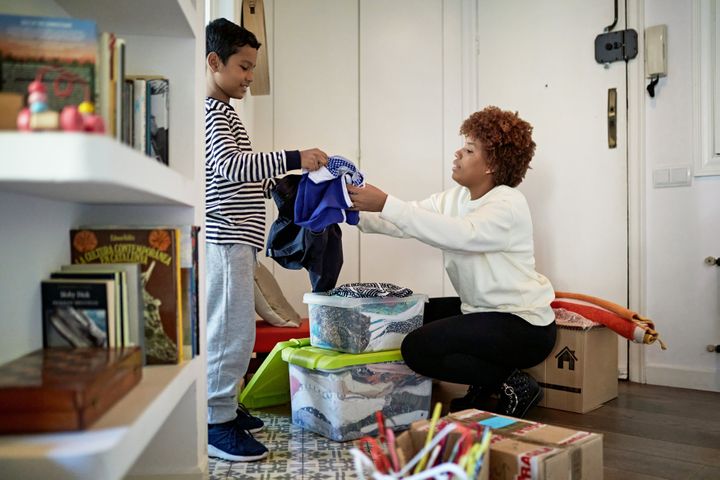
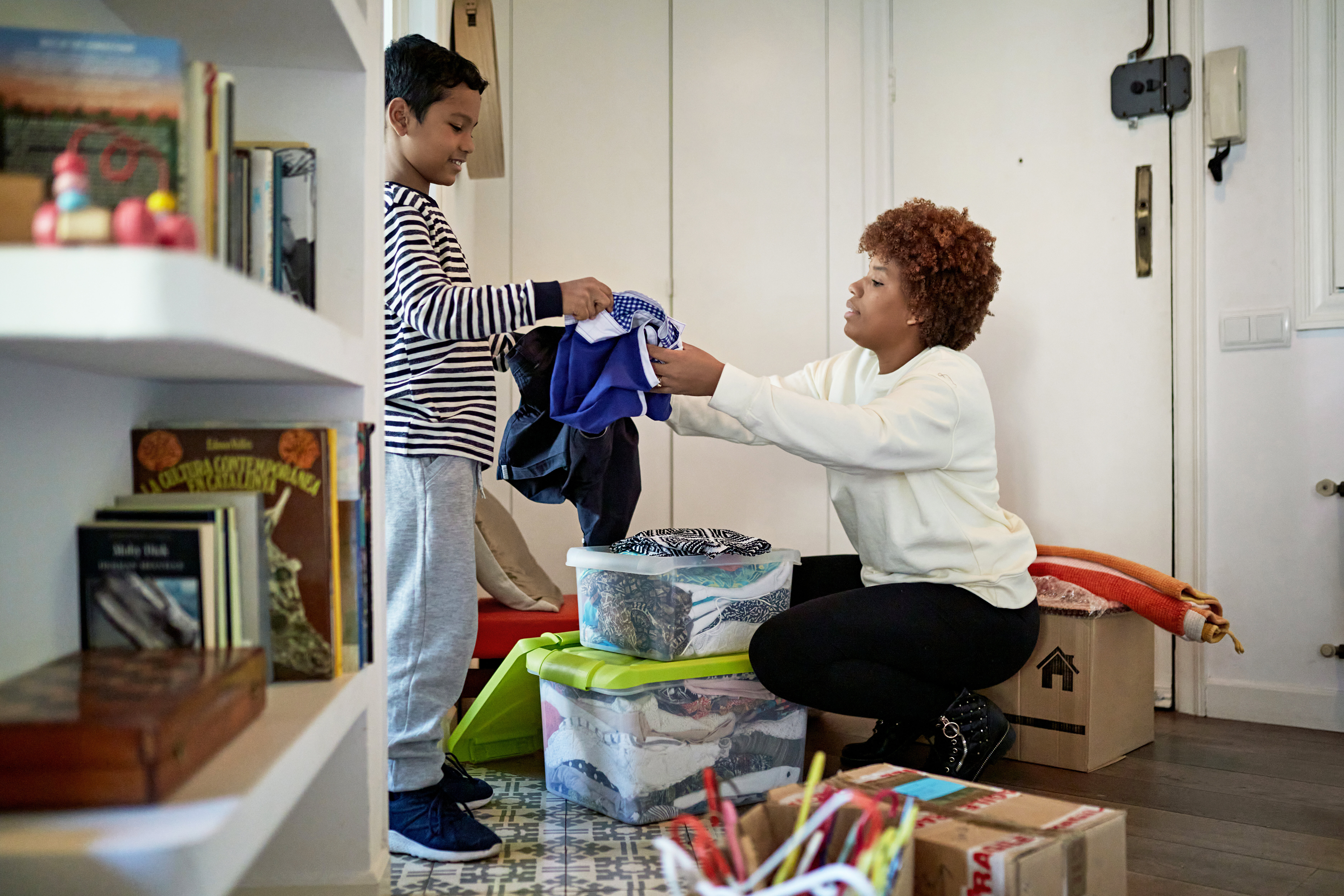
Don't buy containers until you've decluttered and taken stock of what you actually need. 

Don’t buy containers until you’ve decluttered and taken stock of what you actually need. 

Allowing Too Much Time Between Organising Sessions

“It’s easy to lose momentum and backtrack on progress so it’s important to have consistency, even if it’s a little bit everyday until you achieve your organizing goals.” ― Naik

Putting Unrelated Items In Bins

“I often see people putting unrelated things in a bin and calling it organised. While they have put the items away so that their home is neat and tidy, they haven’t separated and categorised the items in an organised way. This stops them short of the benefits of organisation such as saving time and frustration as well as being able to more easily retrieve and put away the item(s) they’re looking for.” ― Phillip

Organizing More Than One Space At A Time

“Let’s say you are organising your desk and you find something that really belongs in the kitchen junk drawer. You walk over to put it in that drawer only to realise that it needs decluttering, too. As you are decluttering space No. 2, you find something that belongs in your room. You go to put it away in your closet, find there is no space in there, then start organising that area, too. Now you have three organising projects going at once, are running out of time, and are too overwhelmed to know what to do next. Instead, as you begin your organising project, grab a bin or laundry basket to collect ‘move elsewhere’ items. Only after you are done with the first space should you attempt to put the ‘move elsewhere’ items in their respective homes.” ― Nelson

Piling Items To Be Donated In A Corner

“Resist the urge to simply pile donations in a corner to be disposed of ‘later.’ Move items out to their final destination right away. Otherwise, you are likely to second guess your decisions and suffer unnecessary doubt. Alternatively, you may become so accustomed to seeing the piles that you stop noticing them, abandoning them to take up space for extended periods of time.” ― Turner

Creating Systems That Don’t Have An ‘Exit Strategy’

“We are always accumulating things, but the amount of space in our houses is fixed. While it is very satisfying to have homes for every item you own, if you don’t continually edit your collections, your home will start to feel cluttered. Buy the clothes you need and love, but also keep a donation bag at the foot of your closet for those you don’t. Create a paper management system, but once a document no longer serves its purpose don’t feel obliged to keep it around because you made a file folder for it.” ― Nelson

Overthinking Everything

“People over-categorise. Keep it simple and don’t make your categories so complex that you can’t keep up with it. Simple systems will not only benefit you but everyone else in your home. When I’m working with a client where there is excess I always create a ‘back stock’ area. A great example of this is office supplies. You don’t have to keep every pen you own on your desk.” ― Naylon

Not Getting The Other Inhabitants On Board

“When you’re living or working alone, being organised is a lot easier! When you live with a spouse/partner/roommate it takes some joint effort and accountability. And when you have kids (at any age) it can sometimes feel impossible and never-ending. Same goes for being organised at work. There has to be some level of joint expectation and priority of what the environment should look like. Similarly, the systems that are set up need to work for everyone involved so that they can follow it. For example, taking children’s height into consideration when creating a mudroom so that they can easily hang up their jackets and book bags without asking someone else.” ― Melissa Levy, founder of Declutter + Design

Failing To Maintain

“Although cleaning and organising are two completely different things, they do have one important thing in common… maintenance! We never want to make the mistake of thinking that organising is a one and done undertaking. Just as we cannot expect our homes to stay spotless after one day of valiant efforts to clean, with no daily plan for upkeep; we also cannot expect that our earnest organising efforts will be met with success without some form of maintenance. Maintenance isn’t difficult. It can take as little as 10 minutes a day. We can follow an organised system of simply returning things to their proper places daily. This maintenance will make organisation routine, refreshing, and long lasting!” ― Powell

“Once you get organised, it’s just as important to put emphasis on how you’re going to stay organised. It’s not a one and done. When someone isn’t interested in this part, I can tell that they won’t be able to stay organised in the long run. Being organised takes consistent effort.” ― Levy

Putting Off Asking For Help

“A typical challenge with home organisation is when people get stuck, they delay reaching out for help from a friend, family member, or professional. The clutter and disorganisation increase for months, years, or decades. Their procrastination causes overwhelm and strain on emotional energy.” ― Samuels

Share Button

Why ‘Before And After’ Photos Are More Problematic Than You Think

Before and after photos are ubiquitous for a reason. They’re what marketers call a “social trigger” – a type of content that prompts those who see it to feel or act a certain way. They make it clear to viewers that one situation (the “after”) is more desirable than another (the “before”).

Think of before and after photos focused on weight loss, for example. If a group of people looked at a single photo of someone standing in a bathing suit, each person in that group might have a different reaction. Some might feel attracted to the person, others might feel indifferent about the person and others might focus on something else entirely – like what the person is wearing or how the sunset looks behind them.

But if that same photo is shown next to another photo of the same person, in which they wear a similar bathing suit but have a larger body, the reactions of the group looking at the photo become much more uniform. They notice the size of the person’s body in both photos before anything else. That comparison is the trigger.

While before and after photos might work for marketers and content creators, they’re often toxic for the rest of us. Sure, some are harmless – a photo of a dirty plate before it gets cleaned with dish soap versus after, or a messy bookshelf next to a tidied-up one. However, any pair of before and after photos that shows a human being sends a dangerous message: that certain types of bodies (or faces, hair types, skin tones, lip shapes, etc.) are better than others.

Here’s why these types of photos are even more insidious than you think:

They trigger unhealthy comparison.

“While sometimes well-intentioned, the impact of before and after photos lend to social and body comparisons, which can cause harm to anyone – especially people struggling with body image and eating concerns,” said Chelsea Kronengold, associate director of communications at the National Eating Disorders Association.

Many people seeing these photos will themselves to look more like the “before” than the “after.” And because the whole point of the before-and-after comparison is to say that the “after” is better, they’ll likely end up feeling less-than, or like their bodies need to be “fixed.” Over time, this can lead to real harm.

“Body dissatisfaction and thin-ideal internalisation are potential risk factors for all types of eating disorders,” Kronengold said. “People with negative body image are not only more likely to develop an eating disorder, but are also more likely to suffer from depression, isolation, low self-esteem and obsessions with weight loss.”

Before and after photos can trigger unhealthy comparison to others and an obsession with our own body types.

Before and after photos can trigger unhealthy comparison to others and an obsession with our own body types.

They reinforce weight stigma and anti-fat bias.

Before and after photos exist in every corner of social media, but they’re most pervasive in the weight loss space. Often, these posts elicit comments that seem positive, like, “so inspiring!” or “you look great!” But there’s a problematic flip side to these comments: The implication is that the person didn’t look great in their larger body, and that being thinner is always better.

“These subtle and overt messages contribute to weight stigma and perpetuates unhealthy diet culture messages that changing your body, losing weight or being thinner, is viewed as a ‘morally superior’ accomplishment,” Kronengold said.

This weight stigma (discrimination based on a person’s weight) is incredibly pervasive in our society, and it has serious negative effects. A 2018 review in the Journal of Advanced Nursing found that experiencing weight stigma increased a person’s risk of diabetes, eating disturbances, depression, anxiety and body dissatisfaction. It was also linked to an increase in chronic stress and chronic inflammation, and a decrease in self-esteem.

Weight stigma springs from the belief that thinner is better, and that fatness is unhealthy. But that’s not really the case. One 2016 review published in JAMA found that people in the “overweight” body mass index category live the longest. Another 2016 study published in the International Journal of Obesity found that 50% of people classified as “overweight” and nearly percent of people classified as “obese” were metabolically healthy. Meanwhile, 30% of people classified as “normal” weight were metabolically unhealthy.

The relationship between weight and health is incredibly complicated, but it’s fair to say that you can’t determine whether or not someone is healthy by looking at a photo of them.

Kronengold also pointed out that even before and after photos showing weight gain reinforce weight stigma. The eating disorder recovery space is filled with before-and-afters that showcase an extremely thin “before” body next to a less-thin (but still relatively small) “after” body.

“Many of these eating disorder before and after photos send the message that individuals with a history of anorexia and/or a low BMI are the only people impacted by eating disorders,” Kronengold said. “This reinforces the stereotype that eating disorders have a certain ‘look,’ and can alienate people with other eating disorder diagnoses and/or in higher-weight bodies.”

“It’s a very real phenomenon that people who post these before and after photos often feel boxed in by their visual ‘success stories’ when their bodies inevitably change over time.”

– Ashley Seruya, New York City-based therapist and writer

They don’t show the whole story.

Another massive problem with before-and-afters when it comes to bodies is that they only show two moments in time. Bodies are always changing — even the person posting the photos won’t look like their “after” forever.

“It’s a very real phenomenon that people who post these before-and-after photos often feel boxed in by their visual ‘success stories’ when their bodies inevitably change over time,” said Ashley Seruya, a New York City-based therapist and writer.

And yes, it is inevitable that their bodies will change, because the vast majority of people who lose weight will gain it back within a few years. A 2020 review published in the BMJ found that although diets lead to weight loss and health improvements after six months, that effect disappears at the one-year mark across all types of diets.

Another 2020 review concluded that diets cause more harm than good, since permanent weight loss is rare and negative physical and mental health side effects are common.

They put far too much value in appearances.

Just because someone is smiling in an “after” photo doesn’t mean that they’re mentally healthy. In fact, both Seruya and Kronengold said that it can be damaging to assume that someone has experienced positive life changes just because they “look better.”

“I think it’s almost always going to be dangerous to place our self-worth in something as uncontrollable and unpredictable as the human body,” Seruya said. Because, truthfully, how someone looks is very rarely an indication of their well-being.

“Instead of emphasising body transformations, we should be celebrating mental health wins, major life events, and accomplishments that have nothing to do with appearance and/or weight,” Kronengold said.

Share Button

Here’s How Your Diet Can Help You Have An Easier Period

Our menstrual cycle affects so much of our life. From hormonal acne and serious mood swings to generally feeling quite crappy, I’m sure if some of us had the option to skip our periods we would. And f, like me, you’re someone who has always had bad period pain, it can leave you feel a bit helpless.

There are lifestyle adjustments we can adopt that can help towards making our periods easier to deal with, though – and one of them is the food we eat at different stages of our cycle.

Lifesum, a nutrition app that aims to help users improve their baseline health through what they’re eating, has found that small changes to your diet can improve your symptoms during each phase of your menstrual cycle.

“What you eat plays a huge role in overall health creation, including how you feel throughout your cycle,” says Dr Alona Pulde, star of the Forks Over Knives documentary and member of the Lifesum health advisory board.

“Most people think of periods as just a week-long occurrence, but in reality, it’s a month-long cycle and nutrient-dense foods can help replenish your body and balance your hormones throughout.”

Roxane Bakker who is a registered dietician and head of nutrition at Vitl agrees that it’s important to look after yourself when you’re menstruating, particularly when it comes to your diet. Choosing foods that can help restore balance to your hormones are always a good option,” she says. “Vitamin B6 specifically is a key player in balancing your hormones. What you eat can sometimes help to relieve some of the uncomfortable symptoms you experience on your period”

There are four different stages to the menstrual cycle: the menstrual phase, the follicular phase, the ovulation phase, and the luteal phase. Each phase of our cycle requires different care and dietary needs, Dr Pulde suggests.

While dietary tweaks can help you ease your period pains, they aren’t solutions to medical conditions such as endometriosis, PCOS, or dysmenorrhoea. If your periods are so painful they’re affecting day-to-day life, speak to your doctor.

“Remember, everyone’s body works differently, and our needs vary,” adds Dr Pulde. “Focusing on a balanced, varied nutrient-dense diet that provides enough energy is key – not only for performance, but for our overall wellbeing.”

The Menstrual Phase

This first phase of the menstrual cycle is the time where our oestrogen and progesterone levels are lowest; you shed your uterine lining, and bleeding occurs. This usually lasts between three and seven days. During this time you can experience cramping, fatigue, low back pain, and mood swings.

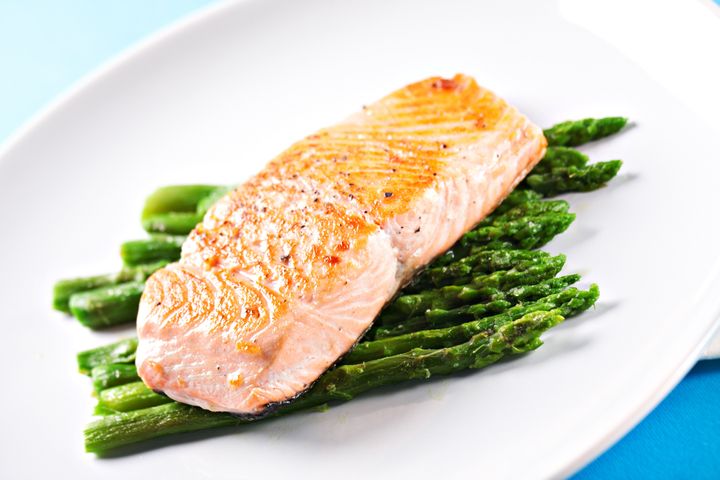
This is a time when you’re losing a lot of blood so it’s important to stock up on iron-rich foods. Animal products such as red meat, poultry, and fish (heme iron) or plant-based products, including leafy greens, beetroot, and legumes (non-heme iron) are essential during this time.

“As you can imagine, fruit and vegetables are a staple when it comes to any healthy diet,” Bakker adds, “but they’re essential when it comes to managing period cramps. They’re a vital source of fibre which in some cases can help to relieve the stomach pains associated with menstruating.”

Be sure to avoid foods that are highly processed during this time, such as sweetened breakfast cereals. “They can make period symptoms worse, causing inflammation and bloating,” says Bakker. “Caffeine and alcohol also impact inflammation. And studies show that they can worsen PMS symptoms.”

The Follicular Phase

During this phase, which can last anything from 11 to over 20 days, depending on the length of your cycle, oestrogen levels start to rise again. Your energy should increase and you may notice you have greater motivation.

Eating fibre-rich foods (fruits, vegetables, whole grains, and legumes) and fermented foods (kombucha, kimchi, sauerkraut) will help to metabolise and clear excess oestrogen.

The Ovulation Phase

You may experience some cravings at the time of ovulation, around day 12 to 14 of your cycle, so you should be eating foods that are rich in fibre and high in nutrients and consuming enough of these food types to fill you up.

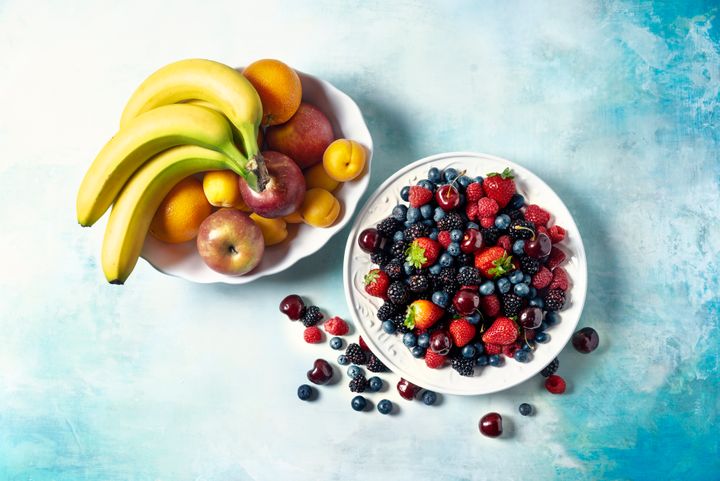
These include fruits (berries, apples, pears, bananas); vegetables (broccoli, Brussels Sprouts, artichoke, kale, sweet potatoes); legumes (beans, lentils, peas); whole grains (quinoa, oats, whole wheat pasta, barley); and nuts and seeds (almonds, pistachios, and sesame/pumpkin/sunflower seeds).

The Luteal Phase

The luteal stage of our cycle begins after ovulation, when both oestrogen and progesterone levels rise. During this time, pain can feel a bit more intense as large amounts of prostaglandins, a chemical that stimulates contractions, is released.

To help experience less cramping and lesson the physical symptoms of PMS, tuck into anti-inflammatory nutrients such as omega 3 (walnuts, flaxseed, chia seeds), antioxidants like vitamin C (found in fruit – particularly berries – and vegetables) and vitamin E (found in leafy greens, avocado, and whole grains).

“In this phase, it’s common to feel tired,” says Dr Pulde. “Eat complex carbs that provide fibre and vitamins to balance moods and curb cravings.”

Avoid or cut back on caffeine and alcohol if you can, she adds, and if you find your energy levels dropping, reach for the healthy snacks, such as hummus and veg sticks or homemade fruit and nut bars.

Share Button

How To Say No To Social Invitations Without Getting FOMO

PeopleImages via Getty Images

Learn to say no to social invitations and carve out time for self-care.

After the initial portion of the Covid-19 pandemic kept us apart for so long, many people pledged to take advantage of every opportunity to see loved ones again once vaccines were available. Thus, “hot vax summer” was born, with a focus on filling our social calendars with parties, trips, weddings and more.

Now, as coronavirus variants continue to spread and, with the onset of autumn, opportunities for socialisation could start to shrink again, we may be feeling even more pressure to cram in a bunch of activities.

But saying yes to every single social invitation can lead to feelings of being overwhelmed and to burnout. We let our FOMO (fear of missing out) create a sense of obligation that can negatively impact mental health. The solution? Embracing JOMO or the “joy of missing out.”

“JOMO allows you to redefine what actually brings joy into your life, instead of allowing other people, events or society dictate it for you,” Michelle Wax, founder of the American Happiness Project, tells HuffPost. 

“While in the past having a packed schedule of trips, events and activities may have been the norm, the past 18 months have allowed many of us to re-evaluate our lives and decide if how we’re spending our time and energy is what we actually want,” she adds. “JOMO allows you to choose the events, people and activities that will bring the most happiness into your life, and remove the ‘shoulds’ that are draining and time-consuming.”

If you’re someone who feels the pressure to go to every wedding, birthday party, picnic and day trip because you fear missing out, it will take more than just flipping a switch to feel the JOMO. But that doesn’t mean the situation is hopeless. Below, experts share their advice for how to embrace missing out. 

Stop saying ‘yes’ to everything

“While meaningful social connections are critical to our physical and emotional well-being, finding a balance is also key,” says Sophie Lazarus, a psychologist with the Ohio State University Wexner Medical Center. “Saying yes to and needing to be a part of everything can be exhausting and paradoxically reduce our ability to get the most out of the time that we do spend with others.”

Of course, caring about other people is important, but this shouldn’t come at the expense of your needs. Don’t feel obligated to attend events or do things you don’t enjoy simply because you feel like you “should.” It’s helpful to disconnect from guilt and obligation and use your time and resources for meaningful things in life. 

“For the next month, just say ‘no,’” recommends Matthew Ferry, a happiness coach and author of Quiet Mind Epic Life. “Intentionally abstain from doing more and saying yes. Practise being picky and selective with your time. Ask this question, ‘Will saying yes to this help me realise that all is well in my world?’ If not, then say no.”

JGI/Jamie Grill via Getty Images

Make a list of the things that bring you joy. 

Do a ‘joy audit’

“To embrace JOMO, it’s helpful to become self-aware of what really lights you up and rejuvenates you personally,” Wax says. “I recommend taking a ‘Joy Audit’ and writing down what people, places and activities bring joy to your life, and on the flip side, what people, places and activities drain your joy.”

Things that bring joy to your life could be as simple as cooking a new meal, reading a novel, turning off the news, getting out in nature or calling a loved one. When you find yourself with the opportunity to experience the joy of missing out, look to your list and choose one of these activities. 

Develop a healthy routine

Self-care is the name of the game when it comes to finding joy in “missing out” or taking a break from the endless chaos of life. Make this part of your daily routine, so that you can get used to prioritising your needs. 

“Take your ‘MEDS’ daily – meditation, exercise, diet and sleep,” Ferry says. He emphasises the power of nurturing our bodies with movement, nourishing food, mindfulness and rest. “When you do that, you feel empowered and satisfied with the moment,” Ferry adds.

Take a break from social media

“Nudge yourself into avoiding having to scroll, check, click and like all the time,” says Svend Brinkmann, a psychologist and author of The Joy of Missing Out: The Art of Self-Restraint in an Age of Excess.

Substitute this social media time with something more fulfilling to you on a personal level – whether that’s spending time with people in person or taking a nature walk alone. 

“Any changes that help you make wise decisions and also minimise the potential for FOMO can be really helpful,” Lazarus says. “If you know social media is going to make it hard for you to feel good about your decision, then unplug for a bit. Maybe make a plan to engage in a favourite solo activity to help you make the most out of the time you gained from ‘missing out.’”

katleho Seisa via Getty Images

Take breaks from social media or reframe the way you look at people’s posts. 

Reframe how you engage with social media

“You don’t have to unplug from social media altogether to avoid feeling the fear of missing out, but when you see people enjoying life online or on social media, another trick you can use is the ‘I am Next’ Strategy,” says Ken Honda, a happiness expert and author of Happy Money: The Japanese Art of Making Peace With Your Money.

“Whenever you feel jealousy or think other people are all out having a great time while you’re not, you can say to yourself, ‘Good for them! I’m next,’” he adds.

Rather than feeling bad about not being part of a certain event or trip, you can also think about how much more enjoyable your current and future life experiences are because you’re taking care of yourself and not getting burned out in the process. And remind yourself that individuals enjoy different things, so every little experience is not necessarily for you. 

Take stock of what you have

The joy of missing out can encompass social events and other experiences, as well as spending money on objects. JOMO is about realising that you cannot do or have everything – and it’s not necessarily a bad thing.

“There is much in human psychology that drives us towards more, achieving more, earning more money, experiencing more and so on,” Brinkmann says. “But as they rightly say, less can be more, and JOMO is about reminding oneself that more is not always better, but in the consumer society that we have constructed over the last 100 years, it takes a disciplined effort to go against these tendencies.”

To counter these instincts, Honda recommends taking stock of all of the wonderful experiences and items you can already call your own and making time to appreciate them. You can keep physical lists in a gratitude journal or make it a regular mental exercise.

“The hard truth is that you cannot get everything in life anyway. There are thousands of events and chances happening every day that we just don’t know about, so we just enjoy the bliss of ignorance,” Honda explains. “It’s all about where you place your attention. Instead of purposely putting your attention on things you can’t have, it’s better to put your attention on things that you either can have or things you already have that make you happy.”

AsiaVision via Getty Images

Engage with and appreciate the objects and memories you already have to shift your mind away from what you don’t have.

Let go of false urgency

“Oftentimes we don’t realise the impact of reacting to the assumption, ‘I have to show up to everything I am invited to,’” Ferry says. “We automatically assume that there will be a negative consequence for not attending the party, accepting the dinner invite, or participating in an event that is important to someone else in our life.”

This assumption creates a false sense of urgency, so we assign undue importance to things that are actually more commonplace and routine. 

“We behave like the relationship is on the line if I turn down an invitation,” Ferry explains. “Yet, accepting that invitation might not be what’s best for you mentally, emotionally, physically or financially. We are pack animals. We accidentally prioritise other people above ourselves. Put your needs first. Demand to be treated well. Demand to be at peace. Release false urgency and practice just being.”

Make time for reflection and mindfulness

“Since the pandemic started, our daily routines stretched, shifting us positively and negatively, causing us to turn inwards and witness our signals during uncertainty,” says life coach and Behaving Bravely author Anita Kanti. “It revealed a time to ponder life’s interpretations resulting in more gratification, an unexpected gift for many.”

Even as aspects of “normal life” become possible again, it’s important to continue setting aside time for reflection. Listen to what you need and let that guide you. Consider talking to a professional therapist if you don’t already.

Kanti also recommends mindfulness exercises to help with that process and mind shift. “Choosing JOMO while managing unproductive FOMO stimulates us to go deeper within ourselves,” she explains. “Try belly breathing exercises lying down, breathe by bringing the air down toward the belly. Do simple grounding techniques to detach, repeat affirmations, or focus on humour.” 

Covid-19 is more than a news story – it has changed every aspect of life in the UK. We are following how Britain is experiencing this crisis, the different stages of collective emotion, reaction and resilience. You can tell us how you are feeling and find further advice and resources here.

Share Button

How To Deal With A Boss Who Sucks At Listening To You

Bad bosses come in all kinds of flavours –- from incompetent to just plain jerk -– but one of the most frustrating kinds of managers is the one who never seems to listen to you. Your ideas, requests and complaints are ignored or rejected. Everything you say seems to go in one ear and out the other.

At a certain point, not feeling heard can take a toll on your psyche. In a survey by the Society for Human Resource Management, 84% of U.S. workers say poorly trained people managers create a lot of unnecessary stress. The workers’ biggest recommendation on what their bosses could improve? Their communication skills.

Ideally, good bosses take the time to proactively ask what’s working and what’s not in your one-on-one meetings with them.

But when your boss is not listening to you, you have two options: either do nothing and hope your boss realises you are unhappy, or you can take actions to make yourself heard.

Jennifer Tardy, a career coach and diversity and inclusion consultant, said too often she sees employees who avoid dealing with their boss and are not comfortable talking in a direct way or in a timely manner to them.

“Employees wait too long to have the courageous conversation and now the situation has compounded,” Tardy said. “At this point, rather than have a rational, logical conversation with their manager, they explode ― often with emotion leaving the core message to get lost in.”

There are helpful steps you can take about feeling unheard long before it gets to that point.

Here’s what you can do to salvage a relationship with a boss who is not listening to you –- and when to decide enough is enough.

1. Diagnose whether they don’t listen to anyone, or just you.

Gorick Ng, a career adviser at Harvard University and the author of “The Unspoken Rules: Secrets to Starting Your Career Off Right,” said that when employees deal with bosses who are not understanding them, they may want to jump straight to quitting as the “path of fastest relief.” But one way to figure out if you can save the relationship is to take the time to understand where your boss is coming from.

“Whatever you’re dealing with, someone else has dealt with before.”

– Gorick Ng

To do that, first try talking to people who work with or used to work with your boss. “Whatever you’re dealing with, someone else has dealt with before,” Ng said.

He suggested asking questions about how your boss prefers to communicate, such as “What’s worked with this person before? Are they someone who needs to see it on paper? Are they someone who needs a nice long pro/con list? Are they someone who needs a mockup or draft? Are they someone who needs to hear it from a certain person?”

“What you’re really trying to figure out is if this is a problem that you can solve,” Ng said.

After you do this bit of research, you should have an idea what will get your boss’ attention, be it project deadlines or influential colleagues. If your manager listens to what a certain colleague says, for example, you could focus on asking that colleague to be the whisper in your boss’ ear about your ideas, Ng said.

2. When you bring it up to your boss, make sure that you have a solution in mind.

Once you diagnose your boss’ deal, you can have a conversation. But don’t simply complain. Get specific about what actions made you feel unheard, and bring solutions that could address the problem.

Tardy said you should ask yourself what specific actions your boss took that led to this. What specific actions would my boss need to take for us to remedy the challenge? That way, when you bring it up with your boss, you can be clear on their role in the problem and in the solution.

And then after you acknowledge how you felt unheard, have a solution on what could make your joint communication style better.

“Many times when we have courageous conversations, we leave it to the other party to figure out what action to take to reach the solution,” Tardy said. “The more specific you are on the action you want from your boss, the more clearly you can articulate it to them so they can take the action.”

You can bring up solutions with language such as, “Hey I know we’re trying to achieve this. I was thinking of this option or this option or this option. These are the pros and cons. My suggestion is that we might want to consider option B. What is your reaction?” Ng said.

Or, the solution can be brought up as simply as something like, ”‘Would it be helpful if I did ‘blank’?’” Ng added.

3. If talking and suggesting solutions fails, it’s time for change ― either your boss or your job.

If you’ve exhausted these options, and nothing has changed, then it’s time to consider switching it up ― perhaps out of the job altogether.

First, you can try leaving your particular manager if you still want the role.

“Change doesn’t mean leaving the company. Maybe it means leaving the manager, but staying in the department or company,” Tardy said. “Escalation means talking to your manager’s manager. Oftentimes, messages that go unheard from an employee become clearly understood by a leader.”

But if leaving your inattentive manager is not a possibility, then it really may be time to start looking for a new job where you and your ideas will be heard. And then, at this new job, you can hash out communication styles with your boss up front.

“If you make it very clear that you need to feel like your ideas are heard, and define what that looks like when it doesn’t happen, it will be easier for you to bring up three, six or 12 months into the role with the manager,” said career coach Kaitlyn Buckheit, who specializes in career transitions. “You won’t be bringing up the topic for the first time.”

Share Button

We Tried 8 TikTok Beauty Trends To See If They Really Work

TikTok is littered with hair and makeup tutorials, ranging from the wacky to the “oh, this might actually be doable.” While some of them aim to solve common everyday problems (like a flat ponytail, for example), others are a little more out there (for instance, it’s a mystery why anyone would feel the need to draw fake freckles on their face, but that’s a viral tutorial nonetheless).

While no one should feel pressured to sport faux freckles or contour their face to look like a Kardashian, I wanted to see if these TikTok beauty hacks at least deliver on their claims. In that spirit, I tried eight viral TokTok beauty trends to see how they actually work.

1. DIY skin tint (or BB cream)

The concept behind this trend is mixing creams you already own to create a custom shade of skin tint. See an original TikTok video highlighting the trend here:

BB, which stands for “beauty balm,” is meant to be a lightweight base, so mixing your foundation with other products (primers, SPF and more) makes sense. You’ll note that in the original video above, the creator added sunscreen – but be warned that mixing sunscreen with other products diminishes the SPF factor and offers less protection. For this DIY product to work, you have to ensure your foundation and primer have the same base ingredients – for example, if one has a silicone base, the other should too; otherwise the product will roll right off your face.

Did it work?

It did! It feels like the perfect base for summer. I found it was a little tricky applying with a brush, but it was smooth and easy when using fingers. It’s like “your skin but better.” Plus, it’s great that you can customise how much glow or moisturizer you want to add.

Here’s a video of my experiment:

2. High ponytail for long hair

This popular tutorial creates a ponytail that sits up super high and is extra voluminous. It’s done by twisting the hair tie around the bottom part of the ponytail twice. It sounds like it won’t make much difference to the height of a ponytail, but as someone with long and heavy hair, I’m willing to try anything. See an original TikTok tutorial here:

Did it work?

Not only did it work, but it was also extremely easy! And it doesn’t feel like a ponytail that’ll give you a headache. Here’s a video of my experience:

3. A makeup routine that claims to be sweat-proof

If you prep your skin and apply your base makeup products the way this tutorial suggests, it claims to be absolutely sweat-proof. This was inspired by the way drag queens do their makeup, as are many great discoveries in the beauty world. It goes like this: moisturiser, translucent powder, setting spray, makeup primer and foundation. Here’s an original TikTok tutorial:

I originally tried this trick in March 2020 and found it to be a little cake-y for my dry skin, but I was willing to give it another go.

Did it work?

Initially, yes. The base looked very good upon application. But after a while it started pilling (balling up) around my neck. I think it’s one too many layers for me, but I’d still try it again being more careful around my neck area.

Here’s a video of my experiment:

4. The scrunched-up tissue eye look

When I first saw this look, I thought there’d be no way it could actually look good. You take a tissue, wad it up, dip it in random colours of eyeshadow, and dab it on your eyelids to create an artistic, almost tie-dyed look. Here’s an original tutorial from TikTok:

Did it work?

I loved this! Who says you need expensive brushes to create something fun? All you need is a colourful makeup palette and some tissue. Sure, it looks a little messy, but it’s a fun and colourful look I’d gladly wear again. I think brighter colours work best for this beauty trend.

What I used: The NikkieTutorials x Beauty Bay palette. Here’s my take:

5. A quick way to fuller lips

Overlining lips isn’t new, though it grew in popularity thanks to Kylie Jenner. Not everyone loves the overlined look – it can look like too much (it can also look like you have a thin moustache), but this tutorial promises it’s not only easy but very quick, too. Huda Kattan of Huda Beauty recreated it, and she’s also a fan.

Essentially, you purse your lips together very tightly and apply the lipliner around and inside the lips. In essence, because the lips are stretched out, you get a more even overline more quickly. Check it out:

All you need is your lip pencil and a liquid lipstick or lipstick of choice. I tried it with red, as I was feeling adventurous.

Did it work?

I suppose so, but it’s a lot more overlined than I’m used to so it looked weird at first! It was quick and easy, though. I prefer not drawing over my cupid’s bow, and once I cleaned up that part, I liked it a lot more. I used the MAC lip pencil in Cherry and Colourpop Ultra Matte Lip in Creeper. Here’s my video:

6. 10-second contour

All you need is a stick bronzer, your foundation and 10 seconds to the perfect contour. Sound too easy? That’s what I thought, too. You simply contour over the lips, under the cheekbones and chin, and on the forehead, add your foundation on the rest of the face and blend in, like this:

Did it work?

Surprisingly, yes. It was easy and quick and blended in really nicely ― I will certainly use that hack again.

Here’s my take:

7. Using a burnt almond as eyeliner

I couldn’t believe that burning an almond could actually be used as a smoky eye liner/shadow, but apparently it works. I obviously had to try it out, as it seems like an easy and affordable way to do your eye makeup. You just take an almond, burn the tip a little bit, wait for it to cool down (this step is important!) and apply it like you would your shadow when doing a cat-eye. Watch this:

Did it work?

Somewhat so! It was a lot harder to get color out of the almond. Also, let me advise you again to wait until the almond isn’t burning hot! It’s more of a soft smoked outline and though it was a fun challenge, I think I’ll stick to my black eyeshadow and liner for future looks. Here’s my take:

8. Easy and natural-looking freckles

TikTok is full of faux freckle videos, most including fake tanning mousse, which are intimidating and can easily go wrong. However, this tutorial uses Maybelline Brow Tattoo, which is meant for your face ― so I was hoping the colour whould be more natural-looking. Here’s what it claims to do:

To be on the safe side, I picked a color lighter than my hair —colour Medium Brown — and applied it across my nose and cheeks.

Did it work?

It worked so well! It created a very natural-looking result ― I went over my natural nose freckles and did some more over my cheeks. I think leaving it on for two hours wasn’t necessary, but the product’s instructions recommend that for the colour to last three days. I will try it again, for sure. Here’s my attempt:

Share Button

The Most Meaningless, Unhelpful Feedback People Get At Work

Getting good feedback is necessary for anyone to grow their career. But too many of us end up receiving unhelpful advice that doesn’t mean anything useful.

Phoebe Gavin, a career coach who specialises in supporting early and mid-career professionals, said she often sees bad feedback fall into two categories: empty praise and vague criticism.

These types of feedback are unhelpful, she said, because what people really want is “to be able identify something specific that they can do that they should either keep doing because it’s working, or something they should adjust because it’s not working.”

Unfortunately, bad feedback is common, and it can even start to infect your own language at work. Here are types of feedback you should rethink.

1. “Great job.”

Popular but vague words of encouragement like this are not actually helpful, because they aren’t tied to a specific outcome related to the role or the organisation. The person hearing it doesn’t “know why they did a great job, what exactly they did a great job at. They don’t know how their great job has an impact. It’s just not very useful,” Gavin said.

It doesn’t encourage anyone to keep up the good work, either.

“The problem with this type of feedback ― although it feels great to receive it ― is that it is not reinforcing any behaviours. In order to turn meaningless feedback into something that will encourage employees to continue to perform, the feedback must be very specific,” said Angela Karachristos, a career coach who has worked in human resources.

“Instead of saying, ‘good job,’ the manager should say give a specific example of what the person did well so that those positive behaviours can be repeated,” she said.

Often, giving too much unhelpful praise is a people-pleasing mistake that first-time managers make as a way to make up for negative experiences they personally had on a team. “A lot of managers over-correct and really lay on the praise, and not give the kind of support through constructive criticism that actually helps people grow,” Gavin said.

2. “I don’t like that.”

Bad criticism stops with what someone did wrong, while good criticism gives them a clear path of what needs to happen differently and how they can do it better next time.

“If you just tell someone, ‘Hey, you missed that deadline, that caused problems,’ sure, that might be valid, but it doesn’t give space to improve with whatever context that person is working in,” Gavin said. “It doesn’t create a conversation where the problem can be solved.”

Gavin said subjective, vague feedback such as, “I don’t like that,” “That doesn’t work for me,” or “I’ve never heard that before” stems from someone reaching into “their own subjective experience and not bringing any other external factors in.”

A better method is to be specific about what’s going wrong, or to have the humility to note that the feedback is just an opinion. It’s the difference between “‘Those colours seem very jarring to me, that’s just how they look to my eye,’ versus ‘I don’t like that, I don’t like that design,’” Gavin said.

3. “You need to work on your attitude.”

In her book Radical Candor: Be a Kick-Ass Boss Without Losing Your Humanity, management expert Kim Scott writes that a lot of bad work criticism falls into the trap of highlighting personal traits rather than having external causes of a problem acknowledged.

“It’s easier to say, ‘You’re sloppy’ than to say ‘You’ve been working nights and weekends, and it’s starting to take a toll on your ability to catch mistakes in your logic.’ But it’s also far less helpful,” Scott writes, noting that better criticism makes it clear that a work problem is not “due to some unfixable personality flaw,” and can be used as a tool for improvement.

Karachristos said that a common example of this kind of personal criticism is “You need to work on your attitude.” “Any type of feedback that is focused on the person or that person’s personality, and not the work, can be very problematic,” she said.

At worst, when job performance feedback is tied to a person’s identity, it can be used to hold their career back. Women of colour, in particular, are given subjective labels like “difficult,” “angry” or “challenging” in performance reviews – words that signal they are not a “fit” in a workplace or don’t “fit” a manager’s homogenous idea of success.

Nadia De Ala, founder of Real You Leadership, a group coaching program for women of color, said her clients deal with feedback – often unsolicited – about their natural tone of voice and how they dress, rather than about actual points of improvement on their work.

One client asked a co-worker for help with compiling marketing research for a promotion and was told, “You’re not going to get promoted if your voice goes up at the end of sentences. You don’t sound confident.”

“This type of feedback was unhelpful because it was unsolicited advice and had nothing to do with market research,” De Ala said.

It speaks to how feedback is not just words: It can make or break an employee’s experience and even push them to leave. Gallup research found that when a boss’ feedback makes employees feel demotivated, disappointed or depressed, four out of five of those employees start to job-hunt.

Sometimes, the feedback can be right, but still be wrong because of how the message is delivered.

If you’re in a position to give feedback, recognise that not everyone likes to hear it the same way.

“You have to be sensitive to where you do it. You might feel like it’s great to publicly recognise the person, but some people hate that. It makes them feel embarrassed,” Karachristos said.

Karachristos said it’s also a mistake for peers and managers to publicly criticise a group when they really intend that message for one person.

“That person will never get the message, and then my whole team is going to get annoyed that I’m down on the whole group, or not necessarily respect me as a team leader or colleague because I’m not brave enough to address the problem,” Karachristos said.

Share Button

The Mistakes Many People Make When Doing A Downward Dog

You’re reading Move, the nudge we need to get active, however makes us happiest and healthiest.

When you think of yoga, you probably immediately picture the downward facing dog pose – or Adho Mukha Svanasanaas, as it’s called in Sanskrit. It’s widely considered as the mother of all yoga poses. Even non-yogis tend to know it.

The downward dog is great for strengthening your body, as well as providing balance for mind and body. And it can easily be snuck in-between tea breaks if you’re still working from home (guilty).

“The pose enhances flexibility in the shoulders, hips and thoracic spine,” says Naomi Annand, author of Yoga: a Manual for Life and founder of east London yoga studio Yoga on the Lane. “It lengthens the hamstrings and calves and strengthens the long spinal muscles, quadriceps, rotator cuff, and triceps to name just the main muscle groups used.”

Think of it as a mind and body MOT. Bodies respond well to doing things little and often, so even if you don’t have 90-minutes, you can squeeze in a stretch here and there. “Every time you do yoga, you’re building resilience and creating new little imprints in your nervous system,” adds Annand.

However famous the pose may be, it’s quite an intense posture and there’s a lot to pay attention to. So, here’s how to make sure you’re doing it properly.

1. Align your body correctly

As one of the more well-known yoga poses, the downward facing dog gives off the impression that it’s a straightforward pose, says Triyoga teacher, Christian Di Giorgio. But many people slip into misalignments.

The focus should be on lengthening the trunk and visualising an inverted “V” shape with your body, he says, with the coccyx at the apex. “Beginners should keep the arms locked and use them to press the spine and hips up and back whilst straightening the legs to lift the tail bone higher.”

2. Keep enough space between your hands and feet

Di Giorgio says not keeping enough space between the hands and feet is a common mistake he sees in yoga classes. “This forces the spine to curve and compress instead of lengthening healthily as it should,” he says.

So, how much space should you keep? “You should aim to use much more of the mat when doing downward facing dog,” he tells HuffPost UK.

“Lie on your front with the toes tucked under and the finger tips level with the collar bones and lift up from there. An overly short stance can require too much stretch on the back and leg muscles, causing the spine to bulge outwards as it would when slumping in a chair. We are trying to correct the problems of long sitting not exacerbate them!”

3. Don’t fixate on putting your heels down

Many people have a fixation on getting their heels down, flat to the floor, when doing the pose, adds Di Giorgio. “Forget putting your heels on the floor,” he says, “this is advanced work!”

While placing the heels down firmly gives a good grounding in the pose, Di Giorgio says this is more like a “cherry on the cake”.

“Over months and years, as hamstrings and calves lengthen then students should strive to get the heels down but not at the expense of compromising the spine.”

Yoga class at Triyoga

Yoga class at Triyoga

4. Look after your wrists

It’s important to look after hands and wrists which, over time, can cause injury. “Some tend to lean heavily on the wrist bones which are not designed to bear weight, leading to potential repetitive strain injuries,” says Di Giorgio.

“They should try to spread the palms and fingers and press them strongly into the mat. This forces the forearm muscles to be more active and offloads the wrist bones.”

5. Adjust the pose to your level if needed

If you’re finding the pose difficult, keep in mind you can tailor it to your abilities. “You might not be as able-bodied or want to throw yourself into such a dramatic stretch, but there are alternatives like the puppy pose, which is the downward dog, but on the knees,” says Annand. “It’s a little more gentle.”

There are also options to make it more advanced. “Try more broadening of the shoulders and opening of the armpits and chest, so that the lungs can remain open and free whilst keeping the neck passive,” suggests Di Giorgio.

“The abdomen and pubic area should be more lifted and toned as the waist lengthens much more. Work the calves and ankles harder to ground the heels without compromising the extension of the spine.”

Move celebrates exercise in all its forms, with accessible features encouraging you to add movement into your day – because it’s not just good for the body, but the mind, too. We get it: workouts can be a bit of a slog, but there are ways you can move more without dreading it. Whether you love hikes, bike rides, YouTube workouts or hula hoop routines, exercise should be something to enjoy.

Share Button

Got A Summer Cold? Here’s How To Make It Less Miserable.

It doesn’t have to be cold outside for you to catch a cold.

Although it’s more common to get sick in the winter, viruses can circulate year-round. Close proximity to others, lax hygiene, stress, lack of sleep and more can contribute to your likelihood of contracting an illness – even in hotter weather.

Colds are usually rare in the summer, and are often caused by viruses that are different from those we see in the winter. Now that people are meeting up and seeing each other more, these viruses are starting to circulate again. That means we’re seeing many more “cold viruses” this summer than usual, according to Ellen F Foxman, assistant professor in Yale School of Medicine’s Department of Laboratory Medicine.

And as anyone who has had a summer cold knows, the symptoms can feel even worse during this time of year. (Shoutout to everyone who has caught a cold lately while living their post-Covid vaccine life).

Looking for ways to keep your sickness at bay? Here is some expert advice on how to take care of yourself and make that nasty summer cold suck a little less.

Wash your hands frequently

“When you have a cold and are in close proximity to others, it is very easy to spread. Therefore, you should be extra cautious around other people and practice good hygiene,” Robert L Gordon, an emergency medicine specialist based in Middletown, Rhode Island, told HuffPost.

This means washing your hands for at least 20 seconds with soap and water. If you do not have access to a sink and soap, you can use hand sanitiser instead, Gordon said.

Get more rest than you normally do

Make sure you are resting as much as possible. Take frequent naps and make sure you sleep for seven to nine hours each night.

“Sleep is essential for the immune system to function properly in order to help us fight off the viral bugs causing the cold. The body needs time to rest and recover,” Kristamarie Collman, a family medicine doctor at Prōse Medical, told HuffPost.

Cold symptoms such as coughing or a stuffy nose can make it difficult to sleep and get rest. Be careful about the medications you take in the evening or at bedtime. Some decongestants and cold medications have ingredients that may keep you awake, Collman said.

She recommended trying soothing remedies such as steam-filled showers or warm beverages like caffeine-free teas with honey before bedtime, which may make it easier for you to catch some Zs.

Rest and hydration are both crucial in helping to relieve any cold.

Rest and hydration are both crucial in helping to relieve any cold.

Stay hydrated

Your body gets dehydrated more quickly in the summer. Combine that with your illness, and you could be missing out on a ton of fluids your body desperately needs right now.

“Some symptoms of a cold, such as a fever, can increase your risk of dehydration and fluid loss,” Collman said. “Hydration can help replace fluids you may have lost and assist with clearing congestion and mucus.”

Drink plenty of water or other hydrating liquids such as decaffeinated tea and sports drinks. Avoid beverages that are sugary or caffeinated, including coffee and alcohol, she added.

Take over-the-counter medicine

Some over-the-counter medications may help you find temporary relief for symptoms such as a headache, sore throat, nasal congestion and cough.

Common over-the-counter medicines for a cold include acetaminophen or ibuprofen. Gordon said it’s important to speak to your physician or pharmacist about which over-the-counter medication you should use to feel better.

Consider using a humidifier

More humidity in the summer might sound like the last thing you want, but it can help alleviate your symptoms ― particularly if you’re experiencing a runny nose or dry cough. A humidifier adds moisture to the air, which can help decrease irritation in the nose and throat, Collman said.

This is especially important when you’re indoors in the cool AC, beating the summer heat.

“While there is no specific scientific evidence that air conditioners can directly cause colds, too much AC may dry out the inside lining of your nose,” Collman said. “If the mucus membranes are dry, this can worsen cold symptoms such as a stuffy nose and sore throat.”

Avoid too much time in the sun

While you may want to catch some rays outdoors – who hasn’t thought they could “bake” their cold away? – be careful. Being in summer heat for too long can aggravate your symptoms, so stick to 30 minutes or less.

“The summer temperatures outside can increase the risk for dehydration and often make symptoms feel worse. Therefore, it’s important to avoid extended periods of time in the sun,” Collman said.

Use a saltwater gargle

If you have a sore throat, gargling salt water may reduce irritation and discomfort.

“Saltwater gargles are effective for killing bacteria in the throat while loosening mucus and easing pain,” Bindiya Gandhi, an integrative family medicine physician at Revive Atlanta MD, told HuffPost. She recommended adding a teaspoon of salt to a cup of warm water and gargling the mixture.

A cool compress can help reduce a fever.

A cool compress can help reduce a fever.

Use a cold compress for a fever

Feeling warm? In addition to staying hydrated and resting, place a cold compress on your forehead to cool down and reduce your temperature, Gandhi said. To make your compress, dip a washcloth in cool water. You can also stick a cooling gel eye mask into the freezer before putting it on.

Most fevers go away on their own within one to three days. If your fever persists for more than three days, contact your physician, Gandhi said.

Refrain from excessive activity

Hold off on resuming your intense workout routine or lifting heavy objects for a few days. Even walks outdoors in the heat may get too strenuous.

“When you have a cold, your body is working harder, and therefore, you may feel fatigued,” Collman said. “Engaging in excessive activity could make you feel extremely drained, so it’s best to rest or, if necessary, engage in light activity.”

If your cold gets worse, see your doctor

Cold symptoms can last anywhere from a couple of days to two weeks. Summer colds can have similar symptoms to the flu, so it can be difficult to tell the difference between the two illnesses based on symptoms alone. Generally, the flu is worse than a cold, and symptoms are more intense, according to the Centers for Disease Control and Prevention.

If you start experiencing flu-like symptoms such as a fever, chills or difficulty breathing, then see a doctor as soon as you can. For the flu, there are effective medications that can make the disease milder if the diagnosis is made early, Foxman said.

“There is also a lot of overlap between cold symptoms and a mild Covid infection,” she said.

If you are unsure of whether you have Covid-19 or a cold, you can get tested at a health center near you.

“Make sure to take extra precautions about not exposing other people to an infection, even if the symptoms seem to be mild,” Foxman added.

Stay home from work and social gatherings for a little extra time even after your symptoms are gone, and continue to wear a mask and wash your hands.

Share Button

These 6 Certified Quarantunes Are Still The Mood Boost We Need

It’s official: music helped us get through the pandemic. In a new survey of more than 2,000 people, almost a quarter (23%) said live streaming and music had been the biggest support to their mental health through lockdown.

The poll, conducted by global music discovery service DICE and Populous, asked people about their relationship to music during the pandemic.

Knowing thousands of other people were also tuning in to live streams made lockdown a less lonely experience, respondents said, though few of us were actually listening to new music to fill the long days. Almost three-quarters (73%) said their lockdown listening focused on artists in their prime decades ago.

Music has been scientifically proven to evoke feelings of comfort, relief, and enjoyment, particularly when a track harks back to happier times – though if you’re up for discovering newer tunes, here’s why that’s good for you, too .

For those in need of a wellbeing boost, HuffPost UK team members have shared the songs that got us through the past year-and-a-half. Add them to your playlists, or check out more HuffPost UK recommendations on Spotify.

My Shot, from Hamilton

[embedded content]

“I’m a huge musical theatre fan so it wasn’t a surprise that the songs that helped me get through lockdown were from musical show Hamilton. I was obsessed with the whole soundtrack but the one song I kept on repeat during lockdown was My Shot. It’s a song about triumph and strength, which motivated me, but musically it sounds amazing.

“It’s a great song to cook or clean to and the raps are my favourite part. The show (which is available on Disney Plus) is quite long, so listening to the soundtrack is a way for me to enjoy the story without needing to watch it again.” – Habiba Katsha, Life reporter

Rain On Me by Lady Gaga and Ariana Grande

[embedded content]

“Rain On Me came out in the early stages of lockdown, and I’ve had it on rotation pretty much ever since. This song was released at a time when the news cycle was especially bleak, with a sombre cloud hanging over everything, and it provided some escapism at a time we all really needed it with its anthemic chorus and empowering lyrics about overcoming difficult times. Plus, who doesn’t love a bit of camp provided by not one but two pop divas?

“I’ve been looking forward to hearing Rain On Me in a club ever since it was released, and even though I’m not quite ready for that yet, I know for certain it’s going to go off when I finally get there.” – Daniel Welsh, Entertainment editor

Motion by Khalid

[embedded content]

“For me, my go to feel-good, feel sad, feel pensive song is Motion by Khalid. It’s one of his lesser known songs but I am just so in love with his vocals, the lyrics, the beat, everything. I can’t decide if it’s a happy song or sad song. I listen to it during all sorts of emotions.

“One of the top lines of the song is ‘I’m in love with this moment’. I remember playing it on my earphones on a solo trip to Machu Pichu in Peru – I was just stood on top of the mountains and listened to it on repeat, I really was in love with the moment! My Spotify wrapped showed I was in his 0.5% of top listeners last year, and you can guess which song was on repeat! The song got me through the pandemic because it reminded me of happier moments.” – Faima Bakar, Life reporter

Holiday by Little Mix

<div class="js-react-hydrator" data-component-name="YouTube" data-component-id="9601" data-component-props="{"itemType":"video","index":24,"contentListType":"embed","code":"

","type":"video","meta":{"url":"https://www.youtube.com/watch?v=kHMXNPkNTTQ","type":"video","version":"1.0","title":"Little Mix – Holiday (Official Video)","author":"littlemixVEVO","author_url":"https://www.youtube.com/channel/UCssD3_aDYhaG44mwP53CO0w","provider_name":"YouTube","description":"Little Mix – Holiday (Official Video)\n\nListen to our new single ‘Holiday’ Here: http://lttlmx.com/Holiday\n\nApple Music: http://lttlmx.com/Holiday/applemusic\nSpotify: http://lttlmx.com/Holiday/spotify \niTunes: http://lttlmx.com/Holiday/itunes\nYouTube Music: http://lttlmx.com/Holiday/youtubemusic\nAmazon Music: http://lttlmx.com/Holiday/amazonmusic\nDeezer: http://lttlmx.com/Holiday/deezer\n\nSign up to our newsletter: http://lttlmx.com/Newsletter \n‪Follow Us On Spotify – https://spoti.fi/2Qk4m4E‬\n‪Listen On Apple Music -https://smarturl.it/LittleMix_AppleMusic\n‪Listen On Amazon Music – https://smarturl.it/LittleMix_Amazon‬\nSubscribe on YouTube – http://lttlmx.com/SubscribeYT\n\n‪Follow Little Mix:‬\n‪Instagram – https://www.instagram.com/littlemix/‬\n‪Facebook – https://facebook.com/LittleMixOfficial/‬\n‪Twitter – https://twitter.com/LittleMix‬\nTikTok – https://smarturl.it/LMTikTok\n\nWATCH BREAK UP SONG VIDEO ►http://lttlmx.com/breakupsongvideo\nWATCH WASABI MUSIC VIDEO ► https://smarturl.it/LMWasabi\nWATCH ONE I’VE BEEN MISSING MUSIC VIDEO ► https://smarturl.it/LittleMixOIBM\nWATCH BOUNCE BACK MUSIC VIDEO ►‬ http://smarturl.it/LMBounceBack/youtube‬\n‪WATCH THINK ABOUT US MUSIC VIDEO ► http://smarturl.it/ThinkAboutUs/youtube‬\n‪WATCH WOMAN LIKE ME MUSIC VIDEO ► https://smarturl.it/LittleMix-WLM‬\n‪WATCH THINK ABOUT US MUSIC VIDEO ► https://smarturl.it/ThinkAboutUs/youtube\n‪WATCH TOUCH MUSIC VIDEO ► https://smarturl.it/LittleMix-T‬\n‪WATCH BLACK MAGIC MUSIC VIDEO ► https://smarturl.it/LittleMix-BM‬\n‪WATCH POWER MUSIC VIDEO ► https://smarturl.it/LittleMix-P‬\n‪WATCH SECRET LOVE SONG MUSIC VIDEO ► https://smarturl.it/LittleMix-SLS‬\n\nLyrics: \n\nBoy have I told ya \nI swear you put the sun up in my sky \nWhen it’s cold you pull me closer \nSo hot it’s like the middle of July \n \nWanna have a little taste so let me lay you down \nNothing better than your skin on mine \nAnd I been looking for that feeling, looking all my life \nBoy you give it to me every time \n \nCan we make it all night \nWe don’t stop all up on my body babe, ooh \nTouch me like a summer night you feel like a holiday, ooh \nUp all night we don’t stop feel up on my body babe \nWe’re just dancing the night away \nBoy you feel like a holiday \n \nSo ima let go \nNo one else in the world could ever come close to you baby, close to you baby \nWe’re taking it slow \nWhenever, wherever, we’re lasting forever my baby \nAnd you’re turning me on \n \nBoy have I told ya \nYou give it to me like no other guy \nWe got that heat, yeah, like the summer \nAnd that’s why I’m so glad I made you mine \n \nWanna have a little taste so let me lay you down \nNothing better than your skin on mine \nAnd I been looking for that feeling, looking all my life \nBoy you give it to me every time \n \nCan we make it all night \nWe don’t stop feel up on my body babe, ooh \nTouch me like a summer night you feel like a holiday / holiday yeah\nUp all night we don’t stop feel up on my body babe \nWe’re just dancing the night away \nBoy you feel like a holiday \n \nSo ima let go \nNo one else in the world could ever come close to you baby, close to you baby, close to you baby , close to you baby\nWe’re taking it slow \nWhenever, wherever, we’re lasting forever my baby \nAnd you’re turning me on \n \nSo put your love on me, up on me \nOh boy I love it when you’re touching me, holding me \nNo way nobody put that thing on me, up on me, like you do \nFeel like a holiday, you know that I want it babe \n \nCan we make it all night \nWe don’t stop feel up on my body babe, ooh \nTouch me like a summer night you feel like a holiday / holiday yeah\nUp all night we don’t stop feel up on my body babe \nWe’re just dancing the night away \nBoy you feel like a holiday\n \nSo ima let go \nNo one else in the world could ever come close to you baby, close to you baby, close to you baby, close to you baby\nWe’re taking it slow / slow\nWhenever, wherever, we’re lasting forever my baby \nAnd you’re turning me on, turning me on \n \n \n\n#LittleMix #Holiday #LittleMixHoliday #LittleMixOfficial#LittleMixBreakUpSong#ShoutOutToMyEx #LittleMixShoutOutToMyEx #LittleMixTopTracks #LittleMixOfficialVideo #LittleMixEssentials #LittleMixLive #BestOfLittleMix #BlackMagic #WomanLikeMe #ShoutOutToMyEx #Touch #LittleMixLyrics #TikTok #Wasabi #EyesOnMe #WasabiChallenge","thumbnail_url":"https://i.ytimg.com/vi/kHMXNPkNTTQ/maxresdefault.jpg","thumbnail_width":1280,"thumbnail_height":720,"cache_age":86400,"options":{"_cc_load_policy":{"value":false,"label":"Closed captions"},"_end":{"placeholder":"ex.: 11, 1m10s","value":"","label":"End on"},"_start":{"placeholder":"ex.: 11, 1m10s","value":"","label":"Start from"},"click_to_play":{"label":"Hold load & play until clicked","value":false}}},"fullBleed":false,"flags":[],"enhancements":{},"options":{"theme":"life","device":"desktop","editionInfo":{"id":"uk","name":"U.K.","link":"https://www.huffingtonpost.co.uk","locale":"en_GB"},"slideshowAd":{"scriptTags":[],"otherHtml":""},"slideshowEndCard":{"scriptTags":[{"attribs":{},"scriptBody":"\r\n (function(){\r\n var c = document.getElementById(‘taboola-endslate-thumbnails’);\r\n c.id += ‘-‘ + Math.round(Math.random()*1e16);\r\n \r\n var taboolaParams = {\r\n loader: \"//cdn.taboola.com/libtrc/aol-huffingtonpost/loader.js\",\r\n mode: \"thumbnails-b\",\r\n container: c.id,\r\n placement: \"Endslate Thumbnails\",\r\n target_type: \"mix\"\r\n };\r\n \r\n if (typeof window.modulousQueue === \"function\") {\r\n \twindow.modulousQueue.add(function(){ doTaboola(taboolaParams); });\r\n } else {\r\n \tdoTaboola(taboolaParams);\r\n }\r\n }());\r\n"}],"otherHtml":"

"},"isMapi":false,"isAmp":false,"entryId":"611136d5e4b0cc1278bee401","entryTagsList":"ukmusic,wellbeing,lockdown,the-brightside,music,","sectionSlug":"lifestyle","deptSlug":null,"subcategories":"","isWide":false,"headerOverride":null,"noVideoAds":false,"isNative":false,"commercialVideo":{"provider":"custom","site_and_category":"uk.lifestyle","package":null},"isHighline":false,"vidibleConfigValues":{"cid":"60afc140cf94592c45d7390c","disabledWithMapiEntries":false,"overrides":{"all":"60b8e525cdd90620331baaf4"},"whitelisted":["56c5f12ee4b03a39c93c9439","56c6056ee4b01f2b7e1b5f35","59bfee7f9e451049f87f550b","5acccbaac269d609ef44c529","570278d2e4b070ff77b98217","57027b4be4b070ff77b98d5c","56fe95c4e4b0041c4242016b","570279cfe4b06d08e3629954","5ba9e8821c2e65639162ccf1","5bcd9904821576674bc55ced","5d076ca127f25f504327c72e","5b35266b158f855373e28256","5ebac2e8abddfb04f877dff2","60b8e525cdd90620331baaf4","60b64354b171b7444beaff4d","60d0d8e09340d7032ad0fb1a","60d0d90f9340d7032ad0fbeb","60d0d9949340d7032ad0fed3","60d0d9f99340d7032ad10113","60d0daa69340d7032ad104cf","60d0de02b627221e9d819408"],"playlists":{"default":"57bc306888d2ff1a7f6b5579","news":"56c6dbcee4b04edee8beb49c","politics":"56c6dbcee4b04edee8beb49c","entertainment":"56c6e7f2e4b0983aa64c60fc","tech":"56c6f70ae4b043c5bdcaebf9","parents":"56cc65c2e4b0239099455b42","lifestyle":"56cc66a9e4b01f81ef94e98c"},"playerUpdates":{"56c6056ee4b01f2b7e1b5f35":"60b8e525cdd90620331baaf4","56c5f12ee4b03a39c93c9439":"60d0d8e09340d7032ad0fb1a","59bfee7f9e451049f87f550b":"60d0d90f9340d7032ad0fbeb","5acccbaac269d609ef44c529":"60d0d9949340d7032ad0fed3","5bcd9904821576674bc55ced":"60d0d9f99340d7032ad10113","5d076ca127f25f504327c72e":"60d0daa69340d7032ad104cf","5ebac2e8abddfb04f877dff2":"60d0de02b627221e9d819408"}},"customAmpComponents":[],"ampAssetsUrl":"https://amp.assets.huffpost.com","videoTraits":null}}”>

[embedded content]

“It’s so hard to pick one song that got me through 2020 when making playlist after playlist was the only way I found to mark the endless weeks of lockdown – and cope with not seeing my partner, who reciprocated with his own. As to my internal radio, Dua Lipa and TSwizz featured heavily, and like Habiba, the Hamilton soundtrack ear-wormed from the moment I watched it on Disney+.

“But my song of last summer was without doubt Little Mix’s Holiday – landing in August just when I needed one. Infectious and sexy, never taking itself too seriously, it lifted my spirits like a plane ticket for the soul. And that video, with Jesy, Leigh-Anne, Jade and Perrie as beautifully kitsch mermaids: ’We’re just dancing the night away / Boy, you feel like a holiday.′ In the staycation age, it’s a lesson in finding wanderlust closer to home.” – Nancy Groves, head of Life

Skankin’ Sweet by Chronixx

[embedded content]

“As a proud Jamaican who is overly obsessed with the culture, it wouldn’t be right if I didn’t pay homage to the song that helped me get through my loneliest times: Skankin’ Sweet by Chronixx. There is something about a reggae beat that really brings joy and tranquillity into my life, so I often played it in the mornings to give me that extra motivation to conquer the day.

“The song represents love, unity and having a moment to put your worries aside and just focus on being one with the universe, all true values that really helped me overcome my struggles through the pandemic.” – Maya Franklyn, Intern

Together Again by Janet Jackson

[embedded content]

“I was six years old when Janet Jackson released Together Again and I have an almost visceral reaction to that dreamy opening harp; I feel warm, gooey, a little-more care-free, and like an excited kid again, waiting for the upbeat disco drop. My love affair with this tune has already spanned decades, so it’s perhaps no wonder I listened to it on repeat during the first lockdown, when we were all craving old comforts.

“Ignorantly, I’ve always belted out the lyrics without considering their meaning – I guess that’s what happens when you learn a tune as a kid. In a moment of pandemic boredom, I googled the backstory and learned that Janet wrote the song in memory of a friend who died from AIDS. At a time when death and sadness was dominating headlines, it only made it feel more pertinent.” – Rachel Moss, Life editor

Share Button