There are concerns signs of cancer in pregnant women are being dismissed as pregnancy symptoms.


There are concerns signs of cancer in pregnant women are being dismissed as pregnancy symptoms.

Early results from a Phase I clinical trial of AT101, a new CAR T cell therapy that uses a distinct binding mechanism to target CD19, show a 100 percent complete response (CR) rate at the higher dose levels studied in the trial, according to researchers from the University of Pennsylvania Perelman School of Medicine and Penn Medicine’s Abramson Cancer Center. The findings were published today in Molecular Cancer and presented at the 65th American Society of Hematology (ASH) Annual Meeting and Exposition (Abstract 2096).
CAR T cell therapy has revolutionized treatment for many people with blood cancers who had run out of other treatment options. While some patients experience long-term responses to CAR T cell therapy, it doesn’t work-or the cancer eventually returns-for others. The CD19 CAR T cell therapies that are currently approved all target CD19 through the same epitope (FMC63). To try and make CD19 CAR T cell therapy more effective for more patients, Marco Ruella, MD, an assistant professor of Hematology-Oncology and Scientific Director of the Lymphoma Program, and his research team, along with the Korean company AbClon Inc, co-developed a CAR T product (AT101), using cells originating from the same patient, that targets CD19 through a different epitope, located closer to the cell membrane, via a novel antibody (h1218). In preclinical studies, the team previously demonstrated that h1218-CART19 had decreased T cell exhaustion and improved control compared to FMC63-CART19.
The Phase I first-in-human clinical trial (NCT05338931) was conducted in South Korea and enrolled 12 patients with relapsed or refractory B cell non-Hodgkin’s lymphoma (NHL). The study was designed to increase the dose level of AT101 after safety was confirmed in the first six patients. After a median follow-up of 6.5 months, all six patients who received dose level 2 or higher experienced a complete response and their cancer has not relapsed.
“We’ve learned that the way you design your CAR really matters. Designing a different CAR might drastically change the way the T cells work, potentially allowing that CAR T cell product to work where other CAR T cell products have failed,” Ruella said. “We were not expecting such a drastic early difference in this study. The CART19 products that are already FDA-approved are very effective, and it’s not easy to do better. While there is not a randomized trial of this product yet, the initial results seem very promising, and we look forward to moving into the planned Phase II portion of the study.”
The drug was found to be safe, with manageable side effects, including cytokine-release syndrome in four patients and immune-cell-related neurotoxicity syndrome in three patients. One patient experienced grade 3 sepsis that resolved; the same patient later developed fatal neutropenic septic shock outside the dose-limiting toxicity time frame.
The Phase I study enrolled patients who had not previously received any other CAR19 therapy. In the Phase II expansion, the study will also include patients who have previously received CAR19 therapy.
How much did the scheme help the economy and affect the spread of Covid?
Diseases like dengue fever could be common if little is done to tackle climate change, report warns.
A High Court case is looking at whether universities owe a duty of care towards their students.

My daughter was asleep in her room down the hall, and my husband and I gathered our bowls of popcorn and settled on the couch. I had my feet up on the coffee table, was comfortable in my sweatpants, and I relaxed into the cushions as my husband hit “play” on the newest episode of one of the most popular series on TV in recent years.
And just a few minutes into it, who should appear on screen but my ex-flame?
Let’s call him Mike. He always shows up when I least expect it ― and I really should expect it by now.
Advertisement
Every time it happens, I groan and ask my husband, “Is that Mike?” even though I already know it is.
“Yep,” he answers. He’s never as surprised as I am.
It all started with a commercial over a decade ago. I was watching the Detroit Red Wings back when they were good, and when the second period ended, there was Mike, laughing with some stranger on a couch. I don’t even remember what the ad was for because I was so shocked to see that familiar face staring back at me from my TV screen.
That was the first time I asked my husband, “Wait, is that Mike?”
They don’t know each other personally, but he’s known of Mike since he met me 15 years ago, when we used to go to my brother’s comedy shows and Mike was also onstage. My husband has always thought Mike is hilarious ― and he is, but still, it’s weird.
Then one night, we decided to watch a popular comedy, and there was Mike, only for a minute — but he was there, nonetheless. I’d know those rolling eyes and that crinkled forehead anywhere. I still asked, “Is that Mike?” I just couldn’t believe he had made it to Hollywood.
A few years later, while watching a highly anticipated remake of a popular movie from decades ago, guess who showed up in a pivotal scene, and guess who thought she might be seeing things? “Wow, he’s really made the big time,” I said out loud, astonished, more to myself than my husband.
Advertisement
Little did I know he was just getting started.
“Mike keeps popping up in my life in the most unexpected ways. I guess I should be used to it by now, but every time it happens, it feels like the first time.”
I have kissed many men. Most of them I haven’t seen in years. I know the possibility of running into them on the street is highly unlikely. And even if I did, there would be some I wouldn’t recognise or even remember. But Mike keeps popping up in my life in the most unexpected ways. I guess I should be used to it by now, but every time it happens, it feels like the first time.
I met Mike on spring break during my senior year of high school. I was with three of my girlfriends, and he was staying at the same hotel just down the hall from us with three of his guy friends. When we all bumped into each other, we learned that we all lived in the same state less than an hour away from each other.
We hung out with them the entire week, and by the end of the first day, I was already in love with Mike. He was funny and handsome. He had a suaveness to him. He was as smooth as the lines he used.
I felt like I was Sandy from “Grease” and Mike was my Danny. We played in the waves, kissed near the rocks, and I refused to believe that our romance would soon be over. Our brief affair felt more like a dream than reality and I didn’t want to return home, where I knew it would be difficult for things to continue. I may have been smitten but I wasn’t a fool ― we were 18, living an hour apart, committed to attending colleges on the opposite side of our state ― and I knew there was no real future there.
Advertisement
But, to my surprise, I later found out he was taking acting classes with my brother. What were the chances? So, after every show, we’d end up reconnecting. Ultimately, we couldn’t get past the distance, and eventually, he moved even further away to pursue his acting career.
There was a time when Mike and I weren’t all the different. We both liked acting and singing. We both liked “Rent” and the Barenaked Ladies. We both had big dreams for the future.
The day after Mike appeared at a major award show and I saw him onstage with so many other actors I greatly admire, I drove to my local community college campus and half-boasted, half-lamented to my composition students that someone I used to make out with had won.
There I was, making peanuts teaching 19-year-olds how to properly use a comma. It was hard not to compare myself to Mike — and easy to feel jealous of his fame and success — but then again, teaching college had been my big dream for the future. So why, when I saw him on that stage, did I feel so unsatisfied?
I had never really wanted fame ― not since I was in middle school, anyhow. And even then, I’m not sure I really wanted it. I mean, what 12-year-old doesn’t think they want to be famous? What I really wanted was to teach and write. I didn’t have dreams of moving to LA or New York. I loved the state where I grew up. And in addition to wanting a husband who was sweet and funny and kind, I also wanted one who was grounded, loyal and dependable ― things Mike could never really be while chasing an acting career. I wanted a family. I wanted stability.
Advertisement
And I’m happy to say I was lucky ― I got all of that. My life is much like many other middle-class Midwesterners: I have a job I care about, a modest home we’ve almost paid off, a wonderful, devoted husband, and a sweet kid I’m crazy about. Sometimes I write things that some people read, but for the most part, my life is quiet. And it’s exactly how I always wanted it to be.
After I wrote this essay, I ran to the grocery store and bought my daughter a new toothbrush. I couldn’t help thinking about Mike and how he doesn’t have to do his own grocery shopping anymore. He can probably pay people to do that. And I felt a twinge of jealousy again.
“There I was, making peanuts teaching 19-year-olds how to properly use a comma. It was hard not to compare myself to Mike — and easy to feel jealous of his fame and success.”
Mike’s life is filled with red carpets, designer suits and appearances on late-night talk shows — the exact opposite of quiet. The exact opposite of my life ― a life I love. So what’s the problem?
I guess it’s that these days ― maybe more than ever before ― we’re always comparing our lives to everyone else’s lives. And social media has made it even easier to measure how we’re doing against how someone else is doing ― or at least how they appear to be doing. We scroll through Instagram and see our friends ― or complete strangers ― boasting about their exotic vacations or fabulous home remodels or the good grades their children are getting, and we do our own boasting. We look at Twitter and see someone got a promotion or a book deal or a new car, and we share our own successes. But we all know that social media doesn’t always show the reality of someone’s life, and even if and when it does, should that make us feel any less worthy or that our lives are any less worthwhile? Of course not.
Advertisement
What we need to do ― what I’ve needed to do ― is remind ourselves that the grass is often greener and that we have our own blessings to count. There are always going to be people who have more, who have done more, who know more, but if we get and stay wrapped up in that game, we’ll never win ― or we’ll be too busy to realise that we’re already winning.
I followed Mike’s Instagram for a while. And I ooohed and ahhhed at some of his posts, but I also wondered if he would ooooh and ahhhh at any of mine if he were to see them. Maybe catching a glimpse of my adorable daughter or the family gatherings I cherish might make him a little jealous of my life. Who knows? In the end, it doesn’t really matter. Jealousy isn’t the point.
Even though I’m not (yet!) the bestselling author I hope to be one day and even though I’m not the Broadway star I dreamt of being when I was a kid, I’m happy, and that’s an incredible thing to be able to say.
It’s sometimes easy to forget that when the famous guy I once dated pops up on my TV, but hopefully, from here on out, whenever I see his face, I’ll be reminded that dreams come true ― both his and mine.
Advertisement
Jennifer Furner has essays in the anthologies “Art in the Time of Covid-19” and “A Teenager’s Guide to Feminism.” She has been published in Motherwell, Folks, Santa Fe Lit Review, Belmont Story Review, and others. She lives in Grand Rapids, Michigan, with her husband and daughter. For more of her writing, visit her website, jenniferfurner.com.

We’re living in a time and place in which it often seems the people in charge have no sense of accountability ― whether it’s governors rejecting mask mandates and other public health measures aimed at keeping people safe, or leaders failing to own up to their role in big and small failures.
On an everyday level, many adults don’t understand the consequences of their actions and refuse to acknowledge when they’ve made mistakes. And as always, our children are watching. So perhaps now, more than ever, is the time for parents to focus on teaching kids about accountability.
Advertisement
“Accountability is a way to take responsibility for actions you’re in charge of,” Priya Tahim, a licensed professional counsellor and founder of Kaur Counseling, told HuffPost. “By teaching kids personal accountability, you’re teaching them that mistakes happen and when those mistakes happen, it’s important to learn to fix or grow from them.”
“It helps instill moral values of right and wrong, even when there is no one watching,” she added. “It also allows kids to see that it’s OK to make mistakes, and there are ways to move forward from those mistakes.”
So how can parents create a culture of accountability in their homes? Below, Tahim and other experts share their advice.
“Parents are unsure sometimes about when to actually start asking their kids to be accountable,” Sheryl Ziegler, a psychologist and the author of “Mommy Burnout,” told HuffPost. “I feel like it starts when they’re toddlers, and it’s as simple as, ‘We can play with the puzzle but when we’re all done, we need to clean it up.’”
Advertisement
She noted that kids may wander off to play with something else or get a snack when the puzzle is finished, and too often parents resort to just cleaning it up themselves because it’s faster and easier that way. But it’s better to provide opportunities for kids to take ownership of their own little responsibilities.
“If you start early, you start setting the foundation that it’s important to be accountable: ‘Sure we can play with that now, as long as we clean this up,’” Ziegler said. “You can make it fun and have cute cleanup songs like they do in preschool, but bring it into the home to reinforce that this is how the world works.”
As kids get older, you can give them more things to be responsible for. The key is to make sure the tasks are developmentally appropriate, such as asking toddlers to pick up their toys and books at the end of the day.
“For kids that might be a little bit older, it could look like packing your own lunch, packing your own backpack, making your bed, or putting all of your dirty clothes in the hamper,” clinical psychologist and author Jenny Yip said. “Kids begin to understand that they do have responsibilities, and the choices they make ultimately have consequences. It also teaches them free will and how to be responsible citizens of society ― it’s ‘I do have a part in what happens in the world.’”
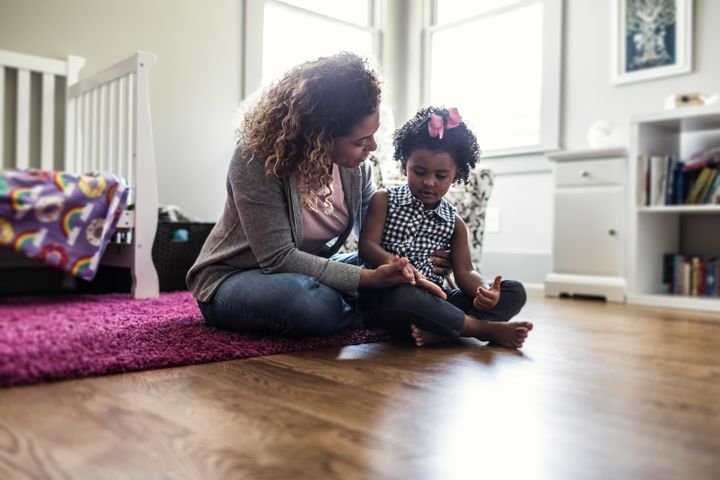
Responsibilities lead to opportunities for accountability. Cindy Graham, a psychologist and founder of Brighter Hope Wellness Center, advised allowing children to be Mommy or Daddy’s “helper” ― getting a diaper for their baby sibling, helping out in the kitchen or even picking up groceries when they reach their teen years.
Advertisement
“Kids are likely to continue on with actions they feel motivated to do and find highly rewarding,” Graham said. “Therefore, parents should also ask their kids for ways they would like to show how responsible they can be.”
“Accountability means taking ownership of the decisions and the choices you make, and accepting whatever consequences those choices come with,” Yip said. “It’s important for every young child to learn so that they understand cause and effect and how the choices they make have consequences, positive or negative.”
There are many everyday opportunities for kids to make decisions or take actions and then experience the natural consequences of those choices, said Amanda Gummer, a child psychologist and founder of The Good Play Guide.
“For example, I suggest don’t fight them if they don’t want to take a coat, but then when they moan about being cold or wet, simply explain that that is why you suggested taking a coat in the first instance, but that it was their decision not to bother. So they now need to put up with the discomfort that results,” Gummer told HuffPost.
“Perhaps they might not want to eat their lunch,” she added as another example. “There’s no need to start an argument or fight about it, but just make it clear there’s nothing else to eat until dinnertime and so if they are hungry, they will have to deal with it.”
Advertisement
Children should also understand that even when they experience negative consequences resulting from their choices, there’s always an opportunity to make things better or try again next time.
MoMo Productions via Getty Images
“Don’t forget praise at all age levels,” said Lea Lis, a psychiatrist who works with both children and adults. “Parents tend to notice when kids mess up, but when they are doing really well, they ignore it. Praise your child that is doing well with their accountability at all times, and catch them being good!”
Kids should learn that taking responsibility isn’t just about negative consequences, but about positive rewards as well. In addition to verbal praise, positive reinforcement can also come in the form of allowance for doing chores, gold stars for good behavior or a reward chart to earn prizes.
The important thing is to just acknowledge their accountability in some way, even with the little things.
Advertisement
“If they cleaned their room or made their bed on their own, you want to reinforce that,” Ziegler said. “You can say something like, ‘Good job this morning! I really appreciate how you made your bed, and I didn’t even have to tell you. That makes the morning so nice. Now we can get out of the house and go to the pool sooner.’”
“I believe the primary way parents can teach their kids accountability every day is to model these behaviours,” Graham said.
She recommended that parents set an example by actively and openly practicing taking accountability for their actions. This can involve things like apologizing when they make mistakes, acknowledging when their behaviors or emotions are more extreme than a situation warrants, or identifying ways to make amends when they hurt others.
“Children are likely to repeat what they see others doing, so it is important for caregivers to be aware of the lessons kids are learning from them,” Graham said.
Parents can also use examples from their kids’ favorite shows and movies to talk about how the characters take accountability for their actions.
Advertisement
“I would say consistency is the most important thing a parent can do while teaching their kids to be accountable ― consistency in how they handle times their child doesn’t take responsibility, or creating and following family rules,” Tahim said.
She recommended teaching children to follow a routine, such as waking up, brushing teeth, making the bed, showering, etc. Although parents are often exhausted, it’s valuable to make sure kids are adhering to these steps on a regular basis.
“As adults, we know that not brushing your teeth or not showering can not only have physical consequences, but social,” Tahim said. “So if you teach your child to follow a routine and they don’t follow through, it’s up to the parents to correct that action. In many cases, parents will often set rules but not follow through on the consequences once they set them. This behaviour promotes irresponsibility by teaching kids that their behaviour is acceptable and they don’t have to accept responsibility.”
Teaching a kid accountability can also help them learn how to process their feelings in an appropriate way, Tahim said.
Of course, everyone gets anxious, upset, angry and so forth. Being accountable involves learning to take charge of your emotions and process them in healthy ways, such as taking deep breaths, journaling or talking about how you feel.
Advertisement
“For example, discourage throwing things, hitting, biting, yelling as a form of anger release. Instead, try to have them release in a healthy way and be accountable for how they feel,” Tahim said. “Encourage them to explore what triggers their feelings and ways they can accept responsibility for those triggers.”
“The more open-minded a parent can be in teaching their kids accountability, the better,” Graham said. “Remember, kids will make mistakes. Parents should take care to self-regulate and not have large emotional displays when their kids struggle with accountability. This can lead their child to be less likely to want to talk about times where accountability is difficult for them.”
It’s also important for kids to understand the difference between the things they can and can’t control.
“Good mental health comes from correctly taking responsibility for things within their control ― for example, how hard they study for an exam ― while not taking responsibility for things they can’t control, like the disruption to schooling because of COVID, the lockdowns and home schooling,” Gummer said.
Parents can help their kids recognise the difference and ensure they don’t take responsibility for things they shouldn’t. Psychotherapist Noel McDermott emphasised that children often have an egocentric mindset in that they think bad things happening around them are their fault.
Advertisement
“A child might feel responsible for their parents’ feelings, so it’s important to model healthy boundaries around this,” he told HuffPost. “Mostly this will be achieved by, as parents, making it clear that your child cannot lose your love, and also by modelling and explaining when Mummy or Daddy is upset, it’s never because of them.”
“You want to build up an accountability system that eventually doesn’t rely on you,” Lis said. “For example, you might want to help them with their organisation skills or homework when they are in elementary school, but eventually, you want them to figure out how to check their assignments and organise their desks and rooms without your help.”
While you may reward your children for doing their homework when they’re young, consider longer stretches of time between such reinforcements as they get older (i.e. only rewarding bigger milestones like good report cards for teenagers).
Promoting their independence and sense of accountability also empowers kids to take ownership of their successes and failures.
“This reduces children blaming other people for things that go wrong and also helps kids feel good about themselves when things do go well, which also builds confidence,” Yip said. “Essentially, being accountable builds resiliency.”
Advertisement

Many people wait until the new year to join a gym or start running – but now might be the best time.


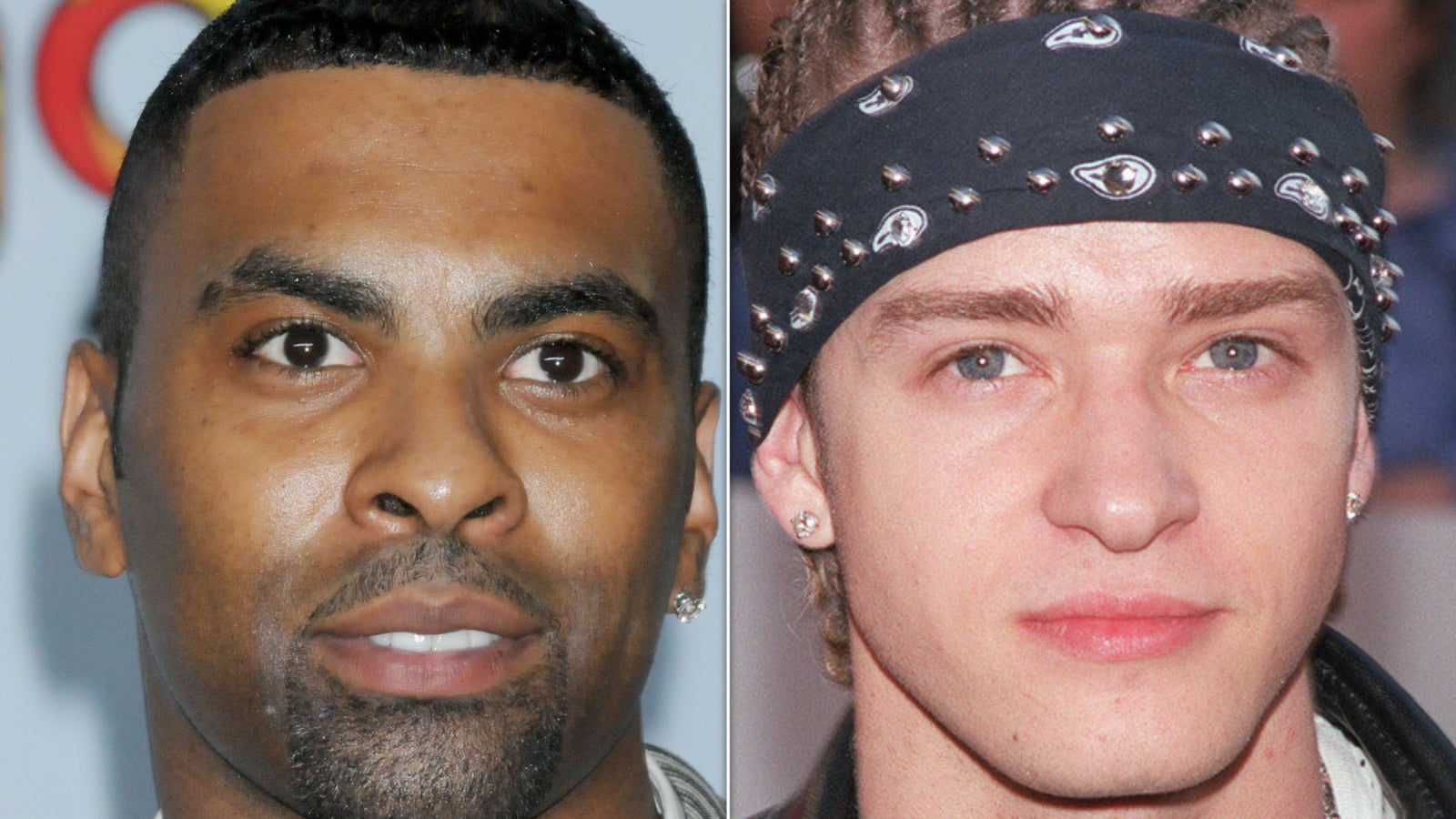
Justin Timberlake is receiving some grace after the memoir of his ex-girlfriend Britney Spears produced a litany of unfavourable claims against him.
Among other reasons, Timberlake went viral earlier this year when the audiobook version of Spears’ memoir saw actor Michelle Williams recreate an exaggerated voice Timberlake allegedly used when meeting singer Ginuwine, who is Black.
Advertisement
In addition to claims that Timberlake cheated on Spears and urged her to get an abortion, Spears writes that Timberlake “tried too hard to fit in” with the Black entertainers in his orbit. One of those instances allegedly involved the “Pony” singer in New York City.
“One day J and I were in New York, going to parts of town I’d never been to before,” Williams read from Spears’ memoir, “The Woman in Me.” “Walking our way was a guy with a huge, blinged-out medallion. He was flanked by two giant security guards.”
“J got all excited and said so loud: ‘Oh yeah, fo’ shiz fo’ shiz, Ginuwine, what’s up homie?’” she continued in Timberlake’s purported African American Vernacular English accent, which inspired mockery online when the audiobook was released in October.
Sources told “Entertainment Tonight” at the time that Timberlake was “focusing on his own family and trying not to concern himself with Britney’s memoir.” Now, Ginuwine has finally heard about the moment going viral — and says Timberlake is “cool.”
Advertisement
“Nah, I don’t remember that,” the singer told Billboard through laughter in an interview Thursday.

Denise Truscello/WireImage/Getty Images
“I would have probably looked at him very weird if he did that like she said,” continued Ginuwine, whose real name is Elgin Lumpkin. “I just don’t remember that, but I remember him being a cool dude and me kicking it down there in Florida with [*NSYNC’s] producer at one time.”
In 2002, Timberlake famously broke up with Spears after three years together, and released his debut solo album. Spears wrote in her memoir that his most controversial single, “Cry Me a River,” portrayed her like a “harlot who’d broken the heart of America’s golden boy.”
Timbaland, who produced the song, recently apologised for saying Timberlake should’ve put a “muzzle” on her. Spears endured a 13-year conservatorship under the purview of her father, but saw it terminated in 2021 amid an impassioned “#FreeBritney” campaign on social media.