Kids And Teen Accounts On YouTube Are Changing – Here’s What Parents Should Know

YouTube has revealed it’s changing children’s accounts in the UK to help parents keep kids safer online.

The update comes as the UK government faces growing calls to follow in Australia’s footsteps and ban social media for under-16s.

A petition to ban it has garnered 25,000 signatures (at the time of writing) and prime minister Keir Starmer has now said he’s open to the idea of a similar ban here in the UK.

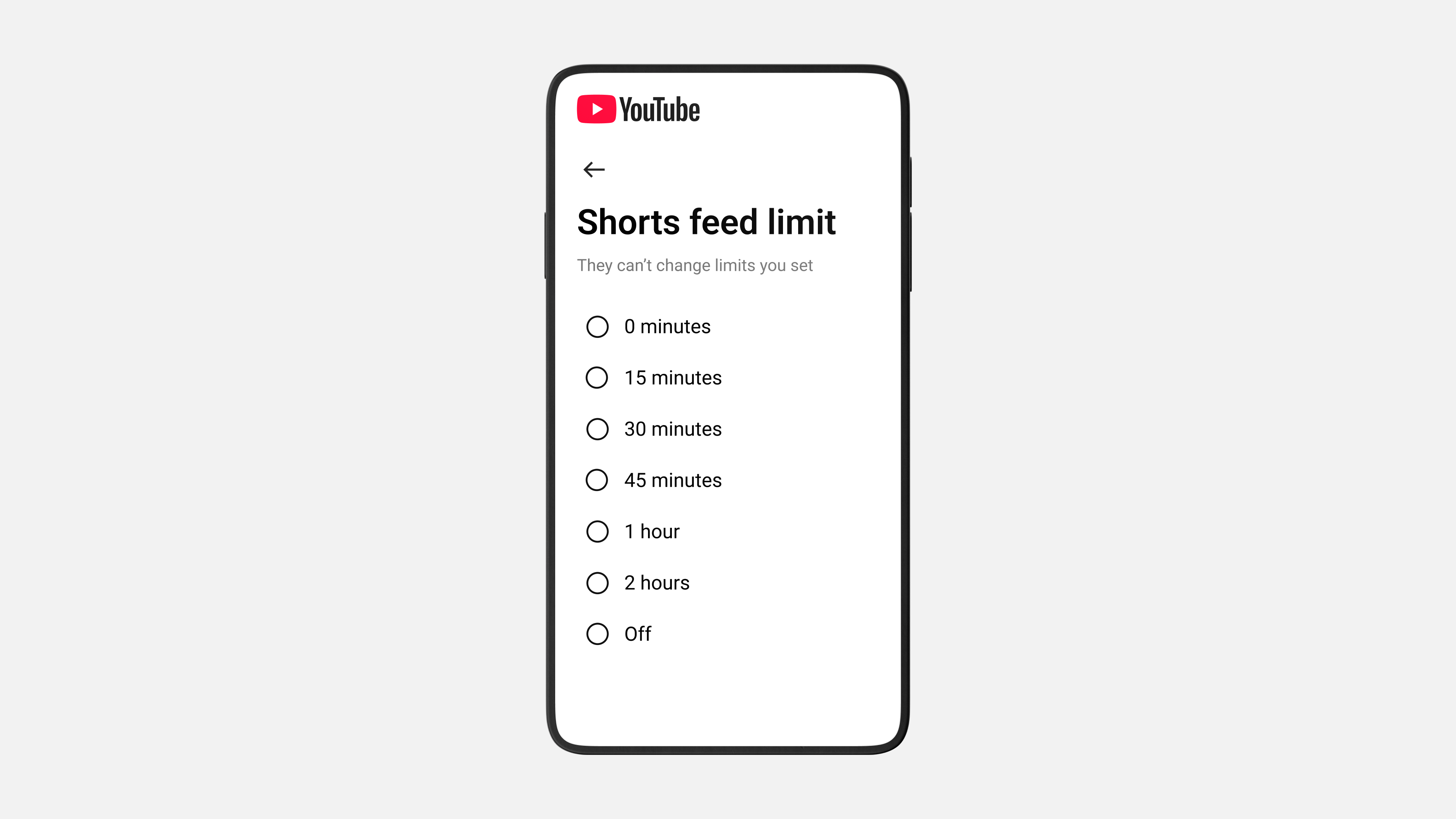
In a bid to improve the wellbeing of young users, YouTube has revealed parents will now be able to set time limits for scrolling Shorts, and will also enable caregivers to set bedtime and break reminders.
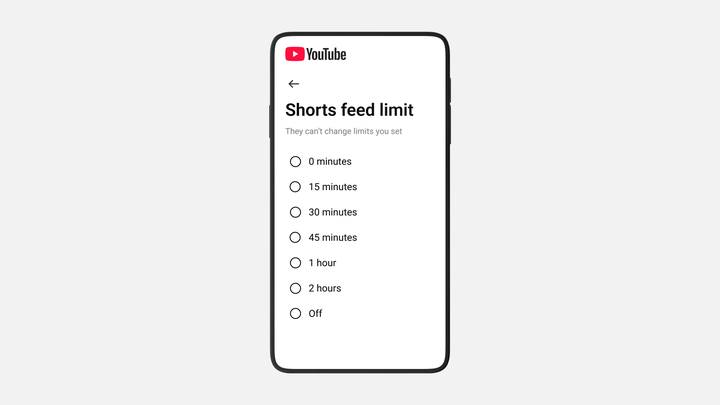
Parents will be able to set limits for scrolling Shorts

As part of the Online Safety Act, social media companies have a duty to protect children and stop them from accessing harmful or age-inappropriate content. Sites can face fines or be blocked in the UK if they don’t take protective steps.

The social media and online video sharing platform is also launching new ‘Quality Principles’ for content creators, developed alongside experts, to ensure videos created for teens are “age-appropriate” and “enriching”.

What are the quality principles?

Professor Peter Fonagy, head of the division of psychology and language sciences at UCL, which partnered with YouTube to provide evidence-based insights on adolescent development, said: “The mental health of children and young people is a global concern, and in the digital age the content teens encounter online can have both positive and negative impacts.”

He said the new quality principles will give creators a “practical, research-informed roadmap for making videos that are developmentally appropriate, emotionally safe, and genuinely supportive of young people”.

The principles include:

  • Joy, fun and entertainment: Show humour and warmth that lift teens’ moods like a day-in-the-life video or funny, self-accepting outtakes.
  • Curiosity and inspiration: Encourage exploration through creative tutorials, behind-the-scenes demos, or new hobbies that are easy to try.
  • Deepening interests and perspectives: Create deeper dives into subjects teens love, like music, gaming, or fashion, and show process, not just outcomes.
  • Building life skills and experiences: Offer relatable guidance for real-life moments, like teamwork or budgeting, to help them prepare for the future.
  • Credible information that supports well-being: Share accurate, age-appropriate information. Use trusted sources and avoid spreading misinformation.

Tell me more about the screentime limits…

YouTube said parents will be able to set time limits for scrolling Shorts – including having the option to set the timer to zero.

This gives parents flexibility to set the Shorts feed limit to zero when they want their teen to use YouTube to focus on homework, for example.

Or they could change it to 60 minutes during a long car trip to keep kids entertained.

Parents can also set custom Bedtime and Take a Break reminders.

There’s also a new account-making process

This has been designed to make it easier for parents to create a new kid account and switch between family accounts in the mobile app, depending on who’s watching, so they’re shown the most appropriate content for their age.

Dr Garth Graham, global head of YouTube Health, said: “We believe in protecting kids in the digital world, not from the digital world. That’s why providing effective, built-in tools is so essential, as parents play a critical role in setting the rules for their family’s online experiences.”

According to the social media giant, the updates will be rolling out from 14 January and will expand globally over the coming months.
Share Button

I’m A Flight Attendant – This Is The Safest Place To Park Your Car In The Airport

Airport parking demand shifts hugely across the UK, Transport Network reports.

Fewer than 1% of travellers through Heathrow look for a parking spot, but 10% of those passing through Bristol Airport look out for one.

That’s partly because of local transport links, they explain. But no matter where you’ve parked your car while on holiday, you’ll want to know it’s safe.

In a YouTube Short, flight attendant Cierra Mistt shared that the most secure place to park your car may be in the spot you like least.

Where’s safest to park in an airport car park?

“If you want to make sure your vehicle is safe at the airport ― especially on those long trips ― park in either the top floor of the [multi-storey car park], or the very back of economy parking,” Mistt said.

Though those areas are far away from the airport and can seem “unguarded”, Cierra said she recommends them for good reason.

“This is actually the parking where all the employees of the airport, along with crew members that are going to be on trips, park,” she explained.

“Security is constantly monitoring that area to make sure that no one breaks into those cars, and the shuttles are over there more than any other place because they need to make sure that their employees get to work on time.”

Some airports have separate parking arrangements for their staff ― but you can usually look this up ahead of time.

<div class="js-react-hydrator" data-component-name="YouTube" data-component-id="7359" data-component-props="{"itemType":"video","index":14,"contentIndexByType":1,"contentListType":"embed","code":"

","type":"video","meta":{"author":"Cierra Mistt","author_url":"https://www.youtube.com/channel/UCUSiprPHb__2r3tb4kjSscw","cache_age":86400,"description":"Follow for more Flight tips, tricks, secrets, and hacks\n\nFOR EARLY AND EXCLUSIVE ACCESS: Link in bio","options":{"_cc_load_policy":{"label":"Closed captions","value":false},"_end":{"label":"End on","placeholder":"ex.: 11, 1m10s","value":""},"_start":{"label":"Start from","placeholder":"ex.: 11, 1m10s","value":""},"click_to_play":{"label":"Add your own player cover","value":false}},"provider_name":"YouTube","thumbnail_height":360,"thumbnail_url":"https://i.ytimg.com/vi/FyHHL3946HQ/hq2.jpg","thumbnail_width":480,"title":"travel hacks you NEED to know for your next flight ✈️","type":"video","url":"https://www.youtube.com/watch?v=FyHHL3946HQ","version":"1.0"},"flags":[],"enhancements":{},"fullBleed":false,"options":{"theme":"life","device":"desktop","editionInfo":{"id":"uk","name":"U.K.","link":"https://www.huffingtonpost.co.uk","locale":"en_GB"},"originalEdition":"uk","isMapi":false,"isAmp":false,"isAdsFree":false,"isVideoEntry":false,"isEntry":true,"isMt":false,"entryId":"67c87573e4b04fc1efc84923","entryPermalink":"https://www.huffingtonpost.co.uk/entry/safest-parking-spot-airport_uk_67c87573e4b04fc1efc84923","entryTagsList":"holidays,youtube,flying","sectionSlug":"lifestyle","deptSlug":null,"sectionRedirectUrl":null,"subcategories":"","isWide":false,"headerOverride":null,"noVideoAds":false,"disableFloat":false,"isNative":false,"commercialVideo":{"provider":"custom","site_and_category":"uk.lifestyle","package":null},"isHighline":false,"vidibleConfigValues":{"cid":"60afc140cf94592c45d7390c","disabledWithMapiEntries":false,"overrides":{"all":"60b8e525cdd90620331baaf4"},"whitelisted":["56c5f12ee4b03a39c93c9439","56c6056ee4b01f2b7e1b5f35","59bfee7f9e451049f87f550b","5acccbaac269d609ef44c529","570278d2e4b070ff77b98217","57027b4be4b070ff77b98d5c","56fe95c4e4b0041c4242016b","570279cfe4b06d08e3629954","5ba9e8821c2e65639162ccf1","5bcd9904821576674bc55ced","5d076ca127f25f504327c72e","5b35266b158f855373e28256","5ebac2e8abddfb04f877dff2","60b8e525cdd90620331baaf4","60b64354b171b7444beaff4d","60d0d8e09340d7032ad0fb1a","60d0d90f9340d7032ad0fbeb","60d0d9949340d7032ad0fed3","60d0d9f99340d7032ad10113","60d0daa69340d7032ad104cf","60d0de02b627221e9d819408"],"playlists":{"default":"57bc306888d2ff1a7f6b5579","news":"56c6dbcee4b04edee8beb49c","politics":"56c6dbcee4b04edee8beb49c","entertainment":"56c6e7f2e4b0983aa64c60fc","tech":"56c6f70ae4b043c5bdcaebf9","parents":"56cc65c2e4b0239099455b42","lifestyle":"56cc66a9e4b01f81ef94e98c"},"playerUpdates":{"56c6056ee4b01f2b7e1b5f35":"60b8e525cdd90620331baaf4","56c5f12ee4b03a39c93c9439":"60d0d8e09340d7032ad0fb1a","59bfee7f9e451049f87f550b":"60d0d90f9340d7032ad0fbeb","5acccbaac269d609ef44c529":"60d0d9949340d7032ad0fed3","5bcd9904821576674bc55ced":"60d0d9f99340d7032ad10113","5d076ca127f25f504327c72e":"60d0daa69340d7032ad104cf","5ebac2e8abddfb04f877dff2":"60d0de02b627221e9d819408"}},"connatixConfigValues":{"defaultPlayer":"8b034f64-513c-4987-b16f-42d6008f7feb","clickToPlayPlayer":"5a777b9b-81fe-41a6-8302-59e9953ee8a2","videoPagePlayer":"19654b65-409c-4b38-90db-80cbdea02cf4"},"topConnatixThumnbailSrc":"data:image/png;base64,iVBORw0KGgoAAAANSUhEUgAAAAEAAAABCAQAAAC1HAwCAAAAC0lEQVR42mNkYAAAAAYAAjCB0C8AAAAASUVORK5CYII=","customAmpComponents":[],"ampAssetsUrl":"https://amp.assets.huffpost.com","videoTraits":null,"positionInUnitCounts":{"buzz_head":{"count":0},"buzz_body":{"count":0},"buzz_bottom":{"count":0}},"positionInSubUnitCounts":{"article_body":{"count":8},"blog_summary":{"count":0},"before_you_go_content":{"count":0}},"connatixCountsHelper":{"count":0},"buzzfeedTracking":{"context_page_id":"67c87573e4b04fc1efc84923","context_page_type":"buzz","destination":"huffpost","mode":"desktop","page_edition":"en-uk"},"tags":[{"name":"Holidays","slug":"holidays","links":{"relativeLink":"news/holidays","permalink":"https://www.huffingtonpost.co.uk/news/holidays","mobileWebLink":"https://www.huffingtonpost.co.uk/news/holidays"},"url":"https://www.huffingtonpost.co.uk/news/holidays/"},{"name":"YouTube","slug":"youtube","links":{"relativeLink":"news/youtube","permalink":"https://www.huffingtonpost.co.uk/news/youtube","mobileWebLink":"https://www.huffingtonpost.co.uk/news/youtube"},"url":"https://www.huffingtonpost.co.uk/news/youtube/"},{"name":"flying","slug":"flying","links":{"relativeLink":"news/flying","permalink":"https://www.huffingtonpost.co.uk/news/flying","mobileWebLink":"https://www.huffingtonpost.co.uk/news/flying"},"url":"https://www.huffingtonpost.co.uk/news/flying/"}],"isLiveblogLive":null,"isLiveblog":false,"cetUnit":"buzz_body","bodyAds":["

\r\n\r\n HPGam.cmd.push(function(){\r\n\t\treturn HPGam.render(\"inline-1\", \"entry_paragraph_1\", false, false);\r\n });\r\n\r\n","

\r\n\r\n HPGam.cmd.push(function(){\r\n\t\treturn HPGam.render(\"inline\", \"entry_paragraph_2\", false, false);\r\n });\r\n\r\n","

\r\n\r\n HPGam.cmd.push(function(){\r\n\t\treturn HPGam.render(\"inline-2\", \"entry_paragraph_3\", false, false);\r\n });\r\n\r\n","

\r\n\r\n HPGam.cmd.push(function(){\r\n\t\treturn HPGam.render(\"inline-infinite\", \"repeating_dynamic_display\", false, false);\r\n });\r\n\r\n"],"adCount":0},"isCollectionEmbed":false}”>

What if I don’t want to go that far?

Airports claim your car will still have lots of protection, like CCTV, number plate recognition, and patrols.

Otherwise, the Met Police suggest following some basic steps will prevent break-ins, at the airport and elsewhere.

These include locking your car, shutting your windows and sunroof, securing your number plates with tamper-resistant screws, and taking out or hiding valuable items inside the vehicle.

And don’t even leave hints of pricey electronic goods, like sat nav mounts, on show, they add.

Share Button