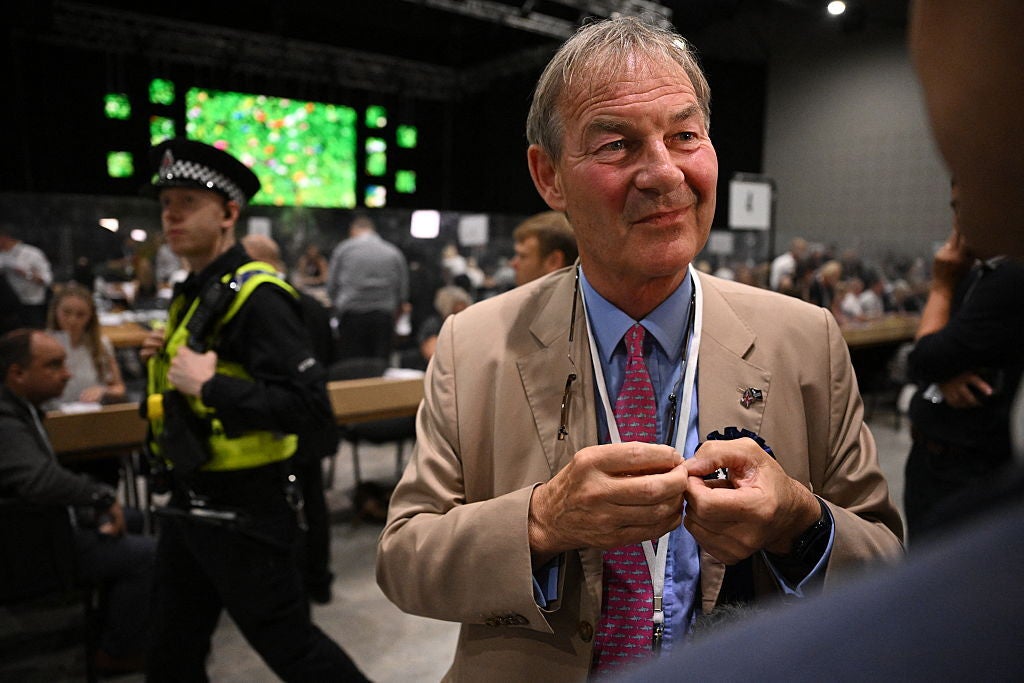
2026 wasn’t supposed to be like this for Keir Starmer.
Downing Street had planned, according to the prime minister’s top spin doctor Tim Allan, a “strong start” to the New Year.
A series of announcements on how the government was going to tackle the cost of living were meant to get the embattled PM onto the front foot.
Advertisement
Unbeknown to No.10, of course, Donald Trump had plans of his own that would blow everyone off course.
Not content with bombing Venezuela and kidnapping the country’s president, Nicolas Maduro, and his wife, the US president has also ramped up the rhetoric on Greenland.
America will take control of the Arctic island “one way or the other”, according to Trump, to the horror of European leaders, including Starmer.
Advertisement
Throw in the uprising in Iran and it’s easy to see why the prime minister has struggled to seize the political initiative.
He did finally make some headlines on Tuesday night – but not in the way he had hoped.
To general bewilderment at Westminster, it was confirmed that the government was ditching its plans to make it compulsory to carry state-sanctioned digital ID cards.
That’s despite Starmer himself announcing the policy just four months ago with great fanfare.
For those understandably struggling to keep count, it was the 13th major policy U-turn the government has performed since being elected in July, 2024.
Advertisement
For MPs who were already sceptical about Starmer’s ability to improve Labour’s miserable poll numbers, it could prove to be the final straw.
“People who are not normally as bothered by this issue are livid,” one MP told HuffPost UK. “It’s another case of them being made to look like utter fools.”
A backbencher added: “We’re just running through the motions. The lights are on but no one is home.”
Other MPs are just glad they no longer have to pretend to support the policy.
“I never made a big deal of going out and defending it,” said one. “A lot of us just feel relief that we don’t have to flog it on the doorsteps.”
Advertisement
Supporters of digital ID cards on the Labour benches are also frustrated by how the latest climbdown has been handled.
One senior MP said: “It has ended up in the place that most MPs and the public advised it should start from.
“I hope the damage hasn’t been done as it’s a very positive initiative that will help us to transform public services, give the public more control over their data, and make the user interaction with government better.
Advertisement
“It doesn’t need to be mandatory as I’d be confident that the public will see huge benefits to having it so take up will be large.”
No.10 officials are desperately trying to put a positive spin on Starmer’s latest calamity, insisting it is part of a strategy of ditching unpopular policies to focus on putting more money in voters’ pockets.
They compare it to former Tory election guru Lynton Crosby’s infamous “get the barnacles off the boat” policy.
Advertisement
However, critics point out that only works if the prime minister isn’t the one responsible for putting the barnacles there in the first place.
The new year is only 14 days old, and Starmer once again finds himself fighting for his political life as a result of a wholly self-inflicted mistake.
In a bid to improve the wellbeing of young users, YouTube has revealed parents will now be able to set time limits for scrolling Shorts, and will also enable caregivers to set bedtime and break reminders.
Parents will be able to set limits for scrolling Shorts
Advertisement
As part of the Online Safety Act, social media companies have a duty to protect children and stop them from accessing harmful or age-inappropriate content. Sites can face fines or be blocked in the UK if they don’t take protective steps.
The social media and online video sharing platform is also launching new ‘Quality Principles’ for content creators, developed alongside experts, to ensure videos created for teens are “age-appropriate” and “enriching”.
What are the quality principles?
Professor Peter Fonagy, head of the division of psychology and language sciences at UCL, which partnered with YouTube to provide evidence-based insights on adolescent development, said: “The mental health of children and young people is a global concern, and in the digital age the content teens encounter online can have both positive and negative impacts.”
Advertisement
He said the new quality principles will give creators a “practical, research-informed roadmap for making videos that are developmentally appropriate, emotionally safe, and genuinely supportive of young people”.
The principles include:
Joy, fun and entertainment: Show humour and warmth that lift teens’ moods like a day-in-the-life video or funny, self-accepting outtakes.
Curiosity and inspiration: Encourage exploration through creative tutorials, behind-the-scenes demos, or new hobbies that are easy to try.
Deepening interests and perspectives: Create deeper dives into subjects teens love, like music, gaming, or fashion, and show process, not just outcomes.
Building life skills and experiences: Offer relatable guidance for real-life moments, like teamwork or budgeting, to help them prepare for the future.
Credible information that supports well-being: Share accurate, age-appropriate information. Use trusted sources and avoid spreading misinformation.
Tell me more about the screentime limits…
YouTube said parents will be able to set time limits for scrolling Shorts – including having the option to set the timer to zero.
Advertisement
This gives parents flexibility to set the Shorts feed limit to zero when they want their teen to use YouTube to focus on homework, for example.
Or they could change it to 60 minutes during a long car trip to keep kids entertained.
This has been designed to make it easier for parents to create a new kid account and switch between family accounts in the mobile app, depending on who’s watching, so they’re shown the most appropriate content for their age.
Dr Garth Graham, global head of YouTube Health, said: “We believe in protecting kids in the digital world, not from the digital world. That’s why providing effective, built-in tools is so essential, as parents play a critical role in setting the rules for their family’s online experiences.”
Advertisement
According to the social media giant, the updates will be rolling out from 14 January and will expand globally over the coming months.
One in eight people in the UK say they feel tired “all the time,” YouGov reported in 2022.
In fact, the feeling is so common that the NHS says it has its own acronym, TATT (tired all the time).
But while the health service said most causes of TATT are “obvious,” like overwork or having a young child, Amir Bhogal, director and superintendent pharmacist at Pyramid Pharmacy Group, told us that “there are several hidden causes that may be easy to overlook”.
Advertisement
Here, he shared seven potential causes:
1) Iron deficiency
“Iron helps transport oxygen throughout the body via red blood cells. When iron levels are low, your body struggles to carry enough oxygen to your muscles and organs, leading to constant tiredness and weakness,” Bhogal said.
These are common signs of iron deficiency anaemia. Others include shortness of breath, headaches, paler than usual skin, and palpitations.
It “is surprisingly common, especially among women, due to regular menstrual blood loss, as well as those who follow a strictly vegetarian or vegan diet. While symptoms can be subtle at first, fatigue can interfere with daily activities and overall quality of life,” Bhogal added.
Advertisement
A blood test can confirm whether you have iron deficiency anaemia.
2) Thyroid issues
The thyroid is a gland in your neck that produces hormones. These affect things like your heart rate and body temperature.
“An underactive thyroid (hypothyroidism) can slow down metabolic processes and reduce the body’s ability to produce energy efficiently, leading to sluggishness or temperature sensitivity,” Bhogal said.
And an overactive thyroid can do the opposite, causing bursts of energy sometimes followed by crashes. It can create difficulty sleeping, too.
Advertisement
“Thyroid issues can develop slowly, with subtle symptoms ranging from unexplained changes in weight and mood, as well as dry skin or thinning hair. However, blood tests can confirm a thyroid imbalance,” the pharmacist said.
3) Low blood pressure
Though high blood pressure can make you tired, that usually happens indirectly through organ changes or associated lifestyle choices. But “low blood pressure (hypotension) can also sap energy,” the pharmacist told us.
Advertisement
“When blood pressure is too low, your organs and muscles may not receive enough oxygen-rich blood, leading to dizziness and constant tiredness.”
Sometimes, he added, low blood pressure can be created by dehydration, nutritional deficiencies, and some medications, and even some heart conditions.
“If fatigue is accompanied by lightheadedness or fainting, please consult with a medical professional immediately,” Bhogal stated.
Advertisement
“Getting your blood pressure tested regularly, even without symptoms, can help detect underlying issues early and support long-term health.”
“Water is essential for just about every function in the body, including energy production. Even just mild dehydration can reduce blood volume, making the heart work harder and leaving you feeling lethargic,” he told us.
Advertisement
“The reality is that many people underestimate their daily fluid needs, especially when the weather is warm, or they are physically active. Instead, they compensate with sugary drinks, alcohol, or caffeine, all of which are diuretics that can worsen dehydration.”
Drinking more water and eating more water-rich foods, like fruits and vegetables, can help a lot.
5) Chronic infections
Sometimes, conditions like the flu or glandular fever can stay in your system for longer than you realise. This, Bhogal explained, can keep you feeling run-down after sneezes, sniffles, and sore throats have abated.
“Often, these infections present with subtle symptoms like low-grade fever or mild muscle aches that are easy to dismiss. Identifying the underlying infection usually requires medical testing, and treatment may involve antibiotics or antiviral therapy to restore energy levels,” he said.
And, Bhogal said, “Frequently waking up can be caused by environmental disturbances, and sometimes from conditions like sleep apnoea or restless leg syndrome, which can prevent the body from entering deep, restorative rest.
“Fatigue caused by poor sleep often presents as brain fog and irritability that manifests as low motivation throughout the day. Overuse of electronic devices before bedtime can also interfere with the natural sleep cycle, so I advise putting away gadgets at least two hours before bedtime.”
Advertisement
If you’re concerned about your sleep, speak to your GP.
Keir Starmer has ditched plans to force all workers to have digital ID cards in his 13th U-turn since becoming prime minister.
In a major humiliation for the PM, the Cabinet Office confirmed that the controversial cards would no longer be compulsory for those seeking employment.
Advertisement
When the policy was announced in September last year, Starmer said: “Let me spell it out, you will not be able to work in the United Kingdom if you do not have digital ID.”
But Starmer’s latest climbdown means that the digital ID cards will be optional, giving workers the choice of whether to use other ways of proving their identity.
A government spokesperson said: “We are committed to mandatory digital right to work checks.
“Currently, right to work checks include a hodge podge of paper-based systems with no record of checks ever taking place. This is open to fraud and abuse.
Advertisement
“We have always been clear that details on the digital ID scheme will be set out following a full public consultation which will launch shortly.
“Digital ID will make everyday life easier for people, ensuring public services are more personal, joined-up, and effective, while also remaining inclusive.”
The U-turn follows climbdowns on other flagship government policies like scrapping winter fuel payments and cuts to disability benefits.
Advertisement
But Tory MP Mike Wood, the shadow Cabinet Office minister, said: “While we welcome the scrapping of any mandatory identification, this is yet another humiliating U-turn from the government.
“Keir Starmer’s spinelessness is becoming a pattern, not an exception.
“What was sold as a tough measure to tackle illegal working is now set to become yet another costly, ill-thought-out experiment abandoned at the first sign of pressure from Labour’s backbenches.
“Only the Conservatives have the plan and the team to restore common sense to public policy.”
Liberal Democrat Cabinet Office spokeswoman Lisa Smart said: “Number 10 must be bulk ordering motion sickness tablets at this rate to cope with all their U-turns.
Advertisement
“It was clear right from the start this was a proposal doomed to failure, that would have cost obscene amounts of taxpayers’ money to deliver absolutely nothing.”
The numbers 15 and 20 might sound reasonable when you’re deciding how much to tip your server at a restaurant. But when they refer to an age gap between romantic partners, they’re more likely to raise eyebrows.
Even if you’re not a fan of May-December romances, experts say that age-gap friendships are one type of intergenerational relationship we can all get behind. According to research, we tend to gravitate toward people who are similar to us, a phenomenon called homophily.
Consequently, our friend groups often include people who share our interests, education, politics and life experience.
Advertisement
SDI Productions via Getty Images
When your friends are of a similar age, it’s hard to avoid comparing your life to theirs. “One of the benefits of having older friends who are in a different life stage is the freedom to share without conflicted feelings,” a licensed clinical psychologist said.
And while it might seem like a good idea to prioritise friendships with people you can relate to, you might be missing out on what other generations have to offer. Below, experts discuss the benefits of befriending someone who is 10-plus years older or younger than you.
The real benefits to having older friends
You’re less likely to doubt your pace in life.
When your friends are of a similar age, it’s hard to avoid comparing your life to theirs. Maybe they just received a promotion or set off on their honeymoon. On the outside, you might be congratulating them for reaching these milestones, but it’s only natural to worry about falling behind.
Advertisement
“One of the benefits of having older friends who are in a different life stage is the freedom to share without conflicted feelings,” Charlynn Ruan, a licensed clinical psychologist and the founder of Thrive Psychology Group, told HuffPost. “We can share our wins without feeling like we are bragging or triggering our friends who might not be doing well in that area.”
Jenny Woo, a Harvard-trained emotional intelligence researcher and founder/CEO of Mind Brain Emotion, and author of 52 Essential Relationships, agreed, saying, “Age-gap friendships help younger people zoom out from the comparison trap by reminding them that timelines are flexible and growth is nonlinear.” An older friend can provide a safe space to talk without the pressure of having to compete or project an image of success.
They act as mentors and surrogate family members.
“Historically, across many cultures we used to live in much more supportive multi-generational communities where younger people had access to older individuals who had more life experience and advice to pass down,” Natalie Moore, LMFT, owner of Space for Growth Therapy & Coaching, told HuffPost. She said that many of her clients, most of whom are in their 20s and 30s, don’t have emotional support from mentors or role models.
Advertisement
“So, it makes sense that younger adults would seek out older friends to fill that gap,” she said. “Additionally, so many adults do not have positive relationships with their parents, so an older friend can act as almost a surrogate parent to provide the type of support they need.”
Aside from support, an older friend can promote a sense of continuity by sharing memories and traditions. For example, they can pass along recipes or inspire you to take up so-called “grandma hobbies,” like crocheting, knitting and gardening. We know from research that taking a break from your phone can improve your mental health.
zeljkosantrac via Getty Images
Aside from support, an older friend can promote a sense of continuity by sharing memories and traditions.
Advertisement
They can enhance your personal growth
If you spend a lot of time interacting with same-age peers, especially online, this can limit your perspective on the world. “We often see this where millennials and Gen Zs complain about the tone-deaf responses of older generations to their struggles to buy houses and afford to move out,” Ruan said. In this politically divisive climate, it’s important to be able to have respectful conversations with people who see the world differently than you do.
“An older friend can offer candid, judgment-free feedback without the power dynamics of a parent or boss,” Woo said. Whereas a peer can empathise with the current job market, an older friend can tell you what it was like to make a career pivot or adjust to life in a new city.
In addition, someone who is 20 years your senior is more likely to have experience with navigating career uncertainty, identity questions or relationship concerns. “Younger people often feel more motivated to invest in their physical and emotional well-being when they see the real impacts in someone older,” Woo said.
Advertisement
It’s not just the younger friend who benefits — here’s why you might want a younger bestie
They add variety and spontaneity to your life.
“Being around someone younger can reignite a sense of vitality, spontaneity and playfulness,” Woo said. You can learn about new trends and technologies, or rediscover past hobbies and interests. For instance, a 2024 study found that playing a musical instrument can keep your mind sharp as you age.
Similar to young adults, the trend of having friends who are similar to you persists as you get older. “This can cause people to become narrow-minded and judgmental, so having younger friends can help keep your mind open and curious,” Ruan said.
Moore agreed, explaining that a younger friend may expose an older friend to new ideas or ways of seeing the world. “This can challenge them to be more relevant with current events, technology or the ever-changing zeitgeist,” she added.
Advertisement
You can share without competing
“Sadly, social comparisons don’t lessen that much with age,” Ruan said. An older friend may struggle to find support from same-age peers. For example, they might feel judged for having their adult children move back home or continuing to work because they can’t afford to retire.
“Sharing these concerns with a younger friend can feel liberating because the younger adult can just listen and express comfort without the compulsion to give unhelpful advice,” she said. A younger friend may also be more empathetic about marriage and kids, considering they’re closer to the beginning of their journey.
Frazao Studio Latino via Getty Images
“Being around someone younger can reignite a sense of vitality, spontaneity and playfulness,” a Harvard-trained emotional intelligence researcher said.
Advertisement
Their friendship can offer a renewed sense of purpose
“The act of sharing hard-earned wisdom gives older friends a sense of purpose and value, which can counteract ageism and a fear of irrelevance,” Woo said. Research shows that having a sense of meaning and direction can help you weather life transitions such as divorce, retirement or an illness diagnosis.
In fact, “There’s a phenomenon of brain development where younger adults are more geared toward learning, whereas adults in midlife and beyond are more inclined toward sharing what they’ve learned,” Moore said. She said that this makes sense from an evolutionary perspective because a younger person with less life experience has more learning to do than someone who has knowledge that can benefit future generations.
How to make sure your age-gap friendship doesn’t become one-sided
Sometimes, age-gap friendships can resemble a mentorship relationship where the younger person is expecting career advice or networking opportunities. In such cases, an older friend might have a hard time being vulnerable because they feel pressured to have all the answers.
Advertisement
“If an older friend is falling into a role of providing all the advice and not receiving any, they could point that out or adjust their behavior,” Moore said. Likewise, Ruan suggested encouraging your older friend to speak about their struggles, so it becomes a two-way street. You can also make a habit of asking them for updates on things they’ve shared recently to avoid doing all the talking or advice-seeking.
Over time, the younger friend may eclipse their older friend’s accomplishments. “This can cause a strain on the relationship if there is an undercurrent of teacher and student in their dynamic,” Ruan said. Your relationship is more likely to survive if you’re both willing to be vulnerable and support each other through periods of loss and transition.
Woo agreed, saying that it’s best to avoid having an age-gap friendship that’s focused primarily on mentorship. Her advice was to set boundaries, so the younger friend doesn’t come to rely on the older friend as a therapist or life coach. She also suggested participating in activities that aren’t centered on advice-giving, such as physical activity and shared interests like art projects or a book club.
Advertisement
“Healthy age-gap friendships are built on mutual respect and curiosity,” Woo said. “Both people should bring effort and energy to the relationship.”
A member of Greenland’s government says they feel “betrayed” by Donald Trump’s threat to take over the Arctic island.
The US president has said he plans to seize Greenland “one way or the other” and has refused to rule out sending in American troops.
Advertisement
But speaking at Westminster following talks with MPs, Naaja Nathanielsen said the island – which is part of the kingdom of Denmark – has no interest in becoming American.
Nathanielsen, who is Greenland’s minister for business, mineral resources, energy, justice and gender equality, said: “If you ask the people of Greenland, people are concerned about the messages from the US about annexing or buying Greenland.
“People are reporting difficulties to sleep. This is fuelling the discussions around the households. We are trying to keep calm and work our way through it.”
Advertisement
She added: “We have no intention of becoming American. We have worked towards more collaboration with the Americans, but we are quite happy being part of the kingdom of Denmark.
“We feel betrayed. We feel the rhetoric is offensive and bewildering. We have done nothing but support the US.
“We are allies of allies of the US and are bewildered that we have to discuss possible selling of annexing of Greenland. This is not something we deserve. We have been good partners.”
Advertisement
Trump has said that America needs to “own” Greenland to stop China and Russia from trying to take it over.
But Nathanielsen said Greenland wanted a “peaceful solution” to the crisis, and warned that the whole world would be thrown into crisis if Trump orders troops to invade the Arctic island.
She said: “If that scenario was to happen, everybody in your countries will have a focus on what the new world order is about. We will be in a new situation.
Advertisement
“We would all be under attack. It would be a breakdown of international law and existing treaties, and that would be a bad outcome for all of us. I do hope we will not get to that situation.”
Nathanielsen also insisted that Greenland is facing no “imminent threat” from Russia or China, despite Trump’s claims to the contrary.
Reading can improve our emotional intelligence, delay the onset of dementia and stimulates neural pathways, according to BBC Teach.
What’s more, reading for just half an hour each week can increase health and wellbeing, and reading for pleasure can boost confidence and self-esteem. Experts noted the calming pastime can also aid our sleep and reduce feelings of loneliness.
Advertisement
It is an incredibly rewarding hobby and it doesn’t have to be expensive, either. You can borrow books from libraries for free – even audiobooks and digital versions. So, if it was on your New Year’s resolution list, you made a good choice.
However, for some people, it isn’t as simple as picking up a book and getting tucked in. Reading can be daunting, especially if it’s been a while since you last enjoyed a book – and for people with conditions such as dyslexia and ADHD, it can feel like an uphill climb.
Thankfully, two experts from Kingston University – Paty Paliokosta, associate professor of special and inclusive education, and Alison Baverstock, professor of publishing – shared their advice via The Conversation for getting back into books in a way that works for you.
Advertisement
How to read more in 2026
Many people with dyslexia and ADHD grow up feeling excluded from reading, and this is often carried into adulthood. Both children and adults with these conditions have reported lower levels of enjoyment of the hobby compared to their peers.
The experts said this can be “exacerbated” by “systemic school approaches and priorities that associate reading with national and international tests”.
They noted that reading becomes a performance metric, rather than a source of pleasure.
However, there is hope.
The experts advise: “Simple changes, such as altering the physical properties of the titles you read, or choosing graphic novels, can make a big difference. Neurodivergent readers can access books from publishers that specialise in using accessible fonts, layouts and language, for example.”
Advertisement
Audiobooks can also be a good shout. As they explain: “Despite the relationship between brain representations of information perceived by listening versus reading is unclear, neuroscience research shows the way our brain represents meaning is nearly the same whether we are listening or reading.”
Audiobooks are particularly helpful if you find the act of just sitting with a book to be under-stimulating. They can be consumed like podcasts or playlists; in bursts at a time and while you’re doing other tasks like housework or commuting.
It doesn’t have to be a solitary act, either
The Reading Agency says: “Reading independently projects your thoughts, feelings, and emotions onto a story. Book clubs, however, expand on this experience.
Advertisement
“Someone else might see a theme you previously didn’t consider, challenge your interpretation, or introduce you to a genre or a book you might not have picked up otherwise. Whether new releases, classics, or hidden gems, handing over the reins of curation can introduce you to a literary world of narratives and themes beyond your scope. ”
This is something you can emulate in your own life with book clubs, read-alongs or even just joining online communities like the Reddit /r/books community, where you can talk about books you’ve read and learn others’ opinions. It’s a great way to find connection and reduce loneliness.
Remember: it’s supposed to be enjoyable
If your first instinct is to pick up a classic book or a research-heavy textbook, you may want to ensure that you are reading what you want to read and not what you think you ought to.
Advertisement
Prof Baverstock actually started the charity Reading Force, which promotes the use of shared reading to keep military families connected. This charity has always encouraged making reading fun rather than laboured and compulsory.
“This emotional satisfaction by reading things they would like to read as opposed to imposed ones is of utmost importance. Pick something that engages you, not the book you think you should be reading,” the charity urges.
Find stories that represent you
While reading can help you to learn other people’s perspectives and experiences, it can also give you more insight and comfort within your own life when you feel you are represented.
Advertisement
I know for myself as a reader with a chronic illness, I got a lot from reading Coco Mellors’ book Blue Sisters, which explored chronic illness and how it can impact not just the sufferer but their family.
Additionally, the BookTrust says: “Diverse, inclusive, and representative children’s literature can ensure young readers see themselves, different lives and cultures, and the world around them in the stories they read.”
According to Alcohol Change UK, the brains behind Dry January, the challenge is rising in popularity in the UK.
Dry January, if you didn’t know, is an annual challenge to not drink alcohol during the month of January. A way to reset as a New Year starts and shake off some of the excess drinking from the festive season.
Advertisement
According to Alcohol Change UK, 17.5 million people across the UK have said they planned to take part this year and last year, 200 thousand people downloaded free resources to guide them through the month provided by the charity.
Past Dry January participants revealed that they had saved money, felt more in control of their drinking, slept better, had more energy and felt that their health had overall improved thanks to the challenge.
Now, BBC Science Focus has revealed that the amount of alcohol we drink could be impacting our brain ageing.
Advertisement
How alcohol impacts our brain ageing
Now, to be clear, you cannot turn back the actual age of your brain. It is as old as you are. However, some of the things that we do can age it significantly.
Dr Anya Topiwala, a senior clinical researcher at the University of Oxford’s department of psychiatry, explained to BBC Science Focus: “You could be 35 in terms of birthdays, but if you’ve lived a really healthy life, you could have a younger biological age.
“And conversely, if you’ve smoked a lot and eaten rubbish, you could have a biological age of 40.”
Studies have shown that alcohol can accelerate your biological age.
One 2021 study that analysed 28,000 participants in the UK found that the more alcohol a participant drank, the more likely they were to have a biological age that was higher than their real age.
Advertisement
Another study in 2023 found that US adults aged 44 or older who had drunk more alcohol in their lifetimes showed more signs of accelerated ageing than younger adults or those who had drunk less.
On their website, leading dementia charity Alzheimer’s Society says: “Heavy drinking – often over many years – definitely contributes to a person’s long-term risk. The damage to the brain leads to a higher risk of Alzheimer’s disease and vascular dementia as a person gets older.”
Additionally, Alzheimer’s Research UK urges: “Up to 1% of global dementia cases could be due to excessive alcohol consumption and could therefore be prevented or delayed by tackling heavy drinking.”
Advertisement
Is there a healthy drinking limit?
If you’re not quite ready to give drinking alcohol up entirely, NHS Inform provides the following safe drinking guidelines:
to keep health risks from alcohol to a low level it is safest not to drink more than 14 units a week on a regular basis
if you regularly drink as much as 14 units per week, it is best to spread your drinking evenly over 3 or more days
if you have 1 or 2 heavy drinking episodes a week, you increase your risks of death from long term illness and from accidents and injuries
the risk of developing a range of health problems, including cancers of the mouth, throat and breast, increases the more you drink on a regular basis
if you want to cut down the amount you drink, a good way is to have several drink-free days each week
If you drink heavily and feel you may have an alcohol abuse issue, DrinkAware advises: “If you are concerned you might be dependent on alcohol, you should seek medical advice to help you cut down and stop drinking safely.”
Superdrug Online Doctor has reported a 50% seasonal spike in shingles consultations as the colder weather sets in, with more people seeking help for sudden painful rashes and nerve pain over recent weeks.
Shingles (herpes zoster) is caused by the reactivation of the chickenpox virus and can affect anyone who has had chickenpox before, but it is most common in older adults and people with a weakened immune system.
Advertisement
While this is a year-round condition, winter often brings added triggers such as stress, disrupted sleep, and a rise in other infections, all of which can impact the immune system and may contribute to flare-ups.
Dr Babak Ashrafi, a member of Superdrug’s Online Doctor team, explained: “Shingles can come as a shock, many people wake up with a burning or tingling pain, followed by a rash that quickly worsens.
“We tend to see more people seeking help in the colder months, when immune systems are under extra strain. The key message is, don’t wait it out. The sooner you start treatment, the better the outcome.”
Advertisement
Signs and symptoms of shingles
Usually, shingles starts with a tingling, burning or stabbing pain on one side of the body. This is then followed by a red rash that develops into fluid-filled blisters. This rash typically appears on the chest or back but can appear elsewhere, including the face.
While many cases improve within 2-4 weeks, shingles can be extremely painful and may lead to complications such as post-herpetic neuralgia (long-lasting nerve pain), particularly in older adults.
The NHS urges that if if you’re experiencing these symptoms, you must get in touch with a pharmacist for treatment.
Advertisement
However, they advise that you should call NHS 111 or get an emergency doctor’s appointment if:
you’re breastfeeding and the shingles rash is on your breasts
the rash is on your eye or nose
you have changes to your vision
you have a severely weakened immune system, for example, from chemotherapy
you’re 17 years old or younger.
Is there a shingles vaccine I can get?
Yes, there is a shingles vaccine available for all adults turning 65, those aged 70 to 79 and those aged 18 and over with a severely weakened immune system.
If you are eligible but haven’t been contacted for an appointment, call your GP surgery.
Is shingles contagious?
The NHS says: “You cannot spread shingles to others. But people could catch chickenpox from you if they have not had chickenpox before or have not had the chickenpox vaccine.
Advertisement
“This is because shingles is caused by the chickenpox virus.”
With this in mind, try to avoid anyone who is pregnant or has not had chickenpox before, people with a weakened immune system and young babies.
Should you stay off work with shingles?
The NHS advised people with shingles to stay off work or school if the rash is still oozing fluid (weeping) and cannot be covered, or until the rash has dried out.
“You can only spread the infection to other people while the rash oozes fluid,” it added.
Most of us know about the “fight or flight” response, the body’s built-in survival instinct. But that framework leaves out two other common ways the nervous system reacts to stress.
Indeed, psychologists say there are four instinctive reactions that help us understand how people cope with feeling unsafe, overwhelmed or emotionally flooded.
Advertisement
“The ‘four F’s’ – fight, flight, freeze and fawn – refer to automatic nervous system responses to a perceived threat,” Caitlyn Oscarson, a licensed marriage and family therapist, told HuffPost. “These are ingrained responses that can show up in traumatic situations, as well as everyday stress and overwhelm.”
The four stress responses occur when our bodies are in survival mode, so we aren’t using the reasoning centre of our brains. Thus, we may act in ways that don’t seem logical or reflective of our typical values.
“They’re not personality traits, and they’re not conscious choices,” said board-certified psychiatrist and Practical Optimism author Dr. Sue Varma. “They’re automatic survival strategies wired into the brain and body. When someone feels unsafe, overwhelmed or emotionally flooded, the nervous system steps in and tries to protect them the best way it knows how.”
Advertisement
In this sense, your stress response can offer insight into your past experiences and what your nervous system learned over time to keep you emotionally or even physically safe. Most people don’t have just one response, and their automatic reaction might vary based on context. You might fawn at work but freeze at home, for instance.
“All four responses are adaptive,” Varma said. “They develop for a reason, often early in life, and they’re attempts at self-preservation, not signs of weakness. It is interesting, however, to note if a person has a particular go-to response, that is very telling.”
Although you might have one or two default stress responses in different situations, you ultimately want to work on flexibility to gain access to all four because each can serve a purpose at various times. No one stress response is inherently better or worse. The goal is to help your nervous system understand it has options.
Advertisement
“An individual’s stress response is not their personality but rather their nervous system’s autobiography, and like with any life narrative, it can be changed to have more options to address stressful situations,” said Lora Dudley, a licensed clinical social worker with Thriveworks.
Fight, flight, freeze and fawn are not character flaws, and with mindfulness and therapy, you can learn to choose and be more flexible with your responses. Ultimately, awareness is the first step.
“Once you understand your patterns and how they are tied to your nervous system response, it becomes easier to slow down, be compassionate toward yourself and act with intention rather than reflexively,” Oscarson said.
Advertisement
With that in mind, HuffPost asked the experts to break down each of the four stress responses, how they manifest and what someone’s defaults might say about them.
Fight
“In my patients, the fight response often shows up as anger, irritability, defensiveness or a strong need to control a situation,” Varma said. “Someone might argue more, push back quickly or feel constantly on edge when they’re under stress.”
There can be physical aggression and tension but also yelling and argumentativeness in moments of disagreement or stress.
Advertisement
“This is the ‘come at me’ response,” said Erin Pash, a licensed marriage and family therapist and founder of Pash Co., a company focused on social health.
“You might notice yourself getting argumentative, defensive or aggressive. Your jaw clenches, your voice gets louder, you feel heat in your chest. In everyday life, this might look like snapping at your partner over something minor, getting road rage or having a disproportionate reaction to feedback at work.”
Igor Suka via Getty Images
The body’s natural stress responses go beyond fight or flight.
Advertisement
So what might it say about you if you lean toward confrontation and feel the urge to argue and defend yourself when you feel misunderstood?
“For fight responses, it doesn’t necessarily mean that a person is aggressive or violent,” Oscarson said. “It means that their nervous system activates under threat, and they have learned that taking action is necessary for self-protection. Pushing back, arguing and taking control are ways of creating order in chaos and stress.”
She added that fight-inclined individuals might have a strong sense of justice and fairness and even leadership skills. Past experiences may have taught them that the way to feel safe is to stay alert, push back and stand your ground.
Advertisement
“Maybe you grew up in an environment where you had to defend yourself or your boundaries aggressively, or where conflict was how things got resolved,” Pash said. “The challenge is when this response fires in situations that don’t actually require battle mode.”
Flight
“Flight is characterised by attempts to escape from a threatening situation,” Oscarson said. “It may show up as passiveness, distractedness or avoidance.”
She gave the example of putting off or deflecting emotional conversations.
“You might cancel plans, ghost people, stay ‘too busy’ to deal with difficult conversations or develop sudden urgent tasks when conflict arises,” Pash said. “Physically, you might feel restless, unable to sit still or like you need to run.”
Advertisement
Therapist Natalie Moore compared the way this response manifests in modern human civilisation to how it plays out in the animal world.
“In the wild this looks like actual running, whereas in modern times this manifests as emotional running away – such as ghosting a friend who hurt your feelings, turning away from intimacy in a relationship or running away from your problems through avoidance behaviours like addiction or emotional numbing,” she said.
Those who lean into flight mode might also need constant distractions like screens or video games.
“With a flight response, an individual will try to escape the situation both internally and externally,” said psychologist Doreen Dodgen-Magee. “They may appear to deny what is happening, avoid conflict and the direct expression or working through of big feelings and may be anxious and fearful.”
Advertisement
They might also become hyperproductive.
“I see this in people who stay busy, overwork, overplan or distract themselves constantly,” Varma said. “Sometimes it’s literal leaving, and sometimes it’s mental checking out.”
Social isolation and withdrawing from everyday life can also be signs of a flight response.
“People who tend toward flight have learned that anticipating and avoiding conflict is the best way to stay safe,” Oscarson noted. “They may use productivity and business to keep others at a distance. They appear hardworking and responsible, which is often admired and praised. They also tend to be independent and self-sufficient.”
If this is your instinct, it might be because your nervous system learned that escape or avoidance was an effective survival strategy.
Advertisement
“This can develop when leaving or avoiding actually did make you safer, or when engagement led to worse outcomes,” Pash said. “It’s often paired with anxiety and hyper-vigilance – always scanning for exits and threats.”
Freeze
“To freeze would be to shut down such as by going numb, dissociating or being indecisive,” said Hallie Kritsas, a licensed mental health counsellor with Thriveworks.
Essentially, your nervous system hits pause or shuts down in stressful or trauma-fuelling moments.
“You can’t think clearly, can’t speak up, feel paralysed in decision-making,” Pash said. “People often describe feeling like a deer in headlights – their mind goes blank, they dissociate or they become physically immobile. This might manifest as procrastination, shutting down during arguments or going numb when overwhelmed.”
Advertisement
They might feel low motivation or a sense of being “stuck,” which makes it hard to start a task. It might even seem like they don’t care what’s happening.
″‘Freeze’ can be presented in feeling stuck, numb, inability to act or speak with the purpose being to pause or be unnoticed when there is not a manner to escape the threat,” Dudley said.
The freeze response is very common and often misunderstood, Varma noted, adding that it tends to be a sign of nervous system overload.
Advertisement
“I often see people who experienced overwhelm without enough support,” she explained. “Shutting down became the body’s way of coping when there were no good options available. These individuals are often deeply sensitive and strongly affected by their environments.”
When fighting back or escaping a stressful situation isn’t safe or possible, people often freeze as a way to conserve energy in their state of powerlessness and overwhelm.
“Freeze often develops when we faced threats we couldn’t fight or flee from – particularly in childhood when we were smaller and dependent on adults who were also the source of threat,” Pash said. “It’s also common in people who were punished for showing emotion or who learned that their reactions ‘made things worse.’”
Advertisement
Fawn
“Fawn is the one many people don’t recognise in themselves right away,” Varma said. “It shows up as people-pleasing, over-accommodating, minimising your own needs or trying to keep the peace at all costs. I see this a lot in people who are highly empathetic and tuned in to others’ emotions.”
With fawning, people tend to over-apologise, agree on things they don’t actually agree with and abandon their boundaries. There’s a sense of passiveness as they prioritise others’ needs and emotions and sacrifice their own.
“An example of fawning is feeling responsible for managing other people’s emotions,” Oscarson said.
Those who fawn may have learned that safety depends on keeping others happy or calm.
“Maybe you grew up walking on eggshells around someone’s mood, or you learned that your needs didn’t matter as much as maintaining peace,” Pash said. “Fawning is incredibly common in people who experienced childhood emotional neglect or had caregivers with big emotions they had to manage.”
Advertisement
With fawners, being “low maintenance” or minimising yourself feels like the way to keep the peace, which is the key to emotional and/or physical safety.
“Many of these patients learned early on that maintaining harmony or avoiding conflict protected them from rejection or emotional fallout,” Varma said.
The idea is to be helpful, agreeable or “easy” to others.
“If one fawns, they have learned that safety comes from seeking approval,” Kritsas echoed.
Consequently, they might have learned to be highly intuitive and sensitive to social cues.
As Oscarson put it, “they probably have a hard time when someone is upset with them or disagrees with them, as they view any misalignment as threatening to the relationship and therefore their safety”.