Powell was a Conservative shadow minister in 1968 when he made his “rivers of blood” speech, which was blamed for deepening racial tensions at the time.
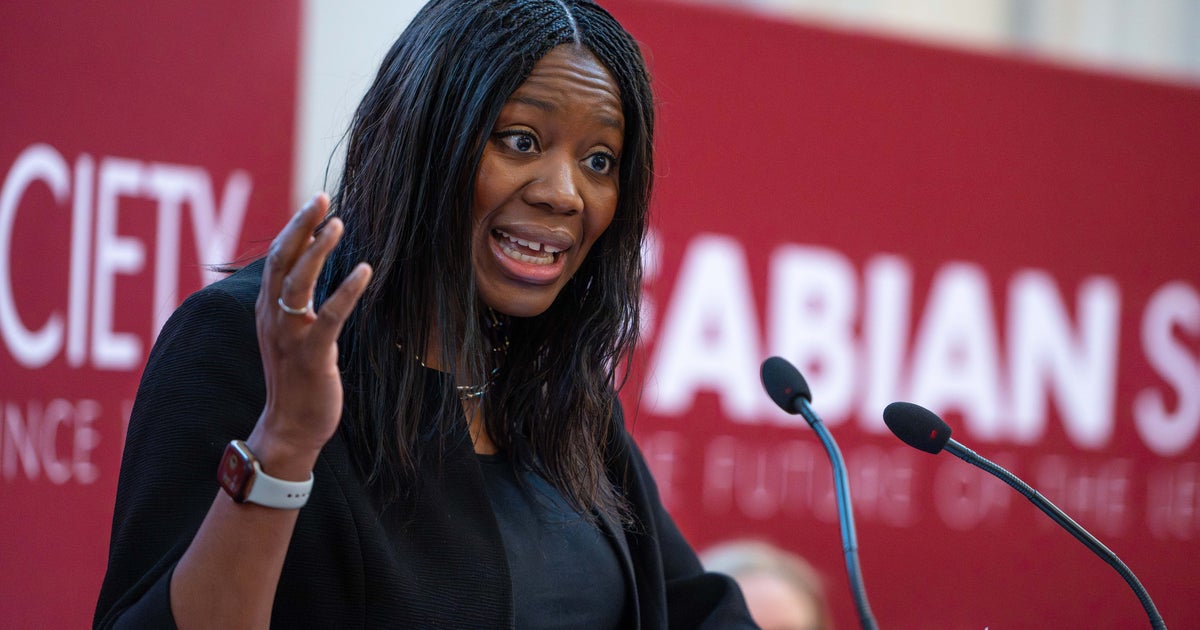
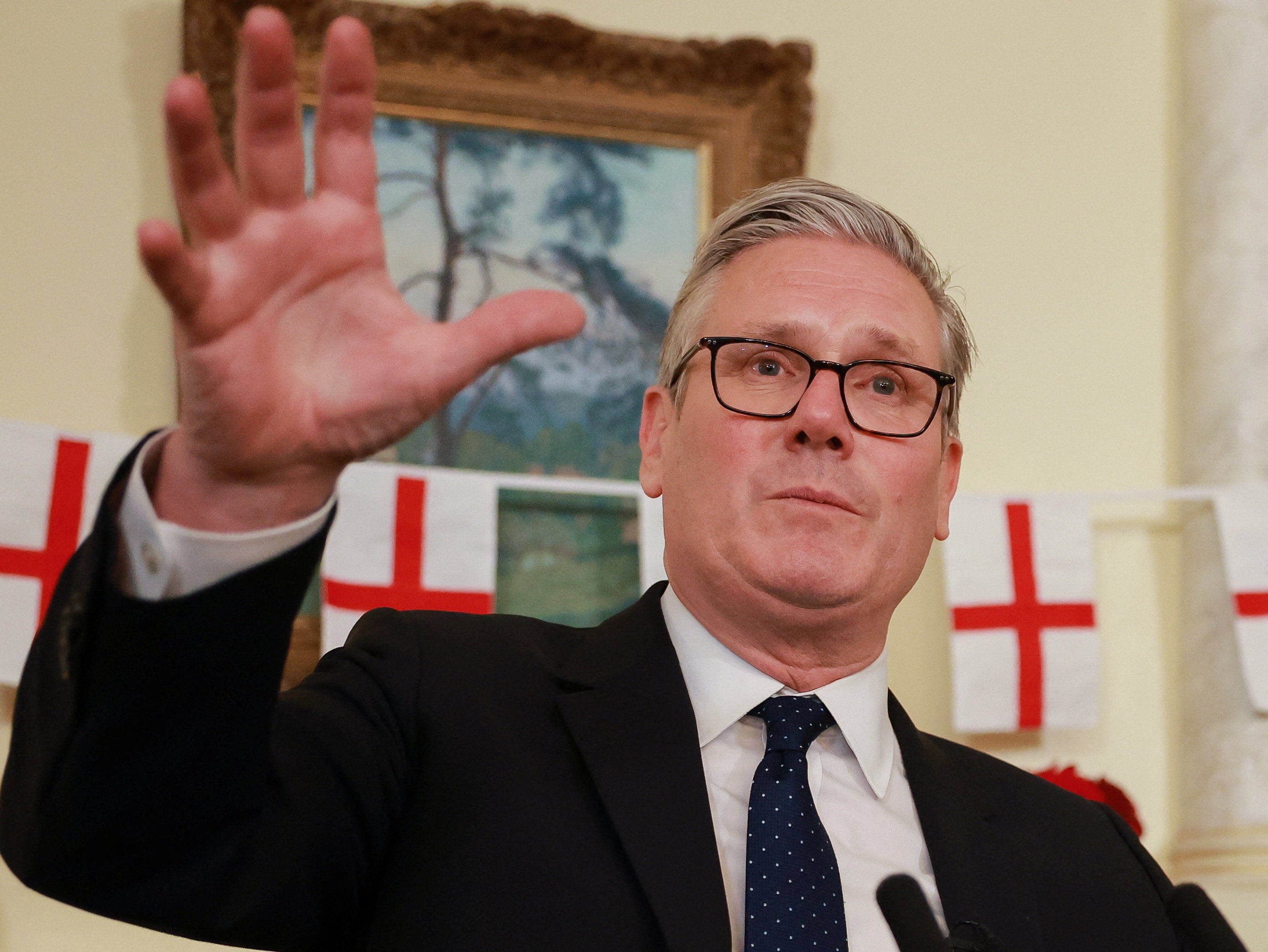
Business secretary Peter Kyle was promoting the government’s goal for creating a stronger economy when he hit out at his political rival over the weekend.
Speaking at the Co-operative Party conference, the senior minister said: “The truth is that without securing higher, sustained economic growth, reconnecting people and politics, generating trust in the potential of democracy and importance of good government becomes almost impossible.
“And the appeal of the parties of the far right – with their dogma of disruption, division and despair – it becomes, too, alluring.”
Advertisement
Kyle continued: “We see it today with Reform, just as we did in previous times with the National Front and the British National Party.
“Lack of economic growth it is the cause. Nigel Farage, today’s incarnation of the politics of Enoch Powell, is the effect.”
Reform UK declined to comment.
Kyle has previously attacked Reform over the party’s opposition to the government’s Online Safety Act.
Advertisement
He claimed people like Jimmy Savile would have used the internet to exploit children if still alive today – and claimed anyone opposed to the government’s incoming law against such behaviour would be on Savile’s “side”.
Marie Kondo rose to international fame with her bestselling books and the “KonMari method,” which encouraged millions to tidy their homes – and their lives.
The concept is simple: keep only the items that “spark joy,” and bid a grateful farewell to the rest.
Advertisement
Now she’s out with a new book, “Letter from Japan,” which explores the Japanese customs and principles that inform her philosophy on tidying and mindful living.
The essay-style book features reflections on cultural touchstones, such as relaxing at an onsen, snacking on onigiri or reading manga. But it also dives into more figurative Japanese concepts like kawaii – the idea of finding charm and joy in cuteness.
“In our daily lives, we often live with the notion that, as adults, we must always behave properly and be composed,” Kondo told HuffPost via email through an interpreter.
Advertisement
“But simply having an item that you personally find ‘kawaii’ can bring a sense of softness and relaxation into your everyday routine – even if it isn’t meant to be shown to others.”
She’s personally a fan of the popular kawaii character Chiikawa, who adorns a small cosmetic pouch she carries.
“No matter how busy my day is, whenever I open my bag and see Chiikawa’s disarming smile, it somehow reminds me to pause and take a deep breath,” Kondo said. “It feels almost as if this tiny, adorable character is cheering me on – bringing a gentle warmth and calm to my heart. I think that’s the special effect of a kawaii character.”
Advertisement
She believes nurturing the sensibility to notice what’s kawaii in our lives can deepen our sense of gratitude and affection for the things we already have.
That same appreciation for life’s small joys, as well as its inevitable messes, runs through “Letter from Japan,” which arrives almost three years after Kondo made headlines for admitting that she had “kind of given up on” keeping her home tidy as a mother of three.
But rather than a departure from her previous philosophy, the author says, this newer, gentler perspective is simply a natural extension of it.
Advertisement
“The ideas of ‘perfection’ and ‘mastery’ that I discuss in ‘Letter from Japan’ don’t mean that we must always maintain a flawless state,” Kondo said.
“Rather, they express the importance of having the desire to grow toward an ideal goal – the respect and beauty found in the path toward perfection itself. I believe that the imperfections and struggles we encounter along that path are themselves deeply beautiful and meaningful.”
Kondo’s new book, “Letter from Japan,” explores the cultural traditions and principles that inform her outlook on tidying and on life.
Advertisement
Kondo added that embracing imperfection, especially as a parent, has become an important part of how she finds calm and meaning in daily life.
“When it comes to balancing perfection and imperfection, I think what matters most is accepting and loving yourself as you are now – including your imperfections – while still holding onto your aspiration to improve,” Kondo explained.
“For example, even if I’m not able to tidy my home perfectly in the way I ideally would, I believe it’s important to maintain that sense of aspiration – the inner desire to move toward that ideal state.”
Advertisement
At the same time, she aims to embrace her reality as it is in the moment.
“Even if life becomes so busy that I can’t keep my home perfectly tidy, I remind myself to approach that situation with compassion and to cherish my life as a whole,” she said.
“The key is not whether everything is in perfect order, but whether you’re caring for what truly matters most in your life. In my case, since I’m raising children right now, what matters most is spending time communicating with them and maintaining a healthy balance so that I can be fully present as my best self.”
“The key is not whether everything is in perfect order, but whether you’re caring for what truly matters most in your life.”
– Marie Kondo
Advertisement
The goal is not a spotless house, but a balanced life. It’s about compromise and self-compassion. As Kondo notes in her book, all the children’s toys and books that pile up in her home nurture her little ones’ sense of beauty, wonder and curiosity.
And while she has less time to tidy, her day-to-day reality is filled with joyous moments with her kids … and still some opportunities for her cleaning rituals, too.
“Even if tidying has taken a lower priority for the moment, I still feel that I’m living a life that sparks joy – and that sense of awareness is what’s truly important,” Kondo said.
Advertisement
That same embrace of imperfection extends even to how Kondo views one of her most viral moments: the “I love mess!” meme. This clip from her 2019 Netflix show, “Tidying Up with Marie Kondo,” still pops up frequently on social media in cheeky posts about everything from cluttered apartments to chaotic love lives.
“When I come across that meme… well, I still find it quite endearing even now,” Kondo told HuffPost. “I suppose it’s because my excitement whenever I’m at a tidying site hasn’t changed at all – I still genuinely feel that spark of joy. Seeing it reminds me, ‘Yes, that’s exactly how I feel – tidying really is fun.’”
As for the meme’s place in her legacy, she’s nothing but appreciative.
“I’m actually proud if it has helped even a little to convey the idea that tidying is fun,” Kondo said. “Tidying is often seen as something bothersome or as an obligation, something you have to do. But if this moment helped people realise that the very process of bringing order to a messy space can be fun in itself, then I’m truly happy. It feels like a meaningful part of my purpose.”
Rachel Reeves is the UK’s most unpopular chancellor in recorded history, according to a new poll.
The MP for Leeds West and Pudsey became the first woman to hold the job – which has been around for more than 800 years – when Labour won on a landslide in July 2024.
However, an Ipsos poll for The Telegraph found almost three quarters (71%) of the British public are dissatisfied with her performance – just 10 days before she is set to unveil her second Budget.
Advertisement
Senior director of UK politics at Ipsos, Gideon Skinner, said: “On top of continued record unhappiness with Keir Starmer, Rachel Reeves’ satisfaction ratings have also hit a record low this month, the worst for any chancellor since we started monitoring in 1976.
“This comes in the context of persistent economic anxiety, with more people today struggling to cope than we were seeing in 2022 when the cost of living crisis first started to bite.”
The poll found most voters (66%) did not believe the government’s policies would lead to economic growth, either.
Advertisement
Skinner said: “Historically we’ve only seen similar levels of scepticism over the government’s long term economic plans in the last years of the Major and Sunak governments, and under Brown after the financial crash.
“Meanwhile, Reform UK continue to hold a steady lead in voting intentions, helped by this frustrated desire for change and their own strengths on immigration and (to a lesser extent) on crime – though it should still be noted that many of the public do not see them – or indeed any party – as having the answers either on many issues.”
Skinner pointed out that the last time Labour polled this poorly within Ipsos’s records – going back to the mid-1970s – it was in May 2009, amid the fallout of the financial crisis.
Advertisement
“That was a one-off nadir that they did recover from to some extent, denying the Conservatives a majority in 2010, which might be of some minor comfort to Labour,” he said.
However, the expert noted the challenges are “much greater now” than they were then amid the politically fragmented landscape.
Reeves is widely expected to announce a raft of new tax rises or spending cuts on November 26 in order to fill the £20 billion black hole in the public finances.
Advertisement
It comes a year after her first Budget where she hiked taxes – but promised it was a one-off, and that economic growth was on the horizon.
For decades, a myth dominated the health industry: people who are lean have a “naturally fast metabolism” and people with obesity have a “naturally slow metabolism”.
Since metabolism is your body’s process for converting food to energy, this idea seemed logical and fuelled metabolism-boosting trends.
Advertisement
People did everything from taking stimulant drugs to loading their diet with sardines. (Yes, it’s athing.) These “quick fixes” promised to trick our bodies into burning calories at a faster rate.
But newer research has shown that while metabolism does impact weight, that alone doesn’t fully explain the rise in obesity.
Obesity is more prevalent in developed countries than in less developed nations. Historically, health experts attributed the difference to industrialised populations that are less active and eat more calories.
But the Duke study revealed that physical activity may play less of a role than we thought.
Researchers evaluated the daily calorie burn, body fat percentage and BMI for thousands of people across 34 different countries. The biggest finding was that although there was a small decline in body-size-adjusted total calorie burn in developed countries, it wasn’t enough to explain the rise in body fat.
“When we look at different populations with very, very different lifestyles – for example, pastoralists, who are moving with herds of sheep and camels – they have similar body-size adjusted total energy burn as someone who is living in the U.S. sitting at their desk typing on a computer all day,” said Amanda McGrosky, an evolutionary anthropologist at Elon University and co-author of the study.
Advertisement
The finding aligns with previousresearch that showed our bodies adjust based on the ways we expend energy to keep our calorie burn at a stable level.
“We do see that people will increase their calorie burn when they start picking up a new exercise regime, and they might lose some weight initially. But over the long term, they tend to plateau,” McGrosky said. This happens because your metabolism becomes more efficient, learning to burn fewer calories to complete the same activities.
Exercise is still critical for overall health. It improves cardiovascular, cognitive and mental health and reduces your risk of chronic diseases. It can also help you maintain your weight and build muscle.
Advertisement
But looking at the obesity crisis that spans across developed nations, lack of exercise doesn’t seem to be a main cause.
“On the broad scale, across individuals in different populations, habitual energy expenditure and human metabolism seem to be fairly constrained within this narrow range that we’re all kind of stuck in,” McGrosky said.
So if energy expenditure and a “lack of metabolism” isn’t the answer, what’s really impacting us? Here are two major factors society tends to dismiss when talking about obesity (spoiler alert: the cards are stacked against us):
Advertisement
Processed food
“The current food environment makes it easy to gain weight, and it makes it hard to lose weight,” said Diane Enos, CEO of the American Society for Metabolic and Bariatric Surgery. “Obesity is a chronic relapsing disease. It’s not a decision by a person.”
Many experts are now focusing on diet patterns and food systems that impact people starting from childhood, especially ultra-processed foods. Kids and teens get 62% of their calories from ultra-processed foods, and for adults, it’s 53%.
dowell via Getty Images
Processed foods are more affordable and easier to access for many families.
Advertisement
Experts are concerned about ultra-processed foods because people tend to eat more of these manufactured products – many times because of their availability and affordability. Your body will often end up absorbing more calories than when you eat unprocessed foods. This happens because the structure of food can actually impact digestion.
Most of your digestion happens in the stomach and small intestine, where your body quickly absorbs calories. Some foods, especially minimally processed, fiber-rich and plant-based foods, make it all the way to the large intestine, where gut bacteria take over and start absorbing calories instead.
“It’s not so much that you’re increasing your metabolism; it’s that you’re shifting who’s doing the metabolising,” said Dariush Mozaffarian, director of the Food is Medicine Institute at Tufts University.
Advertisement
For example, raw fruits and vegetables can keep a portion of the calories locked in their cell structure while they pass through the stomach and small intestine. When they reach the large intestine, the gut bacteria break them down and absorb some of the calories instead of the person eating the food.
Ultra-processed foods are often broken down before they reach the gut bacteria in the large intestine, so your body absorbs nearly every calorie. Over time, this makes weight gain more likely.
Think about eating 200 calories of steel-cut oats versus 200 calories of instant oatmeal. With steel-cut oats, the natural structure is still intact, so some starches make it to the gut bacteria, which can help you absorb up to 20% less calories. With the instant oatmeal, the grains have already been broken down before you eat them, so your body absorbs more of the calories.
Advertisement
“Ultra-processed foods loaded with refined grains, starch and sugar also slow metabolism,” Mozaffarian said.
So when it comes to weight management, the challenge and solution likely involve the foods we eat, and while metabolism matters, it isn’t something we can easily overhaul with tricks or fad diets.
“I think people should pay attention to metabolism; try to have more muscle mass, try to eat foods that are going to benefit their metabolism and be digested by their gut microbiome … but they shouldn’t look for a quick fix, like just taking a pill or thinking, ‘I’m going to eat protein and my metabolism is going to change.’ Those are the quick fixes that I think are more harmful than beneficial,” Mozaffarian said.
Advertisement
Public policy
If we know that ultra-processed food is less beneficial and leads to overeating, why do we still have so much of it? As mentioned, for many people, it’s the most accessible option.
“In the U.S., a lot of people in lower socioeconomic groups don’t have easy access to fresh fruits and vegetables,” McGrosky said. “You can go to the store and see how expensive it is to buy fresh foods versus stopping at the corner store, where it’s much easier to grab packaged foods that are less nutrient-rich for the number of calories they provide.”
While that’s the case in developed countries, the situation for those facing poverty in other parts of the world can look very different.
Advertisement
Looking across societies, when there’s a shift from hunting, herding or subsistence farming into market economies, body fat percentages rise. Market economies give people access to mass-produced foods that may trigger increases in obesity.
McGrosky shared that the pastoralist families she works with in Kenya live on very little money, but they don’t eat the packaged meals that are commonly served to low-income families in the U.S. Their staples include a dense cornmeal porridge called ugali and milk from goats and sheep. Meat is rare and considered a luxury.
“I think it’s really a product of your social environment and the types of foods that are accessible to you,” McGrosky said.
Advertisement
“That does correlate with socioeconomic status, but it varies a lot depending on the country and the population … From the policy standpoint, I think it’s really important to ensure that everyone has access to these fresh foods that are not processed, foods that actually occur in nature, because our bodies did not evolve to digest ultra-processed foods.”
Oscar Wong via Getty Images
Your metabolism and the way you eat and move your body is vital to your health, but it’s not exactly the easy answer when it comes to why obesity rates have risen.
When metabolism is the answer to weight gain
Weight is just one measure of health status, and it doesn’t tell the whole story of obesity as a chronic, relapsing disease.
Advertisement
“Even if you lose weight, you still have obesity, you still have a metabolic disorder.” Enos said.
The factors that contribute to it are complex and go beyond food environment and social conditions. A person may also be struggling with genetic factors like an inherited metabolic disorder or hormonal disorders like polycystic ovary syndrome. They may be taking medications that can cause weight gain, like antidepressants or corticosteroids.
Even common conditions like sleep apnoea or chronic stress can disrupt metabolism or increase cortisol production, which can contribute to changes in body composition.
Consider all of those biological factors, and then add in our current food environment and social issues like housing and food insecurity. It’s easy to see why the American Medical Association now views obesity as a disease that requires comprehensive, individualised care.
Advertisement
So, what’s the solution?
About half of all Americans areprojected to have obesity by 2030, signalling an urgent need for prevention and destigmatisation. This means reducing bias, shifting focus to overall health and equitable care, and changing the food environment.
“The only way to help people evolve and combat metabolic syndrome and this disease of obesity is to start [from childhood] with easier healthy choices that are affordable, accessible and incentivised over ultra-processed foods,” Enos said. “You can’t put it all on the person if you’re not putting the policies in place to help protect them to begin with.”
Certain initiatives are already in the works. Funded by government grants and nonprofits, farm-to-school programs give children fresh meals, cooking classes and nutrition education. Many schools do not have access to these programs, though, highlighting the need for broader funding and implementation.
Advertisement
At the legislative level, federal and state bills have proposed changes to the labelling and advertising of sugar-sweetened and ultra-processed foods and beverages.
Some localities are adjusting their zoning to restrict fast-food restaurants and incentivise the creation of grocery stores. In terms of food assistance, there are proposed changes to SNAP benefits, and WIC packages were revised last year to encourage families to choose more nutrient-rich foods – but this adjustment isn’t a simple one.
“If people don’t know how to use the produce, or if they don’t have the ability to store it in a safe or healthy way, then it doesn’t do anybody any good,” Enos said. “People think, ‘[Give] them more fresh produce and people will naturally have a better outcome,’ but there’s a system-wide approach that has to be used.”
Advertisement
While many of these large-scale changes will take time, there are slight improvements that can be made in the short term.
“I talk a lot about small steps, not needing people to be perfect,” said Becky Ramsing, senior program officer II at the Johns Hopkins Center for a Livable Future.
Ramsing recommends trying to make easy, low-cost switches, like avoiding sugar-sweetened beverages, buying more frozen fruit and vegetables or choosing whole grains instead of simple carbohydrates.
Advertisement
“People’s food decisions are complex,” Ramsing said. “You have culture, gender, community, family, your food environment, and your own health issues. We have to go deeper than just throwing healthy food in the middle of the community. We need to actually make it affordable and have the education so people can make those choices for their families.”
In all the chaos of the world, isn’t it lovely that reading is becoming cool again? As we reported earlier this year, Google searches for “book club” are at their highest in years, and Eventbrite say the number of book club events on the platform has increased by 350% since 2020.
Now, in their Unpack′26 report, the leading travel experts at Expedia reveal that ‘Readaways’ are surging in popularity ahead of 2026 travel.
Advertisement
Working in collaboration with holiday rental site Vrbo, they found that 91% of travellers admit that for 2026 trips, they’re interested in taking a trip centred around reading, relaxation and quality time with loved ones.
So, what is a ‘Readaway’ really?
So, it’s more than just taking some books abroad which is of course incredibly common. ‘Beach Reads’ are called that for a reason, right?
“It’s not new to take a stack of books on vacation, and that’s not what Readaways are,” says Melanie Fish, VP of Communications at Expedia Group.
Advertisement
“These are restful retreats shared with fellow book-lovers, where the real adventures unfold on the page – from a quiet corner in a cozy library, a porch swing, or a pool lounger.”
Reading on a porch swing while sipping a coffee and enjoying the outdoors in comfort? Isn’t that literally the dream?
It isn’t always quite countryside trips, either
Ben McLeod, General Manager at hotel The Social Hub in Glasgow says: “I always ask people why they’re visiting, and more and more I hear that they just want to get away from it all and get lost in a book or two. People are really looking for ways to switch off and step away from their phones.
“Traditionally, you might think people would head to the countryside to read, but while our lobby is busy and there’s always loads of different things happening, I’m always struck by how many guests I see immersed in a book. There’s something special about slowing down in the middle of a busy city.”
Advertisement
Reading is also great for your mental health
If, like me, you are one of the 25% of people in the UK that live with mental health issues, a trip like this may be exactly what you need for a little relief. Studies have indicated that reading can enhance social, mental, emotional and psychological wellbeing.
My heart jumped, then thudded, as I faced my fears and the door to Room 207 at Los Altos High School. In three minutes, I would walk in, proceed to the head of the class, listen to teacher Cathy Dao recite my bio to roughly 30 10th graders — and then I would say “diarrhoea” out loud for the first time in my life to an in-person public audience.
It was 2024, and I was at the school to discuss a piece of mine that HuffPost published nearly three years earlier, “Here’s What I Want You to Know About Having Diarrhoea While Out in Public.” The essay addresses bathroom urgency, a condition millions of people experience, some for a limited time and others to varying degrees for the rest of their lives. Because I have Crohn’s disease, I’ve been dealing with it on and off for decades.
Bathroom urgency can affect people with other chronic medical conditions, too, including those with urinary incontinence or paruresis (shy-bladder syndrome); people with ostomy bags; and people on certain medications, say for cancer, weight loss or iron deficiency. But it also can strike delivery folks, mail carriers and other people who don’t work in a building with restrooms nearby, runners, young children and the elderly, and people without homes. Essentially, at some point, there’s a good chance that everyone will require a public restroom because of an urgent need to go, and my essay laid out the need for more easily accessible facilities.
Advertisement
The HuffPost Personal editor had liked my article straightaway — I was the one who put the brakes on publishing it. Several weeks before it was slated to go up on the site, I emailed him, “I’m scared to have this piece published — wondering if I’ll have the nerve to post on social media.” The thought of appearing before such a large and public audience as someone who experiences diarrhoea was terrifying, especially because so few people talk openly about it. However, that was all the more reason to move forward. I slept on it, and then nervously gave my editor the go-ahead.
Across social media platforms, the feedback was mostly positive. One person wrote about waiting for this article for their entire life. A few people were not supportive, writing comments such as, “This article is disgusting.” Hearing something like that can stick with a recovering people-pleaser.
Ultimately, I was happy I’d written the essay — and was happy I was going to be talking about it at the high school. Thanks to an invitation from the school librarian, Gordon Jack, to participate in the school’s annual Writers Week, I had first discussed my writing with students there six years prior.
Advertisement
Five days before my talk, I emailed Ms. Dao, whom I’d gotten to know over the years. “Curious how my article was rec’d by your students, and/or if you have any suggestions re: approach?”
Ms. Dao assured me that she’d told her first period class I had never spoken these words to a non-Crohn’s audience, and that she was confident they would be mature, but I was still anxious. Telling the truth meant risking ridicule, rejection and/or embarrassment — especially in front of high school students. That said, I also knew that if I didn’t start telling my truth, it might not make it out into the world.
Standing before the classroom door, I summoned my purpose: to raise awareness and to ease at least one other person’s way… even if I did not know how much it would ease mine.
Advertisement
Courtesy of Perla Luna
“Sometimes it takes a teacher — and her class.” (The author, left, with Cathy Dao).
Clutching my marked-up essay in one hand, and reaching for the doorknob with the other, I headed into that high school classroom… and my deepening vulnerability.
I’d had a carefree childhood in a close-knit seaside town, just riding the waves and my Schwinn — until I began to feel ill weeks before I entered 9th grade and 19 years before the Americans with Disabilities Act.
Advertisement
After 18 months of watching and listening to the swirling white coats from my exam table perch, I finally got a diagnosis: Crohn’s disease, one of the two main forms of inflammatory bowel disease (IBD), along with ulcerative colitis (UC).
One afternoon in the waiting room of my new gastroenterologist, I grabbed a brochure for a camp for kids with Crohn’s. I thought if I went, maybe I could make even one friend who got this disease without me trying to get them to get it. I excitedly flapped the brochure in my mom’s direction on the drive home.
“Can I go to this camp for kids with Crohn’s?” I asked.
My mom had doggedly pursued a diagnosis for me. She sat up at night worrying about me, stuffed enemas up my back side, cleaned up my vomit and diarrhoea, and watched “The Mary Tyler Moore Show” with me rather than socialising on Saturday nights. She showed up for me in every way she could, but she just couldn’t bring herself to actually talk about what was really going on. Like most of us, she was a product of her time and upbringing. I loved her more than anything — she just didn’t understand where my desire to go to the camp was coming from.
Advertisement
“No,” she answered. “We’re not going to focus on that.”
And so we didn’t. We talked about my disease as little as possible.
I learned my lesson: Never show my stripes in public. I was also a teenager, and I wanted to fit in, so I hid my shameful secret as best I could — even from myself. Advocating for people with invisible disabilities never crossed my mind at that time.
Decades later, in 2016, I heard a news commentator mention a survey about the easiest way to get out of work.
Tell them you’re having digestive problems, she said, because no one wants to talk about them, and you won’t be asked any questions.
Advertisement
She and her cozy colleagues all laughed.
But this is no joke.
“Some patients with severe ulcerative colitis flare-ups may need to use the bathroom more than 10 times a day,” Crohn’s & Colitis Foundation Chief Scientific Officer Alan Moss, MD, wrote in an email. “This frequency makes it very hard to leave their homes.”
So UC, as well as a variety of other medical conditions, can sometimes cause people to become virtual prisoners in their homes — if they have them.
Those same conditions can cause people without homes to go through periods of routinely scrambling to find a bathroom quickly, if they find one at all, on top of their other day-to-day challenges.
Advertisement
Tragically, in 2019, a 10-year-old Kentucky boy died by suicide after being bullied about his colostomy bag, which resulted from a bowel condition he’d had since birth. For a variety of complicated reasons that may include bidirectionality as well as bathroom-use embarrassment, people with IBD may also experience depression as well as suicide attempts and death, as can those with IBS and other chronic diseases.
After four decades or so with Crohn’s, I was extremely weary — from finding bathrooms while out in the world, from the vomiting, diarrhoea and acute pain that occurred separately or simultaneously, from feeling invisible, from pretending, from searching for words to convey one of the fundamental stories of my life — all of which I only realised after talking to my therapist.
She was the first person I ever told about my nights in high school when I experienced the howling pain, about how I would writhe on the bathmat behind closed doors and never wake my parents, and only the second person I ever told about a particularly awful bathroom accident in college. Shortly thereafter, I told my husband of 30+ years about both. I never did tell my parents.
Advertisement
Courtesy of Kirk Davis
The author’s three children visit her on Halloween while she recovered from another Crohn’s-related bowel resection.
I made a video about my Crohn’s for our church.
“What you see isn’t my story,” I said, “and isn’t that true of all of us?”
I also helped organise an invisible disabilities week at church, including a Zoom panel in which I participated. I spoke on another invisible-disabilities panel, again comforted by the barrier my computer screen provided.
In 2020, chained to my desk during lockdown and wanting to give others the voice I couldn’t find for so many years, I co-founded the Disability at Stanford Oral History Project for people in the Stanford community with disabilities. Individuals — including me — were interviewed about their experiences for two to four hours.
Advertisement
Little by little, I was coming out of myself and sharing my stories with more and more people. Publishing my essay on HuffPost exposed me in an entirely new way.
“Thank you for sharing your personal story. It helped me to know that for the last 35 to 40 years, I have not been alone,” wrote one reader.
Another commented, “For every sufferer who happens to stumble on this courageous piece, there are many others who won’t. I hope it goes viral for all of us.”
Advertisement
One reader confessed, “I’m so glad I did read it, and feel like a jerk for my snarky thoughts.”
A paediatric health psychologist shared, “I work with youth with chronic digestive conditions, and having this out there in such a public forum is huge in breaking down stigma and shame … felt by so many kids…”
Hundreds of thousands of people read my piece. I was overwhelmed by the response.
A few people who read my article pointedly challenged me about whether I wear protective underwear, which made me realise I’d lived inside myself for so long that I hadn’t considered writing about how I can go a few years without having an accident while out and about.
Their questions prompted further self-examination, and I’m happy to share more about what my life currently looks like with Crohn’s.
Advertisement
I take most of my thrice-weekly walks in city parks and on school campuses that I’m familiar with so I can quickly locate one of their numerous, fairly clean bathrooms. If I walk on trails or at the beach, I might take an Imodium before departing, which I also do when I travel. I know I can access bathroom-finder apps such as “We Can’t Wait” or “Flush,” among others, and I continue to always carry a change of clothes with me. I take two fibre pills daily, and follow my gluten- and dairy-free diet (most of the time). All of this helps me feel better and gives me more confidence to venture out.
My situation can still turn on a dime. That’s part of having a chronic illness like mine. That said, I have not had a single accident related to bathroom urgency outside my home since my HuffPost essay was published in 2021.
We’ve learned more since then.
Seven weeks after my article appeared, Rebecca Kaplan, then-associate director of marketing & communications at The Crohn’s & Colitis Foundation, reported to me that the Foundation had seen a recent uptick in requests for their “I Can’t Wait” card, which people with IBD can show proprietors or those at the front of a public bathroom line to prove they have to get to a stall immediately.
Advertisement
Courtesy of United Ostomy Associations of America
By downloading the free “We Can’t Wait” restroom finder app, anyone — whether a Crohn’s & Colitis Foundation member or not — can access a digital “I Can’t Wait” bathroom-access card. The Foundation provides a physical card for those who become a member, and non-members who also need a hard-copy card can now request one from the Foundation’s Help Center at 1-888-MY-GUT-PAIN or 1-888-694-8872. The Color of Gastrointestinal Illnesses (COGI), United Ostomy Associations of America (UOAA), and other organizations also offer restroom-access cards.
The Portland Airport has opened single-occupancy, all-gender (SOAG) restrooms that are inclusive, accessible and touchless. Earlier this year, New York City’s Public Restroom Act was signed, and the bipartisan Trucker Bathroom Access Actwas reintroduced in Congress. If we can’t bond over our shared bathroom needs, what can we bond over?
Advertisement
But there’s still a lot of work to do.
We need more, cleaner, safer public restrooms and a whole lot more compassion. And we need to have more conversations about bathroom urgency, why it happens, and how we can help one another.
That’s why, as scary as it was to meet that group of high schoolers face to face, I showed up and discussed my essay with them. Unbeknownst to me, Ms. Dao had asked a student from another one of her classes to attend my talk. During the Q&A, that student revealed we share the same disease.
“It was a good feeling to listen to someone who has that common experience,” they told me later, adding that they’d never met anyone else with Crohn’s. Maybe they saw their 15-year-old self in my six-decades-and-counting self. I definitely saw my 10th grade self in them.
Advertisement
May we all be as respectful to one another as Ms. Dao and her 10th graders were to me. Though I still prefer the page to the podium, Ms. Dao and her students helped me feel safer and better about speaking up and out. And here I thought I was there to teach the kids!
This year I returned to Los Altos High School to talk about my article again, only this time I had far less fear. I’ll be back again next year if they’ll have me.
Change — for me and for our society — is slow. But I can see it.
And this is how it happens: one word, one step, one stall at a time.
To learn how to advocate for the Restroom Access Act, also called Ally’s Law, go here. To ask for a restroom-access form or wallet i.d. card, contact your health-care provider, the appropriate nonprofit organisation related to your medical condition, or your state health department, which may provide a downloadable form similar to California’s health department.
Wes Streeting brushed off suggestions he wanted to oust Keir Starmer as prime minister today when speaking to LBC – but added in a quick quip while he was at it.
It comes after multiple reports citing senior Labour sources claimed this week that the health secretary was thought to be on manoeuvres and looking to oust the prime minister – while No.10 officials insisted Starmer would not be going anywhere anytime soon.
Advertisement
Streeting instantly denied the reports, accusing senior figures of trying to “kneecap” him and claimed there was a “toxic culture” within No.10.
Starmer later apologised to his cabinet minister over the phone, and insisted he has never authorised any attacks on his ministers.
Speaking on an LBC phone-in on Friday morning, the health secretary seemed to suggest everything was well between him and his boss.
Advertisement
He claimed he and Starmer are still in the “same boat” over the leadership row, joking: “The season finale of the Traitors is over.
“I think the prime minister and I are both in the same boat here of being extremely frustrated because this is a total distraction.”
Streeting also said he had confidence in Starmer’s chief of staff Morgan McSweeney, who has been criticised amid the row.
Advertisement
When asked if he wanted to be prime minister “one day”, Streeting said: “I’m very happy to be doing the job I’m currently doing.”
LBC presenter Nick Ferrari then pointed to a clip from 2018 when Streeting – then a backbencher – predicted that he would be prime minister within a decade.
He smiled, and replied: “It will be my sense of humour that will ultimately do for me one day.
“But If you don’t back yourself, who will? That’s my advice to the kids in my constituency.”
Advertisement
Streeting also spoke out about the way the union jack has become a source of tension in the UK.
“We normally fly our flag in moments of national celebration,” he said, adding that he was “proud” of it.
“It does get hijacked by racists from time to time and I think our response to that should be to reclaim it,” he continued.
“I think we’ve got a level of racism, overt racism, in this country, a kind we haven’t seen for years.
Advertisement
“I’ve been an elected councillor or MP for the last 15 years. I have not had racism come up in my constituency as often as it has in recent weeks.
“People not just saying, ‘I’m really worried about racism,’ people describing being abused, spat at, shoved, giving racist abuse.
“I think we’ve got a sort of 70s, 80s, style racism which has emerged and we’ve got to put it back in its box.
Advertisement
“The government’s got a role to play, but all of us have got a role to play.”
Is it any wonder that according to leading mental health charity Mind, around 1 in 3 adults say that their mental health has declined compared to pre-pandemic levels?
Advertisement
Now, researchers from the Boston University have warned that this culmination of devastating news could soon result in a type of trauma that was previously unnamed.
The researchers warn that many of us will be experiencing “vicarious trauma”: distress from secondhand exposure to traumatic events through news, our screens, or from comforting those traumatised by these events.
Vicarious trauma is inevitable, according to the experts
One of the researchers, Laura Captari, a researcher and psychologist said in an interview with Futurity: “It’s not possible to bear witness to suffering, to tragedy, without it kicking up big existential questions, whether we hear about it in the news or we’re watching it on our screens.
Advertisement
″‘Am I safe? Who can I trust?’ What’s particularly challenging in today’s world is that we’re an increasingly polarised and fragmented society, and people engage with social media in all different ways.
“For some people, it can really strengthen their connections, but for other people, it can be pretty isolating.”
Professor Steven Sandage, a researcher and psychology professor adds: “A trauma response is a survival mechanism to turn on hypervigilance and alertness. For any of us that feel under threat and with serious trauma effects, it’s gotten stuck in place as a hypervigilant alarm response.
Advertisement
“We can expect that it’s going to be harder to reset that in environments where there’s lots of polarisation.”
It may affect people differently
Speaking on our exposure to violent imagery on social media, Captari says: “It’s not just about what any of us are exposed to, it’s also about our relationship to what we take in, our ability to make sense of it.
“Does it consume our minds in an obsessive way? People’s social proximity is going to impact their experience of seeing violence through social media.”
Advertisement
He adds that for those directly or indirectly involved, it will be more damaging to their nervous system to see these stories than those who are just spectators. He explains: “If they are part of that community [victimised by the violence] or hold an identity overlapping with the people impacted, that’s going to activate their nervous system.
“So if I identify as queer, and there’s a mass shooting at a queer club, that’s going to hit me differently than the student next to me in class who doesn’t have a queer identity.”
The experts advise using social media more mindfully
While many of us think of social media as escapism or even admit to just doomscrolling, the psychologists recommend a more mindful approach to our scrolling habits.
Advertisement
Captari recommends that when you’re opening social media apps, you ask yourself these questions: “What am I hoping for when I pull up social media? What needs am I trying to meet?
“Is it to connect, to zone out, to amuse myself, to stay up-to-date with what’s happening in the world? How are my mind and body reacting to what I’m seeing?”
He also advises against living online as many of us do, saying, “We also need connection with people in real space and time, connection with nature, movement, for caring for our nervous system.
Advertisement
“We as humans can have morbid curiosity and get stuck in a state of “freeze” when something terrible happens, just watching it on repeat, trying to wrap our heads around it.”
Sandage adds: “Young adults have some of the highest rates of mental health vulnerability, and some of the lowest rates of utilisation of mental health services. This happens in the midst of an awful lot of stress on young people.
“Sometimes young people, I think, feel, ‘I need to face what’s going on in the world,’ which is a courageous commitment to not avoid what’s happening. But if it’s happening in a context of isolation, with few relationships or resources in which to metabolise all that, it’s not a good recipe.”
Advertisement
Take care of yourself.
Help and support:
Mind, open Monday to Friday, 9am-6pm on 0300 123 3393.
Samaritans offers a listening service which is open 24 hours a day, on 116 123 (UK and ROI – this number is FREE to call and will not appear on your phone bill).
CALM (the Campaign Against Living Miserably) offer a helpline open 5pm-midnight, 365 days a year, on 0800 58 58 58, and a webchat service.
The Mix is a free support service for people under 25. Call 0808 808 4994 or email help@themix.org.uk
Rethink Mental Illness offers practical help through its advice line which can be reached on 0808 801 0525 (Monday to Friday 10am-4pm). More info can be found on rethink.org.
Donald Trump’s most senior diplomat suggested he has been facing pressure from his counterparts to pile on the punishments for Russia over its invasion of Ukraine.
Advertisement
But he dashed any hopes of further sanctions when, just before a meeting of G7 foreign ministers on Thursday, he said: “Well, there’s not a lot left to sanction from our part, I mean, we hit their major oil companies, which is what everybody’s been asking for.”
Exporting fossil fuels is the main way Russia funds its costly invasion of Ukraine, so western leaders have been trying to reduce its customer base.
Advertisement
Ukraine’s allies hope this will eventually force Vladimir Putin to the negotiating table after almost four years of war.
The EU has unveiled at least 19 packages of sanctions meant to hit the economy in that time while the UK has sanctioned nearly 500 shadow fleet vessels and almost 2,000 individuals linked to Russia.
It was an additional victory for Kyiv when Trump’s administration finally gave up on trying to befriend Russia and instead announced the sanctions last month.
Advertisement
The penalties come into full force on November 21, but many nations are still reliant on Russia’s cheap exports.
Even so, Rubio said: “Sanctions have to be enforced, so you know we don’t put sanctions and then not enforce them. We’re interested in enforcing them as well.”
Advertisement
He said that might include pursuing the Russian shadow fleet, where ships illegally carry oil around the world, more intently.
“Shadow fleet has come up because I do think there are things that the Europeans can do on shadow fleet since a lot of these are happening in areas much closer to them,” Rubio said.
However, Ukraine is insistent that there are plenty more ways for the US to punish Russia.
Sanctions envoy Vladslav Vlasiuk said: “Regarding Rubio’s statement, about exhausting sanctions options… there are absolutely more objective options out there. More oil majors, banks and fleet/infrastructure. And components and defence. And payments. And the Arctic.”
Advertisement
He added in a social media post: ”We continue to work with American partners and with the G7, and with others. There will be more sanctions.”
Russia has just shrugged off the sanctions so far, insisting it will never bow to American pressure.
However, he admitted that new sanctions might cause “some losses”, before sneaking in a threat to Trump, saying the US president should “think about who his administration is really working for”.
Advertisement
There have been some claims – including from Trump himself – that one of Russia’s largest customers, India, might stop buying as much oil in the wake of Trump’s tariffs on the country.
Waking up at 3am is a surprisingly common experience – and there are plenty of reasons why it might happen.
Advertisement
“During a typical night’s sleep, we go through multiple 90-minute cycles that include different stages of sleep, from light to deep and REM sleep,” the doctor said.
“Around 3am, most people are transitioning between cycles, and the sleep tends to be lighter at this point.”
This transition makes us “more susceptible to waking”, suggested the pro, especially if there are external disturbances such as noise, light, temperature changes or even the urge to use the toilet.
Advertisement
But if you find yourself waking up multiple times throughout the night to pee, including a 3am dash to the loo, did you know it could signal an issue with your breathing?
Why your nighttime toilet trip and breathing could be linked
Nocturia, or nocturnal urinary frequency, is an issue characterised by needing to wee more than once throughout the night.
It can be caused by a range of factors, one of which is obstructed breathing.
Per the Sleep Foundation, “OSA affects the hormones that control urine production, leading to more frequent urination”.
In a post shared on Instagram, dentist Dr Mark Burhenne (@askthedentist) explained the mechanisms of this further: “When your airway collapses during sleep, you keep trying to breathe against a closed airway. This creates massive negative pressure in your chest that stretches your heart muscle.
Advertisement
“Your heart responds by releasing a hormone called ANP (atrial natriuretic peptide) that tells your kidneys to dump sodium and water.
“Normally during sleep, your brain releases ADH (antidiuretic hormone) that tells your kidneys to CONSERVE water – so you can sleep through the night without peeing. But ANP actively SUPPRESSES that protective ADH signal. So you’re not just making more urine – your body’s brake system gets shut off too.”
He concluded that this means your body is “both actively MAKING more urine” and “blocking the signal that would conserve water”.
Advertisement
What to do about it
Dr Burhenne recommended tracking your nighttime pee breaks, as once a night might be normal, but two or more times “is a red flag”.
If you are waking up two or more times to pee, he urges you to consider: “Do I snore? Wake up exhausted? Have a small/recessed jaw, crowded teeth, or a history of retractive orthodontics?”
And if this is the case, he recommends speaking to a professional.
Sleep apnoea can be serious if it’s not diagnosed and treated, warns the NHS.
Treatment typically involves wearing a CPAP machine to improve your breathing while you sleep.
Alternatively, you might be offered a mandibular advancement device (a gum shield-esque device to hold your airways open when you sleep) or surgery to help your breathing.
Advertisement
Exercising regularly, sleeping on your side, losing weight if you’re overweight and adopting good sleep hygiene habits might also help.