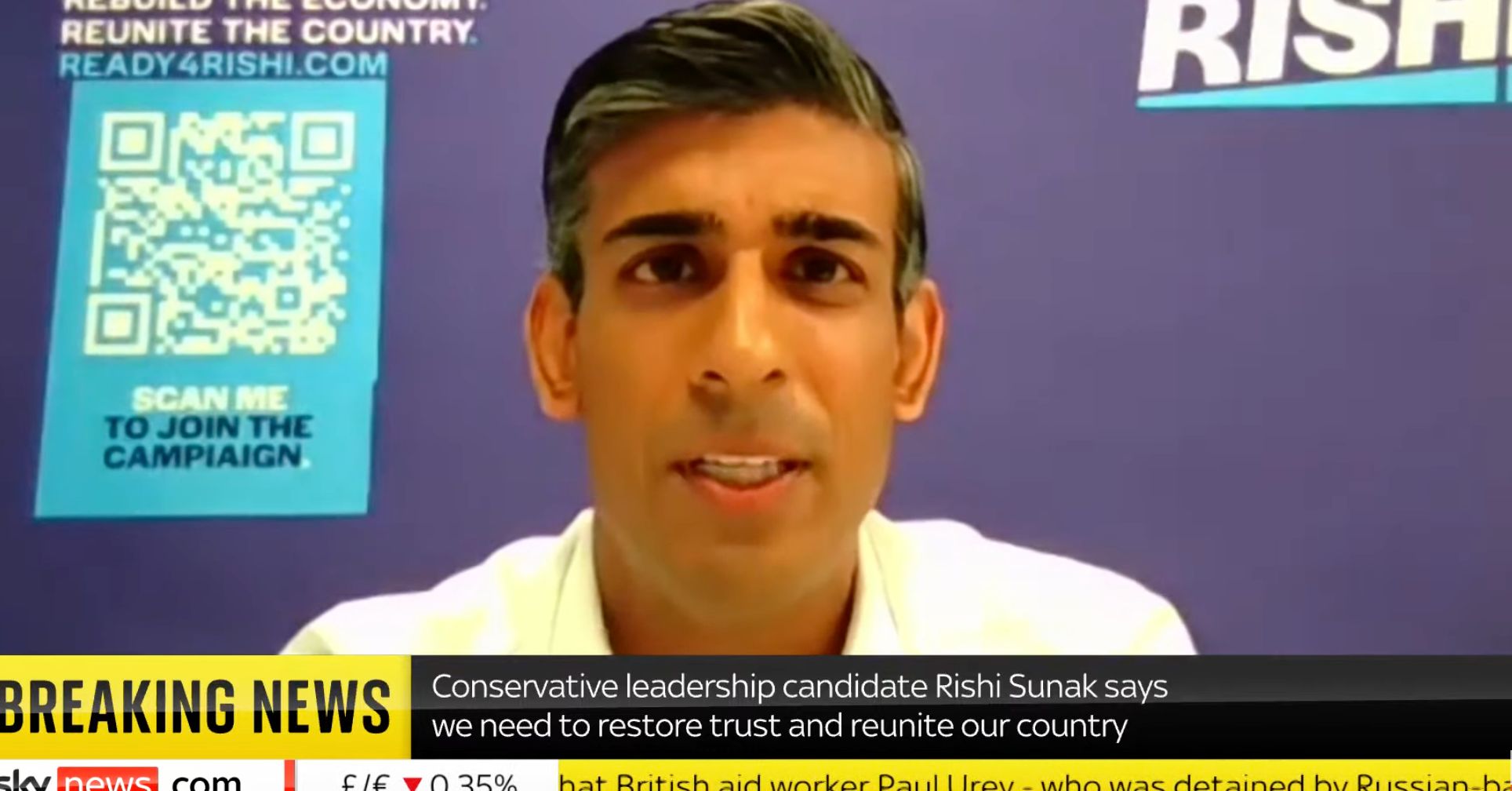
So it was particularly surprising that during a leadership hustings hosted by Conservative Home on Friday, a large spelling error on one of his campaign signs was visible.
Below a giant QR code was the caption: “Scan me to join the campiaign [sic].”
A close-up of the screen behind Sunak during his ConHome interview
Sunak has even been accused of registering his official website Ready4Rishi.com back in December, although it was actually registered on July 6 according to public records. That’s the day after he quit as chancellor and the day before Johnson resigned.
Advertisement
Actually, a different web address was registered six months ago – Readyforrishi.com, which was snapped up on December 23, although Sunak’s team claim they were not responsible for that, according to The Guardian. This URL now redirects to Sunak’s official Ready4Rishi.com page.
Spelling mistakes aside, Sunak’s chances of winning the top job seemed to decrease after a YouGov poll found he was not the most popular candidate among the wider members of the Conservative Party.
Just 13% of the 879 members surveyed backed Sunak – meaning he was tied in third place with foreign secretary Liz Truss – compared to 27% who supported his opponent Mordaunt.
This comes despite Sunak being the second person to resign from Johnson’s cabinet last week, triggering a mass Tory exodus from his government which ultimately forced the prime minister to resign on Thursday.
Sunak has also faced criticism over his wife’s non-dom status (which did allow her to avoid paying taxes on overseas income) earlier this year, until she gave it up and started paying UK taxes.
Advertisement
When challenged over his multi-millionaire status on Thursday, Sunak also told BBC Radio 4′s Today programme on Thursday that he was not too rich to become prime minister.
“I don’t judge people by their bank accounts, I judge them by their character and I think people can judge me by my actions over the past couple of years,” he claimed.
A GB News anchor appeared to channel the characters from the hit film Don’t Look Up in a bizarre exchange with an actual expert on Thursday.
Adam McKay’s stark sci-fi, starring Leonardo DiCaprio and Jennifer Lawrence, followed two scientists trying – and failing – to warn the world that a meteor was approach the Earth, soon to destroy it.
Advertisement
It was clearly a thinly-veiled reference to the warnings the world has had over the climate crisis.
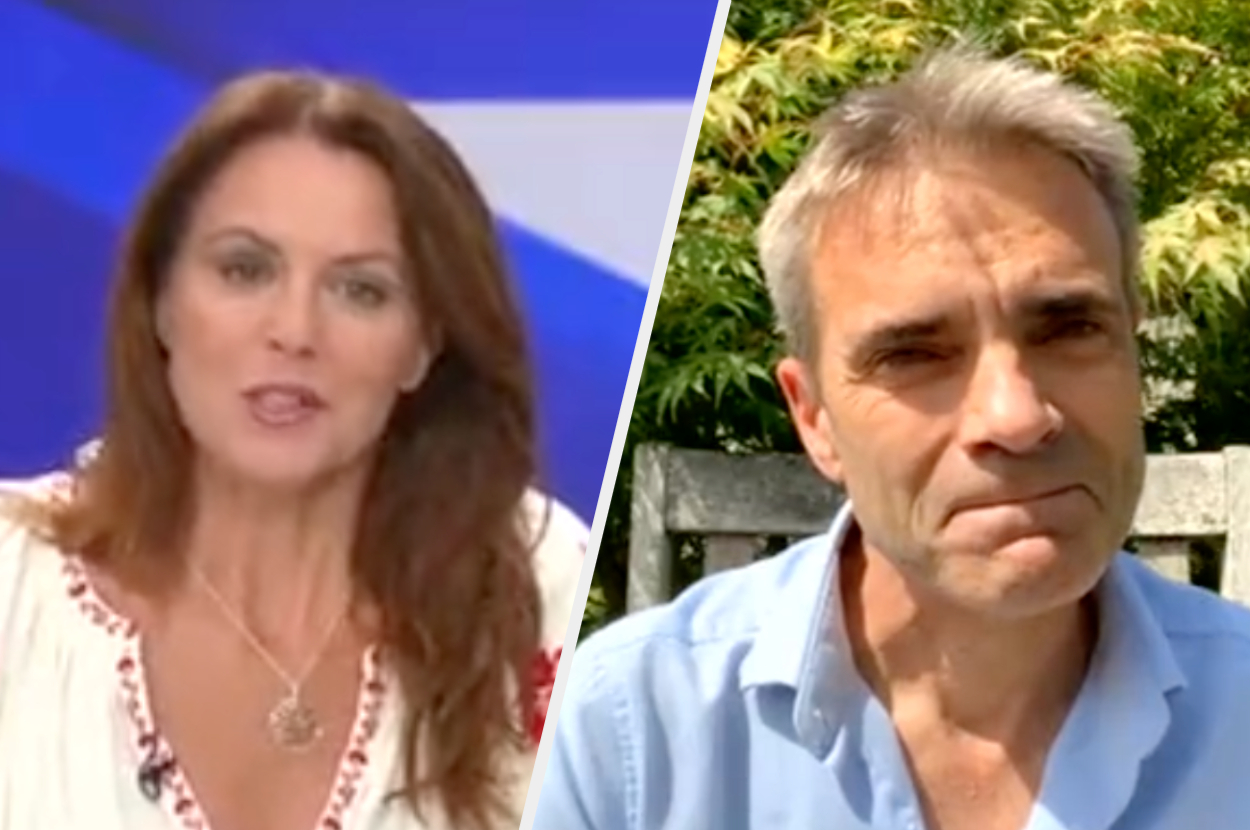
One of the scenes then seemed to play out in real life on GB News, when anchor Bev Turner appeared to dismiss the serious implications of the heatwave which has already descended on the UK, and may hit highs of 40C next week.
Addressing John Hammond, a meteorologist, on Wednesday, she said: “See John, you’re outside enjoying the sunshine. It’s not too hot, is it?”
He replied that the weather was much more mild – before issuing a stark reminder that “by earliest next week, you could scrap 20C, as it could well be 40C”.
″I think there will be hundreds if not thousands of excess deaths early next week.”
He said the charts he could see in front of him are “frightening”, adding that this will not be “nice weather”.
Advertisement
“This will be potentially lethal weather for a couple of days. It will be brief but it will be brutal.
“Oh John,” the anchor cut across. “I want us to be happy about the weather!
“I don’t know if something has happened to meteorologists to make you all a little bit fatalistic and harbingers of doom, but broadcasters – particularly on the BBC – every time I’ve turned on, anyone is talking about the weather and they’re saying there’s going to be tons of fatalities.
“But haven’t we always had hot weather, John?
“Wasn’t the summer of 76 – that was as hot as this, wasn’t it?”
“Er, no,” the expert replied. “And we are seeing more and more records, more and more frequently, and more more severely, so yes some people always hark back to the summer of 1976, which was a freak event, over 40 years ago.
″But heatwaves are becoming more extreme, this is yet another one that is coming down the tracks towards us and I don’t think we should be too lighthearted over the fact that many are going to die over the next week because of the heat. Forty degrees [Celsius] – the sort of temperature, I’m afraid, that this country is just not geared up to cope with.”
‘I think there will be hundreds, if not thousands, of excess deaths… It will be brutal.’
Weather expert John Hammond issues a warning over the ‘extreme’ conditions expected next week.
","type":"video","meta":{"url":"https://www.youtube.com/watch?v=21veiLIGTZg","type":"video","version":"1.0","title":"Regé-Jean Page Taps into His Evil Side in The Gray Man","author":"Variety","author_url":"https://www.youtube.com/channel/UCgRQHK8Ttr1j9xCEpCAlgbQ","provider_name":"YouTube","description":"Regé-Jean Page discusses his role in The Gray Man and reminds people about Simon’s dark side in Bridgerton.\n\nhttp://bit.ly/VarietySubscribe\r\n\r\nhttp://www.facebook.com/variety\r\nhttp://www.instagram.com/variety\r\nhttp://www.twitter.com/variety","thumbnail_url":"https://i.ytimg.com/vi/21veiLIGTZg/maxresdefault.jpg","thumbnail_width":1280,"thumbnail_height":720,"cache_age":86400,"options":{"_start":{"label":"Start from","value":"","placeholder":"ex.: 11, 1m10s"},"_end":{"label":"End on","value":"","placeholder":"ex.: 11, 1m10s"},"_cc_load_policy":{"label":"Closed captions","value":false},"click_to_play":{"label":"Hold load & play until clicked","value":false}}},"fullBleed":false,"flags":[],"enhancements":{},"options":{"theme":"news","device":"desktop","editionInfo":{"id":"uk","name":"U.K.","link":"https://www.huffingtonpost.co.uk","locale":"en_GB"},"slideshowAd":{"scriptTags":[],"otherHtml":""},"slideshowEndCard":{"scriptTags":[{"attribs":{},"scriptBody":"\r\n (function(){\r\n var c = document.getElementById(‘taboola-endslate-thumbnails’);\r\n c.id += ‘-‘ + Math.round(Math.random()*1e16);\r\n \r\n var taboolaParams = {\r\n loader: \"//cdn.taboola.com/libtrc/aol-huffingtonpost/loader.js\",\r\n mode: \"thumbnails-b\",\r\n container: c.id,\r\n placement: \"Endslate Thumbnails\",\r\n target_type: \"mix\"\r\n };\r\n \r\n if (typeof window.modulousQueue === \"function\") {\r\n \twindow.modulousQueue.add(function(){ doTaboola(taboolaParams); });\r\n } else {\r\n \tdoTaboola(taboolaParams);\r\n }\r\n }());\r\n"}],"otherHtml":"
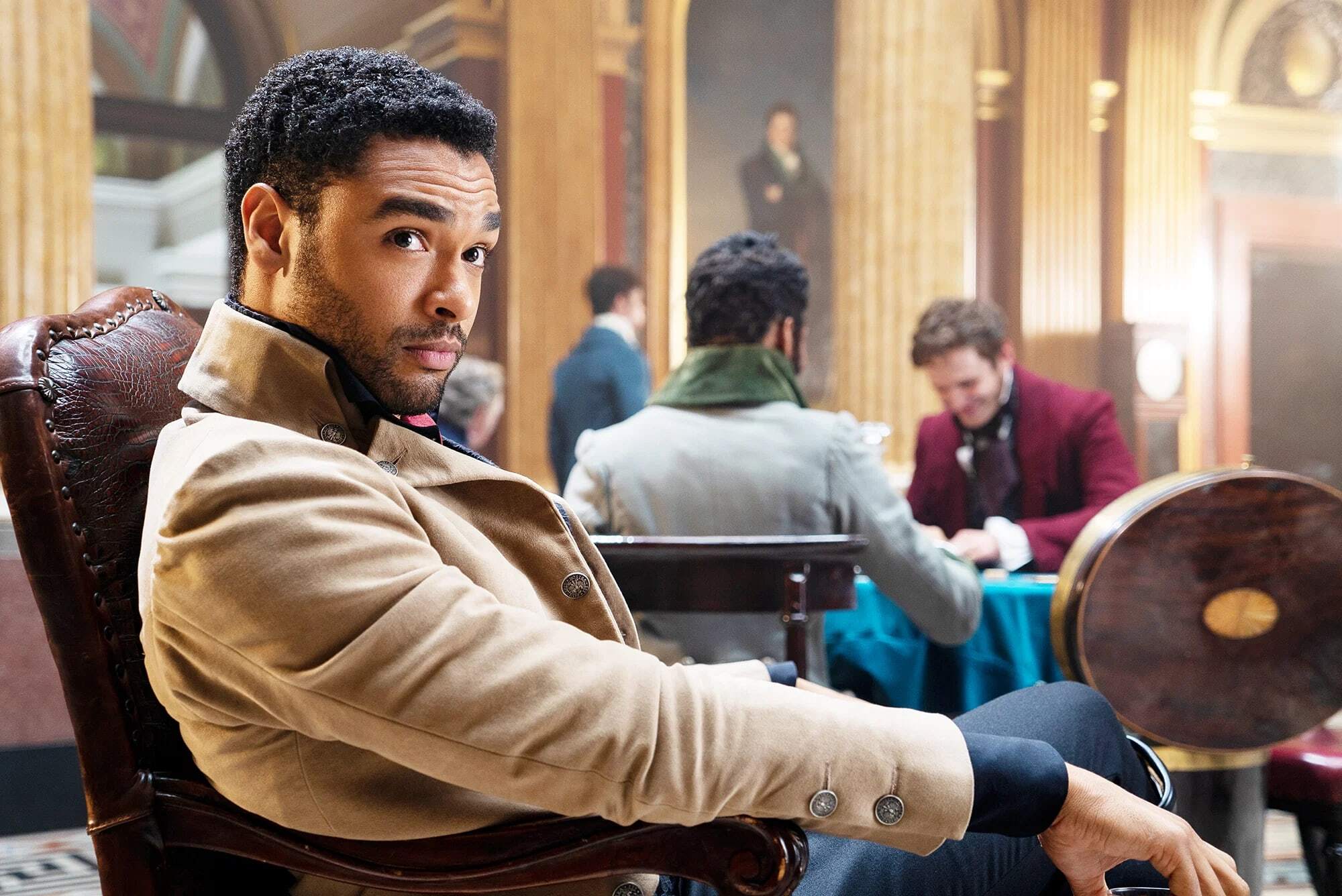
Any Bridgerton fans still holding out for a possible return of Regé-Jean Page to the Netflix series might want to look away now.
Just a month after the actor shut down rumours that he was set to return to the period drama for its upcoming third series, Regé-Jean has now doubled down on those comments, even declaring that he’d have no qualms if his character Simon Basset was recast.
Advertisement
*clutches pearls, starts furiously fanning self*
Regé-Jean played one of the romantic leads in the first season but did not return for the second, which was released earlier this year.
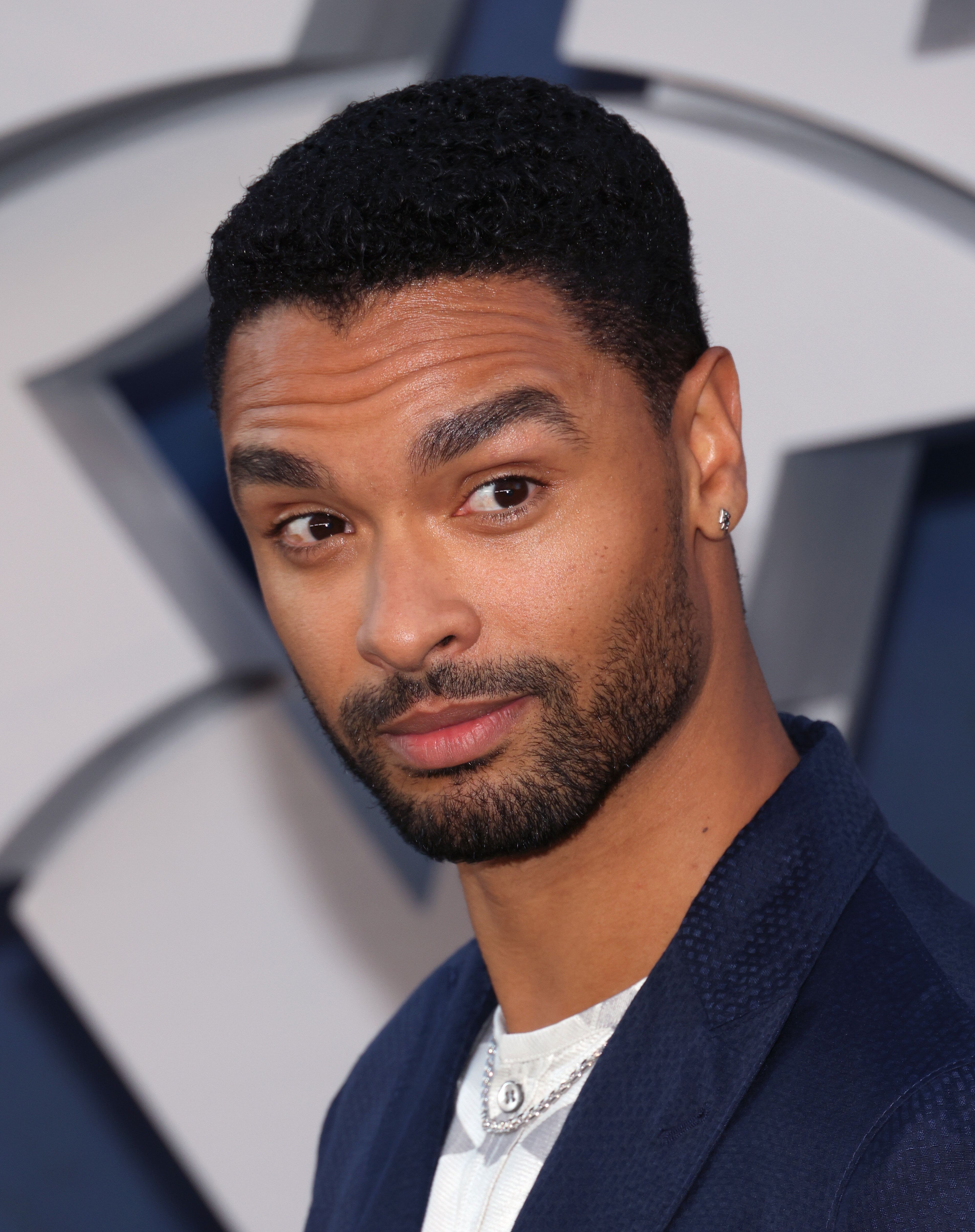
In an interview with Variety at the LA premiere of his new film, The Gray Man (above), Regé-Jean insisted his days of playing the “Regency fuckboy” (his words) are definitely over.
Rege-Jean Page
David Livingston via Getty Images
“They’re free to do as they like,” he said. “Shonda [Rhimes, executive producer on Bridgerton] and I had a wonderful conversation at the end of Season 1. We were quite happy with how we stuck the landing on that one.”
Advertisement
He continued: “We did so well on that redemptive arc that people forget that Simon was kind of horrific.
“He was the best example of a Regency fuckboy that any of us had come across. And so, because we came around full circle so well, because we stuck that landing, you’re left with this great feeling.
“You really do have to be brave about ending stories like that.”
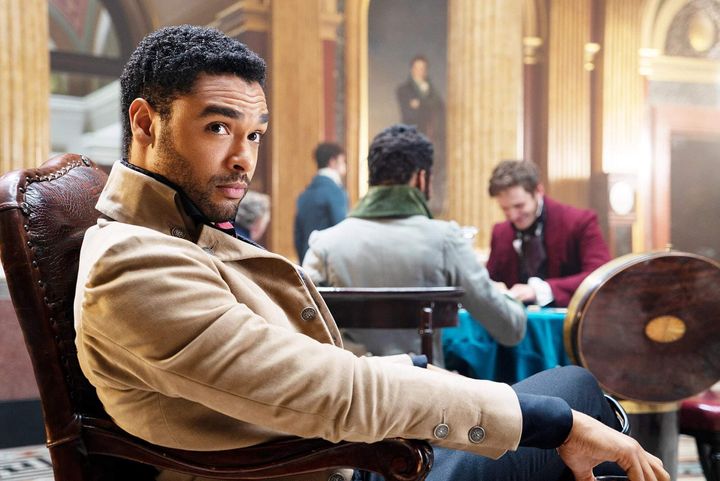
Regé-Jean Page as Duke of Hastings, Simon Basset in Bridgerton
Regé-Jean also admitted that he still hasn’t tuned into the second series of Bridgerton, which debuted on Netflix in March.
After hanging out with former co-star Jonathan Bailey, who plays Anthony Bridgerton, at Milan Fashion Week last month, Regé-Jean posted some snaps on Instagram.
Advertisement
“The boys are back in town (No, I’m not going back to the show btw – the papers made that one up), he captioned the pics.
“But we had the best, and most stylish, catch up I’ve had in a while over some truly excellent Italian coffee and sunshine.”
Bridgerton series 1 and 2 are streaming in Netflix now.
Every morning I apply sunscreen, always to my face and usually to any other exposed skin too. Vanity drives my habit more than fear of skin cancer, but that vanity is going far to keeping my skin healthy — especially as a Florida resident.
But the same can’t be said for my husband.
Despite having a partner who writes about skincare and speaks enthusiastically about sunscreen, he doesn’t wear it daily.
Advertisement
But he, along with other men, have good reason to start: males are significantly more likely than females to die of melanoma, according to recent data from the US Centers for Disease Control and Prevention data. Among white people, who experience much higher rates of melanoma than people with other skin tones, males died of the cancer at more than twice the rate of females.
Lian Mack, a board-certified dermatologist and the medical director and owner of Gramercy Laser and Medical Dermatology, sees a disparity firsthand in her offices. “The number of women presenting to our offices for skin checks far exceeds the number of male patients,” she says, noting females in their mid-20s to late 50s make up the predominant demographic.
This same pattern is repeated elsewhere too. “Men seem to need a lot more coaxing to be seen in the office for skin checks,” says Luke Maxfield, a board-certified dermatologist. “Every year I have at least two or three men who are dragged into the office by their spouses only to have me confirm the diagnosis of melanoma. Literally, spouses often save men’s lives,” he says.
Advertisement
Delaying skin checks or forgoing them altogether means that problematic moles or spots may not be caught until later stages when melanoma’s survival rate begins to decrease, which can explain some of the increase in death rates. While skin cancer is more common in light skin, delaying skin checks is problematic for people of colour. Those with darker skin who are diagnosed with skin cancer often have a worse prognosis because it’s caught at a later stage.
Forgoing skin checks isn’t the only factor. Behaviour, lifestyle and even the locations of cancerous lesions make a difference.
“Women are more likely to wear sunscreen, more likely to stay out of the sun, and young women are more likely to have done a self-examination looking for skin cancers and also much more likely see a doctor for anything concerning,” Maxfield says. “These tendencies are extremely important given that more than half of melanomas may be first noticed by people examining their own skin at home.”
Without proper self-examination, those concerning spots can be hard to find and treat, especially in hard-to-see areas. “In males, most melanomas occur in areas that they are unable to monitor, like the shoulders or the back,” Mack explains, and without a partner to point it out, major delays in treatment can occur.
There may be biological factors, as well. Even when comparing melanomas of similar thickness and location between men and women, the men still fared worse. Levels of testosterone may play a role, but the science is still out on why exactly this is. “The story seems much more than just hormones, and there seems to be a biological role we have yet to discover,” he says.
Given the science, why aren’t more men wearing sun cream? When used properly, it has been proven to reduce the risk of both melanomas and other types of skin cancer. But while many people may apply sun cream when heading out to a day at the beach, making it a daily habit is essential since UV exposure is cumulative over time. “Most of my male patients need to be educated on the importance of sunscreen and the role that its use plays in the prevention of skin cancer and early aging. Most men simply do not believe that they need sunscreen if it is cold out or overcast,” Mack says.
Advertisement
It’s also not the easiest product to work with. Some sun creams can leave behind an uncomfortable stickiness or a white cast on the skin. “My skin-of-colour patients often struggle with the cosmetic elegance of sunscreen,” Mack says, explaining that some can leave behind a greyish-blue tone.
Since the effects of UV radiation damage don’t show up right away, it can be hard to connect time in the sun to any serious effects. And unlike women who use sunscreen to prevent premature ageing, men often don’t share the same motivation, Mack explains.
Making sunscreen a daily habit – even if it’s cloudy – comes down to just one thing: choosing a sun cream and applying it. “The best sunscreen is the one you use,” Mack says, repeating a quote oft-given by dermatologists.
Moyo Studio via Getty Images
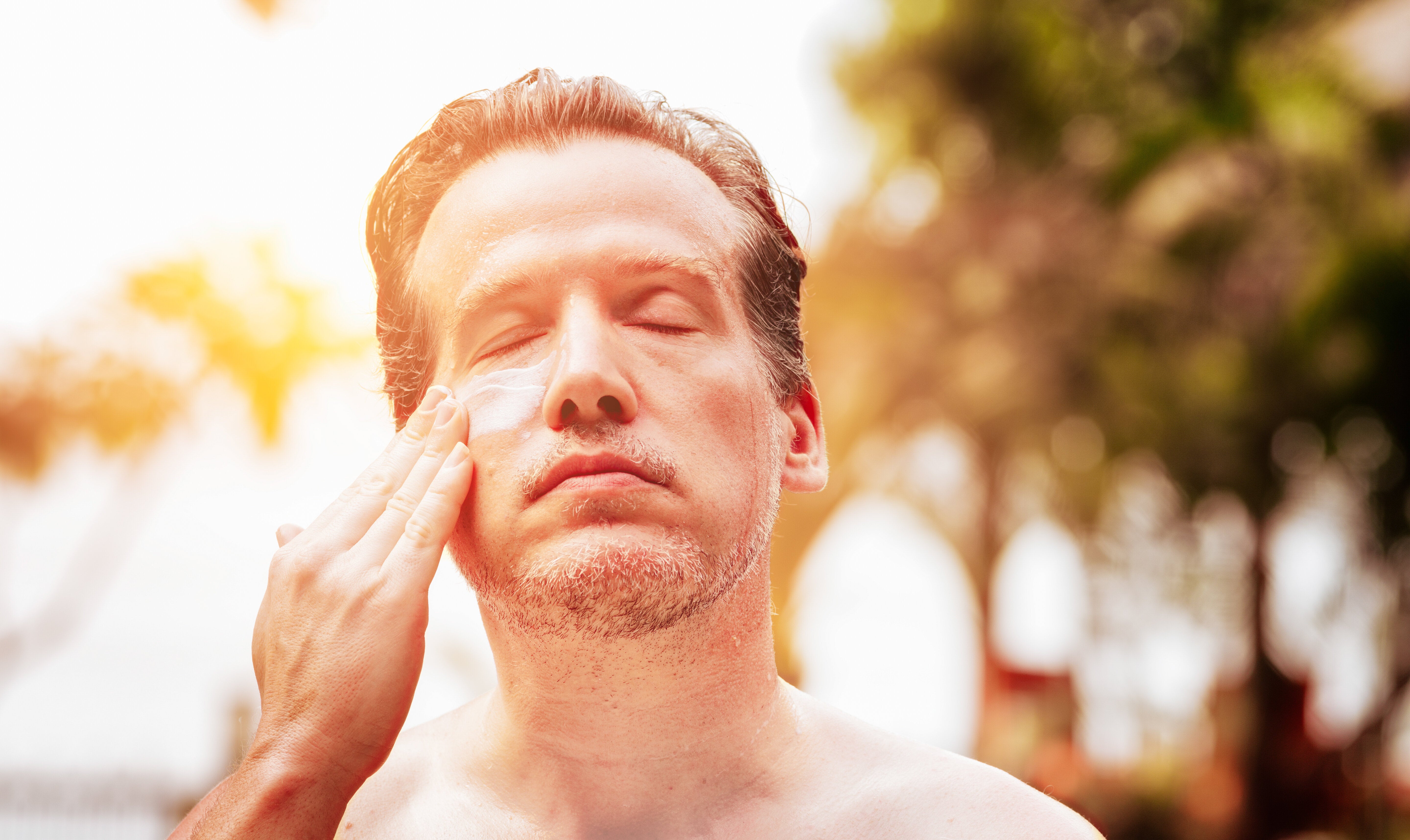
For face, a cream sun cream of SPF 30 or higher is ideal, applied daily after cleansing and moisturising (skipping moisturiser is OK if it’s not needed). Applying enough is important to get full coverage – Mack recommends the two-finger method. Apply a streak of cream to two fingers from base to tip, and apply generously. “I tell my patients to put some of that product on their ears and neck as well,” Mack says.
Advertisement
Don’t forget to apply sun cream to the body, especially if you’ll be in the sun during the day. “If you are going to be at the beach and applying cream to your body, you should apply at least 2 ounces (or the size of a shot glass) to the entire body 20 minutes before sun exposure and reapply every 80 minutes,” Mack says.
Think about your lifestyle when choosing a sun cream. “Moisturisers with SPF do double-duty to hydrate and protect the skin while also providing sun protection. Tinted sun creams can help them blend with darker skin tones as well as protect from visible light and protect skin from dark spots. And if you are an active person, make sure you are getting something water-resistant,” Maxfield says.
There is good news: despite bleaker statistics for men, knowledge and prevention can go a long way. “Take control of what you can,” Maxfield says. “Know your risk factors. These include sun exposure, having multiple moles on your body, or a family history of melanoma,” he says.
Aside from seeing a dermatologist, self skin checks can be lifesaving. “Check yourself for moles that have multiple colours or irregular borders, those larger than a pencil eraser, or any changing moles, and make sure you seek out a dermatologist if there is anything concerning,” Maxfield says.
Even though irritable bowel syndrome affects 5% to 10% of people worldwide, it’s still not taken totally seriously. To someone who doesn’t have it, IBS may seem like no big deal – like a run-of-the-mill stomachache.
But for people with IBS, a condition that may present with symptoms of chronic abdominal pain, bloating, diarrhoea, constipation or some combination of these, it can quickly become what your entire life revolves around.
Advertisement
“People with IBS are often physically and emotionally exhausted by their symptoms and by repeated efforts to get answers and treatments that could help,” Dr. Lauren Tormey, a gastroenterologist at Dartmouth Hitchcock Medical Center in Lebanon, New Hampshire, tells HuffPost. “Not only can it be challenging to make a diagnosis of IBS, but symptoms can change over time, causing confusion and frustration for both patients and doctors.”
This can lead to an all-consuming cycle of avoiding trigger foods, social gatherings that involve food and drinks (so, all of them) and any situations that entail not knowing where the nearest bathroom is – along with the following things only people with IBS would understand:
1. Being so worried you’ll experience gastro symptoms, you make them come true
“I wish I could say having IBS is always in the back of my mind, but truthfully, it’s front and centre – all day, every day,” Lauren Schneider, senior PR and communications manager at Compt, tells HuffPost. “The only time I’m not worried about it is if I know for a fact I won’t be leaving home that day.”
When we’re stressed about our gut health and anticipate a flare-up or a worsening of symptoms, it sends signals from our brain to our gut, which can actually affect our digestive system. The result? Tightened abdominal muscles, colon spasms and an uptick in discomfort.
Advertisement
“The stress associated with the fear of experiencing IBS symptoms can even result in an inability for the body to properly digest food,” Dr. Vanessa Méndez, a board-certified gastroenterologist and founder of Planted Forward, tells HuffPost. “This can lead to bloating and diarrhoea or even a slowing down of the digestive system that triggers constipation.”
2. Eating or drinking something spontaneously – and immediately paying for it
With IBS, because of the hyper-responsiveness of the enteric nervous system (the part of the nervous system located in our digestive tract), symptoms can often be unpredictable. This means turning down the chance to try a new menu item at a restaurant, or cocktails at happy hour, so as to not risk an attack of symptoms.
For people who have never dealt with IBS, these boundaries might seem like overkill. But they can mean the difference between enjoying time spent with others, or being so focused on masking your symptoms you miss out on the experience (or spend the bulk of the experience in the bathroom).
“That one scoop of ice cream is enough to make me feel like I’ve had food poisoning,” Abi Cowell, a vegan food blogger, tells HuffPost. “Will it kill me like a food allergy would? No. But it will cause an awful lot of pain and misery.”
3. Socialising is filled with mental – and intestinal – anguish
“Having IBS and socialising is filled with emotional landmines, especially when meals are involved,” Lindsay Barnes, media relations manager at Evoke Kyne, tells HuffPost.
Advertisement
There’s the frustration of people not understanding that needing to go to the bathroom means you need to go now. The fear of entering the dating world and having to explain why you go so much. The awkwardness when you’re having a good time and suddenly need to make a run to the loo.
“When you just want to sit down and have a normal meal, whether by yourself or with family and friends, these things can be emotionally exhausting,” Tormey says. “The pain experienced by individuals with IBS is in part due to visceral hypersensitivity.”
Visceral hypersensitivity is pain or discomfort coming from internal organs (like those in the abdomen), under circumstances that wouldn’t normally be painful (like eating or during a bowel movement).
The nervous system experiences these sensations and communicates them to the brain for processing via the gut-brain connection.
“Food – eating it, even thinking about it – regardless of the food type, stimulates normal digestive function and can therefore result in pain in IBS,” Tormey says. “Sometimes eating is accompanied by the immediate urge to have a bowel movement because of a heightened stomach-colon reflex.”
Advertisement
Putting food or fluid in the stomach sends a signal via the nervous system to the colon. The colon understands this as a stimulus to empty whatever waste is there – and doesn’t care if you’re mid-sentence on a first date.
10’000 Hours via Getty Images
Social outings, like dates or meals with friends, can cause emotional and physical discomfort.
4. Changing so many ingredients in a recipe or food order, it becomes a different meal
The average person can control the effects of what they put into their body, and can adapt to food-centric situations, because their sensitivities to certain foods remain relatively consistent and clear-cut.
“I don’t have that luxury,” Barnes says. “I have absolutely no control over my body anymore – I can be as mindful as possible and work really hard on my diet, but at the end of the day, my gut controls my body now, and not in a good way.”
Food intolerances are common in IBS, and dietary modifications can help manage symptoms for some people. But for others, “visceral hypersensitivity and abnormal gut-brain communication can cause flare-ups to happen anyway, despite watching what you eat,” Tormey says.
Advertisement
“And who knows how long the flareup will last?” Barnes said. “A half hour? Two hours? The rest of the day?”
5. Mapping out where every public bathroom is before you leave the house
When Schneider leaves her home, she’s always planning – always conscientious of where she can find a restroom if she needs to stop. “If I’m going to be driving somewhere without quick access to a bathroom, I won’t eat before my trip,” she says. “I’ll wait until I get there.”
These coping strategies are actually pretty common, and can be a normal response to a situation that’s outside of our comfort zone, even for people who don’t suffer from IBS.
“When anxiety levels are high in a situation such as traveling, your digestive processes can get dysregulated,” Méndez says. “During stress, the brain sends signals to the gut that influences motility and digestion, which can lead to diarrhoea or constipation.”
Because the gut is constantly at work, the brain typically filters out the nerve signals it sends (paying attention and responding to some in order to regulate gut activity, while not focusing on others). Normal gut-brain communication can go wrong when something disturbs the nervous system or the brain for a long period of time – like when traveling, working a stressful job or rushing to get errands done.
Advertisement
“In these circumstances, the brain perceives stronger signals from the gut, and even the mildest stomach cramp can immediately trigger the brain to start worrying about the potential for worsening pain or a bowel movement coming on,” Tormey says. “The brain subsequently sends inappropriate signals back that disrupt gut function and can worsen symptoms.”
As a result, you might find yourself doing the same as Schneider: scouting bathrooms on your route or delaying meals.
6. Maintaining excuses for why you’re taking so many bathroom breaks
“Something I want others to understand about how IBS impacts my life is the daily secrecy and diversions that surround my use of the bathroom,” Amanda Dexter, 36, tells HuffPost. “There’s a lot of sneaking (multiple) trips to the bathroom or making excuses as to why it took you so long.”
Eating food and having bowel movements are essential to our survival – and across cultures, food is social and often enjoyed and shared with others. But unless you’re potty training a toddler, bowel movements aren’t exactly a typical subject of dinner-table conversation.
“These aspects of daily life pose regular challenges for those with IBS,” Tormey says, and can lead to a loss of enjoyment around food, a fear of eating and even disordered eating habits, such as skipping meals to avoid needing to use the bathroom.
Advertisement
If more people were to open up about their own horror stories, Dexter believes it would help alleviate the unnecessary embarrassment that many people with IBS feel. “Commiseration can go a long way into helping IBS sufferers not feel so alone,” she says.
7. Having flare-ups so exhausting, you need to take the rest of the day off
IBS is a disorder of “dysmotility,” meaning that movement of food, fluid and waste through the gut is altered.
“This leads to irregular bowel habits (diarrhoea, constipation or both),” Tormey says. “You might spend a lot of time in the bathroom, either having bowel movements, trying to have a bowel movement or dealing with pain around the time of bowel movements.”
It’s not uncommon for people with IBS to miss days of work or school because of these exhausting, intrusive symptoms – only to be further stressed out over the resulting lost productivity and wages.
“There have been times where I feel so emotionally drained and frustrated that I’ll just cry in the bathroom,” Barnes says.
Advertisement
PixelsEffect via Getty Images
Flare-ups can be so painful and taxing, it’s hard to motivate yourself to leave the house.
8. The relief of knowing you don’t have anywhere to go that day
For Schneider, being able to work from home has alleviated much of the anxiety associated with her condition. She’s able to eat more intuitively and with a bathroom always nearby.
“Work trips are a little difficult, especially when the whole group goes out to dinner,” Schneider says. “That’s when I just resort to my old ways, and either barely eat or only eat my tried-and-true few things that won’t upset my stomach.”
Because IBS symptoms can be intermittent and unpredictable, varying in both nature and severity, the condition can leave you with a great deal of uncertainty and anxiety about what might happen outside the home.
“To compound matters, there’s a well-established recognition that the central nervous system, or brain, also has a significant role in regulating not only gastrointestinal motility, but sensation – from both an unconscious and a higher emotional level,” Dr. Brooks Cash, professor of gastroenterology at the University of Texas McGovern Medical School, tells HuffPost.
Advertisement
This typically leads to people with IBS becoming hyper-vigilant about their symptoms, and trying to be as ready for them as possible – including doing everything in their power to avoid potential triggers.
“Sometimes these triggers are absolutely accurate, and other times they’re merely innocent bystanders,” Cash says. “Either way, we often see patients changing their lifestyle, daily activities, diet, habits and social activities for the sake of avoiding them.”
9. Losing count of how often you’ve been told your IBS symptoms are all in your head
Schneider has done what’s recommended to treat IBS. She’s seen doctors, done the tests. The endoscopy and colonoscopy didn’t show anything helpful – just that she also has gastro-oesophageal reflux disease.
“I’m on an SSRI, so it isn’t anxiety-related, like one doctor so unhelpfully assumed,” she says. “She literally said to me, ‘Well, nothing’s shown up in your bloodwork or other tests – you have IBS-D but it’s probably all in your head.’ Thanks, super helpful.”
After being poked and prodded enough, Schneider gave up. “I’m tired of advocating [for] myself to doctors who won’t listen and paying co-pays that are essentially a waste of money to hear the same things over and over.”
Advertisement
While doctors don’t have an IBS biomarker to test for, there are formal diagnostic criteria for IBS called the Rome IV criteria.
“To make a diagnosis of IBS, patients should meet Rome IV criteria and not have any other ‘alarming’ signs such as blood in the stool, unintentional weight loss or new onset symptoms over the age of 50 without prior colon cancer screening,” Tormey says.
These criteria must be fulfilled for the past three months, with symptom onset at least six months prior to diagnosis. “IBS should then be sub-classified by the predominant bowel pattern – such as IBS-C, or IBS with constipation – which helps guide treatment,” Tormey says.
A diagnosis of IBS can be made confidently after a detailed history, a complete physical exam and a few thoughtfully selected diagnostic tests to evaluate for conditions that can present with similar symptoms.
So if your doctor implies – or straight-up tells you – your symptoms are all in your head, Méndez encourages you to get a second, third or even fourth opinion. “You know they’re not in your head and that IBS is a very real condition,” she says. “In fact, IBS is the most common functional digestive disorder. If you have symptoms, please keep seeking help until you find a healthcare provider you trust.”
He also pointed out that these hopefuls haven’t actually “found time to explain where they’re paying for it” either.
Most of the candidates were also there when the government introduced these taxes in the first place, only now “they’re acting as if they’ve just arrived in from the moon”, according to the Labour leader, as he accused them of desperately rewriting history.
With the cost of living crisis squeezing the whole country right now, taxes are at the forefront of public’s minds.
Advertisement
So now Boris Johnson is on his way out and Tory MPs are lining up to replace him, they’re all promising that they’ll handle the economy a little better – somehow.
Here’s what you need to know.
Who’s said what?
Rishi Sunak – chancellor up until a week ago – said he would cut taxes only once “we’ve gripped inflation”.
Liz Truss, foreign secretary, has promised to cut taxes “from day one”.
Jeremy Hunt, former health and foreign secretary, told BBC Breakfast he would “cut all taxes”.
Current backbencher Tom Tugendhat said he wants to reverse the rise in national insurance. He said: “Tax cuts cannot be the only round in the magazine to fire growth in the economy.”
Why is it becoming an integral part of their campaigns?
The cost of living crisis has certainly added pressure to the government when it comes to cutting taxes.
However, plenty of Conservatives also want to reduce taxes to return to the more traditional idea of Conservatism: free market, reduced income tax rates and cutting the deficit.
Sunak is the main figure in the contest determined to hold onto current taxes, having been the one to champion them all as the chancellor earlier this year.
Advertisement
Why could cutting taxes be a good idea?
The cost of living crisis means households across the country are struggling, so reducing the amount they pay in tax would be a relief.
Energy bills are expected to rise from £1,971 up to £2,800 in October and then rise again in the beginning of 2023, according to energy regulator Ofgem.
The threshold for national insurance contributions was already raised in July, meaning people had more money in the bank this month. However, for most people this was mitigated by the 1.25 percentage point increase to NI in April to help pay for health and social care.
And, people have gradually been pushed into higher tax bands as bands have been frozen, while wages increased.
Why would it not be a good idea?
The relief could just be short-term, as tax cuts could add to inflation pressures.
The office for Budget Responsibility (OBR) has suggested that high taxes are needed to negate the rising cost pressures.
It predicted that debt could increase from 96% to more than 100% of GDP by 2052-53 (30 years time), according to the PA news agency.
In 50 years, it could reach 267% of GDP, unless pressures on health, pensions and social care spending along with the loss of motoring taxes, are included.
Reversing any tax increases announced this year, according to the OBR, could “put more pressure” on the already unstable public finances.
There’s also the question as to where the money for tax cuts would come from.
Lord Lamont, who is backing Sunak, told Radio 4′s World at One that the race to cut taxes is not “necessarily affordable, not necessarily rightly timed”.
Advertisement
Is cutting taxes the only way to help the cost of living crisis?
From Thursday, low-income households on benefits will receive a first instalment of £326, with the next payment of £324 coming in the autumn.
Pensioners will receive an extra £300 to help cover the rising cost of energy this winter, while people on disability benefits will receive an extra £150.
From October, households will have £400 off energy bills too.
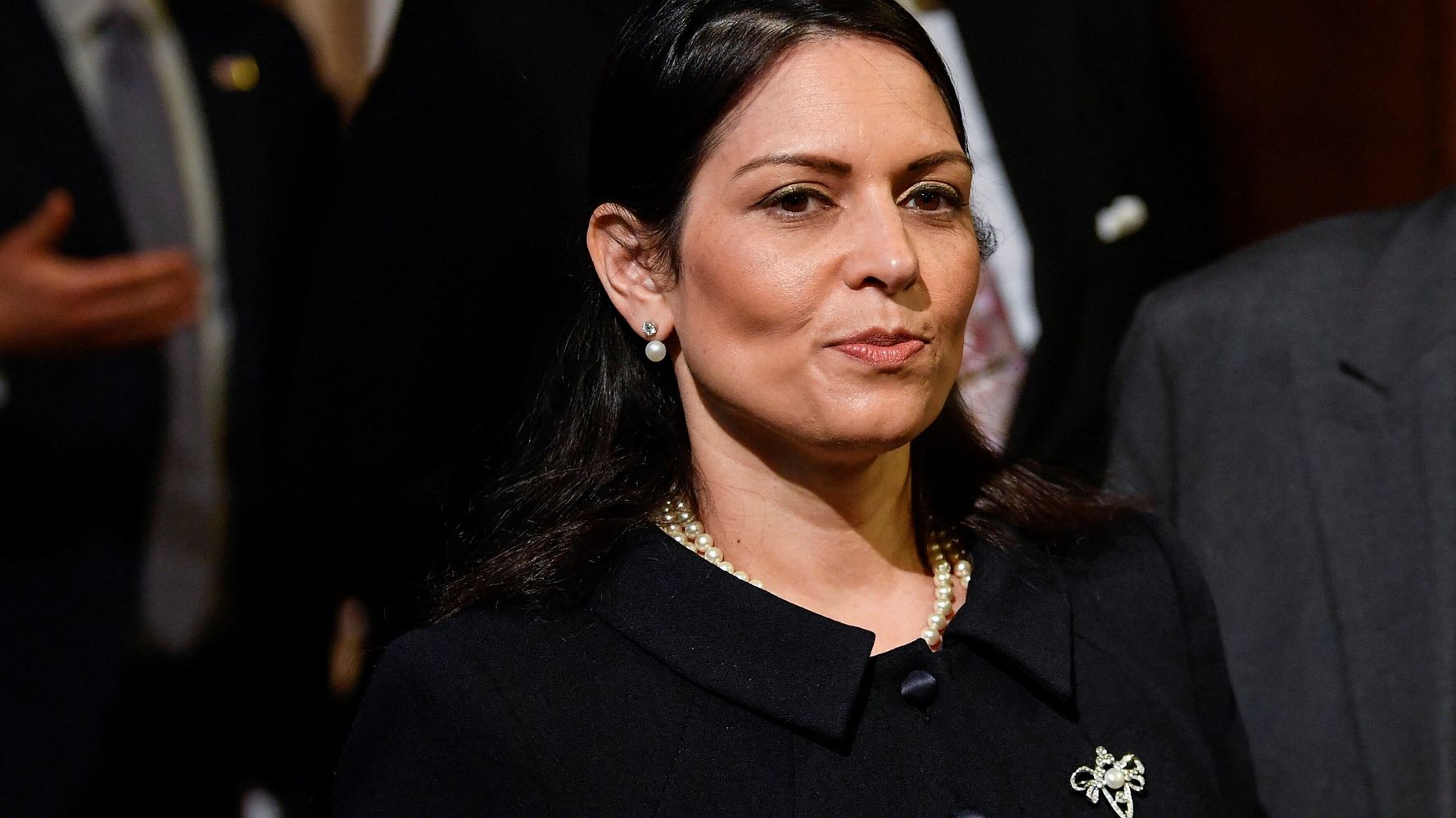
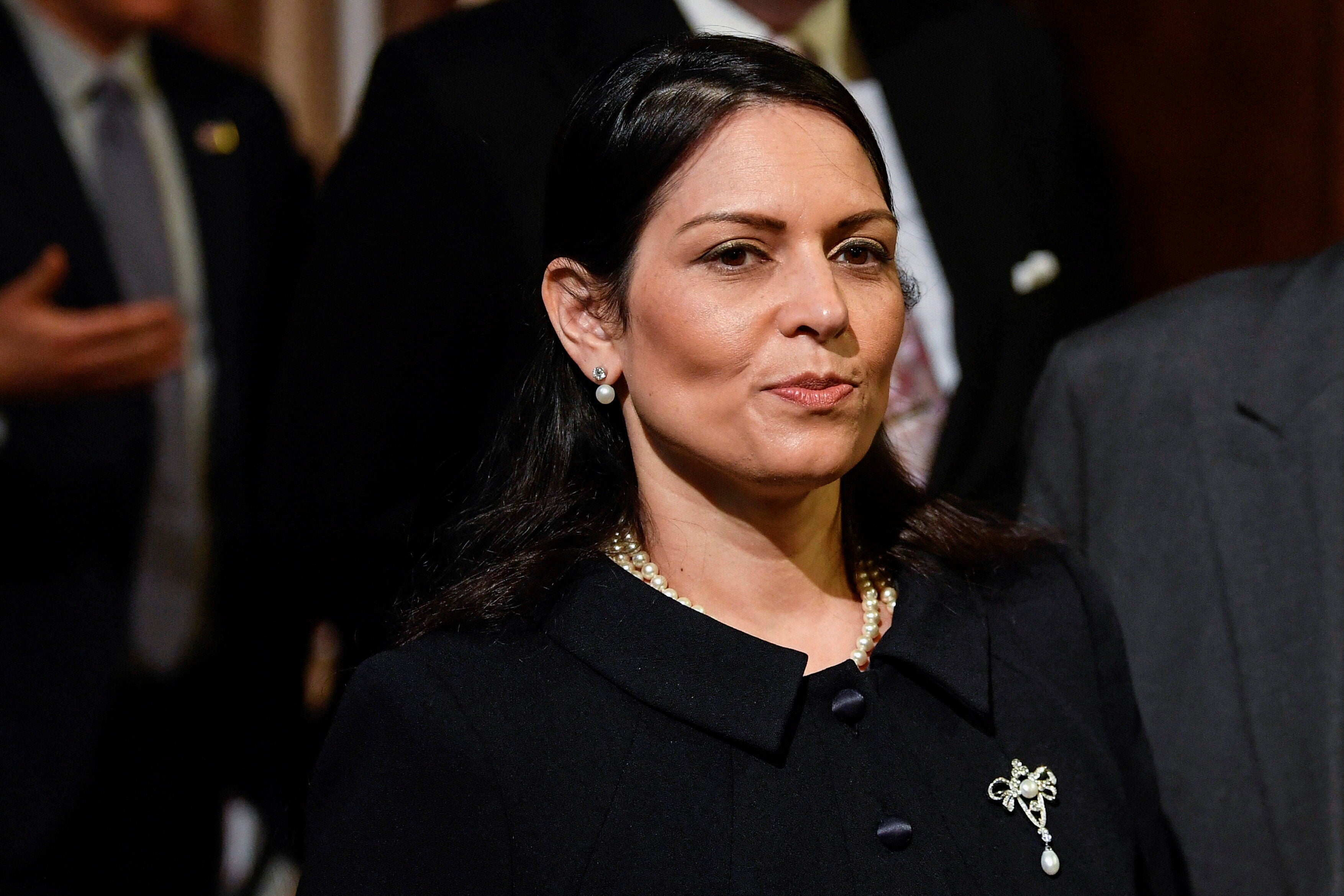
In a statement on Tuesday afternoon, the senior cabinet minister said she was “grateful” for the encouragement she had been given to stand.
But said she would “not be putting my name forward for the ballot of MPs”.
Patel, a leading Brexiteer who would have hoped to secure support from the right of the party, did not say who she would back instead.
Advertisement
“I will be listening to cases being put forward by the candidates standing for the leadership of the Party and trust the contest will be conducted in a good spirit that brings our Party together,” she said.
“As a lifelong and committed Conservative, I will always make the case for freedom, enterprise and opportunity and work with colleagues to deliver these values in government.”
The announcement came after a frenetic morning of campaign activity, with Rishi Sunak, Tom Tugendhat and Kemi Badenoch all launching their bids at the same time.
Sunak is seen as the early frontrunner, with the others battling to face off against him in the final round of two.
Advertisement
Candidates have until 10pm this evening to secure the backing of 20 MPs to make it onto the ballot.
Then, the first ballot of MPs will take place on Wednesday, with candidates failing to get 30 votes being eliminated, with a second vote expected on Thursday.
The process is then likely to continue into next week, with candidate with the lowest vote dropping out, until the list of candidates is whittled down to just two – who will go forward into a ballot of party members.
The winning of the contest will be announced on September 5 and is likely to become prime minister the following day.
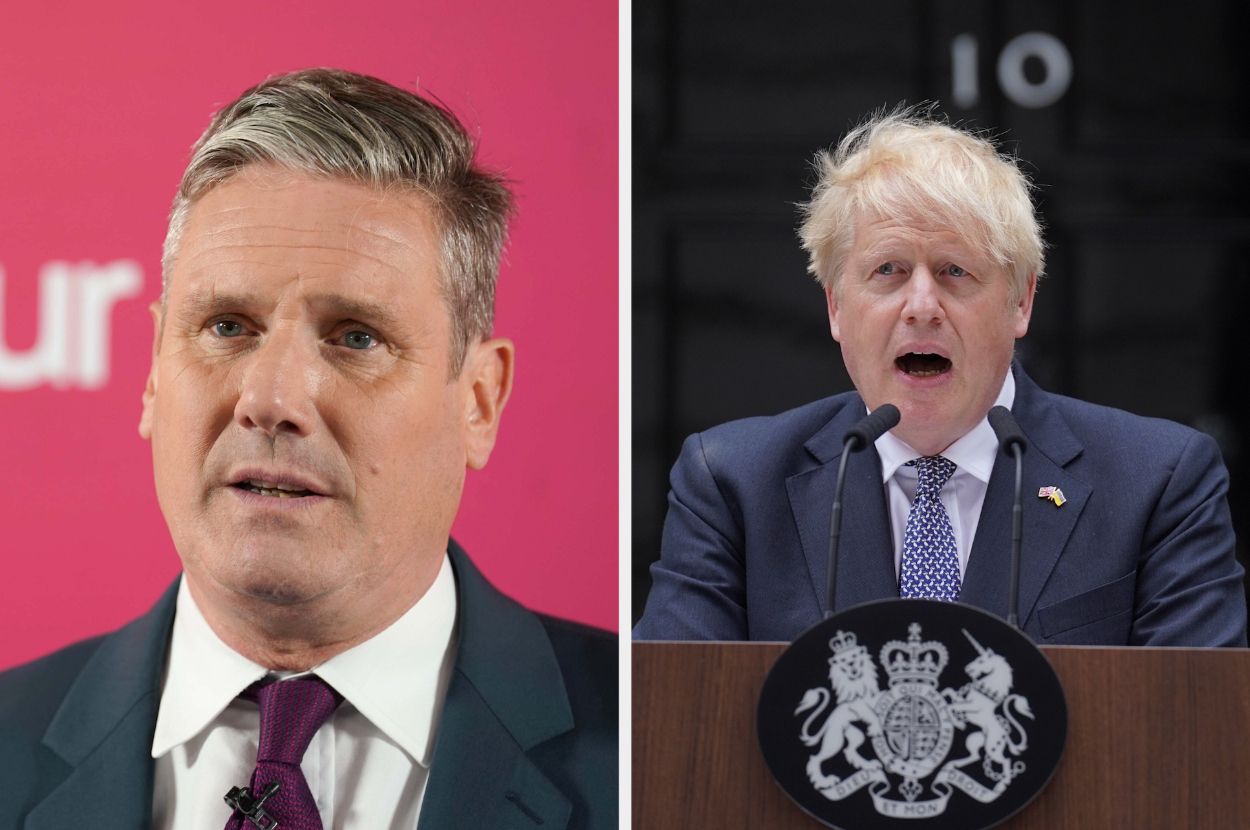
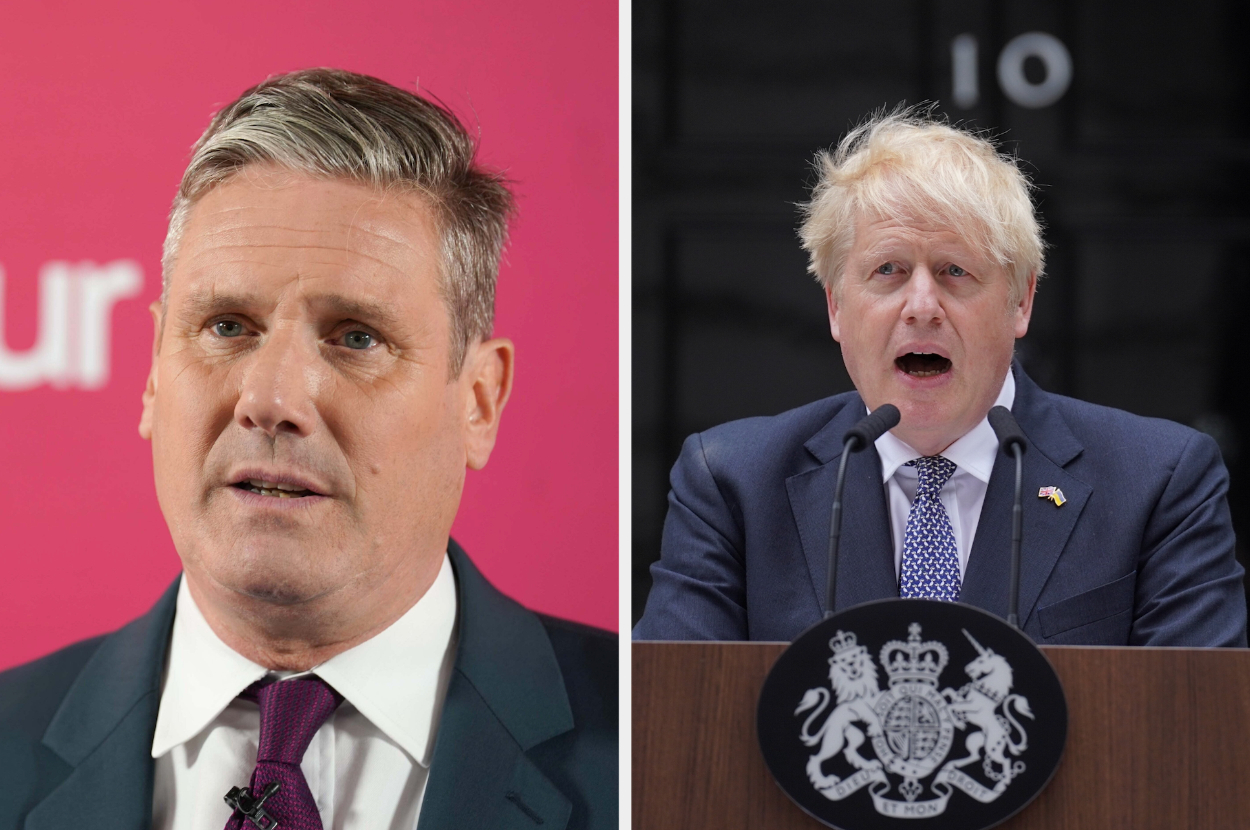
Keir Starmer has called on Tory MPs to back his bid to have Boris Johnson removed from No.10 immediately.
The prime minister is set to stay in post until the Conservatives elect a new leader in eight weeks’ time on September 5.
Advertisement
But Labour have tabled a motion of no confidence in the government which, if it was passed by the Commons, would see Johnson booted out of office straight away.
If the Conservatives were then unable to form a government under a different prime minister, a general election would be held.
Starmer said: “The Tory party has at last concluded that the prime minister is unfit for office, that was blindingly obvious a very, very long time ago. He is leaving because his own party has concluded that he can’t be trusted.
“They can’t now let him cling on for weeks, and weeks, and weeks until the 5th of September. It would be intolerable for the country.
Advertisement
“Since the Tories have failed to act in the national interest, Labour will. We have put down a vote of no confidence, and challenged any Tory MP who in the last few days has said ‘I can’t serve Boris Johnson because you can’t trust a word the man says’, ‘I can’t go on the media because the lines he gives us always unravel’.
“Can they really vote to say he should stay in power for another few weeks We’re challenging them to put their constituents first, and put the country first.”
If the government makes time for it to be debated, MPs will vote on the confidence motion tomorrow.
It is almost certain to be defeated because it will not be supported by Conservative MPs.
But a Labour source said: “It will put the squeeze on backbench Tories to either vote for him, and be hypocrites, or back Labour, admitting we were right.
“Do all those Tory leadership candidates really want to be answering that question next week? They know he needs to go.”
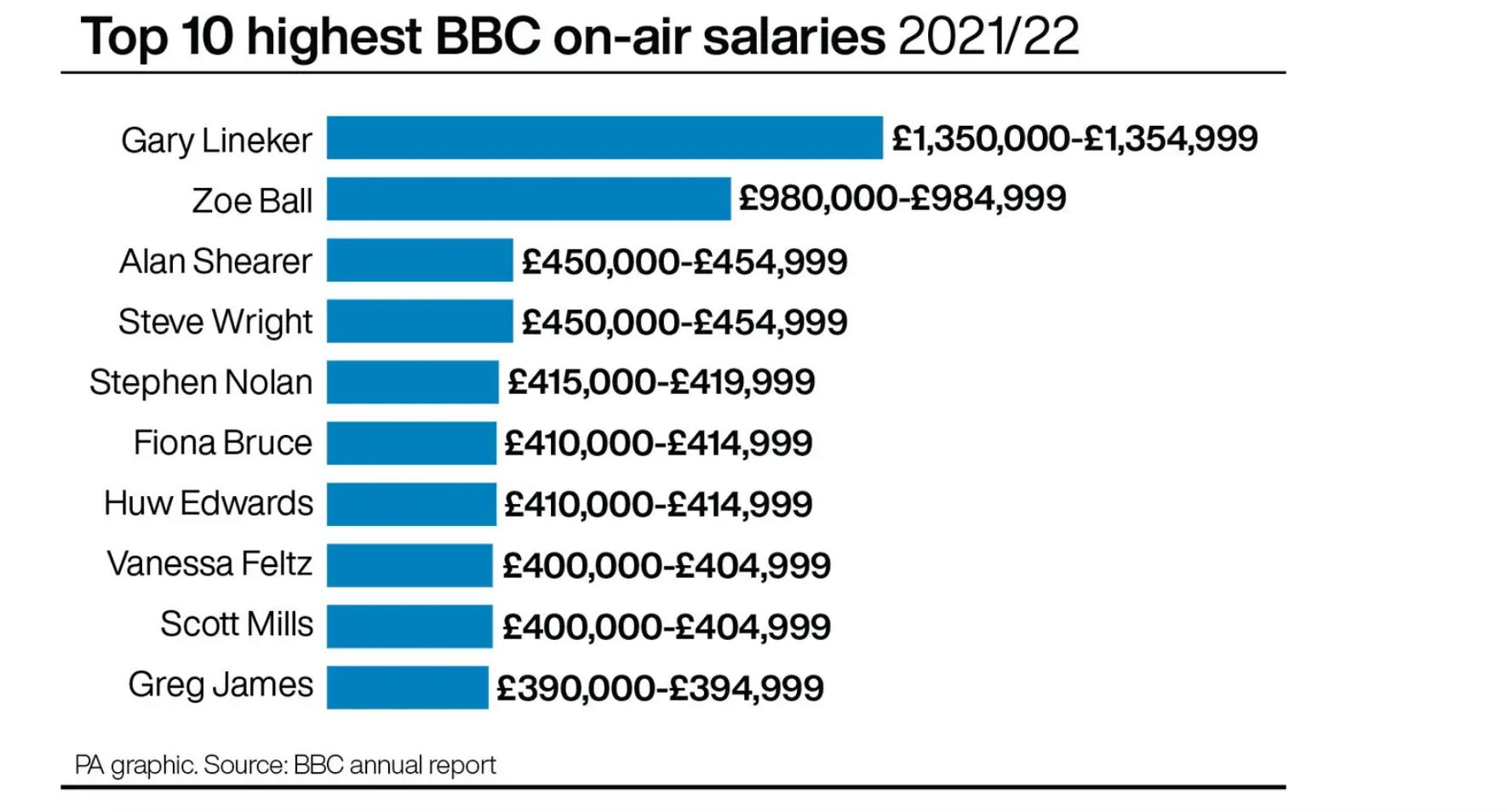
Gary Lineker is the BBC’s top earning on-air talent for the fifth consecutive year, new figures show.
It’s also been revealed he’s now the only name to earn over £1 million annually.
The 61-year-old pundit and former footballer was paid between £1,350,000 and £1,354,999 in 2021/2022 for work including Match Of The Day and Sports Personality Of The Year – a reduction of £10,000 on the previous year.
Advertisement
Gary first topped the list for 2017/18 with a pay bracket of £1,750,000 to £1,759,999, and in 2020 it was announced he had taken a voluntary pay cut.
Zoe Ball remains the broadcaster’s second highest paid talent, with a salary of £980,000 to £984,999, but figures show her salary falling for a second consecutive year after she also agreed to a pay cut.
Her salary has now slipped to below £1 million and reflects approximately 210 editions of The Zoe Ball Breakfast Show on Radio 2.
Meanwhile, Alan Shearer has seen a year-on-year increase of £60,000, bringing his salary to £450,000-£454,999, which puts him joint third with Steve Wright, whose salary this year reflects a £15,000 decrease.
Advertisement
The former footballer’s increase was the result of him doing more work for the BBC during what was a major event year, the corporation said.
A list of the 10 highest-paid on-air BBC stars
PA Graphics
The BBC’s annual report for 2021/22, which also marks its centenary, shows four out of the top 10 best paid names have seen their salaries fall.
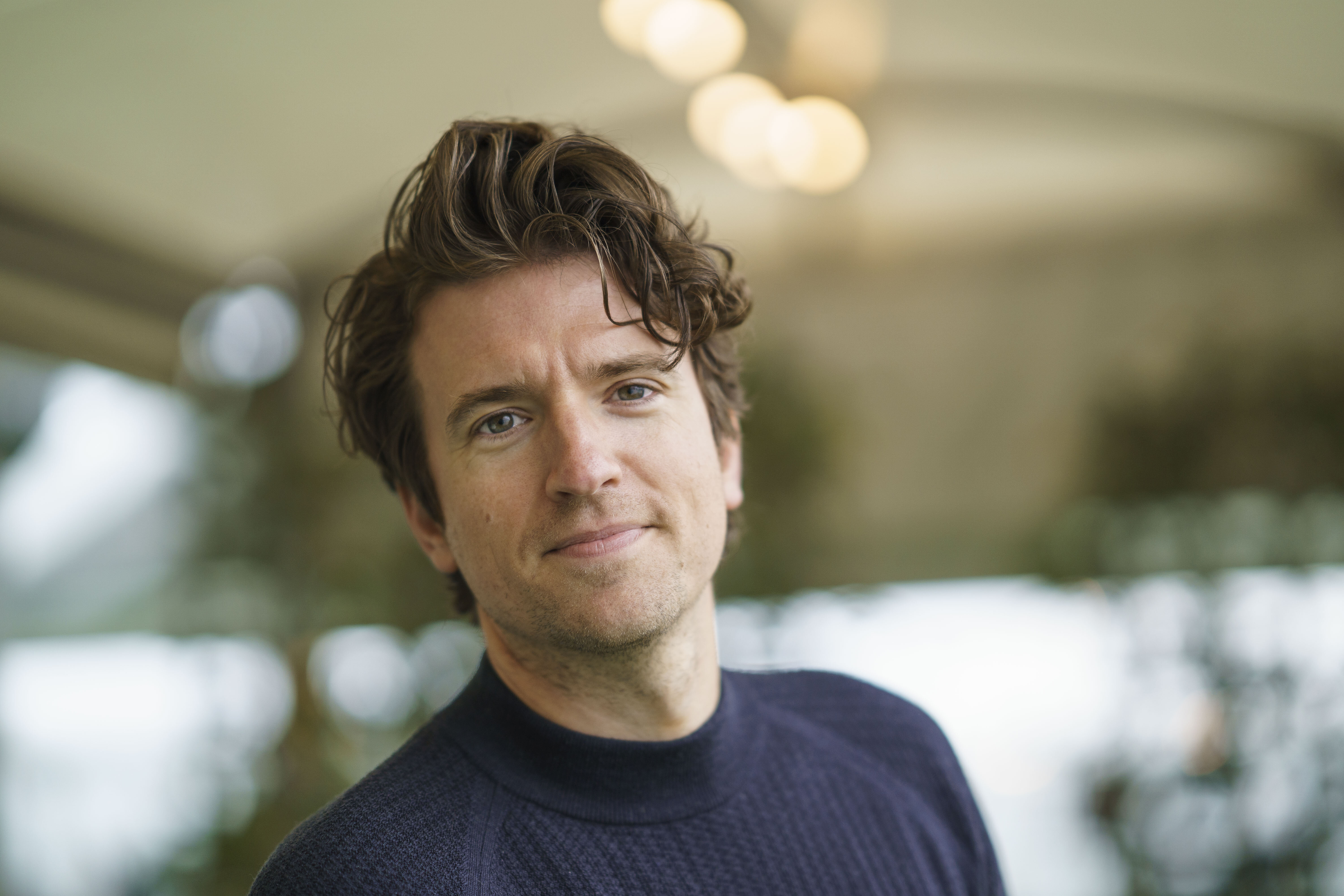
The only new addition to the top 10 is Greg James, whose salary has increased by £80,000.
The 36-year-old earns between £390,000 and £394,999 for work including the Radio 1 Breakfast Show, Rewinder on Radio 4, Radio 1’s Big Weekend and Out Out! Live, with Sports Personality Of The Year also listed.
Greg James
David Levenson via Getty Images
Advertisement
This year’s top 10 features fewer women than last year, dropping from four to three.
Lauren Laverne does not feature in this year’s top 10, with figures showing her salary has fallen by £15,000 to the bracket of £380,000-£384,999.
There is no year-on-year net change in the overall earnings of the top 10, with the amount saved through the four salary reductions equally matching the increases of the other six.
Other notable increases on the overall list of top earning on-air talent, as shown in the annual report, include Naga Munchetty with a £110,000 increase to £365,000 – £369,999 and Amol Rajan with an increase of £85,000 to £325,000 – £329,999.
Victoria Derbyshire, meanwhile, has seen a £70,000 increase to £240,000 – £244,999.
Graham Norton is also absent from the list after departing Radio 2 in December 2020 to start a show at Virgin Radio.
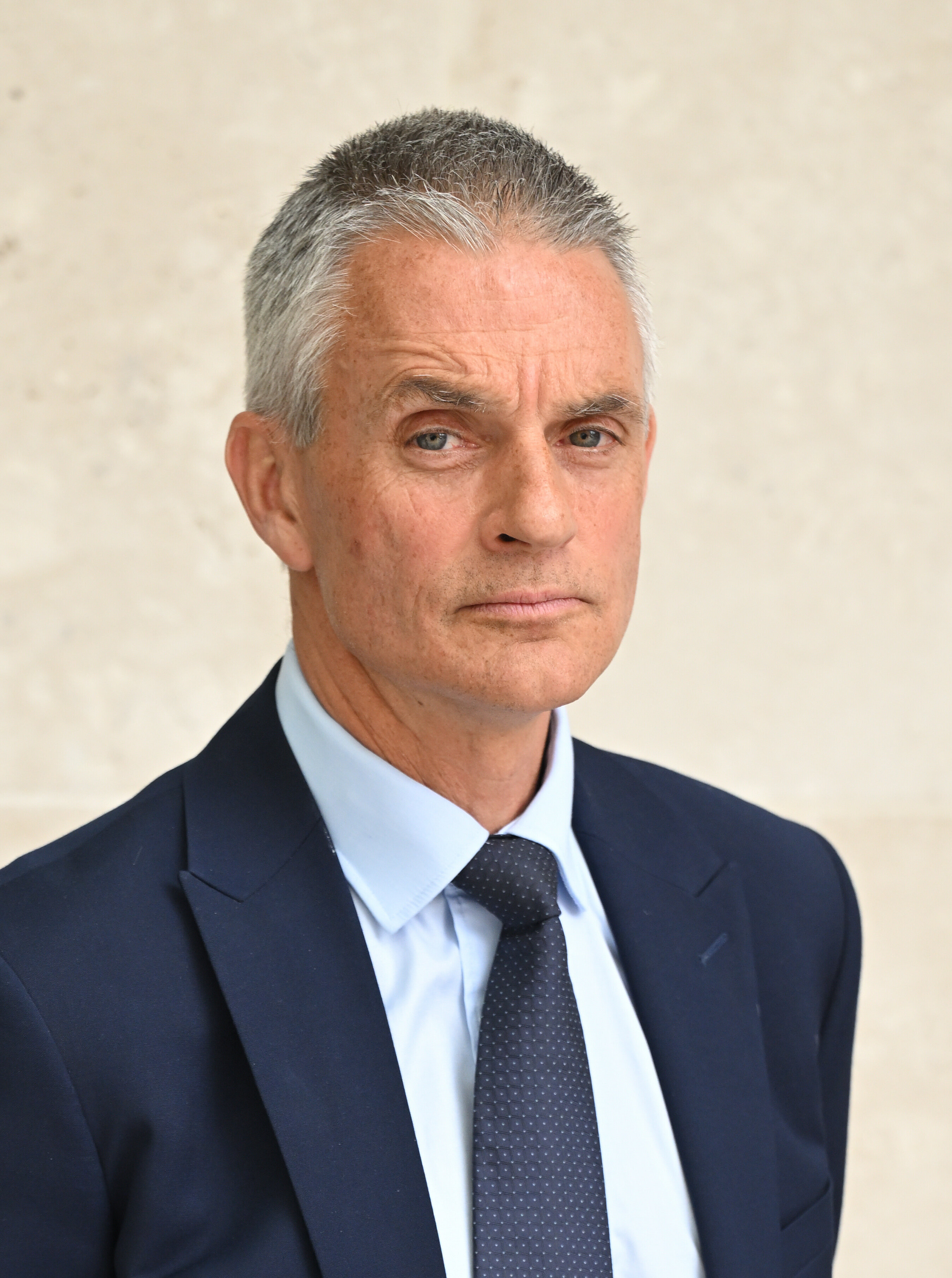
Speaking at a press conference, BBC director-general Tim Davie said: “Critically, if you look at the overall spend for our top talent I think we are showing incredible restraint in a market that is being driven by extreme hyper-inflation and competition.
Advertisement
“If you look at the value we get. And I know this is a source of a lot of understandable attention, actually if you step back the actual amount paid for that group of talent, which only represents a tiny fraction of the 200,000-odd people who come on our airwaves every year, the return we get in terms of audience value is very strong.
“And actually our research (shows) people want to see the best people presenting and delivering for the BBC.”
Tim Davie
Karwai Tang via Getty Images
The BBC has seen a number of high-profile on-air departures over the last year, with Emily Maitlis, Jon Sopel, Andrew Marr and Dan Walker all leaving for rival broadcasters.
Mr Davie said he was “of course” concerned about retaining top talent in the face of inflation and a frozen licence fee.
He said: “I think we are in a competitive market and I think the BBC has always been to a degree in this position. But it is more intense as we see well-funded global players enter the market.
“Certainly in news and audio we are seeing a globalised market so you are going to get more demand for talent.
“I would say that overall I would (say) look at the data. Actually, if you looked at our presenting talent, I was looking at our so-called – not the most attractive term – but attrition rate, and it is about 3%.
“So there are obviously headlines around individuals and some regretted losses but actually our number in terms of the people being retained in the BBC is high.”
Advertisement
Mr Davie said there there was “no shortage of demand” for top positions at the broadcaster and added: “I think that is good because we are the best booking in town in my mind.”
He also stressed the importance of bringing “new talent” through the BBC and said the would always mean a “degree of change”.
Nicola Adams and her girlfriend Ella Baig have welcomed their first child.
The couple previously announced they were expecting a baby boy, and said they “felt and instant love and the strongest bond” after his arrival.
On Monday, the Olympic boxer posted a photo of her and Ella in the delivery room and a picture of their son’s feet.
Nicola wrote: “We are so excited to announce to the world that baby adams has arrived. The first moment we laid eyes on you we felt an instant love and the strongest bond.
“We went to the moon and back to get you and we can’t wait to spend the rest of our lives watching you grow.”
Nicola and Ella announced they were expecting a baby in February after four rounds of IVF starting in 2019.
The pair began dating after meeting on a night out in the Olympian’s hometown of Leeds.
In addition to her illustrious boxing career, Nicola made TV history in 2020 when she became the first celebrity to compete in Strictly Come Dancing as part of a same-sex pairing.
Unfortunately, she and Katya Jones had their Strictly journey cut short when the professional dancer tested positive for Covid.