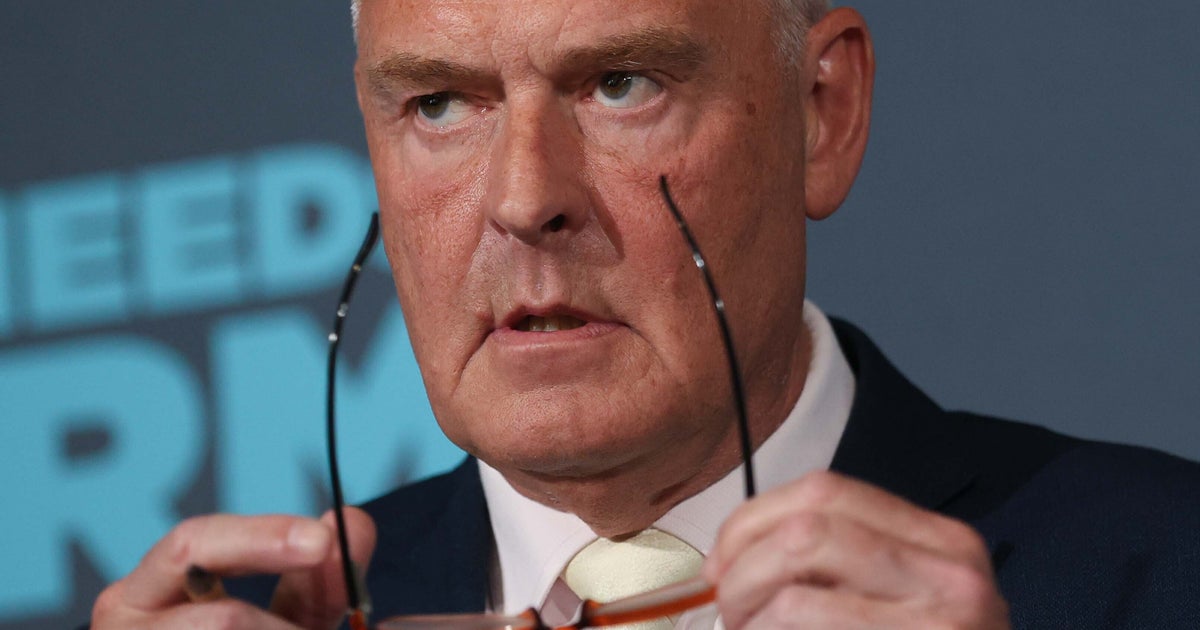
Lee Anderson has advised critics to “scroll by” Zia Yusuf’s social media posts amid heightened scrutiny over Reform UK.
Yusuf, the party’s home affairs spokesperson, attracted backlash earlier this month when he called former defence secretary Ben Wallace a “traitor” to Britain.
Asked about the criticism surrounding Yusuf at a press conference, Reform’s chief whip Anderson defended his colleague.
He said: “I think Zia is probably one of our best communicators in Reform UK, very popular with the membership and a little bit of advice to anybody: If you don’t like what Zia says, then just scroll by. It’s really simple.”
Advertisement
He added: “If you don’t like what any of us have to say on social media, you don’t have to follow us. You don’t have to read our comments. Just scroll on by and go and listen to somebody else.”
Deputy leader Richard Tice also shrugged off the scrutiny around Yusuf, insisting the unelected politician is “passionate”.
He told reporters: “We’re all passionate; Zia is passionate.
“And we all, frankly, are furious at how the previous Conservative government let us all down because they said they were going to reduce immigration numbers. They didn’t. They opened the doors, they allowed the ‘Boriswave’.
Advertisement
“So, Zia is on great form. We’re on great form. We’re looking forward to conference. And as I tweeted out a couple of days ago, I think the summer heat may have got to a few journalists.”
Yusuf himself later took issue with reporters at the right-wing outlet Guido Fawkes after the site reported that Anderson had told people to scroll past his social media posts.
He wrote on X: “The Tory Labour establishment is terrified of my social media platform.
“My accounts do over 200 million organic views a month. Which is why establishment media is hell bent on trying to censor me.”
Advertisement
He added: “Remember, the things the establishment media write about Reform are not only lies, they are the *opposite* of the truth.”
Listen to Commons People, the podcast that makes politics easy. Every week, Kevin Schofield and Kate Nicholson unpack the week’s biggest stories to keep you informed. Join us for straightforward analysis of what’s going on at Westminster.
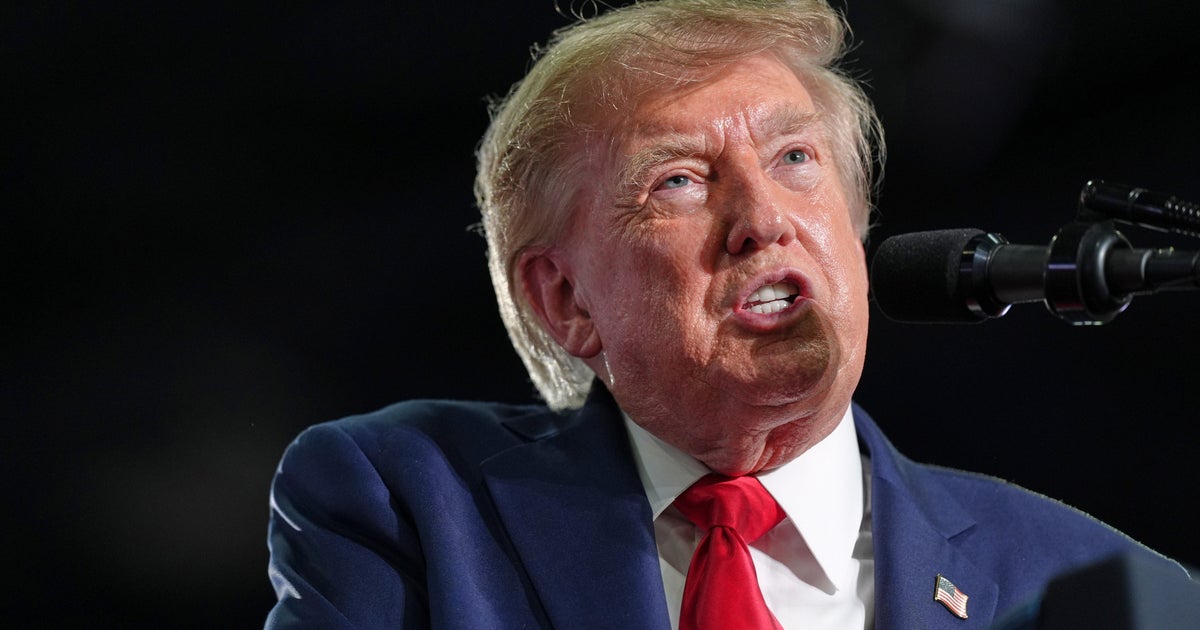
In his first comments since the talks collapsed on Friday, the US president wrote: “Canada wants the benefits of being a State, without being one!!!
Advertisement
“They have also charged our great farmers, for many years, massive amounts of Tariffs. No more!!! President DJT.”
The remarks echo his offensive references to Canada as the “51st state” of America since starting his second term.
The breakdown of talks triggered new 50% US tariffs – a tax on foreign imports – on $20 billion (£14.6 billion) worth of Canadian goods on Saturday on a range of goods, from hockey sticks to tongue depressors.
Advertisement
Carney chose to suspend talks rather than to compromise over a deal, making him one of the first world leaders to walk away from talks with Trump.
The Canadian prime minister said the US “asked too much” and “offered too little” in the talks.
He claimed the new tariffs were a “miscalculation” from Trump meant to “hurt and divide us”.
“You’re at war when you’re attacked, and we got attacked,” he told reporters.
“We cannot accept what they’ve offered and we will not give what they’ve asked.”
Carney – formerly the governor of the Bank of England – promised to match the tariffs “dollar for dollar” with a set of retaliatory levies to be announced on September 8.
But US trade representative Jamieson Greer told Fox & Friends Weekend doubled down on Trump’s controversial moves over the weekend, saying: “We’ve said enough and so we’ve taken countermeasures. Our interest is in protecting American workers and protecting American supply chains.”
Advertisement
This development is the latest sign that the trading partnership between Canada and the US is in tatters with no clear off-ramp for either side.
Listen to Commons People, the podcast that makes politics easy. Every week, Kevin Schofield and Kate Nicholson unpack the week’s biggest stories to keep you informed. Join us for straightforward analysis of what’s going on at Westminster.
Reform UK has received £20 million in donations from cryptocurrency investors since the 2024 general election, according to reports.
The Independent has found 60% of the funding for Nigel Farage’s party comes from wealthy individuals linked to digital currency.
Advertisement
The largest set of donations – adding up to £15 million overall – came from crypto-billionaire Christopher Harborne.
That’s the same businessman who gave Farage £5 million months before he was elected as the Clacton MP in the general election.
Farage is now facing a parliamentary sleaze probe for failing to declare that gift in the register of MPs’ interests once he was in the Commons.
Advertisement
The Reform leader insists it was a personal gift and so did not need to be declared.
The Independent’s analysis of Electoral Commission data adds pressure to the party, already facing intense scrutiny over its finances.
It found other donors like Ben Peter Delo, founder of cryptocurrency trading platform Bitmex, gave two £2m payments to Reform this year.
The wife of US crypto investor John Rost, Maria Rost, also gave nine payments worth £125,000.
Simon William Smith, a London-based bitcoin investor, donated £116,000 shortly before the election.
The former of the Bitcoin derivatives trading firm A1X, Oscar Townsley, also gave the party £30,000 last year.
Advertisement
The newspaper noted the Tories received £82,250 in donations from crypto investor and hedge fund manager Alan Eldad Howard.
However, it did not spot any crypto donations for Labour, the Liberal Democrats or the Green Party in the Electoral Commission data.
A Reform UK spokesman told HuffPost UK: “Reform takes pride in its stringent vetting of donations and always ensures that the Electoral Commission guidelines on donations, as set out in the Political Parties, Elections and Referendums Act 2000, are strictly followed, as has been the case with all donations.”
Advertisement
Labour chair Bridget Phillipson tore into findings, especially after Farage triggered a new by-election in Clacton over the heightened attention his finances were getting.
He was re-elected earlier this month after all major parties refused to stand a candidate, calling the contest a political “stunt”.
Phillipson told The Independent: “Nigel Farage has spent the summer battling a bin in a desperate attempt to dodge scrutiny but people have a right to know what he’s hiding.
Advertisement
“He secretly took a £5m ‘gift’ from a Thai-based crypto billionaire and then promised to cut taxes for the crypto industry.
“Now it seems his party is awash with crypto cash. Farage is treating the public with contempt. With donations from a convicted fraudster and police probes into Reform’s donors and finances – it’s clear they think the rules are for other people.”
Advertisement
Listen to Commons People, the podcast that makes politics easy. Every week, Kevin Schofield and Kate Nicholson unpack the week’s biggest stories to keep you informed. Join us for straightforward analysis of what’s going on at Westminster.
I know these things aren’t objective, but come on – autumn has to be the best season, right? There are the crunchy ruby leaves, the cosy evenings in and, if you’re a gardener, a welcome glut of well-earned fruit and veg.
Apples, beetroots, carrots, potatoes and plenty more are at their delicious best once the season starts. But if you’re not “bletting”, you might be missing out on some of the UK’s more forgotten ancient fruits (including those that thrive in the quieter winter months).
Advertisement
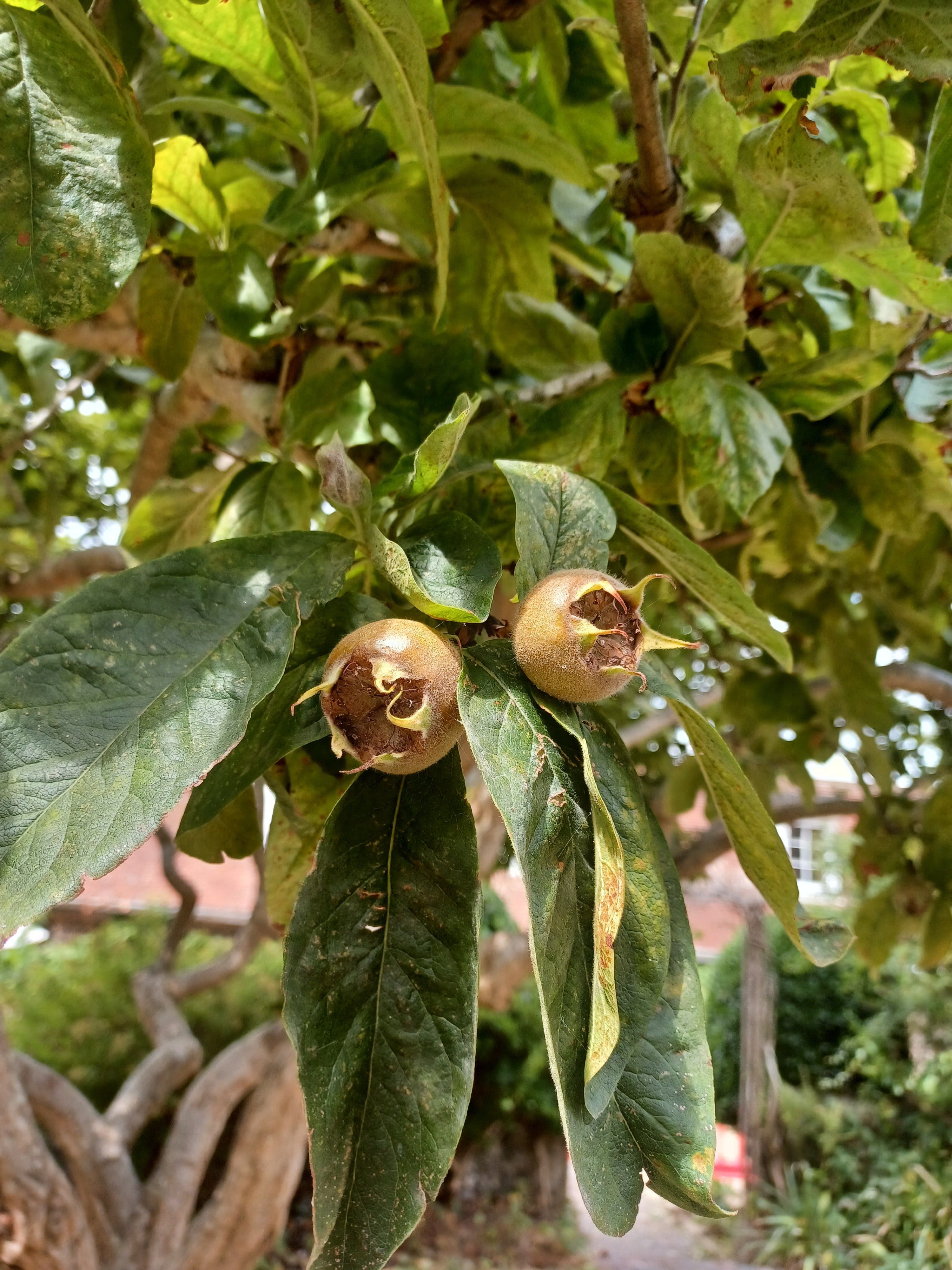
Take medlars, for instance, best harvested in November. Cambridge’s Pembroke College, which boasts its own medlar tree, said the fruit “once held a place in English medieval culinary traditions on account of [its] warmly sweet flavour described as something between spiced apples and dates”.
But they require an extra step to be palatable that can make other less-loved fruits, like rosehips, more delicious too: bletting.
What is bletting?
The term was made up by 18th-century botanist John Lindley in 1848.
Speaking to HuffPost UK, Guy Barter, Chief Horticulturalist at the Royal Horticultural Society (RHS), said bletting “is an extreme form of ripeness on the cusp of decay, some say slightly decayed, so medlar fruit goes soft and slightly fragrant, becoming palatable – acquired taste is the usual term”.
Advertisement
Bletting usually involves leaving picked fruit in appropriate storage for a couple of weeks on paper, hay or wood-lined trays, without touching. These should be well-ventilated and placed in a cool, dark environment like a garage.
Before this process, fruits like medlars and chequers (more on those later) are hard and tart or flavourless.
We don’t need to apply the process to most fruits, however, because the majority “have a longer ripening process where the starch and acids in the fruit turn into sugars and aromatic compounds and are pleasant to eat, becoming rather woolly and insipid when overripe”.
Advertisement
Pembroke College and the RHS, meanwhile, point out that we should wait ’til the after the first frost to eat foods like medlars.
“The first freeze and thaw breaks down the cell walls in the fruits and initiates a process of controlled rotting that turns the medlar flesh into something stickily sweet and delicately perfumed,” the college’s site reads.
Amy Glover / HuffPost UK
Medlars
Advertisement
Which fruit should you blet?
Well, there are medlars, obviously. And chequers, a rarely eaten berry from a native species related to mountain ash (the wild service tree), “is eaten fully ripe and might be considered to be bletted,” Barter added.
The expert also said that while hawthorn berries aren’t especially appetising, “they blet well enough, usually being left on the tree with birds and children eating them”.
And even though most supermarket persimmons are sold ripe, “some need to be bletted to be palatable”.
Additionally, berries like sloes “do lose some of their astringency when older and ideally frosted – this is not usually called bletting and probably related to ice crystal formation – the freezer offers a shortcut. The same goes for certain ornamental or wild pears and apples”.
Advertisement
Even “rosehips are at their best when very ripe,” Barter concluded.
We’re at a dimly lit restaurant, the kind 30-somethings swap for the clubs of their 20. Across from me and my husband, Greg, sit potential new friends we met in the hallway at our son’s daycare.
After enough stop-and-chats at pickup, we figured it was time – dinner on a balmy Saturday night in the thick of a hot Chicago summer.
We’re halfway through appetisers when the other wife asks, “So, how did you two meet?”
It’s a classic first-date-with-potential-friends question. Poor thing, she has no idea what she’s stepped into.
Advertisement
For most people, the “how we met” story is a gift, one of a couple’s greatest hits, perfect fodder for an evening with new friends. But Greg and I have a different kind of story. That’s why he nudges me under the table, our code to tell the simple version. To be fair, he thinks he looks worse in the story than I do. I disagree. But I’ll let you be the judge.
“Oh, we met through a mutual friend,” I say.
It’s true. Technically.
Adam was our mutual friend. It’s just not the whole truth.
The wife isn’t buying it. She tilts her head, eyes narrowing as she glances at her husband.
“Really?” she says. “You look like you have a story.”
Those looks are anxiety and hesitation. She’s not wrong. We do have a story.
Greg shoots me a tight, uneasy smile.
Here’s the thing: I don’t think either of us comes off looking bad. It’s just that telling it feels a lot like getting naked in front of someone you just met. And while I’m weirdly used to that feeling – metaphorically, I mean – Greg is not.
I’ve lost a lot of people for someone my age. After a while, vulnerability becomes muscle memory. I’m basically an emotional nudist at this point.
Advertisement
More than anything, I feel like we owe the story to Adam – like his legacy demands it. Otherwise, the parts of him that remain – his stories and the love he left behind – they evaporate. And he’s already so gone. The least we can do is keep his thread alive in how we met. Greg knows that, which is why he lets me begin.
“I knew it,” the wife says, excited now. “Come on, tell us the real story. We can handle it.”
“
Adam was our mutual friend. It’s just not the whole truth.
Here’s another thing: the more someone insists they can handle something, the less they actually can. That’s not confidence. It’s anxiety pretending to be confidence. I know this because my anxiety does this all the time.
Advertisement
“Can you?” Greg asks, half-joking. Even her insistence tells me she probably can’t. But I’m already halfway in, so I begin.
“I used to date Greg’s best friend, Adam.”
Her smile falters.
“Oh my God, what a scandal,” she says, trying to play it light.
And this is the part where she’s absolutely going to feel like an asshole.
“Well… not exactly. Adam died. He had an undetected heart condition,” I say. “We started dating after he passed.”
The wife looks like she might throw up.
The husband mutters, “Oh my God.”
I don’t blame them. It’s a lot. Most people aren’t prepared for this plot twist with their burrata.
“It’s OK,” I say, gently.
Greg adds, “It’d be a normal story if we were in a nursing home.”
“Yeah,” I say. “Very on-brand for your 70s. Less so at 26.”
Courtesy of Nicole Garelick
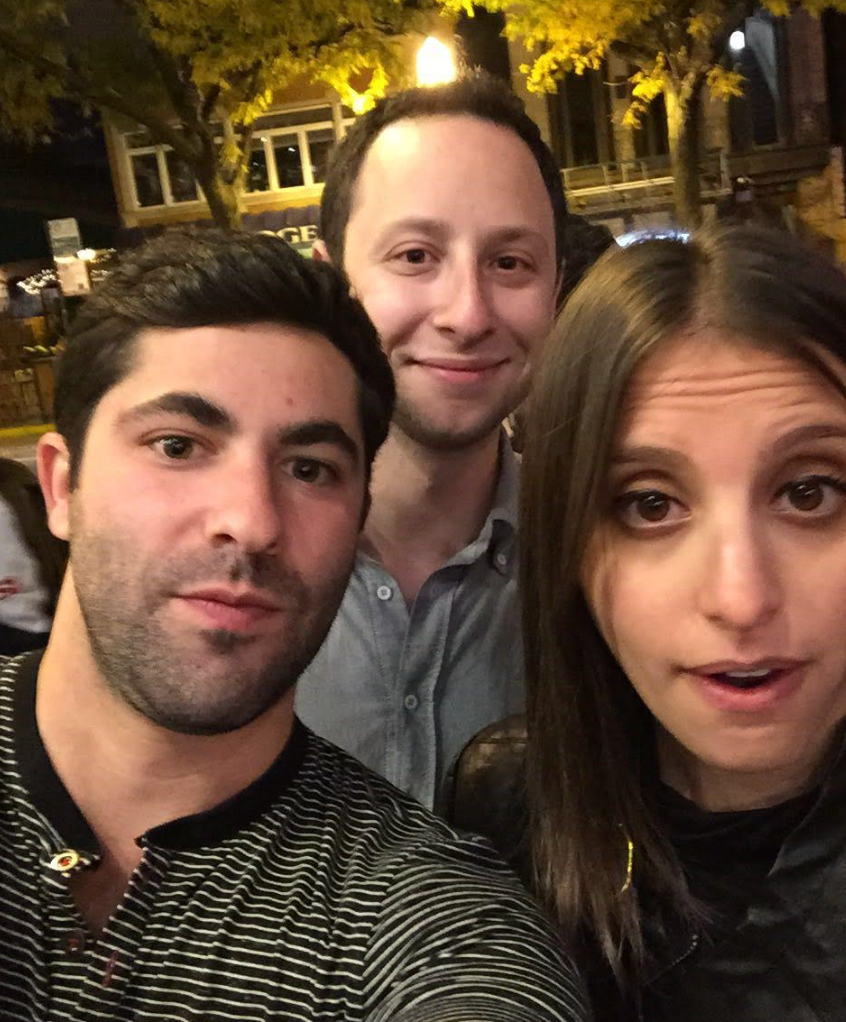
The author, Greg (left) and Adam out to dinner in 2015.
Advertisement
The full backstory is that I first met Greg on Halloween 2013, though I wasn’t looking for him. I was on a street corner in Chicago dressed as Aziz Ansari, already tipsy, already confused. I’d been Instagram-stalking Greg’s best friend, Adam, who had piqued my interest. We had mutual friends from college, and he was always photographed with a cup of coffee and a far-off look, like he knew something the rest of us didn’t.
Greg showed up in a lot of Adam’s posts, so when I ran into him that night, the first thing I said was, “Hey, where’s Adam?” Greg, having never met me, let alone me dressed as Aziz Ansari, responded with something like, “Who and what are you?” I introduced myself. He drunkenly wandered away.
I didn’t end up finding Adam that night, but we connected not long after. We started texting, then emailing, and eventually we started dating about three months later. We were together for three and a half years.
Advertisement
Greg was a fixture in our world – wild, entrepreneurial, energy abounding. Adam loved him, so I did too. Over the years, we double-dated plenty, and I watched Greg move in and out of relationships.
A few months before Adam died, Greg moved abroad to start a travel company. He had flown back for a friend’s wedding, which we were all attending together. That same week, Adam had a health scare, something like a seizure, but the doctors couldn’t explain it. That’s the thing about being young and seemingly healthy. No one checks your heart.
The afternoon before the ceremony, Greg and I had some alone time while Adam was visiting a friend. I told him how worried I was about Adam. He reassured me that Adam was probably fine, because most 27-year-olds are.
Advertisement
I have only two photos from that weekend. One is a picture Adam took of me on the phone. The other is one he took of Greg and me holding hands. Adam had made us pose together. It made him laugh to think of us as a couple.
Courtesy of Nicole Garelick
The author and Greg at a friend’s wedding in 2015.
Two months later, Adam died.
Greg flew in for the funeral, along with every other person who had ever known or even brushed past Adam. Greg stood by my side the entire time. I think this is probably the part where Greg thinks he looks bad, like it was his plan all along, or he was trying to be, as Bette Midler sang, The Wind Beneath My Wings. But it wasn’t like that. Nothing felt premeditated; it was natural.
Advertisement
He was there when my knees gave way at the burial, putting a hand on my shoulder. At the shiva, as well-meaning mourners swarmed, Greg graciously offered me a Xanax (which I desperately needed). Later, once the dust had somewhat settled, he suggested I might need to get away.
I was in grad school at the time, training to become a therapist, arguably the worst possible setting for a loss. Greg invited me to visit him and another friend in Buenos Aires over spring break. With nothing tethering me to the present, I said yes. That trip became the only thing I looked forward to. In the months before I left, I grieved, unravelling a life I’d built with Adam and still reeling from losing my mom a few years earlier. I was drowning.
Greg called me every day. He made sure I was eating, drinking water and going to class. His voice kept me afloat. But if you’d asked me then, I’d have said, “He’s like a brother to me.” (Side note: If you ever describe someone as “like a brother,” there’s a good chance you’re going to sleep with them. That’s the plot of every romantic movie, but I was too far gone to recognise it.)
Advertisement
When spring break finally came, I found out our other friend couldn’t make it right away. It would just be Greg and me for a few days. That’s when I got nervous. But I got on the plane anyway.
I landed in Buenos Aires around 10pm, barely breathing. When I got to Greg’s apartment, I found him waiting on the corner of his quiet street in the darkness of the Argentine fall. After a quick shower, he took me to a loud bar. We were both awkward, so to quell the awkwardness, we each ordered two drinks. We talked about Adam. About travelling. About everything. My grief loosened its grip just a little.
Later, back at his apartment, we both cried. At some point, I started eating rice cakes, and then I remember getting my computer to put on some music.
Advertisement
Neither of us remembers who made the first move, but I’m pretty sure it was Greg. And that’s how we started dating.
The couple across from us sits in stunned silence. Greg clears his throat and asks, “So… how did you two meet?” They answer, in unison, “Hinge.”
I smile faintly. There’s something I feel in that moment that isn’t exactly jealousy, but it’s close – an awareness of the simplicity of their story. A clean beginning, uncomplicated by loss. A simple story for a party that doesn’t cause any eyebrows to raise or mouths to go agape or leave you feeling like you’re in the emotional nude.
Advertisement
Greg and I don’t have that story. We crashed into each other in the wreckage of something devastating and built something out of the rubble. Our path wasn’t perfect. People were hurt. There were complicated feelings about us being together, and it was absolutely not love at first sight. It took grief, time, Buenos Aires, and a man who called me every day just to make sure I was still getting out of bed every morning.
In the 10 years since, I’ve come to understand that the messiness is what makes our relationship work. There’s a rare honesty between us – an authenticity that comes from having met each other at our most undone.
When you fall in love in the rubble, you don’t get to perform the beginning; you just have to be yourself. There was never any doubt that Greg could support me at my worst; after all, we started there. And the willingness to tell the real version of how we fell for each other is its own kind of love story for Adam, and I want us to tell it because we’ll always be indebted to our dear mutual friend.
Advertisement
Nicole Garelick is a San Francisco-based writer and creator of The Performance Plan, a Substack newsletter about the comedy of getting life wrong. Her writing has appeared in Hey Alma, Spread the Jelly, and Katie Couric Media. She lives with her husband and two young kids, who give her a lot of material. She is represented by Jennifer Simpson at CAA.
If someone called you “awful” today, you’d probably be offended. But travel back a few hundred years and that same word would have been high praise.
Awful has one of the more dramatic reversals in the English language. It began as something genuinely admiring and ended up as something quite negative in everyday use.
Advertisement
“The word ‘awful’ traces back to the Old English root ege, meaning dread, reverence or profound respect,” Sophie Vignoles, a linguist and head of learning content at the language learning app Babbel, told HuffPost. “That origin shows in its early use. It originally meant something that filled you with awe, describing anything that inspired wonder or terror, often tied to the power of God or nature, and it was a compliment. A mountain range or a storm could be called awful, and that was high praise.”
The word awful goes back to Old English, with experts pointing to a ninth-century citation attributed to Alfred the Great. The Oxford English Dictionary has many examples of “awful” in texts from the subsequent centuries – generally meaning things like “inspiring respect, mixed with wonder or reverential fear.”
Basically, awful was the sort of word people reached for when ordinary language failed to describe things so powerful, majestic and grand that they inspired deep reverence – like the divine.
Advertisement
So, how did it evolve to mean something simply negative?
“The shift happened gradually through the 19th century,” Vignoles said. “Awe itself is a mixed emotion. It carries wonder but also fear and sometimes a sense of insignificance, and over time, English speakers leaned into the fearful side rather than the reverent one. Awful stopped meaning inspiring and started meaning overwhelming in a bad way.”
bgblue via Getty Images
“Awful” was a much more complex word than its modern “very bad” definition would suggest.
For a long time, awful captured the complexity of awe and its connection to the sacred and sublime. But language tends to simplify over time, and people gradually started emphasising the dread over the wonder. Eventually “awful” became a weaker, more casual word.
Advertisement
The slide was gradual enough that it drew complaints along the way. Welsh writer Hester Lynch Piozzi asserted in 1794 that the word should “be used with caution and a due sense of its importance”.
“I have heard even well-bred ladies now and then attribute that term too lightly in their common conversation, connecting it with substances beneath its dignity,” she wrote.
Over the next century, the word came into its more modern meaning of unpleasant, not desirable or just very bad.
Advertisement
This kind of drift where a word sheds one meaning and picks up another is known as semantic shift, and it’s one of the most reliable patterns in the history of any language. Just as “nice” shifted from something negative to something positive, awful also completely reversed course – but in the opposite direction of positive to negative.
Thus, a word that once described the sublime now describes the merely terrible. Awful’s close cousin “awesome” makes the reversal even more striking.
Interestingly, the word awful actually predates awesome by centuries, though the two had similar meanings for a stretch. As both words weakened in meaning over time, awesome shifted to a more positive connotation of “good” or “cool” while awful came to mean “very bad.”
Advertisement
“Awesome comes from the exact same root but took the opposite path, which shows how unpredictable this kind of drift can be,” Vignoles noted.
The awful/awesome split isn’t even unique within English. “Terrific” and “terrible” come from the same Latin root and once shared the same basic meaning: inspiring terror or dread. Today, terrible has kept that negative sense while terrific has traveled so far in the opposite direction that it’s essentially a synonym for wonderful. Thus we have another pair of sibling words that started in the same place and ended up miles apart.
“It shows that meaning is never fixed. It is negotiated by whoever is using the word at the time,” Vignoles said, pointing to Babbel’s research on the way American English has evolved in honor of the United States’ 250th anniversary this year.
Advertisement
“Awful is a useful reminder that English often trades one meaning for another,” she added. “This kind of reversal is not unique to English either. In Russian, the word grozny once carried a sense of majesty and awe-inspiring power. Ivan Grozny, usually translated into English as Ivan the Terrible, was not originally meant as a purely negative title. Over time, the word narrowed toward its harsher, more fearsome sense, much like awful did in English.”
So, the next time something is so bad it’s almost impressive, you should feel comfortable calling it awful, in keeping with the word’s original meaning. But if you find something so good it inspires awe, you should probably opt for a different word so as not to offend.
Let’s say you go to your doctor with a documented, ongoing case of psoriasis. You might complain of itchy and flaky skin.
To your surprise, though, your GP tells you these symptoms are “normal”. You might feel dismissed or as if your problems can’t be addressed; maybe you’ll be less likely to seek treatment.
It said that, while doctors might hope to reassure patients by calling well-understood symptoms “normal,” data shows it could actually make people with health issues think nothing can be done about their problems.
That might mean they don’t look for or ask about solutions like medications, even when they may be both available and useful.
Professor On Amir, the study’s senior author, told Pulse Today: “Doctors shouldn’t stop reassuring patients. But they should make their meaning unmistakable”.
Advertisement
So, HuffPost UK spoke to Dr Dominic Greenyer, a GP and director at The Health Suite, about what “normal” means to a doctor.
Wait – doesn’t ‘normal’ mean everything’s fine?
I’ll be honest: I always thought being told an issue is “normal” by a doctor meant everything was OK, and nothing more could be done.
But sometimes, Dr Greenyer said, that’s a miscommunication.
“When a doctor describes a symptom as ‘normal’, they will often mean that it’s common, expected in a particular situation, or consistent with a certain stage of life. It does not necessarily mean the symptom is insignificant, imaginary or something the patient simply has to tolerate,” he said.
Advertisement
For instance, hot flushes are “normal” during menopause and perimenopause, and pain is “normal” after surgery. However, the GP said that doesn’t mean they need to be tolerated or that they can’t be addressed with appropriate medication.
“’Common’ and ‘untreatable’ are two very different things,” he added.
And, the doctor said, doctors might say lab results or exams that fall within an expected range are normal.
“In that context, it may reassure us that we have not found evidence of a particular disease, but it does not automatically explain why someone feels unwell or mean that no further help is available,” he claimed.
Advertisement
“This study highlights how easily well-intentioned reassurance can be misunderstood. A doctor may be trying to say, ‘This is recognised, and you are not alone’, while the patient hears, ‘There is nothing wrong, and nothing can be done’. Clinicians need to make that distinction explicit.”
Reassurance alone might not be enough
In the Nature study, the authors tested two ways to close that communication gap: asking doctors to explain what “normal” means in a medical sense when using the word, and offering some next steps to patients after normalising their symptoms.
Advertisement
Both appeared to lead to better results.
Dr Greenyer said: “Ideally, reassurance should be followed by a clear plan. That might involve discussing treatment options, explaining how long the symptom is expected to last, arranging follow-up or telling the patient what changes should prompt them to seek help again.”
And if that doesn’t happen, it might be worth your while taking the lead.
“Patients should not be afraid to ask, ‘When you say normal, do you mean it is harmless, or simply that it is common?’. They can also ask whether treatment is available and what they should do if the symptom persists, worsens, or begins affecting everyday life,” the GP concluded.
“Being told something is normal should never be interpreted as an instruction to ignore a significant change in your health. If symptoms are severe, persistent, worsening or accompanied by warning signs such as unexplained weight loss, unusual bleeding, a new lump, chest pain or breathing difficulties, further medical advice may still be needed.”
Andy Burnhamvowed to give Brits “some breathing space” when it comes to the cost of living during his first speech as prime minister.
That was only a month ago – and he has already unveiled a series of policies aimed at making everyday life a little easier for the general public.
Advertisement
But just last week, Burnham also admitted that the changes he made might not be enough.
He told the BBC: “We will do everything that is possible for us to do. But I think everyone knows I am in position with limited room for manoeuvre.”
It was a noteworthy admission considering he has made the cost of living the central mission for his government.
Burnham has implemented a £2 cap on single bus rides, scrapped VAT on household electricity bills and announced a ban on “subscription traps”.
Advertisement
He unveiled a 20% cut to business rates for pubs, social clubs and live music venues from April onwards.
His government have also promised to help the number of unemployed young people as the number of 16 to 24-year-olds not in work surpassed a million this year for the first time in more than a decade.
The incremental changes he has unveiled appear to have had some cut-through, his net favourability rating of +13 is the highest for any prime minster since Boris Johnson at the start of the Covid pandemic, according to YouGov.
But, as Burnham alluded to when speaking to the BBC, there are plenty of obstacles which stop him from being able to make significant changes to the cost of living.
Though this is out of the government’s control, there’s a risk voters will still end up blaming the government – as they did when the Russian invasion of Ukraine caused a spike in energy prices in 2022.
Energy regulator Ofgem is expecting the price cap for household energy bills in Britain to rise by 4% in October.
There is a growing body of support for expanding drilling in the North Sea for oil and gas to boost the economy and reduce Britain’s dependence on international energy imports.
The summer heatwaves and the subsequent droughts have rocked the agricultural sector too.
Farmers fear for their yields will be hugely impacted in the months to come – meaning groceries are likely to go up in price.
Advertisement
Dr Liliana Danila, chief economist at the Food & Drink Federation (FDF) said: “Supply chain disruption isn’t going away.
“Alongside geopolitical volatility, extreme weather will continue to put pressure on the price of key ingredients. This makes it increasingly difficult for food manufacturers to shield consumers from price rises and protect their our resilience.”
The Bank of England will decide whether to raise interest rates next month, which could add another layer of pressure to Burnham.
Advertisement
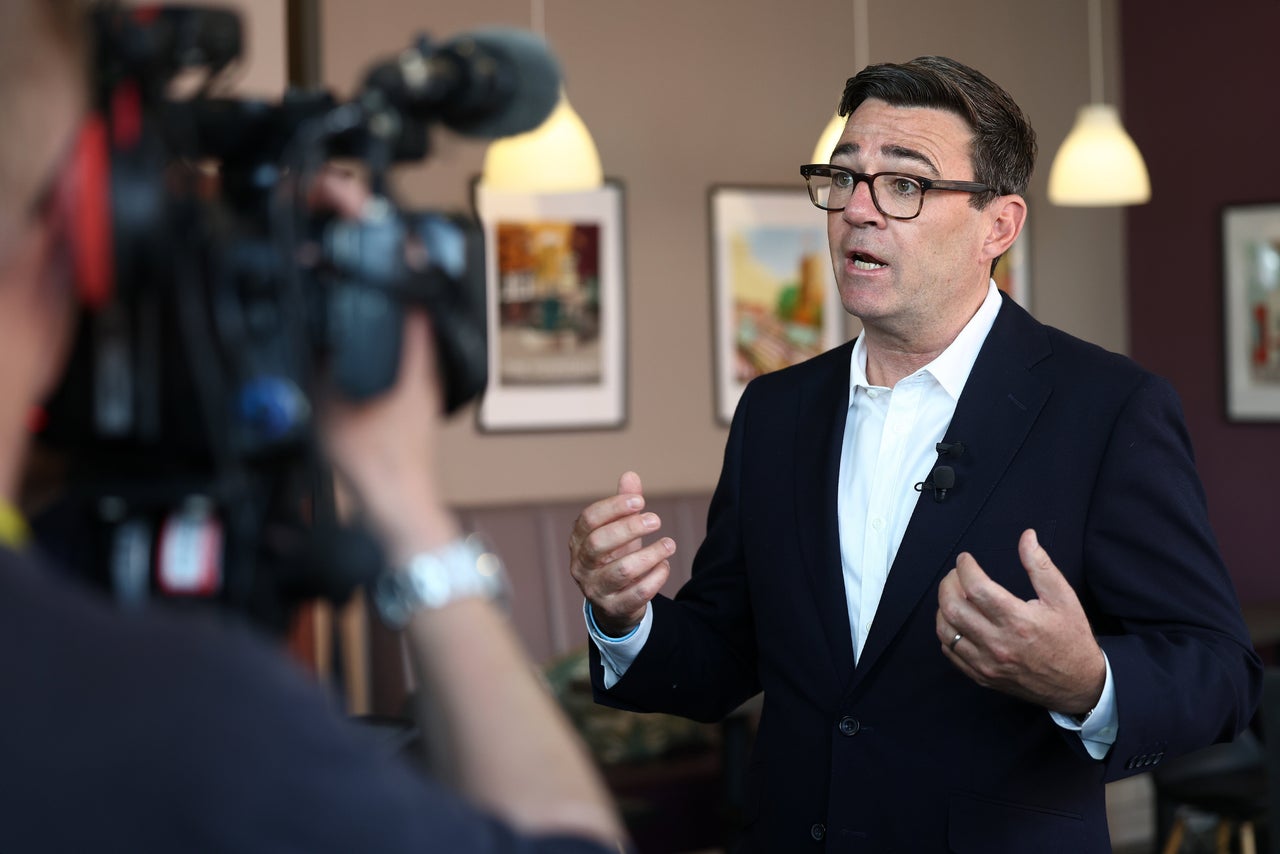
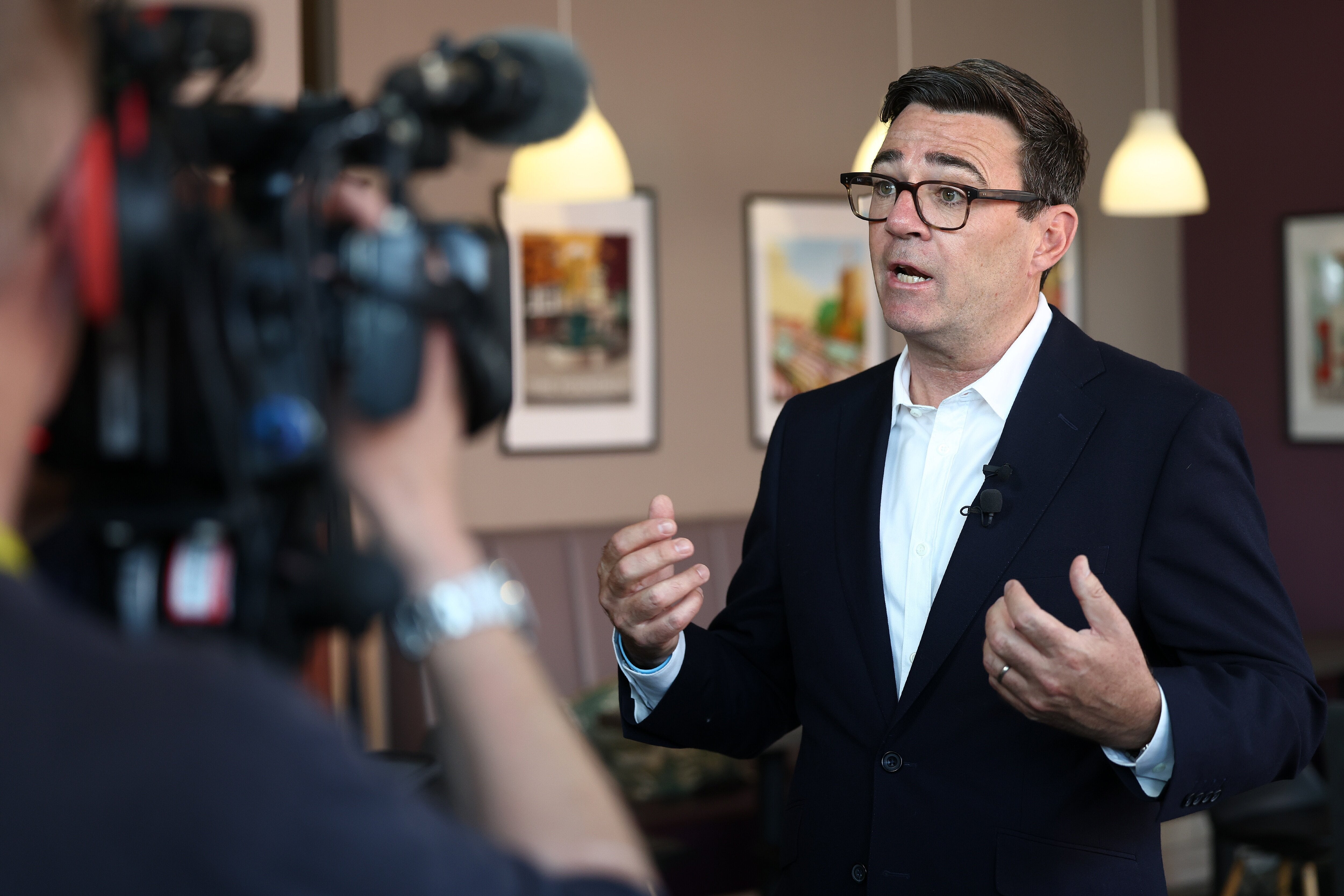
Britain’s Prime Minister Andy Burnham speaks during a TV interview at The Hub Cafe following a visit to Ilkeston, Derbyshire, England, Tuesday, Aug. 11, 2026.
via Associated Press
The TUC general secretary, Paul Nowak, said: “With inflation ticking up because of rising energy bills – and no end in sight to Trump’s illegal war in Iran – we are going to have to see more government action to support households in the coming months.”
But where will this money come from? UK debt is nearing £3 trillion, which represents 94.1% of gross domestic product (GDP).
Advertisement
It comes after official figures showed an unexpected hike in government borrowing to £1.8 billion.
Speculation that the government will therefore raise taxes to meet its spending commitments is therefore rising.
All eyes will be on chancellor John Healey when he unveils his Budget on Wednesday, October 28.
The prime minister has tried not to raise the public’s expectations too high when it comes to what he can do to help the cost of living – he wrote on social media this week: “We won’t fix everything overnight.
“But wherever my government can make life a little easier, fairer or more affordable, we will. “
His last two predecessors, Keir Starmer and Rishi Sunak, tried to adopt a similar message – and neither won any plaudits from the public for doing so.
Advertisement
The question is whether Brits will even feel the changes Burnham intends to make.
“What Burnham has is an opportunity to say to the public that we can’t do everything immediately.
“And I think they understand that international affairs are a big driver of this, but it’s sort of saying, we’ve looked at areas where we can make a difference and we’re doing that.
“It may be that he cannot meet public expectations on this and it goes the other way of other previous prime ministers.
Advertisement
“But I don’t think there’s an option of not being seen to do this.”
Burnham is, of course, still enjoying the honeymoon period. But will he able to live up to his own expectations?
Listen to Commons People, the podcast that makes politics easy. Every week, Kevin Schofield and Kate Nicholson unpack the week’s biggest stories to keep you informed. Join us for straightforward analysis of what’s going on at Westminster.
The signals suggesting the power of the coming phenomenon have been so strong that the UN issued an urgent climate warning over the issue. Prof McGuire told us: “The signs are that it could even be the biggest for a century and a half”.
Advertisement
Now, speaking to BBC Radio 4’s Today, Professor Adam Scaife, the head of long-range forecasting at the Met Office, agreed, saying it looks like the next El Niño will be “the largest since the 19th century”.
Why is this El Niño such a big deal?
“During a normal El Niño, the temperature of the equatorial Pacific Ocean typically reaches 0.5°C or more above normal,” Prof McGuire shared previously,
“If this figure reaches 1.5-2°C, the event is described as a super El Niño.”
On BBC Radio 4, Prof Scaife stated: “We’re expecting the biggest El Niño for over a century, peaking at something over 3°C. That is unheard of in modern climate records… It’s up 2°C already.”
Advertisement
We’ve only had five super El Niños in the last 75 years, with the most extreme being the 2015-16 event. The bigger the El Niño, the stronger its effects on the world’s weather systems.
That means we could see “particularly strong [impacts] throughout the tropics, where we expect really severe droughts in places like South America and the west Pacific”, Prof Scaife explained.
Though they are linked to an overall hotter climate, the effects of El Niños vary from place to place. In the UK, for instance, they can sometimes lead to colder winters.
Advertisement
Prof Scaife said: “There are wave-like disturbances that come out from the tropics and affect places like the UK. So we already see signals for increased rainfall and storminess in the autumn here in the UK around November time”.
After an emergency meeting last week, meanwhile, PM Andy Burnham also said: “We might be in for a wet autumn and winter straight after this, because of El Niño and some of the issues there, which was reported to Cobra”.
The former fiancé of actor Hayden Panettiere has shared a poignant message on what would have been her 37th birthday.
On Friday afternoon, the Ukrainian boxer Wladimir Klitschko – the father of Hayden’s 11-year-old daughter, with whom the actor was in an on-off relationship for the better part of a decade – shared a snapshot of the late Scream star on Instagram, thanking those who’ve shown “love and support” in the days since her death.
Advertisement
“Today is Hayden’s birthday,” he wrote. “Instead of celebrating the way we had planned, today we celebrate her life, her spirit, and the love she brought into this world.
“I want to thank all of Hayden’s fans, friends, and everyone who has reached out for the incredible outpouring of love and support. At a time filled with so much sadness, your kindness has reminded me that there is still so much good in humanity.”
Wladimir continued: “If you’re reading this, I ask just one thing: even if only for a moment, think about LOVE. Reach out to a friend. Forgive someone. Be kind. Love is a superpower. Use it.”
Advertisement
“Happy birthday, Hayden,” he concluded. “You are loved, you are missed, and you will never be forgotten.”
“The announcement of Hayden’s tragic death saddens me deeply. She left this world far too soon,” he lamented. “Hayden was, although no longer my partner, an important part of my life and the mother of our daughter, Kaya.
Advertisement
“She built an incredible career through immense talent, while also facing the darker sides of a very demanding industry. Nothing will erase the times we shared or the place she had in our lives.”
“To our daughter Kaya, I will always speak of her mother with respect and make sure she remembers the person she was,” he continued.
“I extend my deepest condolences to Hayden’s parents, her friends, and her fans, who are also grieving today. Young and talented people like Hayden should not leave this world so soon.”
This included opening up about her past struggles with abuse, addiction and her mental health.
An investigation into the circumstances surrounding Hayden’s death is ongoing, with an autopsy report indicating earlier this week that there had been “no signs” of any physical trauma.