This Is What It’s Like To Go Through Menopause At Work

Lisa Miller likens her mind to a sieve when “menopause brain” hits at work.

“My co-workers will always be like, ‘Remember last week when we were talking about that slide?’ and I’m like, ‘Nope, I have no idea what you’re talking about,’” said Miller, a customer relations and document control specialist for an aerospace company in Virginia.

“It’s like my brain is a sieve, and just spots and memories go right through it, like a spaghetti strainer. It’s very frustrating. I know my colleagues do get frustrated. I get frustrated.“

Forgetfulness and having difficulty concentrating or thinking clearly are common symptoms, collectively known as “brain fog,” that can affect one-third to two-thirds of people going through menopause, according to researchers’ estimates.

It’s also one of the 34 documented symptoms associated with perimenopause, the phase before menopause when a person’s body starts making less oestrogen until eventually their ovaries stop releasing eggs. (Menopause itself is calculated as beginning on the 365th day since a person’s last period.)

Although menopause can be surgically or medically induced, there are usually no predictable starting and ending points when it occurs naturally. It often takes place between the ages of 45 and 55 ― critical career years when people typically take on more leadership and responsibilities at work and consider their legacies.

Perimenopause lasts for an average of about four years, but the menopause transition can stretch on for 14. This uncertain timeline can cause a lot of career anxieties. One 2014 survey in the US revealed that 12% of women admitted they had passed up a more demanding job or promotion because of their menopausal symptoms.

Because her brain fog interferes with her ability to do her job, Miller, who is 53, said she worries her menopause transition will last into her retirement.

“I’m hoping every day that it ends, but I’ve been told it could last seven to 10 years, which is terrifying,” Miller said.

Here’s what people told us about how menopause affects them at work, for better or worse, and what coping strategies and advice they have for how to put this transition in perspective.

There can be work-disrupting physical symptoms, like hot flushes and heavier periods.

For Kimberly Caprio, a Connecticut-based breast surgeon, it’s the hot flushes that make it obvious what she is going through. “When I take my gown off, it looks like a bucket of water was poured on my head,” she said.

“I don’t find it depressing or anything like that, it’s just annoying as hell.”

– Kimberly Caprio

Caprio said the excessive sweating she often experiences is inescapable and distracting while she is working. “I’m trying to concentrate on an operation; it’s rather annoying to be feeling the drips,” she said.

She’s currently looking into buying a cooling vest to wear with her hospital scrubs, but in the meantime, she said, “I just have to deal with it.” She also experiences heavier periods and cramping because of her menopause transition, and “when that happens on a long operating day, it’s never a disaster, but it’s always like ‘Ughhh.’ It’s another weight in the bag that you’re carrying.”

Putting symptoms in perspective is helpful, because they can last a while. A study by the Journal of the American Medical Association in 2015 found that menopausal people experience hot flushes and night sweats for a median of seven and a half years.

Menopause symptoms can be treatable, however. Health care providers can guide people through this time and suggest options including hormone and oestrogen therapy, non-hormonal alternatives, lifestyle changes or medications for specific symptoms.

“Many of these symptoms can be treated safely and effectively, and I try to raise that awareness in women,” Heather Hirsch, the director of Brigham and Women’s Hospital Menopause and Midlife Clinic, said on her hospital’s website. “It’s a time when many patients feel lost, frustrated and fearful — and a lot of that is unnecessary. Education and myth-busting have become big parts of my job.”

Caprio said she doesn’t attach negative meaning to the menopause experience, but she is waiting for hers to be over.

“I don’t find it depressing or anything like that; it’s just annoying as hell,” she said.

Workplace coping strategies include rehearsing, finding understanding among colleagues and taking lots of notes.

People face a choice when menopause symptoms become noticeable to their colleagues: talk about it or not? For many around the world, menopause in the workplace is still a taboo subject. In one British survey, about 47% of people who needed to take a day off due to menopause symptoms did not feel comfortable telling their bosses or colleagues the reason. In a separate survey across five countries, 44% of people who experienced menopause symptoms said they have felt too embarrassed to ask for support in the workplace.

After her first five months of menopause, Miller decided to not dance around the subject with her colleagues, most of whom are male, or make excuses for it. She felt it had become “super obvious” what was going on when she needed a fan on days when it was freezing outside.

“It is what it is. It’s a part of life,” she said. When she has brain fog, she said, “I just flat-out tell my co-workers: ‘You’re going to have to show me. Can you go into greater detail?’”

Sometimes she receives heavy sighs in response. But Miller said that for the most part, the men she works with are receptive because of other women in their lives.

“I have one co-worker whose wife is my age, so he totally gets it,” Miller said.

Tina Opie said she manages her brain fog by asking colleagues for what she really wants or needs without feeling guilty about it. A management researcher, founder of the Opie Consulting Group and a visiting Harvard Business School scholar, she also does additional prep work before teaching her classes.

“I will actually go through the slides, and I look crazy when I’m doing it, because I’m rehearsing what I’m going to say. Even the transitions in between slides, a joke I may tell … ,” she said. “Typically, I make my brain go through that process beforehand, because my short-term memory is definitely challenging.”

Another perimenopausal symptom she experiences is anger that flares quickly and stays. When she is in this emotion, Opie said, she has found it helpful to write before she speaks so that she can recognise and surface her own assumptions and extend grace, an important aspect of her leadership style.

If she is feeling invalidated or disrespected in public, for example, she asks herself, “Well, do they do that because I’m Black, because I’m a woman, because I’m 50? And then I try to write down alternative explanations for what they could have done. The writing forces me to slow down.”

Creating an open dialogue with co-workers and practicing individual coping strategies raise awareness, but Opie noted that there is an institutional responsibility, too.

“Roughly 50% of the population is going through menopause at the workplace. What are you doing from a systemic standpoint to make this an inclusive workplace?” she said.

An organisation’s answers don’t necessarily have to be elaborate, but they should be focused on supporting employees. Researchers have found that menopausal workers want their employers to offer four practical accommodations: fans, easy access to temperature control, the option to work remotely and including menopause in occupational health and safety and human resource policies.

“These steps are not just about alleviating symptoms,” management professors Kathleen Riach and Gavin Jack wrote at The Conversation. “They are about avoiding signalling that women of a certain age are an inconvenience or less valued as employees.”

But experiencing menopause at work is not always negative. In fact, it can be a gateway to a better or more improved career.

The physical symptoms of menopause aren’t fun, but the transition can also be a positive, freeing experience.

Omisade Burney-Scott, a North Carolina-based social justice advocate and the creator of “The Black Girls’ Guide to Surviving Menopause,” a podcast and multimedia project, said that too often menopause is reduced to a stereotype of “hot, sweaty, angry people without any context.”

“I feel like it’s giving me more permission to be really, really clear about the things that bring me joy, like the things that I enjoy doing, or the things that I enjoy offering or feel confident about offering to a workspace, or to social justice work or creative work,” she said. “And that feels really liberating.”

“It requires a level of focus on yourself that you may not have engaged in before.”

– Tina Opie, founder of the Opie Consulting Group

The experience pushed Claire Hattrick into pursuing a long-held passion. The aesthetician and blogger lives in Hampshire. In the UK, 900,000 women reported that they quit their jobs due to menopause symptoms in 2019.

When she went through menopause, Hattrick had “horrendous” joint pain that caused her to have to lie down on the floor between waxing clients. It eventually pushed her to work fewer hours, switch up the types of beauty treatments she performed and start blogging about her life, which ultimately turned into an additional career path.

Hattrick, who is now postmenopausal, said she sees positives in this outcome, including a new self-confidence: “It kind of makes you feel like you can take on the world almost. Like if you can deal with this, you can deal with anything.”

“If I hadn’t gone through this, I would have plodded on with the beauty [work],” Hattrick said. “It made me look at doing something I’ve always wanted to do. It’s almost forced me a little bit into saying, ‘Well, if I don’t jump ship now, I’m never going to do that.’“

Opie, too, said menopause can be a gateway for deeper career introspection and transitions, in the way turning 50 and going through perimenopause has been for her.

“It requires a level of focus on yourself that you may not have engaged in before,” she said. “You are trying to converge upon ‘what is going on with me,’ because you don’t know how to label this constellation of symptoms, and as a result, there is a self-focus that enters. …

“Now I’m applying this focus to ‘How do I feel about myself in this relationship, how do I feel about myself at work? How do I feel about myself in the mirror at night?’ It has led me to begin to explore all of those things and to try to change trajectories that I don’t find satisfactory.”


Share Button

Fox News Host’s Cancel Culture Hypocrisy Exposed In Awkward Supercut Video

Fox News host Pete Hegseth on Wednesday lauded a Florida restaurant that is refusing to serve patrons who support US President Joe Biden. 

“She’s expressing a sentiment and speaking for a lot of people,” he said of diner owner Angie Ugarte’s sign demanding that Biden supporters take their business elsewhere. 

But when the shoe was on the other foot, he took the opposite view. 

Hegseth was livid when Sarah Huckabee Sanders was booted from a Virginia restaurant in 2018 while she was Donald Trump’s press secretary.

“What does it say about the left that they stand in solidarity with a business that kicks out a paying customer just because of their political position?” he said at the time. 

On Wednesday, he stood in solidarity with the Florida diner, declared that the ban on Biden supporters was a “guttural scream that I love my country.” 

Media Matters put the two clips together: 

Share Button

Elton John Didn’t Exactly Pull Any Punches When Critiquing His Good Friend Ed Sheeran’s Style

He’s renowned for his dressed-down approach when it comes to the red carpet, so many fans might have been surprised to see Ed Sheeran making his way into the GQ Men Of The Year awards on Wednesday night.

The chart-topping singer posed for photographers dressed in an elaborate and brightly-coloured Versace suit jacket – which it turned out had been lent to him by a famous friend.

Well, we say “lent to him”, it doesn’t actually sound like Ed had much choice in the matter.

Speaking to reporters on the night, Ed admitted that his ensemble was a rental from his pal Sir Elton John, after the Rocket Man legend laid into him over his fashion choices.

David M. Benett via Getty Images

Ed Sheeran pictured in Sir Elton’s jacket

“I have always been the non-stylish person. I have been lent a nice suit,” he explained.

Ed continued: “This is from Donatella Versace and basically I have gone round Elton’s for dinner and he said, ‘You’ve dressed terribly for the last 10 years, let me sort you out’. So this is Elton sorting me out.”

Albert L. Ortega via Getty Images

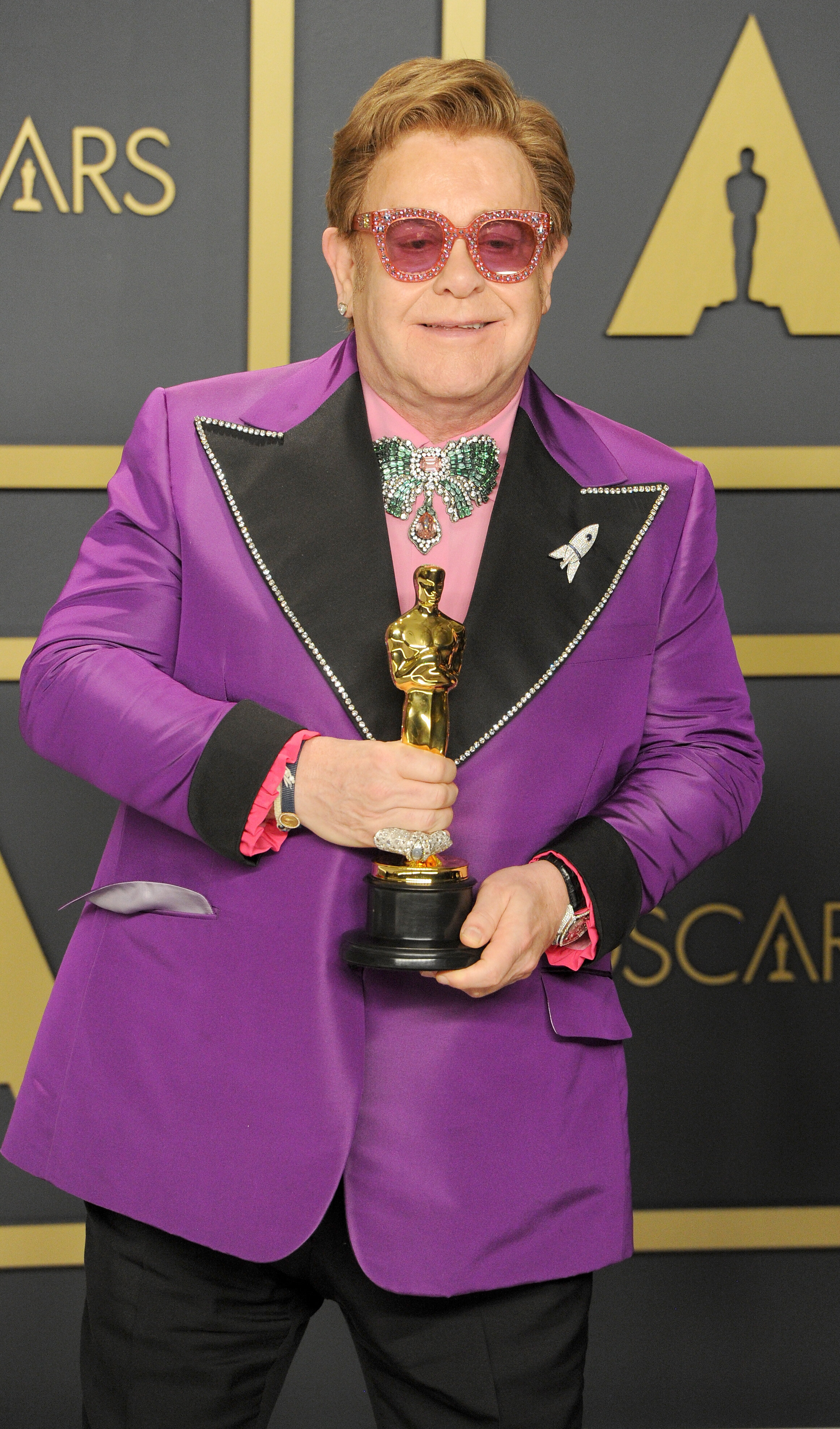
Sir Elton John at the 2019 Oscars

Share Button

Piers Morgan Teases ‘Interesting’ Job Offer After Ofcom’s Latest Ruling

David M. Benett via Getty Images

Piers at the GQ Men Of The Year awards on Wednesday night

Piers hailed the ruling as a “resounding victory for free speech”, later telling reporters that job offers had “accelerated” since Ofcom’s decision.

“I have had loads of offers and they have accelerated in the last 10 hours, as you can imagine,” he explained.

“I will take my free speech campaign around the world and all I require is to have an employer who believes in it as passionately as I do.”

Noting that GMB’s ratings during his tenure as host made him a “valuable commodity”, Piers continued: “I’m considering some very interesting offers right now and I will make a decision quite soon.”

ITV/Shutterstock

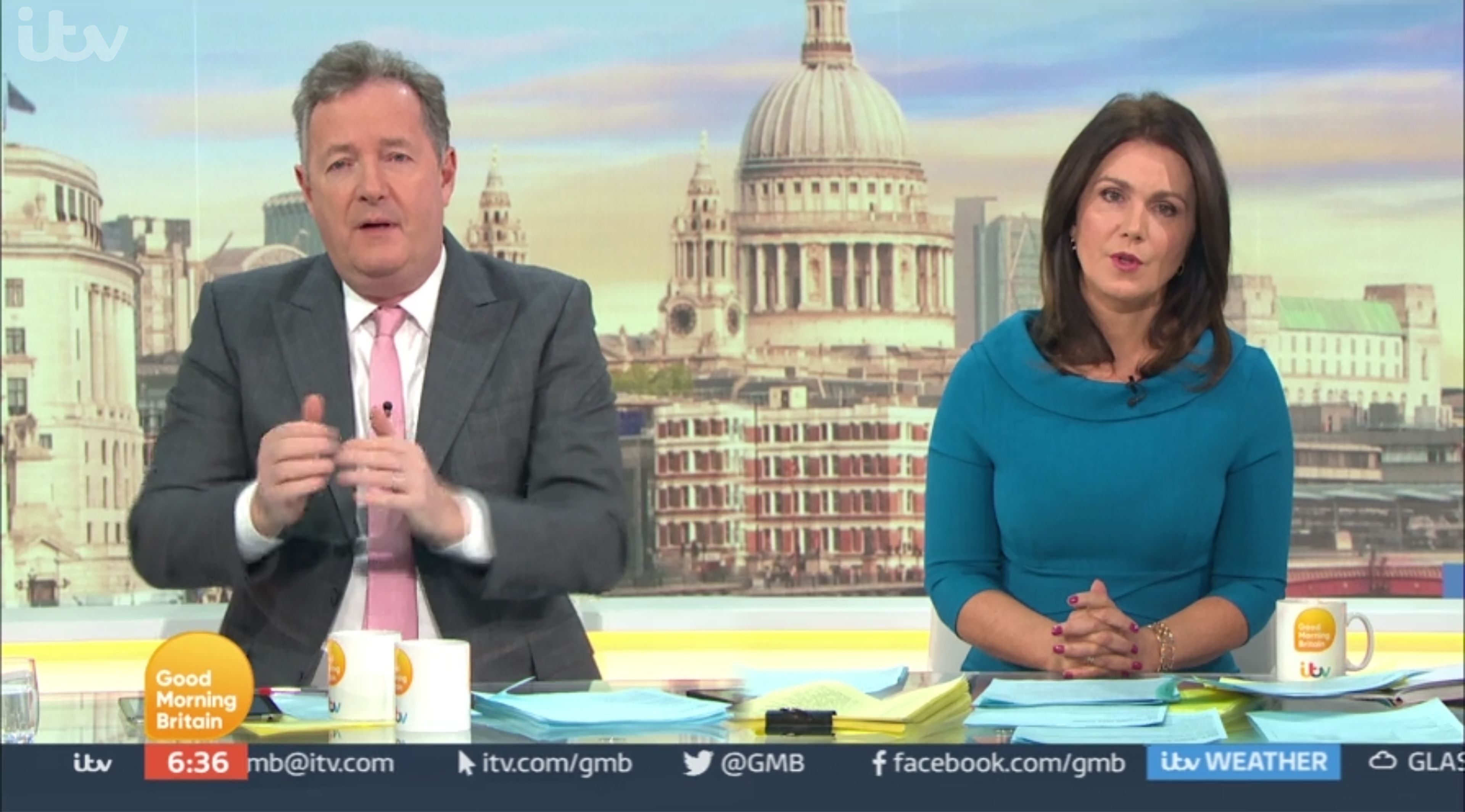
Piers and Susanna Reid during his final GMB broadcast

Share Button

Britney Spears Accuses Father Jamie Of Trying To ‘Extort’ Money From Her

Jeff Kravitz/BBMA2016 via Getty Images

Britney Spears pictured in 2016

In new legal filings, Rosengart called for Jamie Spears’ immediate resignation, and accused him of trying to “extort” her.

Rosengart said: “Mr Spears and his counsel are now on notice: the status quo is no longer tolerable, and Britney Spears will not be extorted.

“Mr Spears’s blatant attempt to barter suspension and removal in exchange for approximately $2 million (£1.45 million) in payments, on top of the millions already reaped from Ms Spears’s estate by Mr Spears and his associates, is a non-starter.”

He added that Jamie’s resignation would be the “legally correct, decent and graceful thing to do”, adding: “[Jamie’s] idea of ‘orderly’ is to hang on until someone first brands him ‘father of the year’ and awards him a gold star for his ‘service’.

“In other words, although Mr Spears has, at last, been forced to recognise that it is best for his daughter if he departs now, he claims the right to drag his feet because it is best for him to cling to this conservatorship until he feels sufficiently-vindicated.”

AFP via Getty Images

Jamie Spears in 2008

Britney Spears has twice given testimony about the conservatorship in recent history that has been made public, in which she’s made a string of shocking claims.

This included being forced to take lithium in place of her regular medication and be on birth control despite her hopes to have a child with her boyfriend, Sam Asghari.

More recently, she said she wanted her father to be charged with conservatorship abuse.

Last month Jamie Spears expressed his intention to step down as his daughter’s legal guardian, though he did not offer any specifics about when he would do so.

He also insisted that there were “no actual grounds for suspending or removing” him from the arrangement, stating he’s been the “unremitting target of unjustified attacks” regarding the conservatorship.

“[Jamie] does not believe that a public battle with his daughter over his continuing service as her conservator would be in her best interests,” his legal team said in court documents. 

Share Button

US Military Releases Haunting Image Of Last Soldier To Leave Afghanistan

The official time of departure was 3:29 pm EDT Monday, or 11:59 pm in Kabul.

Marine Corps Gen. Kenneth McKenzie, who leads US Central Command, said more than 123,000 civilians had been evacuated from Afghanistan by the US and its allies since August 14, one of the largest airlift operations in history. 

“Tonight’s withdrawal signifies both the end of the military component of the evacuation but also the end of the nearly 20-year mission that began in Afghanistan shortly after Sept. 11, 2001,” McKenzie said.

Secretary of State Antony Blinken said that 100 to 200 US citizens remain in Afghanistan who wish to leave and that diplomatic efforts are underway. 

“The military phase is over, but our desire to bring these people out remains as intense as it was before,” Blinken said. 

Share Button

Sharon Stone Pays Tribute To 11-Month-Old Nephew River Following His Death

Sharon Stone has paid tribute to her 11-month-old nephew, who has died after she announced he suffered total organ failure.

The Oscar-nominated star told fans last week River Stone was critically ill and that she and her family were hoping for a miracle.

River – the son of Sharon’s brother Patrick – died on Monday, the Basic Instinct actor confirmed.

She shared a touching video tribute to River, who was also her godson, featuring poignant footage of the little boy smiling while playing in bed.

She wrote in the caption: “River William Stone Sept. 8, 2020 – Aug. 30, 2021.”

Sharon was sent messages of support by her celebrity friends.

Rich Polk via Getty Images

Sharon Stone pictured in 2020

Will & Grace star Debra Messing said: “Noooooooooooooo. I am in disbelief. Oh Sharon, there are no words, other than I’m so sorry for your whole family’s loss. I am praying for all of you at this unimaginable time.”

Sean Hayes, an actor also known for his work on Will & Grace, said: “Ugh. I’m sitting here in tears. I’m so sorry, Sharon. What a beautiful boy. Sending all my love to you and your family.”

And Selma Blair commented: “I am so sorry. My lord.”

Last week Sharon, whose films include Total Recall and Casino, asked fans to pray for River after he was “found in his crib with total organ failure”.

“Please pray for him,” she tweeted. “We need a miracle.”

Help and support:

  • Sands works to support anyone affected by the death of a baby.
  • Saying Goodbye offers support for anyone who has suffered the loss of a baby during pregnancy, at birth or in infancy.
Share Button

Saira Khan Sets The Record Straight Following Reports Of SAS: Who Dares Wins ‘Legal Battle’

Celebrity SAS: Who Dares Wins contestant Saira Khan has spoken out to deny claims of a reported “legal battle with the show” after sustaining an injury during filming.

Over the weekend, Saira told The Sun she had suffered “life-long” physical scars during an undisclosed incident on the set of the Channel 4 reality show.

“Unfortunately legally I can’t go into much detail about it because it’s still ongoing,” the former Loose Women star explained. “I was left with life-long scars, physical ones. That’s very hard to cope with.

“I am a very fit individual and to go onto a show and then have experienced what I did, I was in real shock.”

Channel 4

Saira (pictured on the far left) with the rest of the Celebrity SAS: Who Dares Wins cast

Saira added: “The show was great in supporting, but it’s gone beyond that. It’s gone onto something a bit bigger than that.”

However, in the same article, The Sun reported that Saira had “launched legal action” over the incident, which she has branded “fake news”.

Posting on her Instagram, she insisted: “There is a story in the [The Sun] that I am suing or am in a legal battle with [prodution company Minnow Films] and [Channel 4] after filming [Celebrity SAS: Who Dares Wins]. This is NOT true.

“[Minnow Films and Channel 4] have supported me fully before and after the show.”

Channel 4

Saira Khan on the set of Celebrity SAS: Who Dares Wins

Sara continued: “When doing the press PR for the show, there were some legal matters I could not discuss, but that was not to be reported – so of course it gets reported and becomes a ‘clickbait’ story!!

“This show is the BEST show I have ever taken part in and it is disappointing that my role in it is being overshadowed by FAKE NEWS.”

She also said that if she were in “a legal battle with the show”, she wouldn’t be “promoting the show on my platform in such a positive light” or praising it in her newspaper column.

“If I was in a legal battle or suing I wouldn’t be doing my case any favours by saying what a great time I had on it!” she wrote. “They say all PR is good PR – yeah, but not when it’s fake news that hurts innocent people.”

A Minnow Films spokesperson previously told HuffPost UK: “Minnow Films and Saira Khan are happy to have ­resolved the concern raised.”

They also supplied a statement from Saira herself, which said: “I’m absolutely happy to have taken part in Celebrity SAS: Who Dares Wins. I had a life changing experience on the show, for the better, and if I was asked to do it again, I 100% would.”

Having finished as runner up in the first series of The Apprentice in 2005, Saira is now best known for her stint on the Loose Women panel, quitting the daytime show earlier this year, after wrapping filming on SAS: Who Dares Wins.

“I did take big drastic steps [after SAS: Who Dares Wins],” she told The Sun. “I left Loose Women and, interestingly, Andrea McLean left Loose Women after doing SAS.

“It changes your life. You realise you’ve got to cut through the shit and start living.”

SOPA Images via Getty Images

Saira Khan pictured at an event in November 2020

Saira’s other reality TV credits include Celebrity Big Brother and Dancing On Ice.

The latest series of Celebrity SAS: Who Dares Wins launched on Channel 4 on Sunday night.

Other contestants being put through their paces this time around include chart-topping singer Alexandra Burke, Strictly Come Dancing winner Ore Oduba, reality star Kerry Katona and footballer Kieron Dyer.

Share Button

Yup, End-Of-Summer Tantrum Season Is Here, And It’s No Fun

For so many kids, summer really is bliss. There’s the initial joy of school being over that soon gives way to sunshine-filled days, later bedtimes, and generally loosened-up routines.

But as summer slips away, things tend to go south. Kids who just a month or two ago couldn’t believe how lucky they were to spend an afternoon at the beach turn into tired, entitled monsters, freaking out when you ask them to do anything, or yelling about seemingly little stuff.

And depending on when school starts where you live, you’re likely deep into end-of-summer-slash-start-of-school tantrum season, when kids seem to collectively lose their minds.

So why does it happen? And what can you do about it? Here’s what parents need to know about navigating this short (but intense!) stretch of time.

Spending time out of routines eventually catches up with kids.

Yes, kids love how unstructured and fun summer is. But being out of their routines for several months eventually catches up to them, especially if they’ve spent week after week soaking up lots of sun, staying up late and not necessarily eating all that well.

“We know that kids thrive when there is structure in their routines, and not having that is chaotic,” said Dr. Candice Jones, an American Academy of Pediatrics spokesperson and author of High Five Discipline: Positive Parenting for Happy, Healthy, Well-Behaved Kids.

Jones, who is a mum herself, certainly doesn’t think that kids and families have to stick to a strict schedule during the summer. But it can help to just remind yourself that your kid isn’t melting down because they’re trying to push your buttons; they’re melting down because the happy chaos of summer may finally be catching up to them.

Day-to-day, make sure you’re doing what you can to prevent tantrums by “managing their environment” and making sure your kids are getting enough food and that they’re relatively well-rested, Jones said. Sometimes on long, hot, end-of-summer days simply making sure a kiddo gets a nap and a few good snacks can do wonders for their overall behaviour.

Reminding kids of parts of school that they really like can help ease end-of-summer tantrums. 

Reminding kids of parts of school that they really like can help ease end-of-summer tantrums. 

Remember: transitions are tough, especially this year.

As you navigate the summer/fall back-to-school tantrum season, it’s also helpful to remind yourself that transitions are difficult, especially when many kids are heading back to the classroom full time for the first time in 18 months.

“It’s hard for children and parents to go through,” Jones said.

If your child’s school hasn’t started yet, it can be helpful to reinstate some routines beforehand and practice what it’s like to all get out the door in the morning, she urged. Ideally, about two weeks or so before they head back, you’d start to institute a more regular bedtime and wake time, for example. Block off time for them to read, or for you to read together, so they get a bit of practice learning again if they’ve taken a bit of a break.

Then just try to be gentle and patient with yourself and with them, Jones urged.

Try this ‘active ignoring’ technique.

Tantrums may be developmentally appropriate for younger kids, but that doesn’t necessarily help you stay calm in the moment. So Jones is a big fan of taking a few moments to step away from a toddler who is melting down, provided it’s safe to do so.

“One of the strategies that works is the removal of your attention. Don’t argue with the child. Don’t beg and plead. Just kind of calm yourself down, and remove your attention, and once your child starts to settle … then you can acknowledge their feelings by saying something like, ‘What’s going on? What’s wrong?’” she said. (Some kids really benefit from someone holding them close while they’re in the middle of a tantrum, Jones added, and you can absolutely still give them that kind of close physical support while not giving into their demands.)

The Child Mind Institute calls this strategy “active ignoring,” and notes that it’s very important to give positive attention as soon as the behaviour you’re looking for starts.

Give older kids plenty of opportunities to talk about their feelings.

There’s ample evidence that children of all ages had a tough time emotionally over the past 18-plus months, so now more than ever it’s important for parents to give their children time and space to open up about what they’re experiencing as the summer winds down.

Also, don’t be surprised if older school-age children suddenly seem to be having meltdowns or regressing, which has been happening throughout the pandemic.

With kids who aren’t necessarily big sharers, it can help to back into the conversation a bit by asking how they think their friends are coping with this current moment of transition, for example, or by telling them a bit about how you’re feeling right now. (Here are some other creative ways real parents have found to get a sense of their children’s pandemic-related feelings, which may work for the end-of-summer/back-to-school stretch.)

Don’t forget to get them excited about school as well, Jones said. Let them help you with back-to-school shopping, she suggested. Remind them of friends they’ll see or activities they love that they’ll get to do again.

“Check in, see how they’re doing, and talk to them,” Jones said. “Let them know you’re there for them.”

Share Button

Keeping Getting A UTI? Here Are Some Common Reasons Why

Urinary tract infections – or UTIs – can be painful, annoying and recurring, if you don’t take action to reduce the chances of getting one. While more common in women, as they have shorter urethras, meaning bacteria can pass through more easily, the issue also affects men.

Symptoms of a UTI include needing to pee suddenly or more often than usual, pain or a burning sensation when peeing, smelly or cloudy pee, blood in your pee, pain in your lower tummy, feeling tired and unwell, and in older people, changes in behaviour such as severe confusion or agitation.

If you notice any pain and continuous discomfort then definitely chat to your doctor about it. While it may just be symptoms of a UTI, which can be treated with antibiotics, doing a urine test can rule out any other conditions. There are also things to be mindful of if you want to stop getting regular UTIs.

Stella Ivaz, a urologist at London Bridge Urology, tells HuffPost UK: “We give patients lifestyle advice, and that usually includes good fluid intake, making sure you empty your bladder regularly so flushing the system. Wipe the correct way. And sex is a trigger so try voiding after intercourse so if a few bacteria did have the chance to make their way up, you try and empty that as soon as possible.”

Sound advice – and read on for more details on how best to avoid UTIs.

Not urinating properly

It sounds simple, but just make sure you finish peeing and completely empty your bladder before you get off the toilet.

You might not be aware but you may be leaving the bathroom with urine still left inside. To make sure you get it all out, you can try a method called double voiding.

This includes weeing, then standing for a few seconds, before trying again. You’ll see residual urine now coming out.

This is a good way of avoiding a UTI as static urine can build up over time and cause the infection.

Taking care after sex

During sex, all sorts of fluids are exchanged and different orifices are used, so naturally it’s going to include the swapping of bacteria.

The reason that sex increases the likelihood of UTIs is because the physical act of love-making causes a woman’s urethra to come into contact with bacteria from the genitals and anus – hers and a partner’s. After contact is made, it’s easy for bacteria to travel up into the urinary system and cause an infection.

This is one of the reasons that women experience more UTIs than men. In fact, close to 80% of premenopausal women who get a UTI had sex within the previous 24 hours. To avoid the chances of a UTI, make sure to pee after sex to flush out any potential bacteria.

Not wiping properly

This is another one which sounds simple but alas, it isn’t always done properly.

If you’re wiping from down up – as in, from the anus towards the vagina, then you’re likely inviting rectal bacteria into it. Not wiping properly can cause cystitis or (more common) urethritis.

Cystitis is usually caused by E. coli, a type of bacteria commonly found in the gastrointestinal tract. However, sometimes other bacteria are responsible. Sexual intercourse may also lead to cystitis, but you don’t have to be sexually active to develop it.

Urethritis can occur when gastrointestinal bacteria spreads from the anus to the urethra. Because the female urethra is close to the vagina, sexually transmitted infections, such as herpes, gonorrhoea, chlamydia and mycoplasma, can also cause urethritis.

Diabetes

Diabetes and urological health issues are closely connected. Diabetics are prone to UTIs because diabetes can impact blood flow, nerves and sensory function in the body, indirectly worsening urologic conditions.

Over time, people with diabetes may lose some sensory function. This can make it hard to know that you have to go to the bathroom. As a result, people may wait too long to go to the bathroom, or if the urine stays in the bladder too long, it may raise your chance for getting a bladder or kidney infection.

And finally, Covid

Don’t sound the panic alarm just yet, as Covid-19 itself doesn’t put you at risk of having a UTI. But treatments for the virus have caused UTIs in some cases. People who received steroids or had been catheterised during their treatment for Covid may be at greater risk of infection.

Share Button