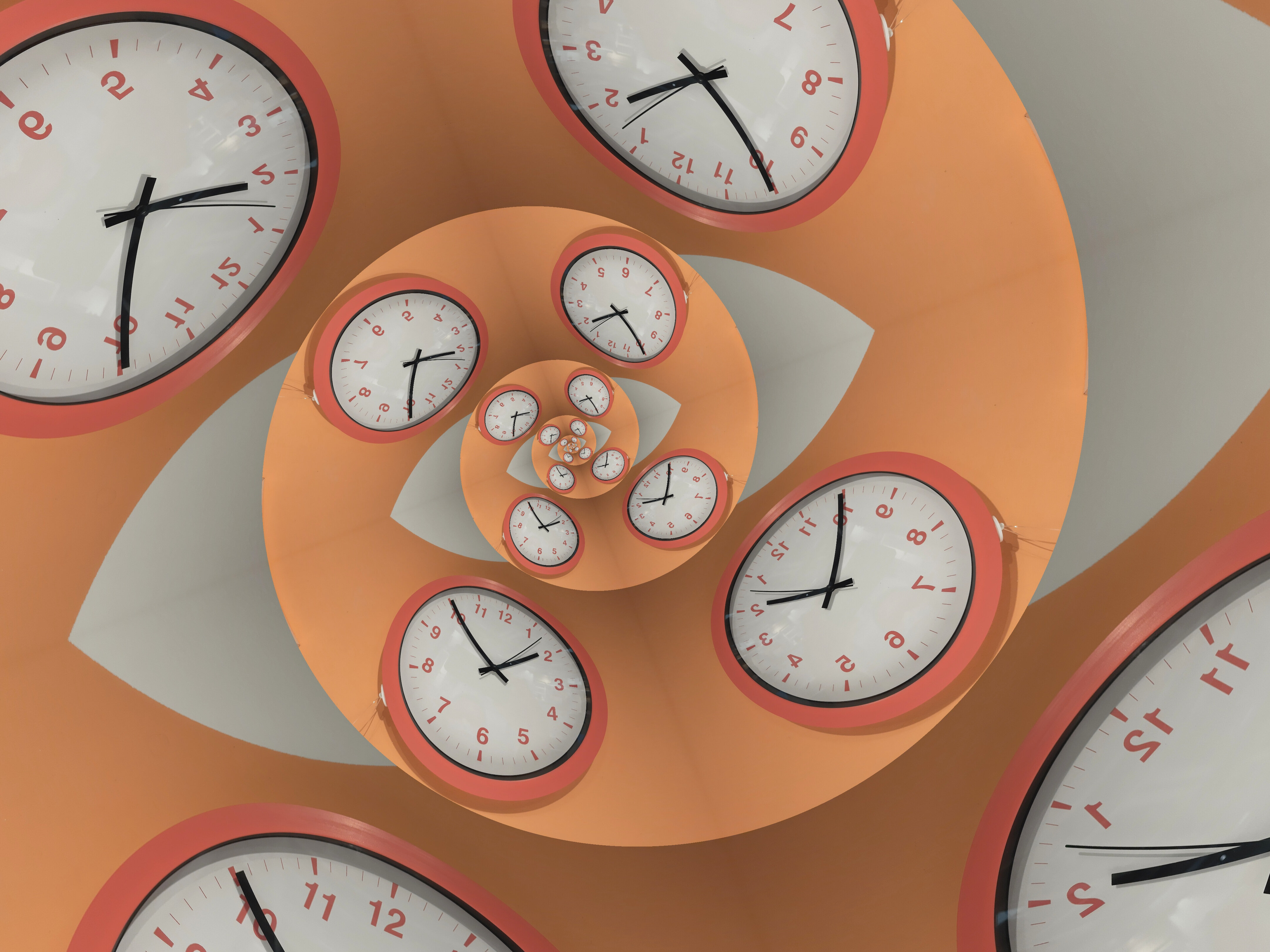
The Pandemic Warped Our Sense Of Time. Here’s How To Gain It Back.

At this point of the pandemic, it still feels like we’re stuck in a bit of a time warp.

Yes, offices are opening back up and many people are carrying on with their events and travel plans. But there’s still a layer of uncertainty about what might happen next with Covid and when the pandemic will truly end — especially as more variants pop up.

Life doesn’t exactly feel normal yet, and as a result, time drags by. Here’s why, and how you can “gain” some of it back:

1. We lost our routines.

According to Ruth Ogden, an experimental psychologist at Liverpool John Moores University who studies how humans process time, this sensation that time is warped has been a global phenomenon. Through her research, she’s found that people across the globe have experienced distorted time during the pandemic.

The biggest culprit of the time warp: the loss of our routines.

“All the things in our day that helped us know what time it was ― they were gone. That meant it became easy for time to slip and slide around,” Ogden said.

During the pandemic, time stood still for many of us. We canceled our activities and we distanced from friends. People did everything — sleep, eat, work, socialise, parent, exercise — from their homes.

“We’re all heavily routinised creatures, but this routine is important because it keeps us in time,” Ogden said.

Our day-to-day activities help us perceive time — if we are commuting, we know it’s morning, if we’re running out for lunch, it’s midday, and so on and so forth. Without daily routines, which act as markers of time, it becomes easy to get lost in time. The things that made your Saturday a Saturday, or your Tuesday a Tuesday, may no longer be there.

Research also suggests that emotions significantly impact our perception of time. When we’re happy and physiologically aroused, time feels like it’s flying by; conversely, depression can make time feel sluggish.

Furthermore, our expectations of how things will occur (i.e., the pandemic is over!) versus the reality of how things play out (there’s a new variant coming for us) can make time feel faster or slower, depending on if the actual outcome was better or worse than our predictions.

2. Memories help us process time, and our memories are different from the last few years.

Think back to the beginning of the pandemic, when news of Covid spreading around China first leaked. How long ago does that feel to you? Months? Years? It’s probably hard to tell.

Ogden and her research team have been studying how people feel about the length of the pandemic and have discovered that the brain processes length of time through memories.

“If we’ve got loads of memories, then it says, ‘Oh, it must have been a long time,’ but if it has very few memories, then we think it must have been a short period of time,” Ogden said.

In theory, most of us should remember the pandemic as being short — because we didn’t do a lot, Ogden said. But she’s found the opposite: most people feel like we’ve been stuck in the pandemic for much longer than we have been.

The reason, it seems, is that while we didn’t necessarily form a ton of fun, new memories for a period of time, we still formed memories. We learned how to bake bread, we got into puzzles and crafts and packed our days with Zoom meetings. We navigated life through restrictions, masking and distancing; we developed new skills and fell into new routines. Time moved forward.

A loss of routine is the main reason why time seems to drag by.

Delmaine Donson via Getty Images

A loss of routine is the main reason why time seems to drag by.

3. People process time differently.

Just how distorted time feels varies from person to person. It ultimately depends each person’s personal experience with Covid and how much the pandemic has influenced or changed their daily activities, said Nicole Dudukovic, the director of the neuroscience major at the University of Oregon.

Ogden’s research, for example, has found that social satisfaction is one of the biggest factors behind how people process time.

“The more socially satisfied you were, the ‘quicker’ the pandemic went,” Ogden said, noting that this didn’t just involve being around people, like family in your household, but seeking out and enjoying social connections.

People who have engaged in “normal life” again, and are traveling and commuting to the office and engaged in activities, are probably going to have a more normal sense of time right now. People who are at-risk and are hunkering down, along with those who are stressed about returning to pre-pandemic activities, may continue to feel disoriented about time.

“For some people, this experience will continue for a long time and that will continue to cause distortion to their experience of time,” Ogden said.

4. We’re more aware of time now.

Ultimately, the pandemic has made people much more aware of time. We’ve had more time on our hands, which has caused us to become hyper aware of time and how it’s passing, Ogden said.

At the same time, we often don’t remember time accurately. It’s very hard for people to remember how we felt about things, like time, in the past — it’s largely influenced by how we feel about things now. Memories of how time once passed can be very inaccurate, according to Dudukovic. While it may feel like time is passing differently now, it’s totally plausible that we’re just misremembering how time felt pre-pandemic.

“It’s possible that if you’d asked me in 2019 about how fast time was going that maybe it would be not that different from how I’m feeling about it now,” Dudukovic said.

Here’s how to overcome the time warp.

Ogden said it’s important to recognise that we are not going to return to life before the pandemic.

“So much in the world has changed as a result of the pandemic,” she said. We’ve carried on and adapted to new ways of work and socialising.

One of the best ways to mitigate the feeling that we’re stuck in a time warp is to create new routines.

“There’s a lot of evidence to suggest that your routine, and also the number of activities that you’re engaged in, that that’s going to influence how you’re perceiving time,” Dudukovic said.

Changing your environments — stepping out of the house, going on walks, or even switching up the room you work in — can trick your brain into thinking more is happening, so that time passes more regularly.

If your days blend together, save certain activities and routines for specific days of the week.

“Make your Tuesday a Tuesday because of the things you do in it,” Ogden said.

Finally, try to keep busy. The busier we are, the less we tend to focus on how time is passing.

Share Button

How Alcohol Affects Your Body When You’re On A Flight

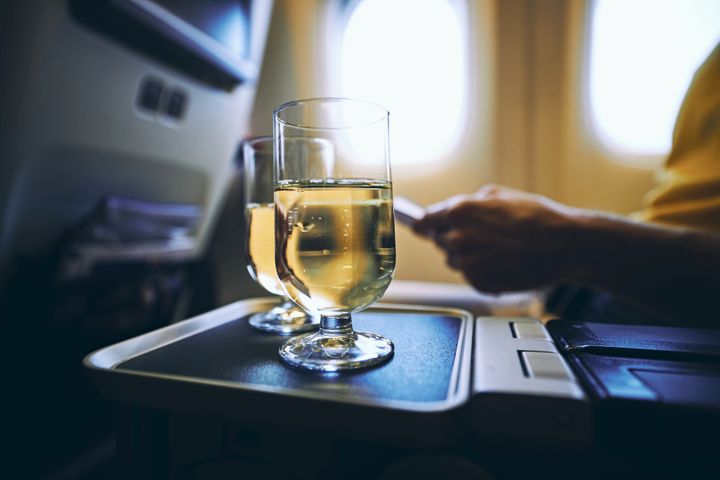
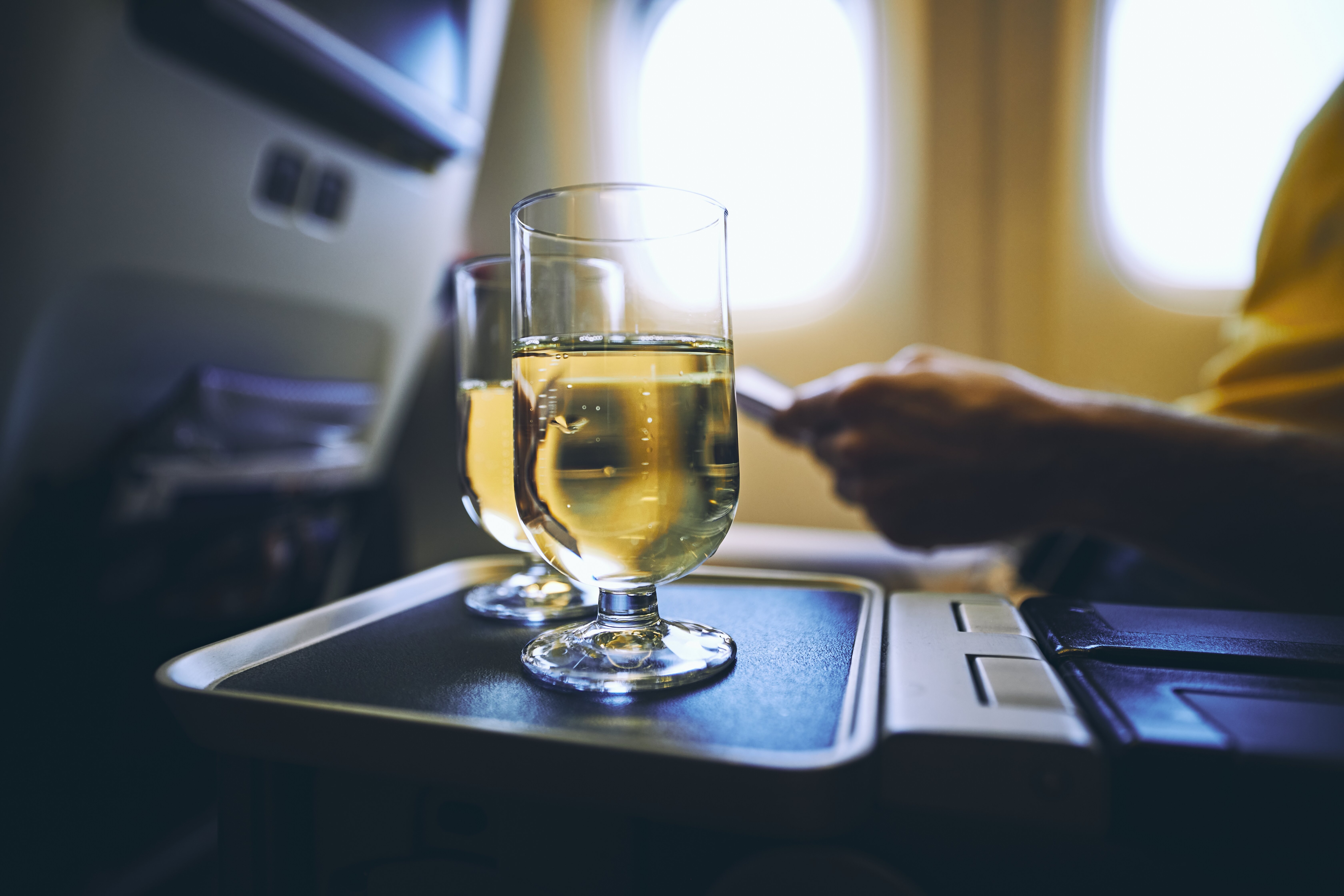
Ordering beer, wine or a cocktail while flying is a common move. For some, having an alcoholic beverage on the plane is a travel day essential to relax, take the edge off, celebrate a vacation or even to fall asleep on a long flight.

But is this really the best option? Alcohol can leave you groggy and dehydrated. When consumed in excess, it may lower inhibitions and lead to unruly behavior, which we saw a lot of when people reacted negatively to federal mask mandates.

We reached out to some experts in medicine and nutrition, and asked if alcoholic beverages were a good idea while flying. Here’s what we found out about how alcohol affects your body while you’re up in the air.

Is it a bad idea to order alcohol on a flight?

There’s no easy answer to this question, experts say. Ordering a beer or wine while flying is a personal decision that might work for one person and not for the person sitting next to them. “If a person is on edge due to flying in general — and doesn’t become more so with alcohol — sometimes having a beverage might relax them or make the process feel a little bit more pleasant or more ordinary,” said Wendy Bazilian, a registered dietitian nutritionist.

But while some may grab a drink as a celebratory kickoff for a long-awaited trip, others may experience side effects while drinking on a plane.

You may not sleep well.

It’s tempting to order a drink in hopes that it will help you fall asleep and get some much-needed rest on an overnight flight. But this isn’t necessarily the greatest idea, according to the experts we spoke to. “Even though you think it relaxes you, your sleep will be disrupted and you likely will not get into REM sleep, the type of sleep that is restorative,” said Amy Shapiro, a registered dietitian at Real Nutrition.

You may doze off after a glass of wine, but your sleep won't be as restful.

Jaromir Chalabala/EyeEm via Getty Images

You may doze off after a glass of wine, but your sleep won’t be as restful.

Drinking on a flight doesn’t promote restorative sleep but can help some people fall asleep, Bazilian points out. “If in moderation … if she or he believes it helps a little to ease into sleep, then that can be fine.”

You may become dehydrated.

Alcohol is a diuretic, which means your body will increase its output of urine. If you don’t drink additional water to make up for this fluid loss, you may quickly become dehydrated, Shapiro said.

You may become intoxicated without even realizing.

“There is usually very little food available on most flights — or it is not particularly appetizing — and it would be easy to drink too much on a relatively empty stomach,” said Dr. Karen Jubanyik, an associate professor of emergency medicine at Yale University School of Medicine. It would be very easy to drink the same amount you drink at home, but without adequate food intake, this amount might be too much, she said.

There’s also the fact that most people are pretty sedentary on a flight, rarely leaving their seat. When you do get up, you may find you’re feeling the effects of alcohol more than expected.

You could become disruptive.

We all know that drinking alcohol can lower inhibitions. This could cause an individual to become loud and disrespectful to the flight crew and fellow passengers. People with lowered inhibitions may have a harder time staying calm when annoyed by small inconveniences and actions of people nearby, like a fully reclined seat back. “If someone has lowered inhibitions, they may speak their mind or start a confrontation with another passenger over relatively small things, which can also land them in trouble,” Jubanyik said.

You may have trouble moving around the plane.

“Progressive intoxication can lead to slurred speech, trouble with coordination and trouble walking,” Jubanyik said. “Just walking to and using the bathroom or exiting the plane could be difficult.”

The good news? You can drink on a flight if you keep some recommendations in mind.

Sipping a cocktail while commuting home from a work trip or while en route to a vacation doesn’t carry a ton of benefits, but you can still enjoy a drink while flying if it’s a behavior that works for you.

“It can be helpful in relaxing you or easing anxiety in the beginning, and since many people are anxious flyers, this can help,” Shapiro said, while also pointing out that drinking too much can lead to increased anxiety and have a boomerang effect, so it is important to know your limit.

Sometimes you may just want to order a drink simply because you feel like having one (many of us regularly do so after work or on the weekends), and this is fine when done in moderation and with a few tips in mind.

Don’t drink on an empty stomach.

If you plan to drink alcohol on a flight, pack some snacks and make sure to eat a meal before boarding if you know there won’t be any in-flight food service.

“Eating food alongside alcohol can help maintain energy and steady blood sugar while your body processes the alcohol,” Bazilian said.

Stay hydrated.

The experts we spoke to recommend alternating each alcoholic drink with at least one or two glasses of water. “This will help you to remain hydrated and to feel the negative effects less,” Shapiro said. Electrolyte drinks can also help, and if you have the chance, fill up your water bottle in the airport before takeoff. Water and other nonalcoholic drinks aren’t always readily available throughout the flight, so sometimes it’s just easier to carry your own.

Don’t drink if you’re going to be renting a car upon arrival.

“It is particularly a bad idea to drink alcohol if you will be renting a car and will need to drive upon arriving at your destination,” Jubanyik said. “Even if not technically drunk, driving in an unfamiliar location will likely require additional attention and reaction time than one needs in their local environment.”

Pace yourself.

It’s easy to drink quickly on a flight or to grab another drink simply as a way to pass time. Along with staying hydrated and taking a breather between drinks, Bazilian recommends paying close attention to how much alcohol you’re consuming. “One of those little alcohol bottles on a plane is typically 1.5 or 1.7 ounces, not a 1-ounce pour, and the mini-bottles of wine may be more than a 3-ounce pour. Just be aware that one drink [on a flight] may be more than you count as one when you’re on the ground.”

Share Button

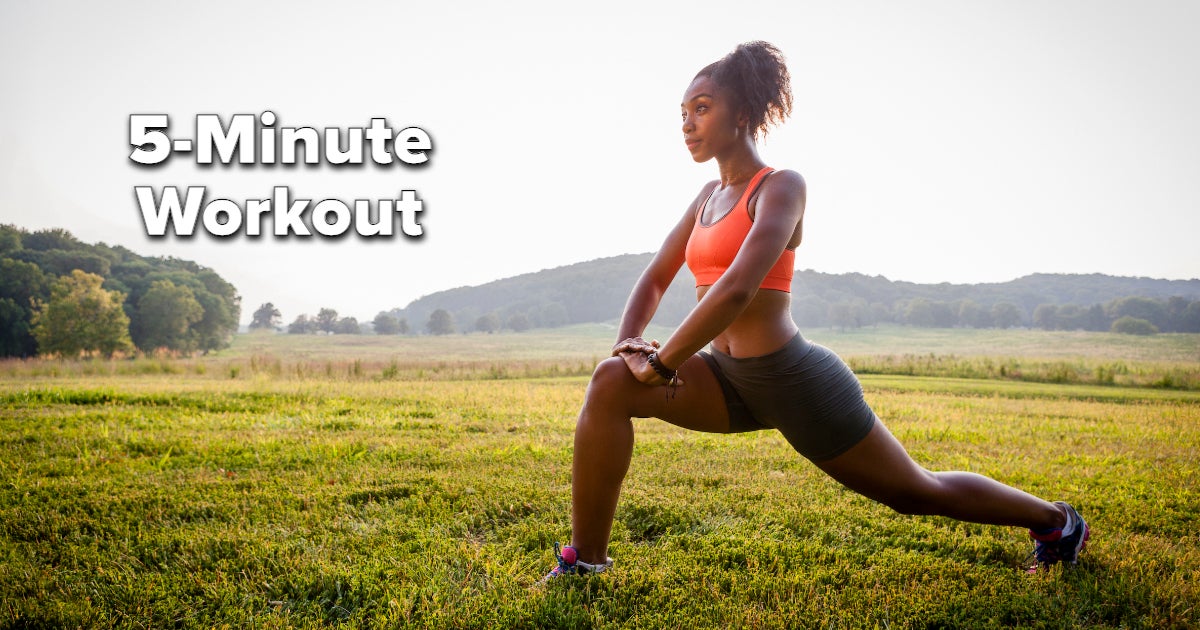
Exercising With Long Covid Is Tough. This Gentle 5-Minute Workout Can Ease You In

You’re reading Move, the nudge we need to get active, however makes us happiest and healthiest.

Re-establishing your fitness routine after having Covid can have major benefits for your physical and mental health, but it needs to be approached cautiously if you’re still experiencing long Covid symptoms.

The NHS advises those experiencing long Covid to ease themselves back into exercise slowly. “Exercise is very important for regaining your muscle strength and endurance but this needs to be safe and managed alongside other long Covid symptoms,” it says. You can read further information about exercising after Covid infection on the NHS website.

Jeannie Di Bon, founder of the Moovlite app, is a movement therapist specialising in working with people experiencing chronic fatigue and chronic pain. More recently, she’s been designing workouts for those experiencing long Covid.

“You may find that your energy levels have dropped post-Covid and you may experience fatigue and post-exertion malaise (PEM),” she explains. “With this in mind, I recommend taking it gently and slowly. We need to keep the nervous system calm to allow the body to repair and we need to start moving without causing a fatigue flare-up.

“Listen to your body and try not to push yourself to pre-Covid fitness too soon. The more you fight the impact of long Covid, the harder it may be to recover.”

Below, Di Bon has shared a gentle, five-minute workout created for those who feel ready to start moving again.

But remember, always speak to a healthcare professional about resuming physical activity if you’re experiencing chest pain or severe breathlessness, or if physical activity is worsening your long Covid symptoms.

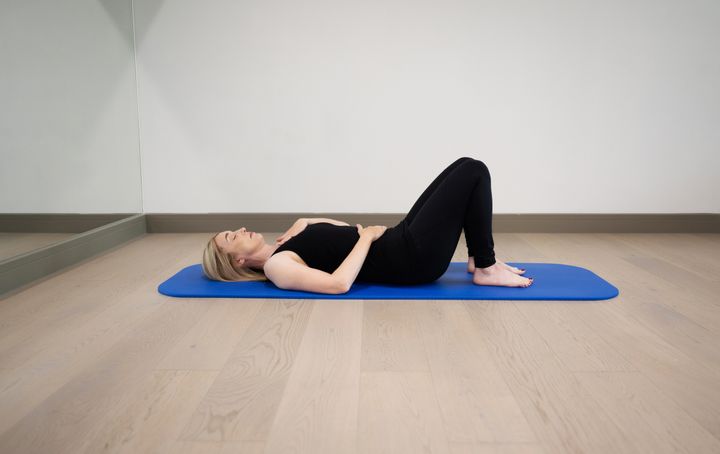
Exercise 1: Belly breathing

Jeannie Di Bon

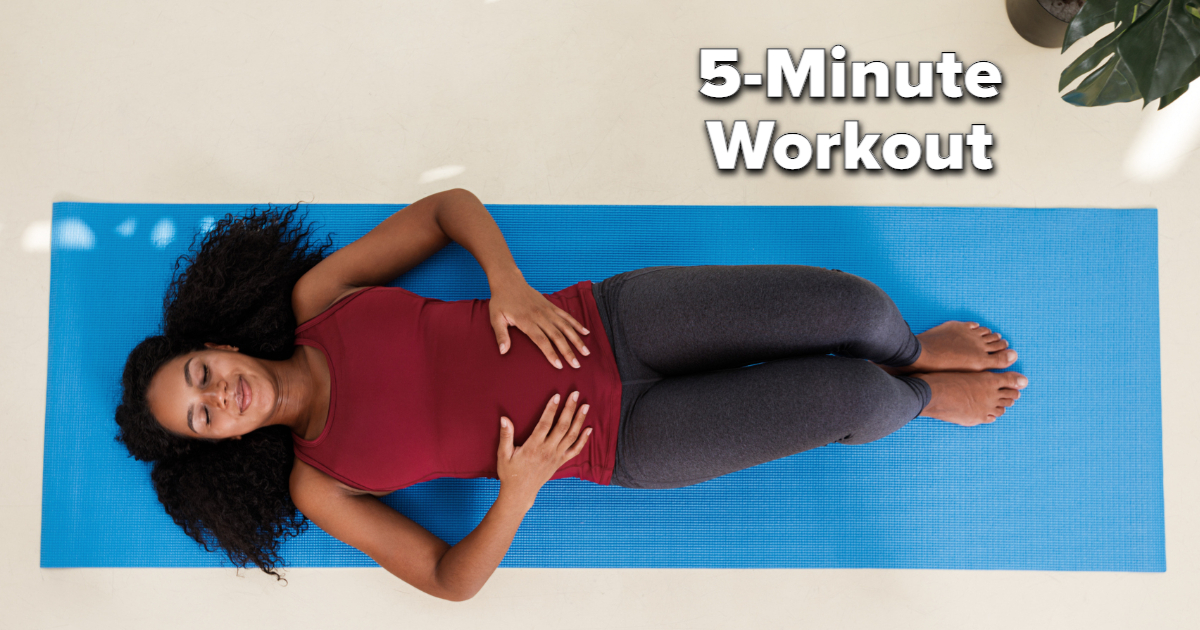
Start with some gentle belly breathing, allowing the lower ribs to expand. For many people, Covid causes a cough and cold so we want to start moving the lung tissue in the right way. Try to breathe quietly in through the nose and out through the nose. Lying on your back does not require strong inhales so take it very gently, allowing the breath to come to you.

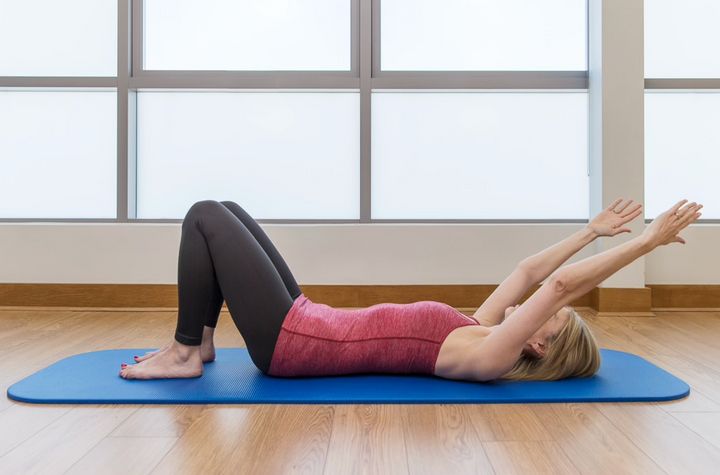
Exercise 2: Arm rolls

Jeannie Di Bon

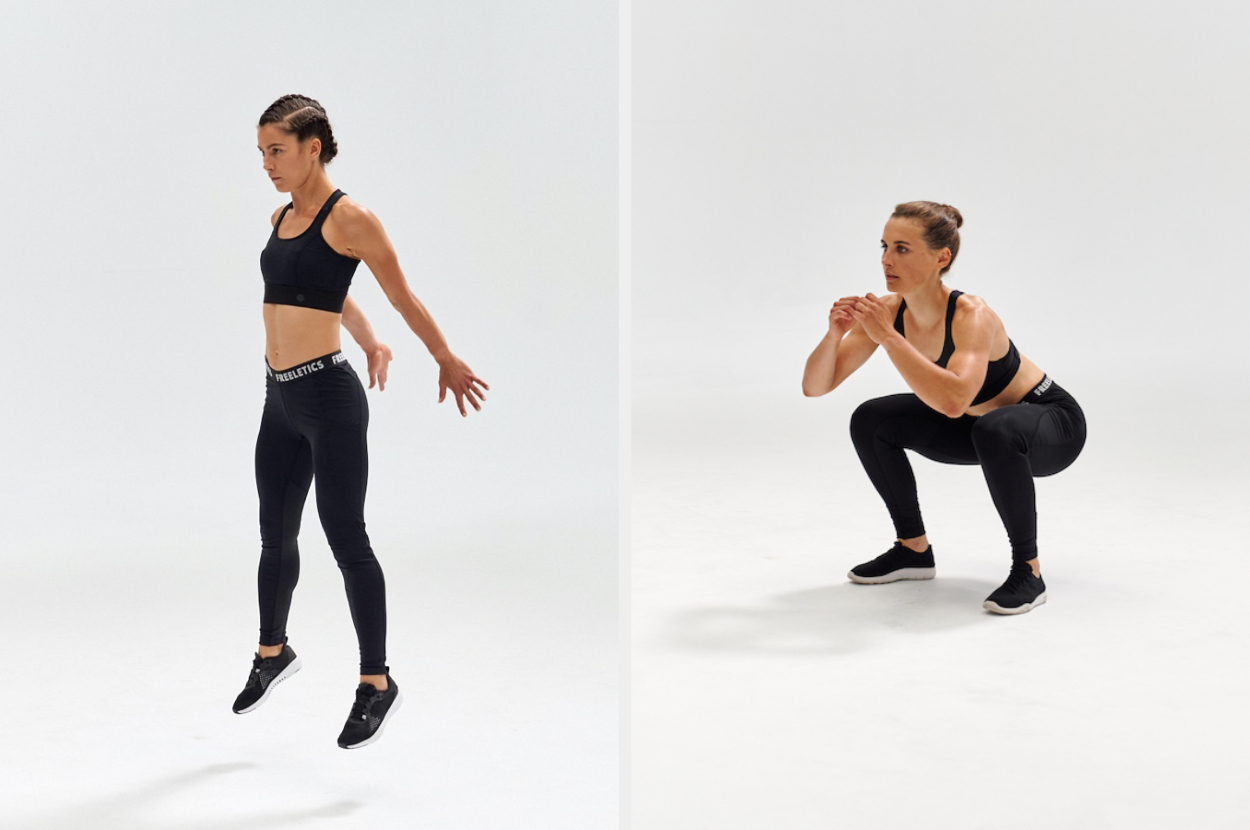
Staying supine (lying on your back) is a good way to start moving – especially as some people experience dizziness with long Covid. You may find you don’t want to be standing for too long or doing exercises that involve inversions or squats. Keep it simple. This arm roll exercise can help stretch into the thorax and open the chest.

Start with your arms by your side. Try to keep the back heavy as you move the arms above your head and gently stretch. Let your breath settle the spine into the floor and allow the tissues to relax. You can add arm circles to this for a beautiful stretch across the chest.

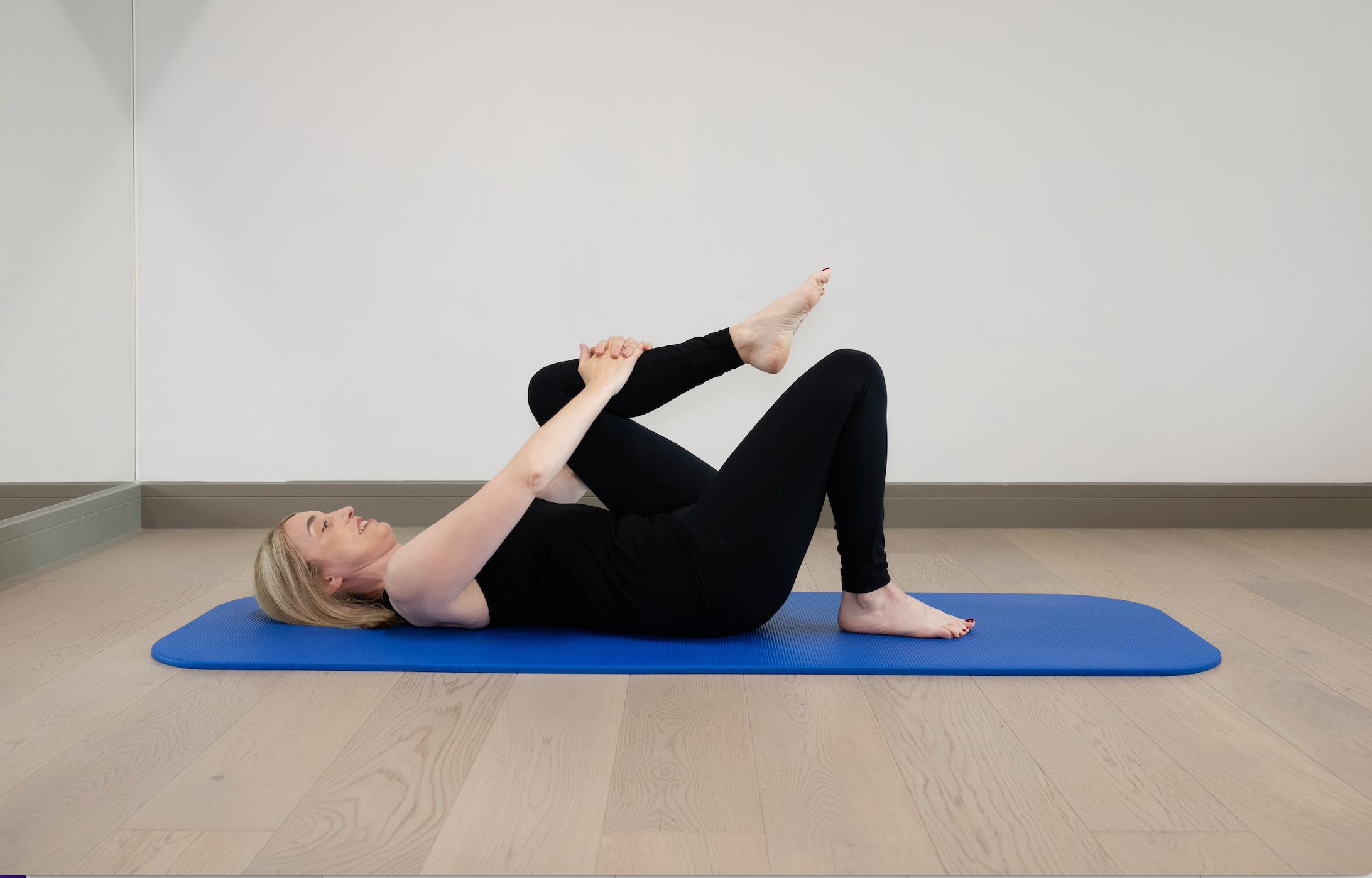
Exercise 3: Ankle roll

Jeannie Di Bon

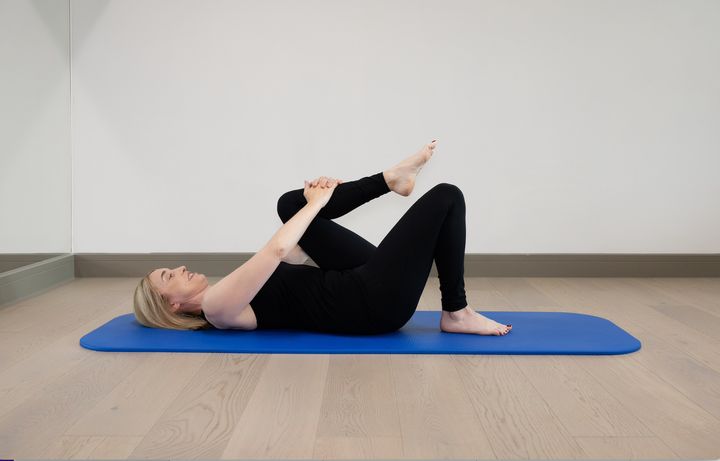
To help with the dizziness that can happen, some simple leg exercises like calf pumps or ankle circles are recommended. You can do these lying on your back: hold on to one leg and try to circle to the ankle without the rest of the leg moving. Gently lower it back to the ground and repeat on the other leg.

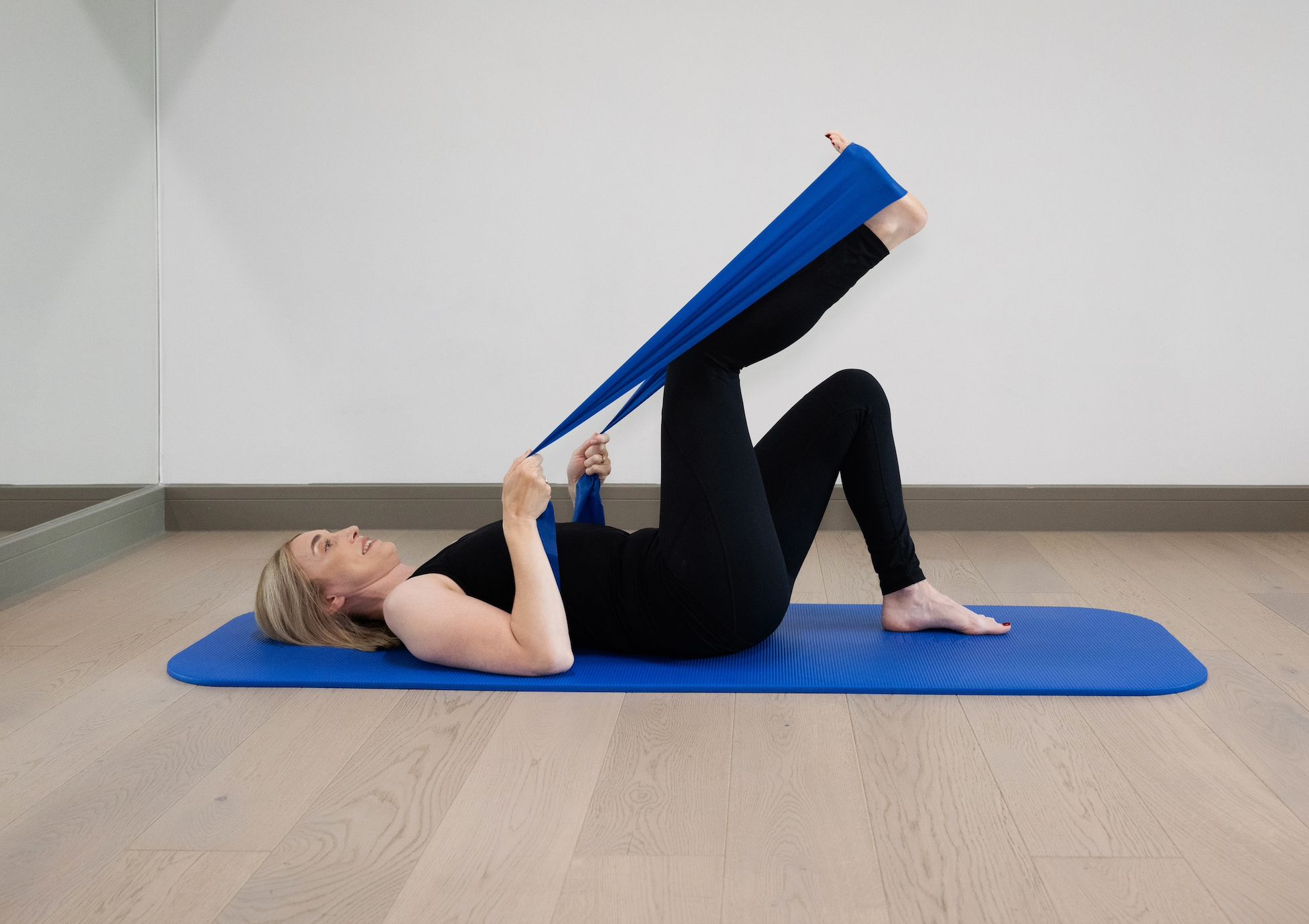
Exercise 4: Resistance training

Jeannie Di Bon

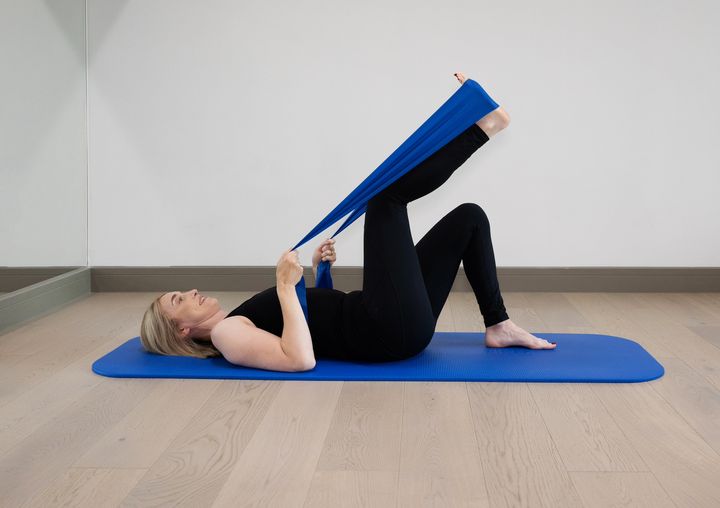
To build leg strength further, you can add a band for resistance work that is also gentle. This is another great exercise for circulation and helps prevent dizziness. Take a band and place it around your foot with the knee bent. Focus on gentle rolling the back of the thigh along the mat until the leg straightens.

Try not to lock the knee or hang into the band. Keep the energy flowing down the leg into the band. The back stays heavy into the mat – if your back is arching, raise the leg higher. Once the leg is straight, press the balls of the feet into the band and start to point and flex the foot. This is a brilliant way to utilise the calf pump.

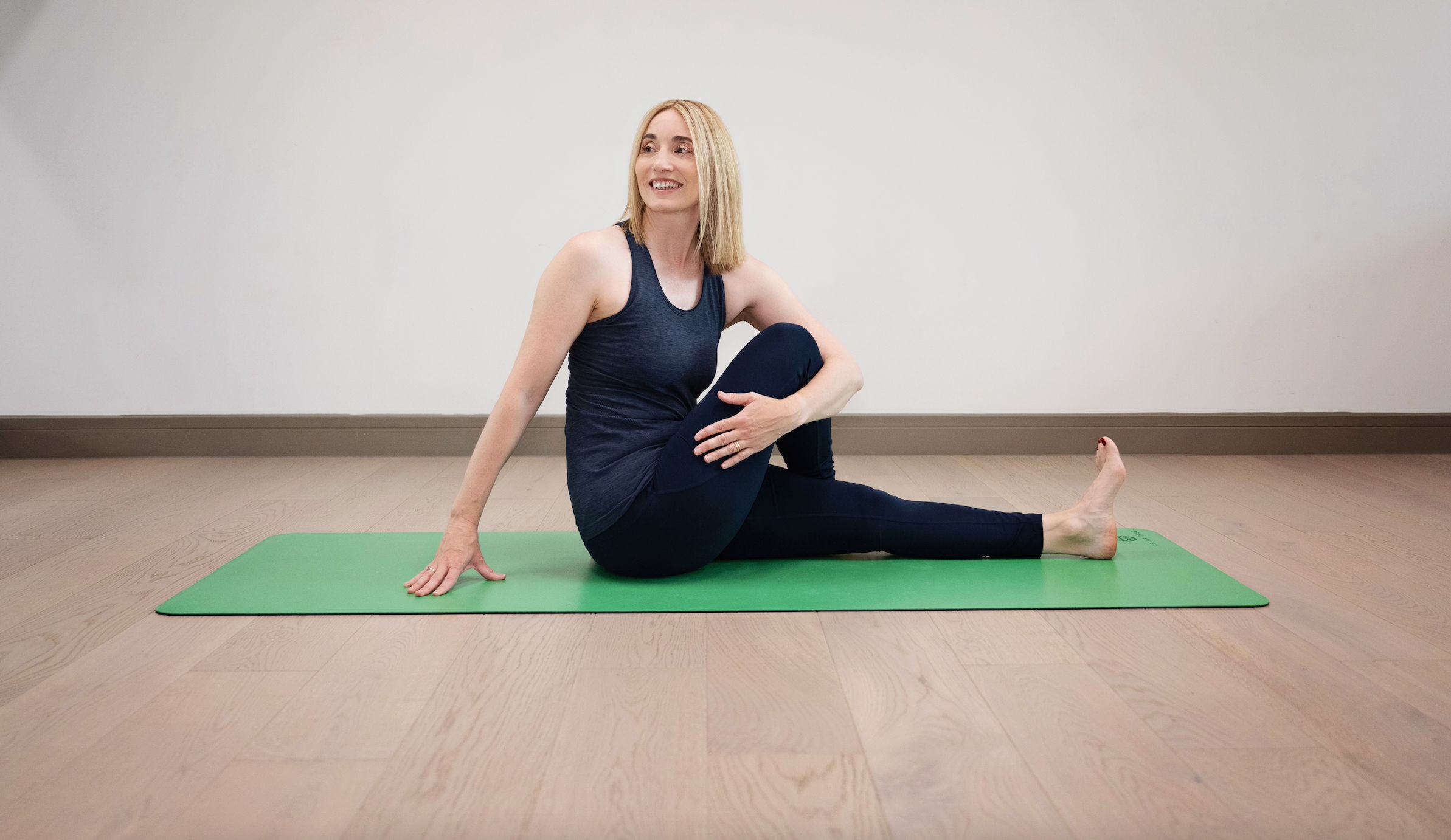
Exercise 5: Seated twist

Jeannie Di Bon

Jeannie Di Bon

Jeannie Di Bon

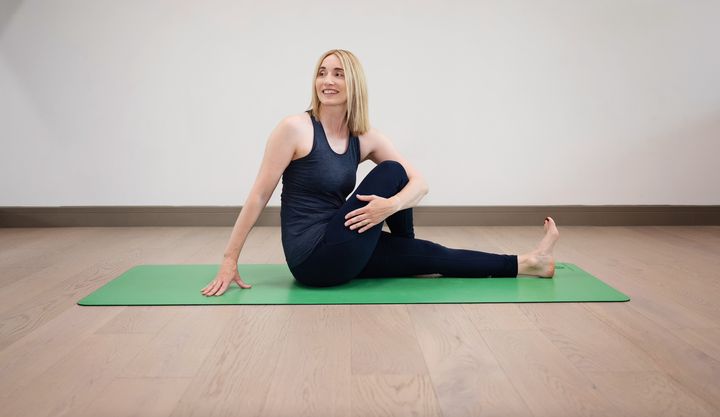
A seated twist is great to help circulation and digestion. Many people do experience stomach cramps and pain with Covid. Find a comfortable seated position and cross one leg over the other straight leg. Use your arms to guide yourself around to look over the opposite shoulder. Try to lift the spine up as you twist, rather than compress the spine. It’s also important to go gentle and not force into the twist. Stay in the position and breathe softly allowing tight muscles to release. You can then repeat on the other side.

Move celebrates exercise in all its forms, with accessible features encouraging you to add movement into your day – because it’s not just good for the body, but the mind, too. We get it: workouts can be a bit of a slog, but there are ways you can move more without dreading it. Whether you love hikes, bike rides, YouTube workouts or hula hoop routines, exercise should be something to enjoy.

HuffPost UK / Rebecca Zisser
Share Button

People Are Muting Their Favourite Influencers. They Tell Us Why

Instagram and influencers – it’s difficult to imagine one without the other. I’ve happily followed fashion influencers on Instagram since I first downloaded the app in 2014. And there’s no doubt the limited representation of Black women in mainstream media made me feel connected to Black influencers specifically.

These were the people I ran to for makeup recommendations, to ogle their clothing choices and tap up their lifestyle content, from food to travel. I’ve kept up with everything my favourite influencers are wearing and buying for years.

That is, until the pandemic.

It was during lockdown when I started feeling less inclined to scroll influencer content. This was partly because my own life, like many others at the time, wasn’t where I wanted it to be. I was job-hunting, while freelancing through a pandemic. It was difficult and I wanted social media to be a form of escapism.

But the content I’d once found aspirational began to feel out of touch. Seeing people the same age as me buying things I couldn’t afford didn’t want to make me want to work harder – it made me feel like I was doing something wrong.

I knew the influencers weren’t really the problem, but I had to control how they were leaving me feeling. As someone who spends a lot of time on social media, it was up to me to decide which content I wanted to consume.

So I started to unfollow or mute some of their accounts.

Like me, Toju, a 21-year old student from Glasgow, also noticed a shift during the Covid lockdowns in how she felt about the influencers she followed.

These were the weeks and months when it was easy to think other people had more space, more time, were being more productive or having more fun than you, despite the challenges we were all facing. Remember when it seemed like every past Love Island contestant ever was in Dubai over Christmas 2021?

“During that time, a lot of influencers were travelling or just living very different lives to me,” she says. “I’ve also recently felt a shift again this year as more influencers have moved towards luxury or designer items in their content.”

More influencers that ever seem to be publishing elevated content, from showcasing their designer clothes and bags to eating out at expensive restaurants and generally living a life of luxury.

Of course, this content can be seen variously as aspirational or a form of escapism. It can also make you feel wholly inadequate in the here and now.

The cost of living crisis is playing out in real time. It’s hardly surprising Toju and many other social media users no longer feel inspired by influencer accounts.

“I can’t even be ‘influenced’ because these items are simply entirely out of my reach and budget, so I gain nothing but feelings of inadequacy from them,” she says.

“I’m seeing more things that would like to have but can’t afford on a daily basis, something I probably wouldn’t see if I wasn’t on social media.”

But the answer isn’t necessarily coming off social media entirely. It could just be changing who you do follow or which platforms you use and for what.

Data analyst, Hena J. Bryan, 25, a content creator herself, says that she’s put many of the influencers she used to follow on mute for over a year now.

“They just don’t align with a lot of the things I find important,” she says. “I think relatability, for me anyways, goes beyond finances, especially as I can afford the things they’re advertising. I want to discover more influencers who offer more than pretty pictures, and I’ve found a few who speak to my interests.”

Bryan creates content about the books she is reading and enjoys engaging with others doing the same. She adds: “I think people should curate their feed. You literally have to be militant and protect your digital footprint/experience.”

If you want to follow influencers, seek out those who genuinely speak to your interests.

SDI Productions via Getty Images

If you want to follow influencers, seek out those who genuinely speak to your interests.

It’s also worth being aware that how you engage with social media shifts over time. Akachi Priscilla Mbakwe, 32, a marketer from south London has lived online since her early teens. “I’ve been following influencers since I was on Tumblr,” she tells HuffPost UK. “People like Justine Skye who at the time were influencers, but the term wasn’t invented yet.”

When she was younger, Mbakwe says she followed people “for aspirational reasons”, and for their fashion and make-up content.

“I started to feel different in the pandemic especially during the resurgence of Black Lives Matter. I saw influencers uploading pictures of themselves whist the caption was about George Floyd – they just looked silly to me.”

There’s self-preservation at play here, too. “I started to unfollow influencers because I realised subconsciously that I was constantly comparing myself to them,” says Mbakwe. “Now I have such a better relationship with myself and how I look and I don’t want to compromise.

“I still look at them from time to time but not like I used to. Also, now I feel that most influencers make the same content. They’re all following the same formula. If you follow one it feels like you follow all of them.”

So, where does ultimate responsibility lie: with the followed or their followers?

Though the life of an influencer looks perfect, influencers themselves will tell you that sometimes it’s far from that. A lot of work goes on behind the scenes and many posters rely on rented or gifted products to project the image they do, some earning little more than the followers who aspire to their lifestyle.

“I don’t feel like influencers should change their content to suit us,” weighs in Mbakwe. “I think we (the consumers) should curate and have better boundaries with our feed if the content you’re viewing is making you feel bad.”

Bryan echoes this: “I believe we should all have social responsibility, but we shouldn’t have to force influencers to do/say things they don’t want to. You’re responsible for what you consume and I think TikTok has created a wave of new influencers who don’t lend themselves to perfectionism and are more relatable.”

With living costs only set to increase, it might be time for be more conscious about the content we choose to see. Arguably Influencers aren’t the ones to blame, just a byproduct of a capitalist society that rewards people for flaunting their wealth.

You have the power to choose who and what you engage with, so be honest about how your Instagram feed leaves you feeling – and make the changes you need.

Share Button

Can We Ever Really Recover From Burnout?

You’re reading Life-Work Balance, a series aiming to redirect our total devotion to work into prioritising our personal lives.

“I’ve had splinters on my feet, I’m physically exhausted, I’ve had breakdowns. All the detox time in the world doesn’t change how burned out I am.”

This is the experience of Anthony*, a tech worker, 34, from London. After being asked to work weekends, weeks of late shifts, only then to be swapped onto earlies without warning, Anthony’s job has left him totally drained. So much so he’s quit his job without securing another. “I just can’t take anymore of this.”

Anthony isn’t alone in this state of mind. By the end of 2021, burnout was affecting more than 79% of UK workers, according to research by the HR tech company Ceridian, with 35% of people reporting high or extreme levels.

Nearly half (49%) of those surveyed in research cited an increased workload as a cause. The ongoing pandemic, post-Covid recovery, and the so-called Great Resignation, have left employers squeezing more out of their workers than ever before. And it’s causing a physical and mental health crisis.

Is there a chance of recovery? How long does it take to get over burnout?

We’ve seen buzzwords like self-care, wellness weekends and digital detox become the norm, but they risk ignoring the broader picture – that short stints of respite or relaxation don’t counteract the strenuous, back-breaking and brain-fogging nature of work under capitalism.

So what can we do? The obvious solution – if the Great Resignation is anything to go by – is to leave workplaces, even professions, that are bad for our health.

It’s what Lana*, 26, a social services worker in New York City, had to do to get some relief from her burnout.

“I quit working in the most toxic field possible in which I was forced to travel all over the city to unsafe locations. I got no support while dealing with people in extreme suffering/people who are dying. So I decided to get out of the field,” she tells HuffPost.

“Now I do my job and come home. No travel, no dying, I don’t stay late and I don’t take work home with me.

“My burnout was affecting me and my clients. I had to take a good hard look at myself and give myself the freedom to breathe again.”

Lana says she appreciates not everyone can leave their job immediately, especially given how expensive the cost of living is right now.

But if you are experiencing burnout, she says, it pays to make a change, rather than attempting simply to work through it.

“Finding new work definitely isn’t the only way to get over burnout, but you have to know when it’s time to take a break or reevaluate,” she says. “I feel like we owe it to ourselves.”

And while you might not completely be able to get over this block, there are some things you can do to mitigate burnout.

Jo Davidson, a business strategist who predominantly mentors female entrepreneurs, says she sees burnout among her clients all too often.

Recognise when you’re being pushed too much, she says. “Acknowledge that burnout is a result of the body telling us to stop. But we choose to ignore it, and don’t listen,” she tells HuffPost. “Taking changes is important because going back into exactly the same situation will only ever delay the healing.”

So how long can you expect to take to recover? Well, there is no right answer as the journey isn’t so linear.

“Recovery from burnout is definitely affected by how long it has been going on and how the individual recognises they have it and how actively they want to overcome it. For some it may be 10-12 weeks, however for others it can take years.”

10 steps to dealing with burnout

Davidson says there are ways you can aid your own recovery, whether that ultimately means leaving a job – or not. Here are some of those steps:

1. Acknowledge that it exists
2. Track stress levels (use an app, journal)
3. Identify the stressors and step away from these situations
4. Seek professional help. This is a strength not a weakness
5. Create a work life balance that includes time to have fun and rest
6. Change jobs if it is really badly affecting your mental health
7. Be kinder to yourself and keep a gratitude journal
8. Own it and believe that you can change it
9. Create a healthy sleep schedule and diet
10. Set boundaries.

While these are ways as individuals that we can ameliorate our conditions, remember that setting personal boundaries may not change the demands of your job wholesale.

This requires a company-wide push, or if you’ve got enough seniority in your role, a persistence in demands to change the wider work culture. Work should be a complementary part of our lives, not the thing that makes it unliveable.

*Names have been changed and surnames omitted to offer anonymity.

Life-Work Balance questions the status quo of work culture, its mental and physical impacts, and radically reimagines how we can change it to work for us.

HuffPost UK/ Isabella Carapella

Share Button

How Soon Is Too Soon To Quit A New Job?

The urge to quit a relatively new job can be an uncomfortable feeling, but it is not uncommon. According to a 2018 survey from the recruiting service Jobvite, 30% of new employees leave their jobs within the first 90 days of getting hired.

The top three reasons quitters gave were that the role did not meet expectations from the job interview process (43%), a one-time incident that made them want to leave (34%), and bad company culture (32%).

During the Great Resignation, more of us may be saying our farewells sooner. “Talent has a little bit more of an upper hand,” and old-school rules of sticking it out at a hard job may no longer apply in certain cases, said Mary Abbajay, president of the leadership development consultancy Careerstone Group and author of “Managing Up: How to Move Up, Win at Work, and Succeed with Any Type of Boss.”

But before you give notice and join the league of early quitters, consider why you want to leave so soon after starting. Sometimes it can take a few months to feel comfortable in a new role and with new colleagues. And if you’re at the beginning of your career, it’s helpful to know that first-job blues are typical.

“You want to make sure you are not leaving just because you don’t like working, as you are getting used to the difference to being in school and being at work,” Abbajay said. If it is indeed the first-job blues, she recommends sticking it out for a year to gain experience you can talk about in future interviews.

But you should also trust your gut if something feels off.

We have to dispel this myth that we have to sit in agony if it’s not working out,” said career coach Jasmine Escalera, who does not subscribe to the “stick it out” mentality.

Here are three scenarios in which it is definitely not too soon to quit a job:

1. You find yourself in a toxic job.

Nothing drives people out quicker than a toxic work environment. According to a FlexJobs survey from February and March of more than 2,000 U.S. employees, “toxic company culture” was the top reason people cited who felt they had to quit their jobs in the past six months.

This is for good reason. A difficult boss like a micromanager can be annoying to deal with, but they can be managed. A toxic boss, on the other hand, will corrode your soul and is an active threat to your health.

Abbajay noted that a difficult boss “may be impulsive, they may be poor communicators. Their style of working just isn’t aligned with your style of working. A toxic boss is a boss that is dehumanizing, a boss that is abusive, a boss that is screamer, a shouter… [With] a toxic boss, you are going to start to feel less than, you are going to be consumed with the stress of dealing with this person.”

If you feel stuck with toxic bosses and colleagues, don’t linger. “Once you recognize the toxicity, or the organization’s toxicity, you should think about getting out,” Abbajay said.

Escalera agreed with this assessment. Having escaped a toxic work environment in the past, she finds that toxic work cultures cause trauma and make it impossible for you to be confident and capable in your professional life.

“The longer you are there, the deeper those cuts are going to be, and the harder it is going to be to leave, because you start to change the perspective of how you think about yourself,” she said.

2. The job is a radical mismatch with what you were promised in interviews.

You shouldn’t wait too long for circumstances to improve if the job you were sold by recruiters and hiring managers is radically different in reality. This likely means there’ll be no learning opportunities ahead, no internal mobility and no alignment with your planned career future.

If you believe a mismatch in roles is fixable, talk to your manager and colleagues about what you feel you deserve and what you need to see change, Escalera advised. But don’t put undue pressure on yourself to stay in a job that isn’t suitable.

Escalera said she experienced a mismatch when a leadership and mentorship role she interviewed for at a hospital turned out to be different than what was discussed. She tried to talk with her supervisor to get her responsibilities more aligned with the expectations she had from the interview process but was basically told, “‘This is what it is,’” she said.

She left the job within five months and has no regrets: “If I could’ve left in five days, I would have.”

3. You get a better offer that aligns with your goals.

If you get a dream job offer soon after you start a new job, you should reflect on whether the new opportunity is the better choice for your future career success, regardless of how short your current tenure is, Escalera said.

If the new opportunity is “going to get you to that end goal quicker and faster, you have to do what’s in best service to you,” she said.

Abbajay warned, however, that too many one-year-and-under stints on your resume can be a bad look to prospective employers. Your next potential employer may think, “Why should I invest in you if you’re not going to invest in me?” she said.

Still, there’s a way to positively spin this in job interviews. When Escalera was asked in interviews about her short stint in the mismatched hospital job, she was candid about how the role was different than promised and didn’t align with where she wanted to go. Her advice to job seekers is to be transparent about past mismatches, while also being clear that as a result of the experience, you now know that this new opportunity is the best role for you, she said.

“You have to be internally very strong and internally have a purpose to move your career in the direction that you want.”

– Jasmine Escalera, career coach

If you are wrestling with guilt about bailing on a relatively new job for something better, that’s normal. Escalera said she has experienced this guilt as a Latina who grew up in public housing and whose parents wanted safety and stability for her career.

“It puts a ceiling on what you believe is possible for you when you come from backgrounds like that. It makes you feel like, ‘If I got this, then I should just settle in it, and I should just keep it… because this is better than where I came from, this is better than even what my parents have at the age of 60 years old, and I am 40,’” she said. “You have to be internally very strong and internally have a purpose to move your career in the direction that you want, and you have to make decisions coming from that purpose, but that is really hard when there are really a lot of external voices.”

In the end, you are in the driver’s seat of your career — not your new boss, or your new company, or your family. If you have a gut feeling that a job is not going to be good for your well-being or future, you should listen to that feeling, regardless of whether the warning comes in the first few months of the job.

Often, there are times “when you knew something wasn’t right, and instead of connecting with that feeling, you tried to push that feeling down,” Escalera said, noting that’s a mode of thinking she has moved away from. “What I try to do now is entertain the feeling.”

Share Button

How To Deal With Body Image Issues When You’re On Holiday

Vacations can be tricky for those of us who struggle with body image.

Sometimes the clothes we think we’ll look hot in suddenly feel wrong. These thoughts can mess with our mood and get in the way of us enjoying time off — which is frustrating, yet hard to beat. The conversations we hear in real life and from the media about “bikini bodies,” as well as systemic fatphobia issues, such as hotels not giving out size-inclusive towels and airplanes making too-small seatbelts, exacerbate this predicament.


While you may not be able to avoid focusing on body concerns entirely, you can pack and prepare in a way that helps foster better body positivity on your trip. A few eating disorder and body image experts shared their best tips.

Start with your packing list

When you’re staring at your closet, trying to decide what to pack, go for comfort first. Think of the temperature at your vacation spot, what materials feel best on your skin, variety and pieces you know you love.

“People should pack whatever clothes they feel most comfortable in and are suitable for the climate of their vacation or types of activities that they’ll be doing,” said Rachel Evans, an eating disorder psychologist. “If you have space in your suitcase, then it’s probably a good idea to pack a range of clothes, some with a looser fit and some with a tighter fit … You can decide in the moment what clothes make you feel more secure about your body.”


Then, consider what feels fit for the occasion. “Look at styling and function,” said Carolina Mountford, an eating disorder expert with personal experience and a mental health advocate. “Do you need smart or casual? Is it an active holiday or relaxing by pools or on beaches? … Once you’ve narrowed it down to comfort and function, pick your favorites.”

And don’t forget about what feels stylish to you as far as colors, prints and styles. “Are you able to dress up in a way that feels less about the body and more about who you see yourself as?” said Kerrie Jones, a psychotherapist and founder of Orri, a specialist day treatment service for eating disorders. “Turn your attention towards the individual items themselves as opposed to how they are making your body look.”

Plan ahead for scenarios that may bring up body image issues

You can also prepare for vacation by brainstorming triggers and how to handle them.

“Whether it’s social media, a certain person or group of people in your friendship circle or an experience — perhaps changing rooms — if you’re aware of situations or activities that trigger negative body image, you can work to process and respond to them in a healthy way,” Jones said.

That may look like deleting your Instagram app while you’re away or changing clothes by yourself. Mentally preparing for the circumstances you know don’t make you feel good can help you navigate them or avoid them.

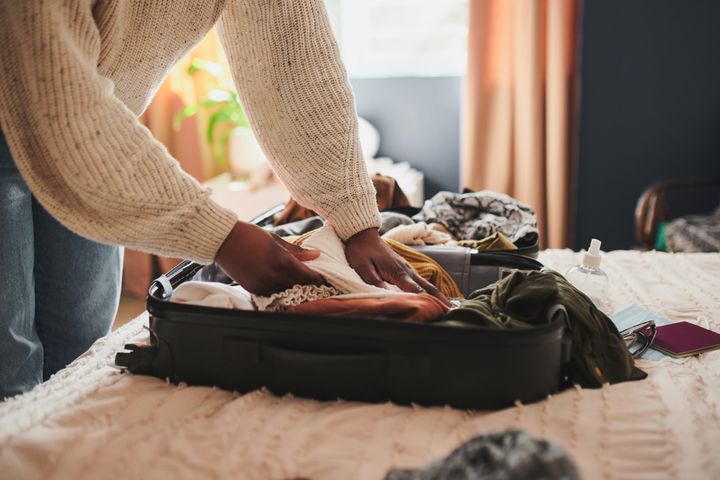
Packing a range of clothes and options will help you feel more comfortable on your trip.

Adene Sanchez via Getty Images

Packing a range of clothes and options will help you feel more comfortable on your trip.

If negative thoughts pop up on your trip, redirect your attention

While being mindful of the clothes you pack can help with body image, you may still struggle with negative thoughts popping up. No need to feel bad; it happens to many of us.

“My body is supporting me on this holiday,” Evans suggested. Is it digesting yummy new foods? Allowing you to swim in the ocean? Helping you play with your kids in the sand? “Research suggests that when we focus on what our body can do for us, rather than what it looks like, then we develop a better relationship with our body,” Evans said.

Treat yourself like you’d treat someone you love

“Speak as kindly to yourself as you would to a friend. Remind yourself that this is your holiday; you’ve worked hard for it and you deserve to enjoy every moment,” Mountford said. “Remind yourself that outward appearances are a desperately poor measure of contentment. Remind yourself that those around you love you as you are.”

She explained these thoughts can help you reset your focus and re-connect you to the present.

Think of other aspects outside of your body

Jones also recommended reminding yourself that you are so much more than a body ― both on vacation and at home. Think, “What makes me laugh? Who do I love, and who do I know loves me back? What fulfills me? What areas of my life do I want to nurture?” she said.

And when you’re worried other people are judging you, remember feelings aren’t facts. “You’ll likely see that almost everyone is too busy getting on with their vacation to be focusing on what your body looks like,” Evans assured.

Lastly, she shared her favorite quote from Zen Shin for when you catch yourself comparing: “A flower does not think of competing with the flower next to it. It just blooms.”

Share Button

People Share The Hobbies That Changed Their Relationship With Work: ‘It Has Truly Been Mind Blowing’

You’re reading Life-Work Balance, a series aiming to redirect our total devotion to work into prioritising our personal lives.

You’ve had a long day at work, your muscles ache for sitting in the same position for too long, or your legs for standing too long, and you’re tired. All you want to do is eat a warm meal and slouch in front of the TV or laptop while you scroll your phone. And then repeat for the next four days.

Work can be draining – you’re required to carry out the same monotonous tasks daily, helping companies get richer, with little regard to own your wellbeing and happiness.

The only relief is the weekend, which is often reserved for refuelling, catching up with loved ones, or completing life admin.

But there are things we do throughout the week that reinvigorate us, make us feel alive and skilled, and happy. Those are hobbies.

While in the last decade, hobbies have taken a turn towards hustle culture – monetising our past-times so we can make more money – the pandemic has allowed us to rediscover the little things that have a big impact on us.

With working from home becoming an ordinary staple, we have more time than ever to cultivate social and personal activities.

We spoke to some people about the hobbies that are changing how they approach work culture.

Marcio Delgado, a London-based and influencer marketing manager, 41, says the pandemic has shifted how he organises his week.

“During lockdown I started to take my dogs for a one-hour walk right in the middle of the day to break the monotony. Although life is fairly back to normal in London now, I have not changed that,” he says.

“Before 2020 I would build my life around my working hours, basically blocking almost any time I possibly had between 9 to 6pm to attend the office and sit in front of a computer. Now that the world is a bit hybrid, I have inverted priorities and still able to work as much – or more – than before.”

Marco with his dogs Albie and Sam

Marco Delgado

Marco with his dogs Albie and Sam

For Rosie Thomas, an ADHD coach from Berlin, something people don’t often do as a hobby had a significant effect on her.

“Going to sauna regularly has changed my life,” she tells HuffPost.

“I was always against going to saunas because I tend to hate the heat, but in January I decided to try it out. I started going regularly and it has truly been mind blowing.

“I have ADHD so my mind is typically running about eight consecutive trains of thought (minimum). I’ve struggled with meditation, yoga, any form of silence. But the sauna enables me relax and think clearly.”

Not only does it help Thomas relax, the sauna is also useful for her work.

“I’ve come up with some amazing ideas for my business in the sauna, solved a couple of problems I was struggling with, and begun sleeping more deeply,” she says.

“Now, if I’ve got some bad brain fog or I’m feeling a bit low and I have time between my 1:1 coaching clients, I’ll go for a quick sauna session and truly come out feeling like a new person.”

Not a bad hobby to have

Rosie Thomas

Not a bad hobby to have

Similarly, Natalie Arney, 39, an SEO consultant from Brighton, has found multiple hobbies bringing life to her week.

Among crafty activities such as punch needle, scrapbooking, and cross stitch, one hobby stands out for Arney – choir.

“I have a couple of things I like to do, but the one that’s impacted me the most so far this year is joining a choir. I started in January this year and it has really helped me with work and my week,” she says.

“I go every Wednesday evening during term time, and this term we had a concert to get ready for. I absolutely love the choir because it gives me something to look forward to, and the community it has created is so supportive and caring.”

Natalie has chronic pain and choir has helped her mentally and physically

Natalie Arney

Natalie has chronic pain and choir has helped her mentally and physically

Choir practice also helps Arney in another area – getting out of the house.

“I struggle with my mental and physical health, and up until I joined choir, I didn’t do much outside of the house that wasn’t to do with work (I’m a freelancer, so it’s easy to lock myself away), but now, aside from going shopping or out for a meal, I’ve also got choir to go to,” she says.

“Singing also really helps you physically and mentally, including helping with breathing, posture and muscle tension, and releases neuro-chemicals too – which as a person who lives with chronic pain, I really benefit from!”

Hobbies are subjective – one person’s enjoyment might be another person’s idea of boredom – but no matter what brings someone happiness, hobbies and interests outside of work are the ultimate acts of resistance against capitalism.

They bring us pleasure without the expectation of procuring money or making us more marketable to recruiters.

So swim in the seas, pamper yourself in a sauna, curl up with a book in a local library, lift weights, knit, shoot hoops.

Whatever brings you joy.

HuffPost UK/ Isabella Carapella

Life-Work Balance questions the status quo of work culture, its mental and physical impacts, and radically reimagines how we can change it to work for us.

Share Button

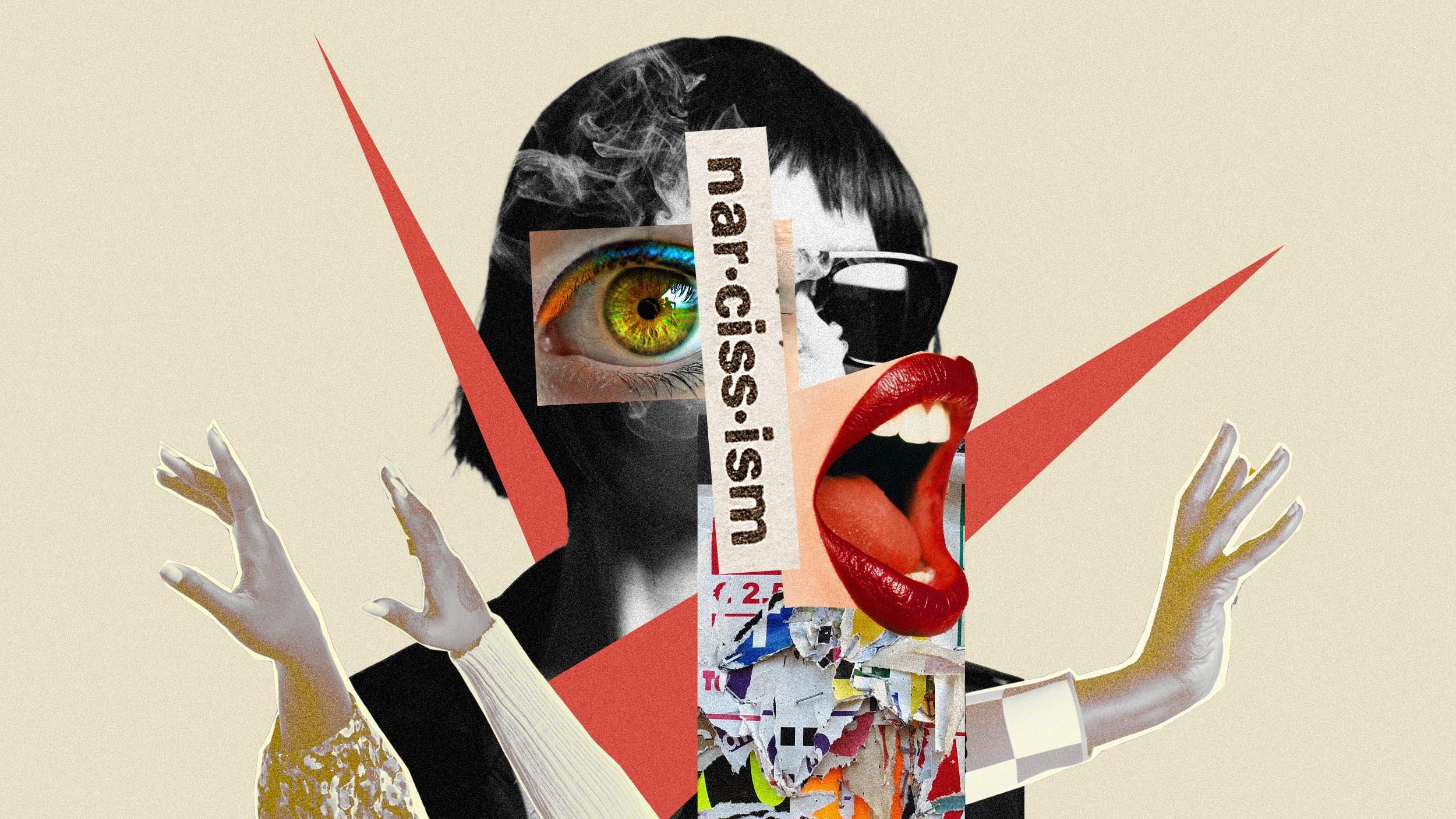
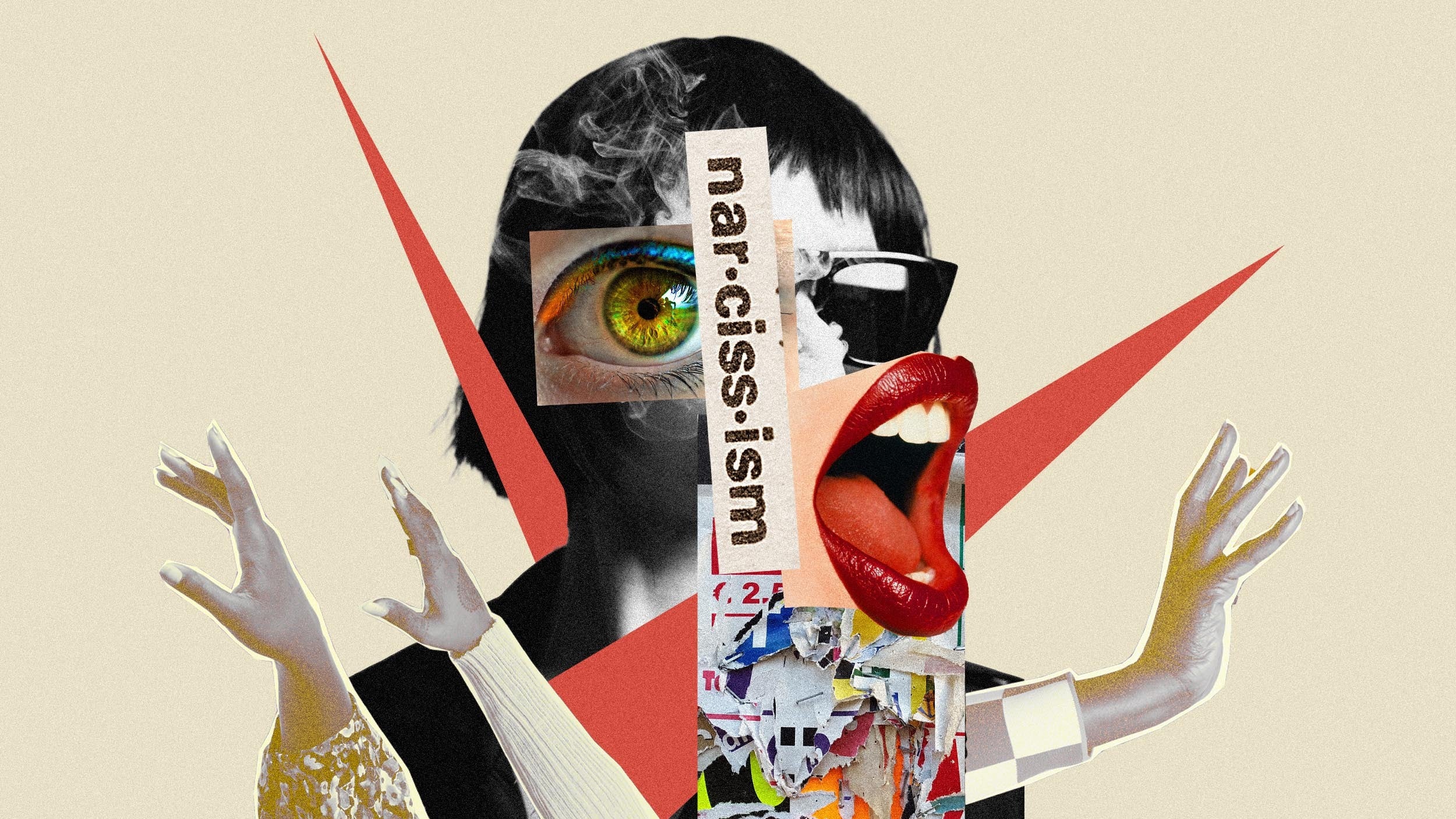
5 Signs Your Co-Worker Might Be A Narcissist (And How To Deal)

Throughout your career, you will encounter difficult co-workers who drain you, bore you and annoy you. But a narcissistic co-worker is one of the worst types to deal with.

They are insecure and cannot handle criticism. They can make their failures seem like they’re your responsibility, hurting your self-esteem to boost their own. And according to Marie-Line Germain, a professor of human resources and leadership at Western Carolina University and author of “Narcissism at Work: Personality Disorders of Corporate Leaders,” narcissists often find “safe havens” in the workplace.

“They very often end up in very top positions in organizations because they are smart, they are able to manipulate others,” Germain said. “The workplace is perfect for that. If they do well, they will be recognized. They will get a promotion. They will be looked at as prestigious. That’s not necessarily something they can get from their personal relationships.”

According to the American Psychiatric Association, the symptoms of narcissistic personality disorder can include an inflated sense of self-importance, fantasies of perfection and superiority, a sense of being special and unique, a need for praise and attention, a strong sense of entitlement and a tendency to exploit others.

It’s important to note that it’s up to trained professionals to make an official diagnosis, but knowing how a narcissist operates can help you learn to set hard boundaries when you’re forced to team up for a project with someone who seems to fit the profile.

Here are the big differences between a co-worker with a need for admiration and high confidence in their abilities and a co-worker who’s exhibiting narcissistic traits:

1. Confident colleagues are OK with others being the center of attention. Narcissists always have to have the last word.

Perpetua Neo, a psychologist and executive coach who works with people who have dealt with narcissistic abuse, said that a need to steal your thunder is a hallmark trait of narcissism in self-aggrandizing co-workers. They may talk over you or interrupt you frequently, she said.

Confident colleagues can celebrate your success and want to see their co-workers shine, while a narcissistic colleague will insert themselves into “any topic, even if it is completely irrelevant, and they will hijack and make it about them,” Neo said.

2. Narcissists are charismatic charmers — until your relationship no longer serves them.

At the beginning of a work relationship, narcissists are good at impressing and manipulating their targets to feel like the center of attention, Germain said. But when you stop helping them feel superior and important, don’t be surprised if you see a sudden change in their attitude toward you, even if it’s months or years later.

“You may feed their needs, so there is no need for them to display any of those negative signs,” Germain said. “It’s when trouble brews for them that they start showing all of the negative behaviors.”

3. They believe the ends justify the means, and display a consistent lack of empathy to colleagues.

Germain finds the lack of empathy to be a cornerstone of narcissism, one that distinguishes narcissistic co-workers from merely confident ones. They do not care if their success comes at your expense, and they may steal your ideas.

“They will do anything for that prestige, that power,” Germain said. “It doesn’t matter if they have to steal your ideas to appear as brilliant.”

“NPD individuals have a difficult time understanding the feelings of other people, if they even care to understand them,” she said, because “they are on a relentless hunt to guarantee their own narcissistic supply of attention, of approval, prestige, admiration, understanding, encouragement, power, perfection, money, sometimes even beauty.”

This lack of empathy can also manifest as selfishness, disregard and a lack of compassion for other people. Narcissistic types can use their power to belittle and harass you.

They may display disregard, in particular, when your repeated attempts to set “hell no” boundaries are not honored, Neo said.

“They will take every chance to erode upon your boundaries,” she said. “Trample upon [your boundaries] so that they can lower the bar at every successive attempt and train you to put you in your place, so that you… play the role that you are smaller and a lot more deferential to them.”

4. They can’t handle criticism.

Narcissistic colleagues don’t reflect on or own up to mistakes. They lash out when they hear negative feedback, because the way they perceive it, “you are not just criticizing their work, you are criticizing their self-worth,” Germain said.

They make you feel small to make themselves feel big. If a person loses control and gets angry at you for offering some constructive criticism, that’s a red flag for narcissism, she said.

5. Narcissistic co-workers believe you’re either with them or against them.

There is no neutral ground with narcissistic colleagues.

“They have a very dichotomous approach to life. It’s all or nothing. It’s either good or bad. You’re either a winner or loser,” Germain said. “They don’t do well with defeat.”

If you support a narcissistic co-worker, you are on their good side. “But the day you criticize them, the day you no longer support them… then you will cross over to the enemy side,” Germain said.

To deal with a narcissistic co-worker, do your best to limit your interactions.

Luckily, unlike with narcissistic bosses, narcissistic co-workers have less direct control over your career. But they can still mount smear campaigns and wreck your work experience if they see you as an enemy. Here are some tips on how to deal:

Withdraw. You have every right to set boundaries, even if a narcissist tells you otherwise, Neo said. Germain recommended limiting the attention and praise you give a narcissist.

Narcissists want you to engage with them and lose your temper. Sometimes, the best option for how to deal with one is to limit your interactions as much as possible.

“They love to see people lose their cool. Part of it is a power play. Part of it is a bit of sadism. They want to make you look like a loose cannon, so they can tell you in the future that you are being sensitive and difficult,” Neo said. “Don’t try to hold them accountable all the time. Accountability is what gets you suckered in.“

Document your own contributions. Narcissists are likely to throw you under the bus, so it’s important to keep track of your accomplishments on projects. “You may have to justify your own contributions. It’s sad, but it’s true,” Germain said. She recommended looping people in on certain emails and communications to increase the visibility of your contributions if you’re forced to work with a narcissist on a project.

Go to HR with the narcissistic abuse, and consider an exit strategy if necessary. If the narcissist is berating and belittling you, and you are losing sleep over it, you should take it to human resources, Germain said.

Unfortunately, narcissists tend to be high performers who are often valued by their organization. If a move to a different team is not possible, or if you feel like your complaints are not being heard, Germain recommends job-hunting elsewhere.

“It’s really hard to imagine that you as the victim need to leave, but that’s a self-protective tactic,” she said. “You need to remain proactive by not only recognizing the damaging facets of the NPD person on your work, but also on your well-being. Well-being must remain your focus.“

Lean on your support system outside of work. Germain said narcissistic co-workers are good at gaslighting you into feeling like you are the problem, so it’s important to find a sounding board with a loved one or a therapist who can help you see that “there is nothing wrong with you,” she said.

Share Button

It’s Not Normal For Our Work Places To Leave Us In Tears

You’re reading Life-Work Balance, a series aiming to redirect our total devotion to work into prioritising our personal lives.

Finding a quiet toilet cubicle, a vacant conference room, or any corner of the office or work floor you can privately sob. Sound familiar?

Crying at work isn’t an alien experience for many of us. And since the pandemic, those who have been propelled to the WFH environment can weep away without shame and the judgemental glances of their co-workers.

It can be a cathartic experience, to let out your work frustrations and stresses before carrying on with your responsibilities. You might even have an open policy at work where all sentiments are welcome.

While it’s good to let your emotions out and express yourself, we must also ponder the question – should our work places be making us cry?

It’s no secret that employment, no matter in which form, is stressful and occupies much of our thoughts. But our employment isn’t supposed to dominate our emotion in the way it does.

Work under capitalism has terrorised our emotion – we’re forced to constantly be switched on, available, regulate our feelings on demand (think how often we have to suppress anger, indignation, sadness at work and put on a face), and offer ourselves as capital toward businesses much more successful than we as workers are.

So when it feels like we’re hamsters on a never-ending wheel, with the bills and responsibilities mounting on us, with little room to breathe, it’s easy for our emotions to overspill and reach breaking point – often ending in tears.

Lucy*, 43, from Northampton, can relate all too well to this. “In my 20s and 30s, I cried a lot at work, for various reasons. I was figuring out who I was and my work place often wanted me to be someone that just wasn’t my personality. I ended up in tears because my work kept expecting me to be more assertive and forceful, which is the opposite of who I am.”

But Lucy had to keep her feelings private because, she says: “I think they would have seen crying as a weakness or unprofessional and unbusinesslike.

“Our workplaces just expect us to navigate our own emotion without any effort to remedy any ill feelings.”

But, Lucy admits, it does also depend on your profession. “Some are better than others with helping people. My workplace also provided a certain number of therapy sessions per issue you were having but I don’t think a lot of people even knew about it.”

Similarly, for Nora*, 29, a deputy lighting director at a theatre in London, not only has her job left her weeping in the past, she doubts little would change if bosses were aware of the toll they had on her.

She tells HuffPost: “My work place made me cry because of severe lack of resources and time and constant pressure to complete goals by an unmovable deadline under adverse circumstances. I was regularly working 60hr+ weeks with minimal breaks, high levels of physics and mental work and increasing demands of productivity.”

Like many of us, Nora kept her feelings hidden.

“I didn’t let work see me cry, instead I removed myself to a private location. If they had seen I think they would have responded well emotionally, i.e being initially caring and empathetic but fundamentally no actual structural or practical changes would be made.”

The experience has left Nora with little belief in workplaces to care genuinely about their employee’s wellbeing.

“I think workplaces put on a show, in most cases even earnestly, of supporting our emotions and mental health but in practice don’t actually have any infrastructure or ability to back these up,” she says.

“Most middle management are not themselves emotionally equipped or trained to deal with mental health or emotional breakdowns and yet are expected to solve problems usually caused by industry wide issues created and perpetuated by those at the highest level.”

So why is work so emotionally charged and how can we have a better grip on our emotions?

Well, it’s due to the nature of work itself and not a personal failing, says wellbeing psychologist Dannielle Haig.

“The workplace can be highly charged emotionally due to the fact there are numbers of humans grouped together in an environment that can be highly pressured with difficult interactions, personality differences and deadlines and so on,” she says.

“You become so emotionally exhausted that you’re vulnerable to external stressors and can no longer control your emotions. This is a sign that you need to take a break, you need some recovery time where you are investing in yourself and allowing your emotional batteries to recharge.”

But emotions arise from somewhere. You might consider addressing the stimulus – is it a difficult boss, a toxic environment?

Haig adds: “If you are feeling resentment for example, then it is time to build your boundaries and to start saying no to others and yes to yourself. If you’re feeling anger, then it’s a signal for you to remove yourself from the situation and once calm, to approach a situation from a different angle. The more you lean into your emotions and get curious about them rather than just allowing them to happen or trying to stop them, the more emotionally agile you’ll become.”

In an ever precarious job market, compounded with the cost of living crisis, most of of us are hyperaware of our earnings and employability, we might even be willing to put up with mistreatment, regardless of its emotional and mental cost.

But we’re also protected by labour rights and, in most places, a nascent understanding of work place harms and toxicity.

If we’re left in constant tears, it’s okay to question our employers, table open discussions, speak to HR, and try to change the environment, instead of toiling away to our own detriment, emotionally and physically.

*Names have been changed.

HuffPost UK/ Isabella Carapella

Life-Work Balance questions the status quo of work culture, its mental and physical impacts, and radically reimagines how we can change it to work for us.

Share Button