Yup ― they had some idea the hue came from a substance called urobilin, but had no clue how that colour-enhancing acid ended up in our urine.
It seems Mars is another such chromatic case. Until recently, scientists had theories which would explain the planet’s rust-red hue ― they thought a dry, powdery substance called hematite coated our neighbours’ surface.
Advertisement
But a paper published in Nature Communications yesterday suggests that the iron oxide mineral isn’t actually responsible for Mars’ scarlet haze.
So… why is Mars really red?
It’s still down to iron-based sources, researchers from Brown University and the University of Bernsuggest ― that would explain its rusty look.
But they think that ferrihydrite, rather than hematite, could be the main mineral.
That matters because it implies the climate on Mars is more wet, and potentially more habitable, than previously thought, NASA says.
Advertisement
Unlike hematite, ferrihydrite (catch the “hydr-” in its name) needs cool water to form.
It also needs a lower temperature than the one which researchers previously thought was present on Mars.
Dr Adam Valantinas, the study’s lead author, said: “The fundamental question of why Mars is red has been considered for hundreds if not for thousands of years.”
And while they’re not the first team to suggest that ferrihydrite might be to blame, they can “better test this using observational data and novel laboratory methods” than their predecessors.
Advertisement
“These new findings point to a potentially habitable past on Mars,” Dr Geronimo Villanueva, the study’s co-author, shared.
Does that mean there was definitely water, and maybe life, on Mars?
No. The researchers only think ferrihydrite is why Mars is red, and though they used very advanced technology to observe and model the planet’s surface, it’s still unproven.
“What’s even more important… is the return of the samples from Mars that are being collected right now by the Perseverance rover,” Dr Jack Mustard, co-author of the study, said.
“When we get those back, we can actually check and see if this is right.”
Guinness is having a renaissance right now in the UK. We’ve drunk our supply dry in recent months, you can’t have a pint in peace without being challenged to ‘split the G’ (getting half-way down the logo in one gulp) and there is now such a thing as ‘Guinn-fluencers’. Kim Kardashian, Paul Mescal and even the Royals have been spotted drinking a pint of the good stuff in 2024.
Talking of the drink’s surge in popularity in 2024, Diageo (who own Guinness) said: “This year, Guinness has continued to build on its legacy as a brand that celebrates quality, creativity, and connection. Its popularity has grown as part of a broader strategy that leverages its rich heritage while embracing fresh opportunities.”
Advertisement
Well, it’s certainly working.
Naturally, when Diageo asked if I wanted to come and visit Dublin to see where the pint of the moment is made at The Guinness Storehouse, it was the easiest yes I’ve had in a while – because where better to go than when Scotland has run out of Guinness than the home of it.
The Guinness Storehouse is a seriously jam-packed affair – it contains seven floors of sights, sounds and sensations in a building that has been brewing beer for over 250 years. Fortunately, it’s not going to stop anytime soon as Arthur Guinness signed a 9,000 year lease on the building all the way back in 1759, which you can see for yourself at the very start of the 90 minute self-guided tour.
Dayna McAlpine
A guided tasting of Guinness
Advertisement
The experience has welcomed a whopping 25 million visitors through its doors since 2000 (with 1.65 million visitors in 2024) and takes you on an immersive experience from grain to glass (with pints of the good stuff along the way).
We first learnt everything there is to know about how Guinness is brewed and were knocked for six at the fact that it… isn’t black.
Yup, its colour primarily comes from the roasted barley. When barley grains are roasted, they develop a deep, dark hue, which then gets transferred to the beer during brewing. And though we often perceive Guinness as being black, under light, you can see that it has a ruby-red tint.
Advertisement
The next stage is a gallery of iconic Guinness advertisements that have become pillars of Irish culture throughout the globe, followed by a guided tasting (can confirm, I like Guinness).
If you’re feeling peckish (or suddenly feel the need to reline your stomach), there are also several eateries dotted across the seven floors – unsurprisingly, Guinness is a key factor in the ingredients list. Since its opening, the Storehouse has seen 39,000 Oysters shucked, 58,000 slices of Guinness brown bread served and 32,000 Guinness & beef stews sold in 2024.
Advertisement
I skipped learning how to pour a pint of Guinness (in a bid to avoid painful flashbacks to my student bartending days) – but know a perfect pour is not easily achieved. The pouring process SHOULD take approximately 119.5 seconds, something the bartenders of the rooftop bar of the Storehouse have down to a fine art (no shock given that they served over 1.5 million pints of Guinness and Guinness 0.0 in 2024).
The best bit? Your pint with the best views of Dublin comes with your entrance ticket.
It’s no wonder that The Guinness Storehouse is Dublin’s most popular tourist attraction.
This year, the Guinness Storehouse is set to write a bold new chapter in its extraordinary journey, through Alive in 25, an exciting year-long campaign that sets to celebrate even more cultural events and community initiatives in honour of the Storehouse’s 25th anniversary. Be the first to know about upcoming events and experiences at the Guinness Storehouse in 2025. Follow @homeofguinness #Alivein25 and visit www.guinness-storehouse.com.
I’m not trying to stress you out here, as stress can impact your sleep, but as we age, it’s essential that we really get our sleeping habits in check. This is because how we sleep can impact how we age.
For example, experts recommend that adults go to bed no later than 1am, regardless of their circadian rhythms, to ensure healthy ageing.
So, yes, it is all a little intimidating because what are adults if not perpetually tired?
There is a simple change you can implement which will make a significant difference
According to a new study published in the aptly-named journal Sleep, having a regular sleeping pattern of going to bed and getting up at the same time every day is a stronger predictor of your mortality risk overall than sleep duration.
The research found that even people who consistently get 7–8 hours – but who had irregular sleep schedules – each night are at a higher risk of strokes, heart attacks and even cancer than those who slept less but had a consistent schedule.
Those with the most consistent sleeping patterns had up to 48% lower risks of all-cause mortality compared to those with the least consistent routines.
Advertisement
The experts at BBC Science Focus warn: “Unfortunately, this doesn’t mean you can get away with sleeping only four hours a night just by sticking to a regular 3am bedtime – getting enough (but not too much) sleep still matters.
“In the study, those getting under six hours or over nine each night were at an increased risk of mortality. However, although sleep duration was still important, the link between mortality and regular sleep patterns was stronger and more consistent.”
How to get a more consistent sleeping pattern
The sleep experts at The Sleep Foundation advise: “Try to follow the same steps each night before going to bed, such as dimming the lights, quietly reading or stretching, putting on pyjamas, and brushing your teeth.
Advertisement
“Over time, those actions become cues that tell your body that it is time for sleep. To promote mental tranquility, incorporate relaxation methods such as meditation, yoga, listening to soothing music, or reading.”
Based on how strict I am about my carrot cake, brownie, and rocky road recipes, you’d be forgiven for thinking I’m against learning new tricks.
But that’s not the case! I recently found out that freezing cookie dough before cooking can help achieve that gooey, tall finish I love; I’ve adapted a chef’s habit of cooling spuds before roasting them.
So, of course I was willing to listen to Nigella Lawson herself when it came to scones.
Not only does the chef replace regular milk with buttermilk (a tenderising trick I grew up with in Ireland), but she uses a clever combination of fats and adds leavener-boosting ingredients too.
Having tried it, I’ve been amazed at what a difference they’ve made; they’re more tender, fluffier, taller, and more delicious than I’ve ever cooked prior.
Amy Glover / HuffPost UK
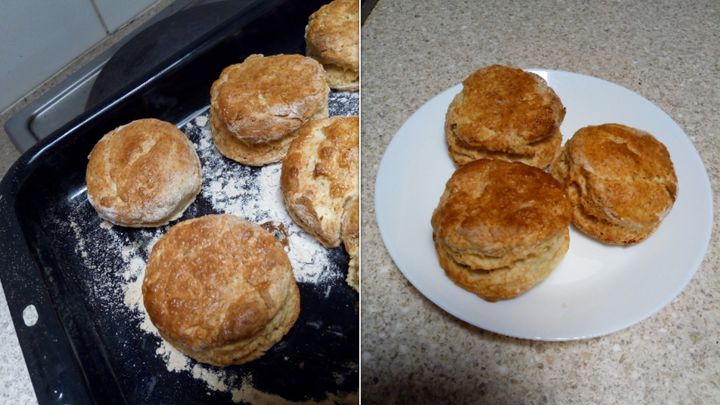
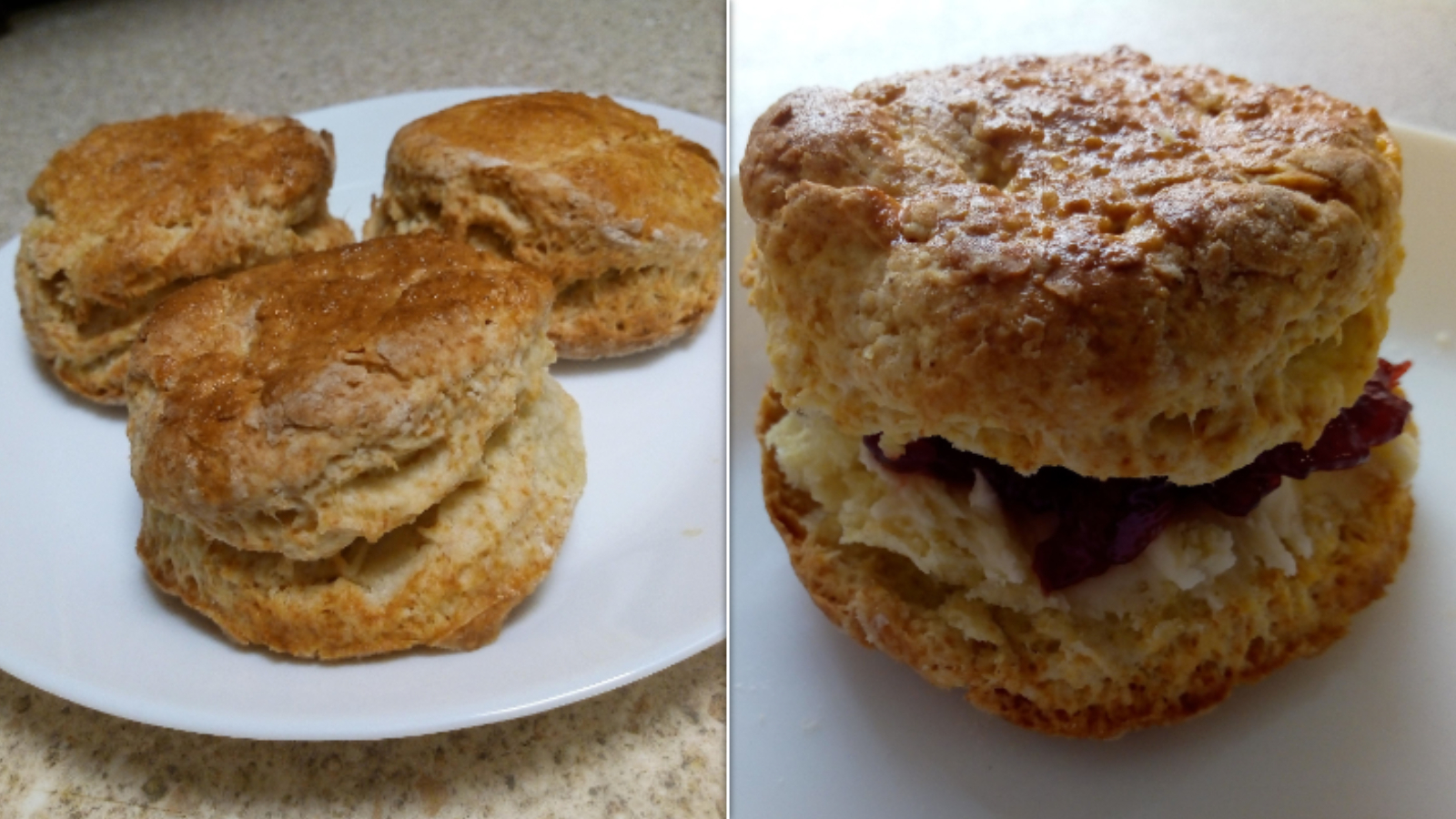
A pitiful rubbery puck of a scone from the writer before Nigella’s advice on the left: layered, golden, taller scones on thr right following the chef’s tips
This, combined with the acidity of the buttermilk, leads to a steep, rapid rise ― key for fluffy and tender scones.
Additionally, most people who have tried making scones will tell you that it’s very hard to keep butter cold enough to do the job.
Advertisement
Like puff pastry, the fat needs to be kept as solid as possible during mixing to create flaky pockets of delicious dough.
Nigella’s suggestion is easy and elegant ― she mixes two parts butter to one part vegetable shortening, which is solid at room temperature.
She “chops” the butter before adding it to the flour, too, ensuring the warmth of your fingers has less time to melt the butter when rubbing it in.
Advertisement
All of those changes turned my previously hockey puck-like, rubbery creations into proud, tall, tender delights.
Amy Glover / HuffPost UK
The writer’s scones in a baking tray on the left; on a plate on the right
Can I sub out these ingredients if I don’t have them?
I’ve been surprised by how hard buttermilk can be to find in the UK, but luckily, you can make your own by simply adding a little lemon juice to regular milk and letting it sit for up to 10 minutes.
If you don’t have vegetable shortening, Nigella’s team says lard is the next-best substitute.
But again, the chef adds the product for a reason; “Vegetable shortening gives the scones and also pastry a flaky texture which butter cannot replicate,” her site reads.
Having tried her adjustments, I regret to inform you that she’s completely right.
While you’re probably used to asking your doctor about new moles or a pesky cough, you might not be used to talking to them about your social connections or anxiety.
Turns out, there’s an array of topics you should be bringing up with your primary care doctor (or your neurologist, if you have one), according to a recent report in the journal Neurology.
Advertisement
The report detailed 12 questions that patients should discuss with their physician that can help protect the brain from cognitive decline. And while it lists some obvious brain health inquiries, it also includes factors that you likely don’t connect to your cognitive health, like your social interactions and diet.
Sleep: Are you able to get sufficient sleep to feel rested?
Affect, mood and mental health: Do you have concerns about your mood, anxiety or stress?
Food, diet and supplements: Do you have concerns about getting enough or healthy enough food, or have any questions about supplements or vitamins?
Exercise: Do you find ways to fit physical exercise into your life?
Supportive social interactions: Do you have regular contact with close friends or family, and do you have enough support from people?
Trauma avoidance: Do you wear seatbelts and helmets, and use car seats for children?
Blood pressure: Have you had problems with high blood pressure at home or at doctor visits, or do you have any concerns about blood pressure treatment or getting a blood pressure cuff at home?
Risks, genetic and metabolic factors: Do you have trouble controlling blood sugar or cholesterol? Is there a neurological disease that runs in your family?
Affordability and adherence: Do you have any trouble with the cost of your medicines?
Infection: Are you up to date on vaccines, and do you have enough information about those vaccines?
Negative exposures: Do you smoke, drink more than one to two drinks per day or use nonprescription drugs? Do you drink well water or live in an area with known air or water pollution?
Social and structural determinants of health: Do you have concerns about keeping housing, having transportation, having access to care and medical insurance or being physically or emotionally safe from harm?
Experts say these questions align with previous research findings and a focus on prevention instead of treatment.
This study is backed up by a report from The Lancet, another medical journal, last year, as Dr. James Ellison, a psychiatrist at Jefferson Health in Philadelphia, pointed out. That report found that 45% of cases of cognitive decline or dementia could be delayed or even prevented by simple lifestyle interventions.
“I would say that the Neurology journal is keeping up with the current trend in health care, which is to try and emphasise wellness and prevention and not just response to disease,” Ellison said.
Advertisement
Dr. Tanu Garg, a vascular neurologist at Houston Methodist Hospital who often treats stroke patients, added that many of her patients’ families ask what can they do so they don’t end up in the same situation as their loved ones — and these lifestyle interventions are the answer.
“That’s why these questions are very important, because we are trying to prevent people from having difficulties in the future, whether it’s heart attack, strokes or just, in general, for brain health,” Garg explained.
How do these factors impact brain health?
While it’s clear how certain habits mentioned above could affect your cognitive health (like wearing a helmet, for example), other factors are a little more nuanced ― but are just as important to manage.
Advertisement
For instance, socialisation is a true indicator of brain health. “We are social beings … and there are even changes in metabolic activity and brain activity that occur when we’re isolated that are harmful,” Ellison said.
With isolation comes loneliness, which can put you at higher risk of cognitive decline and stroke, Ellison added. “It’s very important to cultivate a social network,” he said.
Garg also noted that those with close family and friend connections can also get more support when recovering from health issues, which is important for well-being, too.
Advertisement
The factors that seem to relate more to heart health, like blood pressure, are important, too. “Almost everything that’s good for the brain is actually also good for the heart,” Ellison said. “When the heart is functioning properly, it provides nutrients and oxygen, which fuel the brain and keep it healthy, and it helps remove toxic metabolites from the brain as well.”
“When the heart is not functioning properly, the circulation and oxygenation and metabolic care of the brain is compromised, and that can lead to cognitive changes,” Ellison continued. He added that one of the most common kinds of cognitive decline in older people is “vascular cognitive impairment, which is a direct result of compromised circulation in the brain.”
Garg said simple, small positive habits, like diet and exercise, can often bring the biggest health rewards. She recommends a Mediterranean diet and said you should talk to your doctor about the best exercise regimen for you, as it varies person to person. Additionally, if you smoke, you should talk to your doctor about quitting, to protect both your brain and your overall health, Garg said.
Advertisement
It’s also important to manage your emotions, and you can talk to your doctor about how to best do that, too. “There are so many different ways to curb anxiety and stress, but people don’t realise how much of an impact it can make on your body and your brain,” Garg said. Research shows that anxiety is linked to higher rates of dementia.
rbkomar via Getty Images
Exercise benefits your brain health and your heart health.
These are questions you should bring up throughout your life, not just once you reach a certain age.
While it’s never too late to think more holistically about your brain health, you should always pay attention to them — not just once you reach old age.
Advertisement
Ellison said these questions focus “on prevention throughout the life cycle, not just in the elderly.”
While cognitive decline is often only associated with getting older, problems during mid-life, such as sleep disorders and unmanaged high blood pressure, can compound your risks for cognitive decline and dementia later on, he added.
It’s also important to talk to your doctor about any cognitive changes you notice, no matter your age.
Advertisement
“If you go see a doctor sooner than later, then we can find things that are reversible to prevent further decline. But when you’re afraid or you’re not sure if it’s the right thing to do, then we may get to the point where you’re not able to fix things,” Garg said.
Garg always reminds her patients that it’s OK to ask your doctor questions, whether you think they’re the “right” ones or not.
Ellison added that not all cognitive changes are related to major health issues, either. Stress, anxiety, certain medications and certain health conditions can cause cognitive issues, too, making it crucial to talk to your primary care provider.
Advertisement
Your doctor can also help you incorporate exercise, social connections, a nutritious diet and other healthy lifestyle habits into your life — because there’s real proof that these good habits work, Ellison said. The rate of dementia in older adults is decreasing. Specifically, dementia rates have fallen 13% per decade over the last 25 years, according to a 2020 study.
“The decrease in incidence has been attributed to population improvements in cardiac health, greater awareness of diet and exercise,” Ellison said.
While these habits may not seem big, they really can have a big impact on your brain health as you move through life.
If you’re like most people, you’ve probably tried to follow a new big habit just to find yourself faltering a few days later. Maybe you made it a goal to follow a plant-based diet only to find yourself reaching for bacon at breakfast. Or maybe you promised yourself you’d read four books a month only to scroll social media instead.
There’s a reason it’s hard to adhere to a new behaviour. “Many people struggle with motivation because they set goals that are too ambitious or require drastic lifestyle changes,” said Israa Nasir, a therapist and author of Toxic Productivity.
Advertisement
This is where a certain type of approach ― known as a micro-habit ― comes into play.
“Micro-habits remove that overwhelm,” Nasir said, noting that they “improve well-being by reducing the gap between intention and action.”
“There are two parts to a micro-habit,” Nasir continued. First “it is a small, easily repeatable action that requires minimal effort but has a compounding positive impact. When you do it consistently, it creates a large impact.” Second, “micro-habits fit seamlessly into your existing routine, unlike big habit overhauls that can feel overwhelming.”
Micro-habits tend to have a compounding effect because they trigger the brain’s dopamine response, which is the brain’s reward chemical, explained Gina Cleo, the director of the Habit Change Institute in Australia.
Advertisement
“So that reinforces the habit loop — when we get a hit of dopamine, our brain’s like, ‘whoa, that felt really good, we should do that again,’ and so our brain actually starts to make us want to do that habit again,” Cleo said.
And while the micro-habit may not seem as rewarding as a huge goal, that’s actually not true. Our brains don’t know the difference between a big habit and a small habit; you’ll get that dopamine hit whether you wake up and follow a micro-habit like taking a sip of water before having coffee or a full-blown habit like having water and breakfast before coffee, Cleo explained.
All that to say, micro-habits can have some major rewards. And while they can exist in any part of life ― such as your relationships, personal growth, exercise or mental health ― there are certain micro-habits that tend to offer the biggest rewards. Here’s what they are:
Advertisement
1. Take a breath before reacting or making a decision
Cleo said a lot of folks report being reactive when they don’t want to. And whether that means agreeing to plans when you don’t really feel up for it or snapping at someone you love, there is one micro-habit that can help you in pressure-filled moments: taking a breath.
“Taking one big, deep breath before reacting helps to regulate emotions, reduce stress and just regulate the nervous system,” Cleo said.
2. Make your bed in the morning
Making your bed each morning is a simple micro-habit that only takes a minute or two but is one of the best behaviours to adopt, said Emma Mahony, a therapist who works with patients in Pennsylvania.
Advertisement
“It also signifies the day is started and … you’re setting yourself up to come back to a nicer bed later on that day,” she noted.
3. Write down one thing you’re grateful for every day
While big goals like daily mindfulness or prayer may not be something you’ve historically stuck to, a quick gratitude practice can be the key to feeling more fulfilled and joyful.
Cleo recommends that you write down one thing you’re grateful for each morning when you wake up or each night before bed — and that’s it. This micro-habit can take just a minute or two each day.
Advertisement
“The gratitude practice … actually just trains your brain to focus on the positive,” Cleo explained. “It releases serotonin, which gives us that beautiful feeling of contentment and safety.”
4. Do a quick stretch every hour
Anyone who works a desk job knows how easy it is to go hours and hours without getting up. Cleo said making a goal of doing a quick stretch once an hour is a great way to not only show your body some love, but to boost circulation and prevent stagnation throughout the day.
This could be a quick, 10-second micro-habit where you fold forward to touch your toes, do a cat cow stretch or gently do a few wrist stretches. There’s no wrong way to do your stretching, and you’ll feel good after it’s done.
Advertisement
NickyLloyd via Getty Images
Micro-habits allow you to create a new routine without the overwhelm that can come from huge, overarching goals.
5. Get some fresh air first thing in the morning
One of Mahony’s favourite micro-habits that she does daily is getting fresh air within the first hour that she’s up. This could mean going for a stroll to get coffee or just opening up the door and getting fresh air in your face — it doesn’t have to be a full-blown outdoor workout or a long walk.
If you can’t get outside right away, Mahony said to just make it a goal to get out at some point during the day.
Advertisement
“I know a lot of us work from home, so that’s important … you’re connecting with nature and fresh air,” she said. “I also think [for] me it, particularly in the morning, signifies the start of the day.”
6. Spend time unplugged from your phone
Most American adults feel like they’re on their phones too much but will meet this problem with lofty phone-use goals that are tough to stick to.
Instead of creating goals that are too big, Cleo recommends micro-habits around unplugging that are actually manageable (and even rewarding). Cleo has no-phone zones in her home ― her dining room and her bedroom ― that force her to live unplugged when in those spaces.
Advertisement
But to start even smaller, you could make a micro-habit of putting your phone down while you eat or when you watch your favourite show. This enhances mindfulness, she noted.
7. Drink more water
Drinking water has a multitude of benefits for your physical health, including lubricating your joints, assisting in the body’s waste-removal process and allowing your organs to work properly.
Drinking more water is always a good goal but can be hard to achieve — which is where a micro-habit can help.
Advertisement
“Trying to wake up and drink a glass of water, or making sure you have a glass of water with every meal that you have” are two good places to start, said Mahony.
“I feel like a lot of people are like, ‘I need to drink more water,’ but then they’re like, ‘oh, I don’t have a water bottle,’ or ‘oh, I can’t drink that much in a day,’” she said. “Try to drink one glass more than you did the day before, and if yesterday you didn’t drink any water at all, try to have one glass today.”
8. Read a page of a book each night before bed
You don’t have to commit to reading an entire book or even a full chapter to reap the calming benefits of reading. One micro-habit Mahony is trying to get into is reading a page of a book before bed.
Advertisement
“The last thing I do before I close my eyes shouldn’t be my phone,” she said.
She suggests making a goal of reading one page of a book, or even a magazine or letter, before going to sleep.
“You could spend one minute with it, but I think allowing yourself that space before you go down, instead of having your phone consume your thoughts before bed, is also really important,” she said.
When establishing your micro-habits, be honest about where you are right now
When deciding what micro-habits are best for you, Mahony stressed that you should be honest with yourself about where you are now. Ask yourself what you’re capable of and what micro-habits you can actually stick to.
Advertisement
According to Mahony, sticking to a micro-habit helps you build trust in yourself — and when you build trust in yourself, you’re more likely to go back to the micro-habit. If you continuously set lofty goals and not meet them, that can create a negative relationship with that goal.
“Please be kind to yourself, and that looks like having a genuine, honest conversation about where you’re at right now,” Mahony said. “So, if you are someone who’s staying in bed all day, be honest about what you’re capable of doing. That could be something very small … maybe that just means you open your door and you take in a deep breath and then go back in bed for the day.”
Whatever you do, don’t allow comparison to set your micro-habits for you. Your micro-habit will look different from your partner’s or parent’s or neighbor’s micro-habit, and that’s OK.
Advertisement
For those who don’t know where to start, Cleo suggested looking at the big habit you’re trying to create and breaking that down into 100 pieces — those little pieces are your micro-habits.
Whether you choose to focus on meditation, physical health, mental health, finance, socialisation or career goals, there is no wrong way to set a micro-habit. Instead, whatever tiny steps you take toward your goal will only make your brain feel good and your goal that much closer.
I do, but not because I’m an expert on the fruit. I just really, really like green-tinted bananas ― life’s the best teacher, I suppose.
As bananas ripen, they become sweeter, too. That’s partly why they’re preferred for banana bread.
But according to gastrointestinal (GI) surgeon and author Dr Karan Rajan, there’s more variation in the food’s health benefits than you’d expect.
Advertisement
In a recent TikTok, he shared: “If you’re eating a banana… each stage offers a completely different nutritional profile.”
Which stage of banana ripeness is healthiest?
It depends on what your goals are.
In their green stage, Dr Rajan says, bananas are packed with resistant starches that work as a prebiotic (food for the healthy bacteria in our gut).
A 2021 study found that the resistant starch which is most present in the least ripe bananas can help to improve our microbiome.
Advertisement
Green bananas are lowest in sugar (10g per 100g) and highest in fibre (3.5g per 100g), the doctor continues.
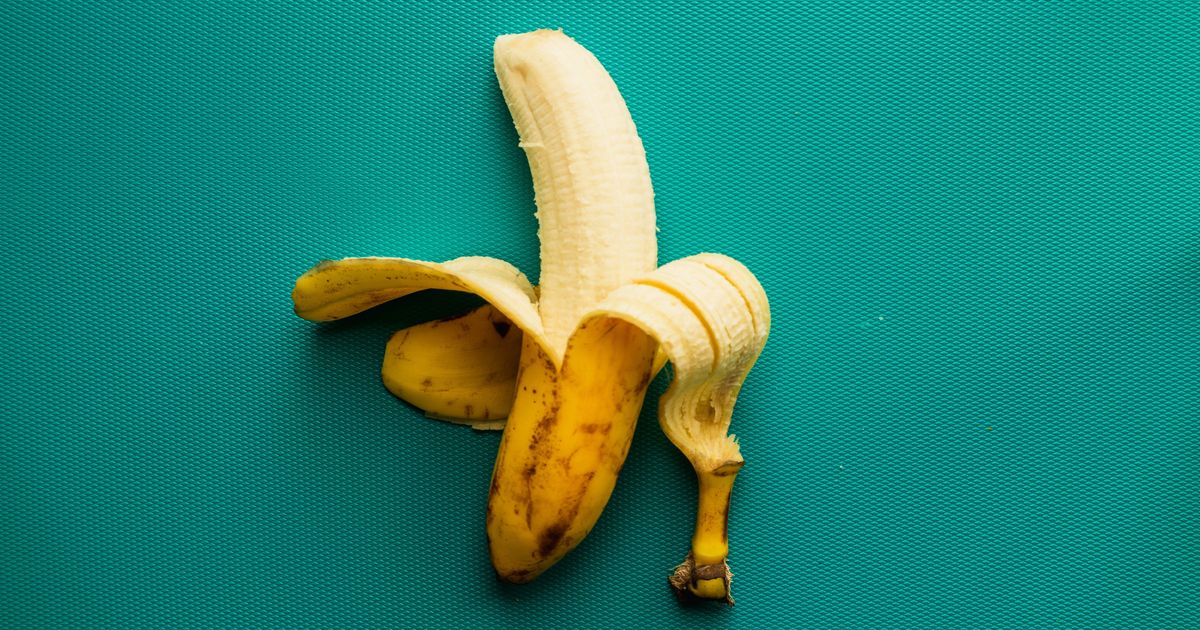
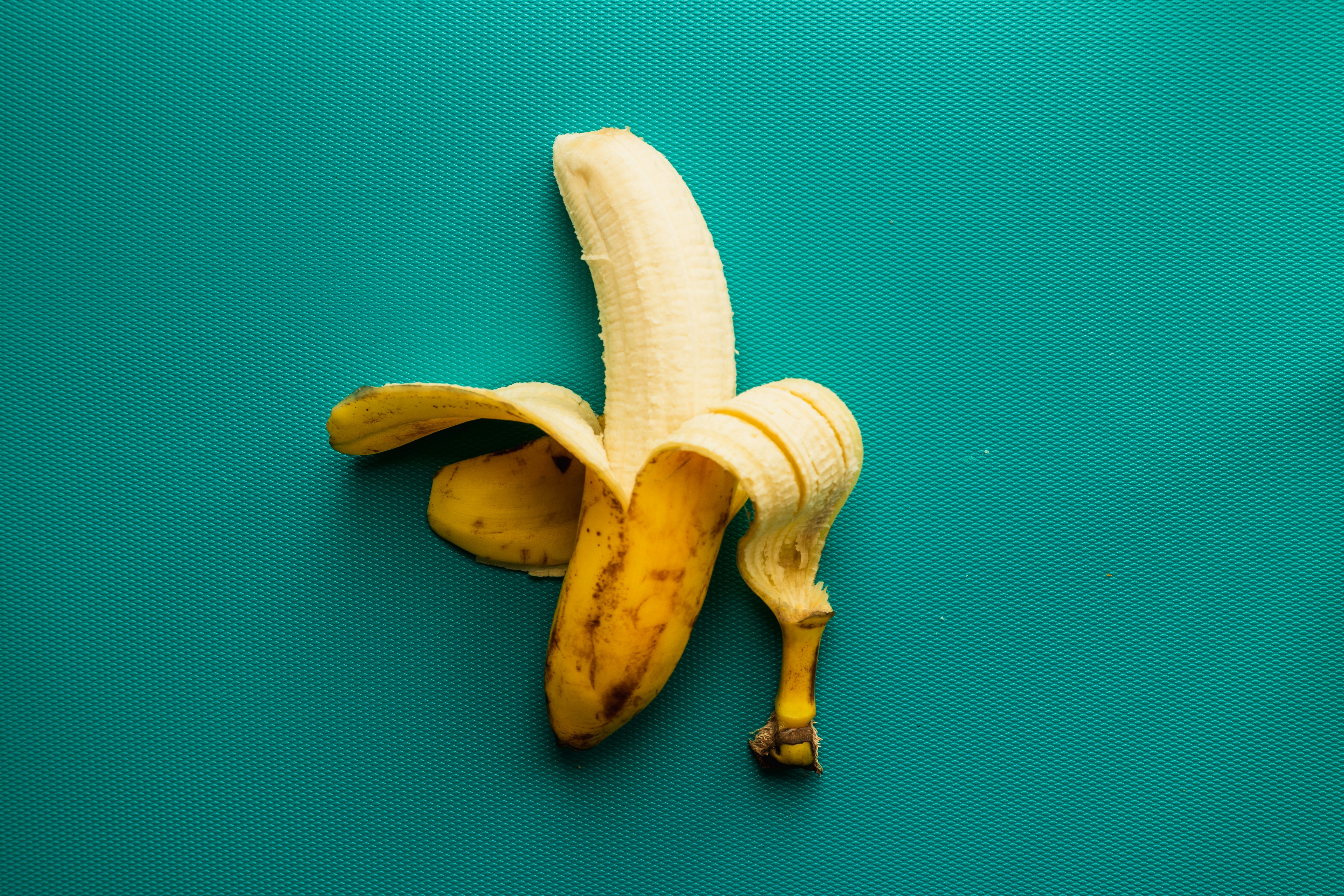
In brown-spotted, overripe bananas, the sugar content nearly doubles to 17g per 100g. That, alongside their higher fibre content, is why less-ripe bananas might be better for those with diabetes.
Barely-ripe bananas have slightly less fibre and slightly more sugar, though as the fruit ages, “you also get more of a potassium boost.”
Advertisement
Fully ripe yellow bananas, meanwhile, are “packed with antioxidants,” the doctor says ― including catechins, which are great for our heart health and reducing inflammation.
It’s also got the highest vitamin C and B5 levels, and because that resistant starch we mentioned earlier has all but gone by the time the banana’s yellow, it;s far easier to digest.
Lastly, overripe bananas have more sugar ― good for a quick, if short-term, energy hit ― and contain the least fibre.
Advertisement
It is also, however, “the richest in antioxidants” the fruit will ever be, as the brown spots we associate with older bananas come from those heart-healthy catechins.
How big are the differences really?
The 2021 paper we mentioned earlier said that while the types of fibre, sugar, and starch levels in bananas can change as they ripen, results from controlled studies don’t always match what’s found in store-bought bananas.
That’s partly down to “variables in the supply chain,” they say.
Besides which, all bananas have some health benefits. Turns out the best banana is often the one you like most.
There is something just so lovely about spending a Sunday baking up a storm in the kitchen. Radio on, pyjamas on, cup of coffee to keep you going and suddenly you realise – you don’t have any eggs in!
Momentum is falling. There’s no way you’re putting on proper clothes today. No way you’re heading to the shops. Yuck.
Advertisement
We’ve all been there, right?
Well, it turns out that there is an egg substitute that you can use and actually, you don’t need to go to a specialist shop for it. You probably don’t even need to go further than your kitchen cupboards.
A simple egg substitute that takes no time to prepare
Yes, the seeds you swear by for smoothies and protein muffins are actually perfect in place of eggs in case of emergencies or intolerances and preparing them is very simple, too.
The baking experts at Minimalist Baker recommend creating ‘chia eggs’ by mixing 1 Tbsp chia seeds + 2.5 Tbsp water and urge that these can be used in all kinds of baking!
Advertisement
Minimalist Baker also adds that this is actually possible with flaxseeds, too, and is a perfect hack for anybody looking to get into vegan baking.
Health benefits of chia seeds
According to Harvard Health, chia seeds come with a wealth of health benefits, including:
The health experts add: “Chia seeds contain a variety of nutrients including fibre, protein, omega-3 fatty acids, antioxidants, and various vitamins and minerals like calcium, magnesium, and phosphorus that are beneficial to your health.”
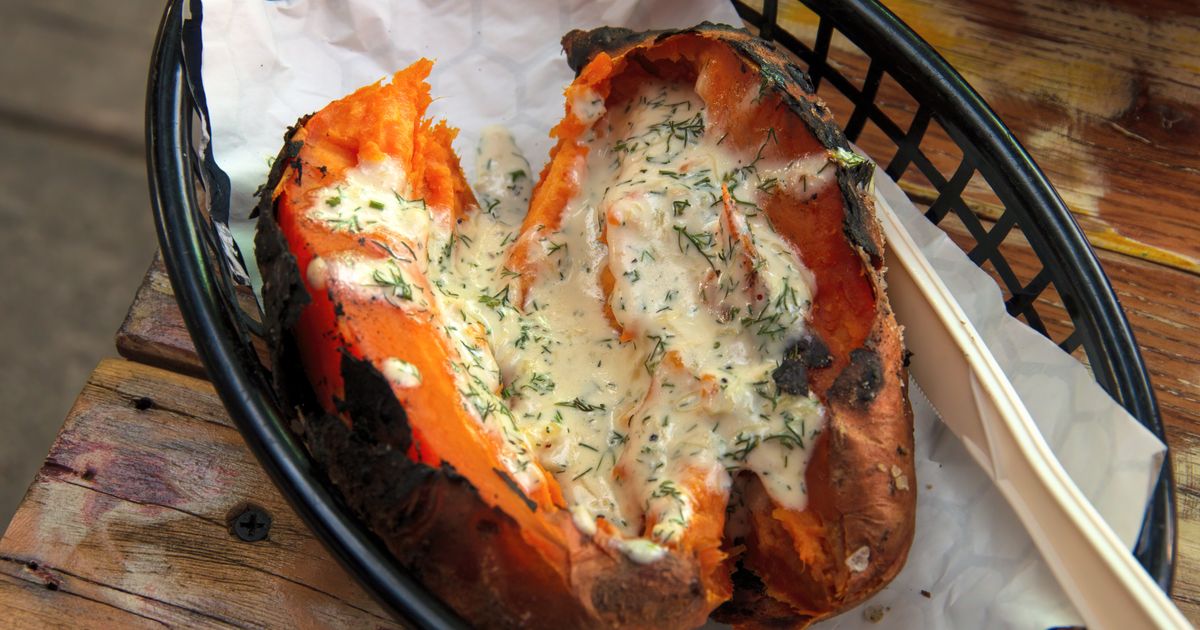
Before I could even cook – well, before I binge-watched cooking channels for inspiration – I could always cook a mean baked sweet potato.
They’re really high in potassium and are versatile enough that they can be loaded up with chicken, tuna, cheese or honestly just a blob of butter, and still taste delicious.
The best, easiest way to cook sweet potatoes
First of all, heat your oven to around 190°C.
Next, give your sweet potatoes a good scrub and dry them with paper towels. This ensures that the oil soaks in a little easier later.
Advertisement
Now, you just need to prick a few holes in them using a fork and put them in the microwave for around five minutes.
Once they’re out, rest them on tin foil, pour a little vegetable oil on them as well as some mixed herbs (or whatever herbs and spices you’d like), rub the oil and seasonings into the skin and wrap them in the foil.
You should then put your sweet potatoes in the oven for around 30 minutes before checking to see if they’re soft enough using a fork. Sometimes, if they’re a little bigger, this can take up to an hour.
Advertisement
If yours still isn’t soft enough, check it every 10 minutes to see if they’re ready.
Finally, add your toppings and tuck in!
What about leftovers?
If you’ve made too many sweet potatoes, you could blend them with vegetable stock and make a little soup for later.
Health benefits of sweet potatoes
According to BBC Good Food, the health benefits of sweet potatoes include:
“My ability to tolerate alcohol, even in small doses, dramatically declined,” Dr. Mary Claire Haver, an OB-GYN and author of “The New Menopause,” wrote in a pinned Instagram post, listing what “shocked” her about her own menopause.
Emma Bardwell, a registered nutritionist who focuses on menopause and perimenopause, said something similar on Instagram recently: “Alcohol and menopause. Not a great mix if we’re all honest, but often a crutch we use to numb the overwhelm.”
Advertisement
Conversations about menopause and alcohol seem to be popping up on social media more lately. But doctors say their patients have been mentioning it for years — saying things like they suddenly feel tipsy after a single drink in their 40s and 50s or that alcohol generally makes them feel lousy.
“This is not something new,” said Dr. Lauren Streicher, a professor of obstetrics and gynaecology at Northwestern University, and host of Dr. Streicher’s Inside Information: The Menopause Podcast. “I’ve been doing this for decades, and women have often said to me, ‘Boy, I just can’t drink anymore. It makes my hot flashes worse. I’m already sleeping terribly. It makes my sleep worse.’”
While Streicher said there’s “probably a connection” between alcohol tolerance and perimenopause and menopause, it hasn’t been well studied.
Advertisement
Still, you might be curious about that connection if you’ve reached your 40s and noticed alcohol hits a little differently. Here’s what women’s health experts want you to know.
During perimenopause, your levels of the hormone oestrogen start to decline, and this can bring symptoms like hot flashes, low libido, irregular periods, vaginal dryness, mood changes and problems sleeping.
Advertisement
Some also report changes in their alcohol tolerance. But this is likely more age-related than menopause-related, said Dr. Monica Christmas, an associate professor of obstetrics and gynaecology, and director of the menopause program at the University of Chicago Medicine and associate medical director of the Menopause Society.
Another factor is that liver function may be impacted by oestrogen, Streicher said. Theoretically, lower oestrogen levels could get in the way of metabolising alcohol, but she noted that this hasn’t been well studied.
Because of these changes, you might feel the effects of alcohol more quickly than you used to or feel hungover even when you didn’t drink much, said Dr. Madeline Dick-Biascoechea, an OB-GYN and director of the Menopause Program at the University of Maryland Medical Center. As your alcohol metabolism changes, “You will have increasing effects of alcohol per volume that you drink as you age,” she said.
How alcohol affects perimenopause and menopause symptoms.
Many women report drinking more alcohol to deal with their menopause symptoms, including hot flashes, mood shifts and sleep disruptions, research shows. However, alcohol can actually make them worse.
Advertisement
SimpleImages via Getty Images
Alcohol can worsen many symptoms women experience with perimenopause and menopause, including anxiety, depression, lack of motivation and a loss of interest in activities.
Shifting hormones can disrupt the body’s ability to regulate temperature. Your blood vessels dilate when you drink alcohol, and this could trigger hot flashes and night sweats, Christmas said.
About half of menopausal women report difficulty sleeping. Sipping a glass of wine in the evenings might make you feel relaxed and sleepy, but it can actually disrupt your quality of sleep, Streicher said.
Advertisement
Many women also experience anxiety, depression, lack of motivation and a loss of interest in activities during menopause — and as a depressant, alcohol can make these mental health challenges worse, Christmas said.
“Drinking alcohol during the time when we’re already experiencing these natural changes related to hormonal fluctuation, alcohol can exacerbate them,” she said. “And so, that also may feel like an intolerance.”
Keep in mind, though, that everyone experiences perimenopause and menopause differently — some women have no symptoms, while others experience them intensely, Christmas added, and not all women notice changes in how alcohol affects them.
Advertisement
What to do if your alcohol tolerance seems to be changing.
Pay attention to how much you’re drinking as you reach perimenopause and menopause, Dick-Biascoechea said. Not only can it potentially worsen symptoms, it could raise your risk for other health conditions.
A 2025 report by the Office of the Surgeon General said that consuming alcohol can raise your risk for breast, colorectal, throat, mouth, voice box, oesophageal and liver cancer. Excessive alcohol intake has also been linked to dementia, osteoporosisand cardiovascular disease.
Dick-Biascoechea said women should have no more than one drink per day or seven per week. According to the National Institute on Alcohol and Alcohol Abuse, one standard drink equals 5 ounces of wine, 12 ounces of beer, and 1.5 ounces of distilled spirits.
Advertisement
If you’re drinking more than that, she suggested cutting back, and if that’s a struggle, talk to your doctor for help. Resources are also available at FindTreatment.gov.
Even when you drink in moderation, sip more water with your beer, wine or cocktails, Christmas said. Also, make sure to consume alcohol on a full stomach.
Drinking is “not a solution for your menopause symptoms, and it’s going to have an enormous impact on your overall health,” said Streicher, who asks patients about their alcohol intake when they bring up menopause symptoms.
Streicher recommended seeking out a menopause practitioner for help — and added that not all doctors are experienced with menopause or perimenopause. The Menopause Society offers an online tool to help you find an expert in your area.
Ultimately, menopause is a normal stage of life, Dick-Biascoechea said. “But, being normal doesn’t mean that it’s easy. It’s a lot of changes … and keeping yourself as healthy as possible will make this transition better and successful.”