I was scrolling through Reddit last night when I noticed an odd-looking picture shared to r/Scams.
Site user u/Various_Ad9010 asked whether the sudden deluge of packages on their doorstep (which they hadn’t ordered) was some type of scam, and wanted to know what to do next.
So, I thought I’d check whether or not this was a real thing ― and as it happens, Amazon have a whole page dedicated to the deceit.
Advertisement
What is “brushing”?
Amazon’s site explains that “When a customer receives a package they didn’t order, it may be a scam called ‘brushing.’”
It happens when scammers send parcels to addresses that didn’t order them. They can pick an address from pretty much anywhere.
Staffordshire police write that after a fraudster has gotten a person’s name and address, they create a fake Amazon account to which they then sell their own products.
Advertisement
They pay for the products, sometimes using stolen cards, the police add.
To make the scam look legit, the goods are really shipped to the unsuspecting person’s home.
“After the packages have been delivered, the scammer then writes positive reviews on their own seller accounts, using the recipient’s name,” the Staffordshire police add.
“This helps to boost their ratings and increase their visibility on the platform, in the hope of bringing about genuine sales.”
This is against company policy, as Amazon prohibits third parties from sending unsolicited packages to peoples’ homes.
What should I do if I suspect brushing?
Both the Staffordshire police and Amazon say you should report brushing scams immediately.
If you’ve asked friends and family whether they’ve sent you a gift and you’re sure nobody sent you anything unexpectedly, there are steps you can take on-site and with the UK legal system.
Amazon has a Report Unwanted Package form that you can fill in if you suspect brushing. You can also call customer service ― don’t try to return the packages.
Advertisement
They add investigators will need the following information:
Number of unwanted packages received.
A tracking number from at least one of the packages (found on the shipping label)
Photo of at least one shipping label (optional)
Any additional information to assist the investigation.
Meanwhile, Staffordshire police says that on top of reporting it to the e-commerce site, you can also reach out to your local police station or call Crimestoppers anonymously on 0800 555 111.
It can be hard to keep yourself going at this time, especially when you’re going to work and coming home in the dark but, according to mental health experts, you could find relief from the difficulties of SAD through crafting.
Stephen Buckley, Head of Information at Mind said, “We know that crafting can be a powerful way to support mental health and wellbeing. Creative activities like card-making or knitting require focus, which may help us disconnect from daily pressures and find a welcome distraction.”
Of course, crafting is more than just a distraction. It’s creativity in motion. Making something that wasn’t there before and finding a sense of achievement in your own creative process.
Buckley added: “The repetitive motions of these crafts can feel meditative and calming, making them a helpful tool for managing stress, depression, and anxiety. Different things will work for different people and the main thing is finding a craft you enjoy and which fits into your life.”
Advertisement
Personally, I started crafting to get through difficult times
I never thought I was particularly crafty; I am dyspraxic and have always thought that my creativity was solely in writing.
During a rough few years, though, I couldn’t find solace in my own writing or even reading other people’s writing. Getting through the day was hard enough without trying to perfect a poem or take in complex themes in literary fiction.
Instead, I began sewing. First it was cross-stitch, then embroidery and eventually, I got my sewing machine.
The repetitive motion, the control, the reliable routine of sewing of an evening, all of it kept my head above water and reminded me that even in the darkest times, I could find and even create beauty in the world.
Like most crafty people, I couldn’t just leave it there. Now I do paper crafts, air-dry clay, needle-felting… you name it, I’ve probably lost myself in it for at least a few hours.
Advertisement
Where do you even start, though?
Developing a list of crafts for those looking to support their mental health this winter, The Works, backed by Mind, have produced a blog post with some ideas for easing stress and anxiety, as well as boosting concentration, focus and creativity.
Lynne Tooms, Chief Commercial Officer at The Works said, “Channelling your emotions into creativity can have a huge impact on us as adults, with various craft types having a big impact on our mood and sense of achievement, as well as providing us with skills and hobbies that can turn into passions to enjoy all year round.”
When I exit the elevator into the hotel lobby, the urgency of my own voice startles me. “Are there any bodies of water nearby that I can access on foot?” The front desk receptionist gestures to the door and says I’ll meet Indian Creek within a few blocks.
I see sadness wash across my 73-year-old mother’s face. She’s holding the plastic bag containing her younger sister Carol’s cremains, and we’ve just learned we need permission from the U.S. Consulate to fly them back to my mother’s home in Spain for a proper memorial. Our flight leaves in a few hours, and a quick online search reveals that scattering ashes within 3 nautical miles of Florida’s shore is illegal. We have to be discreet.
“Carol loved Miami,” my mother whispers to soften the reality of what we are about to do: Leave Carol behind.
Advertisement
My aunt’s death at 69 had taken us by surprise. My mother’s weekly voice message, left on a Thursday, went unreturned. By Sunday, my aunt’s neighbour, who lives on the other side of the adjoining patio wall, smelled something off. He heard Chelsea, my aunt’s rescue dog, barking for days before he called 911.
The autopsy report attributes acute peritonitis caused by untreated (treatable) rectal carcinoma as the cause of my aunt’s death. The medical examiner surmised that she sat down in her rocking chair while preparing Chelsea’s food and never got back up to serve it.
The dog sat vigil by my aunt’s side for four days before they were discovered.
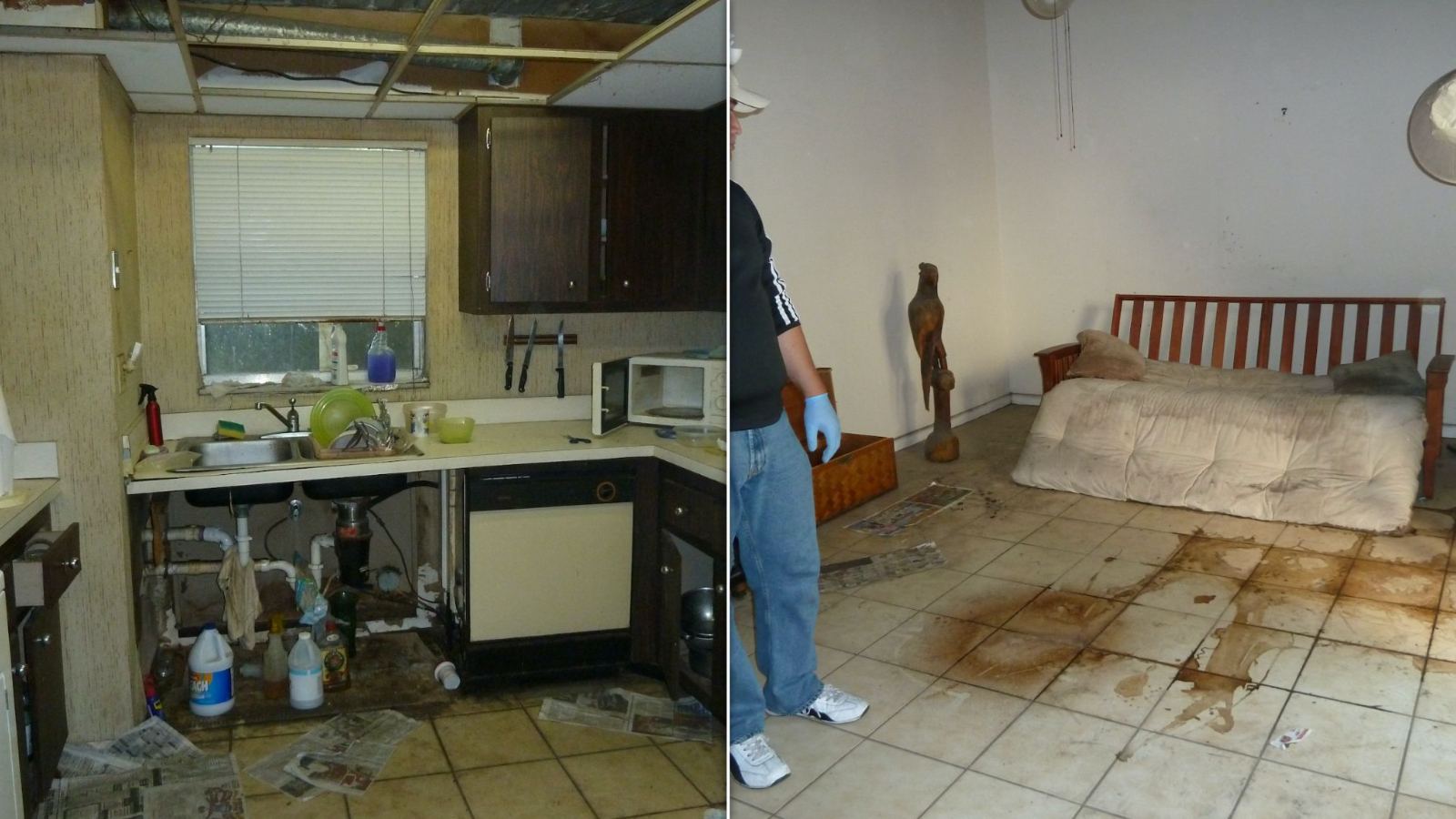
The Miami-Dade homicide detective explained that, because my aunt died alone in her home, the law required a forensic account of the scene. After they removed her body, I requested the property remain untouched. I wanted to piece together her final days to better understand her life, but I was not prepared for the chaotic state of her final months.
Perhaps my journalistic approach to her death is a way of coping with guilt and loss, but my investigation has revealed a heartbreaking reality.
Advertisement
My aunt, an educated, politically passionate, older gay woman, died isolated, financially destitute and alone. What could I have done to prevent it?
I had never asked Carol questions about her health or well-being. I was always caught up in my career and relationships, assuming deaths like this didn’t happen in a family like mine. I also believed my aunt was part of a system that took care of its aging population, and that I didn’t have to worry about her. I was terribly wrong, and I wanted to understand why.
Courtesy of Michelle Tamara Cutler
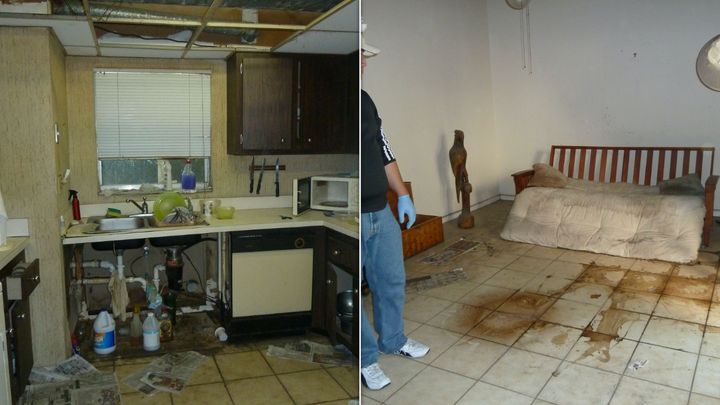
Aunt Carol’s home in Miami after her death (2012); Left: Aunt Carol’s kitchen Right: The room in Aunt Carol’s condo where she died.
My aunt knew she was gay at 13, in 1955, but coming out wasn’t the custom in 1950s America. Instead, Carol excelled in sports, was known as a class comedian and had a boyfriend, despite being in love with her best friend, according to my mother.
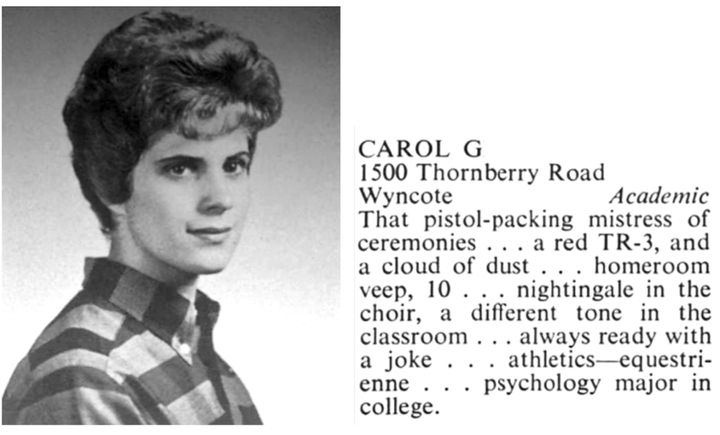
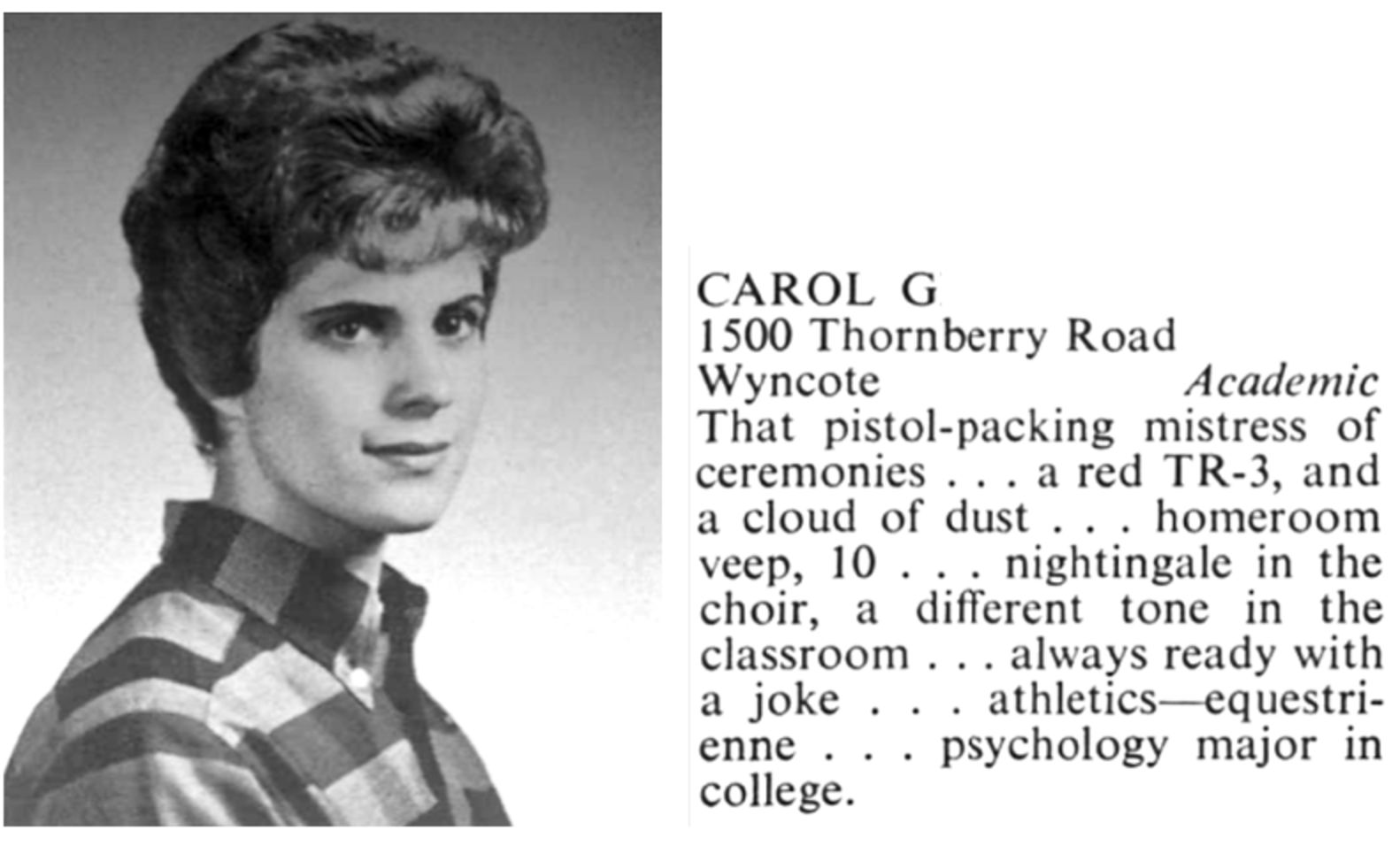
The comments under her yearbook photo describe her as a “pistol-packing mistress of ceremonies… always ready with a joke… athletic… psychology major in college.” Compared to the other femalestudents on the same page, with descriptions like “knee-length sweaters” and “future Miss Private Secretary,” it’s clear Carol was already defining herself by her choices.
Advertisement
Courtesy of Michelle Tamara Cutler
Aunt Carol’s high school yearbook photo (Philadelphia, 1958)
A man who introduced himself as Carol’s high school boyfriend contacted me after reading my aunt’s obituary. He said they were going steady until she suddenly cut off contact right before his senior prom. When he drove by her house to speak with her about what had happened, she ran inside. He was heartbroken and confused by her behaviour.
Years later, he bumped into my aunt when they were studying for their master’s degrees at Temple University. She pointed to his Eldridge Cleaver “If you’re not part of the solution, you are part of the problem” pin and let him know that she was now open about her sexuality and that he should accept it or else remain part of the problem.
Surprisingly, between the dreaded 1959 high school prom and the empowered run-in with her high school ex at Temple in 1970, my aunt married a young man from the neighbourhood. He was a friend, my mother told me, who agreed to a “sham” marriage to ward off scrutiny from her parents.
I can imagine how difficult it may have been for Carol to come out to them. My grandparents were first-generation Americans who owned a successful beauty salon known for styling young Grace Kelly’s hair before she left for Hollywood. They raised their family with the understanding that public appearance was social currency, and heteronormative relationships were the gold standard.
Advertisement
Still, Carol was 25 when she got married in 1967. Couldn’t she have escaped her parents’ middle-class aspirations without the charade of a marriage? And what happened during the three years between her wedding and 1970, when she was fully out of the closet? What had changed? Was there some specific catalyst for her coming out and accepting who she truly was, or had she simply grown tired of hiding? I wish I’d asked her.
Later, when I was growing up in the ’70s, I had two aunts: Aunt Carol and Aunt Patty. There was never talk of lesbians or girlfriends or homosexuality; there was simply Carol and Patty as a couple until something changed in their relationship in the ’80s.
According to my mother, Carol didn’t want Patty, who was younger, to see Carol’s body aging. Vanity is another byproduct of growing up in the beauty business, but I think their breakup had more to do with my aunt’s codependent relationship with my grandmother.
Courtesy of Michelle Tamara Cutler
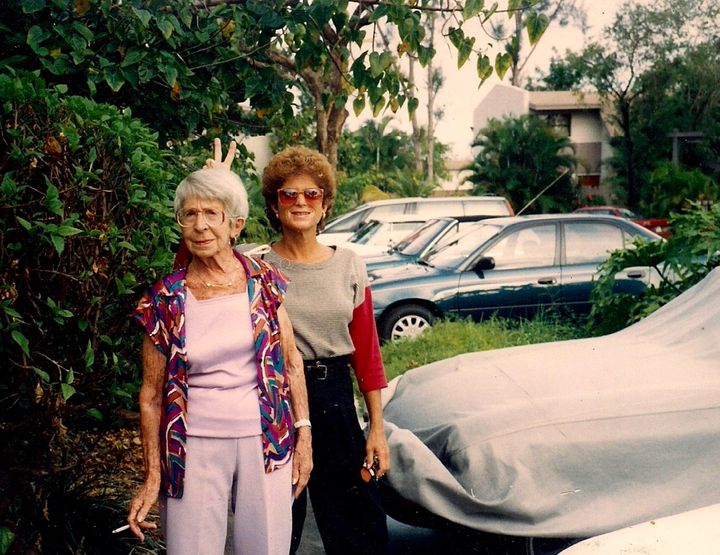
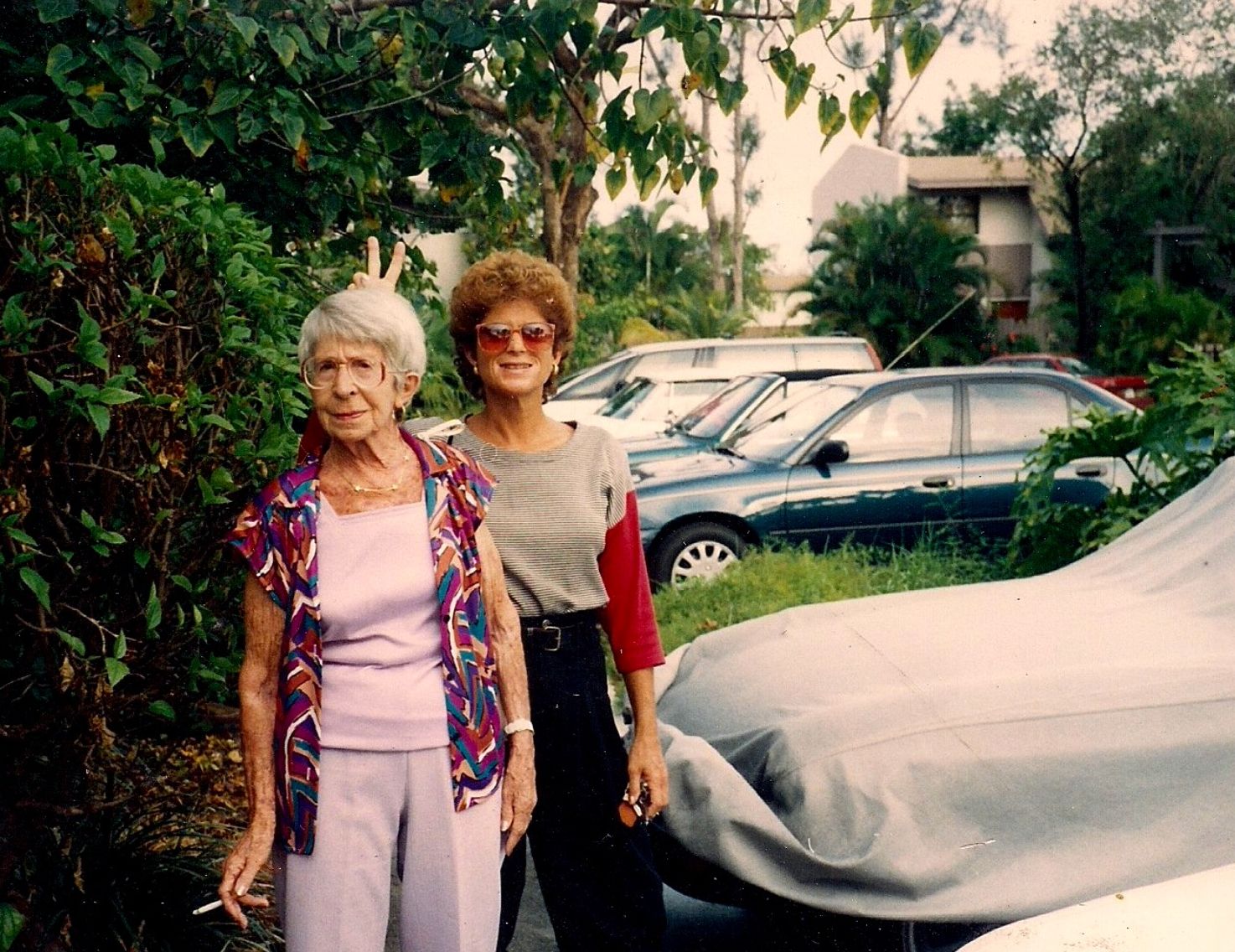
The author’s grandmother, left, with Aunt Carol in Miami sometime in the 1980s.
When my grandparents retired to Miami, my aunt followed and was single for another 40 years. She did have one longtime friend, also named Pat, but Pat swore in a conversation with me that she and my aunt were never romantically together. She said they went to the same “women’s parties” in Coral Gables in the ’80s and lived with or close to each other for decades.
Advertisement
Pat said she felt she had met a “veteran lesbian” in my aunt, someone who knew who she was and wasn’t struggling with her truth. Carol was liberating to young Pat. Pat was also the last person to see my aunt alive.
Pat agrees that Carol didn’t invite anyone into her life after the relationship with Patty ended. She had no long-term romantic relationships, just her rescue dogs and exotic birds, public television, and football.
She was a frequent caller on sports talk radio shows and taught English composition to the football players at the University of Miami to make sure they kept up their grades to play. I remember her saying The Rock was one of her favourite students.
My aunt was also known for her sharp humour and open critique of politics, according to reviews on RateMyProfessor.com. One of her Florida International University colleagues told me Carol was “always upbeat and eager to discuss books, teaching, and travel.”
The challenges of being an underpaid adjunct lecturer without benefits gradually wore her down, he explained, though her dedication to students remained clear. It was around this time that her contract at FIU wasn’t renewed, and she left her house less and less.
Advertisement
Courtesy of Michelle Tamara Cutler
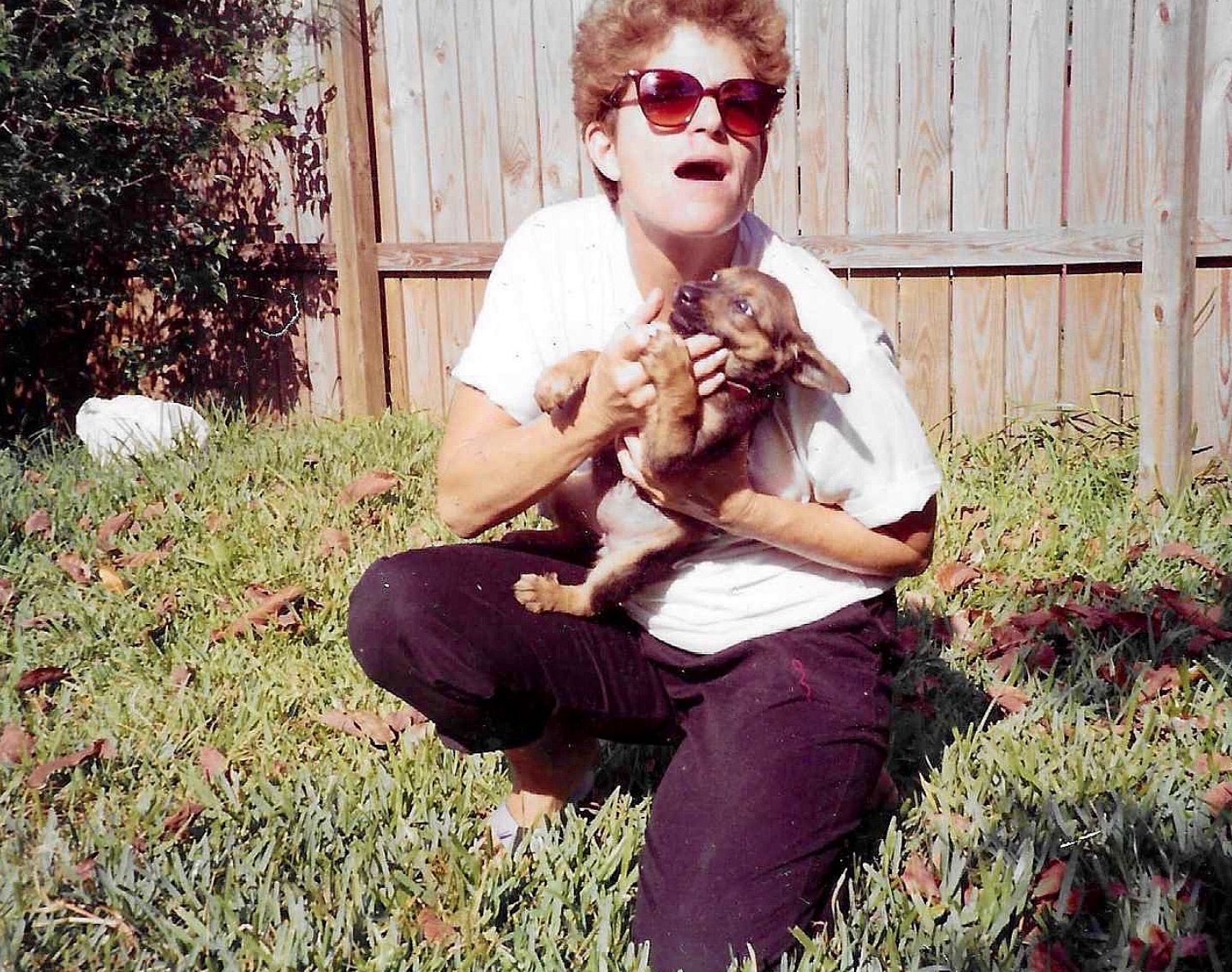
Aunt Carol with Chelsea as a puppy in Miami (date unknown).
The whole experience of going through Carol’s few remaining belongings in her foreclosed, gated-community condo shook me. I sobbed in the parking lot after seeing my mother break down for not successfully convincing Carol to move to Spain with her. It reminded me that I’d made no real effort to check in beyond email. Carol never extended an invitation to visit, and I never thought to just show up.
Suddenly flooded with memories, I quickly jotted them down before they disappeared — like one Christmas holiday in Miami Beach when Carol, dressed in black, made me laugh uncontrollably with an inspired version of Placido Domingo & John Denver’s 1981 song “Perhaps Love.”
Perhaps Love…
Is like a sweater
That fits into a box.
It shouldn’t smell like herring.
It shouldn’t taste like lox.
Carol had a way of poking fun at tradition even though she never felt at home with family gatherings or holidays, as she shared with me in an email the year before her death.
Courtesy of Michelle Tamara Cutler
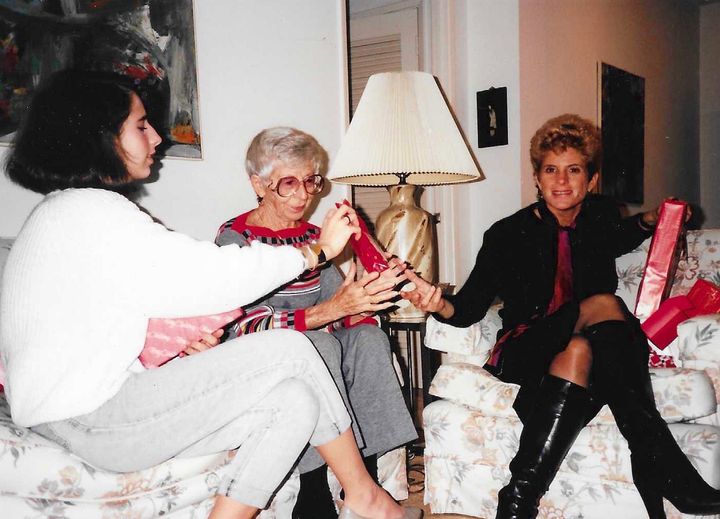
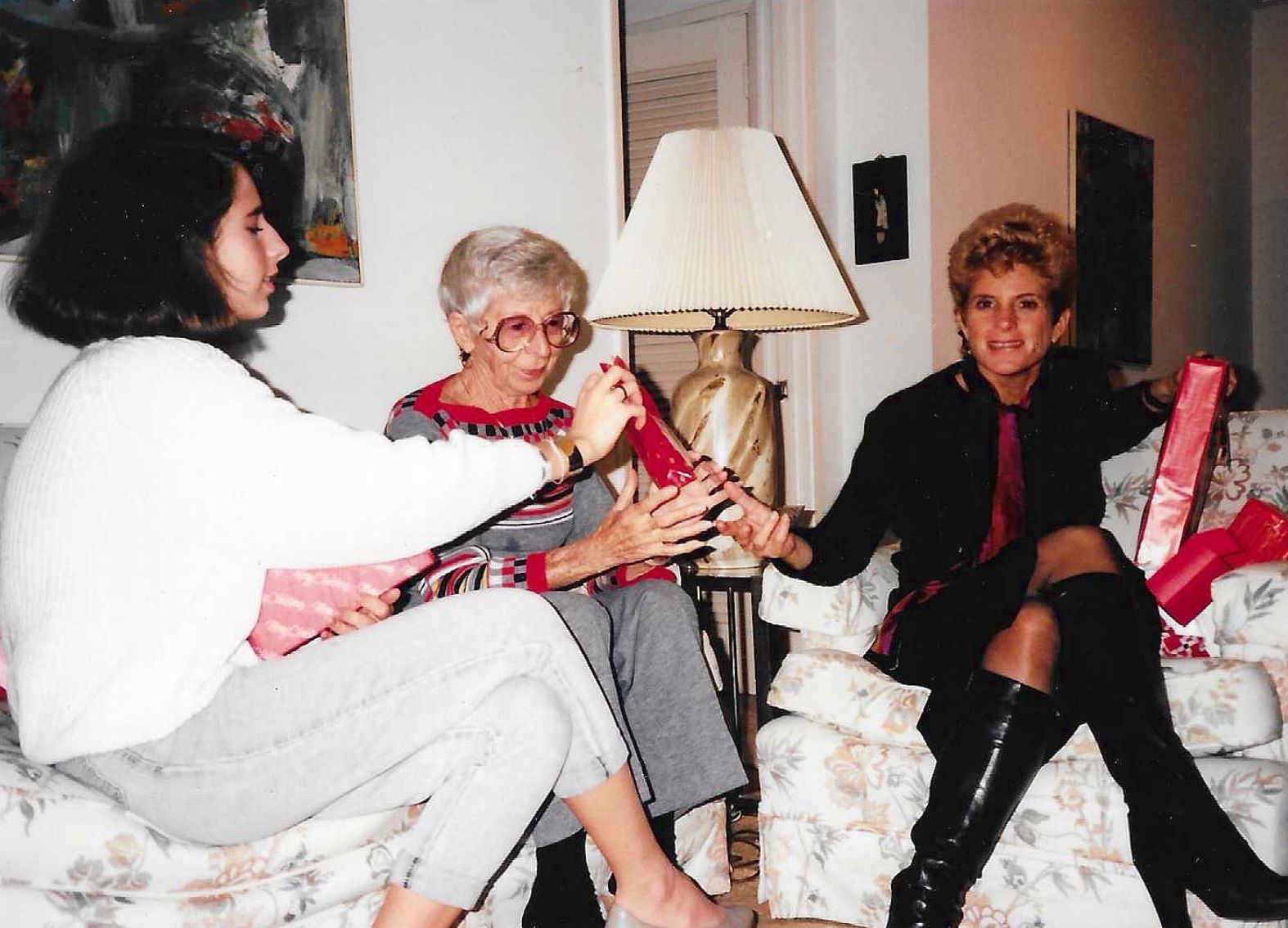
The author, left, with her grandmother, center, and Aunt Carol in Miami Beach (Christmas, 1981).
Advertisement
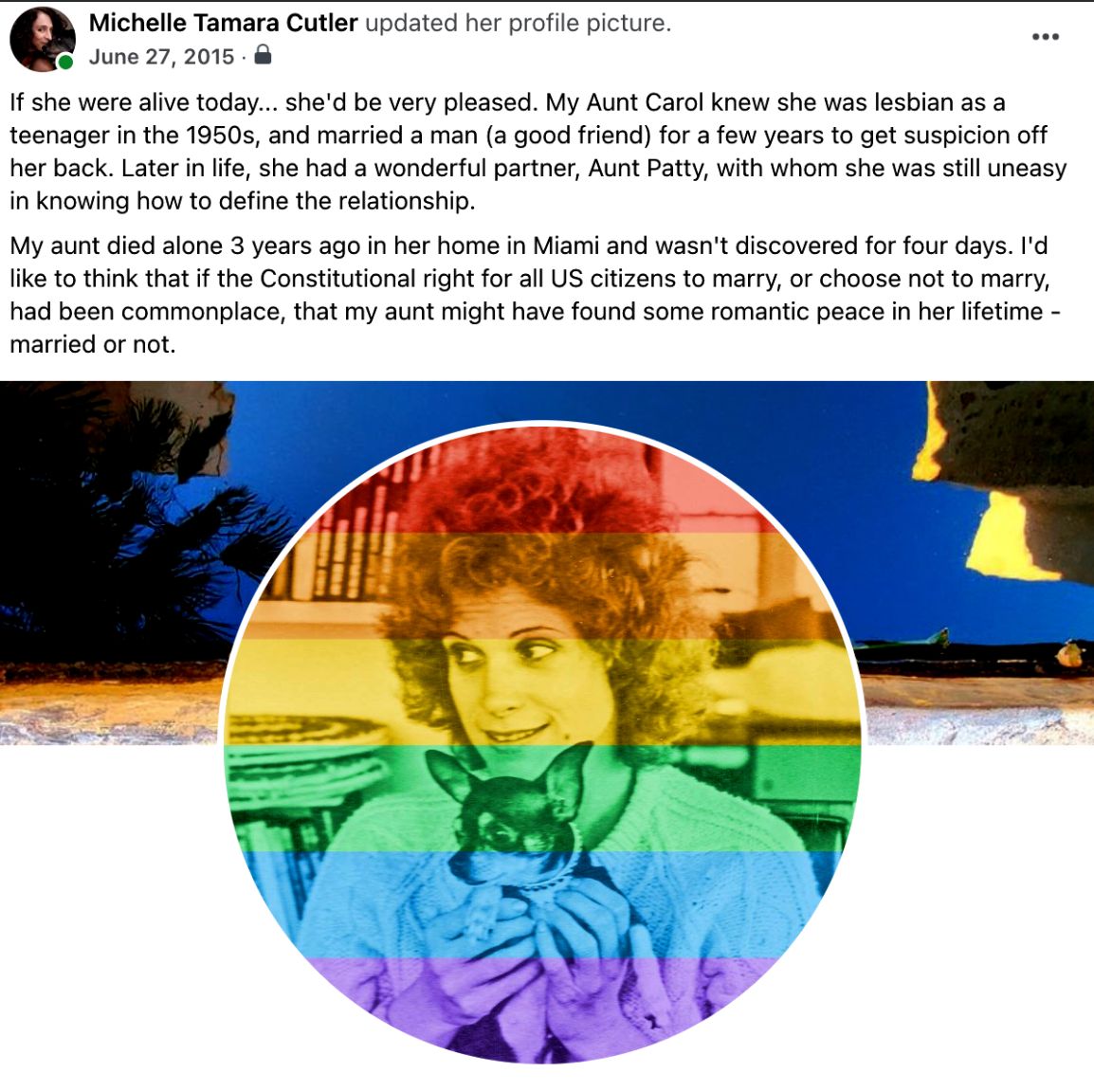
On June 26, 2015, 19 years after President Clinton signed the Defense of Marriage Actinto law, marriage equality became a right for millions of Americans. On that historic day, friends coloured my newsfeed with celebratory rainbow filters and messages.
Some had no intention of marrying, some were already traditionally or symbolically married, but they were all in agreement that discrimination has no place in our society.
I wondered if my aunt’s distrust of institutions, doctors and the public in general was an underlying contributor to her heightened level of self-preservation and loneliness.
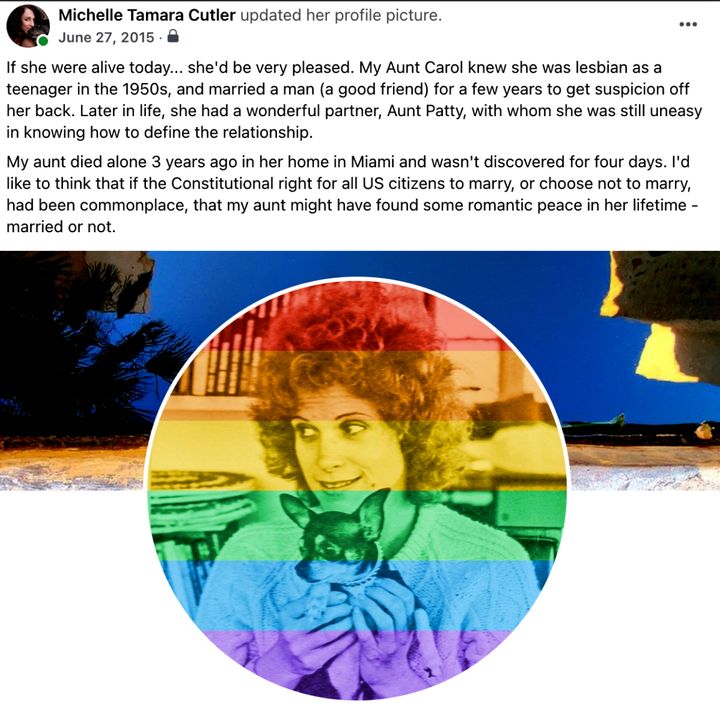
I dug out a black and white photograph of Aunt Carol in her late 30s.After studying her for a few moments, contemplating her life as an intelligent animal lover and activist with a wicked sense of humour — a real political firecracker — I decided to put a rainbow filter on the photo and share it on Facebook.
Advertisement
Courtesy of Michelle Tamara Cutler
The author’s 2015 Facebook post with a photo of Aunt Carol, circa 1980
If Carol were a 13-year-old today, however, there’s no guarantee she would feel any safer than she did in 1955. Basic civil rights, like marriage, family and financial planning, and hate crime prevention, have been argued and advanced in courtrooms, capitol buildings and the media, but these freedoms are perennially under attack.
I do believe Carol would still be fighting this fight if she were alive. I found her listed as a signatory in a 1993 pro-choice ad in the Miami Herald published in protest of the murder of Dr. David Gunn at a women’s medical clinic in Pensacola.
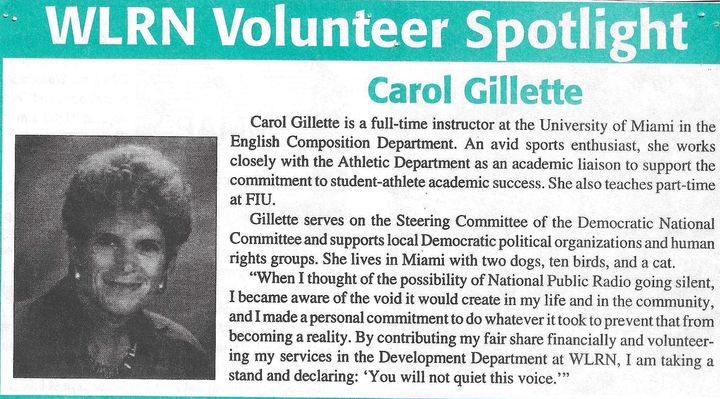
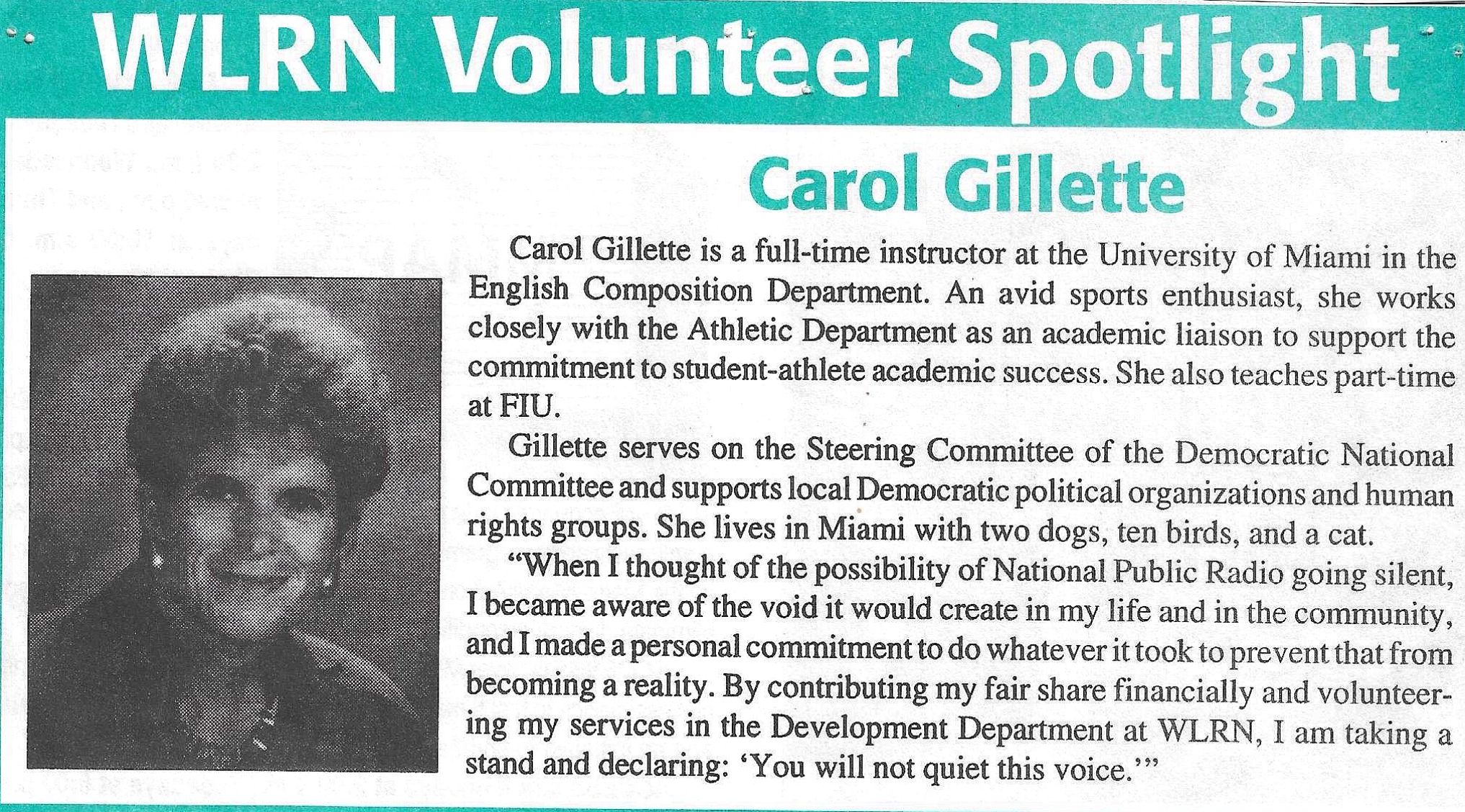
In another folder she kept of her achievements, I found letters from the head of her public television chapter, and in a 1997 volunteer profile, Carol is quoted as saying, “By contributing what I can… I am taking a stand and declaring, ‘You will not quiet this voice.’”
Advertisement
Still, her voice was ultimately quieted — and I know she’s not the only one.
Courtesy of Michelle Tamara Cutler
WLRN Volunteer Spotlight featuring Aunt Carol (1990s)
I wonder how many other Aunt Carols will die alone. There are an estimated 1.1 million LGBTQ+ identifying adults aged 65 and older.One study found 7 in 10 LGBTQ+ older adultslive by themselves compared to 3 in 10 non-queer adults, and many queer elders don’t have children to help them.
LGBTQ+ retirement communities and care facilities are on the rise, but not everyone — including Aunt Carol — wants to live their day-to-day life with other people or has the funds to support that level of care. Organisations like SAGE, founded in 1978 by queer activists, further advocacy, services and support to older members of the LGBTQ+ community, but these groups do not exist in many areas and, where they do, there is still much work to be done to prevent queer elders from facing an end like my aunt.
I cannot change what happened in my family, but I will continue to tell Aunt Carol’s story whenever and however I can. I miss her voice, her humor, and her chutzpah. She was navigating an era of deep adversity and left a lasting impact on the people and organisations she touched.
At the same time, I’m beginning to understand the tragic truth of her last days and why she closed herself off from a world in which she felt unvalued, invisible, and at risk.
Advertisement
I often think of the day Aunt Carol talked me into water skiing for the first time when she was working with the Miccosukee tribe in the Everglades. I was 12 and terrified to go out of my comfort zone, but as the engine revved, Aunt Carol sang out Elton John’s biggest hit at the time from the back of the boat: “I’m still standing better than I ever did… Looking like a true survivor, feeling like a little kid!”
And as the boat pulled away, my arms extended at the end of the rope. Thanks to her inspiring confidence in me, I found my footing, stood up tall, and overcame my fear.
Michelle Tamara Cutler is an award-winning screenwriter and storytelling coach who specialises in true story adaptations. Her reported and personal essays have appeared in HuffPost, Business Insider, Trail Runner Magazine, Under the Gum Tree, Longridge Review, Brevity Blog and elsewhere. She is writing a memoir that examines the circumstances of her Aunt Carol’s death to illuminate LGBTQ+ elder isolation, the rewards of family caregiving, and the influence of the beauty business on identity and mental health. Learn more at michellecutler.com and connect on Instagram.
As anybody who has ever moved in with a close friend will tell you, you never really know somebody until you live with them.
This is doubly-true for partners. Suddenly, there is nowhere to hide. You can’t hold in farts for the rest of your life, your guilty pleasure awful food combos are now out in the open and your strange behaviours? Well, there’s only so much you can hide them really.
Advertisement
As most of us know, these things ultimately endear us more to our partners. Yes, they’re weirdos but they’re our weirdos.
With this in mind, Reddit users got together to admit their own domestic chaos in answer to the question: “What was your ‘wtf are you doing?!’ moment after moving in with a partner?”
DavdavUltra commented with an absolute corker, saying: “In my parents house we always used to change the duvet sheets by one person getting inside of the new sheet inside out and the other person passes the two corners of the duvet to you and then you turn it right way round over the duvet. Yaknow to make sure it is in all the corners.”
Advertisement
… No, I don’t know.
They continued: “So while my partner was doing the pillows I put the fresh duvet cover on top of me and shouted ‘Im ready’. She turned around and said what the fuck are you doing?”
Truly losing my mind at the thought of this duvet ghost declaring “I’m ready!” to their unsuspecting partner.
DundeeDude delivered a short horror story saying: “They made a cup of tea… oddly: Milk-> teabag-> water-> sugar.”
Milk. Then. Teabag.
TryNo8062 gave a weird but wholesome response, saying: “Saw him fold his dirty shirt before putting it in the laundry basket.”
I don’t know, I think this is sweet. Green flag, in my opinion.
Another sweet answer came from scarygirth (OK) who said: “She still sleeps cuddled up with one of her dad’s old tshirts like she would as a kid. It’s bloody adorable.”
Advertisement
Welsh_dresser said: “When he couldn’t fit any more rubbish in the kitchen bin, so threw it on the floor next to the bin.”
I wouldn’t even accept that from a toddler, TBH. Yuck.
Finally, and most upsettingly, BungedItIn revealed: “When she moved in I found a butter knife in the downstairs and upstairs toilet….. for her very strong poos when she’s on protein time.”
If you’ve ever stepped out in what you thought were weather-appropriate clothes, only to find yourself soaked to the skin or sweating buckets, you’re likely very familiar with the feeling of being betrayed by weather apps.
It’s frustrating, especially when your friends tell you that the app that they rely on gave an entirely different forecast for the day. The absurdity! The outrage!
Advertisement
Thankfully, a team of researchers decided to set the record straight on exactly which app we should be using ahead of stepping outside, so that we can be more suitably prepared.
New research reveals the best weather app
In a move that adds another layer to the treasured British tradition of complaining about the weather, iNews commissioned University of Reading’s Department of Meteorology to identify which were the best sources to check, and the results actually revealed that it can differ, depending on the outlook you’re hoping for.
iNews asked Rosie Mammatt, a weather scientist at the University of Reading, to compare the performance of some of the country’s most popular weather apps.
Over a period of two weeks, Mammatt looked at BBC Weather, the Met Office, Apple Weather, the Weather Channel and AccuWeather over a two-week period.
Advertisement
Her research found that, as many of us know, forecasts are often wrong and surprisingly, it’s the BBC that often gives the least accurate forecasts on their app.
Mammatt reveaed that BBC Weather is often “too pessimistic” and repeatedly overestimated the amount of rainfall ahead.
So, who can we really rely on, then?
Well, if you’re heading out in the morning, you’re best to check Accuweather. If you’re going out in the afternoon, the Met Office is best.
The best overall forecaster, though, was Weather Channel, which can be relied on for any and all forecasts.
The 20-something man approached my table, the corner of his mouth curving up. He looked away and rubbed his chin before making eye contact and telling me: “I just wanted you to know that if you’d come in sooner, my girlfriend and I would’ve invited you to join us.”
I smiled at him. It was nice of him to want to create community with me, although I was perfectly happy just as I was. But he wasn’t quite finished.
“I feel really bad for you,” he said. “You look so lonely.”
Those four words sat like rocks in my knotted stomach. I’ve heard them often throughout my life.
“Thank you. I’m not lonely. I’m fine,” I replied, a little too defensively.
I looked away. Jerk. Who walks up to someone to point out they look miserable? His words floated in the room like specks of dust catching the light, mocking me as he left hand in hand with his girlfriend.
Advertisement
Maybe it’s just a checklist inherited from my parents’ “Silent Generation,” but I’ve found that society still measures worth, success and happiness in terms of wedding bands and strollers. I’ve lived much of my adult life believing in those metrics, so choosing to be single has been challenging. It doesn’t just mean dealing with the judgment from others — it also means hearing my inner demons repeat those verdicts: You’re less successful, damaged goods, a failure.
As I sat there alone, I told myself it was this guy’s issue, not mine. But the all-too-familiar whispers were getting louder as I looked around the restaurant, a spot my elderly B&B hosts had recommended, their wrinkled eyes twinkling: “The food is great. You’ll love how intimate it is.”
They were right. I loved the place as soon as I walked through its weathered wooden door. “Table for one,” I said, smiling at the hostess. She smiled back warmly as she welcomed me.
When I sat down, the young man who would eventually approach me was looking directly at me, so I smiled at him before perusing the wine list.
Advertisement
This was 23 years ago. I’d recently moved to inland California, and had road-tripped to the coast to explore my new state and drive part of the famed Pacific Coast Highway. I’d been excited about this four-day jaunt, but now all I wanted to do was finish my Riesling and fettuccine Alfredo, pack my bags, and retreat to my small, secluded inland town.
I turned down homemade cannoli and walked, head down, back to the Victorian B&B. I stepped quietly past the den where my hosts sat focused on “Antiques Roadshow,” relieved they hadn’t noticed me come in. I took the stairs two at a time and slipped the key in the door to my room as a lump formed in my throat. Then I collapsed on my bed and cried. I’d let the whispers win.
Courtesy of Laura Lee Ellen Johnson
The author in 1964.
I can’t remember a time I didn’t feel different from everyone around me. I am the youngest of four kids, and the only girl. I bought into the Disney fairy tales early on and fully believed that a lifesaving kiss or a perfectly fitting shoe could lead a lonely princess away from evil to happily-ever-after. And yet by seventh grade, I was beginning to realise that this state of wholeness, supposedly only achieved with a mate, might not be right for me.
I recall hanging out one afternoon with my three best friends when a male radio reporter slowly articulated in a low voice: “One in four women will never marry.” A dramatic silence followed, to let the statistic sink in. We all gasped. While my friends discussed how terrifying it would be to lead a barren, lonely life without a husband and children, I secretly knew I would be the one in four.
Advertisement
Where had that thought come from?
I have always been strong and fiercely independent. My mother used to joke that I came out of her womb telling the doctor to get his hands off me — “I’ll do it myself!” I don’t like to be told what to do, compromise is a concept I rarely entertain, and I’m horrible at asking for and accepting help.
When I was a high school junior, I dated a guy in college. He was my first real boyfriend, and being with an “older man” was a little exciting — until I started feeling suffocated. He wanted more and more of my precious time and attention. He was nice enough, but he always tried to take care of me.
I remember one night when he tried to “teach” me how to bowl, though I already knew how and was pretty good at it. My mom’s advice was: “You just need to play the game a bit more.” (Dating, not bowling.) “You should step back and let boys help you. Don’t come on so strong.” In other words, there is something wrong with a girl who’s too competitive and too autonomous. But how would I ever be truly happy if I wasn’t truly me?
Shortly after I turned 21, I traveled to Hawaii with my parents. We stopped in a gift shop, and as often happened, my mother found something she couldn’t live without. I was one aisle over when I heard her making her case to my dad about why they should buy whatever trinket she was holding. As I eavesdropped, hidden behind a display of swinging hula girl statues, I promised myself I would never allow myself to be in that position. At the time, I thought it was about negotiating with a man for something I wanted, but I’ve come to realize it was about not accepting any limits to what I wanted to have, do, say or be. It was about not being tied down or tethered to anyone.
I dated after college, but constantly found myself worrying that I was misleading men. I didn’t want the all-encompassing together-forever ideal that so many other women did. My relationships often fizzled when I resisted marriage and shared that I didn’t want children. I would welcome romance and intimacy — even today — if it didn’t require sharing space with someone 24/7. That’s been hard to find.
Advertisement
Courtesy of Laura Lee Ellen Johnson
The author’s senior high school photo in 1982.
People would often come straight out and ask why I never married. In one case, after I was questioned, the entire group quieted, turned to me, and waited for an answer. What did they want to hear? “I’ve spent the last 20 years in prison because a guy in Long Beach said I looked lonely.” Or: “Since graduation, I’ve been cloistered with singing nuns in the Austrian Alps.” Why do people feel justified in asking for an explanation? I often fumbled and mumbled and shrank. I would allow people to make me feel bad about myself. Their questions created doubt, a second-guessing. They unleashed a long-programmed fear that society was right and my life was less fulfilling, less fully realized and less complete without a romantic partner.
People have suggested I am emotionally stunted for not being married — that I’ve missed out on the benefits of romantic partnerships, like negotiating, pooling resources and sharing essential decisions. But how does that make someone more mature? More socially acceptable, maybe. But whole, authentic, rounded, complete? I’m not convinced.
I have faced similar opportunities and challenges as everyone else, and done everything on my own. I’ve moved across the country. I’ve managed rent and home ownership, car payments, sewage backups and travel. I love jumping in my car, exploring towns, visiting museums and attending concerts — and no one ever throws a wrench in my plans. I don’t avoid doing things with others; I love spending time with my friends and family. But I don’t let not having a romantic partner stop me from enjoying my life to the fullest. Nothing stops me from following my heart.
I do get lonely — of course. There are times when I feel overwhelmed and wish I had someone to help me with my burdens, perhaps even take care of me. Usually these feelings surface when I am faced with a challenge, but they pass when I figure out how to solve my problem. I have always had the ability to see beyond obstacles, and when things go wrong, it’s almost never for long. And I’m not alone. I have people in my life I can turn to for love and support. When I remind myself of that, I get through the loneliness and get back on my feet. I also know that having a partner is not a guarantee that you won’t experience loneliness. Plenty of people in relationships feel lonely.
Advertisement
I have finally learned to celebrate the peace, quiet and freedom to explore the world on my terms. I’d love to say this was a dramatic, once-and-for-all decision early in my life, but the truth is far more complex. It’s been a journey of constant, deliberate choices, each one a battle between the safety of conformity and the risk of missing out on who I was truly meant to be. And this journey has brought me to an important realisation: It’s not “me versus them.” It’s “me versus me.” It’s fighting the urge to let external judgments define me.
Courtesy of Laura Lee Ellen Johnson
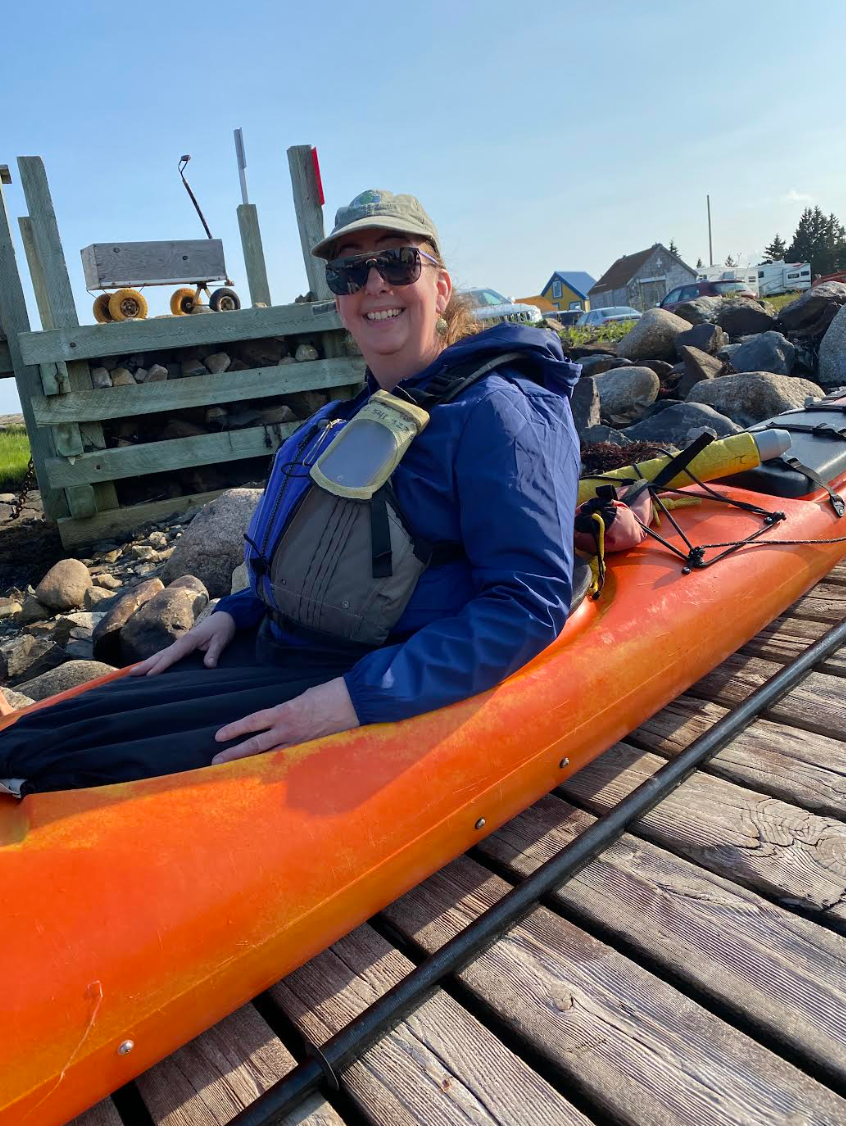
The author kayaking in Nova Scotia, Canada, in 2023.
In my 40s, I started to follow a more spiritual path and truly began to believe that we are all where we are meant to be. In my late 50s, I took a life-changing writing class focused on finding my authentic voice. I wrote more about my life and my experiences. I began to feel better about what I was adding to the world, and how I was helping others discover who they were through my work. I surrounded myself with people who were accepting and supportive of who I am.
Turning 60 was magical. I now accept that I am who I am, and I am OK with wanting what I want — or don’t want. I make conscious decisions not to internalise others’ judgments, and I forgive myself for having allowed their opinions to affect me in the past. Ultimately, it’s a personal belief system that has little to do with anyone else, and everything to do with self-acceptance in the face of all the noise.
When I walk with that certainty, I look for different reactions in people, and I no longer “invite” someone to point out my aloneness. Mindset makes a huge difference, and age, for me, has allowed for much less concern about what others think and do.
Advertisement
Along the way, I have noticed we aren’t all that different. We travel, discover, learn, develop, love, connect and contribute — each adding our own unique twists.
On a recent solo road trip through Canada, I enjoyed two weeks of poutine, grilled cheese dipped in tomato soup, conversations with locals and other travellers, and people-watching. I never once felt out of place. Instead, I confidently announced “Table for one,” and embraced the me who dares to defy my former demons and society’s expectations.
Laura Lee Ellen Johnson is a writer and personal branding strategist based in Detroit. She writes for the career industry, as well as about living single, childfree and beyond society’s limits — at any age. She publishes a weekly Substack called “Fearless Authenticity,” and is completing her first historic fiction novel.
I’ll put my hands up ― I straight-up didn’t believe the TikTok trend that saw cats come to their owner’s side as if a dog had been called by name, thanks to two short sounds.
″‘Mah-AH’… means, come here [in cat],” a vet shared on the app. Video after video of cat owners using the trick to summon their furry friends played in quick succession, but I wondered whether it was all just hype.
Advertisement
So, I reached out to three cat experts ― vet Dr Liza Cahn, a consultant for Embrace Pet Insurance, Mieshelle Nagelschneider, cat behaviour specialist and owner of The Cat Behaviour Clinic, and veterinarian expert Dr Dwight Alleyne ― about the trend.
And?
“Many of our cat clients have tried ‘Ma-AH’ with their cats and have had immediate results,” Nagelschneider told HuffPost UK.
“Even with our own cats, we can call them over and over again with ‘come here’ with no response and then with ‘ma-AH,’ it definitely gets their attention.”
Dr Alleyne, however, says “The effectiveness of this will depend on multiple factors.”
Cats may simply find the sound novel and appealing, he told HuffPost UK, and “the owner may have unknowingly conditioned their cat to the sound through a positive interaction.”
Advertisement
Dr Cahn agrees, sharing that “If your cat comes, they are most likely responding to your tone of voice and body language. This response will also be reinforced if they receive praise or treats.”
All three experts agreed that “mah-AH” could well work to get cats to come closer to you ― but the two vets weren’t convinced the tones had anything intrinsically appealing to the pets.
In other words, “mah-AH” will probably work depending on your cat’s temperament ― but it’s not quite the same as saying “come here” in cat.
So… what is?
Even Nagelschneider, who seemed most convinced by “mah-AH,” said there are other sounds ― like a kitten’s “mew-mew-mew” ― which will elicit a similar response.
Dr Alleyne told HuffPost UK that a lot of combinations of soothing sounds and cupboard love will get your cat to heel ― “Other methods that may work better include the actual calling of the cat’s name, using treats or clickers, or using a high pitched sound or tone to get them to come,” he wrote.
Advertisement
Dr Cahn says that despite what you might have heard, training cats isn’t as tough as you’d think.
“To train your cat to come when called, first, choose a cue word (such as “come” or “here”) and a high-value reward like a tasty treat or favourite toy,” she told HuffPost UK.
“You can either wait until your cat naturally approaches you, or get them to head your way by luring them with the treat or toy. Use the cue word just as they arrive, and immediately give them their reward.”
Over time you can increase the distance ― over time, your cat will learn to associate the reward with responding to your call.
So, “mah-AH” may not be a magic word; but positive reinforcement, high-pitched sounds, and new experiences are a pretty great way to train your cat regardless.
In that sense, the trick is likely to work at least some of the time.
Reddit’s a goldmine for recipes, not least because you don’t have to go through a long pre-recipe story about the writer’s childhood collecting apples from their family tree.
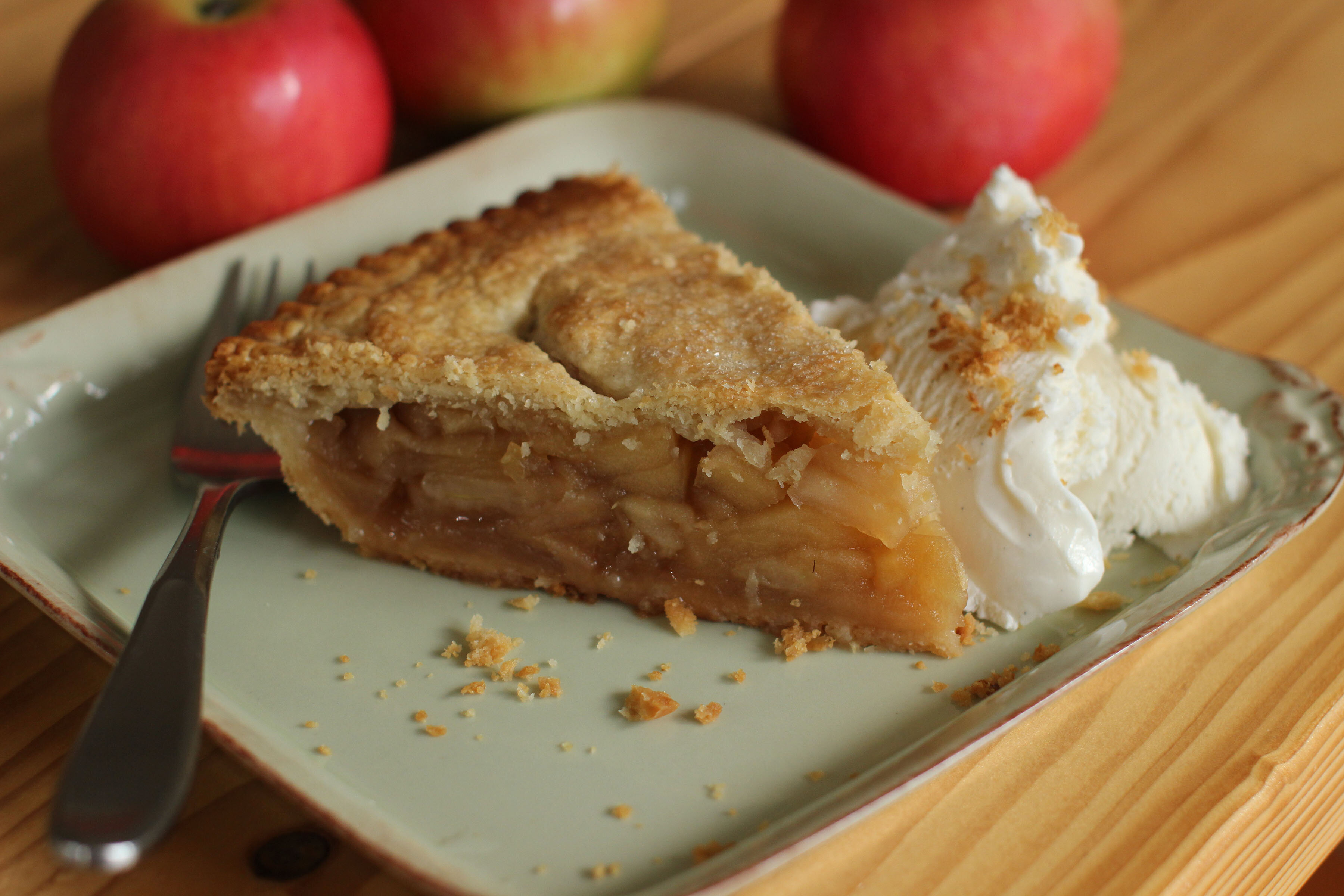
This week’s bake de jour is an American-style apple pie shared to r/Baking, however.
Redditor Good-Ad-5320 shared that they’d made a “massive apple pie,” adding that the US-style dessert is “bliss.”
Looking at their creation, which is truly the Platonic ideal of an apple pie, it’s impossible not to understand why commenters were baying for the recipe.
“After lining the ring with the crust, I froze it completely before blind baking,” they explained.
After the blind bake, they sprinkled the inside of their pastry shell with egg whites and a “1:1 ratio flour/sugar,” which they called “crust dust.”
Advertisement
As for the apple insides, they took it a step further than I usually do by forming a sort of caramel in a separate pan to the chopped and peeled apples.
“I sprinkled the peeled and sliced apples with lemon juice and white sugar to get some water out of it (I let them aside for 1 hour),” OP wrote.
“After I put the apples in a colander to remove the excess water, I precooked the apples and put them again in the colander to remove even more water.”
They doubled up their regular recipe and used:
Apples: 16
White sugar (for the apples): 100g
White sugar: 100g
Packed brown sugar: 200g
Water: 120g
Vanilla beans, scraped: 4
Flour: 46g
Salted butter: 230g
However, this was for their frankly colossal pie. “For a regular tart, I think 7-8 apples are sufficient,” OP added. You can halve the rest of their recipe too.
Advertisement
To create the apple filling, they suggest we “combine [all sauce ingredients] in a saucepan, heat until [the sugar melts], [and] make it boil a bit until it thickens before mixing it with the precooked apples.”
They then baked the pie until golden brown.
“To get clean cuts, I let the tart cool down for approx 6 hours outside (it was around 10°C),” they ended their post.
People were pretty huge fans
“I’ve never considered a deep-dish apple pie! How cool is that,” a top comment underneath the post reads.
Another commenter suggested the poster might have gone bankrupt buying all those apples, to which they responded: “Actually half of the apples were from my brother’s garden, and the other half cost me around €2 (they were ‘Golden’ apples).”
Living alone when you’re my age requires lying. There’s no way around it. It isn’t that I mean to lie; it’s that I want to avoid the conversation that will immediately ensue if I don’t.
My adult daughters — the people who monitor my 86-year-old life — need to feel reassured that I’m eating healthy, exercising and sleeping enough, and being engaged. Engaging means different things to them than to my aging friends, and they are the ones to whom I must answer. Consequently, all these expectations require more and more lying, my form of which is most often that of smiling indirection.
Advertisement
I assure my daughters I eat vast quantities of fruits, vegetables, salmon and chicken. There is rarely any mention of my consumption of popcorn, rum raisin ice cream or pistachios. When we’re having a meal together, I am careful to order a big slab of protein surrounded by leafy green leaves. I demur when offered crackers and cheese and murmur daintily with a downcast expression, “dairy.” Until they read this, I’ll continue to feel confident I’ve gotten away with those lies.
There are days I don’t want to eat my meals in the prescribed order. What if I want something other than cereal, eggs or toast for breakfast, like leftover Chinese takeout? Well, then, that’s what I do. Sometimes, my disorderly eating leads to the need for Alka-Seltzer, but I keep a supply on hand for such occasions. Do I think my daughters check to see what’s in my medicine cabinet? I’m not sure, probably not. But just in case, I keep the Alka-Seltzer tucked away out of sight. I want to avoid answering questions about why I need it.
I also lie — not only by indirection but also by omission — about the frequency of my accidents. They include tripping over, stumbling into, brushing against, and, worst of all, falling all the way down.
I try not to bump into anything, but I fail — repeatedly. Even when I rush to the freezer to urgently press an ice cube onto the spot, an enormous purple bruise blossoms under it.
Advertisement
Slamming into things has also led to many skin tears. Blood requires covering, which results in my arms being festooned with bandages. I have to try to get them on with one hand while holding a cloth over the wound with the other, often ending up with a wastepaper basket filled with false starts and discarded adhesives. My medicine chest currently has a larger supply of bandages of every size and shape, multiple forms of gauze and tape, and tubes of healing ointments than I ever needed when my children were little.
When I go out, I’m met with concerned gazes and the question, “Are you OK?” I smile nonchalantly and joke, “You should see the other guy.” Their amused response allows me to circumvent whatever concrete lie I would have to create to explain my multicoloured, multitextured arms. I have even considered getting those arm sleeves that are intended for gardeners to avoid being cut up by branches or thorns but are now used as accessories. They’re available in a wide range of styles and designs. Some with tattoos might be fun. I could lie and pretend I’m making a fashion statement while covering my ongoing cascade of wounds.
There are also the moments when the urgent task of keeping my balance eludes me entirely, and I fall all the way down. This is most often the result of me trying to multitask.
My most recent fall was in my apartment building’s parking lot. I was getting out of the car, wheeling my grocery cart with one hand and reaching back to close the car door with the other — a recipe for disaster. I went down onto the concrete, the cart rolling to a stop three feet ahead of me against the bumper of a nearby parked car. My first impulse was to look around — not for help, which would have been the wise thing to do — but to see if anyone saw me fall. I was alone, which allowed me to turn over onto my hands and knees, the way I get up from the ground these days.
The only person (or thing, rather) who knows I fell is my Apple Watch, which dutifully flashed, “I see you fell. Do you need help? Should I call 911?” when it happened. I pressed back “I’m fine,” essentially lying in the language Apple’s engineers have programmed as a response. I hobbled upstairs, hurriedly put the food away, laid down and went to sleep. I have concluded that I’m handling the situation maturely. I’m uncertain if not telling my children that I fell down constitutes withholding necessary information — yet another permutation of lying — but I suspect it does. Why is it anyone’s business? They’ll just worry and offer advice that I already know. Be careful. Only do one thing at a time. Move slowly. Use arnica.
Advertisement
There are more things that I lie about. Well, not exactly lying. I just never mention them — like losing and forgetting items and words, for instance.
I’m a very tidy woman, and order comforts me. Everything in my home has a clear and obvious spot, so it’s easy to find something when I need it. But even in my carefully put-together home, I lose things. Eventually, they turn up in a pants pocket, at the bottom of a bag or stuck between a pile of papers on my desk. But how that came to be their momentary resting place is never clear.
I lose things outside my house as well. In public bathrooms, I sometimes take the opportunity to check my messages, then carefully balance the phone on the toilet paper dispenser — and leave it there. This has happened five times, and with each one, the kindness of strangers has reunited me with my phone. I’m hoping my luck holds out.
After the inevitable conclusion of my much-too-young marriage, I lost my house keys four times in one week. Sometimes, there is meaning in losing. Not anymore. There are no metaphors to explore here.
At 86, of course I also forget words; I even lose entire trains of thought. But I remember enough to keep myself interested and do my best to decide that whatever I forgot wasn’t essential or that the thought will eventually return. But when it does, it’s often in the midst of something else where it doesn’t fit, and I don’t understand why I’m remembering whatever it is.
Advertisement
Sometimes, when I lose words, I find others to substitute. Recently, when reaching for the phrase “Secret Service,” I said instead, “Social Security.” My friend looked puzzled by my introduction of this unexpected phrase into our conversation, and I hurriedly switched what I had meant to say.
There has been a new development in my living alone that helps with this and feels comforting, though — talking out loud to myself. It isn’t that I want another person’s voice in my apartment. I just want a voice, and mine does just fine. “I think I’ll watch ‘Hacks’,” I say brightly — and I do just that, getting up from my desk and walking into my living room. It’s a little like having nondemanding company; I enjoy talking to myself and continue to find myself sprightly. However, I’m careful not to do this when my daughters are around because the possibility of seeing their mother speak to nothing but the air in front of her would alarm them.
My social life being filled with old women (and a sprinkling of old men) is also helpful. When I forget something, I just say, “I forgot,” and they understand. Maybe if I had more younger people in my life, I would have to navigate my embarrassment and their impatience with a lie (followed by my annoyance at my embarrassment and their impatience). But I don’t have to do that with my friends. We’re all in the same boat.
Behind my agreeable face is an old woman holding fiercely to her wavering autonomy. I wonder if the middle-aged children of aging parents yield to parental obfuscations and equivocations — the little lies we tell — because they may not really want to know about the forgetting, falling, creative eating, losing, bumping into sharp objects, and talking to ourselves that define our realities. Would my daughters really want to know what goes on when they aren’t around — the challenges I face every day and all that I go through to be able to live my life the way I want to live it? Do they — and others like them — worry that the more they know, the more they may have to step toward us and our increasingly precarious hold on independence and eventually fold us into their lives? Our lying is buying us time — a precious and limited commodity that we want as our own. And I’ll continue to lie as long as I can get away with it.
Sandra Butler is the author of five books, each designed to identify something unspoken in women’s lives. “Conspiracy of Silence; The Trauma of Incest” brought attention to the sexual violation of girls; “Cancer in Two Voices” frankly explored how a lesbian couple navigates the death of a partner; and “It Never Ends: Mothering Middle-Aged Daughters” described the intersection of aging and mothering, while challenging the myths around both. In “The Kitchen is Closed And Other Benefits of Being Old,” Butler chronicled her experience moving from aging all the way to old, and with the recent publication of “Leaving Home at 83,” she is now proudly standing alongside and grateful for the generations of women putting their younger, non-arthritic shoulders to the wheel as they work to create the world we need to flourish. She is currently working on her next book, delighting in the richness of her life in Tucson, Arizona, and hoping not to fall. Her website, sandrabutler.net, reflects the books, articles and concerns of the past 50 years.
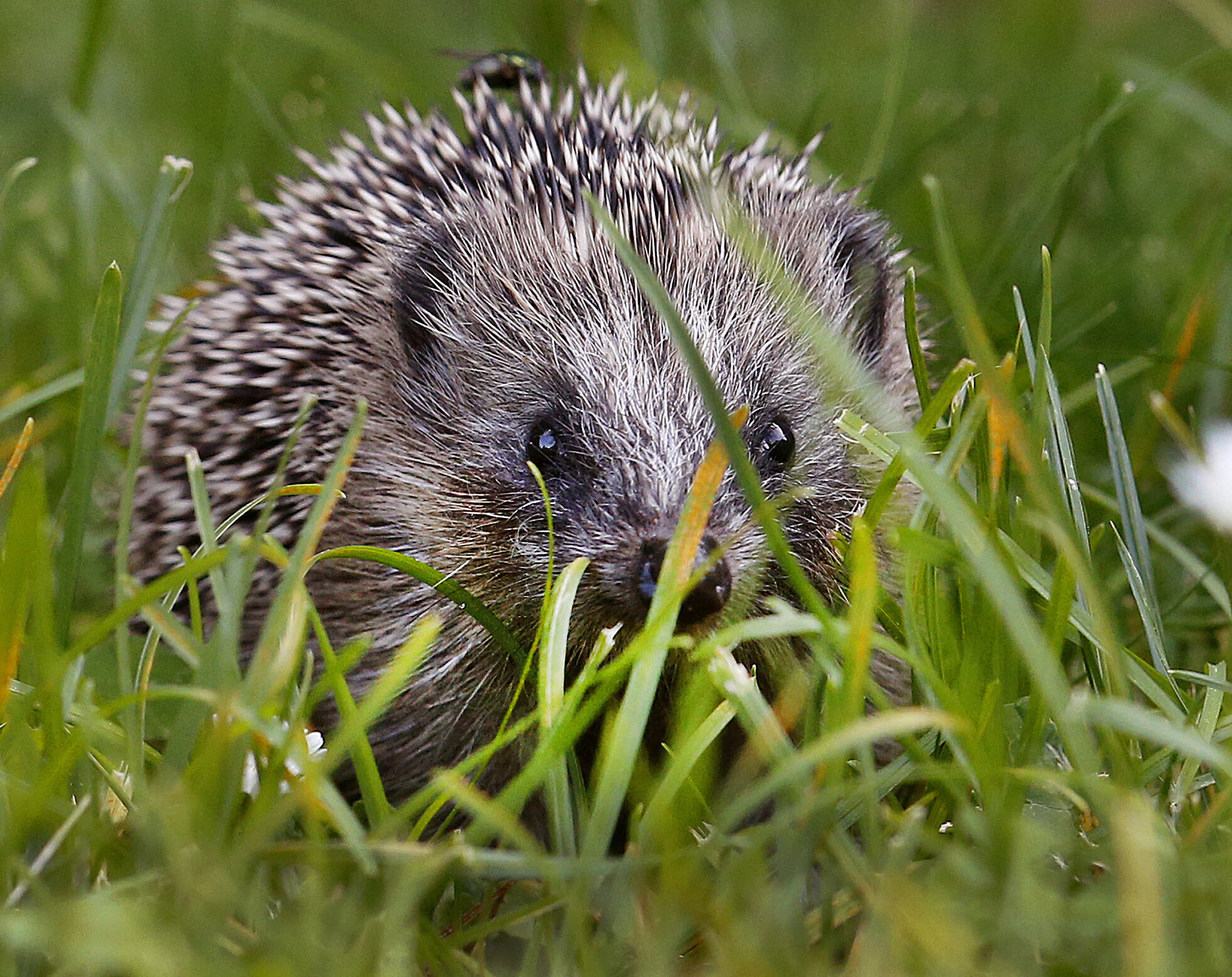
During their seasonal slumber, the animals rely on fat stores accumulated over the summer to survive, making this a crucial period for their diet.
To keep the creatures fed, many of us might start thinking about leaving food out for them in our gardens (though it’s also helpful to keep late-blooming plants like some ivy untrimmed and avoid raking leaves, so they have a store of bugs to eat).
But according to hedgehog rescue centre Hedgehog Cabin and The Wildlife Trusts, what would seem like the safest alternative ― specially-designed hedgehog food ― can often pose its own threats.
Why would food designed for hedgehogs be bad for them?
The Wildlife Trust points out that unlike cat food (which actually suits hedgehogs just fine), hedgehog food is not regulated.
Therefore its quality and ingredients vary.
“There are many unscrupulous companies keen to cash in on the growing army of kind people trying to halt the hedgehog’s decline, and will happily sell little more than floor sweeping of the cheapest, most unsuitable products, all wrapped up with a nice picture of a cute hedgehog, at the highest possible price,” Hedgehog Cabin warns.
They explain that some hedgehog feed includes mealworms, peanuts, oats, sunflower hearts and other ingredients that the creatures might like eating, but which are bad for them overall.
Advertisement
Mealworms, for example, are low in calories but delicious to hedgehogs, meaning they overeat on the food and ignore more nutrient-dense fare (a bit like ducks with bread).
Eating too many mealworms can even lead to metabolic bone disease, a painful condition that can unfortunately be fatal to hedgehogs.
What should I feed them instead?
You can get good hedgehog feed from reliable sources, but it’s important you ensure that its main ingredient is meat, and that it contains zero sunflower hearts, mealworms, oats or peanuts.
These are the worst ingredients they could have, Hedgehog Cabin write, as they can all contribute to metabolic bone disease.
But there’s a simpler solution ― “plain kitten biscuits or meat-based wet dog or cat food” are perfect for their nutritional needs, The Wildlife Trusts say.
Advertisement
As cat food is more meat-heavy, though, it may sometimes do a better job. Don’t feed them dry dog food, either, which may contain too much grain.