Is This ADHD Symptom Messing With Your Sex Life?

Attention-deficit/hyperactivity disorder impacts many different aspects of life, from laundry habits to behavior at work. Another area where ADHD can pose major challenges is sexual intimacy, thanks to a condition known as rejection sensitive dysphoria, or RSD.

So what exactly is RSD, and how does it harm your sex life? Below, experts break down the concept, how it manifests and what you can do if the experience sounds familiar.

What is rejection sensitive dysphoria?

“Rejection sensitive dysphoria, or RSD, means having an intense negative emotional reaction ― often emotional pain ― to real or perceived instances of rejection, dislike or critical statements by others,” Dr. Lidia Zylowska, an associate professor at the University of Minnesota School of Medicine and author of The Mindfulness Prescription for Adult ADHD, told HuffPost.

“It often means being vigilant and sensitive to others’ negative reactions, trying to pre-empt them, and having difficulty shaking off the intense negative feeling triggered by feeling rejected or disliked in some way.”

RSD is not a formal designation in the DSM-5, which is the official handbook for mental health diagnoses, but the term has been popularised by psychiatrist Dr. William Dodson. As Dodson writes, this kind of extreme emotional sensitivity and pain can be triggered by someone’s perception of criticism or rejection ― or “by a sense of falling short ― failing to meet their own high standards or others’ expectations.”

RSD is particularly common in people with ADHD, as they tend to struggle with emotional regulation due to imbalanced dopamine levels and brain activity.

“One significant reason for its prevalence in ADHD is that the very nature of ADHD symptoms can lead to more frequent experiences of perceived or actual criticism and rejection,” said clinical psychologist Cristina Louk. “Impulsivity, difficulty with social cues, struggles with organization, and challenges in completing tasks can inadvertently lead to misunderstandings, critiques, or situations where individuals with ADHD feel they have fallen short.”

“Sexual intimacy demands profound vulnerability, which directly clashes with the intense fear of rejection and criticism that defines RSD.”

– Cristina Louk, clinical psychologist

Many neurodivergent individuals also have a long history of being bullied. All of these lived experiences can make the brain hypervigilant to any hint of dissatisfaction. For someone with RSD, even a seemingly neutral or minor interaction can trigger a disproportionate emotional response.

“Events such as a someone being reminded to close a window, or that they forgot to put a dish in the dishwasher, or a boss requesting some edits to a report can trigger extreme emotional reactions, rage or sadness,” said J. Russell Ramsay, a psychologist who co-founded and formerly co-directed the University of Pennsylvania’s adult ADHD treatment and research program.

These feelings are swift and overwhelming, regardless of whether there’s anything negative happening in one’s present reality. A manager could be requesting a meeting to discuss positive feedback and new opportunities, but someone with RSD might immediately assume they’re being fired and start to spiral.

“Similarly, a fleeting memory of a childhood event, like being bullied or excluded, can trigger the same intense emotional pain as if it were happening in the present moment,” Louk said.

People often compare the sensation to a physical wound, like a punch to the gut, ache in the chest or crushing sensation, she added. These episodes of emotional distress can last for a few hours or even a few days ― thus affecting someone’s ability to function in daily life.

“To cope, individuals with RSD may withdraw from social situations entirely to protect themselves from potential hurt, further exacerbating feelings of isolation and low self-worth,” Louk said.

They may also take excessive steps to avoid any perceived negative reactions from others.

“People might become people-pleasers, being overly deferential to avoid negative feedback,” Ramsay noted. “They might avoid situations that they view as ‘risky’ or overcompensate by being very perfectionistic, trying to do everything right to avoid criticisms. Reactions and impulsive over-reactions can lead to arguments in relationships, including in the workplace.”

How can RSD impact your sex life?

“Rejection sensitive dysphoria can significantly complicate a person’s sex life, transforming what should be an arena of connection and pleasure into one fraught with anxiety and potential pain,” Louk said. “At its core, sexual intimacy demands profound vulnerability, which directly clashes with the intense fear of rejection and criticism that defines RSD. This often leads individuals to emotionally withdraw, making it difficult to fully open up and express authentic desires or needs, ultimately creating a chasm in emotional and physical closeness.”

Another challenge is the tendency to misinterpret neutral responses as personal slights: “A partner’s momentary distraction or fatigue might be perceived as disinterest or disapproval,” Louk said, “triggering disproportionate emotional reactions like anger, sadness, or immediate defensiveness, which can quickly escalate minor issues into significant conflicts.”

She noted that this hypervigilance can lead to a self-perpetuating cycle of dissatisfaction, with performance anxiety and physical difficulties with arousal and orgasm. Individuals with RSD might actively avoid initiating sexual encounters or even general physical affection to prevent any sense of failure or rejection.

RSD can create challenges in your sex life, but there are ways to overcome these issues.

Xuanyu Han via Getty Images

RSD can create challenges in your sex life, but there are ways to overcome these issues.

“For someone with RSD, a partner simply saying that they’re tired, or not in the mood may trigger a spiral of anxiety, fear, and shame,” said therapist Rachael Bloom. “Fear of rejection may also cause someone to prioritise their partner’s needs over their own, as they want to make sure to get it ‘right.’ It might also make someone less likely to openly share sexual preferences or desires. This lack of openness can significantly impact someone’s sexual satisfaction.”

Individuals with RSD might even sabotage their relationships to avoid potentially feeling hurt and rejected in the future. Psychotherapist and ADHD coach Terry Matlen noted that adults with ADHD often feel lingering self-doubt and insecurities from childhood and question whether their partner is even attracted to them.

“They may be overly sensitive about their looks, perhaps perceived imperfections, weight, ability to sexually express themselves, for example,” she said. “One can also shut down sexually and not enjoy the full experience as a way to avoid being rejected or criticised.”

How can you keep RSD from hindering intimacy?

There are things you can do ― both with a partner and on your own ― to keep rejection sensitive dysphoria from derailing your sex life.

“Educating yourselves together about RSD fosters deeper empathy and understanding, and preemptive communication about potential triggers ― perhaps establishing a ‘safe word’ for needed breaks ― can prevent escalation,” Louk said.

She also recommended reinforcing the strength of your relationship by focusing on non-sexual intimacy with shared activities and emotional connection. The positive effects can carry over into your sex life as well.

“Recognise that your automatic assumptions about how someone else sees you can be mistaken,” Ramsay advised. “Look at all the positive aspects of a relationship, including the physical relationship.”

Making an effort to understand your sensitivities and reactions can help you anticipate and prepare for them.

“The key to managing RSD is to regulate the emotions involved ― shame, guilt, fear,” said Billy Roberts, a therapist at Focused Mind ADHD Counseling. “One way to regulate emotions within a relationship is by being open about RSD. Identify when you’re experiencing RSD, and check the facts with your partner. For example, ‘I’m feeling worried that you’re mad at me. Is that true?’ You might also share that it would help if they delivered their response in a supportive manner.”

Roberts emphasised that vulnerability and honest communication foster security, which builds a better sex life.

“It is helpful to recognise what happens in the moment a feeling of rejection comes up ― how does the body reacts or tenses, what feelings or thoughts bubble up,” Zylowska said. In these moments, she recommended you try to practice calming yourself with deep breathing and self-compassion.

“Instead of thinking ‘I am not liked,’ give the benefit of the doubt ― ‘what if I am liked?’” she said. “It can be helpful to ask yourself if there is too much personalising of a partner’s behaviour ― ‘maybe their lower libido is not about me but something going on with them.’”

Try to practice being brave and honest about your preferences, even in small ways, as you have sex or talk about intimacy with your partner.

“Tell your partner of your emotional sensitivities and what words and behaviours are most troublesome,” Matlen said. “Educate your partner on RSD and how it’s related to your ADHD and that it’s not about them. And it’s important to be kind to yourself, to know that it’s part of how your ADHD brain works, and that you aren’t broken, weird, or psychologically weak.”

If you’re having issues, consider seeking professional help through individual and/or couples therapy. Don’t be discouraged if you need time to figure out the right multifaceted approach for you.

“In my practice, I treat RSD using a combination of cognitive behavior therapy, acceptance and commitment therapy and somatic therapies,” Bloom said. “People with ADHD absolutely deserve to have satisfying and authentic sex lives, and developing an awareness around certain fears and how they are impacting behavior is so important.”

Share Button

‘I Haven’t Had Sex With My Girlfriend Of 5 Years. Are My Instincts Off?’

There’s no set figure for how little sex is too little.

Indeed, some researchers found that only 26% of couples hit the once-weekly mark – speaking to The New York Times, multiple married pairs reported happy, sex-free marriages.

Couples counsellor and author of The Couples Communication Handbook, Raffi Bilek, previously told HuffPost UK the tipping point is usually “whatever amount is causing arguments”.

Writing to Reddit’s r/AITAH (Am I The Asshole Here) forum recently, site user renelemely suggested he was approaching that point of “resentment” with his partner.

“My girlfriend and I have never [had] sex, and it’s been almost five years. Am I the asshole?,” he asked.

We spoke to psychologist Veronica West, founder and lead Content Creator of My Thriving Mind, about when sexual incompatibility is a dealbreaker – and when it can be overcome.

The pair have never had sex

The poster shared that he’s never slept with his girlfriend in their five-year relationship.

At first, he said, he thought she was a little shy and wanted to go slow. “I was just excited for the time to come… and it still hasn’t come,” OP (the original poster) wrote.

When he tries to bring it up, she gets very upset and says the topic makes her feel extremely guilty. She has recently shared that the main reason behind the mismatch is her lack of sex drive.

“She is beautiful and smart, and she has a good job,” OP added. “We live together and her family love me. We do everything together, and I miss her when she’s not around.”

Still, he wonders if he “can live like this”, and feels increasing “resentment” towards his partner and is hoping she can change.

Sexual incompatibility doesn’t have to be a dealbreaker

West shared that even though a lot of couples struggle to address sexual incompatibility, it isn’t a “death sentence” for the relationship.

“What really counts is what both parties feel about it,” she added. “If both parties are willing to get curious and find options, there is room to build something positive.”

When asked whether most relationships can survive a complete sexual mismatch, she responded: “Sometimes, sometimes not.”

Compromise, she said, is not always a “meet in the middle” scenario when it comes to sex. “You can’t really compromise to have sex one and a half times per week and feel like you’ve won,” she advised.

“It’s about emotional and physical needs being met in a way that feels respectful and genuine.”

That can take the form of physical contact with no sexual expectation, experimenting with open relationships, seeing a therapist, and communicating your needs often.

“But no matter the route, the two of them have to actually agree, not begrudgingly go along and hope the other [one] of them will change their mind next month,” West continued.

“It becomes a dealbreaker when the mismatch turns into a chronic emotional ache.”

Refusal to discuss the topic is one red flag.

And, she ended: “If one partner starts to feel invisible or chronically rejected, or the other feels guilt every time the topic comes up, the tension is no longer just about sex – it is about identity, resentment, and unmet needs.”

Share Button

I’m A Sexologist – Here’s Why Sex Is So Much Better (And Wilder) On Holiday

With June just around the corner, Brits are about to head into peak holiday season.

And according to data from sexual wellness company LELO, 80% of us think some time away from home would reinvigorate our sex life, while 31% say going abroad makes them more adventurous in the bedroom.

We spoke to licensed sexologist, relationship therapist, and author at Passionerad, Sofie Roos, about why going on your hollibobs makes you so much more open-minded.

Part of it is plain ol’ free time

“We simply have more time” and fewer stresses on holiday, Roos says. This leaves us not only more able, schedule-wise, to engage in the horizontal tango, but also more open to be “inspired” (oo-er).

Then, there’s the fact that you’ll likely be in a better, more playful mood.

“We are the best versions of ourselves [on holiday], making it much easier to get passionate [and] wild and put in the energy in the sex that we normally don’t have the time or lust for,” the sexologist tells HuffPost UK.

We also reframe our relationship and our partner as we take in new sights, sounds, food, and even weather, seeing our beau and ourselves in a (sometimes literal) different light.

“We’ve got the sunrise and warmth making us feel better, we eat great food, are travelling and exploring new places,” Roos says.

This “creates a perfect storm that leads to great opportunities for feeling extra passionate, attracted and hornier – making the sex more fun, enjoyable and interesting!”

Can you recreate that at home?

Speaking to Yahoo Life, sex and relationship expert Natalia Baker from All Things Worn shares that you don’t need to wave goodbye to friskiness when you land back home.

Allocating relaxation time, planning spontaneous dates, choosing to carve out quality time together, and openly discussing your fantasies with one another can all help, she says.

“Being transparent about what you both enjoy and want to try can help recreate the excitement and anticipation felt on holiday,” she recommends.

Share Button

Here’s Why You Queef During Sex. (Don’t Be Embarrassed, It’s Normal.)

Queefing, as anyone with a vagina will tell you, can happen at some inopportune times: while you’re having sex, in the middle of a yoga class or during a visit to the gynaecologist.

You may have heard some people refer to queefs as “vaginal farts” (charming). But while queefs do produce a toot-like sound, we can assure you that queefing is not the same as passing gas.

We talked to gynaecologists and sex therapists to learn more about what causes queefs, some of the misconceptions about them and why they shouldn’t be as mortifying as we make them out to be.

What makes you queef, anyway?

Queefing is an involuntary bodily function that occurs when air is pushed into the vagina, gets temporarily trapped in the folds of the vaginal canal (called rugae) and is then released.

“Queefing happens when a penis, fingers or sex toy go in and out of the vagina bringing additional air along with it,” Sherry A. Ross, an OB-GYN in Santa Monica, California and the author of “She-ology: The Definitive Guide to Women’s Intimate Health,” told HuffPost. “Sex can involve a lot of thrusting of the penis in and out of the vagina, typically pushing extra air into a dead-end space.”

Certain sex positions, like doggy style where your pelvis is titled upwards, or abruptly switching from one position to another, may increase the likelihood of queefing. Even non-sexual activities, like putting in a tampon or menstrual cup, practicing yoga (like when you move out of an inversion pose) or your gyno inserting a speculum can lead to queefing.

“From my experience as an OB-GYN, almost every woman has experienced at least one episode of queefing some time during her life, sometimes even during a pelvic exam,” said Diana Hoppe, an OB-GYN in Encinitas, California.

While the gas that comes out of your rectum may have a foul odor (a result of bacterial activity in the gut), queefs are odorless, Hoppe added.

Can you prevent a queef?

There’s not much you can do to stop a queef in its tracks. You can’t just “hold it in” like you would a fart.

And as OB-GYN Sheila Loanzon told Cosmopolitan, “If you try to contract the vaginal canal to prevent air from coming in, it can cause sex to be more painful.”

Women who have previously given birth, in particular, may be more prone to queefing because pregnancy and childbirth can weaken the pelvic floor muscles. By strengthening those muscles via exercises like Kegels, you may be able to reduce your odds of queefing, Hoppe said.

“Also, when doing any abdominal exercises or weight-bearing exercise, it is important to squeeze the pelvic floor while holding the core abdominal muscles tight,” Hoppe said. “Many women squeeze abdominal muscles but do not activate the pelvic floor at the same time, thus allowing the pelvic floor to sag, increasing the likelihood of air entering into vaginal canal.”

During sex, keeping the penis, fingers or sex toy inside you while you change positions could lessen your chances of queefing because it “gives air less of an opportunity to get into the vagina,” Jamil Abdur-Rahman, an OB-GYN and the chairman of Obstetrics and Gynaecology at Vista Health System in Waukegan, Illinois, told Self.

And in theory, you could just avoid certain sex or yoga positions altogether. But what’s the fun in that?

When queefing does happen, don’t sweat it.

So why does this very normal bodily function feel so embarrassing in the moment, be it during doggy-style or downward dog? It really just comes down to that pesky noise, Hoppe said.

“The stigma is due to lack of understanding the difference between release of air from the vagina and flatulence,” she said. “The sound effects may be the same though, so culturally there may be a stigma or embarrassment due to this occurring ‘down there.’”

Sex therapist Vanessa Marin underscored the fact that queefing is normal, common and “not anything to be ashamed of.” Embracing the awkwardness of the moment can even make sex more enjoyable for both partners.

“Our bodies make funny noises sometimes, and that’s OK!” she said. “Plus, there are plenty of other goofy things about sex, like getting sweaty, slipping out, getting into awkward positions and so on. The more we can laugh about these kinds of things, the more fun we’ll have during sex.”

When a queef slips out mid-coitus, you have two choices: ignore that deflating balloon sound completely or quickly acknowledge it and move on. Marin prefers the latter route.

“It’s a personal preference, but I think it’s better to just quickly acknowledge it and laugh it off,” she said. “That way you don’t have to sit there thinking about it, anxiously wondering whether or not your partner heard it.”

Is queefing ever cause for concern?

Generally, queefing is nothing to be worried about. While rare, if queefing is accompanied by pain or a bad smell, you should make an appointment with a doctor to rule out any more serious issues.

“If queefing is associated with a foul odour, it may be an indication of a vaginal infection or possible fistula, an [abnormal] connection between rectum and vagina due to previous radiation treatment or surgery that causes stool or feces to come out of the vagina,” Hoppe said.

But for the most part, queefing is a normal, if slightly awkward, fact of life. So let’s not get so hung up on it, OK?

Sex Ed for Grown-Ups is a series tackling everything you didn’t learn about sex in school — beyond the birds and the bees. Keep checking back for more expert-based articles and personal stories.

Share Button

This Is The Ticket To More Frequent And Satisfying Orgasms, According To New Research

When it comes to research and women’s sexual pleasure, most of what we know is about how things aren’t working — the fact that many women struggle to achieve orgasm with their partners, for example. One survey of women in Finland found that only 54% experienced an orgasm the last time they had intercourse, compared with 90% of men in similar surveys.

“There’s so little evidence that has actually looked at normal functioning of the orgasm in women, it’s shocking,” Megan Klabunde, a psychologist and professor at the University of Essex in England, told HuffPost.

Yet lots of women do have regular orgasms, both alone and with partners, and feel satisfaction in their sex lives. What could we learn from their experiences?

A recent study published by Klabunde and her co-authors found a skill that correlates with more frequent and more satisfying orgasms in women, nonbinary people and trans men: interoception.

What is interoception?

In elementary school, we’re taught the five senses: sight, smell, taste, hearing and touch. But these don’t encompass interoception, which is our perception of our own internal sensations.

“Interoception focuses on the senses from within your body, such as your heartbeat, sense of your breathing, hunger and your need to use the toilet,” Klabunde told HuffPost.

Noticing that your pulse or your breathing has sped up or slowed down would be one example. Or maybe you’re attentive to your body’s hunger cues even before your stomach starts growling.

In their survey of 318 women, nonbinary people and trans men, Klabunde and her co-authors rated participants’ levels of interoception by asking them how much they agreed with statements such as “When I am tense, I notice where the tension is located in my body,” ”I notice how my body changes when I feel happy/joyful” and “I trust my body sensations.”

How does interoception improve sexual satisfaction?

The study found that “a person’s tendency to notice their interoceptive
sensations and their abilities to attend to these signals are associated with increased orgasm frequency in women,” Klabunde said. In other words, people who were more in tune with internal sensations such as hunger or their pulse speeding up tended to have more frequent orgasms.

Klabunde noted that the study measured participants’ perceived interoception — whether they felt in tune with their bodies, without regard to whether these sensations were accurate.

This association between interoception and frequency of orgasms held for both solo and partnered sex. Interestingly, “the only thing that was associated with satisfaction of your orgasms in the partnered context,” Klabunde said, was “body trusting,” which she described as “women’s ability to trust their body and the sensations from their bodies.”

She speculated as to why this might be. “It’s really important to feel like when you do feel the sensations in your body, to trust them, to know that it’s safe to have that experience, rather than to feel like you have to override it with your own thinking and really doubt what your experience is.”

Joy Berkheimer, a therapist who was not affiliated with the study, saw a natural connection between interoception and sexual pleasure, telling HuffPost, “This heightened awareness allows for a better understanding of what feels pleasurable, leading to (hopefully) enacting or asking for more of what you like.”

How can people hone their interoceptive skills?

Though there is not empirical research showing what people can do if they want to increase their interoceptive awareness, it makes sense to try tuning in to these sensations if you are hoping to have more frequent or more satisfying orgasms.

One way to learn about your body’s sensations and preferences is to do some exploration on your own, so it’s perhaps not surprising that the participants in Klabunde’s study had more frequent and satisfying orgasms by themselves than with a partner.

“Engaging in solo sexual activities often means there’s less pressure to please a partner or meet external expectations, creating a more relaxed state of mind that enhances personal pleasure and enjoyment,” Berkheimer said.

“Additionally, cultural norms often prioritise male pleasure, which can diminish focus on female and nonbinary pleasure in partnerships; solo activities provide a space to prioritise one’s own needs. For some, the emotional connection experienced during solo activities can also feel safer, encouraging vulnerability and deeper exploration of your sexual identity and desires,” Berkheimer added.

While in other endeavours, people are often advised to home in on their goal or even to “manifest” it into reality, interoception during sex is less about whether or not you reach orgasm and more about paying attention to your sensations in the moment and trusting your body.

Klabunde noted that sensate focus therapy, a kind of sex therapy for couples, is rooted in noticing your own sensations and building trust with your partner. Though it has not been clear in the past why this therapy is effective, interoception offers a potential explanation.

Although it may lead to more or better orgasms in the long term, sensate focus “tries to get a couple to take orgasm off of the table and to not make it a part of the goal … to slowly get more comfortable in those sexual interactions without having a goal and just to be present with each other and to be present with your bodies,” Klabunde said. For example, a couple might start by having one partner stroke the other person’s hand and focusing on what that experience feels like.

Berkheimer advised that couples looking to improve their sex lives embrace “the journey of discovery together.”

“Start by cultivating a safe and open space for communication,” Berkheimer said. “Talk about what feels good, what excites each of you and any boundaries you want to establish.”

If you’re looking to take your sexual relationship to the next level, Berkeimer recommended that you “encourage your partner to connect with their own body — this self-exploration is powerful and can inform you both about what brings joy and pleasure.”

You can also “experiment with different techniques, positions and even toys to find what resonates best,” she said, adding that you might incorporate breath work or mindfulness practices, both of which can help you tune in to your internal sensations.

“Creating an atmosphere that embraces playfulness, curiosity and touch can transform your intimate moments into a magical experience,” she said.

Share Button

3 Of The Best Sex Toys I’ve Tried Are 50% Off Right Now – You’ll Never Call Your Ex Again

We hope you love the products we recommend! All of them were independently selected by our editors. Just so you know, HuffPost UK may collect a share of sales or other compensation from the links on this page if you decide to shop from them. Oh, and FYI — prices are accurate and items in stock as of time of publication.

One of the best perks of my job as a sex and relationships writer is the truly endless number of sex toys I get to review. And trust me – after you’ve tried as many as I have (mum, this is where you stop reading), you learn that not every vibrator is built the same.

However, if you’re a sex toy novice, it can sometimes be quite overwhelming trying to understand what you should buy for your spicy toolkit and what is actually worth the money – bedside drawer space is valuable real estate people!

Well, if you’re looking for some silicone support for your sex life, I’ve discovered not just one, but an entire RANGE of sex toys that will hit the spot (ahem) whether you’re a beginner or seasoned sex toy pro.

SexToys.co.uk has the UK’s largest catalogue of adult toys including vibrators, dildos, and sex toys for all genders, so it’s unsurprising that it’s home to my favourite new collection – The One.

The best selling US sex toy brand is exclusively available at SexToys.co.uk and boasts a variety of toys so perfectly inclusive, there is something for everyone.

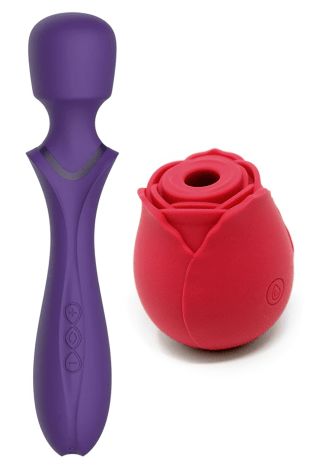
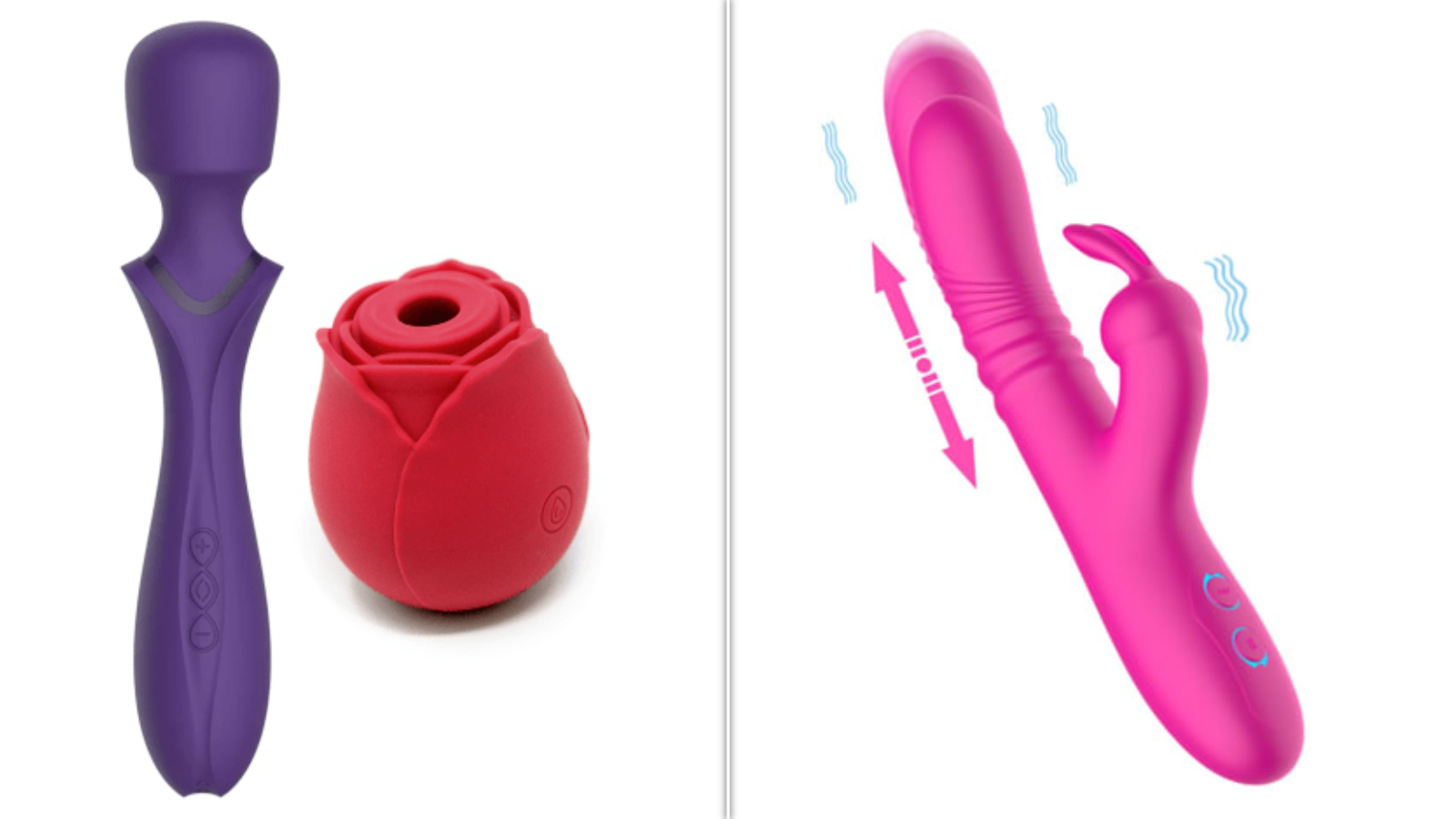
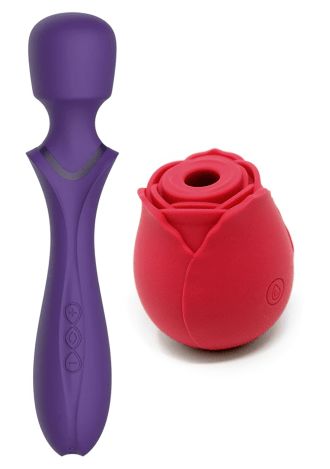
When it comes to essentials, The One Power Couple kit is an amazing starting point as it comes with both The One Rose and The One Wand – two must-haves when it comes to achieving different types of clitoral stimulation.

We’ll take both, thanks.

The One Rose is made of body-safe silicone and features innovative pressure wave technology that combines with stimulation to deliver plenty of chills. You can choose from three different speeds and seven patterns of suction and pulsation, giving you plenty of options to work your way through (although, it certainly won’t feel like work).

Meanwhile The One Wand boasts a whopping 10 different vibration speeds and patterns which means it will quickly become one of your favourite pleasure products – it also warms up quickly to body temperature for a more comfortable feel.

And don’t worry about having to stock up on an endless supply of AA batteries anytime soon – both items are rechargeable. The fun doesn’t have to stay limited to the bedroom either as the pleasure-inducing pair are both completely waterproof.

The best bit? Okay, apart from the end result of using them – so technically, the second best bit… they’re super easy to use. A single button powers The One Rose on and off, as well as cycles the product through its 3 speeds and 7 patterns of suction and pulsation.

The kit is a whopping 50% off at the moment too, taking the price down from £159 to just £79.60 – an absolute barg for two top of the range sex toys. The One Rose and The One Wand can also be bought separately – and they’re 40% off at the moment too!

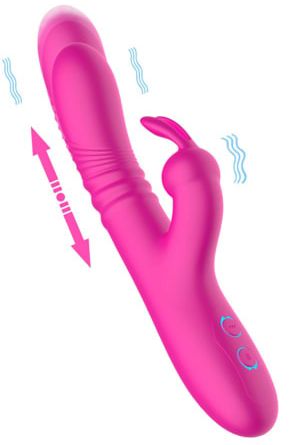
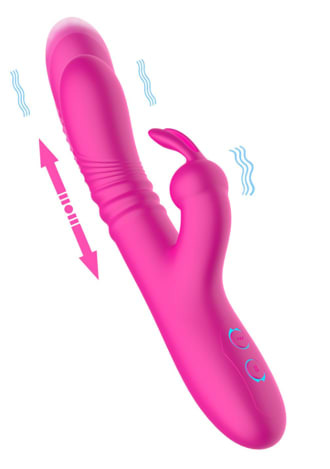
Meanwhile if you’re looking for internal vibrators – The One Thrusting Rabbit is truly good enough to stop you in your tracks from texting your ex. With a shaft and bunny-shaped clitoral stimulator that deliver intense vibrations, this piece gets an added boost from the thrusting function that does the work for you (I am nothing if not a total pillow princess when it comes to solo enjoyment). With 10 different thrusting speeds to choose from, it’s the perfect vibrator to add to your rotation.

Oh – and it’s 51% off.

Share Button

5 Exciting Things Straight People Can Learn From Queer Sex

One of the eternal truths about sex is that we all do it a little differently, and have different relationships with bedroom antics.

However, this Pride month, the sexperts at Beducated have shared that they believe that heterosexual folks could learn a lot about sex and intimacy from their queer counterparts.

Given that heterosexual women orgasm less than LGBTQ+ women, we reckon that there are definitely some essential insights we could all learn from.

What straight people can learn from queer sex

There is no ‘right way’ to have sex

While a lot of us feel pressure to perform well in the bedroom and get it ‘right’ when it comes to sex, there’s actually no wrong way to have sex and orgasms can come (pun intended) without any penetration.

Beducated CEO Mariah Freya said: “There is this outdated misconception that sex is only complete when there is penetration involved. That can be a problem because it makes penetration the main event.

“However, we know that people with vulvas require more than just penis-in-vagina action to reach an orgasm.”

Your gender doesn’t define whether you’re submissive or dominant

While there is no gender behind these roles, society often imposes rigid gender roles in sexual dynamics, expecting straight men to be dominant and straight women to be submissive. Queer sex challenges these norms.

Freya said: “Why let gender define how we express ourselves in the bedroom? Instead, think about the role you find most pleasurable, expectations be damned.”

Toys and gadgets are your friends, not foes

Sex toys and accessories are not just for replacing body parts; they can enhance sexual experiences significantly and bring a whole lot of fun to the bedroom.

Freya said: “Lesbian folks are often asked, ‘Don’t you miss dick?’ Cringe aside, sex sans penis doesn’t mean you have to skip the penetration — there are dildos for that.

“Beyond replacing body parts, toys, lubes and accessories can elevate sex to a whole new level.”

Outdated prejudices limit your pleasure potential

Freya said: “People with penises are blessed with this small gland called a prostate, which has the potential to lead to next-level orgasms. For some ridiculous reason, we’ve decided as a society to completely ignore it because prostate stimulation involves getting close to – gasp – the anal region.

“Imagine having something that powerful, and not using it because of prejudice. The world is upside down.”

There is no magical secret to orgasms, just knowledge

Though the orgasm gap between straight and queer women is a real thing, it really doesn’t have to be, and Beducated believe the only difference is a knowledge gap.

Freya said: “You don’t need to have a vulva to know how to turn one on; all you need to do is educate yourself.

“Getting familiar with vulva anatomy means you can find the G-Spot and cervix, for example. Sure, clitoral stimulation is great, but that’s just the tip of the iceberg. The same goes for male body anatomy – you want to know where the perineum is, or how to approach hand jobs when your partner is (or isn’t) circumcised.”

Share Button

Straight Folk – You Seriously Need To Start Talking About HIV

While we may think that, at this point, we know all there is to know about HIV and what causes it after decades of research, recent data has revealed that there is still a long way to go, especially for heterosexual people.

Newfoundland Diagnostics have recently conducted a study using a sample of 2,504 people, into public awareness and perception of HIV ahead of HIV Testing Week this week. Alarmingly, their research found that many people aren’t aware that anybody can get HIV and have never been tested.

According to the researchers, over one million straight people in the UK believe that they are immune to HIV. This is exceptionally alarming, given that UK Government figures show that almost half of HIV cases are heterosexual people.

73% of straight Brits have never tested for HIV

The study also found that over a fifth (21%) of heterosexual Brits believe that they are unlikely to contract HIV, leading them to not get tested. Additionally, one million Brits believe that they are ‘immune’ to the condition.

Other reasons for heterosexual people not testing for HIV include never having unprotected sex (18%), not having access to an HIV test (4%) and not being bothered to test for HIV (3%).

Overall, this research exposes a sore lack of education within the UK around HIV and how it is contracted and manifests. Newfoundland Diagnostics notes that this ironically echoes the infamous tombstone ads of the 80s which said: “don’t die of ignorance.”

Frederick Manduca, co-founder of Newfoundland Diagnostics, said: “Whilst testing does seem to be increasing in the long-term, these findings reveal there remains a substantial amount of ignorance towards testing and its importance amongst heterosexual people.”

Who can get HIV and how is it transmitted?

Despite much of the focus surrounding HIV being on gay, bisexual, and men who have sex with men testing for HIV, far more people could contract the disease. Anybody who has unprotected sex, exchanges bodily fluids or shares needles should regularly test for HIV. Anybody can get infected with it, regardless of sexuality, race, gender, sex, or age.

HIV is found in the body fluids of someone living with HIV. This includes semen, vaginal, and anal fluids, blood, and breast milk. In the UK, according to Newfoundland Diagnostics, the most common way of getting it is through anal or vaginal sex without a condom. It cannot be transmitted through sweat, urine, or saliva.

How do I test for HIV?

All HIV tests will check your blood for any blood-borne diseases and are available as part of a regular STI check up. You can visit a GUM clinic or sexual health practice for a test, or you can test at home with a self-test such as Newfoundland Diagnostics’ HIV test.

Share Button

I Went To A Brothel With My Boyfriend. It Was Nothing Like What I Expected.

My boyfriend, Rod, is passionately kissing another woman.

Little fingers of jealousy squeeze my insides, and I’m not sure where to look or what to do. The woman senses my discomfort and immediately stops, pulling me up beside her with a big, warm giggle and a squeeze. I relax and remember: This is why I chose her. I like her, I love that giggle, and I know she has absolutely zero interest in poaching my boyfriend.

How do I know this? Because I picked her out of the lineup at one of Nevada’s most storied legal brothels. We hired her to join us for a threesome for an hour, and when our time is up, she will go back out to the bar and charm someone else with that sexy laugh, and we will go home.

I’d never had a “real” threesome before, other than some fairly benign fooling around in college. It had been a lifelong fantasy, but the emotional politics of threesomes always seemed so forbiddingly complicated. Surely someone would get hurt, someone would feel left out, someone would get jealous ― surely, maybe, definitely me? Plus that third-wheel ― would she turn stalker? Would we get an STI? Would an angry boyfriend show up out of nowhere and make us the unfortunate stars of a true-crime show? Just too risky. So I had resigned myself to the fact that some things are best left to fantasy.

When I met a lover who knew his way around a paid hookup, however, a whole new possibility presented itself. Rod and I headed to the brothel outside Reno, Nevada, to celebrate my upcoming birthday. And it was not at all what I expected.

We took a cab from our hotel in downtown Reno to the brothel’s bar, all flashy neon outside but classic sticky floors and bare-bones Old West saloon inside. Escorts chatted among themselves on bar stools or lounged on velvet banquettes against the wall. It was early ― around 4 p.m. ― and we were some of the only patrons. A few old men sat at wooden bar tables, eating out of plastic foam TV trays and silently sipping beer. Women who obviously knew them would pop by periodically to pick them up, a scene much more akin to medical assistants ushering patients to the exam room than participants embarking on a sexy encounter.

Rod and I were the subject of great interest ― couples are a fairly rare event ― and we had many friendly women cruise by our table, asking if we had any questions and offering to show us around. Before we had a chance to chat with anyone in detail, the “lineup” bell rang, and every patron who had not already initiated an encounter with a woman went through a forbidding dungeon-like door into a cavernous hunting lodge space.

In front of a giant stone fireplace the women lined up. They were every kind of everything ― all different races and body types and styles of dress. I found myself in a rare moment of simply admiring the beautiful diversity of their bodies without that knee-jerk need to compete or compare myself. I winced a bit self-consciously, however, when I realised that none of them were as old as I was. Would they be turned off by our middle-aged bodies? Wait, was I actually expecting them to be turned on? I was momentarily stumped.

The author and her boyfriend, Rod, on the plane to Reno, Nevada.

Courtesy of Melissa Duge Spiers

The author and her boyfriend, Rod, on the plane to Reno, Nevada.

The house manager ― a business-suited woman who was my age ― introduced each woman, who then stepped forward for a moment, gave a little wave and a smile, just like at a beauty pageant. A handsome young guy in the chair beside us made his pick immediately. His woman grinned and sashayed over to sit on his lap and gave him an enthusiastic greeting ― this was clearly not their first time together. The manager then asked any women who wanted to entertain couples to step forward, and about half of the line did.

Rod and I had made an agreement before we arrived: I got to choose. I already knew that I wanted Carmen, the curvy, dark-haired woman in a fishnet dress and thong who had been the first to say hello to us in the bar. She was flirty and seemed happy. She was pretty and she had that giggle. So I pointed at her, while my nice-girl upbringing screamed at me silently: Pointing is so rude! The women without dates headed back to the bar and I felt another guilty stab as they filed past us. Had I made them feel rejected? Did they take it personally?

I didn’t have time to think about it because Carmen was shimmying on our lap, or, more specifically, on my lap as I sat on Rod’s lap. Pulling me up by the hand, and looping an arm around him, she led us to the negotiation room. It was a small room with dim lighting that resembled a hall closet and was just big enough for us all to sit knee to knee while we discussed what our hour might look like and what the price tag would be.

Depending on what services we wanted, our time with Carmen could easily total a thousand dollars or more. She laid out her ground rules (condoms were always required; kissing was OK) and asked if we had any specific requests. Not really, we just want to have fun, we told her. We negotiated a price ― I gulped and Rod agreed. Then we offered up our genitals for inspection, a quick once-over she conducted with a sly sense of humour while she detailed the rigorous STI testing she undergoes every week. Oddly, the whole thing was reassuring and funny rather than awkward. STIs are taken very seriously at the brothel, which is obviously a good thing.

The unusual formalities over, we headed to the pay window and forked over the cash. Once we were finished, we followed Carmen down a maze-like hallway — a literal red light glowed everywhere ― and she pranced along ahead of us with a Champagne bottle in an ice bucket.

When we finally got to her room, a tiny, semi-personalised space, I was thrilled to find it was toasty ― I’m always freezing when I’m nervous. Carmen pointed out condoms, towels, the fresh sheets on the bed, and the adjoining bathroom (which she shared with the woman in the room next door). The little tour was a strange combination of straight commerce and flirtation.

Carmen seemed to be a naturally touchy-feely person and she held my arm or tapped my back as she showed us around. I noticed that she focused her attention much more on me than Rod, which charmed me, but the cynical observer in me noted that it is an undoubtedly smart, practiced move — she is obviously well-versed in disarming the female competition and jealousy aspect of these encounters.

The author and her boyfriend hanging out at the bar in their hotel, where she says they, "enjoyed shocking people by telling them our destination."

Courtesy of Melissa Duge Spiers

The author and her boyfriend hanging out at the bar in their hotel, where she says they, “enjoyed shocking people by telling them our destination.”

Things flowed effortlessly between Carmen and me, from our intro chatter to getting into the horizontal action, and within minutes Rod enthusiastically joined in, the three of us rotating around in a surprisingly fluid give-and-take. While he nominally took charge ― after all, a threesome needs a little direction ― it was overwhelmingly female-centered sex. I smiled to myself. Threesomes are such trite male-fantasy territory, but Carmen and I were a girl party of teamwork, exploration and celebration. I even joked at one point that we hoped Rod didn’t feel excluded. (He decidedly did not.) The whole experience was fun and sexy ― all I had hoped it would be ― with none of the awkwardness I had feared.

Carmen was unfailingly charming and enthusiastic, but I never once mistook her warmth for actual sexual excitement. There was no pretence on anyone’s part that this encounter was expected to include satisfaction for her.

I asked her about this later, as we all lounged naked on the bed, sipping Champagne and chatting. She batted the question down with a polished little sidestep ― she explained that she has enough fun just making her clients happy, and it’s too much work to have orgasms all day long anyway. We asked her where she grew up (Venezuela) and how she got into this line of work. (She was initially a stripper but found brothel work safer, with less harassment and more money.) When I wondered aloud whether the post-coital chat was the best or worst part of the job, Carmen assured me she looks forward to connecting with customers and that the old saw is actually true: She often has clients who pay just to talk.

Way too soon, an intercom buzzer rang and a female voice let us know our time was up. I had wondered about security ― surely there was a network of bouncers and cameras and intercoms and emergency buttons to protect the women, but everything was so discreet, we didn’t notice any of it. We jumped up and bustled around, helping Carmen strip the bed and straighten up (even though she insisted we didn’t have to) and then the three of us spilt out into the hallway.

We returned to the bar where we began our adventure for some final chatter and a drink. We were sitting cozily together at a table and laughing at our own newly made inside jokes, when a young woman who looked fresh off a farm joined us. She clearly had a friendly relationship with Carmen and was eager to know, “What exactly do you do in a threesome?” As we happily shared our insights, she turned to me and said with a wink, “This is what happens to a girl when you raise her in a really strict, controlling religion!” I raised my glass and said, “That makes two of us, girlfriend! Amen!”

A drink suddenly arrived at our table for Carmen. It was sent from a gentleman at the bar, and she smiled and raised a toast to him. She got up immediately and, after squeezing my leg in a little goodbye, strutted over to him. I watched as they chatted for a few moments and then she linked her arm in his and led him over to the big lodge door. The last thing I heard as it swung shut behind them was that warm, bubbly giggle, and I found myself sad to see her go. I guess I was jealous after all.

Melissa Duge Spiers is an award-winning screenwriter and memoirist, whose memoir-in-progress, “The Glory Whole,” won the Book Pipeline 2021 Unpublished Manuscript Non-Fiction award. She is represented by Dani Segelbaum/The Carol Mann Agency. For more from her, visit her Instagram at @mdugespiers.

Share Button

I Didn’t Have Sex For 10 Years. When I Finally Did, It Sent Me To A&E.

I lay on my side, cradling my iPhone, looking up “bleeding after sex” and dabbing a piece of toilet paper between my legs. I thought about whether or not I should wake my new boyfriend up.

The Healthy Woman website stated, “It’s common for women of all ages to have bleeding after sex at one time or another. In fact, up to 9 percent of all women experience post coital bleeding (outside of first sex) at some point in their lives. Most of the time it’s nothing major and goes away on its own. But bleeding after sex can also be a sign of something more serious.” SIGN OF SOMETHING SERIOUS?

Great. I had already had acute myeloid leukaemia multiple times, and now, when things were looking up, WebMD said this new symptom could mean I have pelvic organ prolapse (when pelvic organs, like the bladder or uterus, jut beyond the vaginal walls).

I found a site where someone asked, “Could my uterus fall out?” No, it couldn’t. At least I had that.

“The most important thing to pay attention to is the rate and volume of bleeding,” the article read. “Most bleeding after sex is fairly light. Heavy bleeding — where you’re soaking through a pad every hour or passing clots larger than the size of a quarter — warrants a visit to the emergency room.”

I didn’t have a quarter, but I did have a clock that showed it had been two hours. The doctor on call for my internist’s office, around 2 or 3 a.m., sounded annoyed.

“You should have called your gynaecologist,” he said. But he called ahead to the ER. I shook my boyfriend awake, and off we went into the spring night that had held so much promise. Intellectually I knew it wasn’t my fault, but I was more embarrassed than if I had been wearing white shorts and gotten my period in gym class.

On the TLC series, ”Sex Sent Me to the ER,” worse things happen, such as objects stuck where they shouldn’t be. My issue was more mundane, but I found out also very common: lack of information after my cancer treatment.

Nobody told me that chemotherapy, which I’d undergone after my diagnosis in 2003 and again after relapses in 2007 and 2008, could cause a sudden loss of oestrogen production in my ovaries, and that this could lead to symptoms of menopause such as a thinning vagina and vaginal dryness. (Actually, the first round put me into early menopause at 48.) Nobody told me that vaginal dryness can cause pain and bleeding during intercourse.

Yet data shows that the incidence of sexual dysfunction among female cancer survivors is somewhat common. Common sexual side effects are difficulty reaching climax, less energy for sexual activity, loss of desire, reduced size of the vagina, and pain during penetration.

For my part, it had been a 10-year dry spell. You shouldn’t need a reason for not having sex, but I had good ones: treatment in 2009 for relapsed leukaemia, life-threatening infections after a rare fourth stem cell transplant, a coma, a four-month hospitalisation and a year just to get back on my feet.

My 13-year marriage, long over, had consisted of 10 good years and three downhill all the way along a road full of land mines. Afterward, a four-year relationship with an English professor ended in fitting dramatic form when he rediscovered his childhood sweetheart while I was mourning the death of my father. Pulling his hands through his long grey hair, he declared, “We’re like Heathcliff and Cathy. I love her more than I love you!” I had to brush up on my “Wuthering Heights” to get it. Heathcliff and Catherine were soulmates.

My soulmate was nowhere to be found. He was not the guy who walked into a restaurant looking pale and pasty and nothing like the photo of the fit guy on his online profile, making me think of climbing out the bathroom window. He was not the guy I met at a Matzo Ball, where Jewish singles go on Christmas Eve to comport themselves like eighth graders at a school dance; we lasted for about six months until he complained that he was lower on the totem pole than my three children. I thought he might be the tennis player who strung my rackets and said he was falling in love with me, but he disappeared, in a feat I later learned had a name: hanging you out to dry.

“’Please tell me you’ve seen worse than this,’ I said to the nurse as I lay on the exam table.”

I decided to follow the advice of friends who were tired of hearing me talk about heartbreak and disappointment: Live your best single life. I stopped paying for dating websites but left a profile on a free one.

Stop trying to find something, and then if you’re lucky, you will find it, or it will find you. A nice guy wrote that he liked my profile (ugh, I hated writing those things). He thought we had a lot in common (running, kids, reading, similar politics) and would love to have a conversation. Is it corny to say that as we walked toward each other in front of the restaurant where we were to meet, we were being pulled together? Maybe it was just relief that he seemed normal and resembled his profile photo.

We sat at a high table in the bar. Our fingertips brushed together when we held up our phones to show each other photos; his, of places he had traveled, and mine, of kids and dogs. The next day, we went for a walk, and he passed a big test: meeting my chocolate Labrador retriever. She got a crush on him. I think it’s the soft voice. It works on me, too.

I had been using a vaginal eostrogen cream, Estrace (generic name estradiol), twice a week, to reduce symptoms of menopause such as vaginal dryness, burning, and itching. Though I was concerned about side effects, my doctor said the small amount was not absorbed outside the vagina, unlike hormone replacement therapy, which goes into the bloodstream. She said it was also OK to use Estrace once a week and Replens, a nonhormonal moisturiser, the rest of the time if I wanted to.

I remembered hearing that I would need to up the dosage if I wanted to have sex again. I made an appointment with my gynaecologist to see if I should do anything else to prepare for physical intimacy.

The physician’s assistant who saw me said, “Go to the toy store.” I was confused. My children were grown. Why did I need a toy store? I learned that she meant the sex toy store tucked behind a doorway next to a pizza place.

I got a set of six pink dilators. They started pinky-sized and increased by gradations up to a dauntingly large one. They didn’t come with instructions regarding how long to leave them in. The small one went in OK. I kept it in for a few minutes and then put in the next larger one, increasing in size until I had had enough. There’s not much you can do when you’re lying around with a fake pink penis in your vagina.

When it finally came time for real sex, I liked it. It hurt after a while, so we stopped, but I thought that was normal. Next I felt something sticky on my legs. It was blood. Blood on the sheets, blood on our legs. We got in the shower, changed the sheets, and got back into bed. It couldn’t have been less romantic.

The emergency room was even worse ― grungy and poorly lit. He sat with me, holding my hand and looking as upset as I was, until a nurse called me in and he went to sleep in the car.

“Please tell me you’ve seen worse than this,” I said to the nurse as I lay on the exam table feeling raw, emotionally and physically. She said she had. The doctor did an internal examination and said the blood had likely come from chafing. It was dawn when we finally got out of there. We went out to breakfast. Ordering my traditional blueberry pancake with an egg over hard brought a sense of normalcy to the misadventure.

The next week, I returned to the doctor’s office and this time saw the gynaecologist herself.

“Let’s start from scratch,” she said. I was to leave a dilator in for between 15 and 30 minutes, while doing diaphragmatic breathing. She sent me to pelvic floor therapy to learn relaxation exercises. I used the Estrace for two weeks straight. By the time we had sex again, it didn’t hurt, but I nervously checked the sheets for a long time afterward. I figured if we could get through a post-coital visit to the ER, we could get through most anything.

I may not have known much about sex after cancer, but it’s a topic that’s starting to be talked about more. I learned that after years of dismissing women’s sexual function as just one of those things that cancer takes away, many see women’s sexual health as a survivorship issue. An expert who I interviewed for a story on sex after cancer even called the dearth of information for female cancer survivors “a health equity issue.”

Many cancer centres are beginning to open sexual health programs. My own cancer centre was among them. “You missed us by about a year,” the director told me.

Luckily, I’m no worse for the wear and am still with the nice guy. I use Estrace (and sometimes Replens) twice a week and a lubricant when having sex. Doctors say that one of the best ways to treat vaginal dryness is to have more sex, because increased blood flow stimulates lubrication.

Now that memory of the ER visit is almost three years in the past, that seems like a fine idea to me.

Share Button