All over-16s in the UK can get the Covid vaccine, as well as some vulnerable younger teens.


All over-16s in the UK can get the Covid vaccine, as well as some vulnerable younger teens.
As more people have been working from home over the past year, coffee drinkers have had a chance to explore coffees apart from their usual Starbucks or Costa. Home baristas are digging into specialty coffee, grinding their own beans and making cold brew, Japanese iced coffee, espresso and pour-overs in their own kitchens. As a result, they’re realising there’s a whole unfamiliar world of coffee beans out there – one of which is single-origin coffee.
Most third-wave specialty coffee companies offer both single-origins and blends, but what’s the difference between them and what should you be buying and drinking?
Advertisement
Essentially, single-origin coffee comes from a single producer, crop or region in one country.
Advertisement
“Single-origins are small lots and typically, depending on how granular you get, single-origin can be from a single country or region, and you can go all the way down to as granular as a specific lot size, which would be a small section of a [coffee] farm where they’re growing one specific type of coffee,” explains Jeremy Brooks, Verve Coffee Roasters’ head of sourcing and green coffee buying.
“Single-origins really do highlight the terroir of a specific place – so how the coffee tastes in that place,” Brooks adds. “Single-origins are typically very expressive of the country where they’re purchased from. Ethiopian single-origin coffee is like eating a peach. Whereas with blends, we can play around and position them in a way that actually gives you a little bit more of a dynamic range: Instead of having a peach, you have a peach cobbler.”
Advertisement
Most blends contain single-origins, but the difference comes from how a coffee roaster will build a flavour profile. “We’re taking coffees that maybe have one attribute of chocolate or plum and then you’re building something in order to bring a coffee to a customer that would allow them to experience it in a certain way,” Brooks explains.
“I think there is a time and place for everything,” Brooks says. “Early on in my coffee career, I was a die-hard single-origin maker. I would only drink single-origins. As I developed my coffee career and I’ve also become closer to the sourcing and roasting side, I now understand the value in both. They both play an important role in sourcing and the supply-chain side of how we support farmers and kind of what you want to taste. Like anything in your life, it depends on your mood.”
“Blends are a way that roasters communicate a vibe or something about themselves, something signature,” Talitha Clemons, owner of the Oklahoma City-based mobile coffee company Bright Vibe Coffee and a coffee taster competitor, tells HuffPost. “Maybe they want to create something that will remind folks of time around a fire or of holidays. When you taste a blend called Fireside, Sweater Weather or Tropical Weather, you are in a frame of mind to let that coffee take you to a place or a moment or memory, rather than focusing so much on given tasting notes. What is difficult for me is that a blend can contain multiple coffees and you may get some information about the regions the coffee comes from, but the level of transparency changes.”
Advertisement
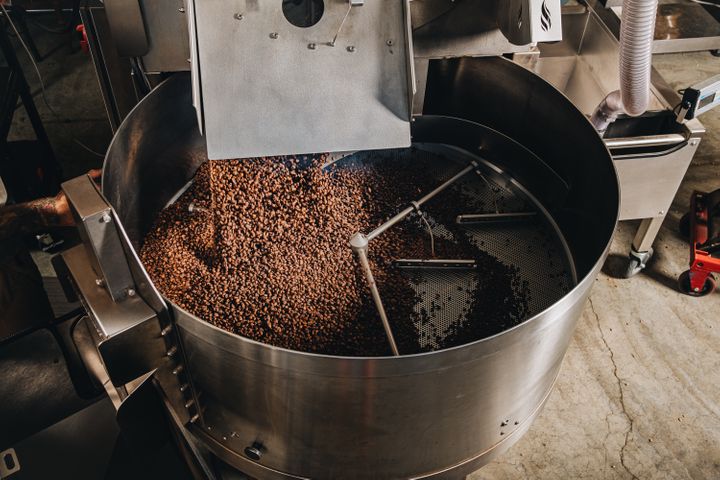
Veronica P. Grimm is the founder of Glitter Cat Barista, an inclusive organisation focused on helping minority groups become baristas and providing them resources to compete in coffee competitions. Grimm prefers to work with blends in these competitions because it balances the coffee with more depth. “Basically, [it’s] like having a soprano and a bass in a choir,” she says.
“When they are in harmony it is beautiful.” Despite preferring blends over single-origins in the field, Grimm likes to drink single-origins. “Blends bring together something magical in a cup of coffee,” she says. “But blending coffee takes work and on a daily basis I like to just enjoy what I’m drinking without too much thought.”
While both single-origins and blends will appeal to different types of coffee drinkers, Brooks said some people complain about how acidic or sour single-origins can taste. “It is a little bit more of a unique flavour profile that you have to grow to love,” he says. “Sometimes people can take that as a negative. On the reverse, some people can say that blended coffees are boring, they don’t have any flavour at all, that you have to put milk and sugar in them just to make them taste good.”
Clemons points out that just because a blend might not taste like a single-origin, the blend’s quality isn’t necessarily inferior. “Blends can be really tasty,” she says. “I am all for adding sugar and milk if and when you want it, but feeling the need to add something to coffees like milk or sugar because something it is lacking can have more to do with that coffee not hitting the notes you hoped it would.”
Brooks recommends that single-origins are best made with paper filter pour-overs, or a Chemex. As for blends, “If you’re looking for something with more body and you’re wanting the coffee to showcase a little bit more of that blend traditional flavor profile, using a drip pot or doing a French press is really good with blends,” he advises.
During the pandemic, Verve saw an increase in online sales, with single-origins outpacing blends – Brooks thinks more at-home brewers are curious about specialty coffees. Single-origins tend to cost more than blends, but customers are willing to pay the higher price points.
“I think that people should drink the coffee that they can afford. Things are rough and there are folks who love to drink several cups of coffee throughout the day. I say just buy the best coffee that you can buy,” says Clemons.
For novice single-origin drinkers, Brooks recommends they start with mild Latin America coffees from Costa Rica and Colombia. “They tend to be inherently sweet and really approachable,” he says. “As you progress, you can get into some of the more exotic profiles, getting into Africa, especially East Africa.”
Advertisement
As both Brooks and Clemons stated, the most important part of buying any coffee is the ethical practices of the company. “I would love it if people drank more coffee that is sourced ethically from roasters who practice direct trade, safe and equitable work environments for employees, and who bring us tasty coffees,” Clemons said. “There is a need for wage transparency, racial equity, access and so much more in the industry as a whole.”
Brooks echoes similar thoughts. “Whenever you’re really looking to buy coffee, you’re really looking at the underlying missions and values of the people who are buying the coffee and the coffee that you’re drinking,” he says.
“If there’s a coffee company that’s buying really amazing blends and they’re paying their farmers really well, and they’re making a blend and that’s your approach, I think as long as you’re buying the coffee you know is supporting the long-term sustainability of the coffee industry as a whole, then you’re doing your part. If some coffee companies are really doing that just through their single-origins, then I think you should buy single-origins. But if they’re doing it through their entire buying philosophy, with their blends through their single-origins, I think it’s perfectly fine to buy from either side.”
Changing one’s coffee palate takes time, and a big part of that is education. “I think a lot of people are like, ‘This is weird. I’m out. I’ll just go back to whatever I was doing before,’” Brooks says. “I think once you start understanding it, you start to appreciate it because you realise this is intentional. This doesn’t just taste this way by accident – they’ve actually done something to make it taste this way, and that’s really cool. I think that once people start taking the time to learn about the coffee – the processes and the growing – and they learn about how complex it can be, they start to appreciate it.”

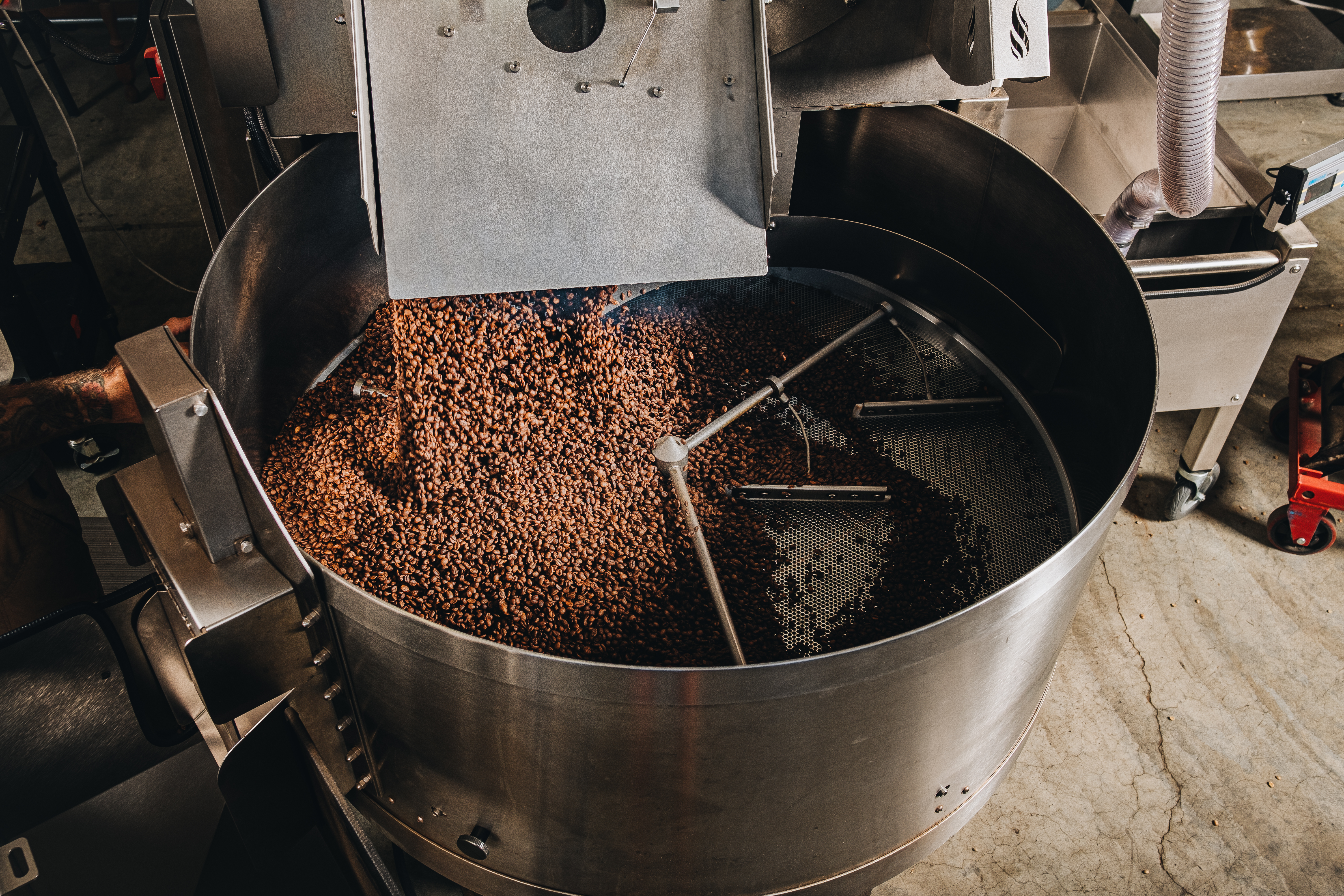
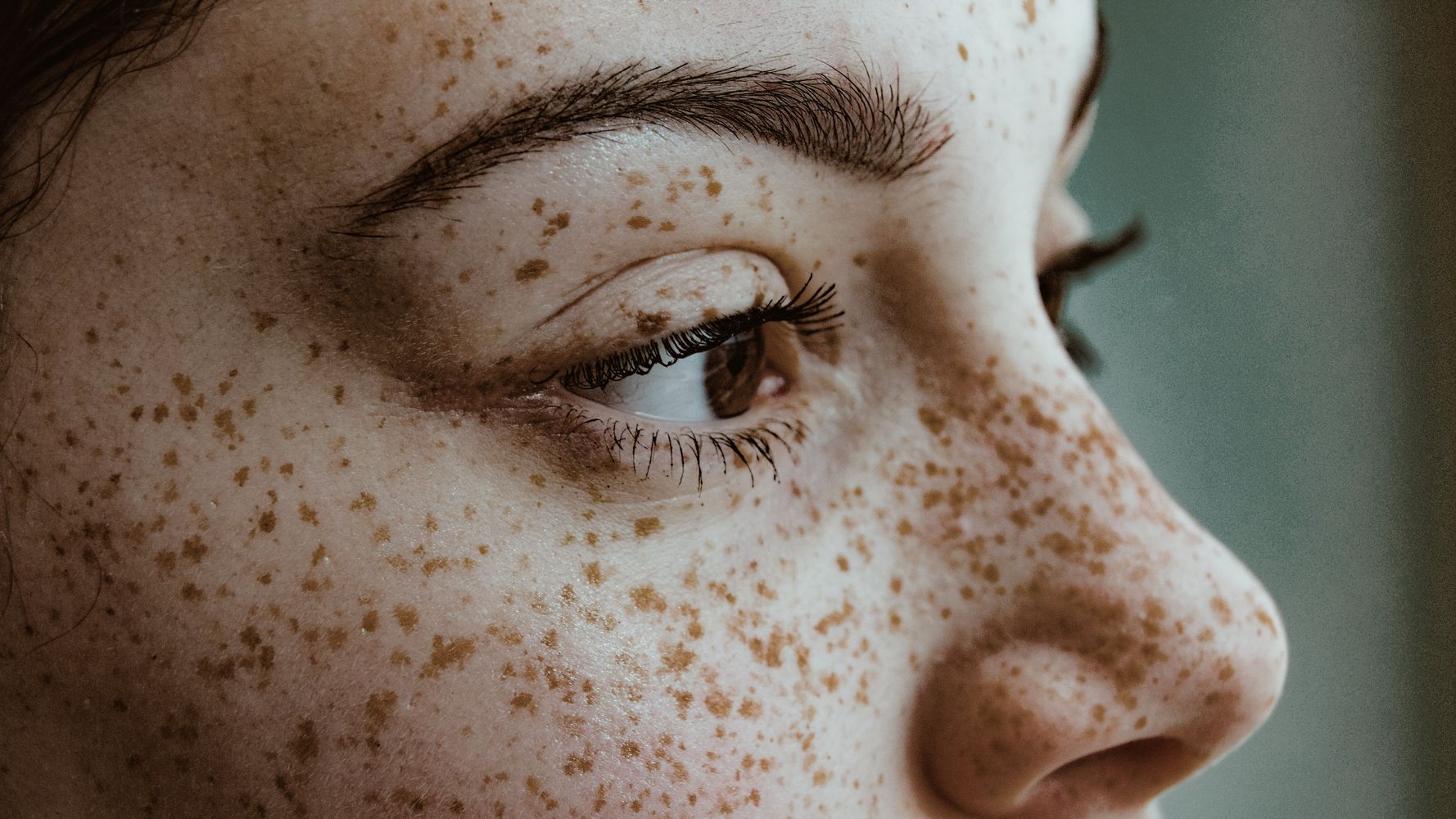
TikTok is littered with hair and makeup tutorials, ranging from the wacky to the “oh, this might actually be doable.” While some of them aim to solve common everyday problems (like a flat ponytail, for example), others are a little more out there (for instance, it’s a mystery why anyone would feel the need to draw fake freckles on their face, but that’s a viral tutorial nonetheless).
While no one should feel pressured to sport faux freckles or contour their face to look like a Kardashian, I wanted to see if these TikTok beauty hacks at least deliver on their claims. In that spirit, I tried eight viral TokTok beauty trends to see how they actually work.
Advertisement
The concept behind this trend is mixing creams you already own to create a custom shade of skin tint. See an original TikTok video highlighting the trend here:
BB, which stands for “beauty balm,” is meant to be a lightweight base, so mixing your foundation with other products (primers, SPF and more) makes sense. You’ll note that in the original video above, the creator added sunscreen – but be warned that mixing sunscreen with other products diminishes the SPF factor and offers less protection. For this DIY product to work, you have to ensure your foundation and primer have the same base ingredients – for example, if one has a silicone base, the other should too; otherwise the product will roll right off your face.
Advertisement
It did! It feels like the perfect base for summer. I found it was a little tricky applying with a brush, but it was smooth and easy when using fingers. It’s like “your skin but better.” Plus, it’s great that you can customise how much glow or moisturizer you want to add.
Here’s a video of my experiment:
This popular tutorial creates a ponytail that sits up super high and is extra voluminous. It’s done by twisting the hair tie around the bottom part of the ponytail twice. It sounds like it won’t make much difference to the height of a ponytail, but as someone with long and heavy hair, I’m willing to try anything. See an original TikTok tutorial here:
Advertisement
Not only did it work, but it was also extremely easy! And it doesn’t feel like a ponytail that’ll give you a headache. Here’s a video of my experience:
If you prep your skin and apply your base makeup products the way this tutorial suggests, it claims to be absolutely sweat-proof. This was inspired by the way drag queens do their makeup, as are many great discoveries in the beauty world. It goes like this: moisturiser, translucent powder, setting spray, makeup primer and foundation. Here’s an original TikTok tutorial:
I originally tried this trick in March 2020 and found it to be a little cake-y for my dry skin, but I was willing to give it another go.
Initially, yes. The base looked very good upon application. But after a while it started pilling (balling up) around my neck. I think it’s one too many layers for me, but I’d still try it again being more careful around my neck area.
Here’s a video of my experiment:
When I first saw this look, I thought there’d be no way it could actually look good. You take a tissue, wad it up, dip it in random colours of eyeshadow, and dab it on your eyelids to create an artistic, almost tie-dyed look. Here’s an original tutorial from TikTok:
Advertisement
I loved this! Who says you need expensive brushes to create something fun? All you need is a colourful makeup palette and some tissue. Sure, it looks a little messy, but it’s a fun and colourful look I’d gladly wear again. I think brighter colours work best for this beauty trend.
What I used: The NikkieTutorials x Beauty Bay palette. Here’s my take:
Overlining lips isn’t new, though it grew in popularity thanks to Kylie Jenner. Not everyone loves the overlined look – it can look like too much (it can also look like you have a thin moustache), but this tutorial promises it’s not only easy but very quick, too. Huda Kattan of Huda Beauty recreated it, and she’s also a fan.
Essentially, you purse your lips together very tightly and apply the lipliner around and inside the lips. In essence, because the lips are stretched out, you get a more even overline more quickly. Check it out:
All you need is your lip pencil and a liquid lipstick or lipstick of choice. I tried it with red, as I was feeling adventurous.
I suppose so, but it’s a lot more overlined than I’m used to so it looked weird at first! It was quick and easy, though. I prefer not drawing over my cupid’s bow, and once I cleaned up that part, I liked it a lot more. I used the MAC lip pencil in Cherry and Colourpop Ultra Matte Lip in Creeper. Here’s my video:
Advertisement
All you need is a stick bronzer, your foundation and 10 seconds to the perfect contour. Sound too easy? That’s what I thought, too. You simply contour over the lips, under the cheekbones and chin, and on the forehead, add your foundation on the rest of the face and blend in, like this:
Surprisingly, yes. It was easy and quick and blended in really nicely ― I will certainly use that hack again.
Here’s my take:
I couldn’t believe that burning an almond could actually be used as a smoky eye liner/shadow, but apparently it works. I obviously had to try it out, as it seems like an easy and affordable way to do your eye makeup. You just take an almond, burn the tip a little bit, wait for it to cool down (this step is important!) and apply it like you would your shadow when doing a cat-eye. Watch this:
Somewhat so! It was a lot harder to get color out of the almond. Also, let me advise you again to wait until the almond isn’t burning hot! It’s more of a soft smoked outline and though it was a fun challenge, I think I’ll stick to my black eyeshadow and liner for future looks. Here’s my take:
TikTok is full of faux freckle videos, most including fake tanning mousse, which are intimidating and can easily go wrong. However, this tutorial uses Maybelline Brow Tattoo, which is meant for your face ― so I was hoping the colour whould be more natural-looking. Here’s what it claims to do:
Advertisement
To be on the safe side, I picked a color lighter than my hair —colour Medium Brown — and applied it across my nose and cheeks.
It worked so well! It created a very natural-looking result ― I went over my natural nose freckles and did some more over my cheeks. I think leaving it on for two hours wasn’t necessary, but the product’s instructions recommend that for the colour to last three days. I will try it again, for sure. Here’s my attempt:

Beretta/Sims/Shutterstock
In the 10 years they’ve been in the public eye, Little Mix have topped the charts, dominated the headlines and become style icons in their own right.
But it wasn’t always that way.
You see, they’ve come so far in the past decade it’s easy to forget that the hit girl group started life as four girls who auditioned for The X Factor as soloists, only to be put together as a four-piece group by the judges at the eleventh hour.
And as these old photos show, they were still a long way off establishing themselves as the group we know and love today in that first year.
On the 10th anniversary of Little Mix’s formation, let’s take a stroll down memory lane and remember the girls as they were – clashing prints, patterned braces, questionable dye jobs and all…

ITV

ITV

Ken McKay/Shutterstock

Ken McKayKen McKay/Talkback Thames/Shutterstock

Ken McKayKen McKay/Talkback Thames/Shutterstock

Ken McKayKen McKay/Talkback Thames/Shutterstock

Ken McKayKen McKay/Talkback Thames/Shutterstock

Ken McKayKen McKay/Talkback Thames/Shutterstock

BerettaBeretta/Sims/Shutterstock

Ken McKay/Talkback Thames/Shutterstock

Ken McKay/Talkback Thames/Shutterstock

Ken McKay/Talkback Thames/Shutterstock

Ken McKay/Shutterstock

Ken McKay/Shutterstock

Mike Marsland via Getty Images

Dave Hogan via Getty Images

Chris Lobina/Shutterstock

Alex Moss via Getty Images

Jo Hale via Getty Images

Officialcharts.Com/Shutterstock





















But the jabs were more effective against the Alpha variant, the largest study of its kind suggests.

A major crisis that accompanied the rise of the pandemic was lack of availability of the nasopharyngeal swab — necessary for testing for COVID-19, which in turn, was necessary to get a grip on the pandemic. An account of how one group addressed that crisis is published this week Journal of Clinical Microbiology, a journal of the American Society for Microbiology.
“We met the challenge by creating all-new swabs, which were ready and clinically tested in just three weeks,” said Ramy Arnaout, M.D., D.Phil., Associate Professor of Pathology, Beth Israel Deaconess Medical Center and Harvard Medical School, and Associate Director of the Clinical Microbiology Laboratories, Beth Israel Deaconess Medical Center (BIDMC).
“Handling crises successfully requires a different set of skills than the everyday,” said Dr. Arnaout. “Competition and secrecy are out. Cooperation and openness are in. Resolving the swab crisis was a case study in these and other valuable lessons.”
As the first wave of COVID-19 broke out across the United States, BIDMC, which had the largest in-house COVID-19 testing center in Boston, found themselves with only a week’s supply of swabs. “More manufacturing was the only lasting solution,” Dr. Arnaout said. He and his colleagues began reverse engineering swabs, to determine if they could make them from scratch.
Swabs must be engineered to be neither too stiff, nor too flexible, and must be individually packaged and sterile. BIDMC needed around ten thousand a week; the country needed roughly ten million.
The first week, group members floated, shot down, resurrected, and repurposed various ideas, said Dr. Arnaout. Ultimately, the team saw two options: to find a scalable means to assemble swabs, or else to “find a way to make a stripped-down swab in a single go, without the need for assembly.” 3D printing had “advantages in speed of development and in the variety of structures it can make.”
Dr. Arnaout had previously demonstrated that open and collaborative crowdsourcing is a viable route to solving complex computational problems, specifically his work in computational immunology. He put this lesson to work in the COVID crisis.
“We navigated our… networks, letting manufacturers know about the swab crisis and what we needed from them to solve it,” said Arnaout. “We set up a free publicly viewable knowledge base online in the form of a GitHub repository — a type of website usually used by software engineers to collaborate on coding projects — to share everything we knew with everyone who might want to know it. This was critical for lowering the activation energy for anyone who wanted to join the effort… By the end of the first week, prototypes were rolling in.”
Over the course of the second week, the team tested more than 150 prototypes. “We were giving manufacturers feedback and suggestions one day and receiving new prototypes the next,” Dr. Arnaout said. “We put our protocols and results online.”
The team spoke often with BIDMC’s Institutional Review Board, “whose help and quick feedback were indispensable for cutting through red tape,” Dr. Arnaout said. “We put our IRB-approved protocol online as well.” BIDMC’s technology ventures office assured the team that the evaluation and feedback they were providing to manufacturers would not constitute intellectual property, thereby avoiding any haggling over ownership, which could have wasted precious time.”
By the fourth week, the team had validated four prototypes for clinical use. By summer’s end, “millions of the swabs our coalition helped design, vet, and mass-produce had been sold and used for COVID-19 testing” across the United States and in Europe, Dr. Arnaout wrote.
That experience suggested five lessons:
“Perhaps we all can take the opportunity afforded by this trying time to improve how we meet our everyday challenges,” said Dr. Arnaout. “By doing so, we might find ourselves further along, more capable, and better prepared for when the next crisis inevitably hits.”

Seadragons (Phyllopetryx taeniolatus) live off the coast in western and southern Australia. An international team involving evolutionary biologist Axel Meyer from the University of Konstanz has now found the genetic basis for some external characteristics of the seadragon, like its lack of teeth and its distinct leaf-like appendages. The team also localized the sex-determination gene in the seadragon genome. The study will be published in Science Advances on 18 August 2021.
Experts in camouflage
Seadragons belong to the family Syngnathidae along with seahorses and pipefishes. Their name refers to the dragon-like shape of their bodies and the spectacular colouring of their special leaf-like skin appendages. They are considered experts in camouflage because of their ability to mimic the appearance of seaweed. Like the other members of the Syngnathidae family, seadragons exhibit special adaptations and behaviours: They have a tube-shaped, toothless mouths, they lack the ventral and pelvic fins and scales typical for fish, but they instead have a bony shell covering their entire bodies.
Dried seahorses are used in traditional Chinese medicine, which has led to many species being highly endangered. They do not swim horizontally, but instead glide slowly through coral reefs and shallow coastal waters, almost vertically — like a horse — with their heads bent downwards. Their prehensile tail can be used to hold on to things. Like other seahorse species, the seadragon males are responsible for protecting the bright pink eggs attached to the outside of their bodies until they hatch.
While sequencing the genome and examining the genetic basis for other external characteristics of seadragons, researchers from five teams from China, Singapore, Japan and Germany focussed their efforts on sex-determination, toothlessness and newly-evolved skin appendages in seadragons. The research team, led by Professor Qiang Lin from the Chinese Academy of Sciences in Guangzhou, showed that a series of genes is responsible for this evolutionary development that usually control fin development. The leaf-like skin appendages of the seadragons are thus highly altered fin rays.
Like seahorses, seadragons are also toothless. They use their long snouts to suck in their food, small crustaceans, and swallow them whole. The genome analysis shows that, in the seahorse relatives, too, several genes are missing that contribute to the development of teeth in other fishes as well as in humans. The research team tested the hypothesis about the corresponding scpp5 gene by switching off this gene in zebra fish, a well-researched model organism with pharyngeal teeth. As expected, the mutated fish displayed reduced teeth. The function of the missing gene responsible for tooth loss was thus proven in molecular-biological CRISPR-Cas experiments.
Males care for fertilized eggs
It is also typical that male members of the seahorse family care for fertilized eggs until they hatch. Seahorse males have developed brood pouches, but males of the older seadragon species still carry the sticky eggs visibly on their tails. The females lay the eggs onto this special location on the males’ bodies, and they are then carried around by the male seadragons and thus protected from predators. It is generally more common that male fish care for fertilized eggs rather than females, although this particular form has only evolved in members of the seahorse family.
In this context, the researchers looked for sex-determination mechanisms that were previously unknown in seadragons. On the whole, it is difficult to localize sex-determination in fish, since, for the most part, they do not have special sex chromosomes, like the X and Y chromosomes in mammals. The team found the molecular basis for sex-determination in seadragons to be in the Mullerian hormone, as had previously also been documented for seahorses.
The sequencing of the seadragon genome was completed as part of an additional project in the context of a long-term collaboration between the research teams in Guangzhou and Konstanz. The first publication — on first the seahorse genome — was published by both teams in 2016 in Nature, with a second one with 21 new seahorse genomes appeared this year in Nature Communications. Axel Meyer: “Our research into the genome seeks to derive the corresponding phenotype or “essence” of these animals. We are striving to understand what an animal looks like based on its sequence of genomes and our understanding of the genes’ function. Seadragons are fish that do not look like typical fish at all. They are a particularly fascinating and beautiful species.”
Story Source:
Materials provided by University of Konstanz. Note: Content may be edited for style and length.

When people talk about how to eliminate vehicles’ carbon dioxide (CO2) emission, often the conversation often focuses on electrifying cars, trucks and buses. Yet cargo and tanker ships, which are responsible for 3% of all CO2 emissions, are rarely a part of the discussion.
Now a Northwestern University research team offers a practical way to make ships CO2 neutral — or even CO2 negative — with CO2-capturing solid oxide fuel cells. After “burning” traditional carbon-based fuels, the fuel cell generates concentrated CO2 that can be stored on-board the ship. From there, the CO2 can either be sequestered or recycled into a renewable hydrocarbon fuel.
The team presents its analysis in “Viability of vehicles utilizing on-board CO2 capture,” published today (Aug. 18) in the journal ACS Energy Letters. In the paper, the team looks at various factors, including fuel storage volumes and mass requirements for a wide range of vehicle classes — from light-duty passenger vehicles to tanker ships — and compares onboard CO2 capture to battery electric and hydrogen fuel cell options.
“It might be harder for people to see onboard CO2 capture as climate friendly because it uses conventional, carbon-based fuels,” said Northwestern’s Scott A. Barnett, senior author of the study. “People tend to assume hydrogen fuel cells and electric vehicles are more climate friendly. In reality, they often are not. Electricity might come from burning coal, and hydrogen is often produced by natural gas, which generates a lot of CO2 in the process.”
An expert on solid oxide fuel cells, Barnett is a professor of materials science and engineering at Northwestern’s McCormick School of Engineering. He coauthored the paper with Travis Schmauss, a Ph.D. candidate in his research group.
Why batteries aren’t a viable solution
Responsible for producing about a gigaton of CO2 each year, ships can consume up to 250 tons of fuel per day. While it might seem tempting to replace this massive amount of fuel with batteries, that’s simply not an option.
“Some tanker ships require enough fuel to circumnavigate the globe as a part of their regular multivoyage operation,” Barnett said. “We calculated that the battery pack for a long-range tanker would take up more room than the storage capacity of the ship. A hydrogen fuel tank also would be too large. When it comes to long-range vehicles, carbon-based fuel combined with on-board CO2 capture is arguably the best way to make these vehicles CO2 neutral.”
The proposed method also has potential advantages for shorter-range vehicles. Battery electric and hydrogen fuel cells, however, are already being implemented for those vehicle types, so the researchers instead suggest implementing a CO2-neutral range extender.
Storage solution
To store the CO2 on board, Barnett’s team has proposed a patent-pending dual-chamber storage tank. One chamber stores a carbon-based fuel. After the fuel cycles through the fuel cell to create energy, the CO2 byproduct is pressurized and introduced into the second chamber. The partition between the chambers can move — shrinking the fuel chamber as the fuel is used, making space for CO2 in the other chamber.
“The solid oxide fuel cell is critical because it burns the fuel with pure oxygen, yielding a concentrated CO2 product that is storable,” Schmauss said. “If we just burned the fuel with air, it would be heavily diluted with nitrogen, yielding too much gas to store. When the concentrated CO2 is compressed, it can be stored in a volume not much larger than that needed for the fuel, which saves space.”
“This technology really doesn’t have any major hurdles to making it work,” Barnett added. “You just have to replace the fuel tank with the double-chamber tank and add CO2compressors. And, of course, the infrastructure eventually has to be developed to off-load the CO2 and either sequester or use it.”
Moving toward net-zero
With this scenario, the researchers say it is possible to make long-range vehicles CO2 negative. This is possible with bio-fuels, such as ethanol, because the plants used to produce the fuel have consumed CO2 from the atmosphere. Then, after the vehicle has used the fuel, the captured CO2 is removed from the ship and sequestered underground or used in producing a renewable fuel. If a vehicle uses a fossil fuel instead of a bio-fuel, then the resulting overall cycle is closer to net-zero.
Story Source:
Materials provided by Northwestern University. Original written by Amanda Morris. Note: Content may be edited for style and length.
A third booster Covid vaccine will be offered to anyone who was fully vaccinated eight months ago.

Getting good feedback is necessary for anyone to grow their career. But too many of us end up receiving unhelpful advice that doesn’t mean anything useful.
Phoebe Gavin, a career coach who specialises in supporting early and mid-career professionals, said she often sees bad feedback fall into two categories: empty praise and vague criticism.
Advertisement
These types of feedback are unhelpful, she said, because what people really want is “to be able identify something specific that they can do that they should either keep doing because it’s working, or something they should adjust because it’s not working.”
Unfortunately, bad feedback is common, and it can even start to infect your own language at work. Here are types of feedback you should rethink.
Advertisement
Popular but vague words of encouragement like this are not actually helpful, because they aren’t tied to a specific outcome related to the role or the organisation. The person hearing it doesn’t “know why they did a great job, what exactly they did a great job at. They don’t know how their great job has an impact. It’s just not very useful,” Gavin said.
Advertisement
It doesn’t encourage anyone to keep up the good work, either.
“The problem with this type of feedback ― although it feels great to receive it ― is that it is not reinforcing any behaviours. In order to turn meaningless feedback into something that will encourage employees to continue to perform, the feedback must be very specific,” said Angela Karachristos, a career coach who has worked in human resources.
“Instead of saying, ‘good job,’ the manager should say give a specific example of what the person did well so that those positive behaviours can be repeated,” she said.
Often, giving too much unhelpful praise is a people-pleasing mistake that first-time managers make as a way to make up for negative experiences they personally had on a team. “A lot of managers over-correct and really lay on the praise, and not give the kind of support through constructive criticism that actually helps people grow,” Gavin said.
Advertisement
Bad criticism stops with what someone did wrong, while good criticism gives them a clear path of what needs to happen differently and how they can do it better next time.
“If you just tell someone, ‘Hey, you missed that deadline, that caused problems,’ sure, that might be valid, but it doesn’t give space to improve with whatever context that person is working in,” Gavin said. “It doesn’t create a conversation where the problem can be solved.”
Gavin said subjective, vague feedback such as, “I don’t like that,” “That doesn’t work for me,” or “I’ve never heard that before” stems from someone reaching into “their own subjective experience and not bringing any other external factors in.”
A better method is to be specific about what’s going wrong, or to have the humility to note that the feedback is just an opinion. It’s the difference between “‘Those colours seem very jarring to me, that’s just how they look to my eye,’ versus ‘I don’t like that, I don’t like that design,’” Gavin said.
In her book Radical Candor: Be a Kick-Ass Boss Without Losing Your Humanity, management expert Kim Scott writes that a lot of bad work criticism falls into the trap of highlighting personal traits rather than having external causes of a problem acknowledged.
“It’s easier to say, ‘You’re sloppy’ than to say ‘You’ve been working nights and weekends, and it’s starting to take a toll on your ability to catch mistakes in your logic.’ But it’s also far less helpful,” Scott writes, noting that better criticism makes it clear that a work problem is not “due to some unfixable personality flaw,” and can be used as a tool for improvement.
Karachristos said that a common example of this kind of personal criticism is “You need to work on your attitude.” “Any type of feedback that is focused on the person or that person’s personality, and not the work, can be very problematic,” she said.
At worst, when job performance feedback is tied to a person’s identity, it can be used to hold their career back. Women of colour, in particular, are given subjective labels like “difficult,” “angry” or “challenging” in performance reviews – words that signal they are not a “fit” in a workplace or don’t “fit” a manager’s homogenous idea of success.
Advertisement
Nadia De Ala, founder of Real You Leadership, a group coaching program for women of color, said her clients deal with feedback – often unsolicited – about their natural tone of voice and how they dress, rather than about actual points of improvement on their work.
One client asked a co-worker for help with compiling marketing research for a promotion and was told, “You’re not going to get promoted if your voice goes up at the end of sentences. You don’t sound confident.”
“This type of feedback was unhelpful because it was unsolicited advice and had nothing to do with market research,” De Ala said.
It speaks to how feedback is not just words: It can make or break an employee’s experience and even push them to leave. Gallup research found that when a boss’ feedback makes employees feel demotivated, disappointed or depressed, four out of five of those employees start to job-hunt.
If you’re in a position to give feedback, recognise that not everyone likes to hear it the same way.
“You have to be sensitive to where you do it. You might feel like it’s great to publicly recognise the person, but some people hate that. It makes them feel embarrassed,” Karachristos said.
Karachristos said it’s also a mistake for peers and managers to publicly criticise a group when they really intend that message for one person.
“That person will never get the message, and then my whole team is going to get annoyed that I’m down on the whole group, or not necessarily respect me as a team leader or colleague because I’m not brave enough to address the problem,” Karachristos said.

