Sexual and Virtuous

Yesterday Rachelle and I watched an episode of Star Trek: Enterprise where the crew goes into the Dark Mirror universe. This alternative universe shows up in multiple Star Trek series and novels. All the characters have identical looking mirror versions with different personalities and values. It’s a place of violence, belligerence, war, and conquest. Imagine waking up in a reality with all the same people, but almost everyone is openly evil.

One way to advance in this world is to kill a superior and take their position. Characters frequently plot against each other. Everyone carries a sidearm. Trusting someone can be a fatal mistake, even if it’s someone close to you.

This universe also depicts some characters as being sluttier and more sexual. Sex is frequently weaponized.

This made me ponder how often media conditions us to associate sexuality with something evil or demonic.

What if it were the opposite?

What if angels were the sluts? What if beings of peace and love were depicted as being highly sexual? What if the demonic beings were the sexually repressed ones?

What if being openly sexual was associated with virtuous living?

Sexuality is a form of communication. It can express caring, loving attention, playfulness, pleasure, trust, and more. I don’t think it’s a stretch to associate a healthy and abundant sex life with virtuous living and positive, socially responsible values.

Demonizing sexuality strikes me as an immature and controlling way to frame it. Associating it with war and violence seems especially lame. How often do we see violent characters associated with sexual shallowness or conquest, like James Bond?

I associate sexuality with fun, playfulness, caring, connection, intimacy, trust, closeness, and other positive values. I also associate it with laughter and silliness. I feel lucky to have a wife who has similar positive associations to it. Sexually we may behave like characters from the Dark Mirror universe, although it definitely feels like these behaviors are on the side of peace and love.

One thing that helped me shift away from negative frames here was to look within and determine how I really felt about sexuality. Set aside the unconscious conditioning, and take a conscious look at this part of life. Did I actually believe that sex was somehow wrong or evil? What were the real risks to pay attention to? What kinds of partners would I consider good matches (versus partial matches or mismatches)? What did I want to explore personally? What would I prefer to avoid?

What this unlocked was a lot of fun and connection that was previously suppressed behind some limiting beliefs. When I got clear about my own feelings, I could fully own them. I could use frames that made real sense to me.

You probably grew up with some baggage in this area of life – some associations to sexuality that may not serve you well, either from social conditioning or direct experience. Those can create strong emotional reactions that lead to mixed associations. I encourage you to examine your honest thoughts and feelings about sexuality, such as by journaling about them. How would you actually like to relate to this part of life? Do you feel that your current framing serves you well, or does it need some adjustment?

Share Button

Senior Tory MP Accused Of Rape Will Not Be Suspended From Party

HuffPost is part of Verizon Media. Click ‘I agree‘ to allow Verizon Media and our partners to use cookies and similar technologies to access your device and use your data (including location) to understand your interests, and provide and measure personalised ads. We will also provide you with personalised ads on partner products. Learn more about how we use your data in our Privacy Centre. Once you confirm your privacy choices here, you can make changes at any time by visiting your Privacy dashboard.

Click ‘Learn more‘ to learn and customise how Verizon Media and our partners collect and use data.

Share Button

EastEnders’ Jake Wood Reveals How Christmas Reveal Of Max And Stacey’s Affair Almost Didn’t Happen

HuffPost is part of Verizon Media. Click ‘I agree‘ to allow Verizon Media and our partners to use cookies and similar technologies to access your device and use your data (including location) to understand your interests, and provide and measure personalised ads. We will also provide you with personalised ads on partner products. Learn more about how we use your data in our Privacy Centre. Once you confirm your privacy choices here, you can make changes at any time by visiting your Privacy dashboard.

Click ‘Learn more‘ to learn and customise how Verizon Media and our partners collect and use data.

Share Button

The Baseline of Order

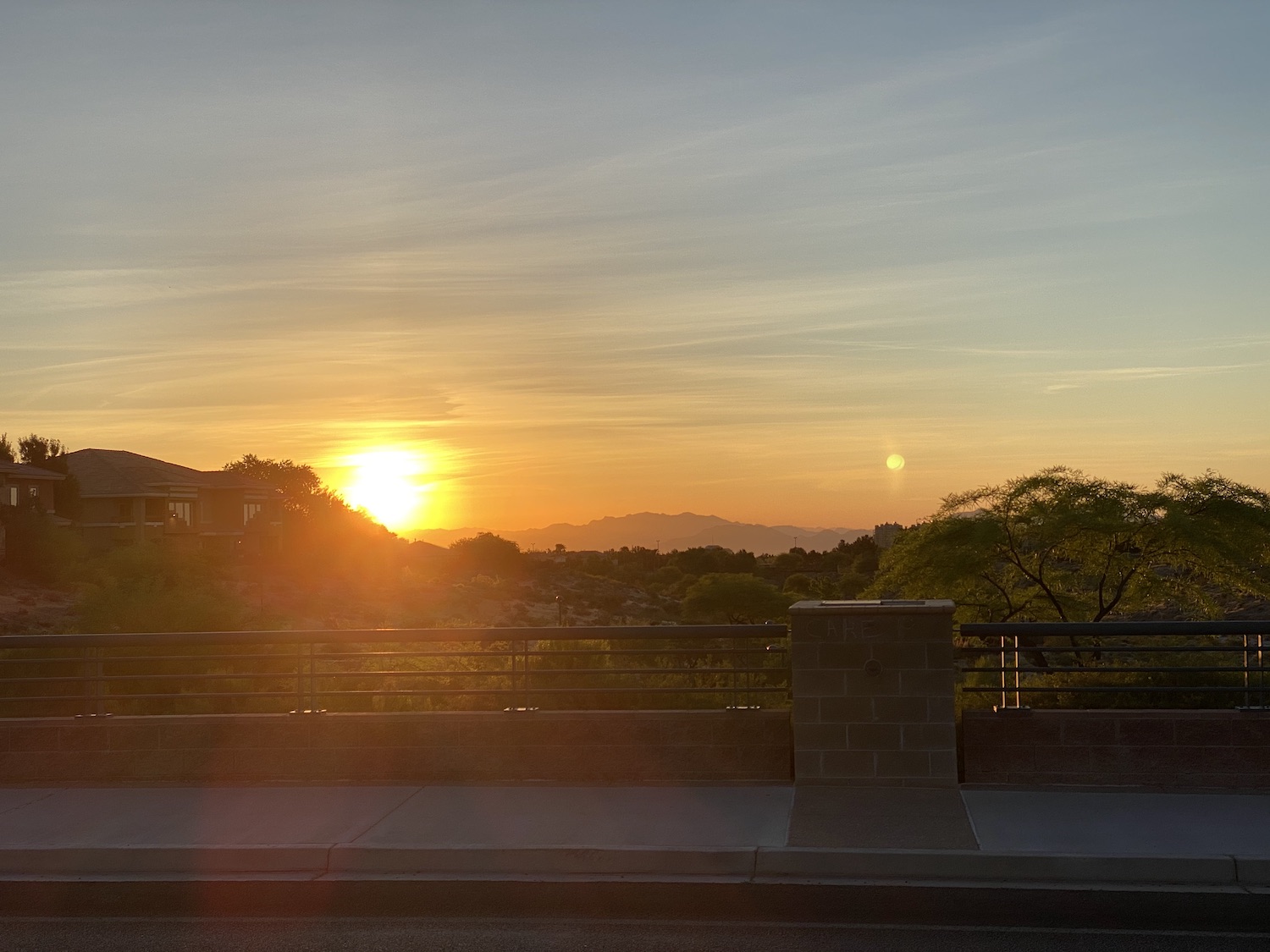
I live in a gated community with fairly strict standards that all homes have to follow. Anyone who wants to live in the neighborhood must contractually agree to these standards. If anyone falls short of them, they’ll get a letter from the community management association with a request to bring their property up to standard. If they don’t comply, the community association has the authority to fine them and to seek other remedies.

We’re not even allowed to park our own cars on the street, only in our driveways or garages, so there are hardly any cars on the streets. No one can park an RV on the street, except very temporarily for loading or unloading.

No soliciting is permitted in the neighborhood, so it’s extremely rare to see any door to door salespeople, Mormons, etc. The streets in the neighborhood are private, not public, so solicitation is equivalent to trespassing.

Every homeowner has to pay extra dues to make this happen – currently $122 per month.

In addition to this community, I live within a section of Las Vegas called Summerlin, which is also privately managed. To live in this part of town, it costs another $48 per month, and there’s another community association that oversees this area.

So I pay $170 per month in extra community association dues, just to live in this part of the city that’s privately managed. These dues fund the management associations. These dues can increase over time too. I think it was around $115 per month total when I first moved to this house in 2007.

Sometimes this can feel like an annoying place to live. I wouldn’t recommend it for anyone who dislikes these kinds of standards, let alone having to pay extra for them. You do sign away some freedoms and invite more restrictions to live in such a neighborhood. More than once I’ve gotten a letter from the community association to fix something or other that’s fallen below standard, such as trees in need of trimming. In another part of town, no one could obligate me to tend to such issues that many people would consider minor or irrelevant.

Presently our community association is requiring homeowners to repaint their houses. This community was built around 2003, so the paint on some homes is apparently showing its age. I will have to get my house painted soon too. There are only six allowed color palettes for our neighborhood since we have to adhere to a uniform look. I’d have to get special approval just to change from my home’s current paint scheme to one of the other five.

On the other hand, I also like to remind myself of the benefits. I’ve lived in many different homes and apartments over the years, and I’ve stayed in this home the longest of any.

One benefit is that these standards keep the community looking really nice. That’s good for keeping the resale value of homes high, which means more equity for the owners.

Because of these standards, there are rarely any annoying issues to deal with regarding neighbors. For the most part, we don’t have to worry about loud parties going late into the night, loud dogs barking incessantly, etc. Most of the time it’s a very quiet neighborhood, except when landscapers are doing yard work. If some issue comes up, the community association is likely to catch wind of it and handle it. They even have someone drive around the community at least monthly to look for potential issues.

These dues also help to pay for more upkeep and higher standards around the whole surrounding community than the city would normally provide. The streets are repaved more often, so they always look pretty new. There are more trees and plants and nicer landscaping in community areas. There are more parks and nicer parks with better upkeep. There are well-marked bike lanes. There are free bag dispensers for people to clean up after their dogs.

This whole side of town is master-planned, and the design really does seem more intelligent than other parts of the city. There are few traffic issues, so running errands at rush hour isn’t a problem. There’s accessible shopping and entertainment. There’s a fire station and a new police station within easy walking distance, so if there were an emergency, I’d imagine they could manage a fairly quick response time.

The builders and businesses in this part of town have to follow strict codes as well. There are no billboards in the area. Commercial logos on buildings have to be kept low-key, so there are no giant signs for fast food places and such. There is ample free parking everywhere.

When I go to different parts of town, the difference is obvious. Sometimes it feels like I’ve switched cities. The streets are dirtier and more cracked. There’s more trash. There are more weeds. Buildings look more haphazardly designed. Even the traffic lights seem less intelligent. And then there’s the smell… a special local blend of pot and urine.

I feel more relaxed and less stressed in this part of town. It’s more orderly and less chaotic. It’s more stable and predictable. But it does cost more. The additional order isn’t free. It costs more money, and it has a certain psychological cost as well. But it also pays off with some financial benefits (like higher home values) and psychological benefits (like peaceful enjoyment of the community).

I don’t always want this much order. Sometimes it feels too tight, too predictable, and too controlling. But then I recall what it was like to live without this baseline of order for long stretches. I’ve lived in more chaotic and disorderly places, and I generally found it way more stressful. I especially didn’t like living in places where it was hard to get a good night’s sleep.

I don’t mind some chaos when I travel. In fact, I often embrace it because it makes for fun memories. I love exploring areas that feel very organic, like walking around a city that feels like it was designed by a lunatic, not knowing what I’ll find around each corner. Inviting surprise can be wonderful.

At home, however, I do like and appreciate a higher baseline of order. Having that stability in my living situation makes it easier to invite and handle more chaos and risk in other areas of life, such as creative projects, entrepreneurship, and personal growth experiments. When I want to mix things up a bit, I have the option (but not the obligation) to invite more chaos, which can be very stimulating when it’s desired.

At the heart of this, what I really enjoy is having options for exploring my relationship with chaos. I like having the freedom to make conscious choices in this area. I like being able to decide how much risk to take, how much disruption to allow in, how ambitious to be, how much to change at once, and how much stress to experience. This gives me a say in how I explore new growth experiences. To make this work, it’s really helpful to maintain an orderly baseline as a jumping-off point. I can always “go home” to a place of high order when I need to reset.

At other times in life, I lacked this stable baseline and spent way more time dealing with chaotic events and circumstances that I didn’t necessarily want. I felt less free during those times, even though I had fewer obligations and responsibilities. I felt more preoccupied with all the turbulence surrounding me. It was harder to make conscious choices and to focus on creating the experiences I wanted. The chaotic energy swirling around me was always pushing me in different directions. I couldn’t maintain any sense of forward progress.

I share this as an invitation to consider what would actually make you feel more free and what would help you grow.

Would you prefer a baseline of order, a baseline of chaos, or some mixture of the two? If you have lots of order, will you still want to dance with chaos? If you have lots of chaos, will you still be able to develop a meaningful relationship with order? How orderly or chaotic do you want your life to be?

Share Button

Murder Suspect Flees 12th-Floor U.S. Jail Cell Via Rope Made From Bedsheets

HuffPost is part of Verizon Media. Click ‘I agree‘ to allow Verizon Media and our partners to use cookies and similar technologies to access your device and use your data (including location) to understand your interests, and provide and measure personalised ads. We will also provide you with personalised ads on partner products. Learn more about how we use your data in our Privacy Centre. Once you confirm your privacy choices here, you can make changes at any time by visiting your Privacy dashboard.

Click ‘Learn more‘ to learn and customise how Verizon Media and our partners collect and use data.

Share Button

Coronavirus: Shielding ends for two million in England, Scotland and Northern Ireland

Vulnerable people can now leave their home for the first time since lockdown began.

Share Button

Sian Clifford Reveals The Special Gift Phoebe Waller-Bridge Gave Her After TV Bafta Win

HuffPost is part of Verizon Media. Click ‘I agree‘ to allow Verizon Media and our partners to use cookies and similar technologies to access your device and use your data (including location) to understand your interests, and provide and measure personalised ads. We will also provide you with personalised ads on partner products. Learn more about how we use your data in our Privacy Centre. Once you confirm your privacy choices here, you can make changes at any time by visiting your Privacy dashboard.

Click ‘Learn more‘ to learn and customise how Verizon Media and our partners collect and use data.

Share Button

Pubs Could Shut For Schools To Reopen In September, Scientific Adviser Warns

HuffPost is part of Verizon Media. Click ‘I agree‘ to allow Verizon Media and our partners to use cookies and similar technologies to access your device and use your data (including location) to understand your interests, and provide and measure personalised ads. We will also provide you with personalised ads on partner products. Learn more about how we use your data in our Privacy Centre. Once you confirm your privacy choices here, you can make changes at any time by visiting your Privacy dashboard.

Click ‘Learn more‘ to learn and customise how Verizon Media and our partners collect and use data.

Share Button

Cooling of Earth caused by eruptions, not meteors

Ancient sediment found in a central Texas cave appears to solve the mystery of why the Earth cooled suddenly about 13,000 years ago, according to a research study co-authored by a Texas A&M University professor.

Michael Waters, director of The Center for The Study of the First Americans and Distinguished Professor at Texas A&M University, and colleagues from Baylor University and the University of Houston have had their work published in Science Advances.

Some researchers believed the event — which cooled the Earth by about 3 degrees Centigrade, a huge amount — was caused by an extraterrestrial impact with the Earth, such as a meteor collision.

But Waters and the team found that the evidence left in layers of sediment in Hall’s Cave were almost certainly the result of volcanic eruptions.

Waters said that Hall’s Cave, located in the Texas hill country, has a sediment record extending over 20,000 years and he first began researching the cave in 2017.

“It is an exceptional record that offers a unique opportunity for interdisciplinary cooperation to investigate a number of important research questions,” he said.

“One big question was, did an extraterrestrial impact occur near the end of the last ice age, about 13,000 years ago as the ice sheets covering Canada were melting, and cause an abrupt cooling that thrust the northern hemisphere back into the ice age for an extra 1,200 years?”

Waters and the team found that within the cave are layers of sediment, first identified by Thomas Stafford (Stafford Research Laboratories, Colorado), that dated to the time of the proposed impact that could answer the question and perhaps even identify the trigger that started the ancient cold snap.

The event also likely helped cause the extinction of large mammals such as mammoth, horse and camel that once roamed North America.

“This work shows that the geochemical signature associated with the cooling event is not unique but occurred four times between 9,000 and 15,000 years ago,” said Alan Brandon, professor of geosciences at University of Houston and head of the research team.

“Thus, the trigger for this cooling event didn’t come from space. Prior geochemical evidence for a large meteor exploding in the atmosphere instead reflects a period of major volcanic eruptions.

“I was skeptical,” Brandon said. “We took every avenue we could to come up with an alternative explanation, or even avoid, this conclusion. A volcanic eruption had been considered one possible explanation but was generally dismissed because there was no associated geochemical fingerprint.”

After a volcano erupts, the global spread of aerosols reflects incoming solar radiation away from Earth and may lead to global cooling post eruption for one to five years, depending on the size and timescales of the eruption, the team said.

“The Younger Dryas, which occurred about 13,000 years ago, disrupted distinct warming at the end of the last ice age,” said co-author Steven Forman, professor of geosciences at Baylor.

The Earth’s climate may have been at a tipping point at the end of Younger Dryas, possibly from the ice sheet discharge into the North Atlantic Ocean, enhanced snow cover and powerful volcanic eruptions that may have in combination led to intense Northern Hemisphere cooling, Forman said.

“This period of rapid cooling coincides with the extinction of a number of species, including camels and horses, and the appearance of the Clovis archaeological tradition,” said Waters.

Brandon and fellow University of Houston scientist Nan Sun completed the isotopic analysis of sediments collected from Hall’s Cave. They found that elements such as iridium, ruthenium, platinum, palladium and rhenium were not present in the correct proportions, meaning that a meteor or asteroid could not have caused the event.

“The isotope analysis and the relative proportion of the elements matched those that were found in previous volcanic gases,” said Sun, lead author of the report.

Volcanic eruptions cause their most severe cooling near the source, usually in the year of the eruption, with substantially less cooling in the years after the eruption, the team said.

The Younger Dryas cooling lasted about 1,200 years, “so a sole volcanic eruptive cause is an important initiating factor, but other Earth system changes, such as cooling of the oceans and more snow cover were needed to sustain this colder period, “Forman said.

Waters added that the bottom line is that “the chemical anomalies found in sediments dating to the beginning of the Younger Dryas are the result of volcanism and not an extraterrestrial impact.”

Share Button

Scientists discover new class of semiconducting entropy-stabilized materials

Semiconductors are important materials in numerous functional applications such as digital and analog electronics, solar cells, LEDs, and lasers. Semiconducting alloys are particularly useful for these applications since their properties can be engineered by tuning the mixing ratio or the alloy ingredients. However, the synthesis of multicomponent semiconductor alloys has been a big challenge due to thermodynamic phase segregation of the alloy into separate phases. Recently, University of Michigan researchers Emmanouil (Manos) Kioupakis and Pierre F. P. Poudeu, both in the Materials Science and Engineering Department, utilized entropy to stabilize a new class of semiconducting materials, based on GeSnPbSSeTe high-entropy ourchalcogenide alloys, a discovery that paves the way for wider adoption of entropy-stabilized semiconductors in functional applications.

Entropy, a thermodynamic quantity that quantifies the degree of disorder in a material, has been exploited to synthesize a vast array of novel materials by mixing eachcomponent in an equimolar fashion, from high-entropy metallic alloys to entropy-stabilized ceramics. Despite having a large enthalpy of mixing, these materials can surprisingly crystalize in a single crystal structure, enabled by the large configurational entropy in the lattice. Kioupakis and Poudeu hypothesized that this principle of entropy stabilization can be applied to overcome the synthesis challenges of semiconducting alloys that prefer to segregation into thermodynamically more stable compounds. They tested their hypothesis on a 6-component II-VI chalcogenide alloy derived from the PbTe structure by mixing Ge, Sn, and Pb on the cation site, and S, Se, and Te on the anion site.

Using high throughput first-principles calculations, Kioupakis uncovered the complex interplay between the enthalpy and entropy in GeSnPbSSeTe high-entropy chalcogenide alloys. He found that the large configurational entropy from both anion and cation sublattices stabilizes the alloys into single-phase rocksalt solid solutions at the growth temperature. Despite being metastable at room temperature, these solid solutions can be preserved by fast cooling under ambient conditions. Poudeu later verified the theory predictions by synthesizing the equimolar composition (Ge1/3Sn1/3Pb1/3S1/3Se1/3Te1/3) by a two-step solid-state reaction followed by fast quenching in liquid nitrogen. The synthesized power showed well-defined XRD patterns corresponding to a pure rocksalt structure. Furthermore, they observed reversible phase transition between single-phase solid solution and multiple-phase segregation from DSC analysis and temperature dependent XRD, which is a key feature of entropy stabilization.

What makes high-entropy chalcogenide intriguing is their functional properties. Previously discovered high-entropy materials are either conducting metals or insulating ceramics, with a clear dearth in the semiconducting regime. Kioupakis and Poudeu found that. the equimolar GeSnPbSSeTe is an ambipolarly dopable semiconductor, with evidence from a calculated band gap of 0.86 eV and sign reversal of the measured Seebeck coefficient upon p-type doping with Na acceptors and n-type doping with Bi donors. The alloy also exhibits an ultralow thermal conductivity that is nearly independent of temperature. These fascinating functional properties make GeSnPbSSeTe a promising new material to be deployed in electronic, optoelectronic, photovoltaic, and thermoelectric devices.

Entropy stabilization is a general and powerful method to realize a vast array of materials compositions. The discovery of entropy stabilization in semiconducting chalcogenide alloys by the team at UM is only the tip of the iceberg that can pave the way for novel functional applications of entropy-stabilized materials.

Story Source:

Materials provided by University of Michigan College of Engineering. Note: Content may be edited for style and length.

Share Button