Grant Shapps Says He Will Never Hold Talks With The RMT To End Rail Strikes

Grant Shapps has insisted he will never sit down with the RMT to end the rail strikes.

The transport secretary said it was a “red herring” to suggest he should get involved in the negotiations.

Around 40,000 RMT members have staged another walkout today in a dispute over proposed changes to working conditions, job cuts and pay.

The union and Labour have called on ministers to get round the table to thrash out a deal to end the industrial action bringing misery to millions of commuters.

But speaking to Sky News, Shapps said: “They don’t need to speak to ministers because their employers are the people who have the mandate to negotiate this, they are the people who they can resolve this with, so this is just them trying to distract attention.”

He added: “It’s not a question of washing my hands, it’s just that I’m not the right person to be in the room negotiating.

“I’m not the right person to discuss, for example, the maintenance schedules of individual groups of workers in situations where they have to send out an entire roster to do a job that may just require one or two people.

“There simply is no reason for the unions to be speaking to anybody other than the employers.”

Asked if he would get involved at any stage, Shapps said: “It’s a no. This is a game by the unions – it’s a complete red herring as well and it’s simply not how strikes are resolved. It can only ever be the employer – in this case Network Rail and the train operating companies – and the union.”

Shadow transport secretary Louise Haigh said: “Grant Shapps has the power to settle this dispute, so it is utterly shameful he is refusing to do his job and enter talks to end this disruption.

“The Transport secretary has spent more time on his own doomed leadership bid, than he has resolving these strikes.

“This hapless Conservative government is so mired in scandal and chaos, they refuse to do the job they’re paid for and sort this dispute out.”

Share Button

Guy’s and St Thomas’: Hospital in meltdown over IT issues – whistleblower

IT servers at Guy’s and St Thomas’ Hospital in London stopped working during last week’s heatwave.

Share Button

Specific brain responses to traumatic stress linked to PTSD risk

Results from the largest prospective study of its kind indicate that in the initial days and weeks after experiencing trauma, individuals facing potentially threatening situations who had less activity in their hippocampus — a brain structure critical for forming memories of situations that are dangerous and that are safe — developed more severe posttraumatic stress disorder (PTSD) symptoms.

This association between reduced hippocampal activity and risk of PTSD was particularly strong in individuals who had greater involuntary defensive reactions to being startled.

This research, published in the JNeurosci, suggests that individuals with greater defensive reactions to potentially threatening events might have a harder time learning whether an event is dangerous or safe. They also are more likely to experience severe forms of PTSD, which include symptoms such as always being on guard for danger, self-destructive behavior like drinking too much or driving too fast, trouble sleeping and concentrating, irritability, angry outbursts, and nightmares.

“These findings are important both to identify specific brain responses associated with vulnerability to develop PTSD, and to identify potential treatments focused on memory processes for these individuals to prevent or treat PTSD,” said senior author Vishnu Murty, PhD, assistant professor of psychology and neuroscience at Temple University.

This research is part of the national Advancing Understanding of RecOvery afteR traumA (AURORA) Study, a multi-institution project funded by the National Institutes of Health, non-profit funding organizations such as One Mind, and partnerships with leading tech companies. The organizing principal investigator is Samuel McLean, MD, MPH, professor of psychiatry and emergency medicine at the University of North Carolina School of Medicine and director of the UNC Institute for Trauma Recovery.

AURORA allows researchers to leverage data from patient participants who enter emergency departments at hospitals across the country after experiencing trauma, such as car accidents or other serious incidents. The ultimate goal of AURORA is to spur on the development and testing of preventive and treatment interventions for individuals who have experienced traumatic events.

AURORA scientists have known that only a subset of trauma survivors develop PTSD, and that PTSD is associated with increased sensitivity to threats and decreased ability to engage neural structures retrieving emotional memories. Yet how these two processes interact to increase risk for developing PTSD is not clear. To better understand these processes, Murty and colleagues characterized brain and behavioral responses from individuals two weeks following trauma.

Using brain-imaging techniques coupled with laboratory and survey-based tests for trauma, researchers found that the individuals with less activity in their hippocampus and greatest defensive responses to startling events following trauma had the most severe symptoms.

“In these individuals, greater defensive reactions to threats may bias them against learning information about what is happening so that they can discern what is safe and what is dangerous,” said Büşra Tanriverdi, the lead researcher on the study and graduate student at Temple. “These findings highlight an important PTSD biomarker focused on how people form and retrieve memories after trauma.”

“These latest findings add to our list of AURORA discoveries that are helping us understand the differences between individuals who go on to develop posttraumatic stress disorder and those who do not,” said McLean, an author on the paper. “Studies focusing on the early aftermath of trauma are critical because we need a better understanding of how PTSD develops so we can prevent PTSD and best treat PTSD.”

“Since initiating our financial support of the AURORA Study in 2016, we remain steadfast in our commitment to helping AURORA investigators make important discoveries and to bridge the gaps that exist in mental health research funding and patient support,” said Brandon Staglin, president of One Mind.

Share Button

Human lung proteins can advance or thwart SARS-CoV-2 infections

Researchers have taken an important step toward understanding the microscopic battle that plays out between our lung cells and the SARS-CoV-2 virus that causes COVID-19. A UC Berkeley-led study has identified specific proteins within our bodies that can promote or protect us from SARS-CoV-2 infections, potentially opening the door to new antiviral therapies.

In the study, published this week in Nature Genetics, researchers used CRISPR technology to test the impact of every human gene on SARS-CoV-2 infections in human lung cells. Their findings revealed new pathways that the virus relies on to infect cells, as well as the antiviral pathways that help protect against viral infection. Notably, they showed that mucins — the main component of mucus found in the lungs — seem to help block the SARS-CoV-2 virus from entering our cells.

“Our data suggest that mucins play a key role in restricting SARS-CoV-2 infection by acting as a barrier to viruses that are attempting to access our lung epithelial cells,” said Scott Biering, the study’s co-lead author and a postdoctoral researcher in Eva Harris’s lab at UC Berkeley’s School of Public Health. “Further, our data suggest that mucin expression levels in an individual’s lungs may impact COVID-19 disease progression.”

Patrick Hsu — cofounder of the Arc Institute and Berkeley assistant professor of bioengineering, Deb Faculty Fellow and Innovative Genomics Institute Investigator — is the principal investigator of the study, which brought together researchers from 10 institutions. Harris, professor of public health at UC Berkeley, and Silvana Konermann, assistant professor at Stanford University School of Medicine, were co-senior authors of the study. Other collaborators contributed from Stanford University, the University of North Carolina at Chapel Hill, Yale School of Medicine and Cornell University, and spanned disciplines ranging from immunology, bioengineering, epidemiology, molecular biology and genetics.

Together, the researchers were trying to determine how the SARS-CoV-2 virus enters human cells and replicates so efficiently during illness. They also wanted to identify specific defense mechanisms in human cells that might be able to fight infection, which could inspire new therapeutic strategies.

Researchers discovered that MUC1 and MUC4, types of mucins found in lung cell membranes, defend lung cells from infection. This finding is important because previous studies had suggested that an accumulation of mucus could be the reason why some people became seriously ill with COVID-19 — since the mucus can make it difficult for people to breathe — and proposed using drugs to deplete mucus. This Berkeley-led study suggests that such a strategy could interfere with mucins that provide a valuable defense mechanism against SARS-CoV-2 infection.

Still, mucins are complex, and more research is needed to fully understand them. The researchers discovered that other mucins — MUC5AC and MUC5B — which are secreted into the mucus lining of the lungs, either do nothing to stop SARS-CoV-2 infection or can even promote viral infection.

According to Biering, both the type and amount of mucus that each person produces may result in different outcomes for SARS-CoV-2 infection — and lead to different treatment strategies.

“Somebody who produces a lot of the right type of mucus could be very protected. But somebody who produces a lot of the wrong type of mucus might have more risk of infection,” said Biering. “And somebody who produces very little of the right type also could be at more risk.”

This is also the first study in which researchers looked at how the SARS-CoV-2 virus interacts with human lung cells, marking a critical advancement in COVID-19 research.

“It is well known that virus infection can be promoted or inhibited by our own proteins,” said Biering. “But this is the first time that a systematic investigation of these host cell proteins has been conducted in human lung epithelial cells for SARS-CoV-2 infection.”

Past studies of SARS-CoV-2 infection have used cell types that do not naturally contain the receptors or other pathways that the virus uses to infect our lungs. For this study, researchers wanted to use a more relevant cell type, human epithelial cells called Calu-3, found on the inner surface of the lung. Though this cell line is extremely challenging to work with, researchers managed to gain a more accurate understanding of the biology involved in human SARS-CoV-2 infections.

“[Using Calu-3 cells] was a huge advancement, given that these are very representative of the first cells the virus contacts and infects in humans, and it revealed new pathways not seen in other cell lines,” said co-lead author Sylvia Sarnik, an assistant specialist in Hsu’s lab at the time of the study. “Overall, this study is a step forward in understanding viral infection pathways and paves the way for research toward better treatments in the future.”

The researchers conducted genome-wide CRISPR gain-of-function and loss-of-function screening to eliminate or overexpress every gene in the human genome. Then they measured the impact of these gene expression changes on SARS-CoV-2 infection in human lung epithelial cells. Importantly, many of the genes highlighted by this screen have yet to be investigated experimentally, providing a starting point for future work.

“You can run these massively parallel ‘Hunger Games’-style experiments on human cells to see which genes you can change to tune the ability of our lung cells to survive or grow when the virus infects them,” said Hsu.

“Our screen successfully identified hundreds of genes that were important for replication of SARS-CoV-2 and hundreds of genes that could restrict SARS-CoV-2,” said Biering. “In this study, we chose to focus on understanding the role of these mucin proteins.”

The researchers identified mucin glycoproteins as key restriction factors for infection in cells, both in mouse models and potentially in humans.

Researchers also studied how mucins would interact with other respiratory viruses, including influenza A virus, human parainfluenza virus, common cold coronaviruses and respiratory syncytial virus. As with SARS-CoV-2, the results were unpredictable.

“What we showed was mucins are broadly antiviral, but the story is actually much more complicated than that,” said Hsu. “In fact, in some viruses, we found that mucin overexpression actually seemed to increase infectivity.”

Future work will be critical to better understand how viruses interact with mucins, but, for now, these findings provide an important starting point. “This study helped us learn more about the virus and opened new avenues for research to further investigate druggable targets,” said Sarnik.

Fast Grants, the National Institutes of Health and the Centers for Disease Control and Prevention helped support this research.

Share Button

Covid origin studies say evidence points to Wuhan market

One of the researchers said he hoped the studies would correct the false theory that it came from a lab.

Share Button

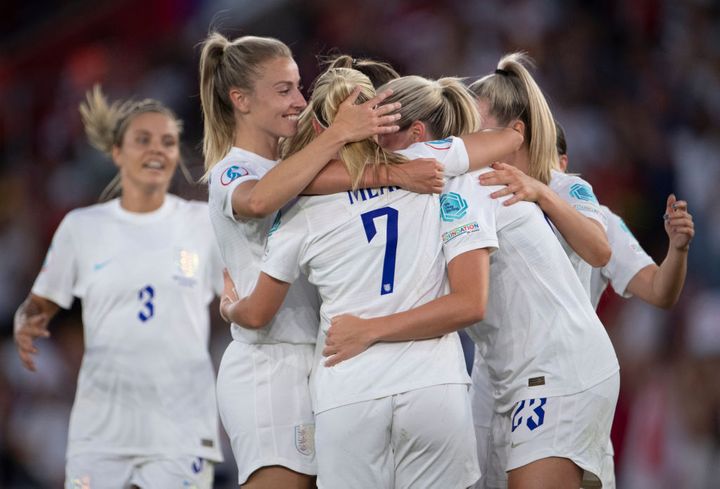
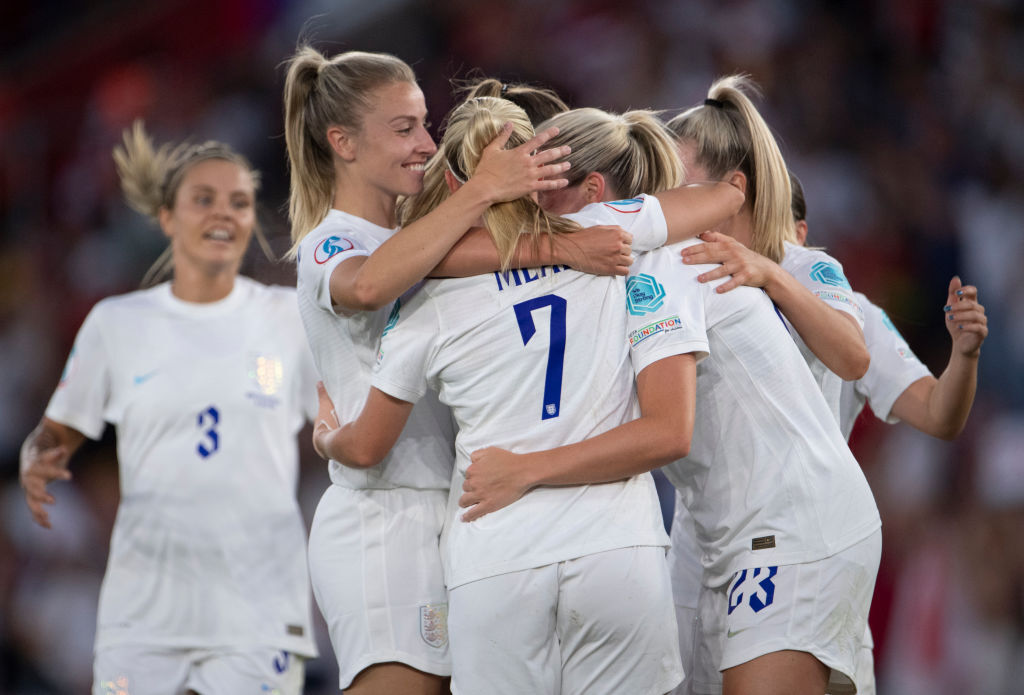
Why Watching England’s Lionesses Is Good For Your Mental Health

You’re reading Move, the nudge we need to get active, however makes us happiest and healthiest.

Every football fan will tell you the joy of watching your favourite time play, but a new study goes one step further, detailing how it can even boost your mental health.

And with England’s Lionesses set to face Sweden in the Euro 2022 semi-final, it’s yet another reason to get behind the team, who’ve had a record-breaking run so far.

One in two of all sports fans said watching a match helps them socialise more with friends and family, according to the study conducted by charitable social enterprise, Better. Over a third (35%) said it makes them feel part of a community and 33% said it inspires them to be more active.

The researchers asked 2,000 sports fans across the country questions about their daily exercise regimes, their participation in sports, their sport-viewing habits, their fruit and vegetable intake and their alcohol consumption.

They wanted to determine which sports fans are enjoying engaging in a sport and which ones prefer the comfort of their sofas when watching their favourite athletes compete.

The mighty Lionesses will face Sweden in the Euros semi-final.

Visionhaus via Visionhaus/Getty Images

The mighty Lionesses will face Sweden in the Euros semi-final.

“Sport and exercise is brilliant for physical, mental and cognitive health. If it was a pill it would make billions!” said Dr Josephine Perry, a sports psychologist who spoke to Better.

“As well as the physical benefits, the exercise we get through sport gives us structure, purpose, energy and motivation.”

Dr Perry explained that sport also positively alters the way we process and respond to our emotions, reducing “how much we overthink” helping to build up “an emotional resilience to stress”.

“These help reduce symptoms of depression and anxiety, make us behave differently, boosts our self-esteem and means we reduce any feelings of loneliness by becoming more social,” she added.

The research also found that football fans were the most active across all sports, with 34% getting over 60 minutes of exercise every day. Footie fans were also found to be the least likely to drink more alcohol while watching sport (45%).

Josh Cheetham, a 30-year-old avid Leeds United fan, was not surprised by the research.
“In 2018 I was suffering from depression, I was in a really dark place after a tragic life event, and I didn’t see how I was going to get better. Then I went to a football match, witnessed one of the best matches I’ve ever seen, and I was feeling better as soon as the final whistle blew,” he said.

“When I watch my team at away matches, I am usually on my own, but I don’t see it that way. We all support the same team, we are all one big community and family, you can start talking to anyone around you and immediately feel like you know them and strike up a friendship that lasts for years.”

So, if you haven’t tuned into the Euros yet, what are you waiting for?

England were always a favourite going into this tournament. But whatever the outcome, you’ll get a boost from supporting them.

Move celebrates exercise in all its forms, with accessible features encouraging you to add movement into your day – because it’s not just good for the body, but the mind, too. We get it: workouts can be a bit of a slog, but there are ways you can move more without dreading it. Whether you love hikes, bike rides, YouTube workouts or hula hoop routines, exercise should be something to enjoy.

HuffPost UK / Rebecca Zisser

Share Button

Lil Nas X, Kendrick Lamar And Jack Harlow Top MTV VMA Nominations

Jack Harlow, Lil Nas X and Kendrick Lamar are the top contenders with seven nominations at the 2022 MTV Video Music Awards.

Lil Nas X and Harlow earned multiple nominations for their collaborative hit Industry Baby, which is nominated for video of the year.

Both performers, along with Drake, Bad Bunny, Ed Sheeran, Harry Styles and Lizzo, will compete for artist of the year.

Lamar, who is nominated for the first time since 2018, has two songs, family ties and N95, that will vie for best cinematography.

The rapper was also nominated for best hip-hop, direction, visual effects, editing, and video for good.

Styles and Doja Cat received the second-most nominations with six.

Sheeran, Billie Eilish, Drake, Dua Lipa, Taylor Swift and The Weeknd each pulled in five.

Madonna, who is the most decorated artist in MTV history with 20 wins, becomes the only artist to receive a nomination in each of the VMAs’ five decades.

She earned her 69th nomination for her 14th studio album Madame X.

The awards will have 26 first-time nominees, including Baby Keem with four along with Kacey Musgraves, GAYLE and Maneskin – who each have two nominations.

The VMAs will take place on August 28 at the Prudential Centre in Newark, New Jersey.

Fan voting begins on Tuesday across 22 categories at vote.mtv.com.

Share Button

Tory Leadership Race Is Giving Us A ‘Wealth Of Material’, Labour Party Says

Labour today said the bitter Tory leadership race was providing them with a “wealth of material” ahead of the next election.

Shabana Mahmood, Labour’s national campaign coordinator, said they would “fulsomely” take advantage of the Tories “trashing their own record”.

She described both Rishi Sunak and Liz Truss as “continuity Johnson” and said she was “happy” to face either at the next general election.

The MP for Birmingham Ladywood said she will be able to tell voters on the doorstep to just listen to the Tories criticising their own record.

In an exclusive interview with HuffPost UK, Mahmood said: “They are giving us a wealth of material, we are obviously using some now and we’ll have plans for more later as the contest progresses and as we gear up for the next general election – whenever that might be.

“We would prefer an earlier election because Rishi Sunak and Liz Truss are proving every day that they are just more of the same.

“Neither has the answers that the country needs to move forward post-pandemic, neither has the answers on the economy.

“They are just brutally exposing – not just each other – but 12 years of Tory government that has led us to this moment.

“As far as we’re concerned bring on an early general election. As soon as this contest is done they should seek a fresh mandate.”

The vicious battle for No.10 has even prompted Tory grandees to warn the Conservatives they risk being called the “nasty party” again and losing the next election.

“I’ll be able to say to people on the doorstep ‘you don’t have to take my word for it anymore folks just listen to them’. The trashing of their own record, I think that you’d expect us to take advantage of that which we will be doing so fulsomely.”

– Shabana Mahmood

Earlier in the contest Truss and Sunak pulled out of a Sky News debate amid concerns about the damage they were doing to the party’s reputation, forcing the other candidates to follow suit.

But, despite warnings, the unedifying public slanging match has continued between the final candidates and their campaign teams.

Asked if she thought Tory infighting would help Labour win the next election, Mahmood said: “We’re going to be ready for that election whenever it comes.”

However, she said it was on the Labour Party to persuade the public to switch their votes and that they had to show the public they had “changed” and had the answers on the economy and cost of living crisis.

“The Tories are doing an even better job of trashing their own record than we could do or get a hearing on,” she added.

“They’re taking primetime broadcast slots to tear lumps out of each other.”

Labour Party deputy leader Angela Rayner, leader Keir Starmer and national campaign coordinator Shabana Mahmood.

JUSTIN TALLIS via Getty Images

Mahmood said the “vicious infighting” brought back memories of some of Labour’s rowing in recent years.

But she added: “The public never appreciates it and they never reward it at the polls either.

“The Labour Party learnt that lesson in the hardest of ways in 2019, we don’t propose to go there again.”

Mahmood said just pointing to the Tories would not be enough and they did not take the electorate for fools: “We know we’ve got to win their trust back.”

She said Labour was earning the right to be heard again, adding: “It’s on us to seal the deal with the electorate.”

Lord Fowler, who served under Margaret Thatcher and is now a crossbench peer, described Monday night’s BBC debate as “a bad night for the Conservatives”.

He told Times Radio the only people who might have been happy with the outcome would have been the Labour Party, adding: “They’ve got enough clips from that programme to last them through to the next election.”

Yesterday culture secretary Nadine Dorries, who is backing Truss, criticised Sunak for wearing a £3,500 suit and £450 Prada shoes.

Dorries said Truss “will be travelling the country wearing her earrings which cost circa £4.50 from Claire’s Accessories”.

The comments prompted veterans minister Johnny Mercer to warn that the party was putting success at the next election in jeopardy.

“The puerile nature of this leadership contest is embarrassing,” he said. “Time to raise the standards.”

The Labour party is already weaponising quotes, viral clips and images from the Tory leadership debates on their social media accounts.

They include a “Tory leadership bingo” card that cites “shaking the magic money tree” and “Thatcherite cosplay”.

They also created an advert in which they spliced together clips of Tory leadership candidates tearing strips off of each other over their record in government.

“All your bills, every week, every month, they’re going up and up and up,” Sunak says in one part of the video.

“Under your plans, we are predicted to have a recession,” Truss tells Sunak in another clip.

Labour leader Keir Starmer even quoted leadership candidates at Boris Johnson during their final prime minister’s questions.

He said: “She [Liz Truss] also said the former chancellor’s 15 tax rises are leading the country into recession and [Penny Mordaunt] was even more scathing.

“She said ‘our public services are in a desperate state, we can’t continue with what we’ve been doing because it clearly isn’t working’.

“Has the prime minister told her who’s been running our public services for the last 12 years?”

Last night’s showdown saw the two rivals trash each other’s economic plans and Sunak even accused by allies of Truss of “mansplaining”.

Sunak claimed there is “nothing Conservative” about Truss’s approach to cutting taxes and pumping up borrowing, arguing it would give the party “absolutely no chance” of winning the next election.

Foreign secretary Truss, in turn, suggested her rival would lead the country into a recession and criticised him for increasing taxes to the “highest rate in 70 years”.

During the debate a spokesman for Truss told The Times that Sunak was not fit for office, adding: “His aggressive mansplaining and shouty private school behaviour is desperate, unbecoming and is a gift to Labour.”

Share Button

Monkeypox: CDC says US leads globally in most known cases

The rise in cases comes amid expanded testing in addition to the growing outbreak of the virus.

Share Button

Stranger Things’ Joseph Quinn Detained By Customs Agent Demanding Season 5 Return

Stranger Things star Joseph Quinn just made his talk show debut — and almost didn’t make it.

The British actor appeared on The Tonight Show with Jimmy Fallon for the first time on Monday to reveal he was detained at immigration on his arrival in the US a day earlier.

Fortunately for Joseph, his Stranger Things character of Eddie Munson is universally adored — even by customs officials.

“I was taken into, I guess what you could call it, was more of a dungeon,” he told the host. “And I was asked to wait there for about 20 minutes and then I was summoned to this desk where someone asked me, ‘What are you doing in the United States, Sir?’”

While fans love Josephs portrayal of metalhead slacker Eddie Munson, the character was only introduced in the fourth season and may be hard to identify without his torn jeans and long trademark hair.

“Well I’m actually here to meet Jimmy Fallon on The Tonight Show,” Joseph said he replied. “And he didn’t believe me. And one of his colleagues looked over at me, looked at him, and said: ‘Leave Eddie alone.’”

The first agent, realising who he’d been interrogating, then asked Jospeh the one question Stranger Things fans have been clamouring for: “Do you come back next season?”

Joseph himself claimed to have no idea whether Eddie would return and said he told the agent as much. He was ultimately given a stern warning before having his passport returned: “You better.”

In his conversation with Jimmy, Joseph expounded further on the beauty of the Stranger Things fandom. He said he was moved by how strongly fans at Comic-Con identify with his character.

“I think it’s probably the fact that he’s an outsider, a little bit kind of on the fringes of society,” he said. “It’s so moving to see how much he means to people.”

Joseph read one of Munson’s monologues, switching accents from Scotland, Liverpool, Australia, New York City and Wales from one line to the next.

Jimmy reminded Joseph that his rendition of Metallica’s Master of Puppets during a vital Stranger Things scene landed the song on the US Billboard charts for the first time in decades. Joseph joked that he didn’t share any royalties, but did get a shoutout from his acting idol Jack Black.

The actor he has “worshipped” Black since School Of Rock was released in 2003. A heavy metal fan himself, Jack spoke on the red carpet for Kung Fu Panda: The Dragon Knight about binge-watching Stranger Things with his son — and falling for Eddie Munson.

“It was pretty epic,” said Jack. “I was geeking out pretty hard. And then I was like, ‘Why did you kill the heavy metal guy? He was the best character!’”

Share Button