If (like me) you feel pretty intimidated by the world of wine, Lauren Denyer, a WSET School London wine educator, has some words of reassurance.
“There is a certain amount of pretension that can come with wine, which can be very off-putting and often incorrect,” the expert, who regularly breaks “the rules,” previously told HuffPost UK.
Advertisement
She’s not above popping ice in white wine, drinking red as a mixer, putting good wine in your spag bol, and using the same glass for Christmas champagne as you do for your midweek supermarket Chablis.
But if you want to keep your wine tasting its best for as long as you can, wine expert Colin Simpson of Into the Vineyard said you keeping an eye on your fridge setting actually is a rule worth sticking to.
What’s the best fridge setting for wine?
It depends on the type of wine and how long you’re keeping it refrigerated. But in all cases, Simpson advised, we should avoid “Keeping wine at temperatures well below ~7°C for long periods.”
Advertisement
This, he says, is because “Fridges can store wine temporarily, but prolonged cold may dry out the cork, allowing air in and risking spoilage”.
When corks dry out, they shrink. This allows oxygen to enter the bottle, “accelerating chemical reactions that can spoil flavour and aroma,” he stated.
By the way, if you have a bottle of wine standing up in your fridge door shelf, you might be placing it in double jeopardy.
Advertisement
That’s not just because this part of your cooler sees the most temperature fluctuations, Simpson said.
Lying your wine on the side also, “Keep[s] the cork in contact with the wine. This prevents drying and unwanted oxygen exposure”.
How should I store wine, then?
Again, it really does change per bottle. But Simpson says that in general, “Chemical reactions in wine happen faster at higher temperatures, which is why cool, consistent storage is ideal.
Advertisement
“It slows reactions to a steady, desirable pace. The pH of wine shifts slightly with temperature, but its actual acidity remains stable unless extreme conditions trigger chemical changes.”
Store your wine on its side, away from direct sunlight, in a cool, still area. A wine fridge is ideal for really special bottles, but whether you have one or not, try not to go below ~7°C.
It was fine. Just fine. I love pistachios, I love chocolate and the combination was delicious but was it worth the £10 my friend and I spent on it? Absolutely not. I wasn’t thinking about it for days afterwards, I wasn’t in awe.
Its not like I’m hard to please, either. My favourite snack is carrot sticks dipped in hummous – we keep it real simple around here!
Advertisement
This kind of disappointment is common. So common, in fact, that when Reddit user Fly-Astronaut asked the /r/Cooking community what the most overrated dishes they’d tried were, over 3,000 people raced to respond.
Marry Me Chicken
Zyx-Darkshine says: “I want a divorce. I’ve moved on. I’ve been having an affair with Chicken Cacciatore anyway, but you already know that.”
Advertisement
CONTROVERSIAL. Marry Me Chicken, a tuscan-inspired chicken dish has been a social media sensation since as early as 2016.
Jkfromjh adds: “I made it once, it was good, but I don’t feel tempted to make it again anytime soon. TBH, the only reason I made it was because I had some heavy cream in the fridge and wanted to use it up before it went bad.
“I don’t think its revolutionary or anything, and its hard for a recipe with heavy cream, tomato, and spices to really taste bad.”
Advertisement
Honestly, this has just made me want it more.
Beef wellington
Listen, I love beef wellington but would I ever cook it at home? Nope. Boring.
MrEvil1979 agrees: “I mean it was nice, but not ’slaving around in the kitchen for 6 hours” nice.
“Much rather smoke meat, aka drink beer for 4 hours in the sunshine.”
Amen to that.
Baked feta and tomato pasta
Remember this pasta? It was HUGE on TikTok during lockdown. You simply filled an oven dish with tomatoes, added a block of feta and some herbs and then baked for around 20 minutes.
Once ready, the tomatoes and feta make a delicious pasta sauce. I LOVED it.
SunGlobal2744, however, did not. They say: “It was sooo tangy. I absolutely couldn’t eat it.”
8edibles adds: “Tastes like stomach bile and feet. I absolutely love all the ingredients…but prepared like that? No thanks💀”
If you feel similarly, I really recommend using Boursin in place of the feta. Delicious.
Macarons
101bees says: “They’re just okay. No right being as overpriced as they are usually.”
MissSassiFras1977 adds: “As a baker I have to agree 100%.
“I think it is more about achieving a cute, little, pain in the ass to execute cookie than anything…..”
Advertisement
I agree. Plus, the texture is not the one.
Chicken parmesan
Flowerfoxcanyounot says: “Chicken parmesan. It’s just dry, breaded chicken made soggy with marinara with mozzarella on top. Even if the chicken is made well and stays juicy, it’s still ruined by marinara soggy breading and cooling melted mozzarella.”
Hard. Agree.
Basic_Ask replies: “I like chicken parm, and can’t disagree with you.”
Steak
Already, I agree. I like a good steak but if one food can be called overrated, it’s this.
Previous_Bed_6586 says: “Don’t get me wrong, it’s delicious. It’s also extremely easy to make an equally delicious steak at home for a fraction of the price. I just can’t justify going to a restaurant for it.”
When you get into taking home cooking seriously, suddenly you are speaking about the joys of a ‘good, fresh lemon’, and having minor meltdowns over running out of onions – “but we always have onions!!”
The other thing that happens is you continue to challenge yourself. Yes, having a good meal rotation is the most important thing, but trying to reach gourmet-level is the real home cook dream.
Advertisement
Now, home cooks have taken to Reddit to share their ‘stupidly simple’ ingredients that have made their cooking taste more professional.
When it comes to cheese, choose quality when you can
Unsurprisingly, the cooks have a lot to say about cheese. User CompanyOther2608 says: “It’s a no-brainer, but blocks of good cheese instead of pre-grated or shredded”.
Advertisement
Breddy adds: “Good quality parmesan cheese.”
While Revolutionary-Bus893 changed my life saying: “I’m amazed how a few tablespoons of cream cheese can richen up sauces.”
When life gives you lemons, zest up your dishes
Sphinxyhiggins adds that they love to add lemon to spicy or savoury food, while crippledchef23 says: “I started adding lemon pepper to my spaghetti sauce and it changes things it a way I can’t describe. More tomato-y, but not acidic. Savory and deep and somehow sweet without any sugar.”
Revolutionary_Sir_76 is knocking the pineapple on pizza debate out of the park, saying: “Lemon on pizza or any kinds cheese sends me.”
Advertisement
As a fellow lemon fiend, I’m not writing it off.
MSG is almost always a good idea
Carpe-Bananum says: “A little MSG. Umami is your Daddy.”
If you’re not familiar, MSG (monosodium glutamate) is a flavour enhancer that’s common in Chinese cuisine but is also frequently used in tinned foods to enhance umamu flavours.
User BumblebeeNo3833 adds: “Came here to say this! MSG has made SUCH a difference in my cooking.”
Make the most of onions
Uncle_Rat_21 says: “Not really a swap, but I caramelise a bag of onions every other week or so. Add it to all kinds of things.
“Spaghetti sauce, mashed potatoes, omelettes. Made some quesadillas the other night with some leftover rotisserie chicken and some of the onions. So good!”
Advertisement
Dasookwat adds: “Most important one: time. take a bit more time for things to sear, onions to glaze etc.”
Joro65 advises: “In a lot of dishes, shallots, instead of onions will take it up a notch.”
Making white sauce? Add some mustard
Catfist says: “Not really a substitute, but I add a dash of mustard powder to pretty much every white sauce I make, it adds just a bit of depth and everyone seems to love it.”
Itsnotnews92 adds: “I add a dash of mustard powder to my mac and cheese. Not enough that anyone would say “this tastes like mustard,” but just enough to give it a bit of pop.”
Advertisement
Rcoop020 says it even works with boxed mac and cheese.
As a home cook, let me tell you a small secret: it’s so much easier than I act like it is.
Yes, I love a good fussy Ottolenghi dish as much as the next person but the classics that I break out whenever we have people over for food? That’s the time for easy-but-impressive dishes.
Now, home cooks on Reddit are sharing their tips for the best impressive-but-easy dishes.
Advertisement
Risotto
Don’t let the richness of this dish fool you – risotto is surprisingly simple, and Reddit user FireWinged-April agrees, saying: “The secret is keeping the rice al dente, which restaurants can’t pre make in bulk, and also won’t stay that way for long.
“I prefer mushroom risotto and I serve with pan seared chicken breast or a white fish. Fancy plating tip – use a measuring cup or tea cup and invert onto a plate, top with a drizzle of olive oil, fresh shaved Parm, crack of pepper and fresh herbs of choice. Super easy and always a hit!”
Ice Cream
I love some ice cream but will admit I shy away from making desserts at home.
However, user TigerAqua-8 assures that it’s actually very simple, saying: “Beat cream until soft peaks and chuck in a tin of condensed milk. Beat. Add vanilla or anything else you want. Freeze. You’ll never buy ice cream again.”
Advertisement
If it is that simple, I certainly won’t.
Lamb chops with sautéed asparagus
Medigapguy shares his simple recipe:
Asparagus:
Salted, sautéed in iron skillet till you can cut with a fork. Sprinkle with fresh Parmesan and squeezed juice or half a lemon. Place skillet in a 300 oven.
Salt, pepper, garlic powder. Seared on a iron skillet with ghee. Till med rare.
Pull asparagus out and serve. With a dollop of mint jelly and some french bread
Takes around 15 min total
Done and done.
Modified puttanesca
Shatzakind advises: “Boil water and cook some penne pasta. Get a frying pan, set the burner on medium, and put some olive oil in the pan to coat it. Sauté some chopped garlic, sweet onions, and chopped basil, add some kalamata olives and capers, then toss in the pasta and mix everything together.
“You’re just sautéing enough to get the raw food soft and hot. Add some of your fav marinara sauce and heat. Plate and add parm cheese (shaved makes it look fancy).”
Advertisement
Smoked meat
Just ahead of BBQ season, user theFooMart shares their tips for delicious smoked meats: “Take your brisket, ribs, or pork shoulder. Rub mustard on the outside to make the seasoning stick. Season with salt, pepper, and garlic. Put it on your smoker at 250 until it’s done. If you want it even easier, use an electric smoker or a Traeger.
“Even a gas BBQ will work, although it won’t be smokey. Turn on the burners on one side, and put the meat on the other side.”
Rosemary salmon
1dzMonkeys shared their simple-but-fancy salmon recipe:
Buy a large-ish salmon fillet, fresh rosemary, red onions, lemons and olive oil.
Lamb is traditionally served at Easter, but there are loads of ways to cook it other than your usual Sunday roast.
We asked chefs their favourite ways to prep lamb for a delicious feast. Be warned: you’ll want to try them all.
Advertisement
Lavender and rosemary leg of lamb
Chef Richard Corrigan, from Bentleys, says this recipe is one of his all-time Easter favourites. “The lavender adds a beautiful floral flavour to the dish and complements the honey nicely,” he says.
Ingredients:
2kg/4½lb leg of lamb, on the bone
1 small bunch of English lavender
5 sprigs of rosemary
2 cloves garlic
1 small jar of honey
Method:
1. Preheat the oven to 200C/400F/Gas 6. Remove the lavender buds from the stalks and add to the honey Pull the rosemary leaves from the stalks and place in a blender. Add the salt and blitz.
2. Rub the lamb all over with the salt and place in a roasting tray.
3. Cover with foil and place in the oven for 20 minutes. After which remove the foil and leave to roast for a further 40 minutes (for medium).
Advertisement
4. Pour over the lavender and honey, return to the oven for a further 10 minutes.
5. Remove the lamb and leave it to rest for 10-15 minutes, with some foil on top to keep it warm. Serve with the pan juices and spring vegetables.
Richard Corrigan
Lamb raan
Chef Will Bowlby, who works at modern Indian restaurant, Kricket, recommends changing up your Easter feast. “Why not spice up your Easter this year with a centrepiece alternative to your usual roast lamb,” he suggests.
Advertisement
Ingredients:
A leg of lamb on the bone
4 tablespoons ginger and garlic paste
2 tablespoons Kashmiri red chilli powder
Pinch of sea salt
2 fresh Indian bay leaves
3 star anise
1 teaspoon black peppercorns
1 teaspoon cloves
1 cinnamon stick
400 ml (14 fl oz/generous 11⁄2 cups) white distilled vinegar
About 1.6 litres (56 fl oz/62⁄3 cups) cold water
500 ml (17 fl oz/2 cups) double (heavy) cream
A generous pinch of saffron strands, soaked in a little warm water
3 tablespoons garam masala
Method:
1. Rub the meat with the ginger and garlic paste, chilli powder and a pinch of salt and leave overnight to marinate. Preheat the oven to 200C (400F/Gas 6).
2. Transfer the leg to a deep ovenproof pan, add the remaining spices and vinegar, then pour in the water (it should just cover the meat). Cover the pan and cook in the oven for 30 minutes.
3. Lower the oven temperature to 160C (320F/Gas 3) and cook for a further 4–5 hours until the meat is falling off the bone.
Advertisement
4. Remove from the oven, take the meat out of the braising liquid and allow to cool. The meat is cooked when you can easily pick it from the bone. Transfer the braising liquid to a heavy-based saucepan and boil over a high heat until it has thickened and the flavours have intensified. Strain the liquid into a separate pan, reduce the heat and add the cream, saffron and garam masala. Reduce for a further 5 minutes, adjust the seasoning to taste and set aside to cool.
5. When you are ready to serve, heat a large frying pan (skillet) over a high heat and sear off the meat to get a nice crispy exterior. Add the braising liquid to the pan and spoon the liquid over the meat until it coats it nicely. Serve the meat whole, in its braising liquid.
Hugh Johnson
Advertisement
Lamb shoulder fricasee
Asimakis Chaniotis, chef at Pied à Terre, says: “Although it sounds French, lamb fricassée is a Greek Easter dish which I have grown up with. It’s so good, I could eat it all year round so it’s a shame it’s traditionally only eaten at midnight on the Saturday of the Easter weekend.”
Ingredients:
1kg of boneless shoulder of lamb with the fat and chopped in cubes
Good drizzle of vegetable oil
2 medium leeks, sliced
10 shallots, chopped
6 stalks of celery, with their leaves, chopped
5 cups chicken stock
2 tsp salt
1 tsp pepper
6 heads of lettuce cut in half and then sliced 2cm thick
A bunch of fresh dill, finely chopped
A bunch of fresh parsley finely chopped
A bunch of chervil finely chopped
For the sauce:
3 medium eggs, separated
Juice of 2 medium lemons
1 tbsp cold water
1 tsp corn flour
Method:
1. Cut the meat into 1 inch chunks. Pat down the lamb to remove any excess moisture then brown it on all sides over medium-high heat in the vegetable oil in a large saucepan
2. Add the leeks, onions, and celery to the pot and sauté gently until the vegetables soften. Add the chicken stock to cover the mixture and season it generously with salt and pepper. Cover and cook on medium heat for about 90 minutes, removing the lid for last 30 minutes
Advertisement
3. Chop all the herbs, reserving some for garnish. Chop the lettuce and add it to the pot, along with the herbs. Reduce the heat, cover, and simmer for 5 minutes, or, until the lamb is fork-tender and a small amount of liquid (about a cup or so) remains in the pot. Turn off the heat
4. Prepare the egg-lemon (avgolemono) sauce:
In a small bowl, whisk the egg whites with the teaspoon of cold water and cornflour until very frothy. Whisk in the egg yolks and lemon juice. Temper the avgolemono sauce by slowly adding one ladleful of the hot liquid from the pot to the small bowl with the eggs, while whisking the whole time. Continue with a second ladleful of the hot liquid and whisk again. Now add the avgolemono to the pot and stir gently to incorporate.
Shake the pot a few times to make sure everything is thoroughly mixed together.
If you need to reheat the lamb fricassée before serving, do so very gently, making sure the stew does NOT come to a boil (the egg will scramble).
5. Place on a serving platter, topped with the reserved chopped herbs. Good, crusty bread is a must and a Greek salad on the side is always a good idea.
The Food Standards Agency (FSA) say that children under the age of five should steer clear of “slush”-style ice drinks and under-11s should have no more than one slushie.
This is because its sweetener, glycerol, has the “potential to cause side-effects such as headaches and sickness, particularly when consumed in excess,” the FSA says.
Advertisement
But recently, researchers have said that kids under eight should avoid the cooling treat too.
It found that, especially when children drink slushies quickly, it can lead “glycerol intoxication syndrome” (which can cause unconsciousness and even seizures).
As a result, the paper recommended: “younger children, especially those under 8 years of age, should avoid slush ice drinks containing glycerol.”
Advertisement
But if the ingredient can be so dangerous, should any of us drink it? We spoke to Dr Olalekan Otulana, a GP at Ocean Recovery and Cassiobury Court, about how the information should inform slushie lovers and parents alike.
The GP agrees that children under eight should steer clear of the drink
“The advice to keep children under eight away from slushies containing glycerol is reasonable,” the doctor told us.
After all, the ingredient isn’t just a problem at A&E-visit-causing levels; milder cases of glycerol “intoxication” can still lead to nausea, headaches, and vomiting.
Advertisement
“However if you are extending [the advice] further to all age groups this may not be necessary,” Dr Otulana continued.
“Older children and adults are less likely to experience harmful effects unless they are consuming excessive amounts quickly. It is commonly used in food and is generally safe in small quantities.”
Indeed the FSA write that “glycerol is generally of low toxicity”, though they acknowledge “concerns about the effect on young children when large quantities are consumed over a short period of time.”
Advertisement
Still, the researchers of the recent paper say that because most customers have no idea how much glycerol is in a given slushie ― and because children’s weight and health differs so much ― “estimating a safe dose is… not easy.”
So, while Dr Otulana says most older children and adults are likely alright to enjoy “occasional consumption” of slushies, he warns against “drinking it in high amounts”.
Is the FSA thinking of changing its guidelines about slushies?
The FSA’s director of policy, Rebecca Sudworth, says the agency is “carefully” reviewing the new information.
Advertisement
“We continue to strongly encourage parents to follow [the current] advice which is that slushie drinks should not be given to children under four years old. Retailers are also advised to make parents fully aware of this guidance,” she said.
“While the symptoms of glycerol intoxication are usually mild, it is important that parents are aware of the risks ― particularly at high levels of consumption.”
In his latest newsletter, NHS Surgeon and TikTok creator Dr Karan Rajan reveals that back in 2018, he was doing pretty significant damage to his gut health without even realising it.
He says: “My Indian ancestors were spiritually shaking their heads at me, because despite coming from a lineage of fibre-laden dal, lentils, and spice-rich cuisine, my diet at the time contained about as much fibre as a wet paper towel.
Advertisement
“You could almost hear the garam masala, coriander, and cumin seeds collectively sighing in disappointment every time I ate yet another low-fibre, protein-heavy meal.”
However, his gut health seemed fine. He was regularly passing stools, still very active and, in his words, “Nothing about my daily life screamed -you are a fibre-deficient failure.”
However, his blood tests said otherwise
While the routine blood tests he undertook didn’t suggest that a heart attack was imminent, Dr Rajan did experience a bit of a shock to the system when they revealed that his health wasn’t quite where it should be.
Advertisement
He explains: “let’s just say certain fractions of my cholesterol were slightly higher than they should have been. My triglycerides were creeping up, whispering ominous things about my future and the overall pattern wasn’t what you’d expect from a “healthy” young person.”
Initially, it didn’t make sense to the doctor. He didn’t eat fast food, he regularly exercised and his diet appeared to be overall pretty good.
Then, he explained, “it hit me…I had completely neglected one of the most powerful metabolic regulators: fibre.”
Advertisement
Fibre: essential for more than just bowel movements
Dr Rajan says: “Most people think of fibre as nature’s plumbing assistant; helpful for keeping you regular, preventing constipation, and producing structurally sound poops.
“But fibre is a metabolic heavyweight.”
He explains that some of the benefits of fibre include:
Cholesterol regulation: “It reduces cholesterol reabsorption, meaning less circulates in the blood, keeping arteries unclogged”
Blood glucose control: ”High-fibre diets have been linked to a reduced risk of type 2 diabetes… and if you already have diabetes, fibre can blunt those glucose swings”
Cognitive & neurological benefits: Emerging research suggests fibre indirectly supports brain health by feeding gut bacteria that produce short-chain fatty acids (SCFAs). SCFAs reduce neuroinflammation, improve the gut-brain axis, and may even protect against cognitive decline
Microbiome & liver function: ”A fibre-rich diet lowers systemic inflammation, reducing fatty liver disease risk and keeping gut-derived endotoxins from overwhelming the liver”
The UK Government also urges that we should eat more fibre
On their website, The British Nutrition Foundation warns: “Adults in the UK are not consuming enough fibre. On average, we consume about 20g per day rather than the recommended 30g.”
Advertisement
The UK Government also urges that eating more fibre can reduce your risk of bowel cancer, adding: “Fibre is an important part of a healthy diet as it aids digestion, prevents constipation and helps to reduce your risk of bowel cancer. Foods like wholegrain cereals, wholewheat pasta, oats, beans, chickpeas, and lentils are all sources of fibre.”
Choose a higher-fibre breakfast cereal such as plain wholewheat biscuits (like Weetabix) or plain shredded whole grain (like Shredded wheat), or porridge as oats are also a good source of fibre.
Go for wholemeal or granary breads, or higher fibre white bread, and choose wholegrains like wholewheat pasta, bulgur wheat or brown rice
Go for potatoes with their skins on, such as a baked potato or boiled new potatoes. Find out more about starchy foods and carbohydrates.
Add pulses like beans, lentils or chickpeas to stews, curries and salads.
Include plenty of vegetables with meals, either as a side dish or added to sauces, stews or curries
Have some fresh or dried fruit, or fruit canned in natural juice for dessert. Because dried fruit is sticky, it can increase the risk of tooth decay, so it’s better if it is only eaten as part of a meal, rather than as a between-meal snack
For snacks, try fresh fruit, vegetable sticks, rye crackers, oatcakes and unsalted nuts or seeds
Sometimes, you get hit with a very specific craving. For a while there, I had a hankering for sour cream and chive pretzels. No idea why — it’s not like they’re something that I have often.
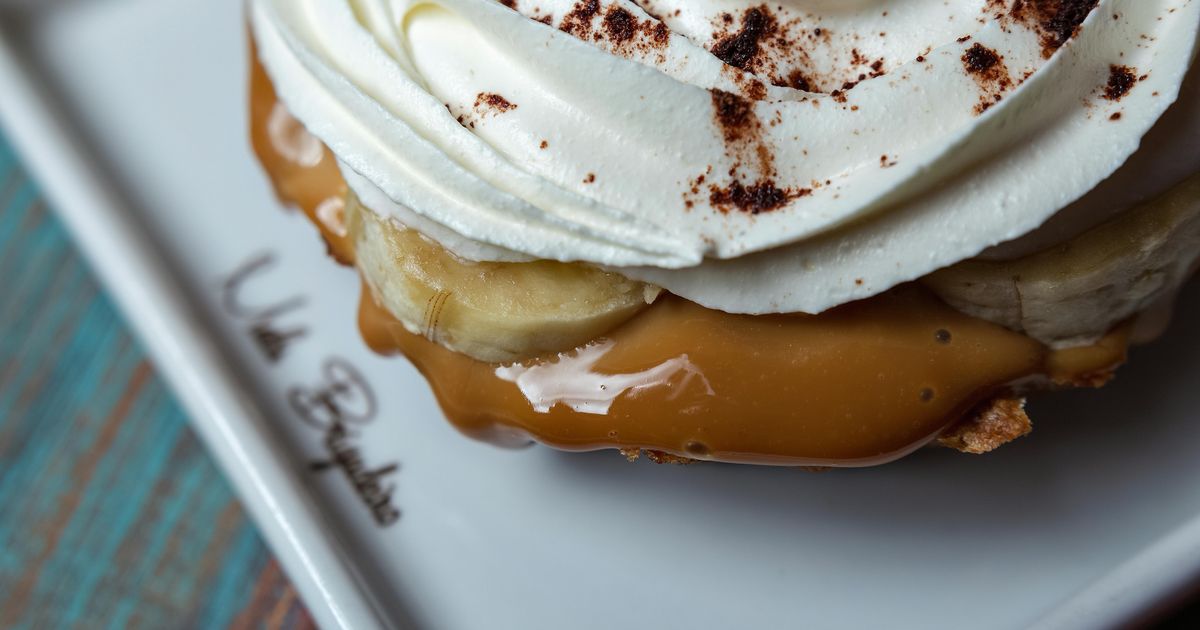
Now, though, now I am craving the delectable, moreish joys of a banoffee pie. Sweet, soft, and with a lovely silky finish to it… I actually can’t think of anything I want more in this moment.
Advertisement
Thankfully, I don’t need to wait too long to tuck into this coveted dessert as the cake queen herself Mary Berry has a banoffee pie recipe that is so simple that it doesn’t even require baking.
Marry Berry’s banoffee pie recipe
As featured on her BBC One series Classic Mary Berry, this recipe requires:
around 10 digestive biscuits
butter
muscovado sugar
condensed milk
vanilla extract
double cream
bananas
dark chocolate or cocoa powder
Additionally, she advises, if you’d like to make a salted caramel version, you only need a teaspoon of sea salt. Yum.
Advertisement
The base can be made up to a day in advance and to make it, Mary advises doing the following: “Crush the biscuits to fine crumbs and melt the butter over a low heat.
“Pour both into a bowl and mix to combine. Spoon into the base of the tin and press down with the back of a spoon until level. Place in the fridge for 15 minutes
The banana and cream should be made on the day and left for around an hour to set in the fridge.
The toffee is the only really tricky part of the recipe, requiring precision and focus. For that, you heat butter and sugar together and stir over a low heat until combined. Then you add the condensed milk and bring to the boil, stirring for a few minutes.
Advertisement
However, if you over-boil it, it will become grainy and more like fudge, which is not the vibe.
If you’re also ready to treat yourself to this delicious pie, you can view the full recipe here.
Guinness is having a renaissance right now in the UK. We’ve drunk our supply dry in recent months, you can’t have a pint in peace without being challenged to ‘split the G’ (getting half-way down the logo in one gulp) and there is now such a thing as ‘Guinn-fluencers’. Kim Kardashian, Paul Mescal and even the Royals have been spotted drinking a pint of the good stuff in 2024.
Talking of the drink’s surge in popularity in 2024, Diageo (who own Guinness) said: “This year, Guinness has continued to build on its legacy as a brand that celebrates quality, creativity, and connection. Its popularity has grown as part of a broader strategy that leverages its rich heritage while embracing fresh opportunities.”
Advertisement
Well, it’s certainly working.
Naturally, when Diageo asked if I wanted to come and visit Dublin to see where the pint of the moment is made at The Guinness Storehouse, it was the easiest yes I’ve had in a while – because where better to go than when Scotland has run out of Guinness than the home of it.
The Guinness Storehouse is a seriously jam-packed affair – it contains seven floors of sights, sounds and sensations in a building that has been brewing beer for over 250 years. Fortunately, it’s not going to stop anytime soon as Arthur Guinness signed a 9,000 year lease on the building all the way back in 1759, which you can see for yourself at the very start of the 90 minute self-guided tour.
Dayna McAlpine
A guided tasting of Guinness
Advertisement
The experience has welcomed a whopping 25 million visitors through its doors since 2000 (with 1.65 million visitors in 2024) and takes you on an immersive experience from grain to glass (with pints of the good stuff along the way).
We first learnt everything there is to know about how Guinness is brewed and were knocked for six at the fact that it… isn’t black.
Yup, its colour primarily comes from the roasted barley. When barley grains are roasted, they develop a deep, dark hue, which then gets transferred to the beer during brewing. And though we often perceive Guinness as being black, under light, you can see that it has a ruby-red tint.
Advertisement
The next stage is a gallery of iconic Guinness advertisements that have become pillars of Irish culture throughout the globe, followed by a guided tasting (can confirm, I like Guinness).
If you’re feeling peckish (or suddenly feel the need to reline your stomach), there are also several eateries dotted across the seven floors – unsurprisingly, Guinness is a key factor in the ingredients list. Since its opening, the Storehouse has seen 39,000 Oysters shucked, 58,000 slices of Guinness brown bread served and 32,000 Guinness & beef stews sold in 2024.
Advertisement
I skipped learning how to pour a pint of Guinness (in a bid to avoid painful flashbacks to my student bartending days) – but know a perfect pour is not easily achieved. The pouring process SHOULD take approximately 119.5 seconds, something the bartenders of the rooftop bar of the Storehouse have down to a fine art (no shock given that they served over 1.5 million pints of Guinness and Guinness 0.0 in 2024).
The best bit? Your pint with the best views of Dublin comes with your entrance ticket.
It’s no wonder that The Guinness Storehouse is Dublin’s most popular tourist attraction.
This year, the Guinness Storehouse is set to write a bold new chapter in its extraordinary journey, through Alive in 25, an exciting year-long campaign that sets to celebrate even more cultural events and community initiatives in honour of the Storehouse’s 25th anniversary. Be the first to know about upcoming events and experiences at the Guinness Storehouse in 2025. Follow @homeofguinness #Alivein25 and visit www.guinness-storehouse.com.
There is something just so lovely about spending a Sunday baking up a storm in the kitchen. Radio on, pyjamas on, cup of coffee to keep you going and suddenly you realise – you don’t have any eggs in!
Momentum is falling. There’s no way you’re putting on proper clothes today. No way you’re heading to the shops. Yuck.
Advertisement
We’ve all been there, right?
Well, it turns out that there is an egg substitute that you can use and actually, you don’t need to go to a specialist shop for it. You probably don’t even need to go further than your kitchen cupboards.
A simple egg substitute that takes no time to prepare
Yes, the seeds you swear by for smoothies and protein muffins are actually perfect in place of eggs in case of emergencies or intolerances and preparing them is very simple, too.
The baking experts at Minimalist Baker recommend creating ‘chia eggs’ by mixing 1 Tbsp chia seeds + 2.5 Tbsp water and urge that these can be used in all kinds of baking!
Advertisement
Minimalist Baker also adds that this is actually possible with flaxseeds, too, and is a perfect hack for anybody looking to get into vegan baking.
Health benefits of chia seeds
According to Harvard Health, chia seeds come with a wealth of health benefits, including:
The health experts add: “Chia seeds contain a variety of nutrients including fibre, protein, omega-3 fatty acids, antioxidants, and various vitamins and minerals like calcium, magnesium, and phosphorus that are beneficial to your health.”