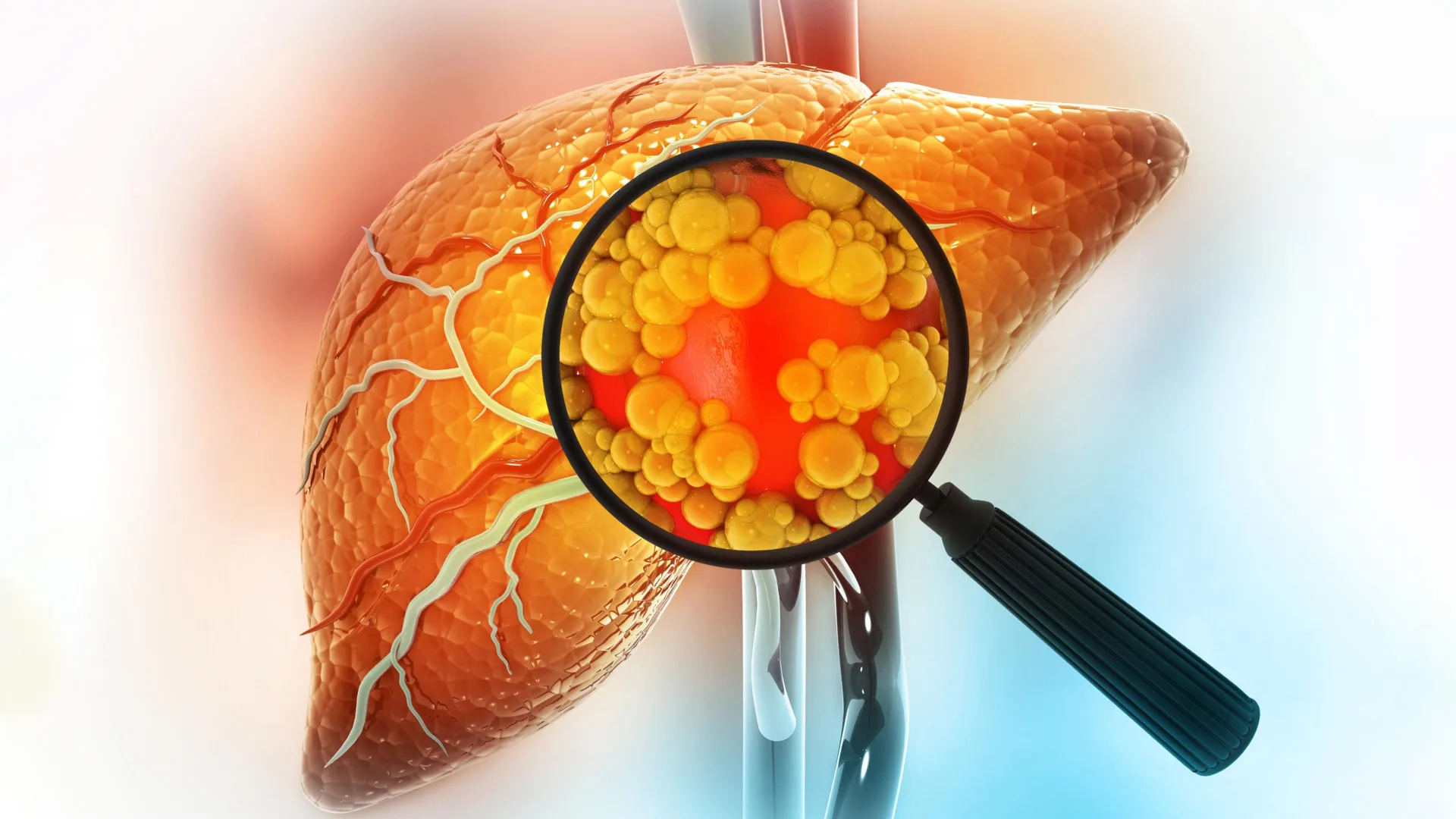
This new semaglutide dose helped nearly half of patients lose 20% body weight

A higher weekly dose of semaglutide (7.2 mg) can significantly improve weight loss and related health outcomes in adults living with obesity, including those with type 2 diabetes (T2D), according to the results of two large-scale, international phase 3 clinical trials. The findings, published in The Lancet Diabetes & Endocrinology journal, suggest that a higher dose of semaglutide offers a promising new option for people with obesity, including those with T2D, who have not achieved sufficient weight loss with existing treatments.

The STEP UP and STEP UP T2D clinical trials are the first to investigate whether increasing the dose of semaglutide from the currently approved dose of 2·4 mg to 7·2 mg is safe and leads to additional weight reduction. Trial participants were randomized to receive either the higher 7·2 mg dose of semaglutide, the currently approved 2.4 mg dose, or placebo over 72 weeks. All participants — regardless of treatment group — received lifestyle interventions such as dietary counseling and increased physical activity recommendations.

In adults without diabetes, a 7·2 mg dose of semaglutide led to an average weight loss of nearly 19%, surpassing the 16% loss seen with 2·4 mg and 4% with placebo. Nearly half of the participants on the higher dose lost 20% or more of their body weight, with about one-third losing at least 25%. Participants also experienced improvements in waist circumference, blood pressure, blood sugar, and cholesterol levels, all key factors in reducing obesity-related health risks. Similarly, in adults with obesity and T2D, the 7·2 mg dose resulted in an average 13% weight loss compared to 10% with 2.4 mg and 3.9% with placebo, along with significant reductions in blood sugar levels and waist size.

Both trials reported that the higher dose of semaglutide was safe and generally well tolerated. Gastrointestinal side effects like nausea and diarrhea, and some sensory symptoms like tingling, were the most common. However, most side effects were manageable, resolved over time, and did not lead to participants dropping out of the trial. No increase in serious adverse events or severe hypoglycemia was observed with the higher dose.

By delivering greater weight reduction and metabolic benefits while maintaining a favorable safety profile, the authors say this higher dose could help more people reach their health goals and reduce the burden of obesity-related complications worldwide. However, they highlight that further research is needed to fully understand the long-term benefits and risks.

Share Button

What exactly is freshers’ flu – and why do so many get it?

It’s not an actual flu, and it’s rarely serious, but when thousands of students arrive on campus they bring a cocktail of viruses.

Share Button

The vitamin D mistake weakening your immunity

Taking vitamin D2 might lower the body’s levels of the more efficient form of vitamin D, vitamin D3, according to new research from the University of Surrey, John Innes Centre and Quadram Institute Bioscience. Many people take vitamin D supplements to support their bone and immune health and meet the UK government recommendation of 10 micrograms (µg) each day, especially during the winter months.

There are two forms of vitamin D supplements available: vitamin D2 and vitamin D3. Researchers have found that taking vitamin D2 supplements can lead to a drop in the body’s concentration of vitamin D3, which is the form our bodies naturally produce from sunlight and use most effectively to raise overall vitamin D levels.

The study, published in Nutrition Reviews, analysed data from randomised controlled trials and found that vitamin D2 supplementation resulted in a reduction in vitamin D3 levels compared to those not taking a vitamin D2 supplement. In many of the studies, the vitamin D3 levels went lower than in the control group.

Emily Brown, PhD Research Fellow and Lead Researcher of the study from the University of Surrey’s Nutrition, Exercise, Chronobiology & Sleep Discipline, said:

“Vitamin D supplements are important, especially between October and March, when our bodies cannot make vitamin D from sunlight in the UK. However, we discovered that vitamin D2 supplements can actually decrease levels of vitamin D3 in the body, which is a previously unknown effect of taking these supplements. This study suggests that subject to personal considerations, vitamin D3 supplements may be more beneficial for most individuals over vitamin D2.”

Professor Cathie Martin, Group Leader at the John Innes Centre, said:

“This meta-analysis highlights the importance of ensuring plant-based vitamin D3 is accessible in the UK.”

This research supports a previous study published in Frontiers in Immunology, led by Professor Colin Smith from the University of Surrey, which suggests that vitamin D2 and D3 do not have identical roles in supporting immune function. Vitamin D3 has a modifying effect on the immune system that could fortify the body against viral and bacterial diseases.

Professor Colin Smith said:

“We have shown that vitamin D3, but not vitamin D2, appears to stimulate the type I interferon signalling system in the body — a key part of the immune system that provides a first line of defence against bacteria and viruses. Thus, a healthy vitamin D3 status may help prevent viruses and bacteria from gaining a foothold in the body.”

Further research into the different functionalities of vitamin D2 and D3 should be a priority in deciding whether vitamin D3 should be the first-line choice of vitamin D supplement, subject to individual requirements.

Professor Martin Warren, Chief Scientific Officer at the Quadram Institute, said:

“Vitamin D deficiency represents a significant public health concern, especially during the winter months with significant deficiency across the UK population. This collaborative research effort aligns well with the Quadram Institute’s mission to deliver healthier lives through food innovation to enhance the nutrient density of the food we eat. Tackling this with the most effective form of vitamin D supplementation or fortification is of the utmost importance to the health of the nation.”

Share Button

This 1 Type of Walking Could Be The Key For Upping Your Step Count Without Wrecking Your Body

Want to add some extra challenge to your walk? Or want to tone down your too-tough run? “Jeffing” may be your answer.

Jeffing is a training method that comprises both running and walking intervals during a workout. It was founded by Jeff Galloway, an Olympic runner, who came up with the run-walk concept to help folks of all levels run further, protect themselves from injuries and enjoy running more, according to Galloway’s website.

The method is known by a few different names, such as the Galloway run-walk program and the run-walk method, but they all have the same goal: to help people build endurance, run faster and move more by employing both running and walking intervals during a workout.

Here’s what jeffing might look like: Going for a two-minute run followed by a three-minute walk and repeating that a few times for a full workout.

Whether you’re a runner or not, jeffing is a way to make running more accessible and for your step count to skyrocket in the process. Here’s what to know:

‘Jeffing’ is useful for runners of all levels, but is especially valuable for beginners.

Jeffing is good for anyone to try, whether you’re running a marathon or lacing up your shoes for the first time ever.

“I’ve always thought of Galloway’s run-walk as taking what he did when he was an Olympic runner … and … [bringing it] to people like my mom who never thought that they could be a runner,” said Randy Accetta, the director of coaching education at the Road Runners Club of America and founder of Run Tucson.

Runners training for races are known to employ this run-walk (or run-jog) method in their training, Accetta added.

While jeffing can help someone running a high-stakes race cross the finish line, it can also be a particularly good strategy for new runners, said Jeff Dengate, the runner-in-chief for Runner’s World magazine.

“We’ve seen this time and time again where somebody [takes] up running, they head out their driveway, and they think, ‘I have to be a runner. I have to be fast,’ so they get down the road and they’re just cooked, they’re just exhausted,” Dengate said.

For new runners, having a run-walk strategy can keep that exhaustion from happening. “It’s a really good introduction to running,” said Riley Buchholz, the men’s and women’s cross country coach at Temple University in Philadelphia. And it can be protective.

“A lot of people don’t realize that whenever you’re running, you’re applying three to four times your body weight [on your joints] — so, it’s a lot on the body to handle, especially if you just start pumping out miles at a harder effort that you aren’t used to. It takes time to adapt to that,” Buchholz explained.

A mix of running and walking when you head out to the trail or track can help protect your body from that impact.

Jeffing is a run-walk method that can help build up endurance and muscle strength.

FG Trade Latin via Getty Images

Jeffing is a run-walk method that can help build up endurance and muscle strength.

It can help build up strength and endurance.

Don’t let the walking fool you. If your goal is to build up your running capability, this jeffing still has a place in your training.

Alternating between running and walking can help you build up your lung capacity, endurance, and muscles, noted Buchholz before adding, “Anytime you’re exercising, you’re getting better.”

“It helps a lot of people build, not only the stamina, the endurance, but also speed,” Dengate said. “Runners can get faster by using those little walk breaks as well.”

Jeffing is also a good way to learn your preferred pace and effort, Buchholz said.

It takes some of the pressure off running, too.

Anyone who has gone for a run knows the feeling of wanting to stop for a break but feeling guilty about the pause. While there is never a reason to feel guilty (movement is movement), jeffing helps take away those bad feelings during exercise.

“It gives us all the opportunity to exercise without having to feel bad about wanting to stop,” Accetta said. “In the Galloway run-walk, you [intentionally take] the walk breaks. So you know going in that you’re going to run for five minutes and walk for a minute.”

That way, when you’re done with your workout, you can proudly check it off your to-do list because you set out to run and walk from the beginning, Accetta added. “And that’s different than, ‘oh my god, I’m so tired, I need to take a nap. I need to stop walking’ and then stressing whether … you’re ‘quitting’ or not.”

Here’s how to try it:

While some people choose to follow a formula such as one-to-one efforts (meaning, for example, five minutes of running followed by five minutes of walking), there really isn’t a hard-and-fast rule, according to Accetta.

“I think the beauty of … jeffing, or run-walk, is that you can manipulate the effort and rest intervals to fit the physical and emotional needs of the athlete as well as the terrain,” Accetta explained. “For me, there is no perfect ratio.”

It’s all up to you how you start. New runners could try running for 30 seconds, followed by a three-minute walk, or even 15 seconds of running, followed by a three-minute walk. Experienced runners could run for 10 minutes and follow it up with a 30-second walk. There is no wrong formula.

Buchholz said he generally recommends a one-to-four ratio for beginner runners. “Normally, the running is the one and the four is your walking,” he said.

This means if you’re moving for 20 minutes, five minutes can be spent running and 15 can be spent walking, Buchholz said.

If you do want a specific formula, Dengate said there are run-walk calculators online that can help you determine your pace and timing based on your mile time.

When it comes to pace, there are a few things to keep in mind. An everyday jog pace shouldn’t totally deplete you, according to Dengate. “We usually say to use the talk test. If you can’t carry a conversation with the person next to you, you’re probably running too fast on most days.”

“But then, how fast do we do those walk intervals? It’s not a full recovery — you want to walk with purpose … I like to tell people, move like you’re a New Yorker going down the sidewalk. You’re getting somewhere,” Dengate explained.

If you slow down too much during your walk interval, it’s hard to start running again, Dengate added.

Movement should feel good and rewarding, so take the pressure away and keep that in mind when you head outside for your weekly jeffing.

“Far too often we thought of running as punishment for other sports, or it’s something I have to do,” Dengate said. “I like to remind people, running is something we get to do. We’re fortunate enough to be able to have that opportunity to go out and spend that time doing it, so go have fun with it.”

Share Button

‘A F*ck-Up Of Epic Proportions’: 7 Of The Worst HR Mistakes Workers Have Seen

Nobody’s perfect: we all mess up from time to time. But when that happens at work, the stakes can be pretty significant.

For instance, writing to r/AskUK, site user MoonlightByWindow shared that the HR in their friend’s workplace recently sent out a mass email congratulating a worker on their new promotion to manager.

After much ado, though, it turns out this was likely a mistake. “A few hours later, HR announced that they’ve ‘suddenly’ realised that someone else would be better suited for the role,” the poster wrote.

They asked other members of the forum, “What’s the biggest cock-up by HR that you’ve witnessed?”

Here are some of the most-upvoted responses:

1) “HR came to see me a told me to collect my things and meet them in the office with a higher-up. So I did.”

“They then informed me I was being suspended from my job pending both an internal investigation and a possible criminal investigation. I was suspected of gross misconduct (theft of money) and harassment.

“My manager looked dumbfounded during [this], as did I. HR had somehow got themselves confused: I was the victim of the harassment and the witness to the theft of money.”

Credit: u/MissLotti

“That’s a fuck up of epic proportions,” u/EastEven5980 replied.

2) “At my level, everyone’s contract stated that employees needed to give three months’ notice, [while] the company only needs to give one month’s notice to let you go. ”

“But mine read that the company needed to give me three months’ notice. So when redundancy came round, I was in quite a strong position.”

Credit: u/CIMAJ98

3) “After a little increase in responsibility and a bump in pay, I got a new contract with an extra 0 in the salary.”

“I had to ask my boss if I was really gonna be paid £600k.”

Credit: u/Bokkmann

“I once received an offer letter paying me £90,000 per month instead of per year,” u/ang14 replied.

“The actual contract I received later fixed it, but that was nice to dream about.“

4) “HR accidentally sent out a spreadsheet with every job title listed, with its salary, instead of just sending it to a director.”

“Imagine the amusement as literally hundreds of staff launched grievances about pay disparity. It ended up costing circa £10m… to settle the grievances.”

Credit: u/KibboKid

5) “I found letters firing people on the shared drive (including one for me!).”

“I called them up on it and in the end didn’t get fired, as I had some leverage.”

Credit: u/BrisTing123

6) “I got added to a private Slack channel discussing a colleague’s disciplinary, with a bunch of messages advising the manager heading the investigation on how to phrase questions to make them difficult to respond to.”

Credit: u/hunsnet457

7) “HR had a server which was split into two sections: 1) a whole company reference section with things like company policies, handbooks, and how-to guides, and 2) a private section… which had employee files, payroll, etc.”

“They were migrating to an online HR platform, so someone in HR created an Excel export with everyone’s personal info to be added to the new system. Names, personal addresses, contact info, bank details and salary.

“Guess which area of the server they saved it on.”

Credit: u/dcpb90

Share Button

This 1 Child Psychology Lesson Will Make You A Better Parent – And Improve Every Relationship You Have

Want to be a better parent, friend or colleague?

There’s a simple lesson from psychologists that you can adopt right now to improve your relationships – no matter the age of the person who is confusing or upsetting you. It’s the difference between assuming the best or the worst in people, also known as the most or least generous interpretations.

“Most of us jump right to an ‘LGI’: the least generous interpretation,” said Becky Kennedy, a clinical psychologist and author of Good Inside: A Guide to Becoming the Parent You Want to Be, who has helped to popularise these terms.

That’s because we likely grew up with people who taught us “to associate bad behaviour with bad intentions or being a bad person,” Kennedy said.

Even trained psychologists like Kennedy deal with this impulse. “When my child snaps or ignores me, my brain automatically goes to: ‘They’re being defiant. They don’t respect me.’”

“I’ve had to train myself to pause and ask: ’What’s the most generous interpretation here? Maybe they’re tired. Maybe they’re overwhelmed. Maybe they don’t yet have the words for what they’re feeling, and so their out-of-control behaviour is the only way to let me know what’s going on.“

It can take some time, but once you learn to make this switch, you might be surprised by how differently you see every toddler tantrum – or miscommunication by a friend or partner.

“That tiny mindshift changes everything,” Kennedy explained. “It doesn’t mean I excuse behaviour. … Ironically, we have to understand a behaviour to help someone change their behaviour.”

Why ‘most generous interpretation’ works so well with adults and kids

Are you practicing an "MGI" or an "LGI"? It can make all the difference.

VioletaStoimenova via Getty Images

Are you practicing an “MGI” or an “LGI”? It can make all the difference.

“MGI isn’t just a parenting trick – it’s a life skill,” Kennedy said, because it forces us to separate who someone is from what they are doing and put their behaviours in perspective. When you use it on kids, you get to be the curious, empathetic adult you want kids to grow up to be.

“Kids learn: People can get it wrong sometimes, and there’s often more going on for someone than meets the eye,” Kennedy said. “Because when you help your kid realise they can be curious about their behaviour instead of meeting it right away with judgment and blame, curiosity is what allows them to reflect and move forward in a productive way – whereas shame and blame keep us frozen and make it very difficult to change.”

And it applies to adults, too. With couples, using a more generous interpretation of someone’s behaviour can help bridge divides after doubts and betrayals.

“When I work with couples in therapy, I will ask clients directly: ‘Do you detect malice in what your partner is saying?’” said Brendan Yukins, a licensed clinical social worker and relational therapist at The Expansive Group. “Often when we directly ask ourselves if we think someone is doing something on purpose, we see that ‘LGI’ is an illusion that our brain is casting to protect us from being harmed again. Realising that someone else is trying their best to love us can lead to deep, meaningful healing.“

And it also makes us see “bad friend behaviour” with more understanding eyes. Kennedy gave the example of a friend being late to meet up with you. In this case, the least generous interpretation is to think, “She doesn’t value my time,” and feel judged and distant as a result.

But what if you took the “most generous interpretation” approach? If instead you think, “‘She might be juggling a lot today,’ you’re more likely to feel connected and understood,” Kennedy said.

Once you embody this mindset, you can help be the change you wish to see in others.

It’s OK to use the ‘least generous interpretation’ sometimes, too

Your least generous interpretation is a neurological connection that gets hardwired every time you think the worst of someone. Yukins said it’s “an expression of our anxiety in trusting others.” That’s why it’s good to challenge these negative beliefs.

“If you are able to disrupt the signal, even a little bit, it gives your brain a fraction of a second to catch itself before going into an anxiety spiral,” he said.

“In my own life, I use ‘abducted by aliens’ when someone’s late for a meeting,” Yukins said. “It takes me out of the drudgery of everyday and introduces a playful element that keeps my brain open to interpretation.”

Of course, sometimes it’s more than OK to stop giving adults the benefit of the doubt, especially when they continually disrespect or mistreat you.

“Cycles of abuse or neglect often feature a hurtful person who insists that others continue to give them MGI even when they deserve LGI,” Yukins said.

He noted that if you suspect someone is purposefully hurting you, this is when it’s all right to set boundaries and reclaim your time: “Maybe leave the last text you sent without a follow-up, or schedule a self-care night if they seem hesitant to put you on their schedule.”

MGI is a muscle you can build every day for your wellbeing

Many kids and adults have good intentions that our brains overlook. Using an MGI mindset helps you learn this for yourself.

“The key is not deceiving your brain into trusting everyone,” Yukins said. “Rather, it’s to use MGI over and over again until you find through your own research that most people have the best intentions.”

It won’t just help with how you view others. It will help you be more gentle and understanding with yourself as well.

“Our natural inclination if our trust has been broken is to assume the worst of others,” Yukins said. But when we keep jumping to the worst conclusion of people’s behaviours, “Eventually, we will begin to distrust our own intentions. This can make the world smaller.”

And the great part of this psychology lesson is how you can start using it right away.

Kennedy equates MGI to a muscle. “We have to work it out and build that muscle in calm moments to have a greater likelihood of being able to flex it in the heat of the moment,” she said.

Share Button

Surprising study reveals what really kills fatty liver disease patients

More than a third of the world’s population is affected by metabolic dysfunction-associated steatotic liver disease, or MASLD, the most common chronic liver disease in the world.

MASLD occurs when fat builds up in the liver and is associated with one or more of five conditions: obesity, Type 2 diabetes, high blood pressure, high blood sugar and low HDL cholesterol, known as “good” cholesterol. These conditions are characterized as cardiometabolic risk factors because they affect the heart or metabolism.

MASLD can lead to serious illness, such as advanced liver, heart and kidney disease, but little research has been done to examine if certain cardiometabolic risk factors for those with MASLD are more associated with death than others.

The deadliest cardiometabolic risk factors

Now, a new study from Keck Medicine of USC published in Clinical Gastroenterology and Hepatology reveals that three of the cardiometabolic risk factors carry the greatest risk of death for those with MASLD: high blood pressure, pre-diabetes or Type 2 diabetes, and low HDL, which raise the risk of death by 40%, 25% and 15%, respectively.

These results were independent of how many or which combination of cardiometabolic risk factors patients had, and held steady despite individuals’ gender, sex, race or ethnicity.

“MASLD is a complicated disease, and this study sheds new light on where doctors may want to focus their efforts when treating patients,” said Norah A. Terrault, MD, a hepatologist with Keck Medicine and a senior author of the study. “Knowing which aspects of MASLD might lead to poorer outcomes can help us offer patients the best possible care.”

Researchers were especially surprised to discover that high blood pressure was associated with a higher chance of death than diabetes, said Matthew Dukewich, MD, PharmD, MS, a USC transplant hepatology fellow and lead author of the study. “Until now, it was commonly thought that diabetes was the most pressing health problem for MASLD patients, which is a key insight.”

The study also found that obesity, the most common cardiometabolic risk factor of MASLD, can substantially raise the risk of mortality depending on a patient’s body mass index (BMI), which is a formula used to estimate body fat percentage based on an individual’s height and weight. The higher a patient’s BMI, the higher the association with death.

Additionally, the research adds to the growing body of research that patients with more cardiometabolic risk factors have poorer outcomes. The study found that the risk of death in MASLD patients increased by 15% for each additional cardiometabolic risk factor present.

How the study was conducted

Researchers used data from the National Health and Nutrition Examination Survey (NHANES), which collected health information about children and adults in the United States from 1988-2018, the most current year for which data was available for their study. Out of 134,515 participants 20 years or older, some 21,000 patients qualified as having MASLD.

The study authors tracked all-cause mortality rates by individual cardiometabolic risk factors to reach their conclusions.

Looking ahead, the study authors hope to conduct further studies examining patients’ genetic background, dietary habits and alcohol use in relation to MASLD outcomes to provide more comprehensive risk profiles. “The more we can understand about the drivers of the disease, the more we can identify those most in need of interventions and prioritize our resources for enhanced outcomes,” said Terrault.

Liyun Yuan, MD, a transplant hepatologist with Keck Medicine, is also a study author.

Share Button

Doctors stunned by a cheap drug’s power against colon cancer

A Swedish-led research team at Karolinska Institutet and Karolinska University Hospital has shown in a new randomized clinical trial that a low dose of the well-known medicine aspirin halves the risk of recurrence after surgery in patients with colon and rectal cancer with a certain type of genetic alteration in the tumor.

Every year, nearly two million people worldwide are diagnosed with colorectal cancer. Between 20 and 40 percent develop metastases, which makes the disease both more difficult to treat and more deadly.

Previous observational studies have suggested that aspirin may reduce the risk of certain cancers and possibly also the risk of recurrence after surgery in patients with colorectal cancer harboring mutations in genes within the PIK3 signaling pathway.

These genes regulate key cellular processes such as growth and division. When mutated, these processes can become dysregulated, leading to uncontrolled cell proliferation and cancer development. However, prior findings have been inconsistent and no randomized clinical trials had previously confirmed the association. To address this gap, the ALASCCA trial was initiated and has now been published in The New England Journal of Medicine.

The current study included more than 3,500 patients with colon and rectal cancer from 33 hospitals in Sweden, Norway, Denmark, and Finland. Patients whose tumors showed a specific genetic mutation in the PIK3 signaling pathway — a mutation found in approximately 40 percent of patients — were randomized to receive either 160 mg of aspirin daily or a placebo for three years after surgery.

For patients with the genetic mutation in PIK3, the risk of recurrence was reduced by 55 percent in those who received aspirin compared with the placebo group.

“Aspirin is being tested here in a completely new context as a precision medicine treatment. This is a clear example of how we can use genetic information to personalize treatment and at the same time save both resources and suffering,” says first author Anna Martling, professor at the Department of Molecular Medicine and Surgery, Karolinska Institutet, and senior consultant surgeon at Karolinska University Hospital.

So how does aspirin reduce the risk of recurrence of colon and rectal cancer? The researchers believe that the effect is likely due to aspirin acting through several parallel mechanisms – it reduces inflammation, inhibits platelet function and tumor growth. This combination makes the environment less favorable for cancer.

“Although we do not yet fully understand all the molecular links, the findings strongly support the biological rationale and suggest that the treatment may be particularly effective in genetically defined subgroups of patients,” says Anna Martling.

The researchers believe that the results could have global significance and influence treatment guidelines for colon and rectal cancer worldwide. Anna Martling sees the fact that the drug is well established as a major advantage.

“Aspirin is a drug that is readily available globally and extremely inexpensive compared to many modern cancer drugs, which is very positive,” says Anna Martling.

The study was funded in part by the Swedish Research Council and the Swedish Cancer Society. The researchers state that there are no conflicts of interest.

Facts: What is aspirin?

Aspirin is a medicine that contains acetylsalicylic acid, a substance that relieves pain, fever, and inflammation. It belongs to the group of NSAIDs (non-steroidal anti-inflammatory drugs). The effect usually occurs within 30 minutes. In low doses, it is also used to prevent blood clots.

Common side effects include stomach problems and increased bleeding tendency. People with stomach ulcers, bleeding disorders, or asthma should avoid aspirin. Aspirin is available over the counter in higher doses, but should be used with caution, especially in combination with other blood-thinning agents or alcohol.

Share Button

A tiny detector could unveil gravitational waves we’ve never seen before

Scientists have unveiled a new approach to detecting gravitational waves in the milli-Hertz frequency range, providing access to astrophysical and cosmological phenomena that are not detectable with current instruments.  

Gravitational waves—ripples in spacetime predicted by Einstein—have been observed at high frequencies by ground-based interferometers such as LIGO and Virgo, and at ultra-low frequencies by pulsar timing arrays. However, the mid-band range has remained a scientific blind spot.  

Developed by researchers at the Universities of Birmingham and Sussex, the new detector concept uses cutting-edge optical cavity and atomic clock technologies to sense gravitational waves in the elusive milli-Hertz frequency band (10⁻⁵ – 1 Hz).  

Publishing their proposal today (Oct. 3) in Classical and Quantum Gravity, the scientist reveal a detector that uses advances in optical resonator technology, originally developed for optical atomic clocks, to measure tiny phase shifts in laser light caused by passing gravitational waves. Unlike large-scale interferometers, these detectors are compact, relatively immune to seismic and Newtonian noise.  

Co-author Dr Vera Guarrera, from the University of Birmingham, commented: “By using technology matured in the context of optical atomic clocks, we can extend the reach of gravitational wave detection into a completely new frequency range with instruments that fit on a laboratory table. This opens the exciting possibility of building a global network of such detectors and searching for signals that would otherwise remain hidden for at least another decade.” 

The milli-Hertz frequency band – sometimes called the ‘mid-band’ – is expected to host signals from a variety of astrophysical and cosmological sources, including compact binaries of white dwarfs and black hole mergers. Ambitious space missions such as LISA also target this frequency band, but they are scheduled for launch in the 2030s. The proposed optical resonator detectors could begin exploring this territory now. 

Co-author Professor Xavier Calmet, from the University of Sussex, commented: “This detector allows us to test astrophysical models of binary systems in our galaxy, explore the mergers of massive black holes, and even search for stochastic backgrounds from the early universe. With this method, we have the tools to start probing these signals from the ground, opening the path for future space missions.” 

While future space-based missions like LISA will offer superior sensitivity, their operation is over a decade away. The proposed optical cavity detectors provide an immediate, cost-effective means to explore the milli-Hz band.  

The study also suggests that integrating these detectors with existing clock networks could extend gravitational wave detection to even lower frequencies, complementing high-frequency observatories like LIGO. 

Each unit consists of two orthogonal ultrastable optical cavities and an atomic frequency reference, enabling multi-channel detection of gravitational wave signals. This configuration not only enhances sensitivity but also allows for the identification of wave polarisation and source direction. 

Share Button

Putin Hits Back At Trump’s New Criticisms Of Russia With A Classic Playground Insult

Vladimir Putin seems to have resorted to childish tactics to hit back at Donald Trump after the US president turned on Russia last week.

Until recently, Trump tried repeatedly to force Moscow to end its war in Ukraine through flattery, even offering up a peace deal on Putin’s terms – and suggesting Ukraine should give up its sovereign land.

But, after months of failed attempts at negotiations, Trump blasted Russia and unexpectedly claimed Ukraine could win the conflict instead.

The US president even called Russia a “paper tiger” – a seemingly powerful entity who is actually ineffective – last week.

Now Putin has responded by simply turning the insult back on Nato, and insisting the defence alliance is the real “paper tiger.”

Speaking on Thursday, he said: “A paper tiger. What follows then? Go and deal with this paper tiger.

“Well, if we are fighting with the entire Nato bloc, we are moving, advancing, and we feel confident, and we are a ‘paper tiger’, then what is Nato itself?”

According to Reuters news agency, he insisted his forces were advancing along the entire warfront in Ukraine – and alleged that almost all of the US-led Nato alliance was now fighting against Moscow.

He also issued a stern warning to the US over the possibility that Trump might give Tomahawk cruise missiles to Ukraine, something the White House is yet to confirm.

Putin claimed: “It is impossible to use Tomahawks without the direct participation of American military personnel.

“This will mean a completely new, qualitatively new stage of escalation, including in relations between Russia and the United States.”

But Putin had a flippant response to European claims he had launched drone incursions over Poland and fighter jets over Estonia.

He said: “I won’t do it anymore – to France, Denmark, Copenhagen, Lisbon – wherever they could reach.”

He claimed the most recent accusations that Russian drones had flown over Denmark were parts of Nato efforts to “inflame tensions to boost defence spending”.

Europe is taking these provocations much more seriously, though.

Polish prime minister Donald Tusk said “this is war” on Thursday, and called on Nato to abandon “illusions” and confront a “new type of war”.

The EU has also launched a drone wall initiative to boost its eastern flanks amid fears Putin is testing the bloc’s defences.

But Putin still insisted alleged plans of Russia trying to attack a Nato member were “impossible to believe” on Thursday.

“I just want to say: cool down, sleep calmly, and take care of your own problems. Just take a look at what’s happening on the streets of European cities,” he claimed.

But – in typical Kremlin fashion – he added: “If anyone still has a desire to compete with us in the military sphere, as we say, feel free, let them try. Russia’s countermeasures will not be long in coming.

Putin often falsely portrays his Ukraine invasion as something he was forced into by Nato’s expansion eastwards, rather than the land grab the West believes it to be.

Share Button