A startling omega-3 deficiency may explain women’s Alzheimer’s risk

Omega fatty acids could protect against Alzheimer’s disease in women, new research has found.

Analysis of lipids – fat molecules that perform many essential functions in the body – in the blood found there was a noticeable loss of unsaturated fats, such as those that contain omega fatty acids, in the blood of women with Alzheimer’s disease compared to healthy women.

Scientists found no significant difference in the same lipid molecule composition in men with Alzheimer’s disease compared to healthy men, which suggests that those lipids have a different role in the disease according to sex. Fats perform important roles in maintaining a healthy brain, so this study could indicate why more women are diagnosed with the disease.

The study, published on August 20 in Alzheimer’s & Dementia: The Journal of the Alzheimer’s Association by scientists from King’s College London and Queen Mary University London, is the first to reveal the important role lipids could have in the risk for Alzheimer’s between the sexes.

Senior author Dr Cristina Legido-Quigley, from King’s College London, said: “Women are disproportionately impacted by Alzheimer’s Disease and are more often diagnosed with the disease than men after the age of 80. One of the most surprising things we saw when looking at the different sexes was that there was no difference in these lipids in healthy and cognitively impaired men, but for women this picture was completely different. The study reveals that Alzheimer’s lipid biology is different between the sexes, opening new avenues for research.”

The scientists took plasma samples from 841 participants who had Alzheimer’s Disease, mild cognitive impairment and cognitively health controls and and were measured for brain inflammation and damage.

They used mass spectrometry to analyze the 700 individual lipids in the blood. Lipids are a group of many molecules. Saturated lipids are generally considered as ‘unhealthy’ or ‘bad’ lipids, while unsaturated lipid, which sometime contains omega fatty acids, are generally considered ‘healthy’.

Scientists saw a steep increase in lipids with saturation – the ‘unhealthy lipids’ – in women with Alzheimer’s compared to the healthy group. The lipids with attached omega fatty acids were the most decreased in the Alzheimer’s group.

Now, the scientists say there is a statistical indication that there is a causal link between Alzheimer’s Disease and fatty acids. But a clinical trial is necessary to confirm the link.

Dr Legido-Quigley added: “Our study suggests that women should make sure they are getting omega fatty acids in their diet – through fatty fish or via supplements. However, we need clinical trials to determine if shifting the lipid composition can influence the biological trajectory of Alzheimer’s Disease.”

Dr Asger Wretlind, first author of the study from King’s College London, said: “Scientists have known for some time that more women than men are diagnosed with Alzheimer’s disease. Although this still warrants further research, we were able to detect biological differences in lipids between the sexes in a large cohort, and show the importance of lipids containing omegas in the blood, which has not been done before. The results are very striking and now we are looking at how early in life this change occurs in women.”

Dr Julia Dudley, Head of Research at Alzheimer’s Research UK says: “In the UK, two in three people living with dementia are women. This could be linked to living longer, or other risk factors like social isolation, education, or hormonal changes from the menopause being at play.

“While this study shows that women with Alzheimer’s had lower levels of some unsaturated fats compared with men, further work is needed. This includes understanding the mechanisms behind this difference and finding out if lifestyle changes, including diet could have a role. Future research should also be carried out in a more ethnically diverse population to see if the same effect is seen.

“Understanding how the disease works differently in women could help doctors tailor future treatments and health advice. Alzheimer’s Research UK is proud to be funding this work that will bring us a step closer to a cure.”

The research was supported by funding from LundbeckFonden and Alzheimer’s Research UK.

Share Button

What came before the Big Bang? Supercomputers may hold the answer

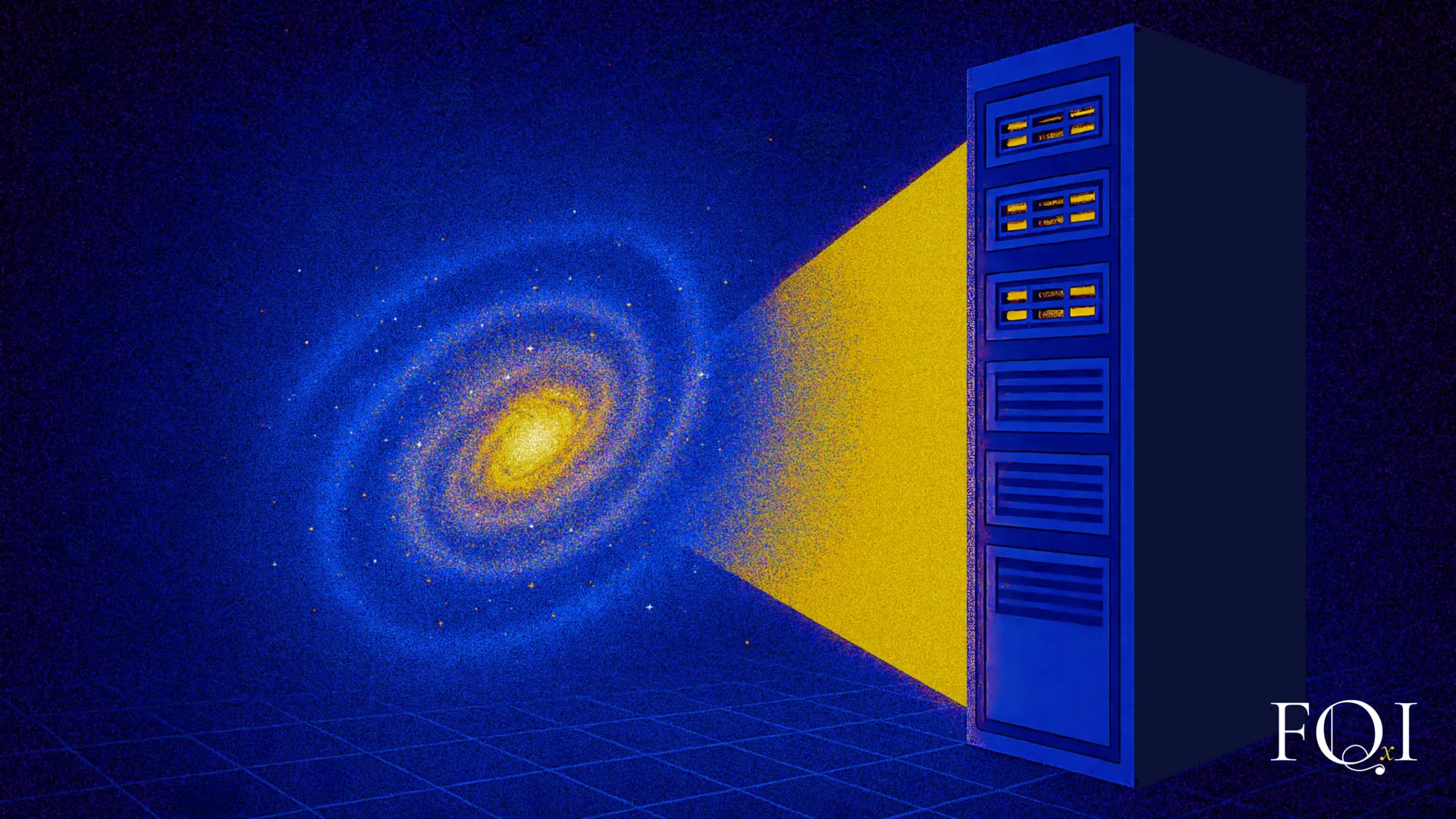
We’re often told it is “unscientific” or “meaningless” to ask what happened before the Big Bang. But a new paper by FQxI cosmologist Eugene Lim, of King’s College London, UK, and astrophysicists Katy Clough, of Queen Mary University of London, UK, and Josu Aurrekoetxea, at Oxford University, UK, published in Living Reviews in Relativity, in June 2025, proposes a way forward: using complex computer simulations to numerically (rather than exactly) solve Einstein’s equations for gravity in extreme situations. The team argues that numerical relativity should be applied increasingly in cosmology to probe some of the universe’s biggest questions-including what happened before the Big Bang, whether we live in a multiverse, if our universe has collided with a neighboring cosmos, or whether our universe cycled through a series of bangs and crunches.

Einstein’s equations of general relativity describe gravity and the motion of cosmic objects. But wind the clock back far enough and you’ll typically encounter a singularity-a state of infinite density and temperature-where the laws of physics collapse. Cosmologists simply cannot solve Einstein’s equations in such extreme environments-their normal simplifying assumptions no longer hold. And the same impasse applies to objects involving singularities or extreme gravity, such as black holes.

One issue might be what cosmologists take for granted. They normally assume that the universe is ‘isotropic’ and ‘homogeneous’-looking the same in every direction to every observer. This is a very good approximation for the universe we see around us, and one that makes it possible to easily solve Einstein’s equations in most cosmic scenarios. But is this a good approximation for the universe during the Big Bang?

“You can search around the lamppost, but you can’t go far beyond the lamppost, where it’s dark-you just can’t solve those equations,” explains Lim. “Numerical relativity allows you to explore regions away from the lamppost.”

Beyond the Lamppost

Numerical relativity was first suggested in the 1960s and 1970s to try to work out what kinds of gravitational waves (ripples in the fabric of spacetime) would be emitted if black holes collided and merged. This is an extreme scenario for which it is impossible to solve Einstein’s equations with paper and pen alone-sophisticated computer code and numerical approximations are required. Its development received renewed focus when the LIGO experiment was proposed in the 80s, although the problem was only solved in this way in 2005, raising hopes that the method could also be successfully applied to other puzzles.

“You can search around the lamppost, but you can’t go far beyond the lamppost, where it’s dark-you just can’t solve those equations. Numerical relativity allows you to explore regions away from the lamppost,” says Eugene Lim.

One longstanding puzzle that Lim is particularly excited about is cosmic inflation, a period of extremely rapid expansion in the early universe. Inflation was initially proposed to explain why the universe looks the way it does today, stretching out an initially small patch, so that the universe looks similar across a vast expanse. “If you don’t have inflation, a lot of things fall apart,” explains Lim. But while inflation helps explain the state of the universe today, nobody has been able to explain how or why the baby universe had this sudden short-lived growth spurt.

The trouble is, to probe this using Einstein’s equations, cosmologists have to assume that the universe was homogeneous and isotropic in the first place-something which inflation was meant to explain. If you instead assume it started out in another state, then “you don’t have the symmetry to write down your equations easily,” explains Lim.

But numerical relativity could help us get around this problem-allowing radically different starting conditions. It isn’t a simple puzzle to solve, though, as there’s an infinite number of ways spacetime could have been before inflation. Lim is therefore hoping to use numerical relativity to test the predictions coming from more fundamental theories that generate inflation, such as string theory.

Cosmic Strings, Colliding Universes

There are other exciting prospects, too. Physicists could use numerical relativity to try to work out what kind of gravitational waves could be generated by hypothetical objects called cosmic strings-long, thin “scars” in spacetime-potentially helping to confirm their existence. They might also be able to predict signatures, or “bruises,” on the sky from our universe colliding with neighboring universes (if they even exist), which could help us verify the multiverse theory.

Excitingly, numerical relativity could also help reveal whether there was a universe before the Big Bang. Perhaps the cosmos is cyclic and goes though “bounces” from old universes into new ones-experiencing repeated rebirths, Big Bangs and big crunches. That’s a very hard problem to solve analytically. “Bouncing universes are an excellent example, because they reach strong gravity where you can’t rely on your symmetries,” says Lim. “Several groups are already working on them-it used to be that nobody was.”

Numerical relativity simulations are so complex that they require supercomputers to run. As the technology of these machines improves, we might expect significant improvement in our understanding of the universe. Lim is hoping the team’s new paper, which outlines the methods and benefits of numerical relativity, can ultimately help get researchers across different areas up to speed.

“We hope to actually develop that overlap between cosmology and numerical relativity so that numerical relativists who are interested in using their techniques to explore cosmological problems can go ahead and do it,” Lim says, adding, “and cosmologists who are interested in solving some of the questions they cannot solve, can use numerical relativity.”

Share Button

Ozone recovery could trigger 40% more global warming than predicted

The world will warm more than expected due to future changes in ozone, which protects Earth from harmful sun rays but also traps heat as it is a greenhouse gas.

While banning ozone-destroying gases such as CFCs has helped the ozone layer to recover, when combined with increased air pollution the impact of ozone could warm the planet 40% more than originally thought.

A new study led by the University of Reading found that from 2015 to 2050, ozone is expected to cause 0.27 watts per square meter (Wm⁻²) of extra warming. This figure — which measures how much extra energy gets trapped per square metre of Earth’s surface — would make ozone the second largest contributor to future warming by 2050 after carbon dioxide (1.75 Wm⁻² of extra warming).

Professor Bill Collins, lead author from the University of Reading, said: “Countries are doing the right thing by continuing to ban chemicals called CFCs and HCFCs that damage the ozone layer above Earth. However, while this helps repair the protective ozone layer, we have found that this recovery in ozone will warm the planet more than we originally thought.

“Air pollution from vehicles, factories and power plants also creates ozone near the ground, causing health problems and warming the planet.”

Simulating the atmosphere

The research, published on August 21 in Atmospheric Chemistry and Physics, used computer models to simulate how the atmosphere will change by the middle of the century. The models followed a scenario with low implementation of air pollution controls, but with CFCs and HCFCs being phased out as mandated by the Montreal Protocol (1987).

The findings show that stopping CFC and HCFC production — done mainly to protect the ozone layer — provides less climate benefit than previously calculated. CFCs and HCFCs are greenhouse gases that warm the planet. Countries banned them to save the ozone layer, expecting this would also help fight climate change. But as the ozone layer heals, it creates more warming that cancels out most of the climate benefits from removing CFCs and HCFCs.

Countries that reduce air pollution will limit some ozone formation near the ground. However, the ozone layer will continue repairing itself for decades regardless of air quality policies, creating unavoidable warming.

Protecting the ozone layer remains crucial for human health and preventing skin cancer. The ozone layer shields Earth from dangerous ultraviolet radiation that can harm people, animals and plants. However, the research suggests climate policies need updating to account for ozone’s larger warming effect.

Share Button

Millie Bobby Brown And Husband Jake Bongiovi Are Now Parents

Millie Bobby Brown has announced that she and her husband Jake Bongiovi have become parents.

On Thursday night, the Stranger Things star told her Instagram followers that she and Jake had adopted a baby earlier in the summer.

“This summer, we welcomed our sweet baby girl through adoption,” the couple announced in a joint statement. “We are beyond excited to embark on this beautiful next chapter of parenthood in both peace and privacy.”

“And then there were three…” she added.

Millie and Jake have been in a relationship since 2021, and tied the knot in May of last year.

The 21-year-old has previously made no secret of her hopes to start a family in the near future, telling the Smartless podcast earlier this year: “For me, my home is full of love for anyone and anything.

“So that’s kind of where we’re at. We’re wanting to start a family and it doesn’t matter in what way or when, but it will happen for sure.”

Pointing out that both herself and her husband have three siblings each, she continued: “I really want a big family. I’m one of four, he’s one of four, so it is in our future.”

Elsewhere in the interview, Millie shared that she has been focussed on becoming a mother since a young age, pointing out that her own mum was 21 when she was born.

“Since I was a baby, I told my mom, like ‘Baby dolls [are what I want]’,” she explained. “I wanted to be a mum just like the way my mum was to me.

“Jake knows how important it is to me. Like, of course I want to focus on really establishing myself as an actor and as a producer but I also find it’s so important to start a family for me personally.”

Millie shot to fame around a decade ago as a child actor in the Netflix series Stranger Things, which is coming to an end later this year.

Since then, she’s made a name for herself as both an actor and producer, most notably in Netflix’s Enola Holmes movies and the films Damsel and The Electric State, both made in connection with the streaming giant.

Jake, meanwhile, is a model and actor, whose father is the musician Jon Bon Jovi.

Share Button

People Love To Ask Invasive Questions About My Son’s Autism. These Are The Only Ones I’ll Answer

My son, who starts second grade soon, is autistic and largely nonverbal.

We don’t live in a world that’s made for neurodiverse folks. And while there’s so much out there that tries to push kids like mine to conform into neurotypical spaces, it’s really on us to bend the world for them.

That’s why I talk to our neighbours, the folks running nearby stores, members of our community, about his autism. As a result, he has a favourite corner deli, where the owners know him. A thrift store where, when we walk in, an employee turns the music down, smiling at me from across the aisles. A bookshop where the booksellers don’t mind him sitting at the little kid’s table for half an hour, even when he unpacks a bag of Lego.

As a father, I will pry the world apart with my bare hands if I have to, if it means he can find a way through. But outside of these specific situations, I’ve never liked talking about my son’s autism with other people.

Growing up as a marginalised person, particularly as an adopted person of colour who didn’t really fit into any one space, a lot of irritating questions regularly came my way. “Where are you from, from?” perhaps being the favourite.

And while I had plenty of canned responses, none were ever satisfying, and I was always tired. No one likes to continuously explain their existence.

It wasn’t until I was an adult that I learned the concept of “it’s not your job to educate everyone”. It quickly became a core part of how I walk through the world. I was frustrated. I didn’t want to keep justifying myself to people who didn’t understand.

They could just go Google. It’s not that hard to learn about adoption, or what being a transracial adoptee means. Why waste my time, why make me cut myself open for you?

When our son was first diagnosed, there were a lot of questions from family and friends. Most of them were genuinely well-meaning, but as he grew older, some of them started to feel more and more ignorant and intrusive. I got angry. I snapped on phone calls, out at dinner. And that shield went up once again.

It wasn’t my job to educate everyone.

But in the last two years, something has changed. My child started going to school, then started wanting to go to the park, to playgrounds. He was trying to be social, even without the words. And in that world that tries to make neurodiverse folks bend and change, he deserved every opportunity, every run on a slide, every jump in a splash pad. A classroom, a summer camp. A childhood.

Then the questions started to happen again.

But they weren’t coming from the adults. The other parents mostly looked at us silently, from the corner of their eyes, as I showed up with my kiddo in a wagon while the rest of their children walked; or when he jumped around as their kids sat still; or when he got wildly upset over someone touching his backpack and had to unpack the entire thing so he could make sure everything was just the way he needed it to be.

The side eyes and furrowed brows are seared in my brain. Even if they don’t recognise me at the local grocery store, I sure remember them. I’m a father first and a Scorpio second.

So no, the questions didn’t come from those adults. They came from their kids.

“Hi, are you his Dad?”

“Why do you take him everywhere in that wagon?”

“What’s wrong with him?”

“Why doesn’t he talk?”

“He won’t play with me, why not?”

“Why does he keep spinning around like that?

“How can I help?”

At 6 or 7 years old, they were full of questions, but they were also full of empathy. Between drop off and pick up at school, at neighbourhood block parties, and at this year’s summer camp, little kids frequently asked these gentle questions, sometimes while a nearby parent tried to shoo them away or tell them what they were asking was inappropriate.

Maybe Past Me would have felt the same. The part of me that insisted “it’s not my job to educate everyone”. But I think that changes when the person you’re trying to educate people about can’t do it for themselves. When you have a chance to alter the world for your child, even a little bit.

So, I started to answer the questions. Just a quick sentence here or there.

“Oh, well he’s autistic. He experiences the world in another way.”

“Sometimes he gets overstimulated, and moving around helps. It’s called stimming.”

“It’s called being nonverbal. Words are hard, but he does communicate.”

“He experiences sensory things differently. So touching is sometimes very uncomfortable.”

And so on. My responses were always met with a thoughtful look, a smile. An “I want to try that!” and a kid spinning around themselves, arms stretched out in the morning sun.

I’m hopeful, staring down second grade. He’s got great teachers and a great community. And there are kids with empathy everywhere, even if some of the adults have lost it over the years.

Where I once thought it wasn’t my job to educate everyone, now I wish that more people would ask these questions in the gentle, well-meaning way kids do. That instead of the stares and the whispers, they would be curious and brave, like children who only want to understand.

Do you have a compelling personal story you’d like to see published on HuffPost? Find out what we’re looking for here and send us a pitch at pitch@huffpost.com.

Share Button

JD Vance Opens Up About His ‘Very Close’ DC Friendships

There’s apparently a bromance brewing in the Capitol, and it involves JD Vance.

“I mean, I have a lot of good friends,” Vance said. “The weird thing is, you say it’s one person and then fundamentally that’s an insult to other people.”

After beating around the bush, Vance named Secretary of State Marco Rubio as someone he’s “very close” to, adding that Rubio is a “great friend” of his. He continued to say that Rubio is doing a “great job” in his current position.

Vance didn’t stop there. He then named Secretary of Defence Pete Hegseth, whom Vance also says is “doing a great job” in his role. Unlike Rubio, Vance and Hegseth’s friendship recently shared a pivotal experience: the two were among those who were booed and heckled during their walk through Union Station, where Vance thanked the National Guard for their service.

“The DC swamp tried to destroy Pete Hegseth, unlike anybody in the administration,” Vance claimed regarding the former Fox News host. “Whenever I see the worst people in the world try to tear a guy down, that makes me think he’s on our side.”

Share Button

Ancient fossil discovery in Ethiopia rewrites human origins

A team of international scientists has discovered new fossils at a field site in Africa that indicate Australopithecus, and the oldest specimens of Homo, coexisted at the same place in Africa at the same time — between 2.6 and 2.8 million years ago. The paleoanthropologists discovered a new species of Australopithecus that has never been found anywhere.

The Ledi-Geraru Research Project is led by scientists at Arizona State University and the site has revealed the oldest member of the genus Homo and the earliest Oldowan stone tools on the planet.

The research team concluded that the Ledi-Geraru Australopithecus teeth are a new species, rather than belonging to Australopithecus afarensis (the famous ‘Lucy’), confirming that there is still no evidence of Lucy’s kind younger than 2.95 million years ago.

“This new research shows that the image many of us have in our minds of an ape to a Neanderthal to a modern human is not correct — evolution doesn’t work like that,” said ASU paleoecologist Kaye Reed. “Here we have two hominin species that are together. And human evolution is not linear, it’s a bushy tree, there are life forms that go extinct.”

Reed is a Research Scientist at the Institute of Human Origins and President’s Professor Emerita at the School of Human Evolution and Social Change at ASU. She has been co-director of the Ledi-Geraru Research Project since 2002.

Ledi-Geraru

What fossils did they find to help them tell this story? Teeth, 13 of them to be exact.

This field site has been famous before. In 2013 a team led by Reed discovered the jaw of the earliest Homo specimen ever found at 2.8 million years old. This new paper details new teeth found at the site that belong to both the genus Homo and a new species of the genus Australopithecus.

“The new finds of Homo teeth from 2.6 – 2.8 million year old sediments — reported in this paper — confirms the antiquity of our lineage,” said Brian Villmoare, lead author and ASU alumnus.

“We know what the teeth and mandible of the earliest Homo look like, but that’s it. This emphasizes the critical importance of finding additional fossils to understand the differences

between Australopithecus and Homo, and potentially how they were able to overlap in the fossil record at the same location.”

The team cannot name the species yet based on the teeth alone; more fossils are needed before that can happen.

How old are the fossils?

How do scientists know these fossil teeth are millions of years old?

Volcanoes.

The Afar region is still an active rifting environment. There were a lot of volcanoes and tectonic activity and when these volcanoes erupted ash, the ash contained crystals called feldspars that allow the scientists to date them, explained Christopher Campisano, a geologist at ASU.

“We can date the eruptions that were happening on the landscape when they’re deposited,” said Campisano, a Research Scientist at the Institute of Human Origins and Associate Professor at the School of Human Evolution and Social Change.

“And we know that these fossils are interbed between those eruptions, so we can date units above and below the fossils. We are dating the volcanic ash of the eruptions that were happening while they were on the landscape.”

Finding fossils and dating the landscape not only helps scientists understand the species – it helps them recreate the environment millions of years ago. The modern faulted badlands of Ledi-Geraru, where the fossils were found are a stark contrast to the landscape these hominins traversed 2.6 – 2.8 million years ago. Back then, rivers migrated across a vegetated landscape into shallow lakes that expanded and contracted over time.

Ramon Arrowsmith, a geologist at ASU, has been working with the Ledi-Geraru Research Project since 2002. He explained the area has an interpretable geologic record with good age control for the geologic time range of 2.3 to 2.95 million years ago.

“It is a critical time period for human evolution as this new paper shows,” said Arrowsmith, professor at the School of Earth and Space Exploration. “The geology gives us the age and characteristics of the sedimentary deposits containing the fossils. It is essential for age control.”

What’s next?

Reed said the team is examining tooth enamel now to find out what they can about what these species were eating. There are still remaining questions the team will continue to work on.

Were the early Homo and this unidentified species of Australopithecus eating the same things? Were they fighting for or sharing resources? Did they pass each other daily? Who were the ancestors of these species?

No one knows – yet.

“Whenever you have an exciting discovery, if you’re a paleontologist, you always know that you need more information,” said Reed. “You need more fossils. That’s why it’s an important field to train people in and for people to go out and find their own sites and find places that we haven’t found fossils yet.”

“More fossils will help us tell the story of what happened to our ancestors a long time ago — but because we’re the survivors we know that it happened to us.”

The paper “New discoveries of Australopithecus and Homo from Ledi-Geraru, Ethiopia,” was published in the journal Nature. The team of scientists and field team working on this project is widespread and many work at Arizona State University, or are alumni of ASU.

ASU alumni and current faculty authors include; Associate Professor Brian Villmoare, Associate Professor Lucas Delezene, Professor Amy Rector, Associate Research Professor Erin DiMaggio, Research Professor David Feary, PhD Candidate Daniel Chupik, Instructor Dominique Garello, Assistant Professor Ellis M. Locke, Lecturer Joshua Robinson, Assistant Professor Irene Smail and the late Professor William Kimbel.

Share Button

Bereaved families feel ‘ignored’ over maternity review

It follows a meeting between the families and Baroness Amos, who will chair the review.

Share Button

Baby food firms told to make products healthier or face action

Manufacturers who do not make products healthier within 18 months may face action, the government says.

Share Button

A safe painkiller? New research raises concerns about Tylenol’s safety in pregnancy

Researchers at the Icahn School of Medicine at Mount Sinai have found that prenatal exposure to acetaminophen may increase the risk of neurodevelopmental disorders, including autism spectrum disorder and attention-deficit/hyperactivity disorder (ADHD), in children. The study, published on August 14 in BMC Environmental Health, is the first to apply the rigorous Navigation Guide methodology to systematically evaluate the rigor and quality of the scientific literature.

Acetaminophen (often sold under the brand name Tylenol®, and known as paracetamol outside the United States and Canada) is the most commonly used over-the-counter pain and fever medication during pregnancy and is used by more than half of pregnant women worldwide. Until now, acetaminophen has been considered the safest option for managing headache, fever, and other pain. Analysis by the Mount Sinai-led team of 46 studies incorporating data from more than 100,000 participants across multiple countries challenges this perception and underscores the need for both caution and further study.

The Navigation Guide Systematic Review methodology is a gold-standard framework for synthesizing and evaluating environmental health data. This approach allows researchers to assess and rate each study’s risk of bias, such as selective reporting of the outcomes or incomplete data, as well as the strength of the evidence and the quality of the studies individually and collectively.

“Our findings show that higher-quality studies are more likely to show a link between prenatal acetaminophen exposure and increased risks of autism and ADHD,” said Diddier Prada, MD, PhD, Assistant Professor of Population Health Science and Policy, and Environmental Medicine and Climate Science, at the Icahn School of Medicine at Mount Sinai. “Given the widespread use of this medication, even a small increase in risk could have major public health implications.”

The paper also explores biological mechanisms that could explain the association between acetaminophen use and these disorders. Acetaminophen is known to cross the placental barrier and may trigger oxidative stress, disrupt hormones, and cause epigenetic changes that interfere with fetal brain development.

While the study does not show that acetaminophen directly causes neurodevelopmental disorders, the research team’s findings strengthen the evidence for a connection and raise concerns about current clinical practices.

The researchers call for cautious, time-limited use of acetaminophen during pregnancy under medical supervision; updated clinical guidelines to better balance the benefits and risks; and further research to confirm these findings and identify safer alternatives for managing pain and fever in expectant mothers.

“Pregnant women should not stop taking medication without consulting their doctors,” Dr. Prada emphasized. “Untreated pain or fever can also harm the baby. Our study highlights the importance of discussing the safest approach with health care providers and considering non-drug options whenever possible.”

With diagnoses of autism and ADHD increasing worldwide, these findings have significant implications for public health policy, clinical guidelines, and patient education. The study also highlights the urgent need for pharmaceutical innovation to provide safer alternatives for pregnant women.

The study was conducted in collaboration with the University of California, Los Angeles; University of Massachusetts Lowell; and Harvard T.H. Chan School of Public Health.

Funding for this study was provided by the National Cancer Institute (U54CA267776), the National Institute of Environmental Health Sciences (R35ES031688), and the National Institute on Aging (U01AG088684).

Share Button