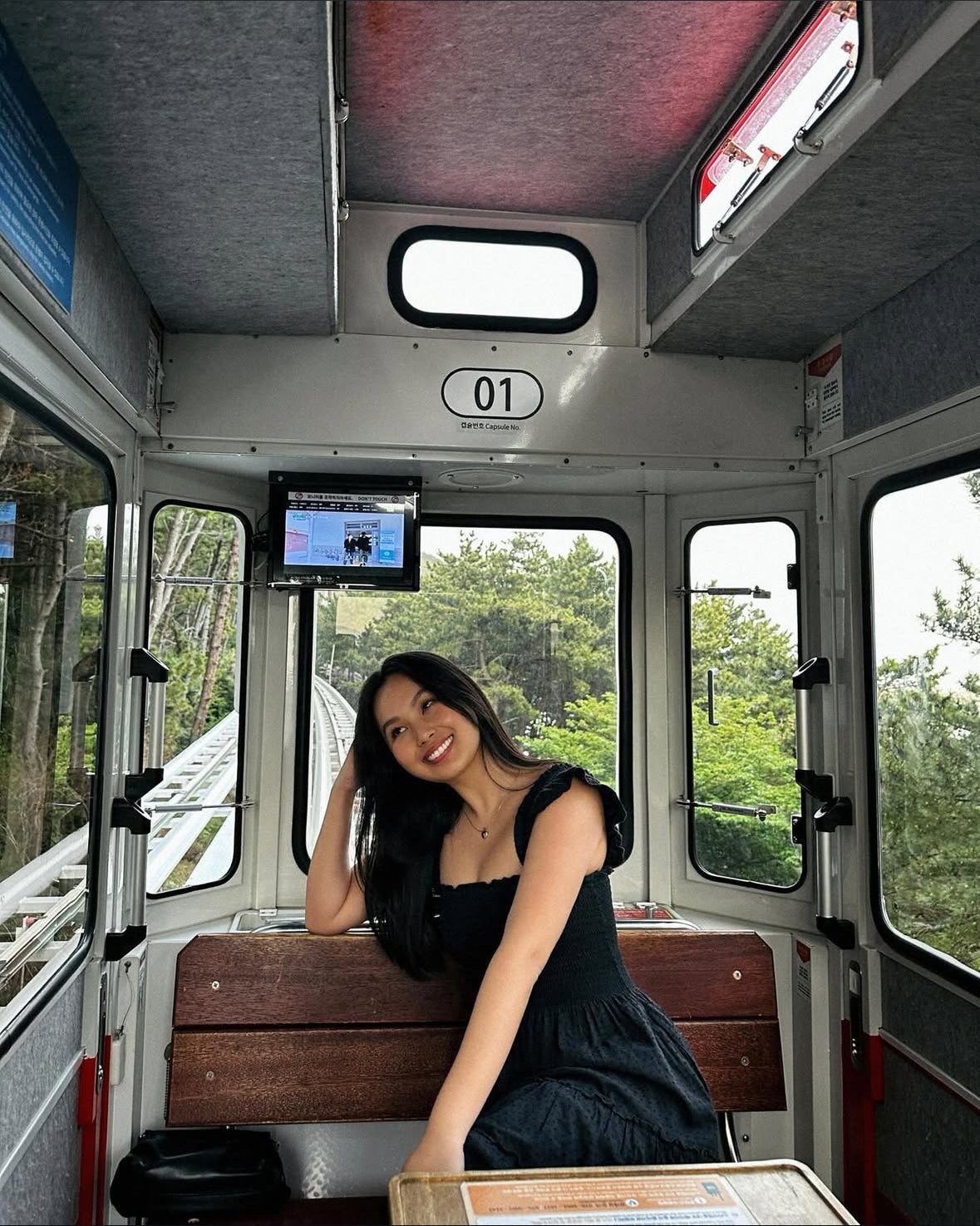
So, ‘Gurt’ Is A Thing Kids Say Now (And It’s Tenuously Tied To Yoghurt)

These days, you need a translator to understand half of what kids are saying.

Thanks to the popularity of social media sites like TikTok, every week children and teens are finding new phrases and memes to share and say to each other – much to the befuddlement of their parents.

From the latest baffling trend of saying “and a Black Santa napkin!” to the rise of “six-seven” and the bizarre world of brainrot characters like Ballerina Cappuccina, it can be exhausting work for parents and teachers trying to keep up with what it all means.

One of the other expressions kids are coming out with currently is “gurt”.

But what does ‘gurt’ mean?

In some parts of England, gurt means very large or great. But this isn’t what kids mean when they’re saying it.

In his weekly videos on the words kids are using in class, school teacher and TikTok creator Philip Lindsay said the meaning of gurt is “confusing”, as people seem to use it in two different ways.

The first way refers to a joke where someone says “Yoghurt” and a character called Gurt replies: “Yo”.

According to Know Your Meme (KYM), this actually dates back to 2012, but only recently took off thanks to videos on TikTok.

Mr Lindsay explained in his TikTok explainer that “in this scenario, the proper response to someone saying ‘gurt’ is ‘yo’ and vice versa, if somebody says ‘yo’ you say ‘gurt’”.

So, kind of like a greeting. Makes sense.

But that’s not where this all ends. The teacher explained that the term seems to have evolved, however, and now has “more meaning to it”.

There’s a series of videos known as “What They’re Doing Is Very Smart But Also Very Dangerous” which show cute animals “doing something very smart but also very dangerous”, as per KYM.

For example, penguins jumping from high off a massive iceberg into the sea.

So now, according to Mr Lindsay, “the meaning of gurt or gurting is to do something smart yet dangerous”.

Ultimately though, there’s no agreed meaning.

The teacher continued: “There are a bunch of definitions flying around right now on the internet about what gurt actually means, so we’ll see how this unfolds in the coming months.”

Right, I need a sleep.

Share Button

I Found My Perfect Match With The Help Of AI. Here’s What You Should Know.

Subject: You have a match!

I wanted to share some exciting news with you – we’ve found a match I think you’ll find intriguing. He’s a disciplined and driven entrepreneur with a wonderful sense of humor. He has many interesting ideas and is an excellent conversationalist. Our AI models suggest this is a great match for you. The next steps are simple…

My eyebrows raised slightly in surprise. They’d found someone.

Like most young women, I have been through my fair share of dating ― lots of fun, but lots of frustration. So three months ago, I’d decided to begin working with a matchmaking service that claimed to leverage AI models to find your perfect match.

The AI model allegedly would be able to digest my questionnaire answers and interpret all my desires in a deeper, more science-based way than any simple dating site ever could. Lisa, my matchmaker, would partner with the model to provide a human touch, using her expert judgment to validate its findings. With an “all your boxes checked” guarantee, the service seemed foolproof.

The process was rigorous and far more in-depth than any dating app I’ve ever used. I worked through the seemingly endless, mostly invasive questions about my life ― what I valued, my relationship with my family, whether I was willing to leave New York. I submitted everything from my philosophies on the afterlife to personality test results, stopping just short of giving them my blood type and mother’s maiden name.

I thought I had answered it all until I reached a line that stopped me in my tracks: “Please upload photos of your ex.” I racked my brain, sifting through all the frogs I’d kissed. Did that one guy I’d met on a whirlwind night in London and then never spoken to again count as an “ex”? The memory of his deep-set eyes convinced me that yes, he totally did.

The author at dinner in New York City.

Photo Courtesy Of Katy Pham

The author at dinner in New York City.

There was something that felt revolutionary about inputting all my fantasies into Lisa’s “build-a-man” factory. I didn’t have to just wander Fifth Avenue blindly, hoping to bump into whoever was out there. Here, I could “Weird Science” a man: give him Andrew Garfield’s eyes, Chris Evans’ arms and Chace Crawford’s glistening smile. So long as my dream man existed, AI would connect the dots and bring him to me.

Somewhere between listing out dealbreakers and sending in photos of celebrity crushes for AI analytics, I thought to myself, Maybe this is the future.

And if it wasn’t the future, well, maybe it was mine.

“OK guys, just close your eyes and tell everyone where you see yourself in five years,” my friend Lexi gushed to the rest of “the council” — the four of us girlfriends who had been joined at the hip since college. Lex closed her eyes and saw California, gentle coasts touched by the waters she grew up in. So, she packed up her entire life, a full decade spent learning in the heart of New York City, and headed home.

I’ll never forget closing my own eyes against the salt air at the pier. Perhaps I was looking for a place, like she was. But it wasn’t what came to me. I sat in the dark behind my eyelids and was overwhelmed with the bittersweet loneliness that comes from living in a place like New York. It is a place built on comings and goings, on the guaranteed peace in the knowledge that nothing is permanent and the sadness over the same.

When my eyes closed, I did not see a place. I saw a home. A sense of belonging, not with a specific skyline to anchor me, but a person. That sense of homecoming people talk about when they find the person they want to build a world with.

I opened my eyes against the sun.

Dylan had messy hair. It wasn’t the kind that said he’d just rolled out of bed; it was the kind that said he’d spent time in front of the mirror to make it look that way. A little scar over his eyebrow made him look tougher than he really was. His dark brown and sharply intelligent eyes sparkled with wit, enthusiasm and passion.

Two of my previous matches hadn’t materialised, either due to distance or lack of interest, but this one had snagged something in my chest the moment I’d looked at his profile. Our values matched everywhere that mattered, our interests overlapped when they needed to and diverged just enough to give us space to teach each other new things. He seemed, as the digital model had promised, built for me.

Walking up to the quaint little wine bar he’d picked, right in the heart of West Village, I was insanely nervous – something about science and a matchmaker telling you they’d found you “the one” laid the pressure on thicker than Hinge ever did. And in person, he did not disappoint.

I’d thought the foreknowledge would make things easier. We could sweep aside little nothings like, “So, what do you do for a living?” and dive right into each other’s hopes and dreams and fears. But my hands were slick with the immediate worry and thrill of intimacy that I’d never known could exist between two people who hadn’t had so much as a conversation.

I could look into his eyes and know what no one else in this bar knew. I knew he studied film and loved the outdoors; I knew his childhood pet’s name, his low preference for pizza (or gluten in general). I knew what kind of parenting style he planned to use one day and for how many kids.

That little twinkle people have, when they’ve been together for years? The kind that has them communicating secrets across a crowded room? We had it. We knew everything. I spent half the date trying to determine whether I was supposed to go all in or pretend I didn’t know anything about him. But he knew I knew. It was unclear what rulebook we were supposed to be playing by.

Regardless, I remembered: Somewhere, some digital force of omniscience had rubber stamped the date, guided by a human hand. We were supposed to be here, meeting each other. It was green flags all the way down.

It turned out, of course, that there was more to learn. A person is more than a collection of ideas on a profile. Dylan had grown up in New York, the eldest of three kids. He was well spoken in a way that pointed to his privileged background, with the wild spirit (and resources) that meant that he could — and did — try out every single hobby that had ever piqued his interest. Still, he was impossibly down to earth.

Not enough glasses of wine into the date to be tipsy, he looked at me with an arched eyebrow and confessed, “I actually scored really high on my SATs. I know it’s been over a decade, but sometimes, I still try to work it into first date conversations.”

A laugh bubbled out of me. A man coming out on the first date with the exact size of his SAT score was something that, if I didn’t like him already, I might have been put off by. But I did like him, so the dorky flex was endearing. So much about him was, and as the first date jitters wore off little by little, we started to relax into each other.

Date one turned into date two. Which turned into three, and, well, you know the story.

“You’re colour blind? How did you find out?”

“Well, the fluorescent pink pants I brought home from the mall in middle school were hint number one.”

“If you were to be stuck in a time loop and had to pick one person to tell about it, who would it be?”

“My sister. We’ve always been close; she’s incredible. I can just trust her with anything. She’d drop anything to … uh … help me out of a time warp. Honestly, I also think she’s my best shot at getting back to reality.”

He was everything I had asked for, everything I believed a man should be ― kind, smart, funny, thoughtful and protective … all handed to me by an algorithm.

I’d started dreaming already — not of electric sheep, but of digitally borne boyfriends.

On our last date before I left the country to spend a couple weeks in Asia, we went bowling. I am not a great bowler, but I’m never afraid to fail. This one, I wanted to win, because we’d decided to make it interesting. If I won, he’d write me the story of how we met from his point of view. If he won, I simply had to plan our next date.

I got one strike. The love letter was not to be.

But I’d started planning the date the second I’d seen the final numbers. After all, what’s the point of loving if you are afraid to dive in with gifts and plans that say, “I listen, I care, and I want you to feel special.”

He kissed me.

I dreamt about tomorrow.

I got on the plane.

The author during her trip in Asia.

Photo Courtesy Of Katy Pham

The author during her trip in Asia.

The photo dumps came as we’d planned them — vibrant and fun and full of everything I’d started falling for Dylan over. This was a man who loved life and didn’t say no to new experiences. I responded in kind, with snapshots with friends, family, tasting exotic dishes and walking along the coast. Sets of images sent back and forth that reminded us of who we were and that we were in this.

I’m not sure exactly when the pictures started coming less often. Texts got sparse, fewer snapshots were traded from phone to phone, questions about the aforementioned special date went uncommitted to. The maybe embarrassingly detailed dreams I’d started having about tomorrows with him began to blur.

Things with Dylan died slowly, quietly, without fanfare or the need for hauntings. The modern solution I’d thought was going to revolutionise dating ― AI ― was eclipsed by another modern epidemic: ghosting. In the end, we were left with the substance of most ghost stories: unfinished business. But not the kind that needs to be tended to before each party can move on.

The connection with Dylan was gorgeous and real and temporary, like some things are. I suppose, when it comes to dating, when you’re not so worried about running into a match in a neighbourhood coffee shop or at a mutual friend’s party, it’s easy to just … log off. You don’t bid a website a lengthy farewell when you decide to stop playing; you simply don’t come back.

These days, it seems everywhere you turn, someone claims they have finally cracked the code, uncovered the hidden formula to our heart’s desire. The certainty is so contagious that for a fleeting moment, it feels like you can join them at the edge of some great revelation. But reality is their certainty is something we rent, not own, giving us a falsely fleeting sense of control in a world that remains stubbornly unpredictable.

I wonder, sometimes, if I’m wrong. Maybe my future won’t come to me generated by an all-knowing digital system. Maybe it will come via a chance meeting on the street, in line behind a stranger. Is it sillier to trust an algorithm or a fortune teller who claims they know the secrets of a chaotic universe? Or to trust the chaotic universe itself?

The tall man in front of me, with the lopsided grin, heather gray T-shirt, and worn paperback falling out of his bag, steps to the front of the line to order his coffee. He orders it the way I do.

My phone begs for my attention.

I look away from him and give it what it asks.

There’s an email in my inbox.

You’ve got a match!

Share Button

I’m A Travel Pro, These Are The Best Holiday Destinations To Take Kids And Teens (By Age)

Travelling with kids isn’t for the faint-hearted – but it can be a joyful (if not slightly exhausting, let’s be honest) adventure if you choose a destination that suits your child’s age.

Whether you’ve got a small explorer, a school-age child or you’re holidaying with teens, Maria Belfort at Rickshaw Travel has shared her thoughts on the best destinations for different age groups.

And you might be surprised by some of her top picks.

Let’s dive in, shall we?

For kids aged 1-5

Top picks: Greece, Portugal, Italy, Thailand, Malaysia.

“This age is all about balance,” said Belfort, “you’ll want easy logistics, short travel distances, and plenty of time to simply splash in a pool or dig sandcastles on the beach. But that doesn’t mean skipping out on culture.”

She said Greece is a great option for families with little ones as it offers “a dreamy blend of clear, shallow waters and picturesque villages”.

“On the Cyclades islands, such as Naxos and Paros, you can dip into local life with boat trips, donkey rides and taverna feasts,” she added.

Portugal is another family-friendly option as it delivers sun-soaked beaches and compact cities like Lisbon and Porto, “with tram rides, castles, and gelato galore”.

And yet another perfect European hotspot for young families to visit is Italy. Think “gelato-fuelled walks through historic piazzas, scenic countryside farm stays, and child-friendly meals at every turn”.

While Thailand and Malaysia might sound adventurous, Belfort insisted they’re “surprisingly doable with young children” as you can combine beach time with gentle jungle adventures, floating markets and elephant spotting. Just make sure you pack plenty of snacks for the plane journey!

For kids aged 5-10

Top picks: Thailand, Costa Rica, Sri Lanka, Indonesia, Borneo, Canada

As primary school-aged children become more curious and capable, Belfort suggests opting for longer-haul trips packed with adventure.

Belfort said: “These destinations offer the right mix of wildlife, nature and new experiences – all with a strong dose of family fun.”

She recommended the “wildlife wonderland” of Borneo – specifically river safaris in Sarawak and meeting orangutans in their natural habitat. Kayaking, firefly spotting, and rainforest treks make this an “unbeatable playground”, she added.

Similarly, Costa Rica is like stepping into a David Attenborough documentary and is guaranteed to be a hit with kids. “Watch sloths hanging from the treetops, explore volcanoes, and zip-line over rainforest canopies,” said Belfort.

Canada is also a great shout for slightly older adventurers. “Explore the Rockies, paddle crystal lakes, and spot bears from a safe distance,” said Belfort. “The west coast route is particularly good for kids who love the great outdoors.”

For something a little more laid back, Bali offers family-friendly beaches, rice paddies to cycle through, and traditional crafts to try, all with an easygoing rhythm. While Sri Lanka and Thailand can offer tuk tuk rides, temples, and gentle wildlife adventures that are both educational and exciting.

For kids aged 10-15

Top picks: Vietnam, Thailand, Costa Rica, Sri Lanka, Indonesia, Borneo, Canada, Peru, India

According to Belfort, these destinations offer “the right balance of education and adventure – from ancient ruins and jungle hikes to hands-on experiences with local communities”.

In Vietnam, she advises cruising through Halong Bay, exploring Hanoi’s buzzing streets, and learning about local life in the Mekong Delta.

India can offer vibrant cities, majestic forts, and tiger safaris, while Peru provides an exhilarating journey through the Sacred Valley to Machu Picchu. “For kids fascinated by ancient cultures and big landscapes, it’s a once-in-a-lifetime trip,” she added.

“Borneo, Sri Lanka and Costa Rica continue to be brilliant at this age, with more physical activities (kayaking, snorkelling, short treks) and fascinating ecosystems to discover,” she said.

Meanwhile, Canada and Indonesia provide more stunning natural backdrops for multi-day adventures.

For teens aged 15+

Top picks: Vietnam, Peru, India, Borneo, Indonesia

Teens are ready for a proper adventure – and the expert said travel can be a brilliant tool for confidence building and perspective.

She suggested Vietnam caters well to teens with its bustling cities, rural homestays, and beautiful beaches, “offering a coming-of-age style journey that they’ll remember for years”.

Peru’s Inca Trail or alternatives like the Lares Trek can provide a real sense of accomplishment, while the country’s indigenous cultures can “open teens’ eyes to a different way of life”.

She continued: “India offers a full-on sensory experience – from street food tours to spice markets and heritage sites. It’s an ideal place for older teens to begin thinking about global citizenship and responsibility.”

And in Borneo, older kids can delve deeper into conservation work, jungle trekking, and learning about the fragile ecosystems of the rainforest.

Last of all, Indonesia’s Sumatran rainforests or Bali’s quieter corners offer the “right mix of escapism and depth, with opportunities to explore independently and mindfully”.

Happy holidays!

Share Button

Mental health A&E centres to open across England

The plans would allow people in acute mental distress to get treatment in hospital while also reducing A&E wait times.

Share Button

Women scared to get pregnant due to overlooked disorder

Marianne has pre-menstrual dysphoric disorder, a condition which affects as many as 8% of women.

Share Button

‘I don’t know what we’ll do’ – Vapers panic-buy ahead of disposables ban

Some disposable vape users say they are stockpiling, worried about what they will do after the ban.

Share Button

‘Hopelessly attached’: Scientists discover new 2D material that sticks the landing

More than ten years ago, researchers at Rice University led by materials scientist Boris Yakobson predicted that boron atoms would cling too tightly to copper to form borophene, a flexible, metallic two-dimensional material with potential across electronics, energy and catalysis. Now, new research shows that prediction holds up, but not in the way anyone expected.

Unlike systems such as graphene on copper, where atoms may diffuse into the substrate without forming a distinct alloy, the boron atoms in this case formed a defined 2D copper boride — a new compoundwith a distinct atomic structure. The finding, published in Science Advances by researchers from Rice and Northwestern University, sets the stage for further exploration of a relatively untapped class of 2D materials.

“Borophene is still a material at the brink of existence, and that makes any new fact about it important by pushing the envelope of our knowledge in materials, physics and electronics,” said Yakobson, Rice’s Karl F. Hasselmann Professor of Engineering and professor of materials science and nanoengineering and chemistry. “Our very first theoretical analysis warned that on copper, boron would bond too strongly. Now, more than a decade later, it turns out we were right — and the result is not borophene, but something else entirely.”

Previous studies successfully synthesized borophene on metals like silver and gold, but copper remained an open — and contested — case. Some experiments suggested boron might form polymorphic borophene on copper, while others suggested it could phase-separate into borides or even nucleate into bulk crystals. Resolving these possibilities required a uniquely detailed investigation combining high-resolution imaging, spectroscopy and theoretical modeling.

“What my experimentalist colleagues first saw were these rich patterns of atomic resolution images and spectroscopy signatures, which required a lot of hard work of interpretation,” Yakobson said.

These efforts revealed a periodic zigzag superstructure and distinct electronic signatures, both of which deviated significantly from known borophene phases. A strong match between experimental data and theoretical simulations helped resolve a debate about the nature of the material that forms at the interface between the copper substrate and the near-vacuum environment of the growth chamber.

Although copper boride was not the material researchers set out to make, its discovery offers important insight into how boron interacts with different metal substrates in two-dimensional environments. The work expands the knowledge on the formation of atomically thin metal boride materials — an area that could inform future studies of related compounds, including those with known technological relevance, such as metal borides among ultra-high temperature ceramics, which are of great interest for extreme environments and hypersonic systems.

“2D copper boride is likely to be just one of many 2D metal borides that can be experimentally realized. We look forward to exploring this new family of 2D materials that have broad potential use in applications ranging from electrochemical energy storage to quantum information technology,” said Mark Hersam , Walter P. Murphy Professor of Materials Science and Engineering at Northwestern University, who is a co-corresponding author on the study.

The discovery comes shortly after another boron-related breakthrough by the same Rice theory team. In a separate study published in ACS Nano , researchers showed that borophene can form high-quality lateral, edge-to-edge junctions with graphene and other 2D materials, offering better electrical contact than even “bulky” gold. The juxtaposition of the two findings highlights both the promise and the challenge of working with boron at the atomic scale: its versatility allows for surprising structures but also makes it difficult to control.

“Those images we initially saw in the experimental data looked quite mysterious,” Yakobson said. “But in the end, it all fell into place and provided a logical answer — metal boride, bingo! This was unexpected at first, but now, it is settled — and the science can move forward.”

The research was supported by the Office of Naval Research (N00014-21-1-2679), the National Science Foundation (DMR-2308691) and the United States Department of Energy (2801SC0012547). The content herein is solely the responsibility of the authors and does not necessarily represent the official views of the funding organizations and institutions.

Share Button

Assembly instructions for enzymes

In biology, enzymes have evolved over millions of years to drive chemical reactions. Scientists from the Max Planck Institute for Dynamics and Self-Organization (MPI-DS) now derived universal rules to enable the de novo design of optimal enzymes. As an example, they considered the enzymatic reaction of breaking a dimer into two monomer molecules. Considering the geometry of such an enzyme-substrate-complex, they identified three golden rules that should be considered to build a functional enzyme.

First, the interface of both enzyme and molecule should be located at their respective smaller end. This way, a strong coupling between both of them can be achieved. For the same reason, the conformational change in the enzyme should not be smaller than in the reaction. Finally, the conformational change of the enzyme has to take place fast enough to maximize the chemical driving force of the reaction.

“We built our research on two main pillars,” Ramin Golestanian, director of MPI-DS describes the approach. “Conservation of momentum and coupling between the reaction coordinates,” he continues. Thus, the researchers expanded the view of a classical 2-dimensional reaction coordinate. Typically, models for enzymatic reactions define an energy barrier that has to be overcome in order for the reaction to take place.

“As in our model we also consider the enzyme dynamics and coupling, we go beyond this existing concept, considering two reaction coordinates,” say Michalis Chatzittofi, first author of the study. “Instead of overcoming an energy barrier, one can now imagine alternative ways to bypass it by taking alternative routes,” he concludes.

These results provide a new basis for the design of molecular machines, avoiding the tedious and technically challenging approach to simulate the dynamics of each atom individually.

Share Button

‘My health condition makes me scared to get pregnant’

Pre-menstrual dysphoric disorder is treated by the contraceptive pill – putting some women in a dilemma.

Share Button

Why are some rocks on the moon highly magnetic?

Where did the moon’s magnetism go? Scientists have puzzled over this question for decades, ever since orbiting spacecraft picked up signs of a high magnetic field in lunar surface rocks. The moon itself has no inherent magnetism today.

Now, MIT scientists may have solved the mystery. They propose that a combination of an ancient, weak magnetic field and a large, plasma-generating impact may have temporarily created a strong magnetic field, concentrated on the far side of the moon.

In a study appearing in the journal Science Advances, the researchers show through detailed simulations that an impact, such as from a large asteroid, could have generated a cloud of ionized particles that briefly enveloped the moon. This plasma would have streamed around the moon and concentrated at the opposite location from the initial impact. There, the plasma would have interacted with and momentarily amplified the moon’s weak magnetic field. Any rocks in the region could have recorded signs of the heightened magnetism before the field quickly died away.

This combination of events could explain the presence of highly magnetic rocks detected in a region near the south pole, on the moon’s far side. As it happens, one of the largest impact basins — the Imbrium basin — is located in the exact opposite spot on the near side of the moon. The researchers suspect that whatever made that impact likely released the cloud of plasma that kicked off the scenario in their simulations.

“There are large parts of lunar magnetism that are still unexplained,” says lead author Isaac Narrett, a graduate student in the MIT Department of Earth, Atmospheric and Planetary Sciences (EAPS). “But the majority of the strong magnetic fields that are measured by orbiting spacecraft can be explained by this process — especially on the far side of the moon.”

Narrett’s co-authors include Rona Oran and Benjamin Weiss at MIT, along with Katarina Miljkovic at Curtin University, Yuxi Chen and Gábor Tóth at the University of Michigan at Ann Arbor, and Elias Mansbach PhD ’24 at Cambridge University. Nuno Loureiro, professor of nuclear science and engineering at MIT, also contributed insights and advice.

Beyond the sun

Scientists have known for decades that the moon holds remnants of a strong magnetic field. Samples from the surface of the moon, returned by astronauts on NASA’s Apollo missions of the 1960s and 70s, as well as global measurements of the moon taken remotely by orbiting spacecraft, show signs of remnant magnetism in surface rocks, especially on the far side of the moon.

The typical explanation for surface magnetism is a global magnetic field, generated by an internal “dynamo,” or a core of molten, churning material. The Earth today generates a magnetic field through a dynamo process, and it’s thought that the moon once may have done the same, though its much smaller core would have produced a much weaker magnetic field that may not explain the highly magnetized rocks observed, particularly on the moon’s far side.

An alternative hypothesis that scientists have tested from time to time involves a giant impact that generated plasma, which in turn amplified any weak magnetic field. In 2020, Oran and Weiss tested this hypothesis with simulations of a giant impact on the moon, in combination with the solar-generated magnetic field, which is weak as it stretches out to the Earth and moon.

In simulations, they tested whether an impact to the moon could amplify such a solar field, enough to explain the highly magnetic measurements of surface rocks. It turned out that it wasn’t, and their results seemed to rule out plasma-induced impacts as playing a role in the moon’s missing magnetism.

A spike and a jitter

But in their new study, the researchers took a different tack. Instead of accounting for the sun’s magnetic field, they assumed that the moon once hosted a dynamo that produced a magnetic field of its own, albeit a weak one. Given the size of its core, they estimated that such a field would have been about 1 microtesla, or 50 times weaker than the Earth’s field today.

From this starting point, the researchers simulated a large impact to the moon’s surface, similar to what would have created the Imbrium basin, on the moon’s near side. Using impact simulations from Katarina Miljkovic, the team then simulated the cloud of plasma that such an impact would have generated as the force of the impact vaporized the surface material. They adapted a second code, developed by collaborators at the University of Michigan, to simulate how the resulting plasma would flow and interact with the moon’s weak magnetic field.

These simulations showed that as a plasma cloud arose from the impact, some of it would have expanded into space, while the rest would stream around the moon and concentrate on the opposite side. There, the plasma would have compressed and briefly amplified the moon’s weak magnetic field. This entire process, from the moment the magnetic field was amplified to the time that it decays back to baseline, would have been incredibly fast — somewhere around 40 minutes, Narrett says.

Would this brief window have been enough for surrounding rocks to record the momentary magnetic spike? The researchers say, yes, with some help from another, impact-related effect.

They found that an Imbrium-scale impact would have sent a pressure wave through the moon, similar to a seismic shock. These waves would have converged to the other side, where the shock would have “jittered” the surrounding rocks, briefly unsettling the rocks’ electrons — the subatomic particles that naturally orient their spins to any external magnetic field. The researchers suspect the rocks were shocked just as the impact’s plasma amplified the moon’s magnetic field. As the rocks’ electrons settled back, they assumed a new orientation, in line with the momentary high magnetic field.

“It’s as if you throw a 52-card deck in the air, in a magnetic field, and each card has a compass needle,” Weiss says. “When the cards settle back to the ground, they do so in a new orientation. That’s essentially the magnetization process.”

The researchers say this combination of a dynamo plus a large impact, coupled with the impact’s shockwave, is enough to explain the moon’s highly magnetized surface rocks — particularly on the far side. One way to know for sure is to directly sample the rocks for signs of shock, and high magnetism. This could be a possibility, as the rocks lie on the far side, near the lunar south pole, where missions such as NASA’s Artemis program plan to explore.

“For several decades, there’s been sort of a conundrum over the moon’s magnetism — is it from impacts or is it from a dynamo?” Oran says. “And here we’re saying, it’s a little bit of both. And it’s a testable hypothesis, which is nice.”

The team’s simulations were carried out using the MIT SuperCloud. This research was supported, in part, by NASA.

Share Button