Nigel Farage has dramatically quit as an MP to trigger a by-election in his Clacton seat.
The Reform UK leader made the shock announcement amid the mounting furore over his personal finances.
He said it would be a “people versus the establishment” contest as he accused the media and his political opponents of waging a vendetta against him.
Advertisement
In a statement broadcast on social media, Farage said: “I will fight to win. I will fight to continue the political revolution that Reform has started, and I would say this to you, the voters of Clacton, if I win, you win, because if I lose, they win, and we will never with the two old parties get the type of fundamental change that we need to fix broken Britain.”
Farage has been under pressure since it emerged in April that he had received a £5 million gift from Thailand-based crypto billionaire Christopher Harborne shortly before he became an MP.
Daniel Greenberg, the parliamentary commissioner for standards, is carrying out a probe into whether Farage should have declared it – and could recommend he be suspended from the Commons.
Advertisement
By taking matters into his own hands, the Reform boss may be trying to get ahead of the investigation by attempting to secure a fresh mandate from voters in Clacton, who elected him with a majority of 8,400 at the last general election.
Greenberg has also been urged to investigate the financial support Farage accepted from convicted criminal George Cottrell before be entered parliament.
According to the Sunday Times, Cottrell – known as “posh George” – provided funding for Farage’s staffing and security, as well as the use of a London townhouse, before he became an MP.
Advertisement
Under parliamentary rules, new MPs need to register any gifts worth more than £300 they received in the previous 12 months, except where the gift “could not be reasonably thought by others” to relate to their political activities.
Farage has denied any wrongdoing and claimed he is the victim of “an establishment hit job”.
Allies of the Reform leader have described him as “tired” and “stressed” as the pressure mounts, and suggested he needs a break from politics.
Asked if it was a mistake not to declare the financial support he received from George Cottrell, Farage replied: “You tell your bosses, you harass my family any more there will be serious consequences. That’s what your organisation has done this morning. Go away.”
Sky has denied approaching anyone in Farage’s family about the story, which the Reform leader dismissed as “an outright lie”.
In his statement, he said: “The issue with my daughter was the final straw. Enough is enough. And I thought over the weekend, what shall I do?
Advertisement
“I could go out and try and make some real big money. I could go to the USA, where I’ve got plenty of offers. And then I thought, why should I be judged today, or in history in the future, by Sky News and their ilk?
“Why should they be the people that decide my fate? When, as I repeat, I have done nothing wrong.
“I thought about it hard and I have decided today I will resign as a member of parliament for Clacton-on-Sea, thereby forcing a by-election, which should happen, I hope, in short order.
“Now I’ve decided that the people of Clacton should be the judges of my actions. This will be a people versus the establishment by-election. It’s a chance to stick two fingers up to the entire establishment to frankly tell them where to go, and that is why I will be putting my name forward to stand in this by-election.”
Advertisement
Listen to Commons People, the podcast that makes politics easy. Every week, Kevin Schofield and Kate Nicholson unpack the week’s biggest stories to keep you informed. Join us for straightforward analysis of what’s going on at Westminster.
There’s no “normal” amount of sex for couples to have, therapists told HuffPost UK previously. In fact, some research has found that only 26% of couples do the act once a week or more.
According to Prof Caroline F Pukall, a professor of psychology who was involved in a new paper on libido, “Sexual desire concerns are one of the most common reasons people seek sex or couples therapy, yet most research has focused on low desire itself or differences in desire between partner”.
Advertisement
Her research, published in the Journal of Sex and Martial Therapy, sought to “better understand how people personally think about and worry about their libido, including what makes them concerned and how those concerns vary across different relationship statuses, genders, and sexual orientations”.
The paper found that over half – 67.1% – of participants worried about their sex drive.
Why were these numbers so high?
The researchers looked at 1,317 respondents to a social media survey. Almost 80% of these were in a committed relationship.
They were asked questions like how often they engaged in sexual activity, how often they desired to do so, how high they percieved their libido to be, and whether they ever worried about their libido.
Advertisement
Almost 60% of the respondents said “yes” to the last question.
Some of the most common concerns included:
Worries about their libido being too low (47.5% of the worried group),
Worries about their libido being mismatched with their partners’ (42.4%)
Worries their sex drive was too high (7.6%).
Of those who worried about their low libido, most people said their biggest concern was not being able to meet their partners’ needs.
Nearly half of the people who responded said they missed how interested in sex they used to be.
Women were much more likely than men to say they were worried about thier sex drive.
Advertisement
Why did people say their sex drive changed?
People in relationships, especially relationships lasting a year or more, were likelier to report both lower libido and increased worry about their sex drive.
Common reasons given included mental health issues, stress, fatigue, parenting responsibilities, medications, and negative body image.
Age didn’t seem to affect how high people’s libido was, not did it seem linked to how worried they were about their sex drive.
Advertisement
Prof Pukall said this study might not be fully representative of most adults, as respondents reached the survey through a podcast about libido, so may be more interested in most in the topic – possibly due to their concerns.
Still, she said, “The biggest takeaway is that concerns about libido are extremely common, and many people worry about whether their desire is ‘normal’….
“Participants frequently described concerns about having lower desire than they wanted, changes in desire over time, or differences between their own desire and a partner’s.”
On Monday morning, she kicked things off with a playful start – making light of how long she’d waited to be appointed the host by playing Lizzo’s About Damn Time followed immediately by Cece Peniston’s Finally.
After the broadcast, critics were mostly won over by Sara’s first broadcast, with The Independent giving her a five-star appraisal.
“Cox brought all the silliness and fun from her teatime programme (and some of the features) – with an added dose of sparkle from an impressive A-list guest,” they enthused, referring to her previously-advertised interview with Tom Hanks to help launch her new show.
Advertisement
The Telegraph was similarly impressed, writing in its own four-star take: “Cox started as she meant to go on – a hectic, uplifting three hours of pure, unadulterated Cox. Bit spiky, bit rude, a lot of fun. There’ll be no repressing of the natural spirit here. And did she sound just that bit more Boltonian than normal?
“Having been a breakfast show stand-in many times over, we knew what we would get with Cox, though she did betray some nerves. These displayed themselves in a presenting style that sometimes verged on chaotic but never strayed away from charming.”
“It turns out there is little that injects more energy into a programme or an audience than the sound of a confident, successful, professional and unapologetic woman triumphant in the job she deserves,” iNews agreed.
Advertisement
They continued: “How refreshing it is to hear radio as mischievous and human as this – but then, that’s always been Cox’s great gift: she went from fun-loving ladette to fun-loving, reassuring mum who’s seen it all; she’s able to be light-touch without losing her sincerity, and she’s never sycophantic.”
More critical was The Times, who claimed Sara’s inaugural show “felt a little underwhelming” and could have been “bolder with what it jettisoned and introduced”, although its critic still gave the show three stars overall.
Advertisement
Sara previously said she was “ecstatic, honoured and incredibly chuffed” to be taking on the role, which she said had been her “dream” since joining Radio 2.
“It feels like a bit of a full circle for me,” she admitted.
The presenter hosted Radio 1’s breakfast show between 2000 and 2003, and had been Radio 2′s teatime host since 2019 before her latest appointment.
“I’ve had the most glorious seven years of my career on teatime so thank you to my brilliant teatime listeners who hopefully will join me at breakfast for excellent music and all my usual nonsense plus some superstar guests,” she added, noting that she “can’t wait to wake the nation up with the biggest most fun breakfast show ever”.
Looking back on shooting these final episodes, Finn – who shot to international fame as a teenager thanks to his performance as Mike Wheeler – admitted that it took a moment for it to dawn on him that the show would not be returning.
“Every year it was like, OK, I know I’m going to be in Atlanta filming this thing with the same people for the next however long,” he recalled to The Guardian. “It was like my school in a really odd way.”
As a result, going into season five, he claimed “the vibe was almost like ‘oh, we’ll be back next year’”.
Advertisement
“But once we got about halfway through, everyone started to realise like, ‘Oh. This is it’,” he continued. “And then everyone just really valued the time we all had together for that last half.
“It was pretty depressing for everyone when it ended … but it feels absolutely right that we’ve ended at the time that we did.”
Finn Wolfhard in character as Mike Wheeler in the last season of Stranger Things
Advertisement
Asked if he feels “liberated” now he’s no longer part of Stranger Things, he insisted: “For sure, yeah. At first I felt really lost, because that’s your life for so long and so many of the crew and cast were so integral to the person that you are and to your identity. You almost have a kind of withdrawal for a little while.
“Then you realise all those relationships, all those friendships, they’re around forever.”
“I don’t think I’ll ever truly feel like it’s the end,” he shared. “The show will live on in so many ways that I hope it still feels relevant to people years down the line.”
Finn added: “There’s a reason why we ended it, and it’s done. But who’s to say that [the Duffer Brothers, who created Stranger Things], in 10 years, when they get another idea, they do it? It’s up to them.
“I think it’s good that it’s the end, but part of me hopes it’s not,” the former child star added.
All five seasons of Stranger Things are now streaming on Netflix.
This summer, millions of people have watched 32 nations go to the World Cup with months of preparation behind them: meticulous planning, clear roles, a shared game plan.
Nobody turns up to a World Cup and wings it. Yet there are plenty of families who will turn up to the six weeks of schoolsummer holidays with no plan at all.
Advertisement
Sometimes it’s easier to pretend it’s not happening and to assume it will work itself out, and then we all wonder why, by week two, someone is metaphorically drowning.
Advice for parents when it comes to nailing summer holiday scheduling
I’m a performance psychologist with over a decade’s experience working with the world’s top athletes and teams. My advice for winning the summer holidays is simple: approach it like a World Cup squad.
Before the holidays begin, sit down and treat it like a pre-tournament debrief. Map the weeks ahead:
Who owns what?
Who has the big work commitments and when?
Which weeks need childcare cover and who is sourcing it?
What are the non-negotiables for each person?
Get it out of one person’s head and into a shared system that everyone can see, and then look at subs: who’s available on the side, who can be called in in an emergency, who can be warming up ‘just incase’?
Don’t shoulder it alone
Divide by ownership rather than task. In a World Cup squad nobody tries to play every position. Clear roles mean nobody is waiting to be briefed and nobody is quietly absorbing everything by default.
To be clear, when I talk about your squad, I’m not just talking about two-parent households. I am talking about whatever parenting looks like for you. A grandparent who can step in on Wednesdays. Another parent friend you swap childcare with. A sibling who lives nearby. A neighbour who has offered to help and actually means it.
Advertisement
Your squad is whoever shows up. Name them, brief them, and use them.
Take five minutes before each day to prepare
Watch any World Cup team and you will notice something. The best ones don’t just train their bodies, they train their minds, starting with pre-performance routines, engaging recovery protocols, and honest debriefs after every game.
Parents need the same approach this summer. Start with the pre-performance routine. Before the chaos of each day begins, take five minutes to know what the day holds. Know your role and what you need from whoever’s supporting you.
That small act of preparation changes the entire shape of the day. The best teams in the world do not walk onto the pitch without knowing the game plan – don’t walk into your day without one either.
Advertisement
Have weekly check-ins
At the end of each week, check in. Share what worked, and what didn’t. Look at what needs to change next week. High performing teams do not pretend a bad game was fine. They replay it, review it, and adjust. Do the same.
Find time to rest
Build in recovery. Not as a luxury, which parents (especially mums) so often do, but as an operational necessity. World Cup squads have rest days built into the schedule because performance without recovery is not sustainable.
You cannot run at full capacity for six weeks without something breaking. Rest is part of the strategy, not a weak moment.
Advertisement
For solo parents, rest is even harder to protect and even more important to fight for. Asking for help is not a failure of independence. It is the most high-performance thing you can do. The best athletes in the world have a support team. You are allowed one too.
Give yourself grace
Name what you are actually carrying. Most parents are running a second full-time job in the background of their brains during the summer. That cognitive load has a neurological cost.
The prefrontal cortex, which handles planning, decision making and emotional regulation, has a finite capacity. When it is running the summer schedule it is not available for everything else. Naming that is the first step to making change.
Advertisement
Find a mantra and use it. Something that brings you back when it gets overwhelming. Mine is: “This is hard and I can do hard things.”
The best athletes in the world talk to themselves through the hard moments. You are allowed to do the same. Say it in the car. Say it in the summer camp pickup queue. Say it on day four when it is raining and the plan has fallen apart. You can do hard things. You have been doing them all along.
Mindset is as important as logistics. Go into the summer knowing it will be hard, and knowing there will be days that do not go to plan. Know that you will feel stretched and that is not failure. That is what it looks like to do something genuinely difficult.
Advertisement
Elite athletes don’t expect every session to feel good. They trust the preparation and they back each other.
The summer holidays don’t have to result in everyone being stretchered off. But they will come at a cost if you go in without a plan, without shared ownership, and with one person silently carrying everything.
Now, just 12 nations are left battling it out in the World Cup this summer with months of preparation behind them. If you’re in England and Wales, you’ve still got time left to plan your summer holidays. Don’t waste it.
Advertisement
Sophie Bruce is a performance psychologist for parents and founder of MOLO.
Owning a pet, be it a cat or a dog, has previously been linked to lower heart disease risk. This is especially true for cat owners aged between 40 and 64.
As if they don’t do enough for us already, researchers from the University of Bath, Auburn College of Veterinary Medicine in the US, and École Nationale Vétérinaire de Toulouse in France have said they might help us to age better too.
Advertisement
Why might cats help us to age better?
Their paper, published in the journal Biology Open, reads: “Pet cats may inform human ageing since humans and cats age similarly and they develop health challenges that mirror those observed in humans”.
Unlike a lot of lab animals, they added, cats tend to live long enough to develop age-related brain changes, like those seen in humans.
And, on the flip side, because they live a lot shorter lives than us, we can study their ageing at a much faster rate than we could in people.
Advertisement
The researchers used a biological model which looked at how multiple species age at a physical level.
They tracked 3,754 data points – like MRI (not CAT, sadly) scans, blood samples, and developmental milestones – gathered across human, cat, and other mammal species.
They found that cat and human brains seem to age remarkably similarly. Both species experience age-related neurodegeneration.
“It was interesting to see that cats show patterns of age-related brain atrophy similar to those observed in humans,” said PhD candidate Brier Rigby Dames, who was involved with the research.
“These findings add to growing evidence that companion animals can provide valuable insights into ageing.”
Advertisement
Cat owners are increasingly requesting more detailed pet scans
Speaking to the University of Bath, the study’s co-author, Dr Ryan Gibson, said that more and more pet owners are sending their cats in for increasingly detailed scans as they age.
This, he said, might provide an exciting opportunity.
“This expanded clinical access creates meaningful opportunities for translational research (research that bridges the gap between scientific findings and healthcare), improving our understanding of aging and neurologic disease in ways that can benefit both feline and human patients,” he said.
Advertisement
For her part, Brier Rigby Dames said: “There’s potential to develop large-scale veterinary health databases for companion animals, analogous to human health databases such as the UK Biobank.
“These kinds of resources could enhance our ability to study ageing and disease using real-world clinical and owner-reported data collected across species.”
JD Vance has declared “something is very broken in British politics” as the UK prepares for its seventh prime minister in just over a decade.
The American vice-president said Britain “can do a lot more than it’s currently doing” to help its voters in a dig at the current prime minister.
Advertisement
Speaking two weeks before Keir Starmer is expected to hand the keys of No.10 over to Andy Burnham, Vance expressed alarm about the high turnover in Downing Street.
He said: “What that says to me is that something is very broken about British politics and that people are really crying out for significant structural change.”
He claimed he did not know much about the former Manchester mayor but added that the UK is “one of our closest and most important allies” and that the US administration would work with any new leader “as successfully as we can.”
Advertisement
Vance continued: “I hope that Andy Burnham – and if not Andy Burnham, somebody else – is able to deliver [change]. Because Britain is such a beautiful country, such an amazing place.”
Speaking on the 250th year of US independence, Vance claimed he is interested in the UK because of “reasons of mutual interest” and expressed hope that “whoever the prime minister is figures out how to get Britain back on track”.
“I also just care about it because Britain feels more culturally familiar to me than any country on Earth, aside from my own,” Vance said.
Advertisement
His words come after Donald Trump was significantly less diplomatic about Burnham.
The US president described him as an “extremely liberal” politician who “probably won’t open up” the North Sea for further oil and gas drilling.
He also called the former Greater Manchester mayor as “the mayor of a town”.
Burnham is yet to say what his approach to the mercurial president would be.
Listen to Commons People, the podcast that makes politics easy. Every week, Kevin Schofield and Kate Nicholson unpack the week’s biggest stories to keep you informed. Join us for straightforward analysis of what’s going on at Westminster.
Dissatisfaction in Nigel Farage has increased over the last year amid growing scrutiny over his finances, according to a new poll.
Ipsos found almost two-thirds (63%) of Brits said they are “dissatisfied” with the Reform UK leader in June 2026 compared to 49% in June 2025.
Advertisement
That number far exceeds the number who are still satisfied in Farage – just 26% said they were happy with the Clacton MP this year, compared to 26% in 2025.
He insists he has not broken any parliamentary rules as the lump sum was not used for political purposes.
Advertisement
The Sunday Times has also revealed that Farage did not declare the support he received from convicted criminal George Cottrell prior to his election.
A Reform spokesperson replied: “Contrary to the story’s tone, no parliamentary rules have been broken.”
The party’s Treasury spokesperson Robert Jenrick also insisted on Sky News on Sunday that heightened scrutiny on Farage’s finances has not had an impact on their popularity.
Listen to Commons People, the podcast that makes politics easy. Every week, Kevin Schofield and Kate Nicholson unpack the week’s biggest stories to keep you informed. Join us for straightforward analysis of what’s going on at Westminster.
Amid our full-blown obsession with protein, fibre hasn’t gotten nearly the recognition it deserves.
“Protein has certainly earned its place in the spotlight, but fibre deserves just as much attention,” registered dietitian Stefani Sassos, nutrition director at the Good Housekeeping Institute, told HuffPost. “Most Americans are likely already meeting their protein needs, while the vast majority fall short on fibre.”
Why is this nutrient so crucial? A fibre-rich diet offers a host of health benefits, like supporting healthy digestion and gut health, stabilising blood sugar levels, helping you feel full and satisfied, reducing LDL cholesterol and improving heart health.
“Not surprisingly, high-fibre diets are consistently linked with a lower risk of cardiometabolic diseases, like obesity, type 2 diabetes, cardiovascular disease, in addition to some cancers and overall mortality,” registered dietitian Tamar Samuels, co-founder of Culina Health, told HuffPost.
Fibre is protective against colorectal cancer for several reasons. One is because it bulks up stools by absorbing water, “allowing waste to pass through the colon more quickly and limiting carcinogen exposure to the colon lining,” registered dietitian Christina Fasulo of UCLA’s Health GI Nutrition Program told the university’s Health Newsroom.
Another, according to the Cancer Research UK website, is that “when fibre meets the bacteria that lives in the bowel, the bacteria make something called butyrate,” which “helps the cells in our bowel to stay healthy, so tumours are less likely to develop.”
In order to meet our dietary fibre goals, it’s important to be aware of which foods are actually high in fibre – because it’s not always the ones you assume. We asked dietitians to share which foods contain less fibre than many people realise.
Advertisement
Not all fibre is created equal
One quick but important note before we dive in: The foods mentioned below can still be beneficial components of a healthy, well-rounded diet. And they may even help contribute to overall fibre intake – just don’t rely on them alone to cover your fibre bases.
“I would never want people to think, ‘Oh it’s pointless [to eat] because it doesn’t have a lot [of fibre]’ because that is NOT true,” registered dietitian Dalina Soto, author of “The Latina Anti-Diet,” explained to HuffPost. “Any fruits or veggies, whether fresh, frozen or canned, are better than no fruits or veggies.”
Below, our nutrition experts identify foods that are relatively low in fibre and which ones can give you a bigger boost.
Advertisement
Kseniya Ovchinnikova via Getty Images
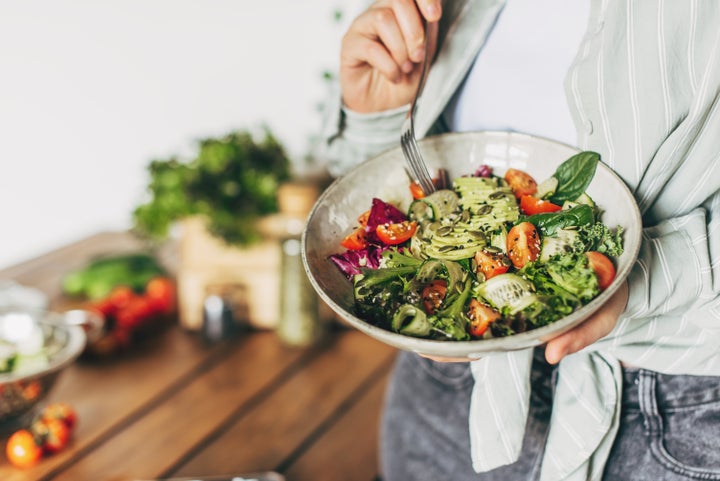
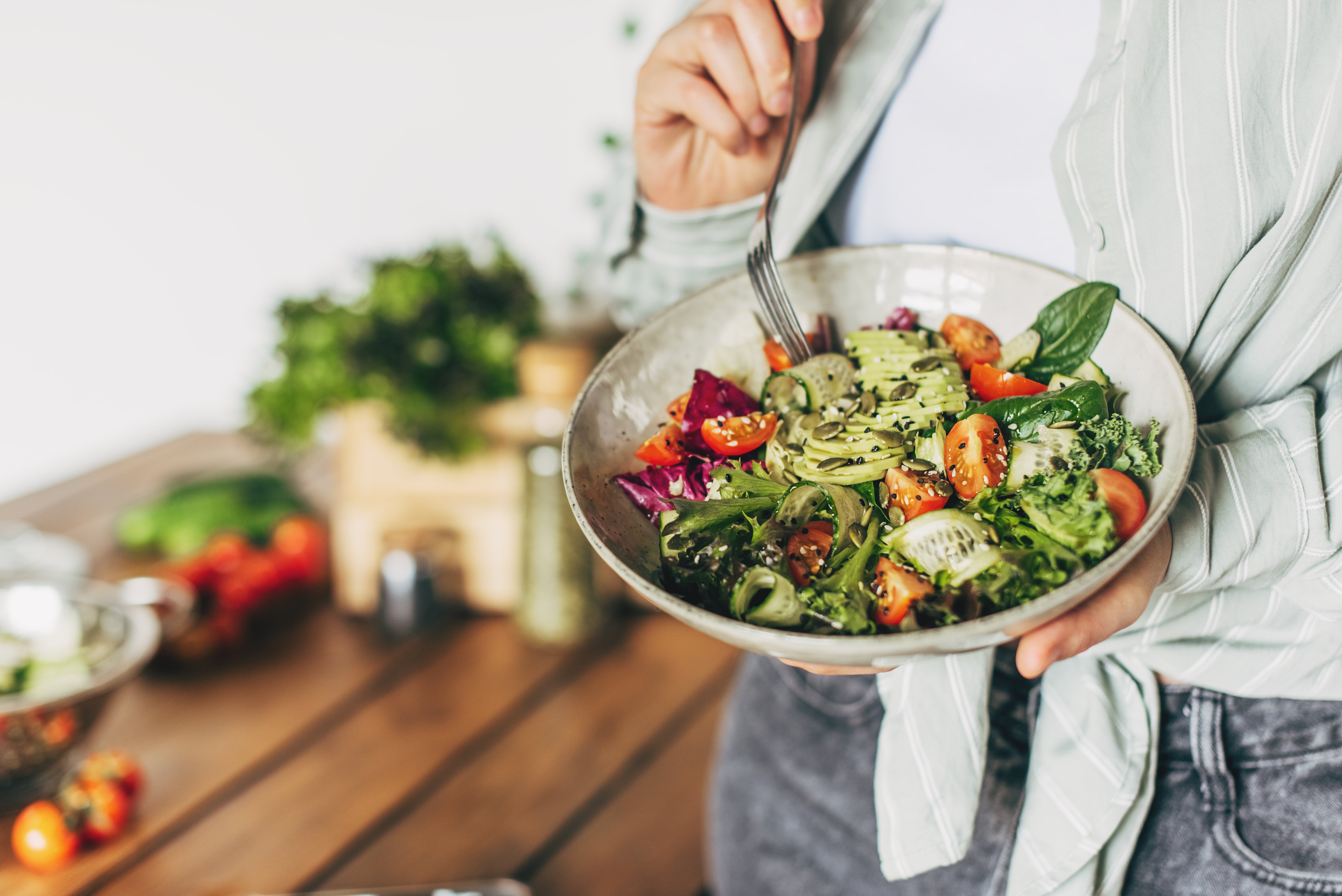
Leafy greens probably don’t contain as much fibre as you thought.
Lettuce And Other Leafy Greens
Leafy greens contain important vitamins, minerals and phytonutrients, making them nutritional powerhouses. But they aren’t nearly as rich in fibre as many people (this writer included!) think.
“Because salads are often associated with healthy eating, people sometimes assume lettuce is a major source of fibre. In reality, one cup of shredded romaine lettuce contains only about 1 gram of fibre,” Sassos told HuffPost.
Advertisement
“Lettuce can absolutely contribute to your daily intake, but you’ll get a much bigger fibre boost from ingredients like chickpeas, avocado or other vegetables added to the salad.”
Typically, foods that contain 3 grams of fibre or more per serving are considered a good source, registered dietitian Carly Leanza of Health Loft told HuffPost. “Lettuce like butter lettuce, iceberg or romaine contain less than 1 gram of fibre per serving.”
And while that isn’t a whole lot in a single serving, “it does add up if we have a big salad,” Soto noted.
Advertisement
To boost your fibre intake, consider cooking your greens. As Samuels pointed out, while one cup of raw spinach contains less than 1 gram of fibre, one cup of cooked spinach contains 4 grams of fibre. That’s because it takes several cups of raw spinach to make one cup of cooked spinach. Therefore, you’re getting more fibre for the same serving volume.
Celery
Rich in antioxidants and low in calories, celery is another veggie that seems like it would contain more fibre than it actually does. A medium-sized stalk has about half a gram of fibre, while there’s 1.6 grams in one cup chopped.
“People tend to overestimate both lettuce and celery’s fibre content potentially because they are crunchy and have a crunchy, stringy texture,” Leanza said. “People often think to have a big salad or snack on some celery to increase roughage. But if the focus is fibre, there are many other sources to turn to.”
Advertisement
Watermelon
One cup of watermelon contains less than a gram of fibre – just 0.6 grams per serving.
If you’re peeling your produce, you may be missing out on nutritional benefits, as there is usually a considerable amount of fibre (as well as vitamins, minerals and antioxidants) in the skin or peel, Soto pointed out.
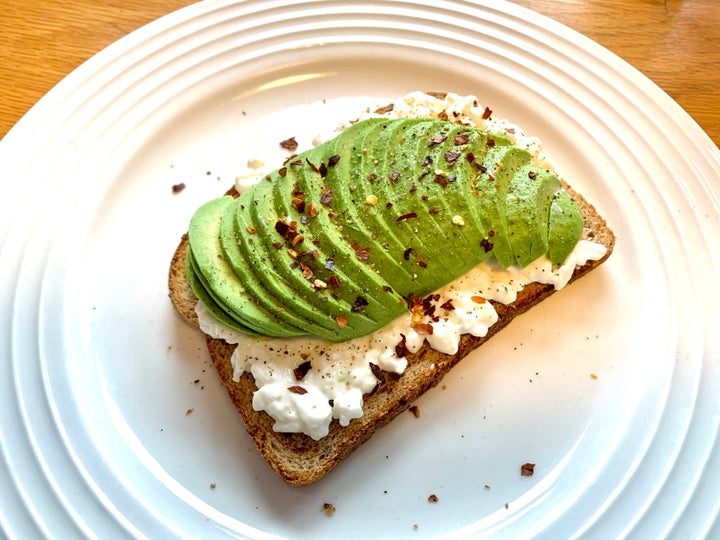
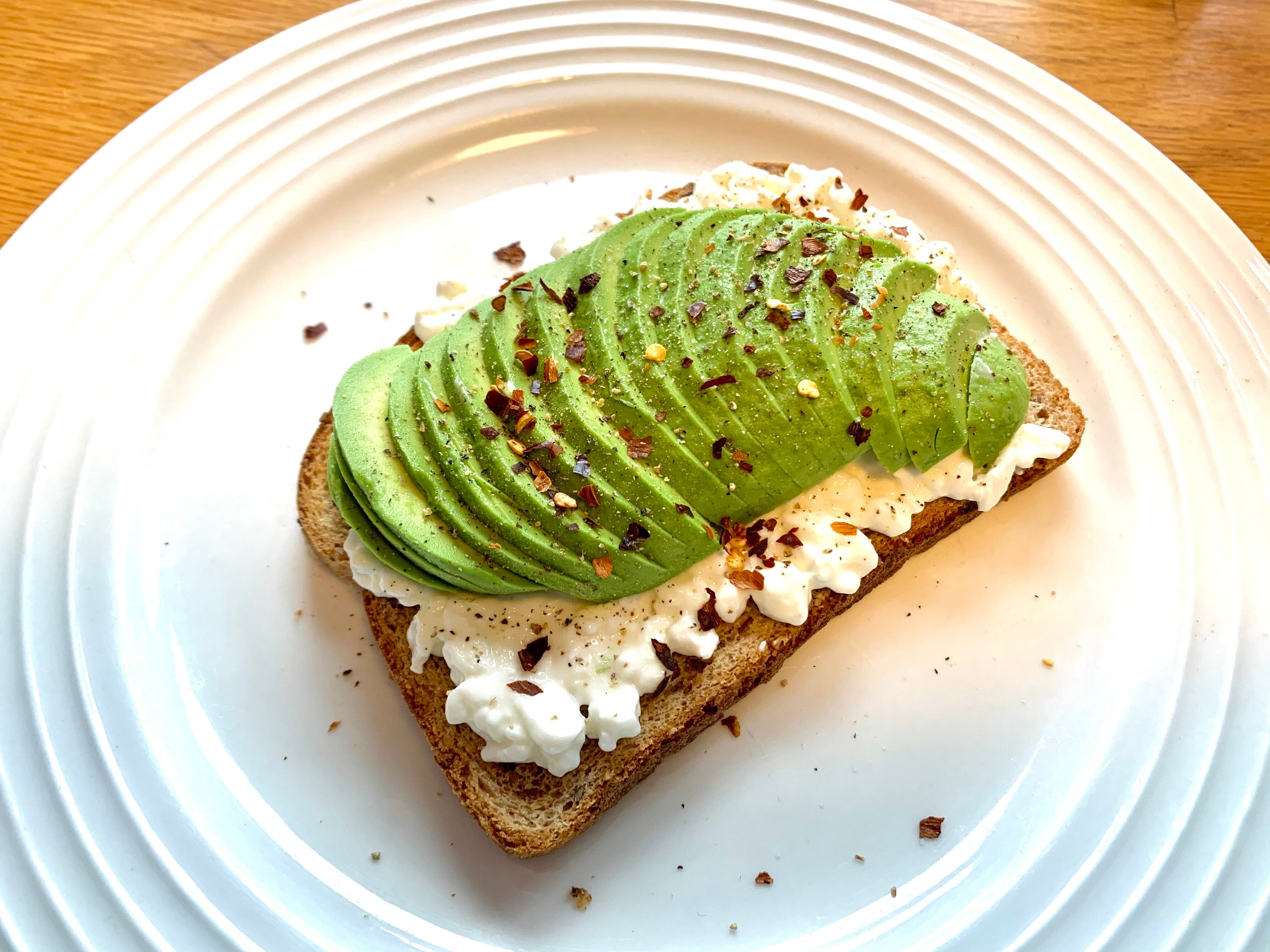
One of these toast toppings is high in fibre, and the other isn’t.
Advertisement
Cottage Cheese And Greek Yogurt
Both cottage cheese and greek yogurt are well-known for their health benefits, including their impressive protein content, calcium and other nutrients. But one thing they’re both missing entirely: fibre. That’s because only plant foods contain fibre – dairy and other animal products do not.
Sassos recommends pairing cottage cheese and greek yogurt with high-fibre foods such as raspberries, chia seeds and nuts to “create a more nutritionally complete snack,” she said.
High-Fibre Foods To Add To Your Diet
If you’re falling short on your fibre goals, consider incorporating more of these plant foods.
Avocados
“While they’re well known for their heart-healthy fats, many people don’t realise that one avocado provides roughly 10 grams of fibre (or even more depending on the size and variety),” Sassos said. “They’re an easy way to add both fibre and satisfying healthy fats to meals and snacks.”
Advertisement
Beans And Lentils
A cup of lentils or black beans, for example, contains a whopping 15 grams of fibre.
Legumes are “easy to add and [you] can create a lot of meals from them,” said Soto.
One cup of cooked split peas, another type of legume, has 16 grams of fibre. More peas, please!
Raspberries
With 8 grams of fibre per cup, Sassos called raspberries a “true fibre superstar.”
Other great sources: Quinoa (5 grams of fibre in one cup cooked), broccoli (5 grams in one cup cooked), pears (6 grams for a medium-sized one) and chia seeds (5 grams in one tablespoon).
Know that not all fibre is created equal, said Sassos. Whole food sources offer benefits that supplement forms do not.
“Fruits, vegetables, legumes, nuts, seeds and whole grains offer much more than fibre alone,” she explained. “They provide vitamins, minerals, antioxidants and other beneficial compounds that work together synergistically. That’s why getting fibre from whole foods whenever possible is ideal, rather than relying solely on powders or supplements.”
Advertisement
Eat a variety of fibre-rich foods to ensure you are getting adequate amounts of both kinds of fibre: soluble and insoluble. Soluble fibre dissolves in water and creates a gel-like substance in the gut that slows down digestion. Insoluble fibre does not dissolve in water and bulks up stools, making them easier to pass.
“Different high-fibre foods provide different types of fibre and beneficial nutrients,” Sassos said. “I encourage people to regularly rotate the fruits, vegetables, legumes, nuts, seeds and whole grains they eat.”
When increasing your fibre intake, do so gradually to prevent unpleasant gastrointestinal symptoms like gas and bloating, Samuels advised. Staying hydrated is important, too.
Advertisement
“Be sure to drink plenty of water to prevent constipation and help fibre do its thing,” she said. “A registered dietitian can help you come up with a sustainable and personalised plan for increasing fibre intake based on your unique needs.”
With record-breaking heat sweeping across the country and around the world, people are increasingly seeking ways to stay cool and turning to all kinds of tips, tricks and folk remedies to do it.
But how many of those heat-beating hacks are actually grounded in science?
HuffPost asked experts to weigh in on some of the most common old wives’ tales about surviving the heat, from damp sheets to cabbage leaves to yoghurt on windows.
Advertisement
The verdict? Some have truth to them, others don’t hold up to scrutiny, and a few could actually backfire depending on the conditions.
1. “Sleeping under a damp sheet cools you down.”
“The ‘Egyptian method’ involves sleeping under a damp sheet to cool down,” Dr. Swapnil Patel, vice chair of the department of medicine at Hackensack Meridian Jersey Shore University Medical Center, told HuffPost. “A damp towel can be used as an alternative.”
The cooling effect is the result of a simple evaporation process.
“A lightly damp sheet or cloth can cool through evaporation,” said Dr. Anthony T. Lagina, an associate professor in the department of emergency medicine at Wayne State University, Detroit Medical Center. “As water evaporates from the fabric, it pulls heat away from the skin. This works best in dry, well-ventilated conditions.”
Advertisement
Thus, the effectiveness of sleeping under a damp sheet is limited based on environment. And, the technique can in fact have the opposite effect in the wrong conditions.
“It works poorly in high humidity because water and sweat do not evaporate efficiently,” Lagina explained. “In humid conditions, a damp sheet may feel clammy, disrupt sleep or irritate skin.”
There are other ways to make your sleep environment safe in hot conditions, however.
“To deliver true peace of mind and comfort, I recommend focusing on proven environmental controls such as keeping your bedroom well-ventilated, utilizing lightweight, breathable bedding, taking a cool shower before bed and prioritizing consistent fluid replenishment throughout the day,” said Dr. Scott Braunstein, chief medical officer at Sollis Health.
Advertisement
2. “Smear yoghurt on your windows to keep the heat out.”
The idea behind putting yoghurt on windows – a tip that has circulated in the UK – is that the light-coloured yoghurt forms a thin film on the glass that reflects incoming solar radiation, so less heat passes through the window.
“Putting something reflective on your windows will help keep the sun out and cool your home,” said Anna Bershteyn, an associate professor in the department of population health at NYU Langone Health. “I would suggest a reflective window film, metallic foil or shades rather than yoghurt – that would be more effective and less messy.”
Lagina also advised against putting yoghurt on your windows to keep heat out in favour of more practical options. “It is not a reliable cooling strategy and creates sanitation concerns, including odor, bacterial or mold growth, insects and potential surface damage,” he said.
Advertisement
He also weighed in on a similar hack – putting wet towels or cloths on your windows.
“A wet towel or damp cloth over a window can provide only mild cooling if the air passing through it evaporates,” Lagina explained.
“In humid weather, this may simply add moisture indoors, making sweating less effective. Better home-cooling approaches include blocking direct sunlight with curtains or reflective shades, opening windows only when the outside air is cooler and using fans to move air across the skin.”
Ekaterina Goncharova via Getty Images
Weather authorities are warning of a “heat dome” across the U.S.
Advertisement
3. “Hot beverages cool you faster than cold ones.”
“Some studies have found that hot drinks and spicy foods increase sweating, which could be helpful in dry heat,” Bershteyn said. “Think deserts – where your sweat evaporates so fast that your skin is dry. If your sweat is dripping off of you – as it does in muggy, humid heat – more sweat won’t cool you any faster.”
When sweat evaporates, heat is removed from your body, but in humid conditions, drinking a hot beverage will instead probably just be uncomfortable and add heat initially.
“During heat stress, cool water or an electrolyte-containing drink is usually more practical,” Lagina said. “Moderate caffeine is generally acceptable for many adults, but excessive caffeine and alcohol should be avoided during extreme heat. Alcohol reduces judgment and can worsen dehydration and heat illness risk.”
Advertisement
Indeed, the type of beverage – hot or cold – that you consume makes a big difference.
“Cold water or targeted electrolyte solutions are consistently the better choice because they are refreshing, encourage people to consume a higher volume of fluids, and provide immediate physical relief from the heat,” Braunstein said.
“Also keep in mind that many hot drinks, such as coffee or tea, are caffeinated, and the caffeine both speeds up your metabolism increasing heat production, and acts as a diuretic contributing to fluid losses and dehydration.”
4. “Cooling your pulse points lowers your temperature more quickly.”
“Cooling the neck, armpits, groin, wrists and the backs of the knees can help, as major blood vessels are near the skin surface,” Lagina said. “Cool packs or wet towels can remove heat from blood and skin.”
Advertisement
Basically, you can quickly cool the body by cooling the parts where blood flows close to the skin.
“Applying cold can briefly cool circulating blood locally, which produces a perception of relief,” said dermatologist Dr. Brendan Camp. “However, this effect is modest and does not significantly lower overall core body temperature on its own. It is best understood as a sensory or comfort-based strategy rather than a true systemic cooling method. It works best when combined with airflow or general body cooling.”
Lagina similarly noted that this trick is “not magic,” as some situations require cooling across the fuller surface of the body.
“For serious overheating, broader cooling is better – a cool shower or bath; misting with a fan; cold, wet sheets; or cold-water immersion when safe and appropriate,” he said.
Advertisement
Pay attention to potential heatstroke symptoms, which require urgent medical attention.
“If you begin to experience symptoms such as dizziness, nausea, heavy sweating, muscle cramps or unusual fatigue, it is critically important to immediately seek medical care, most often at an urgent care or ER,” Braunstein said. “Heat-related illness is a spectrum that ranges from very mild to life-threatening, so time is truly of the essence.”
5. “Placing a cold cabbage leaf under your hat or on your body can cool you down.”
“Using cabbage leaves is a real folk remedy, for their cooling properties,” Patel said. “While more commonly studied for reducing pain and swelling in conditions like osteoarthritis, the cooling effect of the leaves, with their water content, is real.”
In the context of heat, cabbage leaves can provide a brief, localised cooling sensation, but experts say don’t get too excited about it.
Advertisement
“My mother has tried to treat quite a few of my childhood illnesses with cabbage leaves,” Bershteyn said. “Sadly, I’m not aware of any special cooling powers of cabbage leaves. But anything cold and wet on your head can feel nice.”
The effect is not long lasting, however. “It warms quickly, does not maintain consistent heat transfer and does not meaningfully affect core temperature,” Camp said. “It is not an effective or reliable cooling strategy from a physiologic standpoint.”
The cabbage leaf trick has historical precedent. Baseball legend Babe Ruth was known to place a cold cabbage leaf under his cap during games to stay cool in the sweltering summer heat.
Advertisement
“A cold cabbage leaf can cool by contact and moisture, just like any cold wet object,” Lagina said. “There is no special heat-related medical property in cabbage. A clean, damp cloth, a cooling towel, a chilled bandana or an ice pack wrapped in cloth is more practical and hygienic. Folk remedies should not delay standard cooling or emergency care.”
Uma Shankar sharma via Getty Images
No folk remedy can replace the importance of hydration.
6. “Placing a bowl of ice in front of a fan works like air conditioning.”
Placing a bowl of ice in front of a fan is a popular TikTok hack for cooling down a room, but experts say the effect is more limited than most people expect.
Advertisement
“This can create a small area of cooler air for someone sitting close by, but it is not an effective way to cool an entire room,” Lagina said. “The ice absorbs heat as it melts, and then the effect stops. It may be useful for short-term personal comfort, especially with good airflow, but it should be paired with hydration, reduced activity, shade and access to air conditioning when possible.”
Bershteyn also noted that a bowl of ice in front of a fan probably won’t meaningfully cool a room.
“In fact, if the ice was made in a freezer in the same room, the heat coming from the back of the freezer would offset the cooling from the ice,” she said. “But if you sit directly in front of the ice, you might get a personal, chilled breeze.”
Here’s what experts actually recommend for staying safe in the heat.
“Many folk cooling methods work only when they improve evaporation, conduction, shade or airflow,” Lagina said. “They are not substitutes for air conditioning, hydration, rest and urgent medical care when heat illness is suspected.”
Advertisement
There are other important facts and precautions to keep in mind as you try to stay safe and cool in extreme heat.
“It takes several weeks for a body to adjust to heat, which is why the U.S. sees more heat-related deaths in the spring than in the summer,” Bershteyn said. “While scientists don’t yet know the exact best way to condition yourself for heat, one thing is clear: Being in good physical shape is a huge benefit.”
She recommended trying to stay physically fit in the springtime and all year-round to make those heatwave days easier to get through. Still, don’t assume that healthy athletes can’t fall victim to heat-related illness.
Advertisement
“Fitness does not eliminate risk,” Lagina said. “Athletes, outdoor workers, children, older adults, pregnant people and people with chronic health conditions are all vulnerable.”
The wrong combination of conditions and exertion can affect even the healthiest people. “We see healthy young adults and children develop heat exhaustion after prolonged sun exposure, strenuous activity or dehydration,” Braunstein said.
He noted that the best prevention is much simpler than those interesting at-home remedies.
“Stay hydrated before you feel thirsty, wear lightweight clothing, seek shade during the hottest part of the day and take breaks in air-conditioned spaces whenever possible,” Braunstein said.
Advertisement
Loose, thin, light-coloured clothing and hats can provide helpful protection, as can periodic cool showers and baths, misting fans, ice packs and damp cloths.
When you reach the peak heat of the day, take advantage of air conditioning and avoid strenuous activity. Drink plenty of water and keep your electrolytes replenished if you’re exercising or otherwise sweating a lot.
“Never leave children, older adults, vulnerable people or pets in parked cars,” Lagina said. “Check on older adults, children, outdoor workers, people living alone and anyone with chronic medical conditions. High humidity, poor airflow, dehydration and prolonged heat exposure all increase risk.”
Advertisement
Knowing how to recognize heat illness and act quickly is also incredibly important. Signs of heat exhaustion include heavy sweating, weakness, dizziness, headache, nausea, muscle cramps, cool or clammy skin and feeling faint.
“If these occur, move to shade or air conditioning, stop activity, loosen clothing, sip cool fluids if alert, and use cool, wet cloths, misting, fanning or a cool shower,” Lagina said.
Heatstroke is a more serious medical emergency with warning signs that include confusion, altered behavior, fainting, seizure, slurred speech, severe weakness, a very hot body or an inability to cool down.
Advertisement
If you suspect heatstroke, immediately call 999 and begin cooling while waiting for help by moving to a cooler place, removing excess clothing and applying cool water, fan mist, ice packs and/or cold, wet towels to your neck, armpits and groin.
“If symptoms like dizziness, vomiting, confusion, fainting or difficulty breathing develop or don’t quickly improve after cooling down and rehydrating, don’t rely on home remedies,” said Braunstein. “Early treatment can prevent progression to the life-threatening conditions that are on the far end of the clinical spectrum.”