I’m An Extreme Bodybuilder. When I Posted This Breastfeeding Pic, People Freaked.

Imagine this: You are standing under bright show lights on a stage in front of a few hundred people. You have no clothes on, except for a tiny, sparkly, $400 bikini that’s been glued to your chest and butt. You are orange and pungent with spray tan, which you got after standing fully naked in front of a stranger with a paint gun who asked you to spread your glutes to make sure the tan gets in all of your crevices. You will walk to the centre of the stage in 4-inch heels to be judged by a panel of five people who will look for any jiggle of fat, any pock of cellulite, any unsymmetrical or underdeveloped muscle to determine your ranking among others. Most people around you are rooting against you.

Does this sound like your worst nightmare?

For me, it’s excitement, focus and a wild rush. It’s where I thrive.

I’ve been in the fitness industry for almost 10 years now, the back half of which being what I consider extreme fitness, a world of the relentless pursuit to grow larger muscles and shrink any remaining deposits of fat that have dared to stick around. It’s gruelling. It’s sweaty, exhausting, time-consuming and expensive.

Your body hurts and your mind plays tricks on you, turning every glance in a mirror into an all-out dissection of any physical imperfection. Your muscles get big and your ego gets bigger. You can walk through a crowd and think I am the leanest, strongest, most muscular person here and then get home to look in your mirror and think I am a shrimp, I am pathetic, I don’t stand a chance. It’s physical and psychological warfare with yourself. I love it.

Prepping for a bodybuilding competition involves excruciating diet manipulation, rigorous amounts of cardio and long hours in the weight room. At my most intense, I’ve spent nearly three hours a day lifting weights and doing cardio. I’ve eaten the same meal of chicken, cucumbers and vinegar twice a day every day for weeks on end. I’ve packed pathetic Pyrex bowls of bland, macronutrient balanced meals to parties and dinners where I looked away from the mac and cheese and desserts and bit into another cold piece of chicken.

“[Extreme fitness is]… grueling. It’s sweaty, exhausting, time consuming, and expensive. Your body hurts and your mind plays tricks on you, turning every glance in a mirror into an all out dissection of any physical imperfection.”

So much of competitive bodybuilding is the focus on the physical body while keeping the reins tight on the mental self. I stand in the shower thinking about my deadlift form and fall asleep practicing my stage posing routine in my head: “Ladies, turn to face the rear. Ladies turn to face the front,” flex the back, pop the glutes, draw in that core, again and again and again until you cannot get it wrong. It is all-consuming.

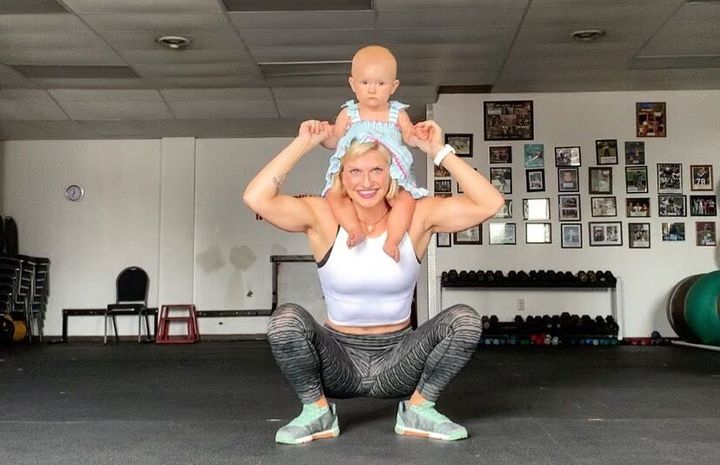
I was in the midst of this competition training when I found out I was pregnant. As you may guess, pregnancy and competitive bodybuilding do not go together, so I gave up on my dream of competing temporarily. I lifted weights all throughout my pregnancy, my baby bump protruding from under my T-shirts as I repped out pull-ups or strained under a barbell. I looked ridiculous waddling around the weight room, trying to maintain any shred of muscle or strength that I could as my belly got bigger and bigger. I had a horrific home birth, and I give full credit to my pregnancy exercise and stamina for bringing me through it.

Then I settled into mom life. I lost my baby weight quickly and slowly eased back into exercise. Suddenly, standing on stage seemed on the horizon again. I got back in contact with my coach, and we developed a plan. There was just one problem: I was breastfeeding and I had no intention of giving it up.

Extreme fitness and breastfeeding rarely ever play in the same arena. They are inherently counter-intuitive. One assumes hardness, aggression and a controlled wasting away. The other cultivates images of vitality, warmth, nurturing and womanly suppleness.

Many women lose their delicate milk supply if they have a drop in body fat. I was planning an almost total loss in body fat. I was planning hours of pounding weights and pavement, as well as tight calorie control. It is a nearly impossible feat to cause your body fat to plummet into non-existence and keep a milk supply, but I was determined to make it happen.
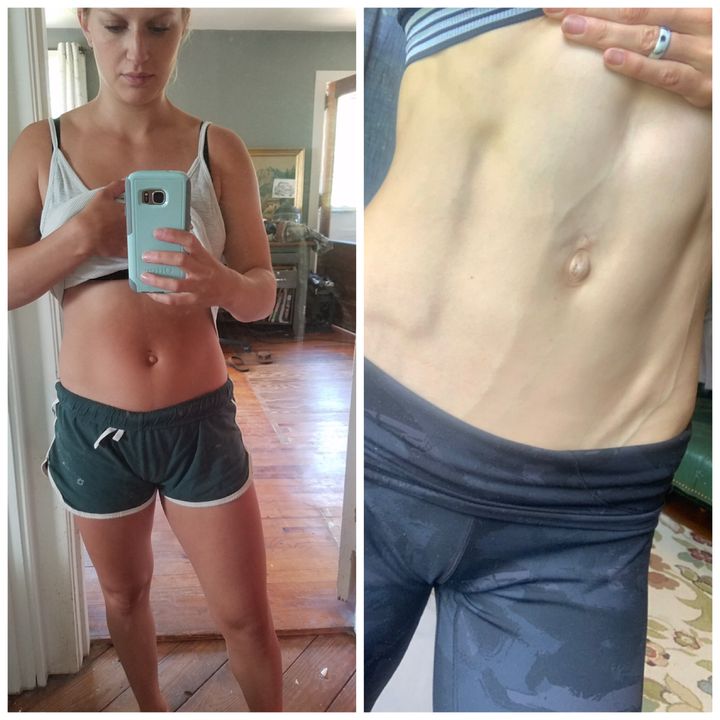
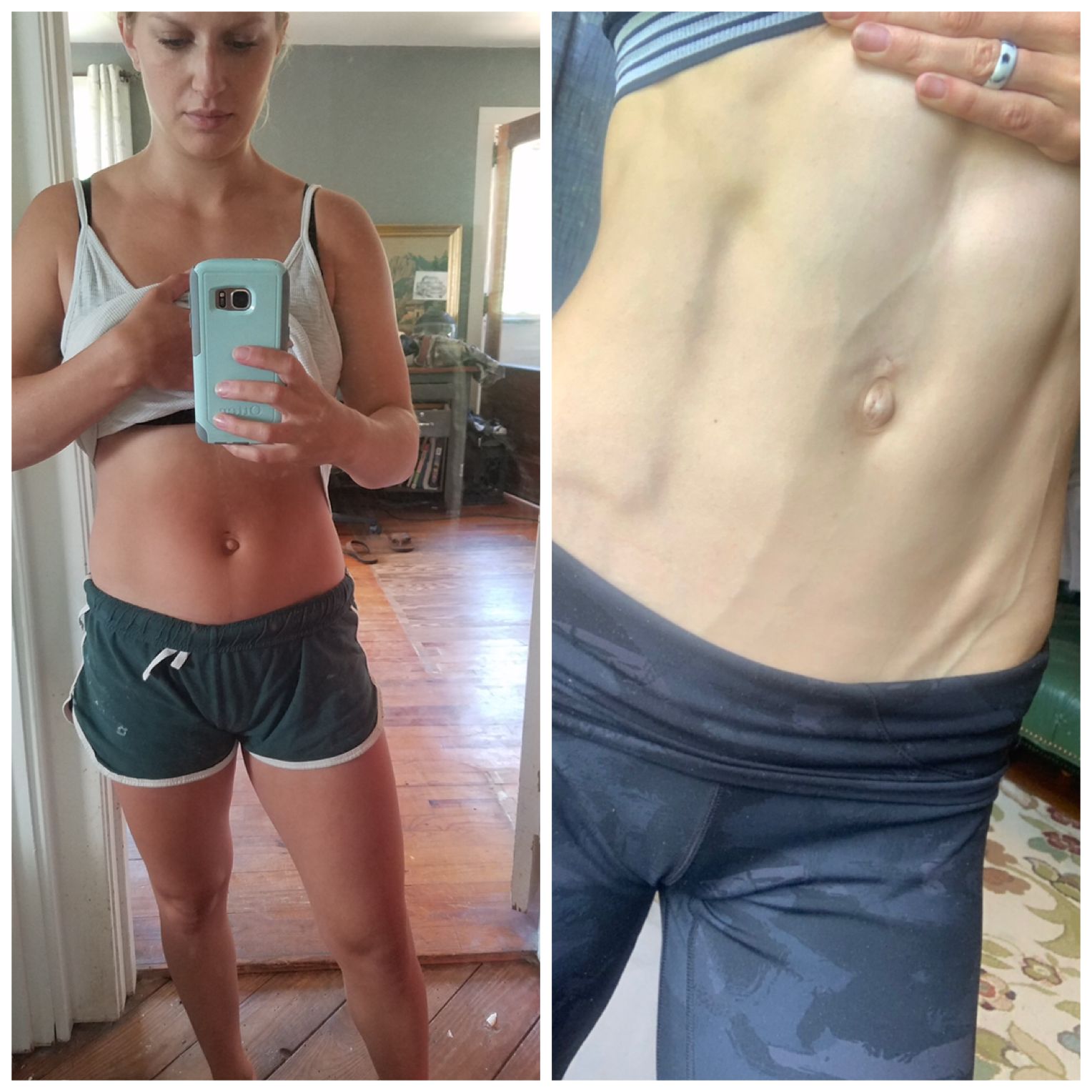
Jordan Musser (left) at two months postpartum vs. Musser (right) at two weeks before her first postpartum competition. The photos were taken just under a year apart, with six of those months spent recovering from childbirth and the other six months actively training for the competition.

Courtesy of Jordan Musser

Jordan Musser (left) at two months postpartum vs. Musser (right) at two weeks before her first postpartum competition. The photos were taken just under a year apart, with six of those months spent recovering from childbirth and the other six months actively training for the competition.

I was not shy about telling people I was a breastfeeding bodybuilder. On the day I first competed post-baby, I told a crowd of women backstage that I was still breastfeeding, and a hush fell over them as they turned to look at me with their overly tanned and stunned, disbelieving faces.

I kind of enjoyed the uncomfortable beat that I almost always got after dropping this fact. Inevitably, I would get one of three responses. There were the “way to go mama!” girl-power people who thought it was crazy but kick-ass. There were the “Oh, you’re still breastfeeding people,” who probably didn’t approve of breastfeeding in the first place, and certainly not nursing a 10-month-old. And then there were the slightly (or more than slightly) appalled “is that even healthy?” people.

This last response bothered me because, honestly, it’s a good question. Is it healthy? Is it fair to expect that my body will still produce a substance from the chicken and spinach I am providing it that will feed my ever-developing and growing infant child? Is it fair to pursue a goal born of my own vanity at the possible expense of my baby girl? Is it worth it? If my milk dries up because I have failed to maintain the bodily balance needed for successful nursing on purpose, have I failed as her mother? What kind of mother risks nourishing her child for the opportunity to prance around mostly naked on stage and win a cheap trophy? What kind of mother takes so much time for herself that she can log hours in the gym ― enough time to build a hardened, muscular physique ― when most moms don’t get enough “me” time to take a shower? Are breastfeeding and extreme fitness simply so incompatible as to be impossible to exist together? And, ultimately, am I doing something wrong?

If you ask a doctor about breastfeeding and bodybuilding, they will most likely tell you it is a bad idea. Most medical professionals frown on bodybuilding in and of itself. It is, after all, a controlled starvation. It is a kind of disordered eating with an end goal of winning a trophy. It is a strange and often misunderstood world.

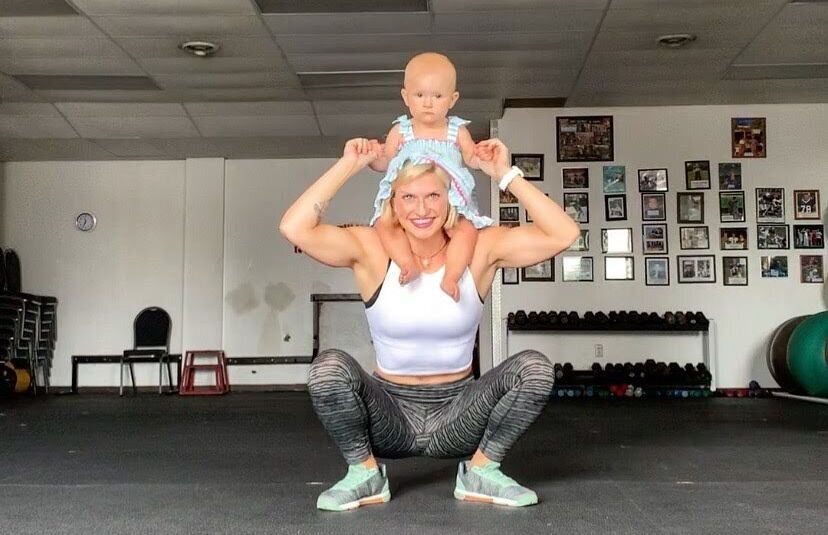
Musser and her daughter working out together.

Courtesy of Jordan Musser

Musser and her daughter working out together.

There are responsible ways to go about achieving such extreme results, and I pride myself on being as healthy as I can be in my most unhealthy state. The fact of the matter, however, is that when you are working to achieve a “stage leanness” with little-to-no body fat, you are depriving your body of things it needs. You are sometimes lacking in vitamins and nutrients, and you are utterly devoid of fuel.

Breastfeeding thrives on fuel. Breastfeeding is best when you have a caloric reserve to work from. Ultimately, your baby is eating what you are eating, and when your diet is vinegar and chicken, it means that your breast milk reflects that. Your body will prioritise feeding your child and create the most nutrient-dense milk possible, but it can only do so much.

At the height of my competing, my daughter was still primarily breastfeeding for sustenance. I am trained in nutrition, and I knew that I could be depriving her if I wasn’t careful to make sure I was eating in a way that served both her growing body and my fitness goals.

Throughout my prep for competition, fat was my main focus. I ate a high-fat, high-protein, nutrient-heavy diet (including chicken, turkey and lean red meats, eggs in their whole form, full-fat dairy, sweet potatoes, large quantities of green vegetables, green smoothies and occasional protein shakes) and monitored my milk supply closely along with my coach. He kept detailed tabs on my nursing and made sure that, even up to the day before the competition, I was eating an abundance of fats. I certainly never anticipated that I would have a man asking me, “And how is your milk?” at least twice a week, but I did, and I was thankful.

I couldn’t take any of the usual supplements I would normally take other than creatine due to possible crossover into my breast milk. I certainly didn’t take any drugs or physique enhancers, and I fully avoided the diuretics so common in regimes leading up to competitions. Often, competitors will deplete themselves of water in order to come in hardened on stage. When you’re still breastfeeding an infant, being dehydrated is simply not an option.

I also knew that the chemicals from the spray tan shouldn’t be consumed, especially by a baby, so I made sure to cover any body parts that might come in contact with her mouth before getting the tan. My skin looked wild, but it kept her from ingesting anything nasty or potentially harmful.

I was, in a sense, making the task of becoming ready to step on stage as hard as possible for myself for the sake of my baby. I had no advantages. I had no shortcuts. I was trying to find that delicate balance between nourishing my body so I could nourish my baby’s body and depleting my body without depleting hers.
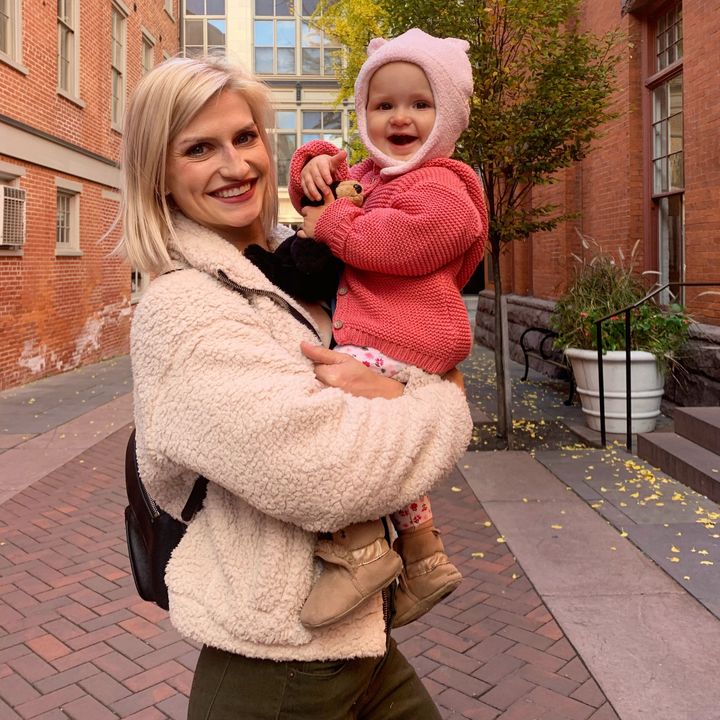
Musser and her daughter about three months after the 2019 bikini competition.

Courtesy of Jordan Musser

Musser and her daughter about three months after the 2019 bikini competition.

I constantly grappled with the selfishness of extreme fitness juxtaposed with the selflessness of new motherhood. Shouldn’t I be feeling that evolutionary shift that removes any inward focus and forces me to see only my child, I wondered.

In the end I came to two conclusions that have followed me into parenting a toddler and beyond:

  1. I will do what is in the best interest of my child and do whatever it takes for that cause, but…

  2. In order to stay true to my own needs and thus be a more physically and emotionally available mom, I will prioritise myself and my time regarding my bodybuilding.

I saw too many moms getting lost in the potential monotony of motherhood and whittling away themselves as human beings. They lost themselves for their children, and while there may be something admirable about that, I felt that without a compass of self I would harbor a feeling of resentment toward this little person who took the me out of me.

Fitness is me. It is as inherent to me as breathing or laughing. If I lose it, I have lost myself. Without me being the best version of myself, my child will not thrive. In order to pour into my daughter, I must first be filled myself. Fitness fills me. I will do the dishes, I will change the diapers, I will read the silly train book at least 12 times a day and I will pursue my bodybuilding goals.

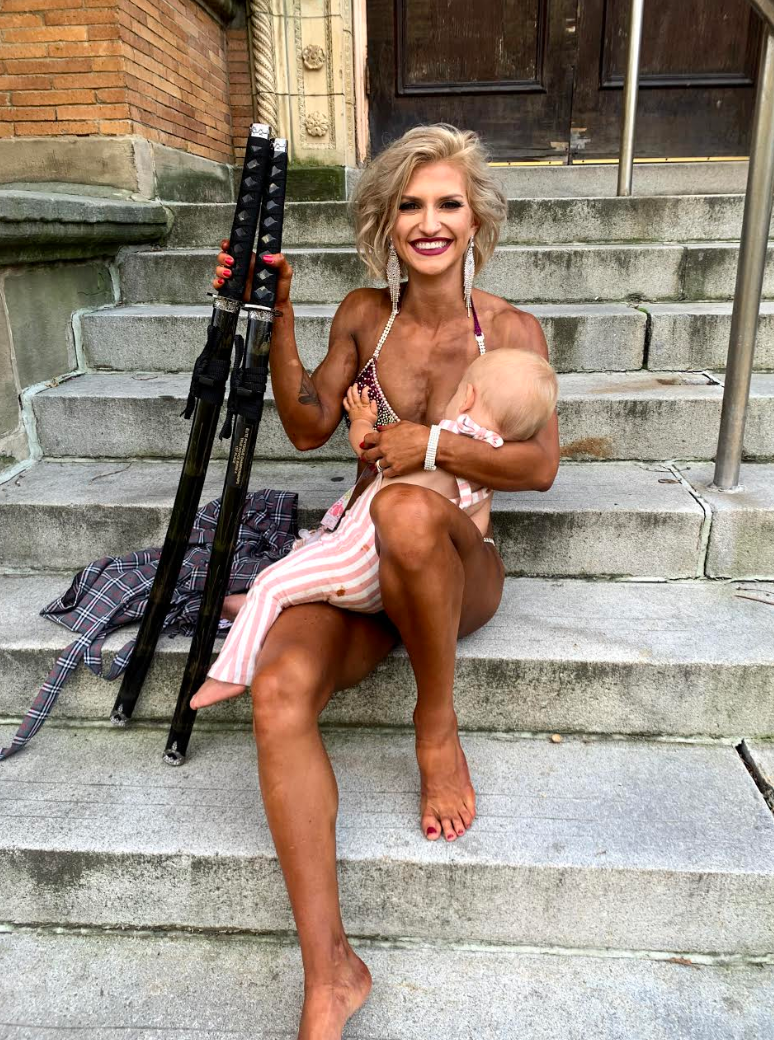
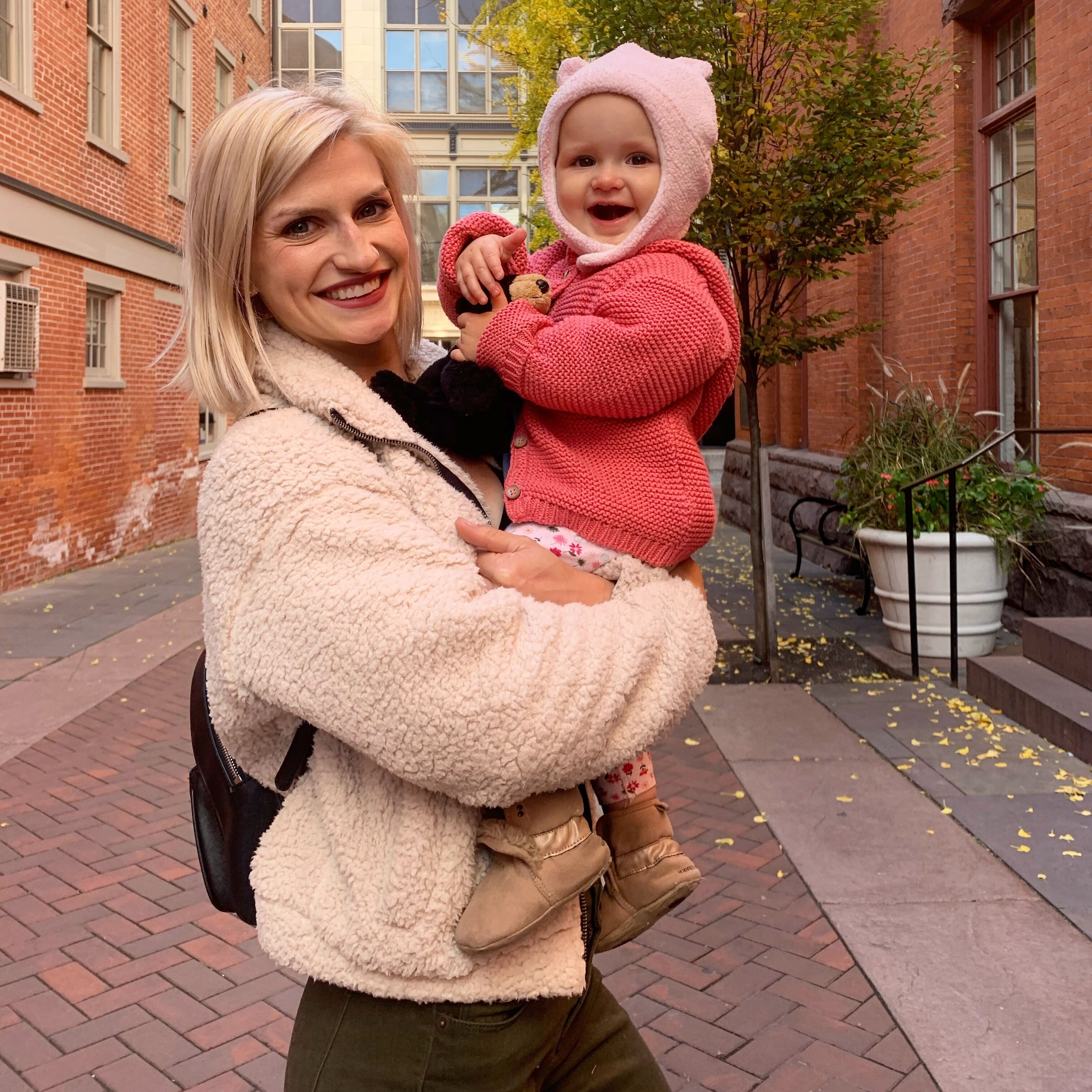
With all of these things in mind, I posted the photo at the top of this essay to my Instagram account. In the photo I am sitting on stone steps outside of the competition venue in which I just won first place in both of my entered categories. I am spray-tan orange, wearing a rhinestone-encrusted purple bikini, holding up two ridiculous trophy swords, with my daughter in my lap, latched on and nursing away. My hair is bleached blonde and wild and I am beaming with accomplishment.

“I am entrusted with the wellbeing of my child, and I will always do what is best for her. I did something that almost no one has done. I did it healthfully. I did it responsibly. I did it in a way that served both my child and me, as a human, as a woman, and as a mother.”

For a few hours, my normal quantity of likes from friends and family trickled in. Then, like a faucet opening, hundreds of strangers were flooding my page with comments and likes. The overwhelming majority of these were positive. Women from all over the world were supportive, impressed and pro-breastfeeding. There are, however, always those who disapprove.

As a mom, disapproval is even more gnawing. It makes you reevaluate every tiny decision, second-guess every sound conclusion you’ve come to. Some members of my family were confused and put off by my feat. Women messaged me to tell me they were shocked by the risk I had taken with my child’s health, that they would never do the same, that they were creeped out. Even some in my own bodybuilding community saw what I had accomplished as weird and unhealthy. Even they, the niche of the niche, thought I had done something too out of the box.

The decision to undertake extreme fitness and breastfeeding was no one else’s decision to make but mine and the outcome of it ― good or bad ― falls squarely on my shoulders alone. I am entrusted with the wellbeing of my child, and I will always do what is best for her. I did something that almost no one has done. I did it healthfully. I did it responsibly. I did it in a way that served both my child and me, as a human, as a woman and as a mother.

The female body is amazing. I breastfed a baby all the way through contest prep, through all the cardio and through all the calorie cuts. We never had even a slight decrease in milk supply, or any hint of a lack of nutrition for her. I smiled on stage as I accepted my first-place trophies and grabbed my daughter from the audience to nurse her then and there. It was a triumph for both of my goals, both of my loves in life: this capable, chiseled, muscular body, and my sweet, gentle, baby girl.

Jordan Musser is a fitness competitor, breastfeeding advocate, personal trainer and nutrition coach from Williamsport, Pennsylvania. She spent six years in the U.S. Air Force and now focuses on her growing family and postpartum fitness program, Badass Mothers. For more from her, visit thebadassmothers.com and check her out on Instagram.

Share Button

My Boyfriend Took Me To A Nudist Camp And It Changed Me In Ways I Never Saw Coming

For our first vacation together, Michael proposed we go camping.

As a 40-year-old lifelong New Yorker whose idea of “woodsy” was Central Park, this wasn’t my thing. Yet I wanted to be agreeable and expand my horizons. Browsing campsites online, Michael chose one that was all-male and clothing-optional.

Now I was terrified.

“Come on, what better way to get in touch with nature than being au naturel?” he asked.

“Until you get poison ivy or a tick in places you wouldn’t want to,” I quipped.

Still, days later I sat in the passenger seat as we drove through cornfields and nothingness in search of the campsite.

“I feel like we’re about to inspire a Stephen King story,” I said.

I was relieved when we found the entrance to the camp, marked by hand-painted letters on a rock, but wasn’t sure I wanted to proceed. Michael pointed out two men who were in their early 50s and dressed in calico button-downs.

“They look normal,” he said. I peered behind their backs to make sure they weren’t carrying hatchets before getting out of the car.

Checking in at the main office, we were greeted by a shirtless innkeeper ― a 6’4” bear with grey chest hair and double nipple rings. When he stepped out from behind the counter, I realised he was completely nude. I knew this place was clothing-optional, but I didn’t expect to see a guy’s … uh … s’mores … so soon.

“Here’s a map. I’ve circled a few trails. This one leads to the play area,” he said.

“Play area?” I asked.

“Gloryholes, slings. The usuals,” he replied, matter-of-factly.

“Ah, right. The usuals,” I blushed. I turned to Michael, hoping for a similar reaction but he was unfazed. A 45-year-old public health professor and “sexpert” who led workshops on sex education and well-being across college campuses, nothing ever made him turn red.

I admired Michael’s maturity, something he attributed to being the son of U.S. diplomats and growing up overseas. On our first date, a casual hamburger dinner we’d agreed upon after chatting for a month on OkCupid, I was smitten with his tales of living in Lebanon, Cyprus, the Philippines, Germany and Australia ― all before he was 10. Yet I worried I wasn’t sophisticated enough for him.

Unlike Michael, I grew up as a sheltered, closeted gay kid in a conservative Catholic family from Yonkers. My parents’ idea of an exotic vacation was the Jersey Shore. When I left home, at the age of 18, it was to move just 25 miles south to Manhattan. In my mid-20s, I still hadn’t fully come out and lacked the confidence and curiosity to go to sex parties or pick up men at bars, like my friends. In my older years, I felt like the world’s most boring gay guy. I was someone who enjoyed sex in a bed with the lights off, and my wild side was watching “The Golden Girls” and eating peanut M&Ms.

Michael assured me that my hang-ups didn’t matter. “I just want you to be comfortable,” he’d say. I tried my best. At times, I allowed myself to get out of the way and let his pragmatism and my whimsy intertwine in a way that felt both natural and nice. But despite our best efforts, being with someone who was so confident in himself, in and out of the bedroom, only made me feel insecure.

The innkeeper continued his rundown of the camp and pointed out the areas where guests needed to keep covered-up.

“Just near the road mostly. Some of the neighbours can be a bit stuffy,” he told us.

Glad you have standards, I thought, feeling like a total prude.

The author and Michael's accommodations at the campsite.

Courtesy of Mark Jason Williams

The author and Michael’s accommodations at the campsite.

Michael and I collected our belongings and walked to our cabin. I was surprised to find a charming little house that was remarkably clean, but grew uneasy when I couldn’t find the bathroom.

“There isn’t one in here, it’s shared,” Michael told me.

I freaked out. Apparently, I missed the concept of camping where beds and a roof were considered big-time luxuries. Sitting on our porch, I noticed we had a view of an outdoor shower, built on what looked like an altar. I wondered if we paid extra for that.

I hated this place but was determined to make the best of it. Michael and I did the usual camping things like boating and building a campfire, which I enjoyed. The other guests were all pretty friendly, if a bit cruise-y.

While Michael wasted little time shedding his clothes and his inhibitions, I remained a bit more reserved, eventually agreeing to go skinny-dipping. When a man yelled “yummy,” at me, I thought, Thanks? Wait, no, I’m taken.

But was I? Michael and I had been together for almost a year, but never used the word boyfriend. I assumed we were exclusive but we hadn’t actually discussed it. To be sure, I broached the subject later on a walk through the woods.

“I don’t like the term boyfriend. It makes me feel like I’m in the eighth grade,” Michael said.

“But I need a label,” I replied.

“Why?” he asked.

“So I know if I should be sleeping with other people or not,” I blurted out.

It was at this moment when we accidentally came upon the “play area.” It was a circle of some sex swings, a crucifix, and a port-a-potty with a hole on the side.

“Ewww, is that what I think it is?” I asked.

Michael confirmed, then took my hand. “Let’s keep walking,” he suggested.

“Do you want to try something?” I asked, sheepishly, and to my surprise. I wasn’t sure I actually wanted to give it a go, but I didn’t want to limit Michael’s experiences.

“This isn’t my thing,” he confessed. “This isn’t why I wanted to go away with you.”

I felt better but still couldn’t wait for camping to be over. Roughing it, clothing-optional or otherwise, wasn’t for me — especially having to leave the cabin to pee in the middle of the night. The next day, we drove a few hours and checked into a hotel. Our new room (with a private bathroom!) had a pink, heart-shaped Jacuzzi, mirrored walls, and a faux fireplace.

“You booked the honeymoon suite?” I asked. “Are you trying to tell me something?”

“I got the last room they had, I didn’t know it was like this,” he said. I was disappointed, yet relieved. Finally, something that made him uncomfortable.

“Well, we have to try the tub,” I said, attempting to put some romance back into our trip. Later, we poured some wine and got in. I became lightheaded, nearly passed out, and felt sick for the rest of the night. Michael applied a cold washcloth to my forehead and we watched “Judge Judy.”

As Michael comforted me, I suddenly felt worse. When he’d asked me to go away with him, I was thrilled. I saw this as a pivotal moment in our relationship ― if things went well, maybe we’d discuss moving in together. But if this was a test, I’d failed. And not because I’d fallen ill.

The author and Michael celebrate Christmas with their dog, Ruby, a year after their trip.

Courtesy of Mark Jason Williams

The author and Michael celebrate Christmas with their dog, Ruby, a year after their trip.

Thinking back to Michael’s earlier comment at the play area ― “This isn’t why I wanted to go away with you” ― I realised that I’d been so focused on sex, and on myself, that I overlooked Michael’s acts of tenderness and his emotional needs. Worse yet, I’d reduced our relationship to “are we sleeping with other people or not” when it was so much more than that.

I wished we could go back to the woods and have a redo. Or, at the very least, I wanted to lift my head from that fake down pillow and admit the truth: I only want to be with you … because I’m falling in love with you.

I tried to say the words, but I choked. It was the first time I’d ever felt this way about someone and the emotions unnerved me. This probably wasn’t the best time to think about other men, but my mind drifted to past relationships. There weren’t many, but I started to see a pattern. I’d date a guy for a month or two and we’d mostly have sex and watch TV. We were physical, but not intimate. Then they’d dump me.

I always blamed myself. I was too cold, too guarded, said the wrong things. Yet things were different with Michael. I was still self-conscious, but his calm, patient demeanour helped me relax. I opened up in ways I didn’t expect, telling him about everything from how I spent my childhood battling leukaemia to my love for professional wrestling.

Now, as Michael laid next to me when his leg gently brushing against mine, I felt more secure than ever. But did he love me? What if the answer was no? What if he was only tolerating being with me because it was after midnight and we’d had four glasses of wine?

I’d already messed up so much that I feared saying the wrong thing and pushing him away for good, which would make for a really awkward drive home. I grabbed my phone and looked up bus schedules back to Manhattan just in case.

It took me 20 minutes to realise my insecurities were raging out of control. If Michael and I were going to move forward, I had to let myself be vulnerable. I finally found the courage when he fell asleep. I whispered I love you and it was barely audible and totally cheating, but at least the words were no longer just in my head.

Thankfully, Michael and I continued dating. A year later, he suggested another camping trip. I agreed, as long we picked a place where the cabins had bathrooms and the “play area” was reserved for badminton and archery.

Walking in the woods, Michael reminded me of the moment I’d asked him if he was my boyfriend. While that term still didn’t feel right, it wouldn’t be long before we discovered the best word to call one another — husband.

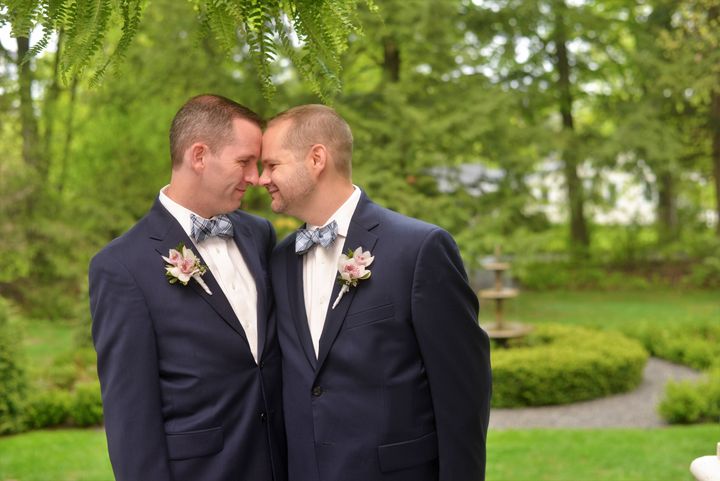
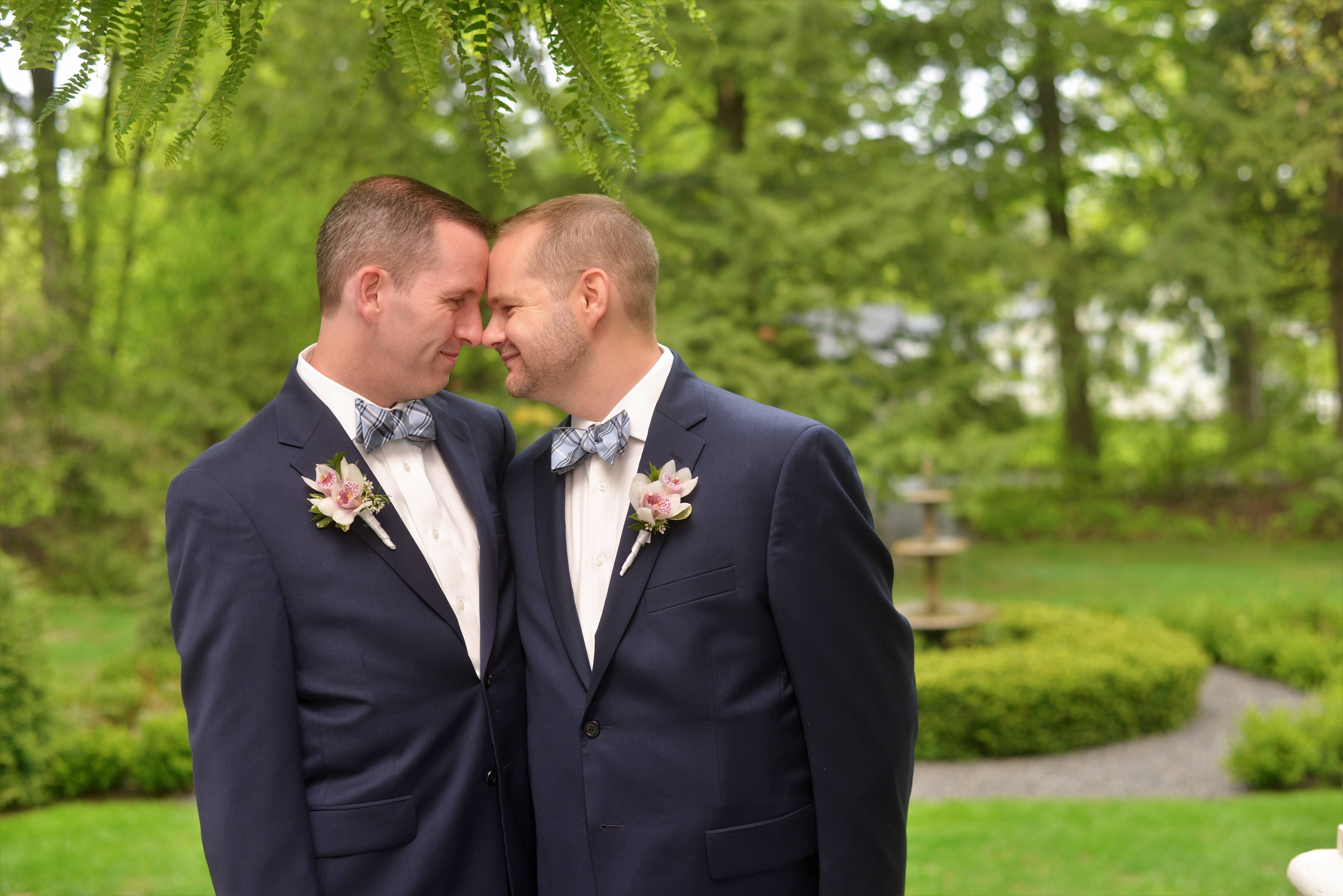
The author and Michael on their wedding day, two years after their vacation at the nudist camp.

Courtesy of Mark Jason Williams

The author and Michael on their wedding day, two years after their vacation at the nudist camp.

Mark Jason Williams has written for The Washington Post, Out, and Salon. He is working on an essay collection, “You’d Be Cuter with a Deeper Voice,” hilarious and heartbreaking tales of growing up gay and Catholic, facing leukaemia, and how having a high-pitched voice wreaked havoc on his love life.

Share Button

The Funniest Tweets From Parents This Week (Jan. 6-12)

Share Button

Sophie Ellis-Bextor Soars Even Further Up The UK Singles Chart Thanks To Saltburn

Her 2001 hit Murder On The Dancefloor is featured prominently in the divisive film’s final scene, which has led to the song ricocheting back into the top 10, landing at number eight last week.

On Friday afternoon, the Official Charts Company confirmed that Murder On The Dancefloor had risen even further this week, missing out on the top spot by just one place.

This puts the track in the same chart position it reached upon its release more than 20 years ago, when it was held off the top spot by Daniel Bedingfield’s Gotta Get Thru This.

Can the continued popularity of Saltburn push Sophie’s track to a new peak next week, and finally hit number one? We’ll have to wait and see.

Sophie previously said of her song’s renewed chart success: “One thing I’ve always loved about my work is its ability to surprise me.

“Murder On The Dancefloor is a song I’ve been singing for 20 years, and I’m on really good terms with it. I love singing it, I love performing it and what’s happening at the moment is kind of magical, actually.”

But Murder On The Dancefloor isn’t the only 2000s hit that Saltburn has helped propel into the charts.

Saltburn is available to stream now on Amazon Prime.

Share Button

Tories Slammed Over UK’s ‘Nose-Diving Domestic Human Rights Record’

The Conservative government has been criticised over the UK’s “nose-diving” record after a “dismal year for human rights”.

Human Rights Watch (HRW) has just torn into the UK over the government’s policy decisions from the last year, demolishing its action (or inaction) on migration, LGBTQ+ rights and its foreign policy – to name just a few.

In its 740-page World Report 2024, released on Friday, the specialists left no stone unturned – and concluded that the UK government “eroded domestic human rights protections and reneged on important international obligations.”

The UK director at the organisation, Yasmine Ahmed, added: “The UK had another dismal year for human rights in 2023.”

The report pointed to the government’s 2023 legislation criminalising protesters, the Public Order bill, and its attempts to introduce anti-boycott laws.

HRW criticised the parts of the Conservative Party which are still trying to pull out of the European Convention on Human Rights, so that it does not obstruct the Rwanda bill.

Then the scathing report moved onto the new legislation meant to ban those who arrive “irregularly” to the UK – the Illegal Migration Act.

It said this was a “flagrant breach of the UK’s international obligations, including under the UN Refugee Convention”.

“The UK had another dismal year for human rights in 2023.”

– Yasmine Ahmed, UK Director at Human Rights Watch

It also lashed out at the Tories for failing to “take meaningful steps to tackle institutional racism and address past wrongs” within the UK, including those still waiting for compensation from the Windrush scandal.

HRW noted the government had “failed to set social security payments at a level that ensures recipients can enjoy their rights and live with dignity” even amid an ongoing cost of living crisis. It noted how food bank usage, and homelessness, have increased, too.

It then moved onto women’s rights, noticing how the gender pay gap was still a problem, that there have been recent campaign efforts for the government to overhaul outdated abortion laws in England and Wales.

The specialists recognised that there’s been a surge in anti-LGBT violence in the UK too, and called out the “government’s undermining of protections for the rights of trans women and over-representation of LGBT people among the unhoused population.”

PM Rishi Sunak was slammed over the decision to backtrack on key climate policies too, and called to do more to “tackle racial disparities of climate change effects in the UK”.

Britain was praised for its actions highlighting Russia’s invasion of Ukraine – but HRW was swift to then criticise it for appearing to be “turning a blind eye to ongoing abuses” in Rwanda amid the plan to deport asylum seekers who arrive “illegally”.

The report added: “UK anti-immigrant policies at home have contributed to the government’s failure to resettle vulnerable Afghans.”

Finally, it touched on the UK’s abstention from a UN Security Council resolution in October calling for full humanitarian aid to Gaza, and the release of Hamas hostages amid the ongoing Israel-Hamas war.

And so, the specialists concluded: “The UK’s nose-diving domestic human rights record undermined its efforts to promote the rule of law and human rights globally.”

These findings come as the Conservatives continue to trail significantly behind Labour in the polls, and less than a year before voters are expected to head to the ballot box.

Share Button

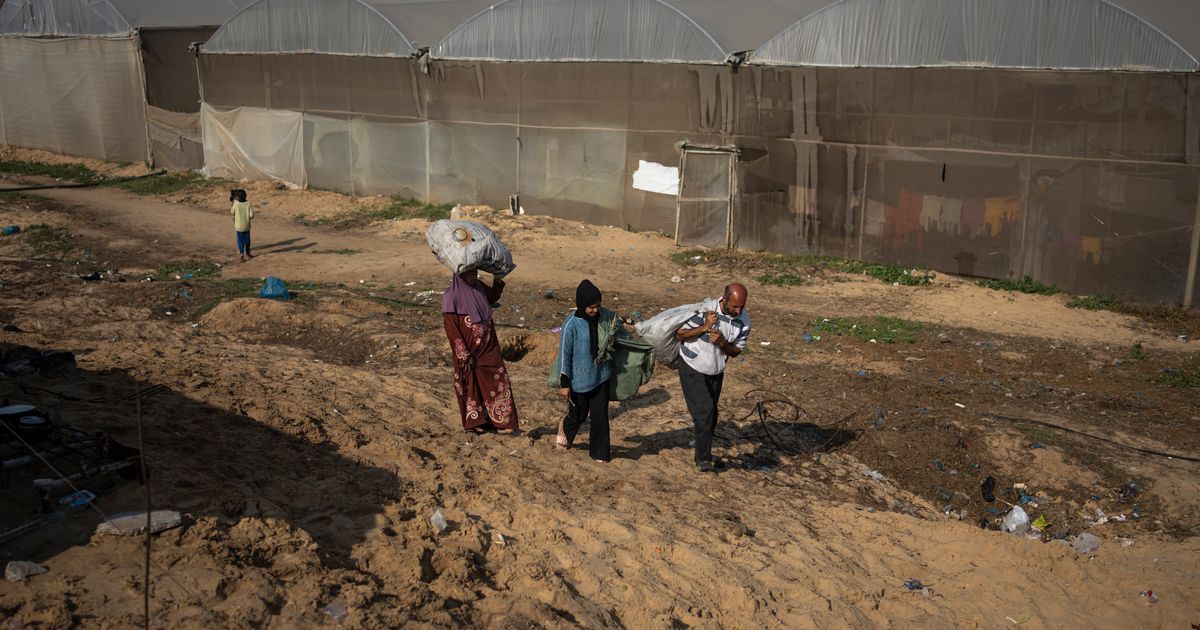

4 In 5 People Facing Famine Around The World Are In Gaza

South Africa’s lawyers have told the International Court of Justice that 80% of global famine is in Gaza right now amid the IsraelHamas war.

As part of South Africa’s legal argument accusing Israel of genocide against Gaza – which Israel has completely denied – lawyer Blinne Ni Ghralaigh, said: “It’s becoming ever clearer that huge swathes of Gaza, entire towns, villages, refugee camps, are being wiped from the map.

“As you have heard but it bears repeating, four out of five people in the world in famine, or a catastrophic type of hunger, are in Gaza right now.

“Indeed, experts warn that deaths from starvation and disease risk significantly outstripping deaths from bombings.”

This statistic comes from a December report released by the UN-backed Integrated Food Security Phase Classification, which found 577,000 people are facing famine in the Palestinian territory.

The report also found that the proportion of households in Gaza currently in a hunger crisis, or experiencing acute food insecurity, is the largest ever recorded globally.

It claimed the entire 2.3 million population are facing a growing risk of famine, and that 1.9 million people – 85% of the population – are displaced within the territory.

“There is a risk of famine and it is increasing each day that the current situation of intense hostilities and restricted humanitarian access persists or worsens,” the report said.

Trucks carrying aid have been arriving in from Egypt, but the UN says it’s offering just 10% of what the territory needs.

After the Palestinian militants Hamas killed 1,200 people on Israeli soil and took 240 others hostage (on October 7), Israel declared war, put Gaza under siege and began to bombard it.

According to the Hamas-run health ministry, more than 23,000 people have been killed in Gaza since the war began.

In its case against Israel, Pretoria claimed the country failed to provide food, water, medicine and essential assistance to Gaza.

Israel has argued that it is in a war against Palestinian militants not the civilians.

Israeli PM Benjamin Netanyahu also said this week: “I want to make a few points absolutely clear: Israel has no intention of permanently occupying Gaza or displacing its civilian population.”

Share Button

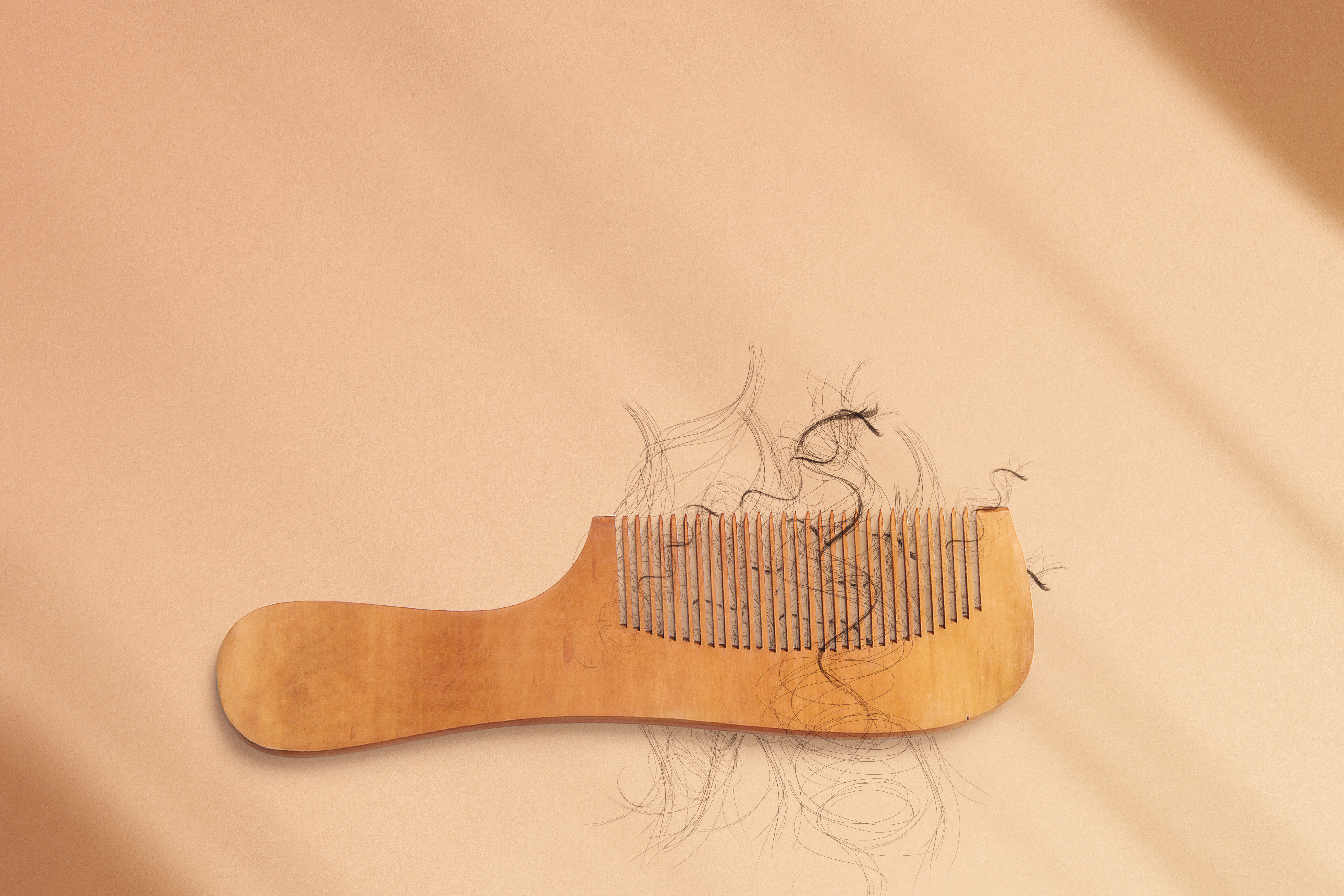
So THAT’s Why We Lose More Hair In Winter

The temperatures are plummeting, we’re trying to keep nice and cozy and for some reason… we seem to be losing more hair than normal?

While we sometime notice changes to our hair growth and thickness at certain points in the year (hello summer shine amirite?), it can be alarming and distressing when unexplained.

So what the heck is going on with this winter hair loss? We spoke to Dr Sara Perkins, Advisor of Dermatology for Hims – the digital health platform connecting patients to licensed healthcare professionals in the UK – to get the lowdown on seasonal hair loss.

The good news? Although it’s incompletely understood, there is some data to support the notion of seasonal hair loss.

Changing levels of ultraviolet radiation or temperature may shift follicles from the growth phase into the resting, and subsequent shedding, phase.

One study found the highest number of follicles in the telogen (resting) phase in July, with another smaller peak in April. Hairs are typically shed at the end of the telogen phase, roughly 100 days after it begins, corresponding to the shedding in autumn that many people anecdotally notice.

According to Dr Perkins, seasonal hair shedding, and most cases of telogen effluvium, are self-limited and new hair re-grows.

However, if you’re noticing prolonged shedding, or start to see thinned hair density across the scalp, it’s important to seek an evaluation to consider other potential explanations, including genetic and hormonal factors, as in androgenetic alopecia.

Androgenetic alopecia can progress slowly and subtly at first, but may become more noticeable after a shedding event occurs.

Is there anything I can do?

If you want to be an active part of solving the problem, there are treatments available.

Topical minoxidil helps to shift follicles from the resting phase back into the growth phase, and also stimulates increased blood flow or circulation to the follicles themselves to support healthy growth.

Dihydrotestosteron (DHT) can damage hair follicles by shrinking them down, resulting in thinner, finer hairs. Finasteride blocks the conversion of testosterone to DHT, preventing further damage and stimulating healthy hair growth.

Because they work differently, combination products, like this topical finasteride and minoxidil formulation, allow people to benefit from both treatments at the same time.

Day-to-day hair care practices and exposures can also vary seasonally and impact the hair’s appearance. In summer, it’s all about protecting your hair from the sun’s harmful UV radiation.

Exposure can damage proteins like keratin and disulfide bonds, leading to increased fragility and frizz.

And sorry swimming lovers, but chlorine exposure from swimming can dissolve lipids within the hair shaft as well.

In the winter months, wearing hats and scarves may create friction, which can contribute to strand fragility and breakage. Finding the perfect balance between weather protection and a vibrant appearance is the key to conquering winter hair blues.

Understanding seasonal hair shedding provides valuable insights into the dynamic relationship between environmental factors and hair health. While some shedding is a natural and cyclical process, persistent or excessive shedding, or visible hair thinning, may require more attention and professional consultation.

Share Button

Is Period Underwear Right For Your Kid?


If you have a child who’s going to menstruate, it’s possible that they’ve started thinking about it before you have. Whether they’re excited to experience this rite of passage or anxious about the possibility of embarrassing leaks, tweens and teens today have more resources and options available to them than we did at their age.

One potentially helpful innovation is period underwear.

Period underwear has been a great revolution, especially for young people,” Dr. Meredith Wise, an Ob/Gyn at the University of North Carolina, told HuffPost.

They’re discreet; they look like normal underwear, but have a highly-absorbent lining that holds liquid. They also generate less waste than pads and tampons, which appeals to young people who are concerned about the impact their choices have on the environment.

One of the first period underwear brands to come on the market was Thinx, which has a product line designed for teens. Of course, if you decide to go this route, your teen should wear whichever period underwear works best for them, regardless of how it’s marketed. Other brands include: Aisle, Cora, Proof, Rael, Saalt and The Period Company. Knix and Modibodi sell period swimwear in addition to period underwear.

Felicia Macdonald, VP of Strategic Communications and Public Affairs at Thinx, told HuffPost that their product is made with cotton and “can hold up to five tampons or two-and-a-half regular pads’ worth of flow.”

“They’re just as comfy as regular undies and can be worn alone or as back up with other period products for extra leak protection,” she continued.

If your child’s cycles are regular (note that irregular cycles aren’t abnormal), they can wear the underwear in anticipation of their period starting, or as often as they like.

The main disadvantage of period underwear is that it isn’t cheap. Of course, neither is a year’s worth of disposable menstrual products — but you don’t have to pay for all of those up front, and, increasingly, schools and other institutions are making them available for free in restrooms.

Depending on how many pairs you need per day and how often you’re able to wash them, building up a stash of period underwear costs considerably more than a 6-pack of briefs from your local big box store. Prices range from $12-39 per pair.

If your kid needs to change pairs midday to manage their flow, then they’ll have to carry a used pair around with them to bring home.

Some young people may not be too keen on taking care of clothing with different washing and drying instructions than their other clothes. And some parents may end up with a little more work added to their laundry duties.

To get the longest life out of period underwear, you’ll need to follow the manufacturer’s care instructions. Thinx recommends washing their underwear on a cold, delicate machine cycle, or by hand, using mild detergent, then hanging or lying flat to dry. When cared for properly, Thinx says their underwear will last for 40 washes, or approximately two years of use.

Some users also rinse their underwear in the sink or shower before washing. Avoid fabric softeners, bleach and the dryer. It’s okay to wash your underwear with other clothing — the blood won’t stain the other items in the washer.

If you do choose to buy period underwear for your child, it’s not a bad idea to also teach them how to do laundry. Ellen Friedrichs, health educator in Brooklyn and the author of “Good Sexual Citizenship: How To Create A (Sexually) Safer World,” says that the pre-pubescent years are a great time for this, if you’re lucky enough to have a washing machine at home.

This helps “to give them body privacy, not to help you out as a grown-up, but to gain privacy around things like periods and wet dreams,” said Friedrichs.

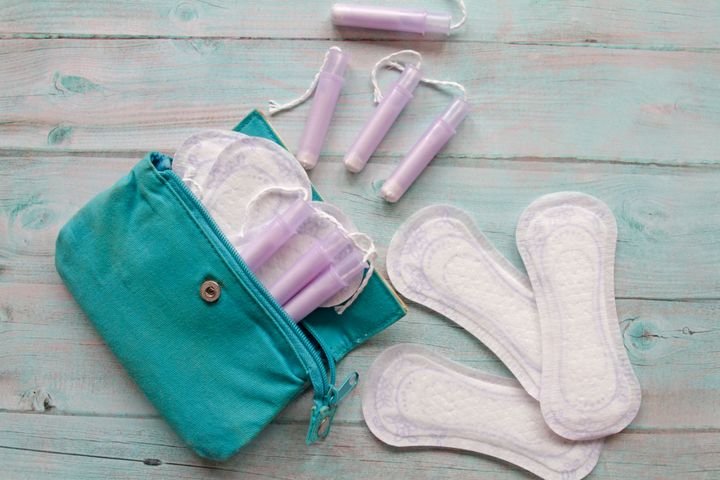
Every menstrual hygiene product has its own advantages and disadvantages.

Isabel Pavia via Getty Images

Every menstrual hygiene product has its own advantages and disadvantages.

Of course, there are also other options.

“Pads are traditionally the first go-to,” said Wise. “They’re easy to explain, they’re easy to get.” And they’re what the school nurse likely has on hand.

But some teens find pads uncomfortable. They may say it feels like wearing a diaper, or worry about others noticing the outline of the pad through their clothing.

“I like to reassure people that you normally can’t see a pad. But even if, psychologically, you think someone can see a pad through leggings,” said Friedrichs, period underwear “might give you that sense of comfort that nobody can see that this is happening.”

Tampons, cups and discs “can be useful for people with active lifestyles” and for swimming, said Wise. “But they do just take just a little bit more education and finesse.”

What else should your tween/teen know about menstruation?

Wise says that most people get their first period between the ages of 11 and 13, but it can also happen in the years before or after. A person usually has a first period two to three years after the first signs of breast development, “which can just seem like a little puffiness around the nipples,” said Friedrichs.

“It’s really hard to predict what a first period will look like,” Wise explained. Blood may be red or brown, flow light or heavy, and the person may or may not have other symptoms such as bloating or cramps.

“Sometimes people are nervous that it’s going to be like turning on a tap, and that you’re gonna have this rush of water, but it’s really, for most people, more like a drip,” Friedrichs said.

People can expect their periods to be irregular for the first year or two of menstruation. They may come 21-45 days apart, and may not be the same number of days apart each cycle.

The hormones that the brain makes to tell the ovaries to make oestrogen and progesterone hasn’t found its rhythm yet,” said Wise. “Ovulation is not part of every cycle.”

While there is plenty of variety in what’s considered normal, Wise says there are several reasons to bring a tween or teen to the doctor:

  • No periods by age 15, or 3 years after breast development
  • Periods more than three months apart
  • Bleeding longer than seven days per cycle
  • Heavy bleeding that requires changing menstrual products every two hours
  • Any symptoms that interfere with their lifestyle or their quality of life

“Nobody should feel like they can’t go to school,” said Friedrichs, whether due to heavy bleeding, pain, or other physical or emotional symptoms they’re having with their cycles.

“For pain with periods, a lot of it is considered normal — but that doesn’t necessarily mean that it’s something that we have to put up with,” said Wise.

A doctor can recommend different options for treating period pain and other symptoms, and adults should remember that even if they lived with significant menstrual discomfort, that doesn’t mean a child needs to. (While many teens fear going to the gynaecologist, thinking it means they will need a pelvic exam, Wise said she performs “surprisingly few” of these exams on patients under 21.)

As for leaks and stains, Wise said “the most important thing is to anticipate it and to know that at some point it happens to everyone.”

“It’s a very normal experience. Especially those first few years, it’s hard to predict when you’re going to have your period,” she said.

Having back-up underwear and pants at school can help, but the old trick of tying a sweatshirt around your waist works just fine too.

Friedrichs tells her students, “most of us have had this happen if we’ve had our periods. And there’s a lot of uncomfortable things that happen when you’re going through life with the human body, and that’s gonna possibly be one of them. And doesn’t mean that you’re gross or dirty or bad.”

Share Button

The Most Hygienic Way To Pee On A Plane

With a new year, many people are making plans for their holidays in 2024 and it’s safe to say we’re excited to hop on a plane.

Still, the idea of spending hours in a metal tube with dozens ― if not hundreds ― of strangers understandably might not feel super-appealing. Being forced to share a small number of tiny bathrooms with them is even less so.

Thankfully, there are ways to minimise the spread of germs in the lavatory. Below, health and travel experts break down the most hygienic way to use the bathroom on a plane.

Disinfect surfaces.

“As an infection prevention specialist and someone who travels a lot, I have a routine when I fly,” said Michelle Barron, the senior medical director of infection prevention and control at UCHealth in Colorado. “When I sit down in my seat, I use a disinfecting wipe to wipe down the armrests, tray table and anything else that someone may have touched. Then I use hand sanitizer to clean my hands. The same routine works for a bathroom.”

Barron advised using disinfectant wipes on any lavatory door handles, lids and sinks before touching them.

Philip M. Tierno, a professor of microbiology and pathology at New York University’s Grossman School of Medicine, noted that although skin is a natural barrier to germs, he suggests traveling with a small tube of disinfecting spray for areas like the airplane bathroom.

“I would use Lysol spray on the seat before sitting on it,” Tierno said, then wait about a minute and wipe it off with a paper towel or face tissue. “The friction caused by the rubbing process as you wipe helps remove most debris there as well as many germs.”

Touch as little as possible.

Make sure you have a barrier between your bare hands and any surfaces you have to touch.

“The restroom likely holds a higher number of germs, and it is used by more people,” Barron said. “So it is important to limit contact with surfaces and use a disposable item like a paper towel to touch any door handles, toilet lids or handles, sinks, etc.”

Jagdish Khubchandani, a professor of public health at New Mexico State University, advised putting tissues on the toilet seat or paper seat covers if they’re available. Dispose of them when you’re finished.

“This helps maintain hygiene and saves others who follow a lot of hassle,” Khubchandani said. “Open the door with the tissue paper or wipes when exiting the lavatory. Put these tissue papers in trash.”

Consider not using the toilet paper to wipe.

“My biggest airplane bathroom hack is using the airplane tissues instead of the toilet paper,” said Brenda Orelus, a flight attendant and founder of Krew Konnect.

Earlier this year, Orelus posted this bathroom hack in an Instagram reel in which she explained that toilet paper is generally more exposed to liquids because it is usually located at a lower level.

“The tissue paper is typically located at eye level on commercial aircrafts,” Orelus told HuffPost. “Significantly increasing the likelihood that any liquid splashed on it is in fact just water.”

Close the lid before flushing.

We know that infectious microbes can spread through “toilet plumes” ― the dispersal of particles caused by flushing a toilet. These toilet aerosols can be vectors for diseases, including COVID-19.

There’s a simple way to help combat this.

“You can close the toilet’s lid before flushing to avoid spreading germs into the air during the flush cycle,” Barron said.

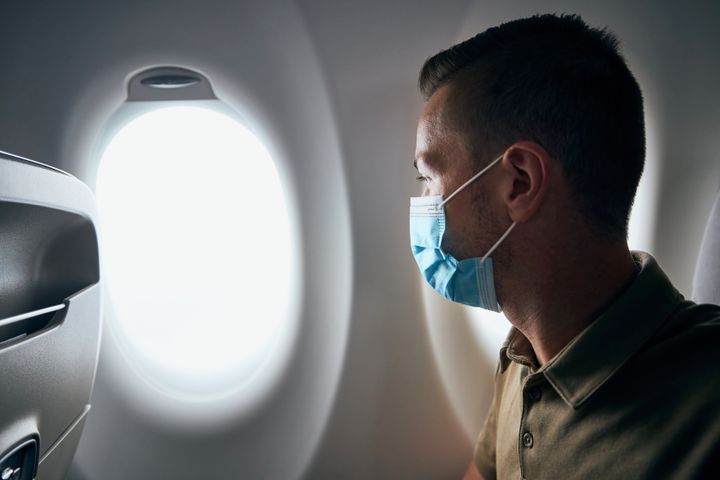
Practicing good health hygiene on a plane will also keep your bathroom trips as clean as possible.

Jaromir Chalabala / EyeEm via Getty Images

Practicing good health hygiene on a plane will also keep your bathroom trips as clean as possible.

Wear shoes.

“On long duration flights, I have noticed people ― often, kids ― walk barefoot towards or into the bathroom,” Khubchandani said. “This is a very unhygienic tendency with potential for infection if someone has skin cuts and injuries on their foot. Also, you stay with the germs on your skin from the restroom for the entire flight unless you wash feet, which doesn’t happen much.”

He also suggested rolling your hems at the bottom if you’re wearing sweatpants or other long, loose garments to avoid droplets of urine, bits of tissue or other waste from getting on your clothes.

“Everything from the waist down is in an area where turbulence can lead to poor aim,” Orelus noted. “So no, it’s unlikely the liquid on the floor is water.”

Sanitise your hands.

Washing your hands thoroughly and frequently with soap and water is an important way to prevent the spread of germs. However, studies have suggested airplane lavatory water can be quite poor in quality.

“The reservoir of water in the bathroom tank can be grossly contaminated,” Tierno said. “As such, I would use 62% alcoholic gel to sanitize your hands rather than using the bathroom sink water.”

Avoid touching your face or mouth in the bathroom before cleaning your hands. The same goes for other steps of your travel journey.

“I’d also recommend keeping hand sanitiser nearby to use before and after eating or touching your face,” Tierno said.

Clean up after yourself.

“While going to the restroom, be considerate about others who may follow,” Khubchandani said. “We often don’t think about this or assume someone else will clean. This is disrespectful to other passengers and flight attendants if they have to clean up for us. So, flush as you go, dispose of trash in cans designated for waste, wipe the sink area and clean the toilet bowl if pieces of tissue or urine are spread around.”

He also advised using a different lavatory and notifying the flight attendant if you enter a bathroom and find previous passengers have left an overwhelming mess.

Share Button

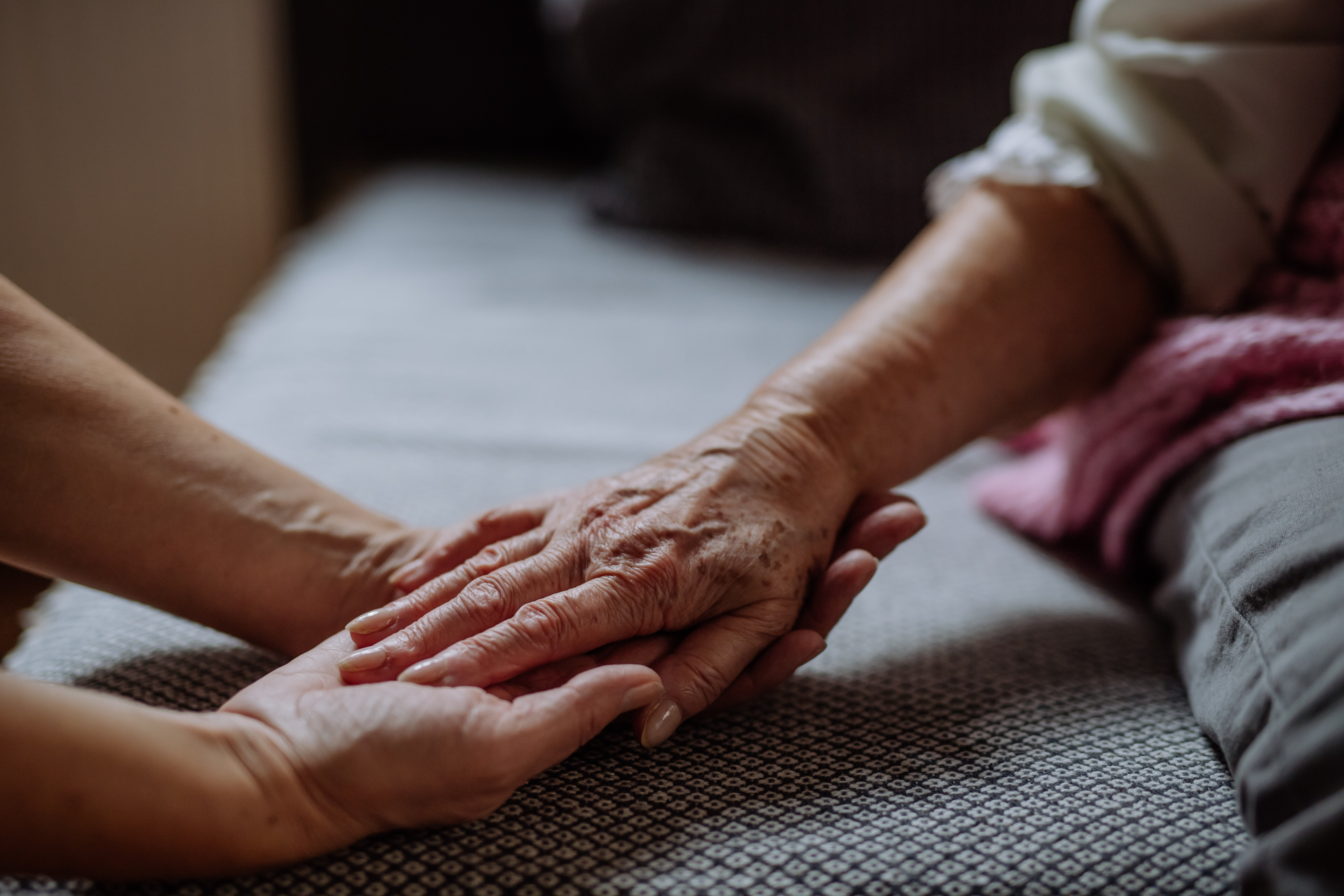
Dementia Has Turned My Family’s World Upside Down, And I Don’t Know How Much More I Can Take

My oldest sister, Abby, calls for the second time this morning. “Oh, Jannie!” she says, reverting to my baby-sister nickname. “It’s so great to hear your voice, finally! Are you in Idaho now?”

“We sure are,” I answer, in the same tone that I answered the same question earlier. It’s been over a year since I relocated, not long after I helped Abby and her husband transition to assisted living. I can picture her perched on the loveseat in their tiny apartment, its walls vivid with her paintings, sun streaming in from windows that look out over California foothills. “How are you guys?” I ask.

“Oh, fine! We just got back from … where we eat.” She means the dining room, but she falters. Then, brightening: “Are you in Idaho now?”

Our conversations circle like this now, their loops gradually shortening, spiralling cheerfully along the surface.

According to Alzheimer’s Association, Abby is one of 6.5 million Americans living with the disease. When she was diagnosed, I was heartsick. One of the few consolations I clung to was that my other sister, Sal, and I could sustain each other through the long goodbye.

But it turns out that Alzheimer’s is not the only type of dementia. Others include dementia with Lewy bodies, vascular dementia and Huntington’s disease. There are other conditions that cause mental confusion or disorientation, sometimes temporarily, as can occur in older people who have urinary tract infections. With other afflictions, dementia is permanent and progressive. One such disorder is corticobasal degeneration. I discovered that when Sal, my next-oldest sister, was diagnosed.

Growing up, I was the baby of the family. Abby, 12 years my senior, was for me the embodiment of glamour. Sal, seven years older than me, was my mentor and de facto nanny. I dogged both my big sisters’ steps as much as they’d let me, observing them with a mixture of envy and hero worship. I revelled in their attention when they would dress me up like a life-size doll, until I grew restless and they’d hiss at me to “hold still!” Other times, when they thought I was getting off too easily for whatever annoyance I’d caused, they’d take me out of Mom’s earshot and scold me themselves. It worked: my sisters were my role models, and I craved their approval more than I did that of my parents or, later, even my friends.

I thought Abby could do anything. Sidestepping our domineering father, she put herself through college, becoming an artist and teacher. I was five when she left home, and our house felt semi-becalmed in her absence.

After Abby left, Sal did nearly as much to raise me as did my mother, who so often deflated in the face of my father’s vehemence. It was Sal who taught me how to clean a bathroom, how to bake a cake, how to be a good friend, and how to drive her ’67 Camaro the summer I turned 16 and she was home for a visit. Later, as the three of us were figuring out how to raise our sons — coming from a family of all girls, we were somewhat mystified as we produced only boys — it was Sal’s house where we gathered for holidays and celebrations, for the memorials when our parents died.

Abby was in her mid-60s when her formidable mind showed signs of slipping. It took years, several fraught family meetings, and a long series of neurological assessments before Sal and I, along with the rest of Abby’s loved ones, had to face the reality of her condition. Like many people, we’d been schooled to believe that Alzheimer’s was something to be dreaded, a fate possibly worse than death.

As devastated as we both were about Abby, Sal was confronted with another life cataclysm when her 40-year marriage blew up. It turned out her steady, taciturn husband had been a serial philanderer for a dozen years. She emerged shaken and raw, as though whatever emotional insulation she’d had was wearing away, leaving her newly fragile.

Then one day I got a frantic call from the closest in Sal’s large circle of friends. “Something’s wrong,” the friend said. “Come see for yourself.”

I still lived in California at the time, 300 miles up the coast from where Sal lived. I drove down the next day. Sal greeted me at her front door, delighted to see me but startlingly thin. Her posture was hunched, her left arm contracted at an odd angle. A bruise, unsuccessfully disguised with makeup, spread across one side of her face.

“I had a little fall down the stairs,” she explained with a nervous laugh. “It’s not a big deal, nothing’s broken.” Her affect as well as her body seemed so frail that I kept my alarm to myself, but after our visit I conferred with her oldest son, who lived nearby. He too was concerned. He’d recently taken her out to her favourite steak place, where she’d had no idea that she’d rested her left arm in the middle of her entree until he pointed it out to her.

It took months for Sal to get appointments with a battery of neurologists, and even longer for the doctors to confer. Eventually, they agreed on a diagnosis. All the signs pointed to corticobasal degeneration, sometimes referred to as corticobasal syndrome.

I’d never heard of either. “Is that serious?” I asked Sal when she told me.

“It’s not good,” she answered. “But I’m going to make the best of it.” Her voice trembled with mixed fear and resolve, already weaker than it had been a few months earlier. “I’ll be OK,” she said. My heart cracked, understanding for the first time that she wouldn’t be.

“’Is that serious?’ I asked Sal when she told me. ‘It’s not good,’ she answered. ‘But I’m going to make the best of it.’ Her voice trembled with mixed fear and resolve, already weaker than it had been a few months earlier.”

I didn’t want to plague Sal with questions, so I pored over what little information I could find. What I learned is that the best to be said of corticobasal degeneration is that it is rare. It blights the brain’s cortex and basal ganglia, causing loss of balance and muscle control, impaired speech, the eerie “alien limb syndrome” — which explained how Sal’s arm wound up in her prime rib — and, as the literature blandly stated, “changes in thinking and personality.” It is progressive, incurable, and, unlike Alzheimer’s or Parkinson’s, no medication exists that slows it down. Ultimately, it is fatal. I wanted to creep into a cave, a refuge where I could process this new upheaval.

But Abby, once she’d learned that Sal was ailing, had many questions — rather, the same questions over and over, with which she besieged Sal over the phone. As the suddenly most capable sister, it fell to me to deflect her well-meaning assaults.

“What’s the name of what she’s got? Let me write it down,” Abby would ask every time we talked. Her refrigerator fluttered with Post-its, all of them with the name of Sal’s malady as I’d dictated it, inscribed in Abby’s graceful script.

Abby was as determined to fix Sal as she was unable. She obsessed over her scheme to move in with her now-disabled sister, leaving her husband — never able to countermand Abby’s will — at home. Sal was aghast but had neither the energy nor the temperament to head Abby off.

Again, intervention fell to me. It demanded new skills, including therapeutic lying, as I invented reasons why the upcoming week wouldn’t be a good time for Abby to go stay with Sal, week after week, month after month.

These days, so long as I don’t bring up Sal and her illness when we visit, Abby seems happy. Her body is strong, she can draw and paint, and thanks to her devoted husband, she doesn’t require the kind of memory care that is designed to both protect and restrict patients who are prone to wandering. She loves her new home, including the dining room where, as far as she’s concerned, the menu changes with every meal. It’s possible that Abby is more content now than she was when her brain was firing on all its cylinders.

Sal’s decline, by comparison, is cruel. I’ve helped her son move her to upgraded care three times as she has diminished. Her current facility is the best available in her area, providing round-the-clock care. She can summon help with the push of a button on a lanyard around her neck. But she has so little control over her limbs now that sometimes she can’t find the button, or she pushes the TV remote instead. She can no longer walk, stand or sit up unaided. She insists on feeding herself but it’s difficult to watch; choking is always a danger. Her speech has further weakened, her words slurred and halting to the point where they’re often indecipherable.

I travel to visit her, and within minutes of my arrival she makes plaintive requests, as poignant for their simplicity as they are unrealistic.

“Can you bring me my sewing machine? What if we hop in your car and go to lunch?” she asks, her blue eyes wide with hope. The disease’s assault on her brain leaves her unable to register the scope of her disability or relinquish her identity as someone who can operate a sewing machine or hop in a car. It’s a symptom that causes more distress — for her, for her caregivers, for her loved ones — than her physical limitations.

I manage to change the subject every time, and we laugh together over the stories she recounts from our childhood. But soon she tires, her eyes unfocused and half-shut, her words devolving into incoherent mumbling. Still, she continues talking on and on. Ashamed of my limited patience, I find an excuse to leave, assuring her I’ll return soon.

I don’t talk much about this. Chronic, long-lasting tragedy is unnerving; nobody knows what to say in response to my stories. Friends tell me I’m strong, that I’m handling it well. I am not, I want to say but don’t: I’m a lost little sister wandering the shores of calamity.

But I’m no longer the baby of the family, so I must do what I can. For Abby, I can meet her where she is, revisiting each topic or question however she reframes and repeats it, again and again. For Sal, I can hang on a little longer when I can’t understand a word she says, or when her descent is so dizzying it makes me want to escape rather than bear witness to it.

In my weaker moments, I fret over an unanswerable question: will my brain fail me too? I don’t often allow myself to go there. My sisters’ dementias have flipped our birth order, and it’s now my place to be the steady one, the big sister among us, for whatever time we have left together.

Jan M. Flynn’s essays appear on Medium.com and on her blog at JanMFlynn.net. Her short fiction has won international awards and appears in literary journals including Midnight Circus, The Binnacle, Noyo River Review, Far Side Review, Grim and Gilded, and Bullshit Lit as well as anthologies. She is also the host and producer of a weekly podcast, “Here’s A Thought,” for people who overthink. She lives in Boise, Idaho, and is represented by Helen Adams of Zimmermann Literary, New York.

Share Button