If there’s one thing we all know about life, it’s that nothing is ever simple. We all make mistakes, things inevitably go wrong, so how is best to react when these issues do crop up? And how can we, as parents, help our kids navigate these tricky waters?
Caroline Leaf is a cognitive neuroscientist, mental health expert, and mum of four. She recommends something called ‘the Neurocycle’ which is essentially five steps for mind-management when things go wrong, that both parents and children can use.
Advertisement
Leaf, who authored the book How to Help Your Child Clean up Their Mental Mess, explains that the Neurocycle is a five-step process that harnesses the brain’s ability to change and can help children develop their mental resilience and manage their mental health.
“A great way to explain this process to your child is by telling them that the Neurocycle is like having a superpower, one that they can use throughout their life when they feel sad, when they’re mad or upset, or even when they are happy and just want to learn something new,” Leaf tells HuffPost UK.
It’s all about transforming negative or disruptive thinking patterns into healthy thoughts and habits.
“We all have ‘messy’ minds as we manage the daily struggles of life,” she says. The Neurocycle is a way to control that “mess” and “optimise resilience with brain-boosting strategies and practices like gratitude, joy and kindness”.
Advertisement
What are the steps?
1. Gather awareness
Gain a comprehensive understanding of how you’re feeling mentally and physically.
“Consider any warning signals that take shape through your behaviour, because this means your body is trying to tell you something important,” says Leaf.
2. Reflect
This bit is all about taking a step back and considering why you’re feeling the way you do.
3. Write, play or draw
Organise your thinking and reflections to gain insight.
“For adults and older kids or teens, write down your reflections. For younger children, it might make more sense to draw or play to bring subconscious feelings to light,” says the neuroscientist.
4. Recheck
Once you’ve created a clearer picture of how you’re feeling, accept the experience and think about how you can view it in a new light, so it no longer controls how you feel.
5. Active reach
This involves a thought or activity that distracts you from the negative emotions and keeps you from getting stuck with your toxic patterns.
How do I do this with my kids?
First, help your child gather awareness of how they are feeling by observing their warning signals more deeply. For example:
Advertisement
“I feel worried and frustrated” = emotional warning signal.
“I have an upset tummy” = bodily sensation warning signal.
“I want to cry and not talk to anyone” = behaviour warning signal.
“I hate school” = perspective warning signal.
Now, walk them through the reflecting stage, helping them consider why they feel this way, and then write, play or draw what they feel, which will help them better understand what their warning signals are pointing to.
During this stage you can encourage them to ask themselves questions like: Why do I feel sad and frustrated? Why is my tummy sore? Why do I want to cry and not talk to anyone?
The fourth step, recheck, requires parents to encourage children “to explore their feelings and thoughts and try to find a way to make what happened to them better,” says Leaf.
So, for example, if a child is worried about a bully, you could offer them another way to look at it. Leaf suggests you could say something like: “Maybe the bully is dealing with some issues at home, or maybe someone else is bullying them.
Advertisement
“All of their frightened energy is resulting in them treating you in an unkind way. That doesn’t make it right, but it may help you feel sorry for them and walk away without feeling bad about yourself.”
And lastly, active reach is a bit like taking a treatment or medicine each day to help their thinking and feelings get better.
“Help your child come up with ways they can do this when they are feeling overwhelmed or unwell,” suggests Leaf.
“This step is characterised by actions and things your child can do that are pleasant and happy, which stabilise what they have learned and anchor them in a peaceful place of acceptance.”
The last step is all about teaching children to try and look for solutions instead of getting “stuck in their emotions”, concludes the neuroscientist, which is important for building their mental resilience.
Back-to-school season is full of anticipation for both kids and parents. New teachers, new routines and new friends are all exciting but can also provoke anxiety for everyone involved.
HuffPost asked therapists who work with parents about what issues they tend to bring up this time of year. Here’s what they said.
Advertisement
Kids’ learning needs
Though few pandemic-related educational shifts were positive, one potentially helpful development was that when students learned at home, parents got a chance to see what was going on in their classrooms and how well their particular academic needs were being served.
Post-pandemic, many parents’ awareness of these issues – and their stress levels – is still heightened.
“Parents got to see: This is how my child learns. This is how my child engages with their classroom,” Mercedes Samudio, a licensed social worker and author of Shame-Proof Parenting, told HuffPost.
As a new school year begins, some parents may worry that their children will run into issues they’d faced in previous years or that a teacher won’t be attentive to their child’s particular learning needs.
Advertisement
Though it’s important to keep in mind any issues a child has had at school, it’s also critical to give each new relationship the benefit of beginning with a blank slate.
A different teacher or a different mix of students may bring out a side of your child you haven’t seen before. Also, don’t underestimate how much your child matures and changes from one year to the next.
Just because something was an issue in first grade doesn’t mean it will continue in the second grade.
Since you won’t be at your child’s side listening to what the teacher has to say, the best way to stay up-to-date with how things are going in the classroom is to have regular check-ins with your child.
“I’ve always encouraged family meetings. But I think having weekly check-ins, especially during the beginning of the school year, helps everyone to feel supported and set up,” Samudio said.
Advertisement
Your child will know they have this space to let you know about any issues, and you will also be able to identify other people they can turn to, such as a school counsellor or nurse, if they need help during school hours.
Samudio suggests adding the check-in to the calendar, just like any doctor’s appointment or athletic practice.
During these check-ins, try to ask open-ended questions – but stay away from the well-worn and often useless “How was your day?” That will often elicit a rote, one-word response (“Fine”). Here is a list of the kinds of questions that might help you get a sense of what your child’s days are like.
You want to give them an opening to express “a whole spectrum of emotions at the beginning of the school year,” not simply happiness, Samudio said.
She added that parents should try not to make assumptions about what their kids may be anxious about when it comes to milestones, such as the first day. Instead, ask, “What are you most looking forward to?” and “What are you least looking forward to?”
Advertisement
Neha Navsaria, a psychologist consultant with the Parent Lab and professor of psychiatry at Washington University School of Medicine in St Louis, suggested using a “I wonder what/how…” phrase with children.
This phrase, she told HuffPost, “is very inviting to young children because it is an indirect way to pose a question, but it comes out as a statement of curiosity (‘I wonder what it was like to be in a new classroom with a different teacher?’).”
The return of homework
One of the best things about summer for kids is forgetting about homework completely. This is often an equal relief for parents, who may feel pulled into a cycle of nagging and fighting over homework as soon as school begins.
“Keeping kids on-task with their school work can be a source of battles and power struggles between parents and children,” Navsaria said.
Conflict becomes more likely “when parents and children have different learning styles and organisational methods. This is further exacerbated when children have specific deficits in learning and organisation, such as ADHD, learning disabilities and developmental delays.”
Advertisement
She recommends that parents try to set aside their own assumptions and sit down for a moment to calmly problem-solve with their child.
“Parents can easily fall into a trap of assuming that their child isn’t taking something seriously at school and the parent is the only one thinking about it —which creates a burden on the parent and increases their stress. By opening up the discussion with your child, you may hear that he or she has plenty of thoughts about the situation, but they needed a sounding board and some guidance to move forward.”
For example, rather than assuming that a child doesn’t want to complete a project, a parent might be able to help them break tasks into manageable steps and schedule time to complete each one — with ample breaks between work sessions.
The spectre of school violence
It’s unlikely that there will be a shooting at your child’s school (their odds of being shot at school are about 1 in 10 million), but it’s almost certain that they will take part in a lockdown drill and rehearse hiding in the corner of a darkened classroom.
Such practices have come under criticism for a lack of effectiveness and the potential psychological effects they have on children, but they remain a regular occurrence in American schools.
Advertisement
Samudio said she has heard a number of parents worrying about the ways violence in our society will, directly or indirectly, affect their children. “The kind of violence that we have in the world — kids can’t be shielded from that anymore,” she said. In generations past, we might have assumed that schools were a safe space, but parents and kids today can’t rest in that comfort.
If you hear that there has been a lockdown drill (or an actual lockdown) at your child’s school, you’ll want to talk to them about it. But, again, don’t make assumptions, and let your child lead the conversation.
Ask questions like, “What did you do?” “Why were you doing it” and “How did you feel?” You don’t want to add any distress to their interpretation. At the same time, you want them to know that you’re open to hearing about any fear they may have.
The transition from summer to the school year
Though it’s natural for parents to be concerned about their child’s academic performance, there’s actually not much they can do to assess or improve their child’s skill level on their own.
School readiness, on the other hand, comprises lots of skills, many of which you can give your child the opportunity to practice at home. Being able to complete tasks like using the bathroom and opening their lunch box by themselves “help them feel autonomous and competent and independent in the school setting,” Sarah Bren, a psychologist in New York, told HuffPost.
Advertisement
Emotional regulation skills are also key, Bren said. “If a kid is feeling really anxious all day at school, you’re not going to take in anything even if you’re academically super ready.”
Helping kids practice emotional regulation can begin with simply helping them recognise and name their emotions. You can encourage this by offering labels for their feelings: “You seem angry right now. Are you feeling angry?”
Another way that you can help facilitate a smooth transition is to gradually move mealtimes, bedtimes and wake-up times so that the new schedule of the first day back doesn’t come as such a shock to the system.
“You’re just taking the changes you have control over and moving them up in the schedule a little bit [so they’re] not all happening at once,” Bren explained.
“You are transitioning from a more care-free and less scheduled lifestyle to a back-to-school mode, which is more regimented and scheduled,” Navsaria added.
Advertisement
“Without the daily structure of school anchoring a family, it is easy for parents to become lax with some of these rules [in summer]. This is not a bad thing, consistently reinforcing routines can be exhausting for parents, but it is important to acknowledge that it then makes the transition back to school routines more challenging,” she said.
Moving bedtimes back by 10- to 15-minute increments over a number of days can make this process easier.
Feeling overwhelmed
One thing most parents confront at some point during the back-to-school transition is a feeling of being overwhelmed: open houses, lunch boxes, musical instruments, team uniforms and an endless series of online portals, each requiring a new user name and password.
“This means more coordination of schedules and more communication of which to keep track,” Navsaria said.
“This can often leave parents in this state of high alert, feeling that they are going to miss an important announcement or their child will be left out of an experience,” she added.
Advertisement
The fear that we’re going to drop one of the balls that we’re juggling is very real — and it can help to admit this.
Bren likes the following image: “In the air, there’s a million balls. Some are rubber and some are glass.” It can be helpful, she said, to put “a little thought into which are glass and which are rubber because I think sometimes as parents, we don’t let ourselves distinguish those two things.”
Forgetting a violin or gym clothes, for example, are slips with minimal consequences – rubber balls that we can just let go.
But if we don’t allow ourselves the possibility of dropping any ball ever, “we’re much more likely then to accidentally drop a glass one. … It’s not possible to keep all these balls in the air. But if I give myself permission to sometimes drop balls, I’m going to be much more likely to say which are the ones I can drop and which are the ones I can’t.”
Samudio concurs, saying that one way for parents to reduce their stress levels is to hold themselves to more realistic expectations. An attitude of “everything is gonna go right as long as I planned it to a tee” is unrealistic, she said.
Advertisement
“Somebody probably will forget their musical instrument. Somebody probably will at the last minute need to do a project and you’ll have to go to Staples and get all that stuff. All of this will happen.”
“Being honest with yourself at the beginning of the school year” that such things will occur, Samudio said, and then not making a big deal about them when they do, can both lower your stress level and help teach your kids how to handle setbacks.
The best way to teach them to go easy on themselves is to show yourself a little grace in such moments. “They can see that you’re telling them to be nice to themselves, and you’re beating yourself up all the time,” Samudio said.
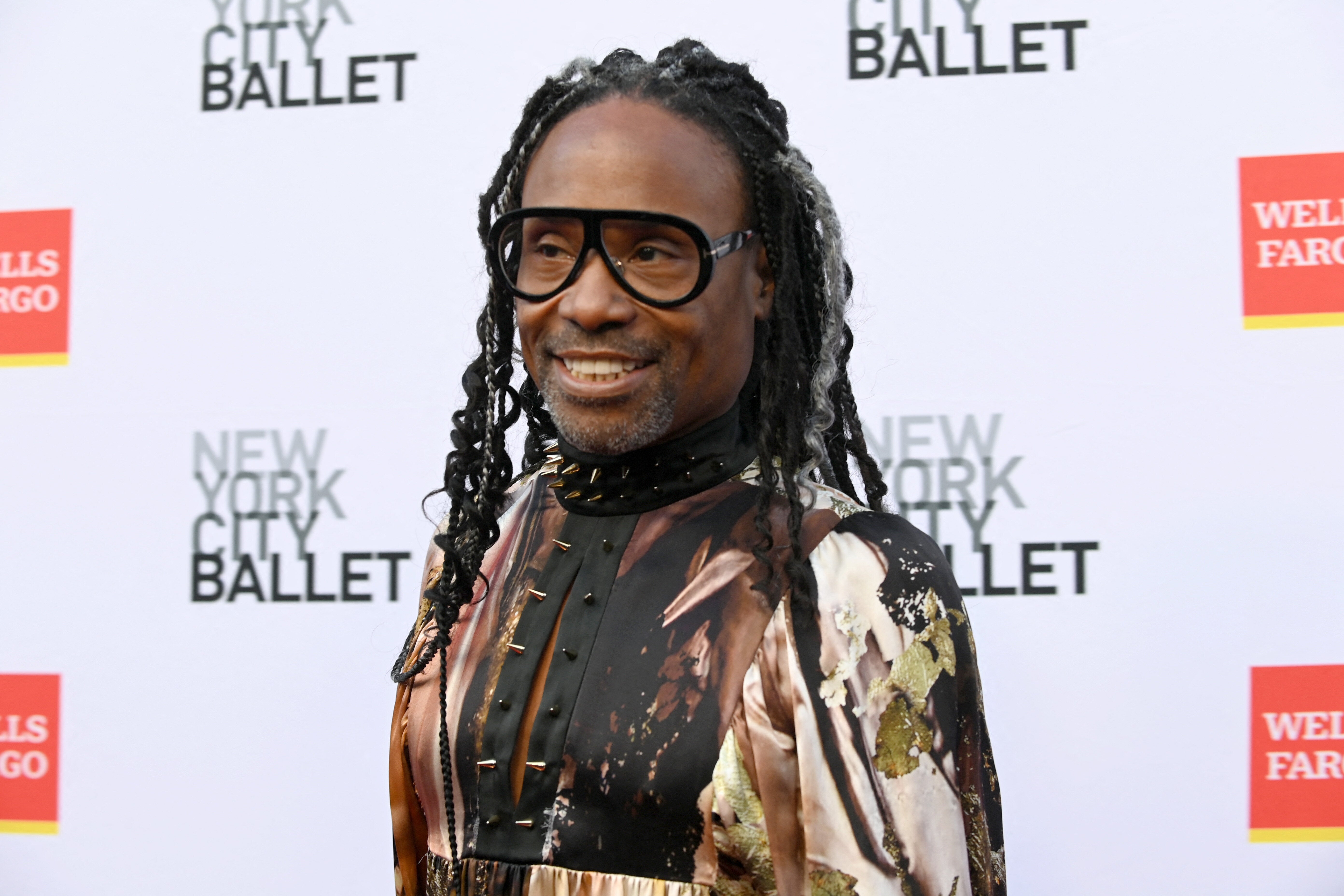
Billy Porter has revealed he is already feeling the effects of Hollywood being at a standstill amid the writers’ and actors’ strikes.
The Emmy and Tony-winning actor and singer told the Evening Standard last weekend that he’s feeling the pressure to downsize without any substantial income coming in for the foreseeable future.
Advertisement
“I have to sell my house,” he told the publication. “Because we’re on strike. And I don’t know when we’re gonna go back [to work].
“The life of an artist, until you make fuck-you money — which I haven’t made yet — is still check-to-check.”
Though Billy had anticipated working on both a new movie and a television series that had been slated to start in September, he said: “None of that is happening.”
“So to the person who said ‘we’re going to starve them out until they have to sell their apartments,’ you’ve already starved me out,” he added, referring to a much-circulated quote attributed to an unnamed Hollywood studio executive.
Advertisement
Prior to the Hollywood strikes, Billy Porter said he planned to take part in a new film and TV series this September.
MICHAEL TRAN via Getty Images
Actors have been on strike since 14 July. The Screen Actors Guild — American Federation of Television and Radio Artists (SAG-AFTRA) is seeking higher residuals from streaming platforms and stricter safeguards against the use of artificial intelligence, among other updates, from the studios as part of a new contract, but negotiations have stalled.
The Writers Guild of America (WGA), which represents Hollywood screenwriters, has been on strike since May 2. (HuffPost’s unionised employees in the US are represented by the Writers Guild of America, East).
Billy ― a 2019 Emmy winner for his portrayal of Pray Tell on Pose ― was speaking to the Evening Standard to promote his new album, Black Mona Lisa, and was careful not to address specifics of his film and TV work in the interview, according to the stipulations of the strike.
Still, he blasted Disney CEO Bob Iger’s headline-making claims that actors and writers are being “very disruptive” while making demands that are “not realistic”.
Advertisement
“To hear Bob Iger say that our demands for a living wage are unrealistic? While he makes $78,000 a day? I don’t have any words for it, but: fuck you,” Billy said, who is newly single.
“That’s not useful, so I’ve kept my mouth shut. I haven’t engaged because I’m so enraged. I’m glad I’ve been over here. But when I go back I will join the picket lines.”
A former Army officer who advised then-Homeland Security Secretary John Kelly during the Trump administration wrote that his “blood ran cold” after reading the latest indictment against the former president.
Kevin Carroll, who served as Kelly’s senior counsel while he led the Department of Homeland Security, authored an op-ed in The Dispatch on Tuesday, saying he was deeply troubled by the plot to keep Trump in power after he lost the 2020 presidential election to Joe Biden.
Advertisement
Special counsel Jack Smith indicted the former president on four felony charges related to that effort earlier this month, pointing to a multi-pronged conspiracy to remain in power and install a slate of fake electors in swing states around the nation.
Part of that effort, Carroll wrote, appeared to include acknowledgements from two of Trump’s co-conspirators — Jeffrey Clark and John Eastman — that military force may have been needed to see the plot succeed.
“As a veteran, my blood ran cold reading two particular passages in special counsel Jack Smith’s indictment,” Carroll wrote in the op-ed. “They suggest that part of the former president and his co-conspirators’ autocratic plan to remain in power, despite knowing that they lost the 2020 election, was to make the U.S. military choose between subservience to civilian control or refusing to undertake an anti-democratic domestic political role.”
“Clark & Eastman sought to have Pence nullify the results of the 2020 election in bad faith, anticipated that this unconstitutional act might lead to widespread unrest, & planned for the commander-in-chief to order federal troops to put down those riots”https://t.co/NbeCDXkgiP
Smith’s indictment includes conversations between co-conspirators who worried their effort to spread lies of rampant voter fraud would lead to “riots in every major city in the United States.” Clark — who is identified as co-conspirator No. 4 in the document — responded to that fear: “Well … that’s why there’s an Insurrection Act.”
Carroll said the indictment appears to show the military would have been placed in an “unthinkable” position, with generals “forced to choose whether to abandon an unbroken tradition of American military obedience to civilian control, or turn their guns on civilians to facilitate a losing candidate remaining in the White House beyond Inauguration Day.”
If Trump is convicted, he added, the potential harm of that act “should be taken into account in the former president’s sentencing.”
“The foreseeable consequences of Clark, Eastman, and Trump’s criminal plot would have been profound for the military and the nation,” he concluded. “I suspect the generals would have reluctantly chosen the first of the two bad options they faced. In either case, the republic would still suffer grave damage.”
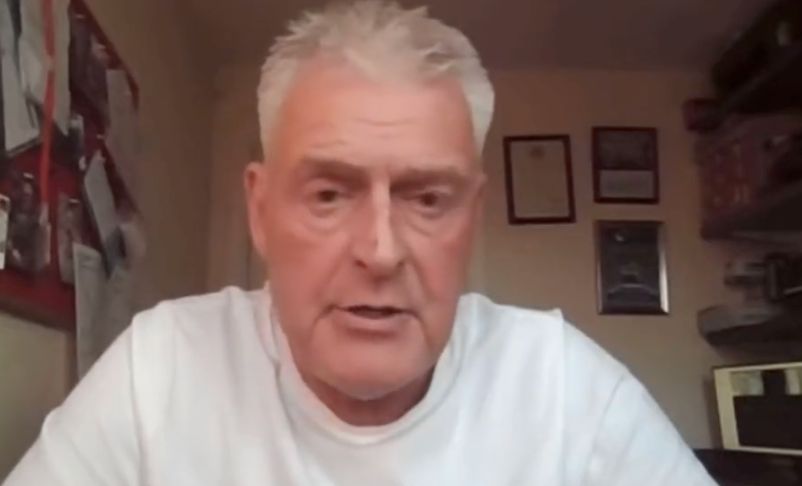
Tory deputy chairman Lee Anderson has admitted his party has “failed” to stop migrants crossing the Channel in small boats, despite Rishi Sunak’s pledge to end the journeys.
He said the situation was now “out of control” and that the Conservative government was to blame.
Anderson’s comments, in an interview with Nigel Farage on GB News, followed the row over his claim that migrants who do not want to board the Bibby Stockholm barge in Dorset should “fuck off back to France”.
Advertisement
He said: “I’m not going to sit here and make excuses to anyone. This is out of control.
“We’re in power at the moment, I’m the deputy chair of the Conservative Party, we’re in government and we have failed on this – there’s no doubt about it.
“We’ve said we’re going to fix it, it is a failure.”
Anderson insisted the Tories had policies in place to tackle the issue, but he added: “I know it’s a bit hard for the British public at the moment to actually understand what we’re trying to do with the Rwanda flights and the Illegal Migration Bill and it seems very slow, it’s cumbersome.
“We’re up against it Nigel, let’s be honest. We’ve got the lefty lawyers, we’ve got the human rights campaigners, we’ve got the charities – everything’s against us, but I’m not making excuses.”
Lee Anderson also admitted the government has “failed” to tackle the small boats issue.
“I’m the deputy chair of the Conservative Party, we’re in government, and we have failed on this. There’s no doubt about it.”
His comments are a further blow to Sunak in a week that was meant to showcase the government’s attempts to stop the boats.
Instead, they have been forced to deny plans to deport migrants to Ascension Island, while they also face legal challenges over the Bibby Stockholm, which has been dubbed a “quasi-prison” by opponents.
After a severe storm thwarted her Renaissance World Tour stop on Sunday night, Beyoncé and her team shelled out $100,000 (around £78,344) to make sure the Beyhive made it home safely.
The singer’s tour paid to keep all 98 Metro stations in the Washington, D.C., area open for an extra hour after the show at the outdoor FedExField was delayed due to heavy rain and lightning, a news release from the Washington Metropolitan Area Transit Authority said.
Advertisement
“Due to inclement weather that may delay the start of tonight’s Renaissance World Tour at FedExField, Metro will extend the last train by an extra hour beyond the extended closing previously announced,” the transit authority said in a statement.
“The additional hour will be funded by the Tour to cover the $100,000 cost to run more trains, keep all 98 stations open for customers to exit, and other operational expenses,” it added.
The thoughtful gesture came hours after fans had to take cover as a precaution because of the storm.
“Due to lightning in the area, we are currently under a shelter in place order,” the stadium wrote in a statement on X, formerly known as Twitter.
Advertisement
“Fans outside of gates and in the parking lots are asked to return to their cars. All fans inside of the stadium are asked to shelter in place under covered concourse areas and ramps until further notice.”
FedExField issued the shelter-in-place warning on social media at 6:40 p.m. The 29-time Grammy winner usually hits the stage just before 9 p.m. local time for her headlining set.
After fans heard word of the Break My Soul singer’s generous efforts, they took to X to gush over her “power”:
Beyonce gave metro 100k to stay open late so people could get back damn she has a different type of power lol
While fans waited for the advisory to pass, several people were treated for heat exhaustion and one person was hospitalized, ABC affiliate WJLA reported.
Advertisement
CNN reporter Abby Phillip, who attended the crowded venue that night, said “no one seemed to really know what the plan should be”, which caused a “chaotic” scene inside the stadium.
“It was very uncomfortable…I mean it was pouring rain for a while and there was lightning in the air, so they didn’t want to let to let anyone in and obviously the concert wasn’t going to start, but it was really chaotic and I think that was kind of the experience that I and so many other people had…the chaos and the crowd and the rain and the heat,” Phillip said.
“It was one of those moments where it was a great concert, but that experience was a little bit scary,” Phillip added.
The shelter-in-place order was lifted after fans waited around for nearly two hours, and ticket holders were cleared to return to their seats around 8:25 p.m., according to another post from FedExField.
Bey eventually kicked things off around 10 p.m. as she performed amid the continued rain, according to Setlist.fm.
The Oppenheimer actor let fans know via Instagram Stories last week that she now bears a distinct resemblance to a certain Food Network star.
Advertisement
“Sometimes when I get out of the shower I look like Guy Fieri and I love it,” she said, alongside a photo of her blond ’do styled in a fashion similar to the US restaurateur and media personality.
In a separate story, Florence told fans: “Just saying… could be the new mayor of flavour town. Or should I say… ’Flo’ver town.”
Florence debuted her shaved head at the Met Gala in May, accentuating her dramatic new look with a tall, feathered headpiece.
Advertisement
She later showed off a pink buzz cut while attending the Valentino Haute Couture show in Paris in early July. Shortly after, she tinted her hair orange for Oppenheimer’s UK premiere, before changing her hair colour once again, this time platinum blonde.
The 27-year-old told Radio Times last month that she “purposefully chose” her buzz cut, as she “wanted vanity out of the picture”.
“Hollywood is very glamorous ― especially for women ― and it’s hard for an audience to see past that,” she explained.
“Whenever I’ve not needed to be glam or have a full face of makeup, I fight to keep it that way. It helps the audience. Vanity is gone,” she said. “The only thing that people can look at then is your raw face.”
Florence Pugh attends the launch of Lotus London on July 27 in London.
David M. Benett via Getty Images
Advertisement
Guy, for his part, didn’t choose his hairstyle himself, at least the way he tells it. Rather, he put his fate in the hands of a friend.
“A friend of mine is a hairdresser, and I had long hair and she would give me a hard time forever about it,” the entertainer told The Wall Street Journal in March. “And one day I said, ‘Fine, do whatever you want.’ She goes, ‘Whatever I want?’”
Not long after her 18th birthday, my daughter appeared in the kitchen, pulled down the strap of her camisole and revealed a fresh tattoo on her right shoulder blade.
“Like it?” she asked.
“It’s puffy,” I said, “and red. Is that how it’s supposed to look?”
I’d turned away from the cutting board where my younger daughter and I were slicing peppers and bok choy for supper to examine my older daughter’s wounded skin. As I adjusted my glasses, I saw a woman’s body falling through space.
Advertisement
I hated it but kept my mouth shut. Grimacing hard, I returned to the vegetables. The chop-chop of stainless steel on wood became an audible stand-in for what I yearned to scream: How could you be so reckless?Why would you make such a damaging, irreversible choice?
My older daughter seemed oblivious to my distress as she torqued her body toward the mirror to admire herself. “It didn’t even hurt that much,” she said to my younger daughter, who’d abandoned meal prep to swoon enviously. I picked up two carrots and a bunch of scallions, waving them in the air. “Dinner anyone?” I’d lost my appetite, but we’d still have to eat.
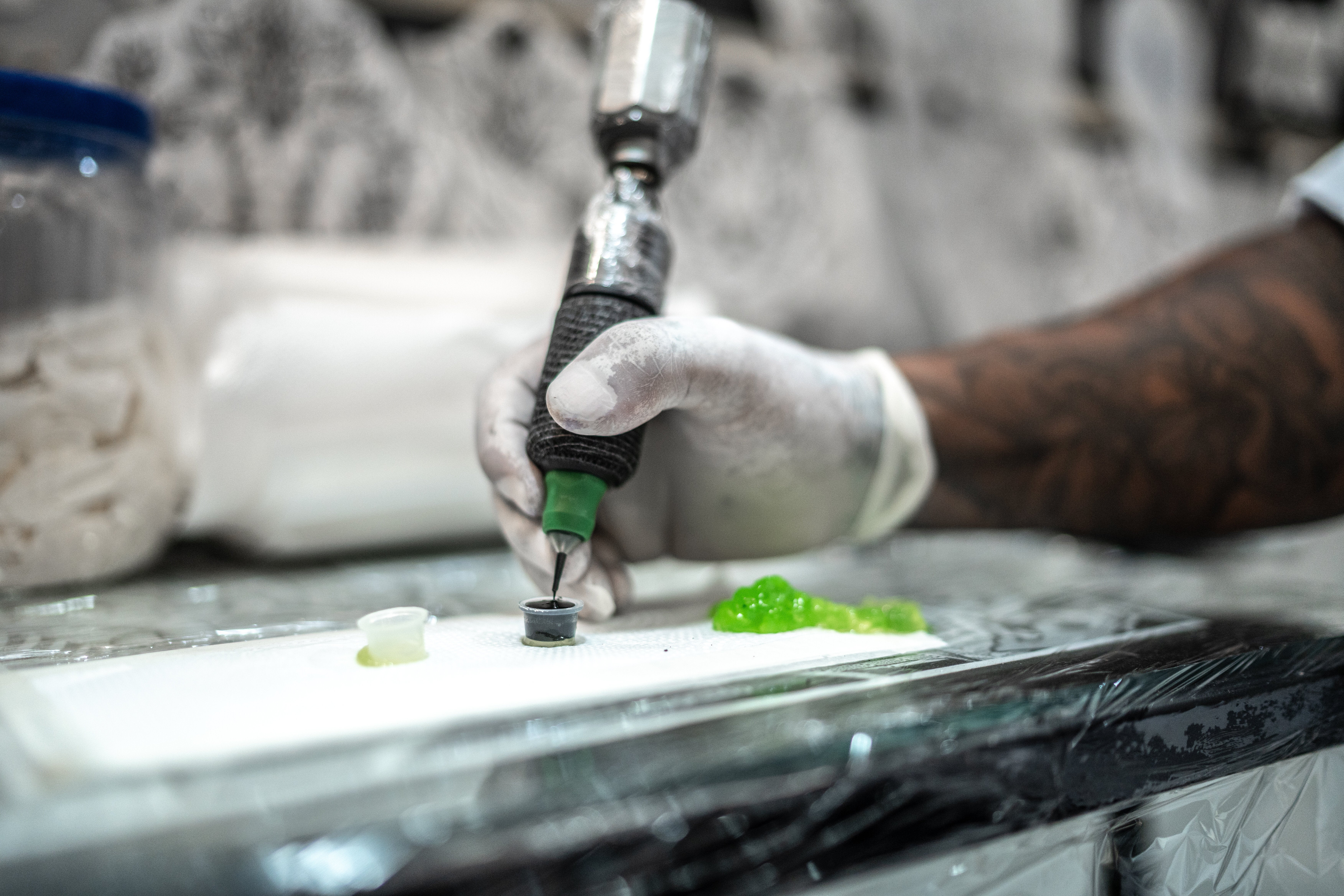
The body branded on my daughter’s back should not have upset me — she’d been chattering about various tattoo options for months. And legally I was no longer obligated to worry. Now, along with voting, skydiving, operating the meat slicer at a deli, owning a pet, becoming a realtor and booking a hotel room, my “adult” child was authorised to enter the Mooncusser Tattoo and Piercing parlour in Provincetown, Massachusetts (motto: “Take it to the grave”) and pay a guy to drive a bunch of oscillating, ink-laden needles into her skin.
The mere fact of the tattoo was not the problem. Rather, it was the tattoo’s allusion to Seth, my husband, her father, that left me unsteady and clutching my knife fiercely.
Advertisement
Seth had jumped to his death off a bridge near our home in Cambridge when the girls were 11 and eight years old. He’d been a devoted father, a beloved robotics professor, and never diagnosed with a serious mental illness. Then, on a warm summer morning, Seth was gone.
That night, as our house filled with stunned family and friends, while a steady stream of chocolate babkas and pans of macaroni and cheese arrived at our doorstep, my daughter had asked, “Will we ever be happy again?” I’d said yes, but didn’t believe it.
I spent the following years trying to re-create the sense of safety and balance we’d lost. Over the course of that day-upon-day slog, my daughters and I became a single unit, attuned to each other’s moods and needs. When one of us required a break, we’d gather on the couch with sweet tea to watch Gilmore Girls, wallowing in its charmed landscape and mother-and-daughter high jinks. In summer, when we ached for the missing fourth towel on the beach alongside ours, I’d point toward the bay: “We’re diving in.” We all came to believe in the curative power of cold salt water.
Somehow, whether due to our tight-knit threesome or despite it, they grew up, from pixies scrambling to the top of the jungle gym to teenagers tucking deodorant in their backpacks and hiding texts from me.
I believed that my daughter must have known her falling-figure tattoo would unleash my old sadness and renew my fear that suicidal impulses can be passed through generations. But she looked surprised when I asked if she was considering a plunge from the sky herself anytime soon.
Advertisement
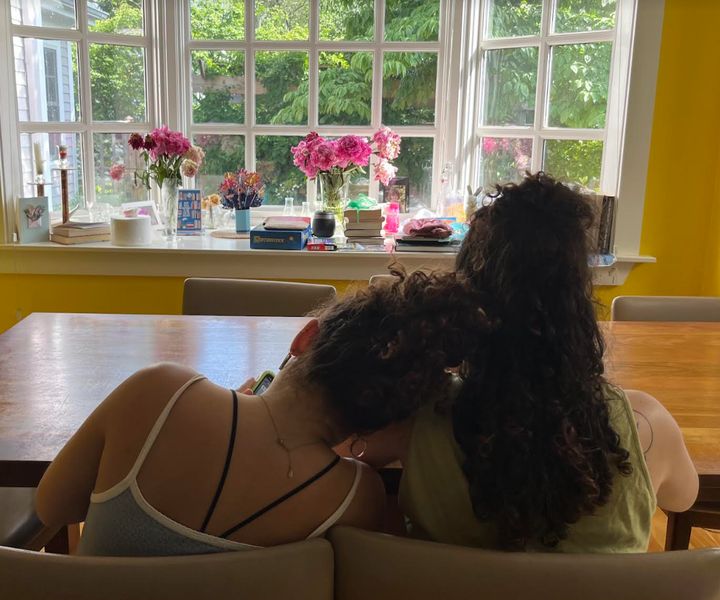
Courtesy of Rachel Zimmerman
The author’s daughters in 2023.
She shook her head at my apparent cluelessness. “It’s just a story,” she responded. “It’s Icarus, but a woman. Dad used to read it to me. I think it’s cool.”
Cool? Perhaps on someone else’s child. Not mine.
In my mind, Seth’s suicide had tainted all modes of falling: jumping, diving, flying, climbing, even landing. Since that time, I could not even bring myself to cross the Tobin Bridge. Nor could I understand why, with the newfound freedom of adulthood, my daughter chose to mark herself with an upside-down figure whose melting feather-wings failed to keep her aloft.
“There must be a reason you chose this tattoo,” I said, unable to let it go.
Her eyes, dark and sparkling like his, rolled. Then she shrugged and disappeared from the kitchen. “I’ll eat later,” she yelled. “I’m going out.” My younger daughter chimed in before exiting, too. “It’s her body,” she said. “Her choice.”
As dinner simmered, I stood alone at the stove, weary with the sense that our familiar unit was unravelling, like the band we’d formed was breaking up.
Advertisement
In a few weeks, our split would become official. The three of us drove to New York to drop my older daughter off at college with her tattoo and dyed eyebrows and piercings on anatomy unknown to me ― was it the rook or snug, tragus or antitragus, septum, rhino, nasallang or some other body part I’d need a piercing dictionary to figure out?
In her freshman dorm, she told me she was ready for me to leave. A moment later she changed her mind: “You can stay a few more minutes.” I tucked the baby blue sheets into her single bed, then unrolled the brand new mattress topper. “Comfy,” I said, with an upbeat lilt. There was so much more to say. But I knew better. Instead, I left a handful of protein bars on the battered desk. “I’ll walk you out,” my daughter said.
On a Manhattan street corner, the three of us sweating dirt, we pulled each other close. We are the same size, 5 feet tall, so when we huddle like this, we’re aligned, like classical architecture, face-next-to-face, hip-to-hip, like we belong to the same body. When we finally separate, the distance between us is that much more acute, like we’re falling, apart. “Love you,” we said in unison.
My younger daughter and I climbed back into the car to head home, singing show tunes the three of us used to sing together. I hear loss in the patchy harmonies.
A few days later, I phoned my daughter at college to check in. She didn’t answer my calls or texts. I was thrown back to the day Seth died. At first, I thought he’d been in an accident, and that’s what I think again. Something happened to her, I am certain, in the park, or at a party, on a fire escape, the drink was spiked, one misstep too many. Suddenly, I was sweating, breathing irregularly, trying to quiet the voice that said my child must be dead. The tattoo, I was certain, had prevailed.
Advertisement
A sleepless night. Then a text. “Alive,” she wrote. She’d been at an art opening downtown, eating 99-cent pizza at the place on Bleeker, perched on a stoop talking politics with a new friend until 3 am.
I wrote her a long email about my difficulty with our separation, why the falling-woman tattoo led me directly to her father’s jump from the bridge, and how I worried it might be a warning sign. She texted back while I was out walking the dog: “I didn’t think about the connection there but now I see how you did.”
Courtesy of Rachel Zimmerman
The author on a mountain in New Hampshire in 2022.
She had never wanted to dwell on the details of her father’s death. Though my youngest had repeatedly asked, “How did Daddy die?” and dutifully attended her grief group for children, constructing art to honour the dead out of pipe cleaners and polished stones, my older daughter would have none of it.
She grieved for him in her own way, sideways: a passing lyric in a ukulele song; channeling him while playing the bullied, suicidal girl in the musical Heathers; lining her bedroom wall with “before” photos. She knew but also turned away from knowing ― the way we all know and don’t know so much: our partners, their secrets and our own.
Advertisement
As I pulled the dog along at a swift pace, I realised the meagre influence I’d had over my daughter was now gone. She’d figured out how to cope, to find good, on her own. She’d gained comfort from the tattoo, reliably covering her body like a favourite soft sweater.
This offered me some comfort, too. A tattoo of falling is not falling, I thought. It’s a recognition of falling. A testament to having not fallen. There is soap, my philosopher father used to tell us when we were children, and there’s the idea of soap. The tattoo helps keep him alive, a new facet of her story ― a story distinct from mine.
I tried to let go, the way mothers must. I read Kahlil Gibran, foolishly hoping that words on a page could ease this separation: “Your children are not your children… they are with you yet they belong not to you.”
As if to underscore the point, my daughter soon texted me a new picture ― a second tattoo, Ignatz, the mischievous mouse from the old Krazy Kat comic strip. Seth, a passionate comic collector, had the same tattoo, although he’d removed it years before we’d met.
“What do u think?” she texted.
“It’s cool, honey.” Now all I wanted was to remain in her 18-year-old orbit.
My new job as the mother of an adult child is to sort loss from loss, death from images of death, ideation from execution. The line is slim. When her number appears on my phone, there’s always a moment of trepidation, awaiting the sound of her voice. The words I hear could break either way. This is the cost of living. Never sure if she’ll fall hard and shatter or, miraculously, pull off a safe, auspicious landing.
Advertisement
Rachel Zimmerman, an award-winning journalist, has written about health and medicine for more than two decades. A contributor to The Washington Post, she previously worked as a staff writer for The Wall Street Journal and a health reporter for WBUR, Boston’s public radio station. She is the author of “Us, After: A Memoir of Love and Suicide,” to be published in 2024.
The former president invoked the perpetual flames of the underworld in two separate rants on Sunday against Representative Nancy Pelosi (Democrat, California) and the US women’s national soccer team.
Early in the day, he launched his attack on the former House speaker, who on Friday said Trump looked like a “scared puppy” during his arraignment last week on federal charges of election obstruction and conspiracy.
Advertisement
“I wasn’t ‘scared,’” Trump insisted in a post on his Truth Social website. “Nevertheless, how mean a thing to say! She is a Wicked Witch whose husbands journey from hell starts and finishes with her. She is a sick & demented psycho who will someday live in HELL!”
He called the loss “fully emblematic of what is happening to the our once great Nation under Crooked Joe Biden” and accused the players of being “openly hostile” to the country.
“WOKE EQUALS FAILURE,” he wrote, then took a shot at star player Megan Rapinoe. “Nice shot Megan, the USA is going to Hell!!!”
Advertisement
Trump’s critics raised hell in return:
Imagine if Joe Biden called Kevin McCarthy a “sick & demented psycho” who was going to Hell. Not just Fox but the entire ‘liberal media’ would lose their minds. He would be condemned even by members of his own Democratic Party.
The US Women’s Team is woke now, but they weren’t in 2019 when they won the World Cup with a roster that was mostly the same and led by the woman he singled out. They were unwoke, that’s why they won. Tragic. https://t.co/GcwHq9kwbW
— Republicans against Trump (@RpsAgainstTrump) August 6, 2023
Megan Rapinoe and her teammates won TWO STRAIGHT world cups for their country. You INCITED AN INSURRECTION and brought great shame and dishonor on yours. They have more patriotism in their pinkies than you’ve got in your entire racist, bigoted, and traitorous ass. https://t.co/vZRjYOtn6i
Yo, GOP – we just going to keep pretending this is normal & okay? I wouldn’t let my family near the kind of lunatic that rants like this on the internet. pic.twitter.com/I0Ua1QxvqY
it’s an unusually clear statement of how trump just revels in US failure and in imagining US destruction. presidents usually try to project optimism and hope. Trump thrives on the opposite—visions of american decline and apocalypse. https://t.co/y5z8pEs0ZE
you’d think a guy who was president for 4 years would know Sweden basically tips over the woke-o-meter but maybe that was the week he was trying to buy Greenland or some shit https://t.co/NpXIXN5FVL
Trump was provoked by Nancy Pelosi making a comment that he looked like a “scared puppy” at his arraignment. He responds by calling her a “sick & demented psycho who will someday live in HELL!”
A cat in a Nebraska animal shelter has made headlines for his skill with a door handle, but he’s still waiting for an adopter to open their door to him.
“Staff started to go crazy knowing they shut certain doors when they left at night but those same doors would be open in the morning……then today we discovered this,” the Capital Humane Society in Lincoln wrote on July 27 on Facebook.
Advertisement
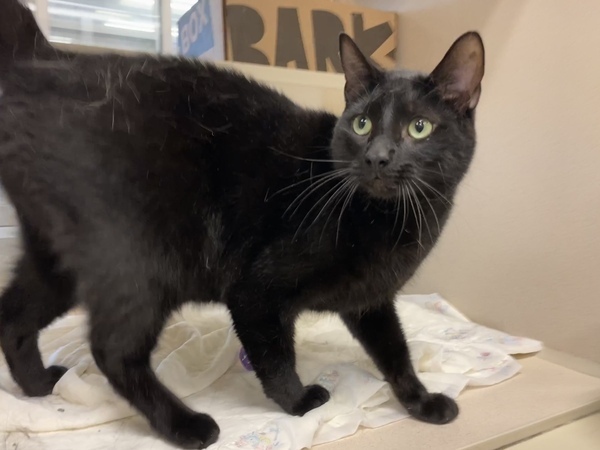
The post included a video of a black cat named Grimsen leaping up and grabbing a door’s lever handle with his paws, managing to pull it down to let himself out.
“Grimsen is the ultimate trickster,” the shelter wrote.
The cat’s adoption listing also cites his ingenuity, calling Grimsen a “VERY smart guy” who “has managed to teach himself how to open lever style doorknobs and walk freely amongst the other shelter cats strutting his stuff.”
Early in the morning on the day of the Facebook post, the shelter staff noticed that three different doors were open and Grimsen was strolling the hallway. He was returned to the room he shares with two other cats, but around noon, “Grimsen was spotted walking down the hallway again,” veterinary and behaviour assistant Hillary Brandt told HuffPost in a Facebook message.
Advertisement
Not long after, Grimsen was once again returned to his room. This time, he was caught red-pawed opening the door.
Grimsen, probably coming up with another scheme.
Capital Humane Society
Unfortunately for a freedom-loving feline like Grimsen, it’s important that doors remain closed, especially after business hours.
“Doors stay closed at night so we know all cats are behaving properly and not throwing parties after hours, making messes and possibly fighting with others who don’t play well with feline friends,” said Sierra Kurth, the shelter’s fundraising and grants coordinator.
Grimsen had to spend a night in a cat condo inside a locked office before the shelter was able to add a hook apparatus to the doorknob of his regular room to prevent him from getting out ― though he still made an attempt.
Advertisement
The feline’s chaos-causing ways were mostly met with approval by those who commented on the shelter’s video.
“I’m Grimsen’s lawyer,” read a top comment from one justice-minded Facebook user. “My client is innocent.”
His story made multiple local news headlines, with KLKN-TV declaring him the cat who “can’t be contained.”
But despite his number of fans, Grimsen, who came to the shelter as a stray in mid-June, was still looking for someone to adopt him as of Friday. Preferably someone with a good sense of humour.
“He is a very active and comical boy,” Brandt said.
And despite his exceptional intelligence, Grimsen is no snob. His adoption listing notes that he “loves all the pets that you can give him, even when he has escaped and his presence surprises you.”