Eurovision 2019: The 17 Most Ridiculous Moments From The Song Contest

HuffPost is part of Oath. Oath and our partners need your consent to access your device and use your data (including location) to understand your interests, and provide and measure personalised ads. Oath will also provide you with personalised ads on partner products. Learn more.

Select ‘OK’ to continue and allow Oath and our partners to use your data, or select ‘Manage options’ to view your choices.

Share Button

The Netherlands Win Eurovision 2019, While UK Finishes Bottom Of Leaderboard

HuffPost is part of Oath. Oath and our partners need your consent to access your device and use your data (including location) to understand your interests, and provide and measure personalised ads. Oath will also provide you with personalised ads on partner products. Learn more.

Select ‘OK’ to continue and allow Oath and our partners to use your data, or select ‘Manage options’ to view your choices.

Share Button

Eurovision 2019: Madonna’s Performance Featured Stairs And A Cape, Making Everyone VERY Nervous

HuffPost is part of Oath. Oath and our partners need your consent to access your device and use your data (including location) to understand your interests, and provide and measure personalised ads. Oath will also provide you with personalised ads on partner products. Learn more.

Select ‘OK’ to continue and allow Oath and our partners to use your data, or select ‘Manage options’ to view your choices.

Share Button

Benefits and uses of lemongrass essential oil

Lemongrass essential oil comes from the lemongrass plant, which grows in tropical and subtropical parts of the world. The oil can be bright or pale yellow with a thin consistency and a lemony scent.

People have used lemongrass in traditional medicine for pain relief, stomach problems, and fevers. Its antioxidant, anti-inflammatory, and antifungal properties may also give it other benefits.

In this article, learn about the possible benefits of lemongrass essential oil, as well as how to use it, and if it has any side effects.

Benefits

Benefits of lemongrass oil may include:

Fighting bacteria
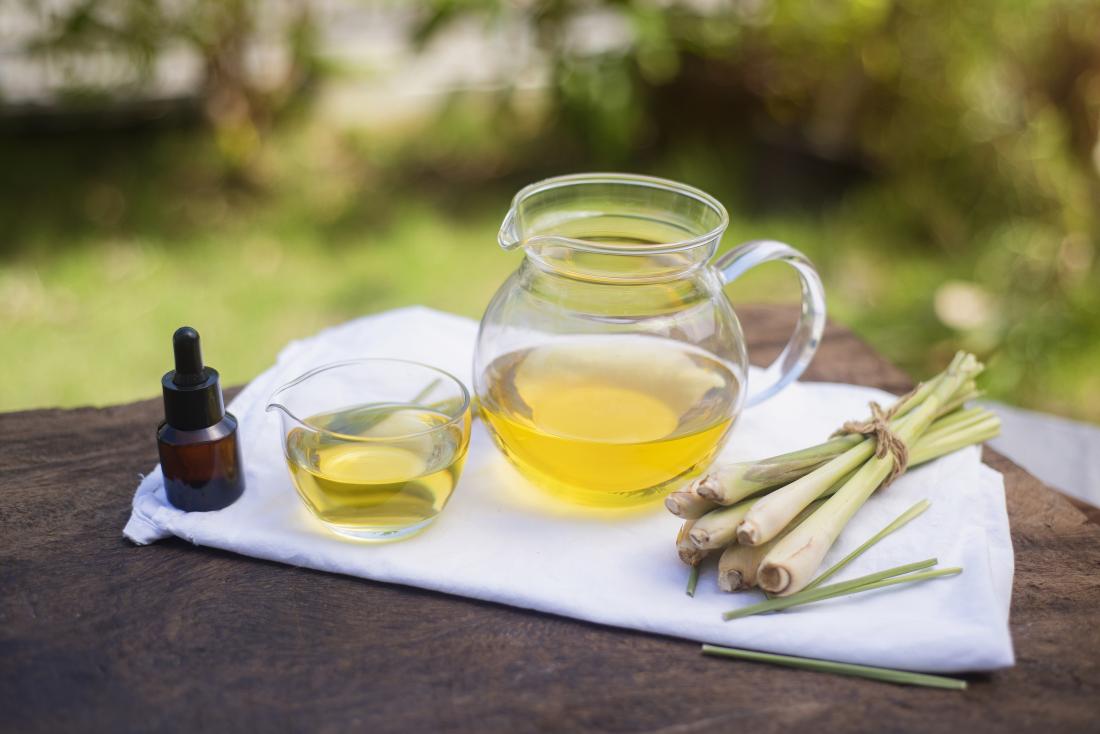
Lemongrass essential oil
Lemongrass essential oil can help inhibit the growth of bacteria.

The authors of a 2016 in vitro study found lemongrass essential oil to be effective in fighting strains of the Acinetobacter baumannii bacteria. This multi-drug resistant bacteria can cause pneumonia and blood infections.

As the lemongrass essential oil was effective in inhibiting and killing off the bacteria, it could be a complementary therapy in the future for fighting illnesses that do not respond to antibiotics.

In another study, a concentration of 2% lemongrass essential oil gel inhibited the growth of bacteria that cause gum disease. During this small study, 15 people with multiple sites of gum disease in their mouths took part.

The participants applied the gel to the location of gum disease along with nonsurgical dental therapy. The authors compared the results to a group just using nonsurgical dental therapy.

Lemongrass essential oil and nonsurgical dental therapy increased tissue healing more than nonsurgical dental therapy alone.

Reducing inflammation

Chronic inflammation can cause many health problems, including arthritis, diabetes, and some cancers.

A 2014 study showed lemongrass essential oil to have potent anti-inflammatory effects in mice with fungal infections.

The researchers concluded that, while more studies in humans are necessary, lemongrass essential oil may help treat skin inflammation in the future.

Combating fungal infections

In the same 2014 study, the researchers looked at the in vitro effects of lemongrass essential oil on specific fungi, including Candida albicans, which is responsible for yeast infections and thrush.

The essential oil had a “promising” antifungal effect, which leads the authors to state that it could have potential use in the treatment of fungal infections. More robust studies in humans are necessary, however, to confirm the effects.

Providing antioxidants

Antioxidants help fight harmful free radicals and oxidative stress in the body, which may help reduce signs of aging and the risk of many diseases.

In a 2015 study, lemongrass was shown to have strong antioxidant properties and was effective in scavenging free radicals in an in vitro experiment.

The authors of an earlier 2011 study also found that lemongrass oil mouthwash had antioxidant effects. The research involved 40 participants, including people with gum inflammation, or gingivitis.

The researchers tested the antioxidant effect of lemongrass oil mouthwash at three different concentration levels and found that is showed antioxidant activity at all concentrations.

These results may make it a useful addition to a regular dental hygiene routine.

Treating stomach issues

Studies suggest that lemongrass oil may help treat stomach issues.
Studies suggest that lemongrass essential oil may help treat stomach issues.

Some research has suggested that lemongrass essential oil might help treat issues affecting the stomach.

A 2012 study on an animal model looked at the effects of lemongrass essential oil on stomach ulcers resulting from ethanol and aspirin damage. Stomach ulcers are sores on the lining of the stomach that cause stomach pain.

The study found that lemongrass essential oil provided protection against damage in the stomach and could be a potential remedy for these types of ulcers.

Furthermore, eugenol, which is a component found in lemongrass essential oil, may help relieve pain and treat stomach upsets and diarrhea.

Easing rheumatoid arthritis

Lemongrass essential oil may help reduce the symptoms of rheumatoid arthritis, most likely due to its anti-inflammatory properties.

A 2017 study looked at the effects of lemongrass essential oil on 30 people, between 35–70 years old, with rheumatoid arthritis.

The researchers gave each person 3 milligrams of lemongrass essential oil to apply for 30 days. Over time, the participants reported less pain.

Relaxation and massage

A popular use for many diluted essential oils is for relaxation and massage.

One study looked at the effects of lemongrass oil when people use it as a massage oil. In the study, researchers measured the participants’ pulse and blood pressure before and after they had a massage with lemongrass oil. Each person received a massage once a week for 3 weeks.

The researchers found that the lemongrass oil massage reduced diastolic blood pressure but had no effect on their systolic blood pressure or pulse. They said it could have a “harmonizing effects” on the nervous system.

Helping headaches

An older study from 2009 argued that lemongrass essential oil might be effective for treating headaches.

While there is limited evidence to support this, lemongrass is a common headache treatment in Australian traditional medicine.

How to use it
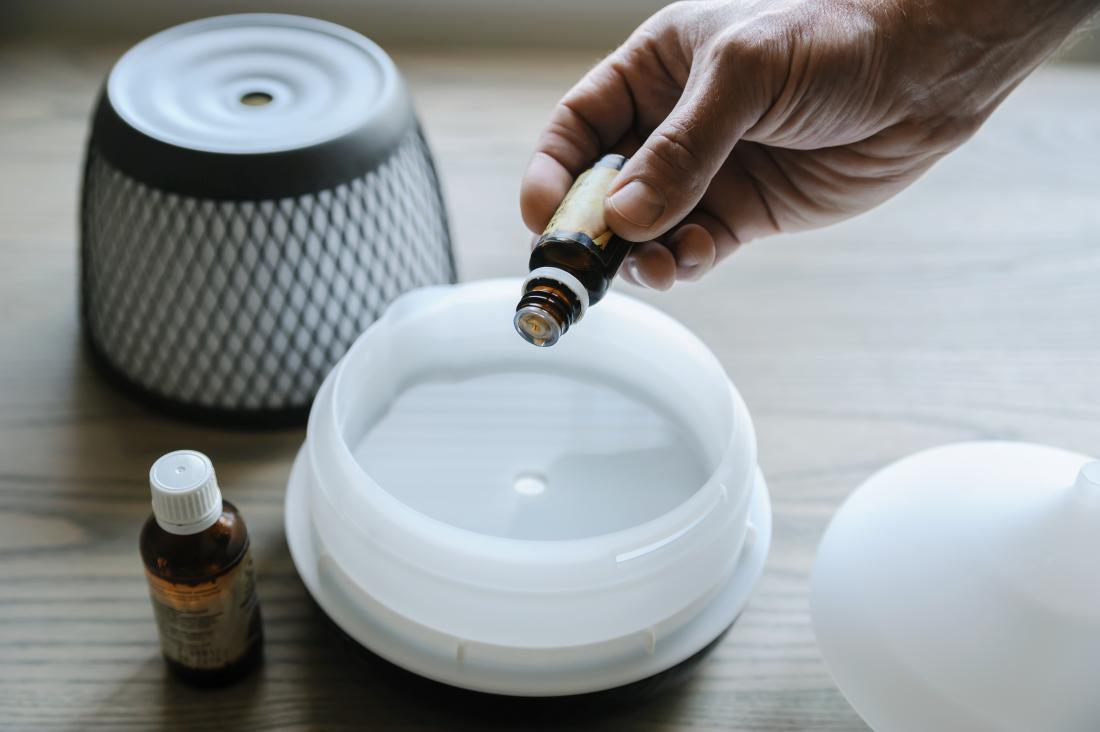
Person putting essential oil into aromatherapy diffuser
To benefit from aromatherapy, a person can try adding lemongrass essential oil to a diffuser.

People can buy lemongrass essential oil online or from a health food store. People should never apply undiluted essential oils on their skin or into their eyes, mouth, or ears.

The Food and Drug Administration (FDA) in the United States has approved lemongrass essential oil as safe when people use it correctly. Misusing essential oils is dangerous and can result in poisoning, skin burns, nausea, and illness in pets.

People can add lemongrass essential oil to a carrier oil, such as jojoba or coconut oil, and massage it into the skin.

Adding several drops of the essential oil to boiling water and inhaling the steam through the nose, keeping the eyes closed, and covering the head with a towel is another way to use it.

People can also add lemongrass essential oil to an oil diffuser. Oil diffusers are available for purchase in stores and online.

The concentration levels of essential oils when people vaporize them is unlikely to be dangerous for adults. However, people should be cautious about using diffusers around infants, children, pregnant women, or pets.

Essential oils are flammable, so people should take care to keep them away from an open flame.

Do not take lemongrass essential oil orally unless following the guidance of a healthcare professional.

Side effects

Lemongrass essential oil may irritate the skin and cause a rash. To minimize the risk of skin irritation, a person should avoid applying lemongrass essential oil to the skin if:

  • they have allergies or skin conditions, such as eczema
  • they have not diluted the oil first
  • they have broken or damaged skin

To check before use, do a skin patch test on a small area of skin, then wait 24 hours to see if a reaction appears before applying the diluted oil more liberally.

Lemongrass essential oil can also cause dryness and stinging around the eyes, ears, mouth, and other mucous membranes, such as the genital area. For this reason, it is best not to use it on the face or put the oil into bathwater.

Takeaway

Research suggests lemongrass has many health benefits, often due to its antifungal, antioxidant, and antibacterial properties.

Many of the studies on lemongrass essential oil have been in test tubes or animal models, so further research is still necessary to find out more about the benefits of lemongrass essential oil on humans.

People should never apply undiluted essential oil directly to the skin or take the oil orally unless under the guidance of a healthcare professional.

Using diluted lemongrass essential oil for massage, steam inhalation, or diffusing may help people relax and benefit from this traditional remedy.

Share Button

‘Incensed’ And ‘Pissed Off’, Voters Flock To Nigel Farage’s Brexit Party

HuffPost is part of Oath. Oath and our partners need your consent to access your device and use your data (including location) to understand your interests, and provide and measure personalised ads. Oath will also provide you with personalised ads on partner products. Learn more.

Select ‘OK’ to continue and allow Oath and our partners to use your data, or select ‘Manage options’ to view your choices.

Share Button

What’s Going On With Abortion In The US? Alabama’s ‘Heartbreaking’ Law Explained For Brits

HuffPost is part of Oath. Oath and our partners need your consent to access your device and use your data (including location) to understand your interests, and provide and measure personalised ads. Oath will also provide you with personalised ads on partner products. Learn more.

Select ‘OK’ to continue and allow Oath and our partners to use your data, or select ‘Manage options’ to view your choices.

Share Button

I’m From Alabama, And Gave Birth To My Rapist’s Child Because I Couldn’t Get An Abortion

HuffPost is part of Oath. Oath and our partners need your consent to access your device and use your data (including location) to understand your interests, and provide and measure personalised ads. Oath will also provide you with personalised ads on partner products. Learn more.

Select ‘OK’ to continue and allow Oath and our partners to use your data, or select ‘Manage options’ to view your choices.

Share Button

Can a hot toddy help with a cold?

Many people believe in the healing abilities of a hot toddy for colds and flu, but does this popular home remedy work?

A hot toddy is a mixture of hot water, honey, lemon, and whiskey. Some of these ingredients may have beneficial effects, but research has not looked specifically at the effectiveness of hot toddies on the symptoms of a cold.

This article covers whether or not a hot toddy may help with a cold, how to make one, and alternative drinks that could help relieve symptoms.

Can a hot toddy help?

Hot toddy drink of whiskey, tea, cinnamon, lemon, sugar, and honey.
A hot toddy is a drink that combines whiskey, lemon, and honey.

There is currently no cure for the common cold. However, people can usually manage their symptoms using home treatments and by taking over-the-counter medication.

Honey has anti-inflammatory properties and lemon contains powerful antioxidants. Despite this, no research has specifically linked hot toddies to relieving a cold.

Many people believe that drinking a hot toddy can relieve the symptoms of a cold, some of which include:

Hot drinks are among the most common home remedies for colds and flu. One study from 2008 reported that drinking a hot fruit drink reduced sore throat, chillness, and tiredness compared with drinking a room-temperature beverage in 30 people with colds or flu.

Effects of each ingredient

The individual ingredients in a hot toddy may have beneficial effects that can improve the symptoms of a cold. Many people make hot toddies using lemon, honey, ginger, and whiskey.

Lemon

Lemon is rich in vitamin C, an antioxidant that could be useful for treating colds. One systematic review from 2013 suggested that regular doses of vitamin C may reduce the duration and severity of a cold. However, the review also found that vitamin C reduced the risk of a cold occurring in the first place.

Lemon is also an active ingredient in several sore throat medications. A sore throat is a common symptom of a cold.

However, there is currently little scientific evidence suggesting that lemon can treat a sore throat.

Honey

Honey has a long history in medicine, particularly for treating cold symptoms such as a sore throat.

There is a reasonable amount of evidence to suggest that taking a dose of honey before bedtime can reduce cold symptoms in children over the age of 1. This includes reducing coughs and improving the quality of sleep.

However, little evidence is available for these effects in adults.

Ginger

Some people add other spices, such as ginger, to a hot toddy. Ginger is herb with a wide range of uses in traditional medicine.

Ginger has certain properties that may be useful in treating sore throats. For example, ginger has anti-inflammatory effects, which could help relieve a sore throat.

However, there is no evidence to support the effectiveness of ginger itself for treating a sore throat.

That said, there is some evidence to suggest that ginger may be helpful for treating nausea and vomiting. These symptoms may occur in some colds, but this is less common.

Whiskey

Although some ingredients of a hot toddy could therefore improve the symptoms of a cold on their own, it is unclear whether the combination in a hot toddy would reduce cold symptoms.

It is possible that the whiskey element counteracts some of these effects or causes negative effects. Alcohol can cause dehydration and lower immune system function, which may worsen cold symptoms.

Alcohol can also interact with popular cold and flu medication, so a person should exercise caution when mixing alcohol and medication.

How to make a hot toddy

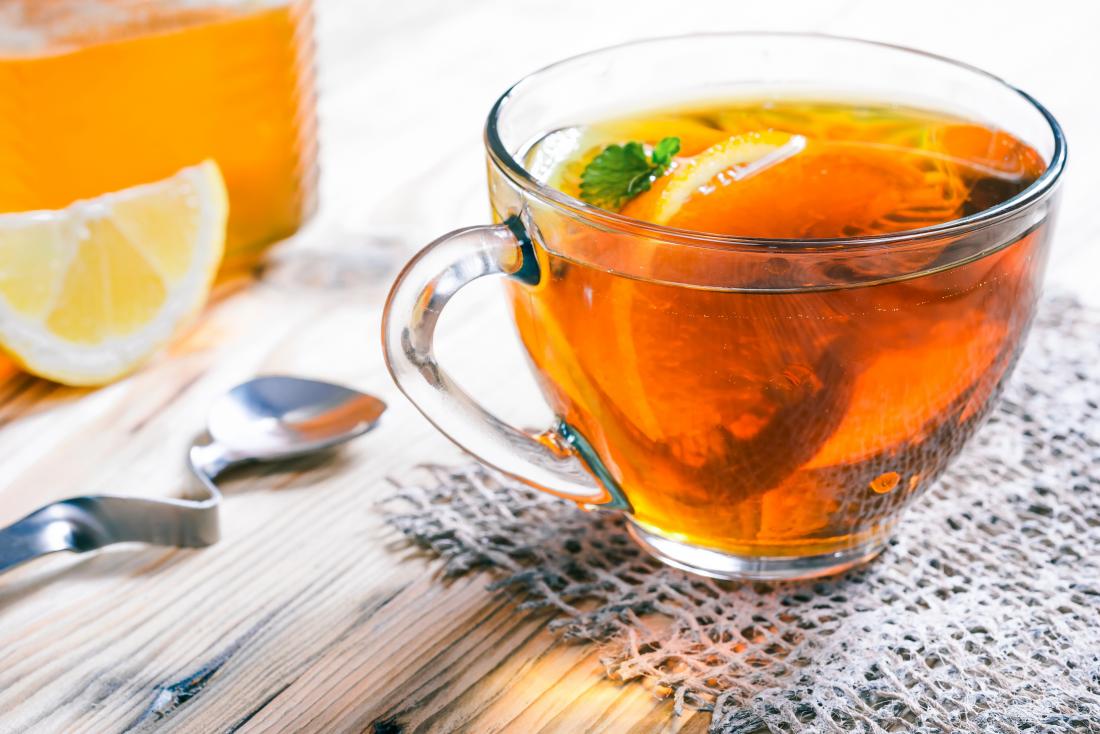
Herbal tea with lemon and honey.
A person can replace whiskey with tea for a nonalcoholic version.

There are many varieties of hot toddy and several different ways of making it. A classic hot toddy includes:

  • water
  • whiskey
  • honey
  • lemon juice
  • a chunk of lemon and cinnamon stick to garnish

To make a hot toddy, boil water in a kettle or saucepan. Mix 25–50 milliliters of whiskey with 3 teaspoons of honey and a splash of lemon juice in a heat-proof container.

Add the boiling water and mix all the ingredients together. Finally, garnish with a chunk of lemon and a cinnamon stick.

To make a nonalcoholic version, swap the whiskey for tea. This can be black, green, or any type of fruit tea.

Alternatives

Many similar alternatives to a hot toddy could help reduce the symptoms of a cold. These could include:

  • lemon and ginger tea
  • honey and lemon tea
  • green tea
  • black tea
  • a fruit smoothie
  • grapefruit or orange juice
  • water

Summary

Although there are no cures for the common cold, people can treat some of the symptoms. A hot toddy contains several ingredients that may be able to reduce cold symptoms, such as lemon, honey, and hot water.

Adding spices, such as ginger, to a hot toddy may also have benefits. There is, however, no evidence to suggest that alcohol can help with the symptoms.

Doctors often recommend that people avoid drinking alcohol when they have a cold or flu. This is because it can reduce immune system function and may make the cold worse.

Overall, though some people find this remedy helpful, research has not yet confirmed whether a hot toddy can reliably help with the symptoms of a cold.

Share Button

Children Should Have Compulsory Measles Vaccinations Before Starting School, Experts Urge

HuffPost is part of Oath. Oath and our partners need your consent to access your device and use your data (including location) to understand your interests, and provide and measure personalised ads. Oath will also provide you with personalised ads on partner products. Learn more.

Select ‘OK’ to continue and allow Oath and our partners to use your data, or select ‘Manage options’ to view your choices.

Share Button

Salisbury Novichok Poisonings Subject Of New BBC Drama

HuffPost is part of Oath. Oath and our partners need your consent to access your device and use your data (including location) to understand your interests, and provide and measure personalised ads. Oath will also provide you with personalised ads on partner products. Learn more.

Select ‘OK’ to continue and allow Oath and our partners to use your data, or select ‘Manage options’ to view your choices.

Share Button