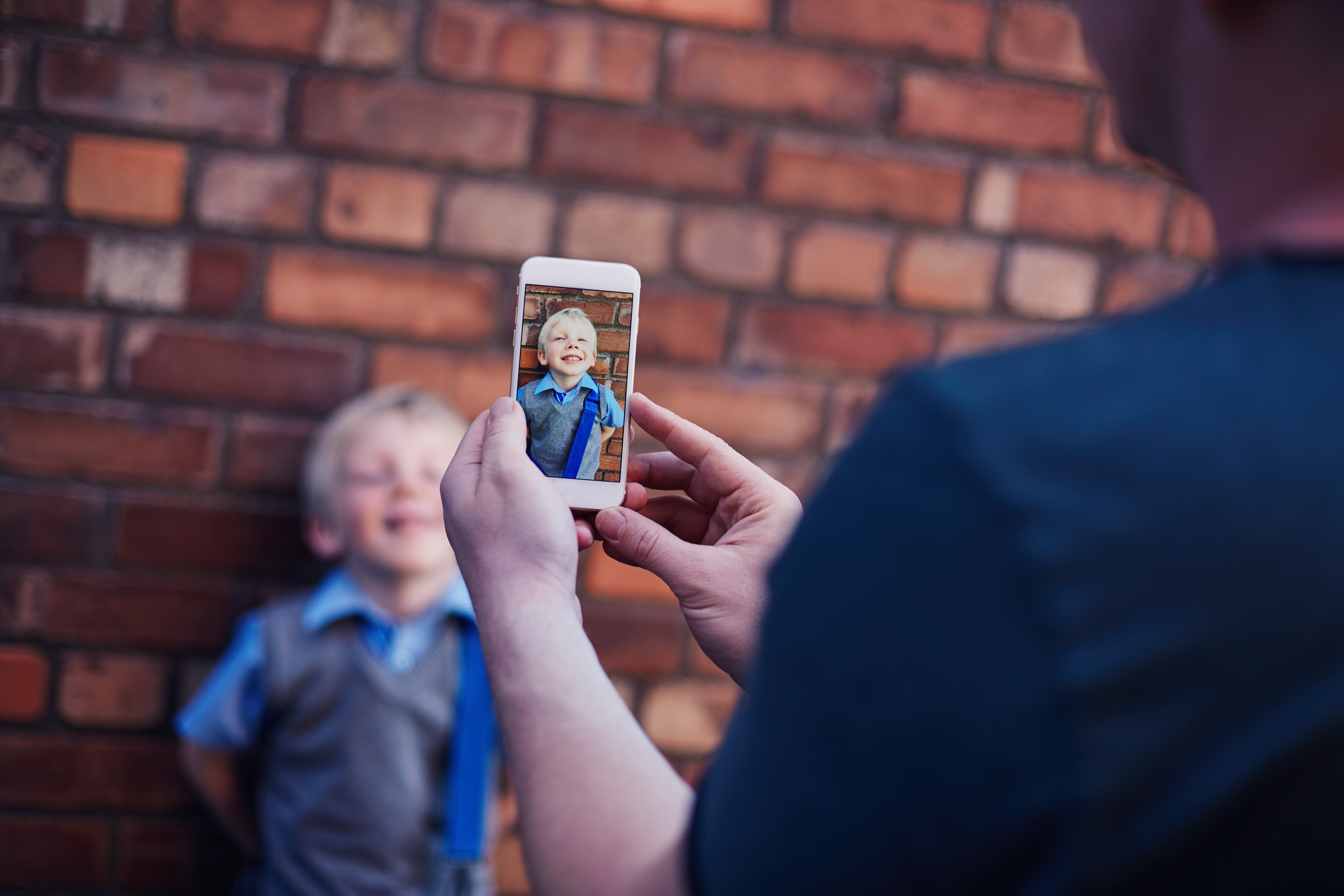
If you’re the parent of a school-aged child, there will inevitably come a moment when they ask for help with a school project — bonus points if this happens the night before said project is due.
Do you zoom off to the crafts store in search of supplies? Give them a lecture about responsibility? Roll up your sleeves and grab a Pritt stick? Sigh dramatically and pour yourself a glass of wine?
The funny parents of Twitter (formerly X) have been there, done that and are here to tell you about it. Read the hilarity below:
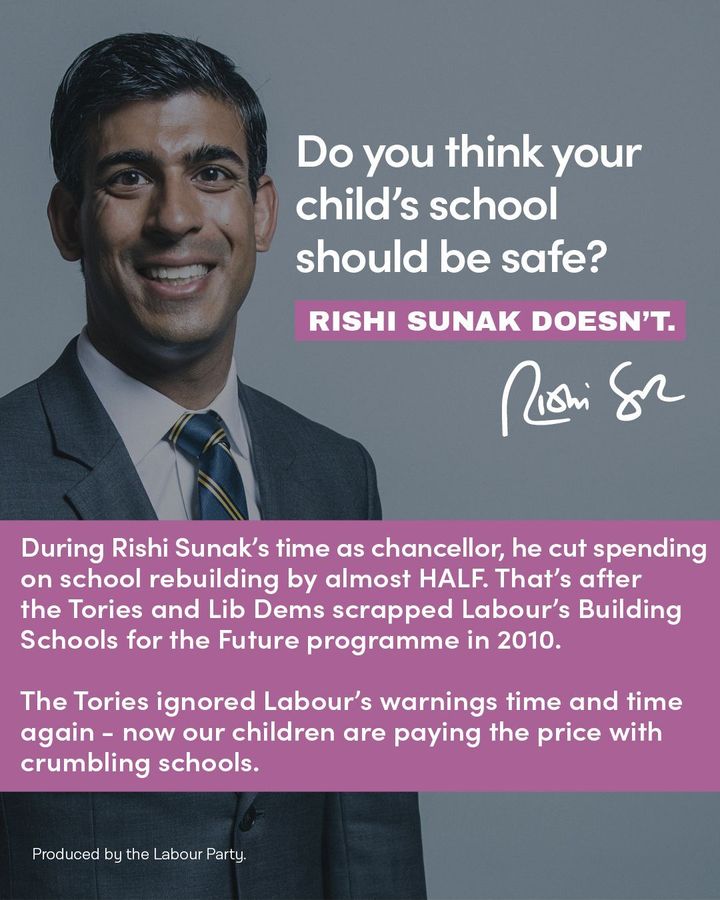
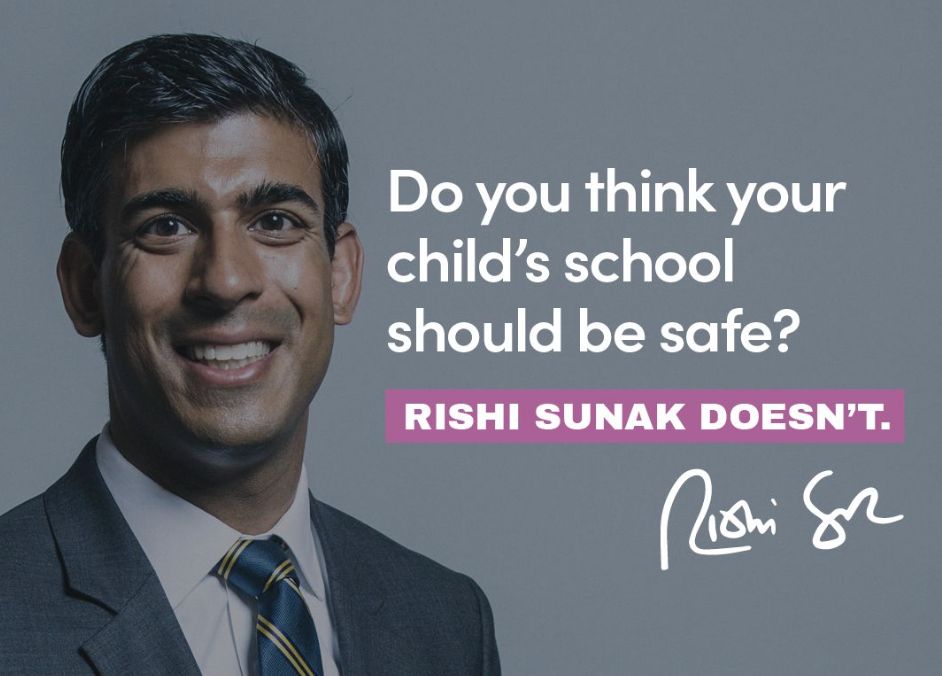
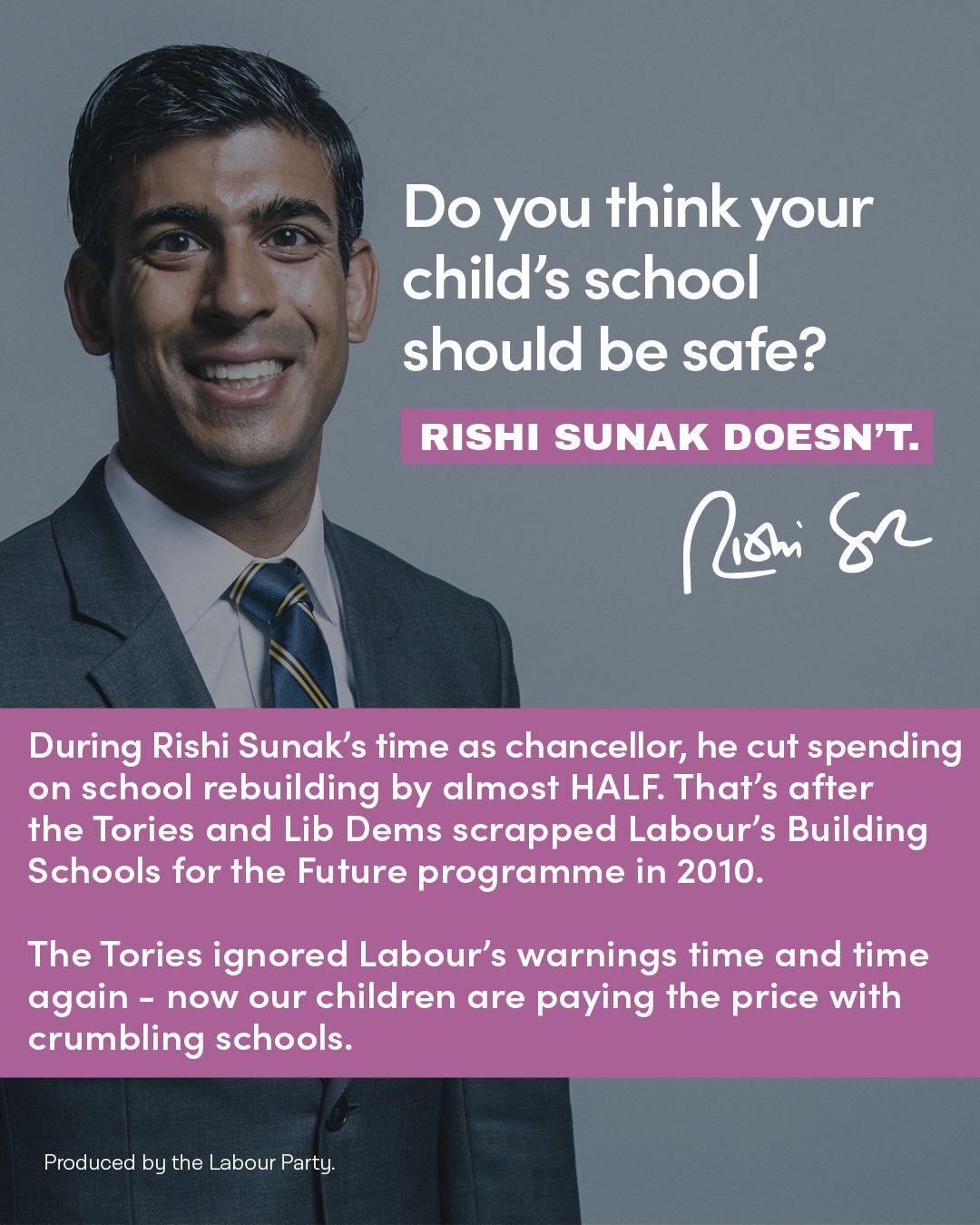
Like that one, the new ad also has a picture of the prime minister alongside his signature.
It states: “Do you think your child’s schools should be safe? Rishi Sunak doesn’t.”
The ad goes on to claim that when he was chancellor, Sunak cut spending on school rebuilding by almost half, and says the Tory/Lib Dem coalition ditched Labour’s schools for the future programme in 2010.
The advert adds: “The Tories ignored Labour’s warnings time and again – now our children are paying the price with crumbling schools.”
The latest Labour attack ad
Labour Party
Advertisement
A Labour source told HuffPost UK: “It’s a timely reminder as parliament returns that the Tories can talk all they want – they can’t hide from the fact their disastrous running of the country over 13 years is hurting families across Britain.”
It emerged on Thursday – days before the end of the summer holidays – that more than 150 schools had been ordered to either partially or completely close because the “RAAC” concrete used to build them is at risk of collapse.
Education secretary Gillian Keegan said the government was taking a “cautious approach” to protect pupils and staff.
She said: “Children should attend school as normal in September, unless families hear differerently.”
But her Labour shadow, Bridget Phillipson, said: “This is an absolutely staggering display of Tory incompetence as they start a fresh term by failing our children again.
Advertisement
Ministers now fear that other public buildings, such as hospitals, could also be affected by the scandal.
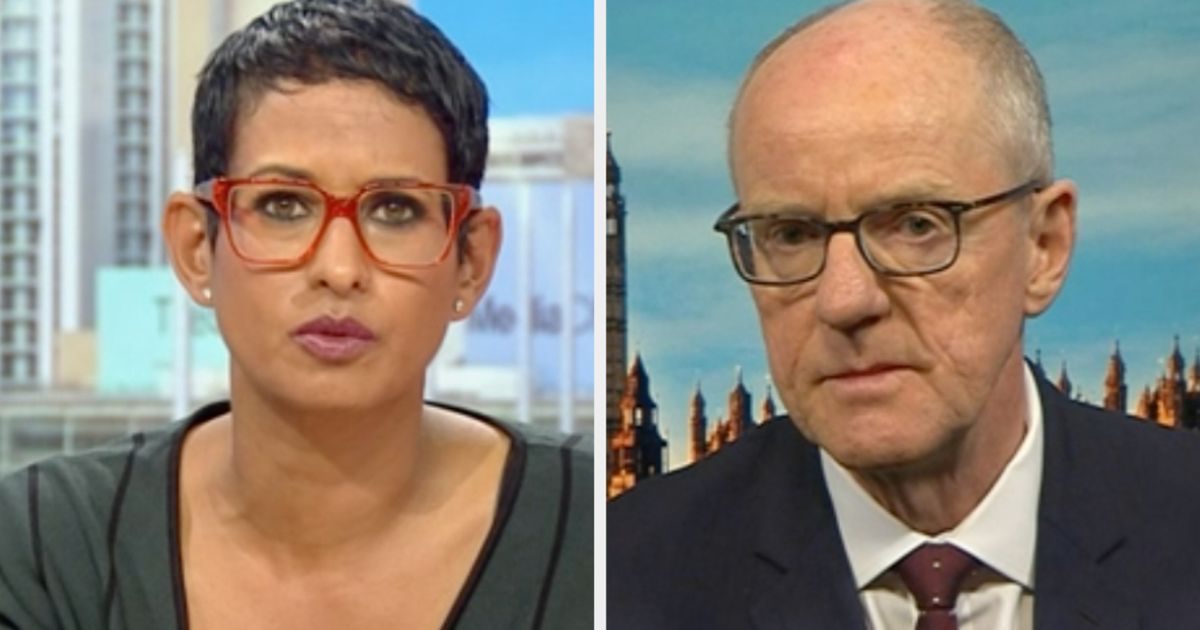
A Tory minister was skewered by Naga Munchetty as he struggled to defend the government over the closure of unsafe schools just days before the end of the summer holidays.
More than 100 will have either partially or completely shut their doors to pupils because the concrete used to build them – known as RAAC – is at risk of collapse.
Advertisement
Schools minister Nick Gibb this morning admitted that some of the affected schools have yet to be contacted by the government, and that it is still not known how many will have to close completely.
Appearing on BBC Breakfast, Gibb was grilled on the government’s response to the crisis, which will see thousands of pupils forced to learn from home when the new term starts next week.
The minister insisted the government had been “very proactive in assessing the school estate” and had taken action as soon as the extent of the problem became apparent.
He said RACC was used between the 1950s and 1990s, and that surveys were sent to every school in England in 2022 asking whether it was present in their buildings.
Advertisement
But Munchetty told him: “I’m sorry, please let me interrupt. You’ve given me the history of RACC and the dangers known.
“In 2018 when there was a national audit report saying that it was in 572 schools, why did it take until 2022 until surveys were sent to schools?”
Gibb said “warning notices” had been sent to all schools after that report, but that further evidence had emerged since then about the dangers posed by the crumbling concrete.
He added: “You seem to be criticising us for being more proactive than other governments around the world.”
Naga Munchetty – What parents care about, today, is whether their children are going to a school that’s safe…
The next couple of weeks will be a mixture of anxiety and excitement for teens (and their parents) up and down the country.
On August 17, A-level, AS-level and T-level results will be revealed, while a week later, on August 24, GCSE results will be announced.
Advertisement
It’s a huge moment for a lot of teens who, based on their results, may then decide to continue studying, try and get a job, or even consider resits.
So, says Dr Nihara Krause, a consultant clinical psychologist specialising in teenage mental health, “how parents engage at this time can help shape motivation and confidence moving forwards”.
It’s understandable that lots of teens will be more than a little anxious about how their parents will respond to their grades – so responding positively is key, even if the outcome is not what you or they wanted, suggests the psychologist.
While we want what’s best for our children, sometimes we can easily let our own disappointment show – and when your teen is feeling pretty pants, this isn’t really going to help.
Advertisement
Here, Dr Krause – who is working with Talking Futures, a toolkit which helps parents instigate career conversations with their kids – shares some phrases you definitely want to avoid uttering when they receive their grades.
What not to say on results day
1. You should have revised more
In short: not a helpful comment. “This suggests disappointment in the effort put into revision and that your child has fallen short of parental expectations,” says Dr Krause.
It’s going to leave your teen feeling pretty lousy.
2. If only you had spent less time on your phone
Whilst spending time on the phone is a very common parental concern, it’s more helpful to identify what difficulties or blocks there might be in a young person applying themselves to their studies rather than focusing on time spent elsewhere, suggests the psychologist.
3. What are you going to do now with these results rather than the ones predicted?
“Avoid indicating that there are no alternatives and painting a bleak future,” says the expert.
Instead, parents might want to do a bit of research themselves, looking into further education and career options available to their child following their exam results.
This way, they can steer their teen’s focus towards their futures, no matter their results.
4. How did everyone else in your class do?
If your child is feeling rubbish about their results, this focus on how other people did probably isn’t going to help.
Advertisement
“Opting for a judgmental question may affect self-esteem in terms of feeling less than or, if they’ve done better, to feel ‘better than’,” says the psychologist.
5. Exams were a lot harder in my day
It’s best to avoid turning the conversation into a comparison on sitting exams when you were young, as this “minimises their success”, she adds.
What to say instead
1. I’m so proud of the effort you put into your exams
Regardless of results, it’s important to acknowledge your child’s efforts and encourage them to think about the steps they have taken to get to where they are today.
“Encourage gratitude, discourage bragging, and focus your conversations with them around next steps in their future whilst motivation is high,” she suggests.
2. Let’s focus on your strengths, rather than comparing yourself to others – how your friends did won’t impact you or your future
“There is a mistaken belief that comparison generates ‘healthy competition’,” says Dr Krause.
But she suggests focusing on what helps a young person to gain their own personal best is far more effective than comparing, as it helps them identify unique qualities and improve on these.
It also helps generate self-acceptance and positivity, while avoiding complacency, the expert suggests.
3. Let’s consider your next steps together
A problem shared is a problem halved, after all.
“Be positive about alternatives and help build confidence by showing that you are there to support them,” says Dr Krause, “by doing this you can also motivate your young person to look ahead.”
Research from Talking Futures found 65% of 13-to-18-year-olds are most likely to say their parent is the number one person in their life that they would want to support and guide them on their chosen career path.
However good timing and using the right phrases are essential to ensuring this is done constructively.
Advertisement
“Depending on how the young person feels about the results they have received, now might not be the best time for parents to bring up the topic of the future and next steps,” says Dr Krause.
“And even if it does feel like it’s an OK topic to discuss, parents should approach conversations with extra care – mixed emotions and feeling overwhelmed is common for both parents and young people alike at results time, so let them settle first before constructive conversation can begin.”
Here’s to a positivity-filled results day, no matter the outcome.
On the first day of school, teachers often send a message to parents in the form of a letter or an email. They include things that students will need for the class, highlights of the year ahead, and how to contact them.
Email, mobile phones and a growing number of school communication apps means that it’s easier than ever before for parents to get in touch with teachers.
Advertisement
Questions, requests, complaints – veteran teachers have heard it all. But, sometimes, parents ask for things that are well outside of the realm of any teacher’s job description.
Jane Morris, a Maryland educator whose online presence is known as Teacher Misery, created a video a few years ago featuring fifth-grade teacher Deandre Rashard as he reacted to a series of actual requests from parents that are too wild and bizarre for anyone to have fabricated.
They included: “My son swallowed a watch battery at home. Please use this fork and clothes pin to inspect his poop until we find the battery.”
Others asked teachers to clean their child’s nose on picture day, track a student’s menstrual period and “mood changes,” and squeeze a student’s head during test-taking to relieve anxiety.
Advertisement
Perhaps most galling were requests in which the parents assumed they had greater pedagogical knowledge than the teacher, like the parent who requested that their son be given credit for an essay in spite of not turning one in because he “wrote it in his head.”
HuffPost asked teachers in our HuffPost Parents Facebook community to share their most memorable requests and complaints from parents. Here are some of their responses:
“One time I had a parent email me and ask if their student could take an upcoming math test on a different day because they had a golf tee time scheduled during the test. The student wasn’t on a golf team, nor were they a junior professional, they just wanted an afternoon of golf!”
— S., middle school math teacher in California
“I had a note from a parent to ‘excuse her son from activities if the weather was over 63°’ because he didn’t like to sweat. I also had a note from a dad who said ‘M is on her period today. She said she cannot do any running or physical activity. I told her it would be good for her. She screamed at me. Good luck.’”
— Alaina, middle school P.E. teacher in California
“Parent calls to inform me that their child swallowed a ring the night before and the doctor informed them that it was too far down to be of concern, however they needed to check the child’s bowel movements for the ring to make sure it passed through their system. I was asked to collect any poop and look at it to see if I could find the ring.
Advertisement
We were asked to wash, dry, and change socks of a student each time we came into the classroom because the ‘sand irritates’ her feet. They choose a school whose playground is 100% sand and we go outside four times a day.”
— Christine, pre-K through third grade teacher in New York
“I had a parent some years back who wanted me to chart every day if their child pooped. They also wanted me to keep track of what the child ate at lunch. Child was having digestive issues. Instead, we suggested that they ask child when they got home and they send lunch every day with directions to return all uneaten food for parents to see.”
— Mrs. K
Kindergarten.
Mom mad at me because her daughter went home repeating things her friends said
“I once had a parent complain to admin that they liked last year’s teacher much better. I looped with them from 1st to 2nd ”
— Melissa Gartside, Connecticut
“Mom wanted to put on the IEP that me (special ed teacher) and the occupational therapist would go to their house and teach their very capable autistic 4th grader how to shower more independently. ”
Advertisement
— Jen Monahan, K-5 special education teacher
“I once had a parent accuse me of eating their kids lunch and claimed they had an audio recording of me doing it. ”
— Jenna Marie
“I had a father request a meeting with me and the principal. The father wanted his son moved to a seat by another pencil sharpener. (I had two very expensive electric pencil sharpeners in two different places in my room — that I bought with my own money). The son claimed that sharpener closer to his seat ate up his pencils. Truth was he wanted to move closer to his buddy who was right by the other sharpener. I was told to move the student where he wanted.”
— Sandi Parks
“Mom complained to my principal because she didn’t like my fun Friday bubblegum font. I had to change it ”
— Heidi Ramos
“Since my child sees a speech pathologist for the half hour after lunch, I’d appreciate it if you didn’t ‘teach anything new’ until he returns to the classroom.”
— Jennifer Kish Donoghue
“I teach kindergarten. I had a mom email me to tell me that she didn’t think her son was drinking enough water throughout the day. She asked me to check the toilet after he used the bathroom each time so I could monitor the color of his urine and report back to her.”
Advertisement
— Maressa Brooks Rousslange
“Mom sent in a bar of soap. The student, who was a large male, said I was to wash his mouth with soap if he used bad language.”
— Pamela Robison Duren, fourth-grade teacher in California
“When I taught middle school, parent wanted me to make a 60% a ‘B’ because maybe that’s the best the student could do. I had to break it to her that I didn’t create the grading scale.”
— Diane Runner
“Can you stand over him every class and make sure he does his assignment?”
— Maribeth Jones, high school French teacher
“I had a dad give his first grade son a laxative before school. He sent him with pull ups and wipes and asked if I could help clean him up after.”
— Ginger Martin-Foster
“I had a mother ask me to keep an eye on how much her son played a game on his phone and report back to her regularly because he was racking up crazy charges on in-app purchases — north of $400. As long as his phone wasn’t out during my class, it’s not my place to monitor an 18 year old’s device usage.”
— Jason D. Moore, high school graphic design teacher in New York
Responses have been lightly edited for length and clarity.
Back-to-school season is full of anticipation for both kids and parents. New teachers, new routines and new friends are all exciting but can also provoke anxiety for everyone involved.
HuffPost asked therapists who work with parents about what issues they tend to bring up this time of year. Here’s what they said.
Advertisement
Kids’ learning needs
Though few pandemic-related educational shifts were positive, one potentially helpful development was that when students learned at home, parents got a chance to see what was going on in their classrooms and how well their particular academic needs were being served.
Post-pandemic, many parents’ awareness of these issues – and their stress levels – is still heightened.
“Parents got to see: This is how my child learns. This is how my child engages with their classroom,” Mercedes Samudio, a licensed social worker and author of Shame-Proof Parenting, told HuffPost.
As a new school year begins, some parents may worry that their children will run into issues they’d faced in previous years or that a teacher won’t be attentive to their child’s particular learning needs.
Advertisement
Though it’s important to keep in mind any issues a child has had at school, it’s also critical to give each new relationship the benefit of beginning with a blank slate.
A different teacher or a different mix of students may bring out a side of your child you haven’t seen before. Also, don’t underestimate how much your child matures and changes from one year to the next.
Just because something was an issue in first grade doesn’t mean it will continue in the second grade.
Since you won’t be at your child’s side listening to what the teacher has to say, the best way to stay up-to-date with how things are going in the classroom is to have regular check-ins with your child.
“I’ve always encouraged family meetings. But I think having weekly check-ins, especially during the beginning of the school year, helps everyone to feel supported and set up,” Samudio said.
Advertisement
Your child will know they have this space to let you know about any issues, and you will also be able to identify other people they can turn to, such as a school counsellor or nurse, if they need help during school hours.
Samudio suggests adding the check-in to the calendar, just like any doctor’s appointment or athletic practice.
During these check-ins, try to ask open-ended questions – but stay away from the well-worn and often useless “How was your day?” That will often elicit a rote, one-word response (“Fine”). Here is a list of the kinds of questions that might help you get a sense of what your child’s days are like.
You want to give them an opening to express “a whole spectrum of emotions at the beginning of the school year,” not simply happiness, Samudio said.
She added that parents should try not to make assumptions about what their kids may be anxious about when it comes to milestones, such as the first day. Instead, ask, “What are you most looking forward to?” and “What are you least looking forward to?”
Advertisement
Neha Navsaria, a psychologist consultant with the Parent Lab and professor of psychiatry at Washington University School of Medicine in St Louis, suggested using a “I wonder what/how…” phrase with children.
This phrase, she told HuffPost, “is very inviting to young children because it is an indirect way to pose a question, but it comes out as a statement of curiosity (‘I wonder what it was like to be in a new classroom with a different teacher?’).”
The return of homework
One of the best things about summer for kids is forgetting about homework completely. This is often an equal relief for parents, who may feel pulled into a cycle of nagging and fighting over homework as soon as school begins.
“Keeping kids on-task with their school work can be a source of battles and power struggles between parents and children,” Navsaria said.
Conflict becomes more likely “when parents and children have different learning styles and organisational methods. This is further exacerbated when children have specific deficits in learning and organisation, such as ADHD, learning disabilities and developmental delays.”
Advertisement
She recommends that parents try to set aside their own assumptions and sit down for a moment to calmly problem-solve with their child.
“Parents can easily fall into a trap of assuming that their child isn’t taking something seriously at school and the parent is the only one thinking about it —which creates a burden on the parent and increases their stress. By opening up the discussion with your child, you may hear that he or she has plenty of thoughts about the situation, but they needed a sounding board and some guidance to move forward.”
For example, rather than assuming that a child doesn’t want to complete a project, a parent might be able to help them break tasks into manageable steps and schedule time to complete each one — with ample breaks between work sessions.
The spectre of school violence
It’s unlikely that there will be a shooting at your child’s school (their odds of being shot at school are about 1 in 10 million), but it’s almost certain that they will take part in a lockdown drill and rehearse hiding in the corner of a darkened classroom.
Such practices have come under criticism for a lack of effectiveness and the potential psychological effects they have on children, but they remain a regular occurrence in American schools.
Advertisement
Samudio said she has heard a number of parents worrying about the ways violence in our society will, directly or indirectly, affect their children. “The kind of violence that we have in the world — kids can’t be shielded from that anymore,” she said. In generations past, we might have assumed that schools were a safe space, but parents and kids today can’t rest in that comfort.
If you hear that there has been a lockdown drill (or an actual lockdown) at your child’s school, you’ll want to talk to them about it. But, again, don’t make assumptions, and let your child lead the conversation.
Ask questions like, “What did you do?” “Why were you doing it” and “How did you feel?” You don’t want to add any distress to their interpretation. At the same time, you want them to know that you’re open to hearing about any fear they may have.
The transition from summer to the school year
Though it’s natural for parents to be concerned about their child’s academic performance, there’s actually not much they can do to assess or improve their child’s skill level on their own.
School readiness, on the other hand, comprises lots of skills, many of which you can give your child the opportunity to practice at home. Being able to complete tasks like using the bathroom and opening their lunch box by themselves “help them feel autonomous and competent and independent in the school setting,” Sarah Bren, a psychologist in New York, told HuffPost.
Advertisement
Emotional regulation skills are also key, Bren said. “If a kid is feeling really anxious all day at school, you’re not going to take in anything even if you’re academically super ready.”
Helping kids practice emotional regulation can begin with simply helping them recognise and name their emotions. You can encourage this by offering labels for their feelings: “You seem angry right now. Are you feeling angry?”
Another way that you can help facilitate a smooth transition is to gradually move mealtimes, bedtimes and wake-up times so that the new schedule of the first day back doesn’t come as such a shock to the system.
“You’re just taking the changes you have control over and moving them up in the schedule a little bit [so they’re] not all happening at once,” Bren explained.
“You are transitioning from a more care-free and less scheduled lifestyle to a back-to-school mode, which is more regimented and scheduled,” Navsaria added.
Advertisement
“Without the daily structure of school anchoring a family, it is easy for parents to become lax with some of these rules [in summer]. This is not a bad thing, consistently reinforcing routines can be exhausting for parents, but it is important to acknowledge that it then makes the transition back to school routines more challenging,” she said.
Moving bedtimes back by 10- to 15-minute increments over a number of days can make this process easier.
Feeling overwhelmed
One thing most parents confront at some point during the back-to-school transition is a feeling of being overwhelmed: open houses, lunch boxes, musical instruments, team uniforms and an endless series of online portals, each requiring a new user name and password.
“This means more coordination of schedules and more communication of which to keep track,” Navsaria said.
“This can often leave parents in this state of high alert, feeling that they are going to miss an important announcement or their child will be left out of an experience,” she added.
Advertisement
The fear that we’re going to drop one of the balls that we’re juggling is very real — and it can help to admit this.
Bren likes the following image: “In the air, there’s a million balls. Some are rubber and some are glass.” It can be helpful, she said, to put “a little thought into which are glass and which are rubber because I think sometimes as parents, we don’t let ourselves distinguish those two things.”
Forgetting a violin or gym clothes, for example, are slips with minimal consequences – rubber balls that we can just let go.
But if we don’t allow ourselves the possibility of dropping any ball ever, “we’re much more likely then to accidentally drop a glass one. … It’s not possible to keep all these balls in the air. But if I give myself permission to sometimes drop balls, I’m going to be much more likely to say which are the ones I can drop and which are the ones I can’t.”
Samudio concurs, saying that one way for parents to reduce their stress levels is to hold themselves to more realistic expectations. An attitude of “everything is gonna go right as long as I planned it to a tee” is unrealistic, she said.
Advertisement
“Somebody probably will forget their musical instrument. Somebody probably will at the last minute need to do a project and you’ll have to go to Staples and get all that stuff. All of this will happen.”
“Being honest with yourself at the beginning of the school year” that such things will occur, Samudio said, and then not making a big deal about them when they do, can both lower your stress level and help teach your kids how to handle setbacks.
The best way to teach them to go easy on themselves is to show yourself a little grace in such moments. “They can see that you’re telling them to be nice to themselves, and you’re beating yourself up all the time,” Samudio said.
As the cost of living crisis rages on, LBC presenter Nick Ferrari has left many angered and shocked after saying people shouldn’t become parents if they can’t afford to buy their children toothbrushes.
His comments were in response to figures released by the charity Beauty Banks and the British Dental Association, which found 83% of secondary school teachers said they or their school have given students toothbrushes or toothpaste.
Advertisement
Responding to this heartbreaking stat, Ferrari said: “If you are a mum – and/or a dad – and you haven’t got money to buy your child a toothbrush, you should never have become a parent in the first place.” Yes, you heard correctly.
The repercussions of oral hygiene poverty are huge and devastating for children.
The new report found one in two teachers said children isolate themselves because of oral hygiene issues, while one in four miss school because of it. One in three have witnessed bullying directly linked to a student’s oral hygiene issues.
Sali Hughes, co-founder of Beauty Banks which donates personal hygiene products to people living in poverty, branded Ferrari’s comments as “shocking”.
Advertisement
She told HuffPost UK: “Suggesting that women who find themselves poor should never have had children, at the very best fails to comprehend the unprecedented scale of financial difficulty for families since Covid, a global energy crisis, recession, and a cost of living crisis that has seen essentials like food and toiletries rise sharply – and unmanageably – in price.
“Circumstances have changed so dramatically for so many families that Beauty Banks has seen a 75% increase in product requests from food banks, hostels and schools, with toothpaste and toothbrushes now being the most asked for toiletries items.”
She concluded: “If Nick Ferrari can’t conceive of such poverty, then he is very fortunate. But this is the demonstrable reality for many modern Britons. I suggest that rather than belittling people living in poverty, and rubbishing frontline teacher testimony, he should listen, try to understand, and affect change.”
According to the Joseph Rowntree Foundation, around one in five people in the UK (20%) were in poverty between 2020-21. That’s 13.4 million people. (And this data was compiled well before the worst of the energy crisis took hold.)
Advertisement
It’s believed around one in four children in the UK are living in poverty and, according to the Child Poverty Action Group, 75% of these children have at least one parent in work.
After LBC shared a clip of Ferrari’s response to the report, hundreds of people – including TV host Carol Vorderman – had plenty to say about it, with the former Countdown star calling his language “humiliating”.
I grew up in poverty & language like this is humiliating. My Mum (3 kids & 5 part time jobs) could only afford 1 tub of hot water/week. Sunday night a few inches of hot water in the bath & we’d take it in turns to wash quickly. No money for heating/clothes but she was a great Mum
There were also plenty of reminders that not every parent is already living in poverty when they have children – and that circumstances can (and sadly often do) change.
Pretty disingenuous statement, Nick. Personal circumstances are an ever-changing and fluid dynamic for all but the most fortunate. Do you honestly believe the majority of the poor are the authors of their own misfortune? Because if you do, that speaks volumes about you.
Funnily enough, Nick, my kidneys failed 10 years after I had my twins, it kick started a chain of events that left me without a pot to piss in. Circumstances change and people end up in deserpate situations, perhaps people who can’t understand that, should never become parents.
People’s circumstances change. My mum, for example? Complications during pregnancy, with longer-term health issues. My dad was made redundant, and later diagnosed with longer-term health issues due to chemicals he’d worked with. Circumstances change. Show compassion and humanity.
A young mum, husband dies suddenly & unexpectedly. He was the main breadwinner, now she can’t afford the mortgage & sinks into poverty, losing her home & relying on her parents for hand-outs & they’re not well off either. Glad to see you’ve researched all angles before belching.
Photographer and activist Misan Harriman, who is an ambassador for Save The Children UK, issued a video statement in response to the comments, which he branded “unacceptable”.
“We have to have a duty of care to the most vulnerable in our society and if a parent cannot afford a toothbrush, they are vulnerable. They need help, not criticism.
“As a nation we need to ask ourselves who we are – and I do not recognise any place where parents that are going through hell are stamped on. We have to be better than this.”
What do you think of when you hear the word family? More often than not, it may be a heterosexual couple – a mum and dad – and their two biological children. The classic nuclear family setup.
But the reality is that many families no longer look like this in the UK, despite the those old stereotypes holding fast. In 2021, there were 19.3 million families in the UK – of these, 3 million were solo parent families.
Advertisement
Around 1.1 million children in England and Wales are estimated to live in a stepfamily, while statistics on same-sex parent families are harder to come by. According to charity FFLAG, the most recent statistics for the number of same-sex couples raising children are from 2013, when 12,000 couples were doing so. It’s safe to say there’s probably a lot more now.
For children who come from single parent, LGBTQ+, adoptive, blended, foster and kinship families (where family members or friends raise children), being bombarded with the message there’s only one type of family can cut deep.
Journalist Freddy McConnell – a self-described solo seahorse father – issued a plea on Instagram recently after his tearful child came home from school and said everyone in his class had a mum and dad.
“I don’t know if this was someone else’s observation or his,” wrote McConnell, before urging parents to tell their children what families actually look like. “If your kid has a mum and a dad, please don’t let them out into the world under the misconception that *that* = family,” he said.
Advertisement
“Please take every single opportunity to point out that ‘family’ is a huge and never-ending idea,” he said. “That love makes a family, not who’s in it. That everyone’s family means the world to them, so be gentle.”
Sadly, the othering McConnell’s children’s faced is not unique. But while there are some amazingly diverse books and TV shows for kids out there, as well as references to different types of families when learning at school, the classic 2.4 family is still very much the norm in lots of the media kids consume from a young age. Bluey and Peppa Pig, for example (though a shout out to Hey Duggee for doing things a bit differently).
Lots of the classic children’s books we end up buying our kids (mainly for our own nostalgic pleasure) also centre around very ‘traditional’ family units, not necessarily reflective of 2023. Think: Mog, The Tiger That Came For Tea, Peepo.
Louisa Herridge, a solo mum who is 43 and from Warrington, says films and books can sometimes be triggering for her daughter Emilie if they’re just about dads.
“I would love to see a single mum narrative in books and kid’s films and one where they are thriving and not just trying to get back with dad,” says Herridge, a positive psychology and mindset coach, and founder of Mamas Ignited.
She praises the latest Disney films which “have much more powerful messages for young girls in particular – and we do see different family makeups.”
The mum actively teaches her daughter about how families are all different, and says her daughter’s school makes an effort in this area too. One example she gives is that they say “grown-ups at home” instead of mum and dad.
“But schools are still portraying stereotypical norms,” she adds. “In her school Nativity this year, they portrayed four family setups showing how they celebrate Christmas. In each scene, there was a mum, dad and two kids.”
Discussing the impact, the solo mum suggests children who do not come from nuclear families “have the potential to feel different – and very early on in life” which, she says, can impact their self-worth and self-esteem.
“Children that stand out as different are at risk of bullying – and as an ex-teacher this is something that I have experienced,” she adds.
Advertisement
““I remember the stigma attached to single mums and the societal message was that I should aspire to get married and have a baby.””
– Louisa Herridge
Herridge recalls feeling guilt when she separated from Emilie’s father because she didn’t want her daughter to “come from a broken home” – something that was shaped by her own perception of what a family should look like growing up.
“I grew up terrified that my parents would split up and that I would come from a ‘broken home’,” she says. “Looking back this stigma of a ‘broken home’ comes from how family life is portrayed in society.
“I remember the stigma attached to single mums and the societal message was that I should aspire to get married and have a baby.”
Her daughter has, on occasion, been impacted by the narrow view of family that is sometimes portrayed in society and culture. “The first time I can remember it having an impact on her was at her Reception Nativity,” she recalls. “After the Nativity she was very upset that she didn’t have her dad there and, in her head, everyone else did.”
Sometimes families have one parents, sometimes two, sometimes even three. And sometimes one – or all – aren’t necessarily the biological parent. Mok O’Keeffe, a LGBTQ+ historian at GayAristo, has been helping his sister-in-law raise three children after his brother died in 2010.
“I promised my brother I would keep his memory alive and be there for the girls. And I have done that. They have a wonderful mother and I am their father figure,” says O’Keeffe, who is married.
svetikd via Getty Images
“They were flower girls at my wedding and mean the world to me. My sister-in-law says we are the modern family,” he adds. “We certainly are unique at sports day!”
The children – who are now all teenagers – “think it is quite cool to have a gay uncle as a father figure,” says O’Keeffe, who is 53 and splits his time between Chelsea in London, and Abergavenny, Wales.
Advertisement
Their experience as a family unit, while tinged with tragedy, has been an overwhelmingly positive one – helped, O’Keeffe says, by their extended family who live in Spain.
“The aunts and uncles and grandma are loving and welcoming to the girls,” he says. “They spend summers in Spain and, in many ways, my girls may have lost a father, but as a result have more loving and invested adult role models than they might have had if he had lived.”
The historian says he’s had a positive experience with their schools, who have accepted him as the father figure in the girls’ lives – something that came about after he and his sister-in-law set up a meeting to explain their situation. “Both their junior and high schools were 100% supportive,” he adds.
“I have not experienced any negativity around what my sister-in-law and I call ‘our modern family’. I have found that the girls’ friends and parents have been totally accepting of me as a significant part of the girls’ lives.”
Advertisement
The UK is a more diverse place than it’s ever been – with so many families of all shapes and sizes. But it’s clear that some children are still being made to feel like outsiders because of the narrow view of family that still presents itself.
While schools and media are doing their best to move with the times, it’s clear more needs to be done. And caregivers – especially those in more ‘traditional’ family units – are the ones who can be doing some serious legwork here.
Freddy McConnell suggested parents must be the ones to “keep talking” to their kids about this stuff. “However you want to explain it, with however many picture books to help, please just make sure you *actively* do,” he said.
“So that kids with a solo dad or solo mum, two mums, two dads, more than two parents, adoptive families, donors, guardians, carers, blended families etc etc, don’t find themselves having to defend their loved ones at school or anywhere else.
“So that school is as safe a place for us as it is for your family. And, to put it bluntly, so that no one’s little one has to put on brave face in class, before letting it out through tears at bedtime.”
While parents are a great place to start, Herridge caveats that “unfortunately the same messages will not be given [by all parents] as there will be old prejudice and misrepresentation in some families”.
Given this is the case, schools have a huge opportunity to make a difference.
What are children taught in schools about family?
Guidance provided to primary schools states that children should be taught “families are important for children growing up because they can give love, security and stability”.
Children are told “that others’ families sometimes look different from their family, but that they should respect those differences and know that other children’s families are also characterised by love and care”.
The guidance says teachers must teach pupils that there are many types and sizes of families, for example:
some children live with a parent or parents
some children live with other family members such as grandparents or older siblings
some children live with a foster family or in another type of home
some people are the only child in their family while others have siblings.
Diversity is needed more widely is needed in the media, adds Herridge. “This is a much wider issue than just families as there needs to be more representation of colour, disability, gender and sexuality.
“Diverse resources in schools would be a great start, along with breaking down the patriarchal expectations of women that are still so often represented in books and films.”
So what is a family then? “Families come in many different varieties, changing and adapting over time,” says O’Keeffe. “They are no longer fixed entities, with traditional mother and fathers – and educational establishments are recognising this.”
Advertisement
“Family are the people who love you no matter what, who you want to be with and who add that extra spark to your life,” adds Herridge.
Her daughter Emilie, who is seven, says families “are happy, go on nice days out, are loved and [there’s] no falling out”.
“The people in families are mums, nannies, dads, children or maybe not a child, aunties, uncles and cousins. There doesn’t need to be a number of people,” she says.
“You are family because you were made a family. In any shape and sizes, you are still a good person.
“Just because you don’t have a dad, doesn’t mean you are different.”
A reading list for you and your kids to explore what different families look like
Do you have recommendations for more books or shows about the shape of families today. Email ukparents@huffingtonpost.co.uk to let us know about them.
Deidre Belton, like parents everywhere, knows that her child is absolutely adorable. When Alexander was small, he became accustomed to Belton and other doting relatives telling him, “You’re such a handsome little boy.”
His usual response? “Yes, I am.”
Belton has noticed, however, that as he approaches puberty, he is showing signs of taking a more critical eye to images of himself — examining them with the gaze of his peers instead of that of his adoring family.
Advertisement
For a school project, he was tasked with bringing in a baby photo. But when Belton provided him with one, he refused to take it in, saying, “I’m just worried somebody will say I look like an alien.”
Belton, who is from Missouri, United States, remembers thinking, “What is going on?” Realising that her own body-consciousness was impacting her child, Belton has begun to check the comments she makes about her own appearance. This strategy, coupled with keeping Alexander off of social media, has been effective — for now.
But Belton is bracing for the turmoil around self-image that adolescence will bring, particularly in a day and age when everyone’s bodies are so thoroughly documented.
Advertisement
“All they see is images,” Belton observed, describing her son’s generation. “All day they’re on the computer, they’re on a tablet … and then they’re very critical of themselves and other kids. It’s like the older that they get, the more conscious that they become about their self-image and how they look.”
HuffPost asked several experts how parents can support their children through this phase of looking at themselves critically and help them maintain a positive relationship with their bodies.
Expect self-criticism, but don’t condone it
There isn’t one age at which kids begin to criticise pictures of themselves, but “becoming critical is not uncommon when one is at an awkward time in growth and development,” psychologist Crystal Williams tells HuffPost.
The route that their body takes into adulthood can be a source of struggle for adolescents.
“Girls usually mature before boys and many put on weight before they grow taller, which feels shameful in our ‘never too thin or too rich’ society. Boys, who on average will end up taller than girls, can be shorter than girls in middle and early high school, which can be embarrassing,” says Dr Michael Rich, director of the Digital Wellness Lab at Boston Children’s Hospital.
“Whatever their bodies do, they feel that everyone is looking at them and judging their appearance unfavourably,” Rich continues.
Dietician and intuitive eating coach Alissa Rumsey, author of the book Unapologetic Eating, says: “I have worked with a lot of clients who share with me that they first became aware of the idea that their body was ‘wrong’ around the time of puberty, due to comments from peers, family members, doctors or other adult role models.”
Advertisement
Such physical changes often bring about a fixation on appearance. But that doesn’t mean that parents should simply accept their child’s negative talk.
“If the self-criticism becomes debilitating, destructive or pathological,” Williams says, then parents should seek professional help.
Just because the situation isn’t grave doesn’t mean you should meet your child’s self-criticism with silence, however. Talking with them can help you assess what’s going on and show them that they have your support.
Resist the urge to jump in and contradict their criticism
You may be dying to say: “But you look amazing!” Try to fight this urge and hold your tongue.
“As a parent, it is only natural for you to want to ‘fix’ everything for your child and to take these painful feelings away – but it’s not that simple. Know that your child feeling this way is not your fault, and you can sit with them in these feelings,” says Rumsey.
Advertisement
Ask open-ended questions
When your child says something critical about the way they look in a photo, “be curious,” Williams advises.
Advertisement
She suggests asking questions such as, “What makes you say that about yourself?” or “What would you change about yourself if you could? And why?”
Criticism “could really be masking gender confusion, early development stress — being the tallest, developing larger breasts, being in a bigger body — physical malady/disability, or even an eating disorder,” Williams continues.
In order to help, you’ll have to first figure out the nature of the issue.
“Talk with them about the story they are telling themselves about their body, and where these beliefs came from,” advises Rumsey.
She adds that you can help them reframe an image by asking them questions about what was going on or how they felt when the photo was taken.
You can also help them to identify this voice of their inner critic and strategise about ways to respond the next time they “hear” it.
Advertisement
“Ask your child what they might say to a friend” voicing similar concerns, Rumsey suggestes.
Strategically share your own experience
If your child says something negative about the way they look in a photo, “the best response is not to reassure the child – they won’t believe you anyway,” says Rich, but to talk about a similar reaction you had when you were their age.
“This takes the focus off the child and the image of concern, acknowledges with warmth and humour that the parent struggled with similar feelings, and shows the child that they are OK with it now,” Rich continues.
Sally Anscombe via Getty Images
Model good digital citizenship by asking your child for permission before posting photos of them.
Be aware of the ways social media can amplify kids’ feelings about their appearance
The emotional arc of adolescence hasn’t changed, but technology has shifted their experience and “amplified their developmentally normative, if uncomfortable, self-consciousness,” says Rich.
Kids are constantly taking selfies and live-streaming, documenting their every move — “as if, undocumented, it didn’t happen,” Rich notes.
Advertisement
The barrage of images, many warped by filters, means that today’s kids “are susceptible to constant comparison and chasing after an impossible standard,” says Rumsey.
“The underlying messages tied up in these images, such as appearance being directly tied to a person’s morality and worth and that our bodies need changing to be accepted, respected, and loved in this society,” can cause harm, she says, even when the individual images themselves are innocuous.
If you notice your kids using filters on their own pictures, ask them why.
“Filters are most frequently used for fun, but can be used to redirect attention away from a perceived flaw,” Rich says.
If your child is upset about a photo someone else posted of them, it may be worth learning more about the situation.
You should also be aware that “unflattering photos of others can be posted, with or without filters that exaggerate ‘flaws,’ as a form of cyberbullying,” he says.
Advertisement
If your child is posting photos of others, ask them how they’ve selected the images, and how they think the people in them might feel about seeing them shared.
You should also talk to your child about who they’re following on social media, and how looking at posts makes them feel.
Encourage them “to follow individuals and role models with diverse body types and unfiltered photos and unfollow those that promote unrealistic standards,” says Rumsey.
Emphasise all the other things you love about your child
When you’re looking at pictures together, you might comment on physical traits you love about your child that are unique to them: a dimple, their smile, the way they resemble a family member.
In our appearance-obsessed culture, it’s also important to recognise the things you love about your child that have nothing to do with the way they look. “Reinforce the attributes that have nothing to do with appearance or beauty,” says Williams.
Advertisement
urbazon via Getty Images
When you comment on your own appearance, your child is listening
Watch what you say about people’s appearances — including your own
As Belton quickly realised with her son, kids become more critical of their own appearance when they’re exposed to this kind of criticism, even when it’s not directed at them.
You might never tell your child that they look fat in a photo, but if you’re saying it about yourself, they’re still receiving the message.
“Avoid all body-shaming talk without glamourising thinness,” advises Williams.
Whether you’re taking photos or looking at them, Rumsey suggests “focusing on the memories or feelings of that moment, and avoiding any comments of physical appearance of anyone’s body”.
Be mindful when you’re the one taking photos of them
Rich recommends not forcing kids to pose, as “the way they feel will be written all over their face.”
Advertisement
He advises taking shots of your kids doing activities that they love. When they’re focused on something they care about rather than the fact that you’re taking a picture, “their true personality and love for what they are doing will show through,” says Rich, and you’ll have an image that more accurately reflects who they are at the time.
You should model responsible digital citizenship by showing your kids any pictures of them you would like to post, asking for their permission and respecting their decisions.
When you want to take a photo, Rumsey says that phrases such as, “I want to document this delicious meal with you all” or “I want to remember this joy we are feeling together” can situate your intention in memories and relationships rather than appearance. She also advises putting your phone aside after a couple of shots, “rather than taking several and trying to find the ‘perfect’ one”.
As for family and group photos, you’ll have to balance the long-term value of having the picture with your child’s preferences.
Rumsey suggests that if your child opts out of a group photo, “this might also be an opportunity to sit with your child and talk about their thoughts, feelings and fears about being in family photos.” Set aside your own agenda, listen and validate their concerns.
Advertisement
If your child feels the support of you or other family members, it “can lay the foundation for creating a more neutral reaction to photo experiences in the future,” she says.
The digital record of a child born this century often begins before birth, when a parent shares a grainy sonogram image.
By the time the child is old enough to open their own social media accounts, there may already be hundreds of images of them online, searchable by name, geotag location and facial recognition technology.
Advertisement
But an increasing number of parents are opting out of this “sharenting” norm of documenting all of their child’s milestones on social media.
They might choose to not post any photos of their child at all or only photos in which their child’s face isn’t visible. Some parents block out their child’s face in group photos or make public requests that others do not post images of their child.
There are several reasons why parents decide to protect their child’s digital privacy. They might want their child, once they are old enough to consent, to control the distribution of their own image and other identifying information.
They might also have concerns about the potential for future embarrassment if images of their child are searchable by peers or even college admissions officers and employers.
Advertisement
“Posting photos of kids online also creates a digital footprint that forms their identities in an online world they haven’t chosen to enter,” Erin Wilkey Oh, content director of family and community engagement at Common Sense Media, tells HuffPost.
Parents involved in contentious custody battles, such as those involving restraining orders, may also have an interest in keeping their child’s image and any clues as to their location offline.
Finally, parents may want to prevent companies from collecting information about their child, creating a data trail that will follow them for the rest of their lives.
“Shared photos can be easily traced back to the parent’s identity and social media account, offering data brokers the ability to discern the child’s identity and start compiling digital dossiers on your kids,” Mark Bartholomew, a professor at the University at Buffalo School of Law, tells HuffPost.
Although less likely, there are also darker dangers. “Posting images online is not risk-free,” Pamela Rutledge, director of the Media Psychology Research Center, tells HuffPost. “It increases the chance of things like bullying and stalking or, although rare, even predators.”
Advertisement
How to ask family and friends to not post photos of your child online
Whether you’re the parents of a newborn or you have an older child who has expressed a desire to keep their image offline, you have the right to request that photos not be shared.
It may feel uncomfortable to make this ask. Family members or friends may express disappointment or even feel that you are judging them for wanting to share photos.
Wilkey Oh suggests saying something like: “We’ve decided to not share photos of our child on social media, and we’re asking friends and family to do the same.”
You can take the focus and pressure off others by using an “I” statement.
“The most effective way of voicing an opinion that has implications for the behaviour of others is to own it,” says Rutledge. You might want to say: “I’m not comfortable sharing pictures on social media. Please make sure any of the pictures of my family aren’t in the ones you share online.”
If there are conditions under which you would be OK with a photo of your child being shared, such as their face not showing and location tags being turned off, you can let them know this, too.
Advertisement
“If your child is older and is opposed to such sharing, I’d just tell those family members that you are respecting your child’s wishes,” Bartholomew says.
“If the child is younger, I’d explain that it’s so hard to know what the future costs might be of your child’s digital footprint,” he adds.
When to make the request
“Because posting photos of kids is so common on social media, many people don’t think twice about it,” Wilkey Oh says. She recommends making the request upfront with new teachers, caregivers or other adults in your child’s life rather than waiting until a photo is shared.
New parents have the advantage of starting with a clean slate. It’s easier to maintain a child’s non-presence online than it is to track down images that have already been posted and have them removed.
If you’ve just welcomed your first child, you might send a group text or post a message on your own social media account saying, “We’ve decided not to put any photos of our child on social media to protect their privacy and until they are old enough to consent,” Wilkey Oh says.
Advertisement
If you have shared images of your child in the past but have decided to stop doing so, you’ll have to let family and friends know in advance of gatherings or at the time the picture is being taken.
“Pose a polite but firm statement at the beginning of any gathering where photos are likely to be taken,” Rutledge advises.
Morsa Images via Getty Images
At family gatherings, you can ask relatives not to share photos of your children on social media.
Hopefully you’ll only need to ask once. If it’s just a couple of friends or relatives who continue posting pictures, it may make more sense to speak with those people one-on-one.
You can remind them that your misgivings are not personal to them but with the digital world at large.
Advertisement
“Most people are generally aware of how our online transactions can be compiled and used against us,” Bartholomew says.
“Telling others that you want to at least try to keep your kids out of the digital dragnet until they get older should be a fairly compelling justification for not posting images.”
If they persist in claiming that pictures will be safe on their accounts, you may need to explain that even with privacy settings, “pictures can still make it into the hands of those outside the approved circle,” Rutledge says.
She also notes that in the case of Facebook and Instagram, their parent company, Meta, retains the rights to any photos you upload.
Some people may “dismiss your concerns as silly or overprotective,” she adds, but you have the right to draw these boundaries and do what you think is in the best interest of your child for the long term.
Advertisement
“Not respecting the privacy rights of kids can seriously damage trust and relationships as they age at a time when you most want the lines of communication to stay open,” Rutledge says.
Another consideration is that your child will have their own phone and social media accounts one day, and you have a brief chance to serve as a role model.
Sandra Cortesi, director of youth and media at the Berkman Klein Center for Internet & Society at Harvard University, tells HuffPost: “If parents decide not to share photos, and explain why not, this might help children to make better decisions down the road as well.”
When possible, Cortesi suggests involving kids in these conversations about privacy.
“One approach is for parents to share a few age-appropriate ‘hypotheticals’ with family members to illustrate how sharing of photos might have different consequences depending on context and over time,” she explains.
For example, a photo of a teen at a party might seem like harmless fun to the person who posted it, but look like bad judgment to a college admissions officer.
Advertisement
Ideally, Cortesi says, you’re having regular conversations with family and friends about the sharing of photos and other information.
“With such shared context, it’s much easier to have a discussion about children’s data privacy in the moment of taking a picture or video,” she says.
You can also offer up some alternative sharing options
Wilkey Oh suggests that parents “have some alternative sharing methods in place to share special moments or milestones of a child with family and friends”. These could be a group text or a private photo sharing site that’s accessible only to those invited.
This way family members can easily share images with each other without the risks of those images being posted in a public space.
What to do if there are photos of your child online that you want taken down
If there are public images of your child that you or your child would like taken down, you can ask the owner of the account to do so.
Advertisement
Though advertisers may have already collected data from the images, this can solve the problem of those images being searchable in the future – provided that they haven’t been copied and posted elsewhere.
If that fails, you can also contact the platform and make the request to have the images taken down. Wilkey Oh notes that the help centres on Facebook and Instagram have instructions for doing this, although there’s no guarantee if, or when, the companies would respond.