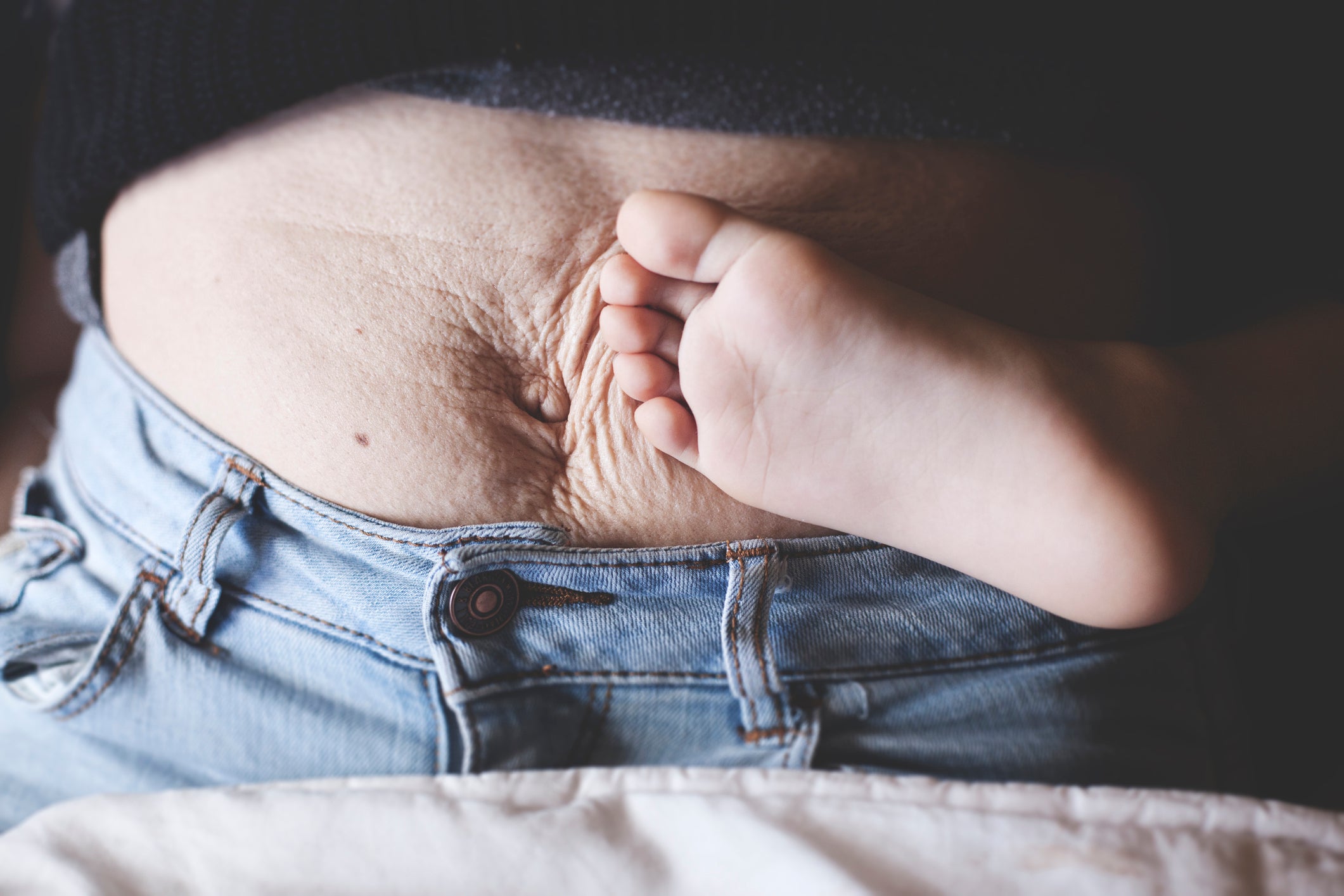
Obstetrician Explains What Actually Happens Behind The Curtain During A C-Section

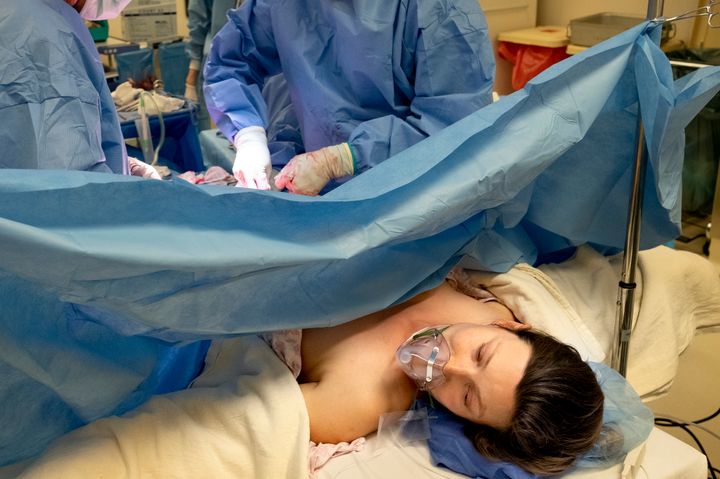
We all know vaguely what happens when you have a caesarean section – you’re given anaesthetic, a cut is made in your abdomen and then, minutes later, your baby is pulled out and passed to you. It’s a magical medical moment.

But it turns out there’s actually a hell of a lot going on from the obstetrician’s perspective. More than you could possibly know.

A fascinating Tiktok video explaining the anatomy of a C-section has been viewed more than 11 million times after showing just how complicated the surgery can be.

Using various sheets of coloured fabric and paper, Tina (@mamma_nurse) explained how there are various layers that surgeons have to cut through, before moving muscle out of the way and then manoeuvring past organs – and that’s before you’ve even reached the area where the baby is.

Most information given on C-sections by healthcare providers is lacking in details. Probably for good reason.

But if you’re the type of person who likes to be super informed ahead of birth – or you’re just really curious as to what the surgery involves – we asked Meg Wilson, an obstetrics and gynaecology consultant at London Gynaecology and the Whittington Hospital, to walk us through the process.

(Just a head’s up, there are some quite graphic images below.)

What happens during a C-section

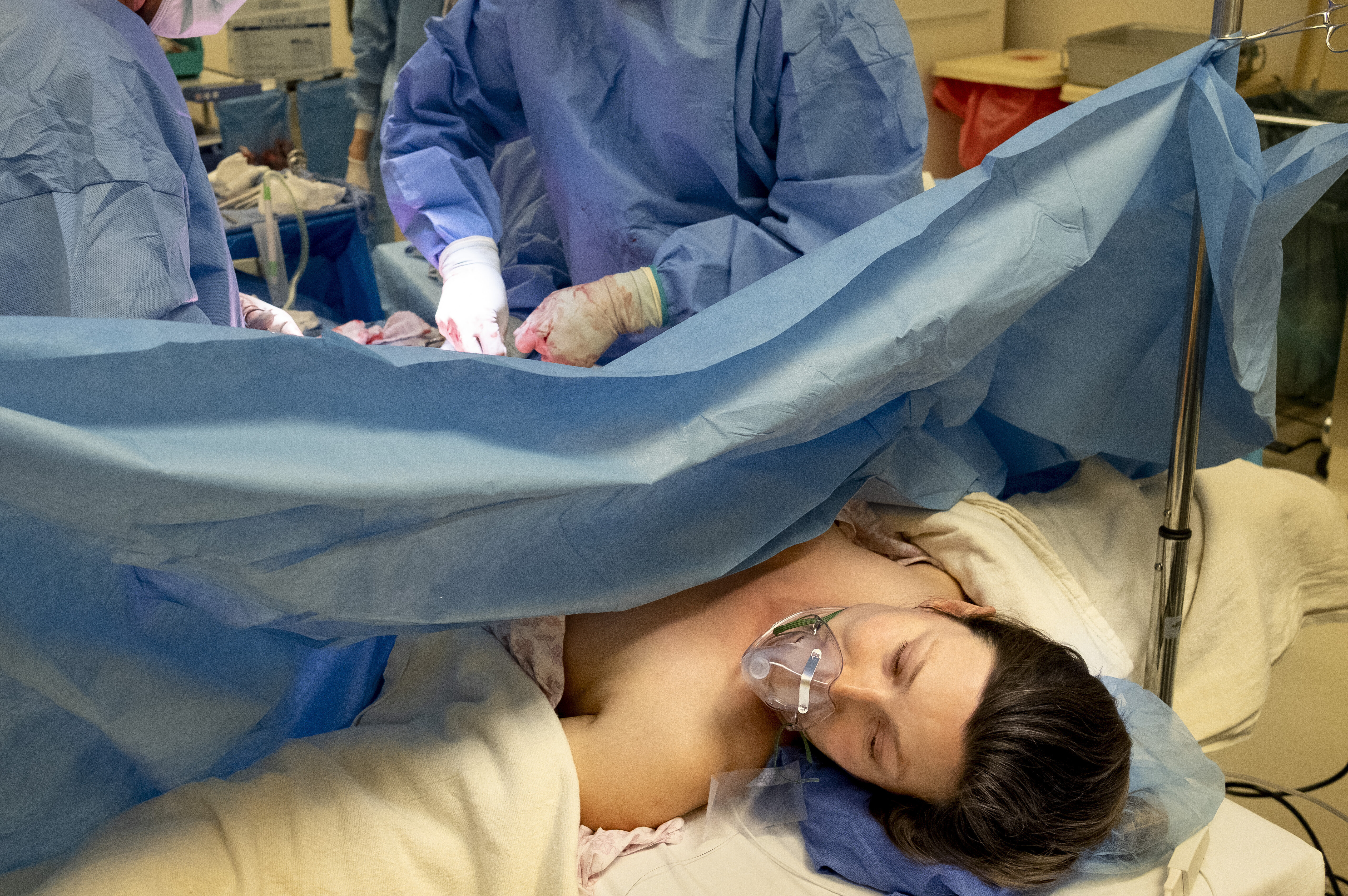
First up, you’ll be given some pain relief – either a regional or general anaesthetic – and a catheter is fitted. Your abdomen will be cleaned and a drape will be put up so you won’t be able to see the surgery unfold.

An obstetrician will make a 10 to 15cm cut along the skin at the bottom of your abdomen, just at the top of your pubic hairline.

The first layer they cut through is the skin, and that cut also goes through a layer of fat. “Then you come down on to the rectus sheath – a white fibrous layer – that is covering the muscles of the abdomen,” says Wilson.

They’ll make a cut in that as well and all these cuts will be done in the same direction: horizontally.

Byba Sepit via Getty Images

Next up, they come to the rectus muscles “which people know as their six pack muscles,” says the obstetrician.

These two muscles run as a strip down the abdomen and where they join together is something called the linea alba. It’s a weak area which surgeons can basically “poke through” to open it up, says the obstetrician.

“That takes you into your abdomen, by making that little hole, and then you’re into what we call the peritoneal cavity which is the proper wet inside of your tummy.”

Surgeons will make the hole a bit bigger by basically moving the two muscles apart.

“You’re pulling them out to the side to make a hole there,” says Wilson. “I think it’s really important that people know you’re not actually cutting muscles, you’re just shifting them apart.”

When in the peritoneal cavity, surgeons will get a nice view of the surface of your bladder and then the main event: the womb itself.

Now comes the really interesting bit. They have to actually move organs to get to where they need to be – so yes, they shift your bladder out of the way.

“You lift up a little bit of something called the peritoneum,” she explains, which is “like a sheet that runs over the womb and the bladder.” Surgeons will make a small hole in that “sheet” and this allows them to see where the bladder is attached to the womb.

“It allows you to push the bladder out of the way and push it downwards a little bit,” Wilson says, noting it only gets moved about 1-2cm.

In the operating room, they have a specially designed surgical instrument that goes in to protect the bladder and hold it down and out of the way.

The surgeon cuts into the womb (again, a horizontal cut in the same direction as the skin cut). The womb is a muscle so they expect to have some bleeding at this point as muscles have a strong blood supply.

In cases where a parent has placenta previa – where the placenta completely or partially covers the opening of the uterus – it might be a bit more complicated, she adds, and they might have to cut higher up in the womb or even through the placenta, which could result in more blood loss.

“Then you’re going to hit the membranes around the baby – the amniotic sac – and you see that bulging out when you reach it,” Wilson continues. “You keep going and make a little hole in that with the scalpel and usually lots of amniotic fluid all comes spilling out in a big gush.”

At this point it’s all about getting the baby out. In a straightforward pregnancy the baby will be in a head down position, so they’ll get a nice view of that.

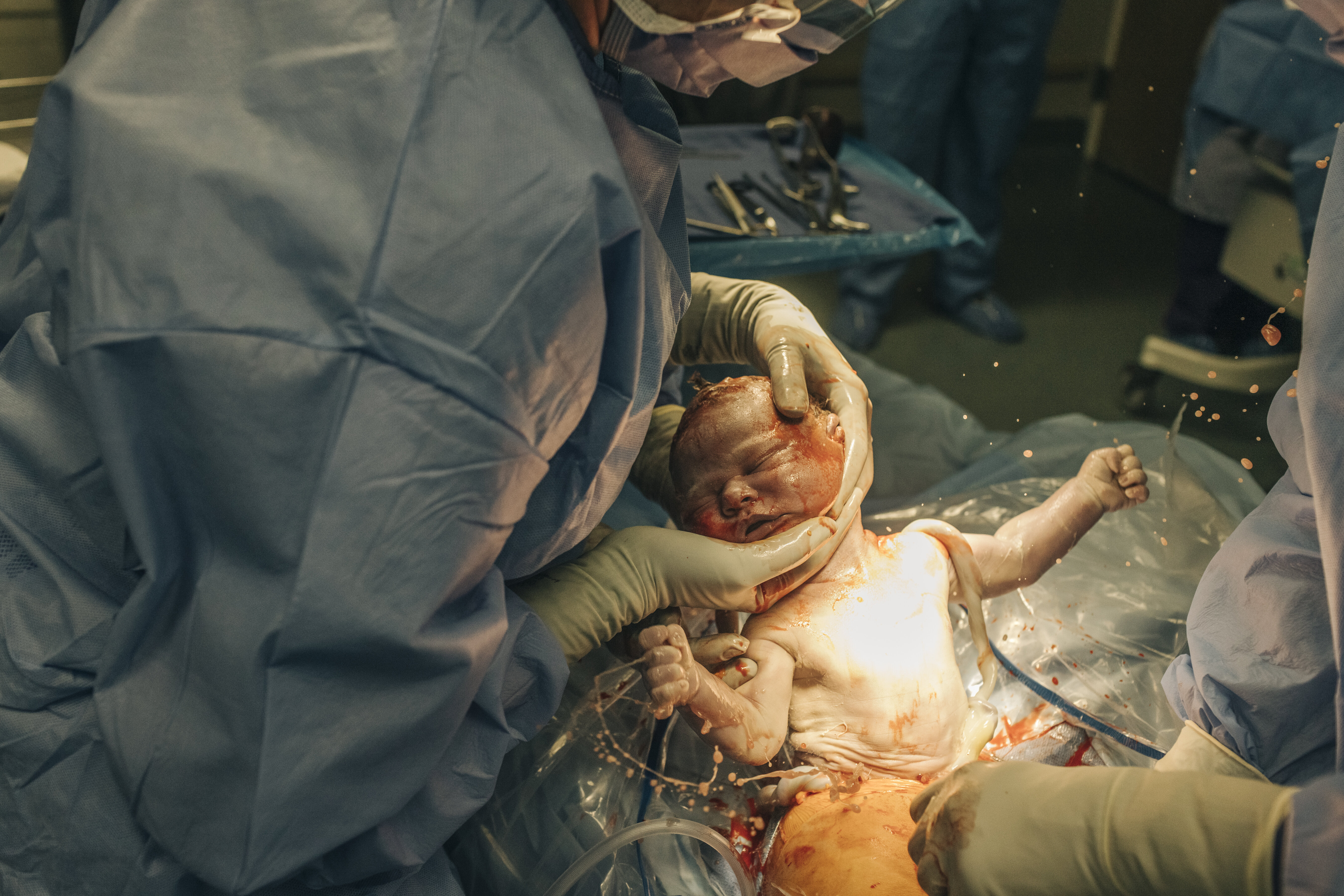
The retrieval process involves a bit of teamwork. “You put your hand in and slip your hand around the baby’s head – like a cupping action – and your assistant will put lots of pressure on the top of the woman’s tummy, pushing right at the top of womb where the baby’s feet are, and you’ve got your hands acting as a little slide for the baby to come out,” she says.

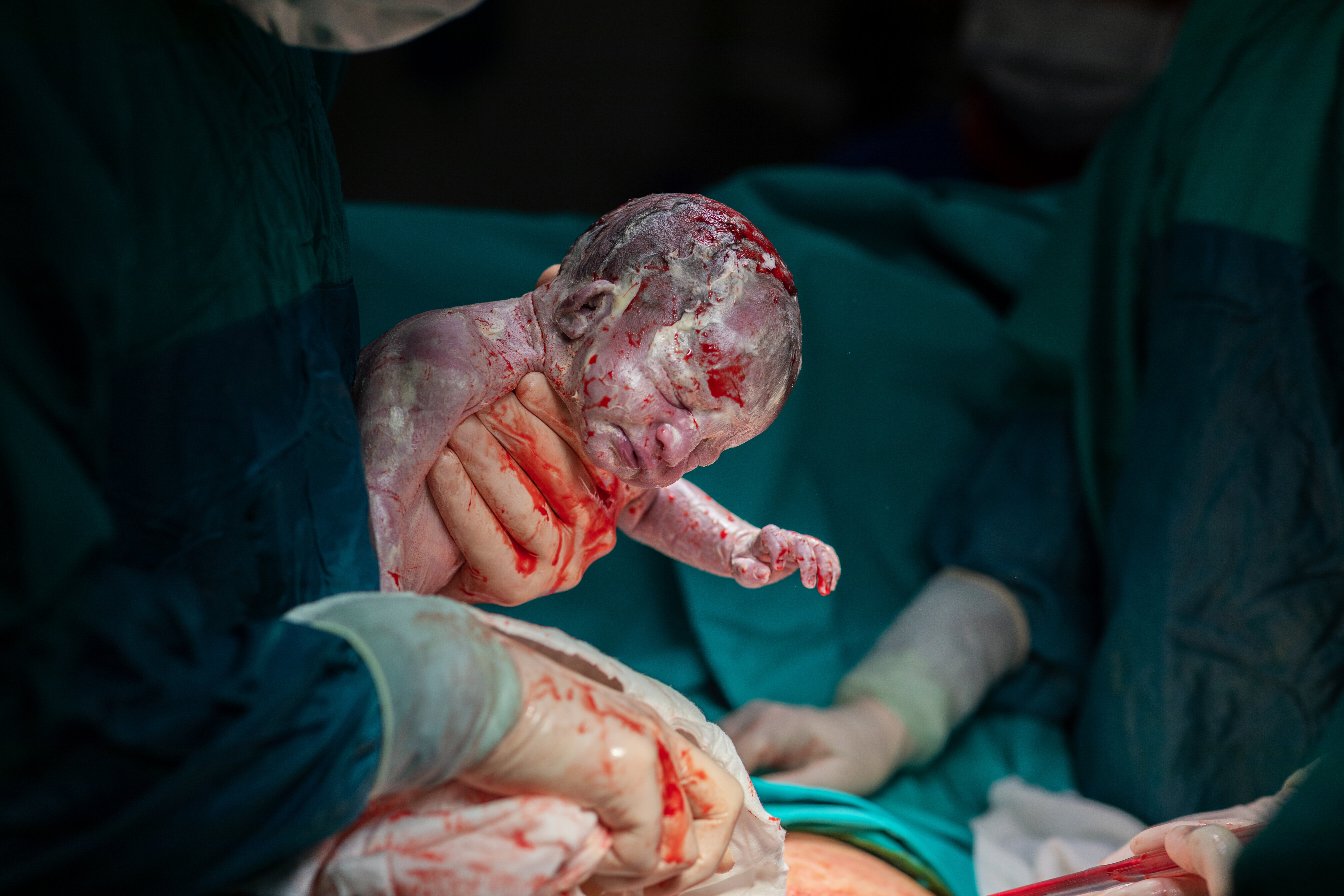
The head pops out, then comes the neck, and then there’ll be a bit more gentle pulling to deliver the shoulders one at a time, and then the body “slips out relatively easily after”.
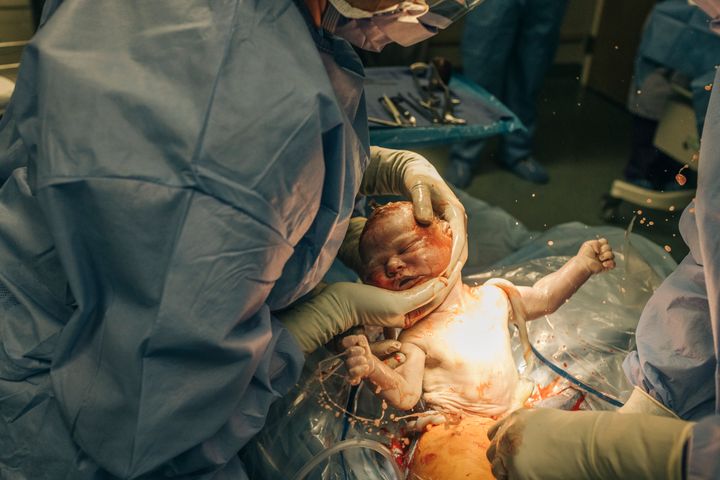
Doctors work to remove a baby from a woman's uterus during a c section.

Michael Hanson via Getty Images

Doctors work to remove a baby from a woman’s uterus during a c section.

At this stage the curtain is often lowered and the parent(s) can see their baby and hold them. They tend to let the umbilical cord pulsate for at least a minute to give the baby beneficial nutrients and then they’ll clamp the cord, cut it and hand the baby to the midwife who will wrap them up and dry them off.

“Then it’s a case of removing the placenta, which is still stuck on to the lining of the inside of the womb,” says Wilson. “We pull a little bit on the cord and the placenta will be detaching.”

After the placenta has been removed, surgeons will then clean out the inside of the womb which Wilson says is “a very simple action” of rubbing a swab around the insides of the cavity “to make sure there’s no little bits of membrane or last little threads of placenta that are still there”.

The mum will still be bleeding at this point so time is of the essence to get the womb stitched up again. Once that’s done, surgeons will take a moment to do a check and assess that there’s no additional bleeding anywhere.
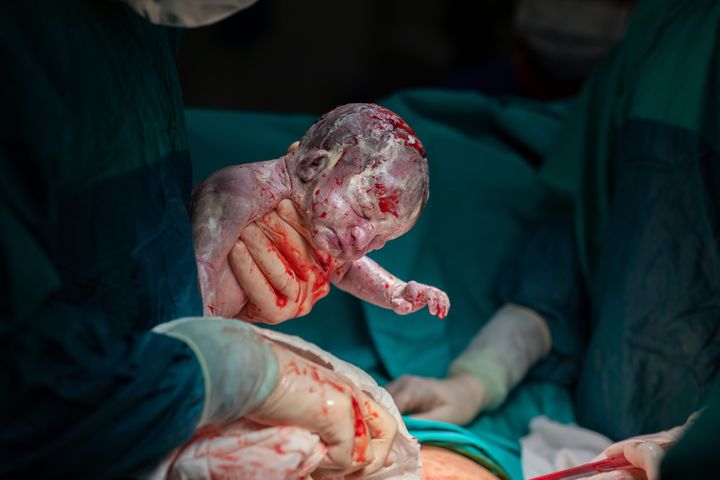
bymuratdeniz via Getty Images

At this stage, she says, they clean away any spilt fluid and blood that may have collected in the sides of the pelvis using a swab. They also check the womb is contracted and that the ovaries and fallopian tubes look normal.

“It’s just an opportunity to do a health check because you’ve got the tummy open and it’s a relatively straightforward thing to do,” she adds.

The instrument protecting the bladder is then taken out and “then you allow everything to fall back into place,” adds Wilson. “The bladder will go back to where it was originally placed and those two rectus muscles that you held open to get into the cavity of the tummy will fall back into place as well.

“You don’t routinely close the rectus muscles … they will come back together naturally and reform their meeting point.”

The next layer that’s surgically closed is the rectus sheath, which is the layer just beneath the fat. “We sometimes put a stitch in the fat layer but for most women we then just close the skin with another running stitch,” she adds.

“By routine we remove all the drapes and clean any collected blood that’s in the vagina,” she adds, “and make sure there’s no clots of blood or anything.”

At this point they might put in a painkiller suppository and a dressing is placed over the c-section wound. The whole process is complete in less than an hour.
Share Button

This Is How Much Debt Maternity Leave Is Putting Women In

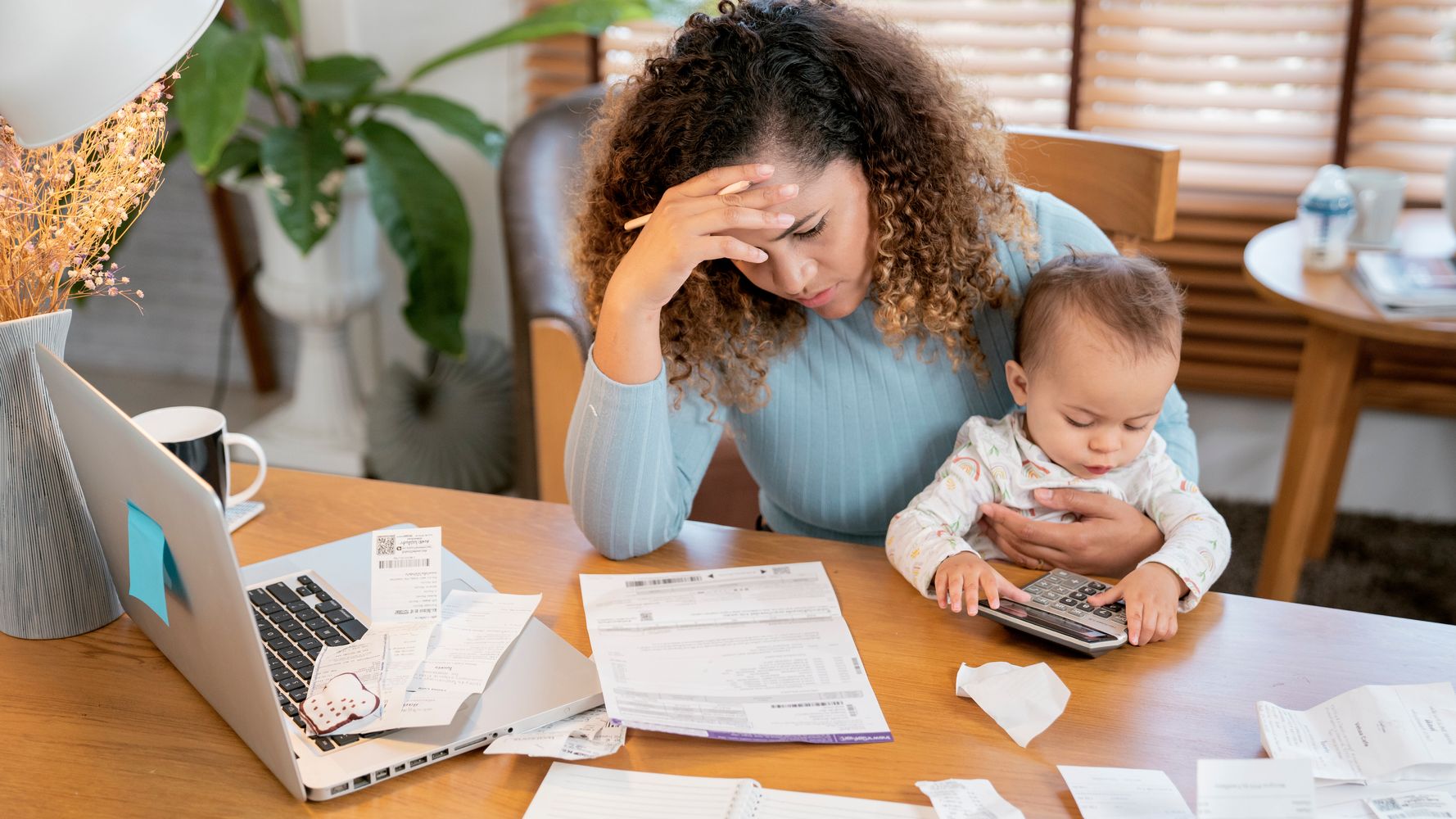
Babies can come at the most surprising moments in life. And for many people, they arrive at a point where your personal finances aren’t at their strongest.

In fact, some women entering maternity leave are doing so without any savings at all.

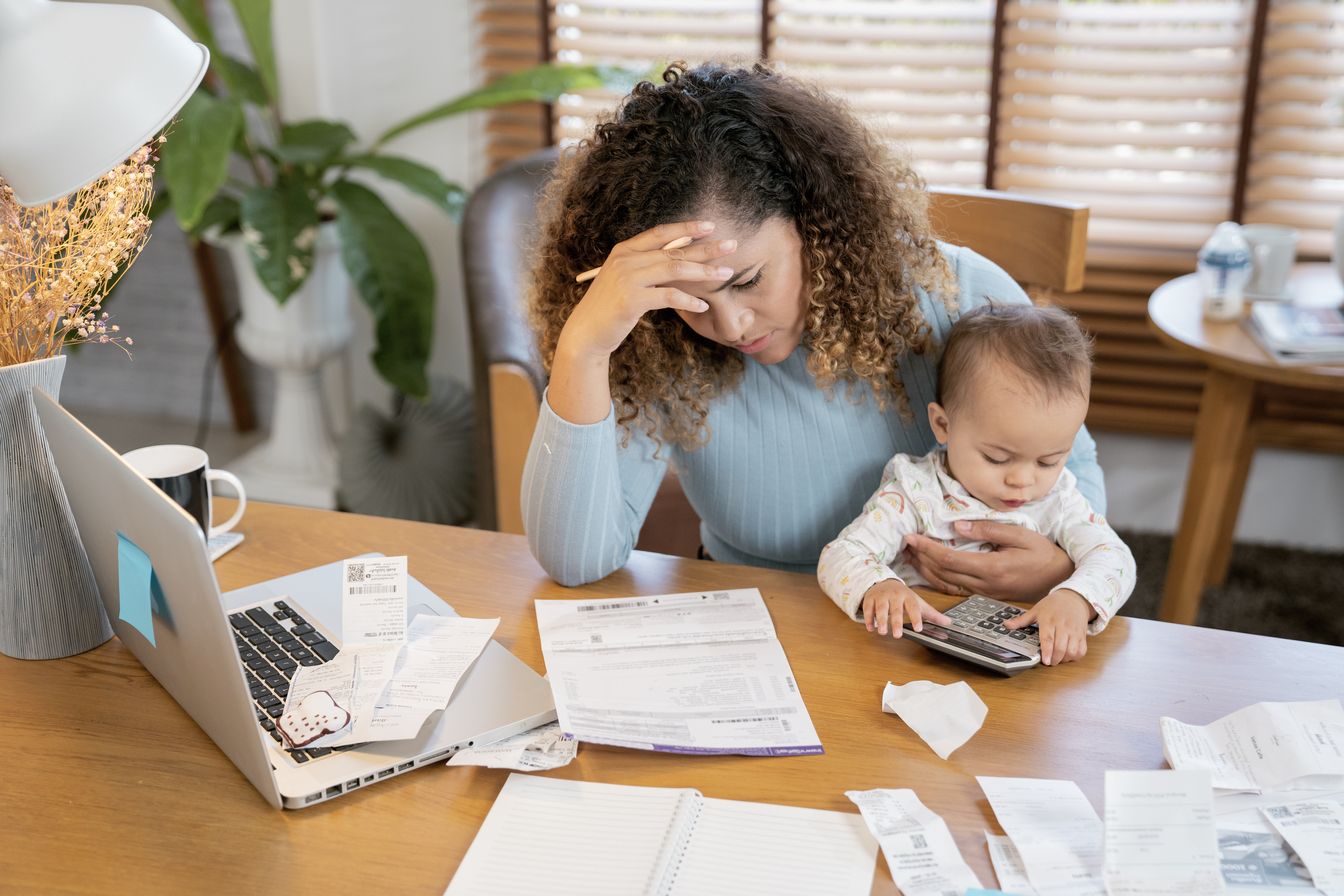
Reduced pay during this time coupled with the costs of a newborn means many mums have to borrow money to get by. And some are being left in debt.

A study of parents by finance company Credit Karma found that a quarter of parents get into maternity leave without any money saved, while 26% of women get into debt while on their maternity leave.

The amount in borrowing has increased by £560 since 2018, the company says, taking the average borrowed per parent up to £2,800.

Those with student loans face the harshest outcomes as the interest rate on those loans remains seriously high while they are on leave and unable to pay it off.

Credit Karma said women with interest loans accrue an average of £1,770 loan interest in just six months of leave.

Given the cost of living crisis, which is seeing bills go up as never before, this paints a dire picture for new parents.

Akansha Nath, head of partnerships at Credit Karma UK said: “Women are often disadvantaged financially throughout their life, and the responsibility to give birth plays a huge role in this gender disparity.

“At a time when the cost of living is affecting most people, and every penny counts, it’s more important than ever that women take advantage of any support available to them.”

These debts, even if eventually paid off, can then follow women into life, affecting their credit score and therefore their ability to buy homes and other goods.

Credit Karma said maternity-affected credit scores can set women back an average £17,000 in interest over the course of their lifetimes.

If you are struggling with maternity debt, there are resources that can help.

Step Change has a benefit checker, as well as list of grants available to expectant parents. The website also offers free money management tools designed to help people with their finances, without judgement.

Share Button

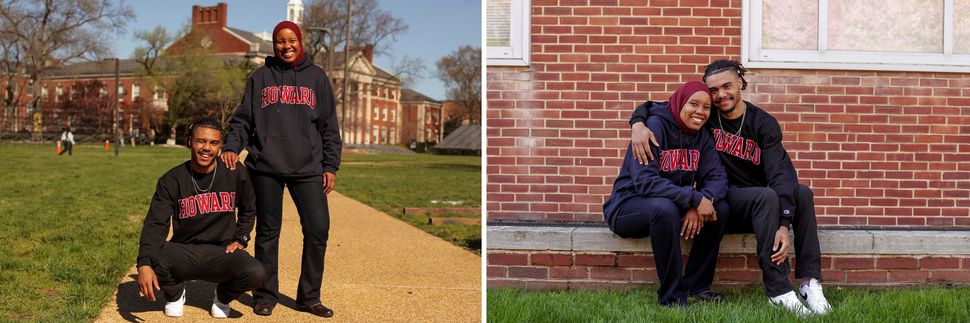
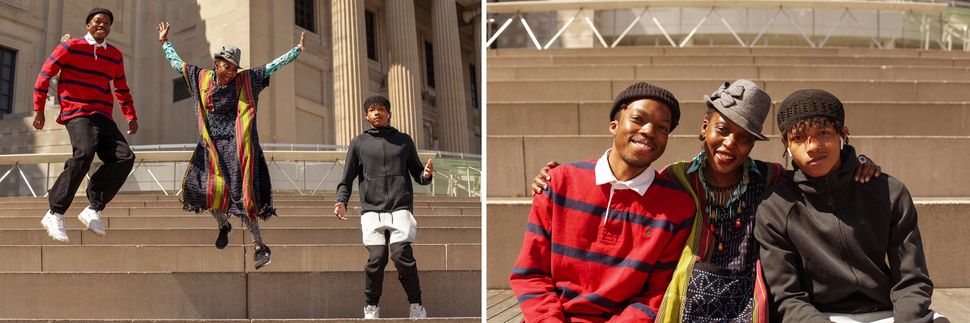
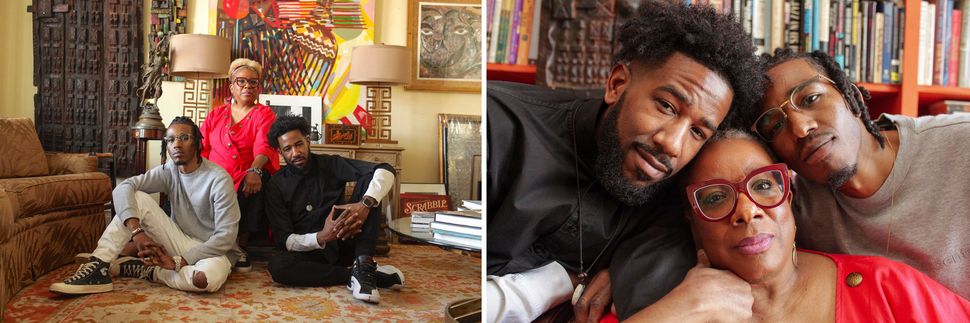
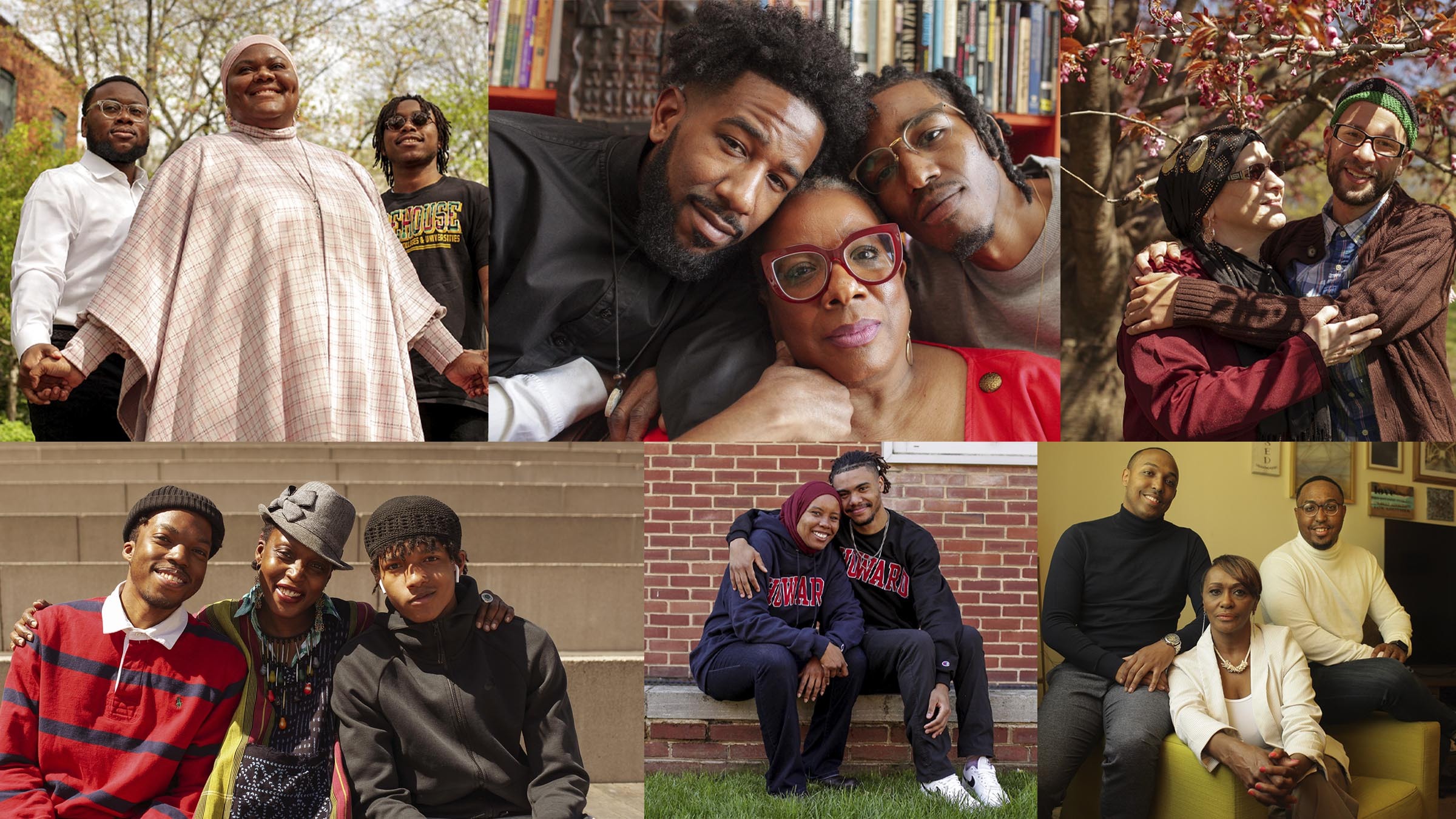
These Photos Show The Unique Bonds Between Black Mothers And Their Sons

I’ve always found it endearing the way men pay homage to the mothers and matriarchs in their lives. We love songs like Tupac’s Dear Mama” and Bill Withers’ “Grandma’s Hands.” We witness the robust relationship between Kanye West and his late mother, Donda, who was undoubtedly his biggest fan, in the documentary Jeen-Yuhs: A Kanye Trilogy. We heard the gut-wrenching cries of George Floyd calling out for his mother moments before his death in 2020.

Black motherhood has often been centered in the analysis of the Black family — and for Black men, the maternal connection is vital, political and liberating. These affirmations are dedicated to women whose labor and love are far-reaching and priceless. The vocal appreciation is always welcomed, especially when the work of mothers has often been overlooked.

“My mother is a force of nature. If she wants to get something done, it’s getting done. I think that’s been pretty evident in the course of her journey,” said Sulaiman Rashid, a 20-year-old college student in Washington, DC, whose mother raised four kids. “My siblings and I have different career paths, but we are all grounded in the desire to create change, and that stems from my mom’s passion to help and to serve others and to aid in the betterment of the world.”

I wanted to explore the relationships between sons and their mothers. In this series of portraits, I photographed families and asked the sons to share some perspectives of the role their mothers had in their lives. From guidance on love, career and education to artistic inspiration and global travel, we see an expansive view of the strong bonds between Black sons and their mothers.

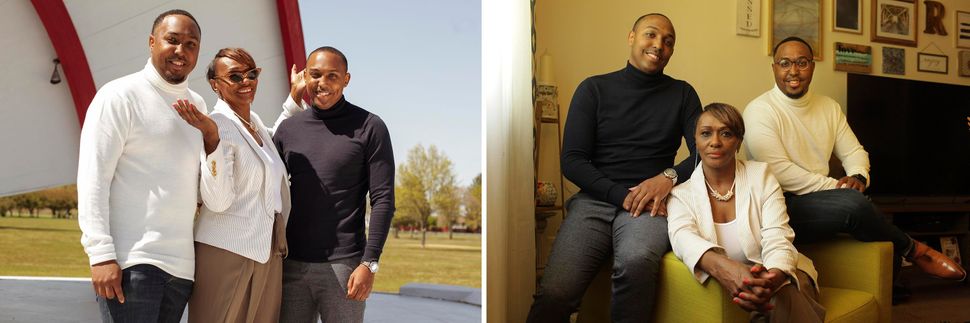
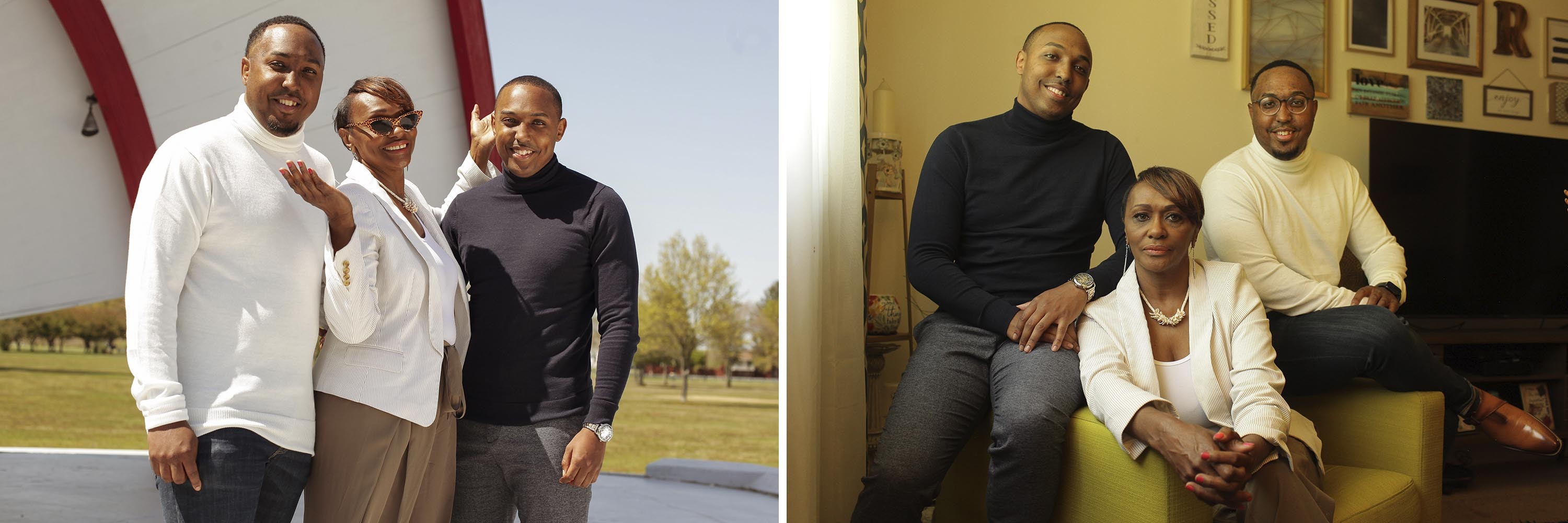
Diane Redfern

Sons: Christopher and Charles Tarpley

Laylah Amatullah Barrayn

My mother, commonly known as Lady D, is a resilient and confident mother. She has a jazzy personality and is a strong woman of faith. She raised my brother and I to become the gentlemen we are today. – Charles
My mother’s favourite saying is “I’m gonna tell you what God loves … the truth.” This is what I admire about my mother the most, her love of God. She has such a strong will to never give up no matter how tough things may be raising twins. – Chris

Tamara Redfern

Sons: Yaseen Ellison and Mujahid Ellison

Laylah Amatullah Barrayn

My mother has always been a source of light in my life. Across time and space – from my earliest memories in the US to years later and continents away – this has rung true. The continuum of joy and love surrounding my mother could not be summarised by a discrete moment. How would I describe my mother, who first showed me the magic and vibrancy of life? Who taught me firm confidence in my ability to grow, adapt, achieve and inspire?

I realise I don’t have to isolate any single experience to highlight who she is when everyone who encounters her is liberated by her grace and kindness, and when all spaces she walks through are automatically elevated by her presence. It is no wonder Allah says heaven lies at the feet of the mothers. I love you, Mom. – Yaseen

When I think of my mother, my thoughts often associate her with the moon. Her radiant, smiling face is akin to the light of the moon on a clear night sky. Her sound judgment and listening ear have served as a therapy to the many problems I’ve come to her with over the years. Her belief and willingness to lend a helping hand to me, unwavering, in times when I felt all was lost. Time after time, failure after failure, my mother has always been by my side. The best person to have around when sharing good news, as her pure, bona fide joy for you can be experienced by anyone who has interacted with her. The funny thing is my mother has taught me virtually everything I need to survive and thrive on my own, but hates it when I’m not around. There’s no better feeling than being capable of being alone but still having someone who never wants you to be alone. She’s my light and my guidance; my mother is my moon. I love you, Mom. – Mujahid

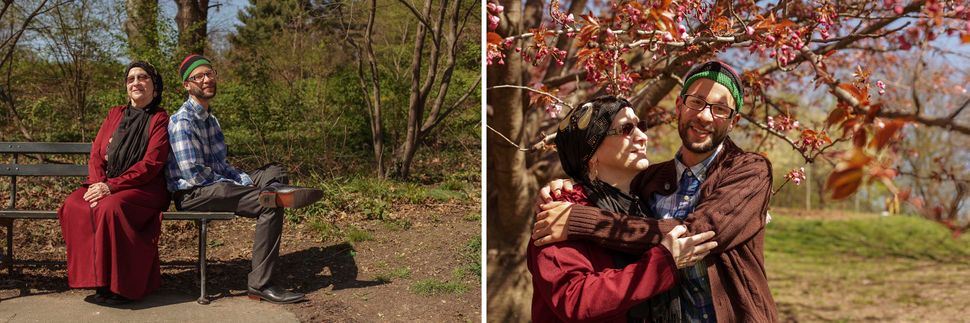
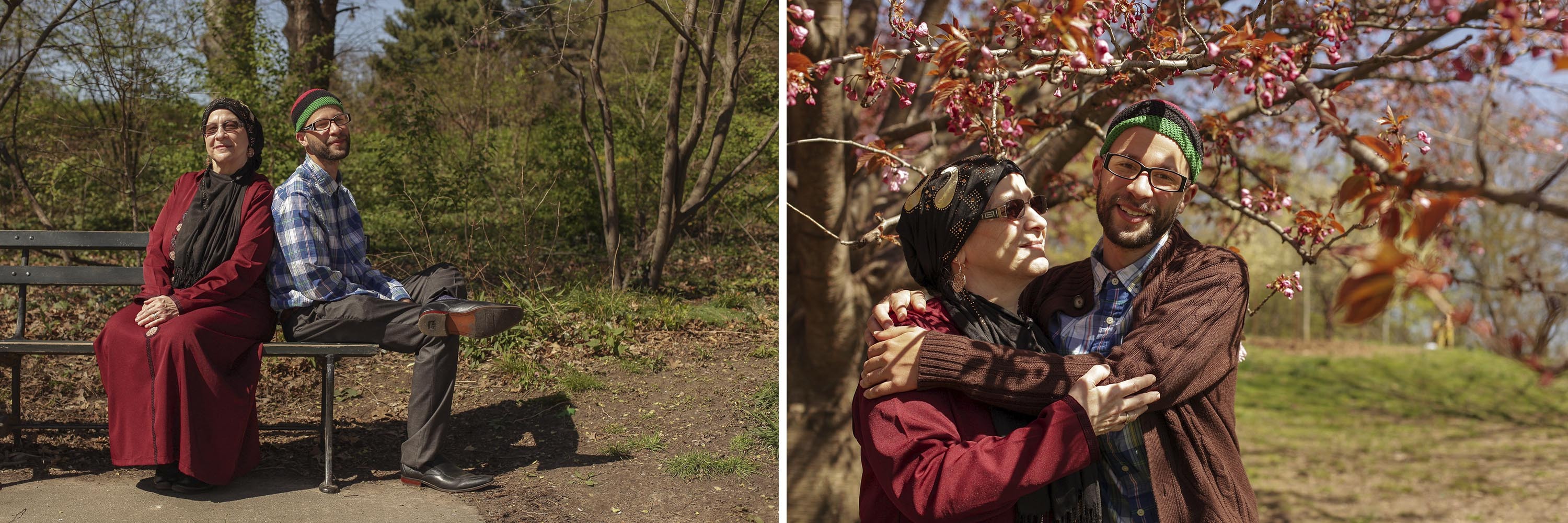
Aisha Hassan

Son: Bilal Hassan

Laylah Amatullah Barrayn

Ummi is very special to me; she means the world to me. She is my friend, travel buddy and confidant. I love being around her. She raised me into the young man that I am today. She is generous, caring, loving and not afraid to speak her mind. She was literally my first teacher. I was homeschooled from kindergarten to sixth grade by her and my father, who has since passed away. Back then, we didn’t have all of the home-schooling resources that exist today. Now, homeschooling is this big thing with programmes that you can do online. She created an amazing curriculum for us. She was extremely resourceful in making sure that we had an optimal learning experience. We did so much with very little. We had so much fun on our extended learning library trips. She is a genius. I could never repay her for how much she has poured into me. – Bilal

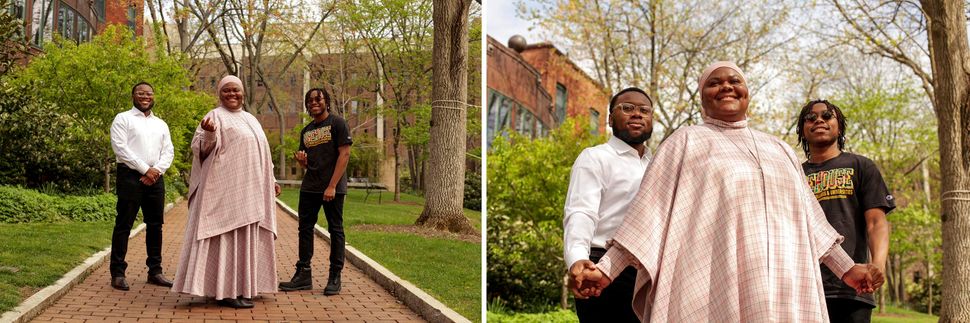
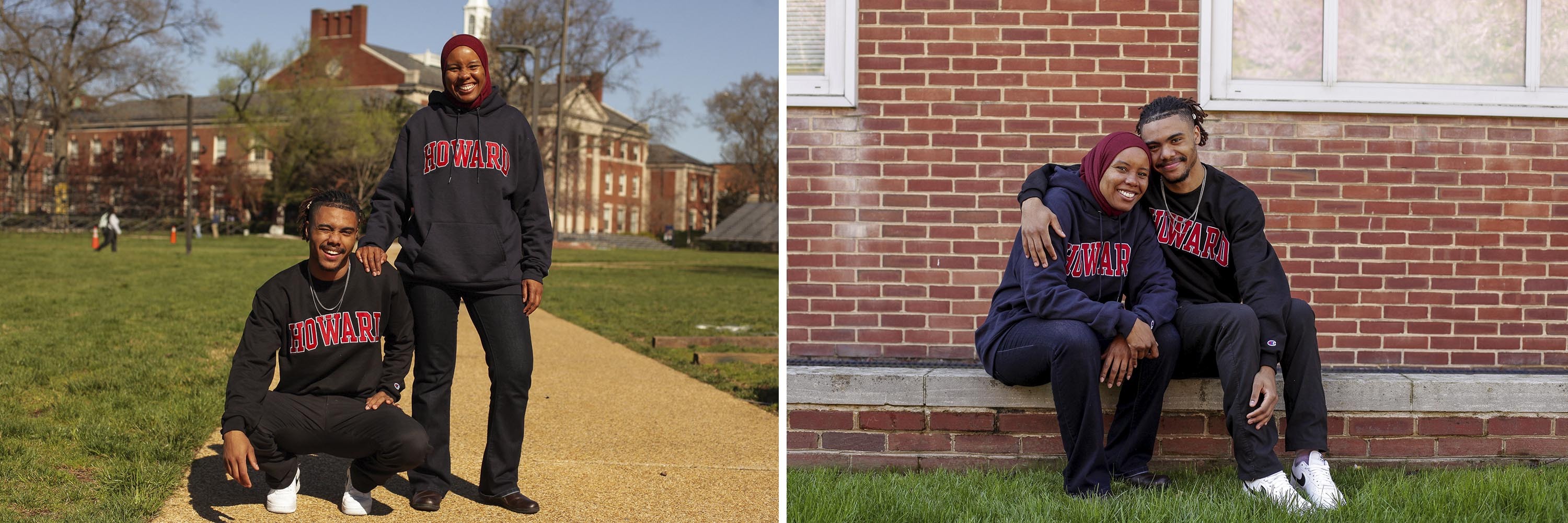
Jamilah Rashid

Son: Sulaiman Rashid

Laylah Amatullah Barrayn

My mother is a force of nature. If she wants to get something done, it’s getting done. I think that’s been pretty evident in the course of her journey. My siblings and I have different career paths, but we are all grounded in the desire to create change, and that stems from my mom’s passion to help and to serve others and to aid in the betterment of the world. I love her because she gave that to me. I can’t describe all the ways and reasons why I love her. As I grow into a man, I hope that my need for her doesn’t wane or fade. When I was younger, I needed her to read me bedtime stories, and what I need from her now is guidance in selecting a companion and partner. She did a really great job, and I’d be very blessed to find someone like her. I’m grateful to her every single day for who she is as a mother, wife and a person. – Sulaiman

Adama Delphine Fawundu

Sons: Amal Buford, Kofi Buford and Che Buford (not pictured)

Laylah Amatullah Barrayn

My mom set the standard and laid the foundation. She’s always been so driven and always accomplishes what she sets her mind to. There are so many roles that a mother can fulfil: a provider, a protector, a friend, an inspiration. She does it all. Some of my most fond memories are of us getting up really early and riding the subway to school. Even though it was the crowded subway, it felt like just us; it was so warm. We would have some of the best conversations. We would talk about anything and everything. We would read together; we would do math problems together. I love thinking about those times. It makes me nostalgic. You don’t realise how important that is, and I don’t ever want to take that for granted. It’s never been a question as to whether my brothers and I were her priority. She would drop us off and then have to go work her own job. It’s a job within a job. I’m older and I live on my own; I’m independent, but my mother is still my biggest inspiration. – Amal

My mother introduced me to so much. The knowledge and experiences that she imparted on me shattered the limitations that would otherwise be present in my life. It’s the reason why my creativity flourishes. We’ve traveled together. She took me to Sierra Leone, New Orleans, Phoenix, so many places. When we travel, we have fun, but we also learn about the land, the monuments, the historical connections. Our travels showed me the beauty of different cultures and that there are many ways of living. I love my mother. She always supported me. – Kofi

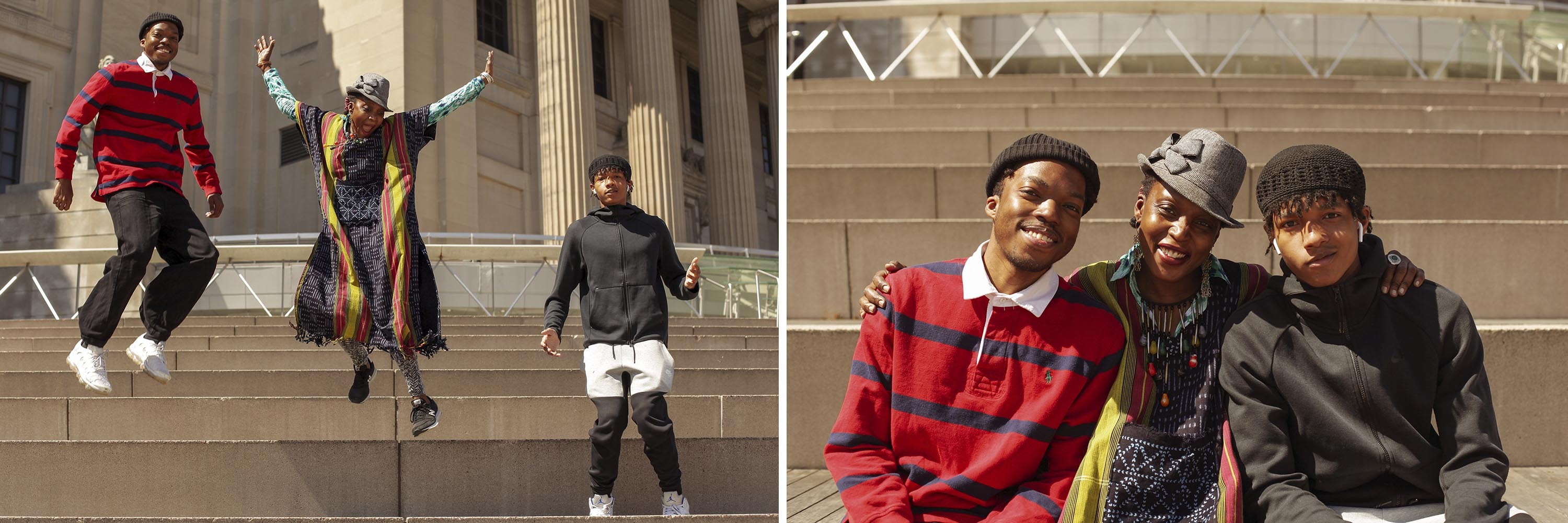
Karen D. Taylor

Sons: Chenzira Taylor Lewis and Siyaka Taylor Lewis

Laylah Amatullah Barrayn

I have always been enamoured by my mother’s unadulterated focus and ability to create as an artist. It’s always helped me to see her not only as a mum, but also as an artist and creative in her own right. And it’s been inspiring to see her flourish throughout my life in her different creative identities. She always encouraged my autonomy and inquisitiveness and aided my creative spirit. Her determination demonstrated that my dreams and creative endeavours are attainable. ― Chenzira

I see my mother as a community pillar, a preservationist of Blackness and Black culture and Black excellence. She is a preserver of the relic, an educator, a nurturer, a policer of integrity. I love the uniqueness of who she is, her quirks, her silliness, her strength and intelligence. She is very New York to the core; she is an intellectual, a scholar with the grit of the jazz nightlife scene. Most definitely a music snob, jazz and blues head, creatively impulsive, loving, laid back and full of big laughs. At the core, she is serene. She is literally the perfect yin and yang of creativity and strong love. – Siyaka

Share Button

NHS Start4Life Slammed For Advising Breastfeeding As A ‘Weight Loss Hack’

The NHS has been telling new mums to breastfeed in order to lose weight and get back into shape after giving birth. Yes, really.

On its Start4Life website – a programme that supposedly supports pregnant women and new mums – the health service told women about ‘seven things you might not expect when your baby’s born’.

Number seven on the list was the fact that you might look pregnant for a while after giving birth.

“It can take six weeks for your womb to go back to the size it was, and even longer to lose any extra weight,” the site said. “Breastfeeding is a great way to get your body back, as it burns around 300 calories a day, and helps your womb to shrink more quickly. Also try to eat healthily and take gentle exercise.”

The advice sparked outrage online after it was shared by London-based writer Maggy Van Eijk, who has a three-year-old daughter and is 38 weeks pregnant with a baby boy.

“Toxic AF from the NHS’s week by week pregnancy guide,” she tweeted ”[Breastfeeding] is not a weight loss tool. Your body never went anywhere – you don’t need to get it ‘back’, it’s just changing, evolving and growing and it will keep doing so until you’re deceased.”

HuffPost UK contacted the Department of Health and Social Care about the criticism and the wording on the NHS site has now been changed.

Still, it’s worth asking how something like this made it onto the NHS website in the first place.

Speaking to HuffPost UK, Van Eijk says she’s found most of the week-by-week guide helpful during pregnancy, but it was “such a shock” to see Start4Life include breastfeeding as a “weight loss hack”.

“It was such outdated language, really steeped in diet culture which new mums especially really don’t need,” she says. “I did breastfeed with my first but it was hard work and I pumped at first because I was so adamant to keep trying. The pumping and feeding became an obsession.

“Instead of letting go and opting for formula I filled my fridge and freezer with milk. Basically equating the amount I could produce with how good of a mother I was being. It wasn’t healthy and there are so many other signifiers of good parenting we should be showing new mums. Not how you feed your baby and especially not what your body looks like.”

Other women share her view, with many on Twitter pointing out that this “tip” only added to the shame some women feel if they can’t breastfeed.

Start4Life was initially a Public Health England initiative, which now falls under the UK Health Security Agency (UKHSA). Start4Life content is published on the NHS website, with NHS-branded leaflets also given to pregnant women.

HuffPost UK contacted each of the bodies, as well as the Department of Health and Social Care, for response to the criticism.

A Department of Health and Social Care spokesperson said: “The Start4Life website provides guidance and advice for new and expectant families.

“Our insight has shown that some women find this information helpful, however, we keep the wording of public health initiatives under review, and in response to some of the feedback received we have updated the website today.”

The Start4Life advice now reads: “It can take six weeks for your womb to go back to the size it was. Breastfeeding can speed this process up as it makes your womb contract. Find out more about your body after the birth on the NHS website.”

Still, the response from women is clear: new parents are already under enough pressure to be “perfect mums” and “snap back into shape” after giving birth. The language used by a publicly-funded initiative really does matter.

Keeping a tiny human alive is a huge achievement – it doesn’t matter what size you are or how many packets of biscuits you consume in the process.

Update: This article has been updated to reflect that the Start4Life website has amended its advice.

Share Button

This Picture Of A Black Foetus Went Viral. We Spoke To The Illustrator

During medical training, in health textbooks, in posters or at the doctor’s office, we often see health conditions or body parts represented with white figures.

Many of these images seem outdated or inaccessible to large parts of the population. Now, one medical student has taken matters into his own hands.

Chidiebere Sunday Ibe, 25, from Ebonyi State, Nigeria, began illustrating Black patients, children and babies. Recently, his drawing of a Black foetus and mother has gone viral on Twitter and TikTok, amassing hundreds of thousand views and likes.

The image has clearly struct a real chord with people, especially those not accustomed to seeing their skin tones reflected in standard medical imagery.

The aspiring neurosurgeon wanted to show people what certain conditions look like for Black people – and also normalise the diversity of our bodies.

For some people, it was the first time they’d seen a Black foetus and many called for more representation like this.

When we spoke to Ibe about his illustrations, he told HuffPost UK: “This image was created like every other image, I never expected it to be viral. The whole purpose was to keep talking about what I’m passionate about – equity in healthcare – and also to show the beauty of Black people.

“I feel great seeing it going viral, I never expected it and it feels good that the message is out and it will challenge current systems.”

Ibe points out that we need to see more images like this, and more people behind the scenes creating them.

“We don’t only need more representation like this, we need more people willing to create representation like this, this would help make such images more accepted,” he says.

Chidiebere Ibe is an aspiring neurosurgeon.

Chidiebere Ibe

Chidiebere Ibe is an aspiring neurosurgeon.

For Black people working in healthcare, seeing Ibe’s images has meant a lot – it’s not often they see their race reflected in the industry. Rebekah Agboola, a 27-year old nurse from London, says the picture made her do a double-take.

“The image was shocking,” she tells HuffPost UK. “I’ve never seen a Black baby in an image like this before – it makes you take a second look. It shouldn’t be shocking as it’s a simple medical illustration. However, having started my journey into this world as a sixth form student looking at medical images, I didn’t commonly see illustrations of Black and brown people unless it was something to do with skin conditions and even then it was rare.”

Agboola says such illustrations go beyond representation to having a positive impact on people’s health and wellbeing.

“I think that it is important to make sure that there is more representation because it will greatly improve the treatment of our patients,” she says.

In August 2020, as part of Black Ballad’s weeklong takeover of HuffPost UK, Black women spoke out about the discrimination, microaggressions and substandard care they received during pregnancy, shining fresh light on the findings of a major motherhood survey, also conducted by Black Ballad.

“Routinely, Black and other minority patients do not receive the same care due to initial symptom presentation and if it is made clearer that our symptoms can sometimes look different and that clinicians need to give their examinations more thought we can help reduce this issue,” Agboola says.

“This picture shocked me but I was so glad to see it and want to see more.”

Rebekah, a nurse, has never seen an image like this before

Rebekah Agboola

Rebekah, a nurse, has never seen an image like this before

Since the release of Ibe’s pics, the Royal College of Midwives (RCM0, has also said it will be amping up efforts to diversify.

Jane Bekoe, the RCM lead on its Race Matters programme, told us: “Positive representation of race is important in all aspects of our lives and society, because the world should reflect accurately all the people living in it. This applies just as much to portrayals of Black and minority ethnic people within healthcare, so illustrations such as this are a positive and necessary step forward towards real equality for us all.”

The RCM is working to ensure changes happens, Bekoe added, following its first celebration of Black History and Culture Month this year. In January 2022, it will hold a webinar on decolonising the midwifery curriculum, which will be led by the RCM’s student midwife forum.

Here’s hoping things do actually change.

Share Button

How Do You Talk To Kids About Trauma? This Mum Needed To Know

In 1994, one of Rwanda’s darkest moments in history took place – a genocide that saw the death of 1,100,000 people – of which 800,000 people were Tutsi, an ethnic group that were minorities in comparison to the majority Hutus.

At the time, Alice Musabende was 13-years-old. Her parent, grandparents, and siblings all died during the war. The now mum-of-two had only a few surviving members of her family; her aunt, uncle, and their kids. In 2005, as part of her studies, Musabende left Rwanda for Canada, building a life for herself; she married (but has since separated), and had two precious boys.

She began working as a journalist and academic, later moving to the UK to work at the University of Cambridge. But despite her writing and hours of research into what happened, Musabende found it almost impossible to articulate the reality of the violence which was unleashed on her people.

“I have spent so many hours, countless of times, writing and reading and trying really to capture the magnitude of the horror. And I still haven’t,” she tells HuffPost UK.

Now, her two children, aged five and eight, have questions about their grandparents, their home in Rwanda, and how their mother feels about it all.

So, in an attempt not to “run away from her demons”, Musabende had to find a way to voice the unspeakable horror she endured at such a young age. Which is how she began making a radio show with the BBC to start the story.

In Unspeakable, Musabende asks for help and guidance from other genocide survivors, second-generation holocaust survivors, a therapist who works with AIDS orphans in South Africa, and a publisher of stories in Rwanda.

She explores identity, generational trauma, and the place of storytelling and with the help of these other voices, she tries to piece together the answer to one fundamental question: how do I tell my kids about my trauma?

Mum-of-two Alice Musabende is figuring out the words to explain what happened in Rwanda 27 years ago

Mum-of-two Alice Musabende is figuring out the words to explain what happened in Rwanda 27 years ago

Firstly, says Musabende, she has had to come to terms with her own past.

“For the last 20 years, I’ve focused so much on me,” she explains. “I’ve done therapy, I tried to figure out how to live with PTSD, to understand how I will actually live a life without family, without anyone. I thought I was really getting a good handle on it. Then I moved here and in the middle of trying to reconfigure being a single parent and my work, I remember just one day thinking, ‘Oh no, I’m going to have to tell the boys about the genocide.’

“That bit was way more complicated than anything else I have done, mainly because the story of the genocide, for me, is extremely painful, but I think it’s painful for all the other survivors as well. Because I’ve spent so many years trying to run away from it, it was so hard.”

Growing up, Musabende was aware of the ethnic persecution of her Tutsi people – her family members had been arrested on suspicion of being part of rebel forces, and her granddad’s land had been seized.

After travelling to Ottawa for her graduate studies, Musabende recognised signs of PTSD in herself. She explains: “In school I couldn’t really function. I had a really difficult transition, I did so many things that we now associate with post traumatic stress disorder but at the time no one told me what it was.

“It wasn’t until I started different forms of therapy to make sense of what I was going through. Through those sessions, I wanted to find the essence of who I was, I wanted to be okay. I wanted to have joy, and I wanted to be able to use my brain to serve, to study and perhaps maybe even teach.”

In 2017, Musabende went back to Rwanda for the first time. Two years later, she took her two sons to show them where their family came from – so they could understand the great beauty, as much as the trauma, of her birthplace.

“I remember arriving in Rwanda and looking at these tiny humans and thinking, ‘This is their home, but I don’t know if they know that this is their home as well.’ That’s when things just started percolating in my head, I was like: ‘How do I do this, what do I say?’ She took her eldest boy, six at the time, to where her house used to be – now just a plot of land since it was destroyed in the genocide.

“I told him that’s where my home used to be and that’s where my brother and sister used to live. We were walking on this plot, he looked down, saw a piece of cloth, picked it up and said, ‘Do you think this was your sister’s dress?’ And I hadn’t seen that one coming. It was a bit of a struggle but I couldn’t cry.

“My words just left me. That’s when I realised he has questions. He has real questions where he’s trying to figure out where he fits into a story that’s so obscure and mysterious to him.”

Alice has since taken her children to Rwanda to show them the country

Alice has since taken her children to Rwanda to show them the country

And Musabende had questions of her own, which is how the documentary came about. “I couldn’t write about it,” she says. “I don’t know how to write about it, so I thought to just ask people what they think.”

She was terrified. “I thought, ‘Oh, am I traumatising my children by telling them these horrible things?’ Previously I’d thought it’s best not to say anything as you don’t upset them. But I know that they want to know. They’re not asking tough questions. Their questions are like ‘Do you miss your mum?’ or ’Do you think your mum would have loved me?’Those things are so difficult because they send you right back to that place where you wish you didn’t have to go.

Unspeakable is Musabende’s attempt to bridge the gap between that place she has avoided for the past 27 years “and the place I am in now, as a parent hoping to raise healthy, well-grounded, empathetic children.”

Alice's radio show Unspeakable comes out today

Alice’s radio show Unspeakable comes out today

It’s not just genocide she has to talk to her children about. By virtue of being a mother to two young Black boys, Musabende knows that she will become accustomed to difficult conversations.

“Raising Black boys in a western culture that’s always telling them so many things about them that are false, it’s an even bigger responsibility to tell them about where they come from, what happened to them and tell them exactly who they are, so that when they get out there, they know in their hearts that they’re valued, that they are loved, that they are cared for.

“It is my job to tell my kids who they are. I haven’t quite figured out how to tell them the full story of my history so you’ll see in the documentary, I’m still learning, it’s a long journey.”

Unspeakable airs on BBC Radio 4 on Fridays and is available on BBC Sounds.

Approaching conversations about trauma

Alice Musabende wants to share the following advice for fellow parents.

First of all, accept you don’t know how to say it all

“That realisation that I don’t know how to talk to my children was the beginning of my quest because for a very long time, I just pretended that it wasn’t there. Once I sat down and I thought, ‘I know I have to, and I don’t know how,’ that was the beginning.”

Find a safe space to make sense of the trauma yourself

“I wouldn’t have been able to have this conversation five years ago. I had to do so much of my own work in self-healing, therapy, in figuring out how to listen. It took me so much time to get here.”

Seek guidance, talk to others who might understand

“You’ll be surprised about how many people are struggling to address these serious issues with their children. There are parents everywhere trying to figure out how to say things.”

Know that the conversation is hard but important

“You can’t just focus on the fact that you are transmitting trauma. You also have to know that by processing things, by seeking to figure out what the appropriate language is, you’re also ensuring that your kids will be more resilient, because you are being more resilient.”

Celebrate yourself for all that you’ve overcome

“We often forget to celebrate our resilience but ultimately, we should really look at ourselves and think, ‘We are here. We made it. We have children and they seem somewhat okay.’ That’s a win for me.”

Useful websites and helplines

Mind, open Monday to Friday, 9am-6pm on 0300 123 3393.

Samaritans offers a listening service which is open 24 hours a day, on 116 123 (UK and ROI – this number is FREE to call and will not appear on your phone bill).

CALM (the Campaign Against Living Miserably) offer a helpline open 5pm-midnight, 365 days a year, on 0800 58 58 58, and a webchat service.

The Mix is a free support service for people under 25. Call 0808 808 4994 or email help@themix.org.uk

Rethink Mental Illness offers practical help through its advice line which can be reached on 0808 801 0525 (Monday to Friday 10am-4pm). More info can be found on rethink.org.

Share Button

Birth Injuries Are Leaving Some Mums Wishing They’d Never Had Kids

One in four women who experience a severe injury during birth regret having their child. It’s taboo to admit, but with more than 600,000 women giving birth in England and Wales alone each year, we need to talk about this.

A new survey of mothers affected by birth injuries lays bare the physical and psychological impact on women, which can last years into their child’s life.

The overwhelming majority (85%) of mothers who suffered severe injuries say their experience damaged their relationship with their child, with 14% saying this harm was permanent. One in three (34%) said they saw their child as the cause of the injury while, heartbreakingly, three in 10 (31%) thought their child would be better off without them.

The research, from birth injury charity The MASIC Foundation, surveyed 325 women who self-identified as having suffered severe perineal trauma when giving birth. The sample size may be small, but the research adds to growing concern about women’s health outcomes after giving birth in the UK.

While it’s important to acknowledge that millions of women around the world give birth each year without problems, it’s equally important to say this isn’t always the case – and women are increasingly talking about their negative experiences and demanding better care.

HuffPost UK has previously reported on the gaps in NHS postpartum care that widened during the pandemic. In a separate survey of mums, the majority (91%) said they were not given enough advice during pregnancy about postpartum recovery.

We also know that Black women are five times more likely to die during childbirth than white women. A controversial proposal to tackle this – inducing labour at 39 weeks for pregnant black, Asian and minority ethnic women as a matter of course – has been called “racist” by some doctors and midwives.

In the latest research, 78% of women surveyed said they have traumatic memories of birth and 52% said they face embarrassment due to symptoms of their injury.

This rings true for Catherine*, who had a prolonged labour following induction with her son, which then required an episiotomy and ventouse (vacuum delivery).

She had a third-degree tear (defined as a tear that extends into the anal sphincter), but it was initially misdiagnosed as a second-degree tear, meaning she wasn’t offered the correct treatment. Her undiagnosed injury left her in too much pain to sit down or attend mother and baby groups, leaving her “essentially house-bound” for her maternity leave. After a year – and hitting a brick wall with the NHS – she accessed help at a private clinic.

The damage has been permanent, though, and she’s still prone to toilet urgency and accidents. Catherine now carries pads, wipes, Imodium and spare underwear everywhere she goes. She quit a job she loved as she was struggling to manage her condition, and has been diagnosed with PTSD.

““My confidence, my me-ness, the essence of who I am, has been destroyed.”

– Catherine, 44, Bristol

“My confidence, my me-ness, the essence of who I am, has been destroyed,” says the 44-year-old, from Bristol. “My relationships with my child and my partner have suffered.”

Catherine has struggled to talk to friends about her experience – or even watch programmes when childbirth is mentioned – and has counselling each year in the run-up to her son’s birthday.

“With my son, I love him dearly, he is the best thing in my life, but his birth caused the injury and it is difficult to square the two,” she says.

“Every year I dread his birthday and the reminders of my traumatic experience. It is not fair on him or on me – his birthdays are not a happy occasion, but every year I have to pretend it is.”

While her partner has been understanding, Catherine says “he also carries his own guilt about what happened”. Their physical relationship has also been impacted hugely. “I feel like a shell of my former self at times,” she adds.

Like Catherine, 69% of mothers surveyed said the impact of a birth injury was both physical and emotional. Almost half (45%) said they have had postnatal depression as a result and 29% said it has affected their ability to breastfeed their baby, with 18% stopping earlier than planned.

Elizabeth*, who now has a 10-year-old daughter, describes the period after birth as the “worst time of [her] entire life” and is still impacted by her birth injury a decade later.

Aged 30, she had a fourth-degree tear (a tear that extends further into the lining of the anus). Six days after delivery, she passed faeces vaginally and was in extreme pain. She was then readmitted to hospital and found to have a recto-vaginal fistula, causing an infection in her vagina and bowel.

““I am ashamed to say that at times I wished I had never become a mother and I grieved for the life I had before.””

– Elizabeth, 40, Hampshire

Although she’s had further treatment, she still experiences rectal incontinence, which has affected her ability to socialise and work. “I often avoid eating out as this stimulates my bowel,” says the now 40-year-old, from Hampshire. “I always need to know where the toilets are.”

Her birth injury meant Elizabeth was forced to give up her beloved hobbies of horse riding and swimming. For a long time, she was in too much pain to even walk her dog. “I am ashamed to say that at times I wished I had never become a mother and I grieved for the life I had before,” she says. “I paid such a high price to have a baby.”

Jen Hall, a MASIC spokesperson, is sadly unsurprised by Catherine and Elizabeth’s stories, after having a “brutal forceps delivery” that left her with physical and psychological damage herself.

“Nobody warns you that having a child can leave you with life-changing injuries and no woman should have to go through this without support and proper medical care,” she says.

Most of these injuries are “entirely preventable”, she adds – the result of something going wrong during birth or a failure to identify risk factors beforehand, according to MASIC. The charity is calling on the government and the NHS to roll out a programme of training for medical professionals.

The Obstetric Anal Sphincter Injury (OASI) care bundle – a package of training which has been praised by the Royal College of Midwives – has been trialled in 16 maternity units across the NHS and is being extended to a further 20, but this still leaves three in four (76%) maternity units yet to be reached.

The charity is calling for it to be rolled out nationwide. They’ve also set out a seven-point plan for better care, calling for:

  1. Improved identification, diagnosis and treatment of birth injuries in the NHS.

  2. An education programme for obstetricians and midwives so that severe injuries are recognised at birth and treated in line with best evidence.

  3. A primary care education programme so that all women are asked at contacts following birth about signs and symptoms of OASI/incontinence, with appropriate referral pathways for those with symptoms in line with the NHS long-term plan.

  4. Information about the risks of OASI given to all women antenatally.

  5. Women’s concerns to be listened to and not dismissed as “normal” postnatal experiences.

  6. Specialised psychological treatment and support for women after OASI injury and an end to the stigma and taboo of talking about these injuries.

  7. Dedicated OASI clinics nationwide.

HuffPost UK has contacted NHS England and the Department for Health and Social Care for a response. We’ll update this article if they provide a statement.

Without change, women like Catherine do not feel like they can have a second child. “I feel like I was someone the birth just happened to,” she says. “At the time I was happy to place my faith in the medical professionals dealing with me; I had no reason not to. Whilst birth is normal, natural and inevitable, and women’s bodies are designed to do it, unfortunately as we all know it isn’t always that simple. The people who were meant to help me through it let me down.”

• Surnames have been omitted to offer anonymity to interviewees.

Useful websites and helplines

Mind, open Monday to Friday, 9am-6pm on 0300 123 3393.

Samaritans offers a listening service which is open 24 hours a day, on 116 123 (UK and ROI – this number is FREE to call and will not appear on your phone bill).

CALM (the Campaign Against Living Miserably) offer a helpline open 5pm-midnight, 365 days a year, on 0800 58 58 58, and a webchat service.

The Mix is a free support service for people under 25. Call 0808 808 4994 or email help@themix.org.uk

Rethink Mental Illness offers practical help through its advice line which can be reached on 0808 801 0525 (Monday to Friday 10am-4pm). More info can be found on rethink.org.

Share Button

‘No Privacy’: Why Blind Women Really Need Accessible Pregnancy Tests

HuffPost is part of Verizon Media. We and our partners will store and/or access information on your device through the use of cookies and similar technologies, to display personalised ads and content, for ad and content measurement, audience insights and product development.

Your personal data that may be used

  • Information about your device and internet connection, including your IP address
  • Browsing and search activity while using Verizon Media websites and apps
  • Precise location

Find out more about how we use your information in our Privacy Policy and Cookie Policy.

To enable Verizon Media and our partners to process your personal data select ‘I agree‘, or select ‘Manage settings‘ for more information and to manage your choices. You can change your choices at any time by visiting Your Privacy Controls.

Share Button

We Must Talk Diversity With Our Kids. Here’s Where To Start.

HuffPost is part of Verizon Media. Click ‘I agree‘ to allow Verizon Media and our partners to use cookies and similar technologies to access your device and use your data (including location) to understand your interests, and provide and measure personalised ads. We will also provide you with personalised ads on partner products. Learn more about how we use your data in our Privacy Centre. Once you confirm your privacy choices here, you can make changes at any time by visiting your Privacy dashboard.

Click ‘Learn more‘ to learn and customise how Verizon Media and our partners collect and use data.

Share Button

‘The Biggest Cheerleader’: Our Ode To Step Mums, On Mother’s Day

HuffPost is part of Verizon Media. Click ‘I agree‘ to allow Verizon Media and our partners to use cookies and similar technologies to access your device and use your data (including location) to understand your interests, and provide and measure personalised ads. We will also provide you with personalised ads on partner products. Learn more about how we use your data in our Privacy Centre. Once you confirm your privacy choices here, you can make changes at any time by visiting your Privacy dashboard.

Click ‘Learn more‘ to learn and customise how Verizon Media and our partners collect and use data.

Share Button