Probiotic and fibre-rich foods are great for our guts (which, it turns out, influence a lot of our overall health).
But the British Heart Foundation (BHF) have warned that not all of these are as kind to our hearts, even though happier guts usually mean better cardiovascular health.
Advertisement
BHF nutrition lead Tracy Parker said that though, “We encourage everyone to choose foods that can keep their gut microbiome healthy… A lot of these products can contain high levels of salt or sugar.”
But, the BHF said, “traditional kimchi is often made with a lot of salt, so it can raise blood pressure if eaten frequently or in large quantities. High blood pressure is known to increase your risk of having a heart attack or stroke”.
They advise trying smaller portions or lower-salt versions.
2) Kombucha
The jury’s still out on whether kombucha, a fermented tea, definitely benefits your gut health, though the BHF says it “can be a healthier alternative to sugary or fizzy drinks and has become a popular choice for people looking to introduce fermented products into their daily routine”.
But, they add, “many commercial kombucha products contain added sugars. Eating too much sugar can lead to weight gain, which in turn can increase the risk of a heart attack or stroke or other cardiovascular disease.”
Advertisement
Stick to kinds with “no added sugar” written on the label if you can.
But flavoured, sweetened, and “fruit” yoghurts often “contain added sugars and may have fewer live cultures than plain versions,” the BHF cautioned.
They reccomend choosing plain yoghurt with “live and active cultures” on the label to “ensure you are buying a low sugar option that is good for your gut”.
Advertisement
If you like, you can add fresh fruit at home.
4) Smoothies
“Smoothies made with whole fruits provide prebiotic fibre that feeds the beneficial gut bacteria and supports digestive health,” the BHF said.
But a mere 150ml counts as one of your five a day, and many of us are drinking more than that.
Additionally, “blending breaks down the structure of fruit, releasing ‘free sugars’ that behave like added sugars in the body and cause faster rises in blood sugar levels,” they shared.
“Regularly consuming too much sugar can lead to weight gain, which can increase the risk of developing type 2 diabetes, heart and kidney disease.”
Advertisement
Stick to recommended portion sizes and consider adding nuts, which provide protein and fibre that may help to control the impact of the sugars.
5) Sauerkraut
Like kimchi, this fermented cabbage dish can also be high in probiotics.
But it also often runs a little salty, the BHF said, “which may be a concern for anyone watching their blood pressure. Some shop-bought versions are also pasteurised, which removes most of the live bacteria”.
Try “checking the label and eating small portions,” as well as looking for “raw” sauerkraut or those described as containing “live cutlures”.
It turns out that tiny changes – minutes more exercise, a few grams more veggies – can make a surprisingly large difference to your longevity and heart attack risk.
And Dr Dominic Greenyer, a private GP at The Health Suite, said that those lifestyle changes become medically obvious in time.
Advertisement
“If you followed two twins over time, you would often see clear differences in their skin, body composition, energy levels and overall health depending on how they live,” Dr Greenyer said.
“Ageing is not just about time passing. It’s about how well the body is maintained.”
Here, he shared the five factors he feels make all the difference:
1) Building and maintaining muscle
As we age, our muscles begin to wane – a process called sarcopenia. If we do nothing to maintain or build it, some research says we’re expected to lose half our muscle mass by 80.
“One of the biggest predictors of healthy ageing is muscle mass,” Dr Greenyer said.
Advertisement
2) Prioritising sleep and recovery
“Chronic poor sleep can accelerate ageing at a cellular level,” Dr Greenyer said.
“It affects hormones, recovery, inflammation and even visible signs like skin quality.”
Experts think that following a “7-1” sleeping rule (getting at least seven hours of sleep a night, with no more than an hour’s variance between bedtimes and wake-up times) could add years to your life.
3) Reducing inflammation through lifestyle choices
In and of itself, inflammation isn’t a problem – it can help our bodies to heal and may be an important part of muscle growth.
Advertisement
But “inflammaging” can occur when inflammation is chronic, and might contribute to conditions such as heart disease, type 2 diabetes, dementia, and frailty.
It “is influenced by diet, stress, alcohol intake and overall lifestyle,” Dr Greenyer said.
Those who eat whole foods, stay active, and manage stress well may have less unwanted inflammation, he added.
4) Enjoy life, in moderation
There’s lots of research to support the idea that enjoying ourselves – be it through socialising or even eating some candy – might help us to live longer.
Advertisement
“There is good evidence that polyphenol-rich foods such as dark chocolate can support cardiovascular health when consumed in moderation,” Dr Greenyer added. “Just as important is maintaining strong social connections, which are consistently associated with longer lifespan and better mental wellbeing.”
He ended, “The difference comes from small choices repeated over years – but they should still allow you to enjoy life.”
Processed food is often treated as an unhealthy monolith, though a doctor previously told HuffPost UK that yeast extracts, tinned beans, ready-to-eat oats, and fortified plant-based milks have their role in a healthy diet.
For instance, the British Heart Foundation (BHF) writes that, “You might think canned tomatoes are less healthy than fresh ones.
“But your body can absorb more of a heart-healthy nutrient called lycopene from tinned varieties than it can from fresh, uncooked tomatoes.”
What is lycopene?
Lycopene is an antioxidant (meaning it helps to stop free radicals from damaging DNA and some cells). It helps to give fruits like tomatoes and pink grapefruits their colour.
Advertisement
Some experts think it could help to lower inflammation, control cholesterol, reduce the risk of blood clots, and improve the immune system.
It has also been linked to lower blood pressure and may even reduce some cancer risks.
If tomatoes contain lycopene in all their forms (which they do), why tinned tomatoes over fresh ones?
Well, that 2022 review said, “Several factors influence the lycopene content of fruits and vegetables, such as environmental conditions (temperature, irrigation, light, climate, location of plantation), fruit variety, degree of ripeness, processing and storage conditions”.
Advertisement
That’s partly because processing tomatoes breaks down their cell walls, making their lycopene more available to us.
Tomato paste, for instance, has 1827% more lycopene than fresh tomatoes (though you likely eat less of it than canned kinds).
Crushed and canned tomatoes have 5106µg per 100g, vs cooked fresh tomatoes’ 3041µg per 100g.
Eating tinned tomatoes with olive oil might increase how much lycopene your body absorbs from them, too.
Advertisement
As Michael Mosley told the BBC, “That means tomato sauce from fresh or tinned tomatoes, and even ketchup can actually provide more lycopene than fresh tomatoes”.
Of course, there are other things to consider with e.g. ketchup or premade tomato sauces: added sugars and salt may make any lycopene benefits redundant.
But if you turn to unsalted, sugar-free tinned tomatoes far more often than you stew fresh ones yourself, you might be doing your heart (as well as your taste buds) a favour.
When Héctor Garcia, who co-wrote Ikigai: The Japanese Secret to a Long and Happy Life, went to the “village of longevity,” Ogimi Village, he noticed that the “healthy and active seniors” there often said they had an “ikigai”.
The term refers to something that brings value, meaning, and purpose to life. Here, we asked GP Dr Suzanne Wylie to share her thoughts on the topic.
What is “ikigai”?
It’s a compound of two Japanese words, “life” (iki) and “value, benefit” (-gai).
The Japanese government’s site describes it as “that which brings value and joy to life: from people, such as one’s children or friends, to activities including work and hobbies.”
Advertisement
Japanese psychologist Katsuya Inoue said it has two elements. These are “sources or objects that bring value or meaning to life,” and “a feeling that one’s life has value or meaning because of the existence of its source or object”.
It is a “broad term”, which can include everything from gardening to art to butterflies.
Ikigai is a practice as much as it is a passion. “Everyone knows what the source of their zest for life is, and is busily engaged in it every day,” Garcia wrote.
What are the benefits of “ikigai”?
Dr Wylie told us she approaches the concept of Ikigai with “a mix of curiosity and cautious optimism.
Advertisement
“There is certainly a growing body of observational evidence suggesting that having a sense of purpose in life is associated with better health outcomes, including reduced risk of cardiovascular disease, lower rates of depression, and even increased longevity,” she added.
So, though we can’t be as sure it’ll benefit us as much as, e.g., controlling blood pressure or quitting smoking, “it is plausible that [ikigai] contributes [to longevity] indirectly by encouraging engagement in meaningful activities, fostering social connections, and reducing stress, all factors known to influence physical and cognitive health as people age”.
For instance, Dr Wylie shared, people who garden, engage in creative hobbies, or even spend time with loved ones, “tend to have better emotional regulation, lower inflammatory markers, and are more likely to maintain an active lifestyle.
Advertisement
“These factors can contribute to what we would call healthy ageing, meaning a later onset of frailty, preserved cognitive function, and a greater quality of life, even if the absolute extension of lifespan is modest.”
How can I find an “ikigai”?
Dr Wylie told us there’s no set prescription.
Instead, it’s “more about encouraging people to reflect on what genuinely matters to them and finding ways to integrate that into daily life.
Advertisement
“This might mean advising someone to take up a hobby they have always enjoyed, join social or community groups, or even structure their day around small, purposeful tasks that bring them satisfaction”.
But simply learning what you like isn’t enough, the GP added.
“The key is consistency and meaningful engagement rather than intensity; it is the regular, ongoing sense of purpose that appears to be protective,” she explained.
“For older adults, in particular, maintaining social connections and pursuing interests can mitigate loneliness and cognitive decline, which in itself may confer measurable health benefits.”
According to the World Health Organisation, about 16% of people worldwide are facing social isolation and loneliness. In 2024, 22% of UK adults said they felt lonely at least some of the time.
And new data from the Belonging Forum’s 2026 Belonging Barometer has found that “people reporting poor mental health are five times more likely to feel lonely” than those with good mental health.
What did the research find?
The survey, conducted with Opinium, involved 10,000 UK adults.
It’s part of the Belonging Barometer, which the Belonging Forum says is designed to look at “how connected people feel to others, their communities, and their sense of purpose”.
Roughly one in five people with poor mental (21%) or physical health (20%) say they have no close friends,
Only 27% of those with poor mental health say the things they do in life are worthwhile, compared to 85% in good mental health,
Only 33% of people with poor mental health said they feel a strong sense of belonging to their neighbourhood, compared to 65% in good mental health,
Nearly two-thirds (64%) of people with poor mental health reported high anxiety yesterday, vs 29% of those in good mental health,
Though 76% of those with good mental health say they are satisfied with their friendships, this falls to 52% among those reporting poor mental health,
Two in five people with poor mental health report feeling lonely often or always, compared to 3% of people in good mental health.
That means about 2.9 million people in the UK with poor mental health say they feel lonely often or always – “roughly the population of Greater Manchester”.
“Health and belonging are closely connected”
Kim Samuel, founder and chief architect of the Belonging Forum, said: “Health and belonging are closely connected. When people struggle with their physical or mental health, they are much more likely to experience loneliness, weaker friendships, and higher levels of anxiety.”
Advertisement
She added, “These findings show that belonging is not only about community or identity. It is also about wellbeing. When people are unwell or facing barriers in their daily lives, it becomes harder to build and maintain the relationships that help us be connected and supported.
“A society where people cannot participate fully in social life is a society where belonging becomes harder to sustain.”
We aren’t seeking to explain that difference here. Instead, we wanted to know whether the higher grades girls tend to get in school actually translate to better wages once they enter the workplace.
Here, we asked a spokesperson for the European Institute for Gender Equality (EIGE) about the topic.
“These stronger school outcomes do not automatically translate into equal outcomes later in life”
An EIGE spokesperson said that girls’ academic achievements are a “long-standing achievement in the EU”.
But “these stronger school outcomes do not automatically translate into equal outcomes later in life.
“Evidence consistently shows that structural inequalities in households, the labour market and public life continue to shape women’s opportunities, earnings, and career progression.”
Indeed, the author of the Cambridge study we mentioned earlier said that “apparent advantages” suggested by girls’ academic successes “are not necessarily carried through to employment”.
Why don’t girls’ higher grades appear to lead to better pay?
The EIGE spokesperson said that one-third of young men aged 15-24 believe men are better leaders than women, compared to 15% of young women.
Advertisement
“These attitudes shape unequal outcomes over the life course, [and] contribute to a persistent divide in the labour market, where women are overrepresented in public sectors such as education, health, and care – roles that are essential but often undervalued and lower paid,” they added.
Men, meanwhile, are likelier to work in higher-paying sectors.
And “even when women enter the workforce with strong qualifications, they face barriers to career progression. Women remain underrepresented in senior and decision-making positions, which has a direct impact on earnings,” the spokesperson said.
“In addition, unequal sharing of care responsibilities means women are more likely to work part-time, take career breaks, or adjust their working patterns, all of which can slow career advancement and reduce lifetime earnings,” the EIGE spokesperson said.
“Women are also twice as likely as men to provide over 35 hours of childcare per week and, on average, receive only 75% of men’s pensions.”
Advertisement
Ultimately, “the assumption that better school results lead to better professional outcomes does not hold in reality. Addressing these gaps requires tackling structural inequalities that continue to limit women’s economic equality.”
And this week, we’re speaking to registered dietitian Melissa Jaeger about cheese.
Is it ever good for us? If so, what are the best kinds? And how do the pros make cheese healthier?
Is cheese good for us?
“Cheese can absolutely be part of a balanced diet and offers several nutritional benefits. It’s an excellent source of high-quality protein and rich in calcium, which supports bone health,” Jaeger told us.
Calcium aside, its vitamin K content also helps to support your bones.
It contains vitamin B12, riboflavin, zinc, vitamin A, and phosphorus, too – “all nutrients that play vital roles in overall health”.
“There’s even an interesting benefit for dental health: eating cheese can increase pH levels in your mouth, leading to lower acid levels and less enamel breakdown, whilst calcium and phosphorus are boosted in saliva after consumption, helping to remineralise teeth,” the dietitian added.
Advertisement
But yes, there are some downsides.
“Cheese does contain 6 to 10g of fat per ounce, with more than half coming from saturated fat… guidelines recommend keeping saturated fat to around 7% of total calories (roughly 10-20g depending on your calorie needs),” Jaeger said.
“Elevated saturated fat intake can contribute to increased risk of cardiovascular disease and type 2 diabetes, so it’s worth being mindful of portion sizes.”
Advertisement
What are the healthiest types of cheese?
Jaeger said that different cheeses have different nutritional benefits, so it really depends on your goals.
“Swiss cheese stands out for having the lowest sodium content at around 55mg per ounce, making it a smart choice if you’re watching salt intake,” she said.
And if you’re trying to up your protein intake, sheep’s milk cheese contains “75% to 100% more protein than cow’s milk cheese and offers higher levels of phosphorus, vitamin B6, vitamin E, and calcium”.
Advertisement
Goat’s cheese also contains more protein on average than cow’s milk cheese (though less than sheep’s milk cheese), and is also higher in calcium, niacin, potassium, and iron.
Fresh goat’s cheese, or chèvre, “is a lighter option with only 4g of saturated fat per ounce”.
Lastly, if you have issues digesting lactose, you might benefit from trying harder cheeses.
“These are often well-tolerated because lactose is removed with the whey during cheese production, and what remains is broken down further during the ageing process,” said the dietitian.
Goats’ and sheep’s milk is also a little easier to digest, too.
How can I make cheese healthier?
If you do want to reduce your saturated fat intake, some naturally lower-fat versions include fresh goat’s cheese (chèvre), hard Parmesan, or feta, said the expert.
Advertisement
Of course, you can also opt for low-fat or reduced-fat varieties. “However, if you’re watching sodium intake, do check the nutrition label as these versions can be higher in salt compared to full-fat varieties,” she added.
But, Jaeger noted, “that doesn’t mean full-fat cheeses are off the table! You can absolutely work them into your diet whilst being mindful of saturated fat intake”.
She ended: “Try smaller amounts by sprinkling them over vegetables, soups, or salads rather than eating large portions on their own.
Advertisement
“Full-fat cheeses with more pungent, intense flavours are particularly brilliant for this approach, as you need less to achieve satisfying flavour.”
I have always prided myself on having a sixth sense for deception, an ability to spot the lie buried in the casual comment or the discrepancy in a story that exposed what someone is working to hide. I figured that’s what made me a great thriller writer.
In 16 books published over 25 years, I’d been constructing elaborate plots where people led double lives and hid horrible truths with both blatant lies and simple misdirection.
Advertisement
My protagonists were always law enforcement – inspectors and detectives, a medical examiner – sharp-eyed women trained to see through shiny veneers to notice the small inconsistencies that eventually cracked the case.
And yet, for two and a half years, I missed the most obvious plot twist of my life: my husband was having an affair with his massage therapist.
The irony isn’t lost on me. Somedays, the irony is suffocating.
It was a Friday afternoon in December 2022 when I found out. Our kids were home from college for the holidays, and our family was preparing to head to Mexico to join my sister and her family for a week of sun, sand and margaritas.
Advertisement
I discovered his affair not through any brilliant investigative work nor the careful attention to detail I so prided myself on. Instead, the discovery came from a charge on a credit card statement – a session with a couples counsellor we hadn’t seen in almost a decade – that caused an uncomfortable pit in my stomach.
I sometimes wonder whether the appearance of that pit meant that suspicion had been planted before then – whether there was a part of me, deep and buried, that sensed the rot beneath the carefully maintained façade.
When I reached out to my husband, his phone was turned off. For more than two hours, the pit grew as he remained unreachable and our adult children began to sense something was wrong. When his phone finally came back online, I confronted him with the charge and asked what was going on.
Advertisement
“I’m almost home. Let’s talk then,” he responded. So casual. So calm.
When he arrived, he asked if we could talk without the kids.
“What’s going on?” I demanded when we were alone. “I’m not in love with you anymore,” he said in the same tone you might mention the oil light has come on in the car.
“Who are you in love with?” I asked.
Love was energy; it didn’t just dissipate into the ether. It went somewhere else.
“There’s no one else,” he told me.
Courtesy of Danielle Girard
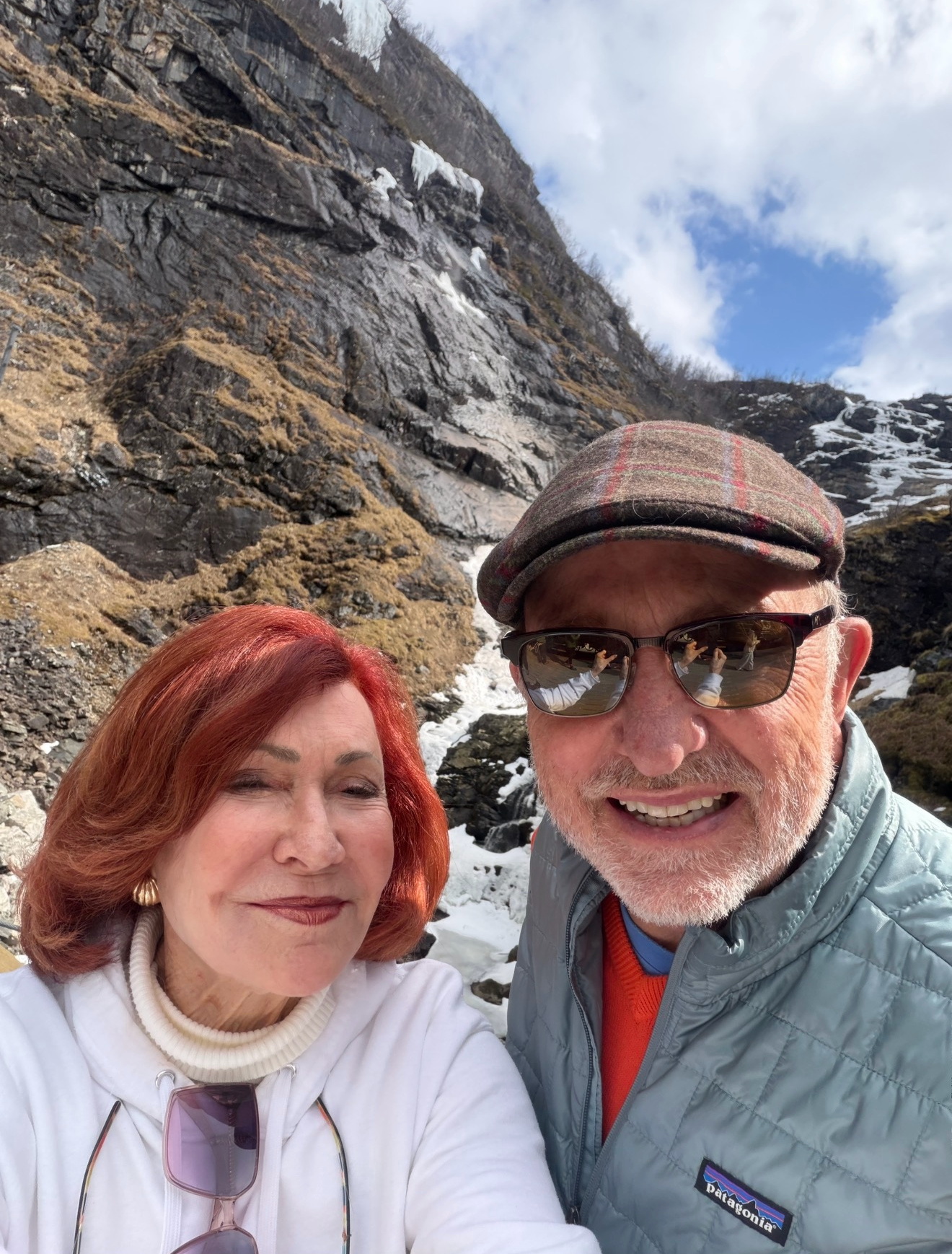
The author and Georgie in San Miguel de Allende, Mexico, in 2025
He acted normal for the next 24 hours. In weak imitation, the kids and I tried to act normal, too, to prepare for our trip and the small Christmas celebration we planned before leaving.
Advertisement
The following morning, Christmas Eve, we were set to depart for our vacation when I woke at 4am with the memory of something my husband said when our friends divorced: “A man never leaves his marriage unless there’s someone waiting for him.”
I roused him at 4:04am and asked again, “Who are you in love with?” When he didn’t answer, I started to guess. I got it in two. On the first guess, he protested loudly. On the second, he went silent.
That was answer enough.
“How long?” I asked. If I’d written the scene, I like to think I’d have been more creative, but creativity evaporated in the panic of that moment.
Advertisement
I shouldn’t have been surprised that he lied again. It took more than three weeks to get him to admit that the relationship had been going on for almost two and a half years. Three years later, there are details that never quite squared and lies that were never ironed out.
As a thriller writer, I’ve spent countless days imagining the worst things people can do to each other. I’ve sat in coffee shops and on airplanes and at my desk and invented murders, betrayals, psychological torture.
I’ve been inside the heads of liars and manipulators and people who destroy others without remorse. That experience made me believe I understood human darkness with a clarity others lack. But understanding it for the benefit of a story and living through it are entirely different things.
Advertisement
Courtesy of Danielle Girard
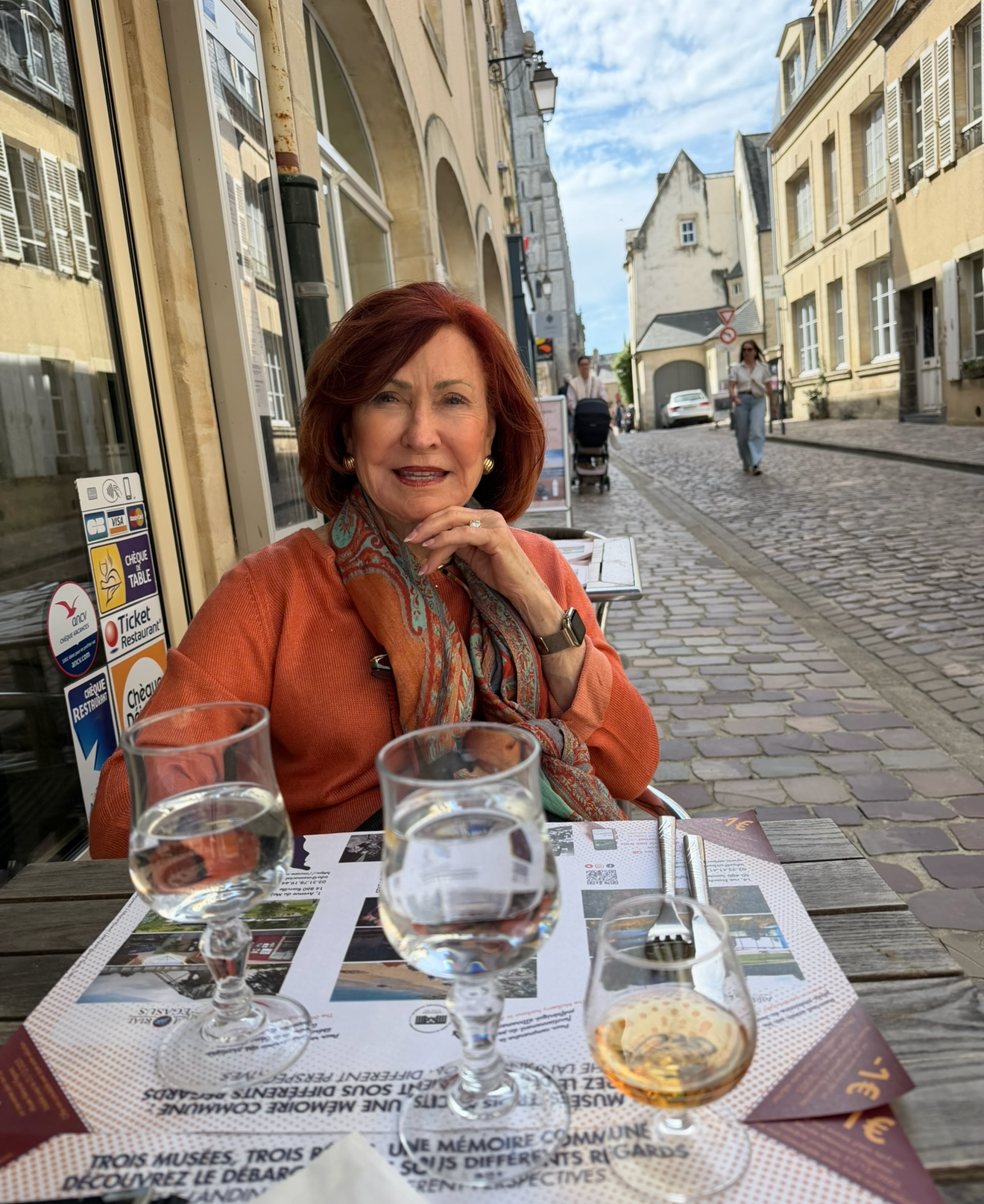
The author at Shakespeare and Company, Paris, in 2024
For days after I found out, I moved through my life like a stranger. Every object felt suspicious, every memory potentially false. Had he been thinking about her when we were in Nashville for my birthday the month before? Was he texting her from our bed when I was in the kitchen and setting up the coffee machine for the next day? How many times had he said “I love you” while mentally planning his next Friday massage appointment?
“Really? Your massage therapist?” I asked once, during one of those miserable circular conversations where nothing gets resolved and everything gets worse. “A 50-year-old man and his massage therapist. It’s so cliché.”
Advertisement
The comment clearly stung, as if I’d insulted his creativity rather than his fidelity.
“We were friends first. She listened to me,” he said.
“I listen to you,” I said like a petulant child.
“You’re in your office, working, or you’ve got your nose in a book for the podcast.”
He wasn’t entirely wrong.
Once our kids had left for college, I’d shifted my focus to my writing and working harder than ever as my career took off. I’d stopped working on the marriage. My shiny new toy was the book; his worked out the kinks in his neck, ones put there by 30 years with me.
That December, I was neck-deep in a manuscript about a detective investigating a pregnant surrogate who goes missing. It was a book I’d been so excited about six months earlier, one I’d been confident was my darkest, most psychologically complex book yet.
After I learned my husband’s secret, I couldn’t write a word.
Every time I sat down at my desk, I’d cry or stare at the blank page, wondering why I bothered. What did these pretend murders matter? What did my clever plot twists signify when I’d missed the biggest one in my own life?
Advertisement
Beyond the logistical fears about my own future was another terrifying realisation: I no longer wanted to write the detective book. Overnight, I’d lost interest in stories about detectives solving crimes, justice being served through shootouts and the court system, about the bad guys getting caught and punished. Suddenly, those seemed too neat, too fake, like fairy tales and not the Grimm’s variety.
Real betrayal, I learned, doesn’t get solved in 300 pages. Real deception doesn’t wrap up with a satisfying twist where everything makes sense and the protagonist emerges stronger and wiser. Real betrayal sits there, ugly and unresolved, in the middle of your life while people take sides and you fill the garage with items you once cherished and no longer want to see.
I started thinking about the kinds of stories that had never interested me – messy ones where the protagonist doesn’t figure everything out and there are no clear villains, just people making terrible choices for complicated reasons. Stories set in the ugly places I’d never wanted to go until now.
Advertisement
When I found my way back to the page, I rewrote the surrogate story, cutting the point of view from the detective, and placing the biological mom at its centre with her best friend from high school as the surrogate who vanishes four days before the baby is due.
In this new version, the story focuses on these women who were friends in high school and the complications of their long, intense friendship.
Though there is a big moral question at the centre of the book, as well as a fun, juicy plot, it was the interactions between the characters themselves that allowed me to explore the messy reality of life that I was living through while writing.
Advertisement
My divorce was finalised at the end of 2023, a few months after I got a new agent, six months before my agent sold that book, Pinky Swear, at auction for release earlier this year. It was the hardest book I’ve ever written and the best.
Courtesy of Danielle Girard
The author at home with “Pinky Swear”
The one I’m writing now is trickier, more complicated. It’s about a woman who discovers her husband’s long affair with a massage therapist.
Advertisement
My husband was married to a thriller writer for almost 30 years. This can’t come as a surprise to him. Still, this is not a memoir. There’s a murder, for starters. But there are echoes from my own experience in the details, like the secrets that begin small and seem harmless … until they’re not.
While the main character is not me, the protagonist is walking in my own, uncomfortable shoes, trying to construct a narrative to make sense of chaos, and working to find a path forward when the narrative crumbles.
Every time I drive downtown, I scan the cars, the street, the store or restaurant for my ex-husband and his girlfriend. I still haven’t seen them together, though I know that they are. I wonder what I’ll feel when I do – a fresh wallop of despair? Closure? I have run the scenario a hundred times, and I still don’t know.
Advertisement
What I do know is that the writing I’m doing now feels like what I should be doing. Not because detective fiction isn’t important or valuable, but because I’d been using it as a way to imagine I could manage the outcome and somehow avoid the terrible things that happen to people who I imagined weren’t as studious or as prepared.
For months, I’d been plotting elaborate lies and deceit in that first draft of Pinky Swear while missing the simple, stupid truth: that the person sleeping next to me was a stranger. That I was so good at inventing characters for mysteries, I’d forgotten to be curious about the one I’d married.
I see now what those books were really about: control. The illusion that if you’re smart enough, observant enough, careful enough, you can see the betrayal coming. You can solve the crime. You can write your way to safety.
Advertisement
But you can’t. Life isn’t a thriller, and there’s no genius detective who’s going to figure it all out – no satisfying final chapter where all the pieces fit. At least, not in my life. Instead, there are just little clues I recognised far too late about the person I thought I knew becoming someone I never knew at all.
The book I’m working on now – the one about the woman who discovers her husband’s two-and-a-half-year affair with his massage therapist – will be called Happy Ending.
It won’t be neat or easy, but it might be happy. I hope it will be.
Danielle Girard is the USA Today bestselling and award-winning author of several novels, including the Annabelle Schwartzman series and Pinky Swear. She is also the creator and host of the Killer Women Podcast, where she interviews the women who write today’s best crime fiction. A graduate of Cornell University, Danielle received her MFA in creative writing at Queens University of Charlotte, North Carolina. When she’s not traveling, Danielle lives in the mountains of Montana.
As a part of their “Simpler Recycling” initiative, the government is going to change the rules around how bins are collected across England this month.
It will mean councils will have to offer collections for the same four kinds of waste.
Here’s when it comes into place, what it means, why it’s happening, and what you need to do next:
“Plastic film packaging and plastic bags will need to be collected with plastic recycling from 31 March 2027,” the government explained on its website.
Advertisement
In the meantime, the four options bullet-pointed above will become the standard ones in England.
It is hoped that by getting rid of a “muddled and confusing patchwork of approaches to bin collections,” people will be more likely to recycle.
Advertisement
Currently (prior to the March 21 change), some households would have to use seven bins to get all of their waste collected properly.
The government hopes a country-wide approach will “end the ‘postcode lottery’ of bin collections in England whereby councils collect different materials for recycling, causing confusion for households”.
This way, you won’t have to check with your specific council to see whether your waste can be collected. It will be the same across England.
Advertisement
Simpler Recycling aims to make recycling simple and consistent. It will include food waste bins nationally, which will get rid of “bad-smelling” food waste. At the moment, lots of UK households don’t get food waste collection.
So, what do I put in each bin under the new rules?
1) Paper and card
This covers all paper and card, except that which has been laminated, contains glitter, or is dirty, wet, and/or sticky.
This will also not include books, wallpaper, or padded envelopes.
2) Mixed recycling
That includes glass items like jars and bottles.
But waste collectors don’t have to collect glass not used as packaging, like mirrors, drinking glasses, microwave plates, light bulbs, or glass vases as mixed recycling.
Advertisement
The category also excludesceramics like earthenware or crockery.
Mixed recycling also includes metals, like aluminium and steel cans, tins, and spray cans, foil, food trays, jar and bottle lids, and tubes (like empty tomato puree tubes).
But itdoes not include “laminated foil, like pet food pouches and coffee pouches”, electrical items like batteries, kitchenware like knives and forks, kettles, irons, or containers that held white spirits, paints, engine oils or antifreeze.
Plastics like bottles, tubs, trays, tubes (like toothpaste tubes), and cartons for food or drink (like Tetra-Pak) also count as mixed recycling.
Advertisement
But any plastic labelled “biodegradable” or “compostable,” like coffee pods, or plastic containers that held white spirits, paints, engine oils or antifreeze, does not count as mixed recycling.
Mixed recycling also does not cover bulky plastics like garden furniture, or polystyrene or PVC packaging.
3) Food waste
This counts for all food waste except liquid. That can include eggshells, vegetable peels, etc.
That includes things that can’t be recycled, like plastic film, foil, kitchen roll, food containers that can’t be wiped clean, and nappies.
Advertisement
You can also put some garden waste in here, like grass clippings.
But it does not coveranimal bedding, sand, sawdust, plastic, rocks, plant pots, gardening tools, bulky waste like fencing or garden furniture, or very large branches that have not been cut down.
This article features advice from Dr Tom Nutt, of Meningitis Now, Professor Adam Finn of the University of Bristol, and Professor Emma Wall, clinical professor of infectious diseases at Queen Mary University of London.
The meningitis outbreak among students in Kent has included cases of B meningococcal disease, sometimes known as MenB,
Advertisement
On Tuesday, the UK Health Security Agency (UKHSA) said it was continuing to investigate the outbreak – with four laboratory cases confirmed and 11 under investigation. This includes two people who have died.
Group B meningococcal disease can cause serious illness, including severe inflammation of the brain membrane (meningitis) and blood poisoning (septicaemia), which can prove fatal.
Most teens and adults aren’t vaccinated against MenB
Meningitis most commonly occurs in babies, young children, teens and young adults.
There are three vaccines which protect against the main causes of meningitis.
The MenB vaccine is offered to infants at eight weeks, 16 weeks and one year of age, as part of routine NHS vaccinations – this came into play in 2015 so anyone under 10 has some protection.
Advertisement
Babies are also given the pneumococcal vaccine at 16 weeks and one year.
The MenACWY vaccine protects teenagers against four types of bacteria linked to meningitis and is usually given in school during Year 9 (when kids are aged 13-14).
But the latter vaccine doesn’t protect teens from MenB, experts have warned.
Most teenagers and adults aren’t protected against it unless they’ve paid privately for a vaccine on the high street.
Charity calls for MenB to be added to routine vaccinations for teens
Meningitis Now’s chief executive Dr Tom Nutt noted there are “gaps” in the NHS immunisation schedule, particularly around MenB.
Advertisement
“We are campaigning for the MenB vaccination to be made more widely available to those at risk, especially teenagers and young adults,” he told HuffPost UK.
He noted that vaccines “are the only way to prevent meningitis” – that said, he caveated that “vaccines do not protect against all causes of meningitis and no vaccine is 100% effective”.
Prof Adam Finn, Professor Emeritus of Paediatrics at University of Bristol, added that protection from the vaccine “lasts for some years, but not forever”.
Advertisement
The MenB vaccines also do not “reduce carriage and transmissions of the bacterium,” he noted, meaning you could have the vaccine and still carry or transmit the bacteria to others.
Ultimately, it’s important that people make themselves aware of the signs and symptoms of meningitis, and to get immediate medical help if they suspect themselves or a loved one could have it.
Early symptoms, which may not always be present, include:
a rash that does not fade when pressed with a glass
sudden onset of high fever
severe and worsening headache
stiff neck
vomiting and diarrhoea
joint and muscle pain
dislike of bright lights
very cold hands and feet
seizures
confusion/delirium
extreme sleepiness/difficulty waking
Anyone with these symptoms is urged to seek medical help immediately by contacting a GP, calling NHS 111 or dialling 999 in an emergency.
“Despite what has happened in Kent, we would like to reiterate that meningitis is a relatively rare disease,” said Dr Nutt.
Advertisement
“In the long-run, the good news is that the NHS vaccination programme has been very successful in bringing down the number of cases of meningitis in the UK.”
These include: a MenB vaccination given to all those at most risk of disease; a MenB booster programme to protect adolescents by 2030; and availability of the MenB vaccination on the high street at a fair price.
Advertisement
What happens now?
Health officials are continuing to monitor the situation in Kent.
UKHSA confirmed a small targeted vaccination programme will begin among students resident at Canterbury Campus Halls of Residence at the University of Kent.
Professor Emma Wall, clinical professor of infectious diseases at Queen Mary University of London, explained that UKHSA might do this to “reduce the risk of a further outbreak, or shut down transmission (so-called ring vaccination)”.
The vaccination programme may be expanded further as UKHSA continues to asses ongoing risk.
As some of the cases visited Club Chemistry in Canterbury between 5-7 March prior to becoming unwell, UKHSA is urging anyone who visited the club during this time to come forward for preventative antibiotic treatment as a precautionary measure.
Advertisement
HuffPost UK has contacted the Department of Health and Social Care (DHSC) about whether there are plans to add Men B to the routine teen vaccine.