New model helps identify mutations that drive cancer

Cancer cells can have thousands of mutations in their DNA. However, only a handful of those actually drive the progression of cancer; the rest are just along for the ride.

Distinguishing these harmful driver mutations from the neutral passengers could help researchers identify better drug targets. To boost those efforts, an MIT-led team has built a new computer model that can rapidly scan the entire genome of cancer cells and identify mutations that occur more frequently than expected, suggesting that they are driving tumor growth. This type of prediction has been challenging because some genomic regions have an extremely high frequency of passenger mutations, drowning out the signal of actual drivers

“We created a probabilistic, deep-learning method that allowed us to get a really accurate model of the number of passenger mutations that should exist anywhere in the genome,” says Maxwell Sherman, an MIT graduate student. “Then we can look all across the genome for regions where you have an unexpected accumulation of mutations, which suggests that those are driver mutations.”

In their new study, the researchers found additional mutations across the genome that appear to contribute to tumor growth in 5 to 10 percent of cancer patients. The findings could help doctors to identify drugs that would have greater chance of successfully treating those patients, the researchers say. Currently, at least 30 percent of cancer patients have no detectable driver mutation that can be used to guide treatment.

Sherman, MIT graduate student Adam Yaari, and former MIT research assistant Oliver Priebe are the lead authors of the study, which appears today in Nature Biotechnology. Bonnie Berger, the Simons Professor of Mathematics at MIT and head of the Computation and Biology group at the Computer Science and Artificial Intelligence Laboratory (CSAIL), is a senior author of the study, along with Po-Ru Loh, an assistant professor at Harvard Medical School and associate member of the Broad Institute of MIT and Harvard. Felix Dietlein, an associate professor at Harvard Medical School and Boston Children’s Hospital, is also an author of the paper.

A new tool

Since the human genome was sequenced two decades ago, researchers have been scouring the genome to try to find mutations that contribute to cancer by causing cells to grow uncontrollably or evade the immune system. This has successfully yielded targets such as epidermal growth factor receptor (EGFR), which is commonly mutated in lung tumors, and BRAF, a common driver of melanoma. Both of these mutations can now be targeted by specific drugs.

While those targets have proven useful, protein-coding genes make up only about 2 percent of the genome. The other 98 percent also contains mutations that can occur in cancer cells, but it has been much more difficult to figure out if any of those mutations contribute to cancer development.

“There has really been a lack of computational tools that allow us to search for these driver mutations outside of protein-coding regions,” Berger says. “That’s what we were trying to do here: design a computational method to let us look at not only the 2 percent of the genome that codes for proteins, but 100 percent of it.”

To do that, the researchers trained a type of computational model known as a deep neural network to search cancer genomes for mutations that occur more frequently than expected. As a first step, they trained the model on genomic data from 37 different types of cancer, which allowed the model to determine the background mutation rates for each of those types.

“The really nice thing about our model is that you train it once for a given cancer type, and it learns the mutation rate everywhere across the genome simultaneously for that particular type of cancer,” Sherman says. “Then you can query the mutations that you see in a patient cohort against the number of mutations you should expect to see.”

The data used to train the models came from the Roadmap Epigenomics Project and an international collection of data called the Pan-Cancer Analysis of Whole Genomes (PCAWG). The model’s analysis of this data gave the researchers a map of the expected passenger mutation rate across the genome, such that the expected rate in any set of regions (down to the single base pair) can be compared to the observed mutation count anywhere across the genome.

Changing the landscape

Using this model, the MIT team was able to add to the known landscape of mutations that can drive cancer. Currently, when cancer patients’ tumors are screened for cancer-causing mutations, a known driver will turn up about two-thirds of the time. The new results of the MIT study offer possible driver mutations for an additional 5 to 10 percent of the pool of patients.

One type of noncoding mutation the researchers focused on is called “cryptic splice mutations.” Most genes consist of sequences of exons, which encode protein-building instructions, and introns, which are spacer elements that usually get trimmed out of messenger RNA before it is translated into protein. Cryptic splice mutations are found in introns, where they can confuse the cellular machinery that splices them out. This results in introns being included when they shouldn’t be.

Using their model, the researchers found that many cryptic splice mutations appear to disrupt tumor suppressor genes. When these mutations are present, the tumor suppressors are spliced incorrectly and stop working, and the cell loses one of its defenses against cancer. The number of cryptic splice sites that the researchers found in this study accounts for about 5 percent of the driver mutations found in tumor suppressor genes.

Targeting these mutations could offer a new way to potentially treat those patients, the researchers say. One possible approach that is still in development uses short strands of RNA called antisense oligonucleotides (ASOs) to patch over a mutated piece of DNA with the correct sequence.

“If you could make the mutation disappear in a way, then you solve the problem. Those tumor suppressor genes could keep operating and perhaps combat the cancer,” Yaari says. “The ASO technology is actively being developed, and this could be a very good application for it.”

Another region where the researchers found a high concentration of noncoding driver mutations is in the untranslated regions of some tumor suppressor genes. The tumor suppressor gene TP53, which is defective in many types of cancer, was already known to accumulate many deletions in these sequences, known as 5′ untranslated regions. The MIT team found the same pattern in a tumor suppressor called ELF3.

The researchers also used their model to investigate whether common mutations that were already known might also be driving different types of cancers. As one example, the researchers found that BRAF, previously linked to melanoma, also contributes to cancer progression in smaller percentages of other types of cancers, including pancreatic, liver, and gastroesophageal.

“That says that there’s actually a lot of overlap between the landscape of common drivers and the landscape of rare drivers. That provides opportunity for therapeutic repurposing,” Sherman says. “These results could help guide the clinical trials that we should be setting up to expand these drugs from just being approved in one cancer, to being approved in many cancers and being able to help more patients.”

The research was funded, in part, by the National Institutes of Health and the National Cancer Institute.


Share Button

Hopeful Parents Might Soon Get Paid Time Off For IVF. Here’s Why They Need It

Employees undergoing fertility treatment could soon be entitled to statutory time off work, under a proposed law being brought before parliament.

The law suggests that fertility appointments should be treated in the same way as antenatal appointments during pregnancy.

NHS England and NHS Improvement have already recently given roughly 8,000 of their staff the right to three days off a year specifically for fertility treatment, The Mail on Sunday reports. (Though it’s worth noting that free IVF treatment under the NHS has faced huge cut backs in recent years.)

Under the latest bill, proposed by Tory MP Nickie Aiken, all companies would have to give both women and their partners time off for fertility treatment. It’s hoped the change will help those who may currently be going through multiple rounds of tough IVF treatments in secret.

“Undergoing treatment while juggling a career is very tough,” Aiken said. “Many people feel they cannot tell their employer for fear of being overlooked for a promotion or being made redundant.”

Why is this new proposed law so important for hopeful parents?

Becky Kearns, Co-Founder of Fertility Matters At Work, tells HuffPost UK this law is potentially game-changing, because it gives people “permission to talk to their employer about going through treatment (if they choose to) rather than feeling like they have to hide it”.

“We know from our research that 61.1% did not feel confident talking to their employer about trying for a baby,” she explains.

“Many fear that there will be an impact to their career in asking for time off to attend appointments and so a law in place to give a statutory right and protection against unfair treatment will help them to know that this is recognised by their employer.”

She adds that IVF is often seen as a ‘lifestyle choice’ rather than a treatment for a medical condition – though the World Health Organisation describes infertility as a “disease of the reproductive system”. The proposed law would help to right this wrong.

How will this benefit people who are having IVF?

Kearns believe this will benefit hopeful parents as IVF is a gruelling process over the course of a number of weeks involving numerous, frequent and unpredictable appointments. “From my own personal experience, taking time off for fertility appointments felt very different to when I finally became pregnant and was ‘allowed’ by law the right to attend antenatal appointments,” she says.

“It not being recognised or even allowed within many organisations creates additional stress and burden on top of an already emotionally draining process. This law would mean that over time fertility appointments would also be expected, accepted and acknowledged as a statutory right.”

What are some of the work challenges women face when undergoing fertility treatment?

When going through IVF or other fertility treatments, women face “a very real fear of not being seen as committed to their jobs, of being overlooked for promotion or even selected for redundancy if their employer knows,” Kearns says.

“It’s also a hugely personal experience, one that still often has stigma and shame attached to it,” she adds.

“Planning is hugely difficult as it often depends on how your body responds to treatment and when your period starts as to when treatment can begin, the appointments can be every other day and sometimes at late notice depending on blood test and scan results.”

In a 2020 survey by the community interest company, 83% of respondents said Covid (and working from home) had made it easier to plan and squeeze in fertility treatments. But now most of us have returned to the workplace – at least some of the week – things will get harder again.

“There’s the physical challenges of the hormones that are injected, also the challenge of finding an appropriate place to administer injections and pessaries whilst at work, one woman told us she had to hide her in a sandwich box in a fridge,” Kearns explains.

“Financial worries are huge too with the cost of treatment often running into the thousands, another stress when you need to take time off work – some are told to use annual leave or unpaid leave, we found that 69.5% took sick leave during treatment.

“Most predominantly is the mental health challenge, we found that 68% felt their treatment had a significant impact on their mental and emotional wellbeing, having to hide appointments and the huge grief that this process brings about can make it even more of a challenge, to the extent that 36% considered leaving their employment due to treatment.”

Let’s hope the bill marks the start of the change that’s needed.

Share Button

An ‘Unknown’ STI Is Doing The Rounds And It Affects Women Of Colour More

An STI which is virtually unknown to the public is likely to be found in Black, Asian and other minority women more frequently, according to new research.

While more common than other sexually transmitted infections such as gonorrhoea, the virus Trichomonas vaginalis (TV) is largely not known about to large swathes of people.

But new research shows that it is more common among ethnic minority women and can appear with common symptoms or asymptomatically.

Without treatment, the condition can have serious consequences, increasing the likelihood of HIV and pregnancy complications, which is why it’s important we get clued up on it.

The research, presented by Preventx at the British Association for Sexual Health and HIV annual conference, found that TV is also more common among heterosexual people. They studied 8,676 women from six English local authority areas who had completed remote STI tests.

While women of colour were most likely to be affected, Black women were particularly found to be at risk.

In the study, they found that 5.2% of women from Black, Caribbean and African heritage who had vaginal discharge – a common symptom of the infection – ended up testing positive for TV.

For all other women, the risk of having and displaying signs of the condition were 3.5%, with white women facing lower chances, at 3.4%.

Even in Black women who did not show any symptoms, the chances of TV remained higher among them, with a positivity rate more than twice as high as for white women. For Black women, this figure was eight times more likely, whereas for white women it was twice.

But it might not be genetic differences that predispose more women of colour to the condition than white women – it could be to do with levels of social deprivation.

For the first time, scientists also considered the relationship with poverty and rates of TV.

They found that the highest levels of TV were found in disadvantaged areas, with 5.9% of women in the most deprived neighbourhoods (in which women of colour are more likely to reside) testing positive for TV. In affluent areas, this number is at 1.4%.

Dr John White, medical director at Preventx and consultant physician in sexual health commented on the study, saying: “Trichomoniasis is a relatively unknown STI among the general population, but it can cause significant pain and discomfort. I know from the patients in my care that it can also cause a lot of emotional distress for the person infected too.

“Women, in particular, can remain infected for years – and their distressing symptoms are often misdiagnosed or dismissed. If untreated, TV can also increase the chance of acquiring HIV in at-risk communities, as well as cause complications in pregnancy.”

Scientists hope more research and testing is done to understand and treat the condition.

Dr White added: “Our new data shows worryingly high positivity rates, with certain communities more affected than others. As TV can easily be diagnosed with remote NAAT tests, it is vital that more high-quality TV testing is carried out across the UK, helping us to understand more about the distribution of this infection.

“This will allow us to address the consequences of undiagnosed TV and reduce transmission.”

What is TV and what are the symptoms?

TV can affect both men and women. According to the NHS, symptoms of trichomoniasis usually develop within a month of infection. However, up to half of all people will not develop any symptoms (though they can still pass the infection on to others).

The symptoms of trichomoniasis are similar to those of many other STIs so it can sometimes be difficult to diagnose.

Symptoms in women

Trichomoniasis in women can cause:

Share Button

Love Island Host Laura Whitmore Defends Remi Interview After Facing Criticism

Laura Whitmore has defended her interview with eliminated Love Island contestant Remi Lambert after facing criticism on social media.

During Sunday night’s instalment of the ITV2 reality show, Remi became the latest Islander to leave the villa, and later spoke to the presenter via video-link on companion show Aftersun.

Many Love Island fans picked up on the fact Remi appeared to be quite emotional during the interview, with Laura asking him if he’d be up for rapping, as he’d been heard doing during his stint in the villa.

At the end of the interview, Laura told the panel: “Everything in me just wanted to cuddle him.”

Remi leaving the villa on Sunday night

ITV/Shutterstock

The following morning, one Love Island fan commented that Remi looked “broken” during the interview, accusing producers of asking him to rap “in bad faith” to “humiliate” him.

Laura then insisted: “Remi is a rapper and [was] asked in good faith in advance if he’d rap and prepare something which he did.

“Live telly is nerve-wrecking, believe me, so maybe he was a bit nervous but he deserved to have his time.”

Prior to this year’s Love Island launch show, Laura decided to get ahead of her usual detractors with a TikTok video addressing some of the criticism she claims to have faced every year since she took over as host.

This included comments about her salary, her decision to fly between Mallorca and the UK over the course of the series, her interview technique when she speaks to the Islanders and claims she’s “never in” the villa.

Love Island airs Sunday to Friday at 9pm on ITV2.

Share Button

Archie Battersbee: Family of boy ruled dead seeks appeal

The family has another court hearing after a judge ruled that Archie Battersbee, 12, was brain-dead.

Share Button

Jeremy Hunt MP had cancer, ex health secretary reveals

The ex-health secretary will run the Race for Life in July in Guildford in aid of cancer charities.

Share Button

Sudden unexplained death in childhood: ‘Why did my beautiful son die?’

Cot deaths have inspired much awareness work – but what about when an older child dies unexpectedly?

Share Button

Lisa Nandy Rejects Rumours Of Keir Starmer Succession Planning As ‘Absolute Nonsense’

Lisa Nandy has dismissed speculation that Keir Starmer is lining up a successor to lead the party if he is forced to quit as “absolute nonsense”.

Nandy, the shadow levelling up secretary who is often touted as a future Labour leader, said she had not spoken to Starmer about plans to secure a replacement if Durham Constabulary fine him for breaching Covid rules.

Although he has insisted he did not break any rules, the Labour leader has promised to step down if he is issued with a fixed penalty notice over a takeaway beer and curry he ordered with campaigners in the city last year.

Nandy was responding to reports in the Sunday Times that Starmer — who has been battling days of negative headlines and briefing — has told potential rivals to put campaign teams in place to continue to ensure his work in rebuilding the party does not go to waste.

According to the newspaper, Starmer told allies: “I will not let this party become a basket case again. I will not let our hard-won gains be squandered so we will need to be ready in the unlikely event that the worst comes to the worst.”

But asked about the report on Sky News, Nandy said she had only spoken to Starmer twice in the last couple of days about “how we persuade this government to lift a finger to avert a crisis on the railways”.

Presenter Sophy Ridge joked: “Are you a bit worried he’s been talking to Wes Streeting and not you?”

Nandy replied: “No, I’m not worried that he’s been talking to anybody about succession planning, because I know that he’s been talking to all of us about how we rid this country have a government that has held us back for the last 12 years and finally start to deliver for working people — that is the conversation that we’re having in the Labour Party at the moment.”

And asked separately on Times Radio whether she was plotting her own leadership bid behind the scenes, Nandy said: “Not true. Not true at all. I’ve not been having fundraising dinners, I haven’t been launching some kind of leadership bid.

“The only job that I am going after right now is Michael Gove’s and I am determined that I’m going to get it. Not because of my wishes for myself, but because I’m ambitious for this country. And I know that we could do better than this.”

The Labour Party confirmed on Friday that both Starmer and deputy leader Angela Rayner have now returned their questionnaires to Durham Constabulary.

The prospect of a looming fine is just the latest headache for Starmer.

The Labour leader has endured days of negative headlines and briefings from members of his own shadow cabinet who have accused him of “boring voters to death”.

One told the Times: “Is he exciting? No, of course not — that isn’t why we ended up with him.

“But there is a big difference between not being Mr Razzmatazz and boring everyone to death . . . to loads of my constituents he just doesn’t exist in their minds at all.”

In return Starmer was forced to tell his shadow cabinet not to brief the press that he was boring, in an exchange one colleague described as “ironically very boring”.

However, Starmer has been defended by former prime minister Gordon Brown, who told him to “ignore” the negative briefings against him.

Asked by the BBC’s Sunday Morning programme what his advice would be to the Labour leader, Brown replied: “To ignore this because what’s exciting about the possibility of Keir Starmer’s leadership is he will have a plan for Britain.

“He will show how we can get back growth, he will show how we can get living standards rising again and he will show how we can have a fairer society that deals with climate change.

“Keir Starmer was the director of public prosecutions. He’s been a great public servant over many years and I think he will make a great prime minister.”

Next week Starmer will be put to the test in a key by-election in Wakefield, West Yorkshire, where the former Tory MP was forced to stand down following his conviction for sexually assaulting a 15-year-old boy.

Recent polls have put Labour 20 points ahead of the Tories for the contest on June 23.

However, internal polling cited in the Sunday Times suggests that lead could in fact only be around eight points.

Share Button

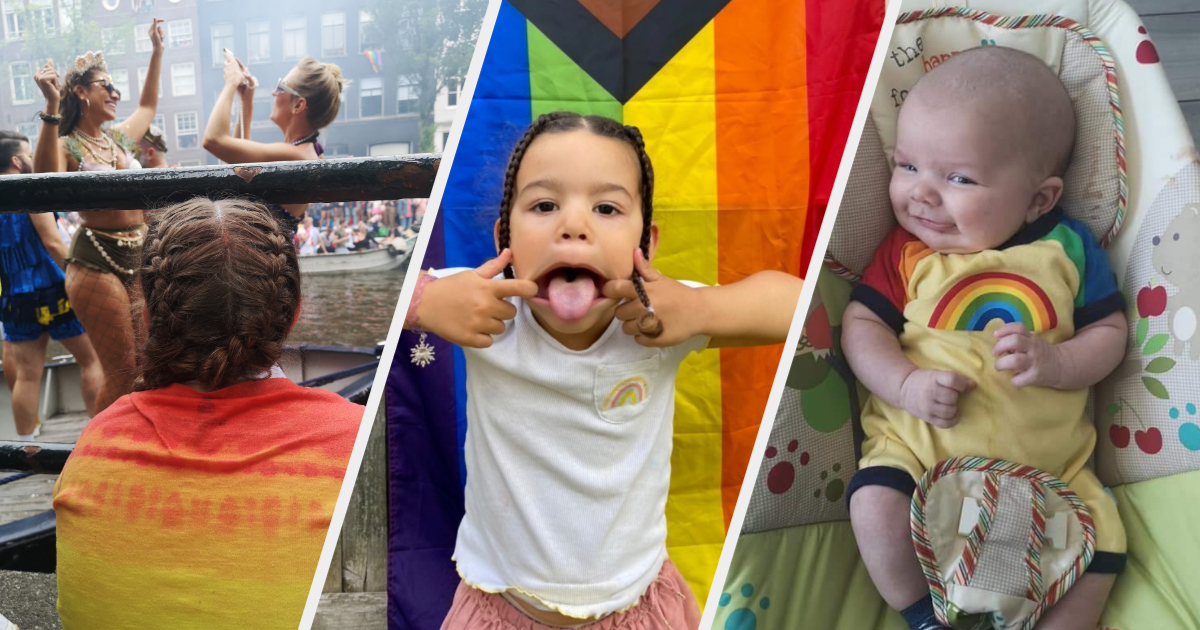
We Love Pride, And So Do Our Kids

You’re never too young to go to Pride.

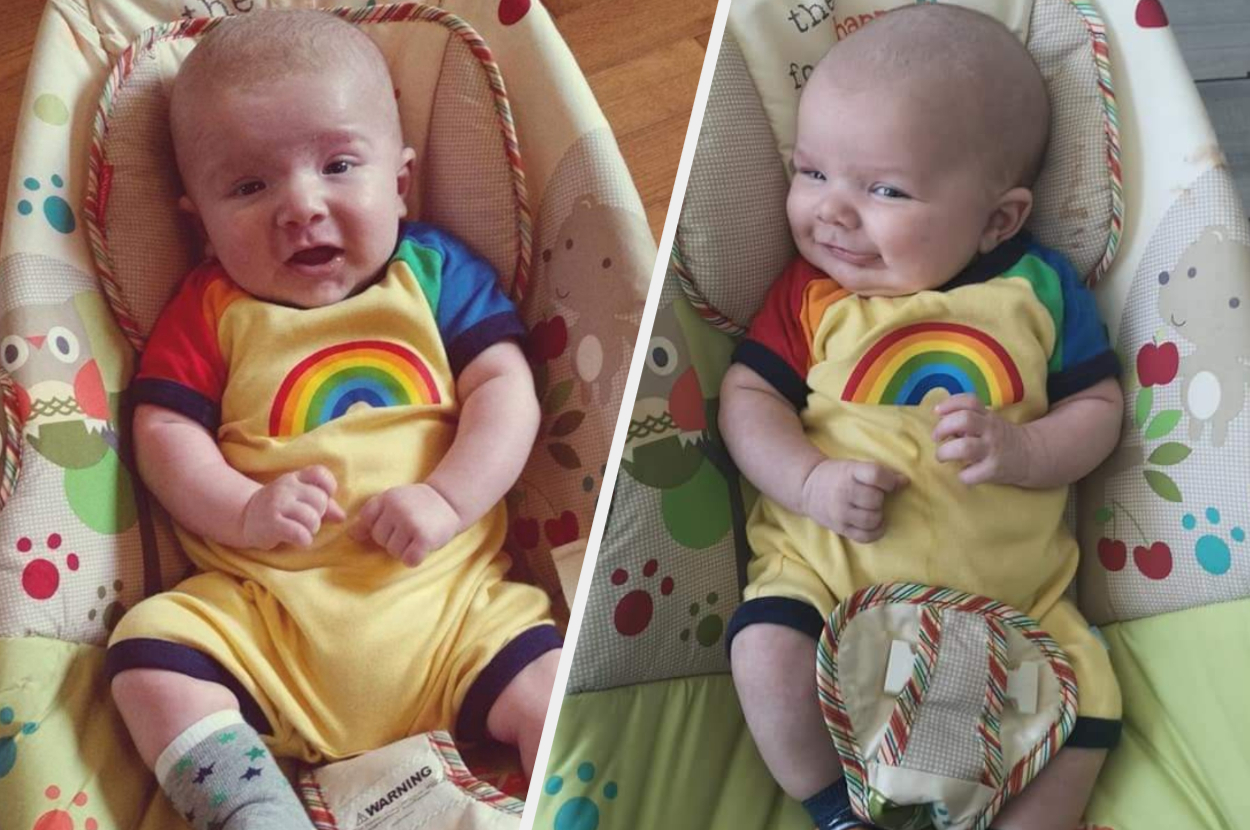
Don’t believe us? Ask mum-of-one Kate Everall, who’s taken her son since he was born, or mum-of-three Amie Jones, whose made wearing the family’s Pride-themed babygrow a rite of passage among her horde.

The fastest way to teach kids #LoveIsLove is by celebrating it in all forms from day one. Add in some rainbow flags, glitter and fun and they won’t question it one jot.

As writer Victoria Richards put it, explaining LGBTQ+ relationships to kids is actually very simple: “Try it: ‘Some men love men, some women love women and some people love both (or neither).’ Ta da.”

Pride is the perfect time to normalise queer love, to show kids that they don’t have to play “mums and dads” in the playground, and that they’ll be loved at home always, whoever they turn out to be. For LGBTQ+ parents, it’s also an opportunity for kids to see more families like their own.

We spoke to five families who enjoy Pride about what it means to them and their little ones.

‘Pride is a time to celebrate our queer family’

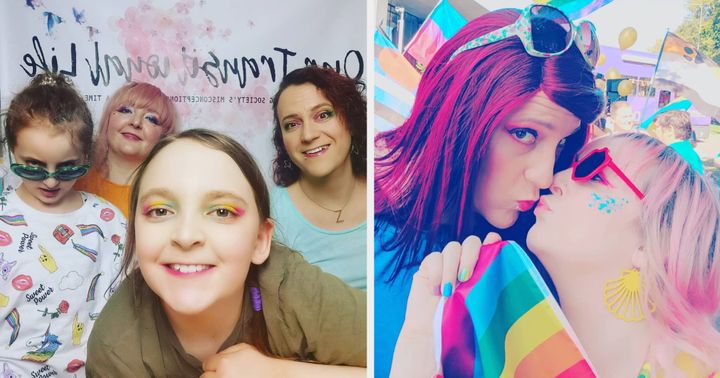
Kelly Allen with her wife, Zoey, and children George (12) and Molly (11).

“We take our children to Pride because we feel it’s integral to their future, and the future of other human beings, to be surrounded by a diverse community. We also feel Pride is a time to celebrate our queer family in a safe and fun way. It’s essential they are able to grow knowing they can be their true selves, and Pride is a time for us to really celebrate our diversity, amongst a community that accepts us for who we are.

“It’s become even more essential since Zoey came out as transgender, as the world can feel very bleak at times for the trans community. However, Pride gives us a chance to feel fully accepted and loved as the LGBTQ+ family we are.” – Kelly Allen, 40, who runs ourtransitionallife.com with her wife, Zoey

‘A great way to teach our boys what it means to be an ally.’

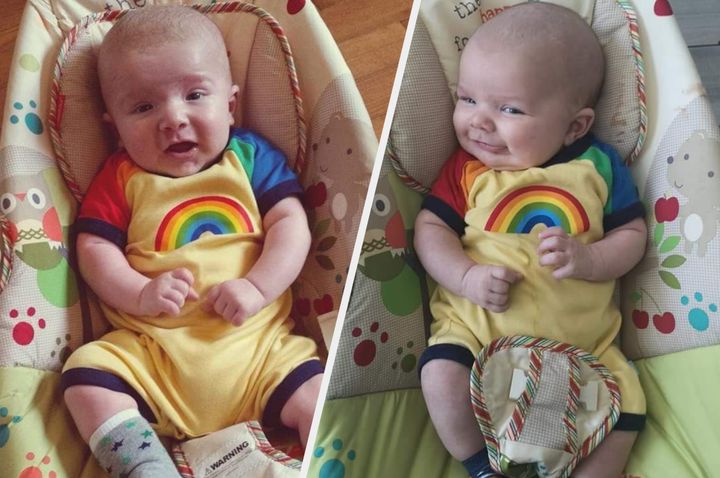
Amie Jones' two sons Dylan and Huw in the family Pride romper.

Amie Jones

Amie Jones’ two sons Dylan and Huw in the family Pride romper.

“We have taken our three boys to our local Pride event in Chester since they were very young – and we even have a Pride inspired outfit for them to wear. The photos show my oldest son Dylan (now seven years) and my youngest son Huw (now two years) in the same Pride romper! Unfortunately, I don’t have any photos of us actually at Pride, as we are always having too much fun!

“As founder of Kind Kids Book Club – the UK’s first children’s book club with a focus on nurturing social conscience and sharing inclusive stories – Pride is an important celebration for our family and a great way to teach our boys what it means to be an ally. They always love the day – the atmosphere is brilliant, everyone is so friendly and there’s so much to see and do!” – Amie Jones, 37, Bagillt, North Wales

‘There’s no one way to be a family.’

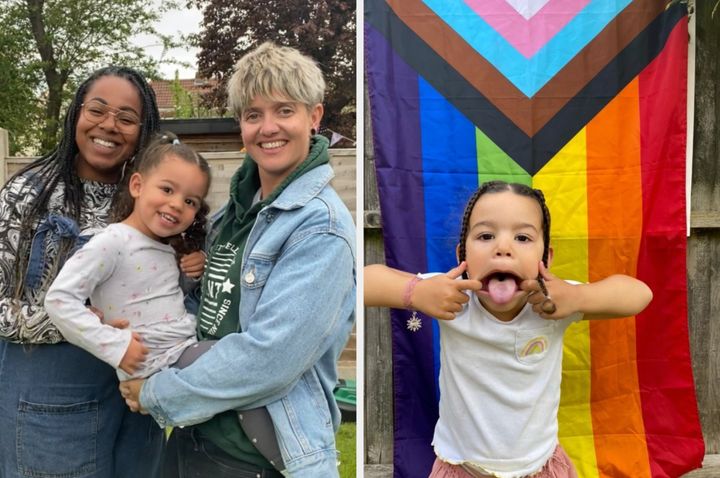
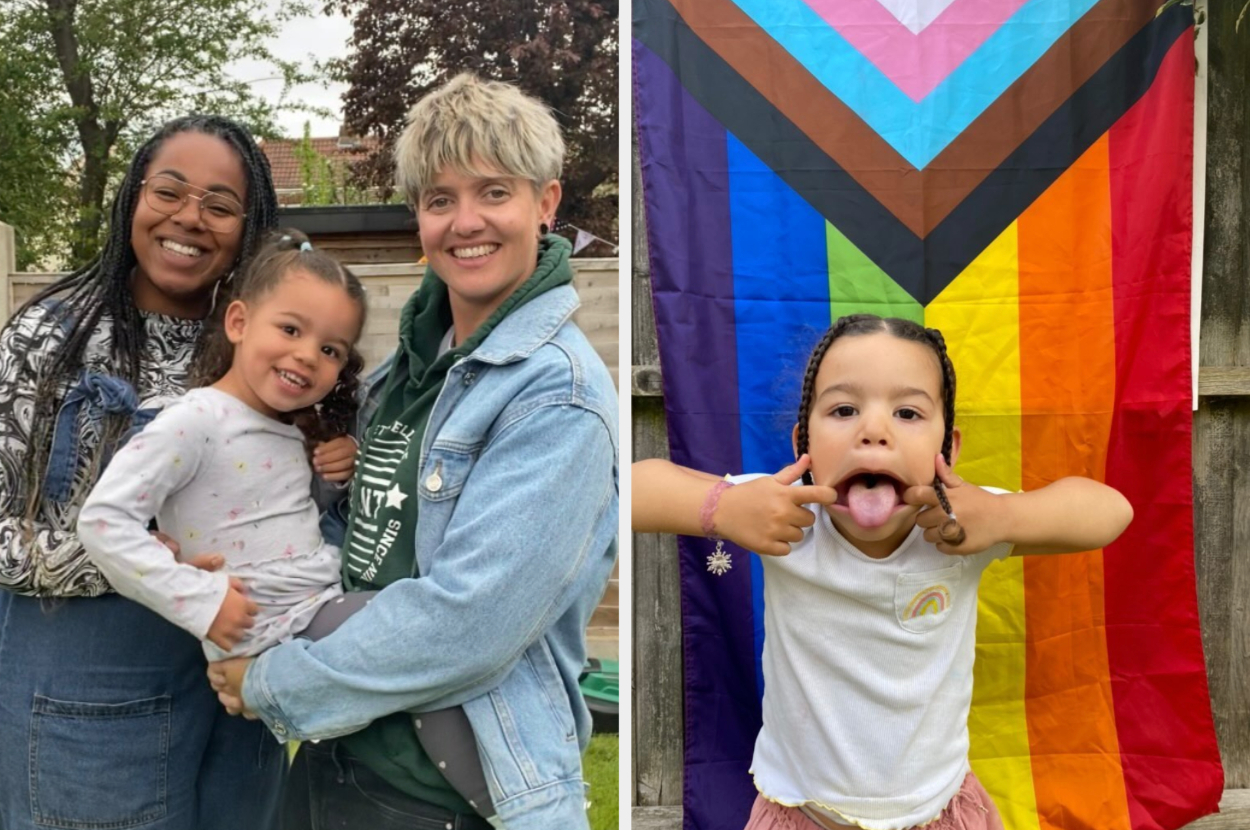
Caprice Fox with her wife, Holly and three-year-old daughter, Honey

Caprice Fox

Caprice Fox with her wife, Holly and three-year-old daughter, Honey

“We celebrate Pride month by attending our local Pride event and decorating at home. Pre-Covid we attended Pride as a family and they had Drag Queen Story Time, a children’s dance stage and a soft play area. We have diverse books out all year round, not just for one month, however we make a conscious effort to read these and encourage preschool to do the same!

“It is so importance for Honey to celebrate Pride and our family so that she realises just how diverse every family can be! There’s no one way to be a family and each one can look different, but it’s about showing that each one has something in common: love!” – Caprice Fox, 32 from Bristol

‘I want him to grow up enriched.’

“Pride is incredibly important to us as a family, which is why when our son came along we would continue our tradition of attending Brighton Pride.

“For us, Pride means ‘community’. It’s a time we feel less isolated and othered;. It also gives us an opportunity to meet up with other LGBTQ families – and making friends along the way, so that our son doesn’t feel as isolated as we were when growing up.

“Our son is currently seven, and we’ve been attending Pride events and celebrations since he was born. For us, it’s important that he sees himself seen and represented in society, not to mention witnesses what other families look like. I want him to grow up enriched; knowing that there’s no one way to be a family and that your family is often more than just blood.” – Kate Everall, Brighton, founder of Lesbemums

‘She would ask me when pride was happening again’

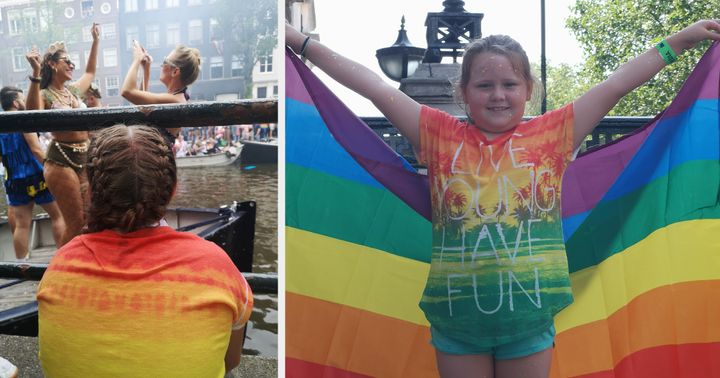
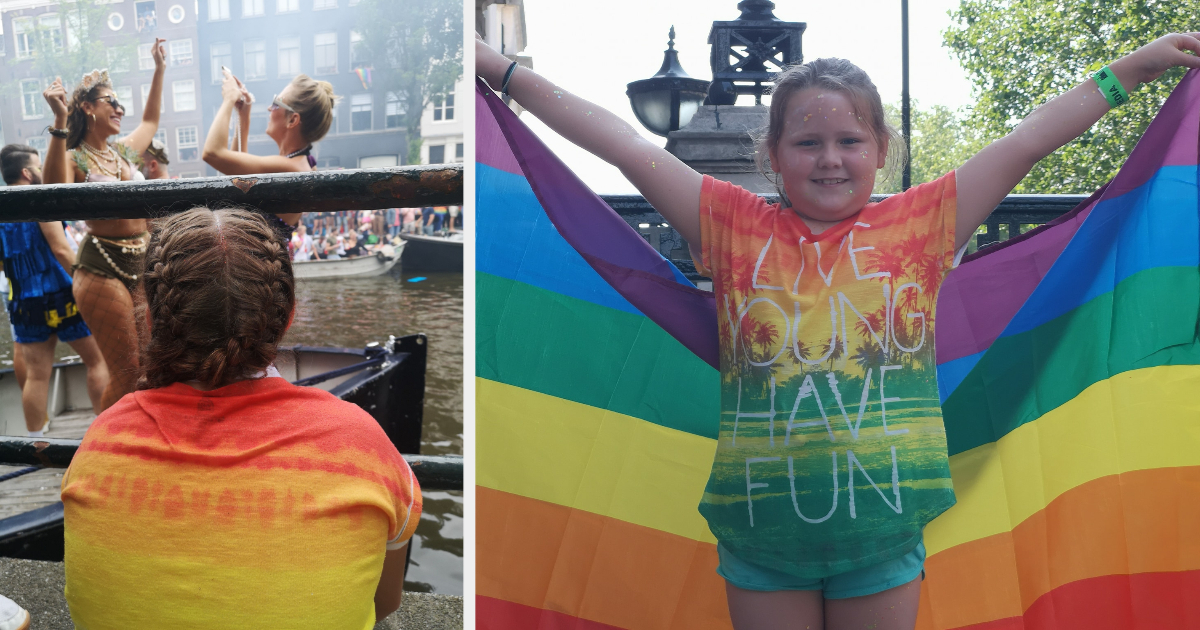
Vicky Warren's daughter, Matilda, loves attending Pride.
Vicky Warren’s daughter, Matilda, loves attending Pride.

“I have taken my daughter to Pride In London, Canterbury Pride and Amsterdam Pride. All of these events are different and I wanted to show her how different people celebrate Pride.

“To me, Pride means supporting people with their life choices, I grew up in a time when it was taboo (I am 49). It was frowned upon and I remember that it was always a scandal when an actor or singer announced they were gay. People that were transitioning into the opposite sex were laughed at and ridiculed. I did not want any of my kids to grow up without understanding and supporting people’s choices.

“Matilda was about six years old when I first went to Pride in London. We went by accident, but then she would ask me when Pride was happening again. Then in 2019 we decided to fly out to Amsterdam early one morning and attend Amsterdam Pride. Instead of the parade going through the streets, it was all on the canals in the city. It was awesome, a complete game-changer for Pride.

“When she was little she loved the vibrance of pride, she loved meeting different people who dressed up for Pride. As she got older, she learned the history of Pride, she wanted to support everyone more. She has held a sign up before offering hugs to members of the LGBTQ community and I am so proud of her.” – Vicky Warren, 49, Kent, who runs the blog Miss Tilly And Me

Share Button

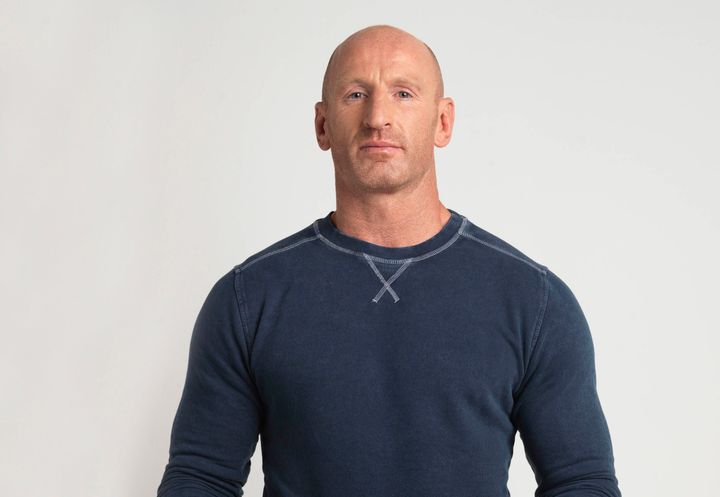
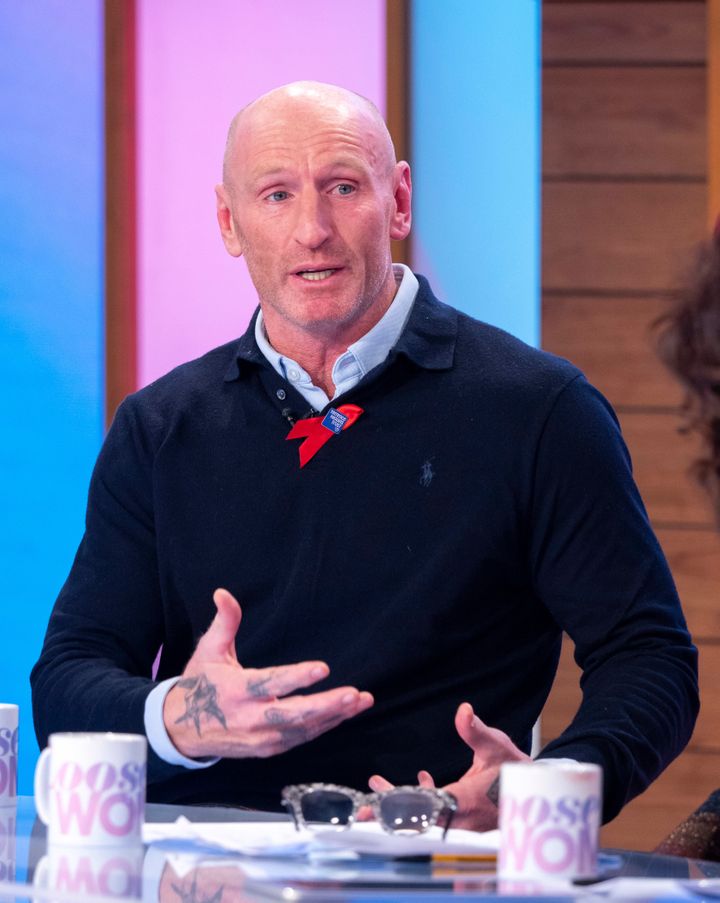
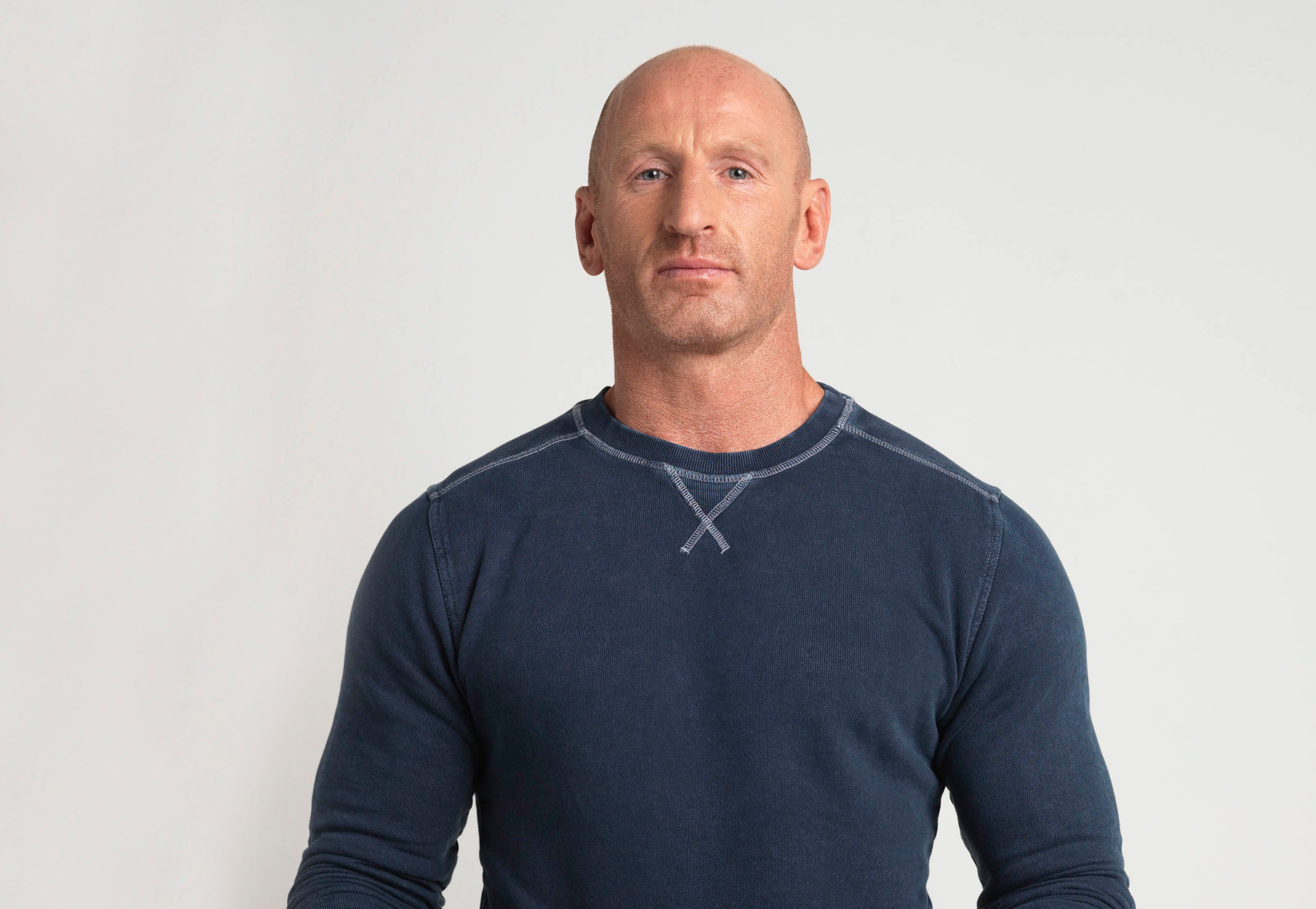
Gareth Thomas: ‘I Want To Make Sure We Never Go Back To The Way Things Were’

Gareth Thomas is undeniably one of the most prolific and celebrated LGBTQ+ figures in the world of British sport.

In addition to his impressive, record-breaking career on the rugby pitch – which included serving as captain of the Welsh national team – Gareth has also received praise for having raised awareness of issues around queer identity, mental health and destigmatising HIV.

For his latest venture, the rugby pro has teamed up with Ford for a new video series which aims to fight discrimination in industries that are stereotypically male-dominated.

Gareth Thomas pictured in 2020

ITV/Shutterstock

“Tough Talks is all about sitting down with people and giving them a safe place where they feel they can air the problems that are around what is a very very macho and sometimes toxic masculinity kind of environment,” he explains.

“What we’re trying to do is get the culture of this industry up to speed with 21st century thinking and 21st century living. And try to create change, because culture can break people down and stop people being authentic. And to be successful, you need a diverse work environment, you need people to be able to be authentic, you need people to be able to be the best version of themselves.”

To mark Pride month, HuffPost UK spoke to Gareth about how Queer As Folk provided an insight into a world he’d “only ever dreamt of” before coming out, why It’s A Sin proved to be both an “addictive” and “disturbing” watch and his admiration for Blackpool’s Jake Daniels…

Who was the first queer person you can remember looking up to?

I kind of feel like I used to shelter myself away from many iconic LGBT figures when I was growing up, because I was afraid of being “guilty by association”. So I kind of hid myself away.

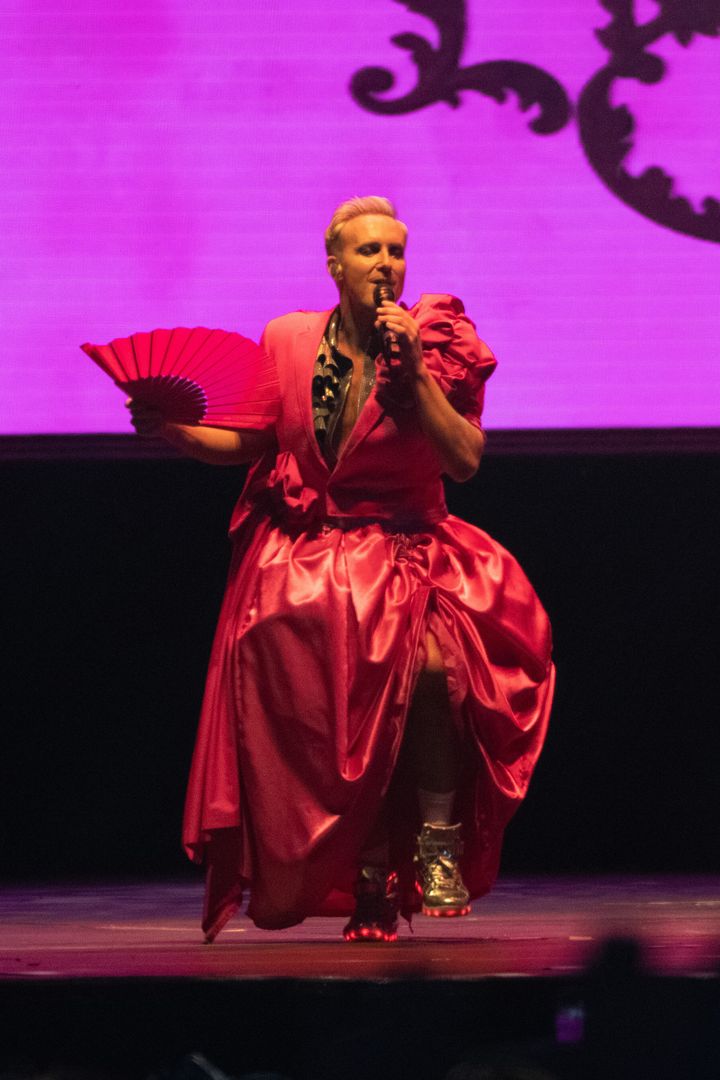
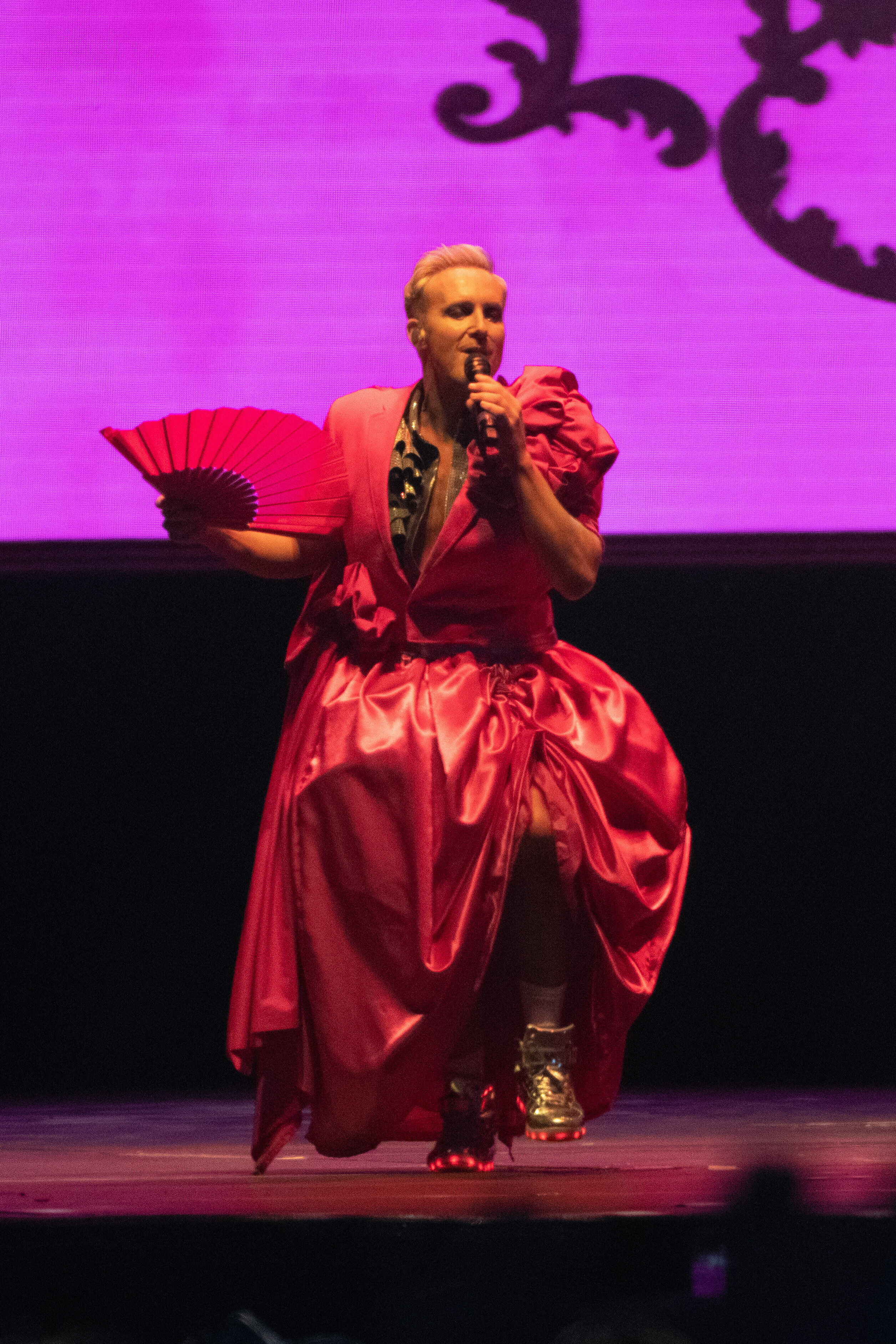
But someone I would say now is H Watkins from Steps, who’s a really good friend of mine. He’s probably not somebody that people would think [I would say], because he’s not someone I grew up watching. He’s even younger than me! It sounds like a really bizarre one, because I’m sure people would think, you know, Peter Tatchell or Ian McKellen or somebody like that.

But for me, he has the same lived experience as me, he’s from the same area, he’s always celebrated who he is and he’s very active in fighting for the rights of LGBT people in the community and the area that I know.

H on stage earlier this year

Joseph Okpako via Getty Images

What was the first LGBTQ+ TV show or film that you remember resonating with you?

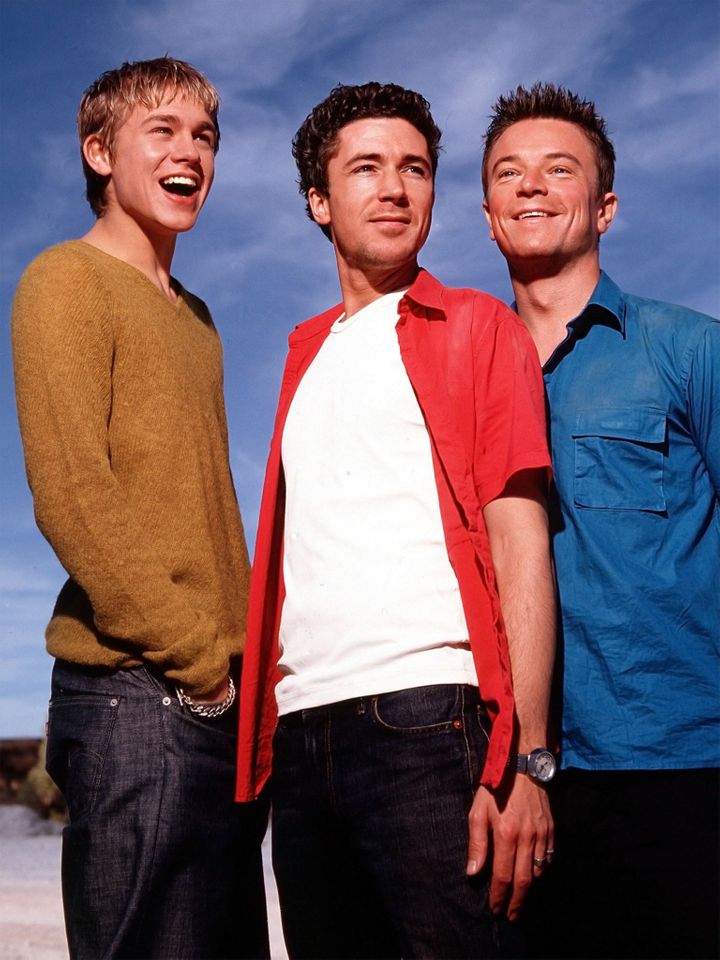
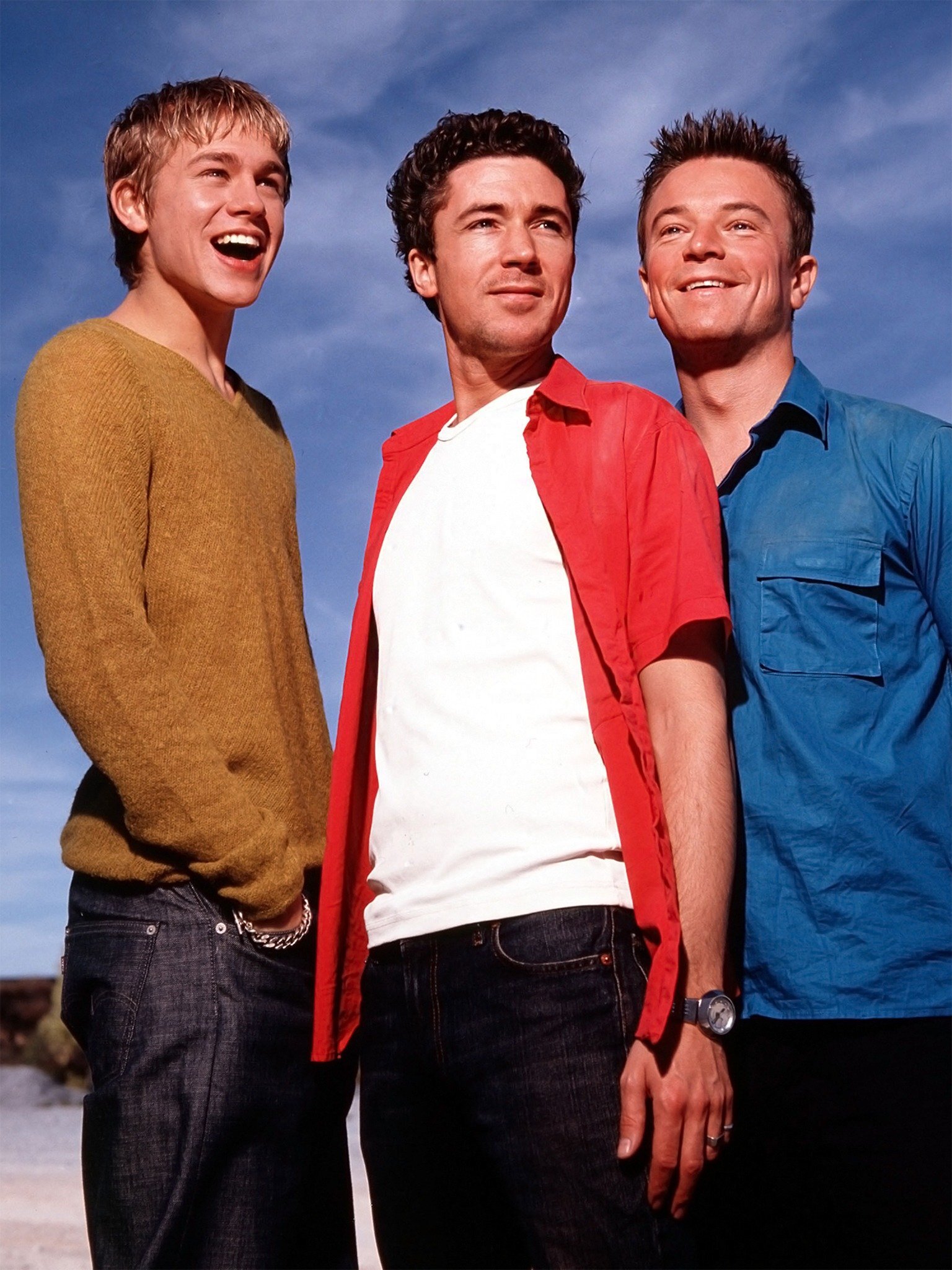
Oh my word, well, I wasn’t out at the time, but I remember watching Queer As Folk when it first came out about 20 years ago. And it was like an insight into a world that I’d only kind of ever dreamt of exploring or being in. It was a very interesting watch for me.

It pushed the boundaries and got people’s attention and got people talking about what it’s like to live in that community. I’m not sure if it scared me, or whether it excited me about the potential of, “OK, that’s what’s on the other side of the door if I dare ever unlock it”.

Queer As Folk
Queer As Folk

What’s a song you associate with your own coming out?

The Freemasons’ remix of Here Comes The Rain Again by The Eurythmics, and I’ll always remember it because it was playing the first time I ever walked into my first gay club experience.

The reason it resonated with me was because that was the first moment where I really saw people not worrying about what other people were thinking about them. It felt like, for the first time in my life, I was standing there, looking around, and feeling really liberated. Whenever I hear that song, I have that memory of seeing people smiling, seeing people holding hands, seeing people not afraid to be themselves.

<div class="js-react-hydrator" data-component-name="YouTube" data-component-id="5518" data-component-props="{"itemType":"video","index":24,"contentListType":"embed","code":"

","type":"video","meta":{"url":"https://www.youtube.com/watch?v=mypXAhJyDEU","type":"video","version":"1.0","title":"Here Comes The Rain Again [Freemasons Remix] – Eurythmics (MV) 2007","author":"Desmond You","author_url":"https://www.youtube.com/channel/UCzms6QIjD8T12kTYWpJv9OQ","provider_name":"YouTube","thumbnail_url":"https://i.ytimg.com/vi/mypXAhJyDEU/maxresdefault.jpg","thumbnail_width":1280,"thumbnail_height":720,"cache_age":86400,"options":{"_start":{"label":"Start from","value":"","placeholder":"ex.: 11, 1m10s"},"_end":{"label":"End on","value":"","placeholder":"ex.: 11, 1m10s"},"_cc_load_policy":{"label":"Closed captions","value":false},"click_to_play":{"label":"Hold load & play until clicked","value":false}}},"fullBleed":false,"flags":[],"enhancements":{},"options":{"theme":"news","device":"desktop","editionInfo":{"id":"uk","name":"U.K.","link":"https://www.huffingtonpost.co.uk","locale":"en_GB"},"slideshowAd":{"scriptTags":[],"otherHtml":""},"slideshowEndCard":{"scriptTags":[{"attribs":{},"scriptBody":"\r\n (function(){\r\n var c = document.getElementById(‘taboola-endslate-thumbnails’);\r\n c.id += ‘-‘ + Math.round(Math.random()*1e16);\r\n \r\n var taboolaParams = {\r\n loader: \"//cdn.taboola.com/libtrc/aol-huffingtonpost/loader.js\",\r\n mode: \"thumbnails-b\",\r\n container: c.id,\r\n placement: \"Endslate Thumbnails\",\r\n target_type: \"mix\"\r\n };\r\n \r\n if (typeof window.modulousQueue === \"function\") {\r\n \twindow.modulousQueue.add(function(){ doTaboola(taboolaParams); });\r\n } else {\r\n \tdoTaboola(taboolaParams);\r\n }\r\n }());\r\n"}],"otherHtml":"

"},"isMapi":false,"isAmp":false,"isVideoEntry":false,"isMt":false,"entryId":"62ab443be4b0cf43c853b865","entryTagsList":"pride,its-a-sin,gareth-thomas,steps,ian-h-watkins,queer-as-folk,","sectionSlug":"entertainment","deptSlug":null,"sectionRedirectUrl":null,"subcategories":"","isWide":false,"headerOverride":null,"noVideoAds":false,"disableFloat":false,"isNative":false,"commercialVideo":{"provider":"custom","site_and_category":"uk.entertainment","package":null},"isHighline":false,"vidibleConfigValues":{"cid":"60afc140cf94592c45d7390c","disabledWithMapiEntries":false,"overrides":{"all":"60b8e525cdd90620331baaf4"},"whitelisted":["56c5f12ee4b03a39c93c9439","56c6056ee4b01f2b7e1b5f35","59bfee7f9e451049f87f550b","5acccbaac269d609ef44c529","570278d2e4b070ff77b98217","57027b4be4b070ff77b98d5c","56fe95c4e4b0041c4242016b","570279cfe4b06d08e3629954","5ba9e8821c2e65639162ccf1","5bcd9904821576674bc55ced","5d076ca127f25f504327c72e","5b35266b158f855373e28256","5ebac2e8abddfb04f877dff2","60b8e525cdd90620331baaf4","60b64354b171b7444beaff4d","60d0d8e09340d7032ad0fb1a","60d0d90f9340d7032ad0fbeb","60d0d9949340d7032ad0fed3","60d0d9f99340d7032ad10113","60d0daa69340d7032ad104cf","60d0de02b627221e9d819408"],"playlists":{"default":"57bc306888d2ff1a7f6b5579","news":"56c6dbcee4b04edee8beb49c","politics":"56c6dbcee4b04edee8beb49c","entertainment":"56c6e7f2e4b0983aa64c60fc","tech":"56c6f70ae4b043c5bdcaebf9","parents":"56cc65c2e4b0239099455b42","lifestyle":"56cc66a9e4b01f81ef94e98c"},"playerUpdates":{"56c6056ee4b01f2b7e1b5f35":"60b8e525cdd90620331baaf4","56c5f12ee4b03a39c93c9439":"60d0d8e09340d7032ad0fb1a","59bfee7f9e451049f87f550b":"60d0d90f9340d7032ad0fbeb","5acccbaac269d609ef44c529":"60d0d9949340d7032ad0fed3","5bcd9904821576674bc55ced":"60d0d9f99340d7032ad10113","5d076ca127f25f504327c72e":"60d0daa69340d7032ad104cf","5ebac2e8abddfb04f877dff2":"60d0de02b627221e9d819408"}},"connatixConfigValues":{"videoPagePlayer":"19654b65-409c-4b38-90db-80cbdea02cf4"},"customAmpComponents":[],"ampAssetsUrl":"https://amp.assets.huffpost.com","videoTraits":null,"positionInUnitCounts":{"buzz_head":{"count":0},"buzz_body":{"count":0},"buzz_bottom":{"count":0}},"positionInSubUnitCounts":{"article_body":{"count":8},"before_you_go_slideshow":{"count":0}},"connatixCountsHelper":{"count":0},"buzzfeedTracking":{"context_page_id":"62ab443be4b0cf43c853b865","context_page_type":"buzz","destination":"huffpost","mode":"desktop","page_edition":"en-uk"},"cetUnit":"buzz_body"}}”>

What was the most recent LGBTQ+ show or film that made an impact on you?

It has to be It’s A Sin, without a shadow of a doubt. For me, watching It’s A Sin, as much as I found it addictive and wanted to binge-watch it, I also found it quite disturbing. I live with HIV myself, and through the work I do now, I know a lot of people who are from that generation. They’ve told me stories, but to see it played out and the reality of what it was brought it to life a lot more.

I became very appreciative of the times I live in now, the fact that I can live on medication now. But also, I felt so connected to, and helpless for, the people who lost their lives in horrific, horrific ways. They spent the rest of their lives, after diagnosis, being locked in a room or being discriminated against or with people not wanting to touch them.

[Seeing] the reality of what happened, and with my connection to it, I wished I could have done something then, but also it made me more determined to realise, “at least I can do something now”. That gave me a sense of motivation, but also a sense of sadness that people had to live through that.

And I made sure that everybody that I spoke to watched it, because I wanted to make sure that we never go back to times like that. There is always a chance in society that if we relax or if we stop talking about things, it’s easy to fall back to the way things were.

The cast of Channel 4's It's A Sin
The cast of Channel 4’s It’s A Sin

via PA Features Archive/Press Association Images

Who is your ultimate queer icon?

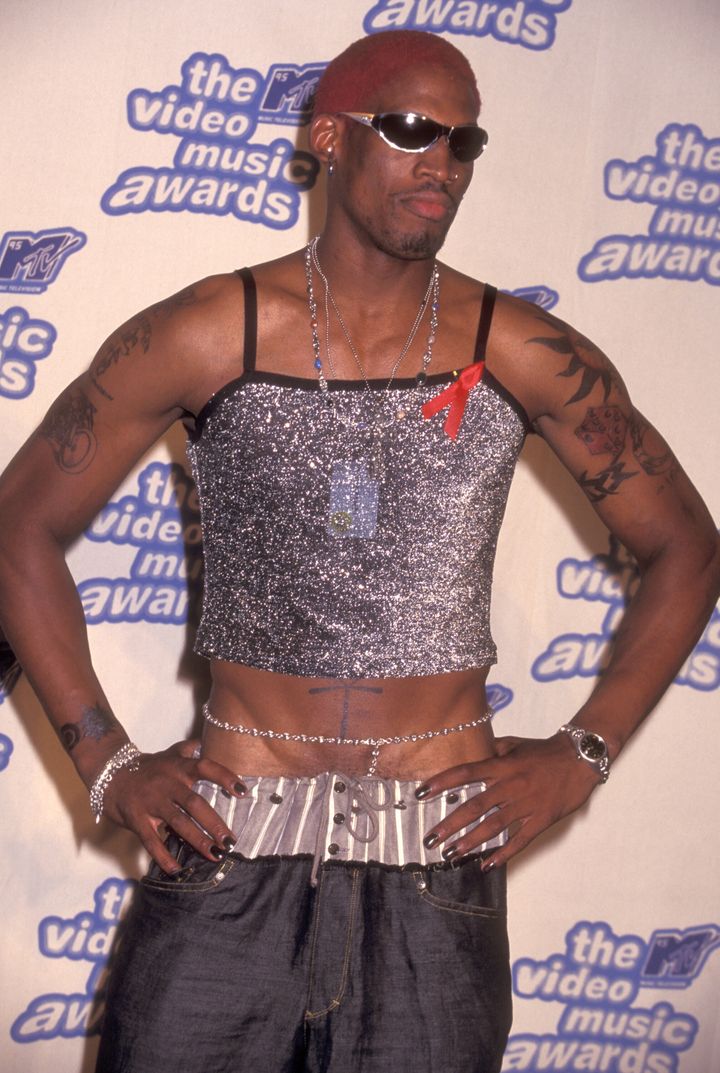
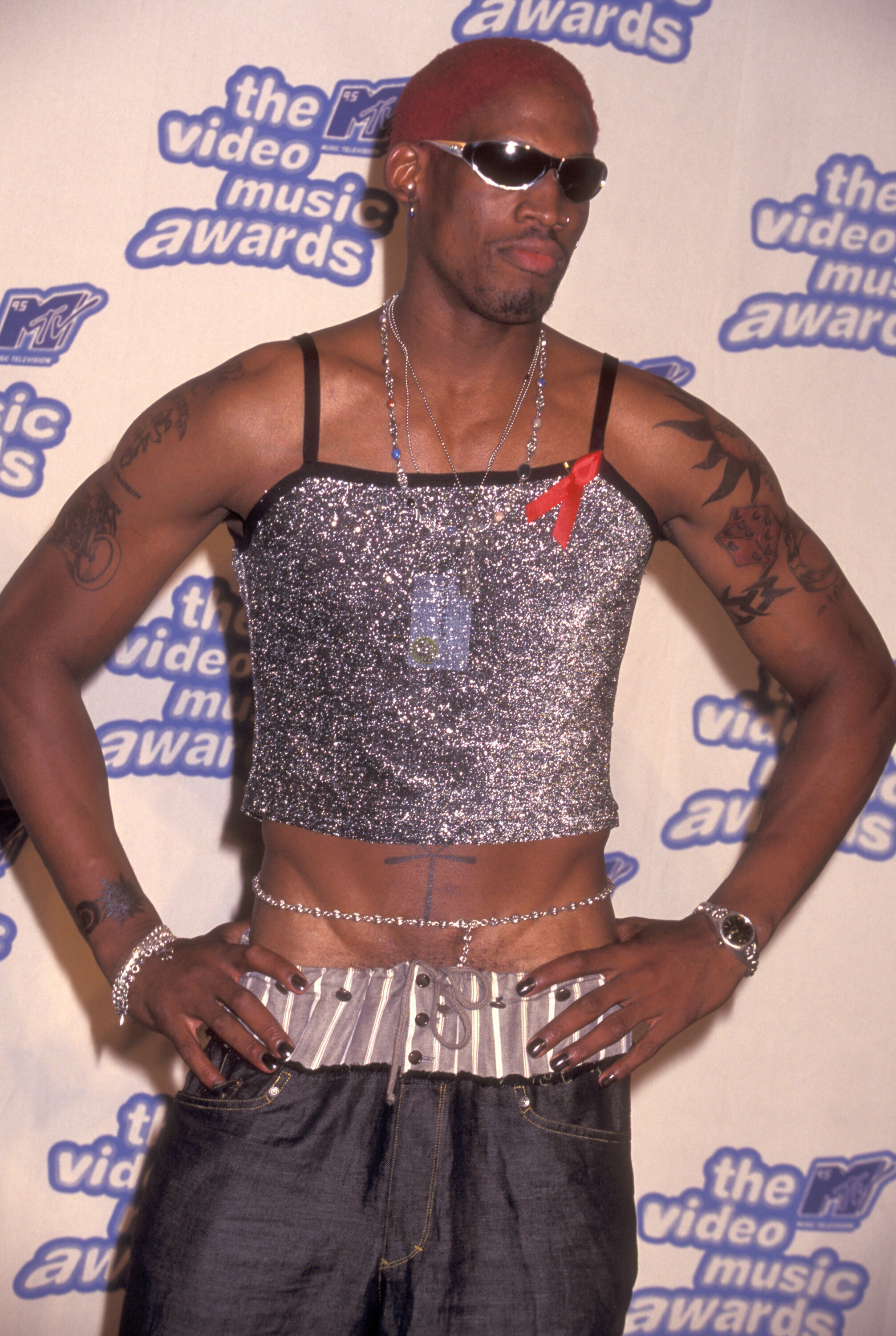
Growing up, I loved Dennis Rodman so much. He was a great athlete, he was a great basketball player, but he also always pushed the limits. He would wear a dress if he woke up and felt like he wanted to – it didn’t define him, he just felt like he wanted to wear one. He had tattoos and piercings and it felt, to me, he was someone who had no shame around his identity. And if his identity didn’t match what someone else thought it should be, that was somebody else’s problem to deal with, not his.

I was such a sports fan, and I think to have a sporting icon – which he was at that time – pushing the boundaries and the limits of what people assumed every sports person should be, or look like, or wear, or say, it was very iconic to me. He didn’t follow the rules, and he didn’t break the rules, he just made his own rules.

Dennis Rodman at the VMAs in 1995

Ron Galella, Ltd. via Getty Images

Who is a queer person in the public eye right now that makes you excited about the future?

It has to be Jake Daniels, the footballer. It kind of blew me away, reading about him coming out. It was such a brave decision – he’s 17 and he’s only just signed a professional contract. At 17 I was so immature, so to show that maturity and bravery at such a young age, makes him such a positive role model for that generation – and everyone else.

And now, whether he’s successful or not, he’ll be able to look himself in the mirror and say, “I gave myself every opportunity”. Because if he failed, and he hadn’t spoken about his sexuality, he could have been left wondering, “would I have been successful if I had been authentic?”. The fact that he’s willing to put himself under that spotlight and that pressure, he’s willing to take the failures or successes and through all of it being himself, I think that is such a positive message for the future.

Jake Daniels
Jake Daniels

Lee Parker – CameraSport via Getty Images

Why do you think Pride is still so important today?

There are so, so many reasons. For me, Pride was not created or born out of a need to celebrate but being gay, it was born out of a need to fight for the right to exist without persecution. And we still live in a world where there is discrimination, nobody in this world can sit down and say there is zero discrimination against the LGBT community. There are still 69 countries where it is still illegal to be gay.

There are far-reaching messages from these Pride festivals and marches, that transcends borders and transcend communities. And it gives people hope. If I go to a Pride, I don’t go there to celebrate me being gay, I go [to celebrate] my right to exist without being persecuted for it.

Gareth Thomas
Gareth Thomas

Ken McKay/ITV/Shutterstock

What’s your message for the next generation of LGBTQ+ people?

Everyone goes through life wanting to be liked by everyone. And that’s not necessarily a bad thing. But I’d like the next generation of people to realise that it’s OK to be disliked for being authentic, but it’s not OK to be liked for being a version of you that’s a version that other people think you should be.

I feel that if people didn’t feel the need to lie about who they are, life would be a lot easier for everybody.

Watch Gareth Thomas and Ford’s Tough Talks video below:

<div class="js-react-hydrator" data-component-name="YouTube" data-component-id="637" data-component-props="{"itemType":"video","index":50,"contentListType":"embed","code":"

","type":"video","meta":{"url":"https://www.youtube.com/watch?v=1_UmIurTCYc","type":"video","version":"1.0","title":"Ford Presents: Tough Talks with Gareth Thomas","author":"Ford News Europe","author_url":"https://www.youtube.com/channel/UC-uGdDHxmwi_eH5t_ph9uuw","provider_name":"YouTube","description":"Ford presents, #ToughTalks, a new series exploring how the automotive industry and ‘car culture’ needs to become more inclusive of the LGBTQ+ community and drive out discrimination.\n\nFormer Welsh Rugby Player, Gareth Thomas speaks to Racing Driver, @GoCharlie and Ed Rogers, Founder of Driving Pride to define ‘tough’ and discuss their experiences within the automotive world.\n\nWatch Episode 1 now and share your experiences with us below. 🏳️‍🌈\n\nDiscover more about Ford Presents Tough Talks: https://ford.to/FordPresentsToughTalksEp1\n___\nFollow us on social media: \n▶ YouTube 👉 https://www.youtube.com/c/fordnewseurope\n▶ Twitter 👉 https://twitter.com/FordNewsEurope\n▶ Instagram 👉 https://www.instagram.com/fordnewseurope \n▶ Blog 👉 https://ford.to/FordNewsEuropeBlog","thumbnail_url":"https://i.ytimg.com/vi/1_UmIurTCYc/maxresdefault.jpg","thumbnail_width":1280,"thumbnail_height":720,"cache_age":86400,"options":{"_start":{"label":"Start from","value":"","placeholder":"ex.: 11, 1m10s"},"_end":{"label":"End on","value":"","placeholder":"ex.: 11, 1m10s"},"_cc_load_policy":{"label":"Closed captions","value":false},"click_to_play":{"label":"Hold load & play until clicked","value":false}}},"fullBleed":false,"flags":[],"enhancements":{},"options":{"theme":"news","device":"desktop","editionInfo":{"id":"uk","name":"U.K.","link":"https://www.huffingtonpost.co.uk","locale":"en_GB"},"slideshowAd":{"scriptTags":[],"otherHtml":""},"slideshowEndCard":{"scriptTags":[{"attribs":{},"scriptBody":"\r\n (function(){\r\n var c = document.getElementById(‘taboola-endslate-thumbnails’);\r\n c.id += ‘-‘ + Math.round(Math.random()*1e16);\r\n \r\n var taboolaParams = {\r\n loader: \"//cdn.taboola.com/libtrc/aol-huffingtonpost/loader.js\",\r\n mode: \"thumbnails-b\",\r\n container: c.id,\r\n placement: \"Endslate Thumbnails\",\r\n target_type: \"mix\"\r\n };\r\n \r\n if (typeof window.modulousQueue === \"function\") {\r\n \twindow.modulousQueue.add(function(){ doTaboola(taboolaParams); });\r\n } else {\r\n \tdoTaboola(taboolaParams);\r\n }\r\n }());\r\n"}],"otherHtml":"

"},"isMapi":false,"isAmp":false,"isVideoEntry":false,"isMt":false,"entryId":"62ab443be4b0cf43c853b865","entryTagsList":"pride,its-a-sin,gareth-thomas,steps,ian-h-watkins,queer-as-folk,","sectionSlug":"entertainment","deptSlug":null,"sectionRedirectUrl":null,"subcategories":"","isWide":false,"headerOverride":null,"noVideoAds":false,"disableFloat":false,"isNative":false,"commercialVideo":{"provider":"custom","site_and_category":"uk.entertainment","package":null},"isHighline":false,"vidibleConfigValues":{"cid":"60afc140cf94592c45d7390c","disabledWithMapiEntries":false,"overrides":{"all":"60b8e525cdd90620331baaf4"},"whitelisted":["56c5f12ee4b03a39c93c9439","56c6056ee4b01f2b7e1b5f35","59bfee7f9e451049f87f550b","5acccbaac269d609ef44c529","570278d2e4b070ff77b98217","57027b4be4b070ff77b98d5c","56fe95c4e4b0041c4242016b","570279cfe4b06d08e3629954","5ba9e8821c2e65639162ccf1","5bcd9904821576674bc55ced","5d076ca127f25f504327c72e","5b35266b158f855373e28256","5ebac2e8abddfb04f877dff2","60b8e525cdd90620331baaf4","60b64354b171b7444beaff4d","60d0d8e09340d7032ad0fb1a","60d0d90f9340d7032ad0fbeb","60d0d9949340d7032ad0fed3","60d0d9f99340d7032ad10113","60d0daa69340d7032ad104cf","60d0de02b627221e9d819408"],"playlists":{"default":"57bc306888d2ff1a7f6b5579","news":"56c6dbcee4b04edee8beb49c","politics":"56c6dbcee4b04edee8beb49c","entertainment":"56c6e7f2e4b0983aa64c60fc","tech":"56c6f70ae4b043c5bdcaebf9","parents":"56cc65c2e4b0239099455b42","lifestyle":"56cc66a9e4b01f81ef94e98c"},"playerUpdates":{"56c6056ee4b01f2b7e1b5f35":"60b8e525cdd90620331baaf4","56c5f12ee4b03a39c93c9439":"60d0d8e09340d7032ad0fb1a","59bfee7f9e451049f87f550b":"60d0d90f9340d7032ad0fbeb","5acccbaac269d609ef44c529":"60d0d9949340d7032ad0fed3","5bcd9904821576674bc55ced":"60d0d9f99340d7032ad10113","5d076ca127f25f504327c72e":"60d0daa69340d7032ad104cf","5ebac2e8abddfb04f877dff2":"60d0de02b627221e9d819408"}},"connatixConfigValues":{"videoPagePlayer":"19654b65-409c-4b38-90db-80cbdea02cf4"},"customAmpComponents":[],"ampAssetsUrl":"https://amp.assets.huffpost.com","videoTraits":null,"positionInUnitCounts":{"buzz_head":{"count":0},"buzz_body":{"count":0},"buzz_bottom":{"count":0}},"positionInSubUnitCounts":{"article_body":{"count":8},"before_you_go_slideshow":{"count":0}},"connatixCountsHelper":{"count":0},"buzzfeedTracking":{"context_page_id":"62ab443be4b0cf43c853b865","context_page_type":"buzz","destination":"huffpost","mode":"desktop","page_edition":"en-uk"},"cetUnit":"buzz_body"}}”>