I’m A Sex Expert — 4 Steps For Women Who Struggle To Orgasm

Getting off, the big O, la petite mort, cumming… There is a plethora of ways to describe the female orgasm and yet, many of us still aren’t quite making it to that final moment.

In fact, according to sexperts at Lovehoney, data shows that just 15% of women can orgasm during penetrative sex alone.

Additionally, 2023 research by Durex found that only 5% of women would say that they always orgasm during sex.

So, why is this?

It partially comes down to The Orgasm Gap

Of course, we know that the journey can be just as fun and enjoyable as the destination but, if we’re very honest with ourselves, not being able to orgasm can be pretty frustrating, to say the least.

The disparity between men and women having orgasms is defined as ‘the orgasm gap’.

Psychology professor Laurie Mintz wrote about this phenomenon for The Conversation and said the main reason for it “is that women are not getting the clitoral stimulation they need”.

“And cultural messages about the supremacy of intercourse feed into this. Indeed, countless films, TV shows, books and plays portray women orgasming from intercourse alone,” said Mintz.

“Popular men’s magazines also give advice on intercourse positions to bring women to orgasm. And while some of the positions do include clitoral stimulation, the message is still that intercourse is the central and most important sexual act.”

It can also be down to a health concern

If you can’t orgasm from penetrative sex or clitoral stimulation, you may have a condition called ‘Anorgasmia’.

Medical experts at Mayo Clinic explain: “Multiple factors may lead to anorgasmia. These include relationship or intimacy issues, cultural factors, physical or medical conditions, and medicines.

“Treatments can include education about sexual stimulation, sexual enhancement devices, individual or couple therapy, and medicines.”

If you are having sexual difficulties, speak to your GP or reach out to relationship experts at Relate.

Four steps you can take to reach orgasm

Annabelle Knight, sex and relationship expert at Lovehoney, says: “Achieving better orgasms for women involves a combination of understanding your body, communication, and addressing both physical and emotional factors.”

Get to know your own body better with masturbation

“Ensure that you don’t overlook self-exploration and masturbation,” Knight urges.

“Spending time exploring what feels good to you, and trying different techniques such as using fingers, sex toys, lube and varying positions can help you understand your body better.”

Knight reveals that while the data at Lovehoney shows that just 15% of women can orgasm during penetrative sex alone, that number jumps to 46% when using a sex toy.

Communicate with your partner

If you have a partner, open up to them about the problems that you’re having.

Knight advises: “Openly discussing what you both like, providing guidance during sex, and engaging in mutual exploration can help with intimacy and satisfaction from orgasm.”

That sounds pretty fun, actually.

Try to relax

Trying to coax your body into an orgasm when you’re mentally at a heightened stress level probably won’t get you very far.

Instead, Knight suggests that you try relaxing with deep breathing, meditation, or yoga, being present in the moment, and building anticipation through prolonged foreplay to heighten arousal and intensify your orgasm.

Check in on your emotional wellbeing

“Emotional and relationship factors are equally important when it comes to having a satisfying sex life,” adds the sexpert.

“Building emotional intimacy with a partner, addressing unresolved conflicts, and having a positive body image through self-love and acceptance will help transform how you feel in the bedroom.”

We’re rooting for you.

Share Button

‘I Have To Talk Like Gru’: 13 Parents Share The Weirdest Things Their Kids Do Before Bed

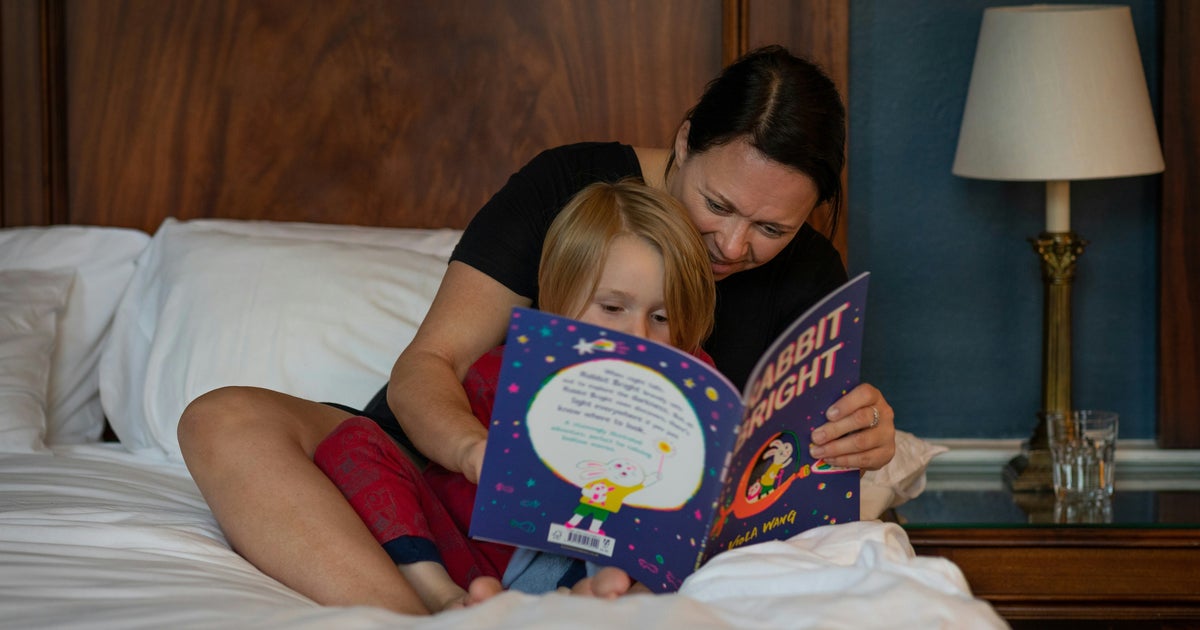
When it comes to kids’ bedtime routines, we all have those little things that help make the process that bit easier – the set number of (3,934,586,098) bedtime stories, the little pyjama dance, the teeth-cleaning song (just me?).

Recently, the brilliant minds behind Instagram account @betchesmoms asked parents to share the weirdest part of their child’s bedtime routine – and the answers are undeniably funny.

From the kid who has to snuggle a (fresh) nappy, to the boy who gets two minutes to look at the weather app, I am so relieved it’s not just our household who’s going through this bizarre parenting rite of passage.

Here are the best responses…

  1. He has to see a picture of a time he was sad and then a time he was happy.

  2. Three washcloth puppets have to join us for book time. They don’t come out any other time.

  3. We have to sing rockabye baby to each family member by name, including the dog.

  4. We say “ahoy matey” as the last thing before turning off the lights.

  5. She sleeps with a clean diaper as if it’s a stuffed animal.

  6. I must throw his blanket from the chair onto his bed, then he runs exactly four laps.

  7. She must be holding my arm skin. Sleeves are not acceptable.

  8. We have to look out the window until we see a bus drive by so she can say good night to the bus.

  9. 2-year-old went through a phase where she had to watch YouTube videos of Ferris wheels being constructed.

  10. My daughter just raw-dogs two slices of American cheese.

  11. We used to have to sing happy birthday to everyone she’s ever met plus the entire gang of Sesame Street, individually.

  12. I have to talk to her like Gru from Despicable Me and say “Goodniiighttt, leettle guorrrl.” Even I’m creeped out.

  13. Two-minute timer for him to look at the weather app on my phone.

How to get your child to go to bed

If you spend about a thousand years putting your kid to bed, welcome to the club. The good news is there are certain things you can be doing to get your kids to wind down a bit easier.

Sleep consultant Jenna Wilson at Little Dreams Consulting and sleep coach Dave Gibson caught up with baby retailer JoJo Maman Bébé to share their sleep hacks. And perhaps the most important of all is sticking to the same bedtime (even with the evenings getting lighter).

“Consistency is the key here as this conditions our brain to anticipate sleep is coming,” said Gibson.

“The ideal bedtime routine would involve doing a series of relaxing rituals in the same order at the same time each night.”

With younger children, it’s really important to not vary bedtimes too much, he said, suggesting “15 minutes either way is fine”.

“If they need to stay up later than usual, put them down for a nap during the day so they have some ‘sleep in the bank’. It’s important to maintain the schedule on weekends too,” he added.

For Wilson, a good evening routine looks a bit like this: some quiet play time in a dimly lit room and a story before sleep. Experts also agree that we shouldn’t be using devices an hour before bed (sorry miniature weather app fans).

“It can be tricky to have quiet time before bed but aim for 10-15 minutes inside with the curtains closed and a lamp on so your child can start to produce melatonin (the hormone which helps sleep),” Wilson said.

Share Button

Lady Gaga Says She Was ‘Not Deeply In Touch With Reality’ During Period Of Psychosis

Lady Gaga is opening up about one of her biggest mental health struggles.

“I had psychosis,” the Abracadabra singer revealed in a candid sit-down with the New York Times’ The Interview podcast, released over the weekend.

She said of her mental health episode, which happened around five years ago, that she was “not deeply in touch with reality for a while”, recalling: “It took me out of life in a big way, and after a lot of years of hard work I got myself back.”

Gaga – whose legal name is Stefani Germanotta – said that she is finding that period of her life “increasingly harder to talk about”.

“I hate feeling defined by it. It felt like something I felt ashamed of,” the Oscar winner admitted.

“But I don’t think that we should feel ashamed if we go through times like that. I mostly just wish to say, it can get better. It did for me, and I’m grateful for that.”

Gaga added that her fiancé, Michael Polansky, helped encourage her during this turbulent time.

Lady Gaga with her fiancé Michael Polansky

via Associated Press

“When I met Michael, I was in a much better place, but I remember him saying to me, pretty early on, ‘I know you could be a lot happier than you are’,” Gaga shared.

“It was really hard for me to hear him say that because I didn’t want him to think that of me,” she explained, adding that she “wanted him to think I was like this happy, totally together person”.

During Gaga’s press tour for her upcoming album, Mayhem, the singer has disclosed a lot about her relationship with Michael.

In an interview with Good Morning America, for example, Gaga shared the ultra-direct question she asked him before their first date.

“Michael flew to Vegas when I was doing my show to take me on our first date, and before we even sat down, I said, ‘Do you want marriage and kids?’ And he goes, ‘Yeah, I do,’” Gaga revealed.

“And I said, ‘OK. Great. Do you want some champagne?’ And he said, ‘Sure.’”

Help and support:

  • Mind, open Monday to Friday, 9am-6pm on 0300 123 3393.
  • Samaritans offers a listening service which is open 24 hours a day, on 116 123 (UK and ROI – this number is FREE to call and will not appear on your phone bill).
  • CALM (the Campaign Against Living Miserably) offer a helpline open 5pm-midnight, 365 days a year, on 0800 58 58 58, and a webchat service.
  • The Mix is a free support service for people under 25. Call 0808 808 4994 or email help@themix.org.uk
  • Rethink Mental Illness offers practical help through its advice line which can be reached on 0808 801 0525 (Monday to Friday 10am-4pm). More info can be found on rethink.org.
Share Button

Michael Gove denies trying to circumvent Dyson ventilator checks

Former cabinet minister says it would be ludicrous to suggest he tried to shortcut safety checks in the pandemic.

Share Button

‘I couldn’t cope if I passed condition to my kids’

A genetic testing service based in Devon is praised by a woman with a rare skin condition.

Share Button

Building bridges in physics

Researchers at Osaka University show that Cartan’s First Structure Equation, which relates to edge and screw dislocations in crystal lattices, can be recast in the same form as a basic mathematical formula that governs the behavior of electric currents and magnetic fields. This work can help make new concepts more understandable by employing more familiar frameworks.

A fundamental goal of physics is to explain the broadest range of phenomena with the fewest underlying principles. Remarkably, seemingly disparate problems often exhibit identical mathematical descriptions. For instance, the rate of heat flow can be modeled using an equation very similar to that governing the speed of particle diffusion. Another example involves wave equations, which apply to the behavior of both water and sound. Scientists continuously seek such connections, which are rooted in the principle of the “universality” of underlying physical mechanisms.

In a study published in the journal Royal Society Open Science, researchers from Osaka University uncovered an unexpected connection between the equations for defects in a crystalline lattice and a well-known formula from electromagnetism. They demonstrated that the fields representing the strain generated around lattice dislocations in crystalline materials, modeled by Cartan’s First Structure Equation, obey the same equations as the more familiar Biot-Savart law. The former can be quite complex and challenging to visualize, while the latter describes how electric currents generate magnetic fields, and is essential for understanding numerous modern devices, including electric motors.

“Searching for Universality relationships can be valuable in emerging scientific fields, especially when the governing equations are newly established, and the nature of their solutions remains elusive,” explains lead author of the study Shunsuke Kobayashi. The Biot-Savart law states that an electrical current flowing through a wire will generate a magnetic field around itself represented by vectors that twist around like a vortex. Similarly, the effect of certain types of atomic dislocation in a crystalline lattice will induce a strain vector field on the surrounding atoms.

Using the analogous Biot-Savart law from electromagnetism, it will be possible to analytically determine the effect of dislocations, instead of the more arcane Cartan Structure Equations. “This discovery is expected to serve as a fundamental theory for describing the plastic deformation of crystalline materials, opening the way for a wide range of applications in material science,” senior author Ryuichi Tarumi says. The researchers also believe that finding these kinds of connections across areas of study can spur new discoveries.

Share Button

Prostate cancer is not a death knell, study shows

Prostate cancer statistics can look scary: 34,250 U.S. deaths in 2024. 1.4 million new cases worldwide in 2022.

Dr. Bruce Montgomery, a UW Medicine oncologist, hopes that patients won’t see these numbers and just throw up their hands in fear or resignation.

“Being diagnosed with prostate cancer is not a death knell,” said Montgomery, senior author of a literature and trial review that appeared in JAMA today. Montgomery is the clinical director of Genitourinary Oncology at Fred Hutch Cancer Center and University of Washington Medical Center, and a professor of medicine and urology at the UW School of Medicine.

He encourages patients to ask their primary-care doctor specific questions about this cancer too. Montgomery also encourages his fellow doctors to bring up the question of prostate cancer screening with their patients.

“Knowing whether there is prostate cancer and how risky it is can be the first step. Not every cancer needs to be treated,” he said. “Sometimes it’s safe to just watch and use active surveillance.”

A 2024 study coauthored by UW Medicine urologist Dr. Daniel Lin showed that active surveillance can be extremely safe: 0.1% of men who opted for surveillance died of prostate cancer after 10 years.

“We need to realize that prostate cancer is not one disease,” Montgomery said. “As a provider, you need to personalize your approach to the patient you’re seeing and to the disease that they personally are dealing with.”

For example, if a 50-year-old man develops prostate cancer that is only in the prostate, then more aggressive measures may need to be considered. However, if the disease, which can be slow-moving, develops in an 80-year-old patient, the discussion may be quite different.

“I’ve seen men that age (80s) develop prostate cancer and they’ve opted for no therapy,” he said. “They know that treatment, such as radiation, might make them feel terrible … so they just say ‘no.’

You, as their physician, he noted, must respect that.

“But if you’re 50 and have 25 to 30 years in which prostate cancer can become a bigger issue, even with the downsides, most patients should get therapy,” he said.

For more advanced prostate cancer, the number of effective treatments developed has markedly increased, as has the survival rate of men with whose prostate cancer has spread to other parts of their bodies.

“Metastatic prostate cancer needs therapy and research over the past 10 to 20 years has improved and continues to improve survival substantially,” he said. “Knowing who needs treatment, which treatment to use and when is both an art and a science.”

The article covered facts that men and their doctors should know, including:

  • Approximately 1.5 million new cases of prostate cancer are diagnosed annually worldwide. Approximately 75% of cases are first detected when the cancer is still localized to the prostate. This early detection was associated with a five-year survival rate of nearly 100%.
  • Management includes active surveillance, prostatectomy surgical removal of the prostate, or radiation therapy, depending on risk of progression.
  • Approximately 10% of cases are diagnosed after the cancer has spread. This stage of prostate cancer has a five-year survival rate of 37%.
  • The most common prostate cancer is adenocarcinoma, a type that starts in gland cells, and the median age at diagnosis is 67 years.
  • More than 50% of prostate cancer risk is attributable to genetic factors and older age.

Prostate cancer came to public attention, both nationally and internationally last year, when famed local travel writer, Rick Steves, announced he had developed prostate cancer. He proclaimed last month via his X account, formerly Twitter, that after radiation and surgery at UW Medicine and Fred Hutch, he was cancer free.

Share Button

Study pinpoints the impact of prenatal stress across 27 weeks of pregnancy

A team of researchers at Michigan State University and the University of Michigan found new insights on the timing of prenatal stress and its effect on infant stress reactivity and temperament — including differences between genders.

The study, published in Psychoneuroendocrinology, is the first to examine weekly stress across 27 weeks of pregnancy to pinpoint when it most affects a newborn’s stress response and temperament — two measures that indicate infant biobehavioral reactivity.

“Prenatal stress has a well-established link to negative health, including mental health, outcomes in children and adults, but most studies conclude that the biggest effects are on girls. Our study found that not to be the case. It’s in fact, just different timing,” said Alytia Levendosky, lead investigator of the study and professor in MSU’s Department of Psychology.

The researchers recruited 396 pregnant women, specifically from a high stress-risk population due to low income and/or exposure to intimate partner violence. Weekly stress assessments were conducted via email or text from week 15 through week 41 of pregnancy. At six months postpartum, infant cortisol levels were collected before and after a mildly stressful laboratory task to see how their hypothalamic-pituitary-adrenal system, or HPA axis, responded to stress. Mothers also reported on infant temperament.

The study found periods of higher sensitivity to stress in both mid and late gestation but found that girls and boys had differing patterns of sensitivity. The data showed that experiencing stress in mid-gestation affected girls’ HPA axis and temperament, while late gestation stress impacted boys. Previous studies in this field stopped their last stress assessment between 32-34 weeks. Because this study ran through week 41, Levendosky and her team were able to locate the time that was most sensitive for boys.

“This study is an essential step in correcting our understanding around prenatal stress effects for boys and girls,” said Joseph Lonstein, investigator on the study and professor in MSU’s Department of Psychology. “We hope that our findings inspire additional research so we can better understand what is happening in fetal brain development across pregnancy and how it is affected by stress.”

Current funding allows the team of researchers to continue following these participants until the age of four — with assessments at 2.5 years old and again at 4 years old. Amy Nuttall, co-author of this study and associate professor in the Department of Human Development and Family Studies at MSU, hopes to continue the study through even later childhood.

Share Button

Major cuts at NHS HQ as more directors stand down

Up to 6,500 jobs could go as health secretary looks to bring NHS England closer to the government.

Share Button

People Are Realising The Real Reason You Can’t Recline Your Seat During Takeoff, And I Had No Idea

You know those ominous black clumps you see in the branches of trees sometimes?

Well, it took a Reddit post for me to realise that those aren’t actually bird’s nests.

Nope ― they’re either mistletoe (which is technically a parasitic plant), or a “witch’s broom” growth irregularity spurred on by animal or bacterial invasions.

And now, a post shared to r/explainlikeimfive has inspired me to ask experts why we actually have to recline our chairs on takeoff and landing.

In a recent post shared by u/bishopZ, the site user asked: “Why do airline passengers have to put their seats into a full upright position for takeoff? Why does it matter?”

Takeoff and landing are the riskiest parts of the flight

A now-deleted Reddit account wrote under the original comment: “You’re most likely to have some sort of accident during takeoff and landing. This is also why your tray tables have to be up and you can’t have laptops during these times: ease of evacuation.”

Indeed aerospace safety expert and associate professor of aeronautical science Anthony Brickhouse told Business Insider that 49% of deaths happen during landing, while 14% occur at takeoff.

Speaking to HuffPost UK, a spokesperson for the Royal Aeronautical Society’s Flight Operations Specialist Group explained: “There are two primary safety-related reasons why aircraft seats must be in the upright position for take-off and landing.

“The first is that the seat gives the occupant maximum impact protection when upright, and its structure locks into position accordingly. Being upright also reduces the possibility of the occupant ‘submarining’ under their lap belt in the event of a violent deceleration.”

“Submarining” happens when a person’s seatbelt is a little loose, allowing their body to slip underneath it at high speed. They slide under the belt, increasing the risk of injury.

“The second reason is that reclined seats reduce the space available in the row behind for occupants to escape quickly if an emergency evacuation is required,” the Royal Aeronautical Society’s Flight Operations Specialist Group added.

In fact, people who listen to “boring” plane protocol are more likely to survive disaster

The Guardian shared experts’ research into survivors of plane accidents. They found that people who had survived (rare) catastrophes had some things in common ― including being more likely to have read the plane’s safety briefing.

Knowing where the exits are, keeping your shoes on, and practising both the brace position and undoing your seatbelt can all help too.

And remember, Amanda Ripley, author of The Unthinkable: Who Survives When Disaster Strikes, says: “between 1983 and 2000, 56% of passengers involved in serious plane accidents survived.”

Share Button