Too Many Women Like Me Are Suffering From Traumatic Births. We Need To Change Maternity Services For Good

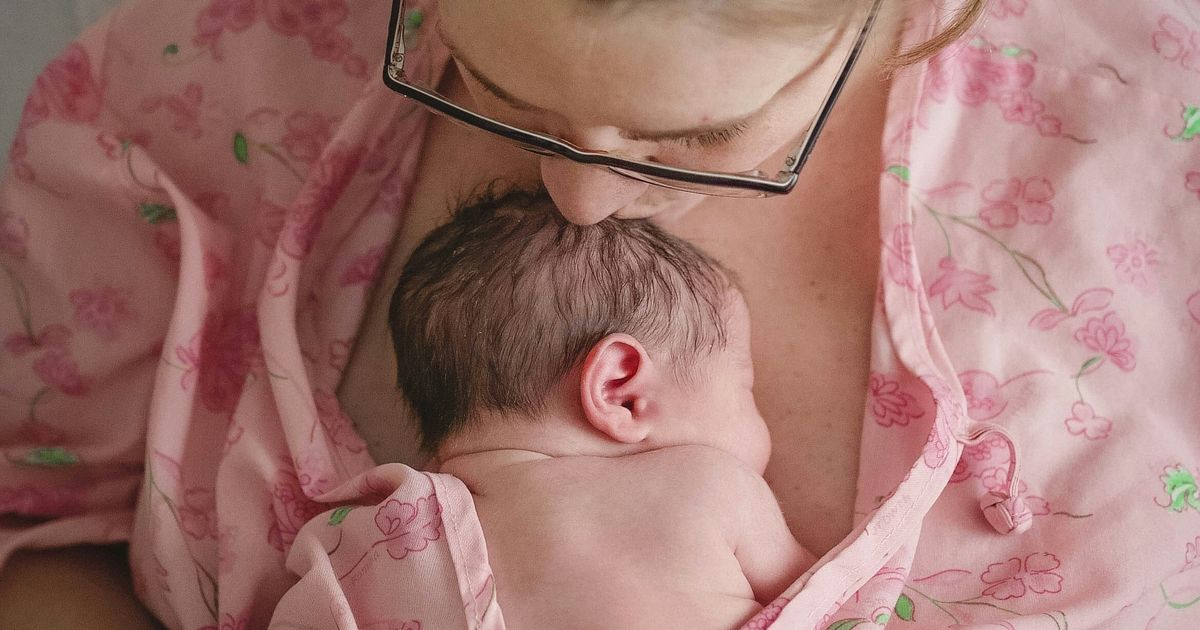
February 16, 2021 was meant to be the day that I birthed my newborn son – without drugs, not even gas and air! – into a birthing pool, under the glow of lavender-coloured LED lights, as the sound of ‘cicadas in a field’ gently filled the my private room at the midwife-led birthing unit of my local hospital.

Ideally, this would have been with the aide of a birthing Doula, but as we were deep into another nationwide lockdown, I was lucky to even have my (masked) husband as my birthing partner.

However, somehow nearly three weeks later in early March – instead of the birth I had expected and made a playlist for – I found myself recovering from three excruciating days of induced labour and an emergency c-section, while laying in a pool of blood in a sensory clusterfuck of a maternity ward.

I couldn’t move – partly from exhaustion, mostly from major surgery and a catheter – so I couldn’t even pick up my son when it was time to feed him.

The story of my pandemic pregnancy and my son’s birth is complicated, tender, and generally something I keep very private. My husband lived it alongside me, but only my closest friends and my therapist know why orange Lucozade makes me want to vomit or why the sight of that small, blue suitcase under the guest bed can still make me cry.

What is truly horrifying to me, aside from my own gruesome memories, is that my story is just a drop in the ocean when it comes to how many women in the UK have also had a “negative” or traumatic birth experience.

Because of these unsettling and life-altering numbers, a new campaign called Delivering Better, formed by a group of mothers, is urging Health Secretary Wes Streeting to take urgent action to improve maternity services in the UK.

The group’s new report highlights the need for “better support for women who often suffer, both mentally and physically, years after they have given birth” and shows the horrific impact that traumatic births are have on women, with almost half of all mothers suffering mentally and physically.

They report one in four mothers experience a negative birth in the UK, and that 72% of those women say their experience had left them with long-term mental health impacts.

Of the women who reported a negative birth experience:

  • almost half (48 per cent) say it had a long-term impact on their relationships,
  • over a third (37 per cent) say it had a long-term impact on their ability to work,
  • more than half (54 per cent) said it left them less likely to want to have more children.

More than half of women (58%) of the women who said they had a negative birth experience said they “didn’t feel listened to during delivery” – which, for me, was one of the worst parts of my own experience.

Being in one of the most vulnerable states a human can be in, and then voicing a need, a concern, or asking for help and being denied that help or dismissed by the people who are apparently there to help you can be incredibly damaging for your mental health. Not being listened to can also have incredibly serious, if not life-threatening physical implications, too, as we know from the startling statistics around Black maternal health care.

What can be done differently to help new mothers?

As both a mum and an editor I see a lot of press releases and newsletters targeting mothers and pregnant people. Some of it is helpful, but I’ll never forget an email I was sent about a new campaign to “support maternal mental health” which initially sounded excellent as some big name brands were involved.

However, reading the details, the campaign was meant to support women’s mental health after giving birth via… a meditation app. And some frozen food vouchers. And also a bit of funding for an organisation that has been criticised for its potentially harmful policies and focus on ‘natural births’.

We deserve better than this.

There needs to be much more tangible action taken in both pregnancy and delivery to see any significant changes in maternal mental health.

In my opinion, a lot can be done by addressing the curriculum and policies of prenatal courses that are available to parents – and the cost and accessibility of these services, too. I’ve experienced first hand that women – especially first-time parents – are taught in these courses that we have much more control over exactly how and when our babies will be born. That we can choose a positive birth experience.

We’re told to just watch your favourite films and eat some chocolate to get those oxytocin levels up and then labour shall commence shortly thereafter. If you breathe correctly that baby’s gonna pop right out of you – you’ve been doing your cervical massages, right?

But I can tell you firsthand – as can thousands of other parents – you can do everything “right” and still end up having an emergency c-section.

The Delivering Better campaign is asking for changes to be made in both pregnancy and delivery for mothers, including greater continuity of care throughout pregnancy.

The aftercare new mothers get is nearly comical in its limitations, and the group is also calling on GPs to proactively contact mothers via text message at three months and six months postpartum to check in on their physical and mental health.

According to Delivering Better: “Mothers often report feeling abandoned after the current six-week check, which is often not fit for purpose, with only a couple of questions directed at the mother.

“Some mums say the main question they’re asked is whether they are back on contraception. In the survey, 88% of mothers say they support receiving mental and physical health checks in the months following their birth experience, and 81% say they would have benefited from this themselves if it had been offered.”

Shocking isn’t it?

You can read more of what Delivering Better is asking for on their website, where you can also sign their open letter to Wes Streeting, “urging action for maternity care that is safe, compassionate and evidence-based”.

Help and support:

  • Mind, open Monday to Friday, 9am-6pm on 0300 123 3393.
  • Samaritans offers a listening service which is open 24 hours a day, on 116 123 (UK and ROI – this number is FREE to call and will not appear on your phone bill).
  • CALM (the Campaign Against Living Miserably) offer a helpline open 5pm-midnight, 365 days a year, on 0800 58 58 58, and a webchat service.
  • The Mix is a free support service for people under 25. Call 0808 808 4994 or email help@themix.org.uk
  • Rethink Mental Illness offers practical help through its advice line which can be reached on 0808 801 0525 (Monday to Friday 10am-4pm). More info can be found on rethink.org.

Help and support:

  • Sands works to support anyone affected by the death of a baby.
  • Tommy’s fund research into miscarriage, stillbirth and premature birth, and provide pregnancy health information to parents.
  • Saying Goodbye offers support for anyone who has suffered the loss of a baby during pregnancy, at birth or in infancy.
Share Button

Lily Allen Claims She’s ‘Not In A Great Place’ And ‘Not Eating’ In Frank Mental Health Discussion

Lily Allen has disclosed that she’s been “not really in a great place mentally” for around three years.

The chart-topping singer opened up about her mental health struggles during the latest edition of her BBC Sounds podcast Miss Me?, which she co-hosts with her friend Miquita Oliver.

“I’ve been going through a tough time over the last few months and my eating has become an issue,” she explained.

“My therapist and I talk about it and she says ‘How long has this been going on?’. And I said, ‘Well, about three years, really’. And she’s like, ‘OK, why haven’t you mentioned it before?’. And it’s not because I’m lying about it. It’s just because it doesn’t seem to be at the top of the list of important things that I need to talk about. But obviously it is.”

Lily said that her ADHD, with which she was diagnosed fairly recently, means she isn’t always good at “talking about the bigger picture” or “linking things”.

“My body and my brain are two very separate things to me. I know a lot of people feel those two things are very connected to each other, but for me it’s very different,” she said, as reported by the Daily Mail.

“I spend a lot of time in my head, and not a lot of time thinking about my body.”

She added: “I’m really not in a great place mentally at the moment, and I’m not eating. I’m not hungry. I obviously am hungry, but my body and brain are so disconnected from each other [that] the messages of hunger are not going through my body to my brain.

“I’m not avoiding food, I’m just not thinking about it because I’m so in my head. My body’s, like, a few steps behind me.”

Last year, the Brit Award winner admitted to the Off Menu podcast that she often “forgets” to eat.

I love food. I love eating, but I’m just not very good at remembering to do things,” she claimed. “I get up in the morning and I’m looking after kids and I just forget.”

Throughout her time in the spotlight, Lily has spoken candidly her mental health and issues with her body image, claiming in 2010 that she had body dysmorphic disorder.

Listen to the latest episode of Lily Allen’s podcast Miss Me? here.

Help and support:

Share Button

These 10 Simple Crafts Can Help To Aid Your Mental Health This Winter

Even if you tend to prefer cooler weather, the dark nights and rain that winter draws in can take a toll on your mental health.

Some people may experience Seasonal Affective Disorder (SAD), which is a type of depression experienced during different seasons or times of year.

It can be hard to keep yourself going at this time, especially when you’re going to work and coming home in the dark but, according to mental health experts, you could find relief from the difficulties of SAD through crafting.

Stephen Buckley, Head of Information at Mind said, “We know that crafting can be a powerful way to support mental health and wellbeing. Creative activities like card-making or knitting require focus, which may help us disconnect from daily pressures and find a welcome distraction.”

Of course, crafting is more than just a distraction. It’s creativity in motion. Making something that wasn’t there before and finding a sense of achievement in your own creative process.

Buckley added: “The repetitive motions of these crafts can feel meditative and calming, making them a helpful tool for managing stress, depression, and anxiety. Different things will work for different people and the main thing is finding a craft you enjoy and which fits into your life.”

Personally, I started crafting to get through difficult times

I never thought I was particularly crafty; I am dyspraxic and have always thought that my creativity was solely in writing.

During a rough few years, though, I couldn’t find solace in my own writing or even reading other people’s writing. Getting through the day was hard enough without trying to perfect a poem or take in complex themes in literary fiction.

Instead, I began sewing. First it was cross-stitch, then embroidery and eventually, I got my sewing machine.

The repetitive motion, the control, the reliable routine of sewing of an evening, all of it kept my head above water and reminded me that even in the darkest times, I could find and even create beauty in the world.

Like most crafty people, I couldn’t just leave it there. Now I do paper crafts, air-dry clay, needle-felting… you name it, I’ve probably lost myself in it for at least a few hours.

Where do you even start, though?

Developing a list of crafts for those looking to support their mental health this winter, The Works, backed by Mind, have produced a blog post with some ideas for easing stress and anxiety, as well as boosting concentration, focus and creativity.

Lynne Tooms, Chief Commercial Officer at The Works said, “Channelling your emotions into creativity can have a huge impact on us as adults, with various craft types having a big impact on our mood and sense of achievement, as well as providing us with skills and hobbies that can turn into passions to enjoy all year round.”

Top 10 crafts ideas to support wellbeing:

  1. Colouring
  2. Crocheting
  3. Knitting
  4. Painting
  5. Ceramics
  6. Sketching
  7. Scrapbooking
  8. Journalling
  9. Cross Stitch
  10. Flower Pressing

Read the full blog post here.

Share Button

Feeling Helpless After The Election? Here Are 6 Expert Tips To Deal With Stress

Donald Trump has won the 2024 US general election ― and seven in ten Brits think he’s not going to be a great president.

Those watching the election fallout outside of the States may feel an uneasy mix of investment and powerlessness; it must be far worse for Kamala voters in the country.

So we thought we’d reach out to some therapists this National Stress Awareness Day (apt) for advice on how to manage feelings of hopelessness and even despair that people who wanted a different result may be experiencing.

Here’s what they had to say:

Trump’s win “has sent shockwaves around the globe leaving people, US citizens and supporters, friends and family around the world incredibly scared, anxious, confused and let down.”

BACP member, psychotherapist, coach, keynote speaker, and author Bhavna Raithatha told HuffPost UK: “Unfortunately, this has been anything but a natural or normal presidential race. For those now in the crosshairs, life just changed unequivocally.”

The news can be especially challenging for women, minorities and the LGBTQ+ community, the psychotherapist points out.

“There is already fear present for… communities who have been targeted for generations based on their gender, skin colour and sexuality to name a few. Now, with a president who has been given unchecked power to be ‘a dictator just for a day’ by the highest court in the land, we don’t know what will happen,” Bhavna said.

“There is real fear from families about being split apart and deported. Equally, there is great fear from communities often racially profiled who feel they may be targeted by police who will be given unchecked and unrestricted powers,” she added.

It can also be “deeply concerning” to know that a “hate-fuelled,” “divisive” campaign won so many votes, she added.

With all that said, the psychotherapist shared that it’s “natural that today’s outcome will be the source of a great deal of stress and feelings of hopelessness and loss” due to “the grief of lost hope and expectations.”

“If you are affected by the outcome today, take time to process it. Talk it through with friends and family. Speak to your religious leaders. Speak to a therapist or your social network,” Bhavna advised.

“Remember, you are not alone. It is natural to be frightened – these are unprecedented times. Take time to be still and let this moment pass and the dust settle. This isn’t the first time an election has disappointed voters. Look after yourself and check in on friends and loved ones.”

“As a therapist, I have been exposed to people’s fears and concerns related to the US election and what it means to them (even for non-Americans).”

BACP member and psychotherapist Vicky Reynal told HuffPost UK: “People might feel strongly impacted by the election results because ultimately, when the political party we support loses, it might feel like a rejection of our personal values, almost invalidating our way of seeing the world.”

She added: “It may also feel disempowering – not just for those who feel immediately threatened by some of the proposed policies of Trump’s agenda, but also because a party loss can trigger a sense that our group, the one we feel we belong to politically is vulnerable.”

Vicky says you don’t have to ignore feelings of stress, anxiety, panic, hopelessness, or despair.

“I think it’s important to take a step back and acknowledge all the feelings that the election results have evoked. Not just the ‘top level’ disappointment, but also the deeper fears and anxieties it brings up. Leaving room for all the feelings is important,” she told HuffPost UK.

But she adds: “There is still scope in one’s life to advocate for one’s views and beliefs (so plenty of action that you can still take to restore a sense of agency). There are also plenty, plenty of people who hold similar views and wouldn’t invalidate the lens we see the world through.”

For now, Vicky says, you may benefit from distraction.

“At a practical level, now that results are out it might be a good time to ask oneself whether reading what’s in the media is helpful or whether it is unsettling and fuelling the hopelessness,” she advised.

“Curate the sources so what you are exposed to isn’t fatalistic, feeding into your catastrophic (worst case scenario) fears.”

“It might be a good time, if the anxiety is overwhelming to focus on things/activities that you do find calming and soothing (time with loved ones, physical exercise, a hobby).”

If you need professional help, the psychotherapist adds, seek it.

Help and support:

  • Mind, open Monday to Friday, 9am-6pm on 0300 123 3393.
  • Samaritans offers a listening service which is open 24 hours a day, on 116 123 (UK and ROI – this number is FREE to call and will not appear on your phone bill).
  • CALM (the Campaign Against Living Miserably) offer a helpline open 5pm-midnight, 365 days a year, on 0800 58 58 58, and a webchat service.
  • The Mix is a free support service for people under 25. Call 0808 808 4994 or email help@themix.org.uk
  • Rethink Mental Illness offers practical help through its advice line which can be reached on 0808 801 0525 (Monday to Friday 10am-4pm). More info can be found on rethink.org.
Share Button

This Is When You Should Worry About Heart Palpitations

If you’ve experienced heart palpitations, you’ll be all too familiar with how concerning they can be.

The rapid and unusual beating of your heart can often lead to anxious thoughts and before you know it, you’re in an overwhelming cycle between your body and brain. This can also feel like pounding, thumping or even fluttering heartbeats.

However, as difficult as this can feel, these palpitations are often actually quite harmless and not a sign of anything more concerning.

When should you worry about heart palpitations, though?

The heart health experts at British Heart Foundation advised: “If you’re experiencing what feels like frequent or prolonged episodes of palpitations, or you’re also having symptoms such as chest pain or dizziness when you have these episodes, it’s a good idea to talk to your GP.

“They can organise some tests to check whether these are harmless palpitations or a sign of a heart rhythm problem, support you with managing your palpitations or refer you to a specialist if needed.”

The NHS states that common causes of heart palpitations include strenuous exercise, lack of sleep, stress and anxiety, medicine, caffeine, alcohol and recreational drugs.

However, less frequently, they can be caused by anaemia, an overactive thyroid, a heart rhythm problem or even menopause.

If you also feel chest pain, shortness of breath or faint, call 999 or go to A&E.

How to manage heart palpitations

If you’re not in immediate danger, managing your heart palpitations is pretty simple.

NHS Inform recommends reducing stress levels, practising deep breathing exercises, drinking less caffeinated drinks and eating a healthy diet.

Help and support:

  • Mind, open Monday to Friday, 9am-6pm on 0300 123 3393.
  • Samaritans offers a listening service which is open 24 hours a day, on 116 123 (UK and ROI – this number is FREE to call and will not appear on your phone bill).
  • CALM (the Campaign Against Living Miserably) offer a helpline open 5pm-midnight, 365 days a year, on 0800 58 58 58, and a webchat service.
  • The Mix is a free support service for people under 25. Call 0808 808 4994 or email help@themix.org.uk
  • Rethink Mental Illness offers practical help through its advice line which can be reached on 0808 801 0525 (Monday to Friday 10am-4pm). More info can be found on rethink.org.
Share Button

Feeling Unmotivated Right Now? Blame The Month

My first thought on waking this morning was “ugh, I can’t wait to get back to sleep again tonight”.

Contrast this to sunnier, happier, more productive August me, who took up 6am workouts and made her own sourdough, and the September version of myself is looking pretty drab and unmotivated.

But at least I can comfort myself: everything, it seems, slumps this month.

“The month of September has been, on average, the worst month for the stock market going back more than a century,” NPR writes.

Over half of workers feel demotivated after summer ends too, Forbes reports.

We’re even less likely to work out in autumn. But why does it feel like our motivation takes a tumble as soon as the first leaf does?

<div class="js-react-hydrator" data-component-name="Twitter" data-component-id="8211" data-component-props="{"itemType":"rich","index":8,"contentIndexByType":1,"contentListType":"embed","code":"

sorry boss, can’t come in today. the air has that early fall feeling

— trash jones (@jzux) September 9, 2024

","type":"rich","meta":{"author":"trash jones","author_url":"https://twitter.com/jzux","cache_age":86400,"description":"sorry boss, can’t come in today. the air has that early fall feeling— trash jones (@jzux) September 9, 2024\n\n\n","options":{"_maxwidth":{"label":"Adjust width","placeholder":"220-550, in px","value":""},"_theme":{"value":"","values":{"dark":"Use dark theme"}}},"provider_name":"Twitter","title":"trash jones on Twitter / X","type":"rich","url":"https://twitter.com/jzux/status/1833121731281629343","version":"1.0"},"flags":[],"enhancements":{},"fullBleed":false,"options":{"theme":"life","device":"desktop","editionInfo":{"id":"uk","name":"U.K.","link":"https://www.huffingtonpost.co.uk","locale":"en_GB"},"originalEdition":"uk","isMapi":false,"isAmp":false,"isVideoEntry":false,"isEntry":true,"isMt":false,"entryId":"66eae050e4b00b7ce2594fc3","entryPermalink":"https://www.huffingtonpost.co.uk/entry/september-slump-explained_uk_66eae050e4b00b7ce2594fc3","entryTagsList":"health,mental-health,autumn","sectionSlug":"lifestyle","deptSlug":null,"sectionRedirectUrl":null,"subcategories":"","isWide":false,"headerOverride":null,"noVideoAds":false,"disableFloat":false,"isNative":false,"commercialVideo":{"provider":"custom","site_and_category":"uk.lifestyle","package":null},"isHighline":false,"vidibleConfigValues":{"cid":"60afc140cf94592c45d7390c","disabledWithMapiEntries":false,"overrides":{"all":"60b8e525cdd90620331baaf4"},"whitelisted":["56c5f12ee4b03a39c93c9439","56c6056ee4b01f2b7e1b5f35","59bfee7f9e451049f87f550b","5acccbaac269d609ef44c529","570278d2e4b070ff77b98217","57027b4be4b070ff77b98d5c","56fe95c4e4b0041c4242016b","570279cfe4b06d08e3629954","5ba9e8821c2e65639162ccf1","5bcd9904821576674bc55ced","5d076ca127f25f504327c72e","5b35266b158f855373e28256","5ebac2e8abddfb04f877dff2","60b8e525cdd90620331baaf4","60b64354b171b7444beaff4d","60d0d8e09340d7032ad0fb1a","60d0d90f9340d7032ad0fbeb","60d0d9949340d7032ad0fed3","60d0d9f99340d7032ad10113","60d0daa69340d7032ad104cf","60d0de02b627221e9d819408"],"playlists":{"default":"57bc306888d2ff1a7f6b5579","news":"56c6dbcee4b04edee8beb49c","politics":"56c6dbcee4b04edee8beb49c","entertainment":"56c6e7f2e4b0983aa64c60fc","tech":"56c6f70ae4b043c5bdcaebf9","parents":"56cc65c2e4b0239099455b42","lifestyle":"56cc66a9e4b01f81ef94e98c"},"playerUpdates":{"56c6056ee4b01f2b7e1b5f35":"60b8e525cdd90620331baaf4","56c5f12ee4b03a39c93c9439":"60d0d8e09340d7032ad0fb1a","59bfee7f9e451049f87f550b":"60d0d90f9340d7032ad0fbeb","5acccbaac269d609ef44c529":"60d0d9949340d7032ad0fed3","5bcd9904821576674bc55ced":"60d0d9f99340d7032ad10113","5d076ca127f25f504327c72e":"60d0daa69340d7032ad104cf","5ebac2e8abddfb04f877dff2":"60d0de02b627221e9d819408"}},"connatixConfigValues":{"defaultPlayer":"8b034f64-513c-4987-b16f-42d6008f7feb","clickToPlayPlayer":"5a777b9b-81fe-41a6-8302-59e9953ee8a2","videoPagePlayer":"19654b65-409c-4b38-90db-80cbdea02cf4"},"topConnatixThumnbailSrc":"data:image/png;base64,iVBORw0KGgoAAAANSUhEUgAAAAEAAAABCAQAAAC1HAwCAAAAC0lEQVR42mNkYAAAAAYAAjCB0C8AAAAASUVORK5CYII=","customAmpComponents":[],"ampAssetsUrl":"https://amp.assets.huffpost.com","videoTraits":null,"positionInUnitCounts":{"buzz_head":{"count":0},"buzz_body":{"count":0},"buzz_bottom":{"count":0}},"positionInSubUnitCounts":{"article_body":{"count":25},"blog_summary":{"count":0},"before_you_go_content":{"count":0}},"connatixCountsHelper":{"count":0},"buzzfeedTracking":{"context_page_id":"66eae050e4b00b7ce2594fc3","context_page_type":"buzz","destination":"huffpost","mode":"desktop","page_edition":"en-uk"},"tags":[{"name":"Health","slug":"health","links":{"relativeLink":"news/health","permalink":"https://www.huffingtonpost.co.uk/news/health","mobileWebLink":"https://www.huffingtonpost.co.uk/news/health"},"section":{"title":"Life","slug":"lifestyle"},"topic":{"title":"Health","slug":"health","overridesSectionLabel":false},"url":"https://www.huffingtonpost.co.uk/news/health/"},{"name":"Mental Health","slug":"mental-health","links":{"relativeLink":"news/mental-health","permalink":"https://www.huffingtonpost.co.uk/news/mental-health","mobileWebLink":"https://www.huffingtonpost.co.uk/news/mental-health"},"relegenceSubjectId":981161,"section":{"title":"Life","slug":"lifestyle"},"topic":{"title":"Mental Health","slug":"mental-health","overridesSectionLabel":false},"url":"https://www.huffingtonpost.co.uk/news/mental-health/"},{"name":"autumn","slug":"autumn","links":{"relativeLink":"news/autumn","permalink":"https://www.huffingtonpost.co.uk/news/autumn","mobileWebLink":"https://www.huffingtonpost.co.uk/news/autumn"},"url":"https://www.huffingtonpost.co.uk/news/autumn/"}],"isLiveblogLive":null,"isLiveblog":false,"cetUnit":"buzz_body","bodyAds":["

\r\n\r\n HPGam.cmd.push(function(){\r\n\t\treturn HPGam.render(\"inline-1\", \"entry_paragraph_1\", false, false);\r\n });\r\n\r\n","

\r\n\r\n HPGam.cmd.push(function(){\r\n\t\treturn HPGam.render(\"inline\", \"entry_paragraph_2\", false, false);\r\n });\r\n\r\n","

\r\n\r\n HPGam.cmd.push(function(){\r\n\t\treturn HPGam.render(\"inline-2\", \"entry_paragraph_3\", false, false);\r\n });\r\n\r\n","

\r\n\r\n HPGam.cmd.push(function(){\r\n\t\treturn HPGam.render(\"inline-infinite\", \"repeating_dynamic_display\", false, false);\r\n });\r\n\r\n"],"adCount":0},"isCollectionEmbed":false}”>

sorry boss, can’t come in today. the air has that early fall feeling

— trash jones (@jzux) September 9, 2024

Part of it may be down to seasonal affective disorder (SAD)

“Significant” SAD affects about 3% of the UK population, the Royal College Of Psychiatrists (RCOP) says.

The depression-like symptoms may come about thanks to the lack of light in colder months.

“If you have SAD, you may find it hard to wake up on a winter’s morning and can often feel sleepy during the day,” the RCOP says, adding that ”you may crave chocolate and high carbohydrate foods, such as white bread or sugary foods”.

Though the NHS says symptoms tend to be worse in December, January and February, SAD can start as early as September.

Then, there’s the post-summer (and potentially post-holiday) blues.

Dr Sherylin Thompson, a counselling psychologist, told the BBC: “After a period of relaxation there’s the stress of a new academic year, or work getting busy, but also healthy routines and habits.”

“It can be worse if you’re feeling stuck in the routine, and haven’t got a choice, but it can be a chance to change things,” the doctor added.

As if all that wasn’t enough, there are also additional work demands.

For many industries, the rapidly approaching Q4 is the most financially important, and knowing the added demands are coming can summon that “back-to-school” feeling.

Add kids’ school routines into the mix and it’s no wonder autumn “to-do lists… are never-ending,” psychologist Dr Lalitaa Suglani told Stylist.

“This can emotionally and psychologically impact our internal systems which in turn has an impact on our mood.”

What can I do about it?

Even though it’s the last thing you’re likely in the mood for, staying active and social in the cooler months is key to staying mentally healthy.

“When the days are shorter, it is important to make a clear routine about when we’re going to fit in exercise, get to the gym, see our friends,” clinical psychologist Dr Camilla Rosan told the BBC.

If you can, enjoy the season’s beautiful leaves while they’re still around, Dr Suglani told Stylist.

“Research suggests the importance of being in nature on our mental health, so try to get out in daylight as this is when your brain will produce melatonin and serotonin which will result in a better night’s sleep and reduce the autumn mood slump,” she shared.

Lastly, the NHS says you should see a GP as soon as possible if you’re experiencing symptoms of SAD and are struggling to cope.

Help and support:

  • Mind, open Monday to Friday, 9am-6pm on 0300 123 3393.
  • Samaritans offers a listening service which is open 24 hours a day, on 116 123 (UK and ROI – this number is FREE to call and will not appear on your phone bill).
  • CALM (the Campaign Against Living Miserably) offer a helpline open 5pm-midnight, 365 days a year, on 0800 58 58 58, and a webchat service.
  • The Mix is a free support service for people under 25. Call 0808 808 4994 or email help@themix.org.uk
  • Rethink Mental Illness offers practical help through its advice line which can be reached on 0808 801 0525 (Monday to Friday 10am-4pm). More info can be found on rethink.org.
Share Button