A carbon-lite atmosphere could be a sign of water and life on other terrestrial planets

Scientists at MIT, the University of Birmingham, and elsewhere say that astronomers’ best chance of finding liquid water, and even life on other planets, is to look for the absence, rather than the presence, of a chemical feature in their atmospheres.

The researchers propose that if a terrestrial planet has substantially less carbon dioxide in its atmosphere compared to other planets in the same system, it could be a sign of liquid water — and possibly life — on that planet’s surface.

What’s more, this new signature is within the sights of NASA’s James Webb Space Telescope (JWST). While scientists have proposed other signs of habitability, those features are challenging if not impossible to measure with current technologies. The team says this new signature, of relatively depleted carbon dioxide, is the only sign of habitability that is detectable now.

“The Holy Grail in exoplanet science is to look for habitable worlds, and the presence of life, but all the features that have been talked about so far have been beyond the reach of the newest observatories,” says Julien de Wit, assistant professor of planetary sciences at MIT. “Now we have a way to find out if there’s liquid water on another planet. And it’s something we can get to in the next few years.”

The team’s findings will appear in Nature Astronomy. De Wit co-led the study with Amaury Triaud of the University of Birmingham in the UK. Their MIT co-authors include Benjamin Rackham, Prajwal Niraula, Ana Glidden Oliver Jagoutz, Matej Peč, Janusz Petkowski, and Sara Seager, along with Frieder Klein at the Woods Hole Oceanographic Institution (WHOI), Martin Turbet of Ècole Polytechnique in France, and Franck Selsis of the Laboratoire d’astrophysique de Bordeaux.

Beyond a glimmer

Astronomers have so far detected more than 5,200 worlds beyond our solar system. With current telescopes, astronomers can directly measure a planet’s distance to its star and the time it takes it to complete an orbit. Those measurements can help scientists infer whether a planet is within a habitable zone. But there’s been no way to directly confirm whether a planet is indeed habitable, meaning that liquid water exists on its surface.

Across our own solar system, scientists can detect the presence of liquid oceans by observing “glints” — flashes of sunlight that reflect off liquid surfaces. These glints, or specular reflections, have been observed, for instance, on Saturn’s largest moon, Titan, which helped to confirm the moon’s large lakes.

Detecting a similar glimmer in far-off planets, however, is out of reach with current technologies. But de Wit and his colleagues realized there’s another habitable feature close to home that could be detectable in distant worlds.

“An idea came to us, by looking at what’s going on with the terrestrial planets in our own system,” Triaud says.

Venus, Earth, and Mars share similarities, in that all three are rocky and inhabit a relatively temperate region with respect to the sun. Earth is the only planet among the trio that currently hosts liquid water. And the team noted another obvious distinction: Earth has significantly less carbon dioxide in its atmosphere.

“We assume that these planets were created in a similar fashion, and if we see one planet with much less carbon now, it must have gone somewhere,” Triaud says. “The only process that could remove that much carbon from an atmosphere is a strong water cycle involving oceans of liquid water.”

Indeed, the Earth’s oceans have played a major and sustained role in absorbing carbon dioxide. Over hundreds of millions of years, the oceans have taken up a huge amount of carbon dioxide, nearly equal to the amount that persists in Venus’ atmosphere today. This planetary-scale effect has left Earth’s atmosphere significantly depleted of carbon dioxide compared to its planetary neighbors.

“On Earth, much of the atmospheric carbon dioxide has been sequestered in seawater and solid rock over geological timescales, which has helped to regulate climate and habitability for billions of years,” says study co-author Frieder Klein.

The team reasoned that if a similar depletion of carbon dioxide were detected in a far-off planet, relative to its neighbors, this would be a reliable signal of liquid oceans and life on its surface.

“After reviewing extensively the literature of many fields from biology, to chemistry, and even carbon sequestration in the context of climate change, we believe that indeed if we detect carbon depletion, it has a good chance of being a strong sign of liquid water and/or life,” de Wit says.

A roadmap to life

In their study, the team lays out a strategy for detecting habitable planets by searching for a signature of depleted carbon dioxide. Such a search would work best for “peas-in-a-pod” systems, in which multiple terrestrial planets, all about the same size, orbit relatively close to each other, similar to our own solar system. The first step the team proposes is to confirm that the planets have atmospheres, by simply looking for the presence of carbon dioxide, which is expected to dominate most planetary atmospheres.

“Carbon dioxide is a very strong absorber in the infrared, and can be easily detected in the atmospheres of exoplanets,” de Wit explains. “A signal of carbon dioxide can then reveal the presence of exoplanet atmospheres.”

Once astronomers determine that multiple planets in a system host atmospheres, they can move on to measure their carbon dioxide content, to see whether one planet has significantly less than the others. If so, the planet is likely habitable, meaning that it hosts significant bodies of liquid water on its surface.

But habitable conditions doesn’t necessarily mean that a planet is inhabited. To see whether life might actually exist, the team proposes that astronomers look for another feature in a planet’s atmosphere: ozone.

On Earth, the researchers note that plants and some microbes contribute to drawing carbon dioxide, although not nearly as much as the oceans. Nevertheless, as part of this process, the lifeforms emit oxygen, which reacts with the sun’s photons to transform into ozone — a molecule that is far easier to detect than oxygen itself.

The researchers say that if a planet’s atmosphere shows signs of both ozone and depleted carbon dioxide, it likely is a habitable, and inhabited world.

“If we see ozone, chances are pretty high that it’s connected to carbon dioxide being consumed by life,” Triaud says. “And if it’s life, it’s glorious life. It would not be just a few bacteria. It would be a planetary-scale biomass that’s able to process a huge amount of carbon, and interact with it.”

The team estimates that NASA’s James Webb Space Telescope would be able to measure carbon dioxide, and possibly ozone, in nearby, multiplanet systems such as TRAPPIST-1 — a seven-planet system that orbits a bright star, just 40 light years from Earth.

“TRAPPIST-1 is one of only a handful of systems where we could do terrestrial atmospheric studies with JWST,” de Wit says. “Now we have a roadmap for finding habitable planets. If we all work together, paradigm-shifting discoveries could be done within the next few years.”

Share Button

Why This Iconic English Tree Is Facing Particular Pressure From Climate Change

The National Trust has warned that an iconic English tree is already struggling due to climate change.

Yes, the English oak, which pops up repeatedly throughout our national history, is said to support more life than any other native tree species in the UK and creates one of the hardest timbers on the planet, is under strain due to our shifting climate.

In fact, climate change is exacerbating a phenomenon already known as acute oat decline, caused by a non-native pest.

The oak processionary moth damages the tree’s foliage and increases its susceptibility to other diseases – and climate change means the pest is sticking around for much longer these days, due to shorter winters.

John Deakin, head of trees and woodland at the National Trust “cold snaps [are] just not long enough to kill off diseases such as oak processionary moth, whose caterpillars infest oak trees, leaving them vulnerable to other threats.”

And the moth’s spread northwards through Europe away from their traditional home in the Mediterranean “is a tangible consequence of our warming climate,” Deakin added.

Deakin explained that growing any new trees – not just oak – is especially difficult in periods of drought, too, with up to 80% of saplings dying in some areas of the country.

While experts have devised techniques using wood mulching and sheep fleeces to help keep moisture in the soil and prevent grass growth, they are now looking at how trees will need different environments in the next 50 years.

For instance, beech trees and woodlands – typically found in the south – may soon only suit the north of England.

Deakin explained: “Our traditional thinking of where certain species like English oak and Sessile oak may thrive geographically is also likely to change as we are already seeing the huge impact of Acute Oak Decline on English oak in the south east and midlands, previously their stronghold, now being compromised.”

Ben McCarthy, head of the Trust’s nature and restoration ecology, also noted that shifting weather patterns in the UK mean many trees were constantly under stress.

Sometimes they can end up producing too much berries and nuts, without the chance to “rest”.

And while these are “incremental shifts”, these changes build up over a decade to cause serious changes in our wildlife.

McCarthy said: “It’s these baseline changes that we’re seeing that are really worrying and what we should be taking more notice of, particularly when combined with extreme weather events, which makes things even more challenging.”

Meanwhile, the national climate change consultant at the Trust, Keith Jones, said the UK must not be “lulled into any sense of false security” when it comes to our weather.

“We are likely to experience a combination of drought and high temperatures as well as high rainfall and floods – and we need to get ready for this new ‘norm’,” Jones explained.

Share Button

Fans Increasingly Concerned As Paramore Delete Website And All Social Media

Fans of pop-punk act Paramore haven’t had the most restful holiday period since the band erased all of their social media presence and taken down their website this week.

While this could mean any number of things as artists are more often using their online presence to hype up new releases by wiping their Instagram grids, some fans are concerned that this is the beginning of the end for the trio.

Others have pointed out that Paramore are due to tour in the coming weeks and let’s not forget that they’re supporting Taylor Swift on her UK leg of the Eras Tour next summer.

Paramore’s last album release was This Is Why in February of this year and alongside it, the band released songs This Is Why and Running Out Of Time.

While their Instagram and X (formerly Twitter) accounts are still live, they’ve been completely scrubbed and left with links to the Paramore website which returns a 404: Not Found message.

“All three members agreed that there’s a level of uncertainty”

Paramore recently did an interview with UpRoxx which concluded with: “Now that Paramore has spent the year touring behind This Is Why (and making sure to take better care of themselves while they’re at it), a chapter of the band’s career has come to a close.

“They’ve now fulfilled all label obligations and are effectively free agents. As for the future of Paramore, all three members agreed that there’s a level of uncertainty.”

In a move that concerned fans, lead singer Hayley Williams shared that excerpt in an Instagram story which really adds credence to the theory that the band are preparing to say goodbye after 20 years together.

I hope not, though.

Share Button

This Is The Secret To How Celebrities Get Through Airports Unnoticed

Ever find yourself in an international airport, wondering why you haven’t seen a single celeb? It’s no secret that a lot of celebrities fly first class on commercial planes, but how come we never see them in the queue to board?

Well, it turns out that for the biggest stars in the world, there’s another secret way for them to travel through airports so that they aren’t confronted with fans.

During a Q&A session on Twitter, Chrissy Teigen was asked in a now deleted tweet): “How the frick do most celebrities travel on planes? Are you ever just hustling through the airport trying to make it to your gate on time?”

It’s hard to imagine an A-Lister doing the same airport shuffle that we all do but with the strict regulations within airports, what else should we expect?

Well, it turns out that there’s a terminal a mile away from the airport that celebs pay membership for. They go through the same security that we do, though privately, and then they’re escorted to this terminal, before being driven to the plane in a car.

According to Women’s Health, Chrissy was likely referring to the Private Suite terminal at LAX which describes itself as being “far away from the traffic and bustle of the public terminal”.

Oh, how the other half live.

This terminal in particular offers, “a back door to your commercial aircraft, private TSA and Customs clearance, luxury spaces and white-glove service before and after your flight.”

Full membership for this service costs $4,850 for the year with an extra $3,550 for up to four travellers for private pick-up and drop-off to the suite though a membership that doesn’t include priority reservations or 30 night complimentary valet parking comes in at just (!) $1,250 for the year.

What are Private Suite terminals like?

Well, they are literally suites meaning that they come with bathrooms, minibars, a two-person daybed and a view of the runway.

Once the flight is boarding, a car will drive members to their plane, where the travellers will get priority boarding.

According to Women’s Health, “most other airports have private or VIP terminals as well, like Heathrow in London, the Jetex FBO Terminal in Dubai, and Schiphol VIP in Amsterdam.”

I’ll probably stick to a pint in Spoons before my flight, tbh.

Share Button

RSV: Jab for winter virus could cut baby hospitalisations by 80%, study says

More than 30,000 UK children under five are hospitalised with respiratory syncytial virus a year.

Share Button

New reptile on the block: A new iguana species discovered in China

A new iguana joins Asia’s rich reptile fauna, officially described as new to science in the open-access journal ZooKeys.

“From 2009 to 2022, we conducted a series of field surveys in South China and collected a number of specimens of the Calotes versicolor species complex, and found that the population of what we thought was Calotes versicolor in South China and Northern Vietnam was a new undescribed species and two subspecies,” says Yong Huang, whose team described the new species.

Wang’s garden lizard (Calotes wangi) is less than 9 cm long, and one of its distinguishing features is its orange tongue.

“Calotes wangi is found in subtropical evergreen broad-leaved forests and tropical monsoon forests in southern China and northern Vietnam, mostly in mountainous areas, hills and plains on forest edges, arable land, shrub lands, and even urban green belts. It is active at the edge of the forest, and when it is in danger, it rushes into bushes or climbs tree trunks to hide. Investigations found that the lizards lie on sloping shrub branches at night, sleeping close to the branches,” says Yong Huang.

It is active from April to October every year, while in the tropics it is active from March to November or even longer, and eats a variety of insects, spiders, and other arthropods.

For now, the researchers estimate that the new species is not threatened, but they do note that in some areas its habitat is fragmented.

“In addition, their bodies are used medicinally and the lizards are also eaten,” they write in their research paper.

This is why they suggest that the local government strengthen the protection of their ecological environment and pay close attention to the population dynamics.

Share Button

Junior doctors’ strike: Thousands of NHS appointments hit by walkout

The NHS is braced for its longest strike after last week’s walkout caused nearly 88,000 cancellations.

Share Button

I Thought I’d Conquered My Disordered Eating — Then I Got Pregnant

“And what does it say about me that being told I can’t have sugar makes me feel like this, like I’m losing my mind — why am I so OBSESSED with sugar? What’s WRONG WITH ME?”

Tears were creeping down my cheeks, inhales coming in broken and sniffly as I typed in the chat my husband and I used to communicate during work hours, dumping out all the intense feelings that had been pummelling me since my midwife sent the email diagnosing me with gestational diabetes.

After undergoing gastric bypass at 17 and losing 100 pounds — enough to get me into a J. Crew dress but never their pants; enough to get me attention from certain boys but never cross the societal line from “fat friend” to “cute girl” — I’d decided that, while it hadn’t made me thin, the surgery had “levelled the playing field,” meaning I could diet like a normal woman and exert some control over my previously unruly body.

I spent the next 15-plus years swinging between crash diets and hands-off-the-wheel reactive eating, punishing myself at the gym and then spending my lunch hour texting my long-distance boyfriend about what I’d eaten that day and how many calories I had left.

By the time I turned 30, though, I’d mostly accepted that my body just didn’t want to be smaller than a size 16. Dieting made me insufferably boring, so I tried to avoid it, and I’d recently discovered that yoga made me feel great, even when it didn’t make me smaller. But I was also already the smallest I’d ever been, as the result of nine months of deep depression following the end of my engagement to the aforementioned boyfriend.

When I started regaining some of that weight after meeting a new man (now my husband), my issues with food began to resurface. I scared the crap out of him with the level of my obsession, my inability to just make a change and behave normally. When I tried to be paleo for three days, making batch after batch of “cloud bread” and “cheese crisps,” he and my therapist both put their feet down. I was banned from dieting, at least without talking to my therapist first.

Things got better again. Between therapy, investing more time and energy in fat-positive spaces, and beginning to work with a nutritional counselor who specializes in intuitive eating, I was able to fight my obsession with smallness and control. Even when the pandemic weight I knew I’d gained, but hadn’t kept track of, was recorded against my will at an urgent care center and plastered in huge numbers across the top of my aftercare paperwork, I didn’t diet.

I cried, and raged, and panicked, but I didn’t diet.

Then, at 36, I got pregnant.

The first trimester was mostly OK. Yes, finding a provider who wouldn’t obsess about my BMI was a struggle, and morning (or, for me, all-day) sickness was no joke, but with the help of my nutritional counsellor I was able to let go of preconceived notions about what and how much I should be eating and focus on nourishing my body with whatever it could tolerate — pretty much just salty carbs.

But as my pregnancy advanced and the nausea eased, things only got harder. Since my gastric bypass, I’ve had to avoid particularly fatty or sweet foods; a few years later, I was diagnosed with oral allergy syndrome, which drastically limited the number of fresh fruits and vegetables I can eat without cooking or pickling. I’d gotten pretty used to those restrictions, but then came pregnancy.

No raw seafood. No tuna, even if it’s fully cooked. No pink meat. No fresh/soft cheeses. No pineapple. No Caesar salads. No more than 200mg of caffeine. No Googling “Can I eat xyz during pregnancy?” unless you want to be told that thing you were about to put in your mouth might kill your unborn child.

Years of work to dismantle the binary of good versus bad foods and here was an easy loophole! I could assign moral value to foods if it pertained to my condition.

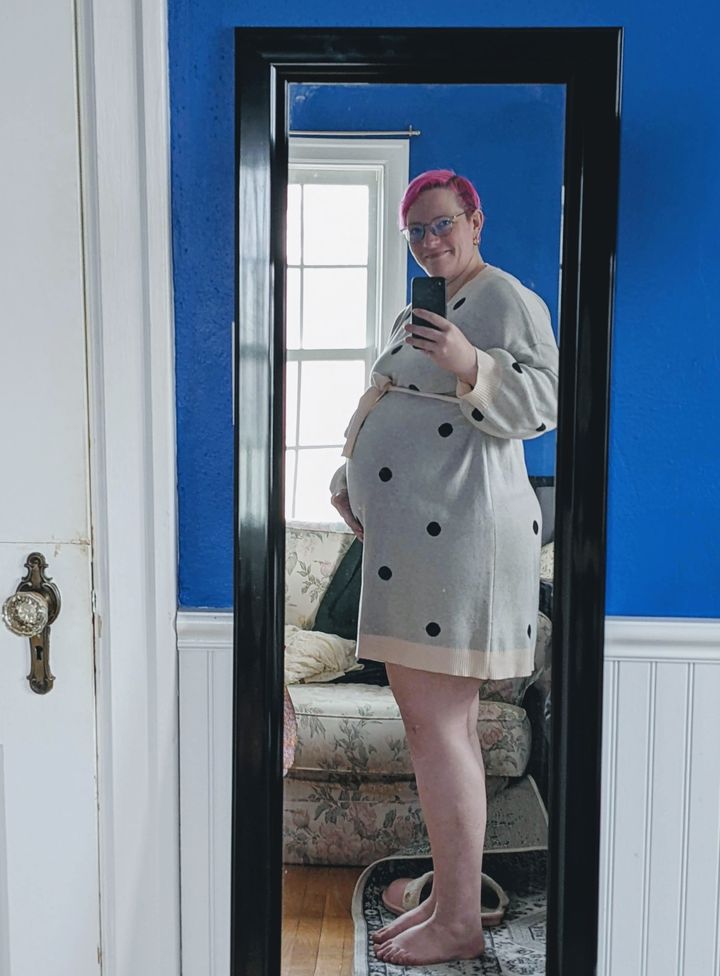
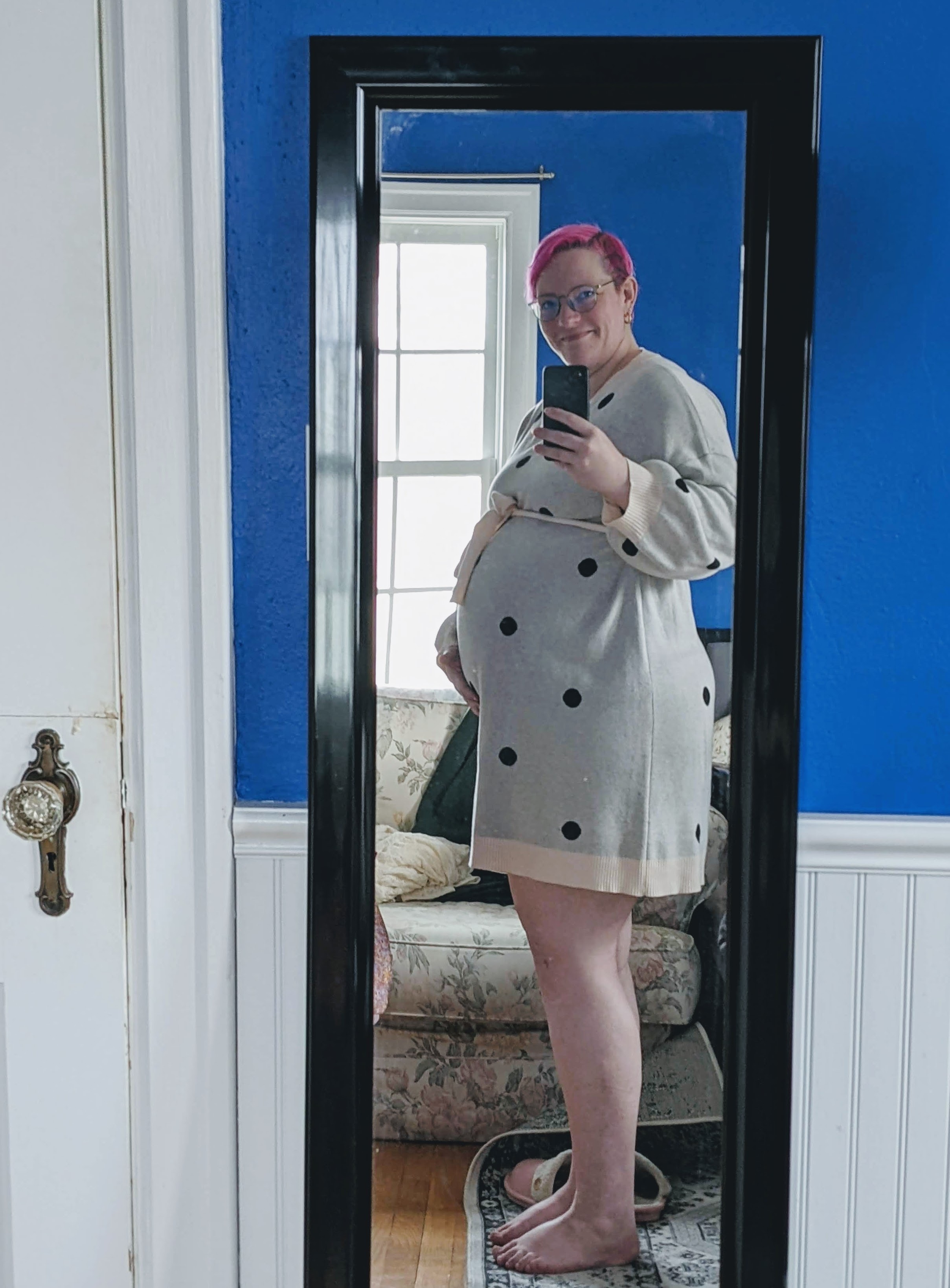
A pregnancy selfie.

Photo Courtesy of Anne H. Putnam

A pregnancy selfie.

The noose only tightened when we got to the blood glucose testing stage of the pregnancy and found that, counter to the reactive hypoglycemia I’ve lived with since the gastric bypass, I was in fact teetering on the edge of gestational diabetes.

At first I was only supposed to be tracking my blood glucose and not changing my diet — I was in an “observational period” — but I knew better than to trust that. I began examining everything that went into my mouth, secretly Googling whether foods were “allowed” with gestational diabetes, and avoiding but also obsessing over carbs.

I fixated on them, at once desperate to eat nothing but bread and pastries and candy and repulsed by my own desperation, my weakness. I hunted down recipes that were diabetes-friendly but not full of fake sugar — I actually found one good one — and bought hundreds of dollars’ worth of keto substitutions for snacks I missed (word to the wise: Kodiak waffles are no Eggos).

My last defenses had failed. After years of nutritional counseling and pushing back against diet talk at work/with my family/among friends/online, I was back to my ’90s California roots: Carbs were the enemy. And this time I couldn’t argue, because it was my baby’s health at risk, not mine.

My husband kept reminding me that this burning hot medical spotlight on my diet was temporary, but I knew something much older and more enduring had been kicked loose in my brain.

And now here I was, being explicitly told to diet, the last scraps of my sanity obliterated by an informational PDF full of condescending, shaming language around food and weight. All the time and energy (and money) I’d spent working toward a release from diet culture felt worthless in the face of this fairly common but intensely triggering diagnosis.

When I emailed my nutritional counsellor about the diagnosis, she ordered me not to look at the pamphlet again and recommended that I work with a certified diabetes educator (CDE) with experience working with people in recovery from eating disorders and diet culture trauma.

And she was right. I can’t overstate the benefit of working with someone who understands the complexities of diabetes, who can view my glucose readings holistically, and who can contextualise my questions and concerns against my history and other restrictions. Every time I leave a virtual appointment with my CDE, I feel infinitely better.

But it doesn’t last. The minute it’s time to eat again, I’m thrown into turmoil. It’s actually worse than my past experiences with dieting, because the rules are less rigid: I’m supposed to eat carbs, but they have to be the right kind of carbs, in the right amounts, alongside the right balance of protein and fat and fibre. It’s enough to make me long for my fat camp days, when some skinny adult would portion everything out for me and I could just eat mindlessly (if miserably).

The constant calculations and carb-tracking and food prep are good reminders of why dieting made me so unhappy for so long. It’s exhausting and all-consuming. But I have to do it, and unfortunately my damaged brain is a little too good at it; I hate to admit that I’m settling into this joyless eating pattern, fighting the diet less every day.

Between my limited food choices and the baby squishing my stomach, I don’t feel much like eating anyway — I have to remind myself to do it, to keep us both alive. This has also caused me to steadily lose weight during the second half of my pregnancy, which my midwife seems a little too happy about for my liking (despite the dark, ancient pride that sometimes oozes up from the deepest parts of me when she mentions it).

The good news is that most of these issues should go away within a day or two after the birth — thinking about the deli turkey sandwich I’m going to make my husband bring me in the hospital is the only thing that makes me actually look forward to labor.

I say “should” because don’t google the statistics about type 2 diabetes after gestational diabetes. But as my CDE points out, it’s just another risk factor like any other. And thank goodness, because the last thing I need is to be obsessing over carbs and glucose readings and how much fruit I can eat when I’m trying to keep this little human alive outside my body.

What’s less certain is whether I’ll be so quick to get back to thinking of food choices as neutral or joyful, instead of as a test of my morality. I can only hope, and prepare — in case my mental health doesn’t “snap back” — to get back to the work of dismantling the lessons of diet culture that were so easy to slip back into.

If you’re struggling with an eating disorder, call the National Eating Disorder Association hotline at 1-800-931-2237.

Help and support:

Share Button

Stop Telling Women Not To Share About Their Early Pregnancy

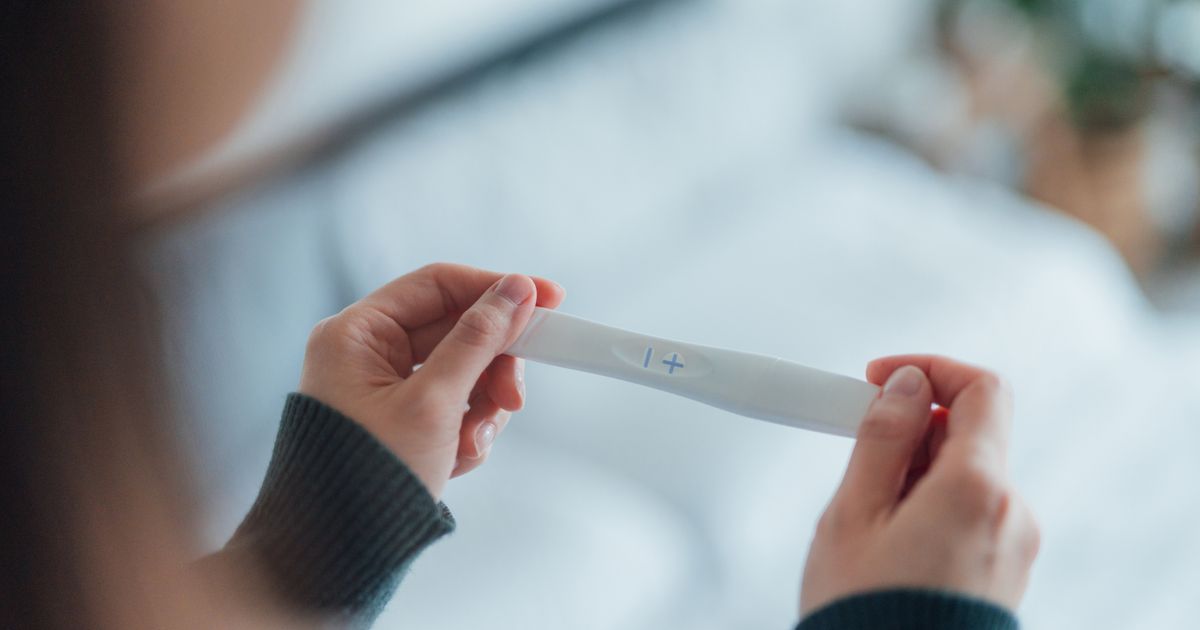

I stared at the pregnancy test with relief, sadness, fear, longing and regret. “Pregnant,” it said.

I tried to breathe. I guess I couldn’t have that glass of wine I had been planning after all. In fact, the reason I bought the test was that I wanted to drink. I hadn’t for the past several days because I started to become alarmed that my period was so late. Holy buckets. Pregnant! How did this happen?

Oh yeah, that one time I had unprotected sex. I didn’t bother taking the morning after pill because I figured I was too ancient for something to happen.

I honestly didn’t think I could get pregnant. I spent my 20s doing everything in my power to prevent such an occurrence, including taking the morning after pill numerous times.

Then in my 30s, I came around to the idea that I actually did want to have a kid and tried to conceive with my partner at the time. I went off birth control for years with no result. I looked into going to a fertility clinic, but the cost was prohibitive.

In my late 30s, my inability to get pregnant caused acute pain and an ongoing feeling of loss. When I turned 40, I was finally able to come to peace with what I assumed was my own infertility. When I turned 42, I figured that window had closed.

Then I found myself about to turn 43 and pregnant by someone I’d met on Hinge and with whom I had four dates.

I paced and paced, my mind spinning. This thing I wanted for so long finally came to fruition. A baby! I never considered getting an abortion, despite the less-than-ideal situation of being without a partner. Yes, I was scared of all the risks of having a kid as an older mom, but there was no way I’d let this chance pass me by.

I started to think of baby names right away, and before I even told anyone, plotted scenarios of how on earth I would make it work. I’d need to get a two-bedroom apartment, I thought. Maybe my parents could help with child care. Or I could ask my nieces and nephews to help babysit. I plotted and schemed how I’d make it work.

I didn’t tell anyone until the next day. The first person I called was my sister. “I think I’m going to keep it,” I found myself saying.

I told a few other close friends. Everyone was supportive, though some encouraged me not to make my decision right away about keeping it or not. I said I would think about it to appease them, but I had already made up my mind.

“I began to see how people in early pregnancy should instead lean into their community. If the worst happens, then the village is there to offer support. Why keep things secret and battle that loss alone?”

I found it very difficult not to tell people my happy news. I wanted to share it with the world, but I didn’t even tell my parents, nor did I tell the Hinge guy, who I hadn’t spoken to in two months. I knew I would tell them, but I felt I needed to wait.

I had heard you weren’t supposed to announce your pregnancy until you were 12 weeks along. I had people I was close to encourage me to wait until that long to share widely, but I didn’t understand why.

Abortion stigma and miscarriage stigma are two sides of the same coin. In both cases, instead of seeing reproductive health as simply that — a part of a person’s overall health care, it’s instead loaded with politics and morality. One sequence of events means you are a terrible person, another sequence of events means you somehow are lacking as a real woman.

One-quarter of pregnancies end in miscarriage. We are told to keep early pregnancies private in order to be spared the pain of sharing our loss. I began to see how people in early pregnancy should instead lean into their community. If the worst happens, then the village is there to offer support. Why keep things secret and battle that loss alone?

A week and a half after I found out I was pregnant, I was reading on the couch, and I felt a sudden gush of liquid. I went to the bathroom and realised I was spotting. I happened to have my first ultrasound appointment the next day, and I was prepared for the worst.

At first, when the technician began the ultrasound, I didn’t realise that my insides were being projected on the screen in front of me. I opened my legs apart so I could see the image. I gasped. I saw the most miraculous thing. It was my very own little nugget right there!

Finally, the technician took the wand out and told me she was very sorry but couldn’t detect a heartbeat. It was like she jabbed me with a knife. I started crying then, and she took me to a private room so I didn’t have to go to the waiting room.

I immediately regretted not telling my parents. I needed my mom more than ever. Why hadn’t I shared with her the truth from the beginning?

“Our culture has a long way to go to support people who get pregnant, and that starts with getting rid of the shame of miscarriage, the politicization of abortion, and the judgment of not having children at all.”

I felt shame too, about the people I had told. Now I would have to tell them about the miscarriage. But then I started to question myself. Wasn’t it a good thing to seek support when something terrible happens? Why should I feel ashamed?

It took three more weeks for the miscarriage to actually happen. I decided to wait for it to happen naturally, and I ended up needing to go to the emergency room. It was traumatic, and yet I still felt hesitant to share with people outside of my closest circle.

I didn’t truly feel comfortable saying it was a loss, but it was. That doesn’t negate other people’s experiences of becoming pregnant and deciding to abort. Those two truths can exist for different people. For me, I lost someone I wanted to meet and love. I had to say goodbye before they were even born.

Our culture has a long way to go to support people who get pregnant, and that starts with getting rid of the shame of miscarriage, the politicization of abortion, and the judgment of not having children at all.

That’s why you should share whenever you feel compelled to share. For me, keeping the news bottled inside me ended up preventing me from getting all the support I needed. Maybe other pregnant folks want to wait a bit longer.

The important thing is that as a society, we need to stop telling people they have to wait until some arbitrary predetermined date. Get rid of the stigma around miscarriage and start caring for people at all stages of their pregnancy journey, even pregnancies that don’t come to term.

Help and support:

  • Sands works to support anyone affected by the death of a baby.
  • Tommy’s fund research into miscarriage, stillbirth and premature birth, and provide pregnancy health information to parents.
  • Saying Goodbye offers support for anyone who has suffered the loss of a baby during pregnancy, at birth or in infancy.
Share Button

The Joy Of Being A ‘One And Done’ Family

Brenda Seltzer was still in the hospital, having just delivered her son, when her family started asking when she was going to have another one.

“Everybody was like, ‘How long are you going to wait until you have the second one?’” Seltzer, 33, told HuffPost. “I was like, ‘He was just born. What do you mean a second one?’”

Before she got pregnant, Seltzer had assumed she and her husband would have two children, but almost immediately she began having doubts. Her birth was hard and Seltzer required a blood transfusion. Finances also came into play. Seltzer and her husband both work full time, and her son’s full-time preschool cost nearly $20,000 a year.

“We started questioning: Why would we have two? I had a bad birth experience … we were working full time, and we didn’t have much help with family nearby,” said Seltzer.

By having one child, they’ve been able to put money toward fun family activities, like a pre-COVID cruise and a family season pass to Disney World. They’re also able to pour themselves into playtime with their son when they’re not at work.

“We can have a great relationship with him,” she said. “We enjoy being with him.” Having “just” one child was the perfect choice for her family.

And they’re not alone. The number of American parents who have one child has been steadily increasing for years. According to data from the Pew Research Center, the proportion of moms at the later end of their childbearing years who have one child doubled from the mid-1970s to 2015 — from 11% to 22%.

For many parents, the choice to have one child really comes down to knowing — and honouring — themselves and their particular circumstances.

“I chose to give my child a healthy and happy parent instead of a sibling,” said Amanda Pacovsky, 36, who has a 7-year-old daughter with her husband. She grappled with undiagnosed postpartum depression and anxiety, which “really took a toll on my mental health,” she told HuffPost, and could not imagine going through that again.

“What one-and-done parents are sick of is having their choice looked down on, or having it dismissed as a passing phase. They resent the notion that they’re not just as joyful about their family arrangement as a family of two or three or more children might be.”

Her choice was also rooted in the desire to be able to afford extracurriculars for her daughter. Currently, she’s into cheerleading and running, but they’ve also signed her up for soccer and dance without fretting too much about whether they can afford it.

“We are definitely not wealthy,” Pacovsky said. Having just one child gives them some financial breathing room — because as any American parent can attest, having kids is wildly expensive. It costs more than $230,000 to raise a child from birth through age 17, and that is without factoring in college.

Pacovsky and her husband are really happy about the decision they made to have one child, but she is struck by how many people in her life are not — or assume that must not be the case.

Like Seltzer, she’s spent years having her decision dismissed, with family and friends telling her that she will eventually change her mind. Or noting the (debunked) stereotypes that only children are spoiled. Or even asking her what will happen to her daughter when she and her husband die. Pacovsky started a popular Instagram page dedicated solely to one-and-done parenting memes to, as she puts it, squash the stigma of being an only-child parent.

One-and-done families say that stigma is real. Despite the steady rise in only-child households, Americans still generally think of larger families as “ideal.” About 50% of Americans say two children is best, while 40% say three or more is ideal. This in spite of research suggesting that having a second child doesn’t make parents any happier — and may specifically cause women’s happiness to dip.

Ultimately, what one-and-done parents are sick of is having their choices looked down on, or having their desire to have one child dismissed as a passing phase. They resent the notion that they’re not just as joyful about their family arrangement as a family of two or three or more children might be. (Of course, some families have one child because of infertility or a death or other reasons out of their control.)

“Our son is amazing. I know everyone says that, but our son has changed our lives. He’s the perfect blend of both of us,” said Meredith Rufino, 39, who has a 6-year-old son. “He brings out the best in my husband. He brings out the best in me. He has truly been a blessing.”

Her friends and family have been puzzled by how it is possible for her to so obviously delight in parenting — to so enjoy the company of her son — but not want to grow her family to try to replicate the experience.

Rufino, however, wouldn’t dream of it.

“I know myself. I know my own strengths, and I know my own limitations,” she said, noting that she has dealt with depression and anxiety. “I would rather be a great parent to one rather than an OK parent to two.”

Share Button