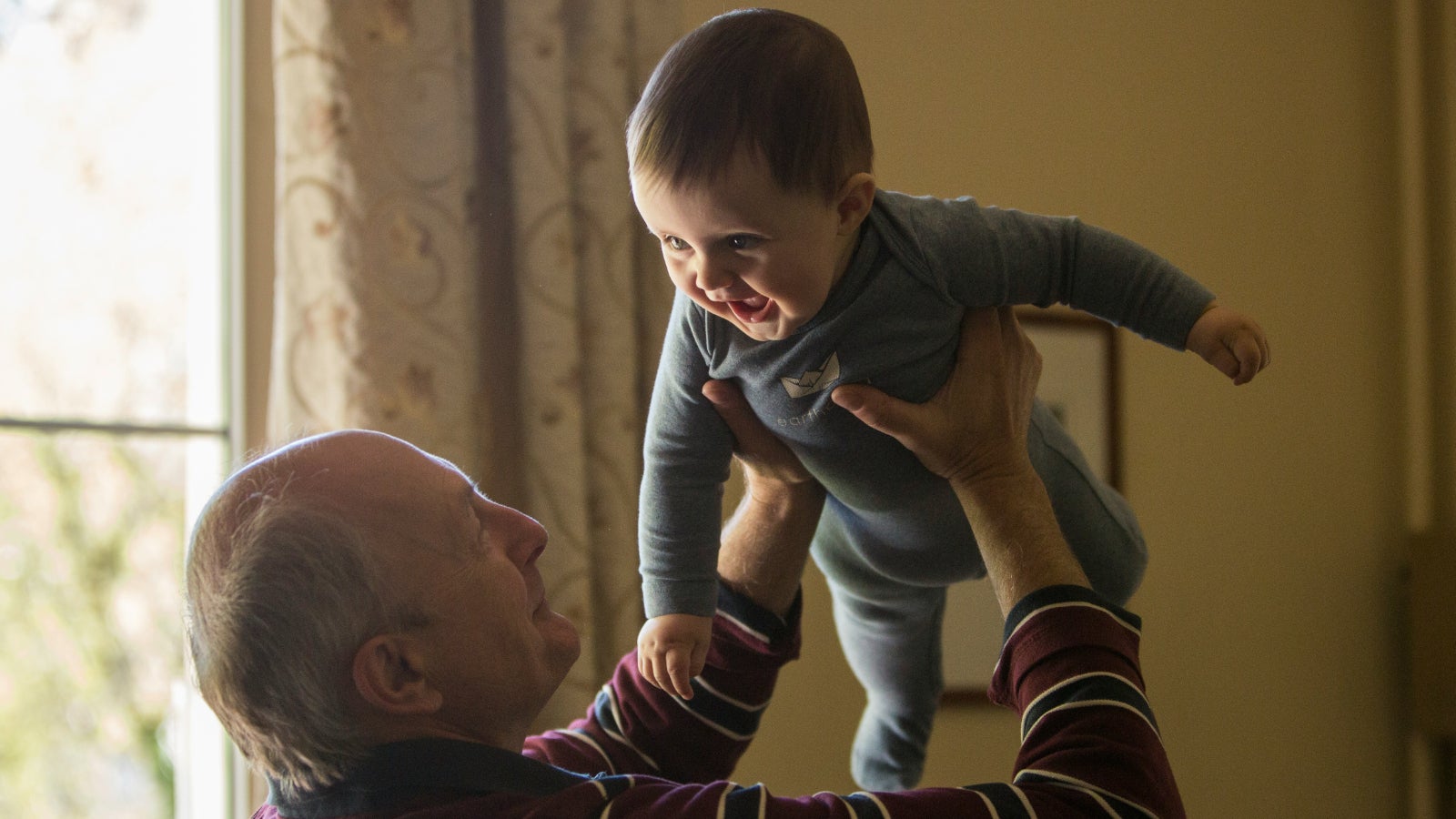
On Sunday evening, the former Coronation Street star and her husband Mark Wright revealed that they were expecting their first child in a joint Instagram post.
The announcement was made alongside a photo of the Fool Me Once actor and former The Only Way Is Essex cast member posing on a beach, with Michelle cradling her pregnant stomach.
Advertisement
“2025 is going to be a special one for us,” they wrote, adding a baby emoji for good measure.
Michelle and Mark are thought to have begun their relationship in late 2012, eventually tying the knot in May 2015.
Throughout their time in the spotlight, Michelle and Mark have both been open about their hopes to become parents.
Advertisement
Back in 2018, Michelle told Women’s Health: “I’ve always been broody. I love kids, and I want four, so hopefully in the near future.”
In an interview with The Sun a year later, Mark added: “We say we’re going to try [for a baby] every year but something comes up with work.
“So it’ll be Michelle filming in South Africa [for Our Girl] and then I got the job in Los Angeles [presenting for Extra] – so we think, ‘right, we’ll try next year’.”
Advertisement
Michelle Keegan and Mark Wright in 2019
via Associated Press
In more recent history, Michelle has spoken about her frustration at constantly being grilled by journalists about whether she wants to start a family, branding such questions sexist.
Michelle told The Mirror: “It’s horrible. People don’t know if we’re trying. They don’t know the background of what’s happening. In this day and age, you shouldn’t be asking questions like that.
Advertisement
“I’m asked purely because I’m a woman. But I’m immune to it now – it’s like a reaction, and as soon as I hear it I brush it off as it’s no one else’s business.”
“I get asked about children whereas Mark wouldn’t for example,” she told Women’s Health in 2020. ”‘Why haven’t I had a child? When am I going to have a child?’. I don’t know what they want me to say. I don’t know what the right or wrong answer is.”
Asked if her family are as guilty as the press for asking her questions about starting a family, she quipped: “Not any more! People don’t mean any harm by it, but they know what the answer’s going to be.”
Parenthood comes with many different responsibilities, but one of the most challenging and hilarious is definitely the Santa Claus charade.
Parents have a complicated relationship with the jolly old man in red. After all, saying he exists is a lie, and lying is wrong. But so is ruining the joy of Christmas …
It takes work to keep the magic of Santa Claus alive, which inevitably leads to a lot of funny moments (and a lot of funny tweets). Here are 29 tweets from parents about keeping up the Santa charade. Enjoy!
February 16, 2021 was meant to be the day that I birthed my newborn son – without drugs, not even gas and air! – into a birthing pool, under the glow of lavender-coloured LED lights, as the sound of ‘cicadas in a field’ gently filled the my private room at the midwife-led birthing unit of my local hospital.
Ideally, this would have been with the aide of a birthing Doula, but as we were deep into another nationwide lockdown, I was lucky to even have my (masked) husband as my birthing partner.
Advertisement
However, somehow nearly three weeks later in early March – instead of the birth I had expected and made a playlist for – I found myself recovering from three excruciating days of induced labour and an emergency c-section, while laying in a pool of blood in a sensory clusterfuck of a maternity ward.
I couldn’t move – partly from exhaustion, mostly from major surgery and a catheter – so I couldn’t even pick up my son when it was time to feed him.
The story of my pandemic pregnancy and my son’s birth is complicated, tender, and generally something I keep very private. My husband lived it alongside me, but only my closest friends and my therapist know why orange Lucozade makes me want to vomit or why the sight of that small, blue suitcase under the guest bed can still make me cry.
Advertisement
What is truly horrifying to me, aside from my own gruesome memories, is that my story is just a drop in the ocean when it comes to how many women in the UK have also had a “negative” or traumatic birth experience.
Because of these unsettling and life-altering numbers, a new campaign called Delivering Better, formed by a group of mothers, is urging Health Secretary Wes Streeting to take urgent action to improve maternity services in the UK.
The group’s new report highlights the need for “better support for women who often suffer, both mentally and physically, years after they have given birth” and shows the horrific impact that traumatic births are have on women, with almost half of all mothers suffering mentally and physically.
Advertisement
They report one in four mothers experience a negative birth in the UK, and that 72% of those women say their experience had left them with long-term mental health impacts.
Of the women who reported a negative birth experience:
almost half (48 per cent) say it had a long-term impact on their relationships,
over a third (37 per cent) say it had a long-term impact on their ability to work,
more than half (54 per cent) said it left them less likely to want to have more children.
More than half of women (58%) of the women who said they had a negative birth experience said they “didn’t feel listened to during delivery” – which, for me, was one of the worst parts of my own experience.
Advertisement
Being in one of the most vulnerable states a human can be in, and then voicing a need, a concern, or asking for help and being denied that help or dismissed by the people who are apparently there to help you can be incredibly damaging for your mental health. Not being listened to can also have incredibly serious, if not life-threatening physical implications, too, as we know from the startling statistics around Black maternal health care.
What can be done differently to help new mothers?
As both a mum and an editor I see a lot of press releases and newsletters targeting mothers and pregnant people. Some of it is helpful, but I’ll never forget an email I was sent about a new campaign to “support maternal mental health” which initially sounded excellent as some big name brands were involved.
However, reading the details, the campaign was meant to support women’s mental health after giving birth via… a meditation app. And some frozen food vouchers. And also a bit of funding for an organisation that has been criticised for its potentially harmful policies and focus on ‘natural births’.
Advertisement
We deserve better than this.
There needs to be much more tangible action taken in both pregnancy and delivery to see any significant changes in maternal mental health.
In my opinion, a lot can be done by addressing the curriculum and policies of prenatal courses that are available to parents – and the cost and accessibility of these services, too. I’ve experienced first hand that women – especially first-time parents – are taught in these courses that we have much more control over exactly how and when our babies will be born. That we can choose a positive birth experience.
We’re told to just watch your favourite films and eat some chocolate to get those oxytocin levels up and then labour shall commence shortly thereafter. If you breathe correctly that baby’s gonna pop right out of you – you’ve been doing your cervical massages, right?
Advertisement
But I can tell you firsthand – as can thousands of other parents – you can do everything “right” and still end up having an emergency c-section.
The Delivering Better campaign is asking for changes to be made in both pregnancy and delivery for mothers, including greater continuity of care throughout pregnancy.
The aftercare new mothers get is nearly comical in its limitations, and the group is also calling on GPs to proactively contact mothers via text message at three months and six months postpartum to check in on their physical and mental health.
Advertisement
According to Delivering Better: “Mothers often report feeling abandoned after the current six-week check, which is often not fit for purpose, with only a couple of questions directed at the mother.
“Some mums say the main question they’re asked is whether they are back on contraception. In the survey, 88% of mothers say they support receiving mental and physical health checks in the months following their birth experience, and 81% say they would have benefited from this themselves if it had been offered.”
Shocking isn’t it?
You can read more of what Delivering Better is asking for on their website, where you can also sign their open letter to Wes Streeting, “urging action for maternity care that is safe, compassionate and evidence-based”.
Advertisement
Help and support:
Mind, open Monday to Friday, 9am-6pm on 0300 123 3393.
Samaritans offers a listening service which is open 24 hours a day, on 116 123 (UK and ROI – this number is FREE to call and will not appear on your phone bill).
CALM (the Campaign Against Living Miserably) offer a helpline open 5pm-midnight, 365 days a year, on 0800 58 58 58, and a webchat service.
The Mix is a free support service for people under 25. Call 0808 808 4994 or email help@themix.org.uk
Rethink Mental Illness offers practical help through its advice line which can be reached on 0808 801 0525 (Monday to Friday 10am-4pm). More info can be found on rethink.org.
Help and support:
Sands works to support anyone affected by the death of a baby.
Tommy’s fund research into miscarriage, stillbirth and premature birth, and provide pregnancy health information to parents.
Saying Goodbye offers support for anyone who has suffered the loss of a baby during pregnancy, at birth or in infancy.
My two kids, my husband and I were at an outdoor picnic table at Roberta’s pizza on a chilly day in Brooklyn when our then-7-year-olddeclared that they were nonbinary.
The kids had finished eating their plain cheese pizzas and were goofing around, giddy to be eating at a restaurant after endless pandemic meals at home. In the middle of the hand-slapping game they were engaged in, my oldest said something to my youngest about them becoming a dad one day. Our 7-year-old let out an exasperated yell, like they had hit some kind of boiling point.
Advertisement
“I’m not a he or a she!” they said, their fists clenched. “I’m nonbinary, call me they.”
They had been telling us that they’d felt “a little like a boy and a little like a girl” since they were about 3, but this was the first time they put a label, and a pronoun, to that feeling. My husband and I were both blown away and very proud of them for so confidently asserting their young identity.
My family lives in a picturesque Brooklyn neighbourhood, where many of the historic brownstones have rainbow flags in windows. Most people here would probably identify as being liberal-leaning. However, even before this moment, we had already experienced some of the challenges of raising our gender nonconforming child in a world that is so wedded to binaries.
When our child was in second grade, we were all surprised at how easily the other kids in class adapted to using their pronouns (they/them/theirs) correctly. One teacher even told me that when someone accidentally misgendered our child, using a pronoun that does not reflect their gender identity, the other students were quick to correct them. The parents of those kids from school, on the other hand, have had a harder time accepting our child’s identity.
Our child is often misgendered. People look at them, with their long hair, pink-hued outfits and rainbow Crocs, and assume they’re a girl. And as progressive as Brooklyn can seem, the reality is that many of the everyday spaces our family encounters are gendered ones, from play spaces to dance classes. When our child took ballet a few years ago, the teacher often asked the little girls to imagine they were fairies or princesses but wasn’t quite sure what to say to my child. One year, our child’s teacher struggled to switch to “folks” or “friends” instead of addressing the students as “boys and girls.” Our local school waits until kids are in fifth grade before introducing students to the topic of gender identity.
Advertisement
And it was only as recently as 2021 that New York City public schools were finally required by law to designate all single-occupancy bathrooms as all-gender bathrooms. Attitudes across the country toward the LGBTQ+ community seem to only be getting worse. In fact, in the last year alone we’ve seen an explosion of anti-LGBTQ+ laws aimed at limiting trans and nonbinary people’s rights and safety. In 2024, a Manhattan parent-led advisory board called on the Department of Education to revisit guidelines on trans girls’ sports participation. Most recently, President-elect Donald Trump has been spreading rhetoric about schools performing gender-affirming surgeries on students.
As a preschooler, our child enjoyed some of their brother’s toys but mostly gravitated toward what would be considered “girly” toys and interests — princesses, every character in the ”Frozen” movie, playing dress-up with tutus and dresses — and preferred female friends as playmates. When they asked us to draw a picture of them, they would get frustrated.
“No, draw me as a girl,” they’d say.
Some days they’d say they wished they could grow up to be a girl. After a while, it was clear to us that our child’s identity lived somewhere in between the two poles of “male” and “female” and that those coordinates were fluid.
Sometime around third grade, I noticed their classmates had begun separating into groups of male and female. I saw it at drop-off and pickup, where the girls would congregate in circles on the sidewalk to chat while the boys would start roughhousing and talking about soccer. Our child gravitated toward the girls’ circles, as this group shared similar interests (imaginary play, an obsession with cats, a love of stuffies and schoolyard dramas).
When we talked with them about their friendships at school, they said they were “friends with everyone.” But when it came to playdate requests and stories about who they hung out with at recess, it was mostly girls. I also noticed how the moms of the girls would plan playdates and sleepovers for their kids, and how we were never a part of those invitations. It was hurtful. I’ve wondered how it must feel for my child to hear about these gatherings knowing they hadn’t been included or to wonder why I was unable to make certain playdates they had requested happen.
Advertisement
I knew it wasn’t the kids who were responsible for their own social calendars. My child seemed to be very well-liked by their peers. Their friends would come up to me, arms linked with my child’s, asking when they could have a playdate. Again and again, I reached out to parents to plan get-togethers for our kids, and again and again, there was always a reason why it couldn’t come to fruition. (There were, however, a few exceptions, and those are the parents I value dearly.) I began to think it was me.
Parents in our grade tend to do “girls’ parties” and “boys’ parties” as a way to make things more wallet (and apartment) friendly. Sometimes my child is invited to both, as the only nonbinary kid at an all-boy or all-girl party. One day last year, as the kids trickled out of the side doors of the school and found their respective grownups along the sidewalk, one of my child’s friends came running to her mom to ask why my child hadn’t been invited to her birthday. The mom smiled at me apologetically and said to her daughter, “I thought you wanted just girls.”
“They’re not a boy or a girl,” the girl responded. “They’re my friend.”
Photo Courtesy Alexis Barad-Cutler
The author and her child taking a walk.
A few weekends ago, my child was finally invited to their first slumber party. They had been talking about this party since before school ended last year and had been constantly asking me if I had received the invitation yet. The birthday girl had invited them multiple times and repeatedly told them about the activities she had planned for her soiree (face masks, a movie, waffles the next morning).
For the first time, I wondered if this really was an oversight and not a slight, so I did something I’d never done before. We’d recently sent out electronic bar mitzvah invitations for our older child and about 40 of them had not been received, having gone straight to spam. It took everything in me to send a text to the birthday girl’s mothers, asking if the same thing might have happened with their invitation.
Advertisement
“We’re sorry,” the moms wrote back. “We were trying to keep it small, because we can’t fit everyone in our apartment. But we love your child, and would love it if they could come.”
I was embarrassed that this wasn’t a case of “it got lost in the mail” but very grateful for their graciousness and the invite. I’d never seen my kid pack their fuzzy, bear-shaped travel bag so fast as they did the morning of the sleepover party. As we walked the dog and picked up a chocolate macaroon at the cafe behind our apartment, they told me that they had a plan for when it came time to change into pajamas.
“I’ll change in the bathroom,” they said. “To give the girls privacy.” That night I was with friends at a sushi restaurant, celebrating my husband’s birthday. I kept looking at my phone with dread, imagining the text or call from the parents telling me that it wasn’t working out and that we’d have to come get them. I couldn’t stop worrying about potential moments when my child’s gender identity could make them, or the others, uncomfortable.
The next morning, they came home from their sleepover giddy (and surprisingly well rested). They showed me the pink and purple tie-dye shirt they’d made and told me about how great a movie “A League of Their Own” was even though they “hate baseball” (their words).
“Oh, and mom,” they added. “Everyone took turns changing in the bathroom by themselves. Not just me.” When they said this to me, it confirmed that this had indeed been on their mind that night. And, it meant something to them that the other kids at the party decided to change in the privacy of the bathroom. I imagine it helped my child not feel singled out and made them feel even safer.
Advertisement
At 10 years old, my child is super confident, comfortable in their body and still very much gender nonconformingin the ways they express themselves, their hobbies and their interests. They no longer want to wear dresses but, rather, dress for ultimate comfort. They intend to keep growing out their already long hair. And they still tell us that they feel like both a boy and a girl.
Any parent will tell you that the minute you think you have one thing down, another one comes up that you’d never expected. As a parent of a nonbinary kid, and especially as we enter the middle school years with our child, I know these curveballs will become even more complex and with bigger potential consequences. Trans and nonbinary folks suffer disproportionately from mental health issues. A 2020 survey led by Trevor Project found that more than half of the trans and nonbinary youth (ages 13 to 24) respondents seriously considered attempting suicide. On the legislative level, our country is becoming ever more dangerous for LGBTQ+ kids. There have been more anti-LGBTQ+ bills introduced in statehouses this year than in each of the previous five years. It can feel bleak out there at times.
When we became parents, my husband and I knew very little about the huge spectrum of ways a person can express their gender identity. We didn’t even know that being gender nonconforming was an option until our child embodied it for us, and pushed us to learn and challenge our preconceptions and biases. We’ve met with child therapists, we’ve read a lot of articles and books, and we’ve spoken to other parents of trans and nonbinary kids. We continue to be open to the possibility that things might shift for our child as they mature.
As with so many things, change starts in the home. My hope is that other parents can also learn to take some cues from their kids, who I think have a lot to teach all of us about inclusion and acceptance.
Hidden disabilities encompass both physical and mental conditions, including autism, mental health disorders, diabetes, chronic pain and dementia, just to name a few.
This week, the world’s first toys featuring the Sunflower Lanyard were announced, by The LEGO Group in partnership with the Hidden Disabilities Sunflower Lanyard Scheme which has been involved in the development of the new toys. The Sunflower Lanyard is a discreet symbol that indicates the wearer has a hidden disability and may require additional support.
Advertisement
The LEGO ranges which will each feature a character wearing the sunflower lanyard is Duplo, for pre-school kids, LEGO Friends, for 6-12 year olds and LEGO Icons- a range for adults.
The LEGO Group
Duplo, for pre-school kids, LEGO Friends, for 6-12 year olds and LEGO Icons- a range for adults.
Speaking about these figures, Paul White, CEO at Hidden Disabilities Sunflower says: “Across the globe, 1 in every 6 person lives with some form of disability and 80% of them have a disability that is non-visible.
“HD Sunflower is excited to partner with the LEGO Group on raising awareness and acceptance across their fan and colleague base and can’t wait to see the impact that this will create.”
Advertisement
“People can wear their lanyards with pride”
HuffPost UK spoke with Tasha Sorhaindo, mum to Jayden and Sunflower user with Systemic Lupus and dilated cardiomyopathy about the difference these toys could make.
Jayden, who is a teen with Long QT Wave Syndrome, a life-threatening heart condition with no visible signs, said: “I feel like [these toys] will mean that people can wear their lanyards with pride.
“I didn’t wear mine until my mum started wearing her own and I thought, ‘you know what? I have a hidden disability, why should I hide it? Why shouldn’t I be seen and heard?’”
She added that normalising these will help people like her, as well as giving those with hidden disabilities the freedom to not have to disclose their disability if they’re not comfortable.
Her mum, Tasha, who also has Long QT Wave Syndrome added: “The more awareness that’s raised, [people] will already know that wearing the lanyard means that somebody is clearly struggling with something, they have a disability.
Advertisement
“I just feel like this collaboration is huge, it will break down barriers… there’s a lot of opportunities for schools to jump on this and hold assemblies to inform children.”
“A significant step in normalising hidden disabilities”
Martin Moxness, autistic adult Sunflower lanyard user and Hidden Disabilities Sunflower Ambassador with ADHD and Tourette syndrome, says about the work: “Seeing the Sunflower lanyard in LEGO sets is a significant step in normalising hidden disabilities. As a child, this would have been life-changing and would have made me feel seen and accepted.
“Even as an adult, it’s deeply meaningful to see such representation in an iconic product. This initiative is a milestone for the entire community and empowers individuals of all ages, inspiring creativity, fostering connection, and promoting inclusion.”
The collection will be released on June 1st, 2025.
The data, which originated from the Future of Families and Child Well-being Study, was collected between February 1998 and June 2021. The current study sample includes an analysis of 173 youths.
Advertisement
“Harsh parenting in late childhood more specifically affected the corticolimbic circuit—a specific part of the brain that includes the amygdala and frontal cortex and is involved in processing and regulating emotion,” researches said.
However, it’s not all bad news.
The team also found that warm parenting — which they define as “responsiveness” — during middle childhood was associated with how the amygdala (a small part of the brain involved in emotion and processing threats) was differentially connected to other parts of the brain.
Importantly, parenting warmth predicted reduced anxiety and depression 15 years later during the Covid-19 pandemic due to its effects on the amygdala.
Why this research is hopeful
“Understanding these sensitive periods can inform more effective policy and intervention strategies,” says Luke Hyde, a University of Michigan professor of psychology and faculty associate at the Institute for Social Research.
Advertisement
Cleanthis Michael, a graduate student and the study’s first author, says the “findings indicate that earlier interventions may offer broader benefits for brain development”.
Michael added: “Because these experiences seemed to affect later risk for depression and anxiety, this research highlights periods of vulnerability and opportunity for treatments and policy to promote healthy, long-term development. Interventions for parents, and policies that support parents, may have more profound impacts earlier in life.”
Strict parenting is often detrimental
Counsellor Marissa Moore wrote for PsychCentral about strict parenting and said: “There are a few benefits to strict parenting, such as having your children behave in public or setting high expectations for themselves in achieving their goals.
“However, the long-term effects of authoritarian parenting tend to negatively affect children’s self-esteem, academic achievement, and overall life satisfaction.”
Instead, she recommends authoritative parenting, explaining: “Authoritative parenting, which finds a balance between having rules and supporting them if they don’t meet them, appears to have the best outcomes.”
Children tend to pick up on a lot more than adults realize. They absorb not only what we say to them directly but also what we say around them — even when we think they’re not paying attention.
That got us wondering: Are there certain topics that just shouldn’t be discussed with or in front of kids? And on the flip side, are there certain conversations adults assume are not appropriate for young minds but are actually OK — or even beneficial — to address?
Advertisement
We reached out to parenting experts to get their take. As clinical psychologist Laura Markham, author of the “Peaceful Parent, Happy Kids” series, said, it’s generally less about the subject itself and more about how you approach it.
“For instance, you would not have a discussion about your financial worries that would make your child worry. But you could certainly discuss the fact that a new car or a pricey vacation is not in your budget this year,” she told HuffPost.
Below, Markham and other therapists share their thoughts on the do’s and don’ts of communicating when young or school-age kids are present.
5 Things Adults Shouldn’t Talk About In Front Of Kids
1. People’s bodies
When adults speak poorly about their own bodies or other people’s bodies, children notice and may internalise those negative messages, said marriage and family therapist Brianne Billups Hughes.
Advertisement
“Kids are like sponges, absorbing everything they hear. If they witness adults being critical of themselves, it can lead to issues with self-esteem and body image as they grow,” she told HuffPost.
And it’s not just the negative comments that can be damaging over time. When adults make frequent remarks about body shape or weight — even if they’re complimentary in nature — it can make kids “overly concerned about their own appearance,” Markham noted.
2. Critical remarks about a parent or caregiver
It’s best for adults to avoid bad-mouthing the child’s other parent or caregivers in their life. It doesn’t matter if you’re speaking to the kid directly or having the conversation when they’re in earshot.
Hearing negative comments about a parent can make a child feel as if they have to choose sides or that they’re responsible for fixing the situation, which can be damaging to their sense of security, Markham said.
It can also “strain the relationship with the criticised parent since they now see them as ‘not good enough,’” she added, while also making the child feel guilty for thinking of their parent in a negative light.
Advertisement
3. Comments that compare the child to their sibling
Markham advises parents to avoid comments that compare one sibling with another. Such comparisons can breed competition between siblings and lead to increased conflict, she said.
“That intuitively makes sense to us because we can see how it fosters resentment, jealousy and insecurity. But this is just as true for positive messages, which also set up competition,” Markham said.
For example, you might say to your child something like, “You’re my good boy. You never give me a tough time like your brother does.”
Now your child not only feels pressure to hold on to his place as the “good” one but is also “motivated to keep his sibling in the role of ‘bad’ kid,” Markham said. “How else will he maintain his special place in your eyes?”
So when they overhear conversations about money-related stressors in adults’ lives, they draw their own conclusions, “often assuming the worst,” she told HuffPost.
“Children may think, for example, that the family will lose their home or that they won’t be able to buy food, even if the situation is not that extreme,” Lockhart said. “This fear can lead to increased anxiety and, for some children, a sense of guilt that they’re a ‘burden’ if they need things like new shoes or supplies.”
That’s not to say you have to completely keep them in the dark if your financial situation has changed. Just keep explanations clear and concise and your tone calm. If money is tight, Lockhart suggested saying something like, “We’re sticking to a budget so we can make good choices,” which she said is “often more reassuring.”
“You can help them understand that adults have systems to manage expenses and that their needs will be met,” she added.
5. Comments that glorify alcohol or drug use
Hughes warned that conversations “normalising or glorifying” drinking alcohol and using drugs when kids are around can lead to “unhealthy attitudes toward these substances” down the line.
Advertisement
“Kids are impressionable, and hearing adults speak positively about drinking or using drugs, even jokingly, can set the foundation for curiosity or risky behaviours later in life,” she explained. “It’s important to model responsible behaviour and avoid making these substances seem glamorous or harmless.”
5 Things Adults Actually Can Discuss In Front Of Kids
skynesher via Getty Images
It’s important for kids to know that, although their parents may not always agree, they always love each other, Markham said.
On the other hand, there are topics that adults have a tendency to shy away from because they assume talking about them would be harmful to kids. But our experts say these conversations can be good ones to have with or in the presence of children, as long as they are approached in a thoughtful, age-appropriate way.
1. Healthy disagreements
Parents might be under the impression they need to resolve any and all conflict behind closed doors. But that’s not necessarily true. In fact, it can be beneficial for kids to observe their parents modelling how to respectfully work through a disagreement, Markham said.
“It’s important for them to know that we don’t always agree, but we always love each other. Kids need to see us ask for what we need without attacking the other person,” she added.
Advertisement
“And it’s critical for them to see us make up with affection and forgiveness.”
And when it comes to certain topics, it’s better for adults to hash out those matters privately. “Discussions about sex or other tender issues are more respectfully conducted without an audience,” developmental psychologist Diana Divecha wrote for Greater Good Magazine.
2. Honest emotions
Many adults try to avoid showing or talking about their emotions around kids, but “it’s actually important for kids to see adults process their feelings in healthy ways,” Hughes said.
It’s OK to share that you’re feeling upset, worried or frustrated in an age-appropriate way. Doing so helps normalise a wider range of emotions and can help children learn to express and regulate their own emotions, Hughes said.
This also helps them develop their emotional intelligence, Lockhart added.
“If they see you saying something like, ‘I’m feeling sad because a friend moved away, and that’s normal,’ they learn that all emotions are OK and temporary, helping them feel safe to express their own,” she explained.
Advertisement
3. Mistakes they’ve made
Adults shouldn’t feel pressure to uphold a facade of perfection in front of kids. It’s OK to admit to them when you’ve messed up in some way, Lockhart said.
“Talking about your own mistakes and how you handled them helps kids learn resilience and accountability,” she said. “When they hear something like, ‘I made a mistake at work, but I took responsibility, and I’m working on a solution,’ they see that mistakes are natural and that they can handle them positively.”
4. Money in general
Though you wouldn’t want your child to be privy to the full scope of financial stress you may be facing, money doesn’t have to be a taboo subject.
“Discussing financial concepts in an age-appropriate manner can be a valuable learning opportunity,” Hughes said. “Kids who grow up with an understanding of budgeting, saving, investing, loans and responsible spending are more likely to develop good financial habits as they grow older.”
“The key is to avoid overwhelming them with adult-level stress about money,” she added.
5. Sex, consent and bodily changes
As a parent, you may find yourself avoiding conversations around these topics with your kids entirely because they seem too uncomfortable or mature to discuss. But introducing these subjects in developmentally appropriate ways is actually quite important, Hughes said.
Advertisement
“Teaching children about consent, body autonomy and the basic facts of anatomy, reproduction or puberty helps them develop a healthy understanding of their bodies and relationships,” she explained.
“These discussions empower children to ask questions, set boundaries and feel comfortable about their own physical development. It also helps prevent misinformation from other sources.”
“The goal isn’t to shelter children completely but to be mindful of the language and tone used.”
– Brianne Billups Hughes, marriage and family therapist
No matter the topic, how we communicate with and around children can have a lasting effect on them, Hughes said. That’s why it’s so critical to approach conversations with mindfulness.
“Modelling healthy conflict resolution, self-acceptance and emotional intelligence can provide kids with essential life skills,” she said. ”The goal isn’t to shelter children completely but to be mindful of the language and tone used, creating a balanced environment where they can learn and feel secure.”
Just weeks after the former women and equalities minister, Kemi Badenoch, said that maternity pay is ‘excessive’, new research from Pregnant Then Screwed, and Women in DataⓇ has revealed that 4 in 10 mothers took just 12 weeks or less following the birth of their most recent child — thanks to the low maternity pay in the UK.
According to Citizen’s Advice, statutory maternity pay lasts up to 39 weeks, made up of: 6 weeks getting 90% of your average weekly pay (before tax), 33 weeks getting either £184.03 a week or 90% of your average weekly pay (before tax) – whichever is less. Which is a staggering 43% of the national living wage.
Advertisement
Excessive isn’t quite the word, really.
The UK’s fertility rate is falling faster than any other G7 nation
Given how poorly parents are treated once they’ve had children, it’s perhaps no surprise that the UK’s fertility rate is falling faster than any other G7 nation – with austerity thought to be ‘principal factor’.
If we can’t afford to look after our babies once they are born, it makes sense that many people are choosing to not have their own children at all.
One person on X said: “Most adults now have to live with parents through their 20s, commonly through their 30s.
“Millennials are the first generation to be poorer than the last in over 200 years, and have had an adulthood of austerity, recession, and a pandemic. Why would they have kids?”
Advertisement
More maternity support is essential
Pregnant Then Screwed is calling on the government to increase the rate of statutory maternity pay and maternity allowance to the national living wage. An amount which is widely regarded as the absolute minimum someone needs to live on.
In a press statement, the charity said: “We know that maternity leave more than 12 weeks has huge benefits for a mother and her child. It decreases rates of maternal physical and mental health issues, decreases infant mortality and improves rates of breastfeeding.”
Joeli Brearley, CEO and Founder of Pregnant Then Screwed commented, “The perinatal period is critically important to the health and well-being of a mother and her child, and I think we should all be deeply concerned that due to severe hardship, we are now seeing a degeneration and a degradation of this vital period.
“Ultimately, It is a false economy to not pay parental leave at a rate on which families can survive and thrive.
“We need a government that will listen to parents, creating policies which ensure they can survive and thrive, particularly in those early days. Right now we are falling way behind our European counterparts, and it is not only this generation which is suffering the consequences, but it will be the next.’’
Preparedness is the key to surviving the throes of motherhood. It’s also the key to ensuring that the complexities of cross-country travel go off without a hitch.
But all the books on motherhood and travel checklists in every type A traveling mama’s arsenal could not prepare me for the realities of how the Transportation Security Administration, Southwest Airlines, a five-star Las Vegas hotel, and society in general judge mothers and their needs.
Advertisement
With equal parts excitement (finally, a bit of a break!), trepidation (is there enough pumped milk to last the baby four days without me? Can Dad survive the demands of the baby and the 4-going-on-14-year-old alone? Will the house still be standing when I return?) and guilt (oh, the guilt!), I arrived at Albany International Airport prepared to take my first work trip to Las Vegas since welcoming my infant son in 2017.
Traveling solo is stressful enough, but traveling as a parent can be downright traumatic. There are never enough hours in the day to address everyone’s needs, let alone your own, so systems and efficiency are a requirement of the prepared traveling mama. I rolled my colorful carry-on filled to the brim with four days of business-casual attire, TSA-approved clear containers with miniature versions of my daily skincare ritual (anything to minimize the bags under my eyes that felt big enough to accommodate my luggage), and my nondescript breast pump slung over my shoulder through the TSA line.
“Ma’am, you’re going to need to step to the side. You’ve been selected for additional screening,” a security agent told me.
My first thought was, “Did he just ‘ma’am’ me?” followed by a feeling of ease knowing motherhood taught me to expect delays.
Advertisement
I stood to the side in front of hundreds of passengers in the TSA security line as a female agent came over to pat me down in search of contraband. I never felt more dehumanized than when the agent continued to press at my swollen breast (ready to leak at any moment if I wasn’t reunited with my breast pump soon), asking, “What is this? What do you have in here?”
Having to explain that the hard, plastic piece she was feeling was a component of my nursing bra that allowed me quick access to pump or feed my child was humiliating, especially when she followed up with, “Where is the baby?”
The wrinkled nose and tight upper lip on the agent’s face when I told her that I was traveling alone on a work trip but had my breast pump with me was sadly the first humiliating scorn I felt that day. Where is the book that prepares you for how to handle the judgment and questioning of every decision you make as a mother when you need it?
Courtesy of Jennifer Rowe
The author and her daughter traveling on Southwest Airlines.
I slinked away from the security line, cleared to access my gate, but with an incessant urge to justify the fact that I was traveling solo, leaving my baby behind in the capable hands of his other parent. My job required this travel, and my baby required my employment to meet his needs.
Advertisement
And yet, I didn’t say any of this to the agent. I continued to my gate with plenty of time to pump milk for my son in the airport’s nursing mother’s lounge, as well as relax a bit before the boarding process began. However, the lounge didn’t exist. The Friendly Airports for Mothers Improvement Act that I researched prior to the trip promised that the lounge would be available, but a posted sign stated, “Future Site of the Nursing Mother’s Lounge,” and that a bathroom was available to privately nurse or pump. I’m not sure about you, but I don’t prepare my meals in the bathroom. Why would I prepare my son’s meal there?
Feeling deflated (mentally, not physically, since my breasts were now engorged and still full of milk), I perked up when the Southwest Airlines gate agent announced it was time to line up for boarding.
“You’re going to have to check that. You’re only allowed one carry-on and one personal item,” the agent told me.
With the eyes of the rest of the passengers in group A focused on me, I confidently switched from my mobile boarding pass to the Southwest policy I had opened on my phone screen. I told the agent I specifically booked my flight with the airline due to its policy regarding passengers who are nursing or traveling with formula:
“We welcome nursing Customers who wish to breastfeed onboard or within our facilities. Baggage containing a breast pump and/or breast milk may be brought onboard in addition to the standard carry-on limit of one bag plus one small, personal item. You might be asked the nature of the additional carryon bag(s) throughout travel.”
Advertisement
“Where is the baby?” the agent asked me, the second time I’d been asked that day.
Courtesy of Jennifer Rowe
The entrance to Albany International Airport.
I quickly explained that I was traveling alone, but I had packed my carry-on and breast pump according to the terms of the airline’s policy. I was met with sighs of impatience and more judgmental looks of scorn, not only from the gate agent but from the dozens of irritated passengers that just wanted to get on board.
I reluctantly stepped out of my position in line and slinked to the side to speak with a second agent, who eventually gate-checked my carry-on luggage so I could keep my breast pump with me. And here I thought an infant would have been the more difficult travel companion.
After seven hours, three time zones, and with zero patience left, my breast pump and I arrived in the stunning lobby of my hotel with a desperate need to pump somewhere other than a bathroom so I didn’t give myself mastitis or a painfully clogged milk duct from lack of pumping on my usual schedule. If I lessened the number of times I pumped regularly, my milk production would change, and I’d be unable to keep up with the supply my son required.
“I’m so sorry, but your room isn’t ready yet. Check-in is at 3 p.m. You’re welcome to leave your luggage with our bellman and explore the resort until your room is ready,” the front desk associate told me.
Advertisement
It was only 11 a.m., but it was 2 p.m. back home. The thought of waiting another four hours before I could experience some sort of relief and fulfill my obligations as a mother nearly caused me to throw a temper tantrum that could rival any overtired toddler meltdown.
I pleaded with the associate, referring to the lactation stains that were visible through the layers of my nursing bra and cotton T-shirt, hoping for an act of compassion (or at the very least pity).
“Do you need to nurse your baby? Where is the baby?” the associate asked me.
Distraught, I explained for the third time that day that I was not with my baby, but my responsibilities as his mother did not stop because we were not physically together.
The microcosm of traveling as a working parent with my breast pump solidified the perception that, as a society, we have been conditioned to expect women to work like they don’t have children and to parent like they don’t work. It is difficult enough to navigate motherhood without the disproportionate judgment placed on women who continue to work and breastfeed.
Courtesy of Jennifer Rowe
The author’s son asleep after a bottle of breast milk.
Until those regulations are consistently followed and employees are properly trained, treating traveling mothers with dignity and respect rather than judgment will go a long way in overcoming the unnecessary difficulties of an already stressful experience.
After four days of exhaustion playing the role of obedient employee, prepared mama (finding time to pump in between work meetings and obligations), and mentally readying myself for the complicated journey back home, I arrived at the Las Vegas airport as prepared as I could be to face the judgment and humiliation I’d just endured four days earlier. This time, I knew I’d be asked to step aside for additional screening as I now had 16 bags of breast milk that had to be tested before I could be cleared for my gate.
I took every precaution to make sure I could safely transport this liquid gold back to my son according to the TSA’s rules and regulations, so you can imagine my shock and horror as I witnessed a TSA agent open and spill not one but two bags of breast milk. Rather than apologise, the agent looked at me with disgust at the inconvenience I’d caused by their mishandling of my milk. Once again, I felt deflated over the journey I was about to endure as tears filled my eyes.
“No use crying over spilled milk,” the agent said to me.
No use indeed.
Note: HuffPost reached out to Southwest Airlines for comment but did not immediately receive a reply.
Advertisement
Jennifer Rowe is a mother of two in upstate New York who works full time as an executive in the fitness and development industry. As a freelance writer, her focus is on personal essays and narratives that highlight the many facets of identity a woman takes on within and beyond motherhood. When she’s not working or writing, Jennifer can be found with her nose buried in a book or on the sidelines of the baseball field and the dance studio cheering on her kids.
Maybe you’re in the throes of parenting a teenager, or you remember (probably less than fondly) what it’s like to be a teenager yourself. Whatever the case, you know that the teenager-parent relationship is typically a fraught one.
“Teenagers are individuating at this age,” Avigail Lev, a psychologist and the founder and director of Bay Area CBT Center, explained. “It’s very difficult for them because they’re striving to become more autonomous and think for themselves, and they don’t want to be attached to mommy and daddy the way they used to be. However, they’re still dependent on their parents, which creates cognitive dissonance and frustration. On one level, they feel ready to be an adult, but on another level, they’re still dependent. This conflict makes it very difficult for them to connect with their parents.”
Advertisement
The hormones don’t help, either. “This is also the time when they are becoming hormonal and experiencing sexual attraction, leading to feelings of shame and an increased awareness of their autonomy and individuality,” Lev said. “This adds a level of complexity to their relationship with their parents.”
On the one hand, it’s important for parents to accept that they’re probably not going to connect as easily with their kids during their teenage years. On the other, certain phrases can foster a feeling of safety and connection.
The Best Phrases To Use With Your Teenager
Lev stressed that asking open-ended questions, reflecting back, and validating feelings and needs are key.
“Teenagers are very emotionally dysregulated, impulsive, and emotional,” she said. “They need a lot of mirroring, similar to how a 2-year-old needs mirroring. … It doesn’t mean the parent validates bad behaviors, but rather mirrors back the emotions, contains them, and remains a stable figure and container for their emotions. This teaches teenagers self-regulation skills.”
Advertisement
With that in mind, Lev said some phrases that can help improve your relationship include: “It makes sense that you feel…,” “It makes sense that you need…,” “I know you’re doing your best,” “You can handle this,” “I believe in you,” “I trust you,” “You can trust yourself,” “I’m here if you need me,” “I hope you feel comfortable coming to me if you need anything,” and “Of course you feel…”.
“Knowing that you are always there for them can encourage them to open up and share their thoughts and feelings.”
– Sandra Kushnir, licensed marriage and family therapist
Sandra Kushnir, a licensed marriage and family therapist and founder & CEO of Meridian Counseling, added that her favorite phrase to use with teenagers is, “I’m here for you, no matter what.”
This statement reassures them that they have your unconditional support, fostering a sense of security and trust, she explained. “Knowing that you are always there for them can encourage them to open up and share their thoughts and feelings,” she said.
Another good one? “I’m curious about what you think.”
“By showing genuine interest in their opinions, you validate their growing sense of individuality and promote open communication,” Kushnir said. “It also signals that you respect their emerging adult perspectives.”
Advertisement
“I understand this is important to you” can also be a beneficial and validating phrase, Kushnir said. “Acknowledging their priorities and interests, even if they seem trivial to you, helps build a connection. It demonstrates empathy and respect for their autonomy.”
Lastly, using the phrase, “Let’s figure this out together” can shift the dynamic from a parent-versus-teenager mentality to a more cooperative relationship.
“Collaborating on problem-solving reinforces the idea of teamwork and support, which can strengthen your bond,” Kushnir added.
Phrases And Questions To Avoid
As with most things in life, certain phrases can do more harm than good when you’re trying to connect with your teen. “Some statements can come across as confrontational or judgmental, shutting down communication rather than encouraging it,” said Nicolle Osequeda, a licensed marriage and family therapist based in Chicago.
“Instead of fostering understanding, they may lead to defensiveness and resistance. To effectively influence their choices and share perspectives, parents must prioritize understanding their teenager’s viewpoint. By being present and engaged, parents can help cultivate a relationship that is more responsive to the needs and feelings of their teenagers.”
Advertisement
Osequeda said parents should be cautious of using questions and phrases like “I want to talk to you about…” “You need to tell me why you did that” and “How could you possibly think about doing that?”
Comparison is another trap you should do your best to avoid, Kushnir said. Saying something along the lines of, “Why can’t you be more like…?” can damage a teen’s self-esteem and foster resentment. “Every teenager is unique, and comparing them to others undermines their individuality and worth,” Kushnir explained.
Other phrases can shut teenagers down when most parents are striving to do the opposite. Saying, “Because I said so” and “You’re overreacting” can come off as dismissive.
“Dismissing their feelings can lead to frustration and a sense of not being heard. It’s important to validate their emotions, even if they seem disproportionate,” Kushnir said.
The bottom line? Parenting a teenager is anything but easy, and you shouldn’t be too hard on yourself if you find you’re having a hard time connecting with your child during this time. But with enough compassion and a slight tweak of your communication style, you might just find your relationship transformed.