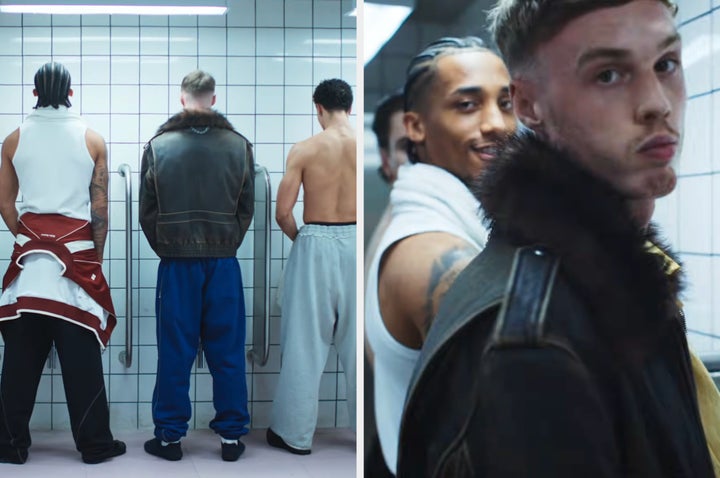
We spoke to the Peaky Blinders: The Immortal Man cast about the new film! Join Cillian Murphy, Rebecca Ferguson, Tim Roth and Steven Knight as they discuss Tommy Shelby’s legacy, how amazing the film set was and having input on the soundtrack.

Vladimir Putin’s “hidden hand” may be helping Iran respond to its ongoing war against Donald Trump and Israel, according to the UK’s defence secretary.
John Healey was speaking from the UK’s military headquarters in London hours after drones hit a base used by western forces in Iraq.
Advertisement
He said British officers told him drone pilots from Iran and Iranian proxies were adopting tactics “from the Russians”, and telling them how to fly them.
Iran has been supplying Russia with Shahed drones – long-range weapons Moscow has regularly deployed against Ukraine – for years.
The chief of joint operations, Lt Gen Nick Perry, told the defence secretary that it looked like Russia had advised its allies to fly the drones at a much lower height, making them more effective when hitting targets.
Advertisement
That had “proven problematic” according to Perry, because the drones were rapidly becoming Iran’s most effective weapon in its fight against the US and Israel.
Healey said: “I think no one will be surprised to believe that Putin’s hidden hand is behind some of the Iranian tactics and potentially, potentially some of their capabilities as well.”
He added: “The one world leader that is benefitting from sky-high oil prices at the moment is Putin because it helps him with a fresh supply of funds for his brutal war in Ukraine.”
Advertisement
A UK counter-drone team shot down two of the drones targeting a base in Erbil last night. No British casualties have been reported.
Meanwhile, Trump announced on Monday that he would “take sanctions off” some countries until the Strait of Hormuz is up and ready again.
While he did not specify which countries he was referring to, Trump’s declaration came shortly after he had a lengthy chat with the Russian autocrat – who has been trapped under heavy trade sanctions ever since invading Ukraine in 2022.
Advertisement
Tehran has effectively closed the strait of Hormuz, which carries a fifth of the world’s oil supply, by targeting ships on waterway.
Healey discussed the closure of the strait with the E5 of European defence ministers, and warned there were “clearer and clearer” reports that Iran was trying to mine the waterway.

If your grass is looking a bit bare after the winter chill, you might be thinking of planting new seed now that the soil’s warmed up.
Indeed, according to Chris McIlroy, a lawn expert at The Grass People, “We’re approaching the ideal time to sow new grass seed and get lawns looking their best again”.
Advertisement
The Royal Horticultural Society added that spring and autumn provide ideal conditions for the task; it’s cheaper than buying new turf, and fairly easy.
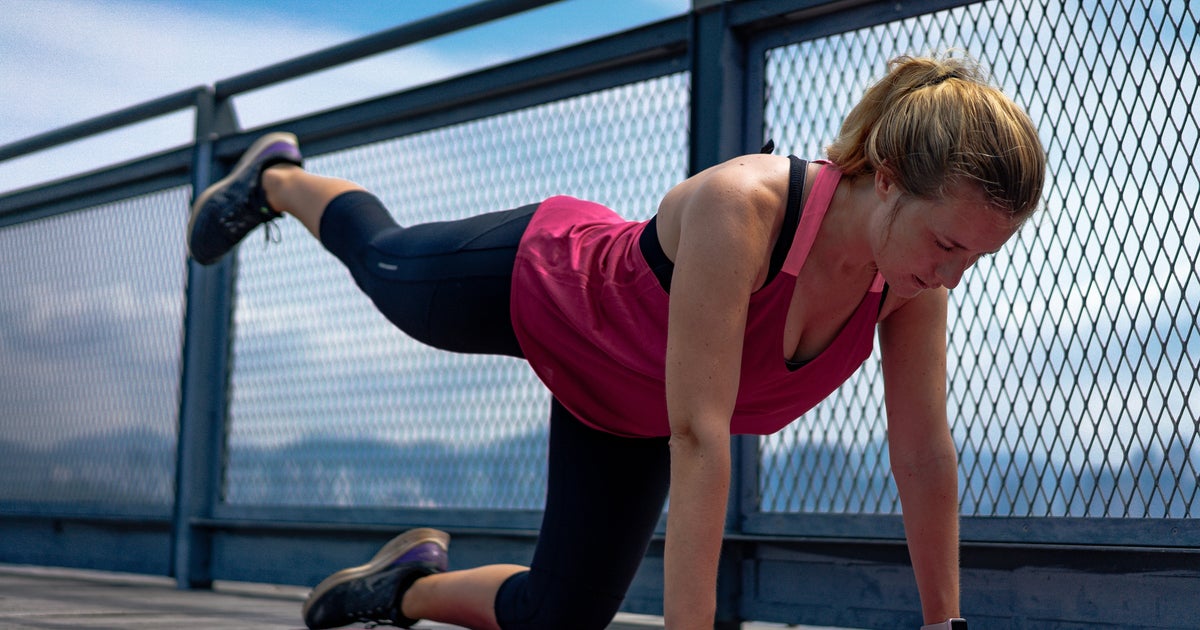
Especially, McIlroy said, if you “penguin walk”.
It’s a shuffling kind of walk you can do before you plant grass seeds to help get rid of any air pockets in the soil.
“New seedlings need mild, moist soil in order to germinate, so waiting until temperatures are consistently around 8-10°C is crucial. Also, check that there is no heavy rain forecast, as this can wash away seeds,” McIlroy said.
Start with a “clean slate”, too: banish moss, dead grass, and weeds before laying new seeds down.
Then, it’s time for the penguin walk.
“You need to tread the ground to get rid of air pockets. Take small steps over the surface to even out the soil, like a penguin shuffle. Do this in rows to make sure all the areas are covered,” the grass expert explained.
“Once the ground is prepared, spread the grass seed evenly across the soil at around 30-35g per square metre for a new lawn, or 15-20g per square metre when overseeding bare patches.”
To get really even coverage, divide the seed in half and walk along your lawn lengthways sprinkling the first section.
Advertisement
Then, spread the second load of seed walking widthways. That’ll form a kind of crosshatch pattern that’ll offer even coverage.
“After sowing, lightly rake the area so the seeds sit just beneath the soil surface, then gently firm it down by walking over it or using a roller,” McIlroy added.
Advertisement
“This helps ensure good seed-to-soil contact, which is essential for germination. Finally, water lightly and keep the soil consistently moist while the grass establishes.”

Appetite for solo travel among women isn’t showing any signs of slowing – last year, tour operator Jules Verne said solo travellers accounted for 46% of bookings, with almost 70% of these bookings coming from women.
But while appetite is clearly there, that’s not to say women feel safe when they do travel alone. Far from it.
Advertisement
A new survey conducted by hospitality company The Social Hub, along with Opinion Matters, as part of their “Room For Her” campaign, has found that 100% of women aged 18-24 from the UK say they worry for their safety when travelling alone.
The study polled 2,000 women from eight countries in the UK and Europe.
Their data also showed:
Advertisement
A 2024 National Police Chiefs’ Council report declared violence against women and girls a “national emergency” in England and Wales, with a possibly low estimate of about two million women and girls targeted a year.
Amber Westerborg, a director of sustainability and impact at The Social Hub, said she hopes the survey encourages the hospitality industry “to start talking and take action, ensuring safe travel for all”.
“The results are eye-opening and shine a light on a real problem across the industry,” she said.
“Women should not have to change their behaviour, limit their ambition or decline an opportunity because they don’t feel safe.”
Advertisement

We hope you love the products we recommend! All of them were independently selected by our editors. Just so you know, HuffPost UK may collect a share of sales or other compensation from the links on this page if you decide to shop from them. Oh, and FYI – prices are accurate and items in stock as of time of publication.
Travelling with a locked-in beauty routine is not for the weak, let me tell you.
When it comes to curl care, getting your perfect hair routine down pat is enough to make you feel like a Nobel-prize-worthy scientist.
It can take years of effort to get it right – trust me, mine did. And now, you’d have to pry my favourite products away from my cold, dead hands before I give them up.
So a little thing like baggage allowance isn’t going to stop me from bringing my essentials along with me.
Curious just what those essentials are? They’re worth their weight in gold to me, but don’t worry – I didn’t get into the business to gatekeep.
So now we know.
Keir Starmer was given every excuse he needed not to make Peter Mandelson the UK’s ambassador to Washington, but did it anyway.
There are few fresh revelations contained within the 137 pages of documents released by the government about Mandelson’s appointment.
Advertisement
The biggest one – that the disgraced peer wanted a pay-off of more than half a million pounds for a job that he was sacked from – simply confirms what we already knew about his character.
In the end, he received £75,000 – a third of which was tax free.
However, it is the confirmation of what the prime minister was told by his own civil servants before appointing him which is most damning of all.
The Cabinet Office due diligence report presented to the PM on December 11, 2024, shortly before Mandelson’s appointment, is clear about the extent of his relationship with the convicted paedophile, Jeffrey Epstein.
Advertisement
It shows that a report commissioned by JP Morgan in 2019 found that Epstein “appeared to maintain a particularly close relationship” with Mandelson and the now-equally disgraced Andrew Mountbatten-Windsor.
Most shockingly, that report found that Epstein and Mandelson relationship continued between 2009 and 2011, after the billionaire financier’s conviction for procuring an underage girl in 2008.
Mandelson also stayed at Epstein’s house in New York when he was still in jail.
In addition, Mandelson went on to become a “founding citizen” of an ocean conservation group funded by Epstein and founded by his close associate, Ghislaine Maxwell.
Advertisement
The document says that Mandelson’s relationship with Epstein represented a “general reputational risk” for the government.
What more evidence did the PM need that he should give Mandelson a very wide berth?
However, on the advice of his chief of staff, Mandelson ally Morgan McSweeney, Starmer opted to ignore this warning and appoint him anyway.
The political decision was taken that Mandelson’s ability to curry favour with Donald Trump was more important than standing with Epstein’s victims.
Advertisement
McSweeney ultimately paid for that calculation with his job.
For now at least, Starmer remains in place. But his reputation as a cautious politician who, for all his faults, at least does things by the book, is in tatters.

UK Government
By no means coincidentally, the Mandelson documents were not released until after prime minister’s questions, meaning Starmer could not be personally grilled about their contents.
Advertisement
Instead, chief secretary to the PM Darren Jones was sent out to face the music.
He claimed that the “due diligence process fell short of what is required”, which is undoubtedly true.
It is also the case that Mandelson was less than forthcoming about his links to Epstein when personally asked about them by the prime minister.
Nevertheless, this does not change the fact that the details which were already in the public domain should have been sufficient to bar him from the plum diplomatic role.
Advertisement
Jones told MPs that Epstein “was a despicable criminal who committed the most horrifying and disgusting crime that destroyed the lives of countless women and girls”.
And yet, knowing this, Starmer still opted to make his friend Mandelson the UK’s ambassador to Washington.
It is a decision which should haunt him for the remainder of his time in office, and beyond.

A Labour MP has condemned David Lammy’s plan to scrap most jury trials after revealing for the first time that she had been raped.
Charlotte Nichols accused the justice secretary of using victims as a “cudgel” to force the controversial reforms through.
Advertisement
The government wants to get rid of juries in cases where the sentence is expected to be less than three years.
Ministers say the move is necessary to clear the huge backlog of court cases in England and Wales.
But critics say the planned reforms, contained in the Court and Tribunals Bill, will remove a fundamental right while not actually solving the problem.
During a Commons debate on the bill, Nichols said she had waited 1,088 days for her case to get to court.
Advertisement
The MP for Warrington North said: “Every single one of those days was agony, made worse by having a role in public life that meant that the mental health consequences of my trauma were played out in public, with the event that led to my eventual sectioning for my own safety still being something that I receive regular social media abuse from strangers about to this day.
“But here’s the kicker, in this debate, experiences like mine feel like they’ve been weaponised and are being used for rhetorical misdirection, for what this bill actually is.
“The violence against women and girls sector haven’t had the opportunity to come together to discuss it, and the government’s framing and narrative has been to pit survivors and defendants against each other in a way I think is deeply damaging.
Advertisement
“We have been told that if we have concerns about this bill, it is because we have not been raped or because we don’t care enough for rape victims.
“The opposite is true in my case, it is because I have been raped that I am as passionate as I am about what it means for a justice system to be truly victim focused.
“It is because I have endured every indignity that our broken criminal justice system could mete out that I care what kind of reform will actually deliver justice for survivors and victims of crime more widely.”
Advertisement
She added: “There is so much that we can be doing for rape victims that isn’t [David Lammy] using them as a cudgel to drive through reforms that aren’t directly relevant to them.”
If you’ve already torn through all four episodes of Netflix’s hit miniseries The Dinosaurs, you’re definitely going to want to check out the streaming giant’s latest gift for viewers.
The unique documentary premiered last week, and has already gone down a storm, with the show exploring the “rise and fall of the dinosaurs”, with narration from the incomparable Morgan Freeman.
Advertisement
On Monday evening, Netflix released blooper footage from Morgan inside the recording booth, and we’re delighted to report that it’s an absolute treasure trove.
From the international treasure introducing himself as “Morgan fucking Freeman” to the Oscar winner stumbling over some species’ trickier names (“Yutyranus? Let’s say Yutyrannus, ‘anus’ sounds like ‘ass’”), the clips are a must-watch for anyone who loved The Dinosaurs.
Advertisement
The Dinosaurs was co-produced by recent EGOT recipient Steven Spielberg, and serves as the sister show to his previous nature series Life On Our Planet.
Since its premiere earlier this month, the show has gone down a storm with critics (it holds a rare 100% score on Rotten Tomatoes, based on seven especially positive reviews) with particular praise for Morgan’s commentary.
It’s similarly proved popular with Netflix users and, at the time of writing, it’s the UK platform’s number one show, ahead of hits like Bridgerton, The Night Agent and Vladimir.
Advertisement

Over the last few days, the paleontology community has also been weighing in – and let’s just say they have a few notes.
The Dinosaurs director Nick Shoolingin‑Jordan previously told Netflix’s companion outlet Tudum that he wanted to “tell the full chronology all the way through and take the audience on a rip‑roaring adventure” with his latest venture.
Advertisement
Dan Tapster, its showrunner, added: “We had eight 50-minute episodes to tell the entire story of life on Earth [in Life On Our Planet], so there were lots of things where we could only scratch the surface – and the dinosaur story was absolutely one of them.
“With The Dinosaurs, we finally get to tell that story in full and celebrate it like no one has ever done before.”

Most of us have a Gordon Ramsay-style idea of how to cook a steak: take it out of the fridge, salt it, wait a little, and fry it in a sizzling pan, basting it in butter. Then let it rest.
Hey, I’m not against that. I’ve tried his method and loved it.
But according to some culinary experts, there’s a counterintuitive way to cook a perfectly medium-rare steak that’s got a rich brown crust from edge to juicy edge. And it’s known as “reverse searing”.
Advertisement
When cooking steak, most people expect to sear the protein at the start, when it comes into contact with a very hot pan. The rest of the cooking is done at a lower temperature to allow the meat to actually cook.
But “reverse searing”, well, reverses that.
You slowly, gently cook the steak at first, then sear it at the end. The idea is to avoid that brown-outside, raw-middle problem that happens all too often with “regular” searing.
It also ensures the middle is evenly cooked. And because a nearly-cooked steak is drier than a raw one, reverse-seared steaks have less moisture, according to chef and food writer J Kenji López-Alt, which means that achieving a satisfying crust is much easier.
Advertisement
And lastly, as the enzymes that have been paralysed by your fridge have had a chance to get back into play by the time you’re ready to sizzle your “reverse-seared” steak, it’ll likely turn out more tender.
Reverse searing works best for thick steaks. “Ribeye, New York, and filet mignon are great cuts that would provide great results in reverse searing,” chef Sam Shafer told The Takeout.
Advertisement
And writing for Serious Eats, López-Alt wrote that the method is best used on steaks thicker than 3.8-5 cm.
The steps are pretty simple.
Another bonus? You don’t have to rest reverse-seared steaks (I’m sold).

In a recent interview with Elle UK, Bridgerton and Derry Girls star Nicola Coughlan recalled the time a tipsy girl, who cornered her in a public loo, said she loved the Netflix hit “because of [Nicola’s] body”.
Nicola, who said she’d lost a “bunch of weight” for the show and was “probably a size 10″ on-screen, had said earlier in the interview, “The thing I say sometimes that pisses people off is I have no interest in body positivity.”
Advertisement
Later, she stated discussions about weight are “so fucking boring”.
I couldn’t agree with her more.
I have been in workplaces, classrooms, countless online spaces, family events, and friendships where the judgment of strangers’ weight was like dull, repetitive background music.
I have to admire weight obsessives’ inventiveness, to be fair. Tiny “girl dinners”, single-size clothing brands which seem to make their association with thinness a marketing strategy, and chats about whether you could ever hope to look yourself in the mirror again after eating carbs can occupy hours of your time if you want them to.
Advertisement
You can spend ages dissecting what *type* of thin or fat someone is, too. Maybe you’re looking at which fruit their (or, to be real, her) body most resembles. Maybe someone’s a pilates princess, or perhaps you deem them a “big back” (a term a lot of thin people seem alarmingly comfortable using to describe what they see as “fat” people and behaviours).
Is a “plus-size” or “mid-size” person’s Instagram bikini post liberating, or a ruinous attempt to “glorify obesity”? Because it obviously can’t just be a fun, mindless pic of a normal person on holiday… right?
What size are you, by the way? Noo, I’m just asking, haha! Also, should we do a water fast? By the way, have you seen how [insert thinner or fatter than usual celeb here] looks now?
Advertisement
Weight obsession is the beige, formless putty behind so many millions of conversations that it can be easy to forget the base is all the same.
Which is why such an incredibly boring idea – “some people are smaller. Others are bigger. Some people are small at first, and bigger later; sometimes, the other way around” – has stayed part of public and private discussion for so long.
What a rude, dull person you would think me if I asked everyone’s weight outright, told them what I thought about that number, and then went back to you and shared those figures again, as if it meant something. Not just that, but chances are any sly comments circling the topic would quickly die out.
Advertisement
To survive and fester into obsession, weight talk must morph. It has to take on the veneer of Serious Discourse, or ever-shifting beauty standards, or judgements of one another’s worth – or, to Nicola’s point, a type of social activism, regardless of what the person with the much-discussed body thinks.
This is not to say fatphobia isn’t real (it is), that it doesn’t manifest in endless pernicious ways, that purposeful activism isn’t important, or that weight obsession can be brushed aside as “not that deep”.
But Nicola wasn’t talking about any of that when she took a fantasy Regency role which involved looking smoulderingly hot in a (size eight, by the way) corset. And let’s be real; nor are most of the people whose bodies we comment on.
Advertisement
If we got a little more clear-eyed about what our fascination with something as simultaneously tedious, invasive, and irrelevant as an individual’s weight actually boils down to, I’d like to think we could start to focus on more interesting things instead.