Famine ‘Imminent’ In North Gaza As Palestinians Continue To Starve: IPC Report

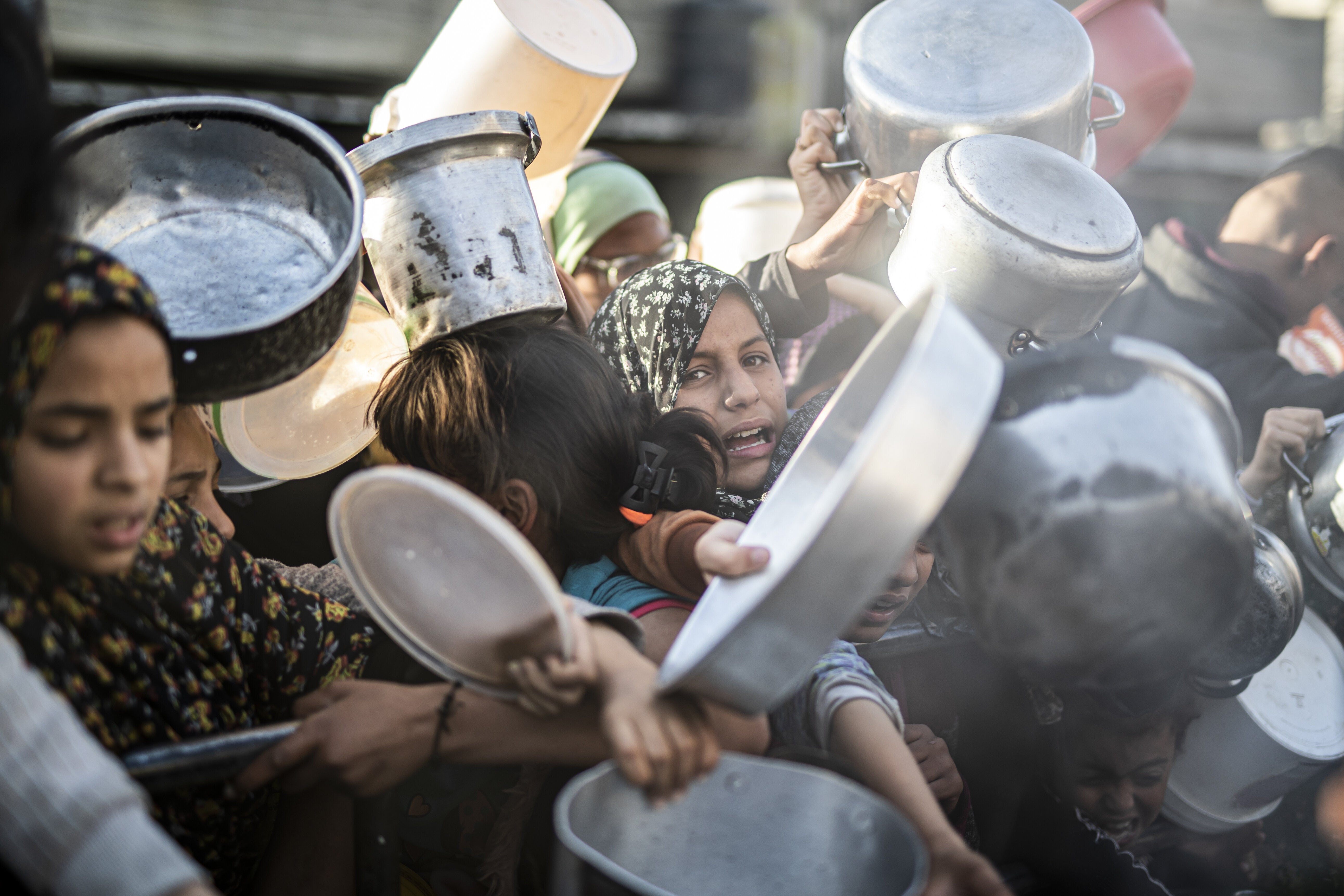
A harrowing food insecurity report has concluded that famine is “imminent” in northern Gaza, as millions of starving Palestinians face “catastrophic” food conditions in the territory amid Israel’s continued blockade of humanitarian aid.

The Integrated Food Security Phase Classification (IPC) report was released on Monday by the World Food Program. The IPC is an international process for estimating the scale of hunger crises, and serves as one of the international community’s primary sources for food insecurity data around the world.

According to the report, North Gaza and area governorates are projected to meet the definition of famine ― the IPC’s fifth and most severe phase of acute food insecurity ― anytime between now and May. In North Gaza, food security and malnutrition have become crises at the most dire level of the IPC’s scale.

Gaza’s southern governorates of Deir al-Balah, Khan Younis and Rafah are presently classified as IPC Phase 4 (Emergency) situations in the report. These governorates, however, face a risk of famine through July in a worst-case scenario, according to the data.

Per the ICP, Gaza’s entire population of 2.23 million people are enduring high levels of acute food insecurity. About half of those people are expected to suffer “catastrophic conditions” if Israeli forces launch their planned ground offensive into the packed southern city of Rafah.

“The upward trend in non-trauma mortality is also expected to accelerate, resulting in all famine thresholds likely to be passed imminently,” the group’s report said.

In December, the IPC warned that there needed to be an immediate reduction of hostilities and an increase in humanitarian access in order to prevent a “realistic chance” of starvation in Gaza. The agency’s analysis at the time said that Gaza’s crisis is “the highest share of people facing high levels of acute food insecurity that the IPC initiative has ever classified”.

“If no steps are taken to cease hostilities and to provide more humanitarian access, famine is imminent,” Beth Bechdol, deputy director-general of the United Nations’ Food and Agriculture Organization, said Monday. “It could already be occurring. Immediate access is needed to facilitate delivery of urgent and critical assistance at scale.”

Gaza’s current crisis stems from Israel’s ongoing military campaign launched after Hamas militants attacked that country on October 7, killing about 1,200 people and taking roughly another 250 hostage. More than five months later, the Gaza Health Ministry ― which has a record of providing casualty figures that closely reflect the UN’s own ― reports that Israeli forces have killed more than 31,000 Palestinians, wounded nearly 73,400, displaced almost the entire population and blocked civilians from accessing most aid deliveries of food, water, fuel and medicine.

The dire situation in Gaza is “simply unbearable” and “unjustifiable”, according to Hiba Tibi, country director for aid group CARE International in Gaza and the West Bank. “Our earlier fears that more would die in Gaza from hunger, dehydration and disease than from bombs, were well-founded, sadly. Starvation is cruel. It is a slow and painful death.”

“Our partners who run health centres in Northern Gaza have reported that the number of children categorized as having moderate or severe malnutrition nearly doubled in February, compared to January. Their staff report watching children get thinner and thinner as the days go by and of kids who can barely speak and walk due to starvation,” she continued. “We also hear of kids being born and dying in shelters without even being registered in the hospitals. It’s like they don’t exist.”
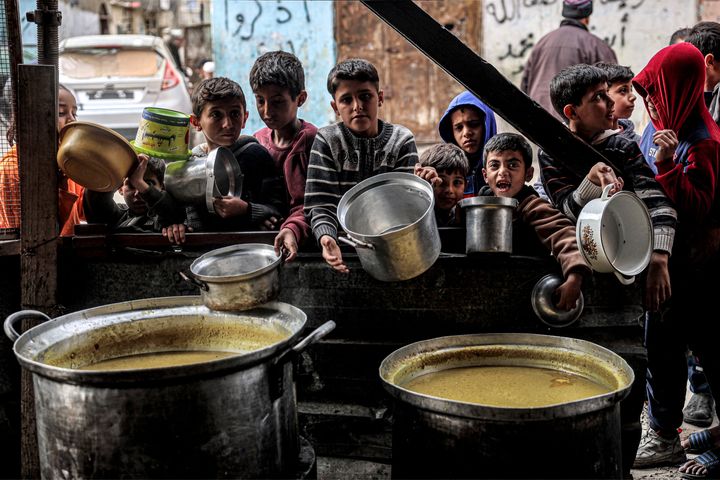
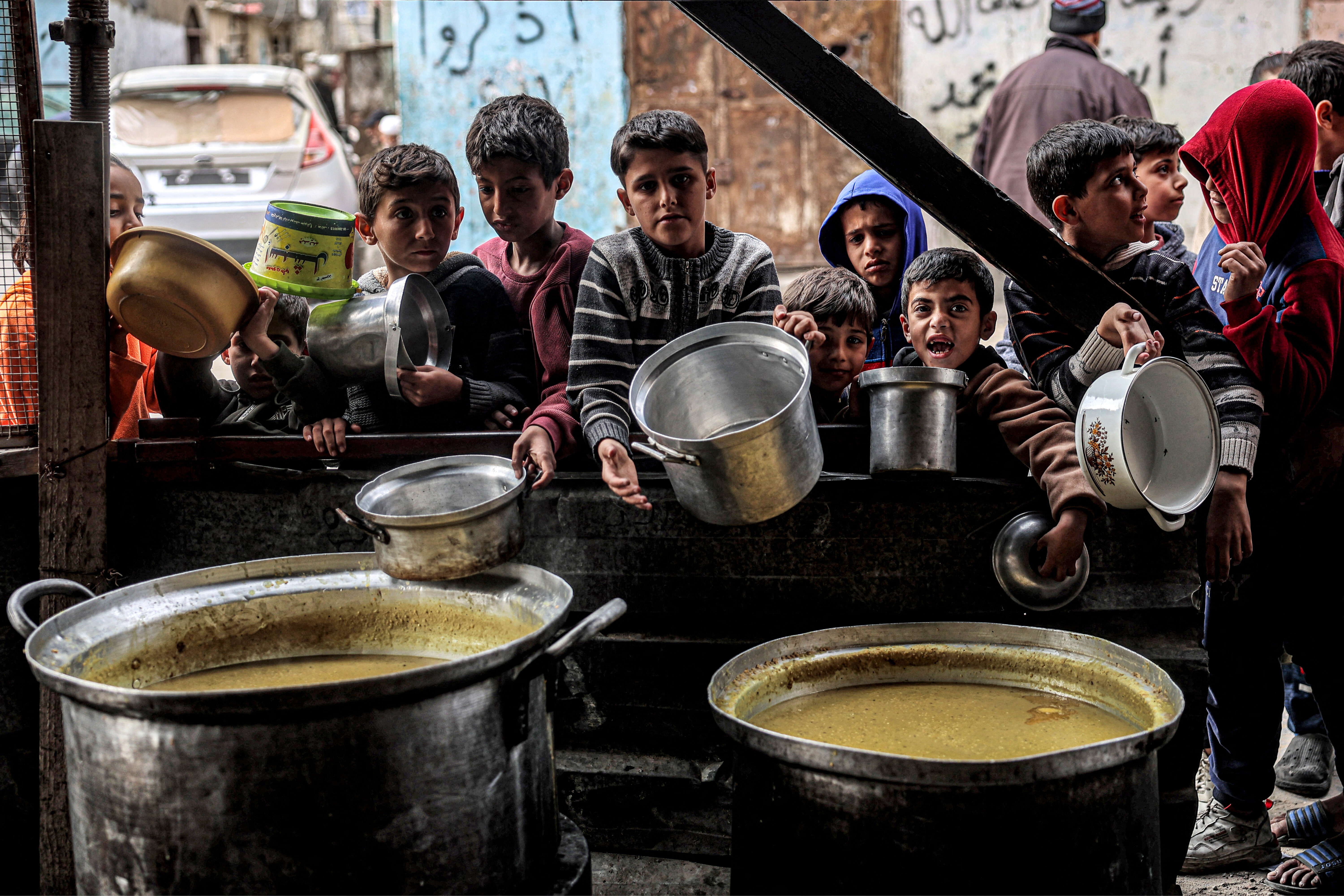
Boys wait while holding empty pots with other displaced Palestinians queueing for meals provided by a charity organization ahead of the fast-breaking "iftar" meal during the Muslim holy month of Ramadan, in Rafah in the southern Gaza Strip on March 16.
Boys wait while holding empty pots with other displaced Palestinians queueing for meals provided by a charity organization ahead of the fast-breaking “iftar” meal during the Muslim holy month of Ramadan, in Rafah in the southern Gaza Strip on March 16.

Said Khatib/AFP via Getty Images

The UN Children’s Fund recently warned that life-threatening malnutrition was “spreading fast”, supported by the IPC’s report detailing how adults in Gaza have reduced their meals so their children can eat. The FAO said that at least 10 times in the last month, almost two-thirds of northern Gaza households went “entire days and nights” without eating.

Northern Gaza was the first target of Israel’s invasion, and has become the centre of the territory’s humanitarian crisis, with much of the region completely destroyed. A third of children under two years of age in the north are acutely malnourished, according to the FAO, and the Gaza Health Ministry said last week that 27 Palestinians, mostly children, had died of malnutrition in the north.

Monday’s report confirms what aid groups have been trying to convey to the world about the starvation crisis facing Palestinians in the territory. The international community has continued to call for a permanent cease-fire, the release of all remaining hostages, accountability for civilian casualties and the safe passage and distribution of more aid to Palestinians.

“From the destruction of farms, flour mills and food processing sites, to ongoing fighting preventing the safe movement of humanitarian actors, to the blocking of aid, the people of Gaza are being starved to death. What’s worse, they have all too often been killed in attacks when seeking out food to keep their children alive,” Tjada D’Oyen McKenna, CEO of the aid group Mercy Corps, said in a statement, stressing that the denial of humanitarian access violates international law.

“We cannot wait for an official famine declaration in Gaza to act when it is abundantly clear that people are and will continue dying from hunger and malnutrition,” she continued. “Today’s report must be a wake-up call for all parties with leverage over Israel to dramatically change course. Gazans cannot wait any longer.”
Share Button

Rwanda Scheme Will End Up Costing Taxpayers Billions Of Pounds, Claims Think Tank

The government’s Rwanda scheme will end up costing taxpayers billions of pounds, according to a leading think-tank.

A new report by the Institute for Public Policy Research (IPPR) says the UK will have to pay up to £230,000 for every asylum seeker deported to the east African country.

That is around five times as much as it currently costs to house an asylum seeker in the UK.

In total, the IPPR estimates that the Rwanda policy will cost the government between £1.1 and £3.9 billion to deport the 20,000 asylum seekers who have entered the UK via so-called “irregular routes” since last year.

The findings come as MPs prepare to once again debate Rishi Sunak’s flagship Safety of Rwanda Bill.

The prime minister hopes that the first deportation flights will take off in the spring – although transport secretary Mark Harper yesterday refused to guarantee that any deportations will happen before the election.

Marley Morris, the IPPR’s associate director for migration, trade and communities, said: “Aside from the ethical, legal and practical objections, the Rwanda scheme is exceptionally poor value for money.

“For it to break even, it will need to show a strong deterrent effect, for which there is no compelling evidence.

“Under the government’s plans, billions could be sent to Rwanda to remove people who have already arrived irregularly since the Illegal Migration Act was passed.

The only winner from this scheme appears to be the Rwandan government itself, which has already secured hundreds of millions without doing much at all.”

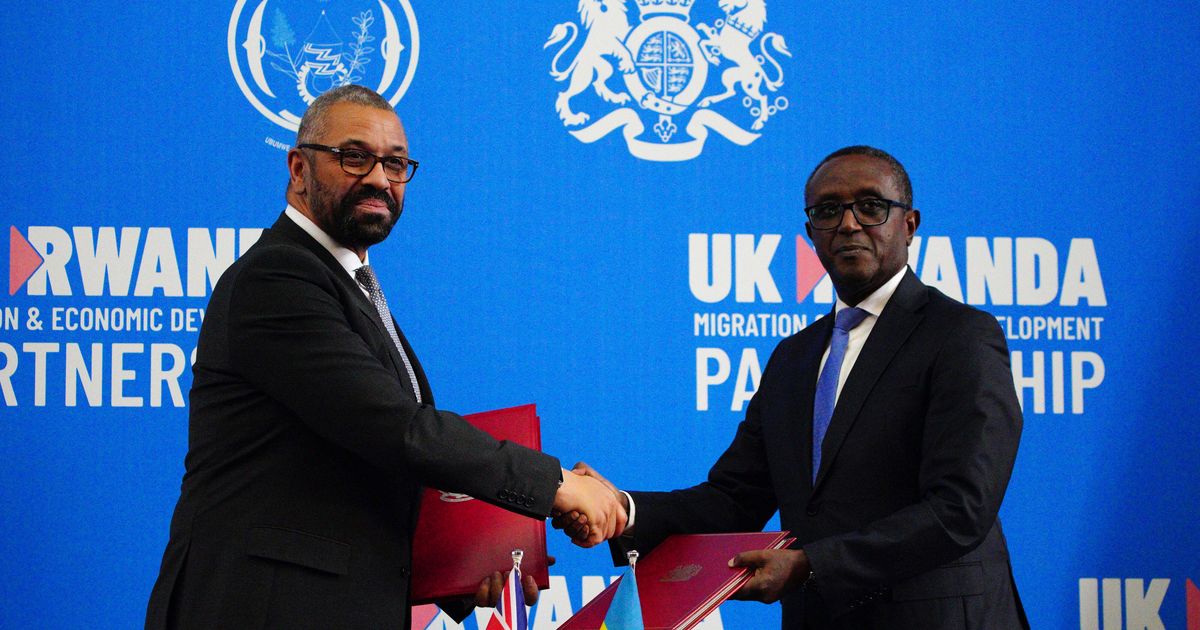
As part of the Rwanda deal agreed by home secretary James Cleverly in December, the UK has to pay £370m up front to the Rwandan government, followed by a further £120m once 300 people are sent there.

The UK also has to pay £20,000 for each person deported, plus up to £150,874 per asylum seeker to cover the costs of asylum processing and integration.

For each person who leaves Rwanda, the UK is also expected to pay an extra £10,000 to facilitate their departure.

According to the IPPR, the total cost of sending one asylum seeker to Rwanda could be as much as £228,000.

But a Home Office spokesperson said: “The report makes a number of assumptions and modelling calculations that we do not recognise.

“Without innovative solutions, the cost of housing asylum seekers could reach up to £11 billion per year by 2026.

“Illegal migration costs lives and perpetuates human trafficking, and it is therefore right that we fund solutions to break this unsustainable cycle.

“The best way of saving taxpayer money is by deterring people from coming here illegally in the first place, and our partnership with Rwanda intends to do just that.”

Share Button

In The Least Surprising News Ever, Vladimir Putin Has Won The Russian Election

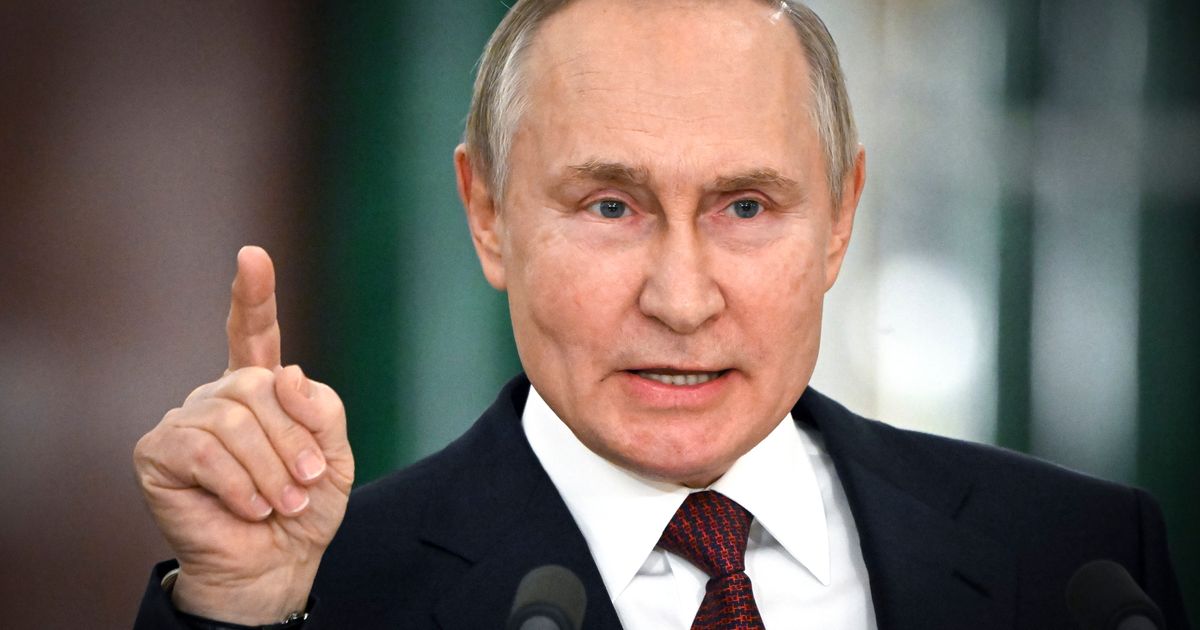
Vladimir Putin has been re-elected Russian president after winning a landslide victory in the country’s election.

In a result that was a surprise to absolutely no one, he won another six-year term in charge after receiving nearly 88% of the vote.

The three other candidates – Nikolai Kharitonov, Vladislav Davankov and Leonid Slutskywere predictably miles behind, with none of them managing to poll more than 4%.

It will be his fifth term as president of Russia, having first been elected to the post in 2000. He was also the country’s prime minister between 2008 and 2012.

Foreign secretary David Cameron dismissed the result by insisting the elections had not been “free and fair”.

He said: “The polls have have closed in Russia, following the illegal holding of elections on Ukrainian territory, a lack of choice for voters and no independent OSCE [Organisation for Security and Co-operation in Europe] monitoring.

“This is not what free and fair elections look like.”

But former Russian president Dmitry Medvedev, a close ally of Putin, took to X (formerly Twitter) shortly after the result was announced.

In a bizarre post, he said: “Congratulations to all Russia’s enemies on Vladimir Putin’s brilliant victory in the election of the President of the Russian Federation. And a thank you to friends for the support.”

The result was never in doubt because no candidates opposed to the war in Ukraine were allowed to stand.

One potential opposition candidate who did attract some popular support, Boris Nadezhdin, was barred from running a month ago.

Some voters did register their opposition to Putin’s regime by vandalising voting booths during the three-day election.

Footage emerged online of one woman pouring ink into a ballot box after voting, while there were also arson attacks at some polling stations.

Thousands of voters also took part in a “noon against Putin” protest at polling stations across the country and at Russian embassies around the world.

Share Button

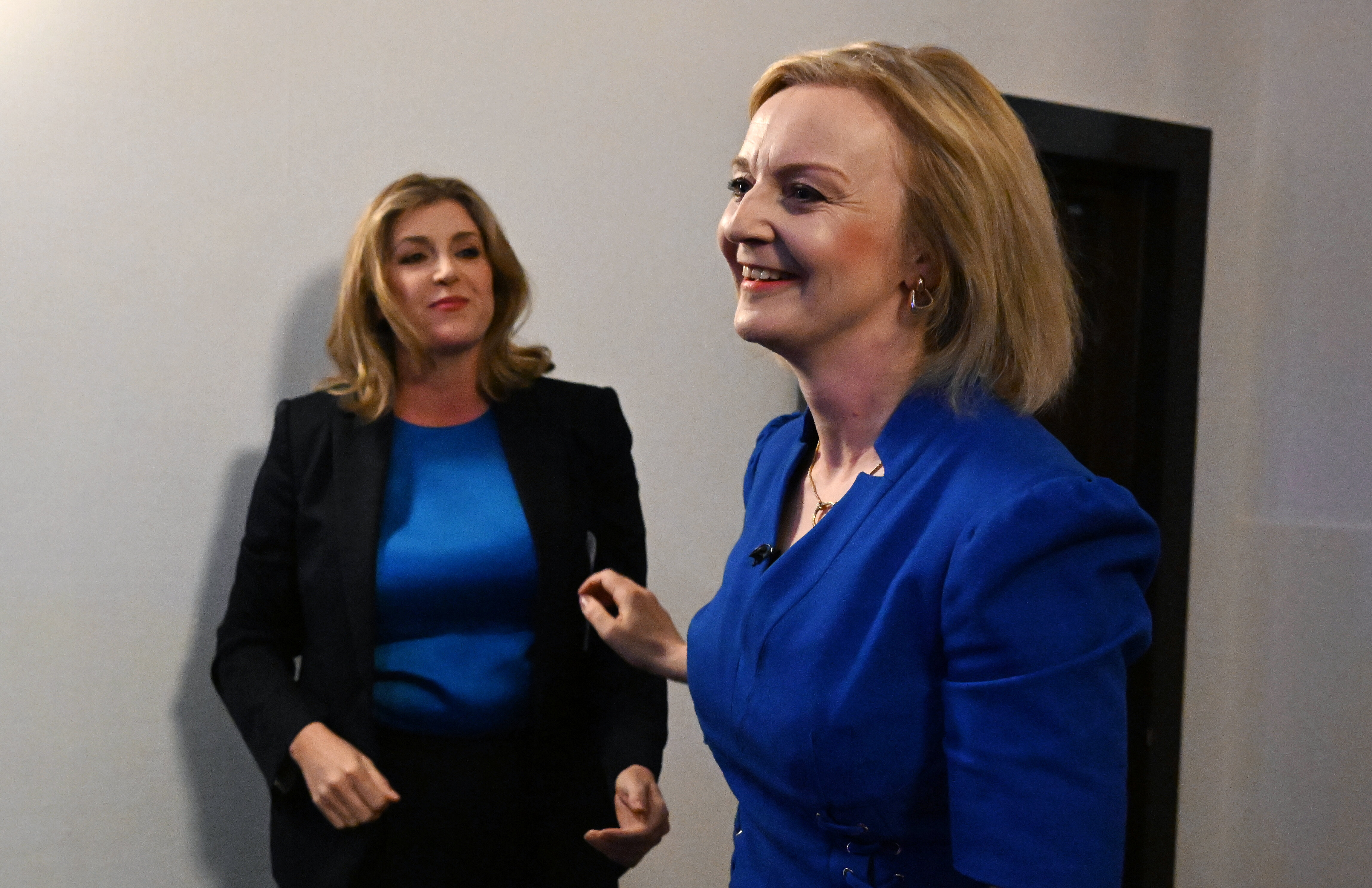
A Video Of Penny Mordaunt Endorsing Liz Truss Has Left People Questioning Her Judgement

A video has re-emerged of Penny Mordaunt backing Liz Truss amid mounting speculation she could be the next prime minister.

The clip, which has been watched more than half a million times in the last 24 hours, shows Mordaunt praising Truss’s “bold economic plan”.

She also claims Truss “embodies the vision and values the British public”.

The video was filmed during the first Tory leadership contest of 2022, after Mordaunt had left the race.

In a speech to Tory members, she says: “Who can lead? Who can build that team and deliver for pour country? Who does have that bold economic plan that our nation needs?

“Who’s got reach, who can relate to people, who understands that people need help with the cost of living now? And who is going to rightly clobber our opponents?

“Who is going to hold seats and win back councils, and who most embodies the vision and values the British public had in their heads and their hearts when they voted in 2016 and 2019?

“At the start of this final phase of the contest I didn’t know the answer to those questions, but I’ve seen enough to know who the person that I’m going to put my faith in is. And that is Liz Truss.”

Truss went on to last just 49 days in No.10 after her chancellor Kwasi Kwarteng’s mini-Budget triggered an economic crisis.

Tory rebels are reportedly planning to oust Rishi Sunak and replace him with with Mordaunt as the opinion polls continue to suggest the party is heading for catastrophe at the general election.

But the video of Mordaunt endorsing Truss has led social media users to question her suitability to lead the country.

Share Button

The 1 Thing We Get Wrong When Making Iced Coffee At Home

Warmer days are nearing and for me, at least, this can only mean one thing: time for my daily iced coffee fix.

However, we’re in a cost of living crisis and as much as I would LOVE to treat myself to one every single day from my local coffee shop, I do have to *attempt* to be sensible at the moment.

This seemed simple enough. Add coffee, add ice, add milk, and yes, of course, a hint of syrup. It just didn’t taste like I expected it would. I wanted that delicious hit, that sweet slurp of caffeine to get my veins pumping but instead I just felt a bit more buzzed and my coffee was, well, watery.

It turns out that there is a right way to make iced coffee and according to the coffee masters at Matthew Algie, I’d actually missed a good few steps.

The best way to make iced coffee at home

Speaking to HuffPost UK, Frank Ubsdell, National Training & Innovation Manager, and Gosia Lendzioszek, Account Development Manager at Matthew Algie shared their tips for making a successful iced coffee at home.

The experts said that the order you add your ingredients in can make or break your drink.

“If you’re looking for that layered effect, you may want to add espresso last. However, while this can look beautiful, it might not mix well and become milky at the bottom but very strong at the first sip.”

Additionally, they said that hot espresso onto ice is a “common mistake” and yes, you guessed it, that was mine. They recommend making an espresso first and then making everything else, allowing it to cool. Add it after milk and ice so that it isn’t directly interacting with the ice and instead rests on top of your chosen milk.

They also warned against batch-making jugs of coffee the night before drinking it saying: “Many people batch make a jug of coffee the day before and let it cool in their fridge. This isn’t a good idea, as coffee is a product that is enjoyed best when freshly brewed.”

Finally, they crushed (get it?) my dreams when they said: “although crushed ice looks good, you should always opt for cubed ice as crushed dilutes the drink faster.”

That makes sense but what about the AESTHETIC?!

Share Button

The Cold Remedies Doctors Say You Shouldn’t Bother With

The average person catches two to four colds a year, which means most of us will suffer through roughly 200 colds in our lifetime.

With so many snotty struggles ahead of us each year, what remedies can we rely on to help us feel better fast? And do any of those viral cold cures we’ve seen online actually work?

That’s what we — Raj Punjabi and Noah Michelson, the co-hosts of HuffPost’s “Am I Doing It Wrong?” podcast — recently asked Dr. Natasha Bhuyan, a family physician and medical director of OneMedical.

“I have patients ask me all the time about [unusual] cold cures because they want to get better fast,” Dr. Bhuyan said. “One of the things I’ve heard about recently is garlic cloves up the nose. I think it’s this idea of garlic cloves acting as a decongestant. Garlic cloves up the nose can actually be really dangerous and can really irritate your nasal passages.”

Other unorthodox remedies she’s encountered involve an unexpected article of clothing.

“The other things I’ve heard about have always been related to socks,” she revealed. “One [“remedy”] is go to bed wearing wet socks. The other is put sliced up potatoes inside your socks and go to bed. It’s this thought that it’ll pull the cold virus into your feet and out of your body.”

Despite how popular these so-called “treatments” may be, there’s no evidence that any of them work.

“Some of these ‘remedies,’ at best, you laugh at them, but at worst, they can really be dangerous for people,” Dr. Bhuyan noted.

So how can we safely find some relief if we’ve been struck down by a nasty cold?

“The studies on vitamin C are pretty mixed,” Dr. Bhuyan said. “They’ve found that if you take vitamin C regularly, you might be able to reduce the duration of a cold by half a day. Does that mean that everybody should go out and start taking a vitamin C supplement? Not exactly, because even within those studies, they found there were differences on the optimal dose. Reaching for vitamin C at the first sign of a cold likely won’t help. Taking vitamin C regularly might help shorten a cold’s duration if you get a cold, but you see that’s couched in a lot of ‘ifs,’ and it might not be worth the bang for your buck.”

What about taking zinc?

“The zinc trials are not that great and the reason why is because zinc actually tastes pretty terrible,” Dr. Bhuyan said. “So, if you’re trying to do a trial and giving half the people zinc and half the people a placebo, the placebo group knows they have a placebo because we can’t make a compound that tastes as terrible as zinc.”

Zinc also comes with a lot of side effects.

“People can get nausea from taking zinc on an empty stomach. People can get upset stomachs. All of those things point to zinc coming with its own risks.”

However, it might actually help shorten a cold, even if only by a day or two.

“There are trials that show that if you take zinc at the first sign of a cough or a cold or you’re feeling a scratchy throat, [taking] 10 to 15 milligrams of zinc might reduce the duration of a cold,” Dr. Bhuyan said.

Dr. Bhuyan told us that if we want to try a particular remedy, it’s always a good idea to chat with our doctor first, and, ultimately, our best weapons to feel better when we have a cold are the simplest ones — and they’re both free.

“Water is helpful because it can help break up your mucus. Staying hydrated and giving yourself water is a good idea,” Dr. Bhuyan advised. “It doesn’t necessarily mean it’s going to stave off the cold or prevent the cold, but I tell people rest and fluids is really the key.”

We also chatted about what happens if we eat dairy when we have a cold, why a hot toddy might not be the best drink choice if we’re feeling under the weather, and much more.

After you’ve had a listen to the full episode above or wherever you get your podcasts, subscribe to “Am I Doing It Wrong?” so you don’t miss a single episode, including our investigations of the ins and outs of tipping, how to score the best deals on airline tickets, how to apologise or vanquish your credit card debt, how to find love online or overcome anxiety, online shopping, tips for taking care of your teeth, pooping like a pro, secrets to booking and staying in a hotel, how to deal with an angry person, cooking tips from celebrity chef Jet Tila, shocking laundry secrets. and more.

Need some help with something you’ve been doing wrong? Email us at AmIDoingItWrong@HuffPost.com, and we might investigate the topic in an upcoming episode.

Share Button

20 Seasons In, Here’s What Grey’s Anatomy Has Meant To Longtime Fans

When Grey’s Anatomy fan Seyward Darby says she keeps up with new episodes of the long-running medical drama, “people look at me sideways,” she said.

As a fellow fan, I often hear a similar sense of disbelief: “I can’t believe you still watch that show.”

But we’re not alone. Grey’s Anatomy is still one of the most-watched dramas on network television, and Thursday marks the beginning of its 20th season (seriously…seriously… seriously!).

After 420 episodes and almost two decades on the air, the legacy of Grey’s Anatomy and its effect on pop culture has been long discussed. It diversified casts. It attracted people to the medical field. It celebrated women for being ambitious and complicated — and for having good sex. It drew attention to social and political issues, such as gay rights and gun violence (sometimes imperfectly) that other shows often avoided completely. It launched the careers of creator Shonda Rhimes and original cast members Ellen Pompeo, Chandra Wilson, Katherine Heigl and Sandra Oh (and many other actors, writers and producers affiliated with the show).

It also became the longest-running prime-time medical drama on television, outlasting more characters than I can name, both of its spinoffs (Private Practice and now Station 19, which was just cancelled), multiple showrunners (Meg Marinis is succeeding Krista Vernoff) and its titular lead character (Pompeo departed the show as a series regular last season).

Dr. Meredith Grey (Ellen Pompeo) on an episode of Grey's Anatomy last year, during her last appearance as a main cast member. The show begins a staggering 20th season on Thursday.
Dr. Meredith Grey (Ellen Pompeo) on an episode of Grey’s Anatomy last year, during her last appearance as a main cast member. The show begins a staggering 20th season on Thursday.

Though all these accomplishments are noteworthy, what’s less obvious and less talked about is how, for almost 20 years, Grey’s Anatomy has reached fans across the world, touching their lives, shaping their choices and making them feel seen.

In honor of the 20th season, I spoke to several fans about what the show has meant to them, why they’re still watching and what they’re looking forward to this season. The origin story of each fan makes it clear that it’s impossible to separate what they love about Grey’s Anatomy from how they fell in love with it in the first place.

Some, like mother-daughter duo Melanie French and Judy Lamb, have truly been watching since the show’s inception in the spring of 2005. French, who was in college at the time, remembers watching episodes at her sorority house on Sunday nights. Across the state, her mom, Lamb, was tuning in at home. Now they live states apart, and they’re both still watching, albeit on different timelines. With two kids and delayed streaming options, French is often behind her mom. “I tell her to get the Kleenexes ready,” Lamb said.

Darby was also in college when the show premiered, and she remembers it being on in the background of her college newspaper’s office. But she didn’t become a regular viewer until she moved to Europe after graduation and was visiting a friend in Paris during the worst weather imaginable. She couldn’t walk around the city, so she ended up hanging out in his apartment, and he had the first few seasons of Grey’s Anatomy on DVD. She binged all of them and became deeply connected to the show when Denny Duquette (Jeffrey Dean Morgan) died at the end of Season 2, shattering Izzie Stevens.

Sandra Oh, T.R. Knight, Jeffrey Dean Morgan and Katherine Heigl in the Season 2 finale of "Grey's Anatomy."
Sandra Oh, T.R. Knight, Jeffrey Dean Morgan and Katherine Heigl in the Season 2 finale of “Grey’s Anatomy.”

Scott Garfield/Disney General Entertainment Content via Getty Images

Darby could personally relate to Izzie’s story, especially the iconic scene of her lying on the bathroom floor in her pink, strapless prom dress, because her boyfriend had died suddenly the year before. “I remember when it happened that, if I just lay on the floor, the floor will hold me because I just felt like I was falling all the time,” Darby said. She still thinks often of Izzie’s scene.

Fani Mari, who lives in Greece, also discovered the show via DVD around that same time. She’d either rent them or borrow them from another girl she knew. That girl quickly became a friend.

“Our love for ‘Grey’s Anatomy’ connected us,” Mari said.

In November 2020, she was watching the show’s depiction of the COVID-19 pandemic and how it portrayed its effect on health care workers. The episodes made her curious about what life was like for people around the world during that time. The show inspired her so much that she ended up interviewing people and writing the book Hindsight 2020: Tribulations and Silver Linings During a Global Pandemic.”

Dr. Miranda Bailey (Chandra Wilson) watches over Dr. Meredith Grey during Season 17 of "Grey's Anatomy," which depicted the effects of the COVID-19 pandemic on health care workers.
Dr. Miranda Bailey (Chandra Wilson) watches over Dr. Meredith Grey during Season 17 of “Grey’s Anatomy,” which depicted the effects of the COVID-19 pandemic on health care workers.

Gen-Zer and college junior Miriam Gardner is one of the show’s younger fans. She discovered it via Netflix, binging the show over winter break during her first year of high school. It was a coming-of-age moment: Grey’s Anatomy was the first TV show she watched that had adult characters. She loved the medical aspect of the show and related to George O’Malley (T.R. Knight) always being the underdog. Also, she was, of course, drawn to the love triangle between Meredith, Derek Shepherd (Patrick Dempsey) and Addison Montgomery (Kate Walsh).

After catching up on Netflix, she started watching either live or the next day on Hulu. “I just always remember making sure I wouldn’t look at any Instagram spoilers or anything because I feel like everyone would always be talking about what happened on the episode on social media,” Gardner said.

For all these fans, Grey’s Anatomy has become a touchstone in their lives, and the characters feel like family. It’s why they’re still watching.

“When they killed off Patrick Dempsey, I was furious, and I was like, ‘I’m never watching that show again!’ And I really meant it,” French said. “And then a couple months go by, and it comes back on, and I just want to see what happens with Meredith.”

Now there’s far less Meredith. Pompeo appeared in only eight of the 20 episodes in Season 19, and she’s slated to appear in four of the 10 episodes this season. However, even the main character’s departure isn’t deterring these fans. “I definitely was skeptical at first and surprised by that [departure] because I thought they would kind of end the show whenever she left,” Gardner said. “But I definitely will still watch it to see what it’s like.”

These fans’ devotion is a testament to the world Grey’s Anatomy has created, a world that feels so real it can outlast its eras, becoming more than the intern classes, residents and (many) chiefs of surgery who propel it forward, more than its melodramatic plot arcs and enviable friendships and messy romantic entanglements.

T.R. Knight, Katherine Heigl, Justin Chambers, Sandra Oh and Ellen Pompeo during Season 3 of "Grey's Anatomy."
T.R. Knight, Katherine Heigl, Justin Chambers, Sandra Oh and Ellen Pompeo during Season 3 of “Grey’s Anatomy.”

Michael Desmond/Disney General Entertainment Content via Getty Image

Over 20 seasons, Grey’s Anatomy has become so much more than a television show.

It’s its own extended universe, and it’s just moved so far from what it was initially and become part of our cultural discourse in a way that I just kind of imagine it going on for forever because it’s not like I’m hungering for some conclusion or eager to see where does this all wrap up,” Darby said.

She’s looking forward to the new season, to waking up on Friday mornings and streaming the show while she drinks her coffee and gives herself over to the world of Grey-Sloan Memorial Hospital and the big feelings and thoughts it inspires.

The flexibility viewers have in how they watch the show has also kept so many fans in its fold. Fans can watch weekly on ABC or the next day on Hulu. They can wait for the new season to drop on Netflix (and now Hulu) in the late summer and binge-watch the entire thing. They can even step away for a while and return, which is what Gardner is currently doing. She has been rewatching the show from its beginning and plans to continue with new episodes when she’s finished.

Niko Terho, Alexis Floyd and Harry Shum Jr. as three of the newest "Grey's Anatomy" class of interns.
Niko Terho, Alexis Floyd and Harry Shum Jr. as three of the newest “Grey’s Anatomy” class of interns.

Liliane Lathan via Getty Images

For those gearing up for the new season this week, they’re hoping to see the relationship between Meredith and Nick Marsh (Scott Speedman) develop, looking forward to the return of Arizona Robbins (Jessica Capshaw) and wondering what’s going to happen to the new intern class after Simone Griffith’s (Alexis Floyd) wedding that didn’t happen, Jules Millin’s (Adelaide Kane) declaration of love and the medical drama that could ensnare them all. They’re also still celebrating Miranda Bailey’s Catherine Fox Award for her contributions to and advocacy of reproductive health care and waiting to see what social issues the show engages with this season.

Ultimately, what becomes clear from these conversations with fans, who are at all stages of life and living all over the world, is that Grey’s Anatomy — as imperfect as it can be when social issues are handled too didactically, or the plot is dragging or a beloved character leaves — has been a gift in their lives.

I understand the feeling. I’ve grown up with the show. Its influence is evident when I “dance it out,” or call my Cristina or watch an old episode because I miss my mom (we watched our last Thursday night episode together in November of 2018 before she died).

At the end of Season 19, I began to question why I “still watched that show.” I questioned if I had the stamina to keep going, to invest in another class of interns. But I’m planning to tune in live Thursday night. I want to see what happens, and it feels fitting to mark the 20th season premiere of the show the way I first began watching it, commercials and all.

Share Button

Sunak’s Titanic Problem: Tory MPs Engage Panic Mode As Party Heads For The Iceberg

It’s not often that a one-word post on X can sum up the mood of an entire parliamentary party, but it happened this week.

Within minutes of prime minister’s questions ending on Wednesday, former cabinet minister Simon Clarke took to the platform formerly known as Twitter and simply said: “Iceberg.”

That was a reference to an interview he gave to the BBC in January when he warned that the Conservatives were heading for disaster under Rishi Sunak.

“No one likes the guy who’s shouting ‘iceberg’,” Clarke said. “But I suspect that people will be even less happy if we hit the iceberg. And we are on course to do that.”

If anything, things have got worse for the Tories in the intervening two months, with the past seven days encapsulating the miserable situation in which the prime minister finds himself.

On Monday, the worst kept secret in Westminster was confirmed when Lee Anderson – until January a Tory deputy chairman, no less – announced that he was defecting to Reform UK.

That led to another round of Conservative blood-letting, with one Tory insider telling HuffPost UK that Sunak had “literally given Anderson” to the right-wing party by suspending him over his attack on Sadiq Khan.

Even worse was to follow, with Downing Street providing a textbook example of how not to handle a political crisis in their response to revelations that the Tories’ biggest donor, Frank Hester, had said Diane Abbott made him “want to hate all black women” and “should be shot”.

Ministers were initially sent out to defend Hester – who has given the party £15 million in the last year – and instruct the country to simply “move on”.

But as the political pressure grew – and after Kemi Badenoch had broken ranks – No.10 bowed to the inevitable and announced that the PM did indeed believe that the remarks were “racist and wrong”.

In an attempt to regain control of the political narrative, Sunak finally put an end to the feverish speculation by finally announcing on Thursday night that the general election will not be held on May 2.

There are few Conservative MPs, however, who do not believe that this will just be a stay of execution for their party, which continued to languish 20 points behind Labour in the opinion polls.

“The death march has begun,” one former cabinet minister told HuffPost UK.

The next political flashpoint for the prime minister comes in less than seven weeks, when local elections take place in England and Wales.

No one expects them to be anything other than catastrophic for the Tories, who face losing around half of the council seats they currently hold.

One senior Conservative MP said Sunak was “certain” to face a leadership challenge in the aftermath, with no guarantee that he will survive.

“Kemi, Penny, Grant, Shapps, Jenrick and presumably others are all on manoeuvres, either to take over now or after the election,” he said.

“The death march has begun.”

A former minister said he believed enough letters will be submitted to Sir Graham Brady, chair of the 1922 committee of backbench Tories, to trigger a vote of confidence in his leadership.

“This feels like the week where it’s started to fall apart completely,” he said.

“But that’s good because it’s been needed to to get people to do something – there is no outcome other than total disaster if we don’t change course.

“The day after the local elections, Rishi will have to explain to people how we can still win a general election five months later, and I don’t think he can.

“The letters of no confidence are already going in, and we only need 52 to trigger a vote. There are then two scenarios; either the PM decides not to contest it and goes gracefully, or he does contest it and he performs very badly.”

Some MPs believe that, if the 1922 Committee is amenable, the party’s rulebook could be changed to allow a leadership election to be wrapped up quickly, with Tory members voting online and a new PM in place by June.

“You would then need to proceed to a general election very quickly, either in July or September,” said one backbencher.

Some Tories mutter darkly about the party being reduced to just 100 MPs after the next election unless drastic action is taken.

And while they don’t seriously believe a new leader can win the election, they think he or she could at least save enough seats to make the Tories competitive again when the next one comes along.

One MP said: “We all love the Conservative Party and it could just die. It really is that serious because if we go down to the sort of numbers we are talking about, we could be eclipsed completely by another party on the right.

“It really is decision time, and it feels like there are enough people now to make it happen.”

Adding to the dark mood in the Conservative parliamentary party is the fact that the Budget, in which Jeremy Hunt slashed another 2p off National Insurance, has failed to give the party any opinion poll bounce at all.

One ex-minister said: “I was in the chamber for it and it was so lacklustre. How could the chancellor expect to win over the country when he couldn’t even win over his own MPs?”

Next week will see Sunak’s flagship Rwanda bill return to the Commons, and Downing Street hope that getting that onto the statute book will finally lead to deportation flights taking off to the east African country and a much-needed political win for the embattled PM.

But with the mood among the PM’s parliamentary colleagues so gloomy, and the opinion polls refusing to shift, it seems highly unlikely to be enough to save Sunak’s political career.

Whether it’s at the hands of his MPs or the voters, his time at the helm of the government is coming to an end.

Share Button

Putin Employs Forceful Carrot And Stick Approach To Get People Voting In Russia’s Election

People in Russia and occupied Ukraine are heading to the polls over the coming days to vote in the presidential election – and it appears Vladimir Putin has employed some extraordinary measures to encourage a good turnout.

Even though the current president is a shoo-in to get re-elected for his fifth term – having suppressed all of the main opposition – it appears he’s very keen for there to be a large, visible turnout to legitimise his time in office.

The national vote is taking place over three days, running from 15 to 17 March, but early voting was introduced for the occupied parts of Ukraine “for security reasons”.

And while there have been reports of people trying to disrupt the voting system in some way – like starting fires – these are minor shows of disruption unlikely to impact the overall result.

Here’s how Putin has used both the carrot and the stick to force people to vote in Russia and in occupied parts of Ukraine.

1. Putin’s direct appeal to his ‘dear friends’

Earlier this week, Putin urged people to vote, saying: “Dear friends!

:All of us, the multiethnic people of Russia, are a big family.

“We are worried about our country, take care of it, we want it to be wealthy, strong, free and prosperous, we want living standards and the quality of life to improve. So be it.”

This is part of his illusion that democracy is going strong in Russia.

According to state media TASS, the authoritarian leader claimed, “we will do everything the way we want”, and claimed: “The only source of power in our country is the people. This is the key legal provision enshrined in the Russian constitution.”

Putin has been in power consistently since before 2000.

He also addressed Ukraine’s flurry of attacks on Friday, saying: “These attacks, pointless from the military point of view and criminal from the humanitarian point of view, as has been said, are geared to hinder presidential election in Russia.

“I am convinced that our people will respond to this by being more consolidated.”

The Kremlin even posted a bizarre video of Putin walking into his office, tapping on his large computer, and then acknowledging the camera after several long seconds and waving.

The screen then cut to the computer to suggest he just voted online.

2. Entertainment at polling stations

According to the BBC’s Francis Scarr, voters can watch traditional dancing and eat a few free pancakes at the ballot box, or pose with cardboard cutout of US commentator Tucker Carlson, after voting.

Other characters showed up at polling stations around the country, too, including Grandfather Frost, Barbie and people dressed in historical outfits.

Scarr claimed on X (formerly Twitter) that the Kremlin has been holding raffles in polling stations, too.

He added: “For residents of this district in Siberia, domestic appliances, bags of sugar, and even vans of firewood are up for grabs.”

3. Armed Russian troops go house-to-house

If neither of these attempts work, it seems Putin had a third, much more menacing option up his sleeve – armed threats.

It’s particularly difficult for people living in one of the four partially-occupied Ukrainian territories, like Zaporizhzhia, which Putin illegally annexed in September 2022 .

An investigation from The Guardian earlier this month found Russian troops threatened any Ukrainians in occupied areas with deportation if they chose not to vote.

Other residents also told the BBC that they were coerced into voting by pro-Russia collaborators going from house to house with armed soldiers.

Having the Ukrainian vote supposedly on side would also help to justify his brutal invasion, especially as Putin maintains the country is meant to be part of Russia.

The official emblem of the presidential election this year is the V symbol associated with Putin’s “special military operation”.

Meanwhile, Ukraine has dismissed the vote as illegitimate, saying they would be null and void.

Share Button

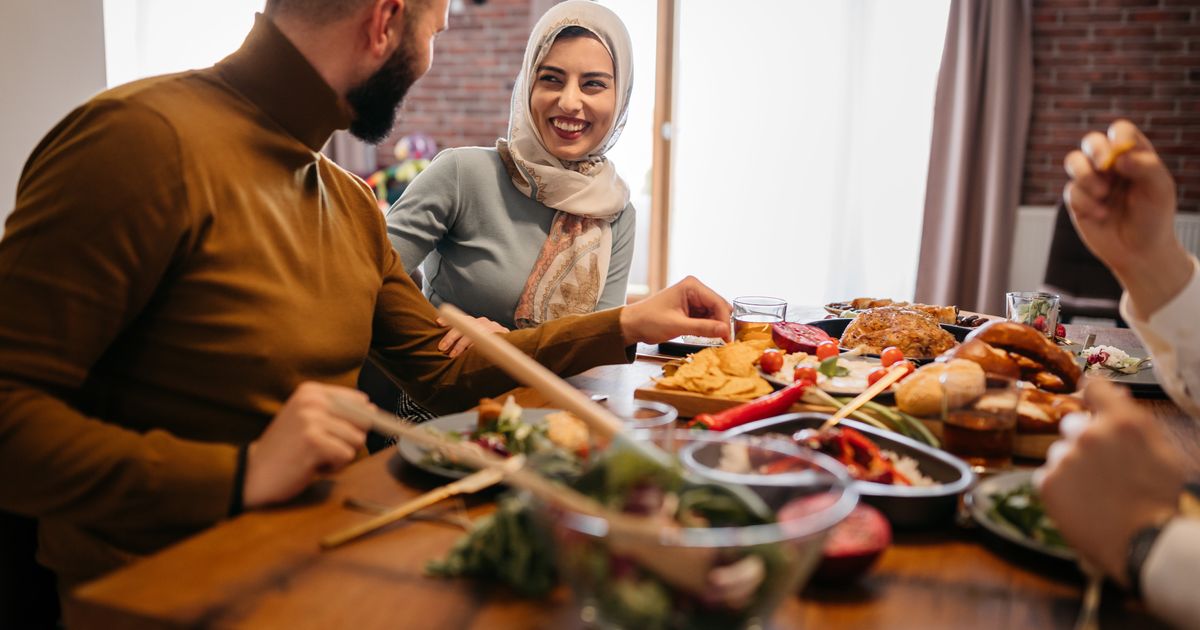
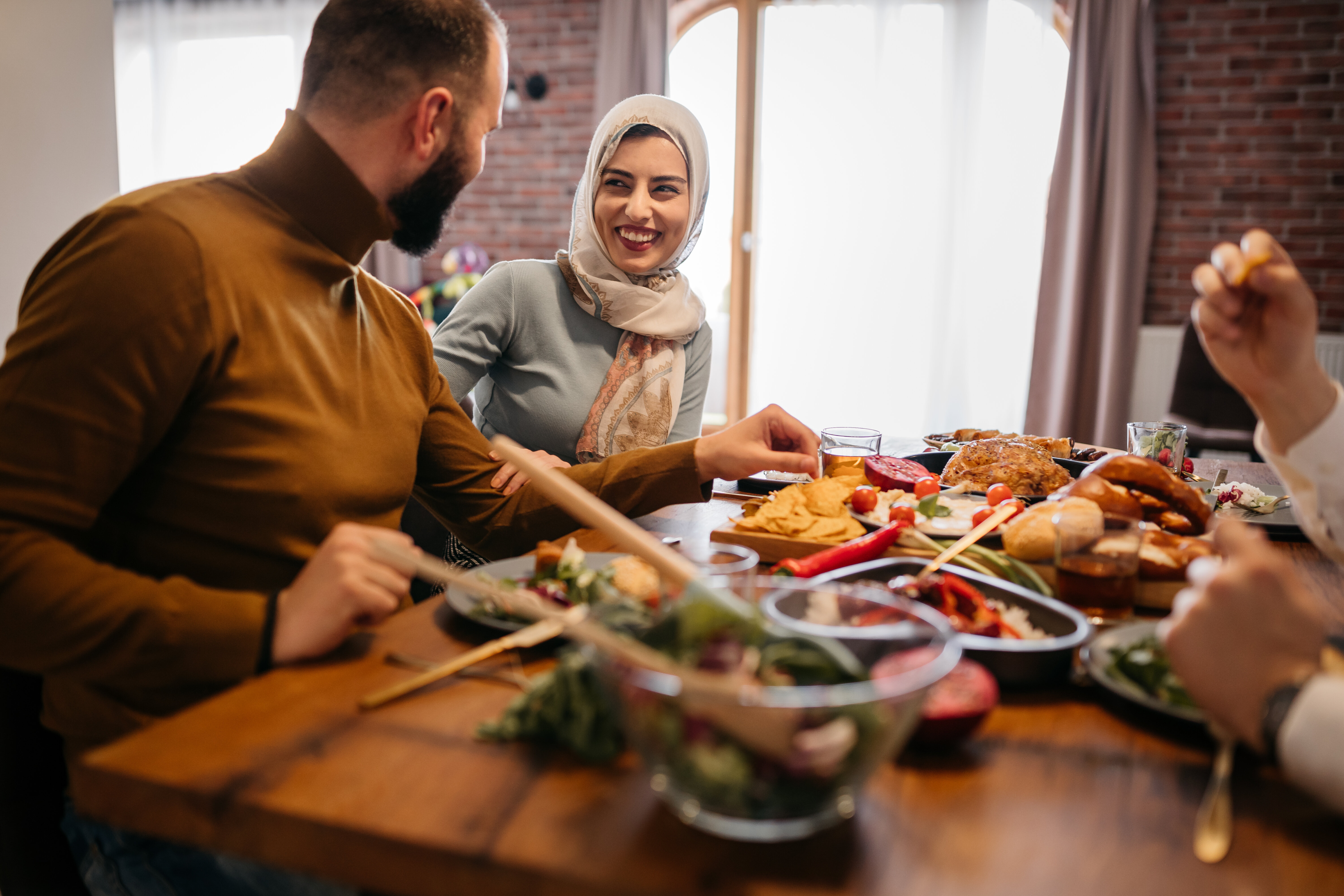
Here’s Why Muslims Fast During Ramadan

Ramadan takes place during the ninth month of the Muslim Calendar and is considered the most holy month for followers of Islam. It’s believed that during this month, the Holy Quran was descended from Heaven to Earth and during this month, the first revelations of the Quran were received by the Prophet.

This month brings practice of self-reflection, gratitude, and self-restraint in all Islam followers and throughout the month, observers undergo a fast and eat one meal before sunrise and another after sunset.

During fasting hours, many choose to break their fast with dates. Our own writer Unzela Khan Sheikh explained in a recent TikTok that this is because: “Prophet Muhammad, peace be upon him, used to break his fasts with dates and water. Whatever the prophet does, we call that Sunnah; something that is recommended because our prophet did it.”

Why do Muslims fast during Ramadan?

Fasting during Ramadan is one of the five pillars — or duties — of Islam, along with the testimony of faith, prayer, charitable giving, and making a pilgrimage to Mecca. All Muslims are required to take part every year, though there are special dispensations for those who are ill, pregnant or nursing, menstruating, or traveling, and for young children and the elderly.

According to Vox, fasting during Ramadan is one of the five pillars — or duties — of Islam, along with the testimony of faith, prayer, charitable giving, and making a pilgrimage to Mecca. All Muslims are required to take part every year, though there are special dispensations for those who are ill, pregnant or nursing, menstruating, or travelling, and for young children and the elderly.

This practice serves many purposes. It reminds you of your human frailty and your dependence on God for sustenance. It shows you what it’s like to be hungry and thirsty so that you feel compassion for, and a duty to help, the poor and the needy.

How to support Muslim friends during Ramadan

Portsmouth University recommends taking the following steps to support your friends during Ramadan:

  • Be considerate when making plans. Arrange to meet friends earlier in the day when they may still have energy from their dawn meal. Perhaps you could go for a walk, rather than meet for lunch? Being considerate of an adjusted timetable shows support and respect and can be a simple – yet appreciated – gesture
  • Check in on your Muslim friends. Checking in on your Muslim friends is always a great idea! Feel free to ask them how they are doing. Doing so will help your Muslim friends feel loved, supported, and seen
  • Don’t ask why someone isn’t fasting. There are many reasons – including medical – why someone may choose not to fast, and these reasons may be very personal. Those who are not able to fast may still choose to take part in other ways of worship
  • Don’t be afraid to ask questions. Ask how you can best help your friends to celebrate and practise their religion

Ramadan Mubarak to all Muslims!

Share Button