How To Travel To Paris And NOT Get Bed Bugs

Recently, I haven’t been able to open a single app without being confronted with the menacing form of a bed bug. After taking hold of Paris’ mattresses, it seems the critters have started to establish their London stronghold, too (oh, good).

We know from personal experience how ridiculously disruptive the little bugs can be. So, we thought we’d reach out to the pros to find out how to protect ourselves while travelling.

HuffPost UK spoke to ecologist, conservation scientist, and entomologist Professor Adam Hart about the bed-based terrors. Here’s what he had to say:

1) Inspect, inspect, inspect

Whether you’re staying at a friend’s house or a hotel, it’s a good idea to get up close and personal with your mattress, Professor Hart told HuffPost UK. In fact, it was his first piece of advice.

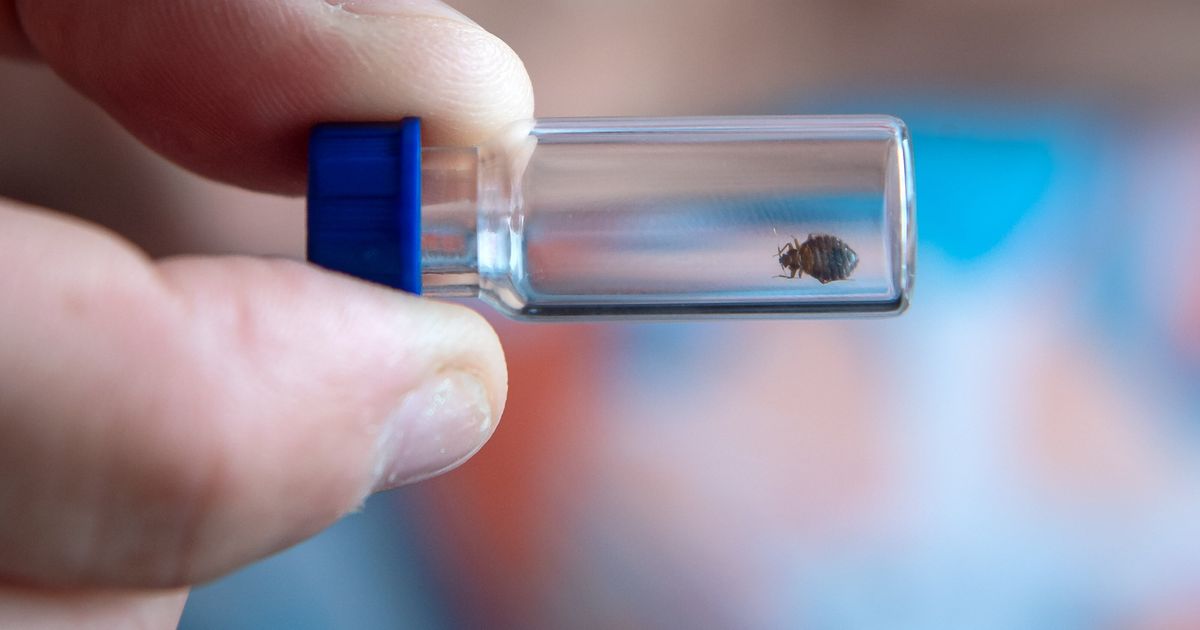
“When travelling, the best thing to do is to inspect your bed carefully,” Hart says. He advises we “look online to find out what eggs, larvae and adults look like, and to see how bed bug droppings and blood marks look. That way you will be able to see if you might have a problem.“

2) Think outside the box

One of the many terrifying things about bedbugs is how good they are at hiding. Professor Hart advises we look a little further than our mattress and sheets when trying to find the beasties.

“Check other areas, like around and behind the headboard,” he says. Bed bugs may also hide in places like sofa and chair seams and old drawer joints.

3) Cover your clothes

Speaking of bed bugs’ many homes, you’ve likely already heard about their ability to cling to our clothes. So, it makes sense that Professor Hart advises us to keep our outfits securely covered while travelling.

“If you are worried then keep your clothes packed inside your closed bag. Some people even pack their clothes in Ziplock-style bags to keep any bed bugs out,” he says.

4) Wash everything the second you get home

If you’re worried about bringing bugs home, Hart says you should steam-clean or machine-clean your clothes (and bags, if possible) the second you get home.

“When you return home wash clothes at a high temperature and tumble dry; dry-cleaning and steam cleaning also kill bed bugs in fabrics that be washed or dried at high temperatures,” he says.

Heat is important here, so don’t lower the temps too much.

Ah, the joys of travel…

Share Button

Rachel Reeves Pledges Covid Fraud Crackdown In Barnstorming Labour Conference Speech

A Labour government would recover billions of pounds lost to Covid fraud as part of its mission to “rebuild Britain”, Rachel Reeves has declared.

The shadow chancellor said taxpayers had lost £7.2bn during the pandemic, with “every single one of those cheques signed by Rishi Sunak as chancellor”.

She said that if Labour wins the next election, it will appoint a “Covid corruption commissioner” whose job it will be to recover as much of that money as possible.

In a barnsotring speech to the Labour conference which earned several standing ovations, Reeves also said she would crack down on the use of private jets by government ministers.

On Covid fraud, she said: “We will go after those who profited from the carnival of waste during the pandemic.

“Today, the cost to the taxpayer of covid fraud is estimated at £7.2 billion, with every single one of those cheques signed by Rishi Sunak as Chancellor.

“And yet just 2% of all fraudulent covid grants have been recovered. So, I can announce today that we will appoint a Covid corruption commissioner.

“Supported by a hit squad of investigators, equipped with the powers they need and the mandate to do whatever it takes to chase down those who have ripped off the taxpayer, take them to court, and claw back every penny of taxpayer’s money that they can.

“That money belongs in our NHS, it belongs in our schools, it belongs in our police. And conference, we want our money back.

“We are ready to serve, we are ready to lead, we are ready to rebuild Britain.”

Reeves also said she would “crack down on Tory ministers’ private jet habit”.

“What is Rishi Sunak so scared of up there in his private jet – meeting a voter?,” she said.

“We will enforce the ministerial code on the use of private planes and save millions of pounds for taxpayers in the process.”

Share Button

Turn Out Most Animals Are Pretty Frickin’ Gay, Research Finds

We’ve recently written about how many members of Gen Z are LGBT+ (spoiler alert; it’s a lot). And a recent study recently showed that same-sex attraction is far from limited to humans; lots (like, up to 80% in some cases) of animals are sexually fluid, too.

The project examined all the existing research on same-sex activity among animals. It was led by scientists at Estación Experimental de Zonas Áridas in Spain ― they created a database of all the studies’ conclusions.

So, what did they find?

They discovered that same-sex sexual activity has been recorded in 1,500 animal species, from birds to bees (literally).

Mammals were much more likely to be recorded as engaging with gay sex than other species (about 4%), with non-human primates particularly likely to display homosexual behaviour ― “it has been observed in at least 51 species from lemurs to apes,” they say.

That’s likely an underrepresentation of actual homosexual activities, the researchers add.

“This figure is probably underestimating the actual prevalence of same-sex sexual behaviour in mammals, since this behaviour has attracted the attention of behavioural ecologists and evolutionary biologists only recently,” they say ― and there’s already a research bias towards mammals over other animals, which could explain some of the discrepancies.

In fact, longer-term studies find that homosexual activity occurred in 80% of the mammal population ― the more you observe the animals, it seems, the more sexually fluid they prove themselves to be.

Those who performed same-gender sex acts commonly displayed activities like courtship, mounting, genital contact, copulation and pair bonding ― mounting and genital contact were the most common acts (87% of the same-sex sexual acts in their dataset).

OK, but ― why?

Because it doesn’t help to further the population, same-sex activity among animals is considered an “evolutionary conundrum” and a “Darwinian paradox,” the researchers say.

Of course, lots of the animals who engaged with same-sex sexual activity also had sex with a different gender. And our conception of “homosexual” and heterosexual” is just that ― our human conception.

“Same-sex sexual behaviour as it is used here does not denote sexual orientation (ie an overall pattern of sexual attraction/arousal over time), sexual orientation identity (the sexual orientation that individuals perceive themselves to have), categories of sexual beings (homosexuals, heterosexuals, etc), nor sexual preference,” the researchers say.

They warned that their findings shouldn’t be used to analyse homosexuality in humans ― they’re different.

With that said, a lot of the studies that the researchers looked at suggested homosexual activity in animals could have an adaptive role “in maintaining social relationships and mitigating conflict.”

Part of the reason they think this is because homosexual behaviour has evolved in so many species in similar environments, suggesting it has benefits for those in their circumstances.

They also found that “The prevalence of same-sex sexual behaviour was also associated with adulticide [grown adults of a species killing other adults of the same species], but only for males.”

But the researchers don’t think this disproves the theory that same-sex activity is used to calm conflict ― in fact, they think it confirms it.

That’s because if animals usually engage in homosexual activity during times of violence, it’s more likely that violent results will be associated with the act.

“Because the association was more intense in males than in females, we presume that adulticide was a stronger force triggering the evolution of same-sex sexual behaviour in males. If this hypothesis is confirmed, it seems that same-sex sexual behaviour mitigates rather than negates adulticide, as there are still many species that commit this type of aggressive behaviour,” they say.

The authors of the study added that the field is under-researched, and more study is needed. In the meantime, though ― that’s pretty interesting, right?

Share Button

I’ve Survived A Bed Bug Infestation. Here’s What You Actually Need To Know

Few things in life make me want to rip my skin off — bed bugs, however, could incite me to peel myself like a tangerine.

Lately, my skin has been itching. With so many stories about bed bugs in Paris, the idea of an overrun London has rendered me tacky-tongued and breaking out into cold sweats. Not to mention googling with ferocity how to ward off the invasion of tiny bloodsuckers.

I’ve become obsessed. Smelling phatom smells and peeling back corners of carpets just to “make sure” that it’s all good. That we’re safe. Why? Because I’ve lived through this before.

Living alone is supposed to be fun — empowering, even. Here I was, 24 and doing it all by myself. Except I wasn’t as alone as I thought I was.

Dormant inside the cavity walls, thousands of bed bugs lay in wait. The cold winter and the vacant flat had meant they’d retreated into hibernation, only to ambush when the heating — and the smell of breakfast, lunch and tea (i.e. me) sat her sorry self down on the carpet.

I didn’t notice anything for the first week. My furniture was organised, clothes put away and for a brief moment in time, I was at peace. Reaching this milestone was a huge accomplishment. As a working-class girl from North Wales, I never thought I’d be in a position to afford living alone.

My run of good fortune had finally ended, though. And, a week later I was struck with glandular fever. Lying in bed, unable to move my skin began to itch as small welts appeared up and down my legs and arms.

Black dots appeared around plug sockets and in the corners of my room. Mould, I thought. Then, to my horror, a small reddish thing scuttled across the carpet.

My heart dropped and my stomach hit the floor. I googled “bed bugs” and I sank further into my bed. My flat was infested and I was bedbound.

The realisation that night by night I would be the subject of torture by many tiny mouths made me sob uncontrollably as I watched black dots, their faecal matter, leave traces along my furniture, my bedding and my walls.

My legs slowly became red raw from scratching, but mentally the load was more painful.

Shame crept into my thoughts and set there like a millstone around my neck. What would people think of me if I told them? Would my landlord blame me? How could I ever escape from this fresh hell?

A week passed, slowly. I was feeling somewhat better, though still incredibly unwell. I was able to shower and get dressed, which meant tending to the scabs across my scarred body. I ordered packages upon packages of bed bug spray, traps and natural remedies like tea tree and lavender oils.

On the phone, I begged and pleaded with my landlord to find me alternative accommodation while the infestation was seen to. But, as a young woman, they intimidated me. Threatening me with eviction and fines until I could prove I hadn’t brought them in with my own furniture.

After making threats of my own to bring on legal proceedings, they soon moved me to a budget hotel where I could finally sleep in peace. In the meantime, exterminators lay more boobie traps throughout the flat.

When my stay came to an end, I was advised to take on the role of “bait” in order to weasel the critters out of the walls and into the traps. Reluctantly, I returned.

With nobody able to visit me, I became more and more isolated. My mental health deteriorated as I began to feel too nauseous to eat and too anxious to go to bed. I was signed off from work on extended sick leave long after my glandular fever passed. My money drained and I sank further and further into my overdraft. With only statutory sick pay to support me, I became more and more depressed at the situation I had found myself in.

I didn’t sleep for weeks. To the legs of my bed, I taped double-sided sticky tape — only for them to crawl up the walls and drop from the ceiling onto my duvet. I taped up plug sockets and watched them pile onto one another, as they got more and more stuck. Beneath the cills, the sellotape caught almost transparent juveniles. It was becoming a peepshow of horror. And I was still getting bitten.

It didn’t matter how many times I cried on the phone, literally begging my estate agents to release me from my contract. The answer was always no. Until I sent them photos of infected sores on my legs and threatened legal action against them.

After four months, I was free. What followed, though, was just as difficult as the infestation itself. My furniture, bedding and my most beloved belongings, my books, were incinerated. What I was able to salvage, filled me with dread. What if they were still there? What if I brought them with me?

For months afterwards, I would crawl the carpet picking apart every fibre in search of signs they’d hitched a ride. Every speck of dust was obsessively inspected and cleaned. Over time, my scars began to fade and I was able to find some semblance of normal.

A month passed in my new flat, and not one new bite. The relief washed over me and my health improved. I slept better. I was able to leave a sock on the floor. My bed no longer had double-sided sticky tape wrapped around its legs. I was free.

Even now, when I visit anywhere, the legacy of that trauma surfaces. I check the walls and peek behind wallpaper in hotels. So far, so good. Until recently.

The threat of bedbugs coming back into my life has meant old habits have resurfaced. I think about them constantly and check every inch of my house for signs of vampiric life. If they make their way to my home, I’ll be left with no option but to burn the place to the ground.

Share Button

Pink Shares What She Considers The Worst And Best Singles Of Her Career

Pink is sharing her true feelings about her work.

The Los Angeles Times asked the pop rocker what she considered her “best and worst singles” in an interview published Wednesday.

“Worst? I mean, there’s been so many,” she replied. “Maybe ‘True Love.’”

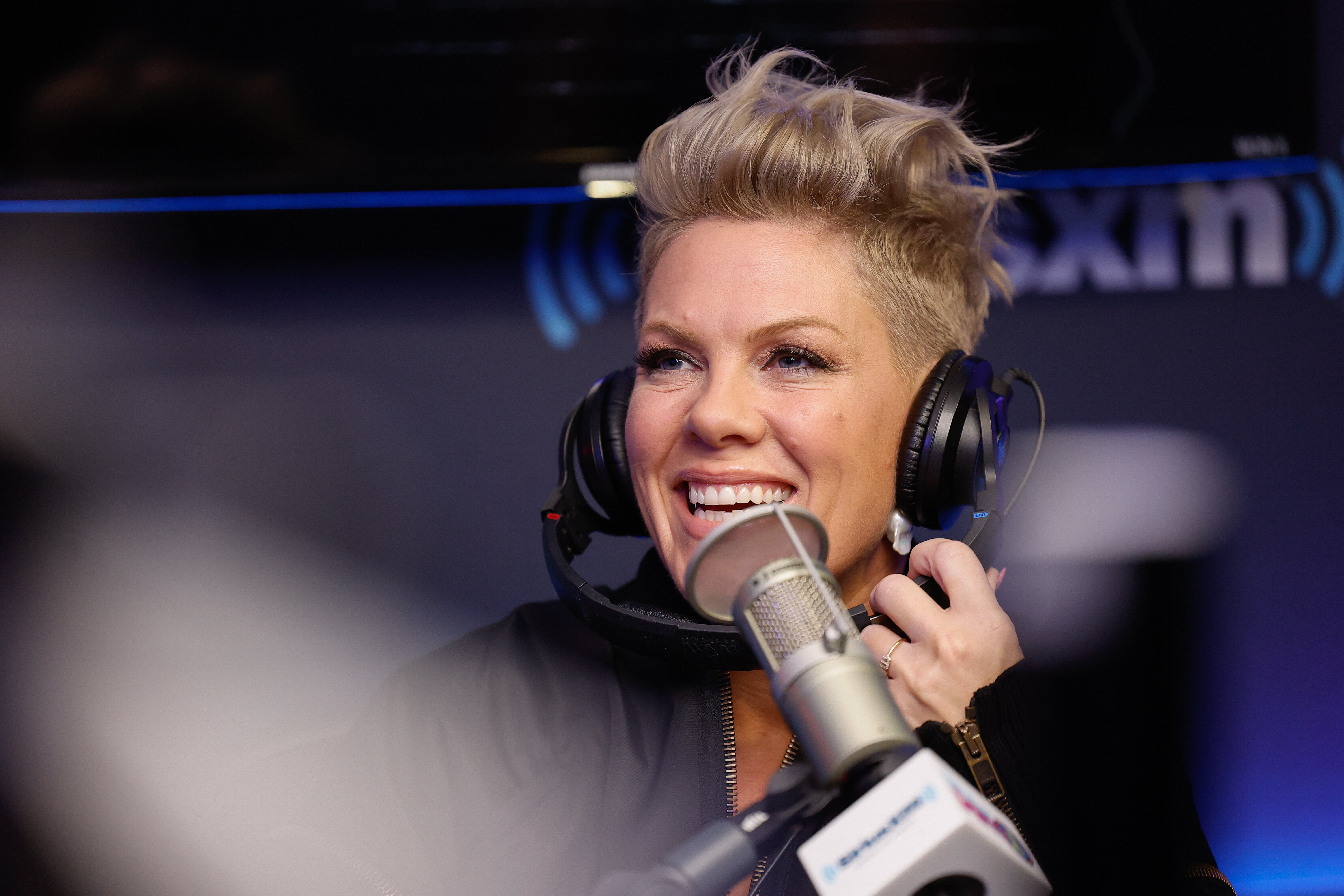
Pink is pictured at SiriusXM Studios on Feb. 22 in New York City.

Mike Coppola via Getty Images

The 2012 song, which features English singer Lily Allen, includes lyrics like “You’re an asshole but I love you” and “I really hate you so much I think it must be true love.” Pink’s husband, former motocross star Carey Hart, appears in the music video.

Pink had a sweet reason for selecting the track as her worst, describing it as “mean.”

“Carey’s got thick skin, but I owe him a love song,” she said.

She also came up with an additional contender for the bottom spot.

“Oh wait, I did put out that SpongeBob thing,” she said, referencing a 2009 track for Nickelodeon’s sealife-centric cartoon.

“‘We’ve Got Scurvy’? I wish I never did that. That was a real mistake.”

(While the Times’ transcription doesn’t specify what her tone was, we have to assume she was kidding, because who could regret starring in this music video?)

As for her best singles, the Grammy winner chose the 2001 smash hit “Get the Party Started” and 2008’s “So What,” which was about a temporary separation from Hart. Ironically, the song also helped the two reconcile. According to Us Weekly, the pair patched things up after Pink got in touch with Hart to ask him about appearing in the track’s music video.

She alluded to the tune’s role in their reunion during her Times interview, saying: “‘So What’ was fun from start to finish — writing it, singing it, performing it, the video. It was part of what got Carey and I back together.”

Share Button

Judi Dench Gets To Meet Seal Pup Who Shares Her Name

Judi Dench has received the seal of approval from a British wildlife charity.

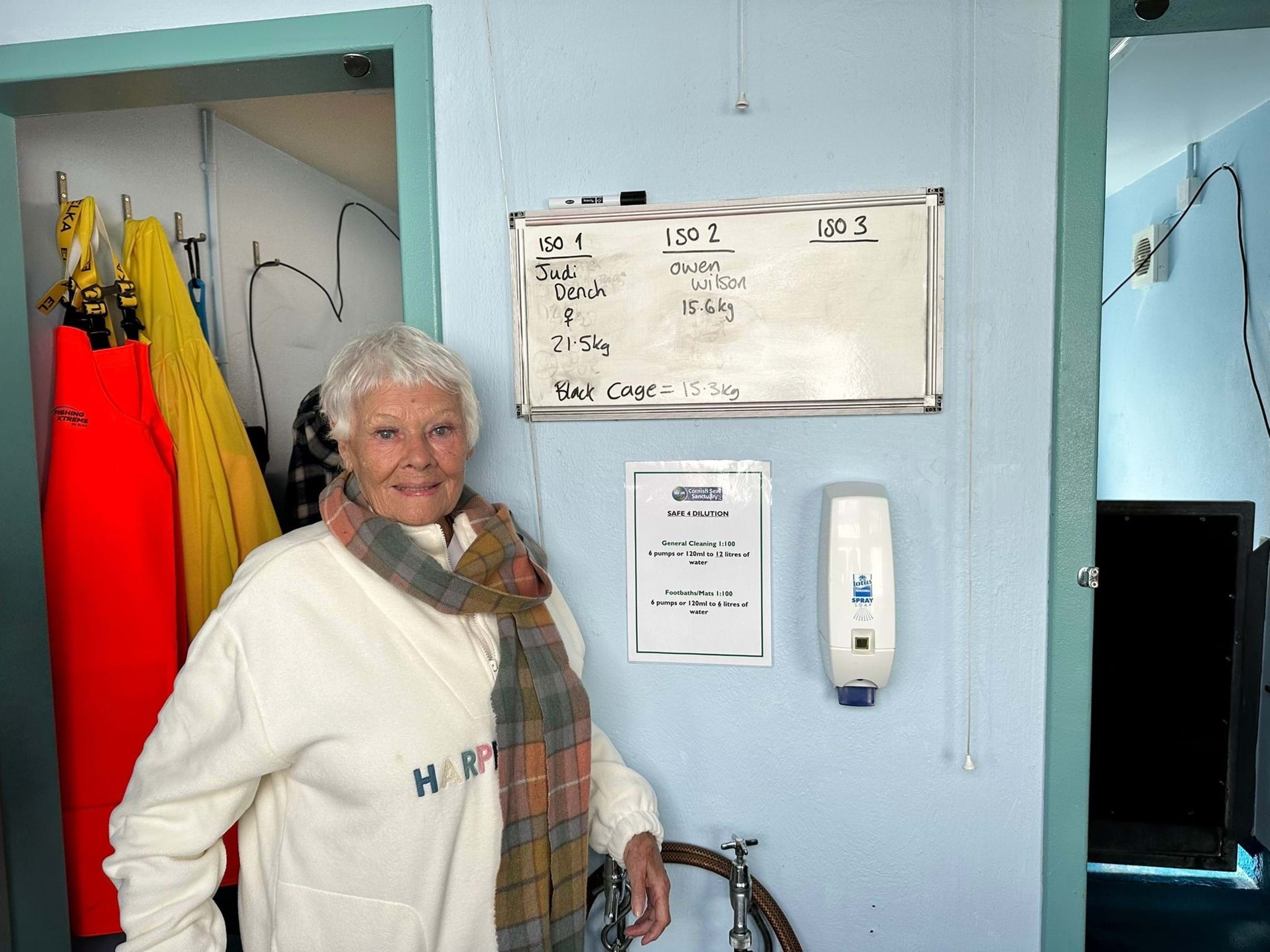
The acclaimed British actor met a gray seal pup named after her when she visited the Cornish Seal Sanctuary in Gweek, England, last month, the organization shared in a press release this week.

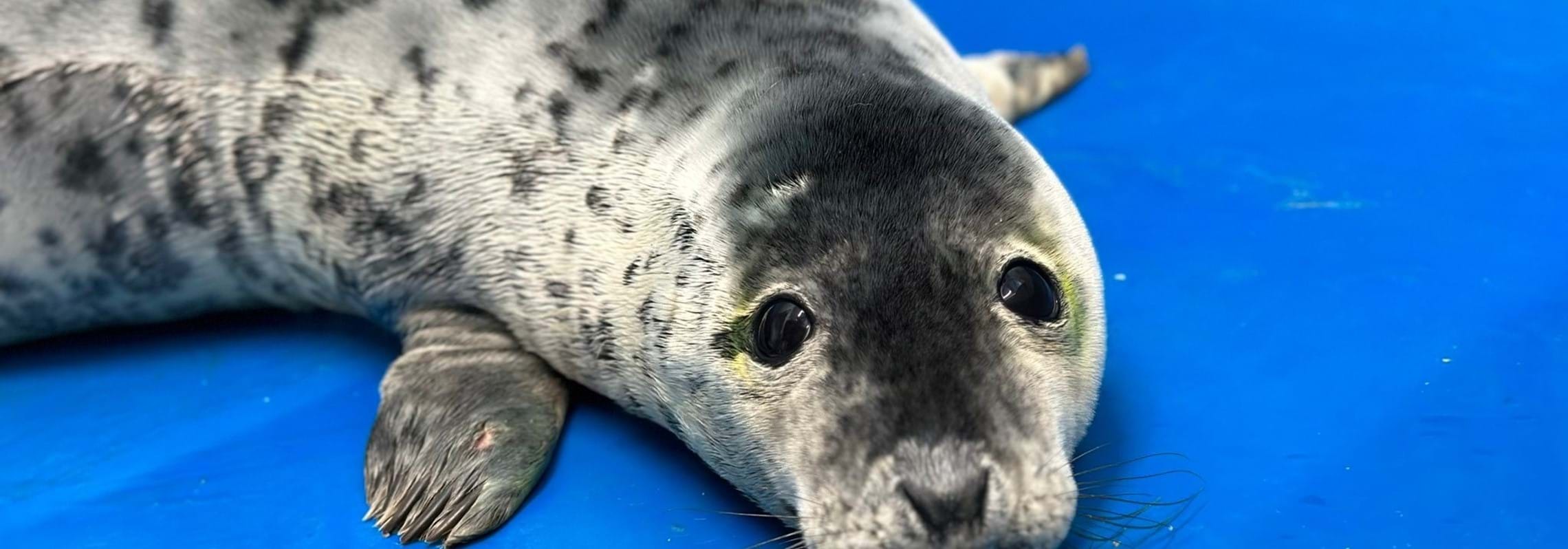
Dench, 88, was in the region with family on Sept. 22 and decided to stop by the sanctuary. The facility took in an injured and dehydrated female pup the same day.

Judi Dench, the seal pup.

Cornish Seal Sanctuary

“It was like fate,” sanctuary fundraising manager Leanne Atwood said in the release. “It just so happened that, as Dame Judi and her family explored the Sanctuary, this pup was admitted to our Seal Hospital.”

Since the sanctuary’s theme for naming seals this season is “actors and actresses,” there was only one moniker choice for the female pup.

“We knew we just had to name her after Judi Dench, who was already on our list of name ideas,” Atwood said.

The actor was “so excited to be able to meet pup Judi,” who is estimated to be about 3 weeks old.

A photo shows a scarf-clad Dench posing in front of a whiteboard that indicates another seal at the sanctuary is named Owen Wilson.

Judi Dench, the human, on her visit to the seal sanctuary.

Cornish Seal Sanctuary

As for Judi, the seal, the sanctuary hopes to be able to release her back to the wild after she’s recovered.

Gray seals live in coastal areas along the North Atlantic Ocean, including Great Britain and Northern Europe, as well as eastern Canada and the northeastern United States. Wildlife experts on both sides of the ocean urge people to give seal pups space, noting that people often mistake the young critters for orphans when the mother is actually nearby. If a pup is clearly sick or injured, the general recommendation is to contact local wildlife authorities to help.

Share Button

Keir Starmer Says He Would Scrap The Rwanda Scheme Even If It Is Legal And Working

Keir Starmer has vowed to axe the government’s Rwanda policy even if it is ruled legal and shown to be working.

The Labour leader said he would introduce a “pragmatic plan” to deal with the problem of small boats carrying asylum seekers across the English Channel if he becomes prime minister.

The Supreme Court will this week beginning hearing the government’s case as to why their plan to deport asylum seekers to Rwanda does not breach international law.

But appearing on the BBC this morning, Starmer said the scheme would be axed if Labour wins the next election.

Asked by presenter Victoria Derbyshire if he would scrap it even if the Supreme Court rules it is legal and it reduces the number of small boat crossings, Starmer said: “Yes. I believe it’s the wrong policy, it’s hugely expensive, it’s a tiny number of individuals who would go to Rwanda.”

Derbyshire replied: “Even if everybody can see that it’s working, the criminal gangs are declining, fewer people are getting in those boats, fewer people are drowning, you would still reverse it?”

Starmer said: “We’ve been told time and again by the government, even saying that they’ve got a Rwanda scheme would reduce the numbers – that hasn’t happened.”

The Labour leader said the small boat crossing would only stop once the criminal gangs organising the journeys are “smashed”.

He added: “As a pragmatist, I want a pragmatic plan that is actually going to fix this problem, not rhetoric which has got this government absolutely nowhere.”

Share Button

Throwing A Mattress Out A Window, Burning Shoes … Are Shock Tactics In Parenting A Good Idea?

Arnold Schwarzenegger, 76, has filled many roles in his life — bodybuilder, actor, politician — and people have scrutinised his performance in these very different realms. Schwarzenegger is also a father of five, and he’s recently been opening up about some unconventional parenting tactics he used when raising his children.

Schwarzenegger shares Katherine, 33, Christina, 31, Patrick, 30, and Christopher, 26, with ex-wife Maria Shriver. He disclosed in 2011 that he fathered a son, Joseph Baena (now 26), with the family’s housekeeper.

In an appearance on “Jimmy Kimmel Live” on Monday to promote his upcoming book, “Be Useful: Seven Tools for Life,” Schwarzenegger explained, “For the way I grew up, I was lenient, but I think for American standards I was probably strict.” He demanded that all of his children “make their own bed, scrub their own showers, they have to clean their own toilet and they have to wash their own clothes.”

One day, in response to his son repeatedly letting the nanny make the bed, Schwarzenegger said, “I opened up the doors, grabbed the mattress and threw it out the balcony down into the swimming pool.” Patrick then had to retrieve the mattress and pillows, which his dad had also tossed out the window.

The former Republican governor of California also reported that he threw his daughter’s shoes into the fireplace and burned them after she failed several times to put the shoes away properly.

He also said he taught his son to turn off the lights when he left his bedroom to conserve electricity by unscrewing one lightbulb each time he forgot — until his son was left in the dark.

“He was 5 years old, and he was freaking out going alone into his room at night when it was dark,” Schwarzenegger said. “I put the lightbulbs back, [and] from that point on he always turned off the lights.”

Though these incidents are unusual, every frustrated parent has had the thought, “Someone needs to teach that kid a lesson!”

Even if they’re effective, are shock parenting tactics a good idea? HuffPost asked child therapists to weigh in on the pros and cons of this approach to managing kids’ behaviour.

The Potential Effect Of Shock Tactics

Schwarzenegger related these incidents with pride, triumphant that they had been effective.

There are some advantages to an outsized reaction. “Shock tactics can get your child’s attention for sure. And it can be useful in breaking habits,” psychologist Jen Hartstein told HuffPost.

But there are a number of potential downsides, including damaging your child’s trust, increasing their anxiety and depression, and harming your relationship with them.

Though Schwarzenegger explained that he told his daughter he would burn the shoes if she left them in the wrong place again and then followed through on this promise, such a drastic move — particularly when unplanned and executed in the heat of the moment — might cause anxiety or lead a kid to conclude that a parent is unsafe.

A child might wonder, “If I do this, how’s my dad going to react?” said Jennifer Kelman, a licensed clinical social worker who is a mental health expert on JustAnswer. If your reactions are sometimes extreme, “that child learns to walk on eggshells,” she told HuffPost.

Hartstein pointed out that these kinds of tactics often rely on evoking shame in your child. “If your child becomes afraid of you or worried that they will be shamed for making mistakes, it will negatively impact trust,” she explained, which is “the basis of a child/parent relationship.

“It can also cause young people to have an increase in anxiety or depression due to being invalidated and taught through fear, not reinforcement and support.”

Alternative Ways To Encourage Kids To Change Their Behavior

A shock tactic might achieved its desired result: your kid changing their behaviour. But there are other ways to accomplish this that won’t involve risks to your relationship — or destruction of property, for that matter.

Kelman offered the example of explaining to your kid that if they leave their shoes out again, they will have to do some volunteer work with a community organisation. It’s a consequence but a less punitive and frightening one.

In the example of making the bed, Kelman suggested stripping the sheets from the bed and making the child wash them and remake the bed. This tactic would hopefully deter a child from failing to make their bed again and doesn’t pose any physical or psychological danger.

It’s important for parents to set boundaries, Kelman explained. These will be different for every family, but whatever boundary is set should be consistently enforced.

“There needs to be a consequence when time and time again, your child is crossing that boundary and not respecting it,” Kelman said.

“Setting your boundary, being clear on what the consequences are, if it’s not met, and then sticking to it without being harmful,” she continued, is a healthy way for parents to respond to kids’ behaviour.

However, it’s important to spend more time focusing on what your child is doing right rather than what they are doing wrong.

“Research suggests that punishment does not teach new behaviours,” Hartstein explained. Punishment can be important, but positive reinforcement is more effective in getting your child to change their ways.

“If you want to teach new behaviours or want your children to change behaviours, you have to reinforce the things you want while ignoring the things you don’t want,” Hartstein said, adding that children want attention and will try to get it any way they can, even when that attention is negative.

Positive reinforcement is the basis of systems like sticker charts, but it can also be as simple as consistent praise (“Great job putting your shoes on the shoe rack! Thank you!”)

Of Course, You Will Snap At Some Point — It’s What You Do After That Matters

Although few of us will pitch a mattress out the window, almost all of us will have an outsized reaction to our child’s behaviour. When our requests or reminders are repeatedly ignored, we eventually lose it — sometimes in a unique way but predominantly just by yelling.

“All of us are humans, whether we’re parents or children, and we do lose our minds. We do get our buttons pushed, and we may not always react well,” Kelman said.

In addition to scaring our children, yelling definitely qualifies as negative attention. It’s not the kind of positive reinforcement that is more likely to change their behaviour. It can also scare your child.

Such moments, however, actually offer you a chance to connect with your child and strengthen your relationship.

Kelman explained: “This is your opportunity to go back to child and say, ‘You know what? I was reflective on how Mommy handled it. I didn’t love how I handled it. I lost my mind. I’m so sorry if you were scared. I’m so sorry, and I want to do it better next time.’”

Doing this shows your child that you, too, are a fallible human. It also models for them “that you can go back and apologise and be expressive about your feelings” and teaches them “that you’re safe and that they can come to you when they lose their mind,” Kelman said.

“We should never just beat ourselves up” when we explode like that, she said. “We have to go back and be open and vulnerable. You’re teaching so much to your child. … We want them to be able to feel safe enough to come to us.”

Share Button

20 Of The Funniest Tweets About Cats And Dogs This Week (Sept. 30-Oct. 6)

Woof — it’s been a long week.

If you feel like you’ve been working like a dog, let us offer you the internet equivalent of a big pile of catnip: hilarious tweets about pets.

Each week at HuffPost, we scour Twitter X (yes, Elon Musk is apparently fur real) to find the funniest posts about our furballs being complete goofballs. They’re sure to make you howl.

(And if you want more, no need to beg ― you can check out last week’s batch right here.)

Share Button

Urgent Warning To Any UK Travellers Headed To Portugal

Jet2 has issued a warning to UK citizens travelling to Portugal, letting them know they may face disruption when they get there.

The airline told travellers industrial strike action is taking place in Faro Airport, based in southern Portugal’s Algarve region, starting October 6th.

Jet2 has urged customers to allow enough time to pass through security, and have also confirmed that all flights are currently due to depart on time.

“Please allow enough time to pass through security as all Jet2.com flights are due to take off on time. Check in desks will be open 2.5 hours before your flight,” they said.

They also reassured customers that had booked transfers with them to and from the airport would remain unaffected.

The warning comes after Jet2 just last week issued another alert regarding industrial strike action in Spain. Security workers at Alicante Airport will be participating in strikes from September until January next year, which means anyone headed to Spain in the following months could face congestion in security.

The strike in Spain is scheduled to take place for one hour in the morning and one hour in the evening on the following dates:

October: 6, 7, 8, 9, 10, 11, 12, 13, 14, 15, 17, 20, 21, 22, 24, 27, 28, 29 and 31

November: 1, 2, 3, 4, 5, 7, 10, 11, 12, 14, 17, 18, 19, 21, 24, 25, 26 and 28

December: 1, 2, 3, 4, 5, 6, 7, 8, 9, 10, 12, 15, 16, 17, 19, 22, 23, 24, 25, 26, 27, 28, 29, 30 and 31

January 2024: 1, 2, 3, 4, 5, 6, 7, 8, 9, 10, 11, 12, 13 and 14

The Spanish government also added: “If you are on holiday in Gran Canaria, Lanzarote and Fuerteventura and needing to travel or use road transport, we encourage you to contact your tour operator or transport company as soon as possible for more information to understand how this strike may impact your travel arrangements.

“Significant travel disruption is expected.”

Share Button